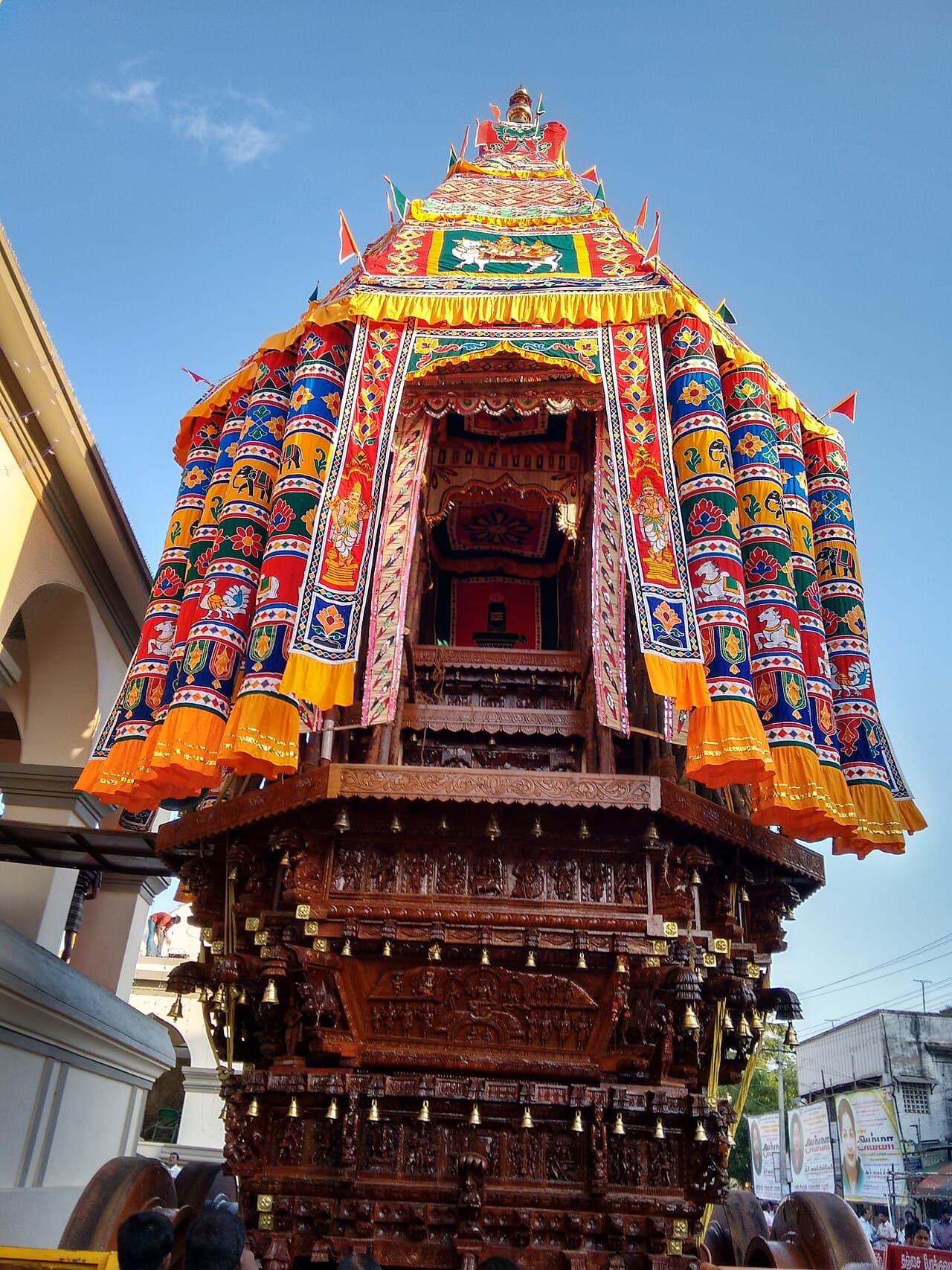
Pancha Bhoota Sthalas: The Five Element Temples
Five sacred temples of South India where Lord Shiva manifests as Earth, Water, Fire, Air, and Space — the fundamental elements that constitute all existence.
Total Temples
5
Elements Represented
Earth, Water, Fire, Air, Space
Deity
Lord Shiva (as Lingam)
Primary Region
Tamil Nadu (4) + Andhra Pradesh (1)
Architectural Style
Dravida
Period
7th–17th Century CE
Patron Dynasties
Pallava, Chola, Pandya, Vijayanagara
Pilgrimage Duration
5–7 days
Major Festival
Maha Shivaratri
Philosophy
Pancha Bhoota — Five Elements of Creation
Sacred Abodes
Explore each sacred site with detailed guides and visitor information.
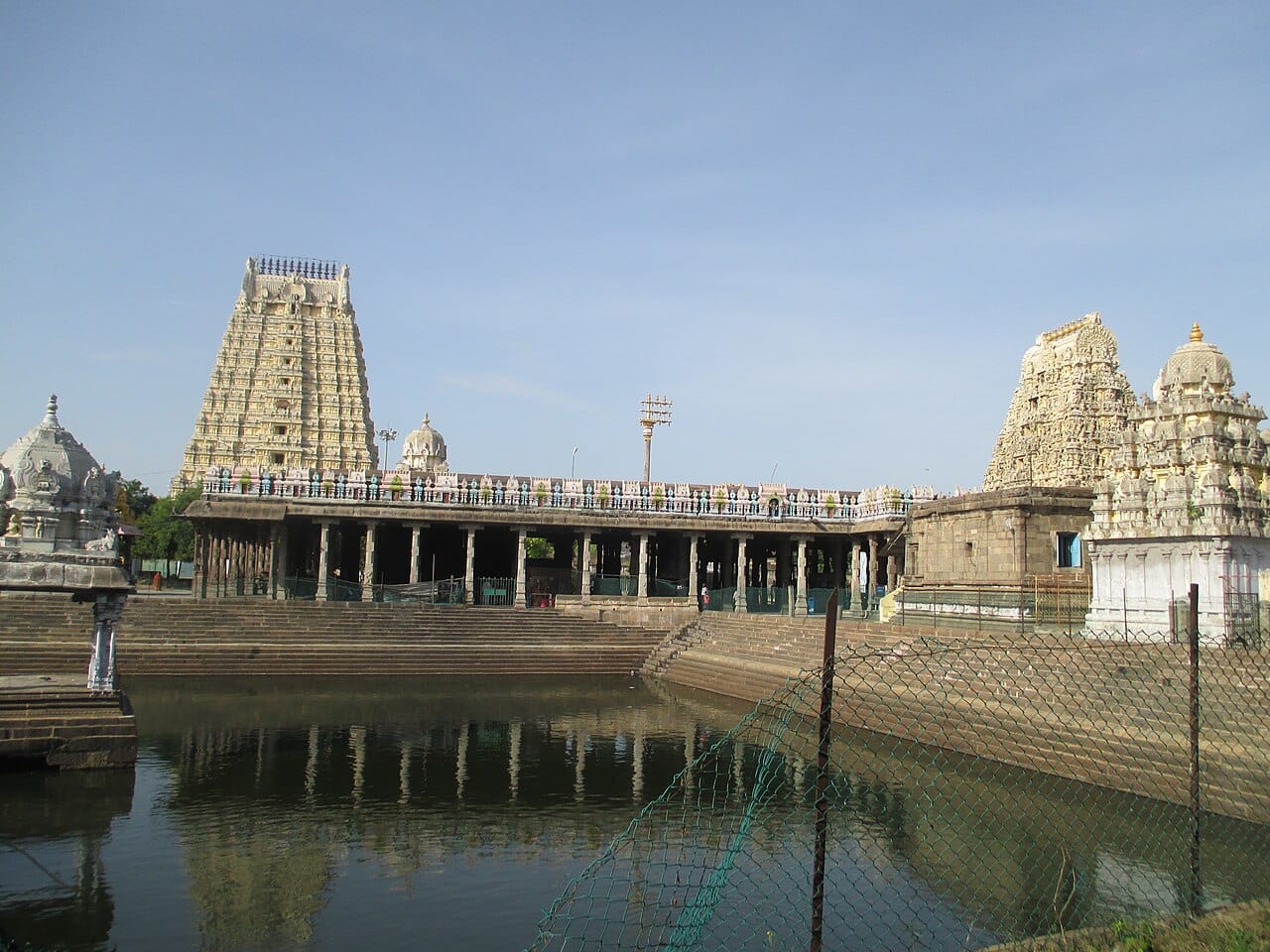
Ekambareswarar Temple
Earth (Prithvi)
Presiding Deity: Shiva (Ekambareswarar)
The Prithvi Lingam, representing Earth, is enshrined under a 3,500-year-old mango tree. The temple covers 25 acres with a 58 m gopuram.
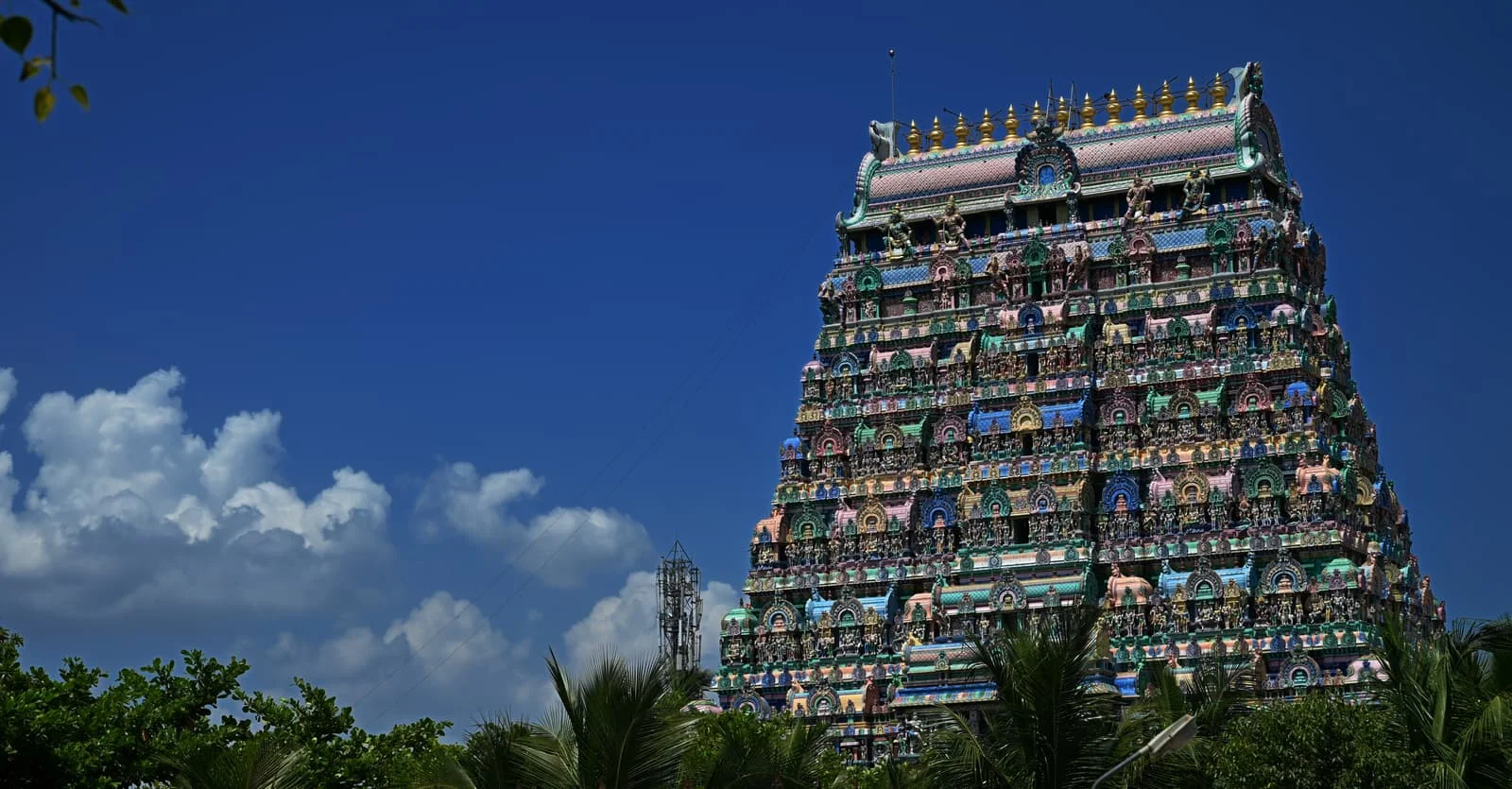
Jambukeswarar Temple
Water (Appu)
Presiding Deity: Shiva (Jambukeswarar)
The Appu Lingam, representing Water, stands in a sanctum that always has water seeping at its base — regardless of season. The temple's underground spring has never been explained hydrologically.
Arunachaleswarar Temple
Fire (Agni)
Presiding Deity: Shiva (Arunachaleswarar)
The Agni Lingam, representing Fire, is identified with the Arunachala hill itself — a 2,700 m wide sacred mountain. The temple covers 24 acres with 9 gopurams.
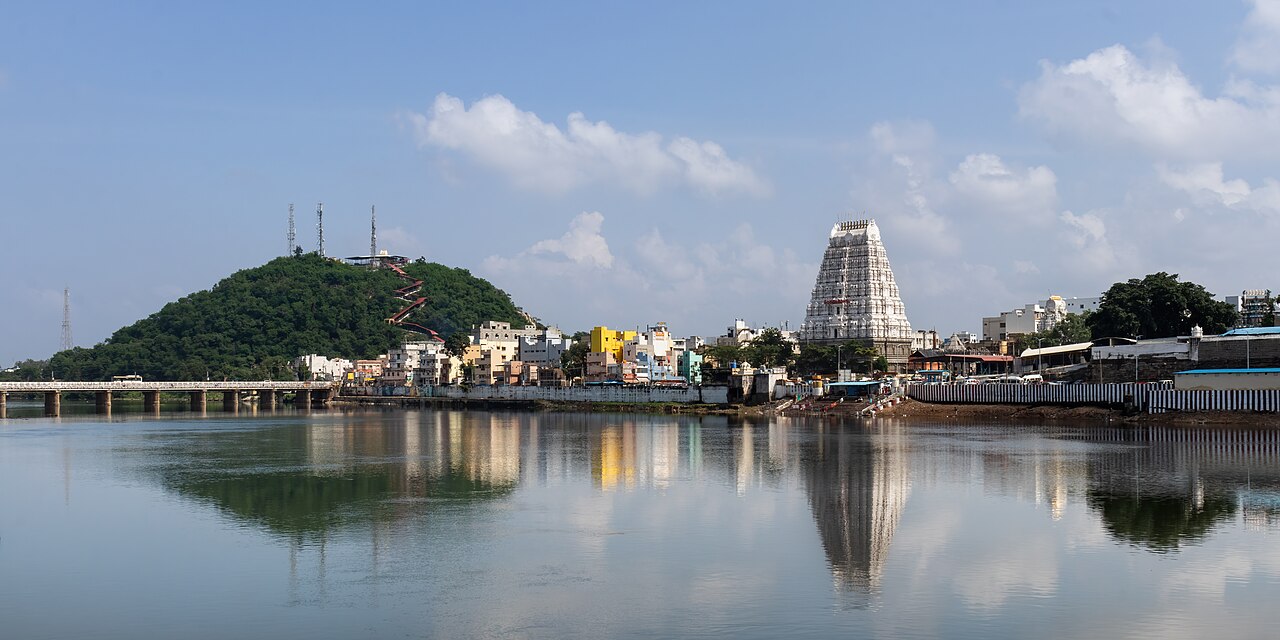
Srikalahasti Temple
Air (Vayu)
Presiding Deity: Shiva (Srikalahasteeswara)
The Vayu Lingam, representing Air, is housed in a sanctum where the lamp flickers continuously despite being enclosed — a phenomenon attributed to the air element.
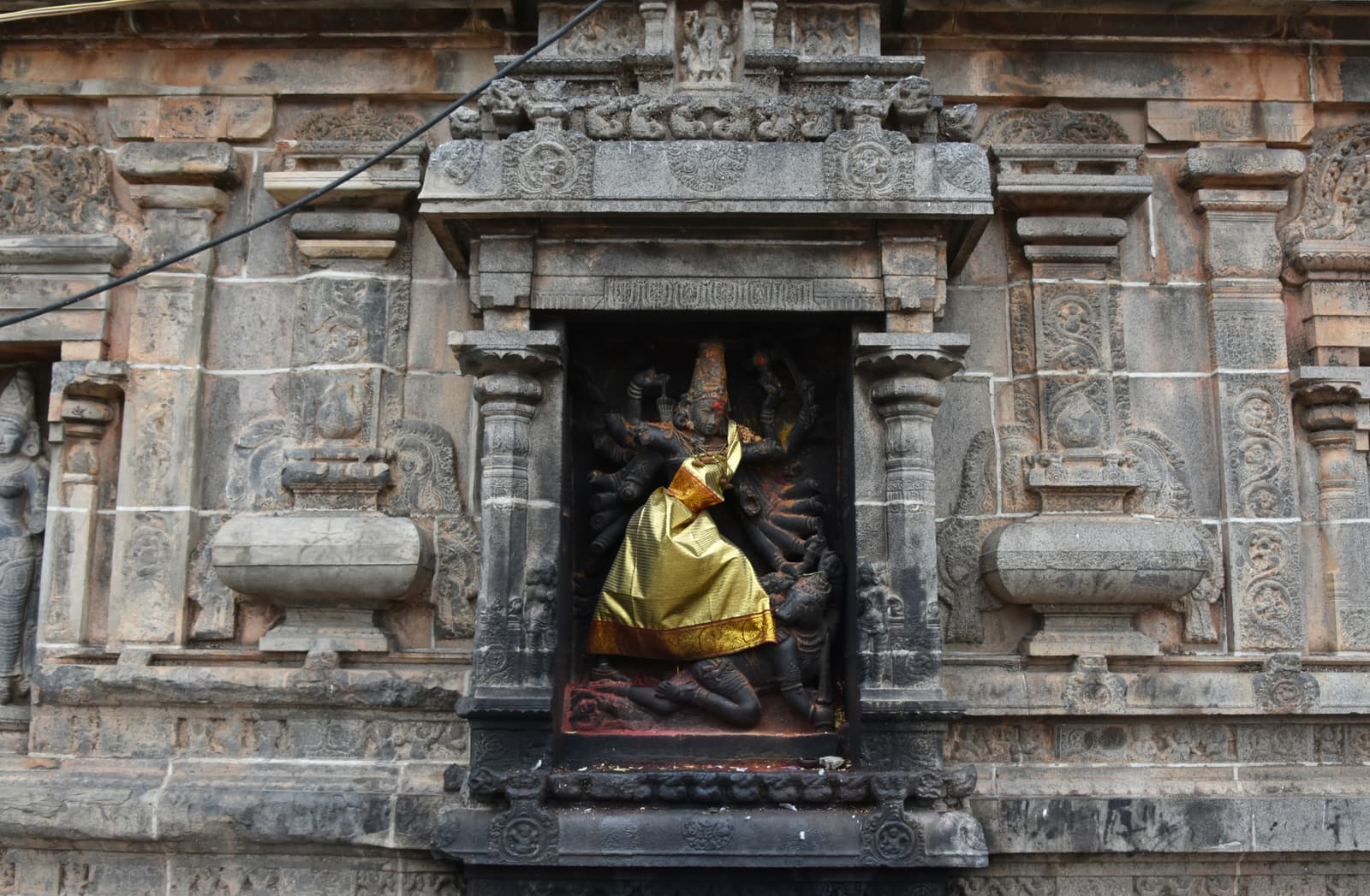
Nataraja Temple
Space (Akasha)
Presiding Deity: Shiva (Nataraja)
The Akasha Lingam, representing Space, is unique — it is invisible, symbolised by an empty space (chidambara rahasyam) behind a curtain. The temple enshrines Shiva as Nataraja, the cosmic dancer.
The Five Elemental Temples
The Pancha Bhoota Sthalas are five ancient temples in South India dedicated to Lord Shiva, each representing one of the five primeval elements (pancha bhoota) of nature: Earth (Prithvi), Water (Appu), Fire (Agni), Air (Vayu), and Space (Akasha). Together they form a complete pilgrimage circuit that embodies the Vedic understanding of the universe as a manifestation of five fundamental forces.
Four of the temples are in Tamil Nadu: Ekambareswarar (Kanchipuram), Jambukeswarar (Tiruvanaikaval), Arunachaleswarar (Tiruvannamalai), and Nataraja (Chidambaram). The fifth, Srikalahasti, is in Andhra Pradesh. Each temple houses a lingam believed to embody its respective element through observable natural phenomena.
Historical Development
The Pancha Bhoota temples span over a millennium of construction. The earliest structures date to the Pallava period (6th–8th centuries CE), with major expansions under the Chola dynasty (9th–13th centuries), followed by Pandya and Vijayanagara additions. The Cholas were the most significant builders — the Nataraja Temple at Chidambaram received its present form under Rajaraja Chola I.
All five temples follow the Dravidian architectural tradition, but each has distinct features. The Arunachaleswarar Temple has one of the tallest gopurams in South India at 66 m with 9 gateway towers. The Ekambareswarar Temple covers 25 acres with a 58 m gopuram and a thousand-pillar mandapa. The Nataraja Temple's gold-roofed sanctum is covered in 21,600 gold tiles, symbolising the 21,600 breaths of a human day.
Religious Significance
The Pancha Bhoota Sthalas are unique in Hinduism because they connect theology directly to observable natural phenomena. The Ekambareswarar lingam is made of sand (Earth). Water seeps perpetually at the base of the Jambukeswarar lingam (Water). The lamp in the Srikalahasti sanctum flickers despite being enclosed (Air).
These phenomena transform abstract philosophy into tangible experience. The pilgrim does not merely learn about the five elements — they see, feel, and witness them in the heart of each temple. Each temple is also associated with specific chakras in the yogic body, aligning the microcosm of the human body with the macrocosm of the universe.
The Philosophy of the Five Elements
In Hindu cosmology, the Pancha Bhoota are the fundamental constituents of all material existence. Prithvi (Earth) provides stability and form. Appu (Water) enables flow and cohesion. Agni (Fire) transforms and purifies. Vayu (Air) moves and sustains life. Akasha (Space) is the infinite field in which all phenomena occur. Each corresponds to a sense organ: Earth to smell, Water to taste, Fire to sight, Air to touch, Space to hearing.
The Pancha Bhoota Sthalas translate this cosmology into geography. By worshipping Shiva at all five temples, the devotee honours the divine presence in every aspect of creation. The invisible lingam at Chidambaram (Akasha) is the most philosophically profound — Space cannot be seen or touched. The empty sanctum behind the curtain (the Chidambara Rahasyam) is a direct statement that the ultimate reality is formless and infinite.
Architectural Splendour
All five temples follow the Dravidian architectural tradition, but each has distinct features. The Arunachaleswarar Temple has one of the tallest gopurams in South India at 66 m with 9 gateway towers. The Ekambareswarar Temple covers 25 acres with a 58 m gopuram and a thousand-pillar mandapa.
The Nataraja Temple at Chidambaram is architecturally unique — its sanctum is the hall of consciousness (Chit Sabha), where the cosmic dance of Shiva is enacted in bronze. The temple's gold-roofed sanctum (Kanaka Sabha) is covered in 21,600 gold tiles, symbolising the 21,600 breaths of a human day. The Jambukeswarar Temple is built around a spring that floods the inner sanctum during the rainy season.
Pilgrimage Route
A traditional Pancha Bhoota pilgrimage begins at Kanchipuram (Earth) and moves through Srikalahasti (Air), Tiruvannamalai (Fire), and Chidambaram (Space), concluding at Tiruvanaikaval (Water). Most pilgrims allocate 5–7 days.
Suggested Circuit
- • Day 1: Kanchipuram (Earth) — Ekambareswarar
- • Day 2: Srikalahasti (Air) — Kalahasteeswara
- • Day 3–4: Tiruvannamalai (Fire) — Arunachaleswarar
- • Day 5: Chidambaram (Space) — Nataraja
- • Day 6–7: Tiruvanaikaval (Water) — Jambukeswarar
Travel Distance
- • Kanchipuram → Srikalahasti: ~100 km
- • Srikalahasti → Tiruvannamalai: ~200 km
- • Tiruvannamalai → Chidambaram: ~85 km
- • Chidambaram → Tiruvanaikaval: ~115 km
Best Time to Visit
The ideal time to visit all five temples is from October to March, when the weather in Tamil Nadu and Andhra Pradesh is pleasant. November–February offers the most comfortable conditions, with moderate temperatures and low humidity.
Summer (April–June) can be extremely hot with temperatures exceeding 40°C. The monsoon (July–September) brings rainfall, particularly to coastal Chidambaram. However, the Jambukeswarar Temple's water phenomenon is most visible during the monsoon season.
Major Festivals
Each Pancha Bhoota temple has its own festival calendar. The Karthigai Deepam at Tiruvannamalai (November–December) is the most spectacular — a massive fire pot is lit atop the 2,700 m Arunachala hill, visible for kilometres around. The festival draws over a million pilgrims.
Maha Shivaratri is celebrated at all five temples with night-long vigils and abhishekam. The Nataraja Temple's Arudra Darshanam (December–January) celebrates the cosmic dance of Shiva. The Ekambareswarar Temple hosts a 13-day festival in March–April.
Travel Information
All five temples are well-connected by road and rail. Chennai is the major gateway — Kanchipuram is 75 km from Chennai, Chidambaram is 200 km, Tiruvannamalai is 185 km, Tiruvanaikaval (near Trichy) is 330 km. Srikalahasti is 110 km from Chennai on the way to Tirupati. Traditional attire is enforced at all five temples.
Men should wear dhotis or formal trousers. Women should wear sarees or salwar kameez. Photography is prohibited inside inner sanctums. Most temples offer online darshan booking for a fee.
Travel Tips
- • Use trains or private cabs for inter-city travel
- • Auto-rickshaws are convenient within towns
- • Carry water — temple complexes require significant walking
- • Most inner sanctums prohibit photography
Temple Timings
- • Most temples open 6:00 AM – 12:30 PM, 4:00 PM – 9:00 PM
- • Special darshan available for a fee at major temples
- • Festival days have extended hours
- • Abhishekam timings vary — check at each temple office
Common Questions
What are Pancha Bhoota Sthalas?
The Pancha Bhoota Sthalas are five temples dedicated to Lord Shiva, each representing one of the five elements of nature: Earth (Kanchipuram), Water (Tiruvanaikaval), Fire (Tiruvannamalai), Air (Srikalahasti), and Space (Chidambaram).
Which temple represents each element?
Ekambareswarar Temple in Kanchipuram represents Earth (Prithvi). Jambukeswarar Temple in Tiruvanaikaval represents Water (Appu). Arunachaleswarar Temple in Tiruvannamalai represents Fire (Agni). Srikalahasti Temple represents Air (Vayu). Nataraja Temple in Chidambaram represents Space (Akasha).
How is the space element (Akasha) represented at Chidambaram?
The Akasha Lingam at Chidambaram is unique — it is invisible. Behind the curtain in the sanctum is an empty space, the Chidambara Rahasyam, symbolising that the ultimate reality is formless and beyond all categories of perception.
Can pilgrims visit all five temples in one journey?
Yes. Most pilgrims complete the circuit in 5–7 days. All five temples are in South India — four in Tamil Nadu and one in Andhra Pradesh — connected by well-maintained roads and rail networks.
Which dynasty built these temples?
The temples span multiple dynasties: Pallava (6th–8th century) established the earliest structures, followed by Chola (9th–13th century) expansions, with later additions by Pandyas and Vijayanagara rulers.
What is the Karthigai Deepam festival?
Karthigai Deepam at Tiruvannamalai is the most spectacular Pancha Bhoota festival. A massive fire pot is lit atop the Arunachala hill, visible for kilometres. It draws over a million pilgrims.
Is there a fixed order to visit the Pancha Bhoota temples?
There is no mandatory order. However, a traditional sequence begins at Kanchipuram (Earth) and proceeds through Srikalahasti (Air), Tiruvannamalai (Fire), Chidambaram (Space), concluding at Tiruvanaikaval (Water).
Sources and References
This guide draws on classical texts, academic sources, and official documentation from temple authorities and the Archaeological Survey of India.
Pancha Bhoota Sthalas: The Five Element Temples of Shiva
Tamil Nadu Tourism Department
Chidambaram: The Temple of the Cosmic Dancer
Dr. R. Nagaswamy (Academic Publication)
South Indian Temples: A Historical Survey
Prof. K.R. Srinivasan (Academic Publication)
The Five Elements in Hindu Cosmology
Chandogya Upanishad (Classical Vedic Text)
— every record linked above was re-requested for this release, so the link still resolves and the publisher still serves the document. It is a link check, not a re-verification of every sentence on this page.