12 Jyotirlingas
The twelve sacred shrines where Lord Shiva manifested as a pillar of light — infinite, formless, and beyond the grasp of gods and mortals alike.
Total Jyotirlingas
12
Deity
Lord Shiva (as Jyotirlinga)
Scriptural Source
Shiva Purana (Vidyeshwara Samhita)
States Covered
8 States
Oldest Reference
c. 8th Century CE (Shankara)
Architectural Styles
Nagara, Dravida, Vesara, Bhumija
Pilgrimage Season
Oct–Mar (south); May–Oct (north)
Major Festival
Maha Shivaratri
Highest Altitude
Kedarnath (3,583 m)
Westernmost
Somnath (Gujarat)
Sacred Abodes
Explore each sacred site with detailed guides and visitor information.
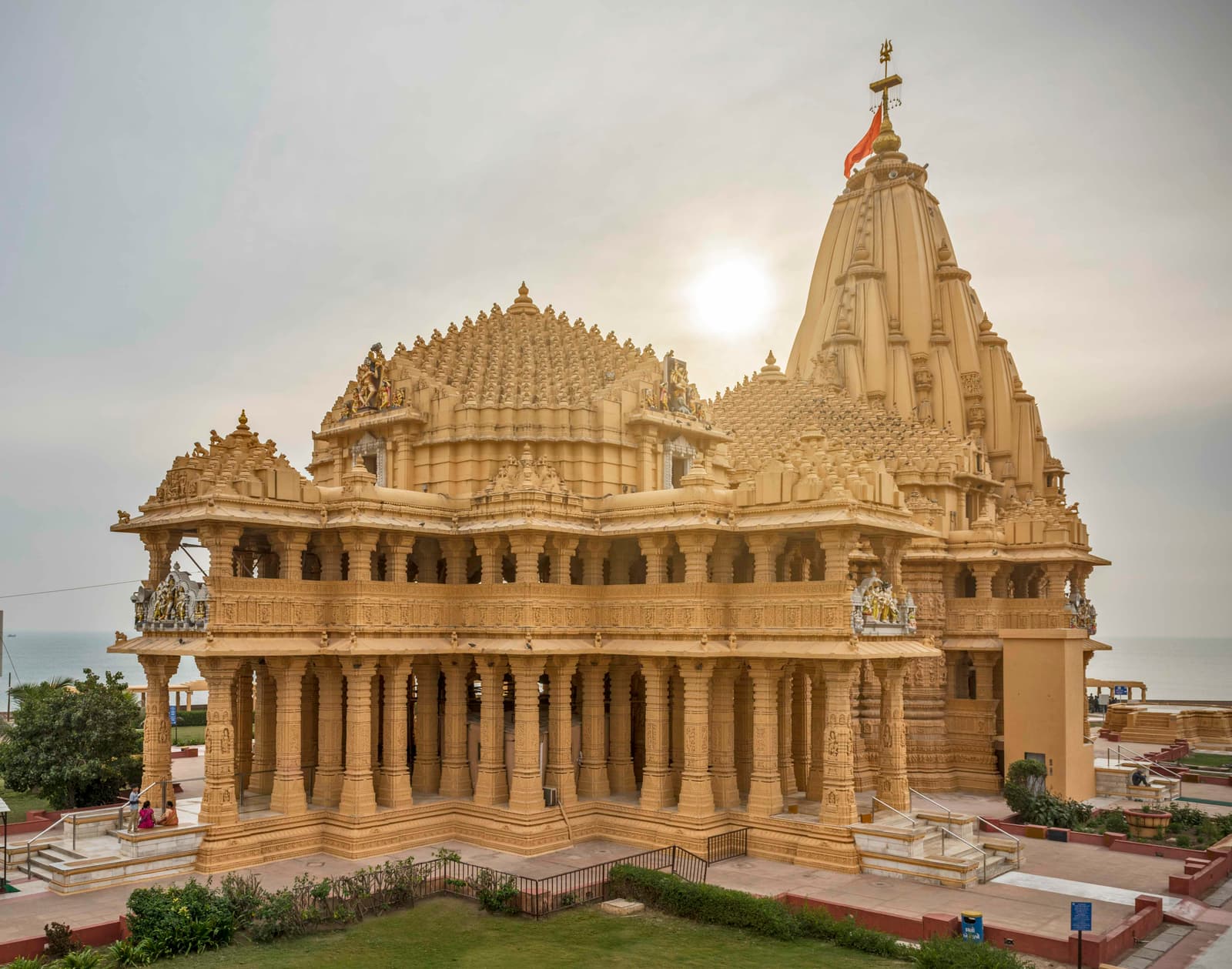
Somnath
The First Jyotirlinga
Presiding Deity: Shiva (Somnath)
Destroyed and rebuilt six times over a millennium. The current Chalukya-style structure was completed in 1951.
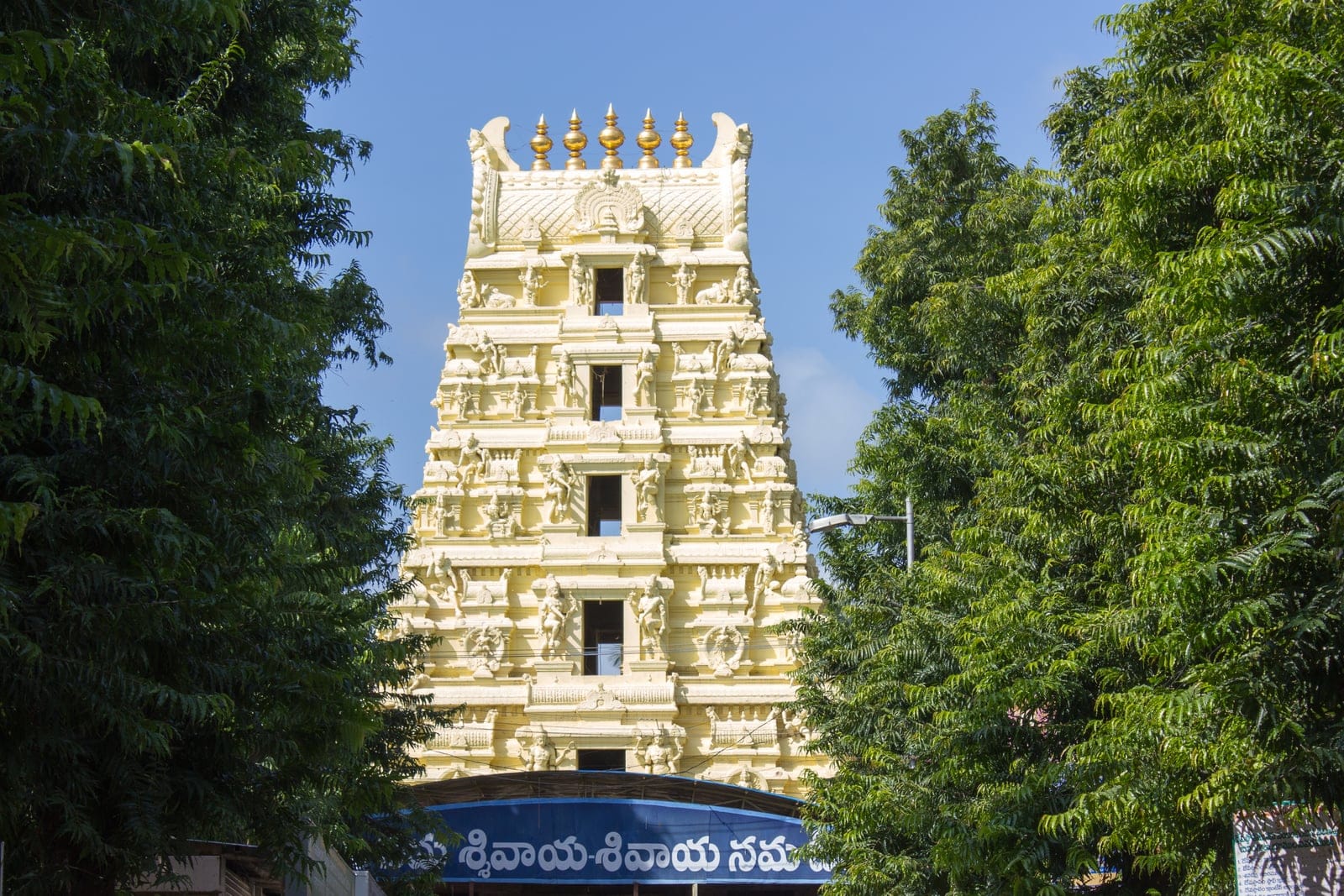
Mallikarjuna
Shiva–Shakti Convergence
Presiding Deity: Shiva (Mallikarjuna)
The only shrine that is simultaneously a Jyotirlinga and a Maha Shakti Peetha. Perched on the Nallamala Hills overlooking the Krishna River. The complex blends Nagara and Dravida elements.
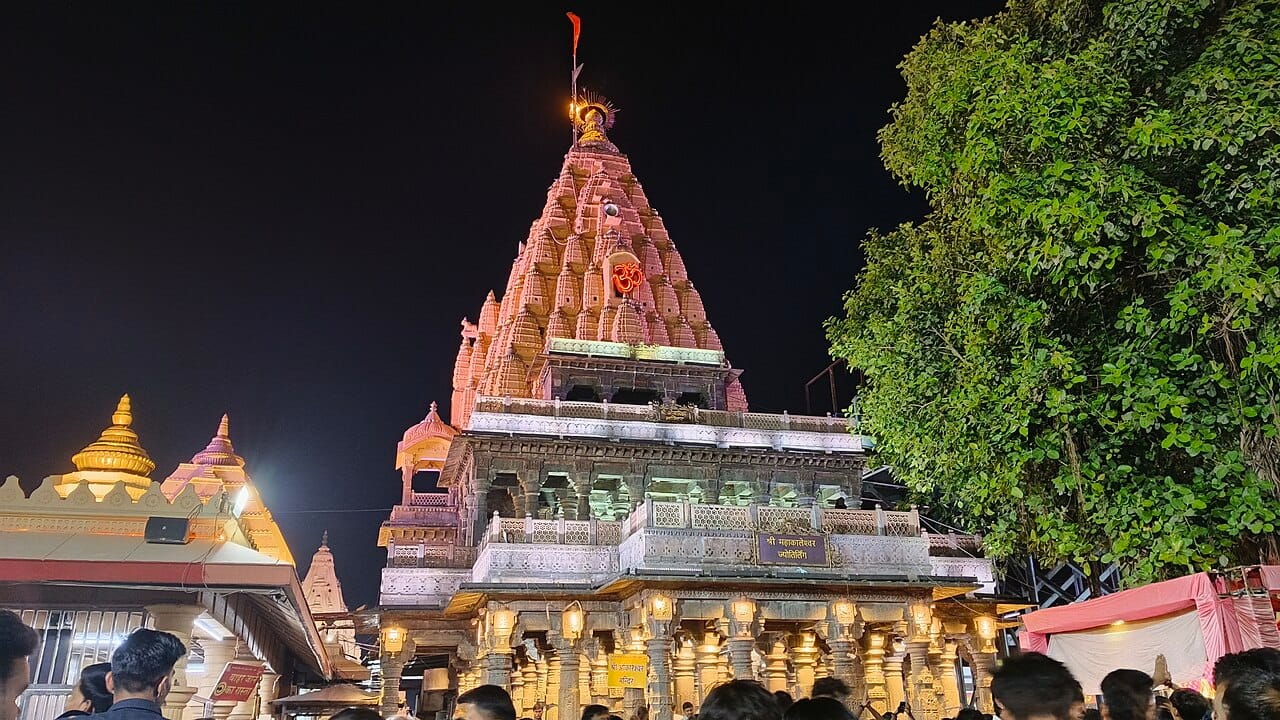
Mahakaleshwar
Lord of Time
Presiding Deity: Shiva (Mahakal)
The only south-facing (Dakshinamukhi) Jyotirlinga. The Bhasma Aarti — performed before dawn with ashes from the cremation ground — is one of Hinduism's most distinctive rituals.
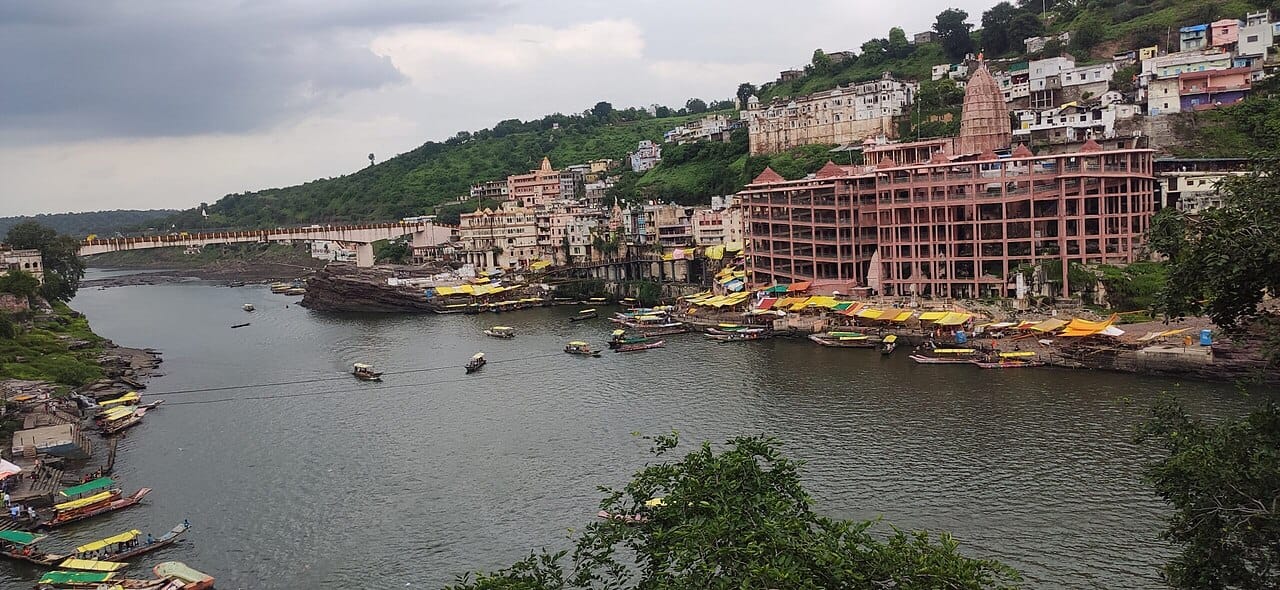
Omkareshwar
The Om-Shaped Island
Presiding Deity: Shiva (Omkareshwar)
Built on an island in the Narmada River shaped like the sacred syllable Om. The river bifurcates around the island, creating a natural pilgrimage circuit.
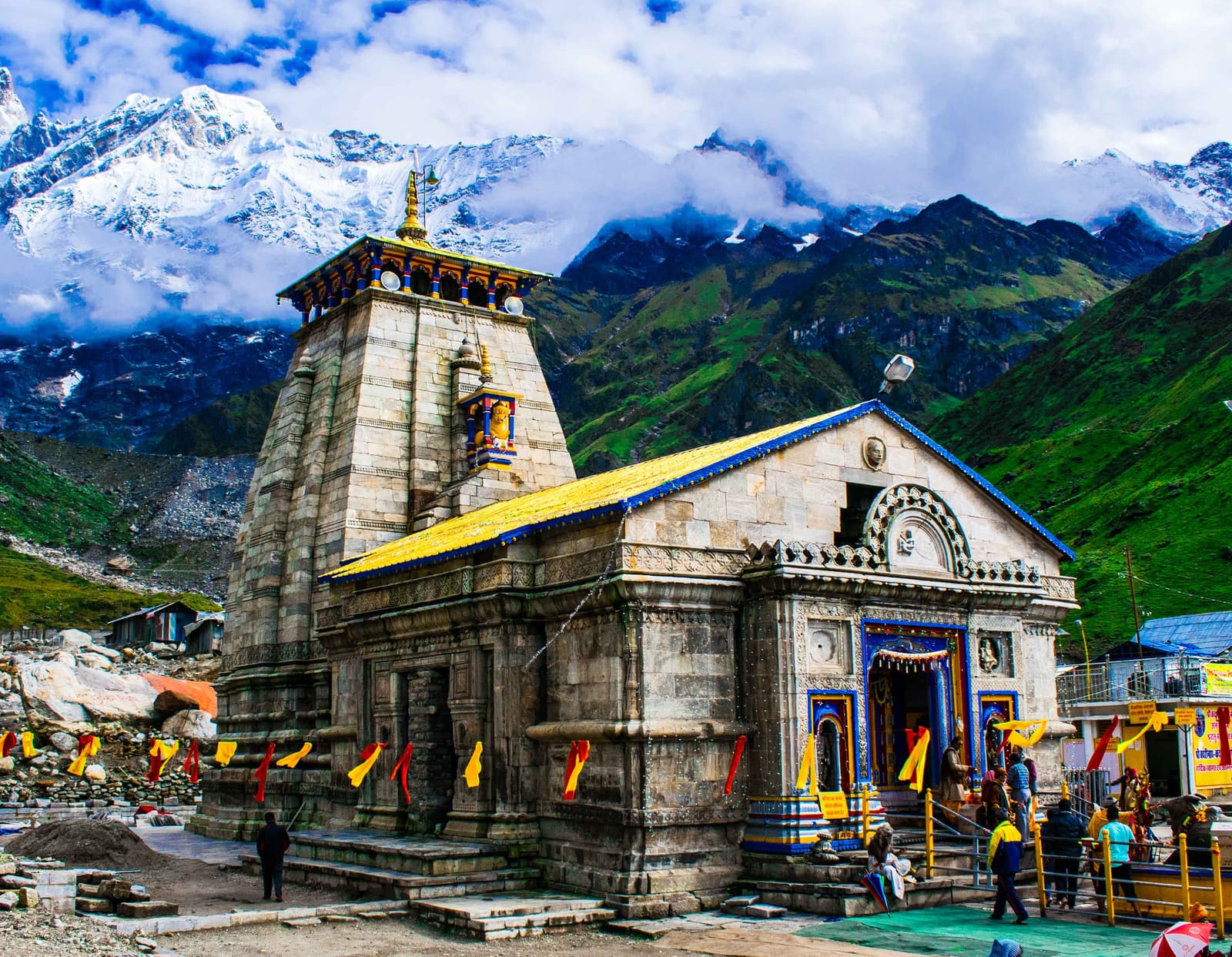
Kedarnath
The Himalayan Jyotirlinga
Presiding Deity: Shiva (Kedarnath)
The highest of the twelve at 3,583 m. Built from massive grey stone slabs without mortar. The 2013 Uttarakhand floods devastated the region but left the temple untouched.
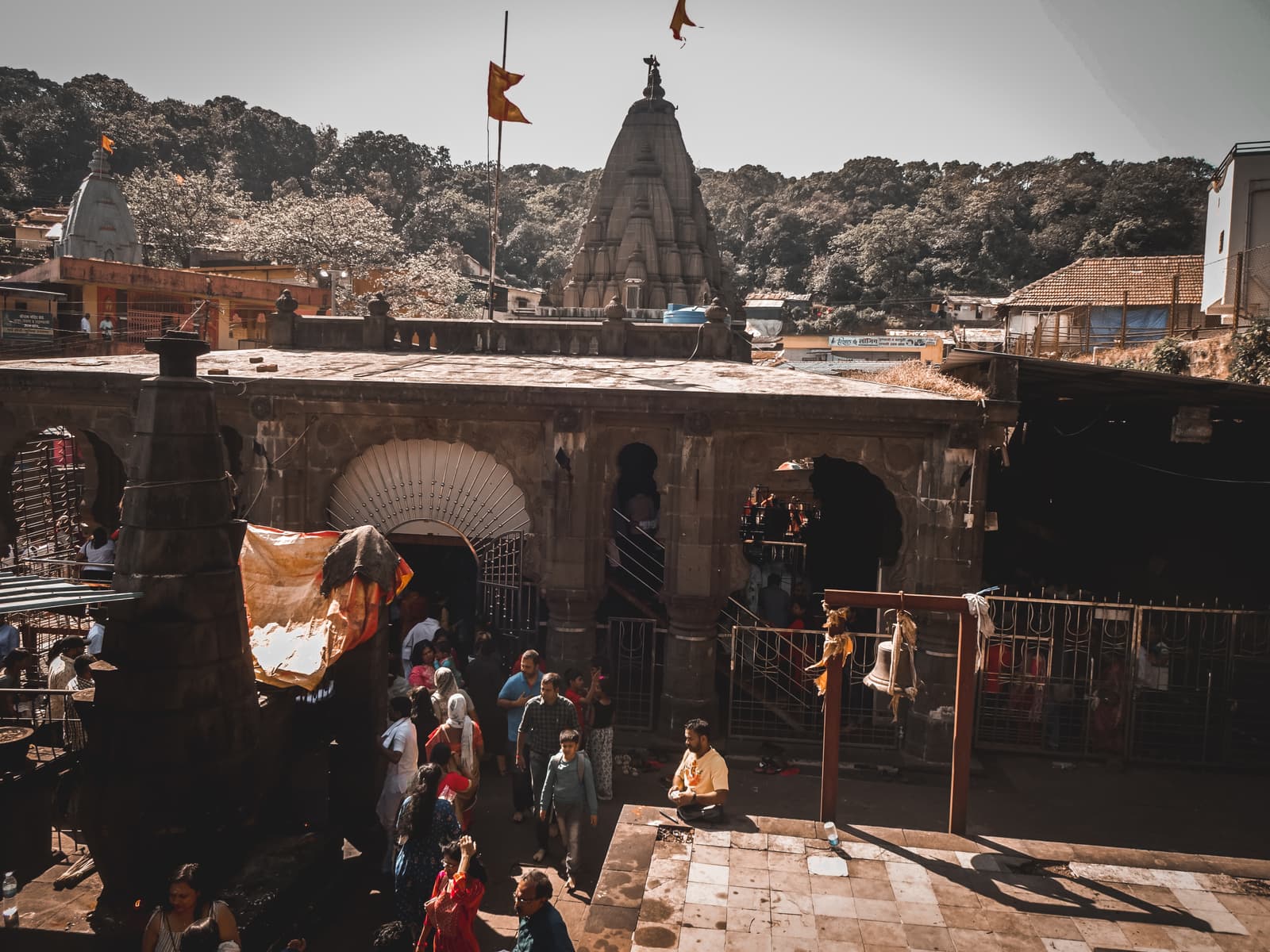
Bhimashankar
Source of the Bhima
Presiding Deity: Shiva (Bhimashankar)
Set deep in the Sahyadri hills, surrounded by a wildlife sanctuary. The Bhima River originates here. The Nagara-style temple dates to the 13th century.
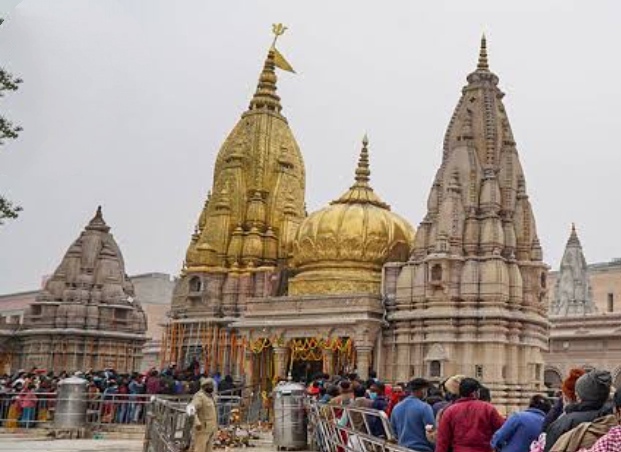
Kashi Vishwanath
Spiritual Heart of Varanasi
Presiding Deity: Shiva (Vishwanath)
The holiest of Shiva temples, in one of the world's oldest continuously inhabited cities.
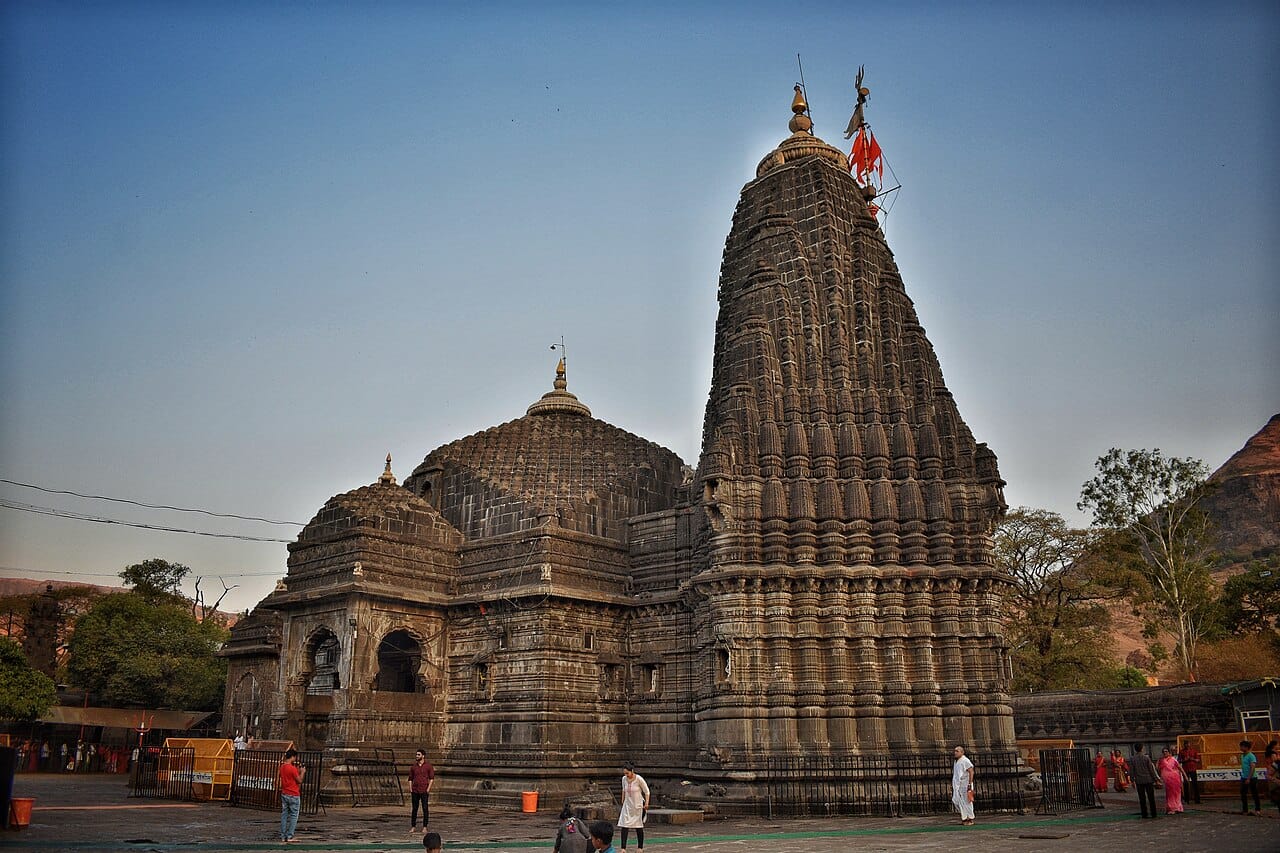
Trimbakeshwar
Three-Faced Divinity
Presiding Deity: Shiva (Trimbakeshwar)
The only Jyotirlinga with a three-faced lingam representing Brahma, Vishnu, and Shiva. The Godavari River originates at the nearby Brahmagiri Hills.
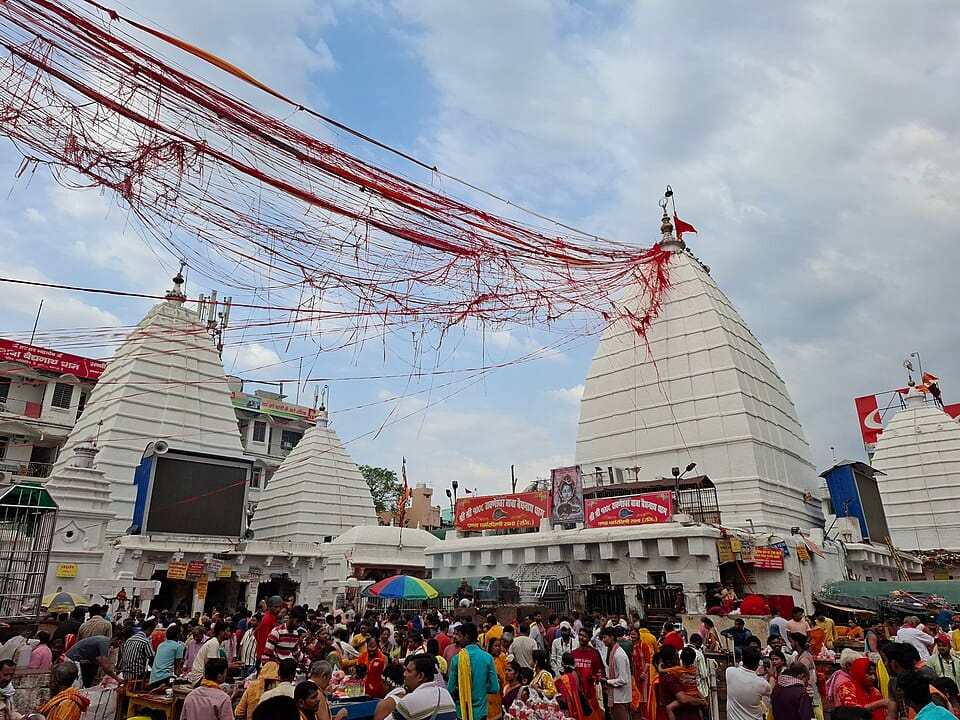
Baidyanath
The Divine Physician
Presiding Deity: Shiva (Baidyanath)
Shiva worshipped as Vaidyanath — the ultimate healer. Also a Shakti Peetha where Sati's heart fell. The Shravan Mela draws millions who walk barefoot carrying Ganga water.
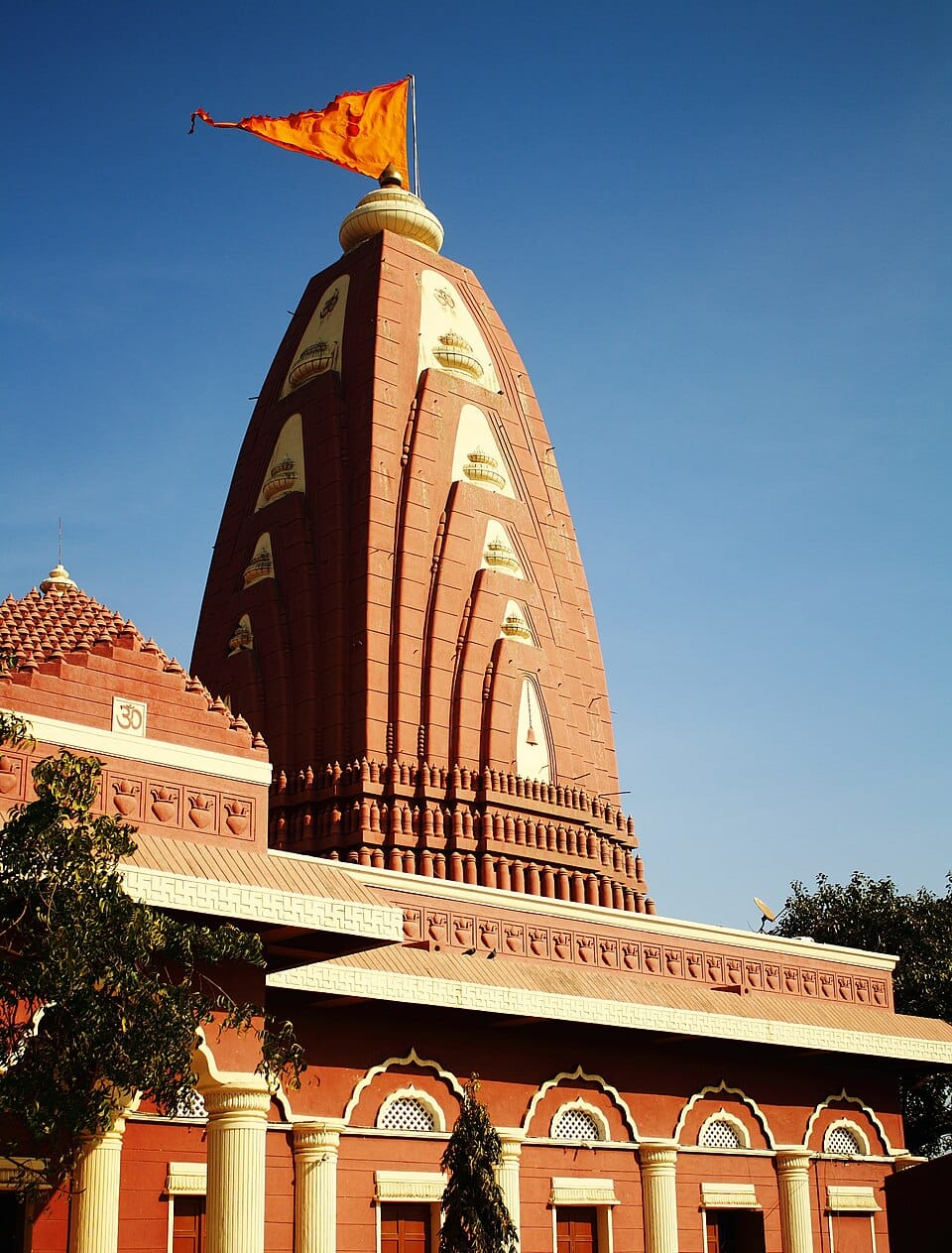
Nageshwar
Guardian of the Coast
Presiding Deity: Shiva (Nageshwar)
The Lord of Snakes, hidden in the coastal marshes near Dwarka. A 25-metre Shiva statue overlooks the Arabian Sea. The lingam is believed to protect against snake bites.
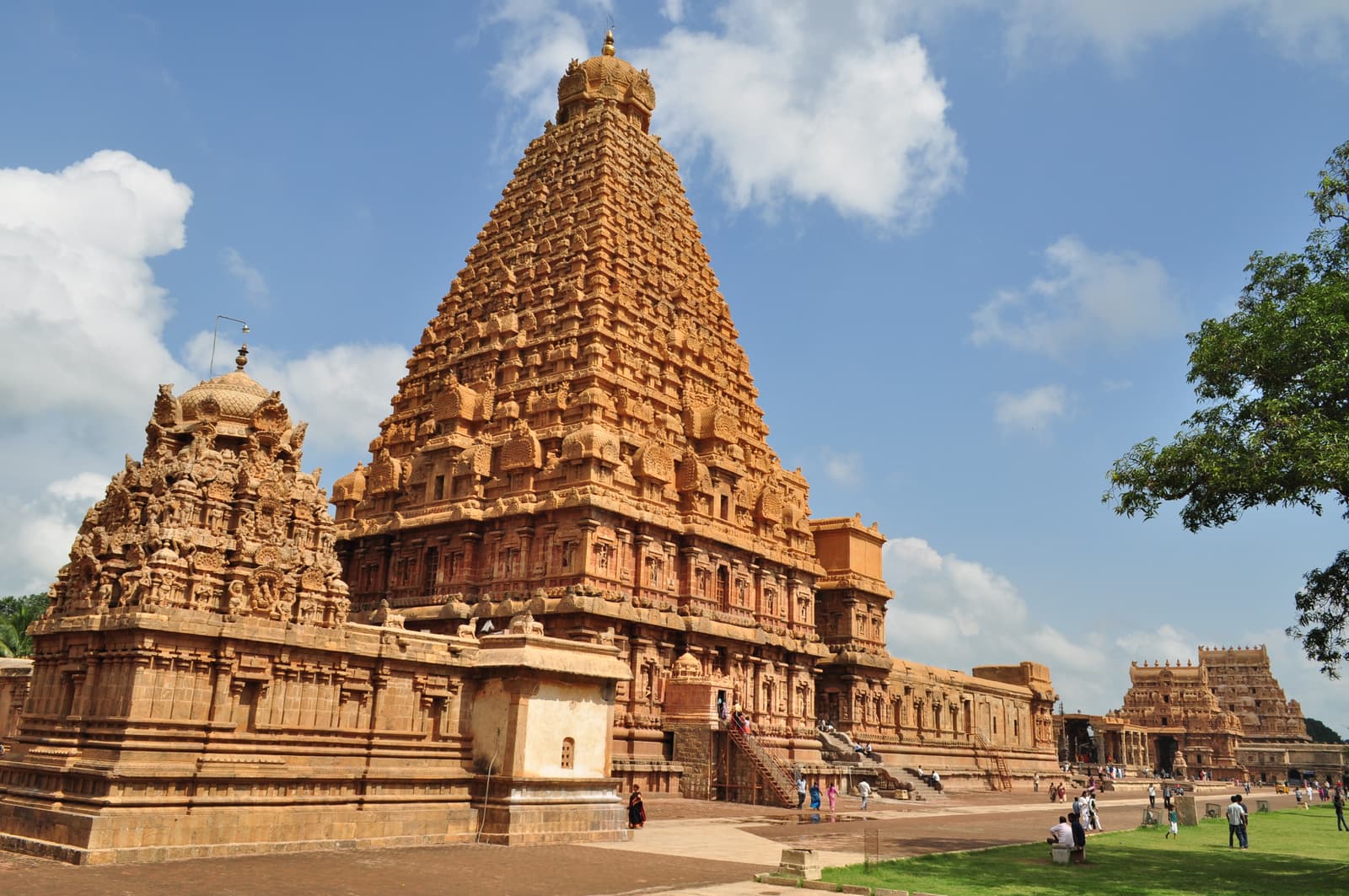
Ramanathaswamy
Ramayana Link
Presiding Deity: Shiva (Ramanathaswamy)
The southernmost Jyotirlinga. Rama worshipped Shiva here before crossing to Lanka. The temple has the longest corridor in the world at 1,220 m with 3,996 pillars.
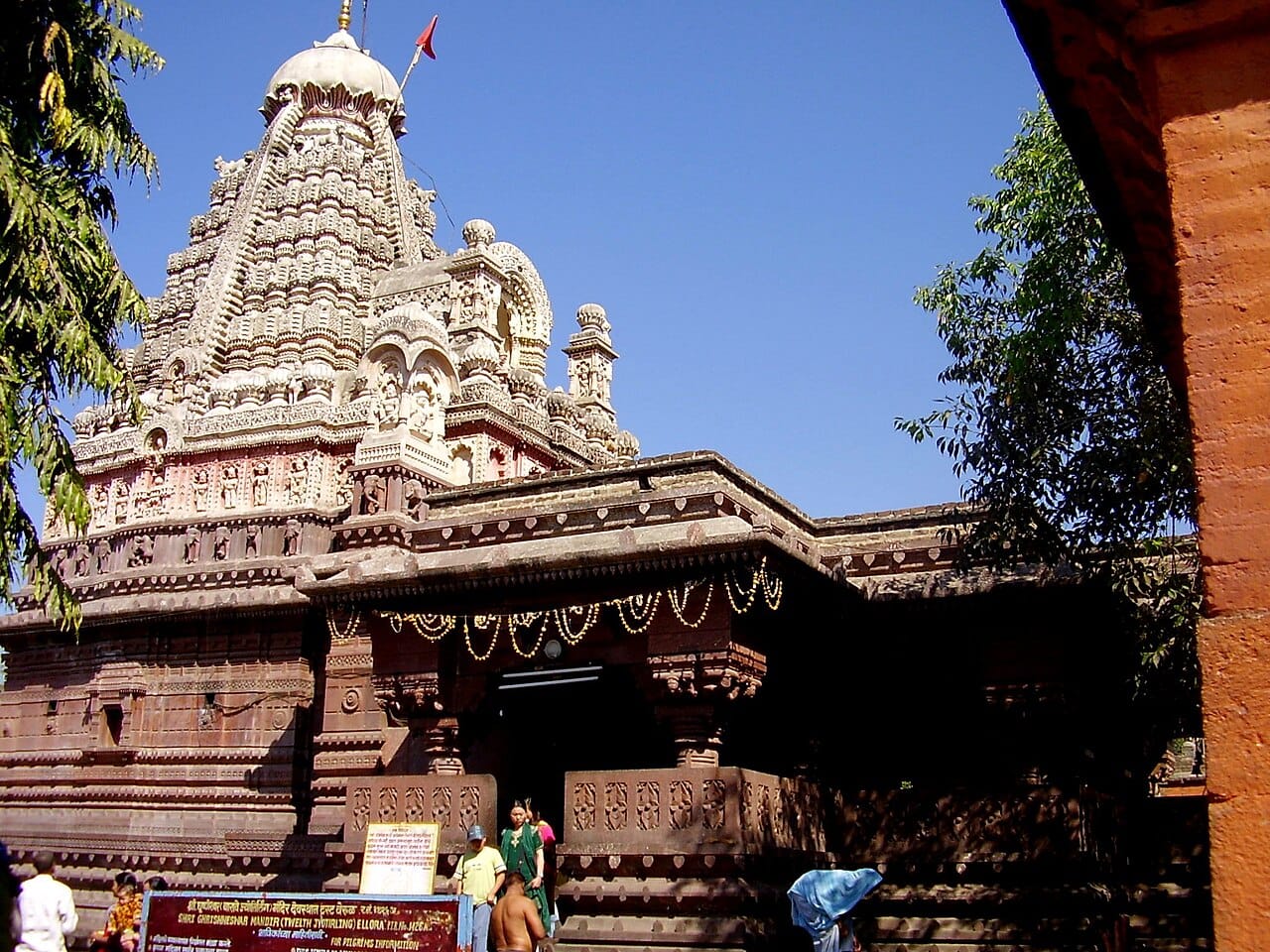
Grishneshwar
The Final Jyotirlinga
Presiding Deity: Shiva (Grishneshwar)
The last of the twelve. Built in red volcanic rock, a kilometre from the Ellora Caves. Destroyed and rebuilt multiple times; the current structure was built by Ahilyabai Holkar.
What Are Jyotirlingas?
A Jyotirlinga (Sanskrit: ज्योतिर्लिङ्ग) is a devotional representation of Lord Shiva as a pillar of light. The word combines jyoti (radiance) and linga (sign) — meaning the radiant sign of the supreme Shiva, luminous and formless. Unlike sculpted murtis that depict deities in human form, a Jyotirlinga is an abstract representation that shows Shiva's essence as light without source.
The twelve traditional Jyotirlinga shrines are places where Shiva is believed to have pierced through the earth as a self-manifested (svayambhu) beam of light. These twelve sites form the most important pilgrimage circuit in Shaivism. They are not twelve separate gods — they are twelve windows into the same infinite presence, each with a distinct story of how and why Shiva chose to appear there.
12 Jyotirlinga Name and Place List
The canonical Dwadasha Jyotirlinga order enumerated in the Shiva Purana and Adi Shankaracharya's Stotram:
| # | Jyotirlinga Name | Location / Place | State | Guide |
|---|---|---|---|---|
| 01 | Somnath | Veraval, Saurashtra | Gujarat | Explore → |
| 02 | Mallikarjuna | Srisailam, Kurnool | Andhra Pradesh | Explore → |
| 03 | Mahakaleshwar | Ujjain | Madhya Pradesh | Explore → |
| 04 | Omkareshwar | Mandhata Island | Madhya Pradesh | Explore → |
| 05 | Kedarnath | Rudraprayag, Garhwal | Uttarakhand | Explore → |
| 06 | Bhimashankar | Khed, Pune | Maharashtra | Explore → |
| 07 | Kashi Vishwanath | Varanasi | Uttar Pradesh | Explore → |
| 08 | Trimbakeshwar | Trimbak, Nashik | Maharashtra | Explore → |
| 09 | Baidyanath | Deoghar, Santhal Parganas | Jharkhand | Explore → |
| 10 | Nageshwar | Dwarka, Saurashtra | Gujarat | Explore → |
| 11 | Ramanathaswamy | Rameswaram Island | Tamil Nadu | Explore → |
| 12 | Grishneshwar | Verul, Chhatrapati Sambhaji Nagar | Maharashtra | Explore → |
Historical and Theological Origins
Shaivism holds Shiva as the supreme reality — both transcendent and immanent. The Shiva Purana dedicates the Vidyeshwara Samhita to describing the twelve shrines. The text specifies that these are locations where Shiva's linga manifested spontaneously as a column of light. The concept of the linga predates the Jyotirlinga tradition by centuries — seals discovered at Mohenjo-Daro (c. 2500 BCE) show proto-Shiva figures in yogic posture.
The specific enumeration of twelve Jyotirlingas crystallised in the early medieval period. The Dwadasha Jyotirlinga Stotram by Adi Shankaracharya (8th century CE) serves as the definitive list. Each Jyotirlinga is associated with a specific kshetra (sacred field) — a geography that participates in the divine. The temple is not just a building that houses the lingam. The land itself is the body of the deity.
The twelve Jyotirlingas span every major Indian architectural tradition. In the north, Nagara-style temples feature curvilinear shikharas — Kashi Vishwanath's gold-plated spire, Omkareshwar's stone tower, and Kedarnath's rough-hewn Himalayan masonry. In the south, Dravidian complexes like Ramanathaswamy display towering gopurams and the longest temple corridor in the world at 1,220 m. Western sites reflect regional styles: Somnath in the Chalukya tradition, Mahakaleshwar in Bhumija, and Trimbakeshwar in Hemadpanti style.
Go deeper
This page is the quick-reference directory. The long-form reading version keeps tradition, documented record and what you find on site in separate blocks for each of the twelve, and states the textual variations instead of smoothing them away.
The 12 Jyotirlingas: Shiva's Sacred Journey Across IndiaReligious Significance
The Jyotirlingas represent Shiva's direct intervention in the world. Unlike consecrated lingams installed by priests, these twelve are considered svayambhu (self-manifested) — they appeared without human agency, at moments when the cosmic order required divine restoration. The Shiva Purana states that even a single visit to a Jyotirlinga destroys accumulated sins, and the circuit of all twelve is considered equivalent to performing the ashwamedha yajna.
Each Jyotirlinga has its own puranic narrative explaining why Shiva chose that particular location. These stories involve gods, sages, demons, and ordinary devotees, demonstrating that divine grace is accessible to all regardless of station. Pilgrimage to all twelve is believed to grant liberation from the cycle of birth and death.
Shiva Tattva & the Lingodbhava
In Shaivite theology, Shiva Tattva represents the foundational ontological truth: Shiva as unmanifest, transcendent consciousness (nirguna) manifesting through saguna form as self-luminous columns of light (jyoti). The Shiva Purana details that when Brahma and Vishnu argued over cosmic primacy, Shiva revealed the Lingodbhava — an infinite pillar of fiery brilliance without beginning, middle, or end. Brahma ascended as a swan and Vishnu dove as a boar, yet neither could measure its boundaries.
The Lingodbhava encodes a vital philosophical insight: ultimate reality exceeds empirical measurement and intellectual pride. It can only be realized through reverent surrender. The twelve major Jyotirlinga temples represent sacred geographic focal points where this Shiva Tattva is materially present as svayambhu (self-manifested) pillars of light.
This establishes the core theological claim: the twelve Jyotirlingas are not symbolic representations of divinity, but living manifestations where pilgrims directly encounter the transcendent Shiva Tattva.
Architectural Diversity
The twelve Jyotirlingas span every major Indian architectural tradition. In the north, Nagara-style temples feature curvilinear shikharas — Kashi Vishwanath's gold-plated spire, Omkareshwar's stone tower, and Kedarnath's rough-hewn Himalayan masonry. In the south, Dravidian complexes like Ramanathaswamy display towering gopurams and the longest temple corridor in the world at 1,220 m with 3,996 pillars.
Western sites reflect regional styles. Somnath is built in the Chalukya tradition of Gujarat. Mahakaleshwar features the Maratha Bhumija style. Trimbakeshwar follows the Hemadpanti style named after the 13th-century minister Hemadri. Srisailam Mallikarjuna blends Nagara and Dravida elements, reflecting its location at the cultural crossroads of the Deccan. The various building periods — from ancient foundations to medieval expansions to 20th-century reconstructions — make the Jyotirlingas an architectural timeline of India.
Pilgrimage Routes
A complete yatra of all twelve Jyotirlingas typically takes 20–25 days. The most practical approach is to visit them in four regional clusters, each of which can be completed independently. The Western Cluster covers 5 Jyotirlingas across Gujarat and Maharashtra — the densest concentration. The Central Cluster covers Mahakaleshwar in Ujjain and Omkareshwar on the Narmada. The Northern Cluster covers Kashi Vishwanath in Varanasi and Kedarnath in the Himalayas. The Southern Cluster covers Mallikarjuna at Srisailam, Ramanathaswamy at Rameswaram, and Baidyanath at Deoghar.
01. Western Cluster
Gujarat + Maharashtra
Somnath → Nageshwar → Bhimashankar → Trimbakeshwar → Grishneshwar
Duration: 8–10 days
02. Central Cluster
Madhya Pradesh
Mahakaleshwar → Omkareshwar
Duration: 3–4 days
03. Northern Cluster
UP + Uttarakhand
Kashi Vishwanath → Kedarnath
Duration: 5–7 days
04. Southern Cluster
AP + TN + Jharkhand
Mallikarjuna → Ramanathaswamy → Baidyanath
Duration: 7–8 days
Best Time to Visit
The ideal pilgrimage season varies by location since the twelve Jyotirlingas span diverse climatic zones. Coastal and southern sites are best from October to March. Central Indian sites in Madhya Pradesh are pleasant from November to February. Kedarnath is accessible only from May to October due to snow closure. Kashi Vishwanath can be visited year-round but is most comfortable from October to March.
A comprehensive pilgrimage should be planned over several months or divided into regional circuits matching the optimal season for each cluster.
Winter (Oct–Mar)
Ideal for coastal and southern Jyotirlingas: Somnath, Nageshwar, Ramanathaswamy, Mallikarjuna. Comfortable temperatures, clear skies.
Summer (May–Oct)
Kedarnath and Himalayan sites are open. Hill stations accessible. Lower crowds at coastal temples, but higher temperatures.
Monsoon (Jun–Sep)
Avoid Himalayan sites due to landslides. Central and western sites remain accessible but expect rain. Shravan month (Jul–Aug) is peak pilgrimage despite weather.
Major Festivals
Maha Shivaratri is the most significant festival at every Jyotirlinga, celebrated on the 14th night of the dark half of Phalguna (February–March). Devotees observe night-long vigils, perform abhishekam, and chant the Rudram. Each Jyotirlinga hosts its own grand celebration with local variations.
The month of Shravan (July–August) sees the largest Jyotirlinga pilgrimage event — the Shravani Mela at Baidyanath Dham in Deoghar. Millions of kanwariyas walk barefoot carrying Ganga water from Sultanganj to offer abhishekam. Kashi Vishwanath's Mangala Aarti is performed every dawn. Mahakaleshwar's Bhasma Aarti uses cremation ashes as offering. At Srisailam, the annual Shivaratri festival draws over 500,000 pilgrims.
Travel Information
All twelve Jyotirlingas are accessible by road, rail, or air. Major railway stations serve most sites: Veraval for Somnath, Ujjain for Mahakaleshwar, Varanasi for Kashi Vishwanath, Rameswaram for Ramanathaswamy. Nearest airports include Diu (Somnath), Ujjain (Mahakaleshwar), Varanasi (Kashi Vishwanath), and Dehradun (Kedarnath).
Traditional attire is mandatory at most shrines. Photography is prohibited inside inner sanctums. Queue wait times vary from 30 minutes to 10 hours depending on season. Many temples offer VIP darshan or online slot booking.
Essential Tips
- • Carry small cash denominations for offerings
- • Remove footwear before entering sanctums
- • Leather items not permitted inside temples
- • Check temple websites for dress code specifics
Ritual Etiquette
- • Abhishekam participation varies — some allow touch, others only viewing
- • Mahakaleshwar’s Bhasma Aarti requires prior registration
- • Online booking available for special darshan at most major sites
- • Maintain silence and decorum within temple complexes
Common Questions
What is the best way to visit all 12 Jyotirlingas?
Visit them in regional clusters: Gujarat–Maharashtra (5 sites), Madhya Pradesh (2), Uttar Pradesh–Uttarakhand (2), and Andhra Pradesh–Tamil Nadu–Jharkhand (3). A complete yatra takes 20–25 days. Spread the journey over multiple trips for a deeper experience.
Is there a specific sequence to visit the Jyotirlingas?
Tradition often begins with Somnath, considered the first Jyotirlinga to have manifested. Some pilgrims follow the Dwadasha Jyotirlinga Stotram order composed by Adi Shankaracharya. There is no mandatory sequence.
What makes Mahakaleshwar's Bhasma Aarti unique?
Mahakaleshwar is the only south-facing (Dakshinamukhi) Jyotirlinga. The Bhasma Aarti is performed before dawn using ashes from the cremation ground, symbolising Shiva's lordship over death. The ritual requires prior registration.
Which Jyotirlinga is mentioned in the Mahabharata?
Kedarnath is mentioned in the Mahabharata as the place where the Pandavas sought Shiva's atonement after the Kurukshetra war. The lingam at Kedarnath is believed to be the fossilised hump of the bull that Shiva transformed into.
Which Jyotirlinga is the most difficult to reach?
Kedarnath at 3,583 m in the Himalayas requires a 16 km trek from Gaurikund unless you take a helicopter. The temple is only open six months a year (May–October) due to heavy snowfall.
Can anyone perform Abhishekam at a Jyotirlinga?
Rules vary. At Srisailam Mallikarjuna, devotees can touch and perform Abhishekam directly. At Kashi Vishwanath and Mahakaleshwar, priests perform the ritual while devotees watch. Check individual temple guidelines.
What is the difference between a Jyotirlinga and a regular Shiva lingam?
A Jyotirlinga is considered svayambhu (self-manifested) — not installed by human hands. These twelve lingams appeared spontaneously as pillars of light. Regular Shiva lingams are consecrated by priests through ritual installation (prana pratishtha).
Are all 12 Jyotirlingas in India?
Yes, all twelve traditional Jyotirlingas are located within India, spread across eight states: Gujarat, Maharashtra, Madhya Pradesh, Uttarakhand, Uttar Pradesh, Andhra Pradesh, Tamil Nadu, and Jharkhand. Maharashtra has the most with three (Bhimashankar, Trimbakeshwar, Grishneshwar).
Sources and References
This guide draws on classical texts, academic sources, and official documentation from temple authorities and the Archaeological Survey of India.
Hindu Pilgrimage: Shifting Patterns and Perspectives
L.P. Vidyarthi (Academic Publication)
— every record linked above was re-requested for this release, so the link still resolves and the publisher still serves the document. It is a link check, not a re-verification of every sentence on this page.