From ancient rock-cut marvels to towering imperial shrines, discover the architectural soul of Bharat through our verified digital archive.
Explore More Temples
Builder
Maratha (Scindia Dynasty) reconstruction
Dynasty
Paramara (original) — Maratha Scindia
Construction
18th century (1730s–1750s, current structure)
Style
Nagara (Paramara-influenced, with Maratha elements)
Main Deity
Mahakaleshwar (Shiva as Mahakala)
Location
Ujjain, Madhya Pradesh (ancient Avantika)
Orientation
South-Facing (Dakshinamukhi)
Sacred River
Shipra (also spelled Kshipra)
Significance
Jyotirlinga, Sapta Puri city, Simhastha Kumbh host
Famous Ritual
Bhasma Aarti (pre-dawn, 4:00–5:30 AM)
Season
October to March
Pilgrimage Circuit
12 Jyotirlingas, Malwa circuit, Simhastha
Official Website
mahakaleshwar.nic.in
Mahakaleshwar Temple stands at the heart of Ujjain, one of the seven sacred cities (Sapta Puri) of Hinduism and the traditional capital of ancient Avantika. The presiding deity is Shiva as Mahakala — the lord of time and death — represented by a swayambhu (self-manifested) lingam that is uniquely oriented toward the south, distinguishing it from every other Jyotirlinga in India. The temple nests a sprawling complex of subsidiary shrines, courtyards, and sacred kunds enclosed within high walls. The pre-dawn Bhasma Aarti, in which the lingam is anointed with sacred ash, has been performed here for centuries, drawing millions of Shaivite pilgrims to the banks of the Shipra River.
Every other Jyotirlinga in India faces east or north — the auspicious directions of sunrise and the celestial pole. Mahakaleshwar faces south. That single architectural detail changes everything about how this temple is understood.
In Hindu cosmology, south is the direction of Yama, the god of death. It is the direction of the ancestors (pitris), of the underworld (patala), and of the inauspicious. Temples in India almost never open to the south. To face south is to face death itself. Mahakaleshwar does so deliberately, and the name — Mahakal — tells you why. Kaal means time but also death; Mahakal means the one who is lord over both. By facing south, Mahakaleshwar stares down death, not as an enemy but as a vanquished force. The south-facing orientation is not a quirk of architecture; it is a theological statement carved into the stone.
This is unique among the twelve Jyotirlingas. Somnath faces east. Mallikarjuna faces east. Mahakaleshwar alone breaks the pattern. Pilgrims who enter the sanctum do so knowing they are walking toward the direction of death — and that the deity within has already conquered it. You do not approach Mahakal as a supplicant asking for blessings; you approach him as a witness to the ultimate victory. To see the full set, browse our guide to the twelve Jyotirlingas of India.
The iconography reinforces this. Mahakal is often shown in a fierce form, with a garland of skulls, a trident, and a damaru (drum) whose beat marks the passage of time. He is not the meditating yogi of the Himalayas. He is the destroyer who dances at the end of every cosmic cycle. The south-facing orientation is the architectural equivalent of the tandava — the dance of destruction that is also a dance of creation, because only what is destroyed can be reborn.
The Bhasma Aarti begins when the city of Ujjain is still asleep. At approximately 3:30 AM the temple doors open and a small group of priests enters the sanctum — a group so exclusive that even the chief priest of another Jyotirlinga cannot attend without special permission. The ritual that follows is the most famous of the twelve Jyotirlingas, and it is famous for a reason that most descriptions miss: the lingam is anointed in sacred ash renewed from the previous night's own fire sacrifice.
Bhasma — sacred ash — is prepared from cow dung mixed with sandalwood, ghee, and herbs, burned in a specific ritual fire from the night before the aarti. The priests smear this ash over the self-manifested lingam in a specific pattern, chanting mantras that are not recited elsewhere. The ash represents the final state of all material existence; everything that lives becomes ash. By anointing the lingam with this substance, the ritual declares that Shiva — Mahakal — is the Lord of that final transformation.
The aarti is performed in the pre-dawn darkness while the inner sanctum is closed. Devotees waiting outside see nothing until the doors open again and the lingam is revealed, covered in fresh white ash with a single flame burning before it. The effect is overwhelming, and many devotees report that the atmosphere during the Bhasma Aarti is unlike any other religious experience — dense, charged, and ancient.
Passes for the Bhasma Aarti are among the most sought-after in Indian pilgrimage, limited to roughly 100–150 people per day. Passes are arranged a day in advance at the temple trust office and online through the official Mahakaleshwar website. Devotees often plan an entire Ujjain trip around securing a single pass. To witness the Bhasma Aarti is to witness something that connects the modern devotee to an unbroken chain of priests stretching to the temple's earliest origins.
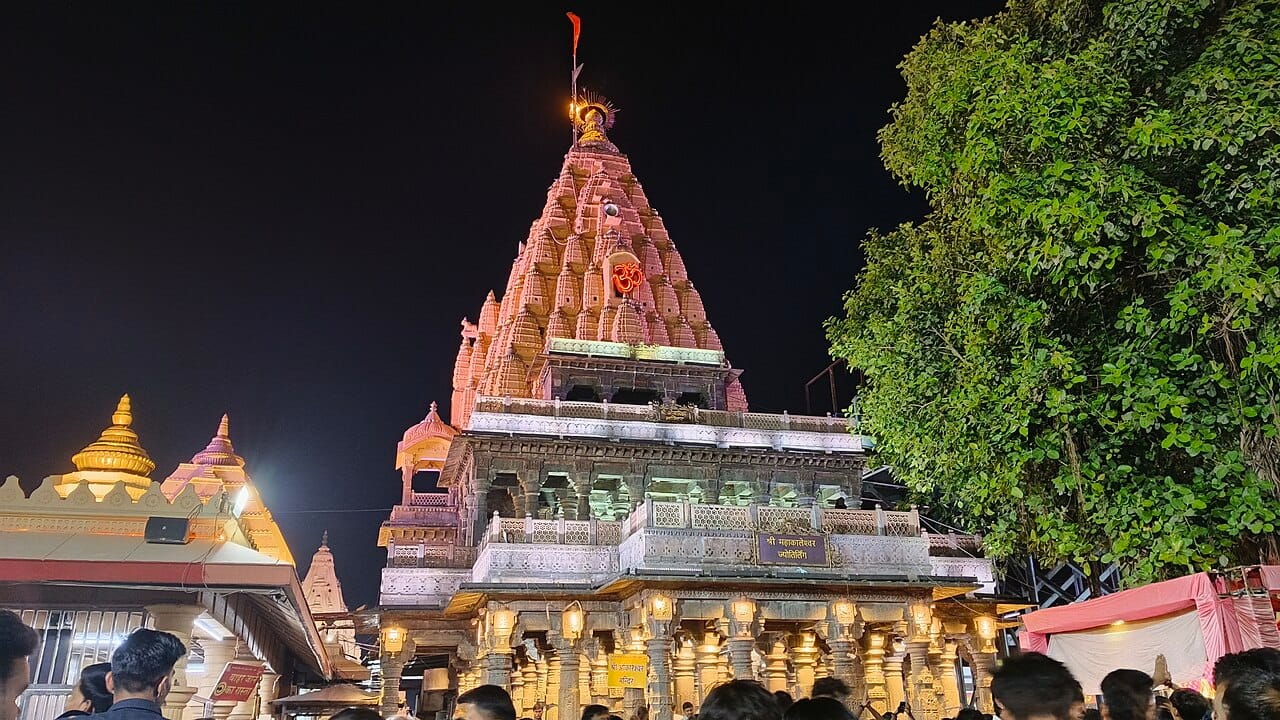
Among the twelve Jyotirlingas, some are sthapit — installed by human hands and consecrated by priests through elaborate prana-pratishtha ceremonies. Mahakaleshwar is not among them. The lingam here is Swayambhu — self-manifested. This distinction is central to the temple's theology, because a self-manifested lingam is not a representation of Shiva: it is Shiva. The stone itself is the deity, not a symbol of the deity.
The legend of the Swayambhu lingam is recorded in the Puranas. According to the Shiva Purana, the city of Ujjain was ruled by King Chandrasena, a devout worshipper of Shiva. When the demon Dushana attacked the city, the king prayed for protection. Shiva manifested as Mahakala — the great lord of time — rising from the earth in a blinding pillar of light, and annihilated the demon. The column of light solidified into the Swayambhu lingam that stands today.
The south-facing orientation was not carved or positioned by human hands; it is considered an unalterable fact of the sacred geography. The lingam rises directly from the earth without a separate pedestal, its base invisible below the floor, appearing to grow out of the ground like a tree and drawing power from the planet itself.
A Swayambhu lingam does not require human consecration to be considered alive; the prana is intrinsic. The priests perform rituals not to animate the deity but to serve one who is already fully present. This is why the Bhasma Aarti can draw on the ash of a fire sacrifice — because Mahakaleshwar, being self-manifested, is not bound by the ritual purity rules that govern installed deities. He exists beyond them.
Ujjain is one of the seven sacred cities (Sapta Puri) of Hinduism and one of the four locations where the Kumbh Mela is held. But its identity is inseparable from Mahakaleshwar. The city is called Avantika in the ancient texts and has been continuously inhabited for over three thousand years. It was the capital of the Avanti kingdom, the seat of the legendary Vikramaditya, and the center of Indian astronomy — for centuries the city served as the prime meridian of traditional Indian geography.
The Kshipra River (also spelled Shipra) flows through the city and is considered sacred in its own right. A bath in the Kshipra during the Simhastha Kumbh Mela is considered equal in merit to bathing in the Ganga. Ghats line the riverbanks, and thousands of pilgrims descend to the water daily for ritual bathing before visiting the temple.
Ujjain's sacred geography is organised around the idea of the Mahakal Van (forest). According to tradition the entire region was once a dense forest inhabited by sages who worshipped Shiva in natural forms. The temple grew at the center of that forest, and the city grew around the temple — the urban layout is radial, with rings of settlement spreading outward from Mahakaleshwar. The temple is the city's literal and symbolic center.
The Simhastha Kumbh Mela transforms Ujjain every twelve years. Temporary cities spring up along the Shipra, housing millions of pilgrims, sadhus, and tourists. The temple becomes the focal point of a festival that spans the whole city. Mahakaleshwar shares the Malwa sacred landscape with Omkareshwar Temple on the Narmada's Mandhata Island — the two Jyotirlingas of Madhya Pradesh.
The earliest references to a temple at Mahakaleshwar appear in the Puranas, but the first recorded date in the temple's history is a violent one. In 1234–35 CE, Sultan Iltutmish of the Delhi Sultanate led a military campaign into central India and targeted Ujjain. According to contemporary chronicles he destroyed the Mahakaleshwar Temple and defiled the sanctum. The temple was among the most prominent casualties of the Turkic invasions that swept central India; for centuries the site remained in a state of partial ruin.
The temple was not entirely abandoned. Local priests continued to perform rituals in makeshift structures, and the Swayambhu nature of the lingam meant that worship never fully ceased — you cannot destroy a self-manifested deity by destroying the building over it. Fragments of the original medieval structure were incorporated into later constructions, and remnants of the pre-13th-century temple can still be seen in the basement levels of the current building. The Paramara ruler Jayavarman II attempted a rebuild, but the full revival came only through the Scindia dynasty.
The temple's rebirth came through the Scindia dynasty of the Maratha Empire. In the early 18th century the Scindias made Ujjain their capital, and in the 1730s–1750s they built the current temple structure — importing craftsmen, using fine local black stone, and commissioning sculptors to carve the Nagara-style shikhara that had flourished in medieval Malwa. It is a comparable story of destruction and resurrection to the one at Somnath Temple, another Jyotirlinga that was repeatedly destroyed and rebuilt.
The Scindia family has maintained its connection to Mahakaleshwar ever since, and the temple's administration is managed jointly by the Scindia trust and the Madhya Pradesh government. The 2022 Mahakaleshwar Corridor project — a massive redevelopment of the temple surroundings — created a grand approach to the temple from the Shipra River and transformed the visitor experience. The temple that Iltutmish tried to erase has not only survived; it has grown.
The daily ritual schedule at Mahakaleshwar is among the most elaborate of any Hindu temple. A sequence of aartis punctuates the day, each with its own set of mantras, offerings, and symbolic meaning. The cycle never stops — the temple is open from early morning until late night every day of the year.
The day begins with the Bhasma Aarti (4:00–5:30 AM), followed by the Mangala Aarti (6:00 AM), the Bhoga Aarti (10:30 AM), the Madhyan Aarti (12:30 PM), the afternoon Shringar Aarti, the Sandhya Aarti at sunset, and the Shej Aarti (10:30 PM) when the deity is ceremonially put to rest. Throughout the day devotees can perform Rudrabhishek, a special ritual bathing of the lingam with Vedic chanting.
During the month of Shravan (July–August) the ritual schedule expands significantly. Daily processions carry the deity's palanquin to the Shipra River for a ceremonial bath. The processions fill the streets of Ujjain with chanting, drums, and color, and the temple is decorated with flowers and lights. The entire city breathes in rhythm with the temple during this period.
The festival calendar at Mahakaleshwar is dominated by two events that define the temple's annual and twelve-year cycles: Maha Shivaratri and the Simhastha Kumbh Mela.
Maha Shivaratri at Mahakaleshwar is one of the largest annual gatherings at any Jyotirlinga: over a million devotees visit the temple on this single night. The lingam receives continuous abhishek throughout the night, the temple stays open for 24 hours, cultural programs are held, and the Bhasma Aarti is extended. The queue for darshan can stretch for kilometres under a sky lit by oil lamps and processions.
Every twelve years, when Jupiter enters Leo (Simha), Ujjain hosts the Simhastha Kumbh Mela — one of the four Kumbh Melas of India. The event is rooted in the Puranic story of the churning of the ocean, when drops of the nectar of immortality fell at four locations including Ujjain. During the Simhastha, the Khipra River becomes the site of a massive ritual bathing event, and processions of sadhus from various akharas march on the bathing dates. The last Simhastha, in 2016, drew tens of millions of pilgrims over the month.
The temple becomes the epicenter of a festival that transforms the entire region, reinforcing Mahakaleshwar's status as among the most important pilgrimage destinations in India.
Ujjain, the ancient city of Avantika, is described as a sacred city in the Mahabharata and the Puranas and was the capital of the Avanti kingdom. The Mahakaleshwar temple is mentioned in the Shiva Purana and the Matsya Purana, which narrate how Shiva vanquished the demon Dushana here. The city also served as a traditional prime meridian of Indian astronomy. The earliest existing structural references date to the Paramara dynasty, which ruled Malwa between the 9th and 13th centuries.
In 1235 CE, Iltutmish of the Delhi Sultanate sacked Ujjain and destroyed the temple. The Paramara ruler Jayavarman II attempted to rebuild it, but continued conflict prevented full restoration. The site remained partly ruined for centuries, with worship continuing in makeshift structures around the self-manifested lingam.
In the early 18th century, the Scindia (Shinde) family of the Maratha Confederacy made Ujjain its capital. Under Ranoji Scindia and his successors, including Maharaja Daulat Rao and Maharaja Jivajirao Scindia, the site was rebuilt and expanded into the monumental complex visible today, using fine local black stone and carving in the Nagara style.
The temple trust continued restoration after independence, while the Scindia family retained a ceremonial connection. The Mahakaleshwar Corridor project, completed in 2022, added a grand ceremonial approach, landscaped gardens, a pilgrimage facilitation center, and improved access to the Shipra ghats, transforming the urban fabric around the temple.
The temple is a five-tiered Nagara-style structure adorned with sculpted figures of deities, celestial dancers, and floral motifs. The shikhara rises about a hundred feet, capped with amalaka and kalasa finials. Maratha-era additions include pillared verandas, large open courtyards, and a symmetrical arrangement of subsidiary shrines.
The garbhagriha is a sunken chamber reached by a flight of steps, creating a womb-like, intimate space. The Swayambhu (self-manifested) lingam rests on a silver platform and is covered by a silver face-mask with a crown and ornaments, with the distinctive south-facing orientation.
The complex is enclosed within a high stone wall punctuated by four gates, the main gate facing east. It contains subsidiary temples dedicated to Ganesha, Kartikeya, Parvati, and more, arrayed around a central courtyard, along with sacred kunds such as Koti Teertha and the Rudra Sagar in the vicinity. Exterior panels depict scenes from the Shiva Purana.
The southern orientation and sunken garbhagriha create distinctive acoustic and spiritual effects during the chanting of mantras. The juxtaposition of Paramara-era foundations and Maratha reconstruction makes the temple a layered document of central Indian architectural history.
Mahakaleshwar holds a distinctive position among the twelve Jyotirlingas because of three unique attributes. First, it is the only Jyotirlinga oriented toward the south — the direction of Yama (death) — representing Shiva as Dakshinamukhi, the silent teacher who faces death to guide souls toward liberation. Second, the lingam is believed to be swayambhu (self-manifested), not installed by human hands, one of only a very few Jyotirlingas that have this distinction. Third, the Bhasma Aarti performed before dawn, in which the lingam is given sacred ash from the previous night's homa, is a ritual unique to this site among all twelve. Its location in Ujjain, one of the seven Mokshapuri (liberation-granting) cities and the anchor of the Simhastha Kumbh Mela every twelve years, makes it an essential destination for completing the Jyotirlinga circuit.
Mahakaleshwar is the only one of the twelve Jyotirlingas whose lingam faces south (Dakshinamukhi) — the direction of Yama, the god of death.
The lingam is Swayambhu (self-manifested), not installed by human hands, and is covered each morning with sacred ash during the Bhasma Aarti.
The pre-dawn Bhasma Aarti applies sacred ash to the lingam — a ritual unique to Mahakaleshwar among all the Jyotirlingas.
Ujjain is one of the seven sacred cities (Sapta Puri) of Hinduism and hosts the Simhastha Kumbh Mela every twelve years; the 2016 Simhastha drew over 50 million.
The original temple was destroyed by Iltutmish in 1235 CE and rebuilt by the Maratha Scindia dynasty in the 18th century, with the corridor completed in 2022.
The sacred Shipra River flows near the temple, and ritual bathing in it is considered an essential prelude to darshan.
October to March is the ideal period with cool, pleasant weather, especially the post-monsoon months of October–November. Maha Shivaratri (February–March) offers the most charged atmosphere but draws enormous crowds. June–August is hot and humid.
Open daily 4:00 AM – 11:00 PM (partial closure 12:30 – 4:00 PM). Bhasma Aarti 4:00–5:30 AM; Mangala Aarti 6:00 AM; Bhoga Aarti 10:30 AM; Madhyan Aarti 12:30 PM; Sandhya Aarti at sunset; Shej Aarti 10:30 PM. Bhasma Aarti passes via the temple trust (day registration) or the official website.
Temple dedicated to Bhairava, the guardian deity (kotwal) of Ujjain, and a revered stop on the Mahakaleshwar pilgrimage circuit.
The principal bathing ghat on the Shipra River, where millions ritually bathe and which is the focal point of the Simhastha Kumbh Mela. A short walk from the temple.
A Shakti Peetha shrine dedicated to the goddess, one of several important goddess temples within Ujjain.
Ancient ashram reputed to be where Lord Krishna and Sudama studied under their guru Sandipani — a traditional seat of learning linked to Ujjain's mythological past.
Temple featuring a massive 25-foot Ganesha idol carved from a single block of black stone, one of Ujjain's most recognisable shrines.
A group of cave shrines associated with the sage Bhartrihari, forming a meditative stop along the Shipra.
A museum and memorial honouring the legendary King Vikramaditya, celebrating Ujjain's close ties to his court and its celebrated scholars.
A modern Krishna temple complex (about 4 km) with a grand deity installation, drawing devotees and visitors alike.
August
2 festivals
Mahakaleshwar
Daily processions carry the deity's palanquin to the Shipra River for a ceremonial bath. Shravan Mondays draw particularly large crowds, and the Bhasma Aarti is considered especially auspicious.
Mahakaleshwar
The serpent deities are honoured with special abhisheka and puja within the festival cycle of the Shravan monsoon season.
/ma-ha-kaal-eh-shvar/
Lord of time and death
/oo-jene/
ancient sacred city in Malwa (historical Ujjayini)
/a-vahn-tih-ka/
ancient name of Ujjain, capital of Avanti
/bhaas-ma/
sacred ash
/ship-ra/
the river flowing through Ujjain
/jyo-tir-ling-gah/
column of divine light
/gar-bha-gree-ha/
inner sanctum
/svay-yam-bhoo/
self-manifested or self-born
/sim-haas-sta/
the Kumbh Mela held when Jupiter is in Leo
/dak-shi-naa-muk-ee/
facing south (south-oriented)
Click the speaker icon to hear pronunciation. Browser text-to-speech may vary.
Only South-Facing Jyotirlinga
Mahakaleshwar is the only one of the twelve Jyotirlingas to face south (Dakshinamukhi), the direction of Yama (death). This expresses Shiva as Mahakala, the lord of time who conquers death.
Swayambhu Lingam
The lingam is self-manifested (swayambhu), not installed by human hands, and is one of only a few Jyotirlingas with this distinction. It is said to have emerged when Shiva vanquished the demon Dushana.
Unique Bhasma Aarti
The pre-dawn Bhasma Aarti applies sacred ash (vibhuti) from a fire sacrifice mixed with ghee to the lingam while mantras are chanted. The ritual is unique to Mahakaleshwar and has been performed for centuries.
Simhastha Kumbh Mela Host
Ujjain hosts the Simhastha Kumbh Mela every 12 years when Jupiter enters Leo. Mahakaleshwar is the spiritual anchor of the festival; the 2016 Simhastha drew over 50 million pilgrims.
Destruction and Revival
The original temple was destroyed by Iltutmish of the Delhi Sultanate in 1235 CE, then rebuilt and expanded by the Maratha Scindia dynasty in the 18th century.
A. South is the direction of Yama, the god of death. By facing south, Mahakaleshwar — the Lord of Time — directly confronts and conquers death. This orientation is a theological statement: Shiva as Mahakal does not avoid death but faces it, offering liberation (moksha) to devotees. It also represents the deity as Dakshinamukhi, the silent teacher.
A. The Bhasma Aarti is a pre-dawn ritual performed daily between 4:00 and 5:30 AM. The lingam is bathed in sacred ash from a ritual fire mixed with ghee while Vedic mantras are chanted. Unique to Mahakaleshwar among all twelve Jyotirlingas, it is considered the most powerful darshan of the day.
A. Bhasma Aarti passes must be obtained from the trust office, typically the day before, between 10:00 AM and 4:00 PM, with a government-issued photo ID. Online booking is available through the official Mahakaleshwar website for a limited number of passes. Permits are free, non-transferable, and roughly 100–150 people per day.
A. The shrine is open from early morning until late night, with the Bhasma Aarti performed before dawn (4:00–5:30 AM). General darshan follows the morning rituals until midday, the temple partly closes in the afternoon, and it reopens for the evening aartis. Exact times are confirmed by the temple trust.
A. The Simhastha Kumbh at Ujjain is held every 12 years when Jupiter enters Leo (Simha Rashi). One of India's four Kumbh Melas, it draws millions to bathe in the Shipra, with Mahakaleshwar as the spiritual center. The 2016 Simhastha drew over 50 million.
A. The Mahakaleshwar lingam is classified as Swayambhu — self-manifested, not carved by human hands. According to tradition it emerged from the earth when Shiva manifested to defeat the demon, and its south-facing orientation is regarded as natural.
A. Sultan Iltutmish of the Delhi Sultanate destroyed the original in 1234–35 CE. The Scindia Maratha dynasty, after making Ujjain their capital, commissioned the current structure in the 18th century and has remained an important patron.
A. Traditional Indian attire is expected — men in dhoti or pajama-kurta, women in saree or salwar kameez. Shorts, sleeveless tops and similar Western clothing are discouraged, and footwear is removed before entering the complex.
A. Photography is prohibited inside the inner sanctum and during the Bhasma Aarti; mobile phones should be switched off. The outer courtyards and the temple exterior may be photographed, and passes are offered for the exterior.
A. Bilva (bel) leaves, white flowers such as jasmine and tuberose, coconuts, and dhatura fruit are all traditional. Water from the Shipra is often carried for the ablutions. Puja kits are sold near the entrance.
A. The Shipra (Kshipra) River flows through Ujjain and is sacred in its own right. The water is used for the abhishek (ritual bathing) of the lingam, and bathing in the river at Ram Ghat is considered a purifying prelude before approaching the temple.
A. The Mahakaleshwar Corridor, completed in 2022, creates a grand approach from the Shipra through a wide ceremonial path with carved pillars, murals of the legend, gardens, and facilities for pilgrims, replacing the once-congested streets.
A. The temple is about 55 km from Devi Ahilya Bai Holkar Airport in Indore (roughly 1 to 1.5 hours by road). Ujjain Junction Railway Station is within about 2 km, served by direct trains including the Mahakal Express from Delhi and Mumbai.
A. The most pleasant period is October to March, with cool weather. Maha Shivaratri (February–March) is spiritually charged but very crowded. Mornings of 6:00 to 10:00 AM are ideal; avoid April–June when heat can exceed 42°C.
Shri Mahakaleshwar Temple (Ujjain)
Official darshan, Bhasma Aarti booking, timings and trust information
View sourceUjjain District Administration
District temple and tourism heritage information
Archaeological Survey of India (ASI)
Monument listing and conservation records
Lochtefeld, J. G.
The Illustrated Encyclopedia of Hinduism (2002)
2002
Shiva Purana & Matsya Purana
Scriptural accounts of the Mahakaleshwar temple and the Dushana legend
Virupaksha Temple
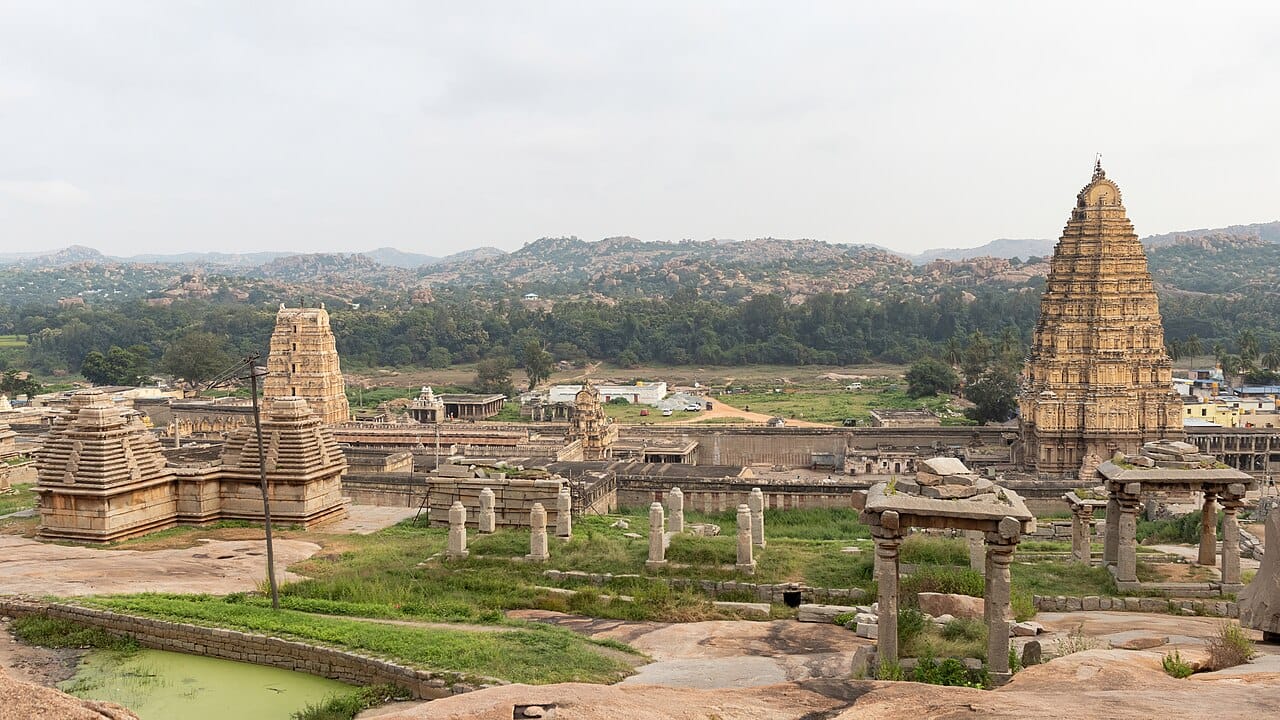
The Virupaksha Temple in Hampi, Karnataka, is a UNESCO World Heritage Site and the oldest functioning temple in India, dedicated to Lord Shiva as Virupaksha.
Trimbakeshwar Temple
The Trimbakeshwar Temple in Maharashtra is one of the twelve Jyotirlingas, unique for its three-faced linga representing the Trimurti and the source of the Godavari River.
Airavatesvara Temple
The Airavatesvara Temple at Darasuram, built by Rajaraja Chola II between 1146 and 1172 CE, is one of the three UNESCO World Heritage 'Great Living Chola Temples.' It is renowned for its stone chariot, musical steps, and exquisite 12th-century Chola sculptures.
Gangaikonda Cholapuram Temple
The Gangaikonda Cholapuram Temple, built by Rajendra Chola I in 1035 CE, is a UNESCO World Heritage 'Great Living Chola Temple.' Its 53-metre vimana with recessed corners and six pairs of monolithic dvarapalas represents a refined evolution of Chola Dravidian architecture.
Kampaheswarar Temple
Kampaheswarar Temple in Tribhuvanam, built by Kulothunga Chola III in 1202 CE, is one of the later great Chola temples and completes the quartet of magnificent Chola stone temples alongside the Brihadeeswarar at Thanjavur, Gangaikonda Cholapuram, and Airavatesvara at Darasuram. The temple represents the mature phase of Chola architecture, featuring a 30-metre granite vimana, a separate Devi shrine, and a unique chariot-wheel carving in the mandapa. It is maintained by the Archaeological Survey of India as a protected monument of national importance.
Koranganatha Temple
Koranganatha Temple, built during the reign of the Chola king Parantaka I (907-955 CE) at Srinivasanallur near Tiruchirappalli, is a well-preserved example of early Chola architecture with exquisite stone carvings. The temple is maintained by the Archaeological Survey of India and is notable for its peaceful setting on the banks of the Kaveri River.
Trimbakeshwar Temple
The Trimbakeshwar Temple in Maharashtra is one of the twelve Jyotirlingas, unique for its three-faced linga representing the Trimurti and the source of the Godavari River.
Alampur Jogulamba Temple
One of the 18 Maha Shakti Peethas, located in a complex that also houses nine ancient 7th-century Chalukyan temples.
Somnath Temple
Somnath Temple, the first of the twelve Jyotirlingas, is an ancient Shiva temple in Gujarat known for its resilience through repeated destruction and reconstruction over a millennium.
Siddhesvara Dham (Char Dham)
A grand complex featuring a 108-foot Shiva statue and replicas of the 12 Jyotirlingas and the four Char Dham sites.
Ramanathaswamy Temple
The Ramanathaswamy Temple in Rameswaram is one of the 12 Jyotirlingas and a Char Dham site, famous for its magnificent thousand-pillared corridors, the longest temple corridor in the world, and its sacred association with Lord Rama's worship of Shiva.
Omkareshwar Temple
Situated on a sacred island in the Narmada River, Omkareshwar is the only Jyotirlinga located on an island. The temple stands at the confluence of the Narmada and Kaveri rivers, with the lingam positioned where the river forms the shape of the sacred symbol Om.
Omkareshwar Temple
Situated on a sacred island in the Narmada River, Omkareshwar is the only Jyotirlinga located on an island. The temple stands at the confluence of the Narmada and Kaveri rivers, with the lingam positioned where the river forms the shape of the sacred symbol Om.
Mahakali Temple
Mahakali Temple in Ujjain is one of the 51 Shakti Peethas, where the upper lip (oshtha) of Goddess Sati is believed to have fallen. It is one of the three Shakti Peethas in the Ujjain region (alongside Mahakaleshwar and Chintaman Ganesh). The temple is part of the sacred geography of Ujjain, one of the seven Mokshapuris (liberation cities) of Hinduism.
Khajuraho Group of Monuments
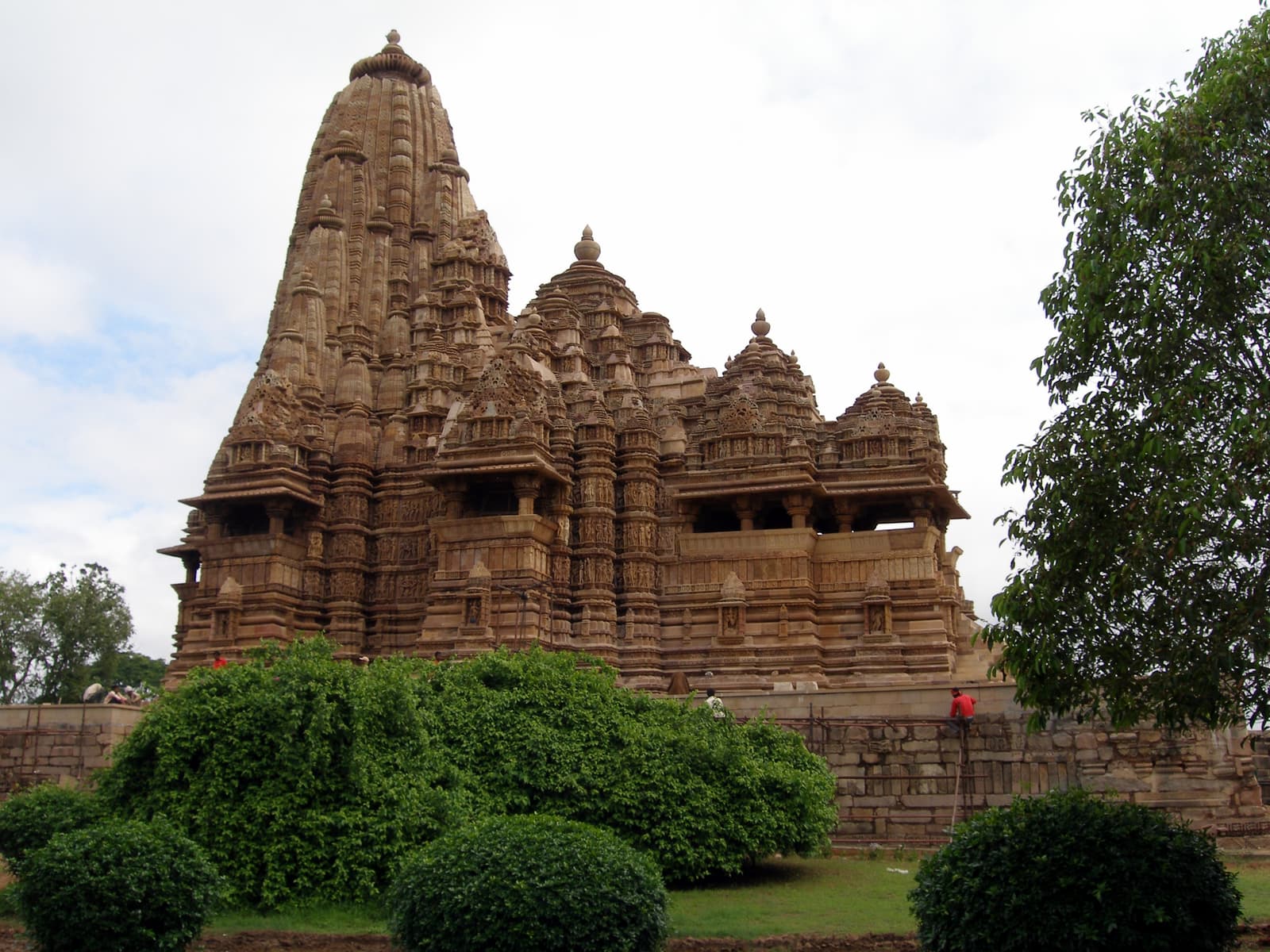
The largest and most ornate Hindu temple in the Khajuraho Group of Monuments.
Tarakeshwar Temple Hooghly
A massive 18th-century pilgrimage site dedicated to Lord Taraknath, especially vibrant during the Gajan festival.
Virupaksha Temple
The Virupaksha Temple in Hampi, Karnataka, is a UNESCO World Heritage Site and the oldest functioning temple in India, dedicated to Lord Shiva as Virupaksha.
Jageshwar Temple
A cluster of 124 ancient stone temples from the 7th-12th centuries, nestled in a dense deodar forest.
Neelkanth Mahadev Temple
Situated at 1,330 meters, this is where Lord Shiva is believed to have consumed the poison (Halahala) during the Samudra Manthan.
Tungnath Temple
The highest Shiva temple in the world, situated at 3,680 meters on the Chandranath Parbat; it is the 'Tritiya Kedar' in the sacred Panch Kedar pilgrimage circuit.
Rudranath Temple
One of the Panch Kedar shrines, representing Lord Shiva's face, situated at an altitude of 2,286 meters amidst meadows and rhododendron forests.
India's temples are living traditions — not museums. Every temple has its own customs. This guide helps first-time visitors prepare with confidence and respect.
Foreign visitor information is being researched
Please verify with the official temple authority before planning your visit.
Foreign Visitors
Verify Before VisitingVisitor Information
Entry policies vary between temples. Most temples welcome visitors, while some may restrict access to specific areas, rituals, or the inner sanctum. Always verify the latest entry guidelines with the official temple authorities before your visit.
Modest clothing is expected at every Indian temple — a sign of respect, not a restriction. Think of it as dressing for a formal ceremony.
A scarf is always useful — it covers shoulders, works as a head covering, and can double as a makeshift face cover if needed.
Outdoor photography is generally permitted. Indoor photography is often restricted. Always look for signage or ask a priest before taking photos inside.
October to March is the ideal period with cool, pleasant weather, especially the post-monsoon months of October–November. Maha Shivaratri (February–March) offers the most charged atmosphere but draws enormous crowds. June–August is hot and humid.
April — June
July — September
English is widely understood at major tourist temples. In smaller local temples, Hindi and the regional language are more common. A smile and simple hand gestures go a long way. Learning a few words of the local language is always appreciated.
Cash (Indian Rupees) is the most reliable option, especially for temple offerings, small shops, and local transport.
UPI digital payments (Google Pay, PhonePe, Paytm) are widely accepted across India — even at roadside stalls. Download one before you arrive.
International credit/debit cards work at most ATMs, hotels, and larger establishments. Smaller vendors may only accept cash or UPI.
Carry small denominations (₹10, ₹20, ₹50, ₹100 notes) for offerings and temple donations. Large notes (₹500, ₹2000) can be hard to break at smaller counters.
Many historic temples have uneven stone floors, multiple steps, and narrow passages. Wheelchair access is limited at older sites — contact the temple in advance.
Basic restroom facilities and drinking water are available at most major temples. Some charge a small fee (₹5–₹10).
Stay hydrated — carry a reusable water bottle, especially in hot climates.
Keep valuables secure — use hotel lockers for passports and excess cash.
Wear comfortable, sturdy footwear — temple floors can be hot, wet, or uneven.
Beware of unofficial guides or touts near temple entrances. Only use authorised services.
Carry a photocopy of your passport and visa. Leave originals in your hotel safe.
Download offline maps — mobile networks can be unreliable near remote temple sites.
These short explanations help make sense of what you see and experience.
Darshan means 'seeing' — but in a temple it means being seen by the deity. It is a sacred moment of connection, not just a viewing.
Removing footwear is a sign of humility. It also keeps the temple floor clean, since devotees sit and pray on the ground.
Food offered to the deity and then distributed to devotees. It is considered blessed. Accept it with both hands and do not discard it.
The bell creates a focused acoustic atmosphere, wards off distractions, and announces your presence before entering the inner sanctum.
Circumambulation (pradakshina) is done clockwise, keeping the sanctum on your right — an auspicious direction aligned with the sun's path.
Flowers symbolise devotion, coconuts represent the ego being broken, incense purifies the air, and lamps represent the victory of light over darkness.
Sacred viewing of the deity; the central act of temple worship.
Clockwise circumambulation of the sanctum.
Blessed food offered to the deity and distributed to devotees.
The innermost sanctum where the main deity resides.
The towering spire above the sanctum, a defining feature of temple architecture.
A pillared hall or pavilion within the temple complex.
The Indian Rupee (?, INR) is the local currency. ATMs are widely available in cities and towns. For temple offerings, keep small notes (₹10, ₹20, ₹50). Most temples accept donations in cash only — digital payments are uncommon at the offering counter itself.
Offerings (dakshina) are given with the right hand. Place cash in the donation box (hundi) or give it directly to the priest. There is no fixed amount — give what feels appropriate. Some temples have fixed fees for special entry or puja participation.
Shoes and sandals are removed before entering the temple building. Most temples have a designated shoe counter (free or a small fee of ₹5–₹20). Socks are generally allowed. In monsoon, carry a plastic bag for wet shoes.
Darshan queues can take 30 minutes to 3 hours at popular temples. Many offer paid VIP darshan (₹100–₹500) for faster entry. Special queues for women, elderly, and disabled visitors exist at some temples. No line jumping.
Major festivals draw enormous crowds — sometimes hundreds of thousands. Book accommodation months in advance. Expect road closures, restricted vehicle access, and limited phone network. Arrive early (before dawn) to avoid the worst congestion.
Always look for signage before taking photos. When in doubt, ask a priest. Never take photos of devotees in prayer without permission. Selfie sticks are banned at most temples. Silently switch your phone to silent mode.
Police / Ambulance / Fire: 112 (National Emergency Number)
Tourist Helpline: 1800-111-363 (Multi-lingual, Ministry of Tourism)
Women's Helpline: 1091
Temple-specific visitor information is continuously researched and updated from official sources. Where specific data is unavailable, general India travel guidance is provided. Always verify current policies with the temple authority before your visit.
Information last verified July 2026. Temple-specific data coming soon.
Continue your journey through the spiritual and architectural wonders of India.

Situated on a sacred island in the Narmada River, Omkareshwar is the only Jyotirlinga located on an island. The temple stands at the confluence of the Narmada and Kaveri rivers, with the lingam positioned where the river forms the shape of the sacred symbol Om.

Mahakali Temple in Ujjain is one of the 51 Shakti Peethas, where the upper lip (oshtha) of Goddess Sati is believed to have fallen. It is one of the three Shakti Peethas in the Ujjain region (alongside Mahakaleshwar and Chintaman Ganesh). The temple is part of the sacred geography of Ujjain, one of the seven Mokshapuris (liberation cities) of Hinduism.

The largest and most ornate Hindu temple in the Khajuraho Group of Monuments.

The Virupaksha Temple in Hampi, Karnataka, is a UNESCO World Heritage Site and the oldest functioning temple in India, dedicated to Lord Shiva as Virupaksha.
"The Khajuraho Group of Monuments is famous for its Nagara-style architectural symbolism and intricate sculptures."