From ancient rock-cut marvels to towering imperial shrines, discover the architectural soul of Bharat through our verified digital archive.
Explore More Temples
Builder
Pandya / Setupati (Ramanathapuram)
Dynasty
Pandya, Vijayanagara, Setupati
Construction
12th - 17th Centuries
Style
Dravidian (Late)
Main Deity
Ramanathaswamy (Shiva); Vishwalingam in same sanctum
Location
Rameswaram Island, Tamil Nadu
Significance
Jyotirlinga (1 of 12) + Char Dham (southern)
Corridor Length
Approx. 1,220 meters
Pillars
1,212 carved granite pillars
Holy Wells
22 Theerthams
Season
October to April
Official Website
rameswaramramanathar.hrce.tn.gov.in
The Ramanathaswamy Temple stands on Rameswaram island in Tamil Nadu as the southernmost of India's twelve Jyotirlingas and one of the four Char Dhams. It is the only Shiva shrine among the four Dhams, and by tradition the one Jyotirlinga installed and worshipped by Lord Rama himself. Beyond its Ramayana connection, the temple is architecturally renowned for the world's longest corridor - about 1,220 meters - supported by 1,212 carved granite pillars - and for its 22 sacred theerthams (bathing wells) within the complex. Spanning roughly fifteen acres with four cardinal gopurams, it is a masterpiece of late Dravidian architecture and a center of ancestral rites as well as Shaiva worship.
Every other Jyotirlinga was revealed or established by divine cosmic forces. Ramanathaswamy is the only one built by a human hand - and that human was Lord Rama, the seventh avatar of Vishnu. This is the temple where the Ramayana epic meets Shaivite worship, and the result is a uniquely compelling pilgrimage site in India.
After the war in Lanka, after Ravana lay defeated, Rama returned to the shores of Rameswaram. But instead of triumph, he felt the weight of what he had done. Ravana was a Brahmin - a scholar of the Vedas, a devotee of Shiva, and a priest-king. By killing him in battle, Rama had incurred the sin of brahmahatya - the gravest karmic offense in the Hindu tradition. The sages advised him: build a lingam to Shiva on the seashore, and worship the destroyer of sin to be cleansed of sin.
Rama sent Hanuman to Mount Kailash to bring a lingam from Shiva himself. But the auspicious hour for worship was approaching, and Hanuman had not returned. Sita, with her characteristic presence of mind, took a handful of sand from the seashore and formed a lingam with her own hands - the Ramalingam. Rama worshipped it as the hour arrived. When Hanuman returned with the Vishwalingam - a lingam he had brought all the way from Kailash - he found the puja already completed.
This story is not merely legend. It is the theological basis for the temple's most distinctive feature: two lingams in a single sanctum, worshipped side by side, for over two millennia. No other Jyotirlinga has two lingams. No other temple claims Rama as its builder. And no other pilgrimage site weaves together the Vaishnava epic of the Ramayana with Shaivite worship so completely that the two traditions become inseparable.
Rameswaram belongs to the same circuit as the Himalayan shrine of Kedarnath - both count among the twelve Jyotirlingas, one at the roof of the subcontinent and one at its southern tip.
Rameswaram literally means “Lord of Rama” - Isha (lord) of Rama. The name encodes the temple's central paradox: Rama, the avatar of Vishnu, worshipped Shiva as his lord. The island itself is considered the place where Rama set foot after crossing the sea, and the temple marks the exact spot where he performed his first Shiva puja after the war. Even today, pilgrims chant both the Ramayana and the Shiva Purana within these walls - a harmony of traditions that defines the temple's character.
Step into the garbhagriha of Ramanathaswamy, and you will see something you will not see in any other Jyotirlinga temple: two lingams. The larger one is the Vishwalingam - the lingam Hanuman carried from Kailash, said to be made of a unique volcanic stone that does not occur naturally in this region. The smaller one, slightly to its right, is the Ramalingam - the lingam Sita made from sand.
The story of how both lingams came to share the same sanctum is among the most human moments in Hindu mythology. When Hanuman returned from Kailash and saw that Rama had already worshipped a lingam made by Sita, he was deeply disappointed. He had flown across the subcontinent, carried a sacred stone from Shiva’s own mountain, and arrived too late. In some versions, he tried to pull the Ramalingam out with his tail. In others, he stood in silence, hurt that his effort had gone unrecognized.
Rama, seeing Hanuman's distress, made a decision that would define the temple's ritual structure forever. He declared that the Vishwalingam - the one brought by Hanuman - would be worshipped first in every puja, and the Ramalingam would be worshipped second. On festival days, the Vishwalingam receives the first offering. During abhishekam, the sacred waters flow over the Vishwalingam before the Ramalingam. This tradition has been observed without exception since the Treta Yuga.
The compromise is brilliant in its psychological insight. Hanuman's devotion is honored. Sita's quick thinking is honored. And the devotee who visits the temple is reminded that the divine accepts all forms of offering - whether brought from Kailash or shaped from the sand at one's feet. The two lingams are physically distinct - the Vishwalingam is taller and darker, the Ramalingam smoother and lighter - but they are identical in essence. Both are Shiva. Both are the Jyotirlinga.
The third prakaram (outer corridor) of Ramanathaswamy Temple holds the Guinness World Record for the longest temple corridor on earth. It stretches 1,220 meters - over a kilometer - completely enclosed, lined with 1,212 granite pillars carved with meticulous detail. Each pillar stands 30 feet high, and the corridor forms a continuous covered walkway around the main sanctum.
These are not identical columns. Every pillar is carved differently - some with lotus motifs, others with rearing yalis (mythical lion-elephant hybrids), and still others with detailed panels depicting scenes from the Ramayana and the Puranas. The ceiling of the corridor is elevated on these pillars, creating a sense of vast interior space that seems to extend infinitely in both directions. Walking the full circuit takes the better part of an hour, yet the visual variety prevents monotony: each section of the corridor reveals new carvings, new perspectives, new light.
The corridor was the work of the Setupati dynasty, who ruled the Rameswaram region from the 17th century. Dalavai Sethupathi initiated the construction, and his successors expanded it over generations. The pillars were brought from sites across Tamil Nadu - each one locally quarried, carved, transported by sea, and raised into position using techniques that remain impressive by modern standards. The granite alone weighs thousands of tons. The corridor is not a single architectural gesture but a cumulative one - the work of many kings, many craftsmen, many lifetimes.
The corridor serves a practical purpose beyond grandeur. Rameswaram's tropical climate brings intense heat and sudden monsoon downpours. The covered walkway allows pilgrims to perform the circumambulation (pradakshina) of the temple regardless of weather - cool and shaded during the day, sheltered during rain. It is, in effect, a kilometer-long mediation between the harsh coastal environment and the ritual needs of the temple. Form follows function, even at this scale.
Within the temple complex, 22 sacred wells - known as theerthams - are arranged around the corridors and courtyards. Each well has a specific name, a specific significance, and a specific deity or sage associated with it. The list includes Brahma Theertham, Indra Theertham, Surya Theertham, Chandra Theertham, Ganga Theertham, Yamuna Theertham, Saraswati Theertham, Gayatri Theertham, and many others - each one a miniature tirtha, a pilgrimage in itself.
The ritual requires pilgrims to bathe in all 22 wells in sequence - a process that takes two to three hours. The wells are arranged so that the circuit forms a complete loop around the temple, integrating the bath into the circumambulation. Each well is fed by a separate underground spring, and the water in each well has distinct characteristics - some are sweet, some slightly saline, some noticeably mineral-rich. Local belief holds that the wells were created by Rama, who shot arrows into the ground at 22 locations, releasing 22 distinct streams of water from the netherworlds.
Scientific analysis of the 22 wells has revealed measurable differences in their mineral content - varying levels of calcium, magnesium, iron, and sulfur. The groundwater table under Rameswaram island is complex, fed by multiple aquifers that filter through different rock strata. Whether this is coincidence or the ancient architects knew something about the underground hydrology is not known. What is known is that significant variation exists - and that the experience of bathing in 22 waters, each with a different taste and temperature, is unlike anything else in the pilgrimage tradition.
Brahma Theertham
Lord Brahma
Indra Theertham
Lord Indra
Surya Theertham
Sun God
Chandra Theertham
Moon God
Ganga Theertham
Goddess Ganga
Yamuna Theertham
Goddess Yamuna
Gayatri Theertham
Goddess Gayatri
Saraswati Theertham
Goddess Saraswati
Agni Theertham is not a well inside the temple. It is the Bay of Bengal itself - the stretch of sea that meets the shore directly in front of the Ramanathaswamy Temple. Pilgrims must bathe here before entering the temple, making it the first and most essential ritual act of the Rameswaram pilgrimage. No well, no puja, no darshan takes precedence over the sea bath.
The ritual sequence is fixed: first, the pilgrim bathes in the sea at Agni Theertham. Then they enter the temple and bathe in the 22 theerthams in sequence. Only then, having washed in 23 different waters - the sea, then the wells - are they considered purified enough to enter the sanctum for darshan. The logic is cumulative: the sea represents the primal cosmic waters (the Agni Tattva), the 22 wells represent the diverse sacred rivers of the subcontinent, and together they constitute a complete purification.
The beach at Agni Theertham faces east, and the sunrise over the Bay of Bengal is one of Rameswaram's defining visual experiences. The temple gopurams rise behind the shore, and the light falls first on the sea, then on the bathing pilgrims, then on the temple towers. The association with Agni (fire) is paradoxical at first - water named after fire - but in Hindu cosmology, Agni is the messenger between worlds, and the waters of Agni Theertham are believed to carry the pilgrim's prayers directly to the gods. The fire of devotion meets the water of purification at the edge of the sea.
The most significant ritual at Agni Theertham takes place during the Amavasya (new moon) when thousands of pilgrims gather to offer pinda pradanam - oblations to their ancestors. Rameswaram is among the most important sites in India for performing ancestral rites, and the Agni Theertham shore is lined with priests who guide pilgrims through the ceremony. The connection between the temple and the sea is not incidental: the temple exists because of the island, and the island exists because of the sea that surrounds it.
Ramanathaswamy Temple is one of the four sacred sites of the Char Dham Yatra - the most prestigious pilgrimage circuit in Hinduism. The four dhams are Badrinath in the Himalayas (north), Dwarka on the Gujarat coast (west), Puri on the Odisha coast (east), and Rameswaram on the Tamil Nadu coast (south). Together, they form a spiritual map of the Indian subcontinent - a mandala of sacred geography that every devout Hindu aspires to complete in their lifetime.
Rameswaram is the southernmost dham, and its inclusion in the Char Dham is significant. Unlike the other three dhams, which are associated with Vishnu (Badrinath, Dwarka) or Jagannath (Puri), Rameswaram is a Shiva temple. The Char Dham is not a sectarian circuit - it does not require exclusive devotion to one deity. It is a geographical pilgrimage, a circumambulation of the subcontinent, and each dham represents a different aspect of the divine. Rameswaram represents the convergence of the Ramayana with Shaivism, and its position as the southern pillar of the circuit anchors the entire yatra in the maritime landscape of the Tamil coast.
The traditional Char Dham Yatra begins at Rameswaram or Badrinath depending on the school, but the most common sequence starts in the east at Puri, moves south to Rameswaram, west to Dwarka, and north to Badrinath - moving with the sun. The journey traditionally takes three to four months and involves walking, bullock cart, boat, and eventually mountain travel. In modern times, the circuit can be completed in two weeks by air and road, but the pilgrimage retains its structure: a darshan at each temple, a ritual bath at each sacred water body, and a full circumambulation of the subcontinent.
Badrinath
Uttarakhand - Vishnu (Badrinarayan)
Dwarka
Gujarat - Krishna (Dwarkadhish)
Puri
Odisha - Jagannath
Rameswaram
Tamil Nadu - Ramanathaswamy (Shiva)
The Ramanathaswamy Temple as it stands today is the product of two great architectural traditions - the early Pandyas who established the original structure and the Setupati dynasty who transformed it into the sprawling complex we see today. The Pandyas built the original sanctum and the inner enclosures in the 12th century, following the classical Dravidian temple plan with a central vimana and surrounding pillared halls. The Setupatis, who came to power in the 17th century, added the corridors, the gopurams, and the outer precincts that give the temple its iconic scale.
The temple's gopurams (gateway towers) rise to seven storeys, covered in stucco figures of deities, dancers, and mythological scenes. The eastern gopuram is the tallest - often cited at around 53 meters, though some sources give a lower figure of about 35-38 meters; the range is flagged here as a known variance between sources. Its surface is a dense narrative frieze of the Ramayana. The gopurams are a later addition - mostly 17th and 18th century - but they follow the Pandya tradition of tiered pyramidal construction with diminishing storeys. The later additions are larger and more ornate, while the earlier work is simpler and more austere - the difference between early Dravidian restraint and late Dravidian exuberance.
The Setupati contribution is most visible in the mandapas (pillared halls). The most famous is the “Sahasra Mandapa” or the Thousand-Pillared Hall, though it actually contains 160 pillars. Each pillar is a single piece of granite, carved with a distinctive feature - the yali pillars, where the mythical beast is shown rearing on its hind legs, its forelegs resting on the adjacent pillar. The visual effect is of a petrified herd galloping through the hall.
Pandya Period (12th-15th C)
Original sanctum, inner vimana, and earliest mandapas. Austere Dravidian style with simple pillar work and smaller scale.
Setupati Period (17th-18th C)
Third prakaram corridor (1,220m), gopurams, Sahasra Mandapa. Grand scale with ornate yali pillars and massive granite construction.
Granite Construction
The entire temple - pillars, corridors, gopurams - is built of granite, much of it transported by sea from quarries across Tamil Nadu.
Yali Pillars
Mythical lion-elephant hybrid beasts carved into the pillars. The rearing yalis of the Sahasra Mandapa are the finest examples of this motif.
The history of Ramanathaswamy begins not with a king but with the Ramayana. Tradition holds that Rama worshipped Shiva on this island after the war with Lanka, making Rameswaram a theertha in the deepest sense - a place of purification. The site's sanctity was recognised early: it was a Paadal Petra Sthalam, glorified in the devotional songs of the Shaiva saint-poets Appar, Sundarar and Sambandar, and mentioned across the Puranas. The island sits on the maritime pilgrim route to Kashi - the Kashi-Rameswaram yatra - and pilgrims traditionally bathe in its 22 theerthams as a lifetime duty.
The present stone temple began with the Pandya dynasty, who built the original structure around the ancient shrine between the 7th and 13th centuries CE. The complex was expanded in the 12th century, and the principal shrine's sanctum was renovated by the Jaffna kingdom monarchs Jeyaveera Cinkaiariyan and his successor Gunaveera Cinkaiariyan of Sri Lanka, who added further work in the 15th century. Vijayanagara-era rulers continued the patronage, adding mandapas and enlarging the precincts.
The defining transformation came under the Setupati dynasty of Ramanathapuram, whose name means 'Lord of the Bridge' - guardians of the Setu to Lanka. From the 17th century, the Setupatis built the massive corridors and gopurams. Dalavai Setupati began a portion of the eastern gopuram in the 17th century, and in the late 18th century Muthuramalinga Setupati (r. c. 1763-1795) constructed the world-famous third corridor - the Chokkatan Mandapam - with its long ranks of carved pillars. Later rulers completed the inner corridors and the Sahasra Mandapam.
In the 18th century, during Tipu Sultan's southern campaigns, the processional deity was moved and hidden at the nearby village of Thalaiyathamangalam to protect it, and reinstalled after Tipu's defeat. The eastern rajagopuram was completed in 1904 with funds from the ALAR family of Devakottai, and between 1907 and 1925 the sanctum and innermost prakaram were renovated, replacing limestone with black granite. The temple has been protected as a monument by the Archaeological Survey of India, suffered only minor damage in the 2004 Indian Ocean tsunami, and was reconsecrated in 2012 after gold-gilding of the gopuram tops.
The temple is a prime example of late Dravidian architecture, built predominantly in grey granite. The complex covers about 15 acres, enclosed by massive stone walls measuring roughly 170 meters east-west and 195 meters north-south, entered through four cardinal gopurams. Around the central sanctum, which houses the two lingams, run three concentric prakarams (corridors) of diminishing size. The layout follows the classical South Indian temple plan of a sanctum with a vimana above it, surrounded by pillared halls and processional paths.
The defining architectural feature is the outer corridor (third prakaram), commonly cited as the longest temple corridor in the world - about 1,220 meters of continuous covered walkway running around the main sanctum. It is supported by 1,212 granite pillars, each roughly 30 feet tall, arranged in two levels with a flat roof of overlapping stone slabs. Every pillar is carved differently - lotuses, floral brackets (pothigais), rearing yali creatures, and panels depicting the Ramayana and the Puranas. Construction was initiated under the Setupati rulers of Ramnad in the 17th century and largely completed in the late 18th century.
Four gopurams (gateway towers) rise at the cardinal points. The eastern gopuram is the tallest - commonly cited at around 53 meters and completed in 1904 with nine tiers, though some sources give a figure of about 35-38 meters; the variance between sources is noted. The towers are covered in stucco figures of deities, dancers, and mythological scenes, with the eastern tower carrying a dense narrative frieze of the Ramayana. The gopurams are largely 17th-18th century additions that follow the tiered pyramidal Dravidian tradition.
The Setupati-period Sahasra Mandapam (Thousand-Pillared Hall) actually contains 160 pillars, each a single piece of granite, with the finest rearing-yali carvings in the temple. The complex also houses a large monolithic Nandi facing the sanctum, shrines to Goddess Parvathavardhini Amman, Ganesha, Subrahmanya, the 63 Nayanmars and the Navagrahas, and the Setumadhava shrine to Vishnu - which marks the Ram Setu connection and affirms the temple's dual Shaiva-Vaishnava character.
The corridor pillars and gopuram surfaces together create a continuous story in stone - episodes of the Ramayana, scenes from the Puranas, and the yali-and-lotus bestiary of late Dravidian art. The visual variety was deliberate: each pillar is an individual composition, so a full circuit of the corridor passes through thousands of distinct carvings. The transition from austere early Pandya work to the ornate Setupati style - visible in the brackets and mythical creatures - records the architectural evolution of the temple.
Ramanathaswamy is significant on multiple religious levels. As a Jyotirlinga it is one of the 12 primary manifestations of Shiva as a pillar of light, mentioned in the Shiva Purana - and the southernmost of them. As a Char Dham site it is one of the four cardinal pilgrimage destinations of Hinduism, and the only Shiva temple among them, alongside Badrinath, Puri, and Dwarka. Its unique theological feature - the Vishnu-avatar Rama worshipping Shiva - represents the harmony between the Vaishnava and Shaiva traditions, a recurring theme in South Indian Hinduism. Pilgrimage here is considered essential for attaining moksha, and a ritual bath in its waters is believed to be equivalent to performing rites for all one's ancestors. The temple is also a major center of ancestral rites (shraddha), and the 22 theerthams are a feature no other Indian temple matches in number. Geographically, Rameswaram is the closest point in India to Sri Lanka, tying the temple to the maritime and bridge traditions of the Ramayana.
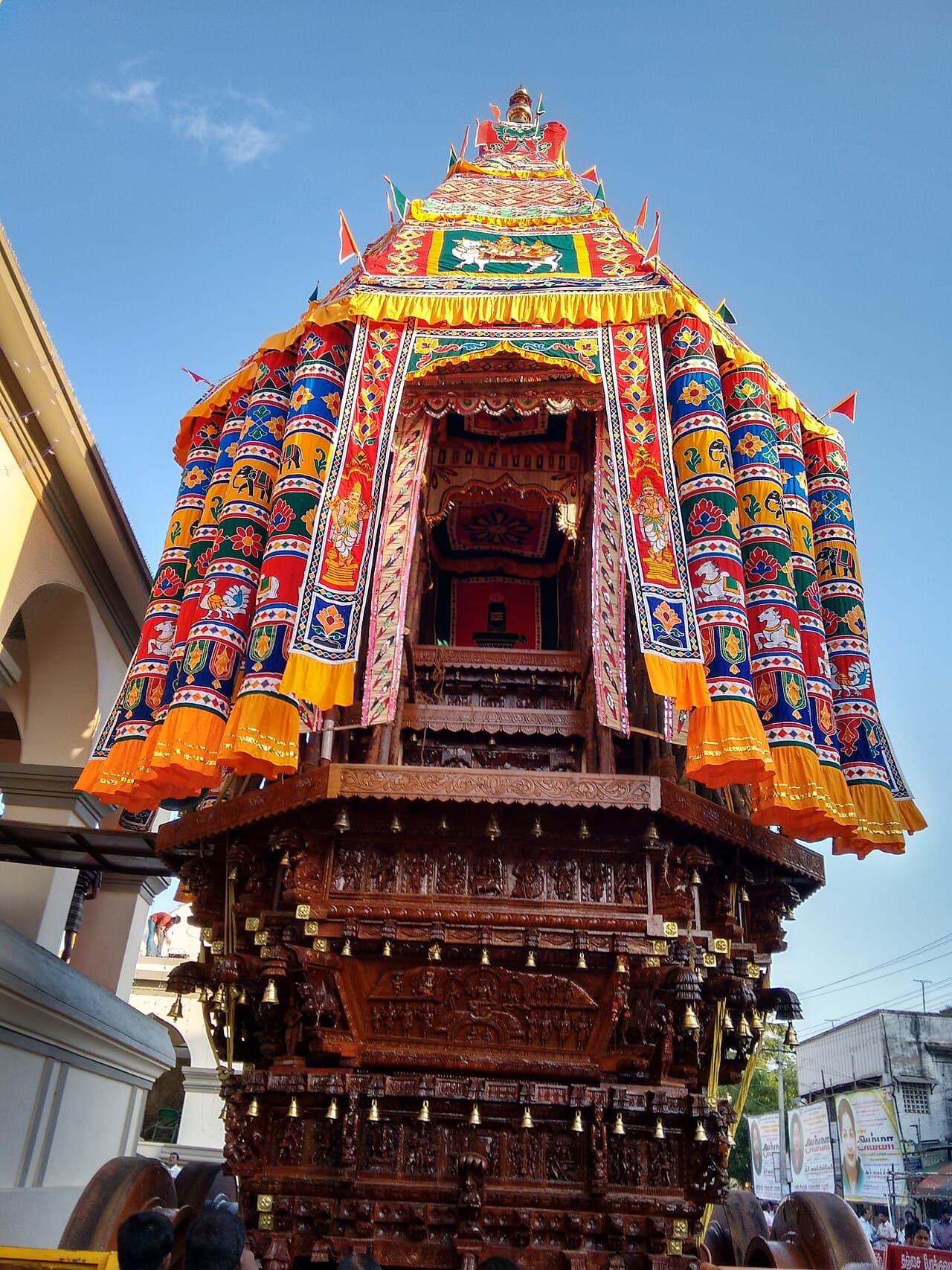
Maha Shivaratri at Ramanathaswamy is one of the largest celebrations in Tamil Nadu, drawing over 200,000 pilgrims. The temple remains open all night with continuous abhishekams at both lingams, and the Vishwalingam is decorated with gold and diamonds for the occasion. The midnight puja, timed to the astrological moment of Shiva's manifestation, is led by the chief priest in a torchlit procession that winds through the thousand-pillared hall, the shifting shadows turning the corridor into a living narrative. Thirukalyanam (the celestial wedding of Rama and Sita) is celebrated in the Tamil month of Panguni (March-April), when the processional deities of Rama, Sita, Lakshmana, and Hanuman are carried to the beach at Agni Theertham for a symbolic wedding ceremony. The ten-day Brahmotsavam in Aadi (July-August) features the Rath Yatra (chariot festival), the Theppotsavam (float festival), and processions on varied vahanas - the lion, the elephant, the horse, the swan, and the serpent mounts. Aadi Amavasya (new moon, July-August) is the most important day for ancestral rites, with thousands of families gathering on the shores for pind daan. Kumbhabhishekam consecrations are performed at intervals, most recently in 2012.
Ramanathaswamy is the only Jyotirlinga that tradition says was built and worshipped by Lord Rama himself - installed to atone for the sin of killing Ravana, a Brahmin and devotee of Shiva.
The temple's third corridor is the longest temple corridor in the world - about 1,220 meters, lined with 1,212 carved granite pillars.
The sanctum houses two lingams - the Ramalingam (Sita's sand lingam) and the Vishwalingam (Hanuman's from Kailash) - worshipped together in a fixed order, a feature unique among Jyotirlinga temples.
The temple contains 22 sacred theerthams (bathing wells) with measurably different mineral content, drawing from multiple aquifers beneath the island.
Rameswaram is the only Shiva temple among the four Char Dhams and the southernmost of the 12 Jyotirlingas.
The eastern gopuram is the tallest tower, cited at about 53 meters in many sources (some give a lower figure of about 35-38 meters).
Rameswaram is among the most important places in India for ancestral rites (shraddha and pind daan), with the Agni Theertham shore central to the ritual.
October to April is the best time, with December to February the most comfortable. Maha Shivaratri (February/March) and Aadi Amavasya (July-August) are the busiest festival windows. The summer months (April-July) are extremely hot, and the monsoon brings moderate rainfall from October to December.
The temple opens daily at 4:00 AM and closes at 1:00 PM, reopening from 3:00 PM to 8:00 PM. Darshan begins at 5:00 AM. The 22 theerthams are open for bathing roughly 5:30 AM-12:30 PM and 3:00-7:00 PM. General darshan is free; special puja tickets are available at the temple counters.
The most sacred of all theerthams - the Bay of Bengal shore directly in front of the temple. Pilgrims must bathe here first, before entering the temple or taking the well baths. The Amavasya pinda pradanam (ancestral offering) at this shore is one of the most important in India.
About 20 km from the temple. A ghost town at the southeastern tip of the island, destroyed by the 1964 cyclone. Ruined church, railway tracks and streets meet the Bay of Bengal and the Indian Ocean - the point from which the Ram Setu appears to begin.
Visible from Dhanushkodi. A chain of limestone shoals stretching about 48 km towards Mannar in Sri Lanka, traditionally the bridge built by Rama's vanara army. Viewable on the southern shoreline on clear days.
About 3 km from the temple. A hill holding a shrine with Rama's footprint (Rama Padam), giving panoramic views across Rameswaram island - the highest point on the island.
About 5 km away. India's first sea bridge, opened in 1914, connecting Rameswaram island to the mainland across the Palk Strait. Its cantilever arches carry the railway, with a bascule section that lifts to allow ship passage.
About 6 km from the temple. The memorial of the former President of India, built on his ancestral home at Rameswaram, with a glass dome and interactive exhibits.
About 12 km from the temple. Marks the traditional spot where Vibhishana, brother of Ravana, surrendered to Rama. Features idols of Rama, Sita, Lakshmana and Hanuman - an important site in the Ramayana story.
About 8 km from the temple. A clean, quiet beach with pristine sand, ideal for a gentle swim away from the crowds.
August
2 festivals
Ramanathaswamy (Rameswaram)
The most important day of the year for ancestral rites (pind daan). Thousands of families gather on the Agni Theertham shore to offer oblations to their ancestors.
Ramanathaswamy (Rameswaram)
Annual ten-day festival in Aadi featuring the Rath Yatra (chariot festival), the Theppotsavam (float festival), and processions of the deities on varied vahanas - bull, horse, elephant, swan, and serpent mounts.
/rah-mah-naath-a-s-wam-my/
Lord of Rama (Shiva)
/rah-may-shwa-ram/
Abode of Rama's Lord
/jyo-tir-ling-gah/
Pillar of divine light
/thee-r-tham/
Sacred bathing water
/pra-ka-ram/
Enclosed corridor or circumambulatory path
/go-pu-ram/
Gateway tower
/vish-wah-ling-gum/
Lingam brought by Hanuman from Kailash
/rah-mah-ling-gum/
Lingam made by Sita from sand
/dah-noosh-ko-di/
Tip of the bow
/rahm say-too/
Rama's bridge
Click the speaker icon to hear pronunciation. Browser text-to-speech may vary.
Jyotirlinga Status
Ramanathaswamy is the 12th and southernmost of the 12 Jyotirlingas. Uniquely, it enshrines TWO lingams in a single sanctum - the Vishwalingam (brought by Hanuman from Mount Kailash) and the Ramalingam (made by Sita from sand) - worshipped together in a fixed order.
Char Dham (Southern)
One of the four Char Dham sites, located at Rameswaram in the south. It is the ONLY Shiva temple among the four dhams - the others (Badrinath, Dwarka, Puri) being Vaishnava shrines - and anchors the southern quarter of the circuit.
The Longest Temple Corridor
The third prakaram (outer corridor), built under the Setupati rulers of Ramnad in the 17th-18th centuries, is commonly cited as the longest temple corridor in the world - about 1,220 m with 1,212 granite pillars, each roughly 30 feet tall.
The 22 Theerthams
The temple complex contains 22 sacred bathing wells, each associated with a deity or sage. The waters draw from different underground aquifers, and analysis shows measurable variation in calcium, magnesium, iron and sulfur. Pilgrims bathe in all 22 before darshan.
The Ramayana Link
Rama worshipped Shiva here, installing a lingam to atone for brahmahatya (killing Ravana, a Brahmin). The Setu (bridge) tradition is part of the island's identity. The name 'Ramanathaswamy' means 'Lord of Rama' - symbolizing Vaishnava-Shaiva harmony.
Setupati Dynasty
The Setupatis ('Lords of the Bridge') of Ramanathapuram ruled Rameswaram and built the famed third corridor, the Sahasra (Thousand-Pillared) Mandapam and the towering gopurams, transforming the modest Pandya shrine into the vast complex seen today.
A. Rama worshipped Shiva to atone for brahmahatya (killing Ravana, a Brahmin). Shiva, as the destroyer of sin, was the appropriate deity for this purification. The episode also reflects the Vaishnava-Shaiva harmony that characterizes Hindu theology - the avatar of Vishnu seeking the grace of Shiva.
A. Rama worshipped the sand lingam (Ramalingam) made by Sita while Hanuman was fetching the Vishwalingam from Kailash. When Hanuman returned disappointed, Rama decreed that the Vishwalingam would be worshipped first in perpetuity to honor Hanuman's devotion. This order has been followed for centuries.
A. The third prakaram measures about 1,220 meters and holds the Guinness World Record for the longest temple corridor. It features 1,212 granite pillars, each around 30 feet high, carved with yalis, lotus motifs, and Ramayana panels. Some sources measure the total corridor circuit differently (about 3,850 feet), but the widely quoted record figure is 1,220 meters.
A. The 22 wells draw from different underground aquifers beneath Rameswaram island. Scientific analysis has confirmed measurable variations in mineral content - calcium, magnesium, iron, and sulfur levels differ across the wells. The groundwater system beneath the island is complex, with multiple aquifers at different depths filtering through distinct rock strata.
A. Agni Theertham is the Bay of Bengal at the temple's eastern edge. Pilgrims must bathe here before entering the temple - it is the first and most essential purification. The ritual sequence is: sea bath, 22 wells, darshan. The sea represents the primal cosmic waters (Agni Tattva), and the bath is believed to carry prayers directly to the gods.
A. Rameswaram is the nearest land point to the Ram Setu (Adam's Bridge) - a chain of limestone shoals connecting India and Sri Lanka, about 48 kilometers long. The Ramayana describes this as the bridge built by Rama's vanara army. Dhanushkodi, at the southeastern tip of the island, is where the bridge begins. The name Rameswaram (Lord of Rama) directly references this connection.
A. Rameswaram is the southernmost Char Dham, representing the maritime frontier of the pilgrimage circuit. The four dhams - Badrinath (north), Dwarka (west), Puri (east), Rameswaram (south) - form a spiritual circumambulation of India. Rameswaram is unique among them as a Shiva temple, while the other three are Vaishnava shrines.
A. The Setupati (Lord of the Bridge) dynasty ruled Rameswaram from the 17th century. Their name derives from their role as guardians of the bridge (Setu) to Lanka. They built the temple's third corridor, the Sahasra Mandapa, and the towering gopurams - transforming it from a modest Pandya shrine into the vast complex seen today.
A. The temple opens at 4:00 AM and closes at 1:00 PM, reopening from 3:00 PM to 8:00 PM daily. Darshan begins at 5:00 AM. The 22 theerthams are open for bathing roughly 5:30 AM-12:30 PM and 3:00-7:00 PM. There is no entry fee; special puja tickets are available at the temple counters.
A. Rameswaram is approximately 170 km from Madurai. The most convenient option is by train - daily passenger trains from Madurai Junction to Rameswaram Station take about 3 hours. By road, NH-87 connects the two cities, with state transport and private buses taking 4-5 hours. Taxis from Madurai airport take about 3.5 hours via Paramakudi and Ramanathapuram.
A. The nearest airport is Madurai International Airport (IXM), approximately 170 km from Rameswaram, with domestic flights from Chennai, Bengaluru, Delhi, Mumbai, and Hyderabad, and international connections. The next nearest is Tiruchirappalli International Airport (TRZ), about 210 km away.
A. Key nearby sites include Agni Theertham at the temple shore, Dhanushkodi (20 km), the Ram Setu view from Dhanushkodi, Gandhamadhana Parvatham (3 km), the Pamban Bridge (5 km), the Dr. APJ Abdul Kalam Memorial (6 km), Kothandaramar Temple (12 km), and Ariyaman Beach (8 km). The drive to Dhanushkodi along the narrow peninsula with the sea on both sides is itself a major attraction.
A. Traditional Indian attire is preferred - men in dhoti or trousers, women in saree, half-saree, or salwar kameez. Footwear must be removed before entering the complex and can be deposited at the free shoe counters. Dhotis and sarees are available for rent near the temple gopurams. Photography is permitted in the corridors but not inside the inner sanctum.
A. October to April is the best time, with December to February the most comfortable. Maha Shivaratri (February-March) and Aadi Amavasya (July-August) are the most significant festival times but draw large crowds. The summer months (April-July) are extremely hot, and the northeast monsoon brings moderate rainfall from October to December.
Arulmigu Ramanathaswamy Temple (Tamil Nadu HR & CE)
Official temple management, timings and theertham details
View sourceTamil Nadu Hindu Religious and Charitable Endowments Department
Temple directory entry for Arulmigu Ramanathaswamy Temple, Rameswaram
View sourceTamil Nadu Tourism
Ramanathaswamy Temple - Rameswaram destination and pilgrim guide
View sourceArchaeological Survey of India
Protected monument listing for Ramanathaswamy Temple, Rameswaram (ASI Tamil Nadu circle)
View sourcePadmanabhan, S.
Rameswaram: The Temple Island (1987)
1987
Virupaksha Temple
The Virupaksha Temple in Hampi, Karnataka, is a UNESCO World Heritage Site and the oldest functioning temple in India, dedicated to Lord Shiva as Virupaksha.
Trimbakeshwar Temple
The Trimbakeshwar Temple in Maharashtra is one of the twelve Jyotirlingas, unique for its three-faced linga representing the Trimurti and the source of the Godavari River.
Airavatesvara Temple
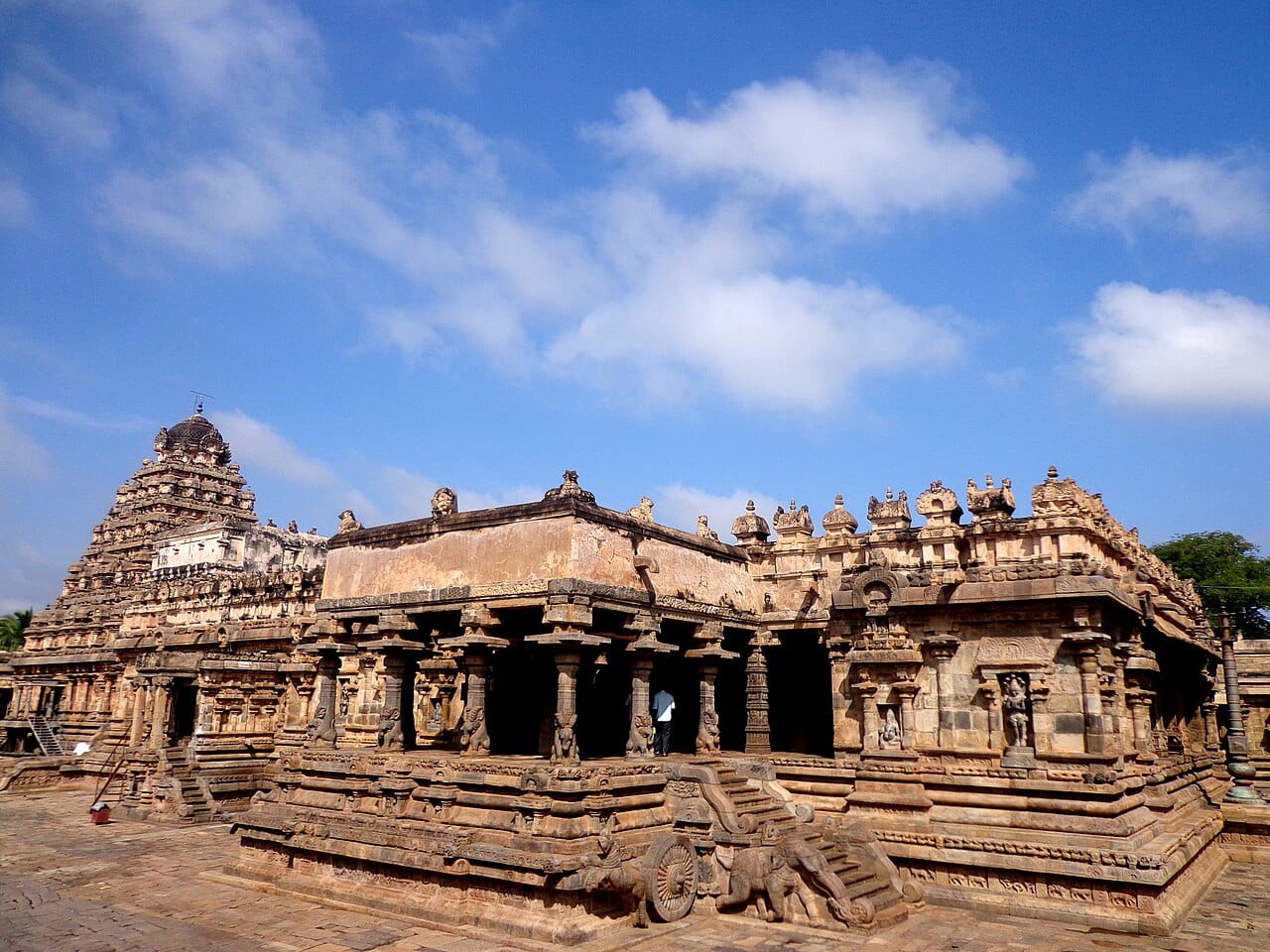
The Airavatesvara Temple at Darasuram, built by Rajaraja Chola II between 1146 and 1172 CE, is one of the three UNESCO World Heritage 'Great Living Chola Temples.' It is renowned for its stone chariot, musical steps, and exquisite 12th-century Chola sculptures.
Gangaikonda Cholapuram Temple
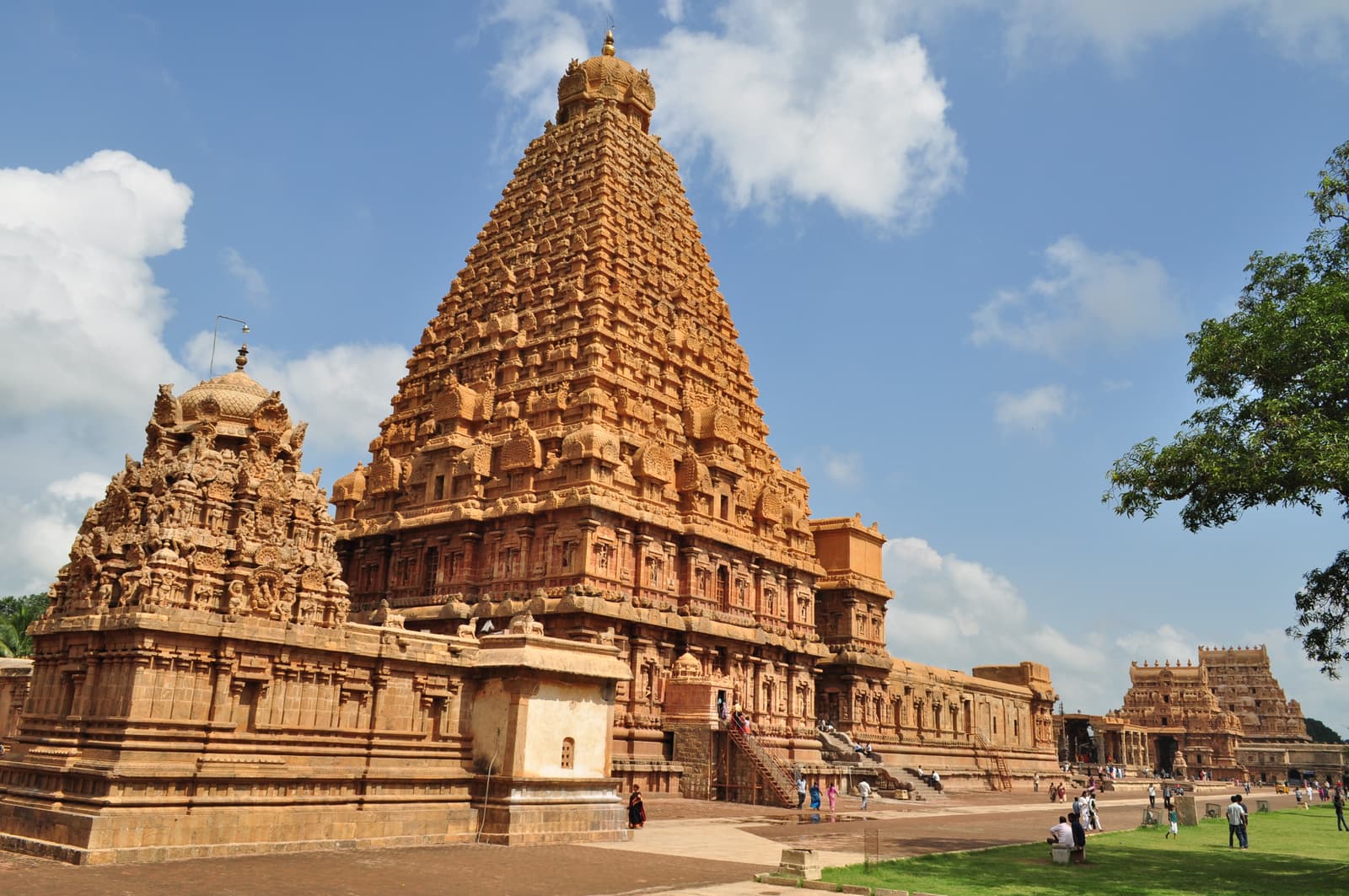
The Gangaikonda Cholapuram Temple, built by Rajendra Chola I in 1035 CE, is a UNESCO World Heritage 'Great Living Chola Temple.' Its 53-metre vimana with recessed corners and six pairs of monolithic dvarapalas represents a refined evolution of Chola Dravidian architecture.
Kampaheswarar Temple
Kampaheswarar Temple in Tribhuvanam, built by Kulothunga Chola III in 1202 CE, is one of the later great Chola temples and completes the quartet of magnificent Chola stone temples alongside the Brihadeeswarar at Thanjavur, Gangaikonda Cholapuram, and Airavatesvara at Darasuram. The temple represents the mature phase of Chola architecture, featuring a 30-metre granite vimana, a separate Devi shrine, and a unique chariot-wheel carving in the mandapa. It is maintained by the Archaeological Survey of India as a protected monument of national importance.
Koranganatha Temple
Koranganatha Temple, built during the reign of the Chola king Parantaka I (907-955 CE) at Srinivasanallur near Tiruchirappalli, is a well-preserved example of early Chola architecture with exquisite stone carvings. The temple is maintained by the Archaeological Survey of India and is notable for its peaceful setting on the banks of the Kaveri River.
Virupaksha Temple
The Virupaksha Temple in Hampi, Karnataka, is a UNESCO World Heritage Site and the oldest functioning temple in India, dedicated to Lord Shiva as Virupaksha.
Vishalakshi Temple
The Vishalakshi Temple, located in the narrow lanes of Mir Ghat near the Ganges in Varanasi, is one of the 51 Shakti Peethas where the earrings of Goddess Sati are believed to have fallen. Dedicated to the 'wide-eyed' goddess Vishalakshi, the temple is the first stop on the traditional Kashi Yatra pilgrimage circuit and is considered the consort shrine of the neighbouring Kashi Vishwanath Temple.
Gnana Saraswati Temple Basar
One of the only two prominent Saraswati temples in India, it is a primary center for Akshara Abhyasam for children.
Bhadrakali Temple Warangal
One of India's oldest Bhadrakali temples, built in 625 AD, featuring a 2.7-meter stone idol near a scenic lake.
Arunachaleswarar Temple
Arunachaleswarar Temple at the foot of Arunachala Hill in Tiruvannamalai is one of the largest Shiva temples in the world, covering 25 acres. It represents the fire element (Agni) of the Pancha Bhoota Sthalas and is a Paadal Petra Sthalam glorified by the 7th-century Tevaram hymns.
Ekambareswarar Temple
Ekambareswarar Temple in Kanchipuram represents the earth element (Prithvi) of the Pancha Bhoota Sthalas. Its sand-made Prithvi Lingam, 192-foot Raja Gopuram built by Krishnadevaraya (1509), and the 3,500-year-old sacred mango tree make it among the most significant Shiva temples in South India.
Trimbakeshwar Temple
The Trimbakeshwar Temple in Maharashtra is one of the twelve Jyotirlingas, unique for its three-faced linga representing the Trimurti and the source of the Godavari River.
Alampur Jogulamba Temple
One of the 18 Maha Shakti Peethas, located in a complex that also houses nine ancient 7th-century Chalukyan temples.
Somnath Temple
Somnath Temple, the first of the twelve Jyotirlingas, is an ancient Shiva temple in Gujarat known for its resilience through repeated destruction and reconstruction over a millennium.
Siddhesvara Dham (Char Dham)
A grand complex featuring a 108-foot Shiva statue and replicas of the 12 Jyotirlingas and the four Char Dham sites.
Omkareshwar Temple
Situated on a sacred island in the Narmada River, Omkareshwar is the only Jyotirlinga located on an island. The temple stands at the confluence of the Narmada and Kaveri rivers, with the lingam positioned where the river forms the shape of the sacred symbol Om.
Nageshwar Jyotirlinga Temple
The coastal jyotirlinga hidden in the marshlands of Saurashtra. Shiva as Nageshwar — the Lord of Snakes. The legend of Daruka and a 25-meter outdoor Shiva statue visible from the Arabian Sea.
Airavatesvara Temple
The Airavatesvara Temple at Darasuram, built by Rajaraja Chola II between 1146 and 1172 CE, is one of the three UNESCO World Heritage 'Great Living Chola Temples.' It is renowned for its stone chariot, musical steps, and exquisite 12th-century Chola sculptures.
Gangaikonda Cholapuram Temple
The Gangaikonda Cholapuram Temple, built by Rajendra Chola I in 1035 CE, is a UNESCO World Heritage 'Great Living Chola Temple.' Its 53-metre vimana with recessed corners and six pairs of monolithic dvarapalas represents a refined evolution of Chola Dravidian architecture.
Kampaheswarar Temple
Kampaheswarar Temple in Tribhuvanam, built by Kulothunga Chola III in 1202 CE, is one of the later great Chola temples and completes the quartet of magnificent Chola stone temples alongside the Brihadeeswarar at Thanjavur, Gangaikonda Cholapuram, and Airavatesvara at Darasuram. The temple represents the mature phase of Chola architecture, featuring a 30-metre granite vimana, a separate Devi shrine, and a unique chariot-wheel carving in the mandapa. It is maintained by the Archaeological Survey of India as a protected monument of national importance.
Koranganatha Temple
Koranganatha Temple, built during the reign of the Chola king Parantaka I (907-955 CE) at Srinivasanallur near Tiruchirappalli, is a well-preserved example of early Chola architecture with exquisite stone carvings. The temple is maintained by the Archaeological Survey of India and is notable for its peaceful setting on the banks of the Kaveri River.
Pancha Rathas
The Pancha Rathas (Five Chariots) are a set of five monolithic temple structures carved from single granite outcrops during the reign of Narasimhavarman I (Mamalla, 630-668 CE) in Mahabalipuram. Part of the UNESCO World Heritage Site 'Group of Monuments at Mahabalipuram,' these rathas represent the earliest and most ambitious examples of monolithic rock-cut architecture in Tamil Nadu.
Olakkaneswara Temple
Olakkaneswara Temple, located on a rocky outcrop at the southern end of Mahabalipuram beach, was built by the Pallavas in the 7th century. The temple later served as a lighthouse for ships navigating the Bay of Bengal, with a beacon light placed on its tower in the late 19th century. The site offers panoramic views of the Mahabalipuram coastline.
Tarakeshwar Temple Hooghly
A massive 18th-century pilgrimage site dedicated to Lord Taraknath, especially vibrant during the Gajan festival.
Virupaksha Temple
The Virupaksha Temple in Hampi, Karnataka, is a UNESCO World Heritage Site and the oldest functioning temple in India, dedicated to Lord Shiva as Virupaksha.
Jageshwar Temple
A cluster of 124 ancient stone temples from the 7th-12th centuries, nestled in a dense deodar forest.
Neelkanth Mahadev Temple
Situated at 1,330 meters, this is where Lord Shiva is believed to have consumed the poison (Halahala) during the Samudra Manthan.
Tungnath Temple
The highest Shiva temple in the world, situated at 3,680 meters on the Chandranath Parbat; it is the 'Tritiya Kedar' in the sacred Panch Kedar pilgrimage circuit.
Rudranath Temple
One of the Panch Kedar shrines, representing Lord Shiva's face, situated at an altitude of 2,286 meters amidst meadows and rhododendron forests.
India's temples are living traditions — not museums. Every temple has its own customs. This guide helps first-time visitors prepare with confidence and respect.
Foreign visitor information is being researched
Please verify with the official temple authority before planning your visit.
Foreign Visitors
Verify Before VisitingVisitor Information
Entry policies vary between temples. Most temples welcome visitors, while some may restrict access to specific areas, rituals, or the inner sanctum. Always verify the latest entry guidelines with the official temple authorities before your visit.
Modest clothing is expected at every Indian temple — a sign of respect, not a restriction. Think of it as dressing for a formal ceremony.
A scarf is always useful — it covers shoulders, works as a head covering, and can double as a makeshift face cover if needed.
Outdoor photography is generally permitted. Indoor photography is often restricted. Always look for signage or ask a priest before taking photos inside.
October to April is the best time, with December to February the most comfortable. Maha Shivaratri (February/March) and Aadi Amavasya (July-August) are the busiest festival windows. The summer months (April-July) are extremely hot, and the monsoon brings moderate rainfall from October to December.
April — June
July — September
English is widely understood at major tourist temples. In smaller local temples, Hindi and the regional language are more common. A smile and simple hand gestures go a long way. Learning a few words of the local language is always appreciated.
Cash (Indian Rupees) is the most reliable option, especially for temple offerings, small shops, and local transport.
UPI digital payments (Google Pay, PhonePe, Paytm) are widely accepted across India — even at roadside stalls. Download one before you arrive.
International credit/debit cards work at most ATMs, hotels, and larger establishments. Smaller vendors may only accept cash or UPI.
Carry small denominations (₹10, ₹20, ₹50, ₹100 notes) for offerings and temple donations. Large notes (₹500, ₹2000) can be hard to break at smaller counters.
Many historic temples have uneven stone floors, multiple steps, and narrow passages. Wheelchair access is limited at older sites — contact the temple in advance.
Basic restroom facilities and drinking water are available at most major temples. Some charge a small fee (₹5–₹10).
Stay hydrated — carry a reusable water bottle, especially in hot climates.
Keep valuables secure — use hotel lockers for passports and excess cash.
Wear comfortable, sturdy footwear — temple floors can be hot, wet, or uneven.
Beware of unofficial guides or touts near temple entrances. Only use authorised services.
Carry a photocopy of your passport and visa. Leave originals in your hotel safe.
Download offline maps — mobile networks can be unreliable near remote temple sites.
These short explanations help make sense of what you see and experience.
Darshan means 'seeing' — but in a temple it means being seen by the deity. It is a sacred moment of connection, not just a viewing.
Removing footwear is a sign of humility. It also keeps the temple floor clean, since devotees sit and pray on the ground.
Food offered to the deity and then distributed to devotees. It is considered blessed. Accept it with both hands and do not discard it.
The bell creates a focused acoustic atmosphere, wards off distractions, and announces your presence before entering the inner sanctum.
Circumambulation (pradakshina) is done clockwise, keeping the sanctum on your right — an auspicious direction aligned with the sun's path.
Flowers symbolise devotion, coconuts represent the ego being broken, incense purifies the air, and lamps represent the victory of light over darkness.
Sacred viewing of the deity; the central act of temple worship.
Clockwise circumambulation of the sanctum.
Blessed food offered to the deity and distributed to devotees.
The innermost sanctum where the main deity resides.
The towering spire above the sanctum, a defining feature of temple architecture.
A pillared hall or pavilion within the temple complex.
The Indian Rupee (?, INR) is the local currency. ATMs are widely available in cities and towns. For temple offerings, keep small notes (₹10, ₹20, ₹50). Most temples accept donations in cash only — digital payments are uncommon at the offering counter itself.
Offerings (dakshina) are given with the right hand. Place cash in the donation box (hundi) or give it directly to the priest. There is no fixed amount — give what feels appropriate. Some temples have fixed fees for special entry or puja participation.
Shoes and sandals are removed before entering the temple building. Most temples have a designated shoe counter (free or a small fee of ₹5–₹20). Socks are generally allowed. In monsoon, carry a plastic bag for wet shoes.
Darshan queues can take 30 minutes to 3 hours at popular temples. Many offer paid VIP darshan (₹100–₹500) for faster entry. Special queues for women, elderly, and disabled visitors exist at some temples. No line jumping.
Major festivals draw enormous crowds — sometimes hundreds of thousands. Book accommodation months in advance. Expect road closures, restricted vehicle access, and limited phone network. Arrive early (before dawn) to avoid the worst congestion.
Always look for signage before taking photos. When in doubt, ask a priest. Never take photos of devotees in prayer without permission. Selfie sticks are banned at most temples. Silently switch your phone to silent mode.
Police / Ambulance / Fire: 112 (National Emergency Number)
Tourist Helpline: 1800-111-363 (Multi-lingual, Ministry of Tourism)
Women's Helpline: 1091
Temple-specific visitor information is continuously researched and updated from official sources. Where specific data is unavailable, general India travel guidance is provided. Always verify current policies with the temple authority before your visit.
Information last verified July 2026. Temple-specific data coming soon.
Continue your journey through the spiritual and architectural wonders of India.

Arunachaleswarar Temple at the foot of Arunachala Hill in Tiruvannamalai is one of the largest Shiva temples in the world, covering 25 acres. It represents the fire element (Agni) of the Pancha Bhoota Sthalas and is a Paadal Petra Sthalam glorified by the 7th-century Tevaram hymns.

Ekambareswarar Temple in Kanchipuram represents the earth element (Prithvi) of the Pancha Bhoota Sthalas. Its sand-made Prithvi Lingam, 192-foot Raja Gopuram built by Krishnadevaraya (1509), and the 3,500-year-old sacred mango tree make it among the most significant Shiva temples in South India.

Jambukeswarar Temple in Thiruvanaikaval represents the water element (Apas) of the Pancha Bhoota Sthalas. Its unique underwater Appu Lingam sits in a spring-fed subterranean sanctum, with an underground stream that has flowed continuously for over 1,800 years.

Chidambaram Nataraja Temple represents the space element (Akasha) of the Pancha Bhoota Sthalas. It houses the Chidambara Rahasyam — an empty curtained space symbolising formless Shiva — and is the source of the iconic Nataraja cosmic dance imagery that became the universal symbol of Hinduism.

The Airavatesvara Temple at Darasuram, built by Rajaraja Chola II between 1146 and 1172 CE, is one of the three UNESCO World Heritage 'Great Living Chola Temples.' It is renowned for its stone chariot, musical steps, and exquisite 12th-century Chola sculptures.

The Gangaikonda Cholapuram Temple, built by Rajendra Chola I in 1035 CE, is a UNESCO World Heritage 'Great Living Chola Temple.' Its 53-metre vimana with recessed corners and six pairs of monolithic dvarapalas represents a refined evolution of Chola Dravidian architecture.
Kampaheswarar Temple in Tribhuvanam, built by Kulothunga Chola III in 1202 CE, is one of the later great Chola temples and completes the quartet of magnificent Chola stone temples alongside the Brihadeeswarar at Thanjavur, Gangaikonda Cholapuram, and Airavatesvara at Darasuram. The temple represents the mature phase of Chola architecture, featuring a 30-metre granite vimana, a separate Devi shrine, and a unique chariot-wheel carving in the mandapa. It is maintained by the Archaeological Survey of India as a protected monument of national importance.

Koranganatha Temple, built during the reign of the Chola king Parantaka I (907-955 CE) at Srinivasanallur near Tiruchirappalli, is a well-preserved example of early Chola architecture with exquisite stone carvings. The temple is maintained by the Archaeological Survey of India and is notable for its peaceful setting on the banks of the Kaveri River.
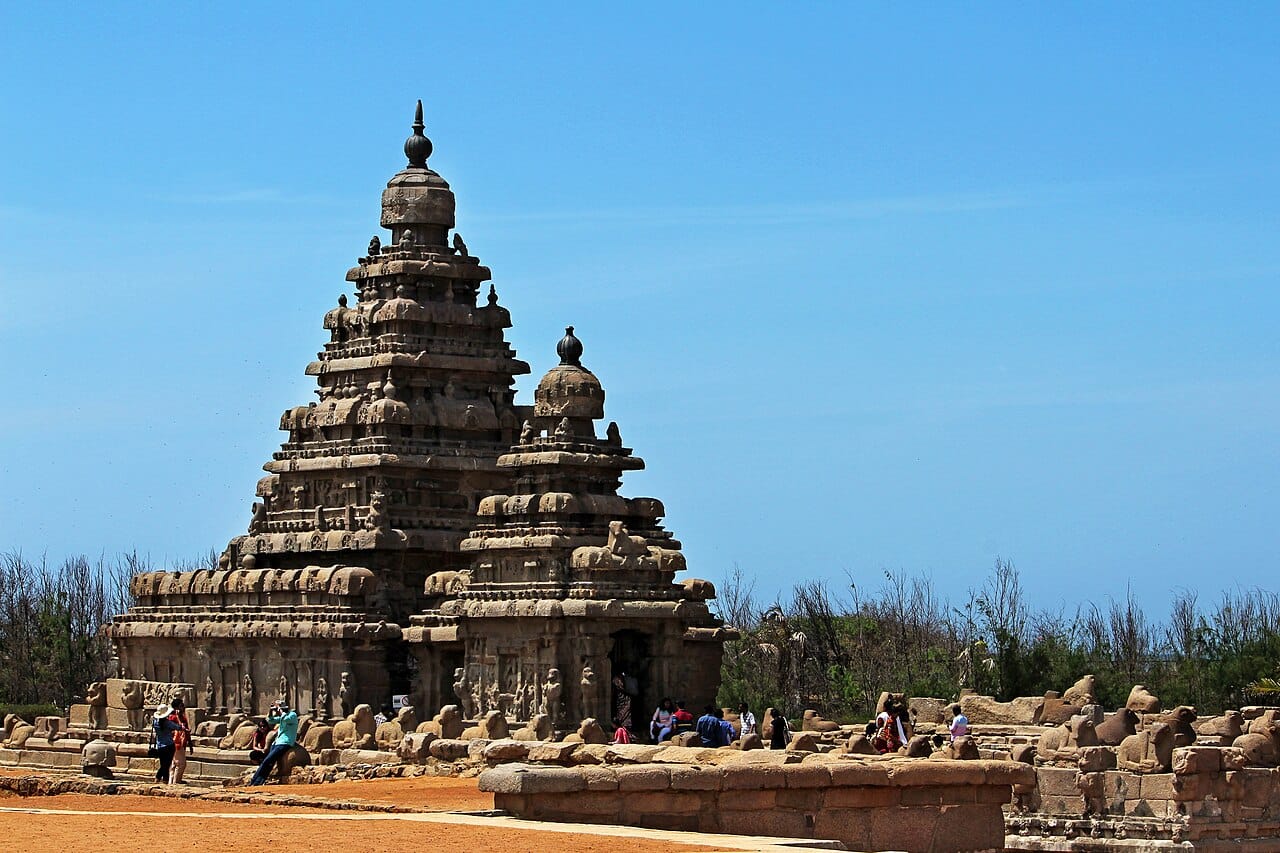
"The Shore Temple at Mahabalipuram is one of the oldest structural stone temples of South India."