Sacred PlacesIndia
Vittala Temple stone chariot, a well-known symbol of India's mysterious temples
Guide to India's Mysterious Temples

Mysterious Temples in India:
12 Sites That Defy Explanation

Hanging pillars, musical columns, eternal flames, and secret vaults. A researched guide to 12 of India's most enigmatic temples — examining the phenomena, the history, and the science.

Category

Physics Defying

Category

Natural Phenomenon

Category

Supernatural

Category

Engineering Marvel

What Makes a Temple Mysterious?

India has hundreds of thousands of temples, built over more than two thousand years across shifting dynasties, evolving architectural styles, and varied geological settings. Among these, a small number exhibit phenomena that stand apart — not because they are supernatural, but because they sit at the intersection of advanced ancient engineering, natural processes, and historical circumstances that are no longer fully understood.

A temple earns the label “mysterious” for different reasons. Some display engineering techniques that modern observers struggle to replicate. Others sit atop geological formations that produce unusual natural effects. A few are associated with cultural traditions so distinct that they challenge conventional frameworks. The common thread is observability: the phenomena continue to function and can be verified by anyone who visits.

This guide examines 12 temples across four categories of mystery:

  • Physics Defying — structural and acoustic phenomena that appear to contradict known physics but are explained by concealed engineering or precise geometry.
  • Natural Phenomenon — effects rooted in local geology that were recognised as sacred and integrated into temple traditions.
  • Supernatural — sites where belief systems and cultural practices create phenomena that resist purely material explanation.
  • Engineering Marvel — construction techniques that demonstrate extraordinary skill and remain impressive by modern standards.

For each temple, the guide presents three perspectives: traditional beliefs held by devotees, historical evidence from archaeological and documentary sources, and scientific explanations based on current research. The aim is not to reduce mystery but to understand what kind of mystery each temple represents.

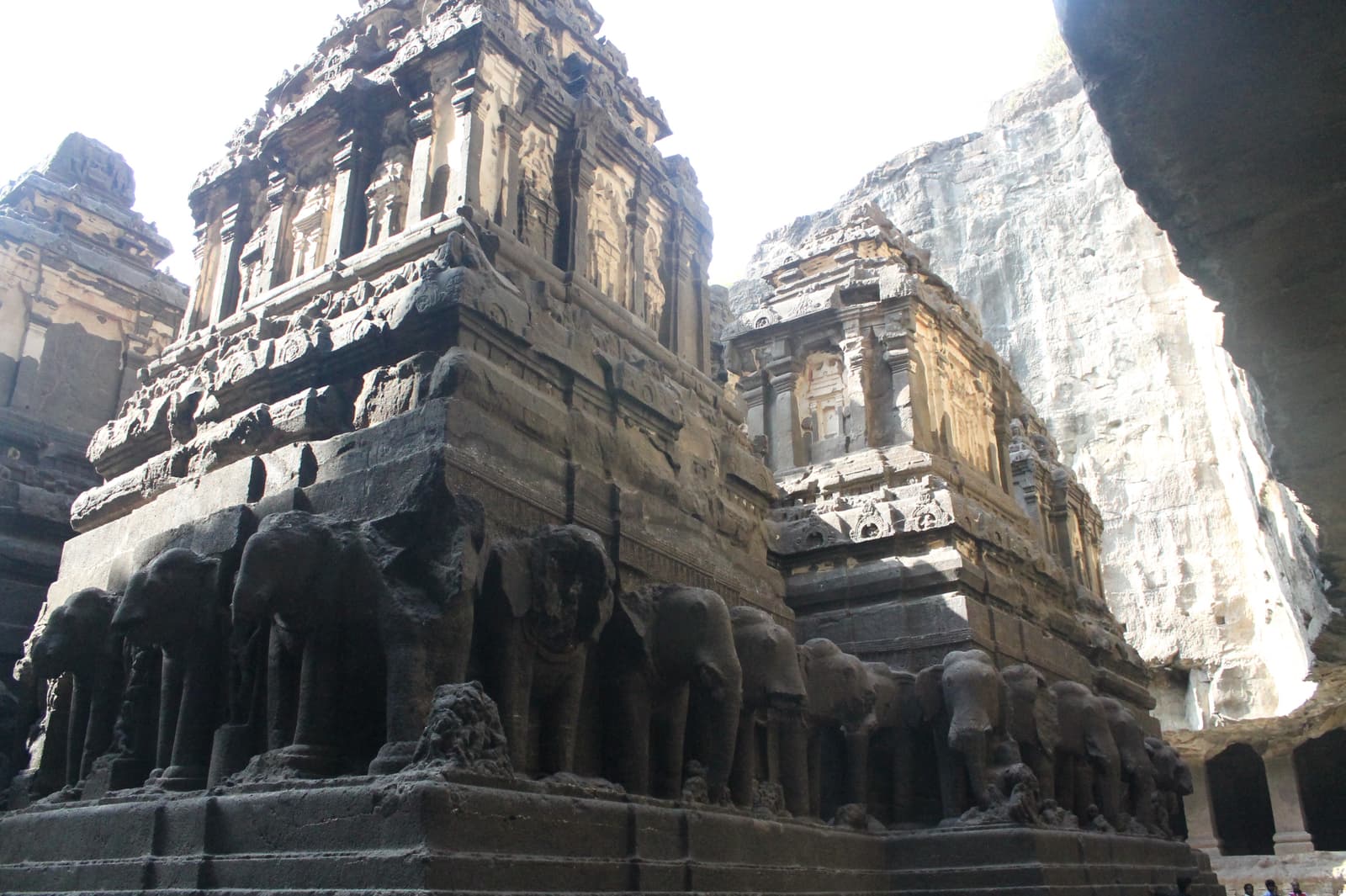
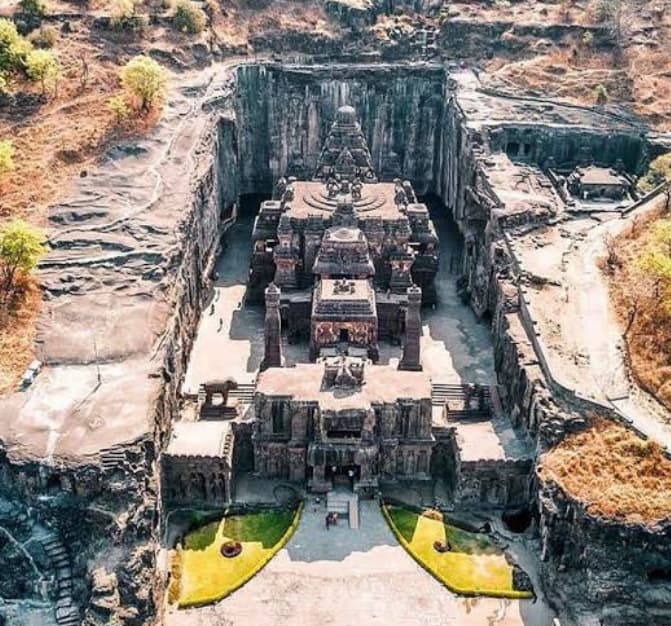
Kailasa Temple monolithic rock-cut architecture at Ellora

Myth vs Historical Evidence

A critical part of understanding mysterious temples is distinguishing between what is historically verified, what is traditionally believed, and what has been added by modern storytelling. The table below separates documented facts from popular stories for key claims about these temples.

S

Story: The British removed a giant magnet from Konark Sun Temple

No verified historical record supports this claim. The magnet story probably grew from the temple's unusual use of iron beams and clamps in its construction — an engineering feature that distinguished it from other Odishan temples. Sailor accounts of compass anomalies near Konark added to the narrative.

F

Fact: The Konark temple used iron structurally

Archaeological surveys confirm iron beams were placed between stone blocks — a construction technique that added structural stability and may have caused the magnetic effects that inspired the legend. The iron components would naturally become magnetised over centuries.

S

Story: Akbar personally tried to extinguish the Jwala Ji flames

The popular account of Akbar ordering the flames doused with water and covered with stone is temple tradition rather than documented Mughal history. Mughal court records do not mention any such incident. The story likely reflects the temple's historical importance rather than a specific event.

F

Fact: Natural gas sustains the Jwala Ji flames

The Geological Survey of India confirmed methane and hydrocarbon gases seep through rock fissures at the site. The Kangra valley overlies a sedimentary basin with hydrocarbon deposits. The flames are sustained by continuous natural gas flow, independent of human intervention.

S

Story: The Lepakshi hanging pillar was a deliberate miracle

While the pillar appears to defy gravity, it was not left hanging by design. ASI records confirm the pillar was dislodged during early 20th-century conservation work and imperfectly repaired. The visible gap results from this repair, not from original construction.

F

Fact: Concealed corbel engineering supports the pillar

The pillar uses a hidden stone bracket within the ceiling that distributes its load to adjacent pillars. This technique appears in earlier Chalukya and Hoysala architecture — the Lepakshi example is simply more visibly dramatic because of the gap between column and floor.

Ancient Engineering Knowledge

Structural Engineering

The Lepakshi hanging pillar, Brihadeeswarar vimana, and Kailasa monolith demonstrate sophisticated understanding of load distribution, cantilever mechanics, and material science. IIT Kharagpur and IIT Madras structural analyses confirm these techniques are consistent with sound engineering principles even when they appear counterintuitive. Hidden corbels, interlocking stone joints, and precise weight distribution were standard methods in certain dynastic traditions.

Acoustics & Materials

The musical pillars of Vittala Temple and Chennakesava represent empirical knowledge of acoustic resonance in stone. IIT Madras's 2022 study confirmed each pillar's fundamental frequency is determined by its precise geometric dimensions. Craftsmen had worked out the relationship between stone shape and sound frequency without modern instrumentation. The choice of stone types — soapstone for carving, granite for durability — reflected material science understanding.

Geology & Site Selection

The Jwala Ji flames and Kamakhya reddening are rooted in local geology that temple builders recognised and incorporated. Builders understood that certain rock formations had specific properties — laterite for iron-rich water, basalt for monolithic carving, granite for coastal durability. Sites were chosen not just for religious significance but for the geological features that would make the temple's defining characteristic possible.

Comparison of Mysterious Temples

A quick-reference guide to all 12 temples, their locations, primary mysteries, and visitor information.

TempleMysteryBest Season
Lepakshi TempleThe Hanging PillarOctober to March
Vittala TempleThe Musical PillarsOctober to February
Jwala Ji TempleThe Eternal FlameMarch to June, September to November
Konark Sun TempleThe Magnetic PinnacleOctober to March
Mehandipur Balaji TempleExorcism & SpiritsOctober to March
Brihadeeswarar TempleThe Shadowless DomeOctober to March
Kailasa TempleCarved From the Top DownNovember to March
Padmanabhaswamy TempleThe Secret Vault BOctober to February
Kamakhya TempleThe Menstruating GoddessOctober to March
Chennakesava TempleRotating Stone PillarsOctober to February
Jagannath TempleFlag, Shadow & Kitchen WondersOctober to February
Shore Temple1,300 Years Against the SeaOctober to March

The 12 Temples

Each temple below is presented with its history, the phenomenon that makes it notable, traditional beliefs, available evidence, and practical visitor information.

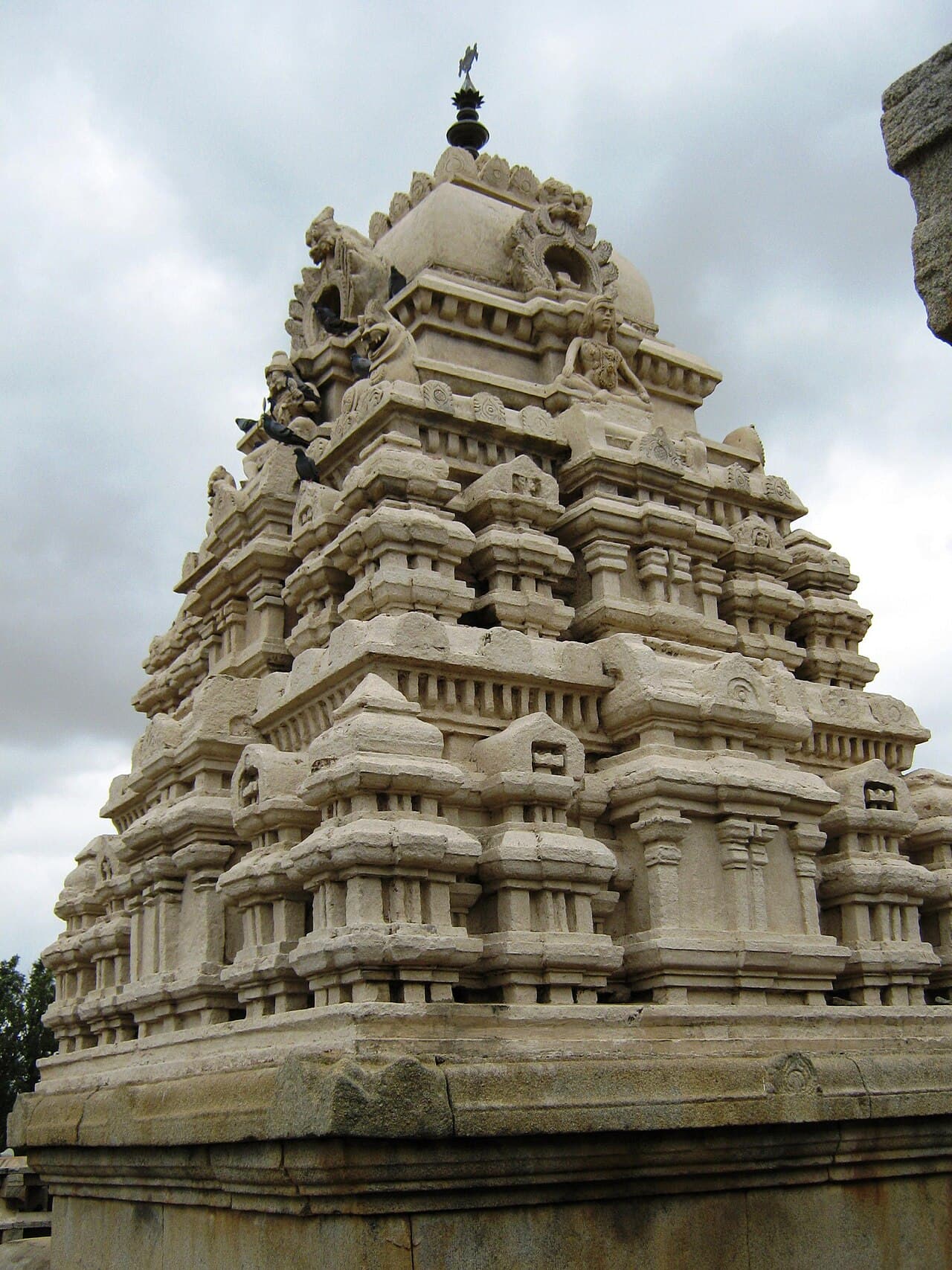
The hanging pillar of Lepakshi Temple showing a visible gap between the pillar base and floor
Temple 1
Physics Defying
Lepakshi, Anantapur, Andhra Pradesh
The Hanging Pillar

Lepakshi Temple

Deity: Veerabhadra (Shiva)

The Lepakshi Veerabhadra Temple was built in 1530 CE under the Vijayanagara king Achutaraya. Among its 70 granite pillars, one draws every visitor's attention. Its base floats roughly an inch above the floor, yet the pillar supports the ceiling above. The effect is immediate and disorienting — a column bearing weight without ground contact.

Early 20th-century ASI engineers accidentally dislodged this pillar during conservation work and could not reseat it to full precision. The visible gap is a record of that intervention.

The Mystery

The pillar appears to violate gravity. Its base is clearly separated from the floor, yet the structure above remains supported. To a casual observer, this looks physically impossible.

6:00 AM to 6:00 PM daily
Free entry; Rs 25 for camera
Modest attire required
October to March
Traditional beliefs, historical evidence & scientific explanations

Traditional Belief

Local tradition describes the hanging pillar as proof of the divine architect Vishwakarma's skill. Some accounts say the gods left the pillar suspended as an eternal symbol of architectural perfection.

Historical Evidence

ASI records confirm the pillar was dislodged during early 20th-century conservation work and imperfectly repaired. The visible gap resulted from this repair. The pillar functions as a decorative column with a concealed stone corbel in the ceiling that transfers its load to adjacent pillars.

Scientific Explanation

The pillar uses a concealed cantilever mechanism. Hidden stone brackets embedded in the ceiling redirect the column's weight to neighbouring pillars. This technique appears in earlier Chalukya and Hoysala temples — the Lepakshi example is simply more visibly dramatic because the gap between column and floor remained after the repair.

How to Reach

Lepakshi is 120 km from Bangalore via NH 44. Nearest railway station is Hindupur (60 km). Direct buses from Bangalore, Anantapur, and Hindupur.

Nearby Attractions

The monolithic Nandi bull, Lepakshi hill rock paintings, Bhoganandishwara Temple at the hill base. Penukonda Fort (50 km) offers additional Vijayanagara ruins.

Quick Questions

Can I touch the hanging pillar?

Yes, visitors can slide a cloth or paper under the pillar to verify the gap.

Did ASI damage the pillar?

Early 20th-century ASI engineers dislodged the pillar during conservation work. They repaired it but the original precision was not fully restored. The gap visible today is a result of this repair.
Visit Lepakshi Temple Full Guide
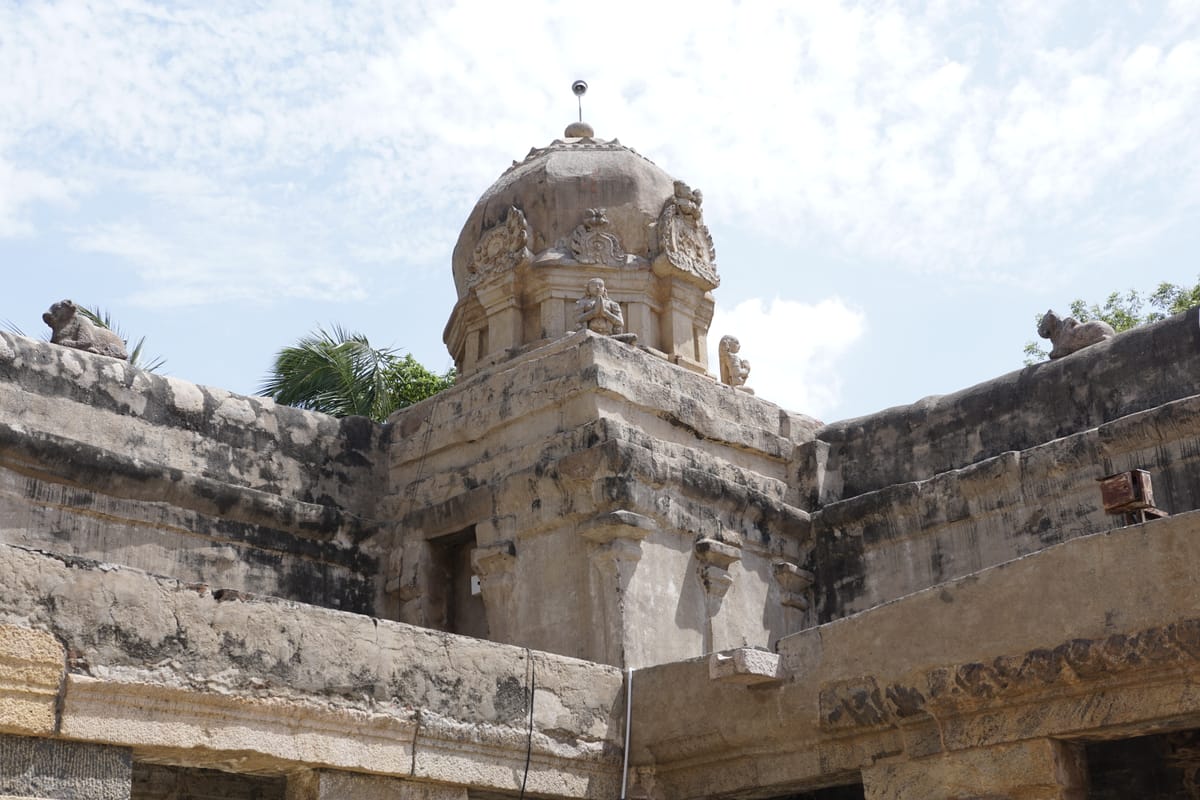
Stone chariot and musical pillar mandapa of Vittala Temple at Hampi, Karnataka
Temple 2
Physics Defying
Hampi, Karnataka
The Musical Pillars

Vittala Temple

Deity: Lord Vishnu (Vittala)

The Vittala Temple sits at the heart of Hampi, a UNESCO World Heritage Site and the former capital of the Vijayanagara Empire. Its Ranga Mantapa contains 56 monolithic granite pillars, each carved to a specific geometry that determines its acoustic frequency. A British officer cut one pillar open in the 19th century to locate the source of the sound. He found solid stone throughout — no hidden chambers, no inserts, no mechanical trick.

In 2022, IIT Madras confirmed through acoustic analysis that each pillar produces a discernible note of the Carnatic scale, determined entirely by its dimensions and core hollowness.

The Mystery

Solid granite should not produce musical tones. When a British officer cut a pillar open to investigate, he found solid stone throughout. Yet the pillars continue to produce distinct musical notes after 500 years.

8:30 AM to 6:00 PM daily
Rs 40 (Indians), Rs 600 (foreign nationals); Rs 25 for camera
Modest clothing recommended
October to February. Hampi Utsav in November features cultural performances.
Traditional beliefs, historical evidence & scientific explanations

Traditional Belief

The pillars were tuned by divine musicians who visited the temple at night. Local tradition says the pillars will fall silent when the true Kali Yuga begins.

Historical Evidence

IIT Madras's 2022 acoustic study confirmed the pillars produce discernible notes of the Carnatic scale. Each pillar's diameter, length, and hollow-core dimensions determine its fundamental frequency. The British-era cut pillar remains visible in the Ranga Mantapa.

Scientific Explanation

Each pillar is carved from monolithic granite with geometric proportions that determine its resonant frequency. The ratio of diameter to height, combined with slight hollowing of the core, creates a natural tuning fork. The seven smaller pillars around each main pillar are dimensioned to produce the seven notes. Craftsmen understood that specific stone dimensions produced specific frequencies — a technique lost after the Vijayanagara collapse.

How to Reach

Hampi is 350 km from Bangalore via NH 48. Nearest railway station is Hospet (13 km). Direct buses from Bangalore, Goa, and Hyderabad. Regular bus from Hospet to Hampi.

Nearby Attractions

Virupaksha Temple (2 km), Hampi Bazaar, Lotus Mahal, Elephant Stables, Queen's Bath, Tungabhadra River coracle rides, Anegundi village.

Quick Questions

Can visitors tap the musical pillars?

Tapping is restricted to prevent damage. Temple staff demonstrate the musical notes on designated pillars at specific times.

Why did the British cut a pillar?

A British officer cut a pillar in the 19th century to find the source of the sound. Finding only solid granite, the incident became famous as proof of ancient acoustic mastery.

Visit Vittala Temple Full Guide
Nine eternal flames emerging from rock fissures inside Jwala Ji Temple, Kangra
Temple 3
Natural Phenomenon
Kangra, Himachal Pradesh
The Eternal Flame

Jwala Ji Temple

Deity: Goddess Jwala (Flame)

The Jwala Ji Temple in the Kangra district is one of the 51 Shakti Peethas, marking the location where Goddess Sati's tongue is believed to have fallen. There is no idol inside. Instead, nine flames emerge from separate fissures in the rock floor, burning continuously through monsoon rain and winter snow. Mughal records from Akbar's period mention these flames.

The Geological Survey of India has confirmed the presence of natural methane and hydrocarbon gases seeping through rock fissures from subterranean coal deposits in the Kangra valley. The flames have been burning for centuries and show no sign of stopping.

The Mystery

Flames burning continuously for centuries with no visible fuel source defy everyday combustion physics. They survive monsoon rains and Himalayan winters. The blue-white colour indicates extremely high-temperature combustion.

5:00 AM to 9:00 PM daily
Free entry
Modest attire required; head covering recommended
March to June and September to November. Monsoon (July-August) can cause landslides on mountain roads.
Traditional beliefs, historical evidence & scientific explanations

Traditional Belief

The flames are the manifested form of Goddess Jwala. Each of the nine flames represents a different form of the goddess. The temple is a Siddha Peetha where the goddess is fully present.

Historical Evidence

The Geological Survey of India confirmed natural methane and hydrocarbon gas seepage through rock fissures at the temple site. Historical records from Mughal chronicles, Sikh rulers, and British administrators all describe the flames as continuously burning.

Scientific Explanation

The flames are sustained by natural gas seepage from underground coal and shale deposits. The Kangra valley sits above a sedimentary basin with trapped hydrocarbons. Gases migrate through rock fractures created by tectonic activity. The flames burn blue-white because the methane-hydrocarbon mixture burns at high temperature. Seasonal barometric pressure variations affect flame intensity — consistent with natural gas seepage rather than divine intervention.

How to Reach

Jwala Ji is 60 km from Dharamshala (nearest airport) and 30 km from Kangra (nearest railway station). Regular Himachal Roadways buses from Dharamshala, Kangra, and Pathankot.

Nearby Attractions

Chamunda Devi Temple (15 km), Kangra Fort (30 km), Masroor Rock Cut Temple (40 km), Dharamshala and McLeodganj (60 km). Brajeshwari Devi Temple in Kangra town is another Shakti Peetha.

Quick Questions

Did Akbar really try to extinguish the flames?

According to temple tradition, Akbar sent soldiers to douse the flames and cover the vent. The flames reportedly emerged from a different spot. Akbar subsequently donated a gold umbrella which remains in the temple treasury. Mughal records do not mention this incident.

Do the flames ever change intensity?

Yes, flame intensity varies with weather and barometric pressure. Flames are more vigorous in winter. During heavy rain the flames may appear smaller but never extinguish.

Visit Jwala Ji Temple Full Guide
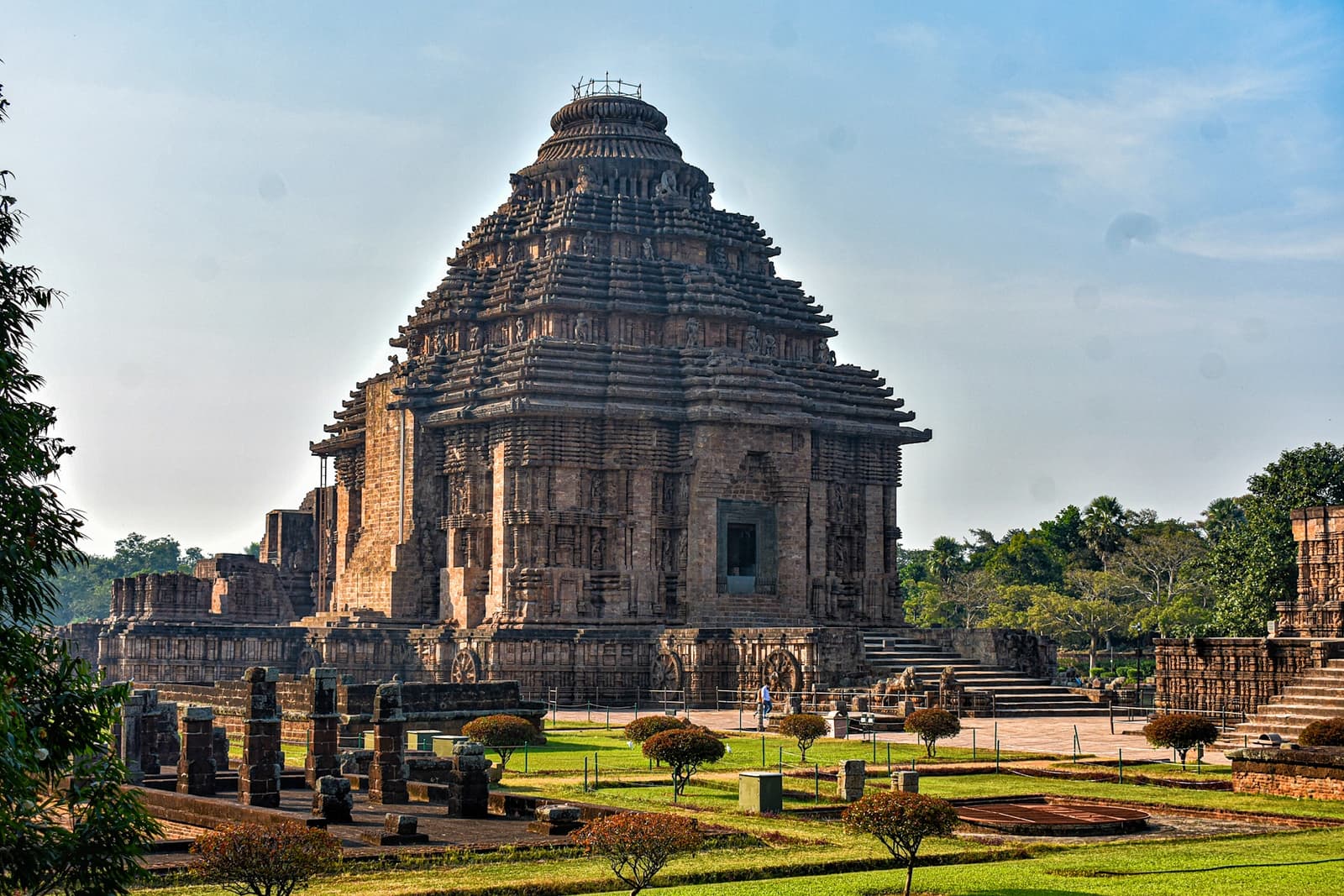
Konark Sun Temple chariot with 24 stone wheels under blue sky, Odisha
Temple 4
Physics Defying
Konark, Odisha
The Magnetic Pinnacle

Konark Sun Temple

Deity: Surya (Sun God)

The Konark Sun Temple was built around 1250 CE by King Narasimhadeva I of the Eastern Ganga dynasty. It is designed as a colossal solar chariot with 12 pairs of stone wheels pulled by seven horses — each wheel 12 feet in diameter, functioning as a sundial. The temple was a precise solar instrument: its east-facing entrance aligns with the rising sun so the first rays illuminate the sanctum.

The legend of a 52-ton magnet at the summit persists because the temple used iron beams and clamps extensively in its construction — a technique unique among Odishan temples. These iron components, exposed to centuries of geomagnetic field influence, could create measurable local magnetic anomalies. No verified historical record confirms the giant magnet, but the temple's iron-rich construction gives the legend a factual foundation.

The Mystery

The legend of a 52-ton magnet maintaining the temple's alignment and confusing ship compasses persists despite no verified historical evidence. The temple's extensive use of iron — unique among Odishan temples — provides a plausible basis for the story.

6:00 AM to 8:00 PM daily
Rs 40 (Indians), Rs 600 (foreign nationals); Rs 25 for camera
Modest attire recommended
October to March. Konark Dance Festival in December features classical performances.
Traditional beliefs, historical evidence & scientific explanations

Traditional Belief

A massive lodestone at the temple's summit kept the structure in perfect balance. The magnet also disrupted passing ship compasses, leading to its removal by either the British or local mariners.

Historical Evidence

Historians from the Indira Gandhi National Centre for the Arts note that iron beams and clamps were extensively used in construction. European mariner accounts from the 16th-18th centuries describe unusual magnetic properties near Konark. The temple's structural analysis confirms iron was used between stone blocks.

Scientific Explanation

The temple's extensive iron construction creates an unusual local magnetic field. Iron beams and clamps binding the stone structure would naturally become magnetized over centuries of geomagnetic field exposure. The original 227-foot temple height made it visible from 30+ km at sea. The magnetic legend probably combines the iron construction with the navigational value of the structure for Bay of Bengal shipping.

How to Reach

Konark is 65 km from Bhubaneswar (nearest airport and major railway station). Direct buses from Bhubaneswar, Puri, and Cuttack.

Nearby Attractions

Puri Jagannath Temple (35 km), Chandrabhaga Beach (3 km), Konark Museum. Sun Temple Museum houses sculptures recovered from the site.

Quick Questions

Was the magnet actually removed by the British?

No verified historical record confirms this. The story probably originated during early British surveys when iron clamps were reportedly removed for scrap.

How does the temple function as a sundial?

The 24 wheels function as astronomical timekeeping devices. Shadow patterns change precisely with time and season. At equinox, sunlight passes through three specific openings to illuminate the sanctum.

Visit Konark Sun Temple Full Guide
Mehandipur Balaji Temple courtyard, Rajasthan
Temple 5
Supernatural
Mehandipur, Dausa, Rajasthan
Exorcism & Spirits

Mehandipur Balaji Temple

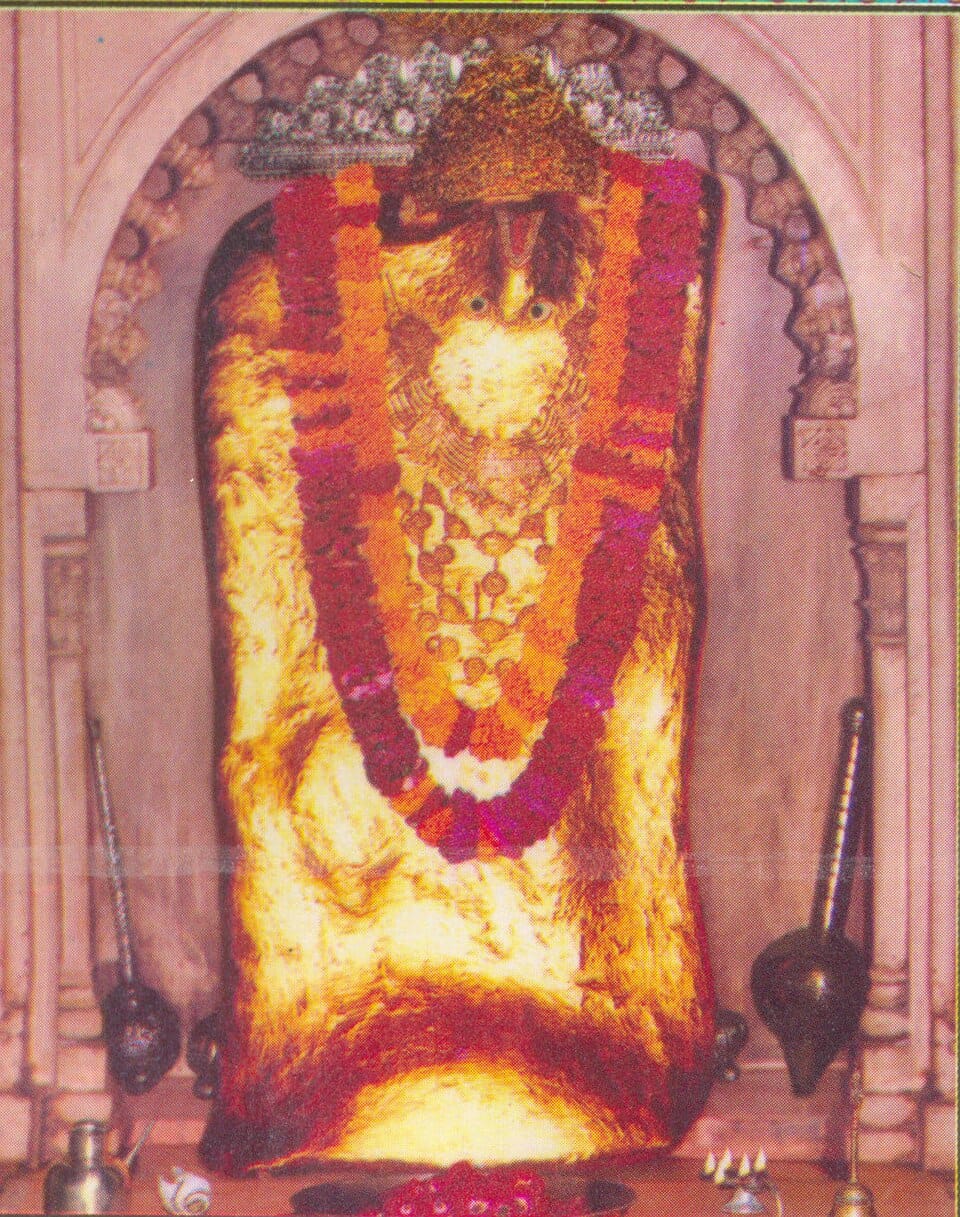
Deity: Lord Hanuman (Balaji)

Mehandipur Balaji Temple has built a reputation across India and beyond as a centre for treating spiritual affliction. Unlike most temples where devotees seek blessings, the primary purpose here is liberation. Armed priests conduct continuous Hanuman Chalisa chanting, apply lemon-and-chili preparations, and guide what they describe as confrontations between the afflicted and the deity. The temple attracts thousands of visitors monthly and has been featured in international documentaries.

From a medical perspective, the phenomena observed here align with culturally-patterned dissociative states. The ritual environment — chanting, crowd expectation, sensory intensity — creates conditions where suggestible individuals experience altered states.

The Mystery

The dramatic physical manifestations reported during rituals — individuals speaking in assumed voices, exhibiting unusual strength, convulsing, then reportedly recovering — have no conventional medical explanation.

5:00 AM to 9:00 PM daily. Aartis at 5:00 AM, 12:00 PM, 7:00 PM.
Free entry
Modest traditional attire required. Shorts and sleeveless tops not permitted.
October to March. Tuesdays and Saturdays see the largest crowds. Hanuman Jayanti is the biggest festival.
Traditional beliefs, historical evidence & scientific explanations

Traditional Belief

Possession is understood as an invasion by malevolent entities that can only be expelled through Hanuman's power. The priests' chants create a protective spiritual boundary that evil forces cannot cross.

Historical Evidence

No scientific studies document exorcism at this temple. The phenomenon falls within cultural psychiatry and anthropology. Indian cultural traditions recognise possession states as distinct from psychiatric conditions, though the medical establishment does not validate this distinction.

Scientific Explanation

The phenomena can be understood through cultural psychiatry and dissociation. Possession states are documented across cultures as context-specific expressions of psychological distress. The ritual environment creates conditions where suggestible individuals experience altered states. Reported recoveries likely represent resolution of dissociative disorders within a culturally congruent framework.

How to Reach

Mehandipur is 250 km from Delhi via NH 48 and 70 km from Jaipur. Nearest railway station is Bandikui (25 km). Regular buses from Jaipur and Delhi.

Nearby Attractions

Salasar Balaji Temple (150 km), Chand Baori stepwell in Abhaneri (60 km), Jaipur city (180 km) with Amber Fort, Hawa Mahal, and City Palace.

Quick Questions

Why should visitors not look back when leaving?

Temple tradition holds that the expelled entity may re-enter through the devotee's gaze if they turn around.

Is the temple treatment safe?

The practices are faith-based. Individuals with psychiatric conditions should seek qualified medical help alongside any spiritual practices. The temple does not claim to replace medical treatment.

Visit Mehandipur Balaji Temple Full Guide
Brihadeeswarar Temple vimana towering over Thanjavur, Tamil Nadu
Temple 6
Physics Defying
Thanjavur, Tamil Nadu
The Shadowless Dome

Brihadeeswarar Temple

Deity: Lord Shiva

The Brihadeeswarar Temple, built in 1010 CE by the Chola emperor Rajaraja I, remains one of the largest temples in India and a UNESCO World Heritage Site. Its 216-foot vimana is among the tallest stone structures of the ancient world, crowned by a single 80-ton granite capstone. At solar noon, the vimana's shadow falls vertically downward onto its own base — making it effectively invisible from ground level. 8 degrees north.

IIT Kharagpur's 2017 structural analysis confirmed the mathematical precision of the design.

The Mystery

A 216-foot stone tower that casts no ground shadow at noon appears to defy basic optics. The effect requires careful interpretation based on the vimana's precise geometry and latitudinal alignment.

6:00 AM to 8:30 PM daily
Free entry for darshan; Rs 50 for museum and special viewing
Traditional attire required. Men must remove shirts and wear dhotis or pyjamas. Women must wear sarees or long skirts.
October to March. The shadowless phenomenon is most visible around equinoxes (March 21 and September 21).
Traditional beliefs, historical evidence & scientific explanations

Traditional Belief

The shadowless phenomenon is considered a divine sign — proof that the temple exists at a spiritually charged location. Many devotees see it as representing Lord Shiva's transcendence over time.

Historical Evidence

IIT Kharagpur (2017), Anna University, and ASI have analysed the vimana's shadow behaviour. At solar noon, the shadow falls vertically onto the structure's own base, making it invisible from a horizontal viewing perspective.

Scientific Explanation

The temple was designed so that at solar noon, the sun is positioned directly above the vimana's apex. The shadow falls straight down onto the temple's own base. The 1:1 height-to-base-width ratio ensures this effect. Thanjavur's latitude places it within the tropical zone where the sun passes directly overhead twice yearly.

How to Reach

Thanjavur is 350 km from Chennai. Nearest airport is Tiruchirappalli (60 km). Thanjavur has direct trains from Chennai, Madurai, and Bangalore.

Nearby Attractions

Thanjavur Maratha Palace (1 km), Saraswathi Mahal Library, Schwartz Church, Gangaikonda Cholapuram temple (35 km), Darasuram Airavateswara Temple (45 km).

Quick Questions

Does the vimana truly cast no shadow?

At solar noon, the shadow falls directly beneath the vimana onto its base, making it invisible from ground level. From above, the shadow is visible but compact.

How was the 80-ton capstone raised?

Engineers built an inclined earth ramp extending 6+ km. The capstone was dragged up on rollers and the ramp was then dismantled.

Visit Brihadeeswarar Temple Full Guide
Kailasa Temple monolithic structure carved from basalt rock at Ellora, Maharashtra
Temple 7
Engineering Marvel
Ellora, Aurangabad, Maharashtra
Carved From the Top Down

Kailasa Temple

Deity: Lord Shiva

The Kailasa Temple (Cave 16) at Ellora is the world's largest monolithic structure. It was excavated entirely from a volcanic basalt cliff using a top-down method: artisans first cut three deep trenches around the rock, then sculpted from the summit to the base, removing approximately 200,000 tons of rock by hand. 5 times taller. Rashtrakuta king Krishna I commissioned the work between 760-773 CE.

With an estimated 7,000 workers labouring continuously for 18 years, the project required removing roughly 30 tons of rock every single day using iron chisels and hammers.

The Mystery

Removing 200,000 tons of rock by hand with iron chisels in 18 years, using a top-down method without structural errors, challenges modern engineering assumptions. Modern engineers calculate that even today, carving such a complex structure would require 3D scanning and computer modeling.

6:00 AM to 6:00 PM daily (closed on Tuesdays)
Rs 40 (Indians), Rs 600 (foreign nationals); free for children under 15
Modest attire required
November to March. Ellora Festival in March features music and dance performances.
Traditional beliefs, historical evidence & scientific explanations

Traditional Belief

The divine architect Vishwakarma built the temple. Some traditions say the temple grew from the ground at the gods' command. Local legend describes the architect Kokasa praying to Shiva for guidance.

Historical Evidence

Rashtrakuta inscriptions and Ellora epigraphs confirm construction under Krishna I (756-773 CE). The top-down method is evident from the excavation pattern — upper portions are fully finished while lower portions show incomplete details, confirming the direction of work.

Scientific Explanation

Artisans first cut three trenches around a 200 x 100 foot rock block. They sculpted from the top downward, removing rock in layers. Broken tools and debris fell away naturally. Iron chisels were made from high-quality crucible steel (wootz steel). The project required about 7,000 workers over 18 years. Precision was achieved using plumb lines, water levels, and detailed scale models carved in wood beforehand.

How to Reach

Ellora is 30 km from Aurangabad. Nearest airport is Aurangabad. Regular buses from Aurangabad to Ellora.

Nearby Attractions

Daulatabad Fort (15 km), Bibi Ka Maqbara (30 km), Grishneshwar Jyotirlinga Temple (1 km), Ajanta Caves (100 km).

Quick Questions

How was the temple carved without computers?

Rashtrakuta engineers used traditional surveying methods: plumb lines for vertical accuracy, water levels for horizontal alignment, and detailed scale models carved beforehand.

Why is it called Kailasa?

The temple is designed as a replica of Mount Kailash, believed to be the abode of Lord Shiva. The architects recreated the mountain in stone.

Visit Kailasa Temple Full Guide
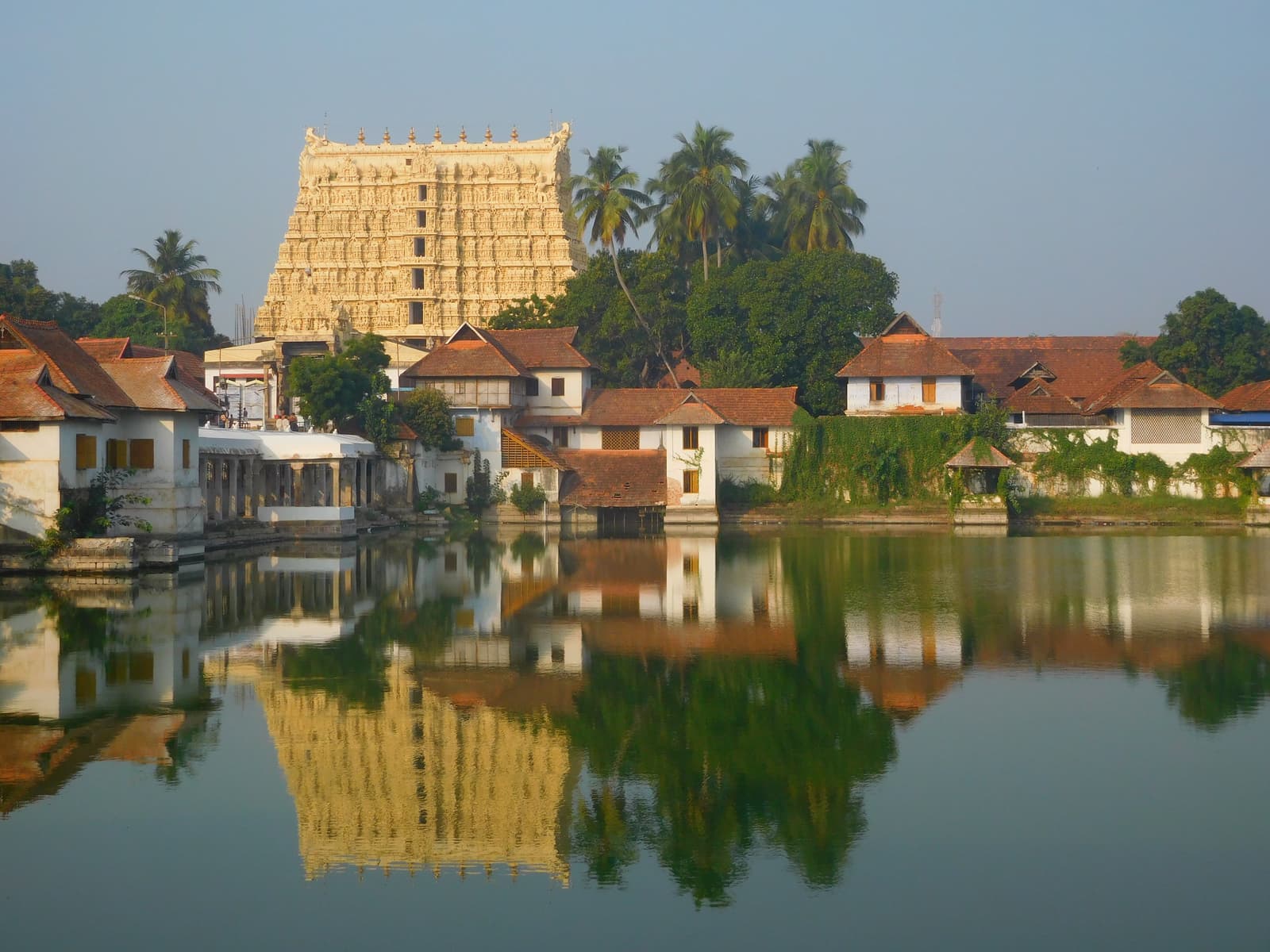
Padmanabhaswamy Temple gopuram in Thiruvananthapuram, Kerala
Temple 8
Supernatural
Thiruvananthapuram, Kerala
The Secret Vault B

Padmanabhaswamy Temple

Deity: Lord Padmanabha (Vishnu)

The Sree Padmanabhaswamy Temple is the richest religious institution in the world. 5-foot solid gold idol studded with emeralds and rubies. Vault B has never been opened in modern history. Its iron door features two cobra emblems and has no visible lock or keyhole.

Temple tradition maintains that only a highly advanced yogi using a specific serpent mantra can open it safely. The Supreme Court-appointed team did not attempt to open Vault B due to the absence of a known opening mechanism and the temple trust's insistence on the curse warning.

The Mystery

Vault B's iron door has no visible lock or keyhole. Temple tradition says a divine serpent protects it and will kill anyone who opens it without proper ritual purification.

3:30 AM to 12:00 PM and 5:00 PM to 8:30 PM daily
Free entry
Men must wear Mundu (dhoti) and remain bare-chested. Women must wear sarees or long skirts.
October to February. Alpasi (October/November) and Painkuni (March/April) festivals feature grand processions.
Traditional beliefs, historical evidence & scientific explanations

Traditional Belief

The vault is protected by a divine serpent. Only a yogi who has mastered the Naga Sadhana mantra can open the door safely. The treasury belongs to the deity.

Historical Evidence

Travancore royal records document the contents and sealing of all six vaults. Vault B has been sealed since at least the 1830s. ASI ground-penetrating radar confirms the vault exists and appears structurally stable. No one alive has seen inside.

Scientific Explanation

The lockless door suggests a hidden mechanism — possibly a stone bolt or pressure-activated opening. The curse serves a practical function: it protects the vault from curiosity and provides a powerful cultural deterrent against theft. Similar vaults with curse traditions exist in other ancient Indian temples.

How to Reach

The temple is in central Thiruvananthapuram. Nearest airport is Trivandrum International (6 km). Nearest railway station is Thiruvananthapuram Central (1 km).

Nearby Attractions

Kovalam Beach (16 km), Napier Museum, Zoo, Kanakakunnu Palace. Padmanabhapuram Palace (55 km), Agasthyamala Biosphere Reserve.

Quick Questions

What is inside Vault B?

No one knows. Based on treasures in the other vaults, it likely contains extremely valuable items — possibly the royal Travancore crown, sacred manuscripts, or original gold temple records.

Why was Vault B not opened?

The 2011 Supreme Court order did not mandate opening Vault B. The temple trust cited tradition, lack of a known opening mechanism, and potential structural risk.

Visit Padmanabhaswamy Temple Full Guide
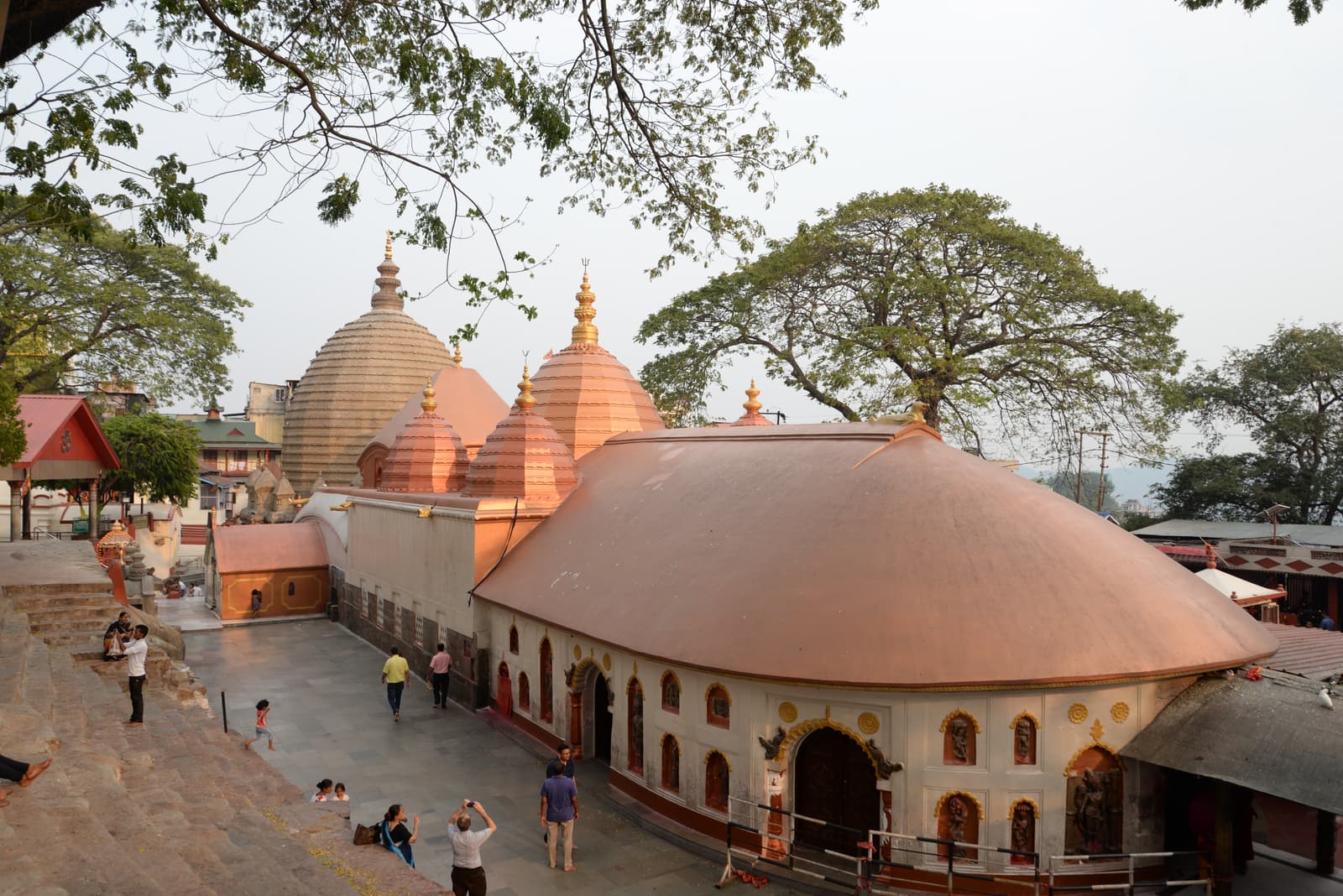
Kamakhya Temple dome on Nilachal Hill, Guwahati, Assam
Temple 9
Natural Phenomenon
Guwahati, Assam
The Menstruating Goddess

Kamakhya Temple

Deity: Goddess Kamakhya

The Kamakhya Temple on Nilachal Hill in Guwahati is one of the 51 Shakti Peethas and the most important temple in the tantric tradition. The inner sanctum contains no idol. Instead, a natural rock fissure shaped like the yoni (female reproductive organ) receives worship. During the annual Ambubachi Mela, the fissure turns red due to iron oxide from the laterite rock combining with monsoon rainwater.

The timing coincides with the onset of the monsoon season, when heavy rains percolate through the iron-rich strata and dissolve iron compounds that emerge through the fissure. The phenomenon has been studied chemically: the red colour is rust from the surrounding laterite formation. Within the religious framework, this is understood as the goddess menstruating. Both perspectives coexist without contradiction.

The Mystery

A stone structure that annually 'menstruates' is unique among world religious sites. The timing coincides with the monsoon, and devotees report the flow stops after exactly three days — consistent with a menstrual cycle.

5:30 AM to 1:00 PM and 2:30 PM to 9:00 PM daily
Rs 100 for darshan; Rs 200 for special darshan
Modest attire required. Traditional Indian dress preferred.
October to March for weather. Ambubachi Mela (June 22-26) is the most significant time but draws 500,000+ visitors.
Traditional beliefs, historical evidence & scientific explanations

Traditional Belief

The goddess Kamakhya menstruates during the month of Ashadha (June). The earth is also considered to be menstruating, so all agricultural activity is suspended. The three-day closure honours the goddess's natural cycle.

Historical Evidence

Chemical analysis of the red water confirmed iron oxide from the surrounding laterite rock. The Nilachal Hill is composed largely of laterite, an iron-rich formation. Monsoon rainwater dissolves iron compounds that emerge through the specific rock fissure.

Scientific Explanation

The phenomenon is a natural geochemical process. Monsoon rainwater percolating through laterite rock dissolves iron minerals (hematite and goethite) and emerges through the fissure as reddish iron oxide water. The process is seasonal because the water table rises during the monsoon to reach the fissure level. The colour stops after initial flushing of accumulated iron deposits.

How to Reach

The temple is on Nilachal Hill, 8 km from Guwahati. Nearest airport is Lokpriya Gopinath Bordoloi International (12 km). Guwahati Railway Station is well-connected.

Nearby Attractions

Umananda Temple on Peacock Island (5 km), Assam State Museum (7 km), Kaziranga National Park (200 km), Purva Tirupati Sri Balaji Temple (15 km).

Quick Questions

Does the goddess actually menstruate?

Within the religious tradition, yes — the reddening of the rocks is the goddess's menstruation. Scientifically, it is iron oxide-rich spring water. Both perspectives are valid within their respective frameworks.

What is the Ambubachi Mela?

The annual June festival celebrating the goddess's menstruation. The temple closes for three days and reopens with grand celebrations. It is the largest gathering of tantric practitioners in the world.

Visit Kamakhya Temple Full Guide
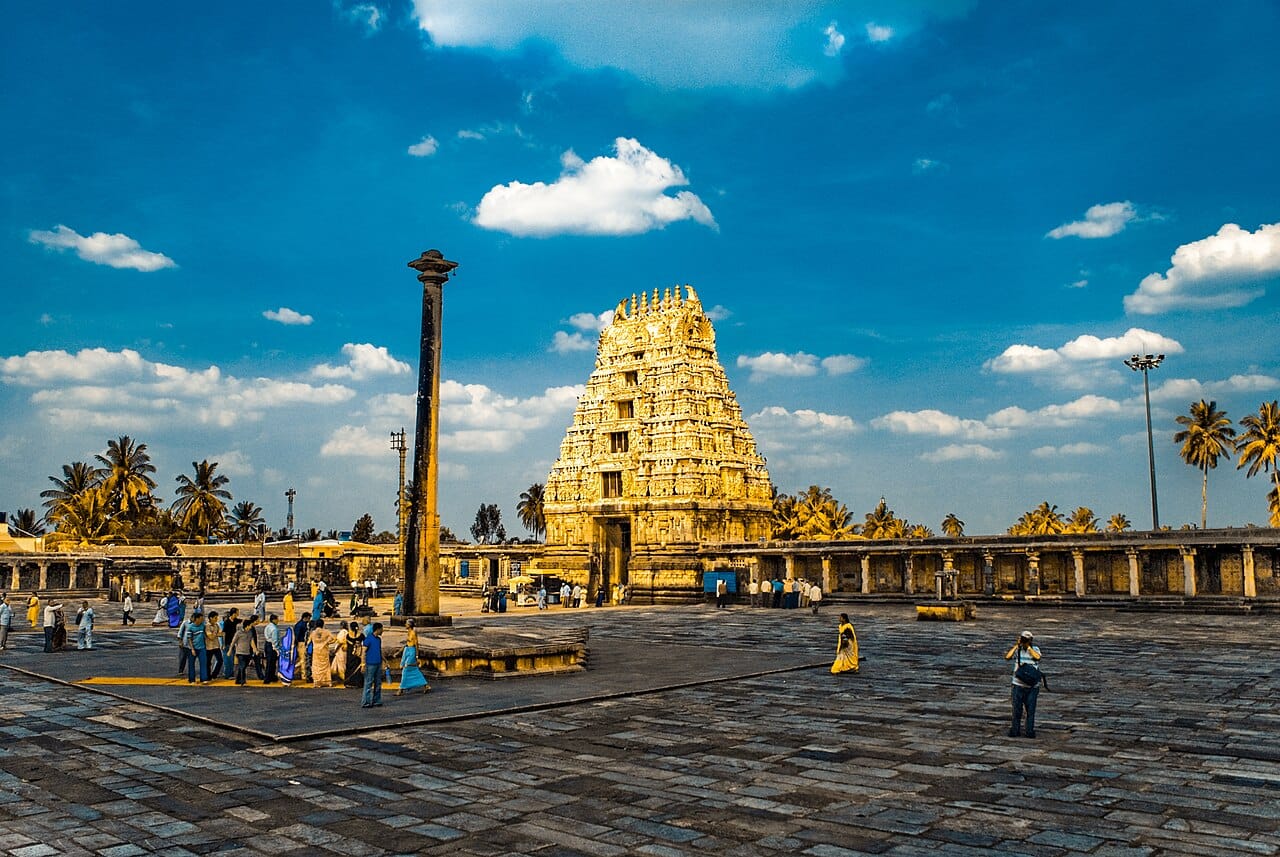
Chennakesava Temple star-shaped platform and Hoysala carvings at Belur, Karnataka
Temple 10
Engineering Marvel
Belur, Karnataka
Rotating Stone Pillars

Chennakesava Temple

Deity: Lord Chennakesava (Vishnu)

The Chennakesava Temple at Belur, completed in 1117 CE by the Hoysala king Vishnuvardhana, represents the finest achievement of Hoysala architecture. The temple contains 46 pillars, none identical. Some were originally mounted on rotating stone bases — a feat of precision engineering that allowed the pillars to turn on their own bearings. The rotating pillars used a convex stone mechanism where a rounded protrusion on the pillar base seated into a concave socket in the floor.

The soapstone (chloritic schist) used by Hoysala artisans provided natural lubrication between stone surfaces. Most rotating pillars have been cemented in place by conservation efforts, but the engineering principle remains visible.

The Mystery

Pillars that rotate on stone bases require perfectly level bearing surfaces, friction-minimising contact geometry, and centuries of dimensional stability — all achieved without modern tools.

7:00 AM to 7:30 PM daily
Rs 20 (Indians), Rs 250 (foreign nationals); free for children under 15
Modest attire recommended
October to February. Belur Temple Festival (March-April) features classical dance performances.
Traditional beliefs, historical evidence & scientific explanations

Traditional Belief

The rotating pillars were gifts from the gods. The bracket figures are celestial beings who came alive to dance within the temple.

Historical Evidence

Archaeological surveys confirm some pillars were originally mounted on rotating bases, though most have been cemented in place. The madanika carvings have been studied by art historians who note that carving against the natural stone cleavage plane requires extraordinary skill.

Scientific Explanation

The rotating pillars used a convex stone bearing mechanism. The soapstone provides natural lubrication between surfaces. The 45-degree madanika carvings were possible because soapstone, when freshly quarried, is relatively soft (2-3 on Mohs scale) and can be carved in any direction before hardening on exposure to air. Craftsmen carved these figures immediately after quarrying.

How to Reach

Belur is 220 km from Bangalore via NH 48. Nearest railway station is Hassan (40 km). Regular KSRTC buses from Bangalore, Mysore, and Mangalore.

Nearby Attractions

Halebidu Hoysaleswara Temple (16 km), Shravanabelagola (80 km) with 57-foot Gommateshwara statue. Smaller Hoysala temples in Belur village.

Quick Questions

Which pillar can still rotate?

Most pillars have been cemented in place. Local tradition identifies a specific pillar near the main sanctum that was functional until the 19th century, but none rotate freely today.

How was soapstone carved so intricately?

Hoysala craftsmen quarried soapstone when fresh and soft, carving details within months before it hardened. The fine grain allows detail impossible on harder granite.

Visit Chennakesava Temple Full Guide
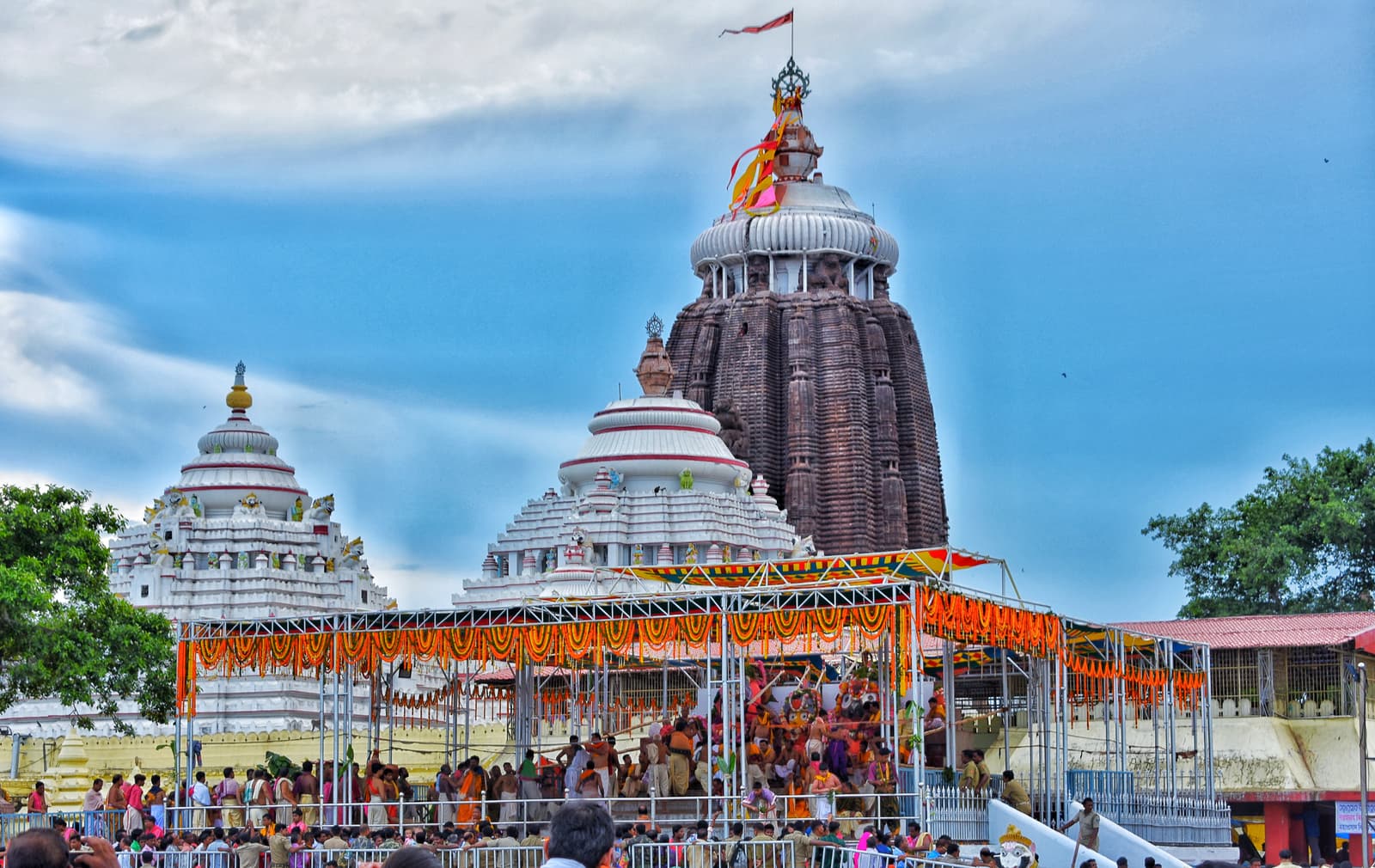
Jagannath Temple 214-foot spire and flag at Puri, Odisha
Temple 11
Physics Defying
Puri, Odisha
Flag, Shadow & Kitchen Wonders

Jagannath Temple

Deity: Lord Jagannath (Vishnu-Krishna)

Three independent phenomena at the Jagannath Temple have attracted attention for centuries. First, the Patitapavana flag atop the 214-foot spire consistently flaps opposite the prevailing wind direction — observable daily by thousands of visitors. Second, the main spire produces the same shadowless-at-noon effect as Brihadeeswarar Temple because of similar geometric proportions.

Third, the temple kitchen uses 752 clay ovens in a precise grid where food is cooked in seven-tier stacked earthen pots — the top pot cooks first and the bottom never burns, defying normal heat distribution expectations. The kitchen produces 56 dishes daily and feeds an estimated 100,000 people, making it the world's largest community kitchen.

The Mystery

Three independent phenomena in one complex: a flag defying wind direction, a shadowless tower at noon, and a kitchen producing perfectly cooked food in stacked pots.

5:00 AM to 11:00 PM daily
Free entry (non-Hindus not permitted inside main temple)
Traditional Indian attire required. No shorts or sleeveless tops.
October to February for weather. Rath Yatra (June-July) is the spectacular chariot festival.
Traditional beliefs, historical evidence & scientific explanations

Traditional Belief

The flag flies opposite the wind to show Lord Jagannath is not bound by natural laws. The shadowless tower proves the temple exists where time stands still. The kitchen miracle demonstrates the Lord personally oversees cooking.

Historical Evidence

Multiple eyewitness accounts consistently describe the flag flowing opposite the prevailing wind. IIT Kharagpur's structural analysis confirmed the spire's geometric dimensions. The kitchen's 752 ovens and stacked pot method have been documented by culinary historians.

Scientific Explanation

The flag phenomenon may result from wind eddies created by the Nilachakra wheel interacting with the spire profile — the 20-foot wheel at the summit could create a Venturi effect. The shadowless spire uses the same geometry as Brihadeeswarar. The stacked pot cooking works because earthen pots have slow thermal conductivity and steam from each pot rises evenly through perforations in the tier above.

How to Reach

Puri is well-connected by train (Puri Railway Station) with direct connections from Howrah, Delhi, Chennai, and Bangalore. Nearest airport is Bhubaneswar (60 km).

Nearby Attractions

Puri Beach, Gundicha Temple (3 km), Konark Sun Temple (35 km), Chilika Lake (50 km).

Quick Questions

Can non-Hindus visit the Jagannath Temple?

Traditional rules restrict non-Hindu entry to the main temple. The temple can be viewed from nearby rooftops. Everyone can participate in the Rath Yatra.

What is the Mahaprasad?

The temple kitchen serves 56 dishes (Chhappan Bhog) daily, cooked in earthen pots over wood fire in 756 clay ovens. An estimated 100,000 people eat here daily.

Visit Jagannath Temple Full Guide
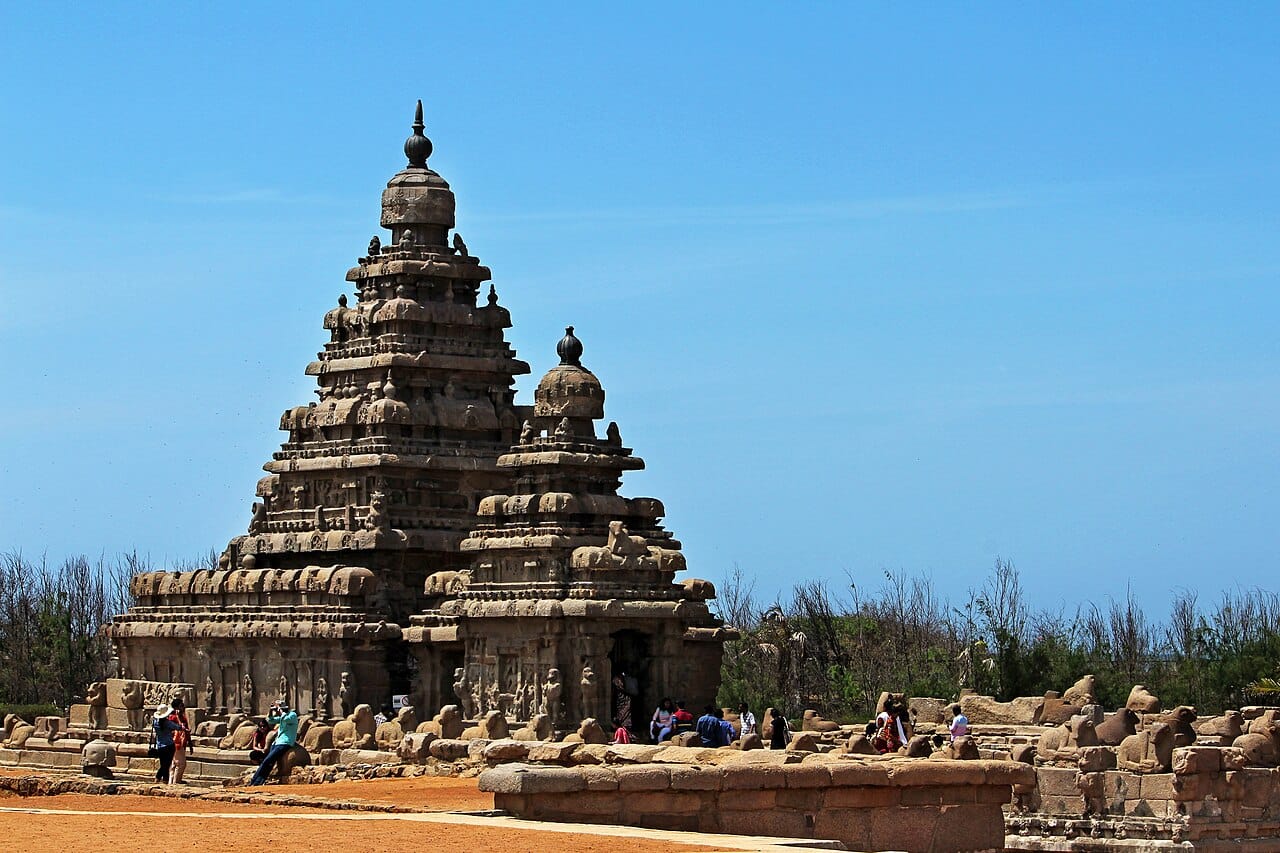
Shore Temple on the Bay of Bengal coast at Mahabalipuram, Tamil Nadu
Temple 12
Engineering Marvel
Mahabalipuram, Tamil Nadu
1,300 Years Against the Sea

Shore Temple

Deity: Lord Shiva and Lord Vishnu

The Shore Temple at Mahabalipuram, built around 700-728 CE under the Pallava king Narasimhavarman II, stands 50 metres from the Bay of Bengal waterline. It has survived 1,300 years of salt spray, tidal erosion, and cyclone-force winds. During the 2004 Indian Ocean tsunami, water surged inland with devastating force — the Shore Temple emerged unscathed while modern concrete structures kilometres inland were destroyed.

The temple's survival comes from three factors: granite construction with negligible water absorption, dry-stacked blocks with interlocking joints that flex during seismic events, and a deep granite foundation on bedrock beneath the sand. Post-tsunami surveys revealed submerged ruins 500 metres offshore — the remains of the original temple complex that stood on land when the coastline was further out.

The Mystery

Granite structures on a sandy coast should not survive 1,300 years of tidal action. The 2004 tsunami destroyed concrete buildings inland but left the Shore Temple standing. Submerged ruins offshore suggest the temple was part of a larger complex claimed by the sea.

6:00 AM to 6:00 PM daily
Rs 40 (Indians), Rs 600 (foreign nationals); Rs 25 for camera
Modest attire recommended
October to March. Mamallapuram Dance Festival (December-January) features classical performances.
Traditional beliefs, historical evidence & scientific explanations

Traditional Belief

The temple was built by the divine architect Vishwakarma. The submerged structures are a kingdom swallowed by the sea for its pride. The temple survived because it was protected by Shiva and Vishnu.

Historical Evidence

Post-tsunami surveys (2005-2007) by ASI and the Indian Navy confirmed submerged structures: stone walls, platforms, and a large temple complex at depths of 5-8 metres, 500 metres offshore. Radiometric dating places these structures contemporary with the Shore Temple (7th-8th century CE).

Scientific Explanation

The temple's survival is due to: (1) Granite — negligible water absorption (0.1-0.5%). (2) Dry-stacked interlocking blocks allowing flex during seismic events. (3) Deep granite foundation on bedrock. The 2004 tsunami survival was because the porous structure allows water to pass through rather than building hydrostatic pressure. The coastline has retreated 1-2 km over 1,300 years — the temple was originally built inland.

How to Reach

Mahabalipuram is 60 km south of Chennai. Nearest airport is Chennai International (55 km). Regular buses from Chennai's Adyar and Saidapet stands.

Nearby Attractions

Arjuna's Penance bas-relief, Five Rathas, Krishna Butter Ball, Tiger Cave, Mahabalipuram beach, Crocodile Bank (15 km), DakshinaChitra heritage museum (20 km).

Quick Questions

How did the Shore Temple survive the 2004 tsunami?

The dry-stacked granite construction allows water to pass through rather than building pressure against solid walls. The deep granite foundation on bedrock prevents scouring.

Are there really seven pagodas?

Underwater surveys confirmed submerged structures offshore — foundations of a large temple complex. The 'Seven Pagodas' likely refers to the original complex, of which the Shore Temple is the only one still standing.

Visit Shore Temple Full Guide

Why These Temples Matter Today

Cultural Heritage

These temples represent the continuation of living traditions. Most have been active pilgrimage sites for centuries, with daily rituals, festivals, and community practices that connect present-day worshippers to their predecessors. Understanding the phenomena at these sites is part of understanding how Indian civilisation has engaged with the natural and built environment over time.

Archaeological & Scientific Value

Each temple offers a case study in pre-industrial engineering, acoustics, geology, and materials science. Institutions including IIT Madras, IIT Kharagpur, the Geological Survey of India, and the Archaeological Survey of India continue to study these structures. The knowledge gained has applications in conservation, restoration, and historical understanding.

Pilgrimage & Tourism

These temples draw millions of visitors annually — both pilgrims for whom the sites hold deep religious meaning and travellers interested in their architectural and historical significance. Responsible tourism supports local economies and funds conservation. Many of these temples are also UNESCO World Heritage sites with international protection.

Preservation

Several temples face threats from environmental factors — coastal erosion at Mahabalipuram, weathering at exposed sites, and structural stress from increasing visitor numbers. Conservation efforts by ASI, UNESCO, and state archaeology departments work to preserve these structures for future generations. Visiting these sites supports these efforts through entry fees and awareness.

Frequently Asked Questions

Which is the most mysterious temple in India?

The answer depends on what kind of mystery interests you. Lepakshi Temple has the hanging pillar (a visible engineering phenomenon). Vittala Temple in Hampi has the musical pillars (verified acoustics). Jwala Ji has the eternal flame (geological). Brihadeeswarar has the shadowless dome (geometric). Each represents a different category of unexplained phenomenon.

Are these mysteries scientifically explained?

Several have plausible scientific explanations. Jwala Ji's flames come from natural gas seepage, confirmed by the Geological Survey of India. The Brihadeeswarar shadowless effect results from precise latitudinal geometry. The Vittala Temple musical pillars have been analysed by IIT Madras and their acoustic properties explained by pillar dimensions. The Kamakhya red water is iron oxide in spring water. The Lepakshi pillar uses a concealed corbel. For some sites — particularly Mehandipur Balaji and Vault B of Padmanabhaswamy — the phenomena remain within cultural or belief-based frameworks.

Which mysterious temples are open to tourists?

All 12 temples profiled in this guide are open to visitors. Most charge entry fees (Rs 20-40 for Indians, Rs 250-600 for foreign nationals). Some have restrictions: non-Hindus cannot enter the main Jagannath Temple at Puri. Padmanabhaswamy Temple has a strict dress code (men bare-chested in dhoti, women in sarees). Photography restrictions vary by temple.

Which mysterious temples are UNESCO World Heritage Sites?

Of the 12 temples profiled, four are UNESCO World Heritage Sites or part of UNESCO complexes: Vittala Temple (Group of Monuments at Hampi, 1986), Konark Sun Temple (1984), Brihadeeswarar Temple (Great Living Chola Temples, 1987), Kailasa Temple (Ellora Caves, 1983), and Shore Temple (Group of Monuments at Mahabalipuram, 1984). The Hoysala temples including Chennakesava Belur are on the tentative list for UNESCO nomination.

Which temple is associated with unexplained phenomena?

The Jagannath Temple in Puri has three separate reported phenomena: a flag that flies opposite the wind direction, a spire that casts no shadow at noon, and a kitchen that cooks food in stacked seven-tier pots where the top cooks first and the bottom never burns. The temple kitchen feeds over 100,000 people daily, making it the world's largest community kitchen.

What is inside Vault B of Padmanabhaswamy Temple?

No one knows. The vault has been sealed since at least the 1830s. Its iron door has no visible lock and features cobra emblems. Temple tradition holds it can only be opened by a yogi using a specific mantra. The five other vaults opened in 2011 contained treasures worth over $22 billion, including gold thrones, diamond-studded crowns, and Roman-era coins.

Is the Kailasa Temple really carved from a single rock?

Yes. The Kailasa Temple at Ellora was carved entirely from a single basalt cliff using a top-down excavation method. Approximately 200,000 tons of rock were removed by hand in 18 years using iron chisels and hammers. It remains the world's largest monolithic structure.

What are the best mysterious temples to visit near Delhi?

Jwala Ji Temple in Himachal Pradesh (400 km) and Mehandipur Balaji Temple in Rajasthan (250 km) are within reach for weekend trips. Jwala Ji offers the eternal flame phenomenon in a Himalayan setting. Mehandipur Balaji provides a unique cultural experience of faith-based healing traditions. Both are accessible by road.

Sources and Methodology

— every record linked above was re-requested for this release, so the link still resolves and the publisher still serves the document. It is a link check, not a re-verification of every sentence on this page.

This guide was researched and written by Naveen singh negi using verified sources including published archaeological reports, academic studies, and official documentation from the Archaeological Survey of India, UNESCO, and Indian research institutions. Traditional beliefs and local accounts are clearly identified as such and are not presented as historical fact.

Last updated: June 2026. Visitor information (timings, entry fees, dress codes) should be verified with official sources before travel, as they may change.

  • • Archaeological Survey of India — Lepakshi Veerabhadra Temple (monument #N-AP-86), ASI conservation reports
  • • IIT Madras — Acoustic analysis of Vittala Temple musical pillars, Department of Mechanical Engineering, 2022
  • • Geological Survey of India — Natural gas seepage report, Kangra Valley, Himachal Pradesh
  • • UNESCO — Konark Sun Temple technical documentation, Group of Monuments at Mahabalipuram
  • • Indian Institute of Technology, Kharagpur — Structural analysis of Brihadeeswarar Vimana, Department of Civil Engineering, 2017
  • • World Heritage Committee — Ellora Caves inscription documentation, 1983
  • • Supreme Court of India — Sree Padmanabhaswamy Temple treasure valuation report, 2011
  • • Anna University — Shadow analysis of Brihadeeswarar Temple vimana, Department of Architecture, 2015
  • • India Today / The Hindu — Reporting on Padmanabhaswamy Temple vault openings, 2011-2021
  • • Indian National Trust for Art and Cultural Heritage (INTACH) — Hampi and Hoysala temple documentation

More Temple Collections

India has thousands of temples, each with a history worth knowing. Browse our curated guides to specific categories.

Continue Your Sacred Journey

Explore historical timelines, architectural traditions, and primary documentation across India's sacred temples and pilgrimage circuits.

Explore More Temples