Sacred HeritageUNESCO World Heritage Site
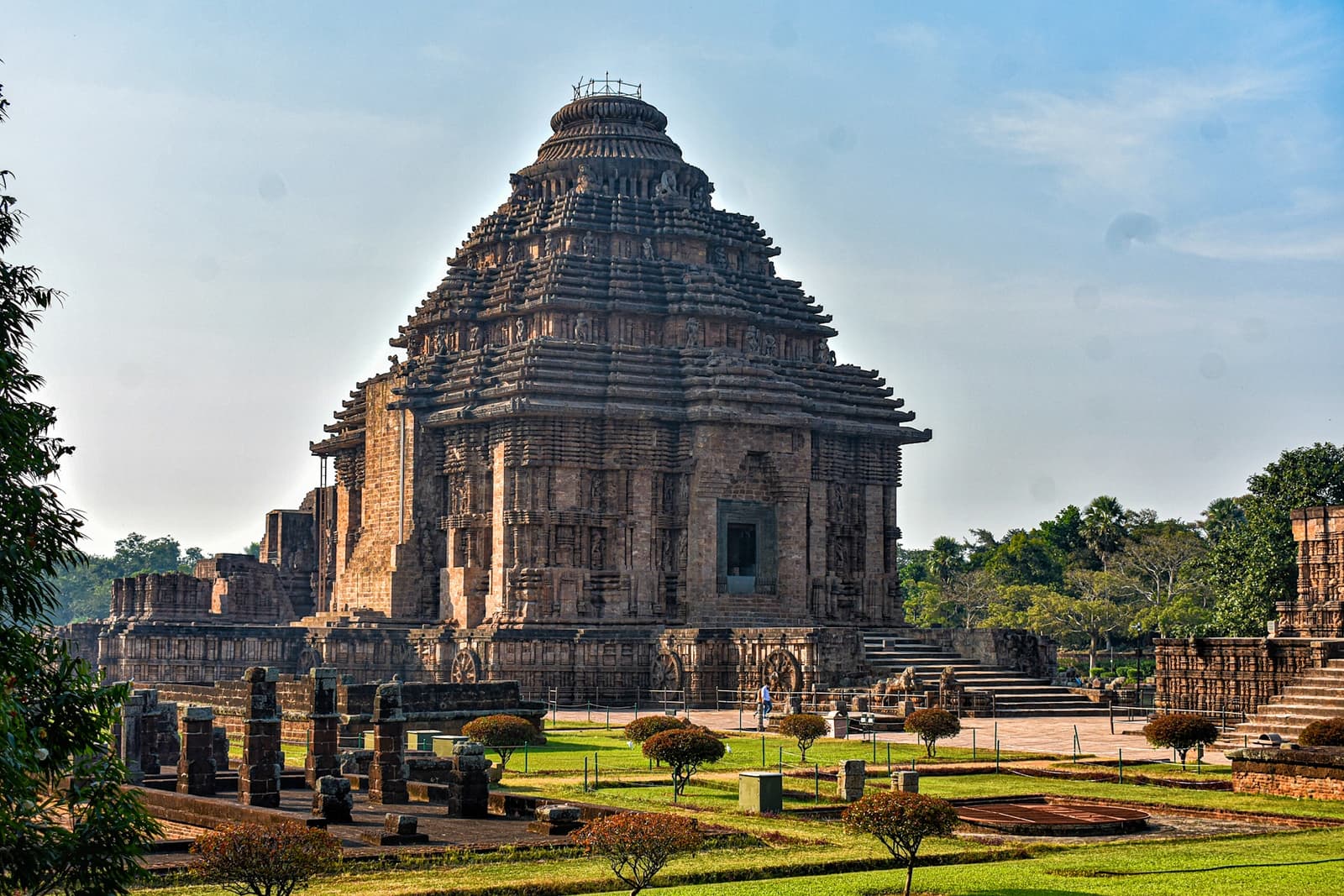
Konark Sun Temple
Konark, Odisha
State:Odisha
District:Konark
Why This Temple Matters
UNESCO World Heritage Site — recognized for outstanding universal value
Key Takeaways
- Dedicated to Surya (Sun God)
- Kalinga architecture
- Built by the Eastern Ganga Dynasty dynasty
- UNESCO World Heritage Site since 1984
- Located in Konark, Odisha
Quick Facts
- Builder
- Narasimhadeva I
- Dynasty
- Eastern Ganga
- Construction
- c. 1250 CE
- Style
- Kalinga (Odisha)
- Main Deity
- Lord Surya
- Location
- Konark, Odisha
- UNESCO
- Inscribed 1984
- Material
- Chlorite, Laterite, Khondalite
- Wheels
- 24 (3m diameter each)
- Also Called
- Black Pagoda
The Short Answer
What Is the Konark Sun Temple?
The Konark Sun Temple is a 13th-century temple on the coast of Odisha, about 35 kilometres from Puri, dedicated to Surya, the Sun God. Around 1250 CE, Narasimhadeva I of the Eastern Ganga dynasty commissioned it as a colossal stone chariot — a raised platform carved with 24 wheels, drawn by seven horses, and crowned by a sanctum tower that no longer stands.
Konark is not a conventional tower-fronted shrine. The entire monument is Surya's ratha — the chariot in which the sun god crosses the sky. The dance hall (natya mandapa), the great assembly hall (jagamohana), and much of the chariot platform survive, so the visitor still walks among the wheels and horses that made the design unmistakable.
Because only part of the original building survives, Konark represents a specific, late moment in a long tradition of Indian temple building rather than its beginning. To see the monuments that came before it, read our guide to the oldest temples in India.
Overview
The Chariot of the Sun God
From its base to its crowning elements, the Konark temple was designed as Surya's ratha — a celestial chariot rendered in stone. The platform forms the chariot body, 24 carved wheels run along both sides, and seven horses strain at the entrance steps as if pulling the entire structure across the sky.
Three structures rise from this platform: the natya mandapa (dance hall), the jagamohana (assembly hall), and the deul (sanctum tower) that originally rose about 229 feet before collapsing. This was the largest temple ever attempted by the Kalinga school, and its conception as a single integrated chariot was without precedent.
In Hindu mythology, Surya rides a chariot pulled by seven horses across the sky each day. The Konark temple makes this myth physical. You do not enter a building to face an idol. You walk onto the chariot of the sun god. The entire temple is the divine object.
The design is layered with meaning rather than a single symbolic gesture. The number and arrangement of the wheels, the eastward charge of the horses, and the long east–west axis all belong to one idea: Surya crossing the sky. Each of these elements is examined in its own section below.
Why This UNESCO Site Matters
Why This UNESCO Site Matters
UNESCO inscribed the Sun Temple in 1984 under three criteria. Criterion (i) recognizes the temple as a masterpiece of human creative genius — there is nothing else like the Konark chariot anywhere in the world. Criterion (iii) cites its exceptional testimony to the Kalinga architectural tradition at its peak. Criterion (vi) acknowledges its direct association with the solar worship tradition of Odisha, a living practice that predates the temple by centuries. It belongs to a select group of World Heritage structures — see the full set of UNESCO temples of India.
The temple represents a unique moment in Indian architectural history. It was the last great monument built by the Eastern Ganga dynasty before their decline. It was reportedly the tallest structure on India's eastern coast. Some scholars suggest the 24 wheels functioned as a solar calendar and the orientation was astronomically aligned, though describing it as a precise scientific instrument may overstate the available evidence.
The site faces severe conservation challenges. Salt weathering, coastal erosion, and structural instability threaten the surviving structures. UNESCO and the ASI work together on preservation, prioritizing stabilization over reconstruction. The site is preserved as an authentic ruin — fallen fragments are documented and stored in the site museum.
History & Legacy
History of the Konark Sun Temple
The Konark Sun Temple was built in the middle of the 13th century — conventionally dated to around 1250 CE — on the orders of Narasimhadeva I (r. 1238–1264 CE), the most powerful king of the Eastern Ganga dynasty. The Gangas controlled the whole Odisha coast, from the Ganges delta to the Godavari, and grew rich on maritime trade — ships carrying textiles, spices, and elephants to Burma, Sumatra, Java, and China. That income explains how such a costly building could be commissioned at a coastal site.
The temple was almost certainly a statement of kingship as much as a place of worship. Some historians read it as a victory monument celebrating Narasimhadeva's campaigns against the Delhi Sultanate's expansion into Bengal — a plausible reading of a building whose image was visible from the sea, but one no surviving inscription documents. What is certain is that it was the last great monument the Gangas raised; nothing of comparable ambition followed it.
Much of the colour in the standard story — more than 1,200 artisans working for about twelve years under a chief architect named Bisu Maharana — comes from local tradition, recorded in later chronicles such as the Madala Panji kept at the Jagannath temple in Puri. That tradition is worth repeating with care: the dynasty, the patron, the mid-13th-century date, and the scale are firmly established, while the workshop details are the temple's own folklore rather than documentary records.
After the dynasty declined, Konark was never expanded or maintained. Worship lapsed, and by the 17th–18th centuries the great tower had collapsed and the site lay buried under sand until the Archaeological Survey of India began clearing it in the early 1900s — a story told in detail in the section on the temple's ruins below. Konark is also part of the wider temple heritage of Odisha, of which the holy city of Puri and the Jagannath temple are the spiritual centre.
Historical Timeline
Historical Timeline
Key events in the life of the Sun Temple, from its construction to the present day.
1238 CE
Narasimhadeva I ascends the Eastern Ganga throne and begins planning the Konark temple.
~1250 CE
The temple is raised during Narasimhadeva I's reign. Local tradition sets the workforce at more than 1,200 artisans led by chief architect Bisu Maharana; the deul rises to its full height.
1568 CE
Kalapahad invasion of Odisha. Temple worship disrupted. Local traditions say the invading army damaged the structure.
Late 16th c.
The Ain-i-Akbari, compiled for Akbar's court in the 1590s, records the sun temple at Konark. Local tradition says the Surya image was moved to Puri for safekeeping.
17th–18th c.
European sailors begin calling the ruined tower the Black Pagoda. The main tower (deul) falls at some point in this period — the exact cause is debated.
1803 CE
British surveyor Colin Mackenzie visits and documents the ruins. First measured drawings of the site.
1901 CE
ASI begins conservation work under John Beglar and later R. L. Mitra. Clearing of sand and debris.
1984 CE
UNESCO inscribes the Sun Temple as a World Heritage Site under criteria (i), (iii), and (vi).
2020 CE
Government of India allocates significant funds for full structural assessment and conservation.
UNESCO World Heritage
UNESCO World Heritage
World Heritage Site
Inscribed in 1984, the Sun Temple is recognized as a cultural property of outstanding universal value under criteria (i), (iii), and (vi).
Criterion (i)
Masterpiece of human creative genius. The chariot conception is unique in world architecture.
Criterion (iii)
Exceptional testimony to the Kalinga architectural tradition at its peak.
Criterion (vi)
Direct link to the solar worship tradition of Odisha as enshrined in the Samba Purana.
Architecture
The Stone Chariot: Architectural Form & Surviving Structures
Konark belongs to the Kalinga school of temple architecture, which follows a strict spatial progression along an east–west axis: the sanctum tower (vimana or deul), the assembly hall (jagamohana or mukhasala), the festive dance hall (natamandira), and the dining/offering pavilion (bhogamandapa). At Konark, King Narasimhadeva I unified this plan into an unprecedented concept: an immense cosmic chariot of Surya on a 4-metre high carved plinth.
The complex is constructed from three distinct stones selected for specific mechanical and artistic functions:
- Chlorite (Green Schist): Dense, fine-grained stone reserved for the delicate doorframes, central Surya icons, and finest narrative carvings.
- Khondalite: A foliated metamorphic rock used for the principal masonry blocks, large sculptures, and carved wheels; highly vulnerable to coastal saline weathering.
- Laterite: Iron-rich porous stone used in hidden structural cores, foundation platforms, and perimeter boundary walls.
What survives today versus what was lost:
- The Jagamohana (Porch / Assembly Hall): The monumental stepped-pyramid hall (pidha deul) survives intact up to 39 metres (128 feet) in height. In 1903, British engineers filled its hollow interior completely with river sand and masonry to prevent imminent structural collapse, permanently sealing it.
- The Natamandira (Dance Pavilion): Standing detached directly east of the main entrance steps, this square pillared pavilion features an open roofless hall raised on an intricately sculpted plinth depicting 13th-century musicians and Odissi dancers.
- The Vimana Plinth: The colossal sanctum tower (rekha deul), once towering an estimated 60 to 70 metres (200–229 feet), collapsed centuries ago. However, its expansive plinth survives, including the massive chlorite pedestal (singhasana) upon which the presiding sun idol once rested.
- Mayadevi & Vaishnava Temples: Excavated in 1909 to the southwest of the main platform, the Mayadevi Temple predates the main chariot (likely 11th century) and was dedicated to Surya's consort, while a nearby brick temple reveals syncretic Vaishnava worship on the site.
The chariot base features 24 wheels — twelve on each flank — each measuring 3 metres (9.8 feet) in diameter, and seven charging stone horses at the eastern entrance. Massive wrought-iron forged beams (measuring up to 10 metres long and weighing several tonnes) were embedded as lintels over doorways — an astonishing 13th-century metallurgical achievement.
The Wheels
Why Does the Konark Sun Temple Have 24 Wheels?
The temple has 24 wheels in all — 12 on each side of the chariot platform, each about 3 metres in diameter and cut from a single slab of stone. Read as a calendar, the twelve pairs stand for the twelve months of the year and the 24 wheels for the 24 hours of the day. Each wheel's eight principal spokes divide the circle into eight sectors, traditionally matched with the eight praharas into which the day was divided for rituals and timekeeping. The seven horses complete the reading — seven days of the week.
These identifications are the standard interpretation given by the site's guides and its literature. They are symbolic and astronomical layers of meaning built into the design — not statements carved in words — so they are best described as tradition rather than measured fact.
The physical form has also been studied as an actual sundial. Every wheel has a central hub, eight broad spokes, eight narrower spokes, and a rim marked with carved notches, so a shadow cast by part of the wheel moves across a graduated surface as the day progresses. Recent mathematical studies take this timekeeping function seriously.
What is repeated most often is that the wheels tell the time down to the minute. That precision claim goes beyond what is established. The sun-tracking intent of the design is widely accepted, but exact minute-level accuracy would depend on a wheel's position on the platform, the season, and the quality of the light. The careful summary: the wheels are built to be read by the sun, they divide the day into marks and praharas, and the general principle is sound even if the ‘exact to the minute’ version is not.
Whatever their precise function, the wheels are the defining image of Konark — the element that makes the chariot idea unmistakable to anyone who approaches the platform.
The Horses
The Seven Horses
Seven stone horses were carved at the temple's east edge, straining to pull the chariot toward the rising sun. Only part of the team survives today — several horses have been damaged or lost over the centuries — but the remaining carvings are among the most expressive at the site.
In Hindu mythology, Surya rides across the sky in a chariot drawn by seven horses, and at Konark the horses carry the same symbolic weight. They are commonly read as the seven days of the week and, in older textual tradition, as the seven meters of Vedic poetry; they are sometimes also associated with the seven colours of light. These are interpretive readings taught at the site rather than inscriptions, so they are best described as tradition rather than documented fact.
Functionally the horses complete the image of motion. Because they strain forward from the steps, the whole platform reads not as a static building but as a vehicle caught mid-journey, heading east into the sunrise.
Later History & Ruins
Why Is the Konark Sun Temple in Ruins Today? Facts vs Folklore
The Konark Sun Temple has no active sanctum today. Its towering deul collapsed between the late 16th and 18th centuries. While folklore offers dramatic explanations, archaeological investigations reveal a combination of geological, environmental, and historical factors:
1. Documented Physical and Geological Factors
- Deltaic Sand Subsoil: The enormous weight of a 70-metre stone shikhara was built close to the coast on alluvial sand and silt deposited by the Chandrabhaga River, which gradually receded. Differential foundation settlement caused uneven structural stress.
- Corrosion of Forged Iron Dowels: Eastern Ganga builders joined masonry courses with heavy iron clamps and beams. Marine salt air penetrated the joints, causing the iron to oxidize and expand to more than twice its original volume, fracturing the surrounding khondalite blocks from within.
- Violent Bay of Bengal Cyclones: The Odisha coastline experiences destructive tropical cyclones that repeatedly buffeted the unsupported superstructure over centuries.
- Abandonment & Desertion: Following the fall of the Gajapati dynasty in 1568 CE and religious desecration during the invasion of general Kalapahad (recorded in the Ain-i-Akbari and Madala Panji), active worship ceased. Once regular maintenance and roof waterproofing ended, tropical rains rapidly penetrated the inner corbelled masonry.
2. Folklore vs Documented History
- The Lodestone / Magnetic Capstone Myth: Popular guidebooks repeat the legend that the temple spire was capped by a massive 52-tonne lodestone magnet that pulled merchant vessels off course and caused compass failures, prompting European sailors to dismantle it. Archaeological surveys by the ASI and historian Debala Mitra confirm this is 19th-century maritime folklore unsupported by contemporary records or physical evidence.
- The Dharmapada Legend: Odia oral tradition recounts that 1,200 artisans struggled for 12 years under chief architect Bisu Maharana, unable to place the crown stone (amla). Dharmapada, the architect's 12-year-old son, arrived, solved the engineering deadlock, and then jumped from the spire into the Chandrabhaga River to protect the guild from royal retribution. While celebrated in regional literature and culture, this narrative derives from late folklore rather than 13th-century inscriptional evidence.
In 1627 CE, the ruler of Khurda, Narasimha Deva, moved the primary surviving sun image to the Jagannath Temple at Puri for safekeeping, leaving the Konark sanctum deserted. By 1803, when British surveyor Colin Mackenzie first sketched the ruins, the sanctum was already an open mound of debris.
Religious Importance
Worship of the Sun God
Surya — the Sun God has been worshipped in India since the Rigveda. The Gayatri Mantra, the most sacred of all Vedic verses, is addressed to the sun as Savitri — the sustainer. Sun temples were built across the subcontinent for centuries before Konark, and the solar tradition sits within India's longer history of ancient Hindu temples.
The Temple of the Sun at Modhera in Gujarat (11th century) was built by the Solanki dynasty. Its stepwell and pillared hall are oriented to catch the equinox sunrise. The Martand Sun Temple in Kashmir (8th century) was built by the Karkota dynasty — a grand colonnaded complex in a valley surrounded by snow peaks. Both precede Konark. Neither matches its ambition.
Konark was the last major sun temple built on the Indian mainland. By the time it was completed, sun worship was already declining as Bhakti devotion shifted attention toward Vishnu and Shiva — although the same centuries saw Hindu temple traditions flourish further east in Southeast Asia (see our guide to the Hindu temples of the world). Konark was the final monumental expression of a solar tradition that had run for two thousand years.
Magha Saptami — the festival of the sun god's birthday — is still observed at Konark. Thousands gather at Chandrabhaga beach before dawn. They bathe in the sea, then turn to face the rising sun. The temple behind them is a ruin, but the act of worship continues.
Art & Sculptures
A 13th-Century Gallery
Walk the temple walls and you see 13th-century Odisha as it was. Not mythology — daily reality. Traders haggling. Soldiers marching. Musicians playing. Women braiding hair. Men carrying baskets of fish. Camels, elephants, horses, monkeys.
The maritime carvings are the most significant. Ships with multiple masts and oars, built for open ocean. Konark was a port town connected to the Southeast Asian trade routes that made Odisha wealthy. Scholars note the carved ships are closely similar to those recorded in Javanese and Burmese chronicles, and they count among the best visual records of medieval Indian ocean-going vessels that survive.
The temple shows animals with remarkable naturalism. Elephants — dozens of them — wrap around the base of the platform in a continuous frieze. No two are alike. Some are feeding, some fighting, some in procession. The Kalinga sculptors knew their subjects intimately.
Erotic sculptures appear on the upper panels of the jagamohana. They follow the same tradition found at Khajuraho, though more restrained. These are not about ritual — they reflect the 13th-century Odia acceptance that the spiritual and the physical coexist.
The natya mandapa carvings are particularly exquisite. Musicians play the mardala drum, the vina lute, cymbals, and the flute. Dancers hold poses that match the Odissi dance tradition. The postures correspond directly to movements described in the Natya Shastra. These carvings are not just decoration — they are a manual.
Dynasties & Patrons
The Eastern Ganga Legacy and the Kalinga Tradition
Narasimhadeva I ruled the Eastern Ganga dynasty from 1238 to 1264 CE, inheriting a kingdom that controlled the entire Odisha coast and had grown rich on maritime trade. The temple was built around 1250 CE, at the peak of his power. Local tradition sets the workforce at about 1,200 craftsmen working for twelve years under a chief architect, Bisu Maharana; on the recorded evidence the reign, the dynasty, and the mid-13th-century date are secure, while those workshop details remain tradition.
Konark belonged to the same regional world as the Lingaraja temple at Bhubaneswar (11th century), and was raised within the same dynasty that had founded the Jagannath temple at Puri (12th century). It was the last and largest commission of the Eastern Gangas: within a century of its completion their power declined, the Gajapati dynasty took over, and Konark was neither expanded nor modified.
The broader arc is worth holding in mind: the Kalinga style matured over roughly five centuries — from early experiments at Bhubaneswar through the mature Lingaraja idiom to the final, ambitious statement at Konark. After Konark the tradition declined, and no later temple matched its ambition. Konark was the ceiling.
Interesting Facts
The 24 wheels are widely read as sundials. As the sun moves, the shadow of a wheel's hub travels across its eight main spokes and decorated rim, dividing the daylight hours into eight praharas. The sun-tracking intent is broadly accepted; the popular claim that each wheel tells the time down to the minute goes beyond what is established.
The temple was known to European sailors as the Black Pagoda. Its dark stone tower served as a navigational landmark along the dangerous Odisha coast. The whitewashed Jagannath Temple in Puri was called the White Pagoda.
A magnetic lodestone at the temple apex was said to pull nails out of passing ships. Though the story may be legend, the temple did use massive iron beams — beams still being studied by metallurgists today.
Seven horses pull the chariot eastward. In Hindu myth, they represent the seven meters of Vedic poetry — Gayatri, Brihati, Jagati, and others. Pragmatically, they mark the seven days of the week and the seven colors of light.
The deul originally rose about 229 feet (70 metres), reportedly the tallest structure on India's eastern coast. Its collapse is attributed to shifting coastal sands, rusted iron beams, cyclones, earthquakes, or, by local tradition, the Kalapahad invasion of 1568 — but no single cause is proven.
Every December, the natya mandapa becomes a stage again. The Konark Dance Festival runs for five days with the temple floodlit as a backdrop, featuring Odissi, Bharatanatyam, Kathak, and other classical traditions.
The sun idol from Konark was reportedly moved to the Jagannath Temple in Puri during the 17th century for safekeeping. The sanctum now stands empty.
The temple carvings include the only detailed visual records of medieval Indian ocean-going vessels — ships with multiple masts and oars identical to those in Javanese and Burmese chronicles.
No two of the dozens of elephants carved around the temple base are alike. Some feed, some fight, some march in procession. The sculptors achieved remarkable naturalism.
The temple uses iron beams embedded in stone masonry — an advanced technique for the 13th century. These beams are now rusting and expanding, creating stress fractures that challenge modern conservation efforts.
How to Reach
How to Reach Konark
Konark is located on the eastern coast of Odisha, approximately 35 kilometers from Puri and 65 kilometers from Bhubaneswar. The temple is easily accessible by road from both cities.
By Air
The nearest airport is Biju Patnaik International Airport, Bhubaneswar (65 km, 1.5 hours by road). It has direct flights from Delhi, Mumbai, Kolkata, Chennai, Bengaluru, and Hyderabad. Taxis and buses are available from the airport.
By Train
The nearest major railway station is Puri Junction (35 km), connected to Kolkata, Delhi, Mumbai, and Chennai. Bhubaneswar Railway Station (65 km) is an alternative. From either station, take a taxi or bus to Konark.
By Road
Konark is well-connected by Odisha State Road Transport Corporation (OSRTC) buses from Bhubaneswar (65 km, 1.5 hours) and Puri (35 km, 45 minutes). Private taxis are available from both cities. The road is in good condition.
Nearby Sacred Places
Other sacred sites within reach
Jagannath Temple, Puri
One of the four Char Dham pilgrimage sites. Famous for its annual Rath Yatra festival. 35 km from Konark.
Chandrabhaga Beach
A pristine beach 1 km east of the temple. Site of the annual Magha Saptami festival and International Sand Art Festival.
Puri Beach
A popular beach along the Bay of Bengal, known for its golden sands and sunrise views. 35 km away.
Odisha State Museum
Houses artifacts from the Konark temple including sculptures, inscriptions, and architectural fragments. Located in Bhubaneswar.
Nandankanan Zoological Park
A zoo and botanical garden in Bhubaneswar, home to white tigers and a safari park. 65 km from Konark.
Dhauli Shanti Stupa
A peace pagoda built on the site of the Kalinga War (261 BCE). Features rock edicts of Emperor Ashoka. 55 km from Konark.
Konark Museum
Site museum within the temple complex displaying recovered sculptures, architectural fragments, and detailed models of the original temple.
Raghurajpur Artist Village
A heritage village known for Pattachitra paintings, traditional Odissi dance, and handicrafts. 30 km from Konark on the way to Puri.
Travel Tips
Travel Tips
Visit early morning (6:00-8:00 AM) or late afternoon (3:00-5:00 PM) for the best light on the stone carvings and manageable temperatures.
Allow at least 2-3 hours to explore the complex thoroughly. The site is larger than it appears from the entrance.
Photography is permitted throughout the complex. The best photo opportunities are at sunrise when the wheels cast long shadows.
Wear sunscreen and carry water. The site has limited shade, especially around the main temple platform.
Hire a government-approved guide at the entrance for detailed explanations of the carvings and the temple's astronomical features.
Visit the site museum first to understand the temple's original form before exploring the ruins. It makes the experience far richer.
December is the ideal month to visit — the weather is pleasant and the Konark Dance Festival brings the temple to life.
Sound and light show runs in the evenings when operational. Check with the ASI office for current schedules.
Conservation
Preservation and the Sand-Filled Jagamohana
Positioned less than 3 kilometres from the Bay of Bengal, the Konark Sun Temple faces relentless marine atmospheric exposure. Airborne marine salts penetrate the porous khondalite stone, and periodic cyclonic storms buffet the exposed ruins. The Archaeological Survey of India (ASI) manages a multifaceted preservation protocol focused on structural stabilization and chemical desalinization.
The Jagamohana Sand-Filling Stabilization (1903 to Present): By 1901, the inner corbelled vaults of the 39-metre Jagamohana had developed severe fissures. Under the direction of Bengal Lieutenant Governor Sir John Woodburn and T. H. Bloch in 1903, the British administration completely packed the interior of the hall with sand and sealed all four entrances with stone masonry to prevent an inward collapse.
CBRI Roorkee Assessment & Sand Clearance: In recent years, the ASI partnered with the Central Building Research Institute (CBRI), Roorkee to conduct comprehensive structural health monitoring using endoscopic cameras, ground-penetrating radar, and laser scanning. Finding that the packed sand had settled by several feet, leaving void spaces near the vault, CBRI designed a controlled extraction protocol. In 2022–2024, the ASI commenced careful sand clearance through engineered access ports to inspect internal wall conditions, install internal steel scaffolding, and relieve dead lateral loads on the exterior masonry.
Chemical Conservation: ASI conservators periodically apply clay-and-paper pulp packs to extract damaging soluble chlorides and sulfates from the chlorite and khondalite carvings. Once desalinized, the stone surfaces are treated with fungicidal washes and ethyl silicate consolidants to arrest flaking and surface pulverization.
Sources & References
Authoritative Sources & Inscriptions
•Mitra, Debala. Konarak. Archaeological Survey of India, New Delhi, 1968.
•Behera, K. S. Konark: The Heritage of Mankind (2 vols). Aryan Books International, 1996.
•Kendupatna Copper Plate Inscriptions of Narasimhadeva II (Saka 1217 / 1295 CE) — records construction under King Narasimhadeva I.
•Central Building Research Institute (CBRI), Roorkee — Technical Evaluation of Jagamohana Sand Filling (2020–2023).
•Donaldson, Thomas E. Hindu Temple Art of Orissa (3 vols). E.J. Brill, Leiden, 1985.
Frequently Asked Questions
What is the Konark Sun Temple famous for?
A.
The Konark Sun Temple is a 13th-century temple in Odisha conceived as the monumental stone chariot of Surya, the Sun God. It is famous for its 24 carved wheels, seven horses, Kalinga architecture, and its status as a UNESCO World Heritage Site inscribed in 1984.
Who built the Konark Sun Temple, and when?
A.
Narasimhadeva I, the most powerful king of the Eastern Ganga dynasty, commissioned it around 1250 CE (his reign: 1238–1264 CE). Local tradition says more than 1,200 artisans worked for about twelve years under a chief architect named Bisu Maharana — a traditional account, not a documented record.
Why does the Konark Sun Temple have 24 wheels?
A.
The 24 wheels run twelve on each side of the chariot platform, each about 3 metres in diameter. Symbolically they are read as the 24 hours of the day and the twelve pairs as the 12 months of the year; the eight principal spokes of each wheel match the eight praharas of the traditional day. These are the standard interpretive readings, not carved inscriptions.
What do the seven horses represent?
A.
Surya is said to ride a chariot drawn by seven horses. At Konark they are commonly read as the seven days of the week, the seven meters of Vedic poetry, or the seven colours of light. As with the wheels, these are interpretive meanings taught at the site rather than documented facts.
Can the Konark temple wheels really tell time?
A.
The wheels are widely interpreted as sundials: a shadow cast by a wheel's hub moves across its eight main spokes and marked rim through the day, and serious mathematical studies take this sun-tracking design seriously. The popular claim that each wheel reads the time down to the minute, however, goes beyond what is established and is best treated as an enthusiastic interpretation.
Why is the Konark Sun Temple a UNESCO World Heritage site?
A.
UNESCO inscribed it in 1984 under criteria (i), (iii), and (vi) — as a masterpiece of human creative genius, as an exceptional testimony to the Kalinga architectural tradition at its peak, and for its direct association with the solar worship tradition of Odisha.
Where is the Konark Sun Temple located?
A.
Konark is on the eastern coast of Odisha, about 35 kilometres from Puri and 65 kilometres from Bhubaneswar. The nearest airport is at Bhubaneswar; the nearest major railway stations are Bhubaneswar and Puri.
Why is the Konark Sun Temple in ruins today?
A.
The great sanctum tower (deul) fell at some point between the late 16th and 18th centuries. The causes are debated — shifting coastal sand in the foundations, rusting iron beams, cyclones, earthquakes, or damage attributed by local tradition to the 1568 Kalapahad invasion. No single cause is proven; abandonment after worship ceased is the common thread in most explanations.
Showing 8 of 12 questions
Answers are based on verified information. Site rules may change — verify locally before visiting.
Related Temples
Same Architecture
Lingaraja Temple
The Lingaraja Temple in Bhubaneswar, Odisha, is the largest and most magnificent temple of the…
Jagannath Temple
Jagannath Temple in Puri, Odisha, is one of the four Char Dham sites, famous for…
Simhachalam Temple
Simhachalam Temple, also known as Sri Varaha Lakshmi Narasimha Temple, is a historic Hindu temple…
Same State
Tara Tarini Temple
The Tara Tarini Temple on Kumari Hills overlooking the Rushikulya River in Ganjam district, Odisha…
Bimala Temple
The Bimala Temple, located within the Jagannath Temple complex in Puri, Odisha, is one of…
Mukteswara Temple
Known as the 'Gem of Odisha Architecture' for its exquisite carvings and its famous stone…
Lingaraja Temple
The Lingaraja Temple in Bhubaneswar, Odisha, is the largest and most magnificent temple of the…
Jagannath Temple
Jagannath Temple in Puri, Odisha, is one of the four Char Dham sites, famous for…
UNESCO Sites
Virupaksha Temple
The Virupaksha Temple in Hampi, Karnataka, is a UNESCO World Heritage Site and the oldest…
Airavatesvara Temple
The Airavatesvara Temple at Darasuram, built by Rajaraja Chola II between 1146 and 1172 CE…
Gangaikonda Cholapuram Temple
The Gangaikonda Cholapuram Temple, built by Rajendra Chola I in 1035 CE, is a UNESCO…
Brihadeeswarar Temple
The Brihadeeswarar Temple in Thanjavur, built by Raja Raja Chola I in the 11th century…
Kailasa Temple, Ellora
The world's largest monolithic rock-cut structure, carved top-down from a single basalt cliff.
Ajanta Cave Temples
A UNESCO World Heritage site with 30 rock-cut Buddhist caves famous for ancient mural paintings…
Same Tradition
Tripura Sundari Temple
One of the 51 Shakti Peethas, this ancient 16th-century temple is uniquely shaped like a…
Modhera Sun Temple
The Modhera Sun Temple is an 11th-century Solanki-era temple in Gujarat dedicated to Surya.
Martand Sun Temple
A magnificent 8th-century ruin of a solar temple, representing the peak of Kashmiri Hindu architecture.
Visiting as an International Traveller
Fact CheckedEditorial ReviewVerified 2026-08-28
Entry Status
Foreign Visitors
AllowedVisitors of all faiths are welcome. The temple is a UNESCO World Heritage site open to all.
Visitor Information
Entry policies are set by each site — confirm before travelling.
Entry rules for international visitorsWho can enter, permits, and what to expect at the gate.Dress Code
Modest clothing is expected — a sign of respect, not a restriction.
Shoulders covered
Knees covered
Shoes removed before entry
Head covering (women)
Rain gear available
Warm layers (winter)
Photography Guide
Outside
Inside
Flash
Drone
Tripod
Commercial
Best Time to Visit
November to February (15-28°C) for pleasant weather. Coincides with the Konark Dance Festival in December. October and March are shoulder months. Summer (April-June) is hot and humid. Monsoon (July-September) brings heavy rainfall.
Language & Communication
Common local languages: Odia, Hindi, English
English spoken
Accessibility
Wheelchair: Partially accessible. Some uneven surfaces in the complex.
Understanding Temple Traditions
These short explanations help make sense of what you see and experience.
Tips for International Visitors
Temple vocabulary and ritualsDarshan, pradakshina, prasadam, aarti, hundi and mandapa.Currency, donations and queuesCash, UPI, donation etiquette and how long entry queues take.Photography etiquetteSignage, flash, selfie sticks and photographing other visitors.Festival crowds and safetyAdvance booking, road closures, belongings and offline maps.
Essential Contacts
Police / Ambulance / Fire: 112 (National Emergency Number)
Tourist Helpline: 1800-111-363 (Multi-lingual, Ministry of Tourism)
Women's Helpline: 1091
Official Temple WebsiteState Tourism WebsiteTravel Preparation Checklist
Packing Checklist for Konark Sun Temple
Continue Reading
Verified 2026-08-28Sources: UNESCO World Heritage Centre, Archaeological Survey of India, Odisha Tourism Department, The Sun Temple at Konark by Debala Mitra (ASI, 1968), Konark: The Black Pagoda by Bina Roy (1993)
Rules change — confirm current policies with the site's authority before you travel.
By Naveen singh negi
Updated: 2026-09-07
Last reviewed: 2026-08-28
Fact-checked
Editorial review
Sources: UNESCO World Heritage Centre, Archaeological Survey of India, Odisha Tourism Department, The Sun Temple at Konark by Debala Mitra (ASI, 1968), Konark: The Black Pagoda by Bina Roy (1993)
UNESCO Site 1984
Odisha
Eastern Ganga Dynasty
UNESCO Site
Explore More Sacred & Heritage Sites
Related heritage monuments, regional traditions, and pilgrimage connections.
UNESCO Temple Heritage Sites
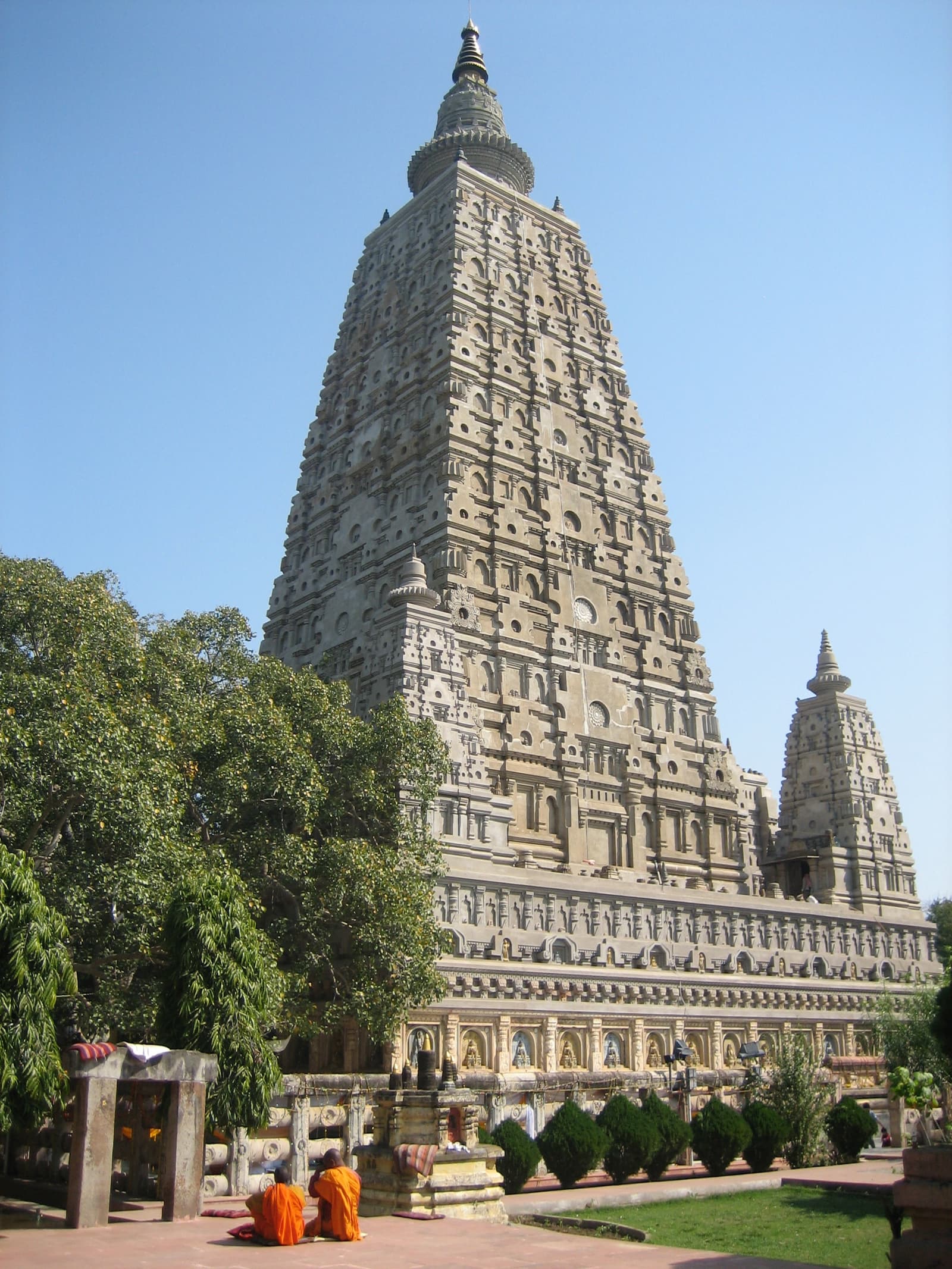
UNESCO 2002Cultural Heritage
Bihar
Mahabodhi Temple Complex
A UNESCO World Heritage site marking the location where Siddhartha Gautama attained enlightenment and became…
Explore Temple
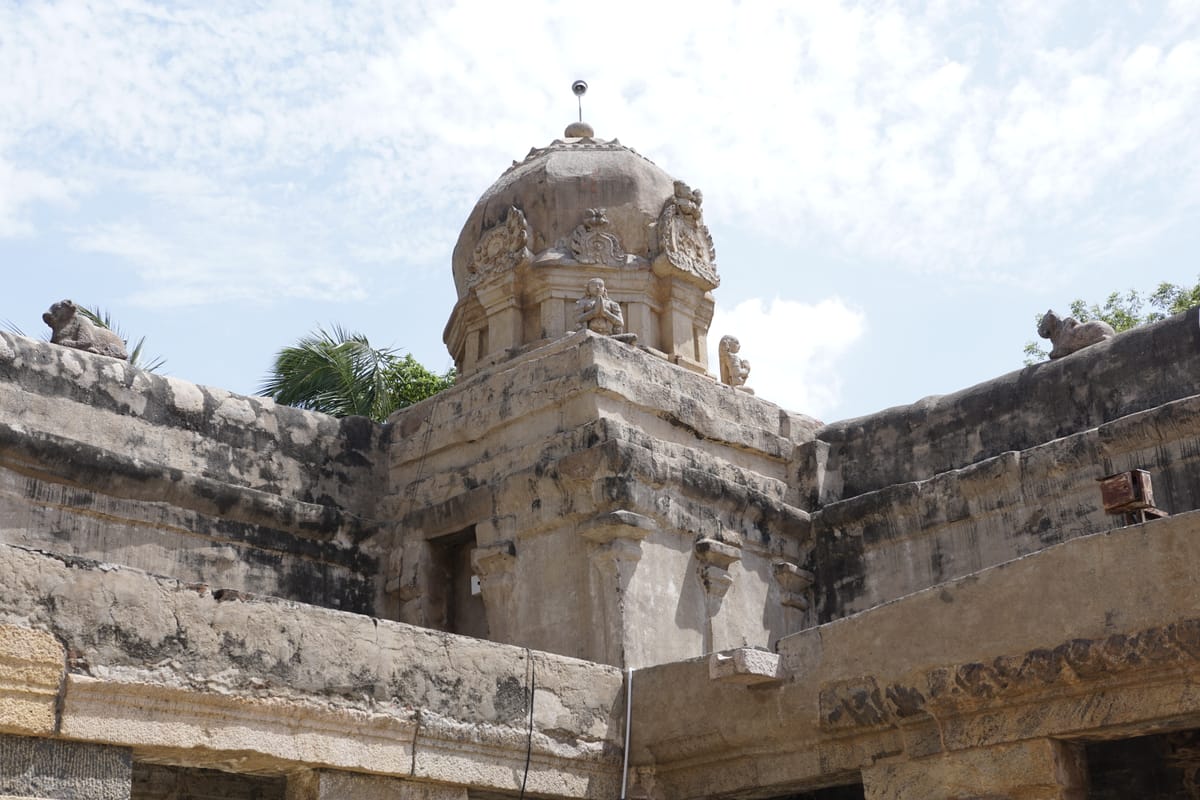
UNESCO 1987Cultural Heritage
Tamil Nadu
Great Living Chola Temples — Brihadeeswarar Temple
The principal temple of the Great Living Chola Temples UNESCO site, a masterpiece of Dravidian…
Explore Temple
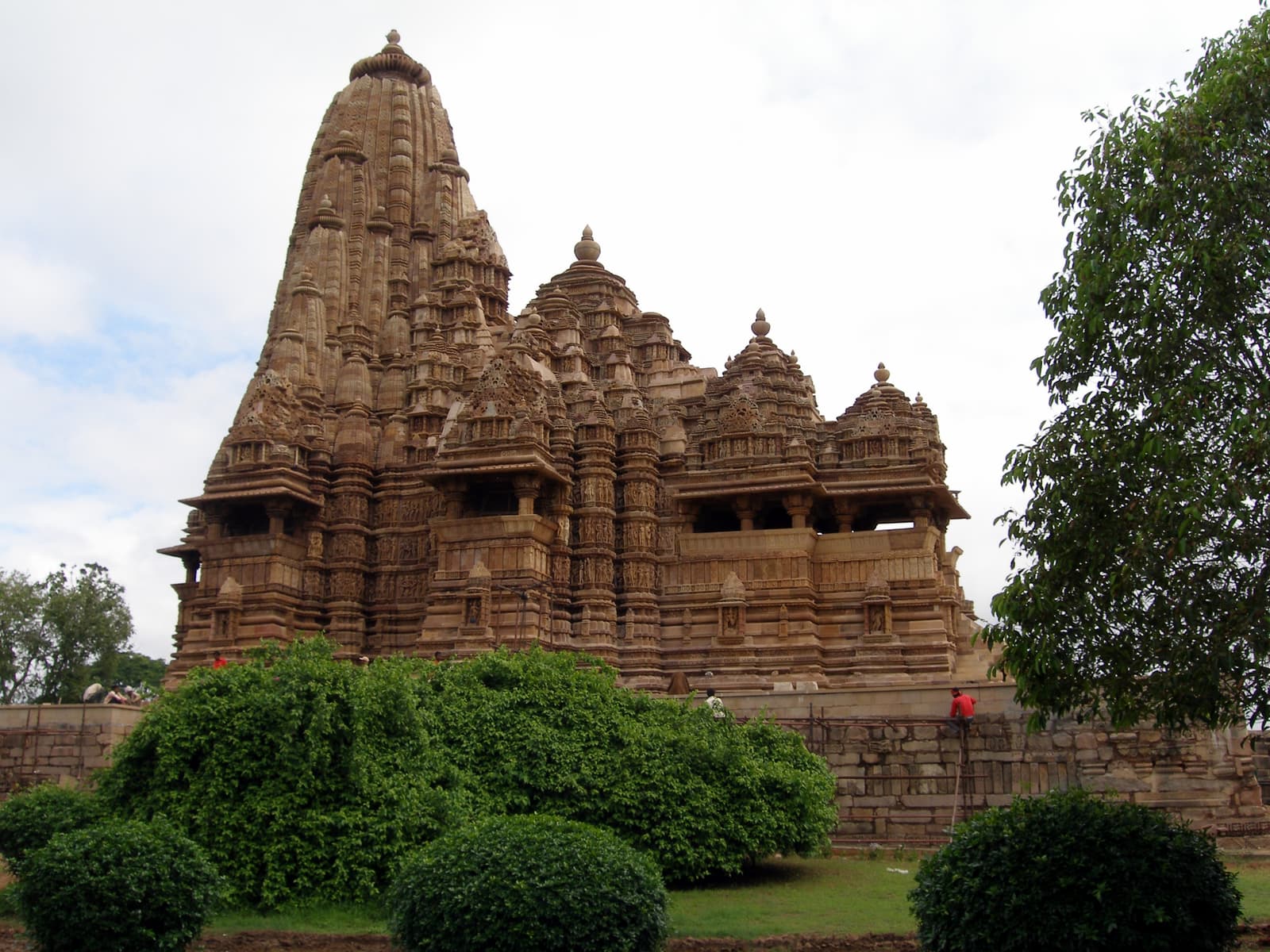
UNESCO 1986Cultural Heritage
Madhya Pradesh
Khajuraho Group of Monuments
The largest and most ornate Hindu temple in the Khajuraho Group of Monuments.
Explore Temple
UNESCO 1986Cultural Heritage
Karnataka
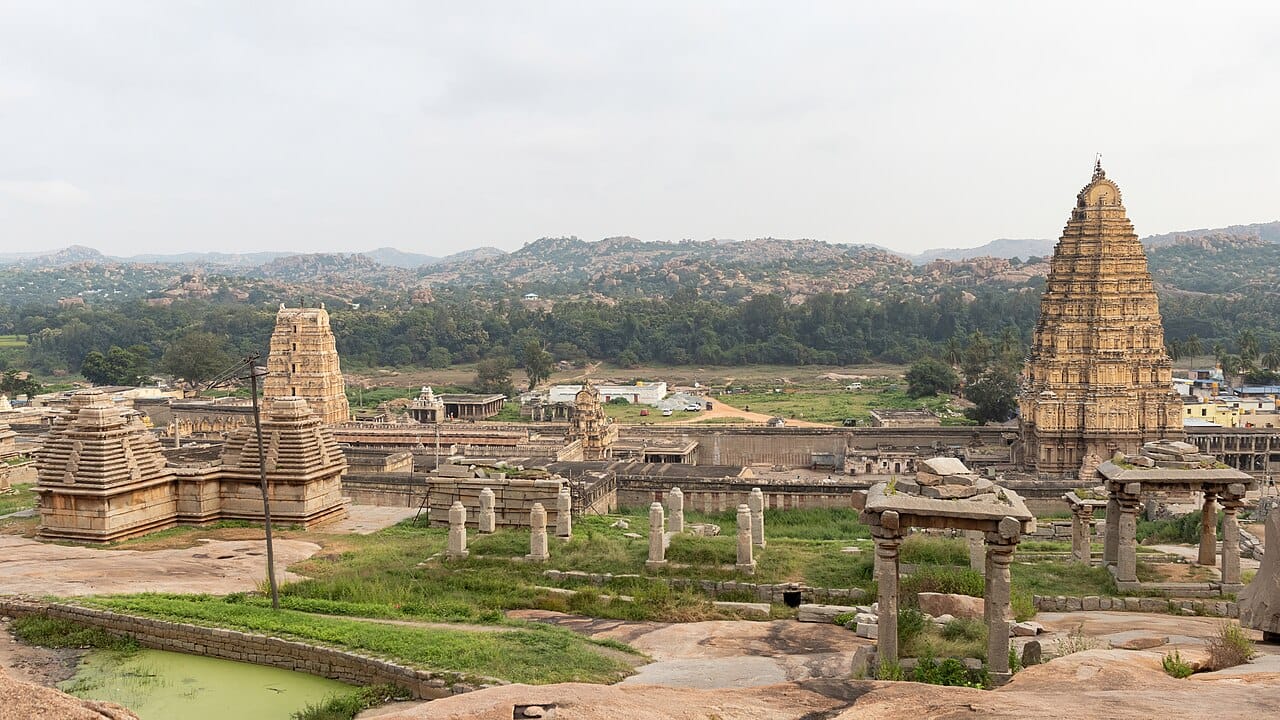
Hampi Group (Virupaksha Temple)
The Virupaksha Temple is the most iconic monument of Hampi, a UNESCO World Heritage site…
Explore Temple
Famous Temples You May Like
Odisha
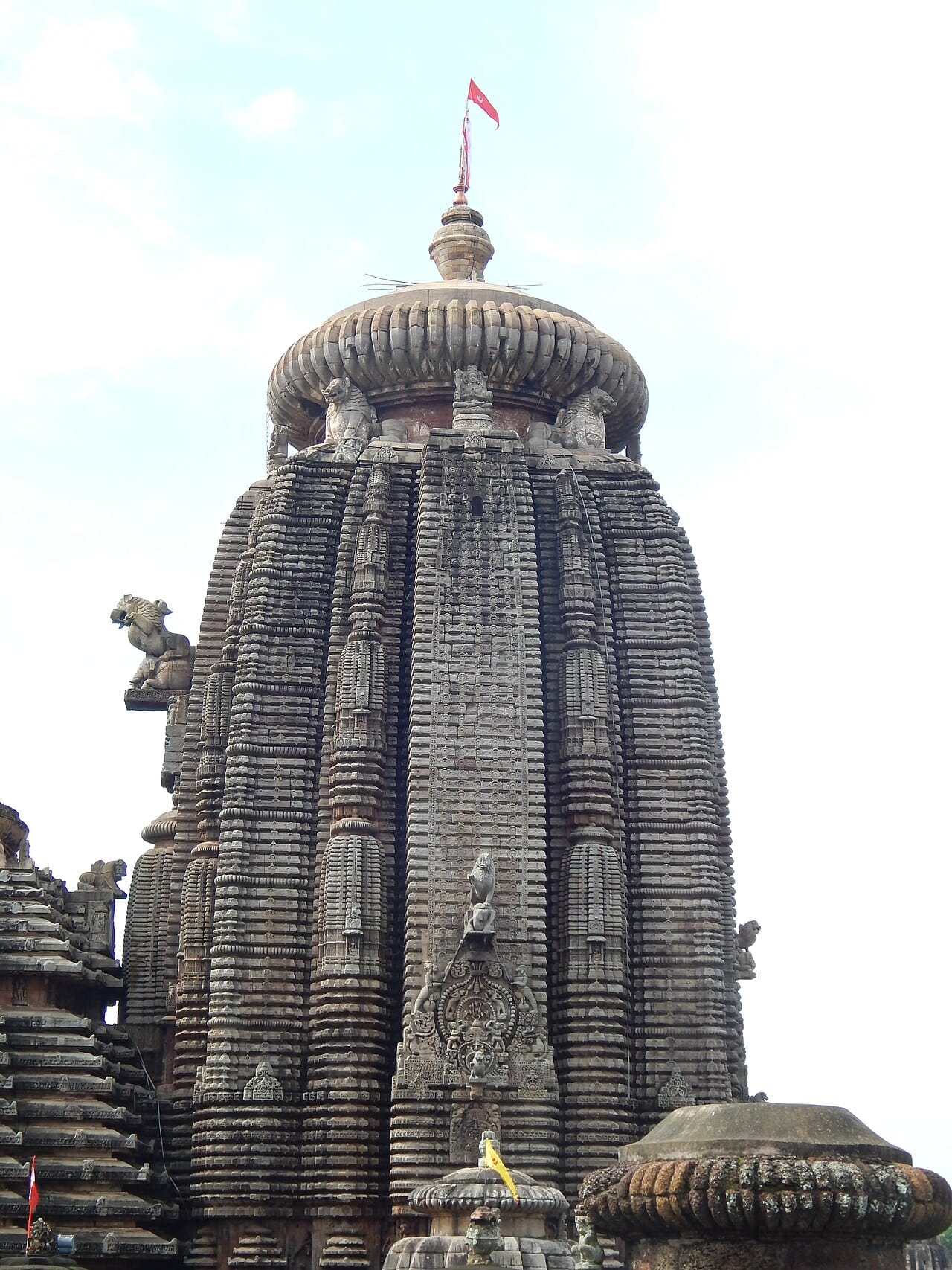
Lingaraja Temple
The Lingaraja Temple in Bhubaneswar, Odisha, is the largest and most magnificent temple of the…
Explore Temple
Odisha
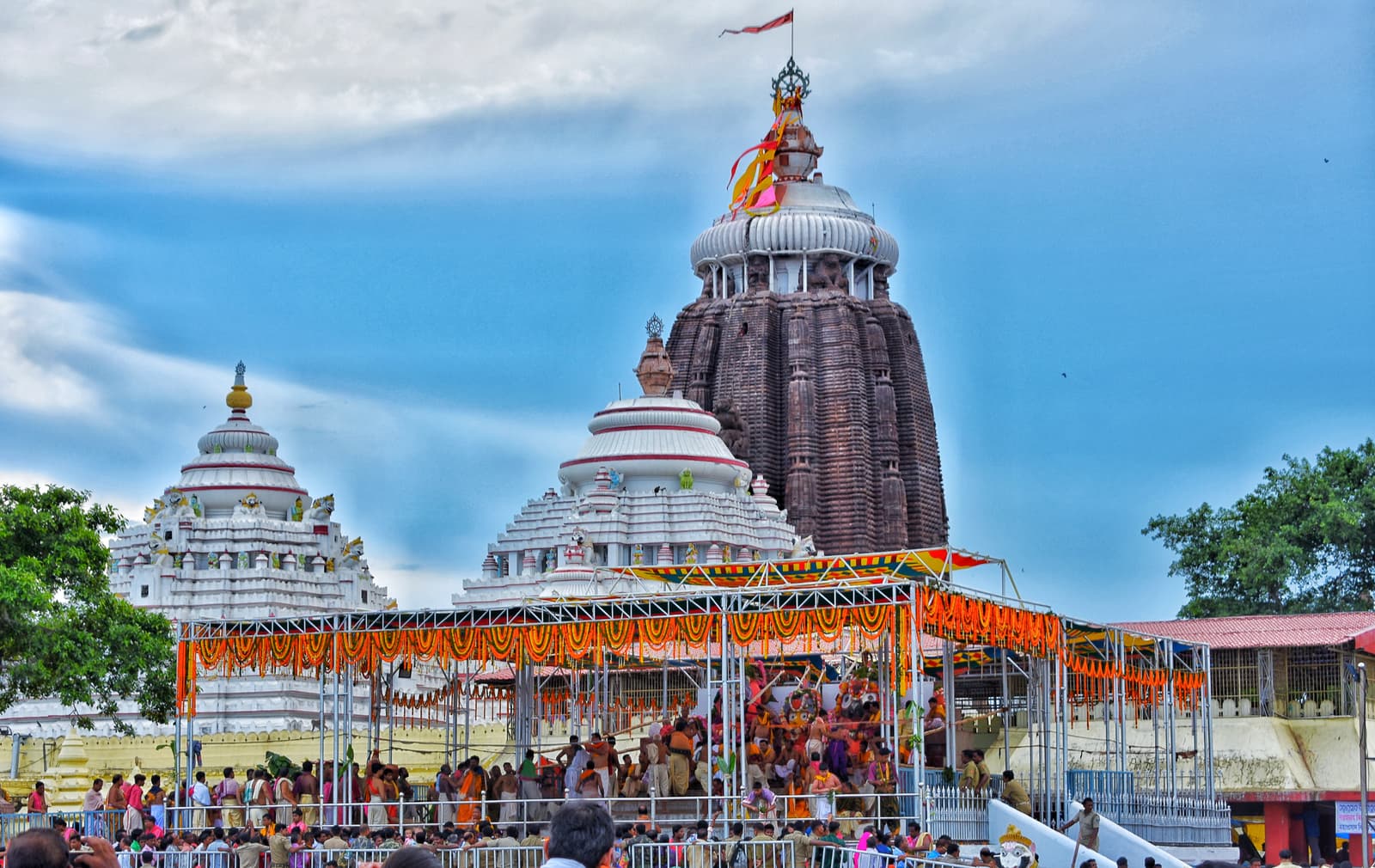
Jagannath Temple
Jagannath Temple in Puri, Odisha, is one of the four Char Dham sites, famous for…
Explore Temple
Odisha
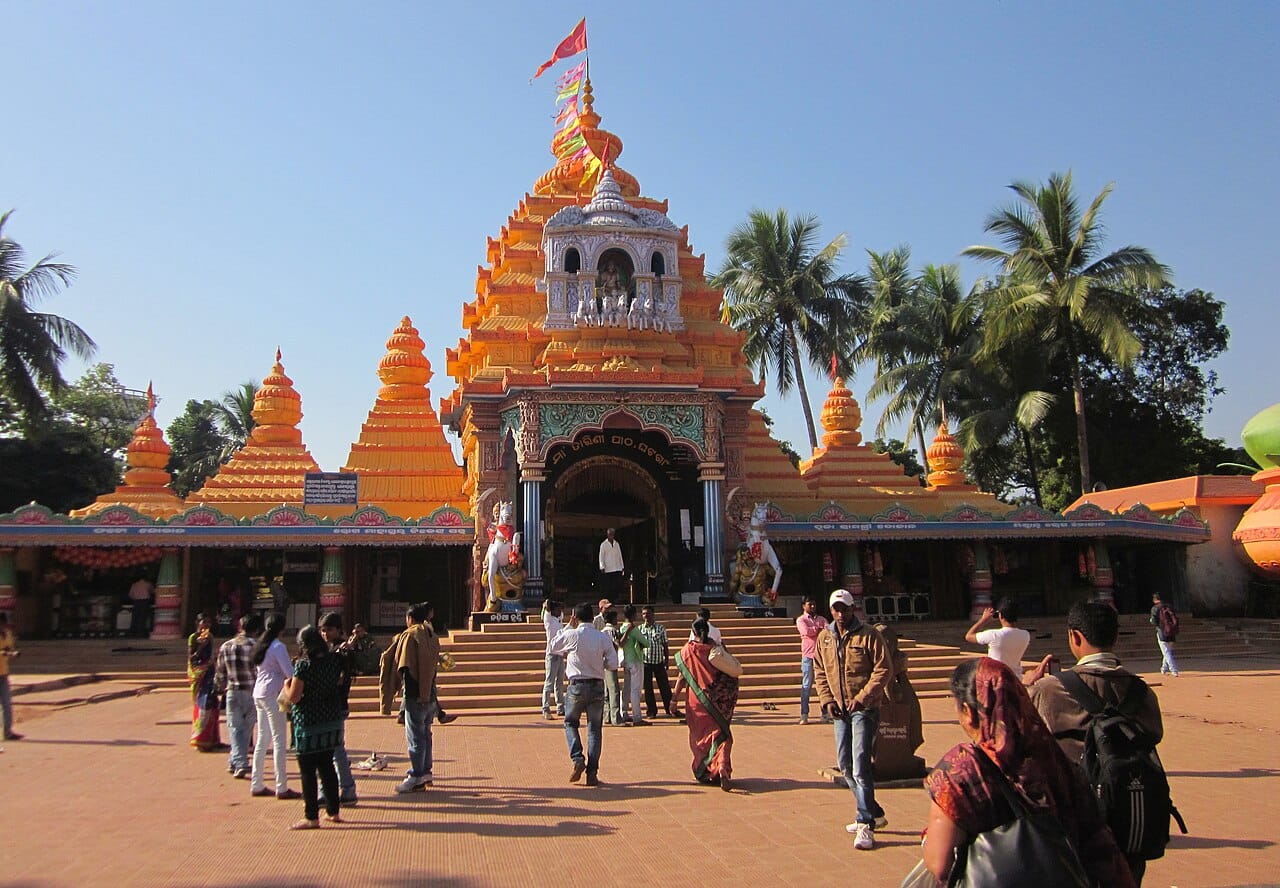
Tara Tarini Temple
The Tara Tarini Temple on Kumari Hills overlooking the Rushikulya River in Ganjam district, Odisha…
Explore Temple
Odisha
Bimala Temple
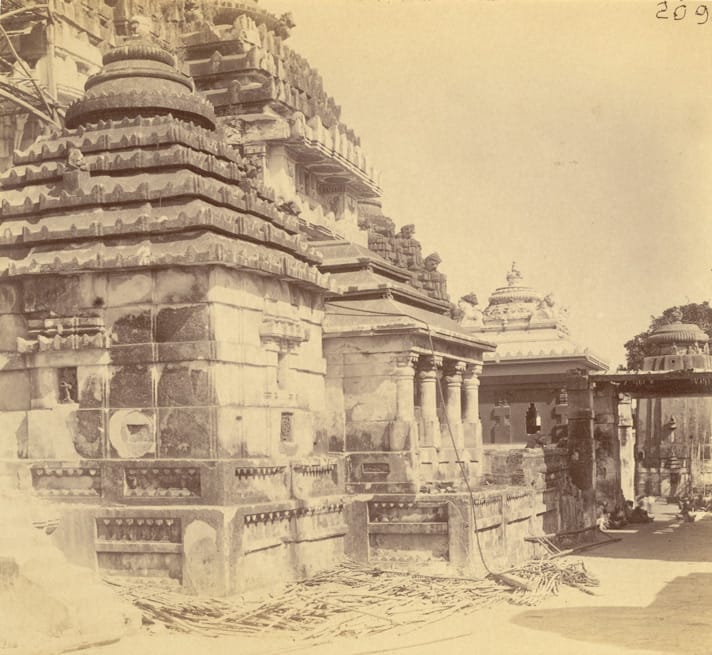
The Bimala Temple, located within the Jagannath Temple complex in Puri, Odisha, is one of…
Explore Temple
Explore More in Odisha
Heritage Fact
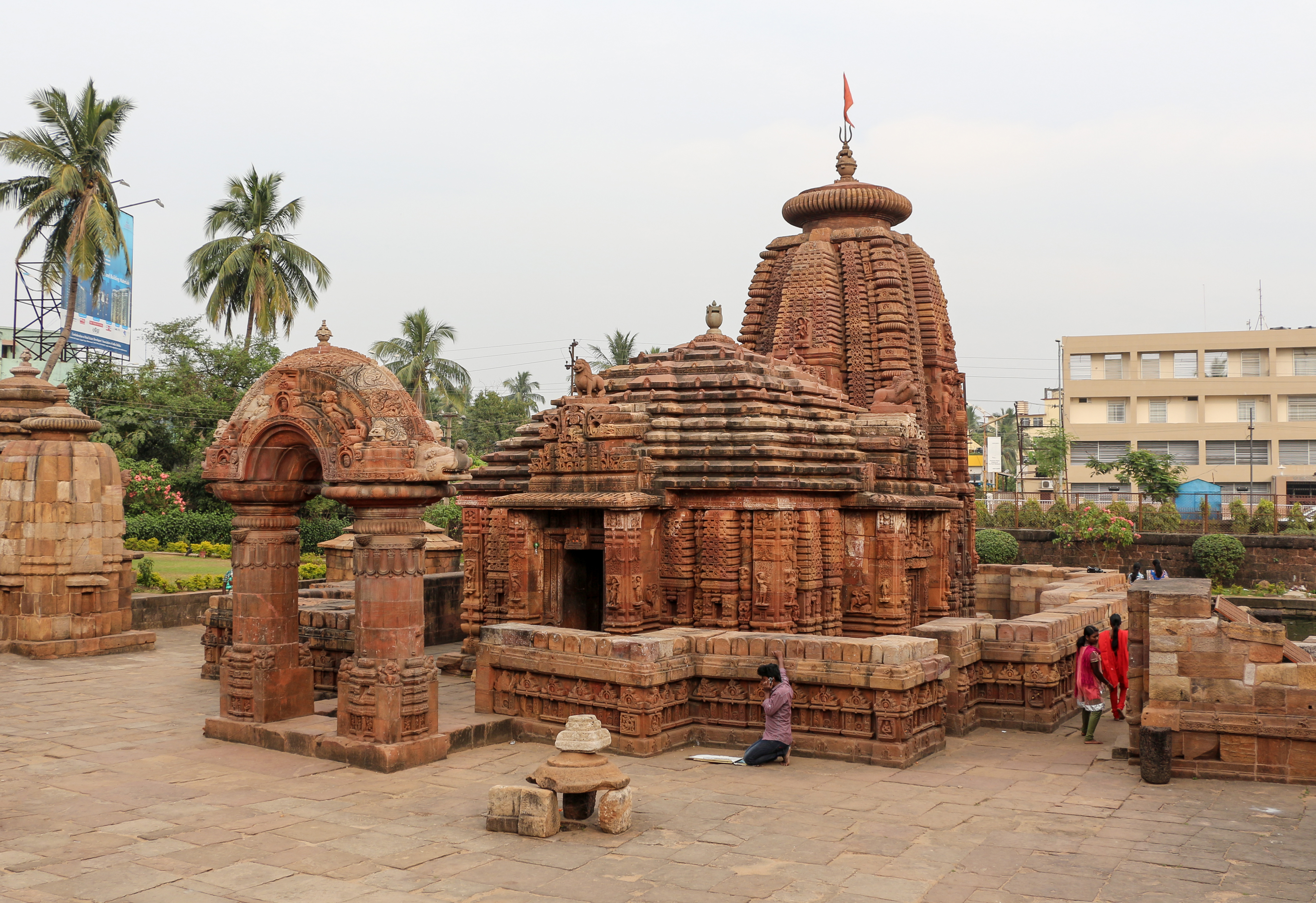
"The Lingaraja Temple is the largest temple in Bhubaneswar and represents the quintessence of Kalinga architecture."