From ancient rock-cut marvels to towering imperial shrines, discover the architectural soul of Bharat through our verified digital archive.
Explore More Temples
Location
Visakhapatnam
Presiding Deity
Lord Narasimha
Architecture
Kalinga
Dynasty
Eastern Ganga, Gajapati
Timings
4:00 AM to 9:00 PM daily. The main darshan is between 6:00 AM and 8:00 PM. On Akshaya Tritiya, the temple opens at 3:00 AM for the Chandanotsavam.
Entry Fee
Free
Best Time
October to March offers pleasant weather. Akshaya Tritiya (April-May) is the most significant time to witness the Chandanotsavam. Avoid weekends and holidays if you want to avoid crowds.
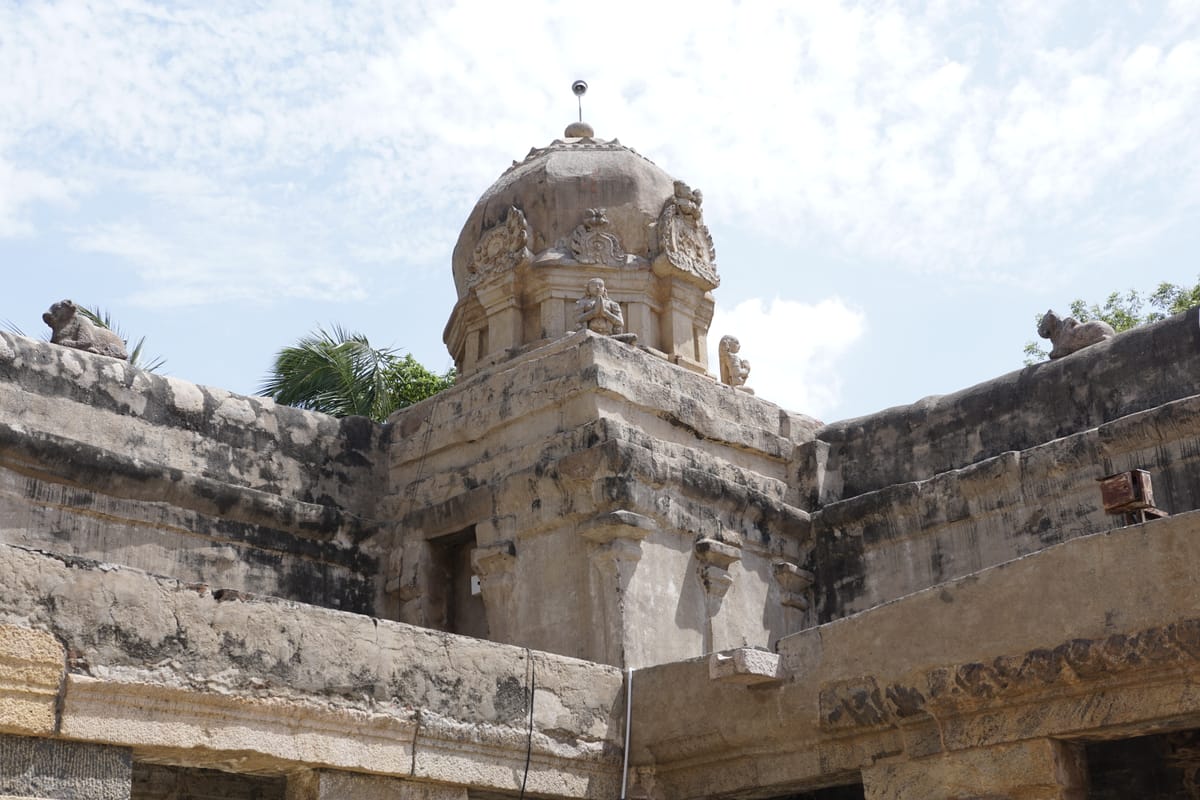
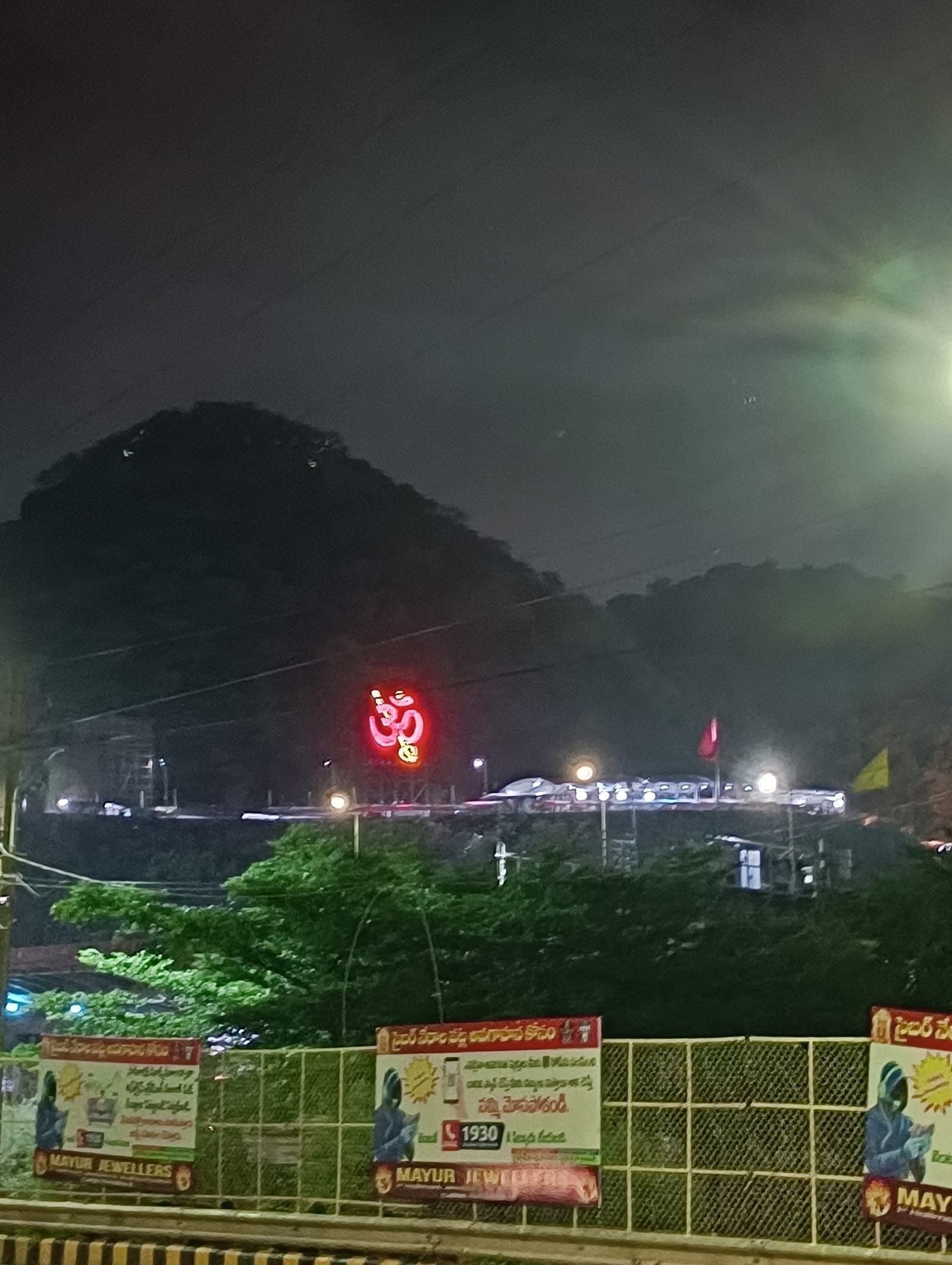
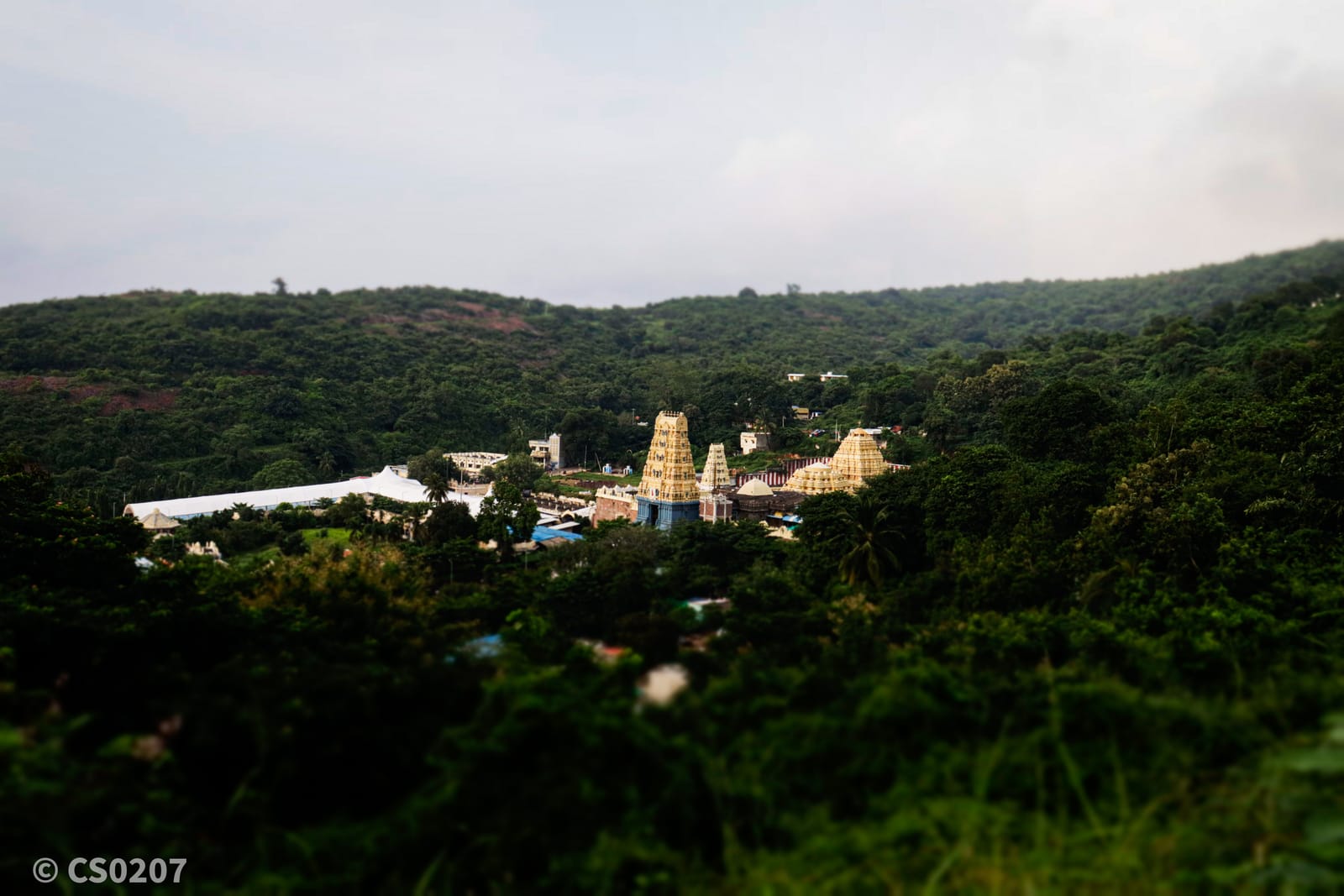
Simhachalam Temple, also known as Sri Varaha Lakshmi Narasimha Temple, is a historic Hindu temple dedicated to Lord Narasimha, the half-man half-lion avatar of Vishnu. Located on a hill about 300 metres above sea level on the outskirts of Visakhapatnam, it is a foremost Vaishnava pilgrimage site in Andhra Pradesh. The temple's distinguishing feature is that the main deity remains covered in sandalwood paste (chandanam) throughout the year and is revealed in its original form only once a year on Akshaya Tritiya.
The earliest known inscription at Simhachalam dates to 1088 CE, from the time of the Eastern Ganga king Devendravarma Rajaraja I. The present temple structure was built primarily under the Eastern Ganga dynasty (11th-13th centuries) and expanded by the Gajapati rulers of Odisha (15th-16th centuries). Inscriptions indicate that the temple received extensive patronage from the Eastern Ganga king Narasimha I (13th century) and the Gajapati king Purushottama Deva (15th century). The main sanctum and the mukhamandapa (entrance hall) are the oldest surviving structures, dating to the Eastern Ganga period. The temple's gopuram and outer enclosures were built during the Gajapati period. The Narasimha cult was especially popular in the Kalinga region from the 12th century onward, and Simhachalam became the principal Narasimha shrine of the region. The temple survived the various political changes in the region — from the Odishan Gajapatis to the Qutb Shahi and Nizam rulers, and later the British. The temple was further renovated in the 19th and 20th centuries with contributions from local zamindars and the public. Today, the temple is under the administration of the Hindu Religious and Charitable Endowments Department of the Government of Andhra Pradesh.
“According to temple tradition, the Simhachalam temple is associated with the Varaha-Narasimha form of Vishnu, which combines the boar (Varaha) and lion-man (Narasimha) avatars. An ancient legend connects the site to Hiranyaksha (the golden-eyed demon), whom Vishnu killed in his Varaha form. The hilltop is said to be the site where this battle took place. The sthala purana relates that the sage Prabhasa installed the main idol after performing penance on the hill. Another tradition holds that the goddess Lakshmi resides in the temple as Amruthavalli. The most distinctive local belief centres on the sandalwood covering — it is said that the goddess Lakshmi herself applies the sandalwood paste to the deity each day. When devotees saw the deity's stone surface sweating during a severe drought, the priests began keeping the idol covered to protect it. Over time, this practice became the temple's defining tradition. A further legend connects the site to the Treta Yuga: it is said that Lord Rama, during his exile, visited this hill and worshipped Narasimha before his battle with Ravana. The sage Vasishta is also associated with the temple, having performed yagnas on the hilltop that drew celestial beings. The hill itself, named Simhachalam or 'lion hill,' is believed in local lore to be the petrified form of a divine lion that guarded the sanctum during the Satya Yuga.”
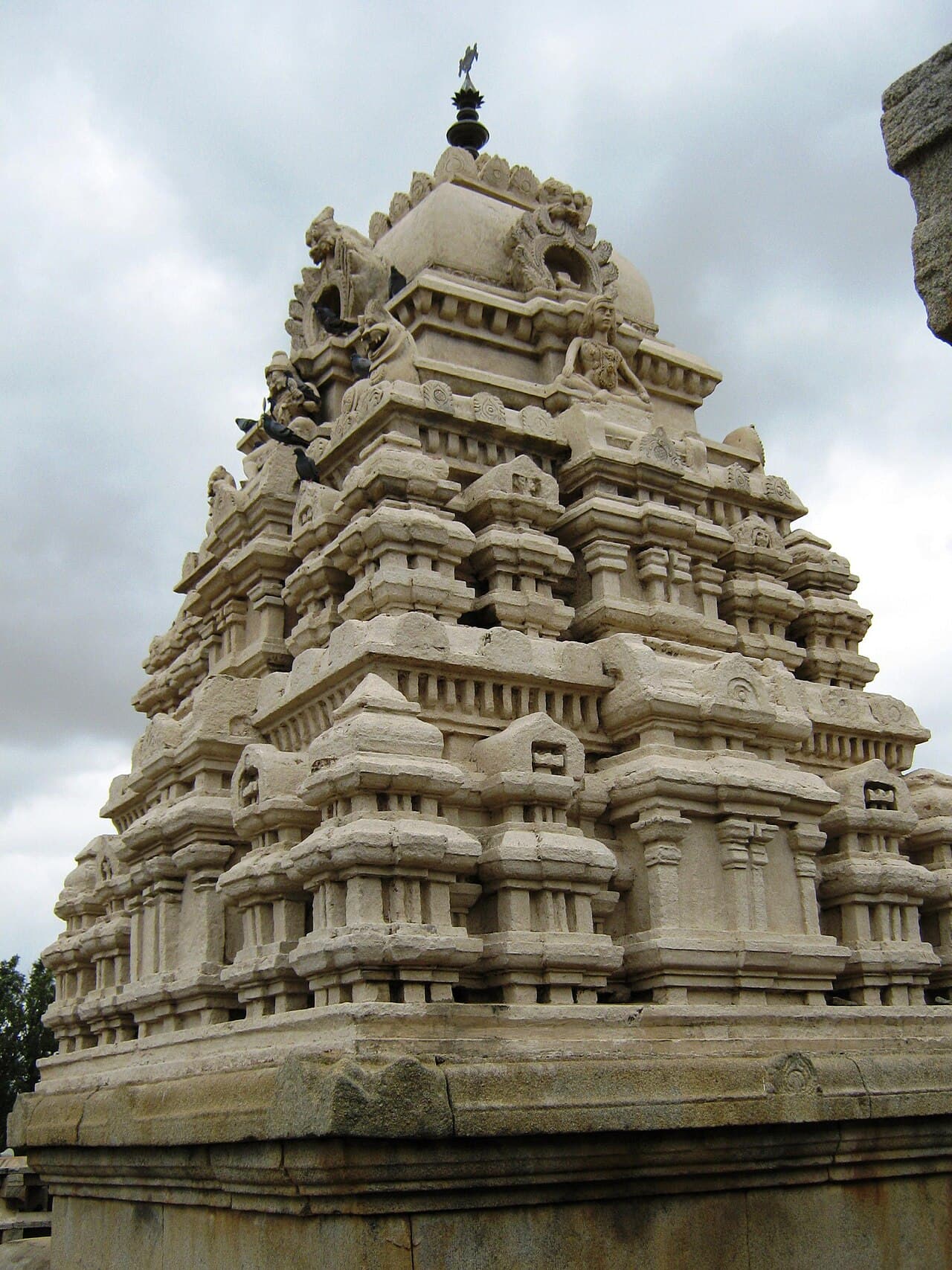
The temple is built in the Kalinga style of architecture, characterised by the Rekha Deula (curvilinear tower) and Jagamohana (assembly hall) plan. The main vimana (sanctum tower) rises approximately 60 metres and follows the Kalinga Rekha profile, tapering gracefully as it ascends, crowned with a kalasha (finial). The temple complex includes a natya mandapa (dance hall), a bhogamandapa (offering hall), and a bhoga mandapa on the northern side. The main gopuram (entrance tower) at the eastern gateway is a Gajapati-era addition. The outer prakaram (enclosure) features a pillared cloister with subsidiary shrines. A notable architectural feature is the 'koti teertham' (temple tank) located within the complex. The temple walls are adorned with inscriptions dating from the 11th to 16th centuries. The entire complex is built from locally quarried khondalite stone. The approach to the temple features a flight of 722 steps from the foothills, though the top is also accessible by road. A Kalyanamandapa (marriage hall) with carved pillars is used for ceremonies.
Simhachalam Temple is one of the principal Narasimha Kshetras in India and the most important Vaishnava pilgrimage centre in coastal Andhra Pradesh. It is considered the second wealthiest temple in Andhra Pradesh after Tirumala Tirupati. The temple's unique sandalwood-paste tradition makes it an iconographically important site — the underlying stone image, revealed only on Akshaya Tritiya, portrays Narasimha in a rare combination of Varaha (boar head at the back) and Narasimha (lion face in front), making it a unique iconographic form not found elsewhere. The temple is a significant repository of Eastern Ganga and Gajapati inscriptions that provide insights into the medieval history of the Kalinga region.
The temple follows the Vaikhanasa Agama tradition with six daily pujas. The day begins with the Suprabhata Seva at 4:00 AM, followed by the Tomala Seva (flower decoration) at 6:00 AM. The main abhishekam to the sandalwood-covered deity is performed at 8:00 AM using panchamrita, milk, and sandalwood paste. The midday aarti at 12:00 PM includes the offering of naivedya (sacred food). The evening rituals begin at 6:00 PM with the Deeparadhana (lamp offering), and the day concludes with the Shej Aarti (bedtime ritual) at 8:30 PM. On Akshaya Tritiya, the special Chandanotsavam ceremony begins at 3:00 AM when the sandalwood paste is removed, the original stone image is revealed for darshan, and fresh paste is reapplied by evening. Fridays are considered especially auspicious, with additional abhishekams and offerings of yellow flowers.
Akshaya Tritiya (April-May) is the most important festival, featuring the Chandanotsavam (sandalwood removal ceremony) when the deity's original stone form is revealed. The annual Brahmotsavam in May-June spans 12 days with processions of the festival deity. Narasimha Jayanti (April-May) marks the appearance day of Lord Narasimha. Vaikuntha Ekadasi (December-January) is observed with special rituals. The annual Rathotsava (chariot festival) draws large crowds.
Unique sandalwood-paste covering (chandanam) throughout the year, revealed only on Akshaya Tritiya, rare Varaha-Narasimha combined icon, second wealthiest temple in Andhra Pradesh after Tirumala.
October to March offers pleasant weather. Akshaya Tritiya (April-May) is the most significant time to witness the Chandanotsavam. Avoid weekends and holidays if you want to avoid crowds.
4:00 AM to 9:00 PM daily. The main darshan is between 6:00 AM and 8:00 PM. On Akshaya Tritiya, the temple opens at 3:00 AM for the Chandanotsavam.
Simhachalam is 16 km from Visakhapatnam. Visakhapatnam Airport (20 km) connects to major cities. Visakhapatnam Junction railway station (16 km) is on the Howrah-Chennai main line. APSRTC buses run from Visakhapatnam RTC Complex. Taxis can be hired for the hill climb. The temple has a ropeway from the foothills to the main entrance, reducing the need to climb the 722 steps. Photography is restricted inside the sanctum. The temple offers free meals (annadanam) to all devotees between 12:00 PM and 2:00 PM daily. Accommodation is available at the temple trust guesthouses near the foothills. Avoid visiting during the monsoon months (July-September) when the hill road can be slippery and the views are obstructed by fog.
Visakhapatnam city (16 km) with its beaches (RK Beach, Yarada Beach), Kailasagiri Hill Park, Borra Caves (90 km), Araku Valley (115 km), Buddhist sites at Thotlakonda and Bavikonda (20 km).
A. The main deity is kept covered in a thick layer of sandalwood paste (chandanam) for 364 days of the year. According to tradition, the goddess Lakshmi herself applies the paste daily. The paste protects the stone image and is removed only once a year on Akshaya Tritiya in the Chandanotsavam ceremony.
A. The idol portrays a unique combined form — the rear has the face of Varaha (boar, Vishnu's third avatar) while the front has the face of Narasimha (lion-man, Vishnu's fourth avatar). This dual-aspect form is not found in any other major Narasimha temple.
A. The temple is open from 4:00 AM to 9:00 PM daily. Main darshan is from 6:00 AM to 8:00 PM. On Akshaya Tritiya, the temple opens at 3:00 AM for the Chandanotsavam ceremony.
A. The temple is 16 km from Visakhapatnam city centre. Visakhapatnam Airport (20 km) and Visakhapatnam Junction railway station (16 km) serve the area. APSRTC buses and taxis are available. A ropeway from the foothills takes visitors directly to the temple.
A. Akshaya Tritiya (April-May) is the only day when the sandalwood covering is removed from the deity. The ceremony begins at 3:00 AM, and the original stone image is visible for about six hours before the paste is reapplied.
A. Yes, the temple is open to all visitors regardless of faith. Photography is restricted inside the sanctum. Visitors are advised to dress modestly and follow the temple's dress code.
Lakshminarasimha Temple
The Lakshminarasimha Temple at Nuggehalli, built in 1246 CE by the Hoysala king Vira Someshwara, is a well-preserved example of Hoysala architecture dedicated to Lord Narasimha (the half-man half-lion avatar of Vishnu) with his consort Lakshmi. The temple features the characteristic Hoysala star-shaped platform, intricate soapstone carvings, and a sculptural programme depicting Vaishnava themes.
Ahobilam Narasimha Temple
Ahobilam, situated in the dense Nallamala forest of Kurnool district, is the sacred landscape where Lord Narasimha — the half-man, half-lion avatar of Vishnu — is believed to have manifested to slay the demon Hiranyakashipu and protect his devotee Prahlada. The site comprises nine Narasimha shrines (Nava Narasimha Kshetras) distributed across the forested hills, each representing a different aspect of the deity.
Lingaraja Temple
The Lingaraja Temple in Bhubaneswar, Odisha, is the largest and most magnificent temple of the Kalinga architectural tradition, dedicated to Lord Shiva as Tribhuvaneshwara.
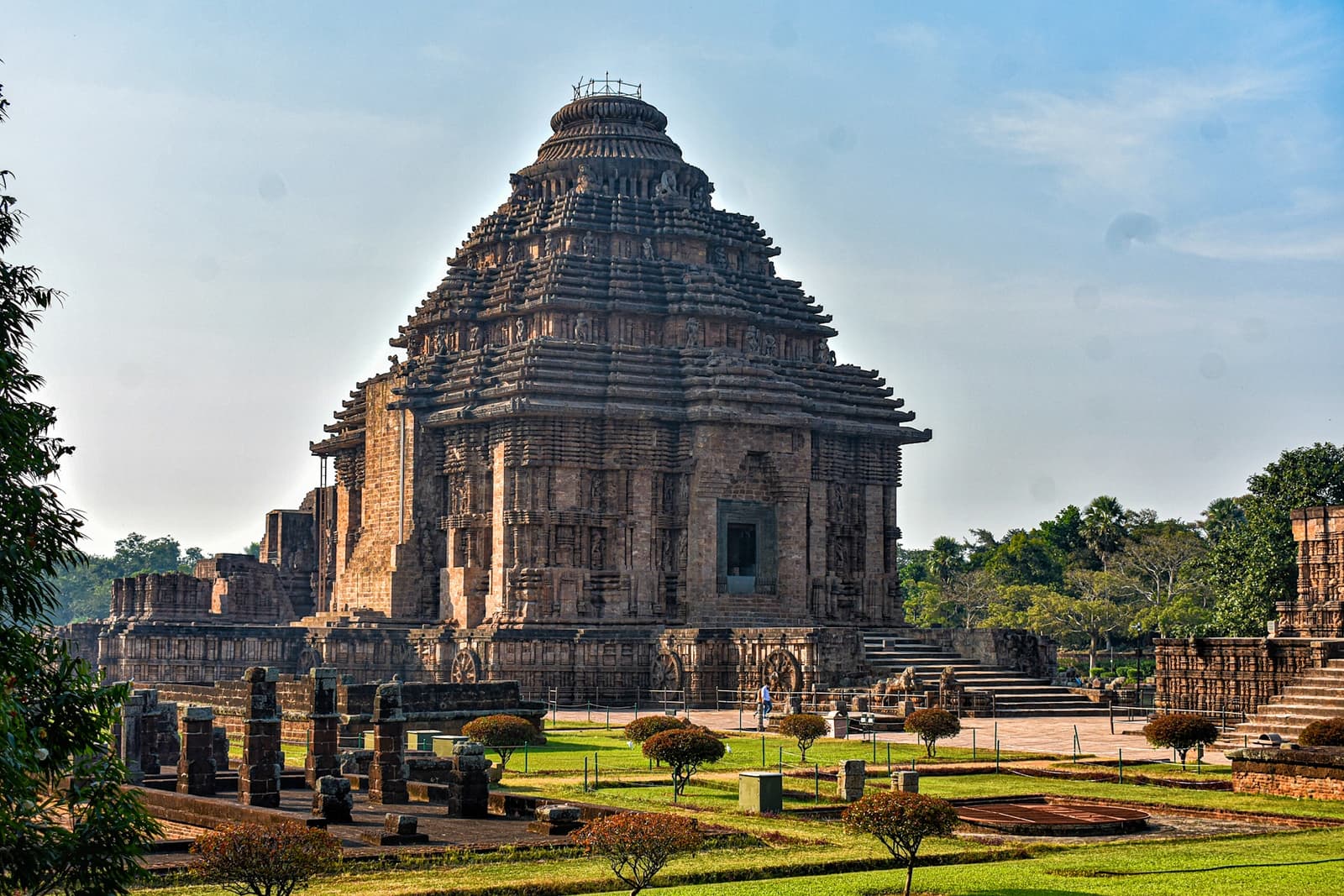
Konark Sun Temple
A 13th-century colossal stone chariot of the Sun God Surya, the Konark Sun Temple is a UNESCO World Heritage Site and the most architecturally ambitious solar temple in India, with 24 massive stone wheels and intricate carvings depicting life, dance, and divinity.
Jagannath Temple
Jagannath Temple in Puri, Odisha, is one of the four Char Dham sites, famous for the annual Rath Yatra (Chariot Festival) and its unique deities made of neem wood.
Srisailam Mallikarjuna Swamy Temple
One of the twelve Jyotirlingas and the southernmost among them, Mallikarjuna Temple at Srisailam is uniquely also a Shakti Peetha where the goddess Bhramaramba is worshipped alongside Shiva. Located on a hilltop above the Krishna River, it is the only temple in India that houses both a Jyotirlinga and a Shakti Peetha.
Kanaka Durga Temple
Kanaka Durga Temple, situated on the Indrakeeladri Hill on the banks of the Krishna River in Vijayawada, is a popular Shakti temple in South India. The temple is believed to be a Shakti Peetha where the goddess is worshipped as Kanaka Durga (the bestower of gold and prosperity). The temple overlooks the Prakasam Barrage and the Krishna River, offering a panoramic view of Vijayawada city.
Veerabhadra Temple
Veerabhadra Temple at Lepakshi is a 16th-century Vijayanagara masterpiece, renowned for its hanging pillar, monolithic Nandi, and exquisite ceiling murals. The temple is dedicated to Veerabhadra, a fierce form of Shiva.
Ahobilam Narasimha Temple
Ahobilam, situated in the dense Nallamala forest of Kurnool district, is the sacred landscape where Lord Narasimha — the half-man, half-lion avatar of Vishnu — is believed to have manifested to slay the demon Hiranyakashipu and protect his devotee Prahlada. The site comprises nine Narasimha shrines (Nava Narasimha Kshetras) distributed across the forested hills, each representing a different aspect of the deity.
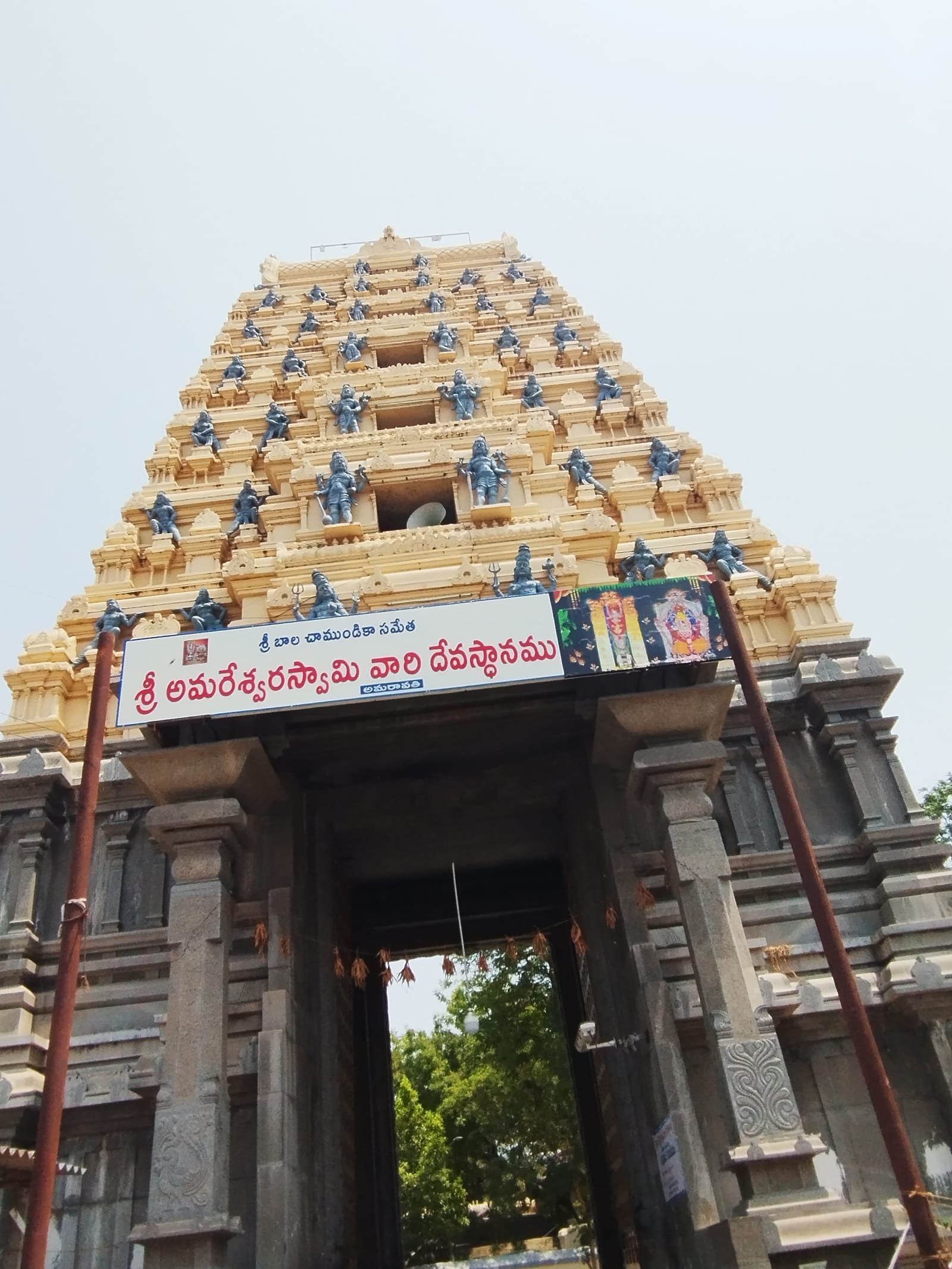
Amaralingeswara Temple
Amaralingeswara Temple, located in Amaravati on the southern bank of the Krishna River, is the foremost of the Pancharama Kshetras — the five ancient Shiva temples of coastal Andhra Pradesh. The temple shares its sacred landscape with the historic Amaravati Mahachaitya, a major Buddhist stupa from the Satavahana period.
Srikalahasti Temple
Srikalahasti Temple, situated on the banks of the Swarnamukhi River at the foot of Srikalahasti hill in Tirupati district, is dedicated to Lord Shiva as Srikalahasteeswara. The temple represents the Vayu (wind) element among the southern Pancha Bhoota Sthalas (five element temples of Shiva). Its name is traditionally derived from three animal devotees — a spider (Sri), a serpent (Kala), and an elephant (Hasti) — who attained salvation here. The self-manifested (swayambhu) lingam remains untouched by human hands, and a lamp in the draft-free sanctum continuously flickers, physically symbolising the presence of the air element.
India's temples are living traditions — not museums. Every temple has its own customs. This guide helps first-time visitors prepare with confidence and respect.
Foreign visitor information is being researched
Please verify with the official temple authority before planning your visit.
Foreign Visitors
Verify Before VisitingVisitor Information
Entry policies vary between temples. Most temples welcome visitors, while some may restrict access to specific areas, rituals, or the inner sanctum. Always verify the latest entry guidelines with the official temple authorities before your visit.
Modest clothing is expected at every Indian temple — a sign of respect, not a restriction. Think of it as dressing for a formal ceremony.
A scarf is always useful — it covers shoulders, works as a head covering, and can double as a makeshift face cover if needed.
Outdoor photography is generally permitted. Indoor photography is often restricted. Always look for signage or ask a priest before taking photos inside.
October to March offers pleasant weather. Akshaya Tritiya (April-May) is the most significant time to witness the Chandanotsavam. Avoid weekends and holidays if you want to avoid crowds.
April — June
July — September
English is widely understood at major tourist temples. In smaller local temples, Hindi and the regional language are more common. A smile and simple hand gestures go a long way. Learning a few words of the local language is always appreciated.
Cash (Indian Rupees) is the most reliable option, especially for temple offerings, small shops, and local transport.
UPI digital payments (Google Pay, PhonePe, Paytm) are widely accepted across India — even at roadside stalls. Download one before you arrive.
International credit/debit cards work at most ATMs, hotels, and larger establishments. Smaller vendors may only accept cash or UPI.
Carry small denominations (₹10, ₹20, ₹50, ₹100 notes) for offerings and temple donations. Large notes (₹500, ₹2000) can be hard to break at smaller counters.
Many historic temples have uneven stone floors, multiple steps, and narrow passages. Wheelchair access is limited at older sites — contact the temple in advance.
Basic restroom facilities and drinking water are available at most major temples. Some charge a small fee (₹5–₹10).
Stay hydrated — carry a reusable water bottle, especially in hot climates.
Keep valuables secure — use hotel lockers for passports and excess cash.
Wear comfortable, sturdy footwear — temple floors can be hot, wet, or uneven.
Beware of unofficial guides or touts near temple entrances. Only use authorised services.
Carry a photocopy of your passport and visa. Leave originals in your hotel safe.
Download offline maps — mobile networks can be unreliable near remote temple sites.
These short explanations help make sense of what you see and experience.
Darshan means 'seeing' — but in a temple it means being seen by the deity. It is a sacred moment of connection, not just a viewing.
Removing footwear is a sign of humility. It also keeps the temple floor clean, since devotees sit and pray on the ground.
Food offered to the deity and then distributed to devotees. It is considered blessed. Accept it with both hands and do not discard it.
The bell creates a focused acoustic atmosphere, wards off distractions, and announces your presence before entering the inner sanctum.
Circumambulation (pradakshina) is done clockwise, keeping the sanctum on your right — an auspicious direction aligned with the sun's path.
Flowers symbolise devotion, coconuts represent the ego being broken, incense purifies the air, and lamps represent the victory of light over darkness.
Sacred viewing of the deity; the central act of temple worship.
Clockwise circumambulation of the sanctum.
Blessed food offered to the deity and distributed to devotees.
The innermost sanctum where the main deity resides.
The towering spire above the sanctum, a defining feature of temple architecture.
A pillared hall or pavilion within the temple complex.
The Indian Rupee (?, INR) is the local currency. ATMs are widely available in cities and towns. For temple offerings, keep small notes (₹10, ₹20, ₹50). Most temples accept donations in cash only — digital payments are uncommon at the offering counter itself.
Offerings (dakshina) are given with the right hand. Place cash in the donation box (hundi) or give it directly to the priest. There is no fixed amount — give what feels appropriate. Some temples have fixed fees for special entry or puja participation.
Shoes and sandals are removed before entering the temple building. Most temples have a designated shoe counter (free or a small fee of ₹5–₹20). Socks are generally allowed. In monsoon, carry a plastic bag for wet shoes.
Darshan queues can take 30 minutes to 3 hours at popular temples. Many offer paid VIP darshan (₹100–₹500) for faster entry. Special queues for women, elderly, and disabled visitors exist at some temples. No line jumping.
Major festivals draw enormous crowds — sometimes hundreds of thousands. Book accommodation months in advance. Expect road closures, restricted vehicle access, and limited phone network. Arrive early (before dawn) to avoid the worst congestion.
Always look for signage before taking photos. When in doubt, ask a priest. Never take photos of devotees in prayer without permission. Selfie sticks are banned at most temples. Silently switch your phone to silent mode.
Police / Ambulance / Fire: 112 (National Emergency Number)
Tourist Helpline: 1800-111-363 (Multi-lingual, Ministry of Tourism)
Women's Helpline: 1091
Temple-specific visitor information is continuously researched and updated from official sources. Where specific data is unavailable, general India travel guidance is provided. Always verify current policies with the temple authority before your visit.
Information last verified July 2026. Temple-specific data coming soon.
Continue your journey through the spiritual and architectural wonders of India.

Kanaka Durga Temple, situated on the Indrakeeladri Hill on the banks of the Krishna River in Vijayawada, is a popular Shakti temple in South India. The temple is believed to be a Shakti Peetha where the goddess is worshipped as Kanaka Durga (the bestower of gold and prosperity). The temple overlooks the Prakasam Barrage and the Krishna River, offering a panoramic view of Vijayawada city.

Veerabhadra Temple at Lepakshi is a 16th-century Vijayanagara masterpiece, renowned for its hanging pillar, monolithic Nandi, and exquisite ceiling murals. The temple is dedicated to Veerabhadra, a fierce form of Shiva.

Ahobilam, situated in the dense Nallamala forest of Kurnool district, is the sacred landscape where Lord Narasimha — the half-man, half-lion avatar of Vishnu — is believed to have manifested to slay the demon Hiranyakashipu and protect his devotee Prahlada. The site comprises nine Narasimha shrines (Nava Narasimha Kshetras) distributed across the forested hills, each representing a different aspect of the deity.

Srikalahasti Temple, situated on the banks of the Swarnamukhi River at the foot of Srikalahasti hill in Tirupati district, is dedicated to Lord Shiva as Srikalahasteeswara. The temple represents the Vayu (wind) element among the southern Pancha Bhoota Sthalas (five element temples of Shiva). Its name is traditionally derived from three animal devotees — a spider (Sri), a serpent (Kala), and an elephant (Hasti) — who attained salvation here. The self-manifested (swayambhu) lingam remains untouched by human hands, and a lamp in the draft-free sanctum continuously flickers, physically symbolising the presence of the air element.

One of the twelve Jyotirlingas and the southernmost among them, Mallikarjuna Temple at Srisailam is uniquely also a Shakti Peetha where the goddess Bhramaramba is worshipped alongside Shiva. Located on a hilltop above the Krishna River, it is the only temple in India that houses both a Jyotirlinga and a Shakti Peetha.

Amaralingeswara Temple, located in Amaravati on the southern bank of the Krishna River, is the foremost of the Pancharama Kshetras — the five ancient Shiva temples of coastal Andhra Pradesh. The temple shares its sacred landscape with the historic Amaravati Mahachaitya, a major Buddhist stupa from the Satavahana period.

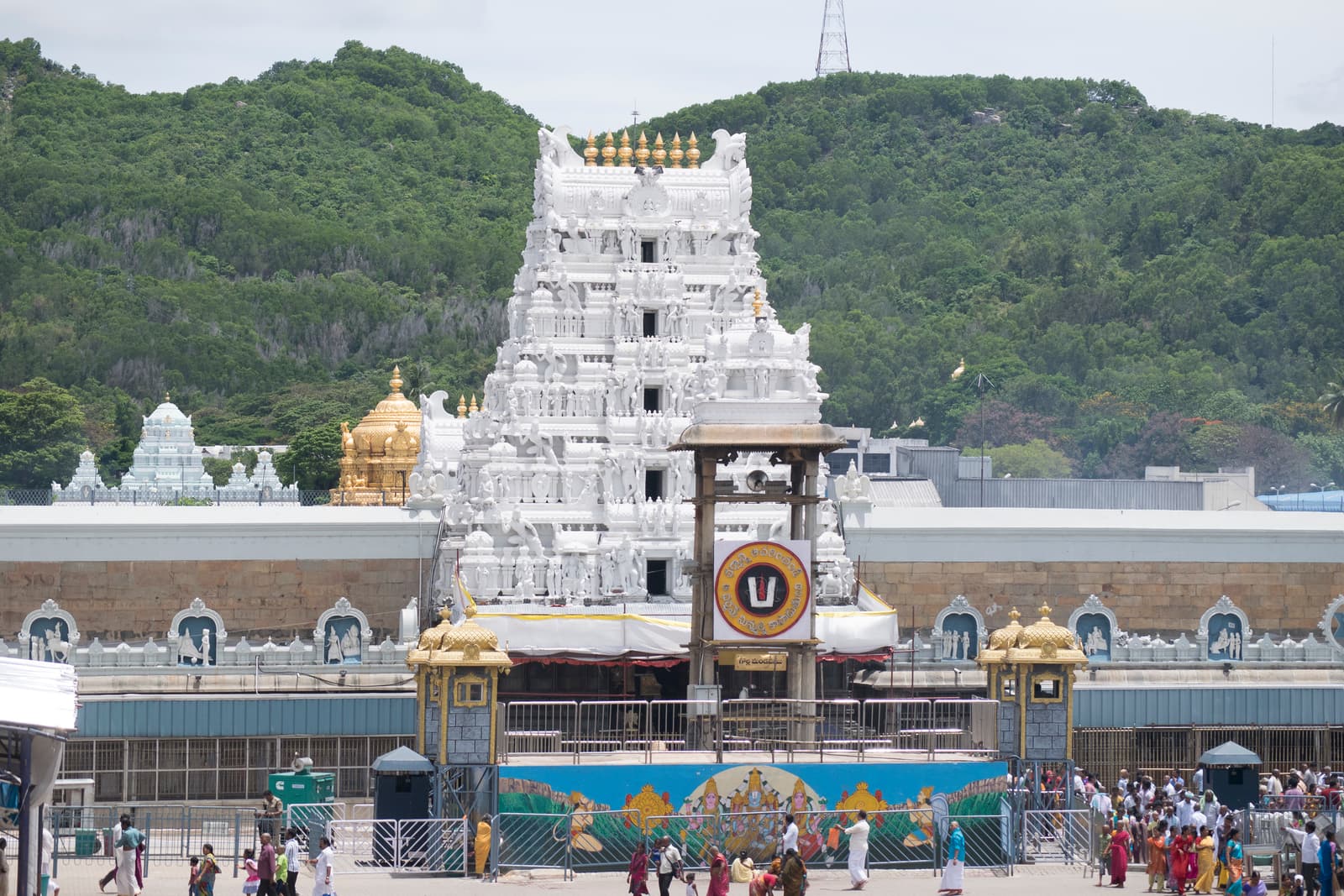
Tirumala Venkateswara Temple, situated in the hill town of Tirumala in Tirupati district, is dedicated to Lord Venkateswara, an incarnation of Vishnu. The shrine is positioned on Venkatadri, one of the seven hills representing the Seshachalam range. It is globally recognized for its massive volume of daily pilgrims, functioning as a primary center of Vaishnava worship under the management of the Tirumala Tirupati Devasthanams (TTD).
"UNESCO was founded in 1945 to promote world peace and security through international cooperation."