From ancient rock-cut marvels to towering imperial shrines, discover the architectural soul of Bharat through our verified digital archive.
Explore More Temples
Location
Lepakshi
Presiding Deity
Lord Veerabhadra
Architecture
Vijayanagara
Dynasty
Vijayanagara
Timings
Open from 6:00 AM to 6:00 PM. The site is under the Archaeological Survey of India (ASI) protection.
Entry Fee
Free
Best Time
October to March offers pleasant weather. The site is open year-round and sees fewer crowds than other major tourist destinations.
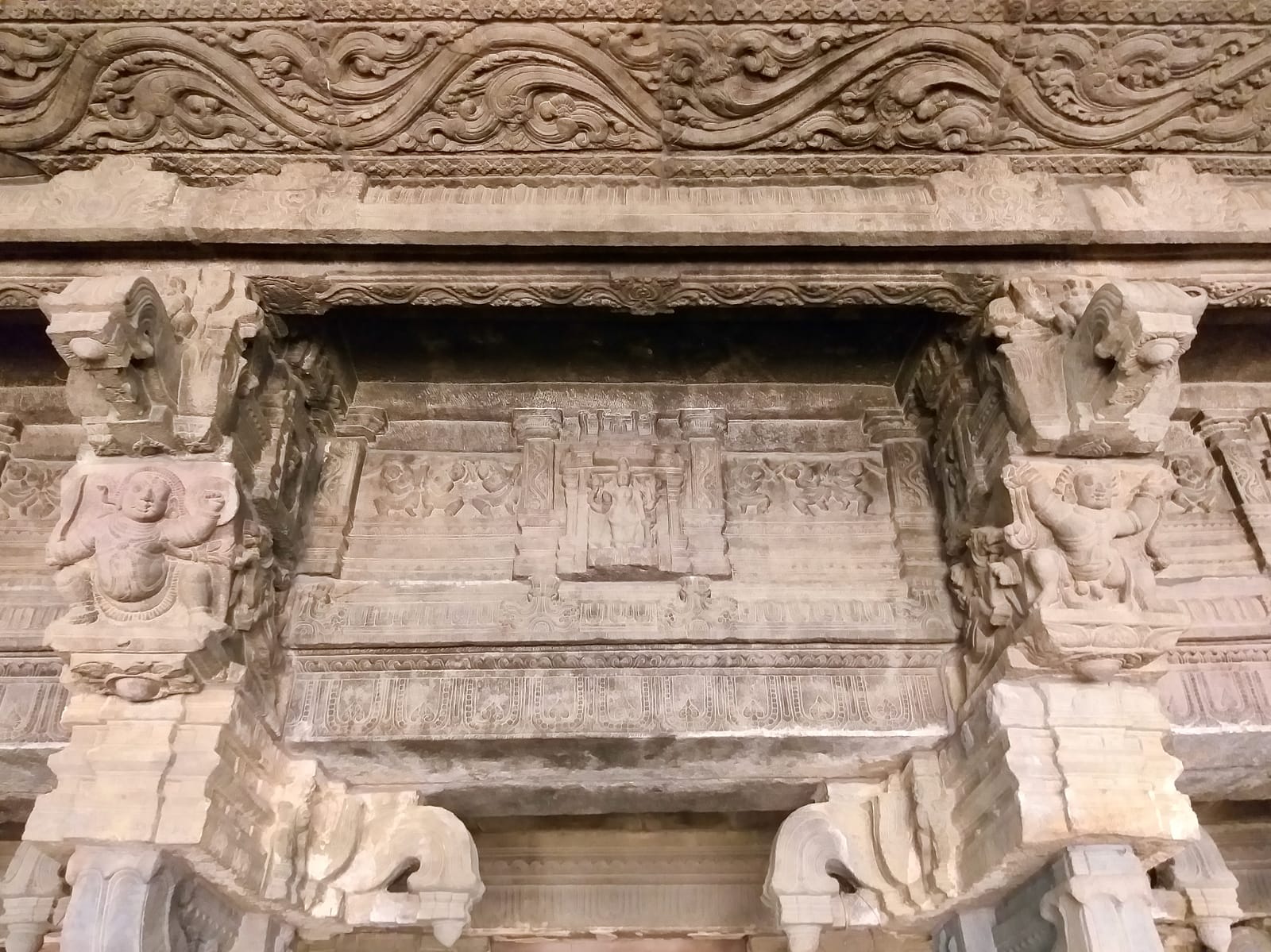
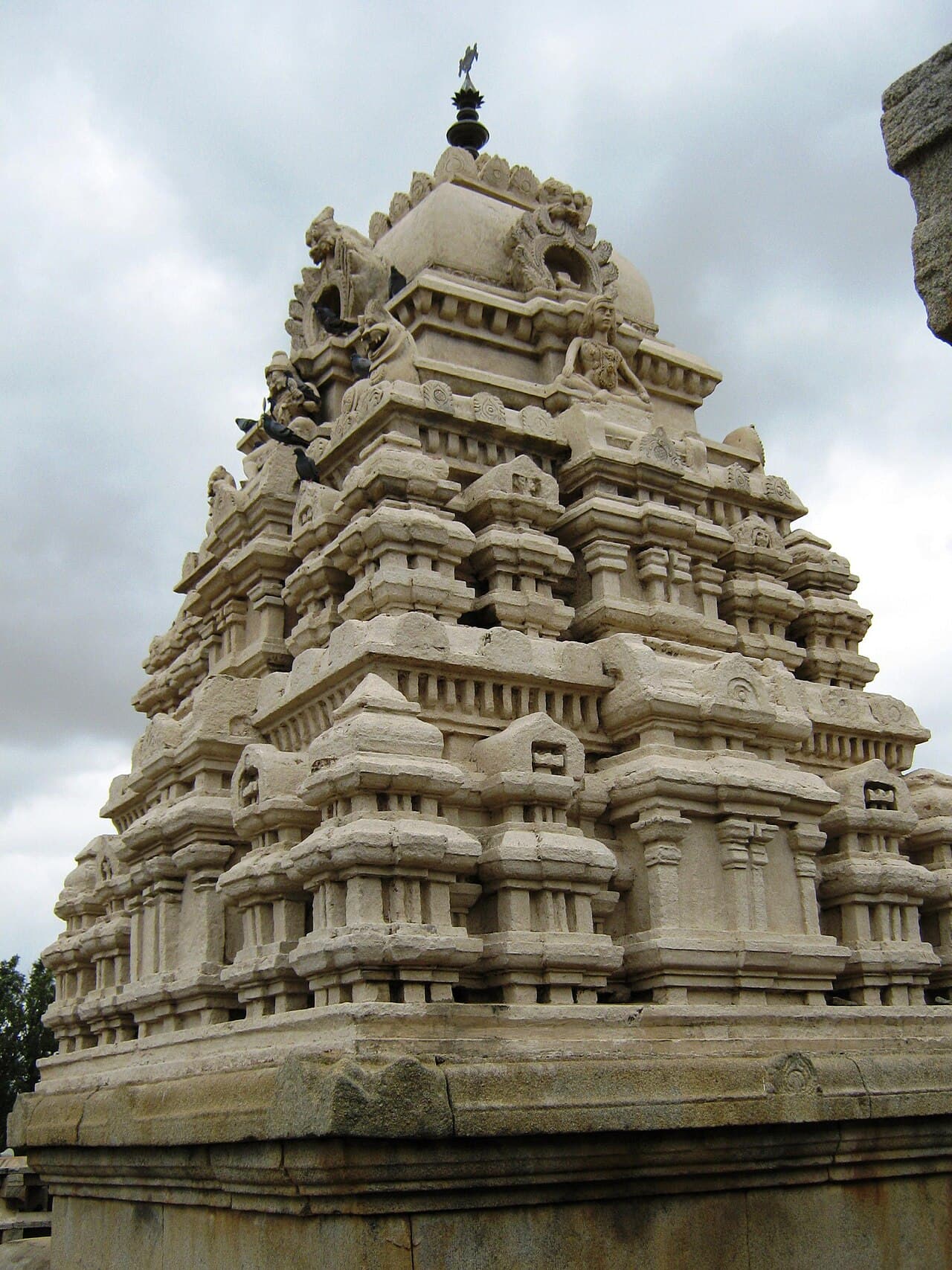
Veerabhadra Temple at Lepakshi is a 16th-century Vijayanagara masterpiece, renowned for its hanging pillar, monolithic Nandi, and exquisite ceiling murals. The temple is dedicated to Veerabhadra, a fierce form of Shiva.
The temple was built in 1530 CE by the Pemmasani Nayaka brothers Virupanna and Veeranna, who served as governors under the Vijayanagara emperor Achutaraya. According to legend, Virupanna used the royal treasury without permission to fund the temple's construction. When the emperor demanded an explanation, Virupanna gouged out his own eyes and threw them at the wall, leaving permanent blood stains visible to this day. The temple features a unique footprint of the goddess Durga on a rock, and a snake carved from a single stone that winds through three pillars.
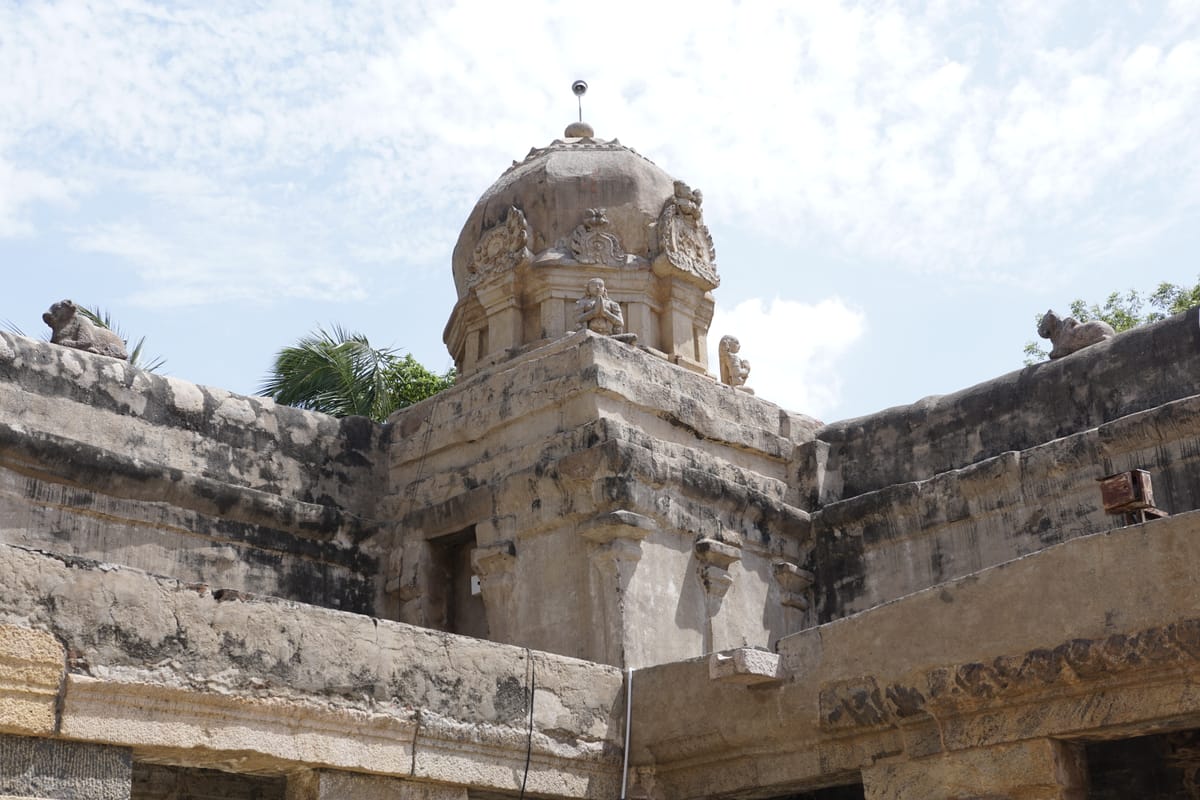
Lepakshi represents the pinnacle of Vijayanagara art. The hanging pillar is an architectural marvel that has puzzled engineers for centuries. The ceiling paintings are considered the most important surviving examples of Vijayanagara mural art. The monolithic Nandi is among the largest free-standing stone sculptures in India. The temple also features a 100-pillar dance hall (Natya Mandapa) with each pillar uniquely carved.
The annual Veerabhadra Swamy Brahmotsavam in April-May is the major festival. Maha Shivaratri is also celebrated with special rituals.
Hanging pillar (does not fully touch the floor), monolithic Nandi (27 ft long, 15 ft high), Vijayanagara ceiling murals, blood stain legend of Virupanna, hundred-pillar dance hall.
October to March offers pleasant weather. The site is open year-round and sees fewer crowds than other major tourist destinations.
Open from 6:00 AM to 6:00 PM. The site is under the Archaeological Survey of India (ASI) protection.
A. One pillar in the main mandapa has a deliberate gap at its base, allowing a thin cloth or paper to pass under it. Various theories suggest it was an intentional demonstration of the Vijayanagara architects' engineering skill. Attempts to force it fully to the ground by British engineers reportedly caused structural disturbance to the ceiling.
A. According to legend, the Vijayanagara governor Virupanna used the royal treasury without permission to build the temple. When the emperor demanded punishment, Virupanna gouged out his own eyes and threw them at a wall, leaving permanent blood stains. The stains are visible on the eastern wall to this day.
A. Lepakshi is about 120 km north of Bangalore and 65 km from Anantapur. The nearest railway station is Hindupur (15 km). The nearest airport is Bangalore International Airport (120 km). Regular buses operate from Bangalore and Anantapur.
Virupaksha Temple
The Virupaksha Temple in Hampi, Karnataka, is a UNESCO World Heritage Site and the oldest functioning temple in India, dedicated to Lord Shiva as Virupaksha.
Trimbakeshwar Temple
The Trimbakeshwar Temple in Maharashtra is one of the twelve Jyotirlingas, unique for its three-faced linga representing the Trimurti and the source of the Godavari River.
Airavatesvara Temple
The Airavatesvara Temple at Darasuram, built by Rajaraja Chola II between 1146 and 1172 CE, is one of the three UNESCO World Heritage 'Great Living Chola Temples.' It is renowned for its stone chariot, musical steps, and exquisite 12th-century Chola sculptures.
Gangaikonda Cholapuram Temple
The Gangaikonda Cholapuram Temple, built by Rajendra Chola I in 1035 CE, is a UNESCO World Heritage 'Great Living Chola Temple.' Its 53-metre vimana with recessed corners and six pairs of monolithic dvarapalas represents a refined evolution of Chola Dravidian architecture.
Kampaheswarar Temple
Kampaheswarar Temple in Tribhuvanam, built by Kulothunga Chola III in 1202 CE, is one of the later great Chola temples and completes the quartet of magnificent Chola stone temples alongside the Brihadeeswarar at Thanjavur, Gangaikonda Cholapuram, and Airavatesvara at Darasuram. The temple represents the mature phase of Chola architecture, featuring a 30-metre granite vimana, a separate Devi shrine, and a unique chariot-wheel carving in the mandapa. It is maintained by the Archaeological Survey of India as a protected monument of national importance.
Koranganatha Temple
Koranganatha Temple, built during the reign of the Chola king Parantaka I (907-955 CE) at Srinivasanallur near Tiruchirappalli, is a well-preserved example of early Chola architecture with exquisite stone carvings. The temple is maintained by the Archaeological Survey of India and is notable for its peaceful setting on the banks of the Kaveri River.
Hazara Rama Temple
The Hazara Rama Temple (meaning 'Thousand Ramas') in Hampi served as the royal chapel of the Vijayanagara kings. Its basalt slab walls are covered with intricate bas-relief panels depicting the complete story of the Ramayana in sequential narrative friezes. As a core monument within the UNESCO World Heritage Site 'Group of Monuments at Hampi,' the temple is one of the best-preserved examples of Vijayanagara courtly architecture.
Krishna Temple
The Krishna Temple in Hampi was built in 1515 CE by the Vijayanagara emperor Krishnadevaraya to commemorate his successful military campaign against the Gajapati kingdom of Odisha. One of the largest temples in Hampi's sacred centre, it originally housed a magnificent image of Balakrishna (infant Krishna) brought from Odisha as a war trophy.
Achyutaraya Temple
The Achyutaraya Temple, built in 1534 CE during the reign of the Vijayanagara emperor Achyutaraya (1530-1542 CE), is one of the largest and most impressive temple complexes in Hampi's sacred centre. Located at the foot of Matanga Hill between the Krishna Temple and the Vitthala Temple, the temple represents the mature phase of Vijayanagara temple architecture.
Vittala Temple
The Vittala Temple is the crowning architectural achievement of the Vijayanagara Empire. Located in Hampi's sacred centre, the temple is renowned for its iconic stone chariot carved from a single granite block and its musical pillars that produce different notes when struck. As a UNESCO World Heritage Site within the 'Group of Monuments at Hampi,' the Vittala Temple represents the pinnacle of Vijayanagara temple architecture.
Srisailam Mallikarjuna Swamy Temple
One of the twelve Jyotirlingas and the southernmost among them, Mallikarjuna Temple at Srisailam is uniquely also a Shakti Peetha where the goddess Bhramaramba is worshipped alongside Shiva. Located on a hilltop above the Krishna River, it is the only temple in India that houses both a Jyotirlinga and a Shakti Peetha.
Simhachalam Temple
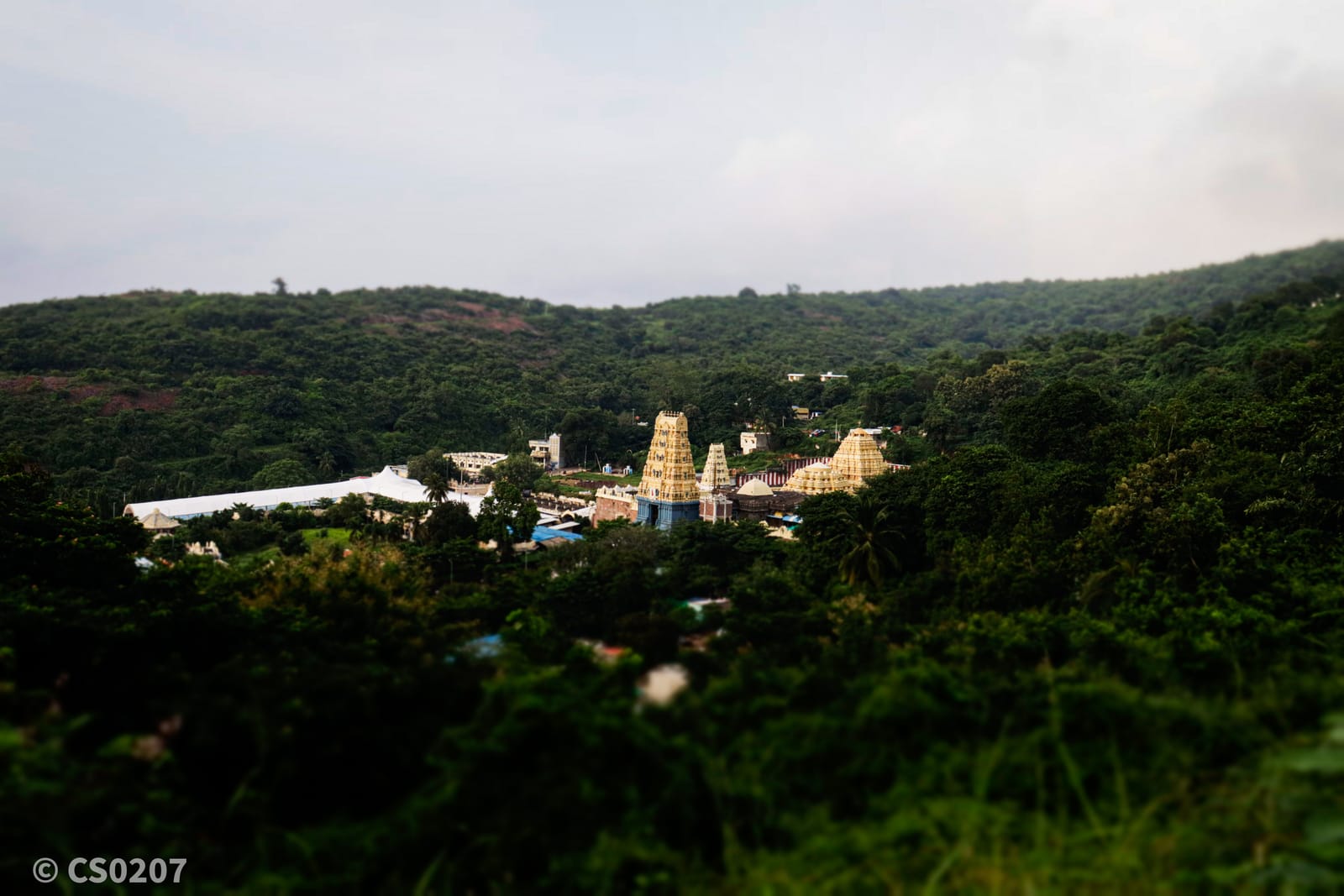
Simhachalam Temple, also known as Sri Varaha Lakshmi Narasimha Temple, is a historic Hindu temple dedicated to Lord Narasimha, the half-man half-lion avatar of Vishnu. Located on a hill about 300 metres above sea level on the outskirts of Visakhapatnam, it is a foremost Vaishnava pilgrimage site in Andhra Pradesh. The temple's distinguishing feature is that the main deity remains covered in sandalwood paste (chandanam) throughout the year and is revealed in its original form only once a year on Akshaya Tritiya.
Kanaka Durga Temple
Kanaka Durga Temple, situated on the Indrakeeladri Hill on the banks of the Krishna River in Vijayawada, is a popular Shakti temple in South India. The temple is believed to be a Shakti Peetha where the goddess is worshipped as Kanaka Durga (the bestower of gold and prosperity). The temple overlooks the Prakasam Barrage and the Krishna River, offering a panoramic view of Vijayawada city.
Ahobilam Narasimha Temple
Ahobilam, situated in the dense Nallamala forest of Kurnool district, is the sacred landscape where Lord Narasimha — the half-man, half-lion avatar of Vishnu — is believed to have manifested to slay the demon Hiranyakashipu and protect his devotee Prahlada. The site comprises nine Narasimha shrines (Nava Narasimha Kshetras) distributed across the forested hills, each representing a different aspect of the deity.
Amaralingeswara Temple
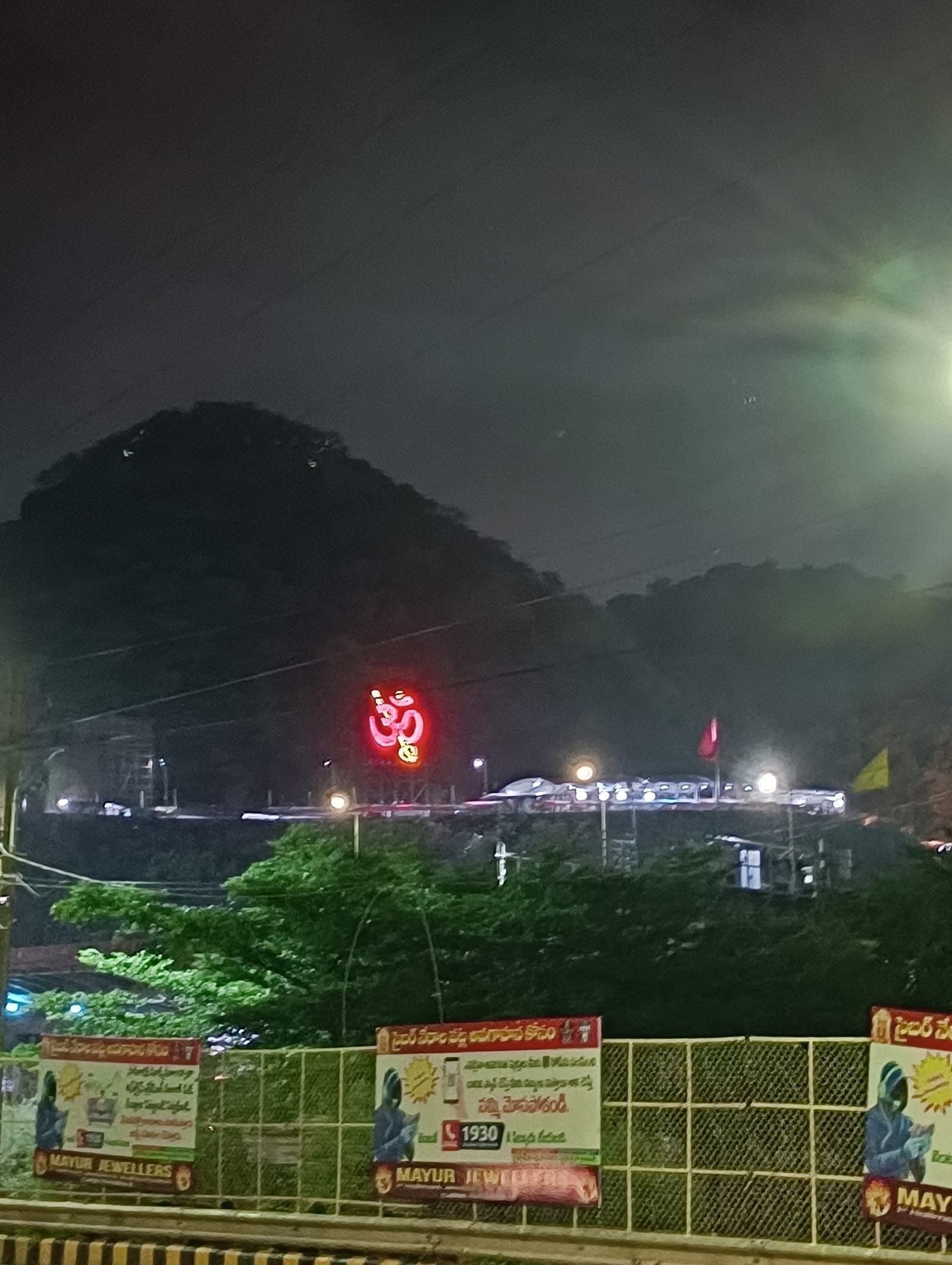
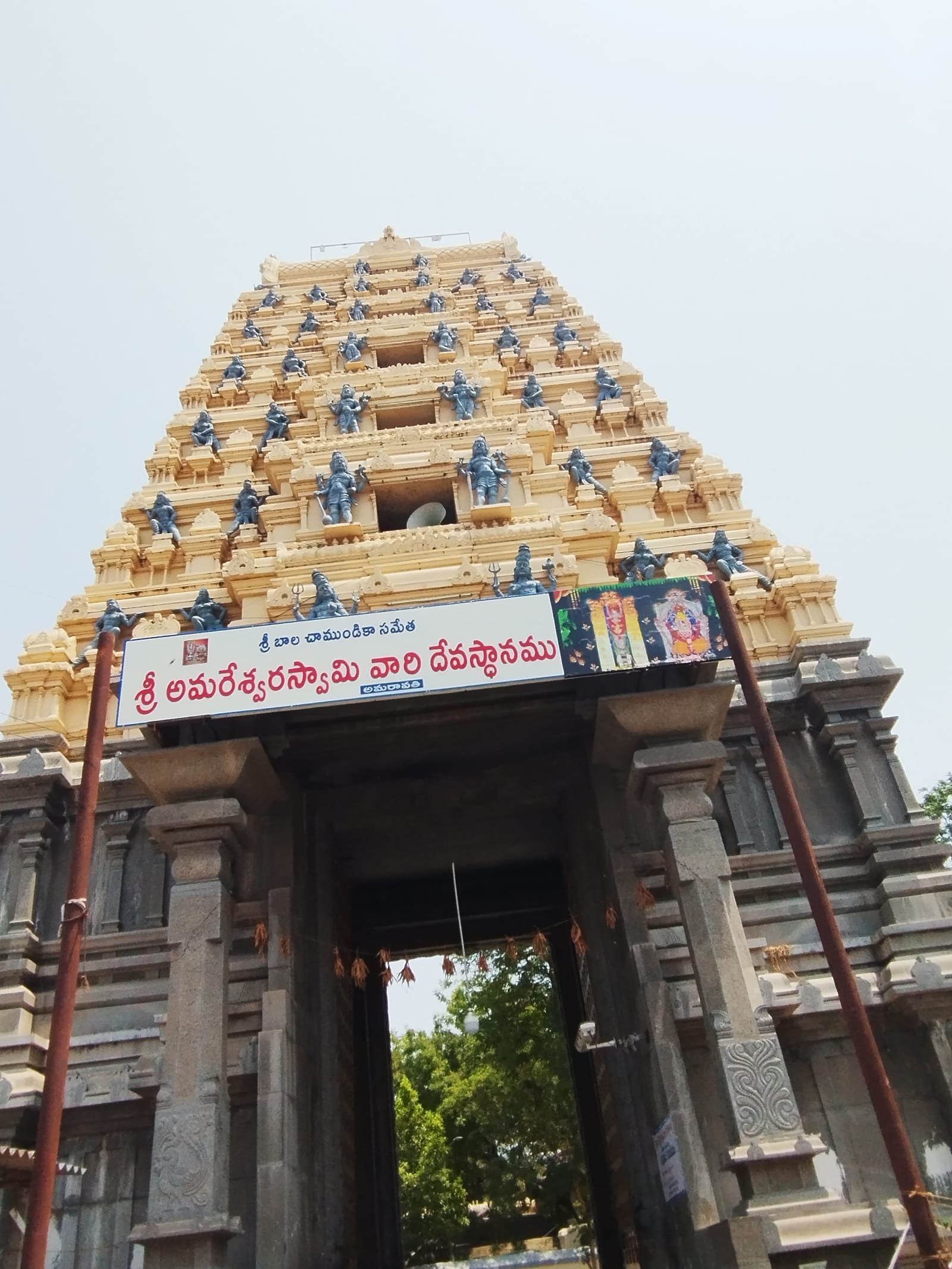
Amaralingeswara Temple, located in Amaravati on the southern bank of the Krishna River, is the foremost of the Pancharama Kshetras — the five ancient Shiva temples of coastal Andhra Pradesh. The temple shares its sacred landscape with the historic Amaravati Mahachaitya, a major Buddhist stupa from the Satavahana period.
Srikalahasti Temple
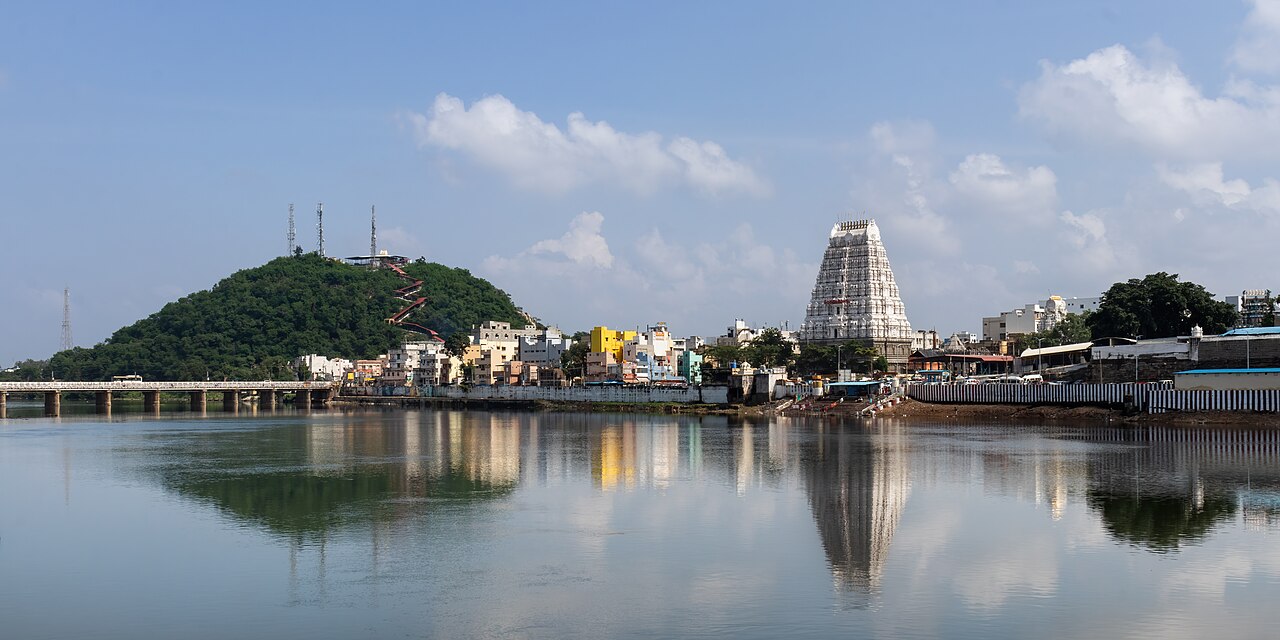
Srikalahasti Temple, situated on the banks of the Swarnamukhi River at the foot of Srikalahasti hill in Tirupati district, is dedicated to Lord Shiva as Srikalahasteeswara. The temple represents the Vayu (wind) element among the southern Pancha Bhoota Sthalas (five element temples of Shiva). Its name is traditionally derived from three animal devotees — a spider (Sri), a serpent (Kala), and an elephant (Hasti) — who attained salvation here. The self-manifested (swayambhu) lingam remains untouched by human hands, and a lamp in the draft-free sanctum continuously flickers, physically symbolising the presence of the air element.
Dakshineshwar Kali Temple
A world-famous 19th-century temple complex on the Hooghly River, immortalized by its association with the saint Sri Ramakrishna Paramahamsa.
Kalighat Kali Temple
A major Shakti Peetha where the toes of Sati's right foot fell, serving as the spiritual heart of Kolkata.
Hangseshwari Temple Bansberia
A unique temple with 13 lotus-bud towers, representing the human body's anatomy according to Yoga and Tantra.
Vaishno Devi Temple
The Vaishno Devi Temple, a sacred cave shrine nestled in the Trikuta Mountains of Jammu and Kashmir, is one of India's most visited pilgrimage sites, where millions trek 12 km each year to seek blessings of Mata Vaishno Devi at the holy cave complex.
Dhari Devi Temple
A sacred Shakti temple on the banks of the Alaknanda River, considered the guardian deity of the Char Dham Yatra and famous for the idol that changes color three times daily.
Kalkaji Temple
An ancient temple dedicated to Kalka Devi, believed to date back to the Satya Yuga, and highly crowded during Navratri.
India's temples are living traditions — not museums. Every temple has its own customs. This guide helps first-time visitors prepare with confidence and respect.
Foreign visitor information is being researched
Please verify with the official temple authority before planning your visit.
Foreign Visitors
Verify Before VisitingVisitor Information
Entry policies vary between temples. Most temples welcome visitors, while some may restrict access to specific areas, rituals, or the inner sanctum. Always verify the latest entry guidelines with the official temple authorities before your visit.
Modest clothing is expected at every Indian temple — a sign of respect, not a restriction. Think of it as dressing for a formal ceremony.
A scarf is always useful — it covers shoulders, works as a head covering, and can double as a makeshift face cover if needed.
Outdoor photography is generally permitted. Indoor photography is often restricted. Always look for signage or ask a priest before taking photos inside.
October to March offers pleasant weather. The site is open year-round and sees fewer crowds than other major tourist destinations.
April — June
July — September
English is widely understood at major tourist temples. In smaller local temples, Hindi and the regional language are more common. A smile and simple hand gestures go a long way. Learning a few words of the local language is always appreciated.
Cash (Indian Rupees) is the most reliable option, especially for temple offerings, small shops, and local transport.
UPI digital payments (Google Pay, PhonePe, Paytm) are widely accepted across India — even at roadside stalls. Download one before you arrive.
International credit/debit cards work at most ATMs, hotels, and larger establishments. Smaller vendors may only accept cash or UPI.
Carry small denominations (₹10, ₹20, ₹50, ₹100 notes) for offerings and temple donations. Large notes (₹500, ₹2000) can be hard to break at smaller counters.
Many historic temples have uneven stone floors, multiple steps, and narrow passages. Wheelchair access is limited at older sites — contact the temple in advance.
Basic restroom facilities and drinking water are available at most major temples. Some charge a small fee (₹5–₹10).
Stay hydrated — carry a reusable water bottle, especially in hot climates.
Keep valuables secure — use hotel lockers for passports and excess cash.
Wear comfortable, sturdy footwear — temple floors can be hot, wet, or uneven.
Beware of unofficial guides or touts near temple entrances. Only use authorised services.
Carry a photocopy of your passport and visa. Leave originals in your hotel safe.
Download offline maps — mobile networks can be unreliable near remote temple sites.
These short explanations help make sense of what you see and experience.
Darshan means 'seeing' — but in a temple it means being seen by the deity. It is a sacred moment of connection, not just a viewing.
Removing footwear is a sign of humility. It also keeps the temple floor clean, since devotees sit and pray on the ground.
Food offered to the deity and then distributed to devotees. It is considered blessed. Accept it with both hands and do not discard it.
The bell creates a focused acoustic atmosphere, wards off distractions, and announces your presence before entering the inner sanctum.
Circumambulation (pradakshina) is done clockwise, keeping the sanctum on your right — an auspicious direction aligned with the sun's path.
Flowers symbolise devotion, coconuts represent the ego being broken, incense purifies the air, and lamps represent the victory of light over darkness.
Sacred viewing of the deity; the central act of temple worship.
Clockwise circumambulation of the sanctum.
Blessed food offered to the deity and distributed to devotees.
The innermost sanctum where the main deity resides.
The towering spire above the sanctum, a defining feature of temple architecture.
A pillared hall or pavilion within the temple complex.
The Indian Rupee (?, INR) is the local currency. ATMs are widely available in cities and towns. For temple offerings, keep small notes (₹10, ₹20, ₹50). Most temples accept donations in cash only — digital payments are uncommon at the offering counter itself.
Offerings (dakshina) are given with the right hand. Place cash in the donation box (hundi) or give it directly to the priest. There is no fixed amount — give what feels appropriate. Some temples have fixed fees for special entry or puja participation.
Shoes and sandals are removed before entering the temple building. Most temples have a designated shoe counter (free or a small fee of ₹5–₹20). Socks are generally allowed. In monsoon, carry a plastic bag for wet shoes.
Darshan queues can take 30 minutes to 3 hours at popular temples. Many offer paid VIP darshan (₹100–₹500) for faster entry. Special queues for women, elderly, and disabled visitors exist at some temples. No line jumping.
Major festivals draw enormous crowds — sometimes hundreds of thousands. Book accommodation months in advance. Expect road closures, restricted vehicle access, and limited phone network. Arrive early (before dawn) to avoid the worst congestion.
Always look for signage before taking photos. When in doubt, ask a priest. Never take photos of devotees in prayer without permission. Selfie sticks are banned at most temples. Silently switch your phone to silent mode.
Police / Ambulance / Fire: 112 (National Emergency Number)
Tourist Helpline: 1800-111-363 (Multi-lingual, Ministry of Tourism)
Women's Helpline: 1091
Temple-specific visitor information is continuously researched and updated from official sources. Where specific data is unavailable, general India travel guidance is provided. Always verify current policies with the temple authority before your visit.
Information last verified July 2026. Temple-specific data coming soon.
Continue your journey through the spiritual and architectural wonders of India.

Simhachalam Temple, also known as Sri Varaha Lakshmi Narasimha Temple, is a historic Hindu temple dedicated to Lord Narasimha, the half-man half-lion avatar of Vishnu. Located on a hill about 300 metres above sea level on the outskirts of Visakhapatnam, it is a foremost Vaishnava pilgrimage site in Andhra Pradesh. The temple's distinguishing feature is that the main deity remains covered in sandalwood paste (chandanam) throughout the year and is revealed in its original form only once a year on Akshaya Tritiya.

Kanaka Durga Temple, situated on the Indrakeeladri Hill on the banks of the Krishna River in Vijayawada, is a popular Shakti temple in South India. The temple is believed to be a Shakti Peetha where the goddess is worshipped as Kanaka Durga (the bestower of gold and prosperity). The temple overlooks the Prakasam Barrage and the Krishna River, offering a panoramic view of Vijayawada city.

Amaralingeswara Temple, located in Amaravati on the southern bank of the Krishna River, is the foremost of the Pancharama Kshetras — the five ancient Shiva temples of coastal Andhra Pradesh. The temple shares its sacred landscape with the historic Amaravati Mahachaitya, a major Buddhist stupa from the Satavahana period.

Srikalahasti Temple, situated on the banks of the Swarnamukhi River at the foot of Srikalahasti hill in Tirupati district, is dedicated to Lord Shiva as Srikalahasteeswara. The temple represents the Vayu (wind) element among the southern Pancha Bhoota Sthalas (five element temples of Shiva). Its name is traditionally derived from three animal devotees — a spider (Sri), a serpent (Kala), and an elephant (Hasti) — who attained salvation here. The self-manifested (swayambhu) lingam remains untouched by human hands, and a lamp in the draft-free sanctum continuously flickers, physically symbolising the presence of the air element.

One of the twelve Jyotirlingas and the southernmost among them, Mallikarjuna Temple at Srisailam is uniquely also a Shakti Peetha where the goddess Bhramaramba is worshipped alongside Shiva. Located on a hilltop above the Krishna River, it is the only temple in India that houses both a Jyotirlinga and a Shakti Peetha.

Ahobilam, situated in the dense Nallamala forest of Kurnool district, is the sacred landscape where Lord Narasimha — the half-man, half-lion avatar of Vishnu — is believed to have manifested to slay the demon Hiranyakashipu and protect his devotee Prahlada. The site comprises nine Narasimha shrines (Nava Narasimha Kshetras) distributed across the forested hills, each representing a different aspect of the deity.

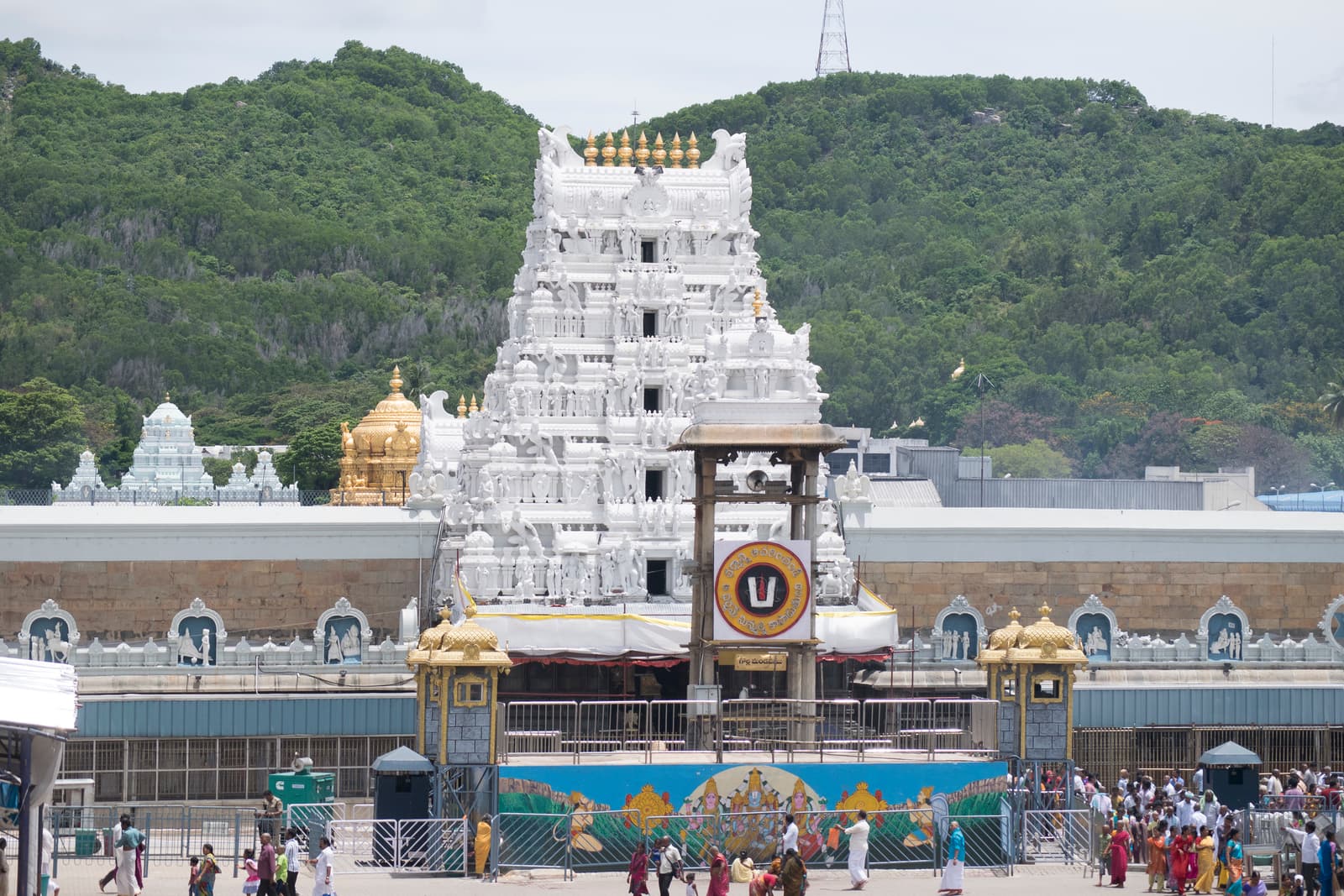
Tirumala Venkateswara Temple, situated in the hill town of Tirumala in Tirupati district, is dedicated to Lord Venkateswara, an incarnation of Vishnu. The shrine is positioned on Venkatadri, one of the seven hills representing the Seshachalam range. It is globally recognized for its massive volume of daily pilgrims, functioning as a primary center of Vaishnava worship under the management of the Tirumala Tirupati Devasthanams (TTD).
"UNESCO was founded in 1945 to promote world peace and security through international cooperation."