Lord Shiva
52 temples
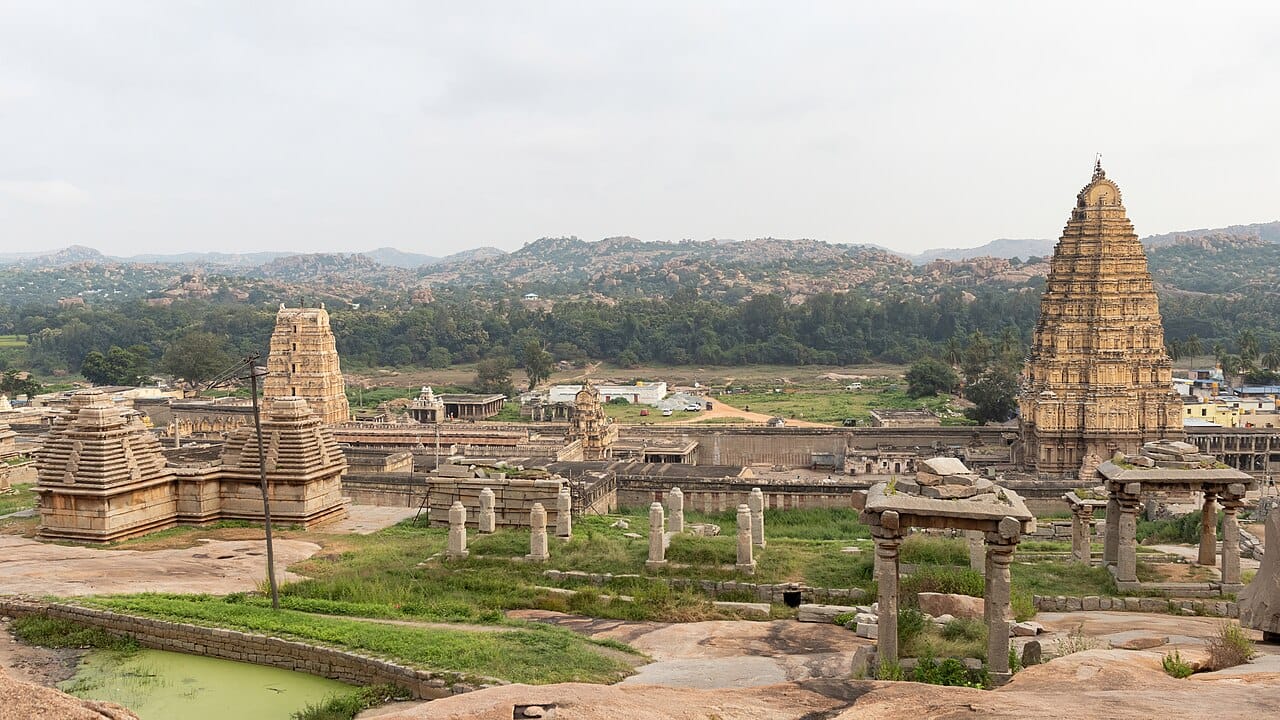
Virupaksha Temple
The Virupaksha Temple in Hampi, Karnataka, is a UNESCO World Heritage Site and the oldest functioning temple in India, dedicated to Lord Shiva as Virupaksha.
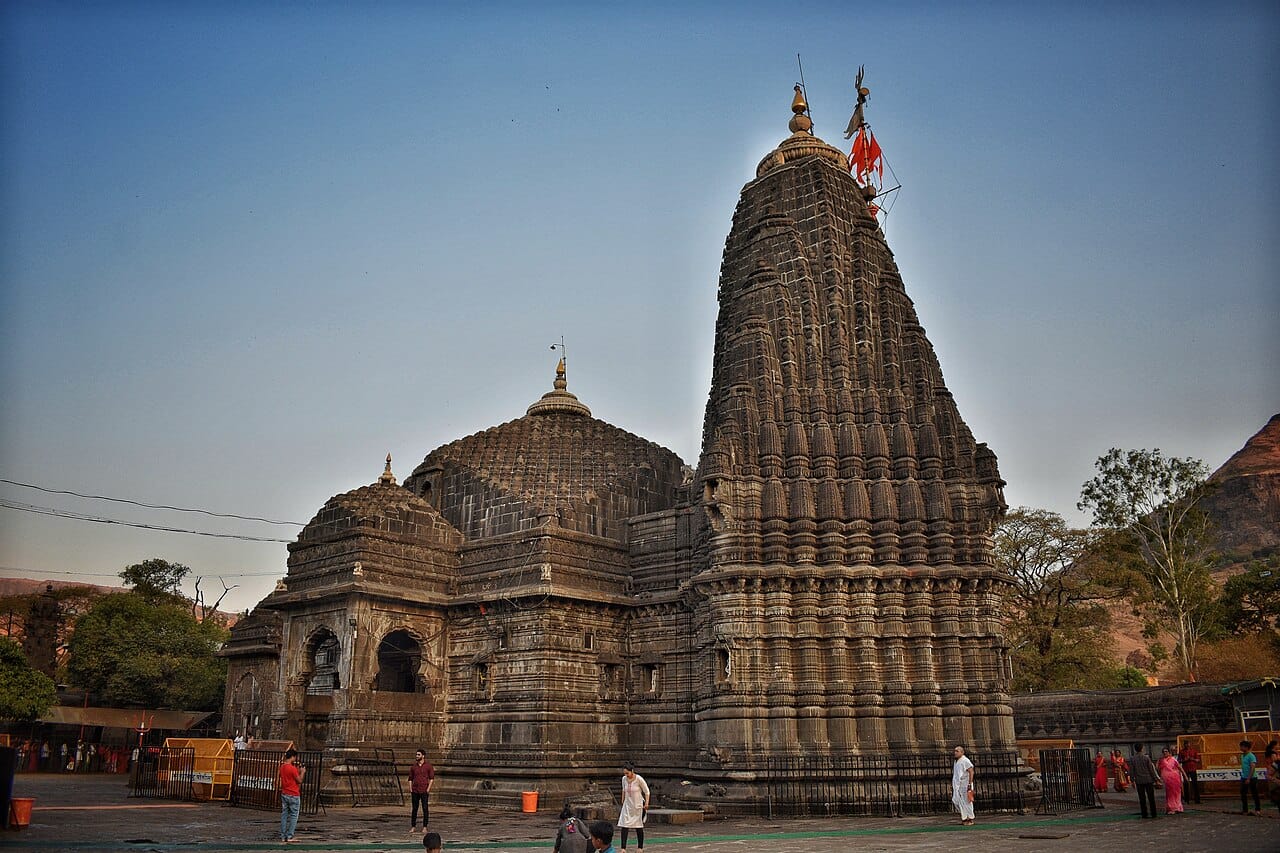
Trimbakeshwar Temple
The Trimbakeshwar Temple in Maharashtra is one of the twelve Jyotirlingas, unique for its three-faced linga representing the Trimurti and the source of the Godavari River.
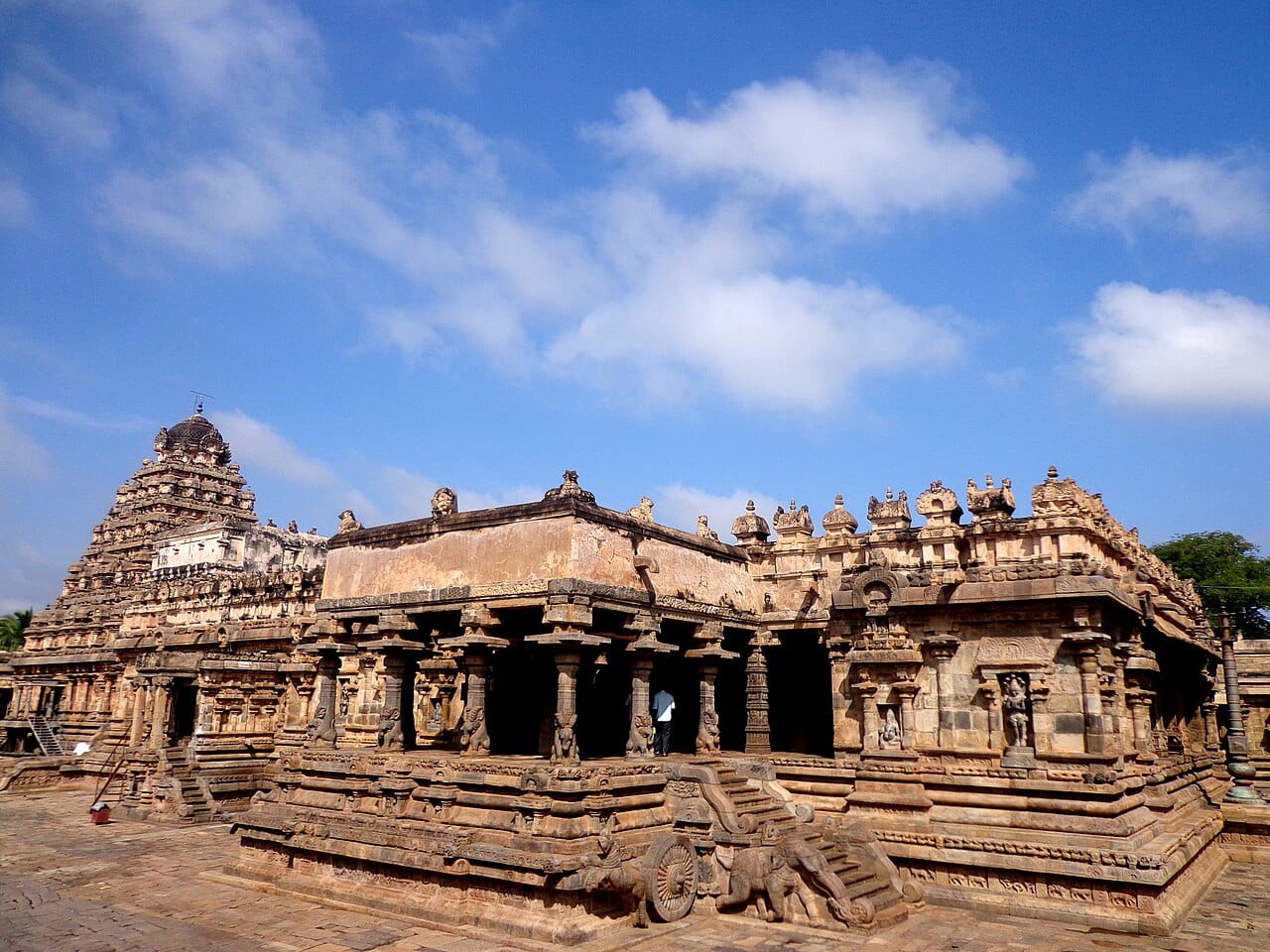
Airavatesvara Temple
The Airavatesvara Temple at Darasuram, built by Rajaraja Chola II between 1146 and 1172 CE, is one of the three UNESCO World Heritage 'Great Living Chola Temples.' It is renowned for its stone chariot, musical steps, and exquisite 12th-century Chola sculptures.

Gangaikonda Cholapuram Temple
The Gangaikonda Cholapuram Temple, built by Rajendra Chola I in 1035 CE, is a UNESCO World Heritage 'Great Living Chola Temple.' Its 53-metre vimana with recessed corners and six pairs of monolithic dvarapalas represents a refined evolution of Chola Dravidian architecture.

Kampaheswarar Temple
Kampaheswarar Temple in Tribhuvanam, built by Kulothunga Chola III in 1202 CE, is one of the later great Chola temples and completes the quartet of magnificent Chola stone temples alongside the Brihadeeswarar at Thanjavur, Gangaikonda Cholapuram, and Airavatesvara at Darasuram. The temple represents the mature phase of Chola architecture, featuring a 30-metre granite vimana, a separate Devi shrine, and a unique chariot-wheel carving in the mandapa. It is maintained by the Archaeological Survey of India as a protected monument of national importance.

Koranganatha Temple
Koranganatha Temple, built during the reign of the Chola king Parantaka I (907-955 CE) at Srinivasanallur near Tiruchirappalli, is a well-preserved example of early Chola architecture with exquisite stone carvings. The temple is maintained by the Archaeological Survey of India and is notable for its peaceful setting on the banks of the Kaveri River.

Pancha Rathas
The Pancha Rathas (Five Chariots) are a set of five monolithic temple structures carved from single granite outcrops during the reign of Narasimhavarman I (Mamalla, 630-668 CE) in Mahabalipuram. Part of the UNESCO World Heritage Site 'Group of Monuments at Mahabalipuram,' these rathas represent the earliest and most ambitious examples of monolithic rock-cut architecture in Tamil Nadu.

Olakkaneswara Temple
Olakkaneswara Temple, located on a rocky outcrop at the southern end of Mahabalipuram beach, was built by the Pallavas in the 7th century. The temple later served as a lighthouse for ships navigating the Bay of Bengal, with a beacon light placed on its tower in the late 19th century. The site offers panoramic views of the Mahabalipuram coastline.
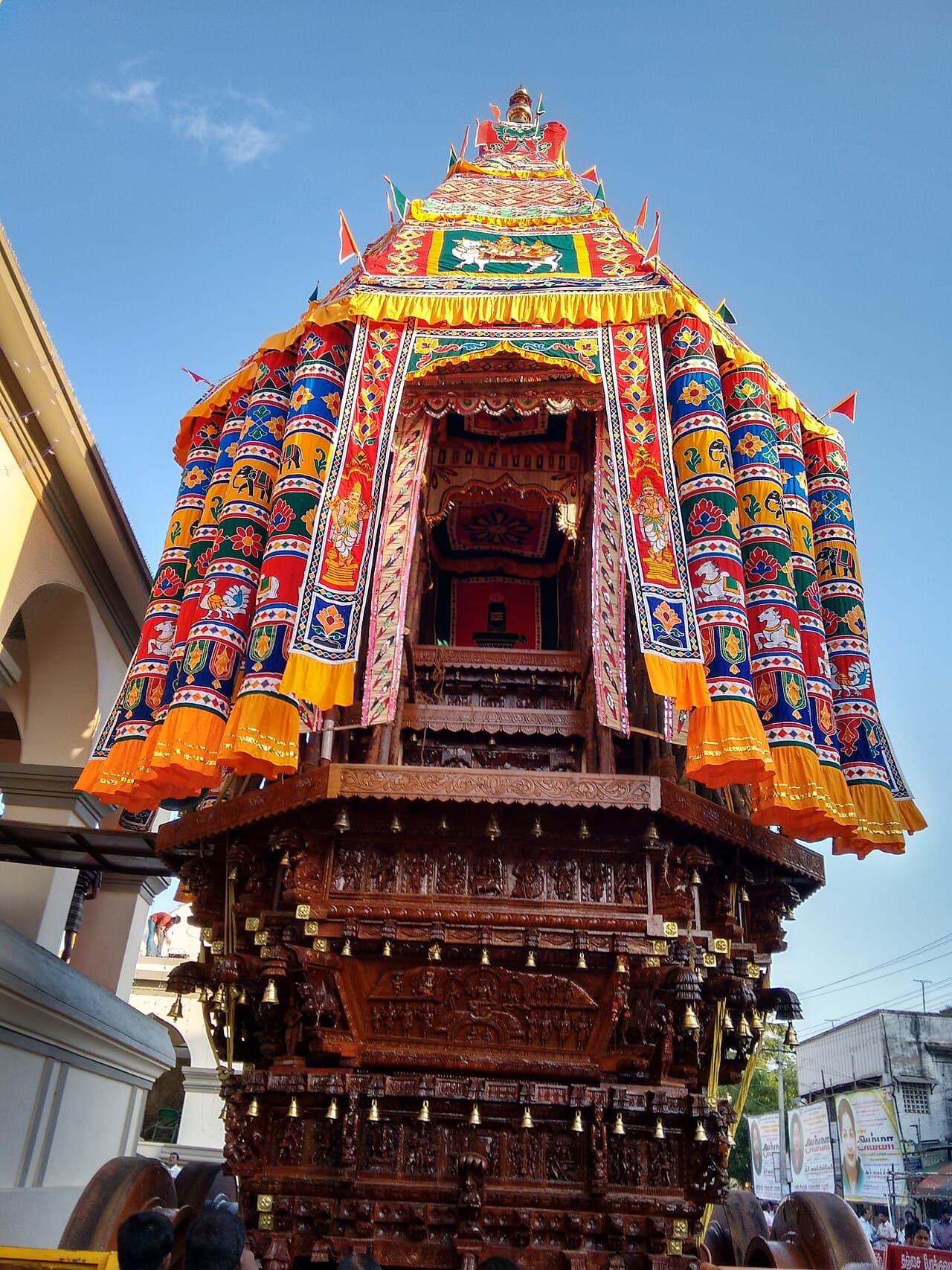
Arunachaleswarar Temple
Arunachaleswarar Temple at the foot of Arunachala Hill in Tiruvannamalai is one of the largest Shiva temples in the world, covering 25 acres. It represents the fire element (Agni) of the Pancha Bhoota Sthalas and is a Paadal Petra Sthalam glorified by the 7th-century Tevaram hymns.
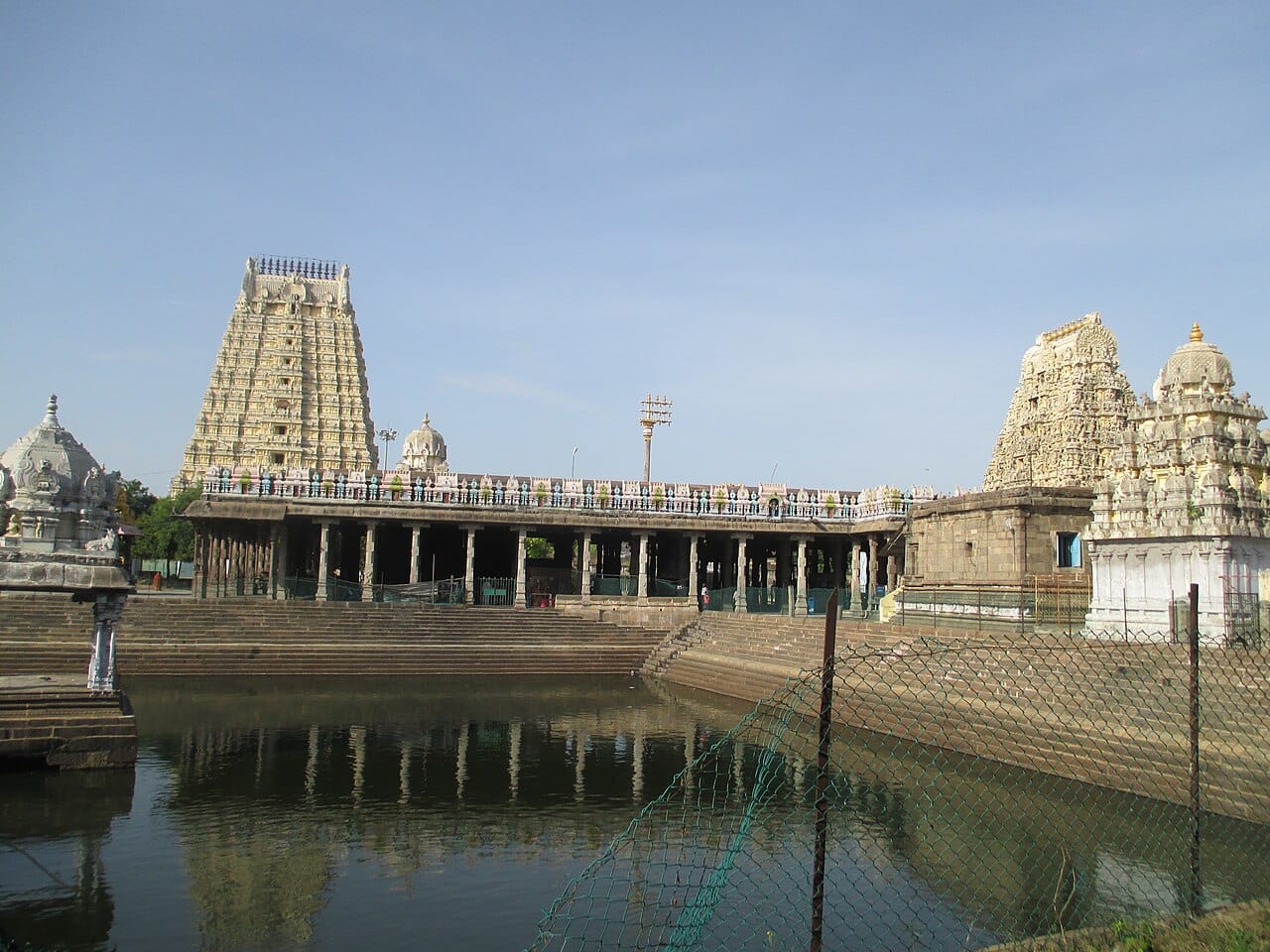
Ekambareswarar Temple
Ekambareswarar Temple in Kanchipuram represents the earth element (Prithvi) of the Pancha Bhoota Sthalas. Its sand-made Prithvi Lingam, 192-foot Raja Gopuram built by Krishnadevaraya (1509), and the 3,500-year-old sacred mango tree make it among the most significant Shiva temples in South India.
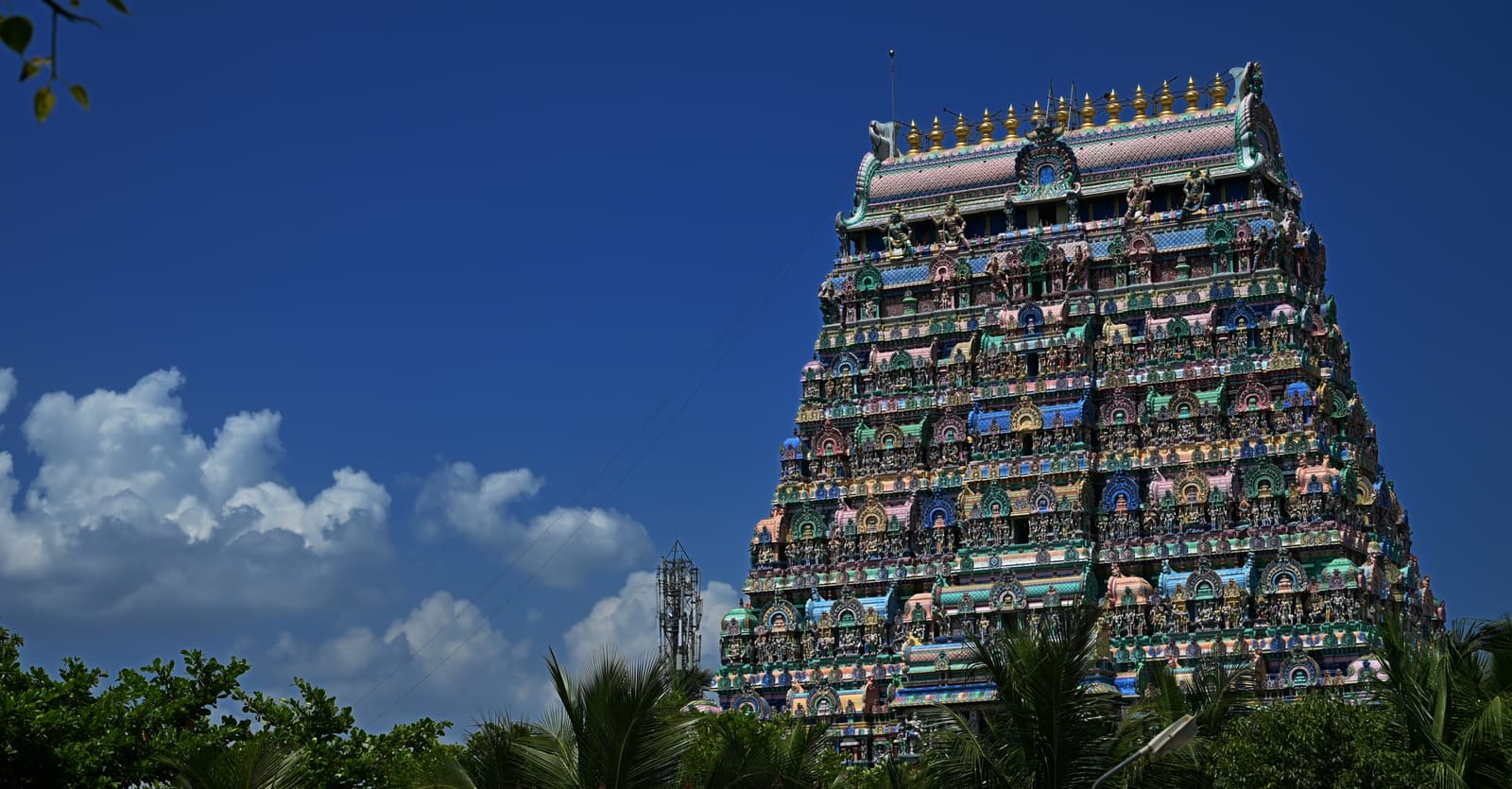
Jambukeswarar Temple
Jambukeswarar Temple in Thiruvanaikaval represents the water element (Apas) of the Pancha Bhoota Sthalas. Its unique underwater Appu Lingam sits in a spring-fed subterranean sanctum, with an underground stream that has flowed continuously for over 1,800 years.
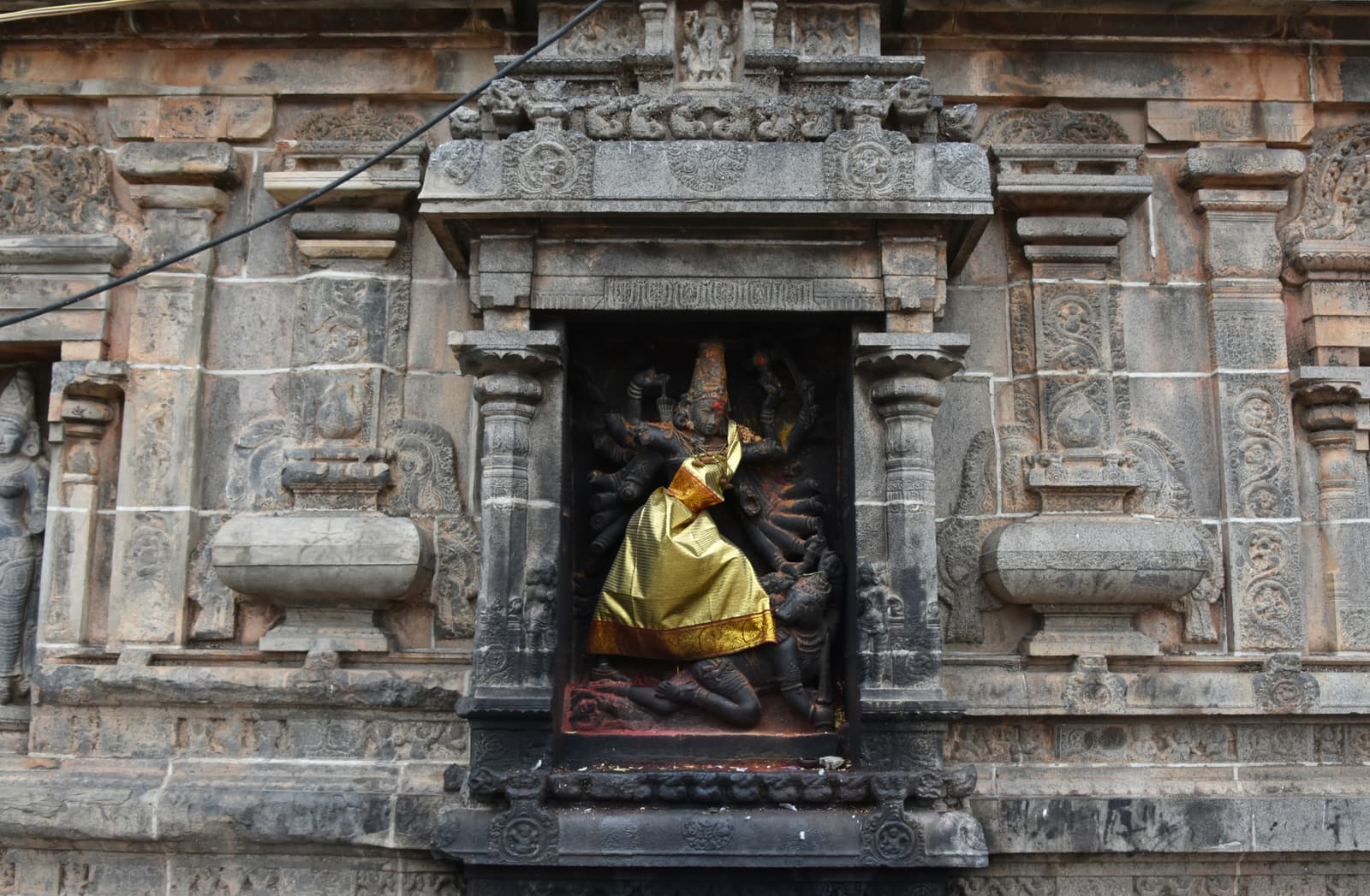
Nataraja Temple
Chidambaram Nataraja Temple represents the space element (Akasha) of the Pancha Bhoota Sthalas. It houses the Chidambara Rahasyam — an empty curtained space symbolising formless Shiva — and is the source of the iconic Nataraja cosmic dance imagery that became the universal symbol of Hinduism.
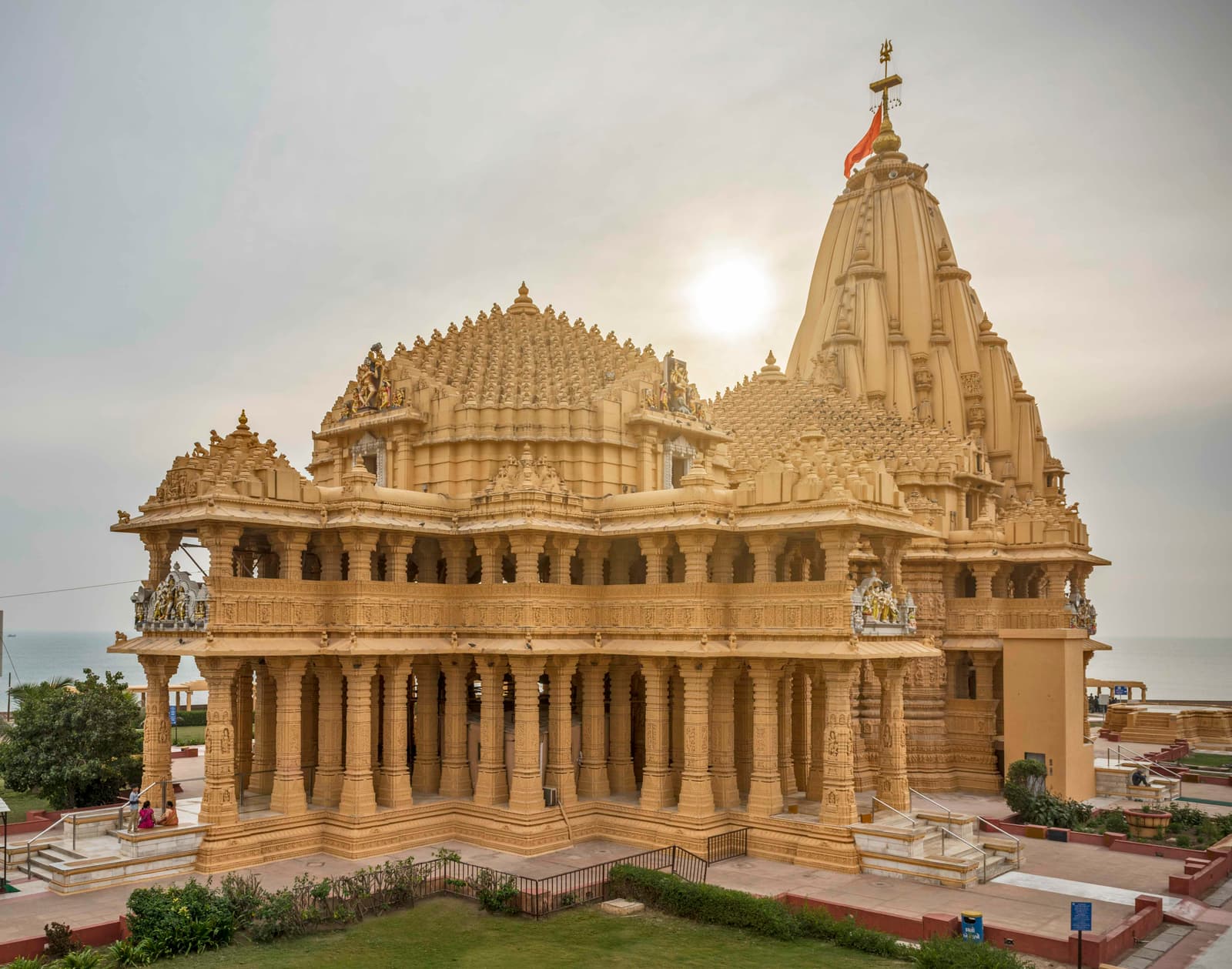
Somnath Temple
Somnath Temple, the first of the twelve Jyotirlingas, is an ancient Shiva temple in Gujarat known for its resilience through repeated destruction and reconstruction over a millennium.
Ramanathaswamy Temple
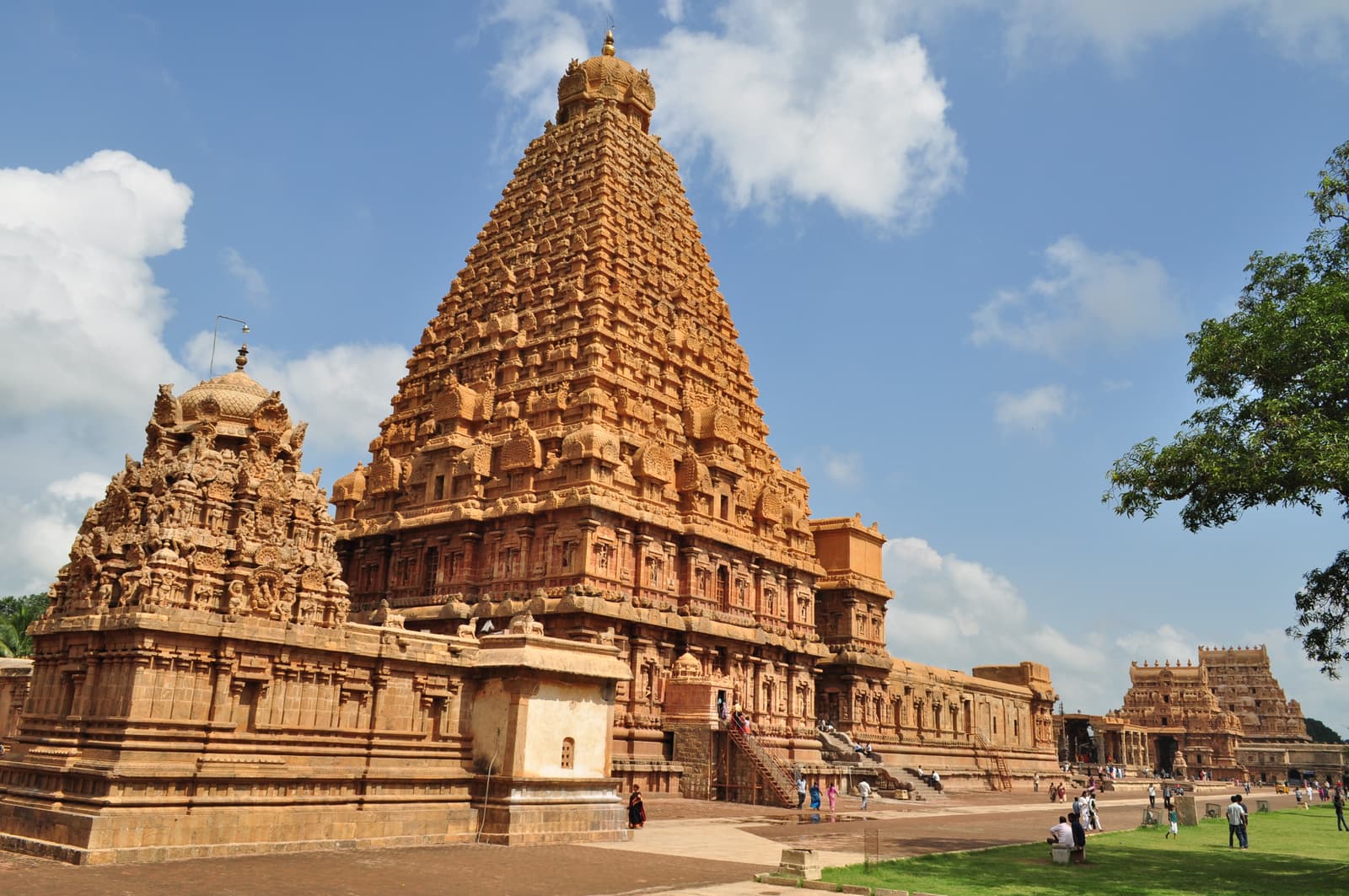
The Ramanathaswamy Temple in Rameswaram is one of the 12 Jyotirlingas and a Char Dham site, famous for its magnificent thousand-pillared corridors, the longest temple corridor in the world, and its sacred association with Lord Rama's worship of Shiva.
Omkareshwar Temple
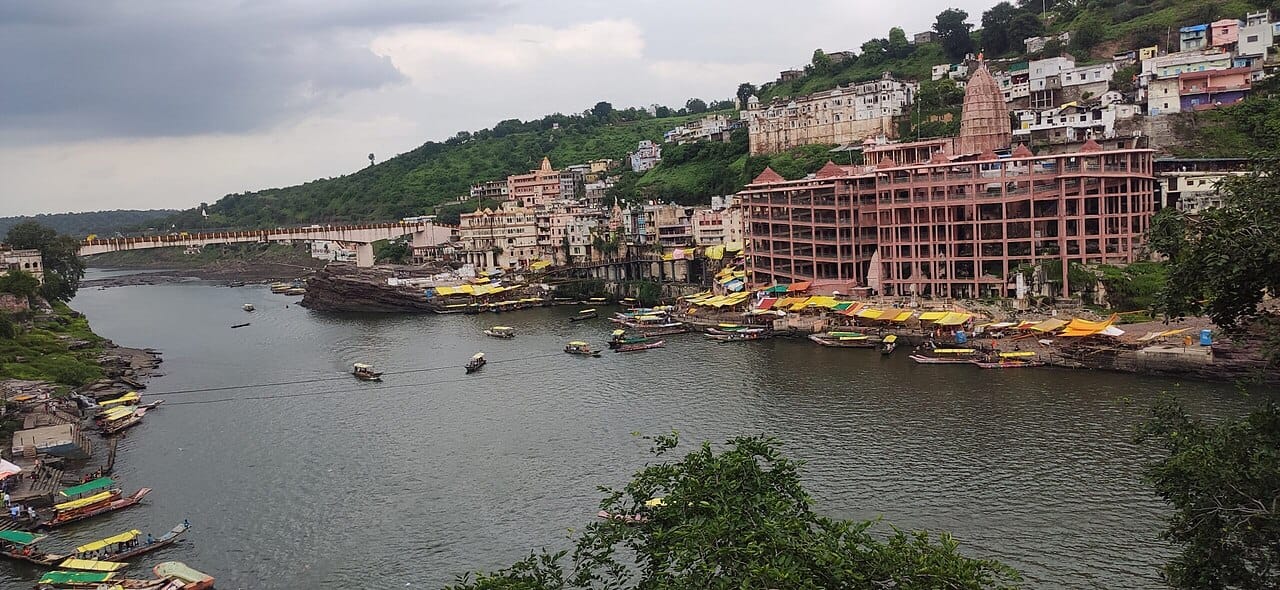
Situated on a sacred island in the Narmada River, Omkareshwar is the only Jyotirlinga located on an island. The temple stands at the confluence of the Narmada and Kaveri rivers, with the lingam positioned where the river forms the shape of the sacred symbol Om.
Nageshwar Jyotirlinga Temple
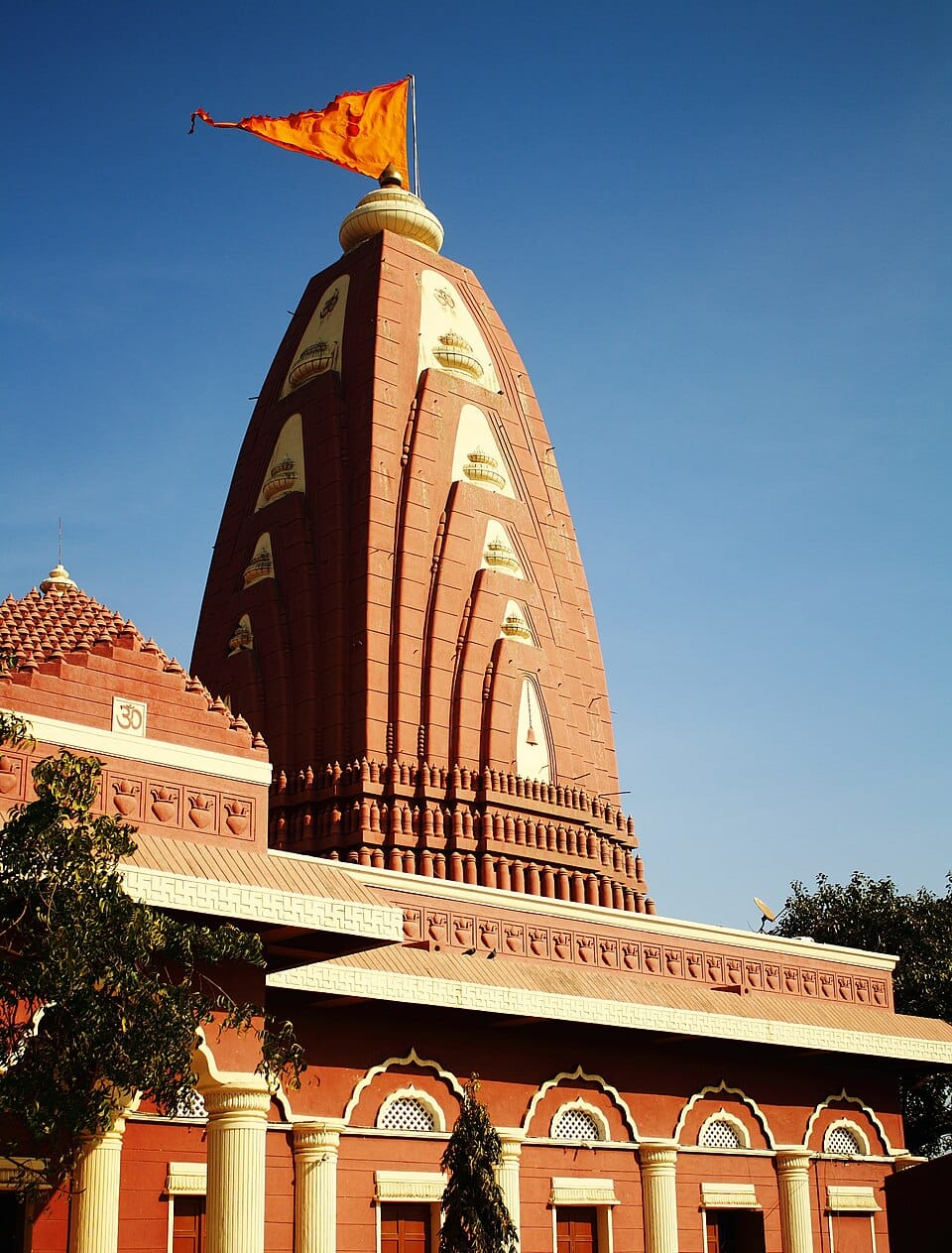
The coastal jyotirlinga hidden in the marshlands of Saurashtra. Shiva as Nageshwar — the Lord of Snakes. The legend of Daruka and a 25-meter outdoor Shiva statue visible from the Arabian Sea.
Srisailam Mallikarjuna Swamy Temple
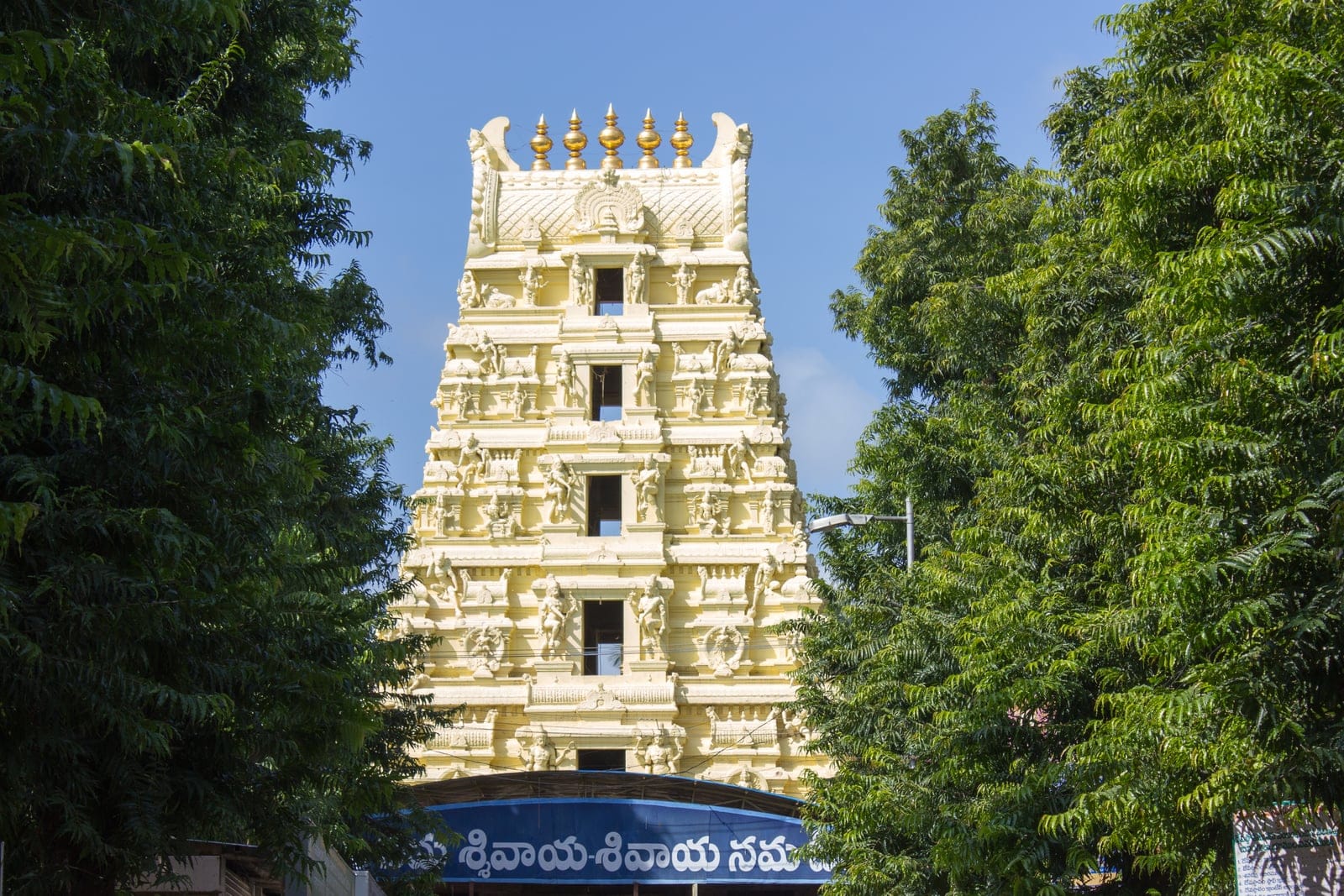
One of the twelve Jyotirlingas and the southernmost among them, Mallikarjuna Temple at Srisailam is uniquely also a Shakti Peetha where the goddess Bhramaramba is worshipped alongside Shiva. Located on a hilltop above the Krishna River, it is the only temple in India that houses both a Jyotirlinga and a Shakti Peetha.
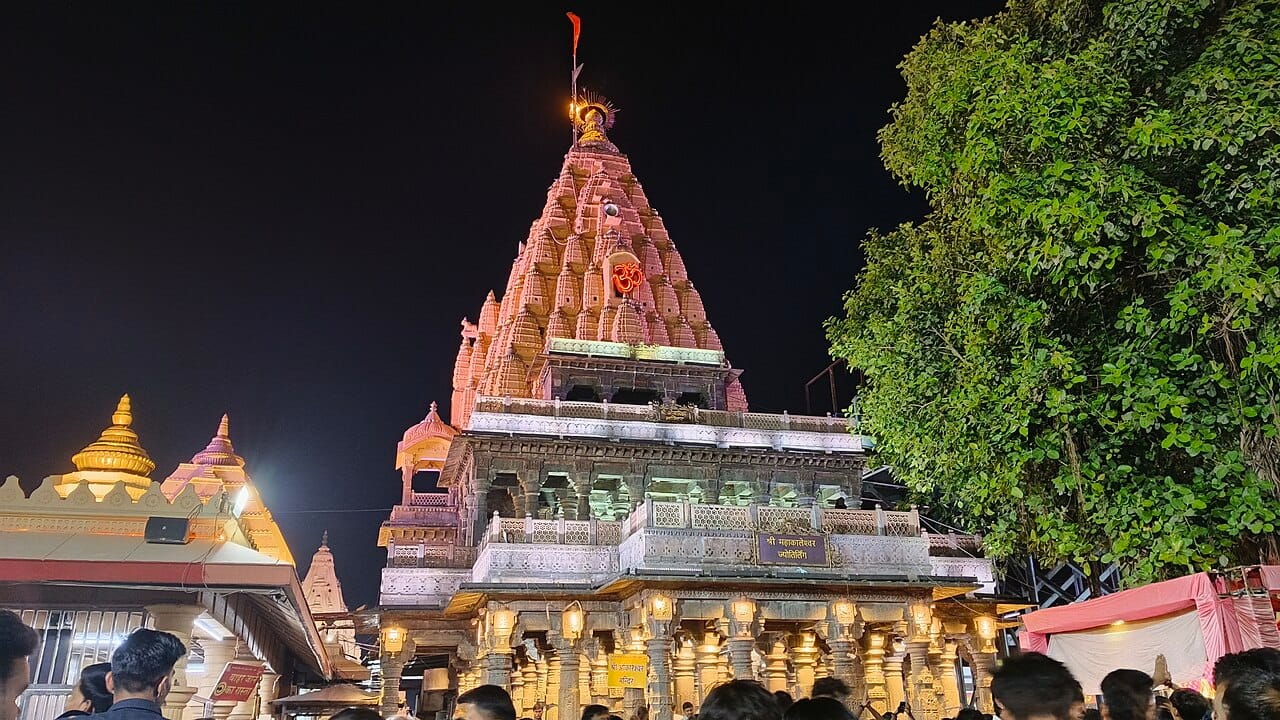
Mahakaleshwar Temple
One of the twelve Jyotirlingas, Mahakaleshwar in Ujjain is the only Shiva temple where the lingam faces south (Dakshinamurti). Famous for the pre-dawn Bhasma Aarti, it has been a living shrine for over a millennium, drawing millions of Shaivite pilgrims to the ancient city of Ujjain on the Shipra River.
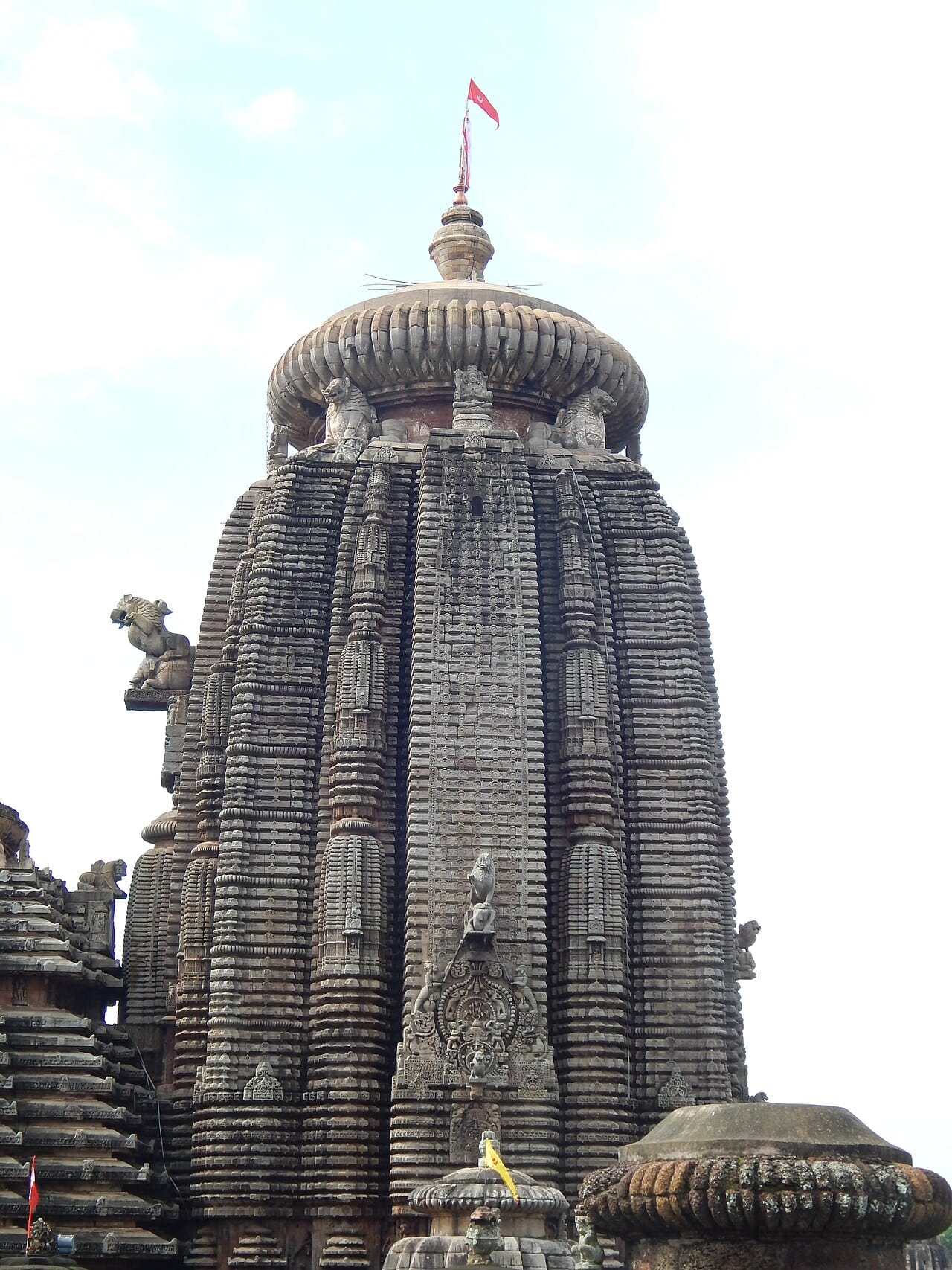
Lingaraja Temple
The Lingaraja Temple in Bhubaneswar, Odisha, is the largest and most magnificent temple of the Kalinga architectural tradition, dedicated to Lord Shiva as Tribhuvaneshwara.
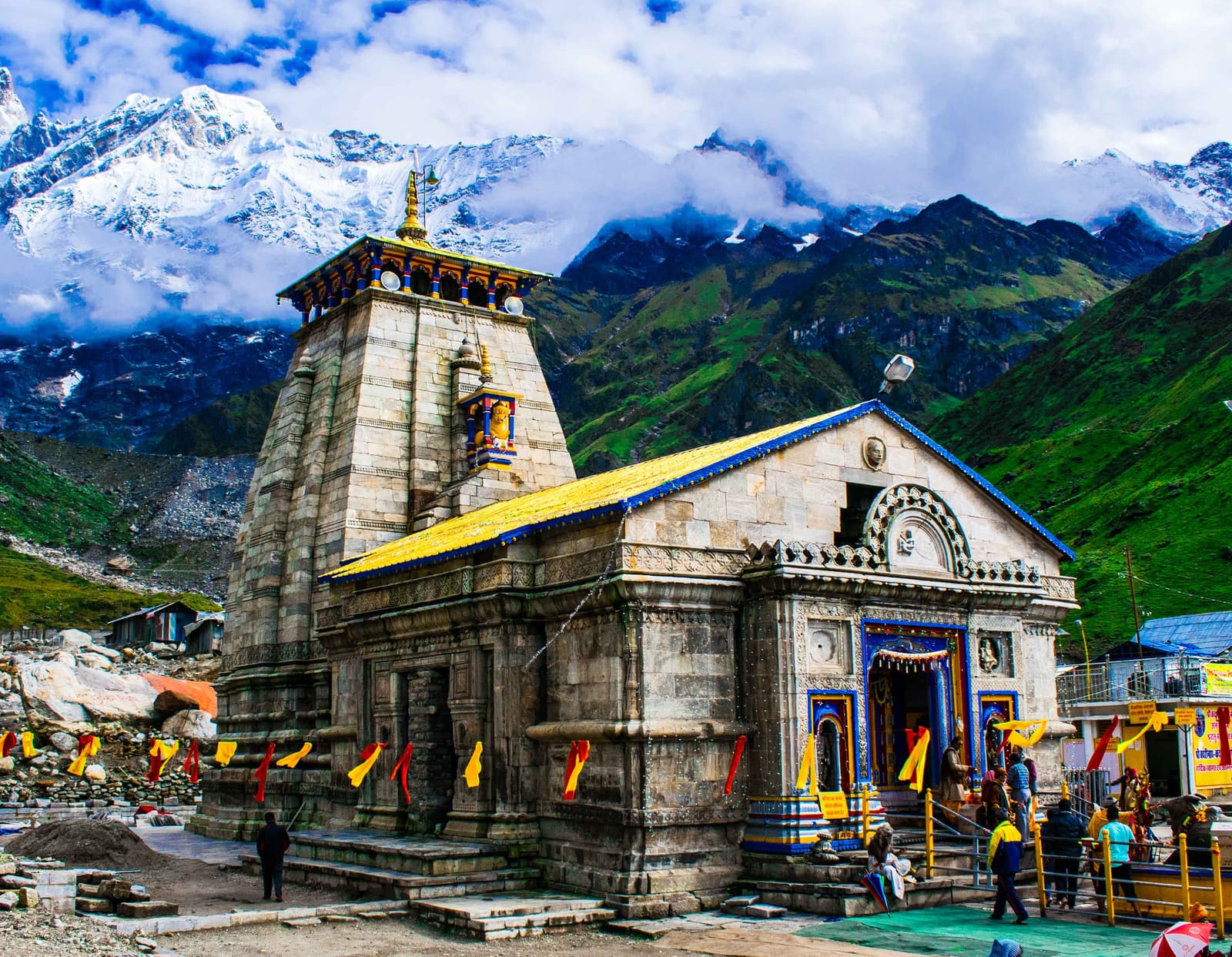
Kedarnath Temple
Kedarnath Temple — one of 12 Jyotirlingas, part of Char Dham and Panch Kedar. Verified visitor guide for pilgrims and international travellers at 3,583 m.
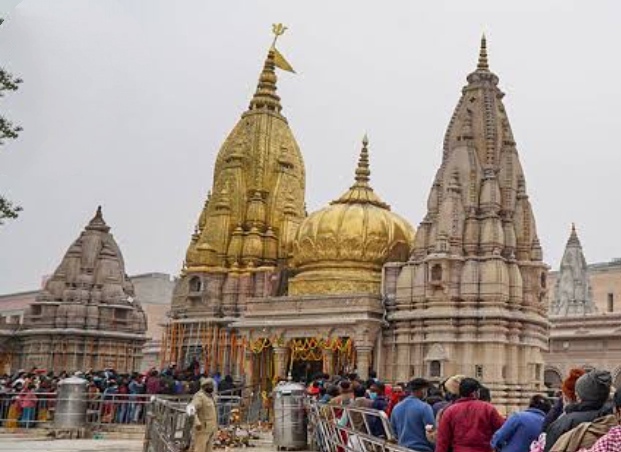
Kashi Vishwanath Temple
Kashi Vishwanath Temple in Varanasi, one of the twelve Jyotirlingas and the most sacred Shiva temple in Hinduism, stands on the western bank of the holy Ganga.
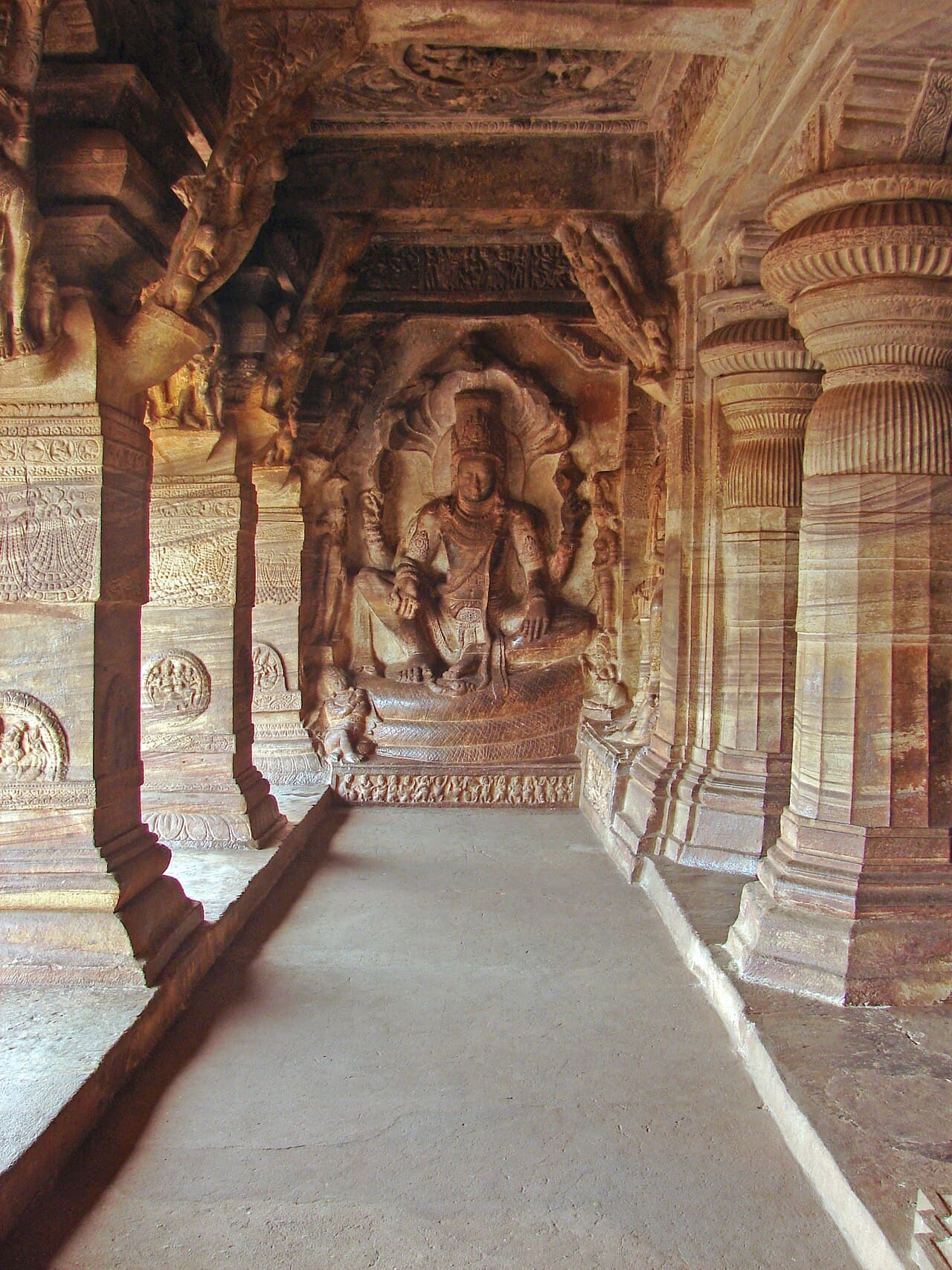
Badami Cave Temples
The Badami Cave Temples are a complex of four rock-cut cave temples carved into the soft sandstone cliffs of Badami, the capital of the Early Chalukya dynasty. Dating from the 6th-7th century CE, these caves represent the earliest known examples of South Indian temple architecture in rock-cut form and are considered the birthplace of Chalukya art. The site is on UNESCO's tentative list of World Heritage Sites.

Durga Temple
The Durga Temple at Aihole, built in the 7th-8th century CE, is a distinctive architectural experiment of the Early Chalukya period. Featuring a unique apsidal (horseshoe-shaped) plan modelled after a Buddhist chaitya hall, a raised gallery with carved stone pillars, and a massive Dravidian-style shikhara, it represents the creative fusion of architectural traditions that Characterises Aihole as the 'cradle of Indian temple architecture.'
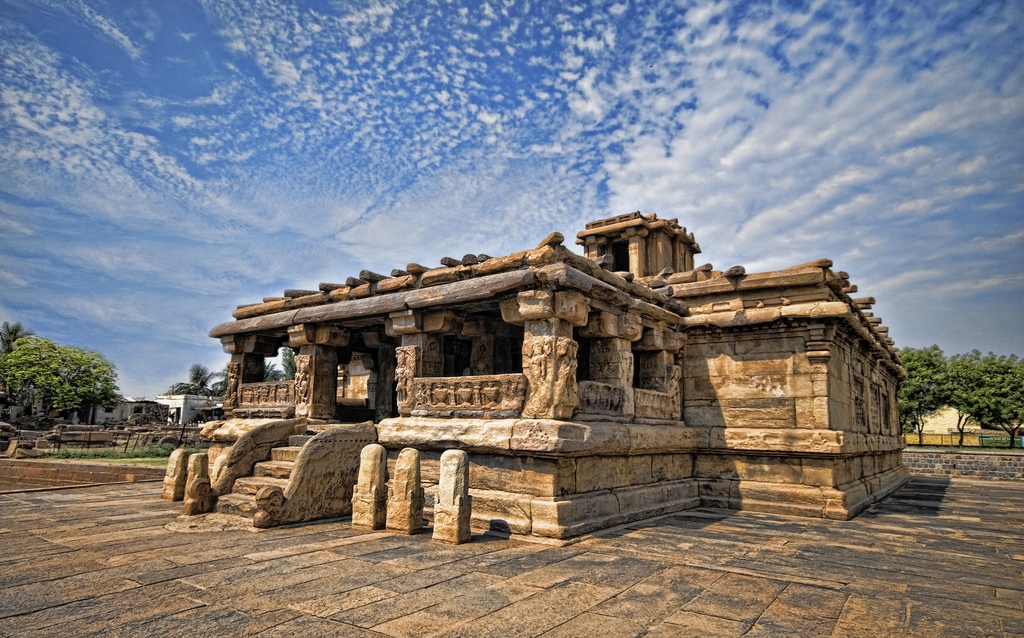
Lad Khan Temple
The Lad Khan Temple at Aihole is one of the oldest surviving stone temples in India, dating to the 5th century CE. Built by the Early Chalukya dynasty, the temple is a key monument in the evolution of Hindu temple architecture, representing an early experimental phase when temple builders were adapting earlier wooden and brick construction methods into permanent stone forms. The temple features a flat-roofed mandapa with 16 carved stone pillars and a small ground-level sanctum.

Hoysaleswara Temple
The Hoysaleswara Temple in Halebidu, built circa 1121-1160 CE, is the largest Shiva temple built by the Hoysalas. Inscribed as a UNESCO World Heritage Site in 2023 as part of the Sacred Ensembles of the Hoysalas, it is celebrated for its hyper-realistic soapstone sculptures covering every surface of the structure.

Kedareshwara Temple
The Kedareshwara Temple at Halebidu, built in 1319 CE by the Hoysala king Veera Ballala III, is a Hoysala-era temple dedicated to Lord Shiva. It features the characteristic Hoysala star-shaped platform (jagati), intricately carved soapstone pillars, and elaborate sculptural friezes. The temple is a protected monument under the Archaeological Survey of India.
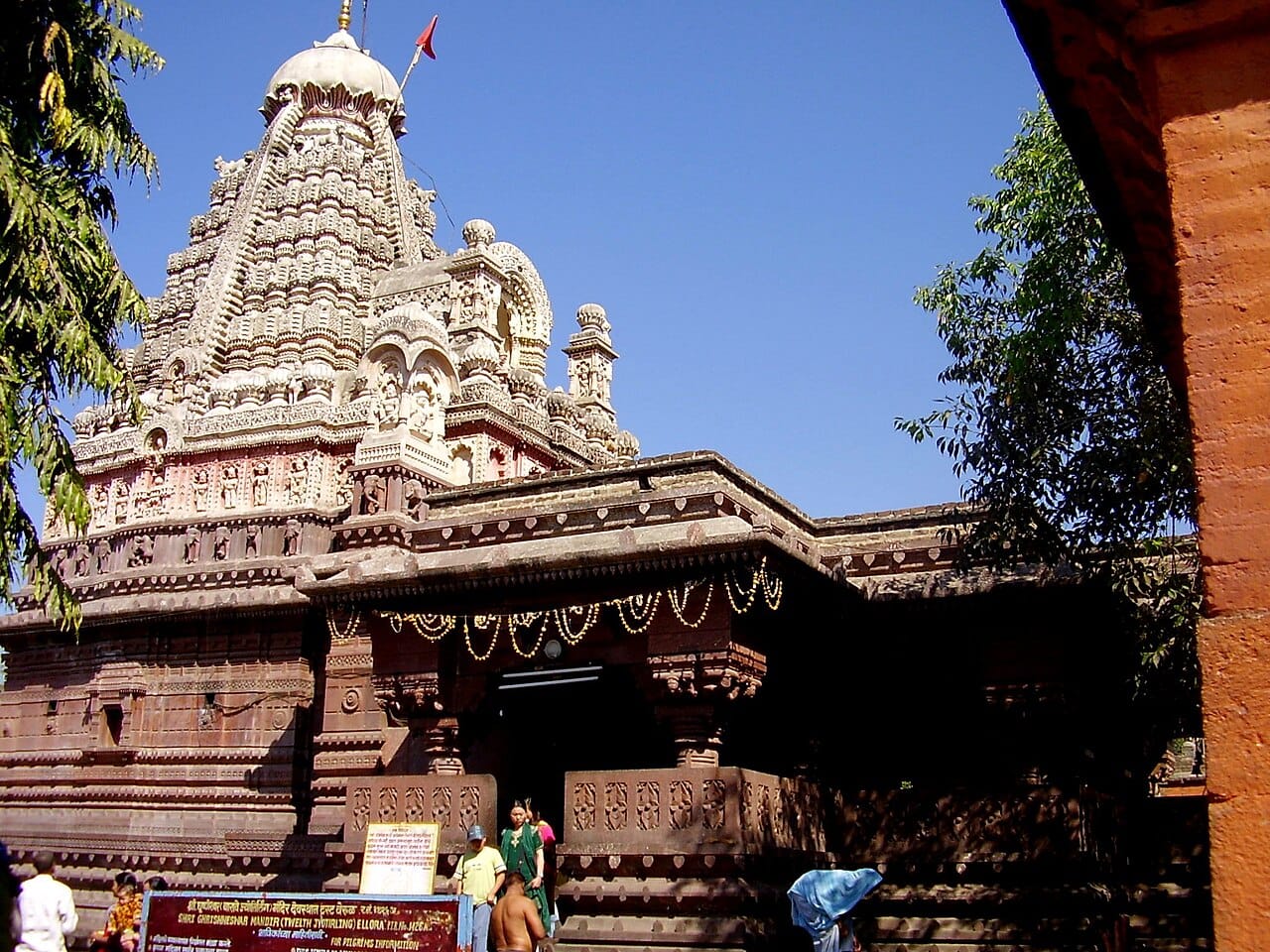
Grishneshwar Temple
The 12th and final Jyotirlinga, located just 1 km from the Ellora Caves. Also known as Kusumeshwar — the Lord of Flowers — built from distinctive red volcanic rock and rebuilt by Ahilyabai Holkar.
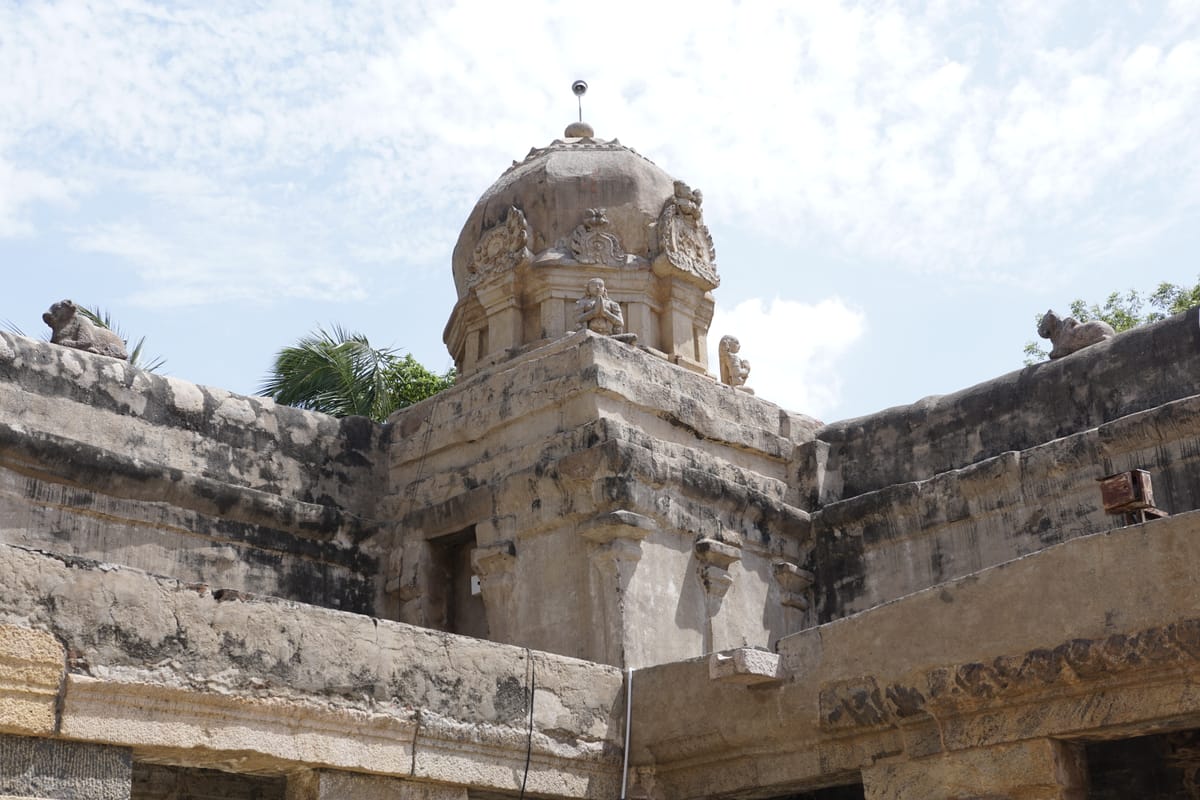
Brihadeeswarar Temple
The Brihadeeswarar Temple in Thanjavur, built by Raja Raja Chola I in the 11th century, is a UNESCO World Heritage Site and the tallest Shiva temple in India, crowned by a monolithic granite vimana that remains one of the greatest engineering achievements of the ancient world.
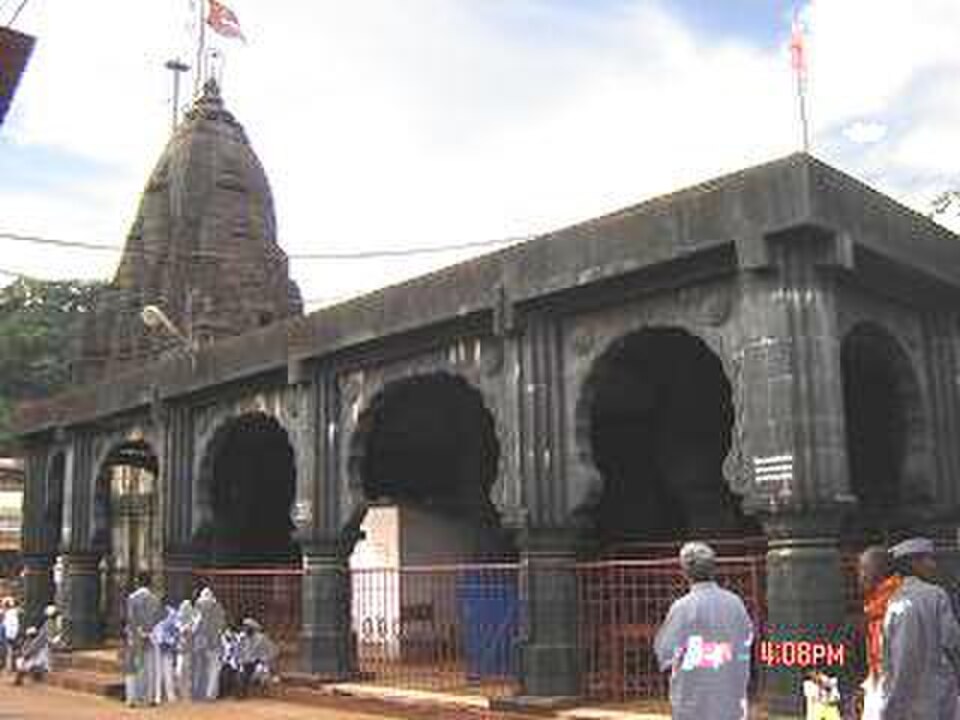
Bhimashankar Jyotirlinga
The source of the Bhima River deep in the Sahyadri hills. A Jyotirlinga surrounded by a wildlife sanctuary, with the legend of Tripurasura.
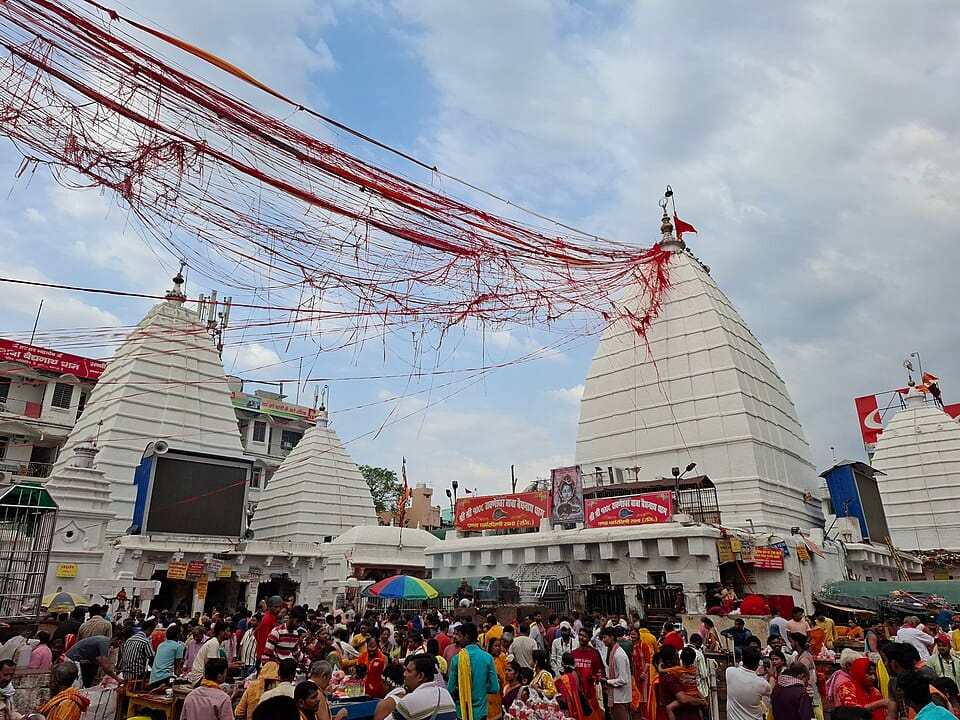
Baidyanath Jyotirlinga Temple
Where Shiva is worshipped not as destroyer but as physician. Baidyanath — the Lord of Healing — draws millions who carry Ganga water 108 km barefoot in the Kaanwar Yatra. The heart of Sati rests beside the lingam that Ravana once carried.
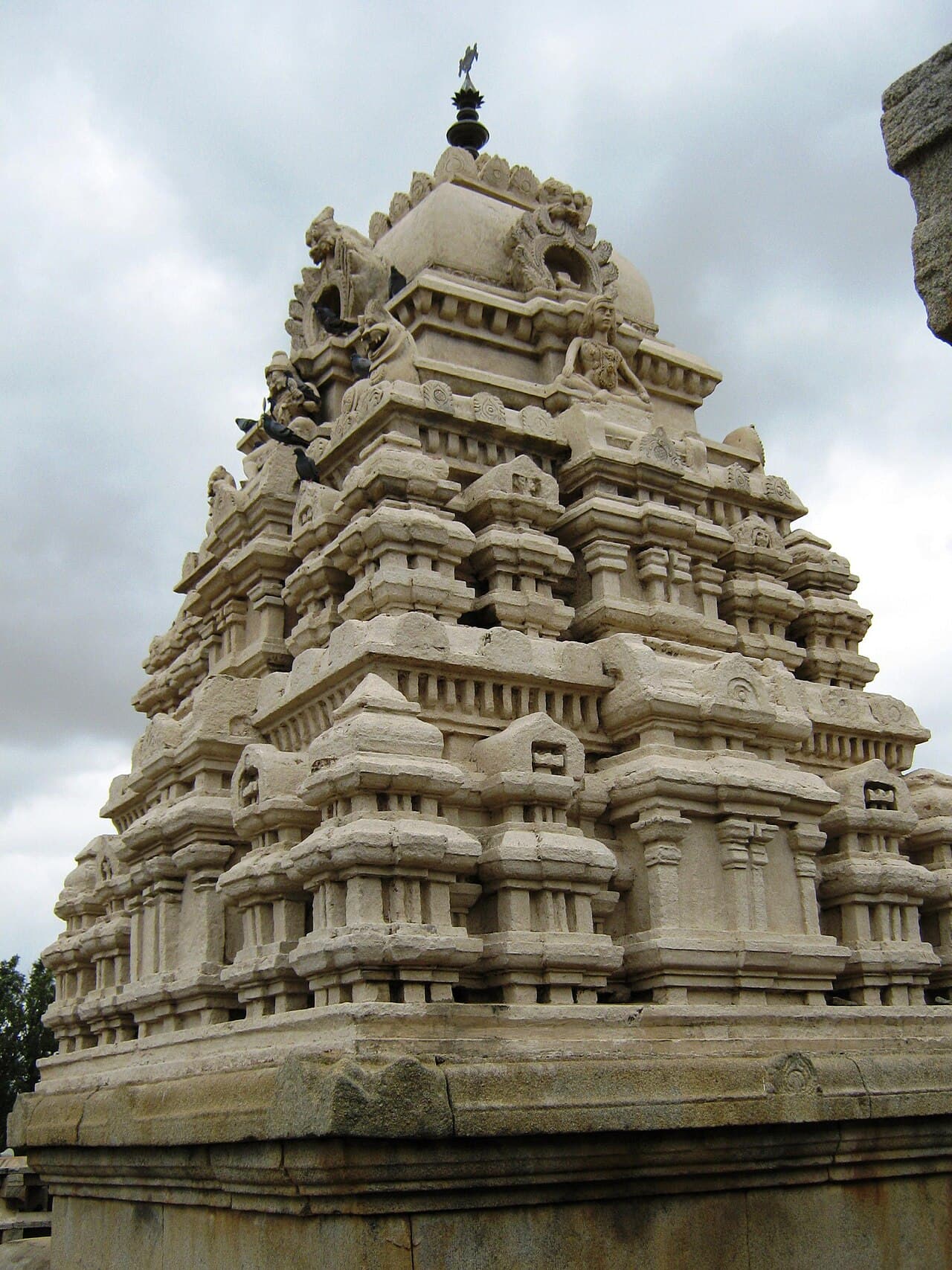
Veerabhadra Temple
Veerabhadra Temple at Lepakshi is a 16th-century Vijayanagara masterpiece, renowned for its hanging pillar, monolithic Nandi, and exquisite ceiling murals. The temple is dedicated to Veerabhadra, a fierce form of Shiva.
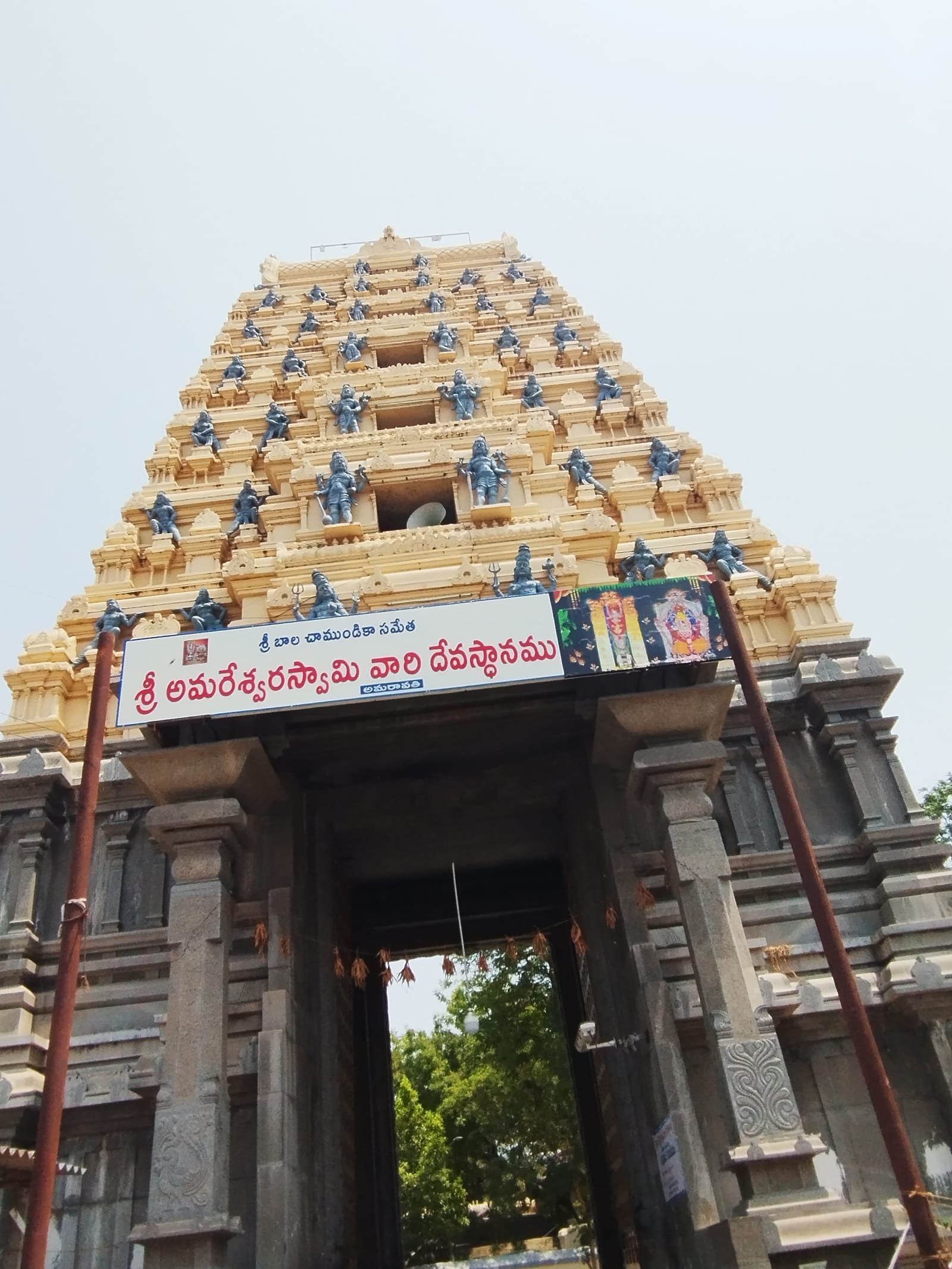
Amaralingeswara Temple
Amaralingeswara Temple, located in Amaravati on the southern bank of the Krishna River, is the foremost of the Pancharama Kshetras — the five ancient Shiva temples of coastal Andhra Pradesh. The temple shares its sacred landscape with the historic Amaravati Mahachaitya, a major Buddhist stupa from the Satavahana period.
Srikalahasti Temple
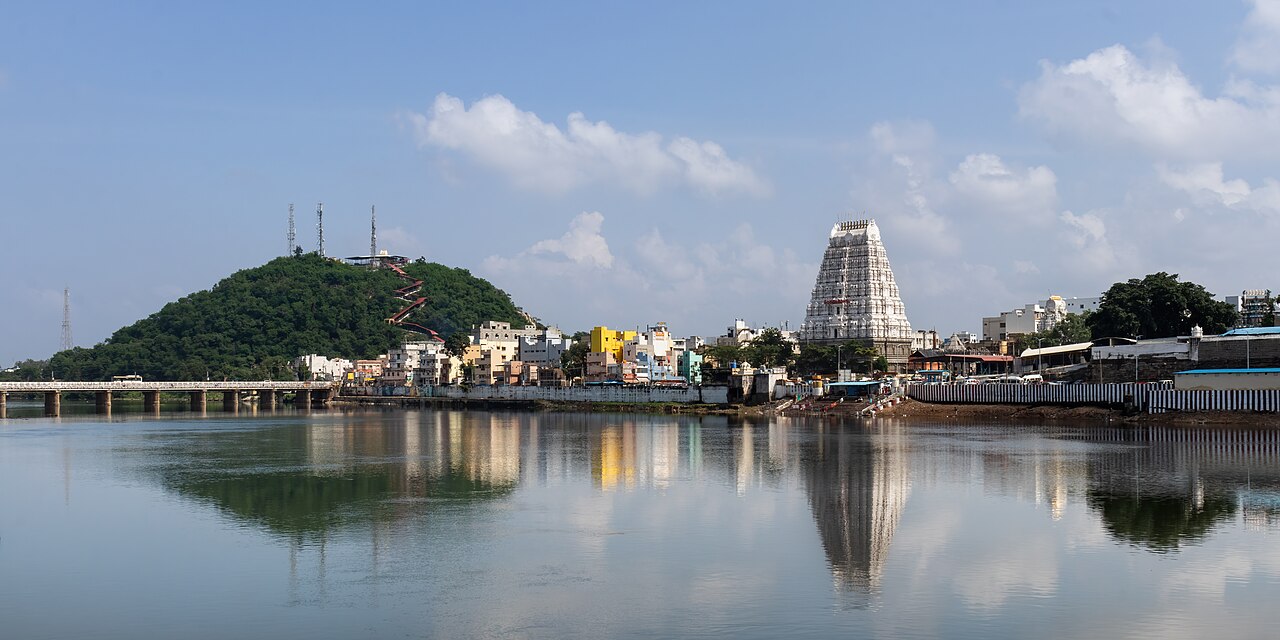
Srikalahasti Temple, situated on the banks of the Swarnamukhi River at the foot of Srikalahasti hill in Tirupati district, is dedicated to Lord Shiva as Srikalahasteeswara. The temple represents the Vayu (wind) element among the southern Pancha Bhoota Sthalas (five element temples of Shiva). Its name is traditionally derived from three animal devotees — a spider (Sri), a serpent (Kala), and an elephant (Hasti) — who attained salvation here. The self-manifested (swayambhu) lingam remains untouched by human hands, and a lamp in the draft-free sanctum continuously flickers, physically symbolising the presence of the air element.
Veerabhadra Temple
Veerabhadra Temple at Lepakshi is a 16th-century Vijayanagara masterpiece, renowned for its hanging pillar, monolithic Nandi, and exquisite ceiling murals. The temple is dedicated to Veerabhadra, a fierce form of Shiva.
Amaralingeswara Temple
Amaralingeswara Temple, located in Amaravati on the southern bank of the Krishna River, is the foremost of the Pancharama Kshetras — the five ancient Shiva temples of coastal Andhra Pradesh. The temple shares its sacred landscape with the historic Amaravati Mahachaitya, a major Buddhist stupa from the Satavahana period.
Srikalahasti Temple
Srikalahasti Temple, situated on the banks of the Swarnamukhi River at the foot of Srikalahasti hill in Tirupati district, is dedicated to Lord Shiva as Srikalahasteeswara. The temple represents the Vayu (wind) element among the southern Pancha Bhoota Sthalas (five element temples of Shiva). Its name is traditionally derived from three animal devotees — a spider (Sri), a serpent (Kala), and an elephant (Hasti) — who attained salvation here. The self-manifested (swayambhu) lingam remains untouched by human hands, and a lamp in the draft-free sanctum continuously flickers, physically symbolising the presence of the air element.
Badami Cave Temples
The Badami Cave Temples are a complex of four rock-cut cave temples carved into the soft sandstone cliffs of Badami, the capital of the Early Chalukya dynasty. Dating from the 6th-7th century CE, these caves represent the earliest known examples of South Indian temple architecture in rock-cut form and are considered the birthplace of Chalukya art. The site is on UNESCO's tentative list of World Heritage Sites.
Durga Temple
The Durga Temple at Aihole, built in the 7th-8th century CE, is a distinctive architectural experiment of the Early Chalukya period. Featuring a unique apsidal (horseshoe-shaped) plan modelled after a Buddhist chaitya hall, a raised gallery with carved stone pillars, and a massive Dravidian-style shikhara, it represents the creative fusion of architectural traditions that Characterises Aihole as the 'cradle of Indian temple architecture.'
Lad Khan Temple
The Lad Khan Temple at Aihole is one of the oldest surviving stone temples in India, dating to the 5th century CE. Built by the Early Chalukya dynasty, the temple is a key monument in the evolution of Hindu temple architecture, representing an early experimental phase when temple builders were adapting earlier wooden and brick construction methods into permanent stone forms. The temple features a flat-roofed mandapa with 16 carved stone pillars and a small ground-level sanctum.
Hoysaleswara Temple
The Hoysaleswara Temple in Halebidu, built circa 1121-1160 CE, is the largest Shiva temple built by the Hoysalas. Inscribed as a UNESCO World Heritage Site in 2023 as part of the Sacred Ensembles of the Hoysalas, it is celebrated for its hyper-realistic soapstone sculptures covering every surface of the structure.
Kedareshwara Temple
The Kedareshwara Temple at Halebidu, built in 1319 CE by the Hoysala king Veera Ballala III, is a Hoysala-era temple dedicated to Lord Shiva. It features the characteristic Hoysala star-shaped platform (jagati), intricately carved soapstone pillars, and elaborate sculptural friezes. The temple is a protected monument under the Archaeological Survey of India.
Omkareshwar Temple
Situated on a sacred island in the Narmada River, Omkareshwar is the only Jyotirlinga located on an island. The temple stands at the confluence of the Narmada and Kaveri rivers, with the lingam positioned where the river forms the shape of the sacred symbol Om.
Airavatesvara Temple
The Airavatesvara Temple at Darasuram, built by Rajaraja Chola II between 1146 and 1172 CE, is one of the three UNESCO World Heritage 'Great Living Chola Temples.' It is renowned for its stone chariot, musical steps, and exquisite 12th-century Chola sculptures.
Gangaikonda Cholapuram Temple
The Gangaikonda Cholapuram Temple, built by Rajendra Chola I in 1035 CE, is a UNESCO World Heritage 'Great Living Chola Temple.' Its 53-metre vimana with recessed corners and six pairs of monolithic dvarapalas represents a refined evolution of Chola Dravidian architecture.
Kampaheswarar Temple
Kampaheswarar Temple in Tribhuvanam, built by Kulothunga Chola III in 1202 CE, is one of the later great Chola temples and completes the quartet of magnificent Chola stone temples alongside the Brihadeeswarar at Thanjavur, Gangaikonda Cholapuram, and Airavatesvara at Darasuram. The temple represents the mature phase of Chola architecture, featuring a 30-metre granite vimana, a separate Devi shrine, and a unique chariot-wheel carving in the mandapa. It is maintained by the Archaeological Survey of India as a protected monument of national importance.
Koranganatha Temple
Koranganatha Temple, built during the reign of the Chola king Parantaka I (907-955 CE) at Srinivasanallur near Tiruchirappalli, is a well-preserved example of early Chola architecture with exquisite stone carvings. The temple is maintained by the Archaeological Survey of India and is notable for its peaceful setting on the banks of the Kaveri River.
Pancha Rathas
The Pancha Rathas (Five Chariots) are a set of five monolithic temple structures carved from single granite outcrops during the reign of Narasimhavarman I (Mamalla, 630-668 CE) in Mahabalipuram. Part of the UNESCO World Heritage Site 'Group of Monuments at Mahabalipuram,' these rathas represent the earliest and most ambitious examples of monolithic rock-cut architecture in Tamil Nadu.
Olakkaneswara Temple
Olakkaneswara Temple, located on a rocky outcrop at the southern end of Mahabalipuram beach, was built by the Pallavas in the 7th century. The temple later served as a lighthouse for ships navigating the Bay of Bengal, with a beacon light placed on its tower in the late 19th century. The site offers panoramic views of the Mahabalipuram coastline.
Arunachaleswarar Temple
Arunachaleswarar Temple at the foot of Arunachala Hill in Tiruvannamalai is one of the largest Shiva temples in the world, covering 25 acres. It represents the fire element (Agni) of the Pancha Bhoota Sthalas and is a Paadal Petra Sthalam glorified by the 7th-century Tevaram hymns.
Ekambareswarar Temple
Ekambareswarar Temple in Kanchipuram represents the earth element (Prithvi) of the Pancha Bhoota Sthalas. Its sand-made Prithvi Lingam, 192-foot Raja Gopuram built by Krishnadevaraya (1509), and the 3,500-year-old sacred mango tree make it among the most significant Shiva temples in South India.
Jambukeswarar Temple
Jambukeswarar Temple in Thiruvanaikaval represents the water element (Apas) of the Pancha Bhoota Sthalas. Its unique underwater Appu Lingam sits in a spring-fed subterranean sanctum, with an underground stream that has flowed continuously for over 1,800 years.
Nataraja Temple
Chidambaram Nataraja Temple represents the space element (Akasha) of the Pancha Bhoota Sthalas. It houses the Chidambara Rahasyam — an empty curtained space symbolising formless Shiva — and is the source of the iconic Nataraja cosmic dance imagery that became the universal symbol of Hinduism.