From ancient rock-cut marvels to towering imperial shrines, discover the architectural soul of Bharat through our verified digital archive.
Explore More Temples
Builder
Ahilyabai Holkar (1780 CE)
Dynasty
Maratha (rebuilt) — Mughal (destroyed)
Construction
1780 CE (current structure)
Style
Nagara
Main Deity
Vishwanath (Lord of the Universe)
Location
Varanasi, Uttar Pradesh
Significance
Jyotirlinga, Mukti Kshetra
Spire Height
15.5 m (gold-plated)
Spire Donor
Maharaja Ranjit Singh (1835)
River
Ganga (Ganges)
Sanctum
10 ft x 10 ft garbhagriha
Aartis Daily
Five Aartis
Official Website
shrikashivishwanath.org
Kashi Vishwanath Temple, also known as the Vishwanath Temple or the Golden Temple of Varanasi, is one of the most revered Hindu temples in the world. Dedicated to Lord Shiva as Vishwanath (Lord of the Universe), it stands on the western bank of the Ganga in the ancient city of Varanasi (Kashi), one of the twelve Jyotirlingas. The current structure was built in 1780 by Maharani Ahilyabai Holkar of Indore and crowned with a gold-plated spire donated by Maharaja Ranjit Singh of Punjab in 1835. In December 2021 the Kashi Vishwanath Corridor opened a direct passage from the temple to the Ganga, transforming the pilgrim experience.
Kashi is older than history, older than legend, older than any story that could be told about it. While other ancient cities — Babylon, Nineveh, Mohenjo-Daro — lie in ruins, Kashi has never stopped living. For five thousand years, the lamps have been lit on the ghats, the bells have rung in the temples, and the Ganga has flowed past the same stones.
The name Kashi comes from the Sanskrit root "kash" — to shine. It is the City of Light, the luminous city that exists between heaven and earth. According to Hindu tradition, Kashi does not belong to the material world at all. It is a point where the divine realm pierces the mundane — a portal between the mortal and the eternal. The city is said to rest on Shiva's trident, suspended above the earth, untouched by the cosmic cycles of creation and destruction that consume the rest of the universe.
This is the city where death is a blessing. The central teaching of Kashi is that anyone who dies within its boundaries — regardless of caste, creed, or karmic record — attains moksha, liberation from the cycle of rebirth. The belief is not metaphorical. Thousands of elderly Hindus travel to Varanasi every year specifically to die here. They live out their final months in ashrams along the ghats, waiting. The process is called "Kashi-vas" — dwelling in Kashi — and it is considered the most spiritually auspicious way to end a life.
At the heart of this sacred geography stands the Kashi Vishwanath Temple. The temple is not merely a building within the city. It is the city's spiritual nucleus, the point around which everything else revolves. The twelve Jyotirlingas are spread across India, but Kashi Vishwanath is considered the holiest among them because the city itself is holy. Remove the temple, and Kashi would still be sacred. Remove Kashi, and the temple loses its meaning. They are one.
In the high Himalayas, Kedarnath Temple shares this status as a Mukti Kshetra — a place where liberation is attainable. Together, Kashi Vishwanath on the Ganga and Kedarnath in the mountains form the two poles of the Shaiva path to moksha.
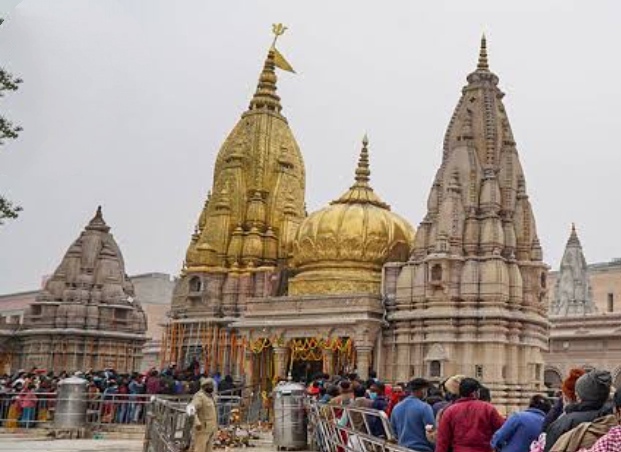
The shikhara of the Kashi Vishwanath Temple is plated with 800 kilograms of pure gold. From a distance, it catches the sun in the morning and glows like a second sunrise over the Ganga. At sunset, the gold turns deep amber against the darkening sky. When the evening aarti lamps are lit on the ghats, the spire reflects their flame, hovering above the city like a suspended torch.
The gold was a gift from Maharaja Ranjit Singh, the Sikh ruler of the Punjab Empire. In the early 19th century, Ranjit Singh ruled a secular Sikh empire that stretched from the Khyber Pass to the Sutlej. Despite being a Sikh, he held deep reverence for Hindu sacred sites. He donated the gold plating for the Harmandir Sahib (the Golden Temple) in Amritsar, and he did the same for Kashi Vishwanath — a gesture that crossed religious boundaries and expressed a shared Punjabi and Maratha vision of sacred India.
The gold was transported from Lahore to Varanasi over land, a journey of more than 800 kilometers across the Gangetic plain. It arrived in bullock carts guarded by Ranjit Singh's soldiers. The plating was executed by local goldsmiths working with Lahore-trained craftsmen, who fused the Sikh and Hindu decorative traditions into a single spire. The result is unique — a Nagara-style shikhara rendered in gold leaf over copper, with a finial that combines the kalasha (sacred pot) with Sikh ornamental motifs.
In 1999, the gold plating was restored and reinforced by the temple trust. The original thin gold sheets had weathered over two centuries of monsoon rain and temple smoke. The restoration team removed each panel, reforged the copper backing, reapplied the gold leaf using traditional techniques, and reinstalled the panels in the original pattern. The project took eighteen months and restored the spire's original brilliance.
The Kashi Vishwanath Temple has been destroyed more times than any other major temple in India. Each time, it was rebuilt — not as an act of defiance, but as an act of faith so persistent that the destruction itself became part of the temple's story.
The first recorded destruction came in 1194 CE. Qutb-ud-din Aibak, the commander of Muhammad Ghori's army and the first Sultan of Delhi, swept through the Gangetic plain after the Battle of Chandawar. His army systematically demolished Hindu temples across Varanasi. The original Kashi Vishwanath Temple was among them. Aibak was not targeting the temple personally — he was following a policy of iconoclasm aimed at consolidating Muslim rule by removing the symbols of the previous religious order.
The temple was rebuilt during the rule of Raja Man Singh of Amber in the late 16th century, when the Mughal Emperor Akbar's policy of religious tolerance permitted Hindu construction at a scale unseen since the 12th century. But this rebuilding was short-lived. The Sharqi rulers of Jaunpur, rivals of the Mughals, attacked Varanasi and destroyed the temple again. A pattern had established itself: each generation of iconoclasts targeted the same spot, knowing that its destruction would be felt across the Hindu world.
The third and most consequential destruction came in 1669. Emperor Aurangzeb, the last great Mughal ruler, ordered the demolition of the Kashi Vishwanath Temple as part of a broader campaign against Hindu religious structures. Unlike Aibak, Aurangzeb was not merely iconoclastic — he was systematic. His decree specifically cited the Kashi Vishwanath Temple by name. The temple was razed to its foundations. Aurangzeb then built the Gyanvapi Mosque on the exact site, using the temple's pillars and stones in the mosque's construction. The mosque stands there to this day, its western wall shared with the temple's eastern wall, the two structures physically touching — one god's house and another's, separated by a single line of stone.
When Aurangzeb's orders reached Varanasi in 1669, the priests are said to have hidden the original Jyotirlinga in the Gyanvapi well — the "Well of Knowledge". The well survives today between the temple and the mosque, and its water is still considered supremely sacred by pilgrims.
The current Kashi Vishwanath Temple was built by Ahilyabai Holkar, the queen of the Maratha Malwa kingdom, in 1780. She ruled from her capital in Maheshwar on the Narmada river, but her vision extended across India — she restored dozens of temples that had been damaged or destroyed during centuries of conflict. Kashi Vishwanath was the most important of her projects.
Ahilyabai was a widow. Her husband had died in battle, and her son had proven incapable of rule. She took the throne herself against the conventions of 18th-century Maratha politics and governed for twenty-eight years with a reputation for fairness, administrative efficiency, and religious devotion. She was a devotee of Shiva — specifically of the Kashi Vishwanath form — and the temple's destruction weighed on her personally. The Gyanvapi Mosque occupied the original site, so building on the adjacent plot was the only available option.
The temple she built is relatively modest compared to the grand structures of the Vijayanagara or Chola periods. It is a compact, two-storey structure with a central sanctum and a circumambulatory corridor. The exterior is plain stone, unadorned compared to what had existed before. The shikhara rises to about 15 metres — tall for the street level, but restrained. Ahilyabai's builders worked quickly and pragmatically, securing the site and establishing the temple's presence rather than attempting a monument that would rival the previous structure in scale.
The simplicity was strategic. A grand temple on this site would invite further destruction. A modest temple, firmly established, could survive. And it did. For over 240 years, the structure that Ahilyabai built has stood — through the decline of the Maratha empire, the arrival of British rule, the Partition of India, and the communal tensions of the modern era. Her pragmatism proved to be wisdom. The temple is now crowned with Maharaja Ranjit Singh's gold, and Ahilyabai is remembered as the one who brought Shiva back to his home.
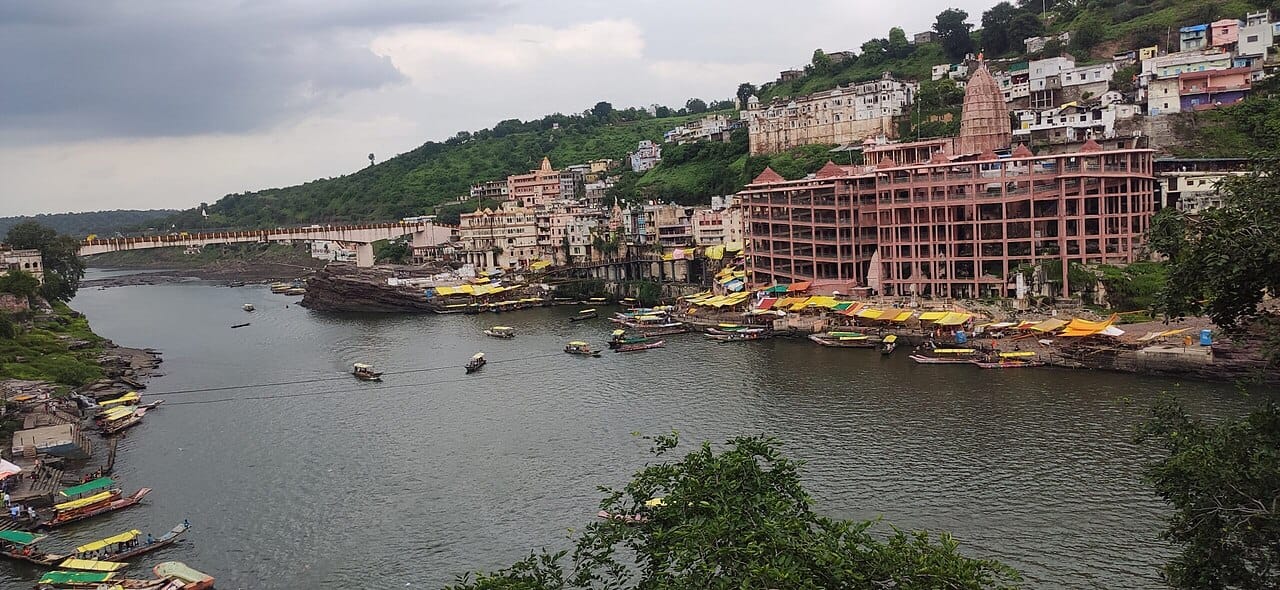
Ahilyabai's restorations were not confined to Kashi. Across the subcontinent she rebuilt scores of temples damaged over centuries of conflict, including work at the Omkareshwar Jyotirlinga on the Narmada, not far from her own capital of Maheshwar.
For centuries, the Kashi Vishwanath Temple was hidden. The narrow alleys of Varanasi wound around it like a maze; you could be twenty meters from the entrance and not know it. The approach was a sensory journey through chaos — the crush of pilgrims, the smell of marigolds and incense, the shouts of shopkeepers, the sudden appearance of cows wedged between stalls. Pilgrims arrived at the temple gate without ever seeing the spire until they were directly beneath it. The temple was part of the city's fabric, indistinguishable from it.
In 2019, the Government of Uttar Pradesh began a project that would change this relationship forever. The Kashi Vishwanath Corridor — officially the Shri Kashi Vishwanath Dham — was a Rs. 339 crore redevelopment that demolished twenty-three old buildings between the temple and the Ganga to create a direct, unobstructed visual and physical pathway from the river to the temple. The corridor is 320 meters long and lined with stone pillars, carved pavilions, and landscaped gardens.
The project was controversial. Critics argued that it erased the organic urban fabric that had defined Varanasi for millennia — the same narrow lanes that gave the city its character. Twenty-three buildings were demolished, including heritage structures, ancient temples, and family homes that had stood for generations. The displaced residents received compensation and alternative housing, but the character of the neighborhood changed permanently. The unpredictable, labyrinthine approach to the temple was replaced by a ceremonial boulevard.
The defenders of the project point to the pilgrim experience. Before the corridor, a devotee arriving from the Ganga ghats had to navigate half a kilometer of cramped, unlit alleys through crowds that could take an hour to penetrate. Elderly pilgrims, sick devotees, and international visitors struggled with the access. The corridor provides a direct, accessible, and dignified approach to the temple that respects the sanctity of the journey while removing its physical difficulty. The gates to the corridor open directly onto the ghats, and the spire is now visible from the river for the first time in centuries.
Direct River Access
The 320-meter ceremonial passage connects the temple to the Ganga ghats, giving pilgrims a direct view of the golden spire from the river for the first time in centuries.
21 Restored Temples
Twenty-one smaller temples along the pathway were restored and integrated into the corridor, preserving shrines once hidden in the dense old-city fabric.
Pilgrim Facilities
The corridor added a visitor centre, museum, cloakrooms and improved wheelchair access, easing the experience for elderly and international pilgrims.
Archaeological Evidence
Excavations during construction revealed the remains of earlier temples beneath the precinct, confirming the site's ancient lineage.
Five times a day, every day of the year, the bells ring inside the sanctum of Kashi Vishwanath. The aartis of this temple are not mere rituals — they are time itself, marked in fire and sound.
Mangala Aarti
The first aarti of the day, performed before dawn. The deity is awakened with lamps and chants. Only a handful of devotees are permitted inside the sanctum for this intimate ceremony. The temple is dark, the lamps are small, and the silence is broken only by the sound of bells and the priest's voice.
Bhog Aarti
The mid-day offering, when food is presented to the deity. This aarti is longer and more elaborate, with multiple priests, larger lamps, and full musical accompaniment. Devotees offer grains, fruits, and sweets that are later distributed as prasad.
Sandhya Aarti
The evening aarti performed at sunset. The temple fills with devotees from all over India. The lamps are tiered brass stands with five or seven wicks, and the priests rotate them in synchronized patterns while bells ring and conch shells blow.
Shringar Aarti
The beautification aarti, when the deity is adorned with fresh flowers, sandalwood paste, and new garments. This aarti emphasizes the aesthetic dimension of worship — the deity as the most beautiful being in the universe.
Sayan Aarti
The final aarti, when the deity is put to rest. The sanctum doors are closed after this aarti. The lamps are extinguished, the bells fall silent, and the temple settles into the darkness of the Varanasi night until 3:30 AM the next morning.
The Mangala Aarti at 3:30 AM is the most spiritually sought-after ritual in the temple. The queue forms by 2:00 AM. The doors open, and the chosen devotees enter the sanctum barefoot. The priest lights the first lamp in complete darkness. As the flame grows, the gold spire begins to glow in the predawn dark outside. For a few minutes, the sanctum contains only the light of the lamps, the smell of ghee and camphor, and the voice of the priest chanting the Shiva Panchakshara Stotra. Then the bells begin, and another day in Kashi begins.
The pre-corridor approach to Kashi Vishwanath was through a labyrinth of narrow lanes called galis, each with its own character. Vishwanath Gali was the most famous — a passage barely wide enough for three people to walk abreast, lined with shops that had been in the same families for generations. The name translates simply to "the lane of Vishwanath," and it was the final approach to the temple for every pilgrim who arrived before 2021.
The sensory experience of Vishwanath Gali was overwhelming. The smell of ghee burning in the temple lamps mixed with the smoke of incense from the shops and the aroma of freshly fried kachoris from the sweet stalls. The sound was a constant layered noise — temple bells, shopkeepers calling out prices, pilgrims chanting, the shuffle of bare feet on stone worn smooth by centuries. The floor was perpetually damp, washed by priests and merchants each morning to cool the stone before the crowds arrived.
The shops themselves were like miniature museums of Hindu devotional life. One sold only garlands of marigold and rose petals, the flowers stacked in baskets of graded colours — orange at dawn, white at noon, red at dusk. Another sold brass lamps of every size, from single-wick diyas to seven-tiered aarti stands. A third sold nothing but bhang, the cannabis preparation associated with Shiva, prepared in a back room by a family that claimed direct lineage from the priests of the original temple. The lane was a complete ecosystem of worship, existing nowhere else in India, because no other temple had a lane this old.
The Ganga Corridor project did not eliminate Vishwanath Gali — it bypassed it. The old lane still exists, but the main pilgrim flow now goes through the corridor. This has transformed the lane's economy. The traditional shops that depended on the captive pilgrim traffic have seen reduced footfall, while the corridor-side establishments catering to the new institutional pilgrimage thrive. The lane still functions, but its character has shifted. It is quieter now. Nearly empty at certain hours. For those who remember the old chaos, walking through Vishwanath Gali today is a memorial walk through a living history that has already partly died.
The Gyanvapi Mosque is not across the street from the Kashi Vishwanath Temple. It shares a wall with it. The two structures are physically connected — the mosque's western wall is the temple's eastern wall. This is the closest possible proximity, and the most fraught. No other temple-mosque pair in India is this intimate or this contested.
Aurangzeb built the mosque in 1669 on the exact site of the original Kashi Vishwanath Temple. He used the temple's own stones in the mosque's construction. The Archaeological Survey of India's records confirm that the mosque's pillars are reused Hindu temple pillars, their sculpted figures defaced to comply with Islamic aniconism. The mosque's name — Gyanvapi, meaning "Well of Knowledge" — is itself a repurposing of the sacred well that existed on the temple site. The water of the Gyanvapi well is considered sacred by Hindus, and pilgrims traditionally drank from it before entering the temple.
The relationship between the two structures has never been peaceful. The mosque remains an active place of Muslim worship. The temple is an active place of Hindu worship. The shared wall is a physical border that both communities simultaneously defend and contest. In 1991, a group of Hindu petitioners filed a lawsuit seeking the right to worship within the mosque complex, claiming that Hindu deities were present there. The case remained dormant until 2022, when a district court ordered a videographic survey of the mosque — the first time a court had allowed inspection of the interior since Independence.
The survey found what Hindu petitioners had alleged: a structure they identified as a Shiv lingam inside a wuzu tank (the ablution pool used by Muslims before prayer). The Muslim side argued it was a fountain. The discovery escalated the legal battle to the Supreme Court, which ordered protection of the area while the case proceeds. As of today, the Gyanvapi dispute remains unresolved — a legal and religious conflict that crystallizes the complex relationship between India's two largest religious communities, with both sides claiming the same ground.
Kashi celebrates every Hindu festival, but two belong to this city in a way that no other place can claim.
Maha Shivaratri in Varanasi is the largest gathering of Shaivites in the world. Over a million devotees converge on the Kashi Vishwanath Temple over the festival period. The temple stays open continuously for 72 hours. The aartis merge into one another — there is no Sayan Aarti, no closing of the doors, because the deity does not sleep on this night. The entire city becomes a temple. Every lane feeds toward the main shrine. The smoke of a million dhuni (sacred fire) pits rises from every corner of the old city.
The special offering of the night is the bhanga — a cannabis preparation associated with Shiva. Licensed stalls operated by the temple trust distribute bhang to devotees as prasad. The tradition is centuries old and legally protected. For one night, the entire city moves to the rhythm of drum circles, chanting, and the spill of devotees from every temple courtyard. Dawn over the Ganga on Maha Shivaratri morning is considered the most spiritually potent moment in the Hindu calendar.
On Kartik Purnima (the full moon of October-November), Varanasi celebrates Dev Deepawali — the Festival of Lights of the Gods. Over one million clay lamps are lit on the steps of the ghats, creating a spectacle of light reflected on the Ganga that stretches for kilometers. The temple itself is illuminated with thousands of additional lamps. The ghats are packed with pilgrims, tourists, and photographers from around the world. The lamps are lit at sunset and kept burning through the night, their flames flickering in the river breeze, creating the illusion that the city itself is floating on a sea of fire.
The ritual is deeply connected to the temple. The lamps are first lit in the temple sanctum, then carried down the corridor to the ghats, where they are placed on the steps. The path from temple to river is transformed into a river of flame. It is the visible expression of what the Ganga Corridor was built for — the connection between the shrine of Vishwanath and the purifying waters of the Ganga, now made tangible in light.
Kashi Vishwanath Temple holds arguably the highest significance among all Hindu temples beyond its status as a Jyotirlinga. The city of Kashi (Varanasi) is considered the spiritual capital of Hinduism, and the Vishwanath Temple is its crown jewel. In Hindu theology, the temple represents the central axis of the universe, the point where the physical and spiritual realms connect. As one of the twelve Jyotirlingas, the temple marks the spot where Shiva manifested as infinite light. Unlike other Jyotirlingas in remote locations, Kashi Vishwanath is located in the heart of a living city, integrating daily life with the sacred. The temple is also linked to the 64 Shakti Peethas in its aspect as Vishalakshi (at a separate shrine in the complex). The Annapurna Temple within the complex, dedicated to the goddess of food, highlights the temple's role in the Shaiva-Shakta synthesis. The temple holds immense significance as a symbol of Hindu identity and historical resilience. Its location adjacent to the Gyanvapi Mosque makes it a living monument to India's complex religious history. For pilgrims, Kashi Vishwanath is the culmination of a lifelong spiritual journey, and the Vishwanath Darshan is considered an essential pilgrimage that every Hindu should undertake at least once.
Maha Shivaratri is the most important festival at Kashi Vishwanath, celebrated over five days with continuous chanting, multiple abhishekams, and a grand procession. The temple remains open all night, and over a million devotees visit during the festival. Shravan Month (July-August) is the holiest month for Shiva worship, and Mondays during Shravan see the heaviest crowds, with devotees bringing Ganga water from the river to offer on the lingam. Kartik Purnima (November) is celebrated with a spectacular Ganga Aarti at Dashashwamedh Ghat and a vibrant fair on the temple premises. Diwali in Varanasi, known as Dev Deepawali, is extraordinary — the ghats are lit with thousands of clay lamps and the temple is beautifully illuminated. Nag Panchami (July-August) is celebrated with offerings of milk and silver snakes to the lingam. Somvati Amavasya (New Moon Monday) is considered highly auspicious and draws large crowds for a special abhishek. The annual Kashi Utsav (December) combines temple festivities with classical music and dance performances.
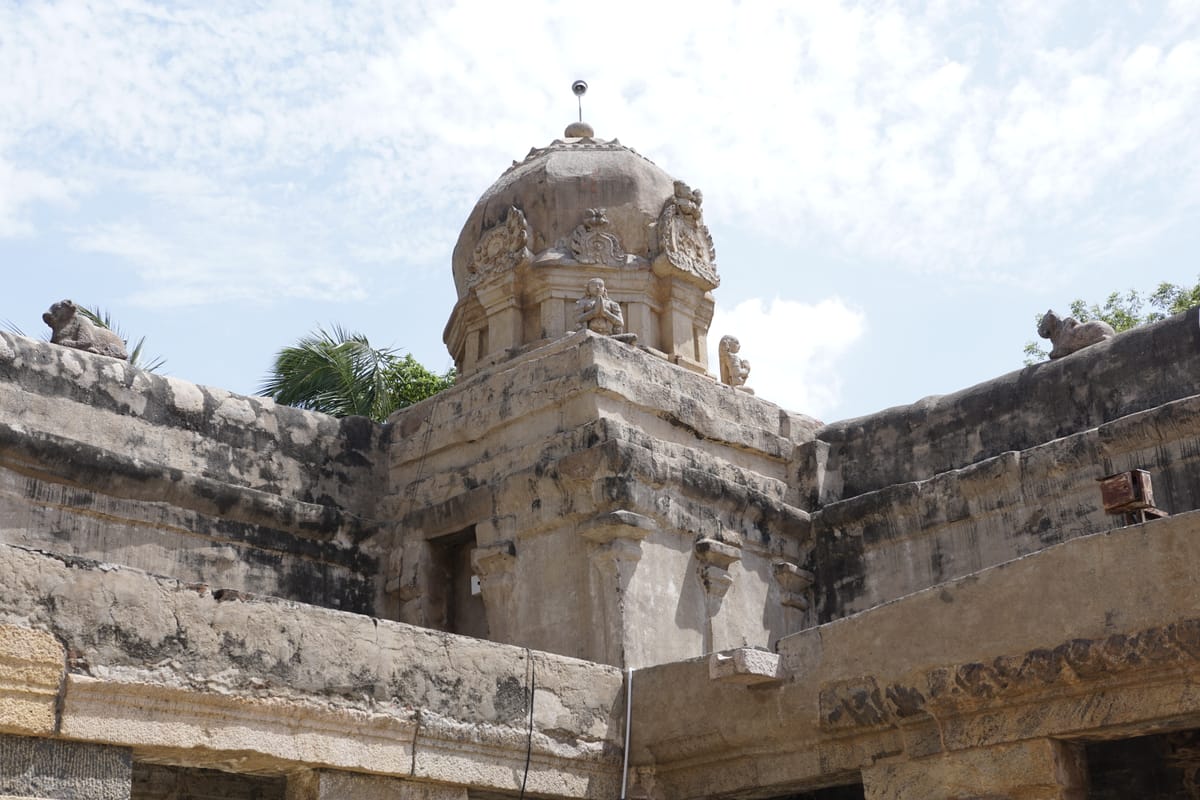
The history of Kashi Vishwanath Temple is as old as the city of Varanasi itself, which is mentioned in the Rigveda and the Puranas as the eternal abode of Shiva. The original temple is said to have been built by the gods themselves — legend states that Shiva established the original lingam here before any human construction. Historically, the earliest known temple at this location dates from the 5th–6th century CE during the Gupta period. Traditional and historical accounts describe successive cycles of patronage and rebuilding: the Solanki king Kumarapala of Gujarat (r. 1143–1172) supported the shrine through the patronage of wealthy merchants, a record that predates the best-documented destructions.
The first recorded destruction of the Vishwanath Temple occurred in 1194 CE when Qutb-ud-din Aibak, the commander of Muhammad Ghori, sacked Varanasi and destroyed the temple. A mosque was built on the site using materials from the demolished temple. After this destruction, the temple was reconstructed in the 13th century under the patronage of the Yadavas of Devagiri and again under the Vijayanagara Empire in the 14th–15th centuries. In 1498, Sikandar Lodi intensified the destruction, and the temple was rebuilt through the efforts of Todar Mal, a minister of Akbar, in the late 16th century.
The most significant destruction occurred in 1669 under the Mughal emperor Aurangzeb, who demolished the temple and built the Gyanvapi Mosque on its site using the temple's own pillars and stones. The existing lingam was reportedly hidden in a well (the Gyanvapi well) by priests to protect it from desecration. The mosque and the current temple share a wall, and the water of the Gyanvapi well remains a sacred site for pilgrims.
The current temple, built adjacent to the mosque, was constructed in 1780 by Maharani Ahilyabai Holkar, the Maratha queen of the Indore state. The gold plating of the spire, added in 1835, was funded by Maharaja Ranjit Singh of the Sikh Empire. Over the next century the temple was managed by various trusts and the royal family of Kashi (the Maharajas of Varanasi). After independence, the temple administration was reorganized under the Shri Kashi Vishwanath Temple Trust, with the Uttar Pradesh government playing a significant role. In December 2021 the Kashi Vishwanath Corridor was inaugurated after a large-scale redevelopment of the old-city precinct, and archaeological excavations during the construction revealed the remains of earlier temples at the site, providing physical evidence of the temple's ancient lineage.
The Kashi Vishwanath Temple exhibits the Nagara style of North Indian temple architecture with distinctive regional variations. The main temple is built on a rectangular plinth and is divided into a garbhagriha (sanctum), an antarala (vestibule), and a mandapa (hall). The garbhagriha is small (10 x 10 feet), creating an intimate devotional atmosphere, with polished marble floors, silver doors, and walls lined with silver panels.
The most striking feature is the 15.5-meter-high shikhara covered in approximately 800 kilograms of gold leaf, donated by Maharaja Ranjit Singh in 1835. The gold plating consists of pure gold sheets riveted onto a copper substrate, creating a brilliant surface that catches the sun. The shikhara follows the traditional latina (mono-spire) Nagara form with a gently curving profile, crowned by an amalaka (ribbed stone) and kalasha (finial). Visible from the Ganga ghats, it has become the defining image of the temple and of Varanasi itself.
The temple interiors are simple, with polished marble floors and silver doors leading to the sanctum. The sanctum houses a polished black stone Jyotirlinga set in a silver pedestal, approximately 60 centimeters tall and 45 centimeters in diameter. The sanctum has a raised silver threshold with an image of Nandi facing the lingam, and behind the lingam is an image of Shiva in his Ardhanarishwara (half-male, half-female) form. The deity is known by several names — Vishwanath, Kashi Vishwanath, and simply 'Baba'.
The temple underwent significant expansion during the corridor project, with the construction of new gateway structures, pilgrim pavilions, and the Mukti Mandap (liberation hall) near the Ganga. The corridor itself is designed in a contemporary interpretation of traditional temple architecture, using sandstone pillars, carved brackets, and traditional motifs. The complex's entrance through the corridor features a grand gate with traditional torana (archway) motifs and carved figures.
The temple complex includes multiple smaller shrines in matching architectural style, with their own smaller shikharas, including the Annapurna Temple and the Vishalakshi shrine. The original spire, although relatively small compared to other Nagara temples, is prized for its proportion and the quality of its gold work.
Kashi Vishwanath is the only Jyotirlinga located in the heart of a major living city — the oldest continuously inhabited city in the world.
The current structure, built in 1780 by Maharani Ahilyabai Holkar of Indore, has stood for over 240 years despite centuries of political upheaval.
The sanctum (garbhagriha) measures only 10 ft by 10 ft, yet draws millions of devotees every year.
The gold plating on the 15.5-meter spire, donated by Maharaja Ranjit Singh in 1835, consists of pure gold sheets riveted onto a copper substrate.
The temple follows five daily aartis — from the pre-dawn Mangala Aarti to the night-time Shayan Aarti — along with the exclusive Bhasma Aarti available only by special pass.
The complex also houses shrines to Annapurna (goddess of food) and Vishalakshi (one of the 64 Shakti Peethas), linking Shaiva and Shakta worship.
Excavations during the Kashi Vishwanath Corridor project (2021) revealed the remains of earlier temples, providing physical evidence of the site's ancient lineage.
October to March is the ideal period, with temperatures ranging from 10°C to 25°C. The winter months offer the most comfortable experience for exploring the temple complex, Vishwanath Gali, and the Ganga ghats.
2:30 AM - 11:00 PM daily. Aarti schedule: Mangala Aarti 3:30 AM, Bhog Aarti 11:30 AM, Sandhya Aarti 7:00 PM, Shringar Aarti 9:00 PM, Sayan Aarti 10:30 PM. Free entry. Special darshan passes available for Mangala Aarti.
The corridor (Shri Kashi Vishwanath Dham) connects the temple directly to the Ganga ghats, featuring 21 restored temples and giving a clear view of the golden spire from the river for the first time in centuries. Opened in December 2021.
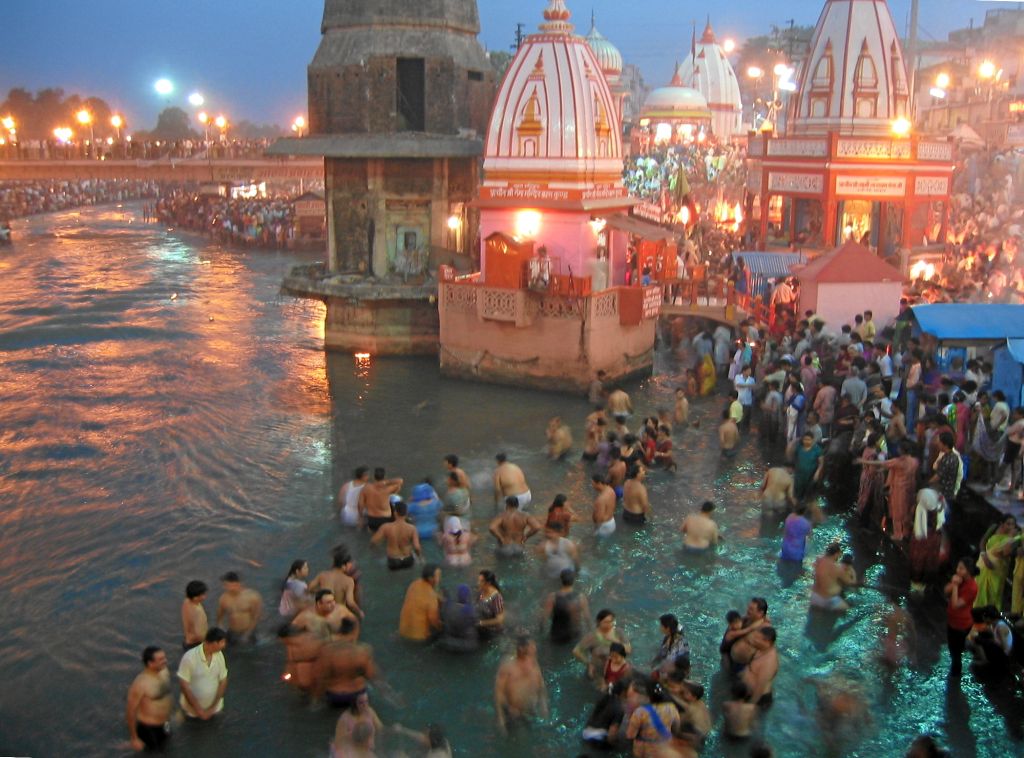
The principal ghat of Varanasi and the main venue for the evening Ganga Aarti, when priests offer lamps to the river with ghee, incense and conch shells before thousands of spectators.
The primary burning ghat of Varanasi. Cremation here is held to be the most direct route to moksha, as death within Kashi is believed to grant liberation from the cycle of rebirth.
Built by Aurangzeb in 1669 on the original temple site using the temple's pillars and stones. The mosque shares a wall with the current temple, making the two structures the closest and most contested temple-mosque pair in India.
About 2 km away, dedicated to Kalabhairav, the fierce guardian deity who is said to hold the keys to the city of Kashi and protect the pilgrimage.
About 5 km away, a celebrated Hanuman temple founded by Tulsidas, famous for its evening kirtans and serene garden setting.
Within Banaras Hindu University, about 8 km away. A modern temple built after the original design, open to people of all faiths, with a commanding view over the campus.
Within the temple complex, dedicated to Goddess Annapurna, the goddess of food. It highlights the temple's role in the Shaiva-Shakta synthesis and is central to the daily annadanam (free food distribution).
August
2 festivals
Kashi Vishwanath
The holiest month for Shiva worship. Mondays see the heaviest crowds, with devotees carrying Ganga water from the river to offer on the lingam. A special Shravan Mangala Aarti is held early each morning.
Kashi Vishwanath
The lingam receives offerings of milk and silver snakes. An important Shaiva festival observed with a special abhishek inside the sanctum.
/kaa-shee vish-waa-naath/
Lord of the Universe who resides in Kashi
/jyo-tir-ling-ah/
Column of divine light
/vah-ruh-naa-see/
City between the Varuna and Assi rivers
/gar-bha-gree-ha/
Inner sanctum
/shi-kha-ra/
Temple spire or tower
/mun-ga-laa aa-rtee/
Auspicious first offering of the day
/bhaas-maa aa-rtee/
Sacred-ash ritual performed before dawn
/gyaan-vaa-pee/
Well of Knowledge
/kaa-shee-vaas/
Dwelling in Kashi, the auspicious way to end a life
/mohk-sha/
Liberation from the cycle of rebirth
Click the speaker icon to hear pronunciation. Browser text-to-speech may vary.
Jyotirlinga Status
Kashi Vishwanath is one of the twelve Jyotirlingas and the only one located in the heart of a major living city. A darshan here is traditionally believed to grant moksha, and dying within Kashi (Kashi-vas) is held to ensure liberation.
The 1669 Destruction
In 1669 Emperor Aurangzeb demolished the temple and built the Gyanvapi Mosque on the site using the temple's stones. The existing lingam is said to have been hidden in the Gyanvapi well. The current temple was built adjacent to the mosque in 1780.
Ahilyabai Holkar & Ranjit Singh
The current structure (1780) was built by Maharani Ahilyabai Holkar of Indore, and the gold plating of the spire (1835) was donated by Maharaja Ranjit Singh of Punjab, both of whom patronized Hindu sacred sites far from their own realms.
The Kashi Vishwanath Corridor
Inaugurated December 13, 2021, the corridor created a direct passage from the temple to the Ganga. Excavations during construction revealed the remains of earlier temples, providing physical evidence of the site's ancient lineage.
Shaiva-Shakta Synthesis
The complex also houses the Annapurna Temple and the Vishalakshi shrine, the latter counted among the 64 Shakti Peethas, linking Shaiva and Shakta worship at a single site.
A. Yes. Archaeological evidence dates Varanasi's continuous habitation to at least 3000 years, and Hindu tradition claims over 5000 years. Unlike ancient cities like Babylon or Mohenjo-Daro that were abandoned, Varanasi has never stopped being inhabited. It is older than legend, older than history, older than the written word itself.
A. Maharaja Ranjit Singh, the Sikh ruler of the Sikh Empire (Lahore), donated the gold for the spire's plating in the 19th century. The 800 kilograms of gold were shipped from Punjab to Varanasi despite the vast distance. It was an extraordinary gesture of inter-faith reverence that defined the temple's appearance.
A. The Kashi Vishwanath Corridor was a Rs. 339 crore redevelopment project inaugurated in 2021. It demolished 23 old buildings to create a 320-meter direct pathway from the Ganga riverfront ghats to the temple. The project also built a visitor centre, museum, and public amenities.
A. The Mangala Aarti begins at 3:30 AM daily and is the most sought-after ritual at the temple. Only a limited number of devotees are allowed inside the sanctum for this aarti. Tickets must be obtained in advance through the temple's online portal or physically at the temple office. Expect long queues.
A. The Gyanvapi Mosque stands adjacent to the Kashi Vishwanath Temple, sharing a common wall. It was built by Emperor Aurangzeb in 1669 on the site of the original Kashi Vishwanath Temple after destroying it. In recent years, legal petitions have been filed claiming Hindu religious symbols exist within the mosque complex, sparking ongoing court cases.
A. According to Hindu tradition, Kashi is Vishwanath's own city and he personally grants liberation to those who die within its boundaries. The belief is that death in Kashi breaks the cycle of rebirth instantly. Even the act of being cremated at Manikarnika Ghat — the primary burning ghat — is considered spiritually transformative.
A. Historical records confirm at least three major destructions. Qutb-ud-din Aibak destroyed it in 1194. It was rebuilt, then destroyed again by the Sharqi rulers of Jaunpur. Aurangzeb ordered its final destruction in 1669 and built the Gyanvapi Mosque on the original site. The current temple was built adjacent to the mosque.
A. Dev Deepawali (the Festival of Lights of the Gods) is celebrated on Kartik Purnima, the full moon night of the Hindu month of Kartik (October-November). Over one million clay lamps (diyas) are lit on the ghats of the Ganga, creating a breathtaking spectacle of light reflecting on the water. It is considered the real Diwali of Varanasi.
A. The five daily aartis are: Mangala Aarti (3:30 AM, the first offering of the day), Bhog Aarti (11:30 AM, the mid-day offering), Sandhya Aarti (7:00 PM, the evening prayer), Shringar Aarti (9:00 PM, the beautification ritual), and Sayan Aarti (10:30 PM, the final offering before the deity rests). Each has distinct rituals, music, and significance.
A. Kashi Vishwanath is one of the twelve Jyotirlingas and the most sacred Shiva temple. Located in the spiritual capital of Hinduism, a darshan here is believed to grant moksha (liberation). The temple represents the cosmic axis where the physical and spiritual worlds connect.
A. The temple is open from 2:30 AM to 11:00 PM daily, with a break from 12:00 PM to 4:00 PM. The pre-dawn darshan (3:00-5:00 AM) is the most peaceful. The Bhasma Aarti at 3:00 AM requires a special pass. The evening Sandhya Aarti is at 7:00 PM.
A. No, there is no entry fee for general darshan. VIP darshan passes are available for a fee that allow bypassing the main queue. The Bhasma Aarti pass costs extra and must be booked in advance. Booking is done online through the official Kashi Vishwanath portal.
A. The airport is 26 km from the temple. Taxis and app-based cabs are available; the journey takes about 45 minutes. Auto-rickshaws connect from the cantonment area to the narrow lanes near the temple. The corridor provides direct access from the Ganga ghats.
A. Besides Lord Vishwanath (Shiva), the complex houses shrines dedicated to Annapurna (goddess of food), Kalabhairav (the guardian deity), Vishalakshi (Shakti Peetha), Ganesha, Hanuman, and Avimukteshwara. The Annapurna Temple is especially significant as it represents the goddess of nourishment.
Shri Kashi Vishwanath Temple Trust
Official temple management, darshan, aarti and online booking information
View sourceUttar Pradesh Tourism Department
Varanasi, ghats and Kashi Vishwanath travel information
View sourceDiana L. Eck
Banaras: City of Light (1982) — the definitive academic study of Kashi and the Vishwanath tradition
1982
Stella Kramrisch
The Hindu Temple (1946) — reference on Nagara architecture and sanctum design
1946
Kashi Khanda, Skanda Purana
Sanskrit scripture describing Kashi's sacred geography and the mythology of the Jyotirlinga
Archaeological Survey of India (ASI)
Excavation findings around the Kashi Vishwanath precinct during the corridor project
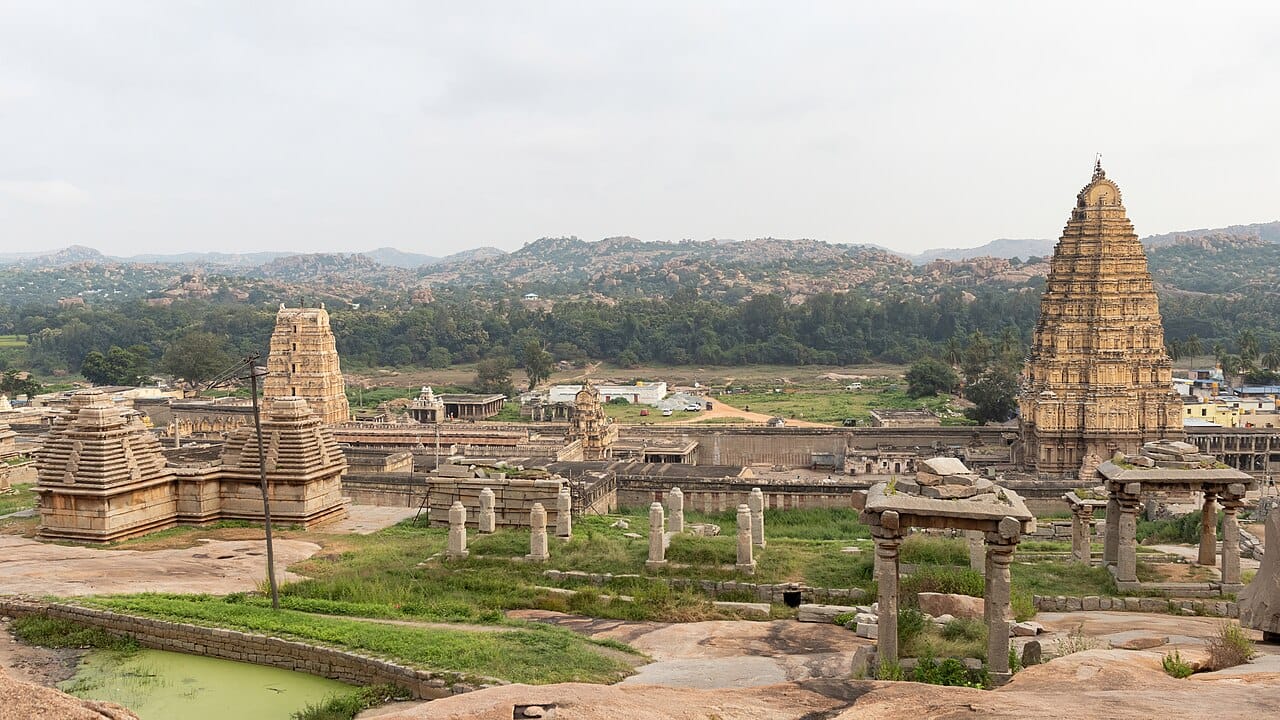
Virupaksha Temple
The Virupaksha Temple in Hampi, Karnataka, is a UNESCO World Heritage Site and the oldest functioning temple in India, dedicated to Lord Shiva as Virupaksha.
Trimbakeshwar Temple
The Trimbakeshwar Temple in Maharashtra is one of the twelve Jyotirlingas, unique for its three-faced linga representing the Trimurti and the source of the Godavari River.
Airavatesvara Temple
The Airavatesvara Temple at Darasuram, built by Rajaraja Chola II between 1146 and 1172 CE, is one of the three UNESCO World Heritage 'Great Living Chola Temples.' It is renowned for its stone chariot, musical steps, and exquisite 12th-century Chola sculptures.
Gangaikonda Cholapuram Temple
The Gangaikonda Cholapuram Temple, built by Rajendra Chola I in 1035 CE, is a UNESCO World Heritage 'Great Living Chola Temple.' Its 53-metre vimana with recessed corners and six pairs of monolithic dvarapalas represents a refined evolution of Chola Dravidian architecture.
Kampaheswarar Temple
Kampaheswarar Temple in Tribhuvanam, built by Kulothunga Chola III in 1202 CE, is one of the later great Chola temples and completes the quartet of magnificent Chola stone temples alongside the Brihadeeswarar at Thanjavur, Gangaikonda Cholapuram, and Airavatesvara at Darasuram. The temple represents the mature phase of Chola architecture, featuring a 30-metre granite vimana, a separate Devi shrine, and a unique chariot-wheel carving in the mandapa. It is maintained by the Archaeological Survey of India as a protected monument of national importance.
Koranganatha Temple
Koranganatha Temple, built during the reign of the Chola king Parantaka I (907-955 CE) at Srinivasanallur near Tiruchirappalli, is a well-preserved example of early Chola architecture with exquisite stone carvings. The temple is maintained by the Archaeological Survey of India and is notable for its peaceful setting on the banks of the Kaveri River.
Adi Badri Uttarakhand
A complex of 16 ancient temples from the Gupta period; it is believed Vishnu resided here before moving to Badrinath.
Baijnath Temple Uttarakhand
A 12th-century complex on the Gomti banks, famous for its life-sized black stone idol of Goddess Parvati.
Vindhyavasini Devi Temple
One of India's most visited Shakti Peethas, where Goddess Durga is believed to have resided after slaying Mahishasura.
Lalita Devi Temple Naimisharanya
Located in the ancient forest of Naimisharanya, it is mentioned in Puranas as the spot where the universe's first Chakra fell.
Bateshwar Temples Agra
A complex of 101 Shiva temples built on the banks of Yamuna, representing a significant pilgrimage and architectural site.
Gauri Shankar Temple Delhi
An 800-year-old temple in Chandni Chowk built by a Maratha soldier, housing a centuries-old brown Shiva Lingam.
Trimbakeshwar Temple
The Trimbakeshwar Temple in Maharashtra is one of the twelve Jyotirlingas, unique for its three-faced linga representing the Trimurti and the source of the Godavari River.
Alampur Jogulamba Temple
One of the 18 Maha Shakti Peethas, located in a complex that also houses nine ancient 7th-century Chalukyan temples.
Somnath Temple
Somnath Temple, the first of the twelve Jyotirlingas, is an ancient Shiva temple in Gujarat known for its resilience through repeated destruction and reconstruction over a millennium.
Siddhesvara Dham (Char Dham)
A grand complex featuring a 108-foot Shiva statue and replicas of the 12 Jyotirlingas and the four Char Dham sites.
Ramanathaswamy Temple
The Ramanathaswamy Temple in Rameswaram is one of the 12 Jyotirlingas and a Char Dham site, famous for its magnificent thousand-pillared corridors, the longest temple corridor in the world, and its sacred association with Lord Rama's worship of Shiva.
Omkareshwar Temple
Situated on a sacred island in the Narmada River, Omkareshwar is the only Jyotirlinga located on an island. The temple stands at the confluence of the Narmada and Kaveri rivers, with the lingam positioned where the river forms the shape of the sacred symbol Om.
Vishalakshi Temple
The Vishalakshi Temple, located in the narrow lanes of Mir Ghat near the Ganges in Varanasi, is one of the 51 Shakti Peethas where the earrings of Goddess Sati are believed to have fallen. Dedicated to the 'wide-eyed' goddess Vishalakshi, the temple is the first stop on the traditional Kashi Yatra pilgrimage circuit and is considered the consort shrine of the neighbouring Kashi Vishwanath Temple.
Dashavatara Temple
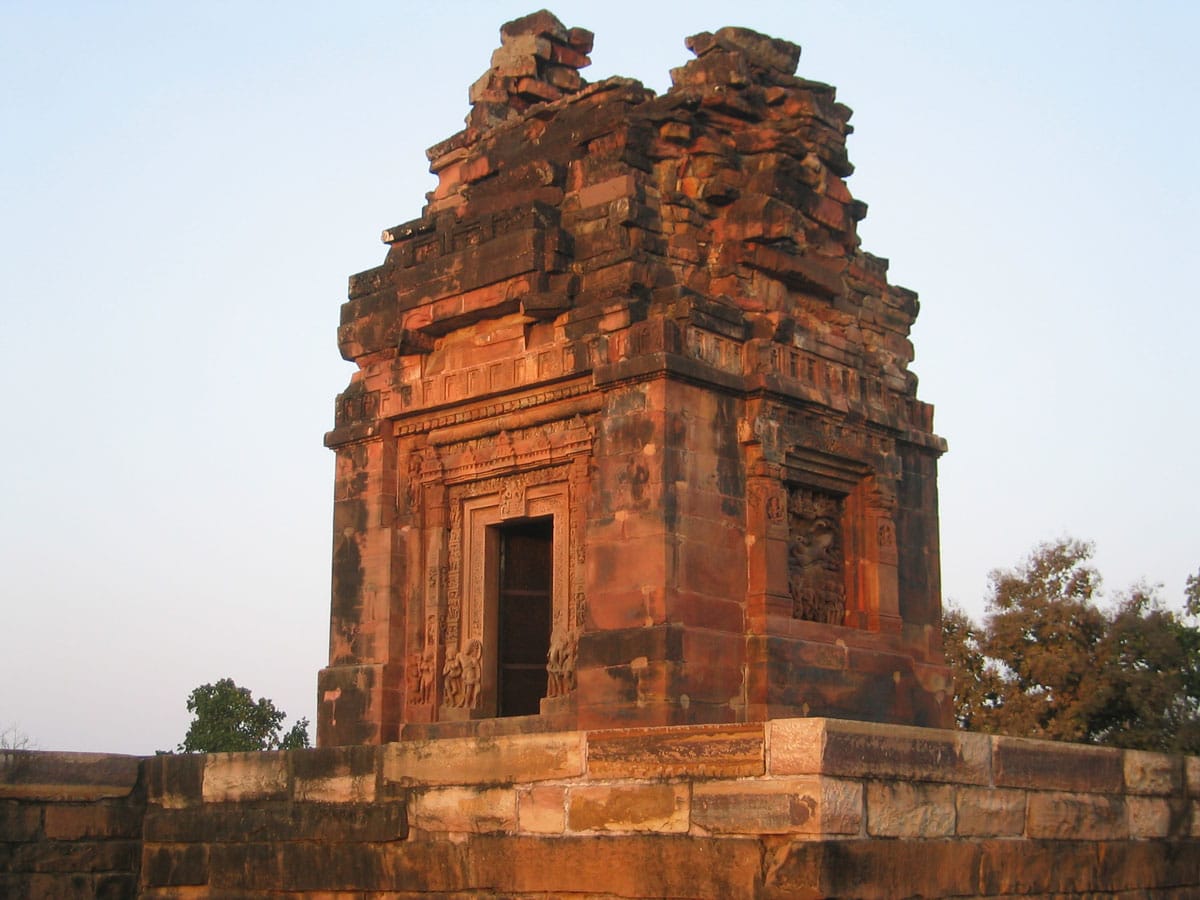
Dating to around 500 CE, this is the earliest known North Indian temple with a shikhara (curvilinear tower). The temple is famous for its carved panels depicting the ten incarnations (Dashavatara) of Vishnu on the sanctum walls.
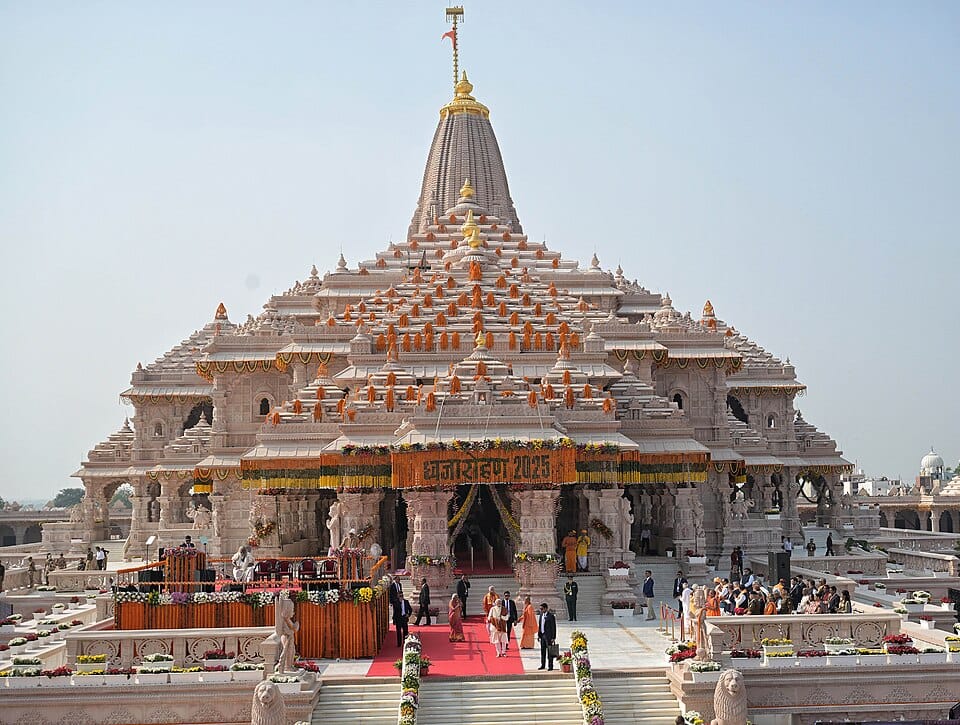
Shri Ram Janmabhoomi Mandir
A grand and historic temple marking the birthplace of Lord Rama, the seventh avatar of Vishnu, representing the pinnacle of Nagara architecture.
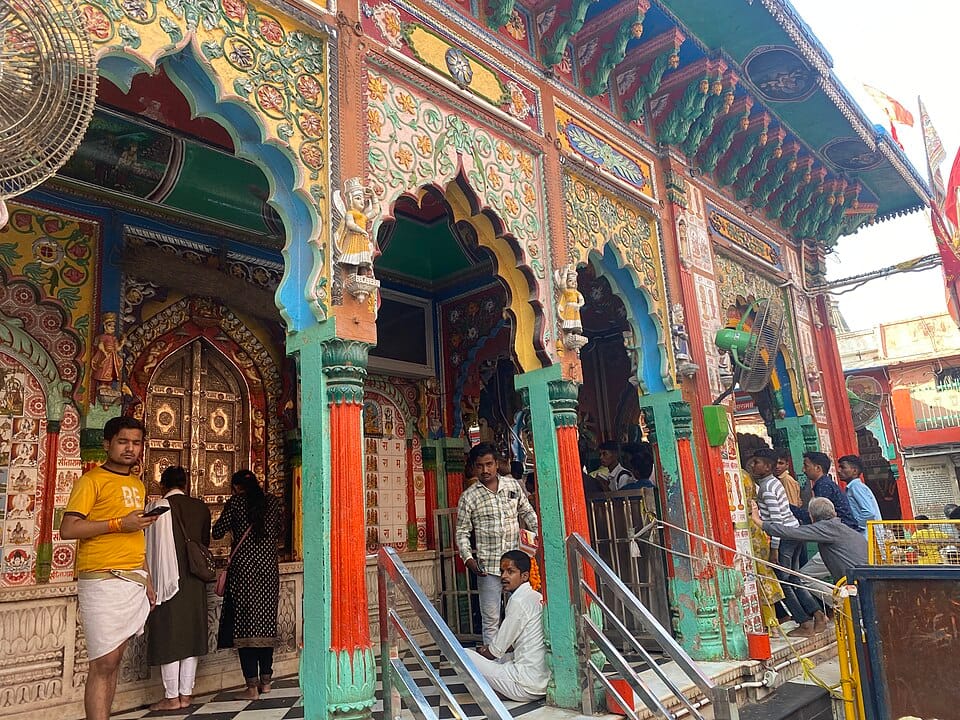
Hanuman Garhi
A hilltop temple dedicated to Lord Hanuman, the guardian deity of Ayodhya, reached by climbing 76 sacred steps.
Prem Mandir
A stunning modern white-marbled complex in Vrindavan dedicated to Divine Love, known for its life-like tableaus of Krishna's pastimes.
Banke Bihari Temple
Among the most famous Krishna temples in India, where the deity is worshipped as a child and curtains are drawn frequently.
Tarakeshwar Temple Hooghly
A massive 18th-century pilgrimage site dedicated to Lord Taraknath, especially vibrant during the Gajan festival.
Virupaksha Temple
The Virupaksha Temple in Hampi, Karnataka, is a UNESCO World Heritage Site and the oldest functioning temple in India, dedicated to Lord Shiva as Virupaksha.
Jageshwar Temple
A cluster of 124 ancient stone temples from the 7th-12th centuries, nestled in a dense deodar forest.
Neelkanth Mahadev Temple
Situated at 1,330 meters, this is where Lord Shiva is believed to have consumed the poison (Halahala) during the Samudra Manthan.
Tungnath Temple
The highest Shiva temple in the world, situated at 3,680 meters on the Chandranath Parbat; it is the 'Tritiya Kedar' in the sacred Panch Kedar pilgrimage circuit.
Rudranath Temple
One of the Panch Kedar shrines, representing Lord Shiva's face, situated at an altitude of 2,286 meters amidst meadows and rhododendron forests.
India's temples are living traditions — not museums. Every temple has its own customs. This guide helps first-time visitors prepare with confidence and respect.
Foreign visitor information is being researched
Please verify with the official temple authority before planning your visit.
Foreign Visitors
Verify Before VisitingVisitor Information
Entry policies vary between temples. Most temples welcome visitors, while some may restrict access to specific areas, rituals, or the inner sanctum. Always verify the latest entry guidelines with the official temple authorities before your visit.
Modest clothing is expected at every Indian temple — a sign of respect, not a restriction. Think of it as dressing for a formal ceremony.
A scarf is always useful — it covers shoulders, works as a head covering, and can double as a makeshift face cover if needed.
Outdoor photography is generally permitted. Indoor photography is often restricted. Always look for signage or ask a priest before taking photos inside.
October to March is the ideal period, with temperatures ranging from 10°C to 25°C. The winter months offer the most comfortable experience for exploring the temple complex, Vishwanath Gali, and the Ganga ghats.
April — June
July — September
English is widely understood at major tourist temples. In smaller local temples, Hindi and the regional language are more common. A smile and simple hand gestures go a long way. Learning a few words of the local language is always appreciated.
Cash (Indian Rupees) is the most reliable option, especially for temple offerings, small shops, and local transport.
UPI digital payments (Google Pay, PhonePe, Paytm) are widely accepted across India — even at roadside stalls. Download one before you arrive.
International credit/debit cards work at most ATMs, hotels, and larger establishments. Smaller vendors may only accept cash or UPI.
Carry small denominations (₹10, ₹20, ₹50, ₹100 notes) for offerings and temple donations. Large notes (₹500, ₹2000) can be hard to break at smaller counters.
Many historic temples have uneven stone floors, multiple steps, and narrow passages. Wheelchair access is limited at older sites — contact the temple in advance.
Basic restroom facilities and drinking water are available at most major temples. Some charge a small fee (₹5–₹10).
Stay hydrated — carry a reusable water bottle, especially in hot climates.
Keep valuables secure — use hotel lockers for passports and excess cash.
Wear comfortable, sturdy footwear — temple floors can be hot, wet, or uneven.
Beware of unofficial guides or touts near temple entrances. Only use authorised services.
Carry a photocopy of your passport and visa. Leave originals in your hotel safe.
Download offline maps — mobile networks can be unreliable near remote temple sites.
These short explanations help make sense of what you see and experience.
Darshan means 'seeing' — but in a temple it means being seen by the deity. It is a sacred moment of connection, not just a viewing.
Removing footwear is a sign of humility. It also keeps the temple floor clean, since devotees sit and pray on the ground.
Food offered to the deity and then distributed to devotees. It is considered blessed. Accept it with both hands and do not discard it.
The bell creates a focused acoustic atmosphere, wards off distractions, and announces your presence before entering the inner sanctum.
Circumambulation (pradakshina) is done clockwise, keeping the sanctum on your right — an auspicious direction aligned with the sun's path.
Flowers symbolise devotion, coconuts represent the ego being broken, incense purifies the air, and lamps represent the victory of light over darkness.
Sacred viewing of the deity; the central act of temple worship.
Clockwise circumambulation of the sanctum.
Blessed food offered to the deity and distributed to devotees.
The innermost sanctum where the main deity resides.
The towering spire above the sanctum, a defining feature of temple architecture.
A pillared hall or pavilion within the temple complex.
The Indian Rupee (?, INR) is the local currency. ATMs are widely available in cities and towns. For temple offerings, keep small notes (₹10, ₹20, ₹50). Most temples accept donations in cash only — digital payments are uncommon at the offering counter itself.
Offerings (dakshina) are given with the right hand. Place cash in the donation box (hundi) or give it directly to the priest. There is no fixed amount — give what feels appropriate. Some temples have fixed fees for special entry or puja participation.
Shoes and sandals are removed before entering the temple building. Most temples have a designated shoe counter (free or a small fee of ₹5–₹20). Socks are generally allowed. In monsoon, carry a plastic bag for wet shoes.
Darshan queues can take 30 minutes to 3 hours at popular temples. Many offer paid VIP darshan (₹100–₹500) for faster entry. Special queues for women, elderly, and disabled visitors exist at some temples. No line jumping.
Major festivals draw enormous crowds — sometimes hundreds of thousands. Book accommodation months in advance. Expect road closures, restricted vehicle access, and limited phone network. Arrive early (before dawn) to avoid the worst congestion.
Always look for signage before taking photos. When in doubt, ask a priest. Never take photos of devotees in prayer without permission. Selfie sticks are banned at most temples. Silently switch your phone to silent mode.
Police / Ambulance / Fire: 112 (National Emergency Number)
Tourist Helpline: 1800-111-363 (Multi-lingual, Ministry of Tourism)
Women's Helpline: 1091
Temple-specific visitor information is continuously researched and updated from official sources. Where specific data is unavailable, general India travel guidance is provided. Always verify current policies with the temple authority before your visit.
Information last verified July 2026. Temple-specific data coming soon.
Continue your journey through the spiritual and architectural wonders of India.

One of India's most visited Shakti Peethas, where Goddess Durga is believed to have resided after slaying Mahishasura.

Located in the ancient forest of Naimisharanya, it is mentioned in Puranas as the spot where the universe's first Chakra fell.

A complex of 101 Shiva temples built on the banks of Yamuna, representing a significant pilgrimage and architectural site.

Situated on a sacred island in the Narmada River, Omkareshwar is the only Jyotirlinga located on an island. The temple stands at the confluence of the Narmada and Kaveri rivers, with the lingam positioned where the river forms the shape of the sacred symbol Om.

The Vishalakshi Temple, located in the narrow lanes of Mir Ghat near the Ganges in Varanasi, is one of the 51 Shakti Peethas where the earrings of Goddess Sati are believed to have fallen. Dedicated to the 'wide-eyed' goddess Vishalakshi, the temple is the first stop on the traditional Kashi Yatra pilgrimage circuit and is considered the consort shrine of the neighbouring Kashi Vishwanath Temple.
Dating to around 500 CE, this is the earliest known North Indian temple with a shikhara (curvilinear tower). The temple is famous for its carved panels depicting the ten incarnations (Dashavatara) of Vishnu on the sanctum walls.

A grand and historic temple marking the birthplace of Lord Rama, the seventh avatar of Vishnu, representing the pinnacle of Nagara architecture.

A hilltop temple dedicated to Lord Hanuman, the guardian deity of Ayodhya, reached by climbing 76 sacred steps.
"India has over 40 UNESCO World Heritage Sites, ranging from ancient temples to natural wonders."