From ancient rock-cut marvels to towering imperial shrines, discover the architectural soul of Bharat through our verified digital archive.
Explore More Temples
Builder
Paramara dynasty; restored by Ahilyabai Holkar
Dynasty
Paramara — Holkar
Construction
11th–12th Century CE (Paramara expansion)
Style
Nagara
Main Deity
Omkareshwar (Shiva) & Mamleshwar
Location
Mandhata Island, Narmada River, MP
River
Narmada
Significance
Jyotirlinga, Narmada Parikrama origin
Season
October to March
Unique Feature
Om-shaped island, twin Jyotirlingas
Pilgrimage Circuit
Jyotirlinga, Narmada Parikrama
Official Website
omkareshwar.org
Omkareshwar Temple occupies Mandhata Island in the Narmada River — a landform that naturally resembles the sacred syllable Om when viewed from above. It is the only one of the twelve Jyotirlingas to stand on an island, and the only shrine where the natural course of a holy river mirrors the primordial sound. The Narmada splits around the island in two channels, and a second Jyotirlinga — Mamleshwar — rises about a kilometre away on the same island, so the pilgrim walks a circuit of two shrines around a landscape made of scripture. Built by the Paramara dynasty of Malwa and enriched by the Maratha Holkars, the temple remains the traditional starting point of the Narmada Parikrama, the river's great circumambulation.
If you fly over Mandhata Island, you will see something that no map can fully convey. The Narmada River splits into two branches around a stretch of land, and the shape they trace together is not random. It is the Sanskrit character ॐ — the Om symbol — written into the earth by water.
The island is approximately 4 kilometers long and 2.5 kilometers at its widest. The main branch of the Narmada flows along the northern side, creating the long sweeping curve of the Om symbol’s left arc. A smaller tributary — the Kaveri River (not to be confused with the South Indian Kaveri) — flows along the southern side, forming the lower curve. Where the two branches rejoin at the eastern tip of the island, they complete the shape. The temple of Omkareshwar stands at the very center of this natural diagram, as if placed there by a force that understood geometry before humans named it.
The geological origin of this shape is straightforward — the Narmada flows through a rift valley, and the island formed where a resistant rock outcrop caused the river to bifurcate. But in Hindu sacred geography, there is no such thing as a coincidence. If the island is shaped like Om, it is because Om is the primordial vibration from which the universe manifested. The island is not a random landform that happens to look like a sacred symbol. It is the symbol made physical — a piece of the cosmos that rose from the water to reveal the structure of creation itself.
This is the only one of the twelve Jyotirlingas of Shiva that rises on an island. The other eleven are on mainland sites, mountain slopes, riverbanks, or forests. Omkareshwar is surrounded by water on all sides, accessible only by boat or bridge. The experience of approaching it — crossing the Narmada, watching the island grow larger, seeing the shikhara rise above the treeline — is a ritual of separation. You leave the mainland behind. You cross the water. You enter a space that is both an island and a symbol, both geography and theology.
Omkareshwar is unique among the twelve Jyotirlingas in a way that most pilgrims discover only after they arrive: there are two Jyotirlingas on Mandhata Island, not one. The primary shrine houses Omkareshwar, but a second shrine on the same island houses Mamleshwar (also called Amareshwar). Both are counted among the twelve, and a pilgrimage to Omkareshwar is considered incomplete without visiting both.
The origin of the twin shrines is rooted in a story of rivalry and resolution. According to tradition, two powerful kings — one from the Paramara dynasty and one from a neighboring kingdom — each wanted the honor of building the Jyotirlinga temple. The Paramara king built the Omkareshwar shrine on the northern side of the island. The other king built the Mamleshwar shrine on the southern side. Both claimed that their temple was the true Jyotirlinga. The dispute was resolved by a council of sages who declared that both were correct — the Jyotirlinga had manifested in two forms on the same island, reflecting Shiva's nature as both creator (Omkareshwar) and preserver (Mamleshwar).
The two shrines are architecturally distinct. Omkareshwar is the larger temple, with a Nagara shikhara that rises prominently above the island’s skyline. Mamleshwar is smaller, set closer to the riverbank, with a simpler structure. The Omkareshwar lingam is dark and smooth, while the Mamleshwar lingam is lighter in color and has a different texture. Both are considered Swayambhu (self-manifested), and both receive daily worship from the temple priests.
The existence of two Jyotirlingas on one island has practical implications for pilgrims. The standard darshan route begins at Omkareshwar, followed by a walk across the island to Mamleshwar. The distance is roughly 1.5 kilometers, and the path passes through the island’s small settlement, past other smaller shrines and ashrams. Devotees often perform this walk barefoot. To visit both shrines is to complete the circuit of the Om-shaped island — a circumambulation of the symbol itself.
North of the Narmada, in the ancient city of Ujjain, Mahakaleshwar Jyotirlinga — the only south-facing Jyotirlinga — stands as the other great Shaiva shrine of Madhya Pradesh. The two temples are linked by the Paramara legacy of Malwa and by the pilgrims who travel between them.
The Narmada is older than the Ganga. Geologically, this is a fact — the Narmada flows through a rift valley that formed when the Indian plate collided with Eurasia, predating the Himalayan orogeny that created the Ganga basin. Theologically, it means something even more significant: the Narmada is the river that existed before the current cycle of creation. In the Puranas, she is described as the daughter of the god Rudra and the sister of the Lord of Wealth. Her waters are said to be purer than the Ganga because they have never been polluted by the violence of the plains.
The Narmada Parikrama is the most arduous pilgrimage in Hinduism. It involves walking the entire circumference of the river — from its source at Amarkantak to the Arabian Sea and back along the opposite bank — a distance of approximately 2,600 kilometers. The journey takes between one and three years. Pilgrims carry only a trident and a water pot, subsisting on alms. The Parikrama begins and ends at Omkareshwar. To complete it is to have walked alongside the river for every one of its kilometers, to have touched the water at its source and at its mouth, to have traced the boundary of the sacred feminine across the body of central India.
The river is also unique in that it is worshipped as a mother goddess without the mediation of a temple. There is no principal Narmada temple. The river herself is the deity. At Omkareshwar, the ghats on the northern shore of the island are the primary site for ritual bathing. Devotees descend the stone steps, immerse themselves in the current, and offer water to the river in cupped hands. During the Narmada Jayanti festival, the entire stretch of river around the island is lit with diyas, creating a ring of light around the Om-shaped landmass.
The Narmada’s flow around Mandhata Island is particularly significant. The water that separates the island from the mainland is not an obstacle — it is a threshold. By crossing the river, the pilgrim symbolically crosses from the mundane world into the sacred space of the Om symbol. The boat ride itself becomes a ritual, a moment of transition that prepares the devotee for the darshan that awaits. Few Jyotirlingas offer such a clear physical demarcation between the profane and the sacred.
The daily ritual schedule at Omkareshwar follows the standard Jyotirlinga pattern — mangal aarti at dawn, abhishekam, bhoga (offering of food), sandhya aarti at sunset, and shayan aarti at night. But the defining ritual of Omkareshwar is not inside the temple. It happens on the river.
Every evening at sunset, the priests of Omkareshwar descend to the ghats on the northern shore of the island. They carry large brass lamps with multiple wicks, filled with ghee. The Narmada Aarti is performed facing the river, not the temple — a recognition that the Narmada is a deity in her own right. The priests wave the lamps in a circular motion while chanting the Narmada Ashtakam, an eight-verse hymn dedicated to the river goddess. The flames are reflected on the dark surface of the water, creating a shimmering mirror of light.
During the aarti, devotees release small diyas (oil lamps) on leaf boats into the river. The tradition is that if your diya stays lit and floats out of sight, your wish will be fulfilled. Hundreds of these tiny lights drift down the Narmada, creating a moving constellation on the water. The sight is particularly powerful when seen from the island — you are surrounded by the river on all sides, and the lights appear to be moving away from you in every direction, carrying petitions to the goddess.
The boat ride to the island is itself considered a ritual act. Small ferries and motorboats depart from the mainland ghats throughout the day. The crossing takes approximately 10-15 minutes. Devotees often chant, sing bhajans, or simply sit in silence, watching the island approach. The boatman’s fee is considered a donation, and many pilgrims make a point of offering something extra as dakshina. To step off the boat onto the island is to complete the first stage of the pilgrimage — the water has been crossed, the Om symbol has been entered, and the temple awaits.
The day at Omkareshwar begins with the Mangala Aarti at dawn, followed by the abhishekam of the lingam with panchamrit, Narmada water and bilva leaves. A distinctive feature of worship here is the Narmadashila — naturally lingam-shaped stones gathered from the riverbed and offered to the shrine. Pilgrims treasure these stones as self-manifested forms of Shiva, and the Rudrabhishek, performed with Vedic chanting, is the most popular special ritual of the temple.
The Omkareshwar Temple as it stands today is a palimpsest of two distinct architectural periods separated by five centuries. The core structure — the sanctum, the mandapa, and the shikhara — belongs to the Paramara dynasty, which ruled Malwa from the 9th to the 14th centuries. The Paramaras were among the greatest temple builders of central India, and Omkareshwar was one of their most important projects.
The Paramara shikhara is Nagara in style, with a curvilinear profile rising in a series of diminishing tiers culminating in a large amalaka and kalasha finial. The surface is carved with chaitya-arch motifs, miniature shrine replicas, and projecting bands that create a rhythm of light and shadow across the spire. The mandapa (pillared hall) features a stepped ceiling in the classic Paramara pattern — concentric squares rotating to create a dynamic, almost kinetic visual effect when viewed from below. The pillars are carved with floral motifs, divine figures, and geometric patterns that reflect the Paramara aesthetic of disciplined ornament.
The Maratha contribution came in the 18th century under Ahilyabai Holkar, the legendary queen of the Maratha Malwa region. Ahilyabai, who also restored Somnath and built across the subcontinent, added the surrounding corridors, the entrance gateway, and several subsidiary shrines. Her additions are in the Maratha temple style — simpler, more functional, and designed to accommodate large numbers of pilgrims. She also constructed the ghats along the Narmada at Omkareshwar, creating the stone steps that pilgrims use for bathing today.
The combination is harmonious precisely because it is not uniform. The Paramara core provides the spiritual gravitas, the ancient architecture of the original Jyotirlinga shrine. The Maratha additions provide the infrastructure of pilgrimage — the corridors that shelter devotees from the sun, the ghats that give access to the river, the gateways that mark the transition from one space to another. Walking through Omkareshwar is walking through the architectural history of central India, with each dynasty contributing a layer to the island’s sacred fabric.
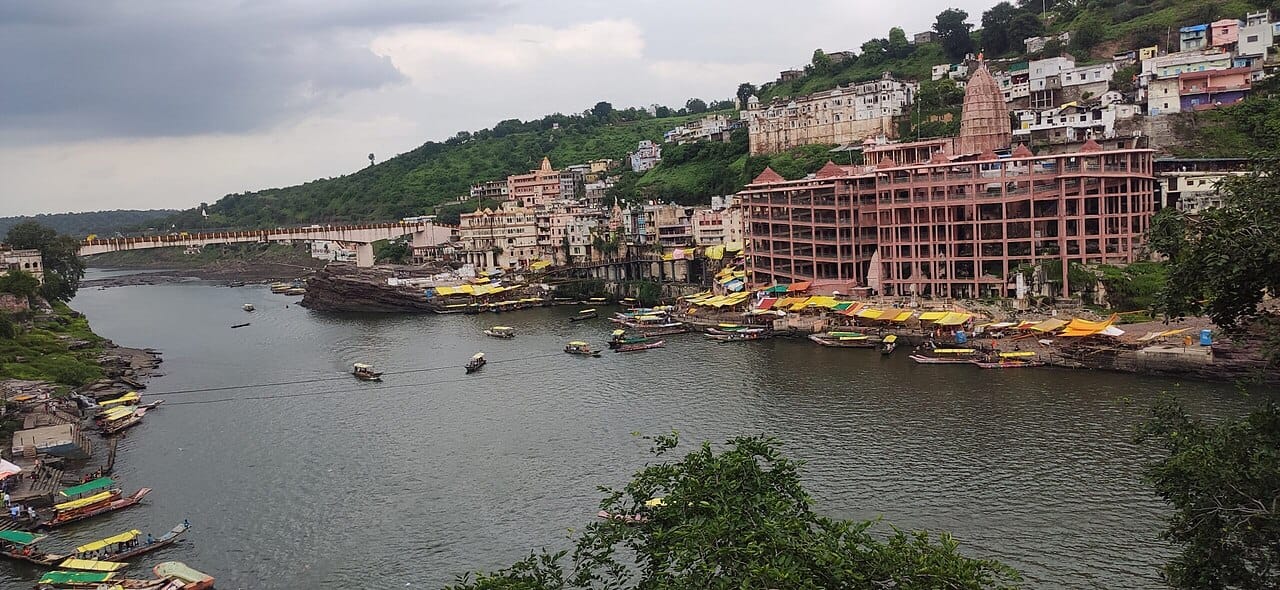
The island is named after King Mandhata, a figure from the Puranic tradition whose story is among the most compelling in the Shaivite canon. Mandhata was a king of the Ikshvaku dynasty (the solar dynasty of Lord Rama) and was known throughout the three worlds for his righteousness. The Matsya Purana describes him as a chakravartin — a universal monarch whose rule was marked by perfect justice and prosperity. But despite his worldly achievements, Mandhata desired something greater: the direct vision of Shiva.
He came to the Narmada River and found the island that would later bear his name. There, he performed tapas (austerities) of such intensity that the gods themselves grew concerned. Indra, the king of the devas, sent celestial nymphs to distract him. They failed. He sent demons to frighten him. They failed. For years, Mandhata sat in meditation on the banks of the Narmada, his body exposed to the elements, his mind fixed on the formless reality behind all forms.
Finally, Shiva appeared before him — not as a lingam but as a being of light, the Jyotirlinga in its original form. Mandhata asked for a single boon: that Shiva remain on the island forever, accessible to all devotees who sought him. Shiva agreed and manifested as the Jyotirlinga of Omkareshwar. The island, which until then had been just another landform in the Narmada, became the abode of the Lord. King Mandhata’s name was given to the island because his devotion had created the conditions for this manifestation.
The connection between Mandhata and Rama is significant. Mandhata is an ancestor of Rama in the Ikshvaku lineage, and the island’s sacred geography is sometimes linked to the Ramayana tradition. Local tradition holds that Rama himself visited the island during his exile, and that he worshipped at the very spot where the Omkareshwar lingam now stands. Whether or not this has historical basis, the lineage gives Omkareshwar a connection to the Ramayana that few other Jyotirlingas can claim — linking this Narmada island to the great epic of dharma.
The Shiva Purana and the broader Jyotirlinga tradition count Omkareshwar among the twelve most sacred representations of Shiva. The mythology ties the site to the syllable Om — the primordial sound from which creation emerged — and to the Narmada River, which is said to have been born from the body of Shiva. One founding legend holds that King Mandhata of the Ikshvaku (Solar) dynasty performed severe penance on the island until Shiva appeared before him as Omkareshwara. The island's sanctity long predates the present stone structures: the banks of the Narmada were already a sacred landscape before the Paramara kings raised the surviving temple. The temple was originally known as the Shri Omkar Mandhata temple, after its legendary founder.
The surviving shrine belongs to the Paramara dynasty of Malwa, which ruled central India from the 9th to the 13th centuries. The earliest inscriptions on the island date to the reign of Vakpati Munja (974–995 CE), a king noted for his patronage of architecture and literature. The main temple was constructed and expanded during the rule of the Paramara kings Udayaditya (1070–1093 CE) and his son Naravarman (1093–1134 CE). The Paramaras, who built extensively at their capital Dhar and at the Bhojeshwar Temple in Bhojpur, invested significant resources in Omkareshwar to make it a major Shaivite pilgrimage destination.
Over the centuries the temple was subjected to repeated invasions and damage. In the 13th century, invasions of Malwa damaged temples across the region, and later accounts attribute further partial damage to the early-14th-century campaigns of the Delhi Sultanate under the general Malik Kafur. The Mughal period brought a mix of neglect and occasional patronage. In the 18th century the Maratha Maharani Ahilyabai Holkar (1767–1795) undertook major restoration work, renovating the sanctum and mandapa and constructing the ghats along the Narmada. The Scindia rulers of Gwalior also contributed to the temple's upkeep.
During the 19th century the temple came under the administration of the Holkar state, and after India's independence it was transferred to the Omkareshwar Temple Trust. In the 1960s a large concrete approach bridge was added, replacing the earlier boat crossing and improving access to the island. Through the 2010s the Madhya Pradesh government carried out improvements to pilgrimage facilities on the island and mainland, and the shrine continues to serve as a living centre of Shaiva worship and the traditional base for the Narmada Parikrama.
Omkareshwar is an exemplary specimen of the Nagara style as developed by the Paramara school of temple architecture in central India. The main temple stands on a raised platform (adhishthana) and comprises a garbhagriha (sanctum), an antarala (vestibule) and a sabha mandapa (pillared hall). The sanctum houses the swayambhu (self-manifested) lingam at the point where the Narmada's course traces the Om symbol. With a second shrine — Mamleshwar — on the same island, the sacred geometry of the site spans two sanctums joined by the pilgrim's walk.
The shikhara (tower) rises in multiple tiers, each decorated with miniature shikharas (urushringas) that create a complex pyramidal silhouette, and is crowned by an amalaka (ribbed stone disk) and a kalasha finial. The walls are adorned with projections (rathas) that create a rhythmic play of light and shadow. The Paramara style is characterised by balanced proportions, moderate ornamentation and a focus on the silhouette of the shikhara against the sky.
The exterior panels carry relief sculpture depicting Shiva in his various forms — Nataraja (the cosmic dancer), Ardhanarishvara (half-male, half-female) and Dakshinamurti (the teacher) — along with goddesses, celestial beings and scenes from the Puranas. The sabha mandapa has four central pillars supporting a ceiling carved with lotus and geometric patterns, a signature of the Paramara workshops.
In the 18th century, Maharani Ahilyabai Holkar — who also restored the Kashi Vishwanath Temple and the Vishnupad Temple — renovated the sanctum and main mandapa at Omkareshwar, added the surrounding corridors and gateways, and constructed the stone ghats along the Narmada. The Maratha additions are simpler and more functional, designed to accommodate large numbers of pilgrims. The two layers — the ancient Paramara core and the working infrastructure of pilgrimage — now merge into a single architectural fabric.
Omkareshwar holds a unique theological position as the only Jyotirlinga located on a river island, and the only one where the natural geography — the Narmada's course around Mandhata Island — forms the shape of the Om symbol. This makes the very landscape of the temple a representation of the primordial sound of creation. The temple is closely associated with Mamleshwar, the second shrine on the island, and many traditions consider the two together as constituting one Jyotirlinga, making a pilgrimage to both essential. The Narmada is considered more sacred than the Ganges in some local traditions — it is said that the mere sight of the Narmada purifies the soul, while the Ganges requires bathing. The Narmada Parikrama, the circumambulation of the river from source to sea and back, traditionally begins at Omkareshwar, and many ascetics spend years walking its full length. The site is also significant for ancestral rites: it is believed that ashes offered to the Narmada at Omkareshwar attain liberation, and the river's banks are dotted with platforms for shraddha and asthi visarjan ceremonies. The island has strong connections with the Nath Sampradaya, and for Tantric practitioners it is considered a siddha peetha where mantras manifest with enhanced power.
Maha Shivaratri is the most important festival at Omkareshwar, celebrated with a grand procession carrying the deity in a palanquin, all-night vigils with continuous chanting of the Shiva Mahimna Stotra, and special abhisheks every three hours during the night; over 200,000 pilgrims visit during Shivaratri week. The Shravan month (July–August) draws daily crowds for the Shravan Somvars (Mondays), with special processions and abhisheks. Narmada Jayanti, celebrated on the seventh day of the bright fortnight in Magha (January–February), marks the birth of the Narmada River; the temple and the ghats are decorated and thousands of lamps are floated on the river. Kartik Purnima (October–November) sees the Narmada ghats lit with hundreds of lamps as devotees perform the Kartik Snan. Diwali and Holi are celebrated with special fervour, as is the Annakoot festival, when a mountain of food is offered to the deity.
Omkareshwar is the only one of the twelve Jyotirlingas located on a river island, and the only shrine where the course of the Narmada itself mirrors the sacred Om symbol around the site.
Two Jyotirlingas — Omkareshwar and Mamleshwar — stand together on the same island, often counted together as one Jyotirlinga; a visit to both completes the island circuit.
The temple was founded by the Paramara dynasty of Malwa (with inscriptions from 974 CE) and restored by Maharani Ahilyabai Holkar in the 18th century, who built the Narmada ghats.
The Narmada Parikrama — the source-and-sea walk of the river, roughly 1,300 km one way — traditionally finds its starting and ending point at Omkareshwar.
Naturally lingam-shaped stones from the riverbed (Narmadashila) are revered as self-manifested forms of Shiva and are used in public and home worship.
The island's caves are associated with the Nath yogis, and the six hermitages known as the Sat Math represent the different ascetic schools of the Shaiva tradition.
The best time to visit Omkareshwar is from October to March, when the weather is cool and pleasant. The post-monsoon months (October–November) are especially beautiful as the Narmada is full and the island is lush. Maha Shivaratri (February–March) draws the largest crowds. Summer mornings (6–10 AM) and evenings (4–7 PM) are the best times of day for darshan and the island parikrama.
The temple is open daily from 5:00 AM to 10:00 PM. Mangala Aarti: 5:30 AM. Abhishek: 6:00–11:30 AM. Bhog Aarti: 12:30 PM. The temple closes for cleaning from 12:30 PM to 4:00 PM. Afternoon darshan: 4:00–9:30 PM. Sandhya Aarti: 6:30 PM. Shej Aarti: 9:30 PM. There is no entry fee, but photography is prohibited inside the sanctum.
The main shrine of Mandhata Island, housing the swayambhu (self-manifested) lingam positioned where the Narmada's course forms the shape of the Om symbol. The heart of the pilgrimage.
The second Jyotirlinga on Mandhata Island, about 1 km from the main shrine. Many traditions count the two together as one Jyotirlinga, and a visit to the island is considered incomplete without darshan of both.
A series of bathing ghats along the river, including the Ahilya Ghat built by Maharani Ahilyabai Holkar. The boat crossing to the island is itself a ritual of transition from the mainland into the sacred Om-shaped island.
The point where the Kaveri River (a river distinct from the South Indian Kaveri) joins the Narmada within the island itself, considered a highly sacred confluence.
A cluster of six hermitages raised by different ascetic orders, each with a distinctive architectural style, representing the six schools of the Shaiva tradition.
Ancient meditation caves on the island's western hill, associated with the Nath yogis, offering panoramic views over the Narmada.
The nearest city (about 60 km), a historic settlement well connected by rail that serves as a convenient base for visiting Omkareshwar.
About 120 km away on the Narmada, the historic fort of Maharani Ahilyabai Holkar with her residence and the Ahilyeshwar Temple, a fitting complement to her restoration at Omkareshwar.
August
2 festivals
Omkareshwar
Daily crowds throughout the month, peaking on the Shravan Somvars (Mondays), with special processions and abhisheks. A peak pilgrimage season on the island.
Omkareshwar
Observed at this chief Shiva shrine with worship of the serpent deity associated with Shiva, in line with the wider Hindu festival calendar.
/om-ka-ray-shwar/
Lord of the Om sound
/mah-mal-esh-war/
The second Jyotirlinga on the island (also Amareshwar)
/nar-ma-da/
Sacred river goddess of central India
/jyo-tir-ling-ah/
Column of divine light
/pa-ri-kra-ma/
Circumambulation
/dar-shan/
Sacred viewing of the deity
/gar-bha-gree-ha/
Inner sanctum
/mand-ha-ta/
Legendary king after whom the island is named
/shi-kha-ra/
Temple spire or tower
/nar-ma-da-shi-la/
Naturally lingam-shaped stones from the riverbed
Click the speaker icon to hear pronunciation. Browser text-to-speech may vary.
Jyotirlinga Status
Omkareshwar is one of the twelve Jyotirlingas and the only one located on a river island. Two shrines — Omkareshwar and Mamleshwar — stand together on Mandhata Island and are often counted together as constituting one Jyotirlinga.
Origin of the Narmada Parikrama
The Narmada Parikrama — the circumambulation of the entire Narmada River from its source at Amarkantak to the sea and back — traditionally begins and ends at Omkareshwar. A full circuit covers roughly 1,300 km one way and takes 3–4 months on foot.
The Om-Shaped Island
Mandhata Island, formed where the Narmada (and the Kaveri tributary) flow around it, naturally resembles the sacred Om symbol when seen from above. The temple stands at the centre of this landscape, making geography itself a representation of the cosmic sound.
Paramara Patronage
The temple was built by the Paramara dynasty of Malwa, with the earliest inscriptions dating to the reign of Vakpati Munja (974–995 CE) and the main structure expanded under Udayaditya (1070–1093 CE) and his son Naravarman (1093–1134 CE). Maharani Ahilyabai Holkar restored it and built the ghats in the 18th century.
Narmadashila Stones
Naturally lingam-shaped stones from the riverbed (Narmadashila) are considered self-manifested (swayambhu) forms of Shiva. They are used in worship and carried home by pilgrims, valued more than artificially crafted lingams.
A. Yes. Viewed from above, the island naturally forms the shape of the Sanskrit Om symbol (ॐ). The two branches of the Narmada (and the Kaveri tributary joining it) create the curves, with the temple at the centre of the shape.
A. Yes. The temple complex houses two distinct lingams — Omkareshwar (the primary Jyotirlinga) and Mamleshwar (also called Amareshwar). Both are worshipped as part of the same pilgrimage, and many traditions count the two together as one Jyotirlinga.
A. It is the circumambulation of the Narmada — from its source at Amarkantak to the sea and back along the opposite bank. Omkareshwar is the traditional starting and ending point. The journey covers roughly 1,300 km each way and takes 3–4 months on foot.
A. A legendary righteous king of the Ikshvaku (Solar) dynasty mentioned in the Ramayana and Puranas, he is said to have meditated on the island until Shiva appeared as the Jyotirlinga. The island and the temple are named after him.
A. Omkareshwar is accessible from Indore (80 km), Khandwa (60 km), and the Omkareshwar Road railway halt (about 12 km). Visitors cross the Narmada by ferry or over the approach bridge to reach Mandhata Island.
A. The evening Narmada Aarti is performed on the riverbank at sunset, facing the river as a deity in her own right. Priests wave brass lamps while devotees release floating diyas, creating a stream of small lights on the dark water.
A. October to March is ideal. During monsoon (July–September) the Narmada is full and the island is lush, but the parikrama path can be slippery. Maha Shivaratri is the most significant festival but draws crowds exceeding 200,000.
A. The core sanctum follows the Paramara Nagara style (curvilinear shikhara, stepped mandapa ceiling), while the 18th-century Maratha additions by Maharani Ahilyabai Holkar added the corridors, ghats and gateways.
A. The Paramara dynasty of Malwa built the temple complex; the earliest inscriptions date to the reign of Vakpati Munja (974–995 CE), and the main structure was expanded under Udayaditya (1070–1093 CE) and Naravarman (1093–1134 CE). The Maratha Holkar dynasty, especially Maharani Ahilyabai Holkar, restored it and built the ghats in the 18th century.
A. The Narmada is one of India's seven holy rivers and is considered especially sacred because it is said to have emerged from the body of Shiva. It is believed to purify by mere sight, and the site is central to ancestral rites (shraddha) and the immersion of ashes. Its Narmadashila stones are naturally lingam-shaped and used in worship.
A. Traditional offerings include bilva leaves (essential for Shiva worship), white flowers (jasmine, tuberose), coconuts, dhatura fruits and incense. Many pilgrims also offer Narmadashila stones gathered from the riverbed. Puja kits are sold from shops near the temple entrance.
A. The Narmadashila are naturally formed stones from the Narmada riverbed that resemble the Shiva lingam. They are considered self-manifested (swayambhu) representations of Shiva, valued more than artificially crafted lingams. Pilgrims collect them and offer them at the temple or carry them home for domestic worship.
A. Modest traditional attire is expected. Men should wear a dhoti-kurta or pajama-kurta, and women should wear sarees or salwar kameez. Shorts, short skirts and sleeveless tops are discouraged, and footwear must be removed before entering the temple complex.
A. Mandhata Island itself houses the Mamleshwar and Siddheshwar shrines. Nearby on the mainland are the Gauri Somnath Temple (about 3 km) and other Paramara-era shrines. The historic town of Maheshwar (120 km) on the Narmada features the Ahilya Fort and Ahilyeshwar Temple, while Indore (80 km) has the Khajrana Ganesh Temple and the Kanch Mandir.
Omkareshwar Temple Trust
Official darshan, rituals and Narmada Parikrama management of the island shrine
Madhya Pradesh Tourism Board
Omkareshwar visitor, heritage and travel information
View sourceArchaeological Survey of India, Bhopal Circle
Site and monument documentation of the Omkareshwar temple complex
Encyclopaedia Britannica
Overview of the Omkareshwar Jyotirlinga and the Narmada Parikrama tradition
Bhatt, S. C.
Narmada: The River of the Nation (1998)
1998
Ganguly, D. C.
The Paramara Dynasty of Malwa (1984)
1984
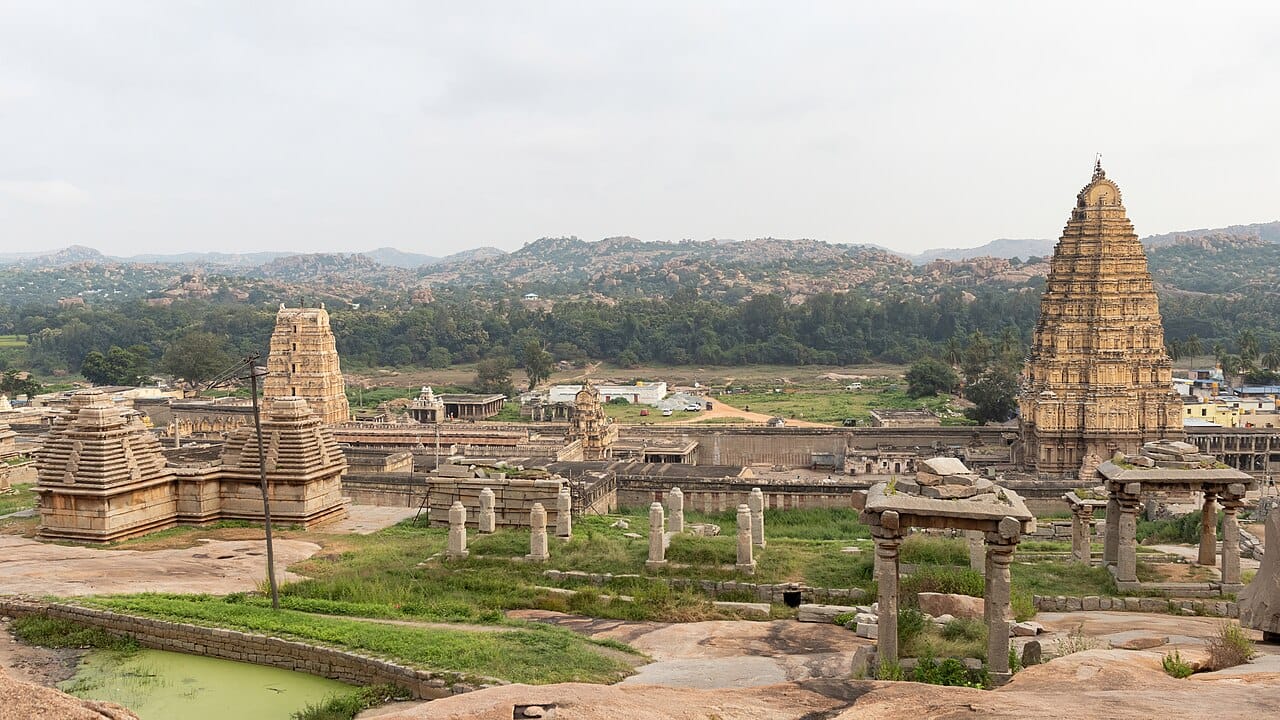
Virupaksha Temple
The Virupaksha Temple in Hampi, Karnataka, is a UNESCO World Heritage Site and the oldest functioning temple in India, dedicated to Lord Shiva as Virupaksha.
Trimbakeshwar Temple
The Trimbakeshwar Temple in Maharashtra is one of the twelve Jyotirlingas, unique for its three-faced linga representing the Trimurti and the source of the Godavari River.
Airavatesvara Temple
The Airavatesvara Temple at Darasuram, built by Rajaraja Chola II between 1146 and 1172 CE, is one of the three UNESCO World Heritage 'Great Living Chola Temples.' It is renowned for its stone chariot, musical steps, and exquisite 12th-century Chola sculptures.
Gangaikonda Cholapuram Temple
The Gangaikonda Cholapuram Temple, built by Rajendra Chola I in 1035 CE, is a UNESCO World Heritage 'Great Living Chola Temple.' Its 53-metre vimana with recessed corners and six pairs of monolithic dvarapalas represents a refined evolution of Chola Dravidian architecture.
Kampaheswarar Temple
Kampaheswarar Temple in Tribhuvanam, built by Kulothunga Chola III in 1202 CE, is one of the later great Chola temples and completes the quartet of magnificent Chola stone temples alongside the Brihadeeswarar at Thanjavur, Gangaikonda Cholapuram, and Airavatesvara at Darasuram. The temple represents the mature phase of Chola architecture, featuring a 30-metre granite vimana, a separate Devi shrine, and a unique chariot-wheel carving in the mandapa. It is maintained by the Archaeological Survey of India as a protected monument of national importance.
Koranganatha Temple
Koranganatha Temple, built during the reign of the Chola king Parantaka I (907-955 CE) at Srinivasanallur near Tiruchirappalli, is a well-preserved example of early Chola architecture with exquisite stone carvings. The temple is maintained by the Archaeological Survey of India and is notable for its peaceful setting on the banks of the Kaveri River.
Adi Badri Uttarakhand
A complex of 16 ancient temples from the Gupta period; it is believed Vishnu resided here before moving to Badrinath.
Baijnath Temple Uttarakhand
A 12th-century complex on the Gomti banks, famous for its life-sized black stone idol of Goddess Parvati.
Vindhyavasini Devi Temple
One of India's most visited Shakti Peethas, where Goddess Durga is believed to have resided after slaying Mahishasura.
Lalita Devi Temple Naimisharanya
Located in the ancient forest of Naimisharanya, it is mentioned in Puranas as the spot where the universe's first Chakra fell.
Bateshwar Temples Agra
A complex of 101 Shiva temples built on the banks of Yamuna, representing a significant pilgrimage and architectural site.
Gauri Shankar Temple Delhi
An 800-year-old temple in Chandni Chowk built by a Maratha soldier, housing a centuries-old brown Shiva Lingam.
Trimbakeshwar Temple
The Trimbakeshwar Temple in Maharashtra is one of the twelve Jyotirlingas, unique for its three-faced linga representing the Trimurti and the source of the Godavari River.
Alampur Jogulamba Temple
One of the 18 Maha Shakti Peethas, located in a complex that also houses nine ancient 7th-century Chalukyan temples.
Somnath Temple
Somnath Temple, the first of the twelve Jyotirlingas, is an ancient Shiva temple in Gujarat known for its resilience through repeated destruction and reconstruction over a millennium.
Siddhesvara Dham (Char Dham)
A grand complex featuring a 108-foot Shiva statue and replicas of the 12 Jyotirlingas and the four Char Dham sites.
Ramanathaswamy Temple
The Ramanathaswamy Temple in Rameswaram is one of the 12 Jyotirlingas and a Char Dham site, famous for its magnificent thousand-pillared corridors, the longest temple corridor in the world, and its sacred association with Lord Rama's worship of Shiva.
Nageshwar Jyotirlinga Temple
The coastal jyotirlinga hidden in the marshlands of Saurashtra. Shiva as Nageshwar — the Lord of Snakes. The legend of Daruka and a 25-meter outdoor Shiva statue visible from the Arabian Sea.
Mahakaleshwar Temple
One of the twelve Jyotirlingas, Mahakaleshwar in Ujjain is the only Shiva temple where the lingam faces south (Dakshinamurti). Famous for the pre-dawn Bhasma Aarti, it has been a living shrine for over a millennium, drawing millions of Shaivite pilgrims to the ancient city of Ujjain on the Shipra River.
Mahakali Temple
Mahakali Temple in Ujjain is one of the 51 Shakti Peethas, where the upper lip (oshtha) of Goddess Sati is believed to have fallen. It is one of the three Shakti Peethas in the Ujjain region (alongside Mahakaleshwar and Chintaman Ganesh). The temple is part of the sacred geography of Ujjain, one of the seven Mokshapuris (liberation cities) of Hinduism.
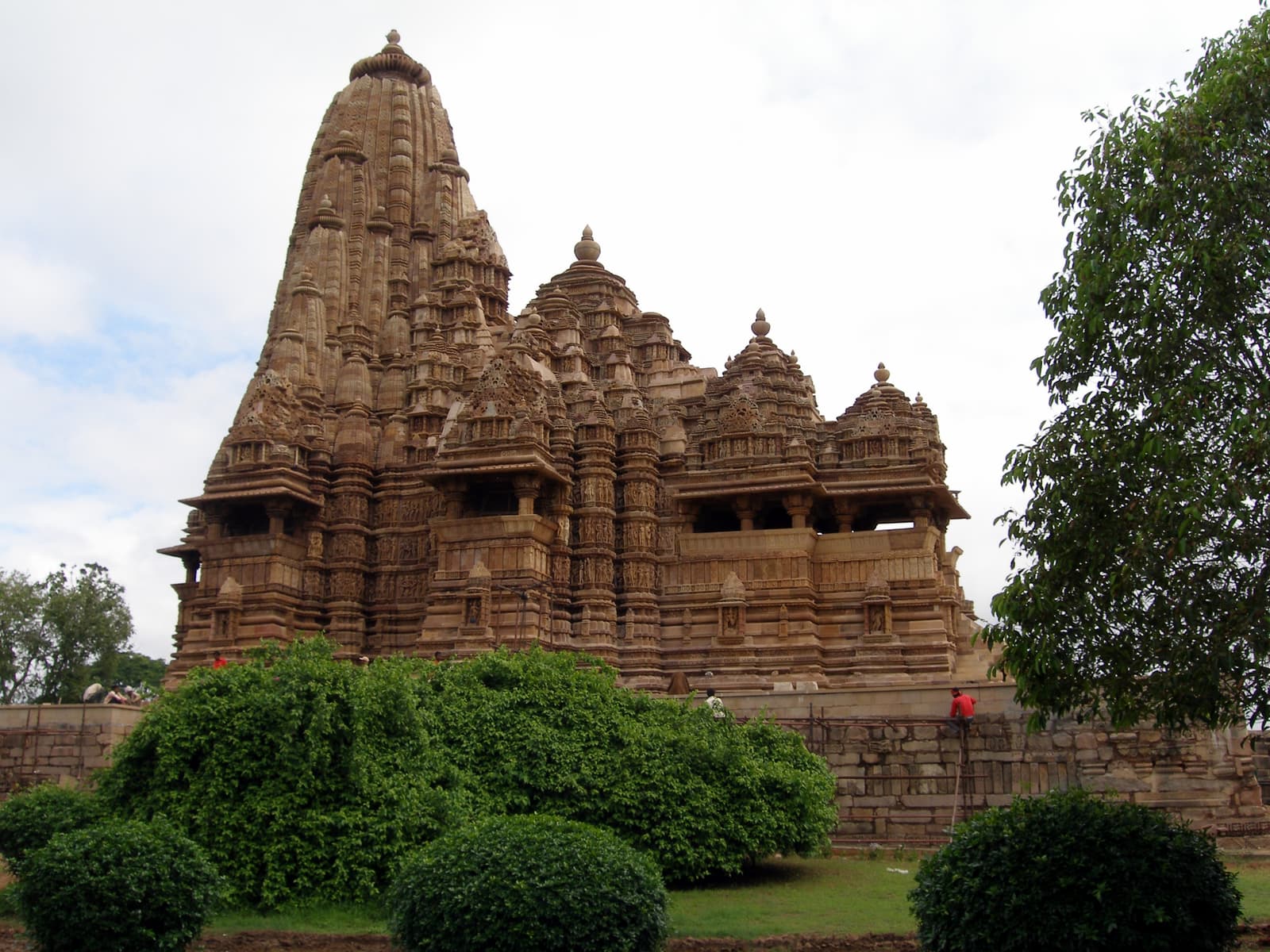
Khajuraho Group of Monuments
The largest and most ornate Hindu temple in the Khajuraho Group of Monuments.
Tarakeshwar Temple Hooghly
A massive 18th-century pilgrimage site dedicated to Lord Taraknath, especially vibrant during the Gajan festival.
Virupaksha Temple
The Virupaksha Temple in Hampi, Karnataka, is a UNESCO World Heritage Site and the oldest functioning temple in India, dedicated to Lord Shiva as Virupaksha.
Jageshwar Temple
A cluster of 124 ancient stone temples from the 7th-12th centuries, nestled in a dense deodar forest.
Neelkanth Mahadev Temple
Situated at 1,330 meters, this is where Lord Shiva is believed to have consumed the poison (Halahala) during the Samudra Manthan.
Tungnath Temple
The highest Shiva temple in the world, situated at 3,680 meters on the Chandranath Parbat; it is the 'Tritiya Kedar' in the sacred Panch Kedar pilgrimage circuit.
Rudranath Temple
One of the Panch Kedar shrines, representing Lord Shiva's face, situated at an altitude of 2,286 meters amidst meadows and rhododendron forests.
India's temples are living traditions — not museums. Every temple has its own customs. This guide helps first-time visitors prepare with confidence and respect.
Foreign visitor information is being researched
Please verify with the official temple authority before planning your visit.
Foreign Visitors
Verify Before VisitingVisitor Information
Entry policies vary between temples. Most temples welcome visitors, while some may restrict access to specific areas, rituals, or the inner sanctum. Always verify the latest entry guidelines with the official temple authorities before your visit.
Modest clothing is expected at every Indian temple — a sign of respect, not a restriction. Think of it as dressing for a formal ceremony.
A scarf is always useful — it covers shoulders, works as a head covering, and can double as a makeshift face cover if needed.
Outdoor photography is generally permitted. Indoor photography is often restricted. Always look for signage or ask a priest before taking photos inside.
The best time to visit Omkareshwar is from October to March, when the weather is cool and pleasant. The post-monsoon months (October–November) are especially beautiful as the Narmada is full and the island is lush. Maha Shivaratri (February–March) draws the largest crowds. Summer mornings (6–10 AM) and evenings (4–7 PM) are the best times of day for darshan and the island parikrama.
April — June
July — September
English is widely understood at major tourist temples. In smaller local temples, Hindi and the regional language are more common. A smile and simple hand gestures go a long way. Learning a few words of the local language is always appreciated.
Cash (Indian Rupees) is the most reliable option, especially for temple offerings, small shops, and local transport.
UPI digital payments (Google Pay, PhonePe, Paytm) are widely accepted across India — even at roadside stalls. Download one before you arrive.
International credit/debit cards work at most ATMs, hotels, and larger establishments. Smaller vendors may only accept cash or UPI.
Carry small denominations (₹10, ₹20, ₹50, ₹100 notes) for offerings and temple donations. Large notes (₹500, ₹2000) can be hard to break at smaller counters.
Many historic temples have uneven stone floors, multiple steps, and narrow passages. Wheelchair access is limited at older sites — contact the temple in advance.
Basic restroom facilities and drinking water are available at most major temples. Some charge a small fee (₹5–₹10).
Stay hydrated — carry a reusable water bottle, especially in hot climates.
Keep valuables secure — use hotel lockers for passports and excess cash.
Wear comfortable, sturdy footwear — temple floors can be hot, wet, or uneven.
Beware of unofficial guides or touts near temple entrances. Only use authorised services.
Carry a photocopy of your passport and visa. Leave originals in your hotel safe.
Download offline maps — mobile networks can be unreliable near remote temple sites.
These short explanations help make sense of what you see and experience.
Darshan means 'seeing' — but in a temple it means being seen by the deity. It is a sacred moment of connection, not just a viewing.
Removing footwear is a sign of humility. It also keeps the temple floor clean, since devotees sit and pray on the ground.
Food offered to the deity and then distributed to devotees. It is considered blessed. Accept it with both hands and do not discard it.
The bell creates a focused acoustic atmosphere, wards off distractions, and announces your presence before entering the inner sanctum.
Circumambulation (pradakshina) is done clockwise, keeping the sanctum on your right — an auspicious direction aligned with the sun's path.
Flowers symbolise devotion, coconuts represent the ego being broken, incense purifies the air, and lamps represent the victory of light over darkness.
Sacred viewing of the deity; the central act of temple worship.
Clockwise circumambulation of the sanctum.
Blessed food offered to the deity and distributed to devotees.
The innermost sanctum where the main deity resides.
The towering spire above the sanctum, a defining feature of temple architecture.
A pillared hall or pavilion within the temple complex.
The Indian Rupee (?, INR) is the local currency. ATMs are widely available in cities and towns. For temple offerings, keep small notes (₹10, ₹20, ₹50). Most temples accept donations in cash only — digital payments are uncommon at the offering counter itself.
Offerings (dakshina) are given with the right hand. Place cash in the donation box (hundi) or give it directly to the priest. There is no fixed amount — give what feels appropriate. Some temples have fixed fees for special entry or puja participation.
Shoes and sandals are removed before entering the temple building. Most temples have a designated shoe counter (free or a small fee of ₹5–₹20). Socks are generally allowed. In monsoon, carry a plastic bag for wet shoes.
Darshan queues can take 30 minutes to 3 hours at popular temples. Many offer paid VIP darshan (₹100–₹500) for faster entry. Special queues for women, elderly, and disabled visitors exist at some temples. No line jumping.
Major festivals draw enormous crowds — sometimes hundreds of thousands. Book accommodation months in advance. Expect road closures, restricted vehicle access, and limited phone network. Arrive early (before dawn) to avoid the worst congestion.
Always look for signage before taking photos. When in doubt, ask a priest. Never take photos of devotees in prayer without permission. Selfie sticks are banned at most temples. Silently switch your phone to silent mode.
Police / Ambulance / Fire: 112 (National Emergency Number)
Tourist Helpline: 1800-111-363 (Multi-lingual, Ministry of Tourism)
Women's Helpline: 1091
Temple-specific visitor information is continuously researched and updated from official sources. Where specific data is unavailable, general India travel guidance is provided. Always verify current policies with the temple authority before your visit.
Information last verified July 2026. Temple-specific data coming soon.
Continue your journey through the spiritual and architectural wonders of India.

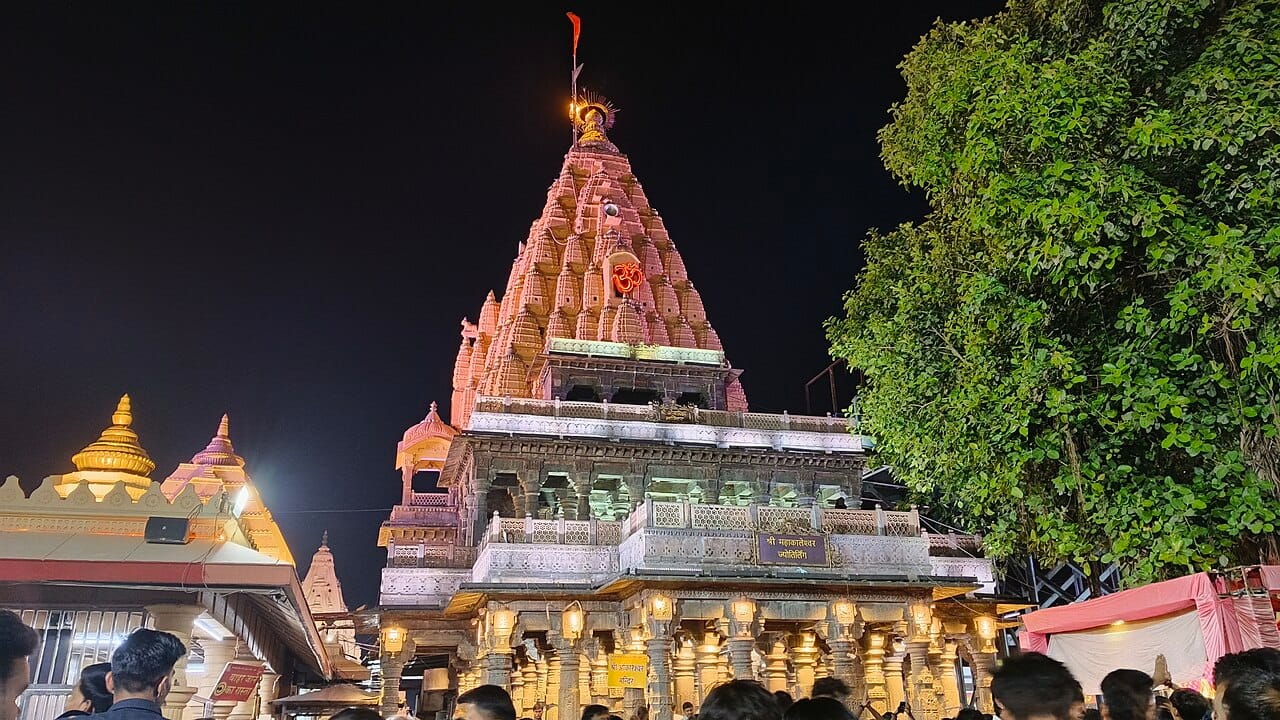
One of the twelve Jyotirlingas, Mahakaleshwar in Ujjain is the only Shiva temple where the lingam faces south (Dakshinamurti). Famous for the pre-dawn Bhasma Aarti, it has been a living shrine for over a millennium, drawing millions of Shaivite pilgrims to the ancient city of Ujjain on the Shipra River.

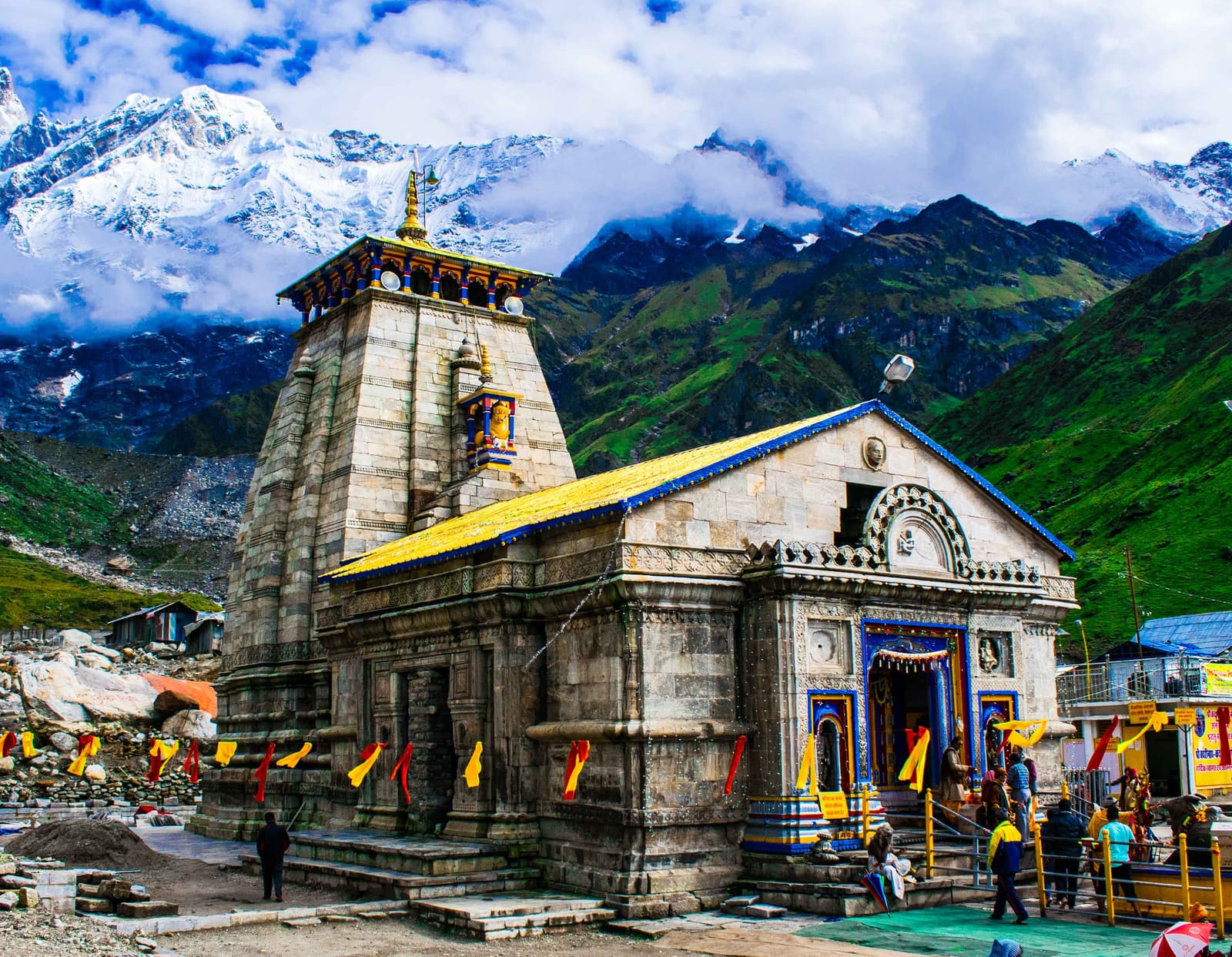
Kedarnath Temple — one of 12 Jyotirlingas, part of Char Dham and Panch Kedar. Verified visitor guide for pilgrims and international travellers at 3,583 m.

Kashi Vishwanath Temple in Varanasi, one of the twelve Jyotirlingas and the most sacred Shiva temple in Hinduism, stands on the western bank of the holy Ganga.

The source of the Bhima River deep in the Sahyadri hills. A Jyotirlinga surrounded by a wildlife sanctuary, with the legend of Tripurasura.
"The Khajuraho Group of Monuments is famous for its Nagara-style architectural symbolism and intricate sculptures."