Temple Timings
Verified6:00 AM to 6:00 PM daily. Western Group: ₹40 (Indians), ₹600 (foreigners). Free for children under 15.
Explore historical timelines, architectural traditions, and primary documentation across India's sacred temples and pilgrimage circuits.
Explore More Temples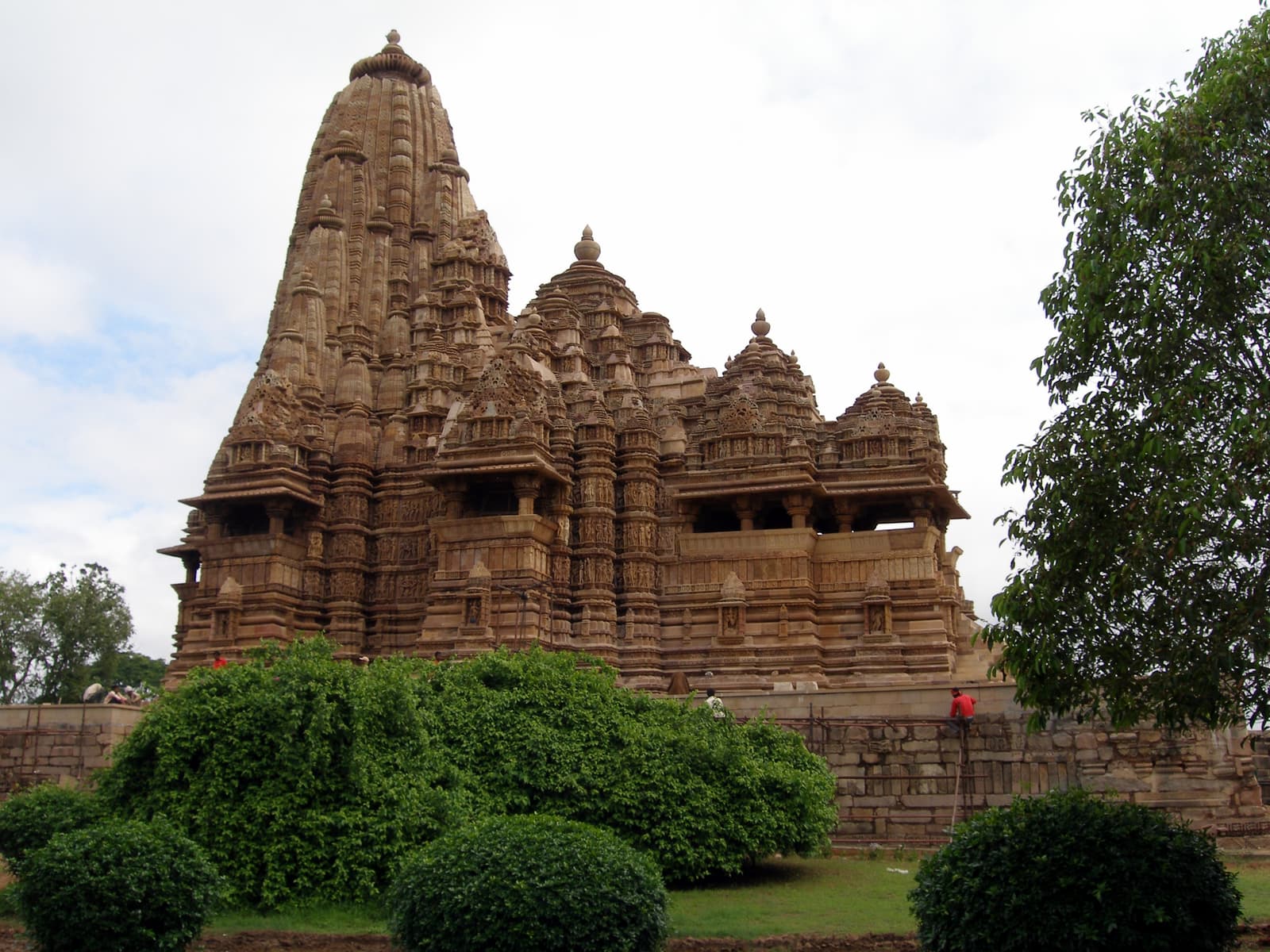
UNESCO World Heritage Site — recognized for outstanding universal value
The Kandariya Mahadeva Temple, meaning "the Great God of the Cave," is the largest and most ornate temple in the Khajuraho Group of Monuments, a UNESCO World Heritage site listed in 1986. Rising 117 feet (31 meters) above the plains of Bundelkhand, it is crowned by 84 miniature spires (urushringas) that cluster around the main shikhara like a mountain range, creating a silhouette that symbolizes Mount Kailash, the abode of Lord Shiva.
Built during the reign of King Vidyadhara of the Chandela dynasty around 1025–1050 CE, the temple is covered with over 900 carved figures arranged in three horizontal bands — depicting gods, celestial nymphs, animals, and scenes from daily life. The erotic sculptures (mithunas) for which Khajuraho is famous account for less than 10% of the total carvings and are concentrated at structural thresholds for symbolic rather than decorative purposes.
The temple follows the Panchayatana plan — a main shrine with four subsidiary shrines at the corners of a shared platform — and represents the mature Nagara style at its most developed stage. Rediscovered in 1838 by British engineer T.S. Burt after seven centuries of forest isolation, the temple remains the finest surviving example of Chandela architectural ambition.
UNESCO inscribed the Khajuraho Group of Monuments in 1986 under three criteria that together tell a story of creative genius, lost civilization, and fragile survival.
A masterpiece of human creative genius — the Khajuraho temples represent a unique artistic achievement in their fusion of architecture and sculpture across every available surface.
An exceptional testimony to the Chandela civilization — a cultural tradition that flourished for three centuries and left a complete record of its religious, artistic, and social life in stone.
An outstanding example of a traditional human settlement that has become vulnerable under the impact of irreversible change — the temples survive as a fragile remnant of a once-thriving temple city.
Khajuraho is also protected as a Monument of National Importance by the Archaeological Survey of India (ASI) under the Ancient Monuments and Archaeological Sites and Remains Act. The site is one of 18 Indian temple-related UNESCO inscriptions and among the most visited heritage destinations in central India.
The Kandariya Mahadeva Temple was commissioned by King Vidyadhara (r. c. 1003–1035 CE), the most powerful ruler of the Chandela dynasty. His reign marked the apex of Chandela power — he repelled an invasion by Mahmud of Ghazni around 1019 CE, one of the few Indian victories against the Turkic commander. The temple was built not only as a place of worship but as a victory monument celebrating this achievement, its unprecedented scale a direct statement of political and military confidence.
The Chandelas began as feudal lords under the Gurjara-Pratihara Empire before declaring independence under Yashovarman (925–950 CE). Their homeland was Jejakabhukti, the region now called Bundelkhand. The temple-building impulse was political strategy as much as devotion: each successive king needed to build a larger temple than his predecessor to legitimize his authority. The result was a density of architectural ambition in one small capital that India has never seen elsewhere.
After the Chandela decline in the 13th century under pressure from the Delhi Sultanate and internal succession disputes, the temples were abandoned gradually rather than violently destroyed. The forest consumed them for seven centuries until 1838, when British engineer T.S. Burt of the Bengal Cavalry was led by local guides to spires protruding through the jungle canopy. His report to the Royal Asiatic Society ignited the rediscovery of a lost temple city. Alexander Cunningham of the ASI surveyed the site in the 1850s, and F.C. Maisey produced the first measured drawings, revealing a corpus of mature Nagara architecture preserved exactly as its builders left it.
Chandela king Yashovarman builds the Lakshmana Temple, the first major temple at Khajuraho.
King Dhanga builds the Vishvanatha Temple, expanding the Western Group.
King Vidyadhara repels Mahmud of Ghazni's invasion, establishing Chandela military prestige.
Kandariya Mahadeva Temple constructed under Vidyadhara — the largest Chandela temple.
Fortress of Kalanjara falls to Qutb-ud-din Aibak; Chandelas enter decline.
Khajuraho temples abandoned; forest reclamation begins.
T.S. Burt rediscovers the temples; reports to the Royal Asiatic Society.
Alexander Cunningham surveys and documents the site for the ASI.
First Khajuraho Dance Festival held, reviving the site as a cultural venue.
UNESCO inscribes Khajuraho Group of Monuments as a World Heritage Site.
Complete 3D laser-scanning project creates digital archive of all 25 temples.
The Khajuraho Group of Monuments was inscribed on the UNESCO World Heritage List in 1986 under criteria (i), (iii), and (v). The inscription recognized the site as "one of the greatest achievements of the human creative spirit" and placed it among India's most protected cultural properties.
The UNESCO designation brought international conservation oversight and funding. The ASI, in collaboration with UNESCO, has implemented chemical conservation protocols, biological growth removal programs, and digital monitoring systems. A complete 3D laser-scanning project completed in 2018 created a baseline digital archive of all 25 temples, stored both at the ASI headquarters in New Delhi and in the UNESCO World Heritage Centre digital repository.
The site faces ongoing challenges: sandstone weathering accelerated by climate change, biological growth from monsoon moisture, and visitor pressure of over 900,000 annual visitors to the Western Group. The buffer zone surrounding the temple groups has been protected from encroaching construction, preserving the rural setting that gave the rediscovery its dramatic character.
The Kandariya Mahadeva Temple represents the Nagara style at its terminal evolution — the point at which every formal possibility of the tradition had been explored and perfected. The temple measures 117 feet (31 meters) in height and the same in length, making it the largest in the Khajuraho complex. The main shikhara rises in a parabolic curve known as the "Latin cross-section", surrounded by 84 urushringas (miniature spires) that cascade outward and downward in diminishing scale, creating a rippling silhouette that mimics the Himalayan peaks.
The temple follows the Panchayatana plan — a main shrine with four subsidiary shrines at the corners of a shared platform. Only the Kandariya Mahadeva and the Lakshmana Temple preserve this full layout. The progression from entrance to sanctum follows a deliberate sequence: ardhamandapa (entrance porch), mandapa (main hall with side transepts), antarala (vestibule), and garbhagriha (sanctum). Each space narrows and darkens as the devotee moves inward, compressing the experience toward the cave-like secrecy of the inner chamber.
The temple is built entirely from fine-grained sandstone from Panna, twenty kilometers south — soft enough to carve with precision yet durable enough to support massive loads. The Chandela masons used dry masonry: stones cut to tolerances so tight that no mortar was required. The jagati (platform) is four meters high and wrapped with friezes of elephants, horses, and processional scenes, anchoring the visual weight of the temple while raising it above the monsoon water table.
The Kandariya Mahadeva is dedicated to Lord Shiva in his aspect as Mahadeva, the Great God. The name itself — Kandariya Mahadeva— means "the Great God of the Cave," referring to the windowless sanctum that represents the innermost heart where the divine dwells. The cave (kandara) symbolizes the spiritual journey: the devotee must leave the light of the external world behind to encounter the divine in darkness.
The temple's entire architectural program is a cosmological diagram. The 84 subsidiary spires carry deep meaning in Hindu tradition — they represent the 84 lakh (8.4 million) species of life in the cycle of rebirth (samsara). The main shikhara symbolizes Mount Kailash, Shiva's celestial abode, transplanted into the flat plains of Bundelkhand. The three horizontal sculptural bands — depicting human, celestial, and divine realms — form a theological ladder: the worshipper climbs with their eyes from the mundane to the transcendent.
The sanctum houses a Shiva lingam, the aniconic representation of the deity. The garbhagriha is square, approximately 3.5 meters per side, and completely dark save for lamp light. This intentional darkness is not an architectural limitation — it is the point. The passage from the bright, crowded mandapa through the narrow antarala into the dark, solitary sanctum mirrors the spiritual progression from the world of forms to the formless absolute.
The exterior of the Kandariya Mahadeva alone carries over 900 carved figures, organized in three horizontal bands that wrap the entire structure. This sculptural program follows principles from the Shilpa Shastras, the canonical texts of Indian temple architecture. The bands are designed to be read from bottom to top as the devotee performs clockwise circumambulation (pradakshina).
The lowest band depicts the world of humans: musicians with drums and flutes, dancers, a teacher instructing a student, a woman removing a thorn from her foot, an archer drawing his bow. These are specific observations of Chandela daily life — courtly, domestic, agricultural. The middle band rises to the celestial realm: apsaras (celestial nymphs) in tribhanga postures, applying kohl, holding mirrors, writing letters, playing with children. They are divine but not detached — they laugh, stretch, and gaze back at the viewer. The upper band carries the gods: Shiva, Parvati, Vishnu, Brahma, Indra, the Saptamatrikas, and Ganesha. These figures are larger than life and carved with a formality that contrasts sharply with the naturalism of the figures below.
The mithuna (erotic) sculptures account for less than 10% of the total carvings. They are concentrated at specific structural junctures — where the mandapa meets the antarala, and where the antarala meets the garbhagriha. Scholarly interpretation places them within Tantric frameworks, where sexual union symbolizes the cosmic union of Shiva and Shakti. Their placement at thresholds marks the boundary between the material and spiritual worlds — liminal zones where desire and liberation intersect.
The Chandelas began as feudal lords under the Gurjara-Pratihara Empire, which dominated North India in the 9th century. Their homeland was Jejakabhukti (modern Bundelkhand), a rugged landscape of forested hills and granite escarpments. From the fortress of Kalanjara, they gradually accumulated power until Yashovarman (925–950 CE) declared independence by defeating the Pratihara governor and seizing Kalachuri territories.
The Chandelas claimed descent from Chandra, the moon god, through the legendary king Nannuka. This lunar lineage was inscribed into the very fabric of Khajuraho — the name itself is traditionally derived from Khajura-vahaka, "bearer of dates," carrying resonances of the Khajuri tree in the Chandela foundation myth. The dynasty ruled from Kalanjara fort, not Khajuraho. Their temples were built in the sacred precinct, not the political capital — a distinction that explains why Khajuraho was abandoned when the dynasty fell.
The Khajuraho temples are a record of Chandela religious pluralism. While the Western Group is predominantly Shaiva, the Eastern Group includes significant Jain temples (Parshvanath, Adinath) built to the same Nagara standards. The Chandela court actively patronized multiple traditions — Jain merchants controlled trade routes connecting central India to western ports, and building Jain temples in the royal capital signaled that the state protected all communities. The same kings who dedicated Shiva temples also donated land to Jain monasteries.
The temple's shikhara rises 117 feet — the tallest in Khajuraho — yet the entire structure was built without mortar, using dry masonry techniques.
The 84 urushringas (miniature spires) represent the 84 lakh species of life in Hindu cosmology, not random ornament.
Erotic sculptures (mithunas) account for less than 10% of the 900+ carved figures; the vast majority depict gods, celestial nymphs, and daily life.
The sanctum is intentionally windowless and dark — the name Kandariya Mahadeva means "The Great God of the Cave."
The Panna sandstone used for construction is soft enough to carve individual strands of hair yet durable enough to support massive structural loads.
After the Chandela decline, the temples were abandoned for 700 years and consumed by forest, which preserved them from iconoclastic destruction.
British engineer T.S. Burt rediscovered the site in 1838 when local guides led him to spires protruding through the jungle canopy.
Only 25 of the original 85 Chandela temples at Khajuraho survive today — the rest collapsed or were dismantled for building material.
The Matangeshwar Temple in the Western Group is the only Khajuraho temple still used for active daily worship.
The annual Khajuraho Dance Festival, held every February, features classical Indian dance performances against the illuminated temple backdrop.
6:00 AM to 6:00 PM daily. Western Group: ₹40 (Indians), ₹600 (foreigners). Free for children under 15.
November to March is ideal. Daytime temperatures range from 10°C to 25°C. October and March are good shoulder months. Summers (April-June) are very hot exceeding 40°C.
Temple timings, dress codes, and photography rules can change without notice. Always verify with the temple administration or official website before your visit.
Khajuraho is located in the Chhatarpur district of Madhya Pradesh, approximately 600 kilometers southeast of Delhi and 400 kilometers northeast of Bhopal. The town is well-connected by air, rail, and road.
Khajuraho Airport (HJR) is 3 km from the Western Group. Direct flights from Delhi (daily, 1.5 hours), Varanasi (seasonal), and Agra (seasonal). Taxis and auto-rickshaws are readily available from the airport.
Khajuraho Railway Station (station code: KURJ) is 6 km from the Western Group connects to Delhi (via Mahoba), Agra, Varanasi, and Udaipur. Major junctions: Mahoba (70 km) and Jhansi (175 km) for broader connectivity.
Khajuraho is accessible by state buses from Jhansi (175 km, 4 hours), Satna (85 km, 2 hours), and Chhatarpur (45 km, 1 hour). Private taxis available from Mahoba, Jhansi, and Satna. NH 39 connects Khajuraho to major highways.
Other sacred sites within reach
Built by Yashovarman c. 954 CE, dedicated to Vishnu as Vaikuntha. Predates the Kandariya Mahadeva by 70 years and shows the evolution of Chandela architecture. Part of Western Group.
Built by King Dhanga (950-999 CE). Features a massive Nandi bull carved from a single sandstone block facing the sanctum.
The only active worship temple in Khajuraho, with a massive Shiva lingam approximately 2.5 meters in circumference.
1 km east. Includes Parshvanath and Adinath temples built in the same Nagara style for Jain worship. Free entry.
3 km south. Duladeo and Chaturbhuj temples in a later ornate style. Quieter, less visited.
Located near the Western Group, displays sculptures and artifacts excavated from the site.
Plan a full day for the temple complex. Start with the Western Group (3-4 hours), then walk or drive 1 km east to the Eastern Group, and finally head 3 km south for the Southern Group. The Western Group is the most crowded — arrive at 6:00 AM opening for a quieter experience.
The Khajuraho Dance Festival in February transforms the site into a cultural venue with classical dance performances against the floodlit temple backdrop. Book accommodation months in advance if visiting during the festival. For a quieter visit, come on weekday mornings between November and February.
Hire a certified ASI guide at the ticket counter — the iconographic program is complex and a guide significantly enriches the experience. Carry water, sunscreen, and a hat as the complex involves substantial walking in open sunlight. Wear comfortable shoes. Photography is allowed but drones are prohibited.
The Archaeological Survey of India maintains the Khajuraho Group of Monuments under the Ancient Monuments and Archaeological Sites and Remains Act. The conservation program addresses three distinct challenges: structural stabilization (monitoring cracks in the shikhara and mandapa), surface conservation (removing biological growth without damaging the sandstone patina), and environmental management (controlling drainage, vegetation, and visitor pathways).
Sandstone is the site's greatest vulnerability. The Panna sandstone of Khajuraho is susceptible to exfoliation — the surface layer peels away when moisture penetrates and expands during temperature cycles. Climate change has accelerated this process: more intense monsoon rains followed by prolonged dry periods create repeated stress on the carved surfaces. The ASI has implemented a chemical conservation protocol developed in collaboration with UNESCO. Biological growth — moss, lichen, and fig seedlings — is removed manually and with controlled biocidal treatments. Structural cracks are monitored with digital strain gauges.
Visitor pressure is a growing concern. The Western Group receives over 900,000 annual visitors. The ASI has installed designated walkways, restricted access to certain temple interiors, and introduced timed-entry protocols during peak season. The buffer zone surrounding the temple groups has been protected from construction, preserving the rural setting. The challenge for the next decade is to accommodate increasing visitation without sacrificing the sense of discovery that defines Khajuraho.
UNESCO World Heritage Centre — Khajuraho Group of Monuments
Archaeological Survey of India — Khajuraho Monuments
Kramrisch, Stella — The Hindu Temple (1946), Motilal Banarsidass
Meister, Michael — Encyclopaedia of Indian Temple Architecture
ASI — Laser Scanning and Digital Documentation of Khajuraho Temples (2018)
Desai, Devangana — The Religious Imagery of Khajuraho
UNESCO inscribed the Khajuraho Group of Monuments in 1986 under criteria (i), (iii), and (v), recognizing it as a masterpiece of human creative genius, an exceptional testimony to the Chandela civilization, and an outstanding example of a traditional human settlement vulnerable under irreversible change.
It was built by King Vidyadhara of the Chandela dynasty around 1025–1050 CE to celebrate his military victories, including his successful defense against Mahmud of Ghazni's invasion in 1019 CE.
Kandariya derives from 'Kandara' (cave) and 'Mahadeva' is a title for Lord Shiva. The name means 'The Great God of the Cave,' referring to the dark, windowless sanctum.
The temple rises 117 feet (31 meters) in height, with the main shikhara surrounded by 84 miniature spires (urushringas).
Over 900 carved figures cover the temple exterior, arranged in three horizontal bands depicting human life, celestial beings, and gods.
The mithuna (erotic) figures account for less than 10% of total carvings. They are placed at architectural thresholds and reflect Tantric philosophy where physical union symbolizes the cosmic union of Shiva and Shakti, also serving an apotropaic (protective) function.
British engineer T.S. Burt of the Bengal Cavalry was led by local guides in 1838 to temple spires protruding through the jungle canopy. He documented the site for the Royal Asiatic Society.
After the Chandela decline, the temples were abandoned. The remaining 25 survived because thick forest isolation protected them from both natural elements and iconoclastic destruction.
Showing 8 of 20 questions
Bateshwar Temples Agra
A complex of 101 Shiva temples built on the banks of Yamuna, representing a significant…
Shiv Mandir
A popular local shrine dedicated to Lord Shiva, serving as a peaceful sanctuary for residents…
Peer Kho Cave Temple
A cave temple on the Tawi banks where legend says Jamvant meditated; it is one…
Bhoramdeo Temple
Commonly known as the 'Khajuraho of Chhattisgarh,' this 11th-century architectural masterpiece is famous for its…
Kailasa Temple, Ellora
The world's largest monolithic rock-cut structure, carved top-down from a single basalt cliff.
Elephanta Caves
A UNESCO World Heritage site on Elephanta Island, famed for the colossal 20-foot Trimurti sculpture…
Omkareshwar Temple
Situated on a sacred island in the Narmada River, Omkareshwar is the only Jyotirlinga located…
Mahakaleshwar Temple
One of the twelve Jyotirlingas, Mahakaleshwar in Ujjain is the only Shiva temple where the…
Mahakali Temple
Mahakali Temple in Ujjain is one of the 51 Shakti Peethas, where the upper lip…
Virupaksha Temple
The Virupaksha Temple in Hampi, Karnataka, is a UNESCO World Heritage Site and the oldest…
Airavatesvara Temple
The Airavatesvara Temple at Darasuram, built by Rajaraja Chola II between 1146 and 1172 CE…
Gangaikonda Cholapuram Temple
The Gangaikonda Cholapuram Temple, built by Rajendra Chola I in 1035 CE, is a UNESCO…
Konark Sun Temple
A 13th-century colossal stone chariot of the Sun God Surya, the Konark Sun Temple is…
Brihadeeswarar Temple
The Brihadeeswarar Temple in Thanjavur, built by Raja Raja Chola I in the 11th century…
Kailasa Temple, Ellora
The world's largest monolithic rock-cut structure, carved top-down from a single basalt cliff.
Tarakeshwar Temple Hooghly
1729 CE Atchala-style Shiva sanctuary founded by Raja Bharamalla in Hooghly district, famous for its…
Virupaksha Temple
The Virupaksha Temple in Hampi, Karnataka, is a UNESCO World Heritage Site and the oldest…
Jageshwar Temple
A cluster of 124 ancient stone temples from the 7th-12th centuries, situated in a dense…
Neelkanth Mahadev Temple
Situated at 1,330 meters, this is where Lord Shiva is believed to have consumed the…
Tungnath Temple
The highest Shiva temple in the world, situated at 3,680 meters on the Chandranath Parbat…
Rudranath Temple
One of the Panch Kedar shrines, representing Lord Shiva's face, situated at an altitude of…
Foreign Visitors
AllowedAll visitors welcome. The Khajuraho temples are a UNESCO World Heritage site open to all nationalities.
Visitor Information
Entry policies are set by each site — confirm before travelling.
Entry rules for international visitorsWho can enter, permits, and what to expect at the gate.Modest clothing is expected — a sign of respect, not a restriction.
November to March is ideal. Daytime temperatures range from 10°C to 25°C. October and March are good shoulder months. Summers (April-June) are very hot exceeding 40°C.
Common local languages: Hindi, English
Wheelchair: Partial. The Western Group complex has paved pathways but some areas have steps.
These short explanations help make sense of what you see and experience.
Police / Ambulance / Fire: 112 (National Emergency Number)
Tourist Helpline: 1800-111-363 (Multi-lingual, Ministry of Tourism)
Women's Helpline: 1091
Official Temple WebsiteState Tourism WebsiteRules change — confirm current policies with the site's authority before you travel.
Related heritage monuments, regional traditions, and pilgrimage connections.
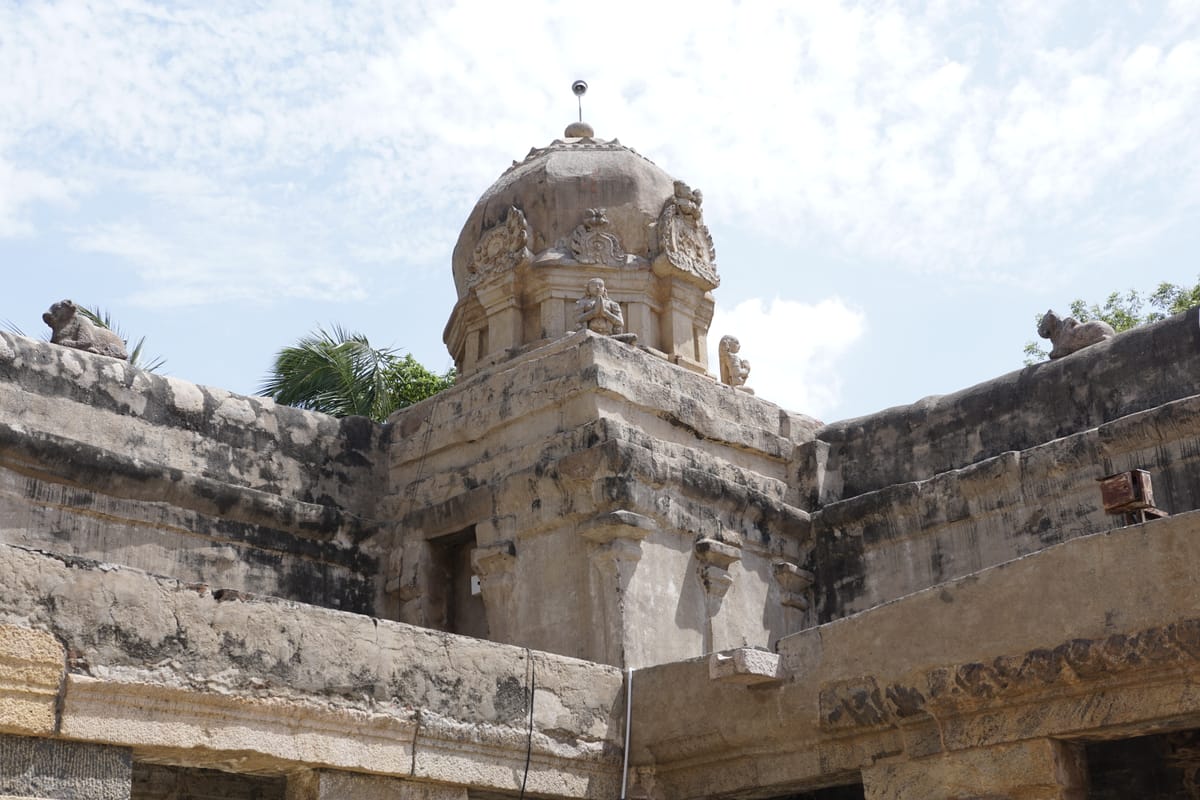
The principal temple of the Great Living Chola Temples UNESCO site, a masterpiece of Dravidian…
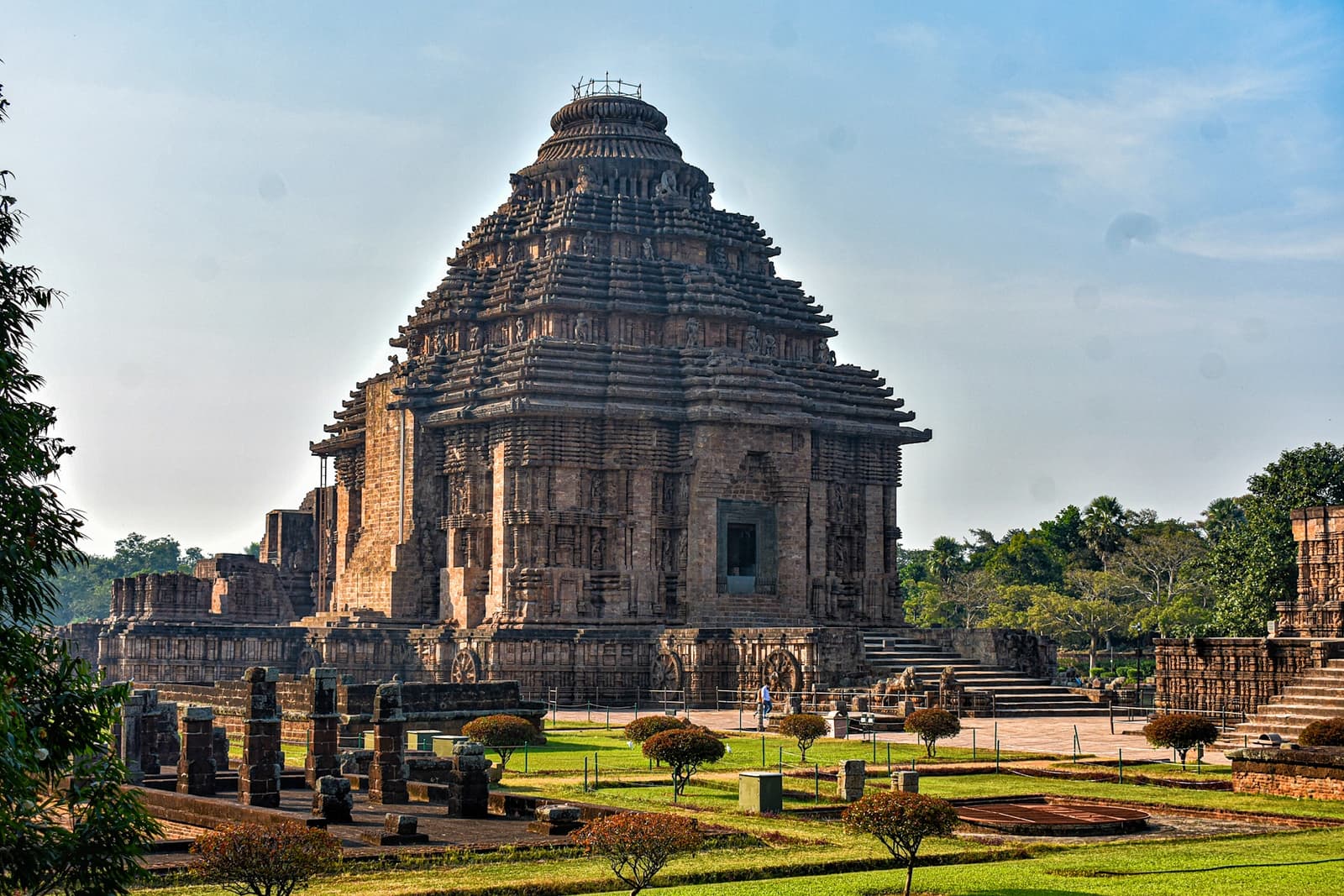
A 13th-century Sun Temple built as a giant stone chariot with 24 wheels, drawn by…
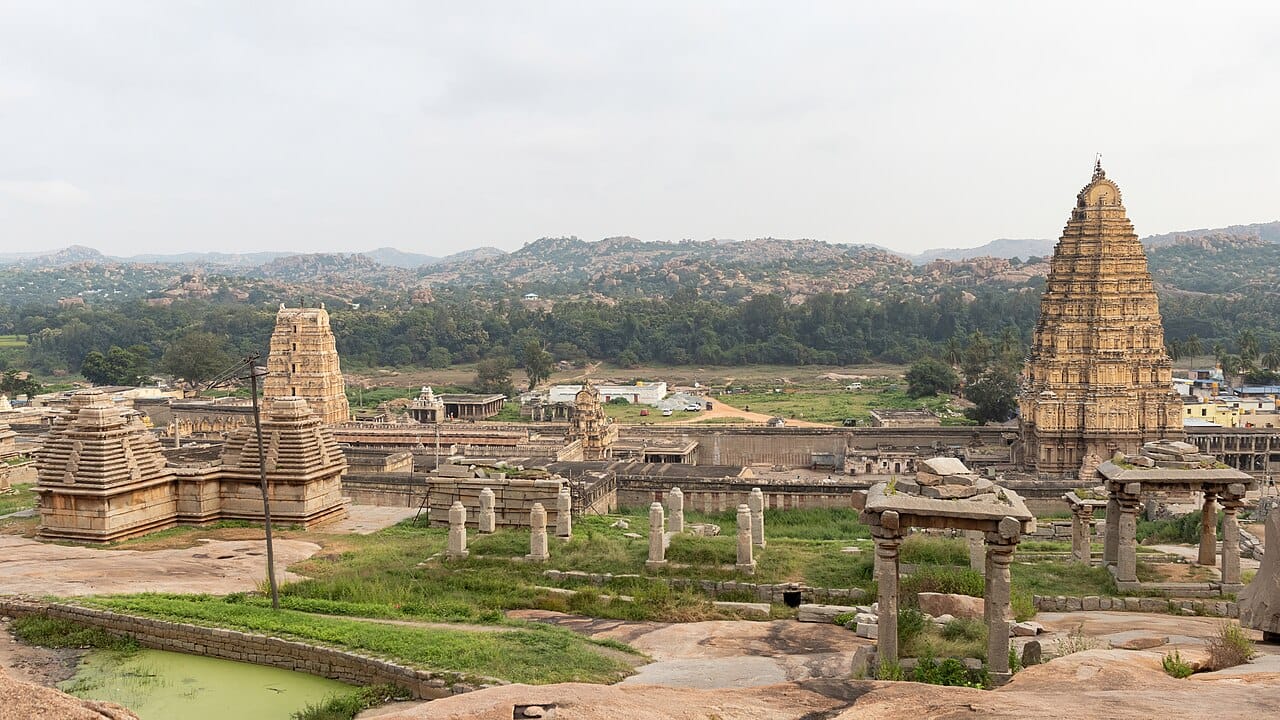
The Virupaksha Temple is the most iconic monument of Hampi, a UNESCO World Heritage site…
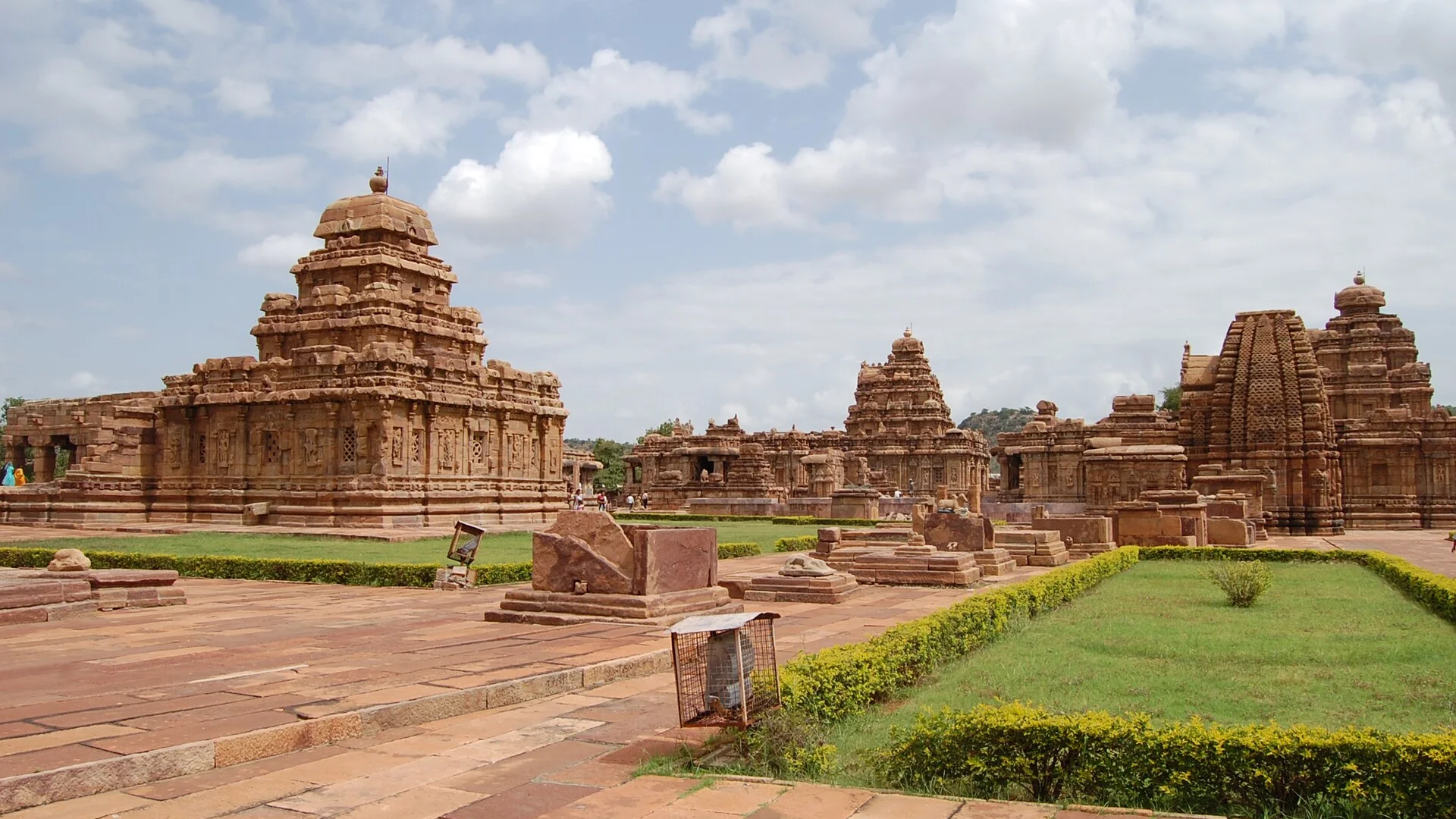
A UNESCO World Heritage site showcasing the unique blend of Nagara and Dravidian temple architecture…
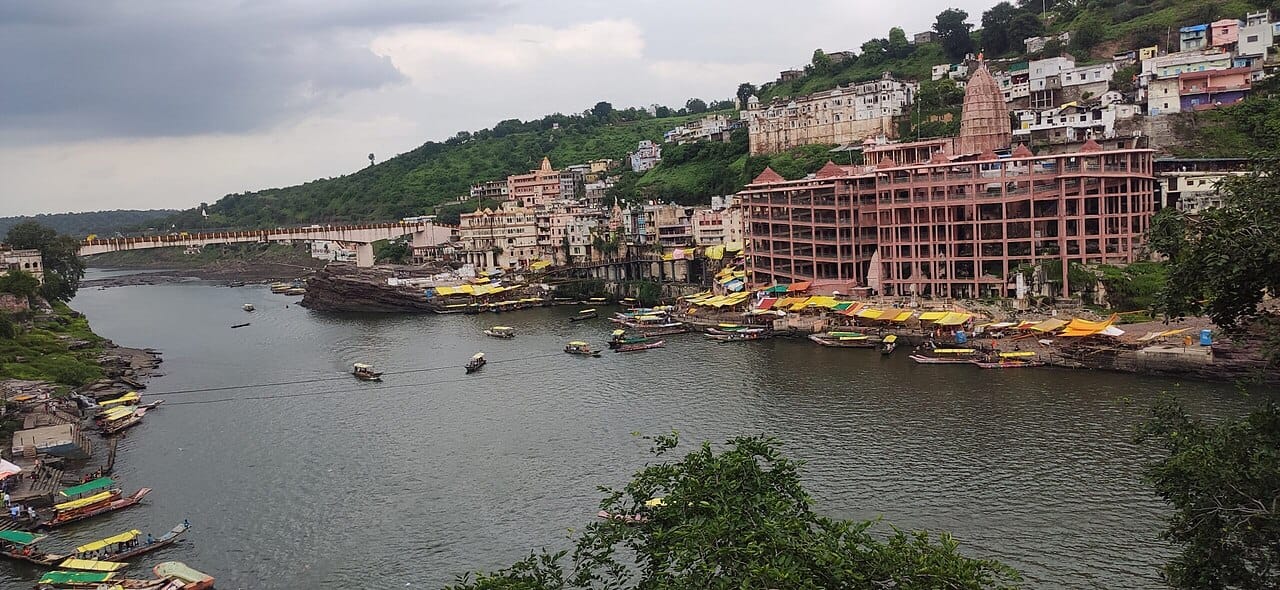
Situated on a sacred island in the Narmada River, Omkareshwar is the only Jyotirlinga located…
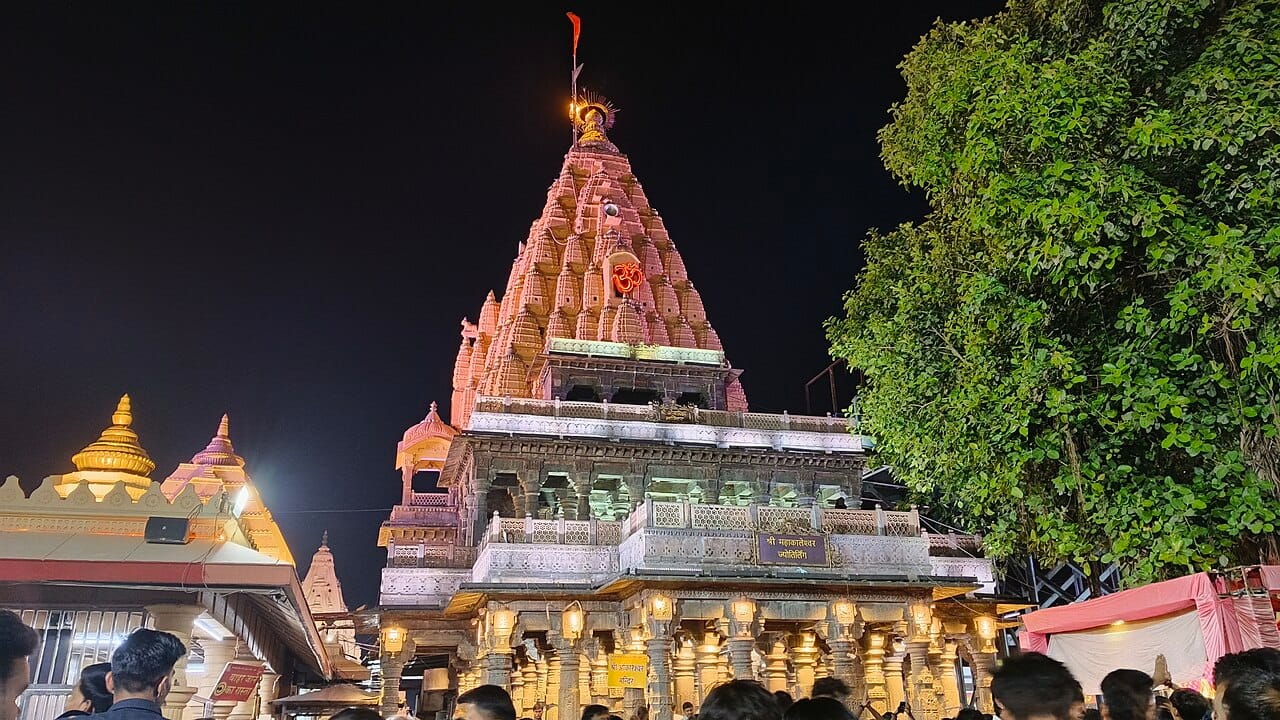
One of the twelve Jyotirlingas, Mahakaleshwar in Ujjain is the only Shiva temple where the…

Mahakali Temple in Ujjain is one of the 51 Shakti Peethas, where the upper lip…
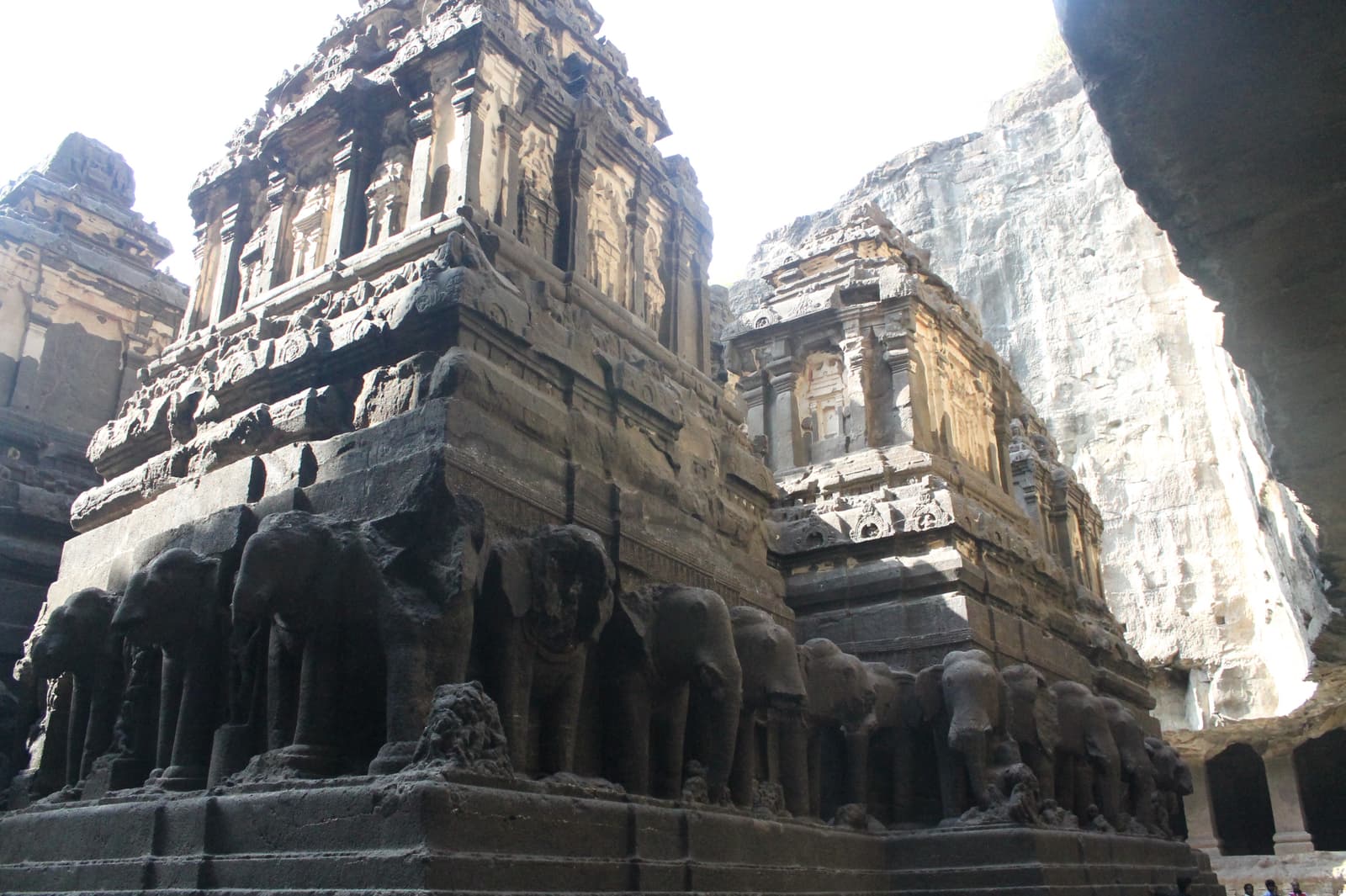
The world's largest monolithic rock-cut structure, carved top-down from a single basalt cliff.
"The Khajuraho Group of Monuments is famous for its Nagara-style architectural symbolism and intricate sculptures."