Sacred HeritageUNESCO World Heritage Site
Monuments at Pattadakal
Pattadakal, Karnataka
State:Karnataka
District:Pattadakal
Why This Temple Matters
UNESCO World Heritage Site — recognized for outstanding universal value
Key Takeaways
- Dedicated to Lord Shiva (Virupaksha)
- Vesara (Nagara-Dravidian fusion) architecture
- Built by the Chalukya Dynasty dynasty
- UNESCO World Heritage Site since 1987
- Located in Pattadakal, Karnataka
Quick Facts
- Dynasty
- Badami Chalukya
- Construction
- 7th - 8th century CE
- Temples
- 10 major temples
- Styles
- Nagara + Dravidian = Vesara
- Main Deity
- Shiva (Virupaksha)
- Location
- Bagalkot district, Karnataka
- UNESCO
- Inscribed 1987
- Material
- Sandstone
- Builder
- Vikramaditya II and queens
- Coronation Site
- Chalukya kings crowned here
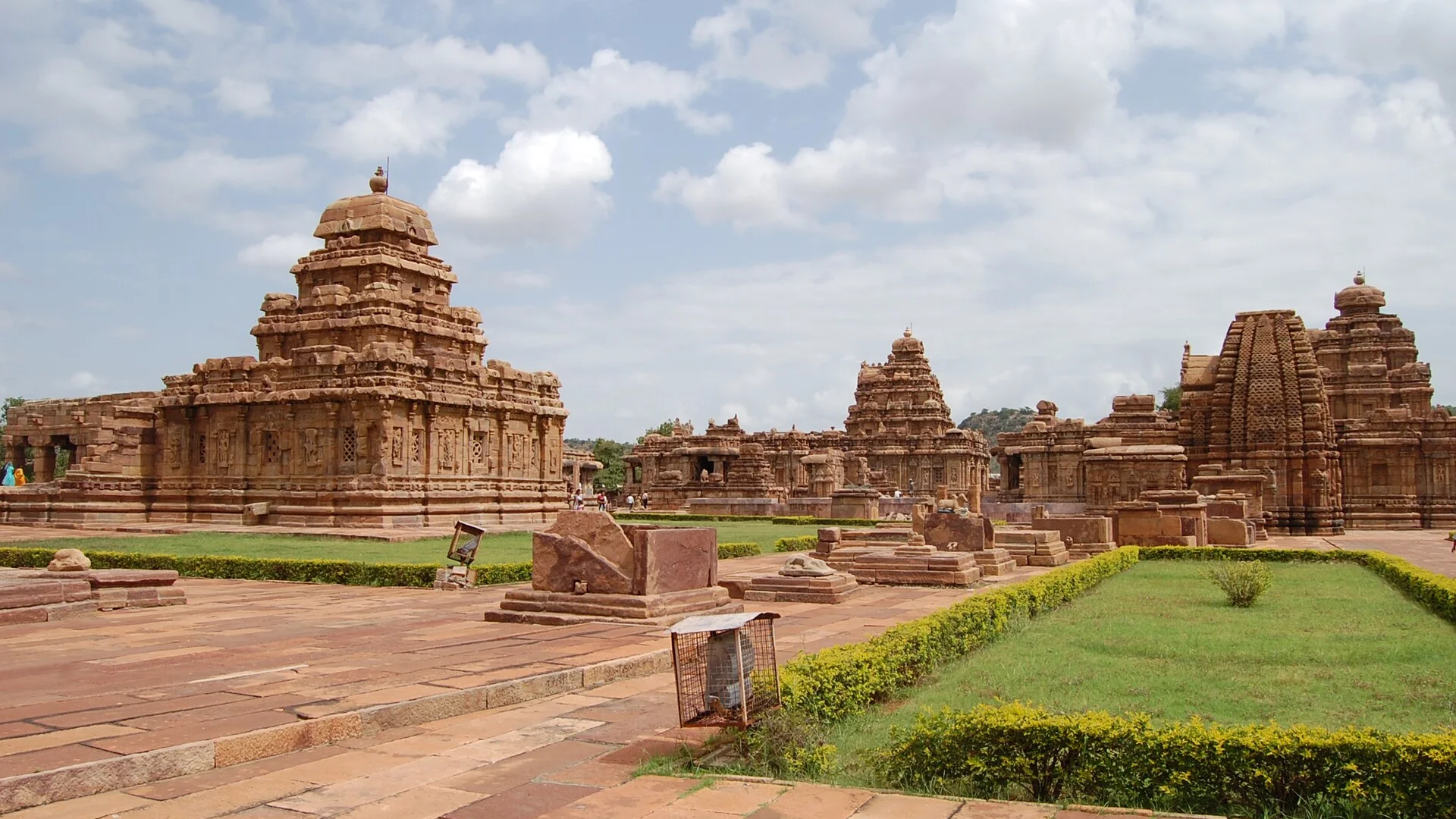
The Monuments at Pattadakal represent one of the most remarkable architectural experiments in Indian history. On the banks of the Malaprabha River in Bagalkot district, Karnataka, ten major temples stand as a living record of how North and South Indian building traditions met, clashed, and fused into a new style called Vesara.
Built between the 7th and 8th centuries under the Badami Chalukya dynasty, Pattadakal was no ordinary temple site. It was the coronation ground of Chalukya kings, a sacred landscape where each ruler added a new monument to mark his accession. The result is a cluster of temples that reads like a textbook of early medieval Indian architecture: some are pure Nagara from the north, others pure Dravidian from the south, and several blend both traditions into something entirely new.
The Virupaksha Temple, built in 745 CE by Queen Lokamahadevi, is the centerpiece of the complex. It was a political statement carved in sandstone a victory monument modeled on the Kailasanathar Temple of Kanchipuram, the finest temple of the defeated Pallava dynasty. Walk through Pattadakal, and you walk through the ambitions of kings, the faith of queens, and the genius of architects who refused to be limited by tradition.
Why This UNESCO Site Matters
Why This UNESCO Site Matters
UNESCO inscribed the Monuments at Pattadakal in 1987 for two reasons. Criterion (iii) recognizes the site as an exceptional testimony to the Chalukya civilization that flourished in the Deccan between the 6th and 8th centuries. Criterion (iv) highlights Pattadakal as an outstanding example of the fusion of Nagara and Dravidian architectural traditions a synthesis that gave rise to the Vesara style.
What makes Pattadakal truly unique is that it is the only site in India where temples in two fundamentally different architectural styles were built side by side by the same dynasty. Walking from the Kadasiddheshwara Temple to the Sangameshwara Temple is like walking from North India to South India in five minutes. No other UNESCO heritage site in India offers this kind of architectural dialogue.
The site is among the best-preserved early medieval temple complexes in India. Unlike many UNESCO sites that have undergone extensive reconstruction, Pattadakal has been preserved with minimal intervention, maintaining the authenticity of the original Chalukya construction. The sandstone carvings, the inscriptions, and the structural integrity of the temples remain remarkably intact after over 1,200 years.
History & Legacy
History & Legacy
The story of Pattadakal begins with the rise of the Badami Chalukya dynasty in the 6th century. Founded by Pulakeshin I, the dynasty established its capital at Badami (ancient Vatapi) and expanded across the Deccan plateau. By the 7th century, the Chalukyas controlled a vast territory stretching from the Arabian Sea to the Bay of Bengal, and they needed a sacred site for royal coronations.
They chose Pattadakal, a flat plateau on the banks of the Malaprabha River. The name itself means coronation stone in Kannada derived from Pattada Kalu. Here, on a carved stone platform still visible within the temple complex, Chalukya kings were ceremonially crowned. The coronation ceremony involved Vedic rituals performed by Brahmin priests, offerings to the river, and processions through the temple complex.
The most significant event in Pattadakal history came in 740 CE, when King Vikramaditya II defeated the Pallavas at Kanchipuram. His queen, Lokamahadevi, built the Virupaksha Temple to commemorate this victory. She modeled it directly on the Kailasanathar Temple of Kanchipuram the finest Pallava temple as a deliberate political statement. The Chalukyas had conquered their rivals and could now build better than them.
Each successive king added a temple to the coronation site, but no king simply copied his predecessor. Each wanted a monument that reflected his own tastes and ambitions. The result is a gallery of architectural preferences spanning two centuries of Chalukya rule.
Historical Timeline
Historical Timeline
6th century
Chalukya dynasty establishes its capital at Badami (Vatapi). Rock-cut cave temples carved at Badami.
696-733 CE
Sangameshwara Temple built during Vijayaditya reign. The earliest structural temple at Pattadakal.
~725 CE
Papanatha Temple constructed, showing early experiments with Nagara-Dravidian fusion.
740 CE
Vikramaditya II defeats the Pallavas at Kanchipuram bringing Pallava architects to the Chalukya court.
745 CE
Queen Lokamahadevi builds the Virupaksha Temple to commemorate her husband victory. Modeled on the Kailasanathar Temple of Kanchipuram.
~750 CE
Queen Trailokyamahadevi builds the Mallikarjuna Temple adjacent to the Virupaksha on the same platform.
8th-9th century
Jain Narayana Temple built at the southern edge of the complex reflecting religious pluralism.
1987
UNESCO inscribes Monuments at Pattadakal as a World Heritage Site under criteria (iii) and (iv).
UNESCO World Heritage
UNESCO World Heritage
World Heritage Site
UNESCO inscribed the Monuments at Pattadakal in 1987 as site number 239. The site meets two of the ten UNESCO selection criteria, recognizing its outstanding universal value to humanity.
Criterion (iii)
Pattadakal bears a unique testimony to the Chalukya civilization of the Deccan in the 7th and 8th centuries. The temples, inscriptions, and sculptures provide comprehensive evidence of the religious, political, and artistic achievements of this powerful dynasty.
Criterion (iv)
Pattadakal is an outstanding example of the fusion of Nagara (North Indian) and Dravidian (South Indian) architectural styles. This synthesis produced the Vesara style, which influenced temple architecture across the Deccan for centuries.
Architecture
Architecture
Pattadakal is the birthplace of the Vesara style a hybrid architectural tradition that fuses Nagara and Dravidian elements. The term Vesara literally means mule or hybrid in Sanskrit, an accurate description of a style that refuses to fit neatly into either category. At Pattadakal, Vesara emerged not as a single design but as a spectrum of experiments, with different temples combining northern and southern elements in different proportions.
The Nagara tradition, originating in North India, contributes the curvilinear shikhara that curves inward as it rises, capped by a ribbed amalaka disc and a kalasha finial. The Dravidian tradition, from the Tamil country, contributes the stepped pyramidal vimana that rises in progressively smaller stories, each decorated with miniature shrines. At Pattadakal, these two systems exist side by side and sometimes within the same temple.
Virupaksha Temple (745 CE)
Built by Queen Lokamahadevi. Dravidian vimana with 3 diminishing stories, 18 sub-shrines around a courtyard. Modeled on Kailasanathar of Kanchipuram.
Papanatha Temple
The most hybrid temple: Nagara plan with a stellar sanctum and curvilinear shikhara, but Dravidian mandapas and kapota cornices. Ramayana narrative frieze on outer walls.
Sangameshwara Temple
Earliest temple at Pattadakal (696-733 CE). Pure Dravidian vimana with 3 diminishing stories. Built by Vijayaditya as a votive offering.
Kadasiddheshwara & Jambulingeshwara
Pure Nagara style with curvilinear shikhara and amalaka finials. Kadasiddheshwara has a notable Nataraja panel; Jambulingeshwara features an early representation of Lakulisa.
Three factors made this fusion possible. First, the Chalukya empire controlled the Deccan, which sits between the northern and southern cultural zones. Second, Chalukya kings actively recruited architects from both regions, bringing Nagara-trained builders from Odisha and Central India to work alongside Dravidian-trained builders from the Tamil country. Third, Pattadakal was the coronation site where architectural innovation was expected. Every king wanted a monument that looked different from his predecessor.
Religious Importance
Religious Importance
Pattadakal was first and foremost a sacred landscape. The Chalukya kings chose this site on the Malaprabha River for their coronation because it was considered holy ground. The river itself was worshipped, and Vedic rituals performed on its banks were believed to carry special spiritual power. The coronation ceremony transformed a prince into a king by securing divine blessing through ritual sacrifice, offerings, and prayers at the temple sanctum.
The majority of temples at Pattadakal are dedicated to Lord Shiva, reflecting the Shaiva faith of the Chalukya rulers. The Virupaksha Temple, the largest and most important, remains an active place of worship to this day. Daily pujas are performed, and devotees gather here during Maha Shivaratri. The temple has maintained its religious function for over 1,200 years, connecting the Chalukya period to the present through an unbroken chain of ritual practice.
The presence of the Jain Narayana Temple at the southern edge of the complex is evidence of the religious pluralism that characterized the Chalukya state. The kings were primarily Shaivites, but they patronized all major traditions. By building a Jain temple at their coronation site, they signaled that their authority extended over all religious communities. This policy of tolerance strengthened their control over a diverse population.
Art & Sculptures
Art & Sculptures
The temples at Pattadakal are covered with sculptural panels that transform the sandstone walls into illustrated manuscripts. The sandstone medium allowed Chalukya sculptors to achieve remarkable detail while maintaining structural integrity. The result is the most extensive sculptural program of early medieval India, spanning narrative epics, Shaiva iconography, and decorative ornamentation.
The most prominent narrative sequence runs along the outer walls of the Virupaksha and Papanatha temples, depicting the Ramayana in continuous friezes. The story unfolds from east to west: Rama exile, the abduction of Sita, the war with Ravana, and the triumphant return. The carvings are arranged so that a devotee walking around the temple reads the epic in sequence a visual pilgrimage through the narrative.
Beyond narrative panels, the temples are adorned with an extensive repertoire of architectural ornamentation. The pillars range from plain monolithic shafts to elaborately carved columns with floral scrolls, mythical yali figures, and celestial vidyadharas. The doorways are framed by ornate bands with river goddesses and geometric patterns. The ceiling panels contain lotus medallions and cosmic diagrams. The eaves are supported by bracket figures of dancers and musicians.
Dynasties & Patrons
Dynasties & Patrons
The Monuments at Pattadakal are the legacy of the Badami Chalukya dynasty, one of the most powerful and culturally sophisticated kingdoms of early medieval India. Founded by Pulakeshin I in the 6th century, the dynasty reached its zenith under Pulakeshin II and Vikramaditya II, controlling a vast empire from the Arabian Sea to the Bay of Bengal.
The most important patron of Pattadakal was Queen Lokamahadevi, chief queen of Vikramaditya II. She built the Virupaksha Temple in 745 CE to commemorate her husband victory over the Pallavas at Kanchipuram. By modeling it on the Kailasanathar Temple of the defeated Pallava dynasty, she made a deliberate political statement: the Chalukyas had conquered the Pallava capital and could now build better than their rivals. The temple was political propaganda carved in sandstone.
Queen Trailokyamahadevi, another queen of Vikramaditya II, built the Mallikarjuna Temple on the same platform as the Virupaksha. The two queens built their temples simultaneously as a paired royal commission one honoring the king victory, the other honoring the king himself. The dynasty patronage continued under Vijayaditya, who built the Sangameshwara Temple, and later rulers who added the Kadasiddheshwara, Jambulingeshwara, and Papanatha temples.
Interesting Facts
Pattadakal derives from Pattada Kalu meaning coronation stone in Kannada. Chalukya kings were crowned on a carved stone platform still visible within the temple complex.
The Virupaksha Temple was built by Queen Lokamahadevi, not a king. It is one of the few major Indian temples commissioned by a queen as a victory monument.
The temple was modeled on the Kailasanathar Temple of Kanchipuram the finest temple of the defeated Pallava dynasty as a deliberate political statement of Chalukya supremacy.
Pattadakal is the only site in India where Nagara and Dravidian temples coexist side by side, built by the same dynasty at the same time.
The Papanatha Temple is the most architecturally hybrid temple at Pattadakal, combining a Nagara curvilinear shikhara with Dravidian pillared mandapas and kapota cornices.
Ten major temples survive at Pattadakal: eight Hindu (primarily Shaiva), one Jain (Narayana), and the Papanatha Temple with its unique hybrid style.
The name Vesara means mule or hybrid in Sanskrit, reflecting the fusion of Nagara and Dravidian elements into a new architectural tradition.
The Nataraja panel in the Kadasiddheshwara Temple is one of the finest early representations of Shiva as the cosmic dancer with eight arms in the ananda tandava pose.
Aihole (15 km) and Badami (22 km) form the Chalukya heritage triangle with Pattadakal. Aihole has over 125 temples spanning all three architectural styles.
The site has received relatively low tourist pressure compared to UNESCO sites like Hampi or Khajuraho, contributing to its excellent state of preservation.
How to Reach
How to Reach
By Air
Nearest airport is Hubli Airport (130 km) with flights from Bangalore and Mumbai. Belagavi Airport (150 km) and Goa International Airport (210 km) are alternative options with wider connectivity.
By Train
Nearest railway station is Badami (20 km), connected to Hubli, Bangalore, and Hyderabad. Bagalkot station (30 km) is another option with express train connections.
By Road
Pattadakal is 20 km from Badami and 35 km from Aihole. Regular buses run from Badami, Bagalkot, and Hubli (130 km). The site is easily reached by taxi or private vehicle.
Nearby Sacred Places
Other sacred sites within reach
Badami Cave Temples
20 km from Pattadakal. Four 6th-century rock-cut cave temples dedicated to Shiva, Vishnu, and Jain tirthankaras, carved into a sandstone cliff overlooking Agastya Lake. The finest Chalukya rock-cut architecture.
Aihole Temples
35 km away. Known as the cradle of Indian temple architecture, Aihole contains over 125 temples spanning Nagara, Dravidian, and Vesara styles. The Durga Temple and Lad Khan Temple are among the oldest structural temples in India.
Banashankari Temple
15 km from Pattadakal. A historic Shakti temple dedicated to Goddess Banashankari, built in the Chalukya style near a large tank. An important pilgrimage site in the region.
Mahakuta Group of Temples
25 km away. A cluster of over 20 early Chalukya temples near a natural spring tank. The Mahakuteshwara Temple is the largest, featuring a Dravidian vimana and an inscription dating to 601 CE.
Travel Tips
Travel Tips
- Start early in the morning to explore the site before it gets crowded. The best light for photography is between 6:30 AM and 9:00 AM.
- Combine your visit with Aihole (35 km) and Badami (20 km) for a full-day Chalukya heritage tour covering the entire Malaprabha river valley.
- Carry water and sun protection. The site has limited shade, and temperatures can reach 40°C in summer months.
- The annual Chalukya Utsava in January features classical dance and music performances against the backdrop of the illuminated temples. Book accommodation well in advance.
- A small museum within the complex displays sculptures and artifacts from the Chalukya period. Allow 30 minutes for the museum visit.
Conservation
Conservation
Conservation
The Monuments at Pattadakal are protected by the Archaeological Survey of India (ASI) under the Ancient Monuments and Archaeological Sites and Remains Act of 1958. UNESCO inscription in 1987 added international oversight and conservation funding. The site is among the best-preserved early medieval temple complexes in India, partly because it has received relatively low tourist pressure compared to other UNESCO sites.
The primary conservation challenge is the nature of sandstone as a building material. It is porous and vulnerable to weathering, rain, temperature fluctuations, and biological growth. The site location on the Malaprabha river bank exposes the temples to moisture intrusion and, during extreme monsoons, the risk of flooding. Salt crystallization from groundwater rising through the foundations is an ongoing concern requiring continuous monitoring.
The ASI has implemented chemical treatments to consolidate weathered sandstone surfaces, structural reinforcement of weakened elements, and improved drainage systems. The approach is conservative the goal is to slow deterioration without altering the original fabric of the monuments. Unlike some heritage sites where reconstruction has been extensive, Pattadakal has been preserved with minimal intervention, maintaining the authenticity of the Chalukya construction.
Sources & References
Sources & References
This page draws on information from the following authoritative sources:
1
2
3
4
The Early Western Chalukyas
S.R. Goyal (Academic Publication)
5
Indian Architecture (Buddhist and Hindu Period)
Percy Brown (Academic Publication)
6
Chalukya Architecture: A Study of Vesara Style
K.V. Soundara Rajan (Academic Publication)
Frequently Asked Questions
Why is Pattadakal a UNESCO World Heritage site?
A.
UNESCO inscribed the Monuments at Pattadakal in 1987 under criteria (iii) and (iv). Criterion (iii) recognizes the site as an exceptional testimony to the Chalukya civilization. Criterion (iv) highlights the outstanding fusion of Nagara and Dravidian architectural traditions that gave rise to the Vesara style. Pattadakal is the only site in India where these two styles coexist in harmony.
What makes Pattadakal different from other UNESCO temple sites?
A.
Pattadakal is unique because it preserves temples in two fundamentally different architectural styles North Indian Nagara and South Indian Dravidian both built at the same time by the same dynasty. Several temples blend elements from both traditions into a hybrid Vesara style. No other UNESCO site in India shows this architectural dialogue so clearly.
Which temples are Nagara and which are Dravidian?
A.
The Nagara temples with curvilinear shikhara and amalaka finial are Kadasiddheshwara, Jambulingeshwara, and Papanatha. The Dravidian temples with stepped pyramidal vimana and pillared mandapas are Sangameshwara, Virupaksha, and Mallikarjuna. Papanatha and Virupaksha combine elements of both traditions.
Why did Queen Lokamahadevi copy a Kanchipuram temple?
A.
She built the Virupaksha Temple to commemorate her husband Vikramaditya II victory over the Pallavas at Kanchipuram in 740 CE. By modeling it on the Kailasanathar Temple of Kanchipuram the finest Pallava temple she made a political statement: the Chalukyas had conquered the Pallava capital and could now surpass their architecture.
What is the Vesara style?
A.
Vesara is a hybrid architectural tradition that fuses Nagara and Dravidian elements. It combines the curvilinear shikhara of North India with the stepped vimana, pillared mandapas, and kapota cornices of South India. The term literally means mule or hybrid in Sanskrit. Pattadakal is considered the birthplace of this synthesis.
How many temples are at Pattadakal?
A.
There are ten major temples: eight Hindu (primarily Shaiva), one Jain (Narayana), and the Papanatha Temple. The main temples include Virupaksha, Mallikarjuna, Sangameshwara, Papanatha, Kadasiddheshwara, Jambulingeshwara, and the Jain Narayana Temple, along with several smaller shrines.
What is the coronation stone?
A.
The name Pattadakal comes from Pattada Kalu meaning coronation stone in Kannada. It refers to the stone on which Chalukya kings were ceremonially crowned. The coronation site on the banks of the Malaprabha River is still visible within the temple complex, marked by a carved stone platform.
How far are Aihole and Badami from Pattadakal?
A.
Aihole is 15 km (20 minutes by road) and Badami is 22 km (30 minutes) from Pattadakal. These three sites form the Chalukya heritage triangle and should be visited together. Aihole has over 125 temples, and Badami is famous for its 6th-century rock-cut cave temples.
Showing 8 of 20 questions
Answers are based on verified information. Site rules may change — verify locally before visiting.
Did You Know?
- Pattadakal is the only UNESCO World Heritage site in India where both Nagara (North Indian) and Dravida (South Indian) architectural styles coexist and fuse — the Virupaksha Temple is Dravidian while the Sangameshwara Temple shows Nagara influences.
- The site contains 10 major temples built by the Badami Chalukya dynasty during the 7th-8th centuries CE, along with numerous smaller shrines and inscriptions.
- The Virupaksha Temple at Pattadakal was built in 745 CE by Queen Lokamahadevi to commemorate her husband King Vikramaditya II's victory over the Pallavas of Kanchipuram.
- Pattadakal served as the coronation site for Chalukya kings — the name 'Pattadakal' means 'stone of coronation' in Kannada, referring to the ceremonial anointing of new rulers.
- The temple complex contains inscriptions in both Kannada and Sanskrit using the old Kannada script, documenting the administrative, religious, and cultural life of the Chalukya court.
Related Temples
Same State
Virupaksha Temple
The Virupaksha Temple in Hampi, Karnataka, is a UNESCO World Heritage Site and the oldest…
Chamundeshwari Temple
Perched atop Chamundi Hills at 3,489 feet, the Chamundeshwari Temple is the tutelary shrine of…
Badami Cave Temples
The Badami Cave Temples are a complex of four rock-cut cave temples carved into the…
Durga Temple
The Durga Temple at Aihole, built in the 7th-8th century CE, is a distinctive architectural…
Lad Khan Temple
The Lad Khan Temple at Aihole is a pivotal monument in Early Chalukya architecture.
Meguti Temple
The Meguti Temple atop the Aihole hill is a Jain temple built in 634 CE…
UNESCO Sites
Virupaksha Temple
The Virupaksha Temple in Hampi, Karnataka, is a UNESCO World Heritage Site and the oldest…
Airavatesvara Temple
The Airavatesvara Temple at Darasuram, built by Rajaraja Chola II between 1146 and 1172 CE…
Gangaikonda Cholapuram Temple
The Gangaikonda Cholapuram Temple, built by Rajendra Chola I in 1035 CE, is a UNESCO…
Konark Sun Temple
A 13th-century colossal stone chariot of the Sun God Surya, the Konark Sun Temple is…
Brihadeeswarar Temple
The Brihadeeswarar Temple in Thanjavur, built by Raja Raja Chola I in the 11th century…
Kailasa Temple, Ellora
The world's largest monolithic rock-cut structure, carved top-down from a single basalt cliff.
Same Tradition
Tarakeshwar Temple Hooghly
1729 CE Atchala-style Shiva sanctuary founded by Raja Bharamalla in Hooghly district, famous for its…
Virupaksha Temple
The Virupaksha Temple in Hampi, Karnataka, is a UNESCO World Heritage Site and the oldest…
Jageshwar Temple
A cluster of 124 ancient stone temples from the 7th-12th centuries, situated in a dense…
Neelkanth Mahadev Temple
Situated at 1,330 meters, this is where Lord Shiva is believed to have consumed the…
Tungnath Temple
The highest Shiva temple in the world, situated at 3,680 meters on the Chandranath Parbat…
Rudranath Temple
One of the Panch Kedar shrines, representing Lord Shiva's face, situated at an altitude of…
Visiting as an International Traveller
Fact CheckedEditorial ReviewVerified 2026-07-03
Entry Status
Foreign Visitors
AllowedAll visitors welcome. Pattadakal is a UNESCO World Heritage site open to all nationalities.
Visitor Information
Entry policies are set by each site — confirm before travelling.
Entry rules for international visitorsWho can enter, permits, and what to expect at the gate.Dress Code
Modest clothing is expected — a sign of respect, not a restriction.
Shoulders covered
Knees covered
Shoes removed before entry
Head covering (women)
Rain gear available
Warm layers (winter)
Photography Guide
Outside
Inside
Flash
Drone
Tripod
Commercial
Best Time to Visit
The ideal time to visit Pattadakal is from October to March, when the weather is pleasant with temperatures between 20°C and 30°C. The annual Chalukya Utsava in January features classical dance and music performances against the illuminated temples, making it the most atmospheric time to visit.
Language & Communication
Common local languages: Kannada, Hindi, English
English spokenASI-approved guides available at the entrance
Accessibility
Wheelchair: Partial. The complex has paved pathways but uneven surfaces in some areas.
Understanding Temple Traditions
These short explanations help make sense of what you see and experience.
Tips for International Visitors
Temple vocabulary and ritualsDarshan, pradakshina, prasadam, aarti, hundi and mandapa.Currency, donations and queuesCash, UPI, donation etiquette and how long entry queues take.Photography etiquetteSignage, flash, selfie sticks and photographing other visitors.Festival crowds and safetyAdvance booking, road closures, belongings and offline maps.
Essential Contacts
Police / Ambulance / Fire: 112 (National Emergency Number)
Tourist Helpline: 1800-111-363 (Multi-lingual, Ministry of Tourism)
Women's Helpline: 1091
Official Temple WebsiteState Tourism WebsiteTravel Preparation Checklist
Packing Checklist for Monuments at Pattadakal
Continue Reading
Verified 2026-07-03Sources: UNESCO World Heritage Centre, Archaeological Survey of India, Karnataka Tourism Department, Pattadakal: The Architecture of the Chalukyas by George Michell (2014), Early Chalukya Art by K.V. Soundara Rajan (1982)
Rules change — confirm current policies with the site's authority before you travel.
By Naveen singh negi
Updated: 2026-07-03
Last reviewed: 2026-07-03
Fact-checked
Editorial review
Sources: UNESCO World Heritage Centre, Archaeological Survey of India, Karnataka Tourism Department, Pattadakal: The Architecture of the Chalukyas by George Michell (2014), Early Chalukya Art by K.V. Soundara Rajan (1982)
Related:Karnataka TemplesLord Shiva (Virupaksha)Vesara (Nagara-Dravidian fusion) StyleChalukya DynastyUNESCO HeritageMethodology
UNESCO Site 1987
Karnataka
Chalukya Dynasty
UNESCO Site
Explore More Sacred & Heritage Sites
Related heritage monuments, regional traditions, and pilgrimage connections.
UNESCO Temple Heritage Sites
UNESCO 1986Cultural Heritage
Karnataka
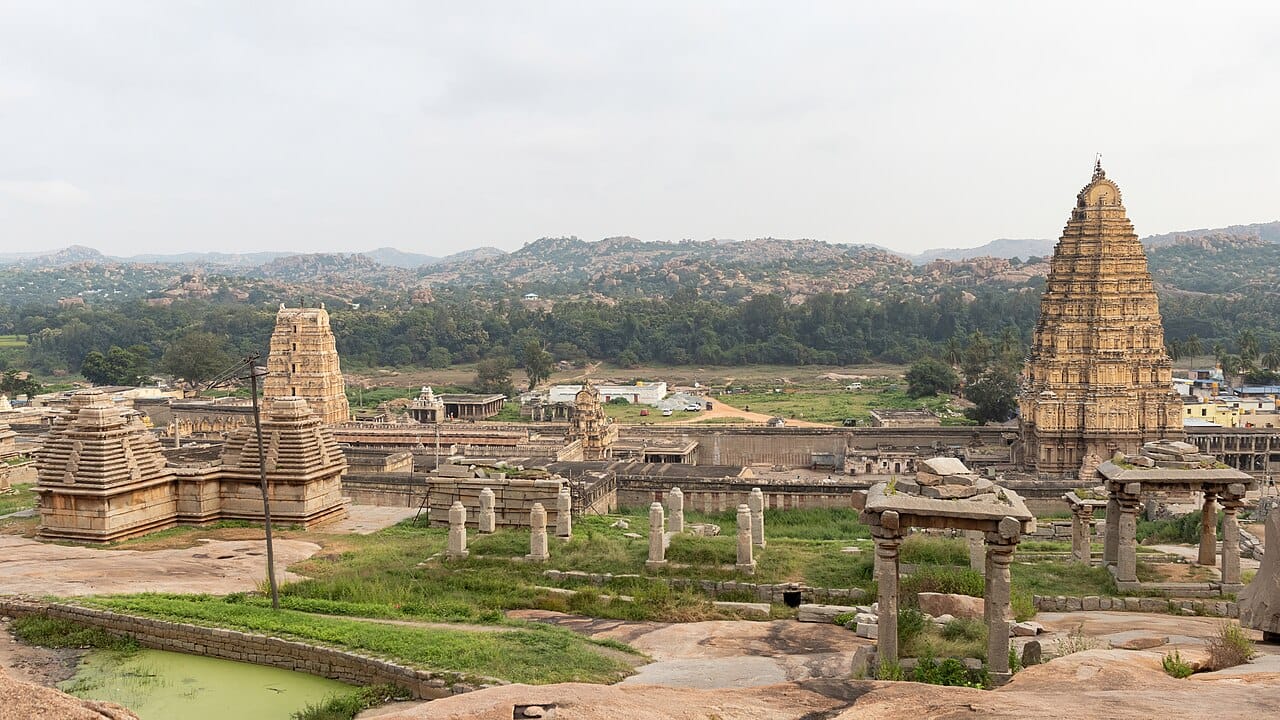
Hampi Group (Virupaksha Temple)
The Virupaksha Temple is the most iconic monument of Hampi, a UNESCO World Heritage site…
Explore Temple
UNESCO 2023Cultural Heritage
Karnataka
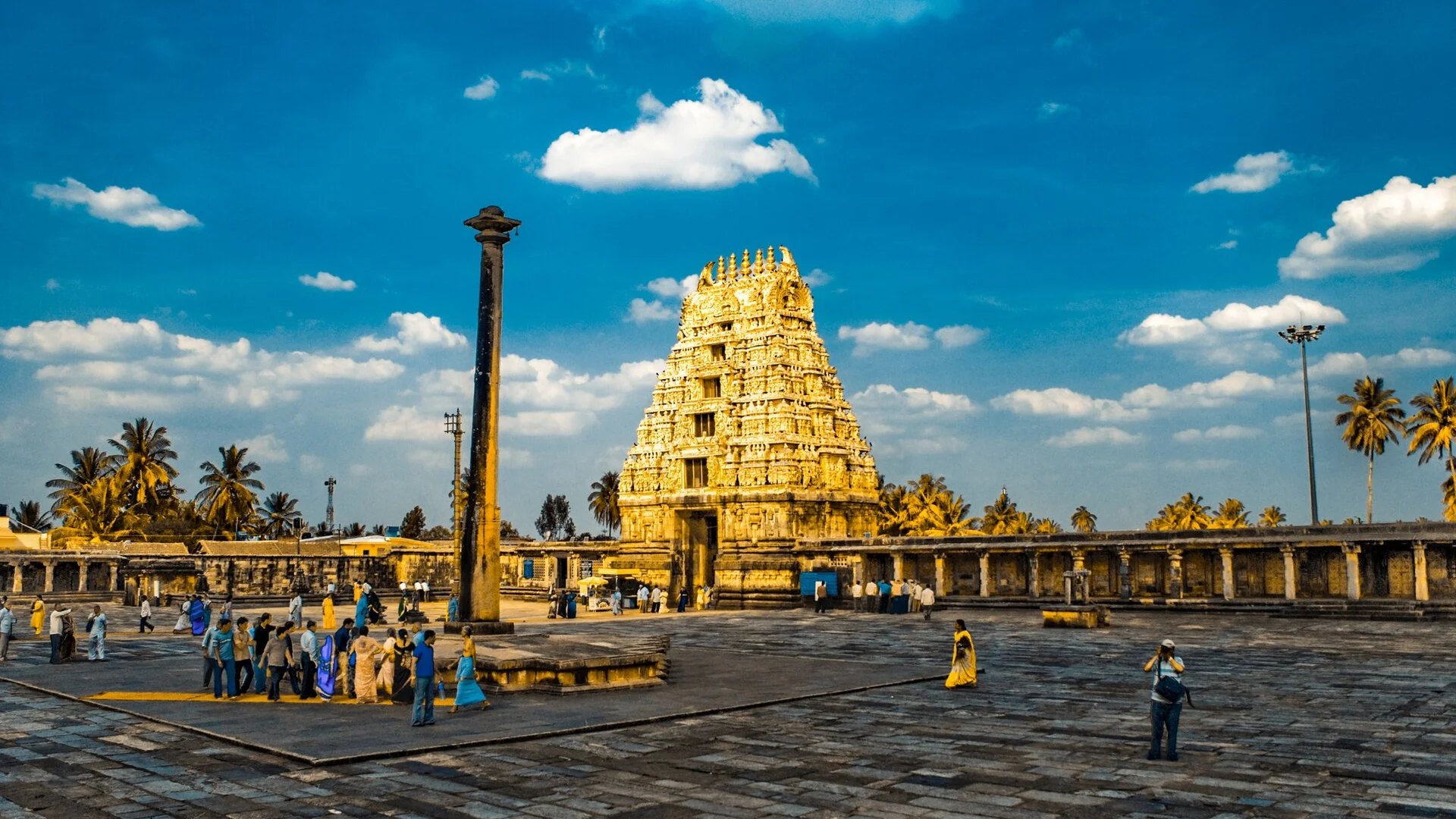
Sacred Ensembles of the Hoysalas — Chennakeshava Temple
A UNESCO World Heritage ensemble of three Hoysala temples known for their star-shaped platforms and…
Explore Temple
UNESCO 1987Cultural Heritage
Tamil Nadu
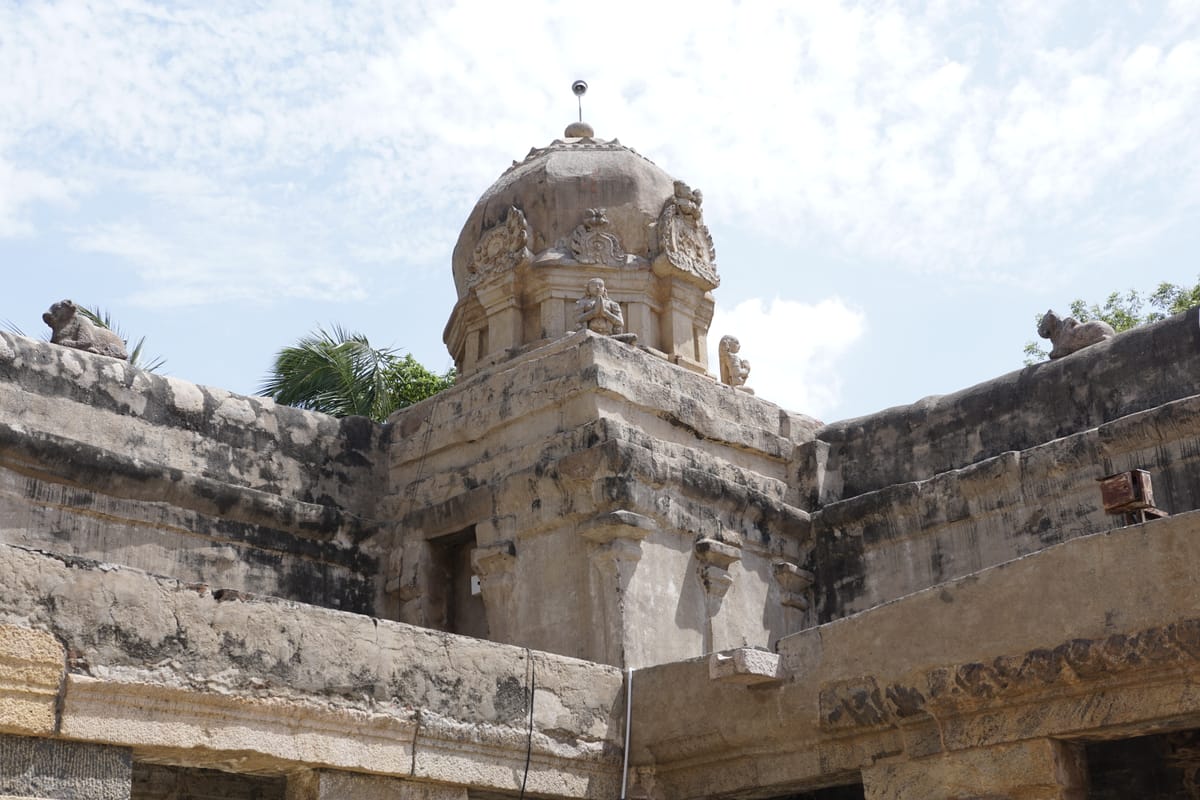
Great Living Chola Temples — Brihadeeswarar Temple
The principal temple of the Great Living Chola Temples UNESCO site, a masterpiece of Dravidian…
Explore Temple
UNESCO 1986Cultural Heritage
Madhya Pradesh
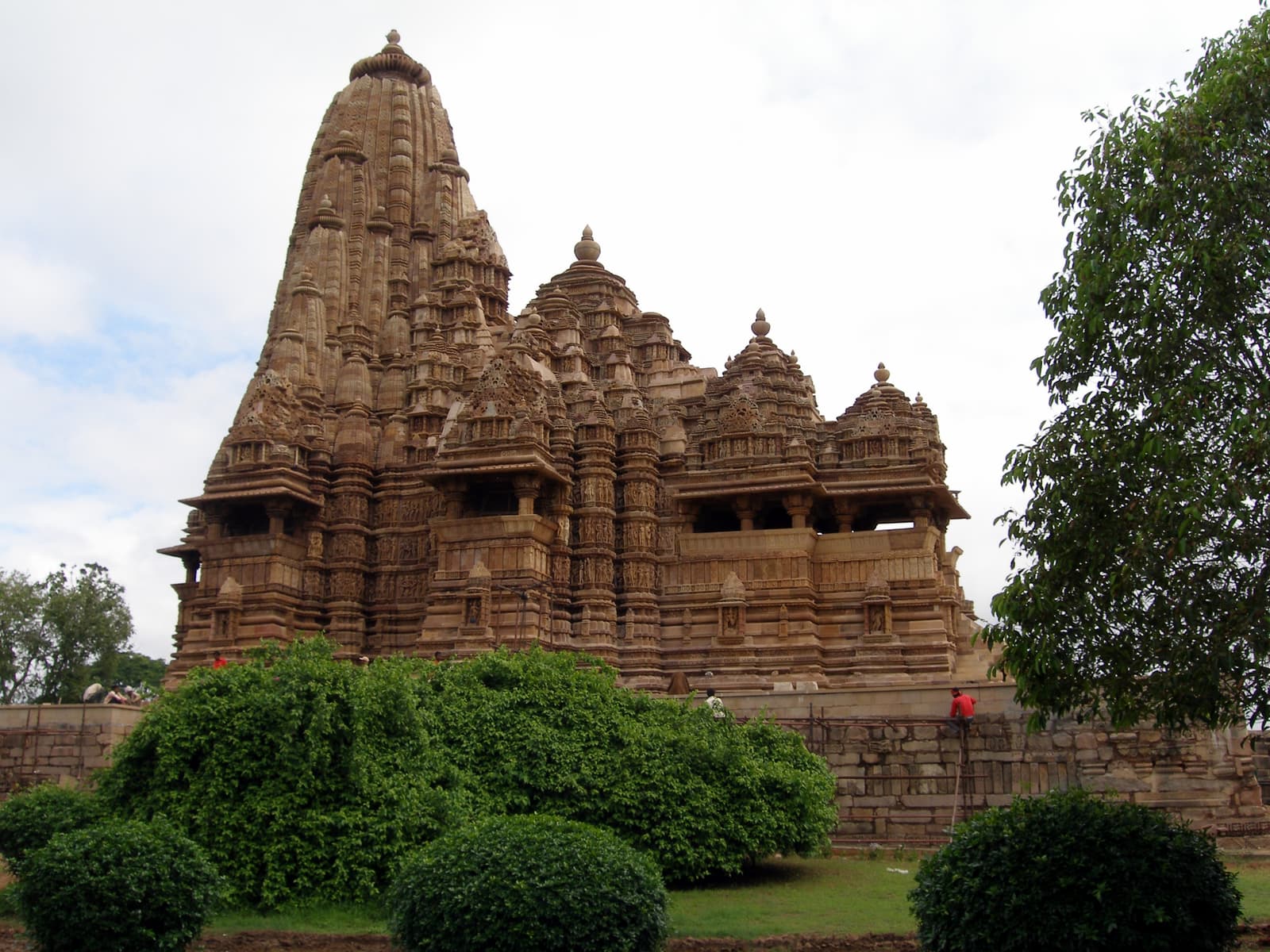
Khajuraho Group of Monuments
The largest and most ornate Hindu temple in the Khajuraho Group of Monuments.
Explore Temple
Famous Temples You May Like
UNESCO 2023Cultural Heritage
Karnataka
Sacred Ensembles of the Hoysalas — Chennakeshava Temple
A UNESCO World Heritage ensemble of three Hoysala temples known for their star-shaped platforms and…
Explore Temple
UNESCO 1986Cultural Heritage
Karnataka
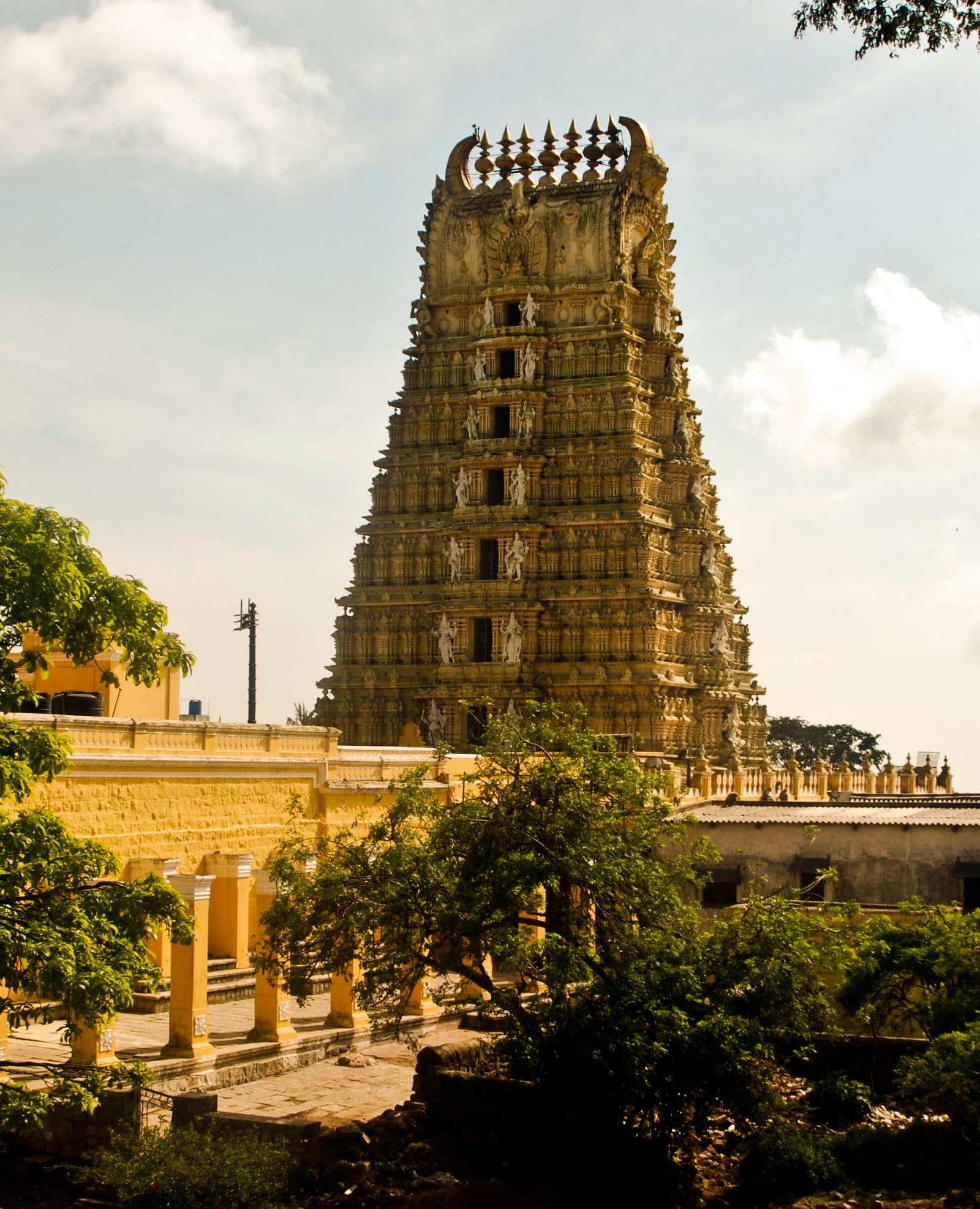
Virupaksha Temple
The Virupaksha Temple in Hampi, Karnataka, is a UNESCO World Heritage Site and the oldest…
Explore Temple
Karnataka
Chamundeshwari Temple
Perched atop Chamundi Hills at 3,489 feet, the Chamundeshwari Temple is the tutelary shrine of…
Explore Temple
Karnataka
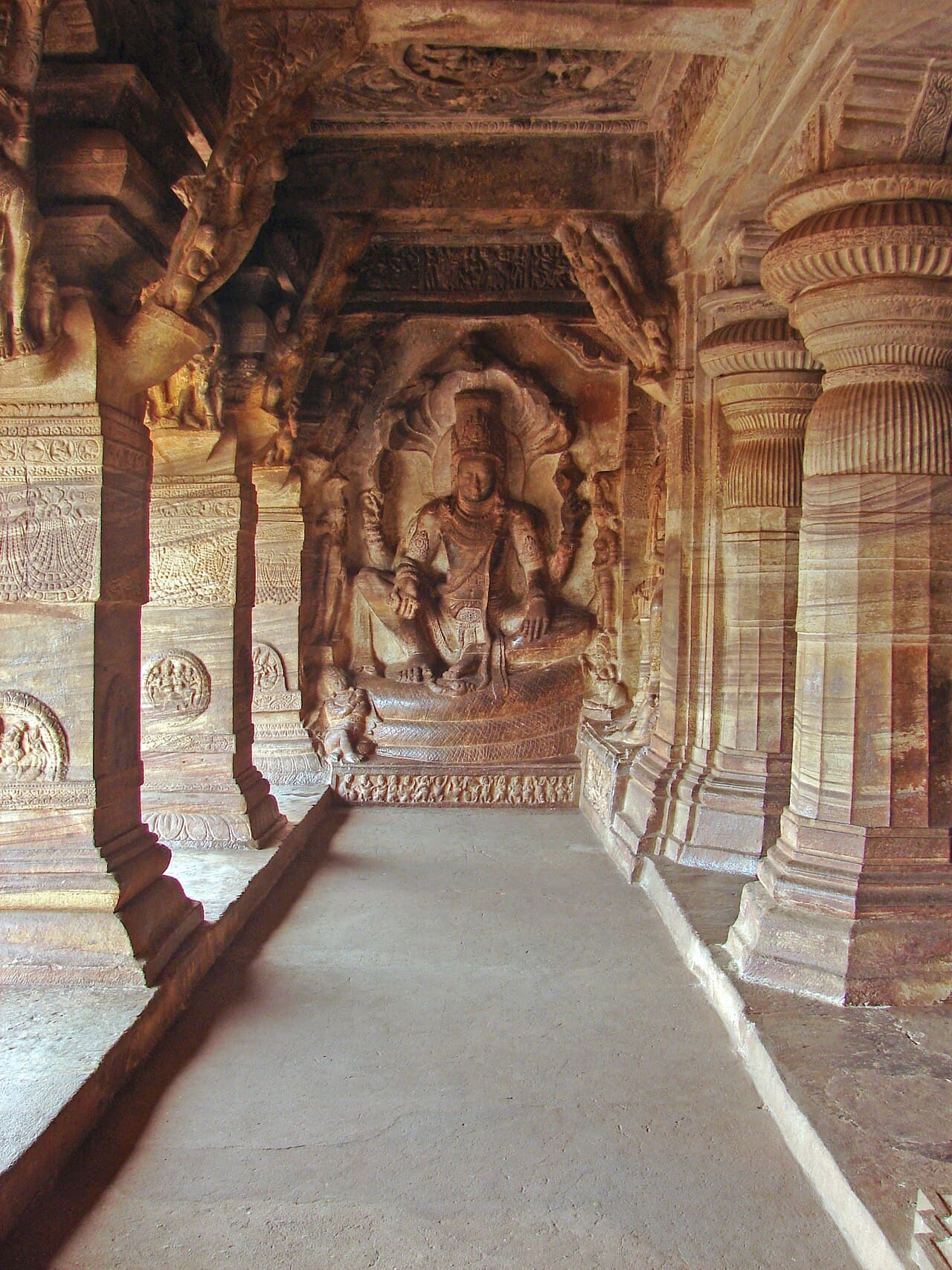
Badami Cave Temples
The Badami Cave Temples are a complex of four rock-cut cave temples carved into the…
Explore Temple
Explore More in Karnataka

Karnataka
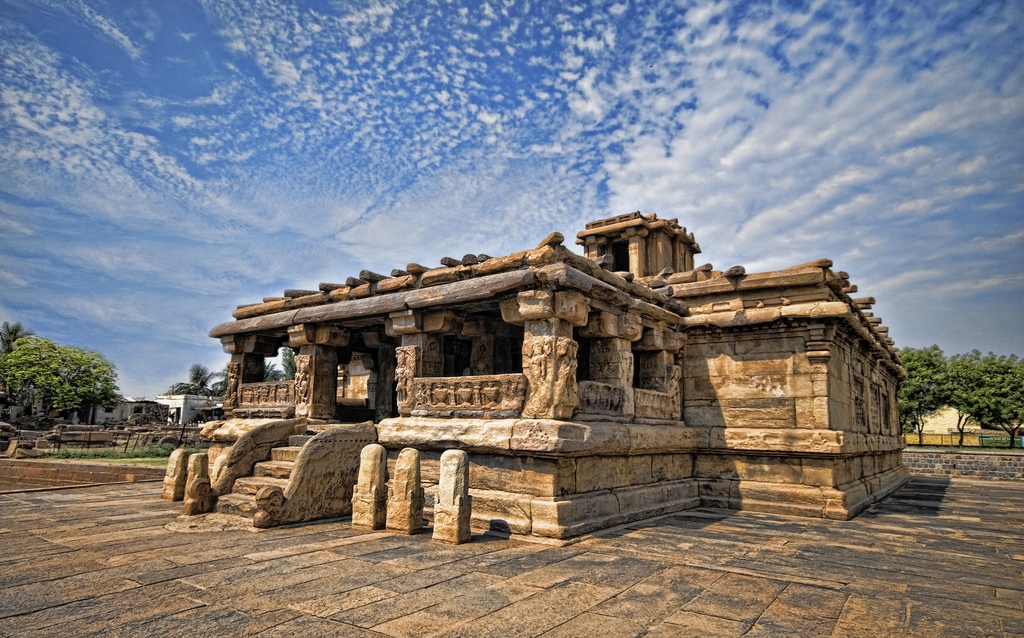
Durga Temple
The Durga Temple at Aihole, built in the 7th-8th century CE, is a distinctive architectural…
Explore Temple
Karnataka
Lad Khan Temple
The Lad Khan Temple at Aihole is a pivotal monument in Early Chalukya architecture.
Explore Temple

Karnataka
Meguti Temple
The Meguti Temple atop the Aihole hill is a Jain temple built in 634 CE…
Explore Temple

Karnataka
Hoysaleswara Temple
The Hoysaleswara Temple in Halebidu, built circa 1121-1160 CE, is the largest Shiva temple built…
Explore Temple
Heritage Fact
"The Hoysala temples of Belur and Halebidu are known for their star-shaped plans and extremely detailed soapstone carvings."