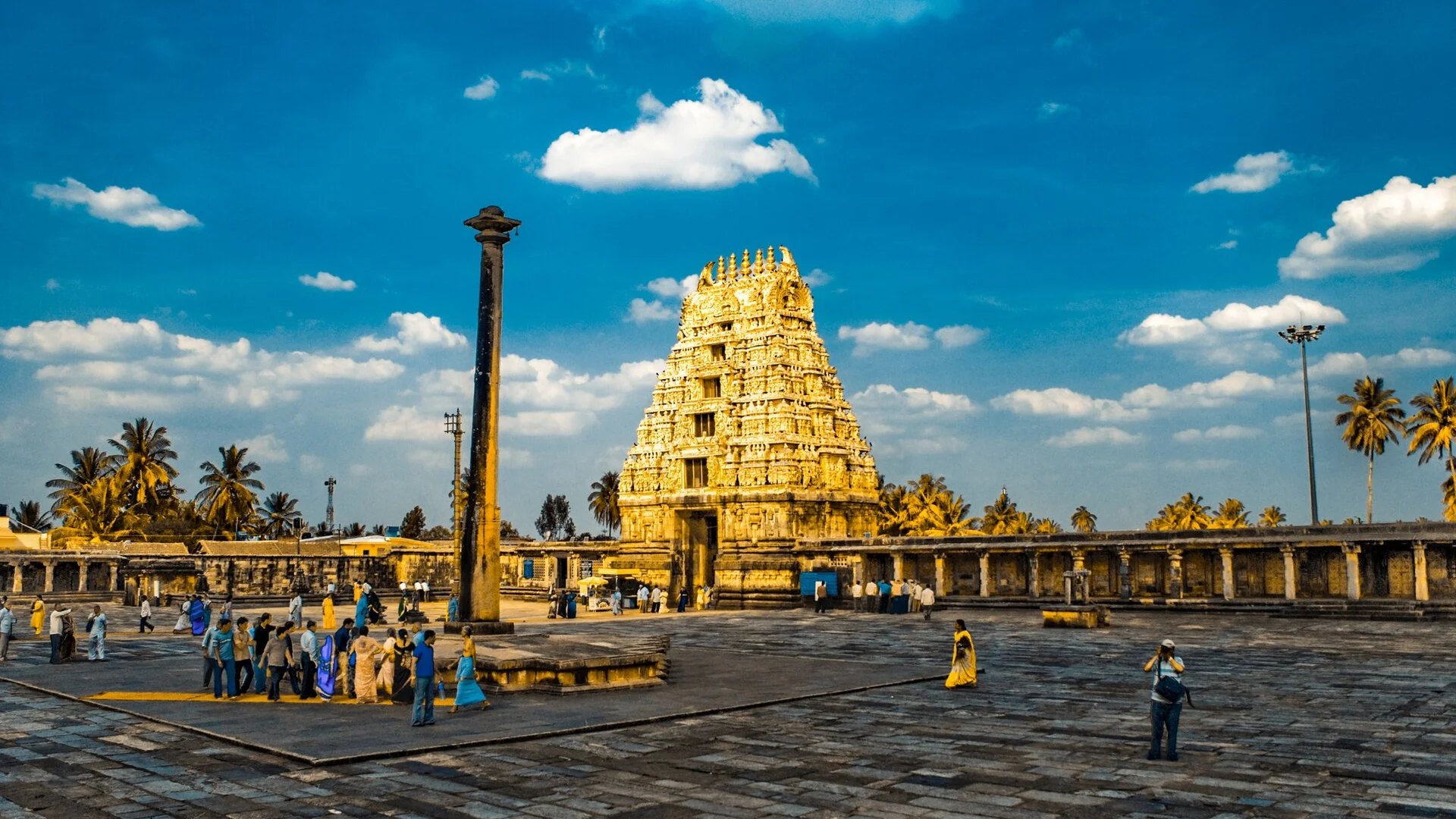
Sacred HeritageUNESCO World Heritage Site
Hoysala Sacred Ensembles
Belur / Halebidu / Somanathapura, Karnataka
State:Karnataka
District:Belur / Halebidu / Somanathapura
Why This Temple Matters
UNESCO World Heritage Site — recognized for outstanding universal value
Key Takeaways
- Dedicated to Lord Vishnu (Chennakeshava)
- Hoysala (Stellate Plan) architecture
- Built by the Hoysala Dynasty dynasty
- UNESCO World Heritage Site since 2023
- Located in Belur / Halebidu / Somanathapura, Karnataka
Quick Facts
- Number of Temples
- 3 (serial UNESCO)
- Dynasty
- Hoysala Dynasty
- Construction
- 1117 - 1268 CE
- Style
- Hoysala (Star-shaped plan)
- Primary Deity
- Vishnu (Chennakeshava at Belur)
- Location
- Belur, Halebidu, Somanathapura, Karnataka
- UNESCO
- Inscribed 2023
- Material
- Soapstone (Chloritic Schist)
- Geographic Spread
- ~50 km triangle in Karnataka
- Latest Indian UNESCO
- 42nd site, inscribed 2023
Hero
Three Temples. One Architecture.
Three temples, built within a hundred years, define the Hoysala achievement: Chennakeshava at Belur, Hoysaleswara at Halebidu, and Keshava at Somanathapura. Spread across a 50-kilometer triangle in southern Karnataka, they are not variations on a theme but three distinct architectural statements by a single dynasty at different moments of its evolution — the victory monument, the ambitious failure, and the perfected form.
What makes the Hoysala achievement remarkable is not scale — these are not towering vimanas like Thanjavur or sprawling complexes like Hampi. The Hoysala genius is in the detail. Every square inch of exterior wall is carved. The stone is soapstone, soft enough when quarried to be worked like wood, allowing sculptors to undercut deeply, create translucent effects, and render fabric folds, jewelry strands, and facial expressions with a fidelity that approaches the microscopic.
UNESCO recognized the three temples as a serial site in 2023, under criteria (i), (ii), and (iv). The designation acknowledges that no single Hoysala temple, however magnificent, can represent the full arc of the tradition. Belur is the victory monument — exuberant, experimental, competitive. Halebidu is the unfinished masterpiece — the largest ever planned, stopped mid-construction. Somanathapura is the perfected form — complete, balanced, serene. Reading them together is the only way to understand the Hoysala mind.
Serial UNESCO
Three Temples, One Architecture
A serial UNESCO site is a grouping of separate properties that together express a single heritage value. The Hoysala Sacred Ensembles is one of India’s most recent serial nominations, and its logic is instructive: each temple contributes something the others lack. Belur provides the artistic peak — the most famous individual sculptures, the competitive energy of master carvers signing their work. Halebidu provides the scale — the ambition to build the largest Hoysala temple ever, and the poignancy of its incompleteness. Somanathapura provides the completeness — the only temple of the three where the full Hoysala vision is realized without interruption.
The Hoysala TriangleThe three temples form a geographic triangle in Karnataka. Belur and Halebidu are 16 kilometers apart near the town of Hassan, approximately 220 kilometers west of Bangalore. Somanathapura lies about 150 kilometers south, near Mysuru. The circuit connecting them passes through the fertile Kaveri basin, the agricultural heartland of the Hoysala Empire. Each temple was placed at a center of political or military significance: Belur at an early capital, Halebidu at the imperial capital, Somanathapura at a strategic outpost.
Belur
Belur: The Victory Temple
The Chennakeshava Temple at Belur was commissioned in 1117 CE by King Vishnuvardhana to commemorate his victory over the Cholas at the Battle of Talakad. It is a triumphal monument — a declaration that the Hoysalas had arrived as a major power. The name Chennakeshava means “Handsome Vishnu,” and the temple was designed to be the handsomest in the land. Construction took 103 years and spanned three generations of sculptors, each adding to the richness of the scheme.
The temple’s navaranga (pillared hall) contains 48 pillars, each carved with a different design. No two are alike. Some are lathe-turned with precision grooves. Others are carved with mythical beasts, floral cascades, or narrative scenes. The most famous is the Narasimha pillar, said to have originally rotated on iron ball bearings — a feat of engineering that visitors can still test, though the mechanism has seized with age. The pillars were not carved on-site but in workshops, then transported and assembled, their joints so precise that mortar was unnecessary.
Above the pillars, 42 madanika bracket figures emerge from the brackets supporting the ceiling. These celestial damsels are the masterworks of Hoysala sculpture. Each is depicted in a moment of everyday life: applying kohl to her eyes, adjusting a mirror (the famous Darpana Sundari), playing the veena, dancing, removing a thorn from her foot. The figures are deeply undercut — some stand almost entirely free of the background stone, connected only at their feet. The sculptors carved their names into the temple: Malliyamma, Chikkahampa, Revoja, Ketoja. Inscribing the artist’s name was a Hoysala innovation, a sign of the value placed on individual craftsmanship.
“At Belur, the Hoysala style is at its most exuberant. The sculptors were competing — with each other, with the Chola tradition they sought to surpass, and perhaps with the limits of the medium itself.”
Halebidu
Halebidu: The Unfinished Masterpiece
The Hoysaleswara Temple at Halebidu was the most ambitious building project the Hoysalas ever attempted. Commissioned by the minister Ketumalla during the reign of King Vishnuvardhana’s grandson Ballala II, it was planned as the largest Hoysala temple in existence. The design was unprecedented: a twin-shrine (dvikuta) layout with two identical sanctums side by side, one dedicated to Shiva as Hoysaleswara, the other to Shantaleswara — named after the king and queen. The sanctums share a common pillared hall but maintain separate entrances and circumambulatory paths.
But the temple was never finished. Construction halted with only the southern half complete. The northern shrine remains a shell, its intended carvings unrealized. The exact reason is unknown — possibly the death of the patron, the reallocation of resources to military campaigns, or simply the exhaustion of the state treasury. The incomplete state gives Halebidu a strange power. You can see exactly where the carvers stopped: the transition from finished surface to rough stone is abrupt, like a sentence cut off mid-word.
Even unfinished, Halebidu contains the most extensive sculptural program of any Hoysala temple. Over 300 narrative panels wrap around the exterior walls, arranged in horizontal friezes. The panels depict the Ramayana, the Mahabharata, the Bhagavata Purana, and scenes of courtly life — musicians, dancers, processions, battles. The Nandi pavilion in front of the temple houses a monolithic bull carved from black soapstone, polished to a reflective sheen. An eight-foot Ganesha, carved from a single block, guards the entrance.
Why Halebidu Matters
Halebidu is the key to understanding Hoysala architecture as a process rather than a product. The unfinished sections reveal the construction sequence: the platform was built first, then the wall core, then the decorative outer layer was carved in place from top to bottom. The friezes were carved after the main structural blocks were laid. The star-shaped plan was executed with geometric precision before any sculpture began. Halebidu is a Hoysala building site frozen in time.
Somanathapura
Somanathapura: The Perfect Ensemble
The Keshava Temple at Somanathapura, built in 1268 CE, is the youngest of the three and the best preserved. It was commissioned by Somanatha, a general in the Hoysala army under King Narasimha III, and it represents the mature phase of Hoysala architecture — the style fully realized, with all the experimental energy of Belur channeled into disciplined refinement.
Somanathapura is a trikuta (three-shrine) temple: three sanctums radiate from a common pillared hall, all arranged on a 16-point star-shaped platform. The central sanctum housed Keshava (Vishnu), with Janardhana and Venugopala in the side shrines. The idols are lost, but the sculptural program survives intact. Every frieze, every panel, every bracket figure is in its original position, giving a complete picture of the Hoysala decorative scheme that neither Belur nor Halebidu can match.
The wall panels trace the ten avatars of Vishnu, the life of Krishna, and images of Lakshmi and Saraswati. The friezes below depict elephants, lions, horses, and floral scrolls in the standard Hoysala sequence. But what sets Somanathapura apart is the quality of light. The 16-point star plan creates an alternating rhythm of projections and recessions that catch the sun at different angles throughout the day. In the morning, the eastern panels are illuminated; by afternoon, the shadows have shifted to the west, revealing details invisible earlier. The temple is designed to be read in changing light.
Traces of original paint survive on some panels — red, green, white pigments embedded in the soapstone. They offer a rare glimpse of how these temples appeared when newly built: not the monochrome gray we see today, but vivid with color, each sculptural band painted in its assigned hue.
Material
Soapstone: The Material That Made It Possible
The entire Hoysala aesthetic — the micro-detailed carving, the deep undercutting, the translucent fabric effects, the strand-by-strand hair — is the result of one geological accident. The Hoysalas built in chloritic schist, commonly called soapstone, and this choice determined everything.
Soapstone is a metamorphic rock composed primarily of talc, which gives it a hardness of 1 to 2.5 on the Mohs scale when freshly quarried — roughly the same as alabaster or a fingernail. A Hoysala sculptor could carve soapstone with iron tools with the same ease that a woodworker handles teak. He could undercut deeply, create freestanding elements, and achieve a level of detail impossible in granite or sandstone. Once exposed to air, the stone undergoes a curing process: the talc reacts with atmospheric carbon dioxide, and the surface hardens to a Mohs hardness of 4 or 5 — durable enough to survive centuries of monsoon rain.
The quarries were local. Soapstone deposits are found throughout the Malnad region of the Western Ghats, the heartland of the Hoysala Empire. Blocks were extracted, rough-shaped at the quarry, transported to the temple site, and carved in place. The stone’s softness meant that carving could continue after assembly — sculptors could work on the finished wall surface, adjusting details in response to the composition around them. This allowed the fluid, organic quality of Hoysala friezes, where figures interact across panel boundaries.
When Quarried
Mohs 1-2.5. Soft as wood. Can be carved with iron tools. Allows deep undercutting.
After Exposure
Hardens to Mohs 4-5. Durable against weather. Surface becomes polishable.
Legacy
Enables the only sculptural tradition where stone simulates fabric, wood, metal, and flesh.
Architecture
The Star-Shaped Platform
The stellate, or star-shaped, platform is the signature of Hoysala architecture. No other Indian temple tradition uses it with the same consistency. The plan is generated by projecting the sanctum wall outward at alternating angles, creating a multi-pointed star — 8, 12, or 16 points. At Somanathapura, the platform has 16 points. At Belur, the main shrine follows an 8-point star, while the overall temple platform is a rectangle with star-shaped projections. At Halebidu, the twin shrines each have their own star-shaped plan, creating a complex double-star silhouette when viewed from above.
The cosmological logic is clear: the star represents the celestial realm, the temple as a microcosm of the universe. But there are practical and aesthetic motivations as well. The star plan increases the surface area of the temple walls by roughly 40 percent compared to a rectangle of the same footprint, providing more space for the friezes and panels that are the heart of Hoysala decoration. More importantly, the alternating projections create a constant play of light and shadow. As the sun moves, the illuminated surfaces shift — a panel that was in shadow at 9 AM catches full sunlight at noon, revealing details invisible hours earlier.
The stellate plan was not a Hoysala invention — it appears in earlier Chalukya temples — but the Hoysalas made it their own. They developed geometric methods for laying out the star pattern on the ground using cords and pegs, with proportions based on a grid system. The precision of these layouts, visible in the unfinished sections at Halebidu, shows that the star plan was established before any stone was laid.
Sculpture
Reading the Friezes
Hoysala temple exteriors are organized in horizontal bands — friezes that wrap around the entire structure in a fixed sequence from bottom to top. This sequence is consistent across all three temples and constitutes a visual encyclopedia of the medieval cosmos.
Elephants (bottom band)
Symbolize strength, royalty, and the earthly realm. Processions of caparisoned war elephants, hunters, and trainers.
Lions
Courage and guardianship. Heraldic lions in combat with elephants, riders, and mythical beasts.
Horses & Scrolls
The madanakai band — scrolling vines, foliage, and leaping horses. Nature tamed into ornament.
Narratives
Epic scenes from the Ramayana, Mahabharata, and Bhagavata Purana. Above this, the main deities in niches.
What makes the Hoysala friezes unique is not just their density but their humanity. Among the epic narratives and divine figures, the sculptors carved scenes from everyday life: monkeys fighting, geese drinking from lotus ponds, women churning butter, farmers plowing, musicians performing. There is humor — a monkey stealing a woman’s fruit, a dwarf pulling a lion’s tail. These details reward close looking. A visitor who walks past a Hoysala temple without pausing at eye level misses the point entirely.
History
Vishnuvardhana and the Hoysala Rise
The Hoysala story is inseparable from its greatest king. Vishnuvardhana (r. 1108-1152 CE) inherited a principality of hill chieftains and turned it into an empire. Before him, the Hoysalas were feudatories of the Chalukyas of Kalyani. After him, they were the dominant power in the southern Deccan, controlling the strategic passes between the Western Ghats and the Kaveri basin.
The turning point was the Battle of Talakad in 1116 CE, where Vishnuvardhana defeated the Cholas and captured the fertile Gangavadi region (modern southern Karnataka). The Chennakeshava Temple at Belur was his victory monument, but it was also a conversion monument. Vishnuvardhana had been a Jain, like his ancestors, but under the influence of the Vaishnava saint Ramanujacharya, he converted to Hinduism and became a devotee of Vishnu. The temple-building program that followed was both an expression of personal faith and a political statement: the Hoysalas were now patrons of the mainstream Hindu tradition, not provincial Jain chieftains.
This religious transition had architectural consequences. Jain temple architecture is restrained, favoring symmetry and clean lines. Hindu temple architecture, in its South Indian manifestation, demanded sculptural richness and narrative ornament. The Hoysala style that emerged under Vishnuvardhana was a synthesis: the precision and geometric clarity of Jain design combined with the narrative ambition of Hindu iconography. The result is a style that is always controlled, never chaotic — every surface is covered, but the composition is always legible.
Vishnuvardhana died in 1152 CE, but the temple-building tradition he established continued under his successors. The Hoysaleswara Temple at Halebidu was built during the reign of his grandson Ballala II. The Keshava Temple at Somanathapura was built under Narasimha III, a descendant. Each generation refined the style, moving from the experimental density of Belur to the disciplined perfection of Somanathapura.
UNESCO World Heritage
UNESCO Inscription 2023
The Hoysala Sacred Ensembles were inscribed on the UNESCO World Heritage List on September 18, 2023, during the 45th session of the World Heritage Committee in Riyadh, Saudi Arabia. The inscription made the Hoysala temples India’s 42nd UNESCO World Heritage site and the newest temple UNESCO site in the country.
UNESCO Criteria
Criterion (i)
Masterpiece of Creative Genius
The Hoysala temples represent a masterpiece of human creative genius, exemplified by the stellate plan and the hyper-realistic soapstone carving that creates the illusion of different materials and textures in stone.
Criterion (ii)
Interchange of Human Values
The temples exhibit an important interchange of human values, blending architectural traditions from the Chalukyas, Cholas, and Jain traditions into a distinctive Hoysala idiom that influenced temple construction across the Deccan.
Criterion (iv)
Architectural Ensemble
The three temples are outstanding examples of a type of architectural ensemble that illustrates a significant stage in the evolution of Hindu temple architecture in the southern Deccan.
The Road to Inscription
The Hoysala temples had been on UNESCO’s Tentative List since 2014. The nomination process required extensive documentation — a comparative analysis of Hoysala architecture against other Indian and global traditions, detailed site management plans for each temple, and a justification for why the three temples should be nominated as a serial site rather than individually. India’s strategy of submitting serial nominations (such as the Chola temples and the mountain railways) has proven effective: they tell a more complete story than isolated sites.
The 2023 inscription was India’s first UNESCO World Heritage designation for a purely temple-related site since the Chola temples were expanded in 2004. It placed the Hoysala achievement in a global context — alongside other stone-carving traditions like the Khmer temples of Angkor and the Hindu-Buddhist sites of Southeast Asia — while recognizing that the Hoysala approach to surface ornamentation and the stellate plan is unmatched.
Conservation
Conservation of Soapstone
Soapstone is a paradoxical material for heritage conservation. It is what made the Hoysala achievement possible, but it also creates unique preservation challenges. The same softness that allowed medieval sculptors to carve with microscopic precision makes the stone vulnerable to weathering, biological growth, and damage from human contact. The oils and acids from a visitor’s hand can permanently mark a soapstone surface.
All three temples are protected by the Archaeological Survey of India (ASI). Conservation work focuses on chemical cleaning to remove lichen and biological growth, consolidation of flaking surfaces, and drainage improvement to prevent water damage. At Halebidu, the structurally incomplete sections require ongoing monitoring — the exposed core of the unfinished northern shrine is more vulnerable to weather than the finished southern half. At Somanathapura, the surviving paint pigments require specialist conservation to prevent further loss.
The 2023 UNESCO inscription has accelerated conservation planning. A comprehensive site management plan is being developed for the serial property, addressing visitor management, environmental monitoring, and local community engagement. The designation has also raised awareness about the specific conservation needs of soapstone architecture — a field that remains relatively understudied compared to conservation of marble, granite, or sandstone.
Frequently Asked Questions
Is the Hoysala Sacred Ensembles one temple or three?
A.
It is a serial UNESCO site comprising three separate temples: Chennakeshava Temple at Belur, Hoysaleswara Temple at Halebidu, and Keshava Temple at Somanathapura. They are grouped together because they collectively represent the Hoysala architectural achievement across a century of development.
Why is Hoysala architecture called star-shaped?
A.
Hoysala temples are built on stellate platforms where the sanctum walls project outward in alternating angles, creating a multi-pointed star pattern. This design increases surface area for sculpture and creates dramatic light-and-shadow effects as the sun moves across the deeply cut reliefs.
What is soapstone and why was it used?
A.
Soapstone (chloritic schist) is a metamorphic rock that is soft when freshly quarried — Mohs hardness 1-2.5 — allowing sculptors to carve it like wood with iron tools. It hardens with exposure to air, preserving the micro-detailed carvings. This one material explains the entire Hoysala aesthetic.
Which of the three temples is best preserved?
A.
The Keshava Temple at Somanathapura (1268 CE) is the best preserved of the three. Its entire sculptural program survives intact, all three shrines are complete, the 16-point star-shaped platform is fully realized, and traces of original paint pigment remain on some panels.
What are madanika figures?
A.
Madanikas are bracket figures depicting celestial damsels in dance poses and everyday activities — applying makeup, playing instruments, dancing. The Chennakeshava Temple at Belur features 42 madanikas, with the Darpana Sundari (Beauty with Mirror) being the most famous example.
Why is Halebidu temple unfinished?
A.
The Hoysaleswara Temple at Halebidu was planned as the largest Hoysala temple ever built, but construction halted before completion. Only the southern half was finished. The reasons are uncertain but likely relate to resource constraints, the death of minister Ketumalla who commissioned it, or political disruptions.
Can you see all three temples in one day?
A.
Belur and Halebidu are only 16 km apart and can be visited together in half a day from Hassan. Somanathapura is about 150 km south, near Mysuru. A comfortable itinerary covering all three requires two days, with an overnight stop in Hassan or Mysuru.
Why was the Hoysala Ensemble only inscribed in 2023?
A.
The temples had been on UNESCO's Tentative List since 2014. The serial nomination required extensive documentation, comparative analysis across multiple sites, and a comprehensive management plan covering three separate properties. India's serial nomination strategy takes longer to prepare but produces more complete heritage designations.
Answers are based on verified information. Site rules may change — verify locally before visiting.
Did You Know?
- The Hoysala temples are built on star-shaped (stellate) platforms — a unique architectural plan where the sanctum walls project outward in alternating angles, creating a multi-pointed star pattern with dramatic light-and-shadow effects.
- The temples are carved from soapstone (chloritic schist), a soft stone that hardens with exposure to air — allowing medieval sculptors to achieve microscopic precision impossible in granite or sandstone.
- The Chennakeshava Temple at Belur took 103 years to complete (1117–1220 CE), spanning the reigns of three Hoysala kings: Vishnuvardhana, Narasimha I, and Ballala II.
- The Hoysala Sacred Ensembles were inscribed as a UNESCO World Heritage site in 2023 — the 42nd site in India and the most recent addition at the time of inscription.
- The three temples — Belur, Halebidu, Somanathapura — are spread across a 50 km triangle in Karnataka and were all built within a century (1117–1268 CE), representing the complete evolution of Hoysala architecture.
Sources & References
Ministry of Tourism, Government of India
"Ministry of Tourism — official destination information"
View SourceLinks Last Checked
2026-07-03
Related Temples
Same State
Virupaksha Temple
The Virupaksha Temple in Hampi, Karnataka, is a UNESCO World Heritage Site and the oldest…
Chamundeshwari Temple
Perched atop Chamundi Hills at 3,489 feet, the Chamundeshwari Temple is the tutelary shrine of…
Badami Cave Temples
The Badami Cave Temples are a complex of four rock-cut cave temples carved into the…
Durga Temple
The Durga Temple at Aihole, built in the 7th-8th century CE, is a distinctive architectural…
Lad Khan Temple
The Lad Khan Temple at Aihole is a pivotal monument in Early Chalukya architecture.
Meguti Temple
The Meguti Temple atop the Aihole hill is a Jain temple built in 634 CE…
UNESCO Sites
Virupaksha Temple
The Virupaksha Temple in Hampi, Karnataka, is a UNESCO World Heritage Site and the oldest…
Airavatesvara Temple
The Airavatesvara Temple at Darasuram, built by Rajaraja Chola II between 1146 and 1172 CE…
Gangaikonda Cholapuram Temple
The Gangaikonda Cholapuram Temple, built by Rajendra Chola I in 1035 CE, is a UNESCO…
Konark Sun Temple
A 13th-century colossal stone chariot of the Sun God Surya, the Konark Sun Temple is…
Brihadeeswarar Temple
The Brihadeeswarar Temple in Thanjavur, built by Raja Raja Chola I in the 11th century…
Kailasa Temple, Ellora
The world's largest monolithic rock-cut structure, carved top-down from a single basalt cliff.
Same Tradition
Rasmancha Bishnupur
The oldest 17th-century brick structure in Bishnupur, unique for its massive pyramidal roof and arched…
Jor-Bangla Temple Bishnupur
Known for its 'twin hut' design and incredibly detailed terracotta panels depicting the Ramayana and…
Shyam Rai Temple Bishnupur
A five-towered terracotta temple famous for its circular friezes showing the Rasa-lila of Lord Krishna.
Dashavatara Temple
Dating to around 500 CE, this is the earliest known North Indian temple with a…
Shri Ram Janmabhoomi Mandir
A grand and historic temple marking the birthplace of Lord Rama, the seventh avatar of…
Prem Mandir
A stunning modern white-marbled complex in Vrindavan dedicated to Divine Love, known for its life-like…
Visiting as an International Traveller
Fact CheckedEditorial ReviewVerified 2026-07-03
Entry Status
Foreign Visitors
AllowedAll visitors welcome. The Hoysala temples are UNESCO World Heritage sites open to all nationalities.
Visitor Information
Entry policies are set by each site — confirm before travelling.
Entry rules for international visitorsWho can enter, permits, and what to expect at the gate.Dress Code
Modest clothing is expected — a sign of respect, not a restriction.
Shoulders covered
Knees covered
Shoes removed before entry
Head covering (women)
Rain gear available
Warm layers (winter)
Photography Guide
Outside
Inside
Flash
Drone
Tripod
Commercial
Best Time to Visit
Peak Season
October — March
Moderate to High — comfortable weather
Summer
April — June
Low — hot plains, pleasant hills
Monsoon
July — September
Low — lush landscape, travel delays possible
Language & Communication
Common local languages: Kannada, Hindi, English
English spokenASI-approved guides available at each temple site
Accessibility
Wheelchair: Partial. The temple complexes have uneven stone surfaces and steps.
Understanding Temple Traditions
These short explanations help make sense of what you see and experience.
Tips for International Visitors
Temple vocabulary and ritualsDarshan, pradakshina, prasadam, aarti, hundi and mandapa.Currency, donations and queuesCash, UPI, donation etiquette and how long entry queues take.Photography etiquetteSignage, flash, selfie sticks and photographing other visitors.Festival crowds and safetyAdvance booking, road closures, belongings and offline maps.
Essential Contacts
Police / Ambulance / Fire: 112 (National Emergency Number)
Tourist Helpline: 1800-111-363 (Multi-lingual, Ministry of Tourism)
Women's Helpline: 1091
Official Temple WebsiteState Tourism WebsiteTravel Preparation Checklist
Packing Checklist for Hoysala Sacred Ensembles
Continue Reading
Verified 2026-07-03Sources: UNESCO World Heritage Centre, Archaeological Survey of India, Karnataka Tourism Department, Hoysala Architecture by Gerard Foekema (1996), The Hoysala Dynasty by Derrick N. Lobo (1995)
Rules change — confirm current policies with the site's authority before you travel.
By Naveen singh negi
Updated: 2026-07-03
Last reviewed: 2026-07-03
Fact-checked
Editorial review
Sources: UNESCO World Heritage Centre, Archaeological Survey of India, Karnataka Tourism Department, Hoysala Architecture by Gerard Foekema (1996), The Hoysala Dynasty by Derrick N. Lobo (1995)
Related:Karnataka TemplesLord Vishnu (Chennakeshava)Hoysala (Stellate Plan) StyleHoysala DynastyUNESCO HeritageMethodology
UNESCO Site 2023
Karnataka
Hoysala Dynasty
UNESCO Site
Explore More Sacred & Heritage Sites
Related heritage monuments, regional traditions, and pilgrimage connections.
UNESCO Temple Heritage Sites
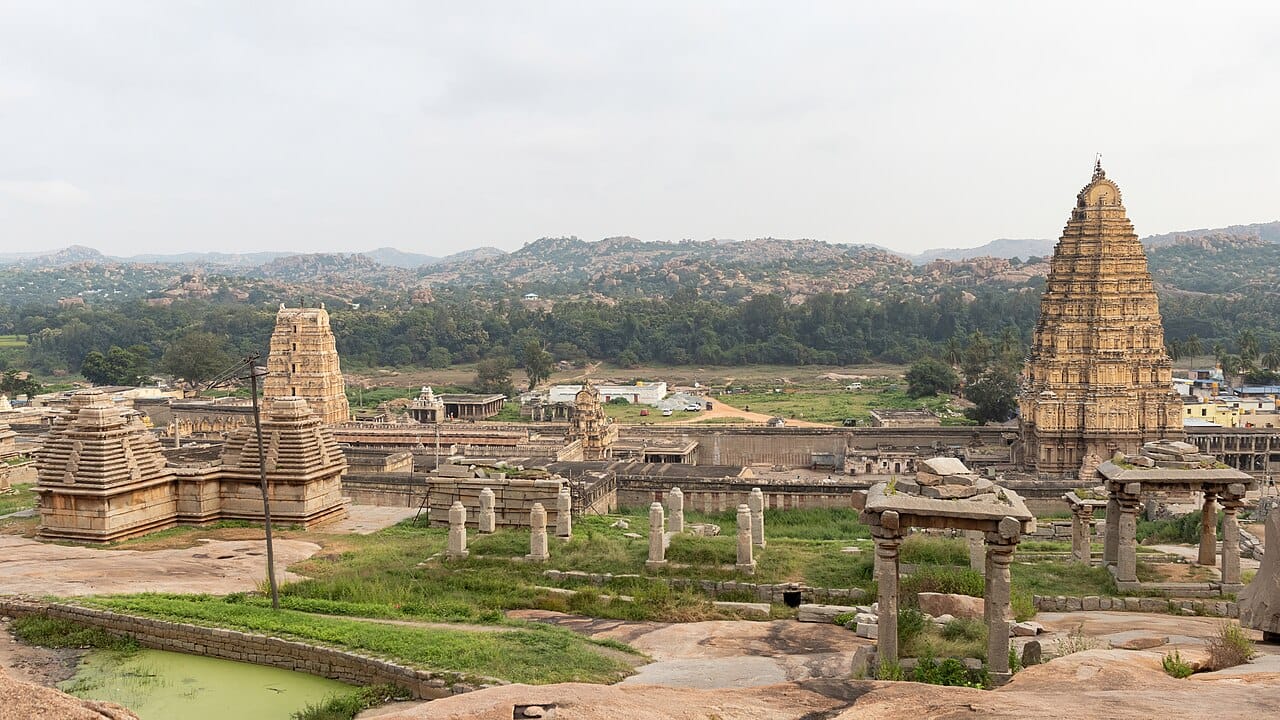
UNESCO 1986Cultural Heritage
Karnataka
Hampi Group (Virupaksha Temple)
The Virupaksha Temple is the most iconic monument of Hampi, a UNESCO World Heritage site…
Explore Temple
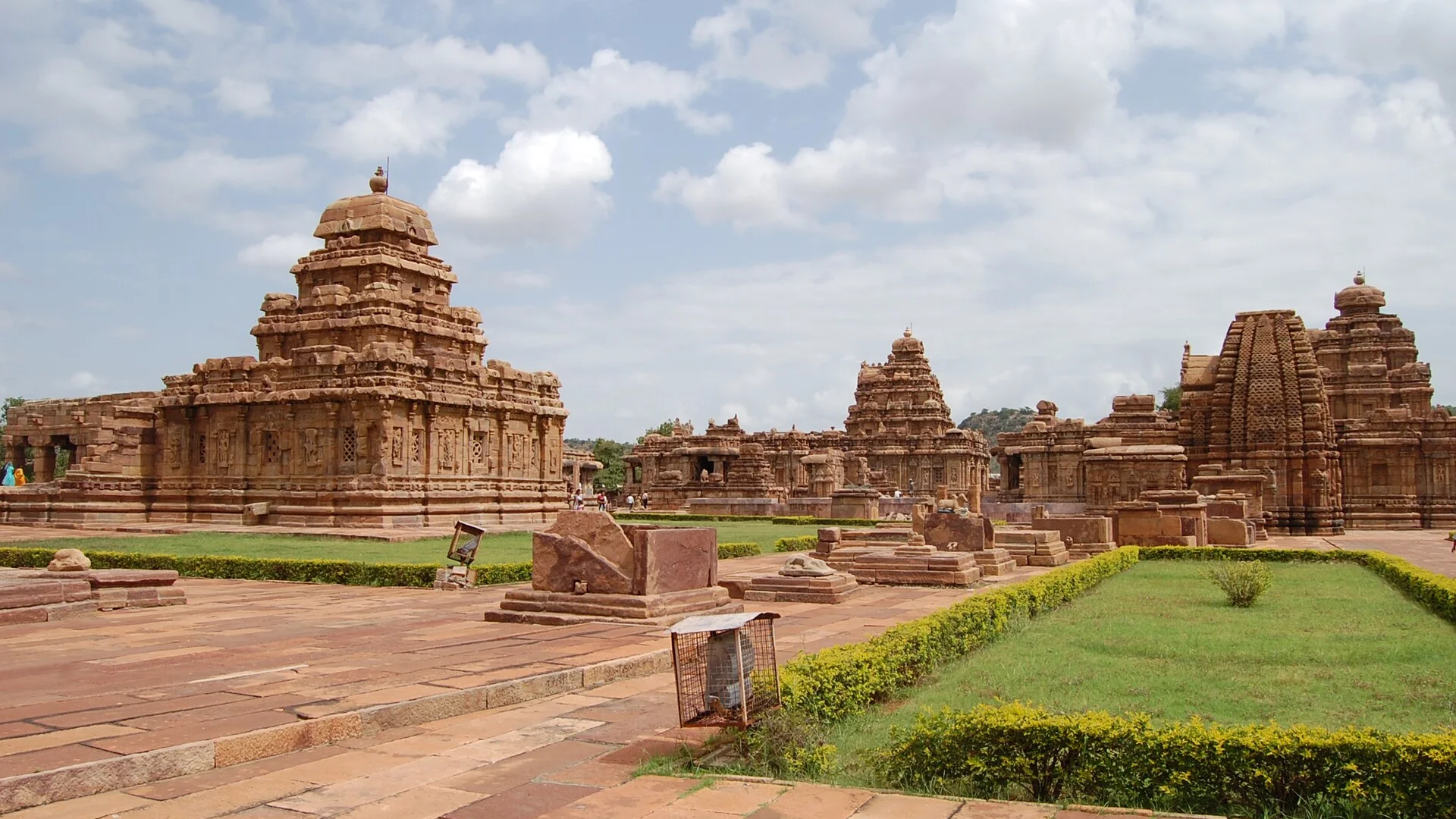
UNESCO 1987Cultural Heritage
Karnataka
Monuments at Pattadakal
A UNESCO World Heritage site showcasing the unique blend of Nagara and Dravidian temple architecture…
Explore Temple
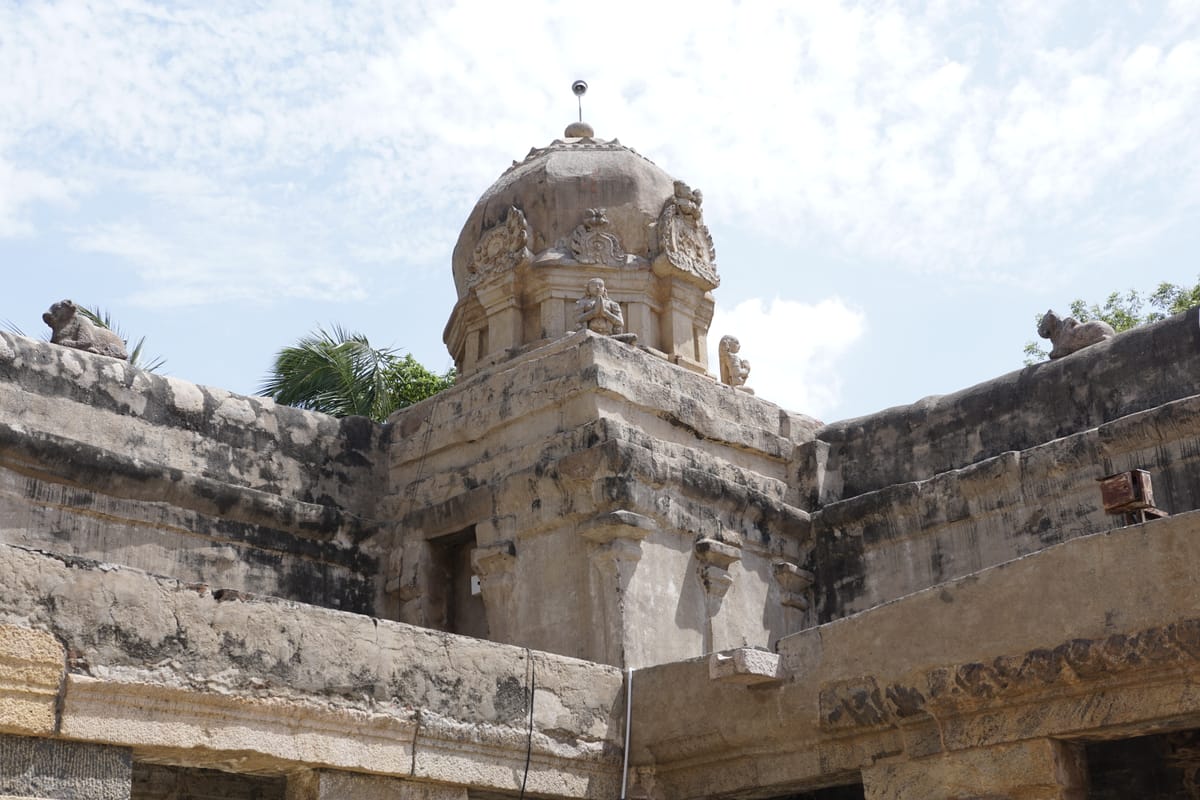
UNESCO 1987Cultural Heritage
Tamil Nadu
Great Living Chola Temples — Brihadeeswarar Temple
The principal temple of the Great Living Chola Temples UNESCO site, a masterpiece of Dravidian…
Explore Temple
UNESCO 1986Cultural Heritage
Madhya Pradesh
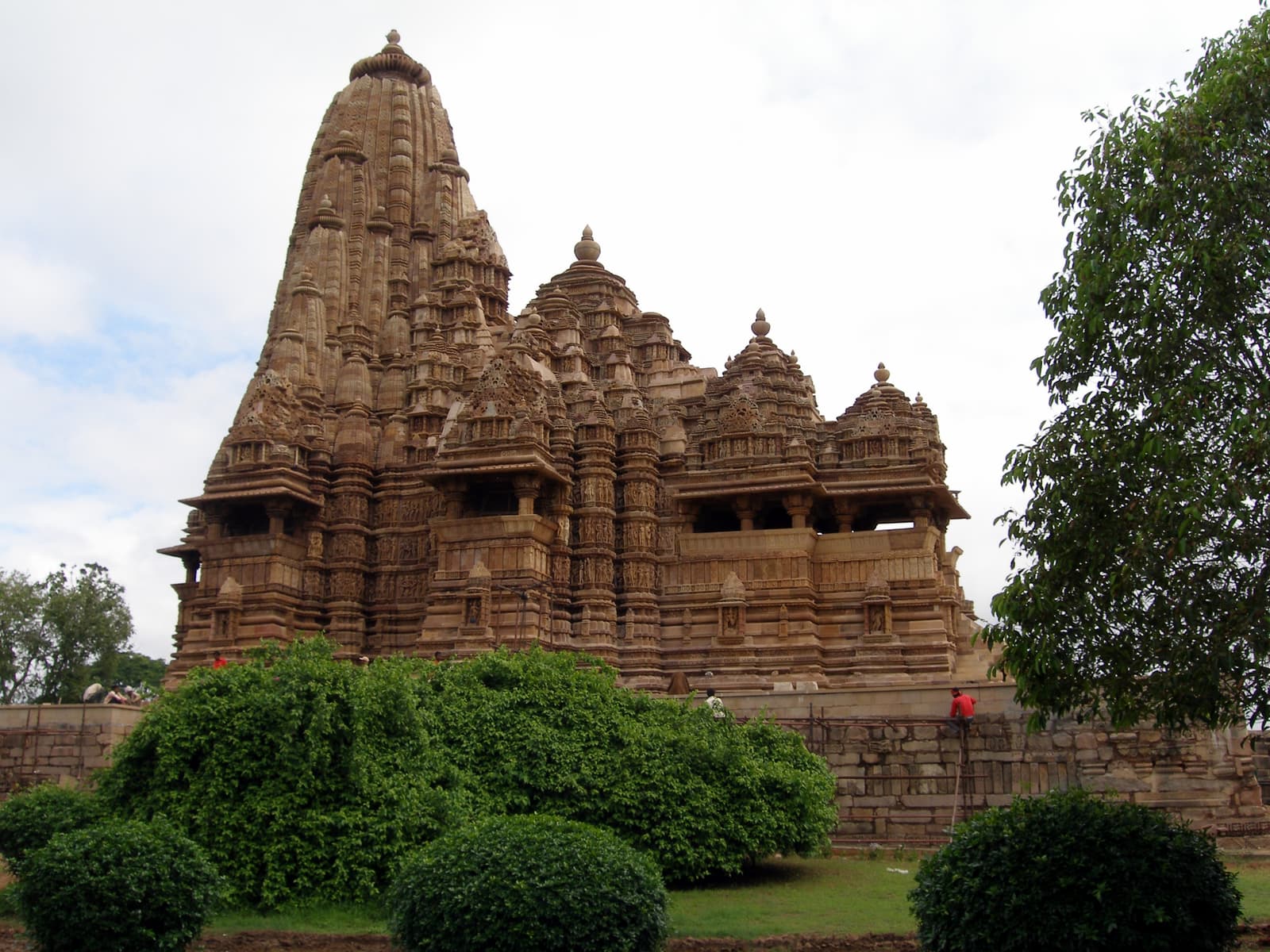
Khajuraho Group of Monuments
The largest and most ornate Hindu temple in the Khajuraho Group of Monuments.
Explore Temple
Famous Temples You May Like
UNESCO 1987Cultural Heritage
Karnataka
Monuments at Pattadakal
A UNESCO World Heritage site showcasing the unique blend of Nagara and Dravidian temple architecture…
Explore Temple
UNESCO 1986Cultural Heritage
Karnataka
Virupaksha Temple
The Virupaksha Temple in Hampi, Karnataka, is a UNESCO World Heritage Site and the oldest…
Explore Temple
Karnataka
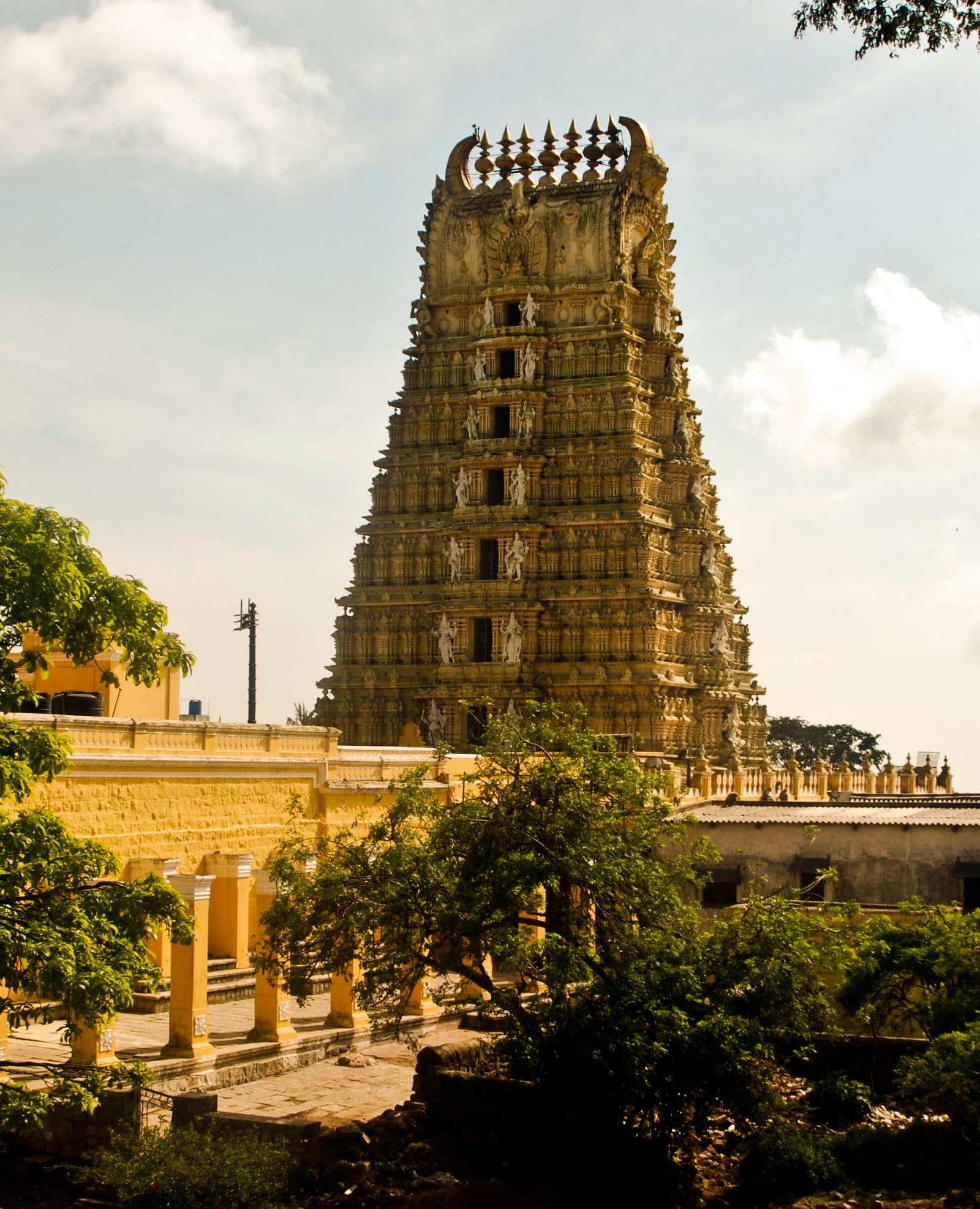
Chamundeshwari Temple
Perched atop Chamundi Hills at 3,489 feet, the Chamundeshwari Temple is the tutelary shrine of…
Explore Temple
Karnataka
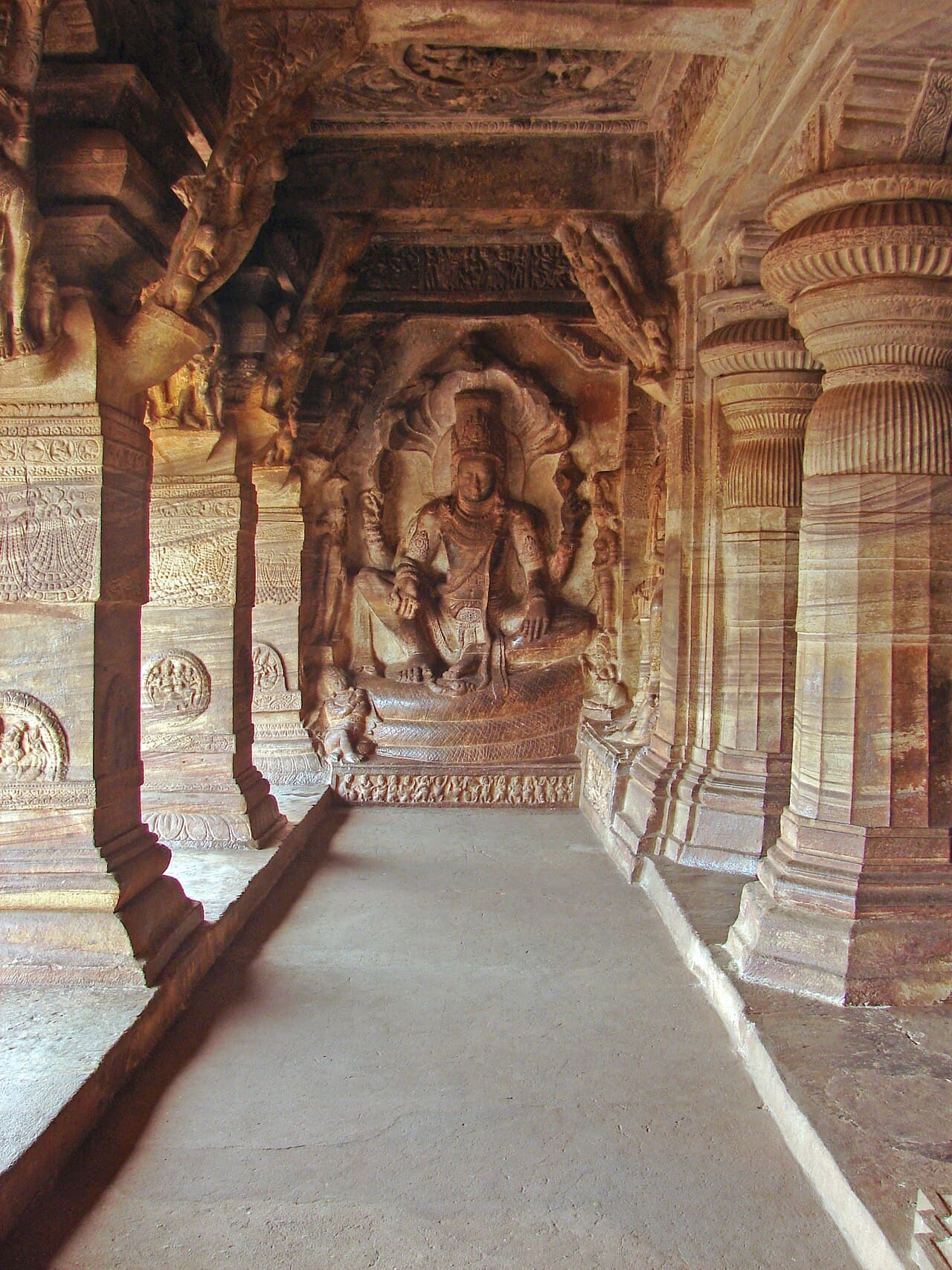
Badami Cave Temples
The Badami Cave Temples are a complex of four rock-cut cave temples carved into the…
Explore Temple
Explore More in Karnataka

Karnataka
Durga Temple
The Durga Temple at Aihole, built in the 7th-8th century CE, is a distinctive architectural…
Explore Temple
Karnataka
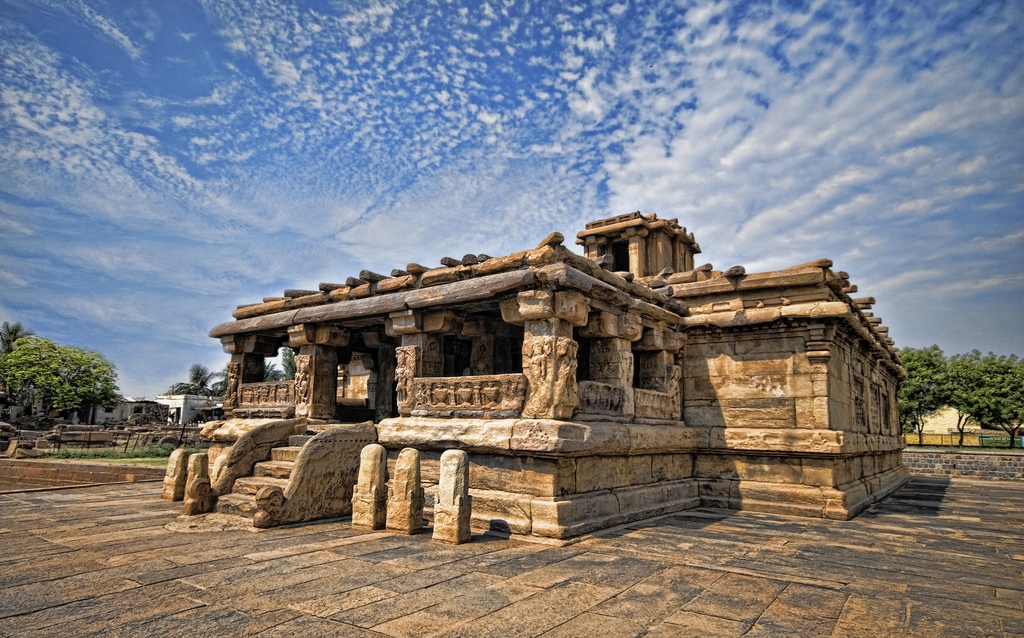
Lad Khan Temple
The Lad Khan Temple at Aihole is a pivotal monument in Early Chalukya architecture.
Explore Temple

Karnataka
Meguti Temple
The Meguti Temple atop the Aihole hill is a Jain temple built in 634 CE…
Explore Temple

Karnataka
Hoysaleswara Temple
The Hoysaleswara Temple in Halebidu, built circa 1121-1160 CE, is the largest Shiva temple built…
Explore Temple
Heritage Fact
"Hampi, the capital of the Vijayanagara Empire, became a UNESCO World Heritage site in 1986."