Architecture Style
Hoysala Architecture
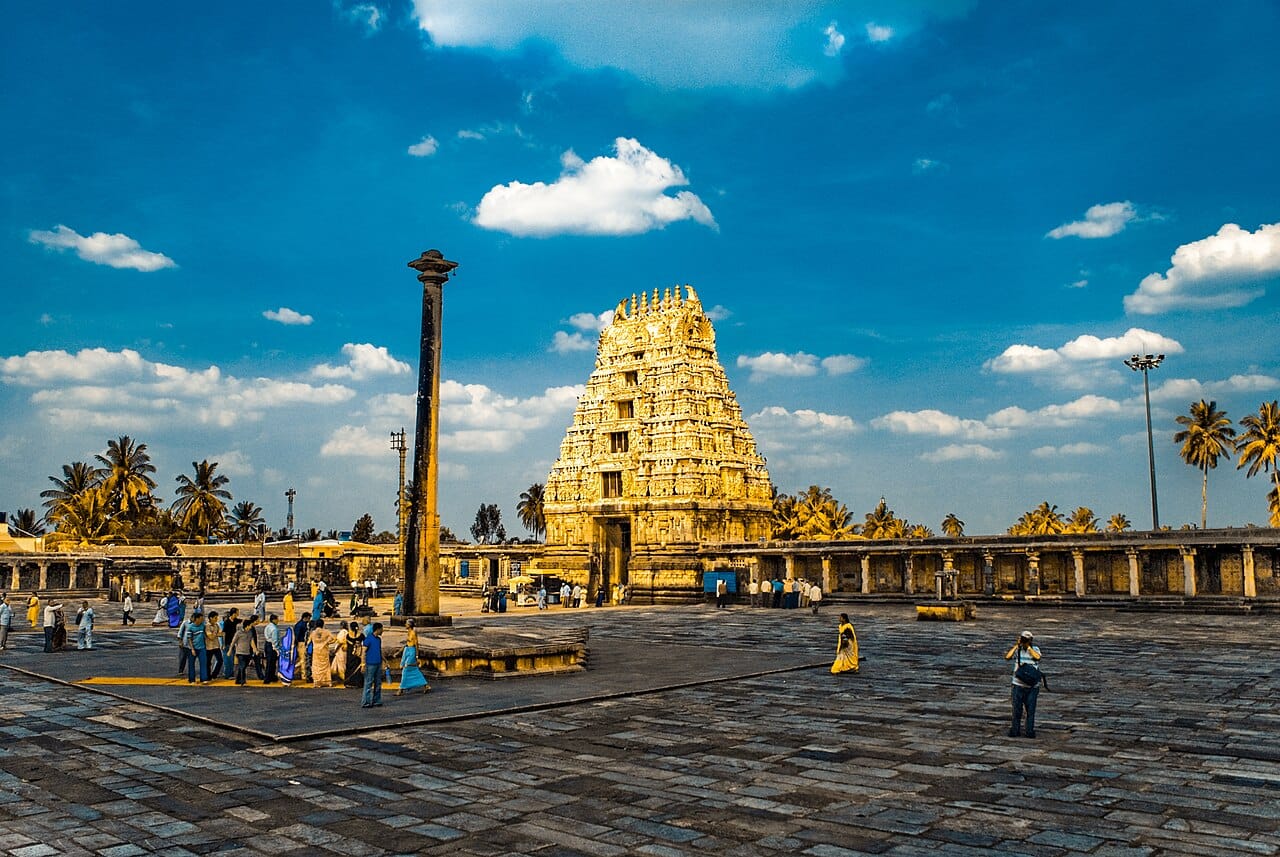
The Hoysala style is a distinctive sub-style of Vesara architecture, renowned for its star-shaped (stellate) ground plans and extraordinarily intricate soapstone carvings. Built primarily between the 11th and 14th centuries, Hoysala temples were inscribed as a UNESCO World Heritage Site in 2023.
1 Regions
6 Temples
1 Dynasties
History & Origins
The Hoysala dynasty ruled southern Karnataka from the 11th to 14th centuries. Their temple-building tradition began under King Vishnuvardhana (1108–1152 CE), who converted from Jainism to Vaishnavism and commissioned the Chennakeshava Temple at Belur. The Hoysaleswara Temple at Halebidu, built by his queen Shantala, represents the most ambitious Hoysala project, though never completed. The Keshava Temple at Somanathapura (1268 CE) is the most perfectly preserved.
The style declined after the 1311 CE invasion by Malik Kafur, and the dynasty was absorbed into the Vijayanagara Empire.
Timeline
11th cent.: Early Hoysala temples. 1117 CE: Chennakeshava Temple, Belur completed. 1121 CE: Hoysaleswara Temple, Halebidu construction begins. 12th cent.: Amruteshwara Temple, Lakshminarasimha Temple. 1268 CE: Keshava Temple, Somanathapura completed. 1311 CE: Halebidu sacked, decline begins. 2023 CE: UNESCO inscription as Sacred Ensembles of the Hoysalas.
Key Characteristics
Hoysala temples are built on a raised star-shaped platform (jagati) that serves as a circumambulatory path. The walls are covered with horizontal bands of sculpted friezes — elephants, lions, horsemen, floral scrolls, and Puranic scenes. The superstructure is relatively low and horizontal, following the Vesara tradition. Temples are built from chloritic schist (soapstone), soft when quarried but hardening on exposure, enabling extraordinarily detailed carving. Pillars are lathe-turned and highly polished, with some featuring intricate geometric patterns.
Visual & Stylistic Features
Star-shaped (stellate) ground plan. Multiple horizontal frieze bands covering the exterior. Intricate soapstone carvings with extraordinary detail. Lathe-turned polished pillars. Bracket figures (madanikas/salabhanjikas) in dance poses. Low, horizontal superstructure. Raised platform jagati for circumambulation. Screens of pierced stone. Highly ornate doorframes with river goddess figures.
Regional Distribution
Associated Dynasties
Famous Examples
Notable Hoysala Temples
Masterpieces of the Hoysala tradition.

Karnataka
Hoysaleswara Temple
The Hoysaleswara Temple in Halebidu, built circa 1121-1160 CE, is the largest Shiva temple built by the Hoysalas.
Discover Temple

Karnataka
Kedareshwara Temple
The Kedareshwara Temple at Halebidu, built in 1319 CE by the Hoysala king Veera Ballala III, is a Hoysala-era temple dedicated to Lord Shiva.
Discover Temple

Karnataka
Keshava Temple
The Keshava Temple at Somanathapura, built in 1268 CE by Somanatha Dandanayaka, a general of the Hoysala king Narasimha III, is one of the finest surviving examples of Hoysala architecture.
Discover Temple
Karnataka
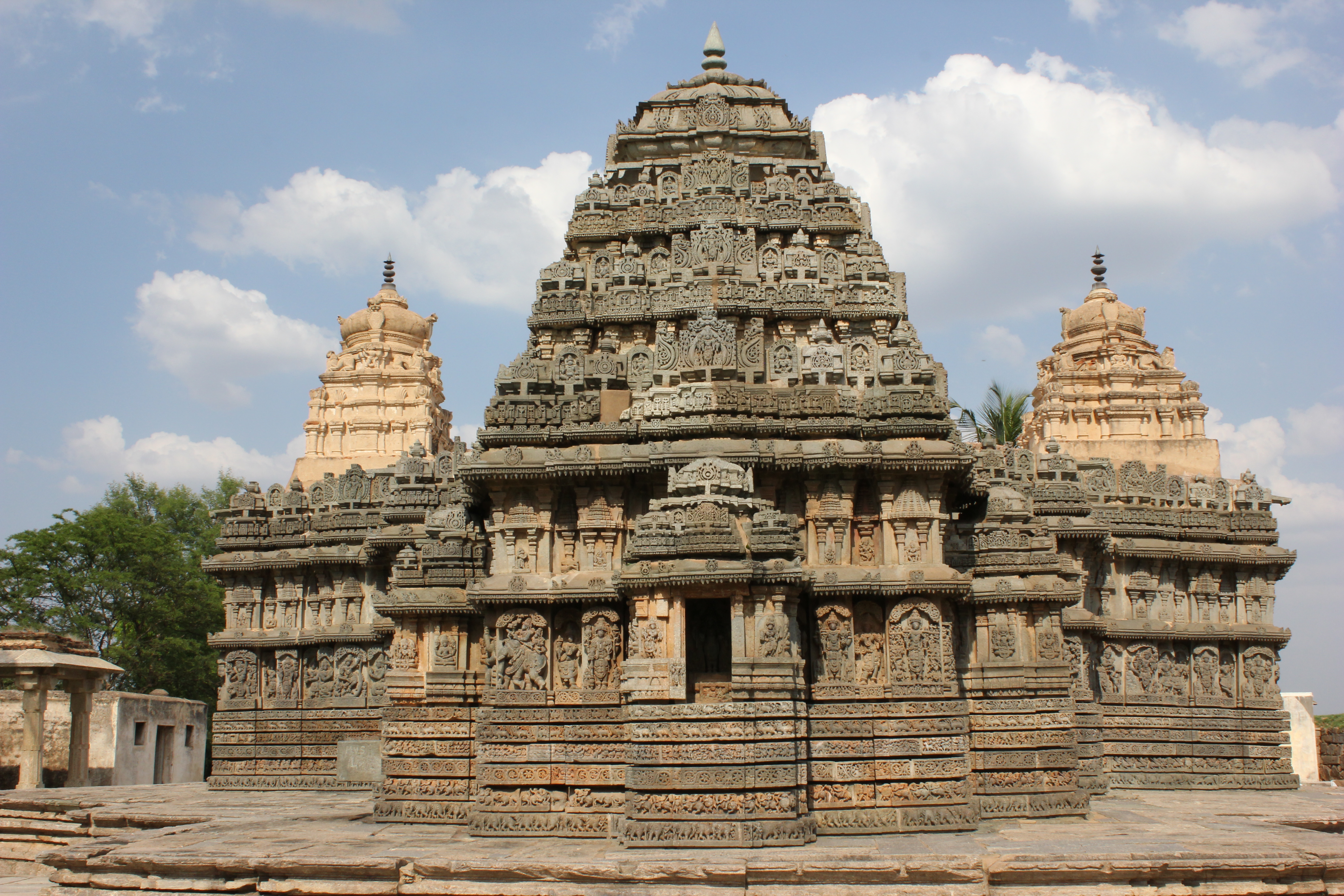
Lakshminarasimha Temple
The Lakshminarasimha Temple at Nuggehalli, built in 1246 CE by the Hoysala king Vira Someshwara, is a well-preserved example of Hoysala architecture dedicated to Lord Narasimha (the half-man half-lion avatar…
Discover Temple
Karnataka
Chennakesava Temple
The Chennakesava Temple in Belur, Karnataka, is the finest example of Hoysala architecture, dedicated to Lord Vishnu as Chennakesava, built in the 12th century.
Discover Temple
UNESCO 2023Cultural Heritage
Karnataka
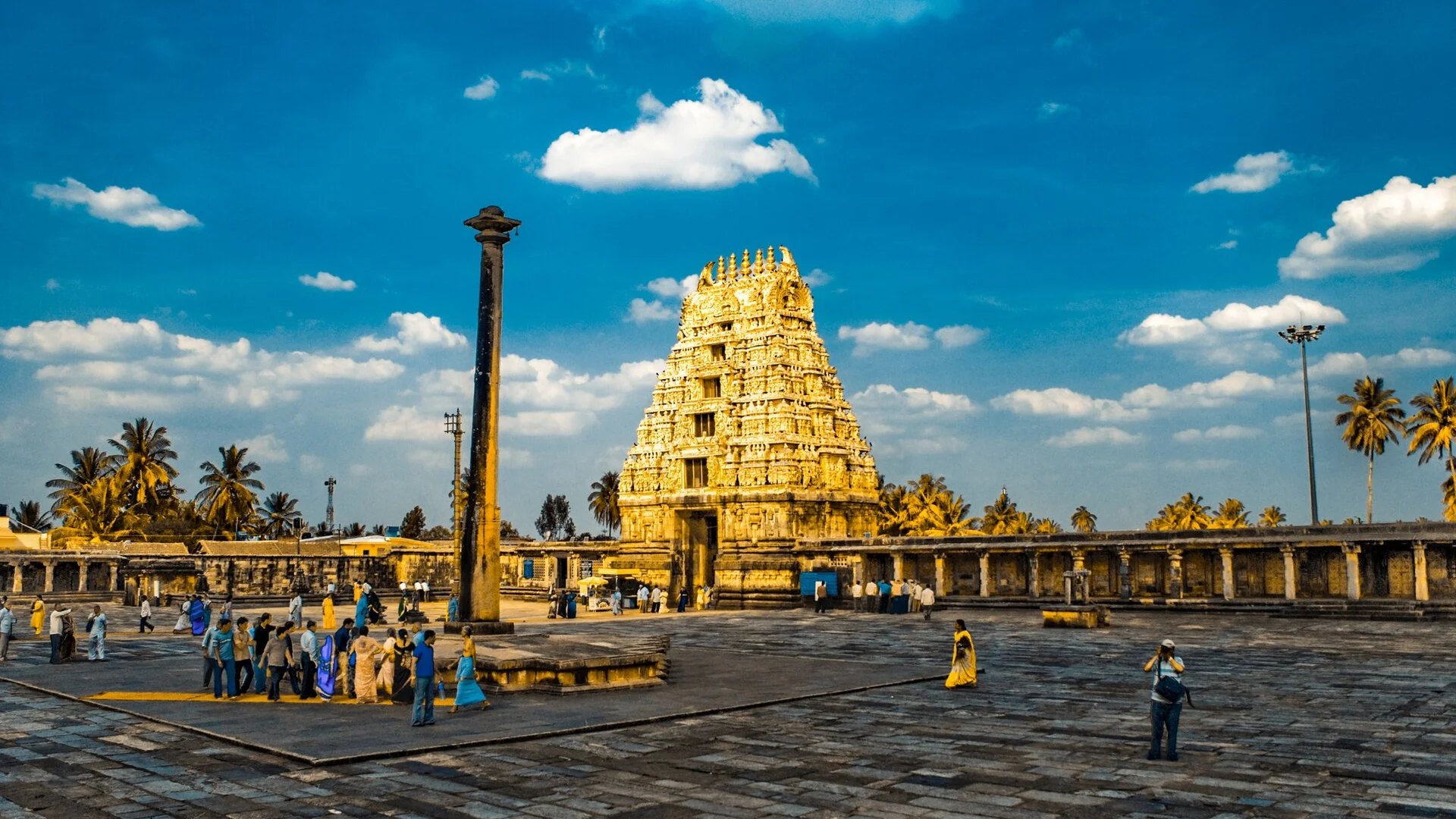
Sacred Ensembles of the Hoysalas — Chennakeshava Temple
A UNESCO World Heritage ensemble of three Hoysala temples known for their star-shaped platforms and hyper-real soapstone carvings.
Discover Temple
Continue Exploring
Sources & References
Archaeological Survey of India (ASI)
Verified monument data and architectural records.
UNESCO World Heritage Centre
International heritage documentation.
— every record linked above was re-requested for this release, so the link still resolves and the publisher still serves the document. It is a link check, not a re-verification of every sentence on this page.