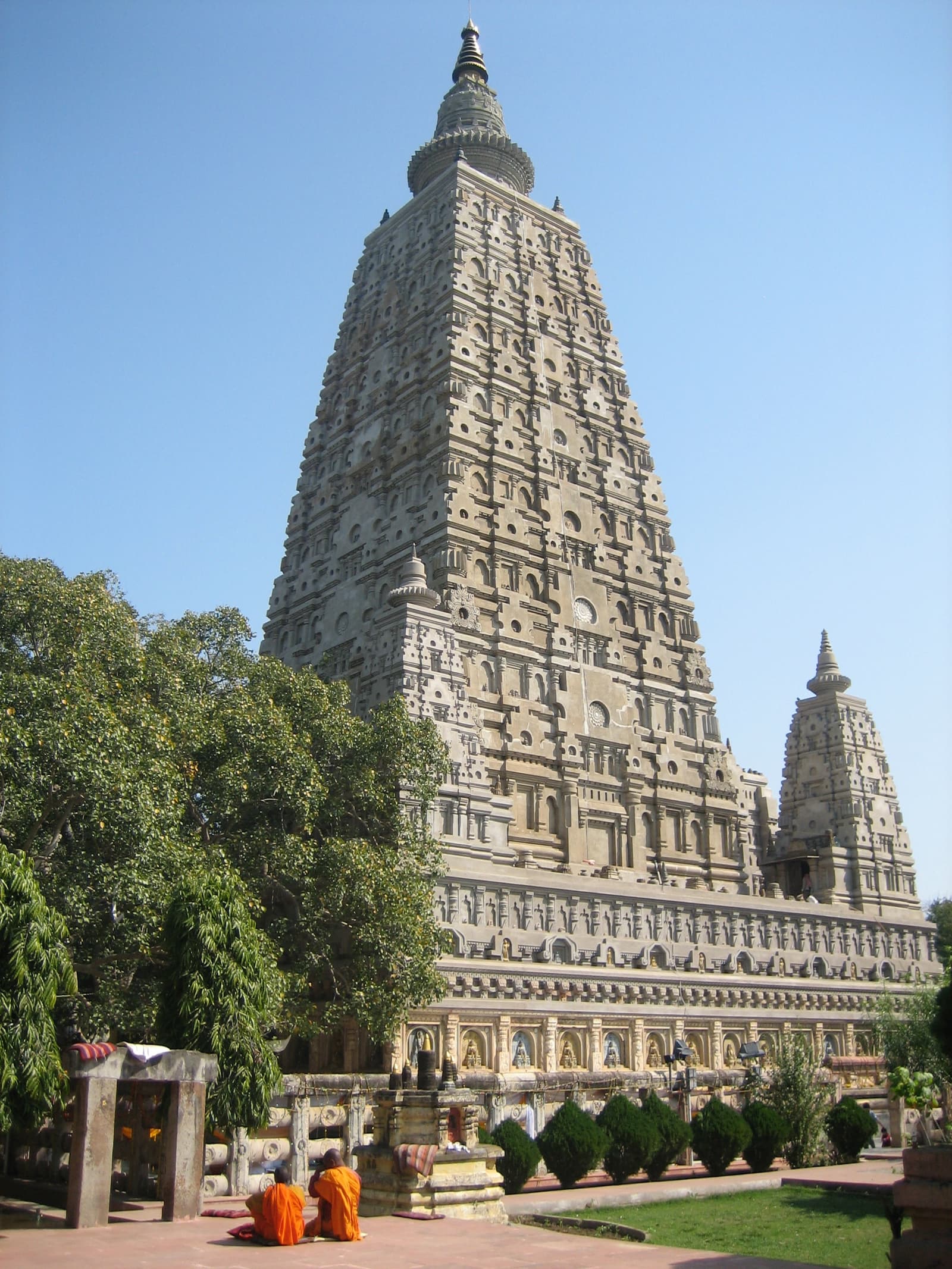
Oldest Temples in India
A chronological survey of India's earliest surviving sacred architecture, from 3rd-century BCE rock-cut chambers to 8th-century monolithic stone masterworks.
The Mundeshwari Devi Temple in Kaimur, Bihar, is documented by the Archaeological Survey of India (ASI) as the oldest continuously functioning Hindu temple in India (inscriptions date the surviving structure to 625–635 CE, while local trust boards cite 108 CE). For rock-cut architecture, the Barabar Caves (Bihar, 3rd century BCE) represent the oldest surviving sacred chambers. The Dashavatara Temple at Deogarh (c. 500 CE) is the earliest surviving structural stone temple featuring a curvilinear shikhara.
Oldest Functional Site
Mundeshwari Devi
Claimed 108 CE · dating debated
Prime Material
Sandstone & Brick
Ancient Masonry
Primary Dynasties
Mauryan to Gupta
The Golden Age
How Archaeologists Define “Oldest Temple” in India
A critical rule of Indian archaeological history is to never mix temple-site antiquity with surviving building age. Many ancient pilgrimage sites have roots in the Vedic or Epic periods, but their current stone structures are medieval or modern reconstructions. Archaeologists and architectural historians separate antiquity across five distinct categories:
1. Earliest Surviving Sacred Chambers
Barabar Caves (3rd c. BCE)
Excavated in granite under Emperor Ashoka for the Ajivika sect; preserves mirror-polished rock-cut barrel vaults that predate free-standing structural masonry by 700 years.
2. Earliest Surviving Structural Stone
Temple 17, Sanchi (5th c. CE)
Gupta flat-roofed stone sanctum with a 4-pillared porch, representing the earliest surviving free-standing structural temple building in India.
3. Earliest Epigraphic Worship Evidence
Besnagar & Nagari (2nd–1st c. BCE)
Heliodorus Pillar at Vidisha (c. 113 BCE) documents a Bhagavata Vasudeva temple, and Nagari inscriptions record early puja enclosures, though original wooden/brick superstructures perished.
4. Ancient Site vs. Modern Building
Somnath & Kashi (Site Ancient, Building Later)
Somnath is an ancient Jyotirlinga tirtha, but its current structural temple was built 1947–1951. Similarly, Kashi Vishwanath's current stone structure was built in 1780 by Ahilyabai Holkar.
5. Earliest Functioning Stone Shrine
Mundeshwari Devi (6th–7th c. CE)
Continuously functioning worship site in Kaimur, Bihar. The popular 108 CE claim is disputed; ASI and architectural historians (Meister, Dhaky) date the surviving octagonal stone structure to c. 635 CE.
Top 10 Oldest Temples in India at a Glance
Chronological ranking distinguishing firm archaeological inscriptions, physical brick/stone survival, and traditional claims.
| Rank | Temple Site | Era / Date | Location | Structure Type | Archaeological Status |
|---|---|---|---|---|---|
| #1 | Barabar Caves | 3rd Century BCE | Bihar | Rock-Cut Chamber | Ashokan Inscription (Ajivika) |
| #2 | Mundeshwari Devi Temple | Claimed 108 CE / 635 CE | Bihar | Octagonal Stone Mandapa | Continuous Worship (Debated Date) |
| #3 | Sanchi Temple 17 | 5th Century CE | Madhya Pradesh | Flat-Roofed Gupta Shrine | UNESCO World Heritage |
| #4 | Dashavatara Temple | c. 500 CE | Deogarh, UP | Panchayatana Stone Shikhara | Earliest Surviving Shikhara |
| #5 | Mahabodhi Temple | 5th–6th Century CE | Bodh Gaya, Bihar | Brick Pyramidal Tower (55m) | UNESCO World Heritage |
| #6 | Bhitargaon Temple | 5th–6th Century CE | Kanpur, UP | Terracotta & Brick Shikhara | Oldest Surviving Brick Temple |
| #7 | Badami Cave 3 | 578 CE (Dated) | Karnataka | Rock-Cut Sandstone Cave | Firm Epigraphic Date (Chalukya) |
| #8 | Elephanta Caves | c. 550–650 CE | Maharashtra | Monolithic Basalt Cave | UNESCO World Heritage (Trimurti) |
| #9 | Shore Temple | c. 700–728 CE | Tamil Nadu | Structural Granite Dravidian | UNESCO World Heritage |
| #10 | Kailasa Temple (Ellora) | 8th Century CE | Maharashtra | Monolithic Rock Excavation | World's Largest Rock-Cut Temple |
The age of a temple is one question. Its style is another.
Nagara, Dravida and Vesara explain how these buildings are shaped, not only when they were built. The full guide covers the shared plan, the superstructure tests for identifying a style, and where the three-way classification breaks down.
From Caves to Stone Marvels
Indian temple architecture spans 2,500 years, from the Mauryan rock-cut Barabar Caves (3rd century BCE) to the monolithic Kailasa Temple at Ellora (8th century CE). The transition from excavated chambers to structural stone temples occurred during the Gupta period, when the first shikharas began to rise above square sanctums.
The timeline below tracks the oldest surviving structures — each representing a distinct phase in the evolution of Indian sacred architecture: rock-cut caves, early brick, experimental stone, and the first full-developed regional styles.
Archaeological Methodology
Dating ancient temples involves carbon dating, epigraphic analysis of inscriptions, and stylistic comparison of motifs.
"The oldest structural temples often reveal the transition from Buddhist stupa design to Hindu temple layouts."
Ancient Architectural Timeline
Chronologically exploring the oldest surviving structures that defined Indian temple design.

Barabar Caves
The oldest surviving rock-cut chambers in India, excavated by Emperor Ashoka for the Ajivika sect. The interior walls bear a mirror-like polish unmatched in later Indian architecture.
Earliest surviving sacred architecture in India, predates structural temples by 500 years.
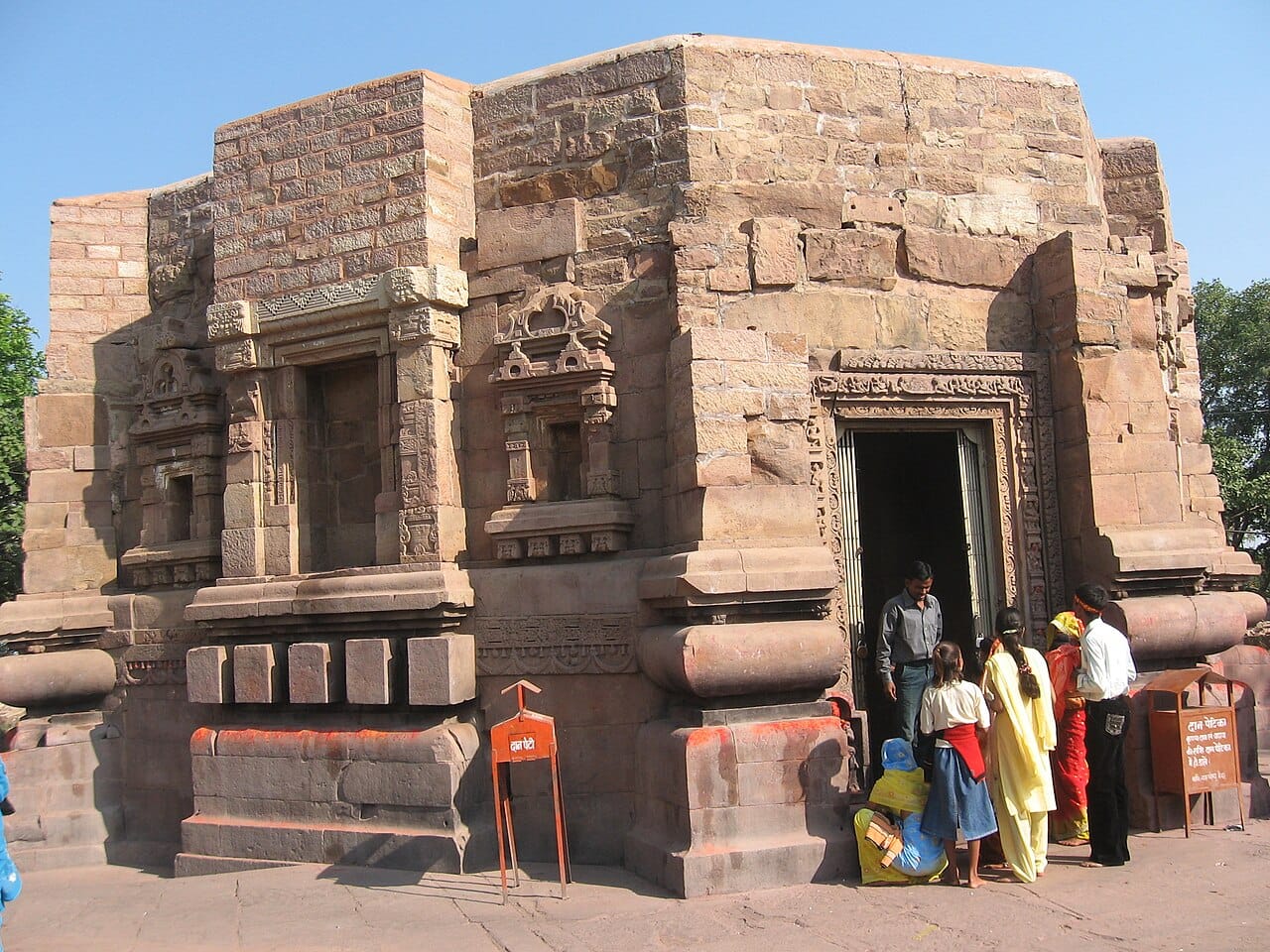
Mundeshwari Devi Temple
Often described as the oldest continuously functioning temple in India, with active worship continuing over centuries.
The 108 CE date is claimed, not settled — no carbon dating was used, and scholars date the existing masonry later.
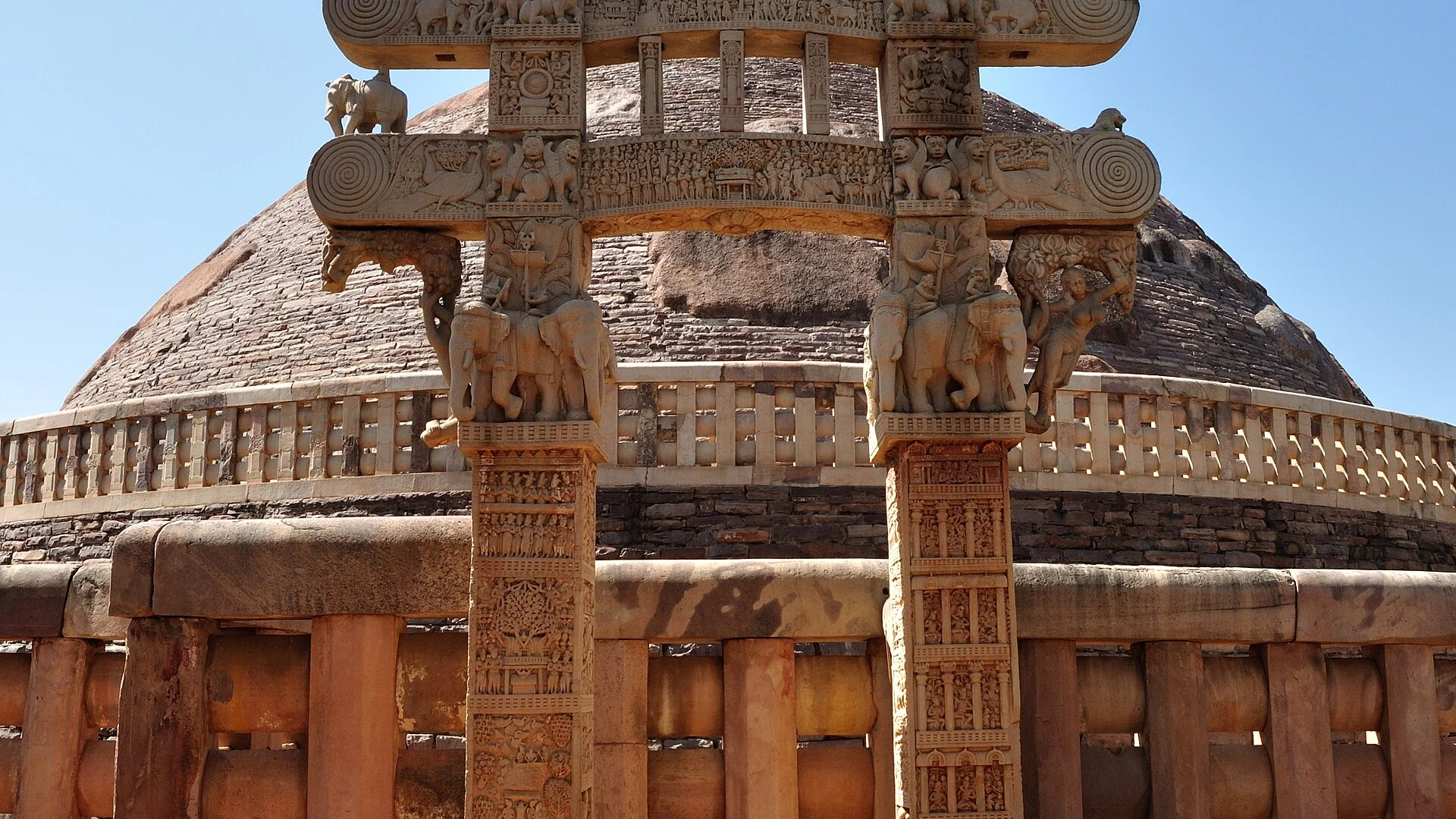
Sanchi Stupa & Temples
Commissioned by Emperor Ashoka, the complex contains some of the earliest stone structures in India. Temple 17 marks the transition from rock-cut to structural temple building.
Temple 17 at Sanchi — early Gupta flat-roofed temple with four pillars, a prototype for later designs.
Mahabodhi Temple
Built at the site where Gautama Buddha attained enlightenment. The current brick structure dates to the 5th-6th century Gupta period, with later Burmese and British restorations.
A UNESCO World Heritage site and the finest example of early brick architecture with a 55 m pyramidal tower.
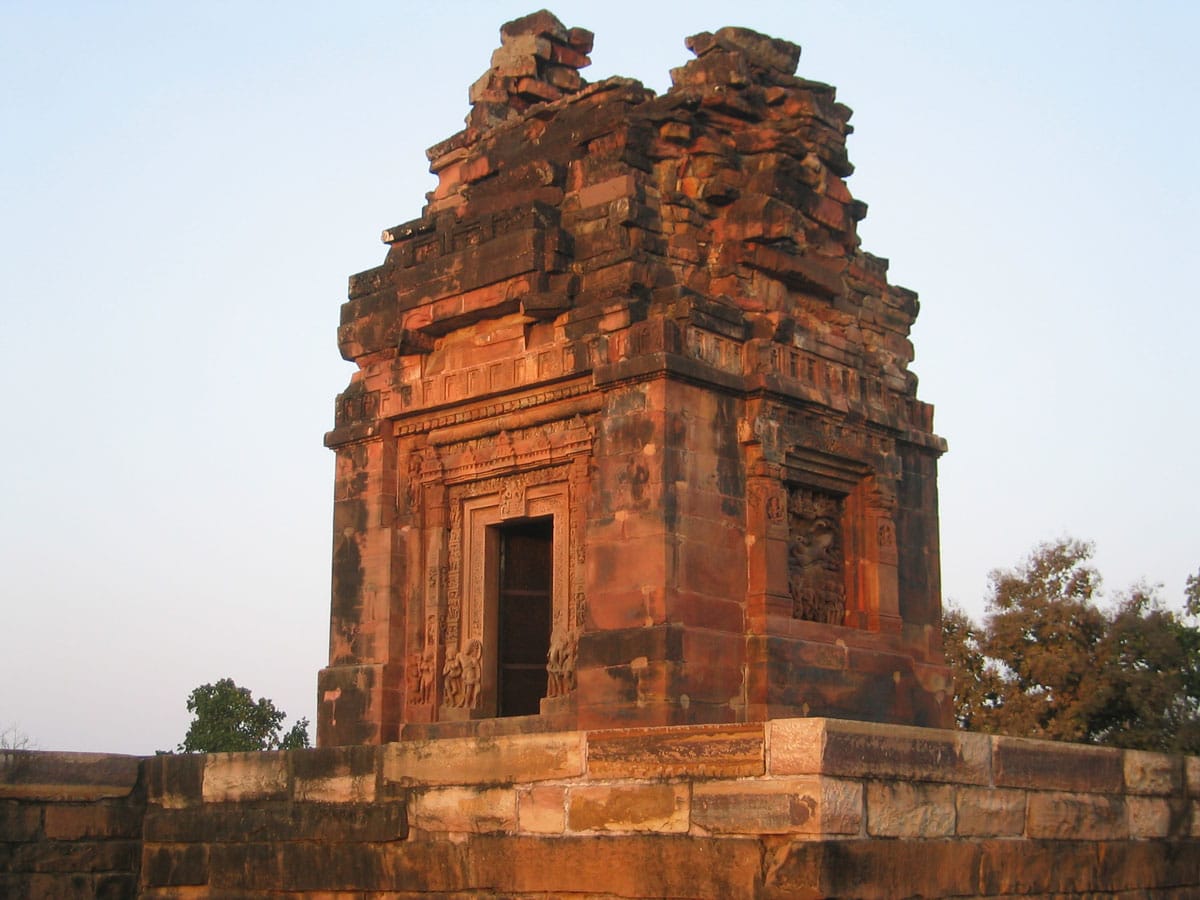
Dashavatara Temple
One of the earliest North Indian temples with a shikhara. Built during the Gupta period, its sanctum walls carry carved panels of Vishnu's ten avatars.
The earliest known Dasavatara panel and the first surviving shikhara in North Indian temple architecture.
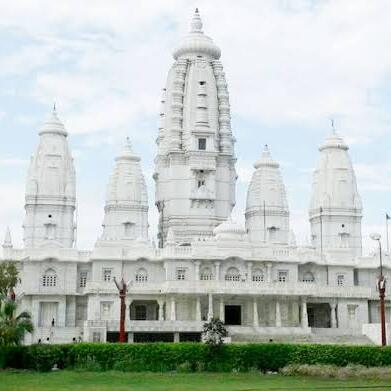
Bhitargaon Temple
The oldest surviving brick and terracotta temple in India, built during the Gupta period. Its shikhara marks an early stage in the evolution of the Nagara style.
Oldest surviving brick temple with a shikhara — a prototype for the Nagara spire tradition.
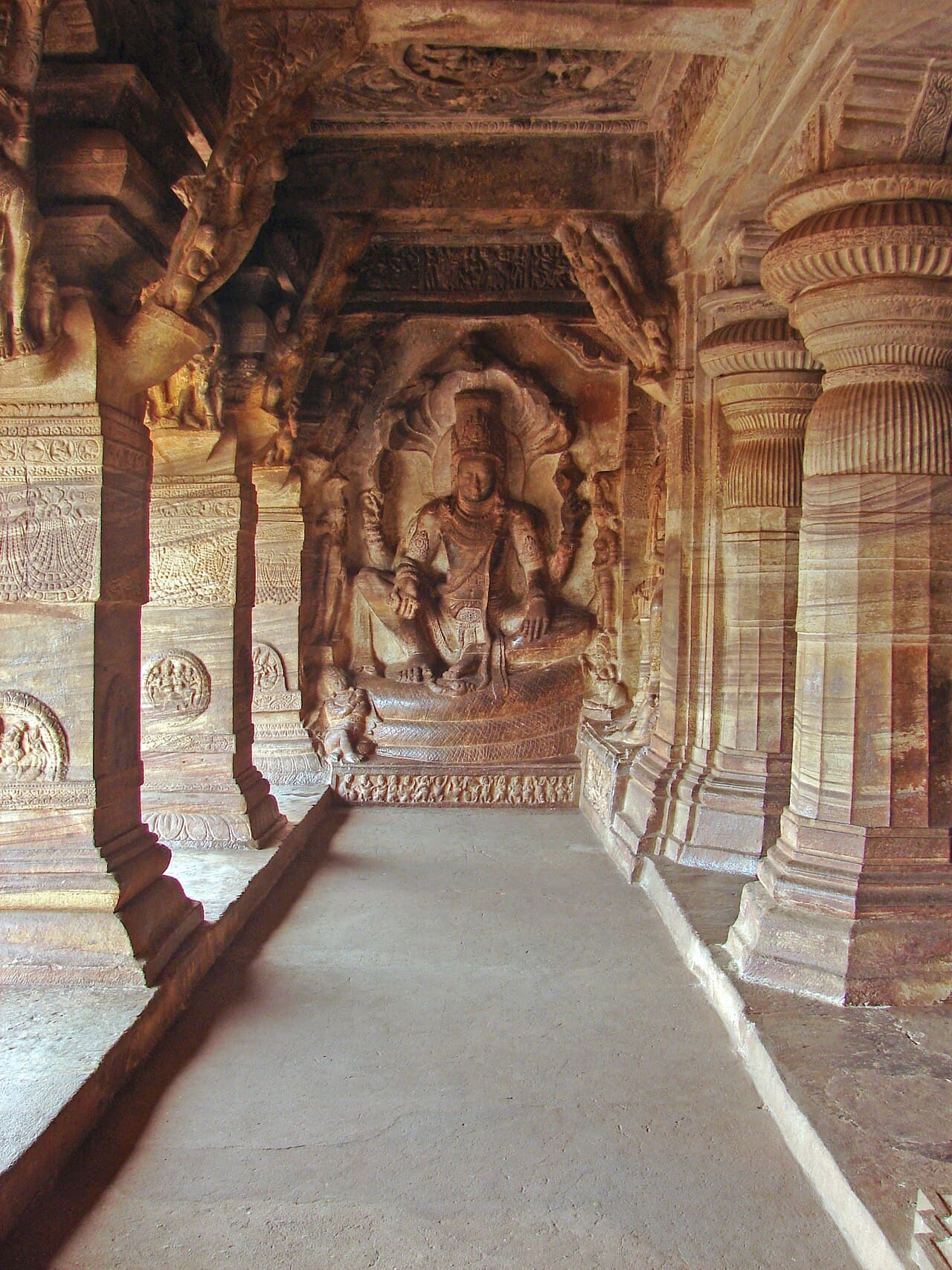
Badami Cave Temples
Four rock-cut cave temples carved into a red sandstone cliff by the Early Chalukya kings.
The earliest surviving rock-cut architecture in the Deccan. Cave 3 inscription is a dated masterwork of 578 CE.
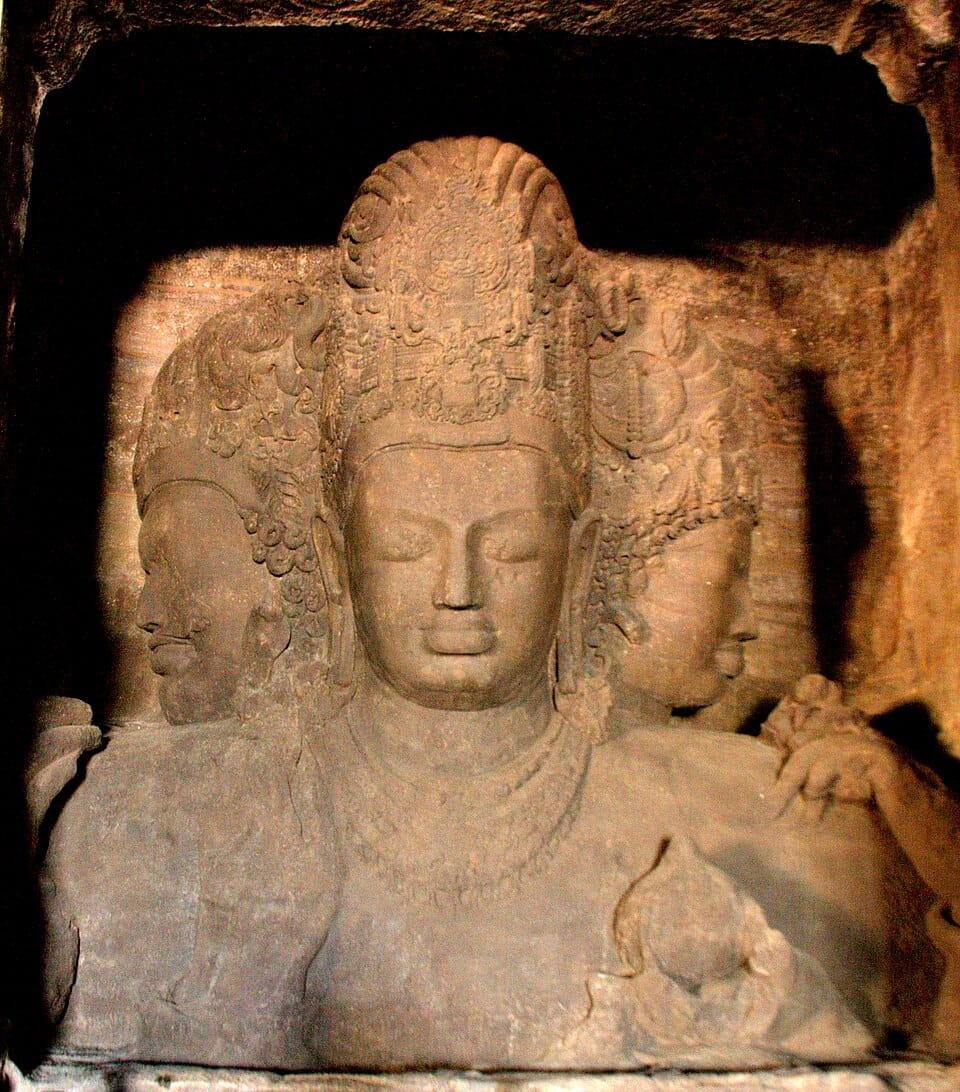
Elephanta Caves
A rock-cut cave complex on Elephanta Island, featuring the 6 m tall Trimurti — a three-faced bust of Shiva. Scholars date it between 520 and 750 CE.
The 6 m Trimurti panel is one of the most celebrated sculptural achievements in Indian art. UNESCO World Heritage site.
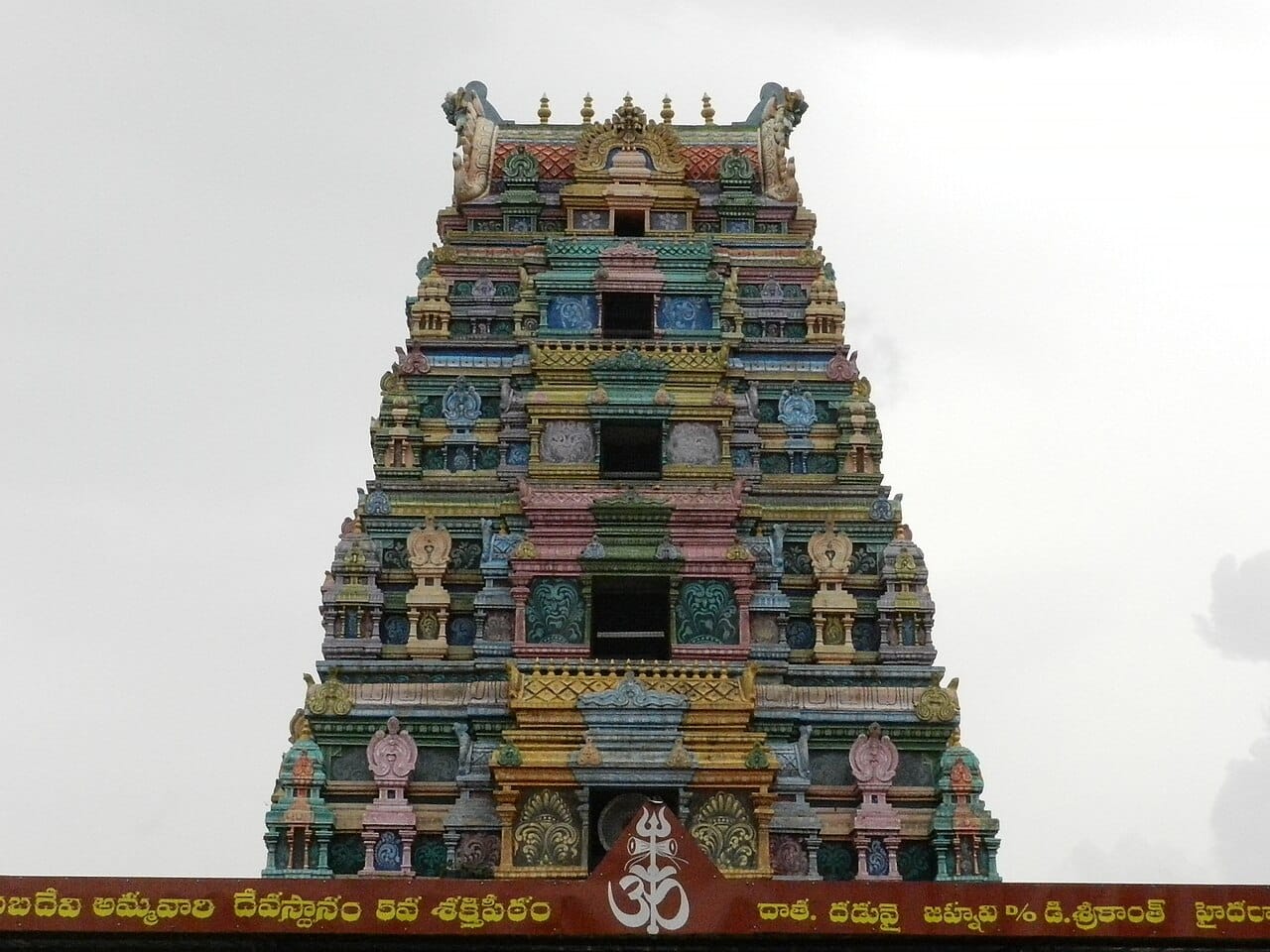
Alampur Navabrahma Temples
Nine early Chalukya temples at the confluence of the Krishna and Tungabhadra rivers. They represent the northern Nagara style in the Deccan, unusual for the region.
Rare example of Nagara-style temples in South India, built by the Badami Chalukyas in the 7th century.
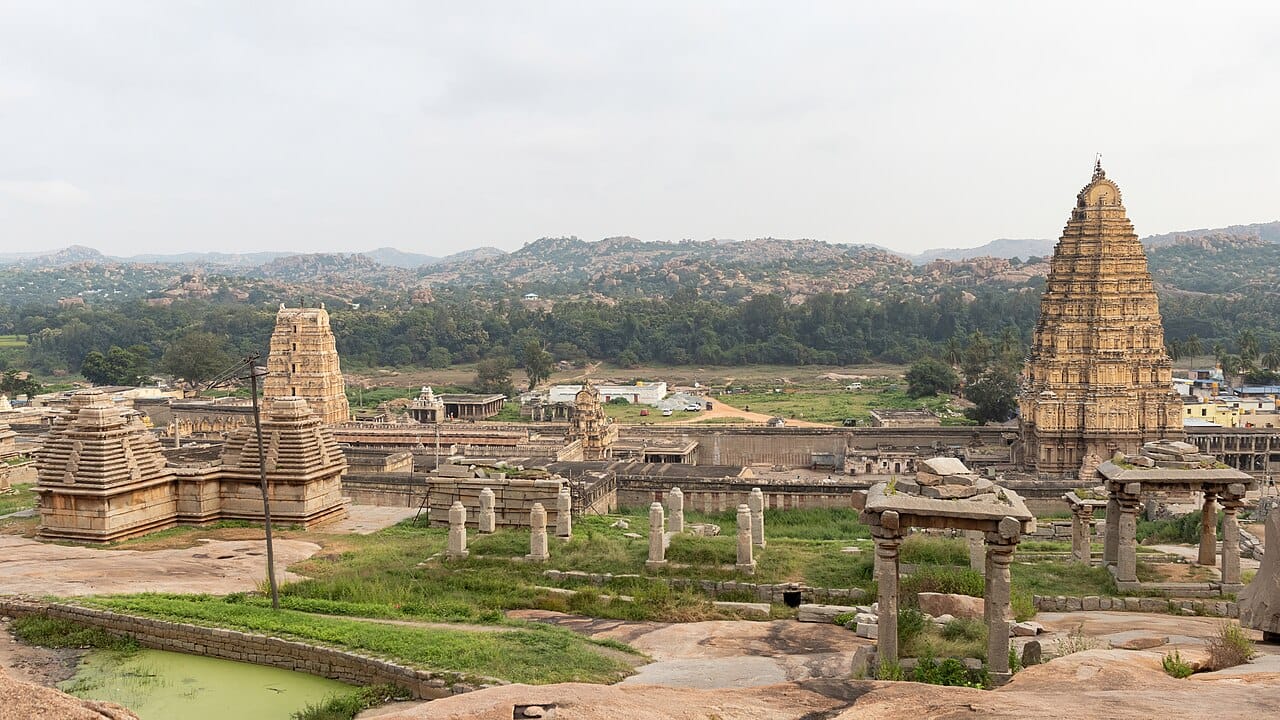
Virupaksha Temple (Pattadakal)
The largest and most ornate temple at Pattadakal, built by Queen Lokamahadevi to commemorate King Vikramaditya II's victory over the Pallavas. A UNESCO World Heritage site.
Built in 745 CE — a fusion of Nagara and Dravida styles that defines the Chalukyan Vesara tradition.
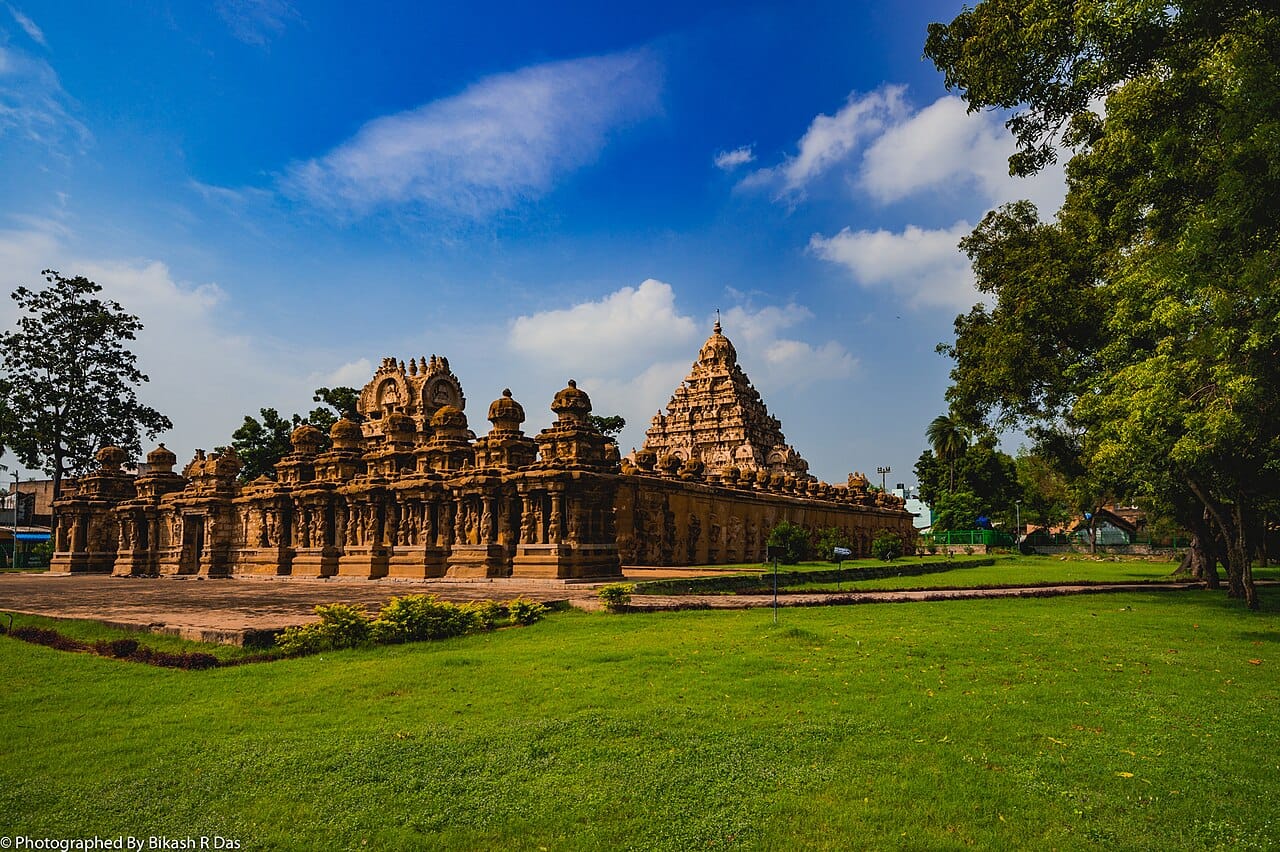
Kailasanathar Temple
The oldest structure in Kanchipuram, built by the Pallava king Rajasimha Narasimhavarman II. Its sandstone carvings influenced the later Brihadeeswarar Temple.
The earliest structural temple in Kanchipuram and a direct precursor to the great Chola temples.
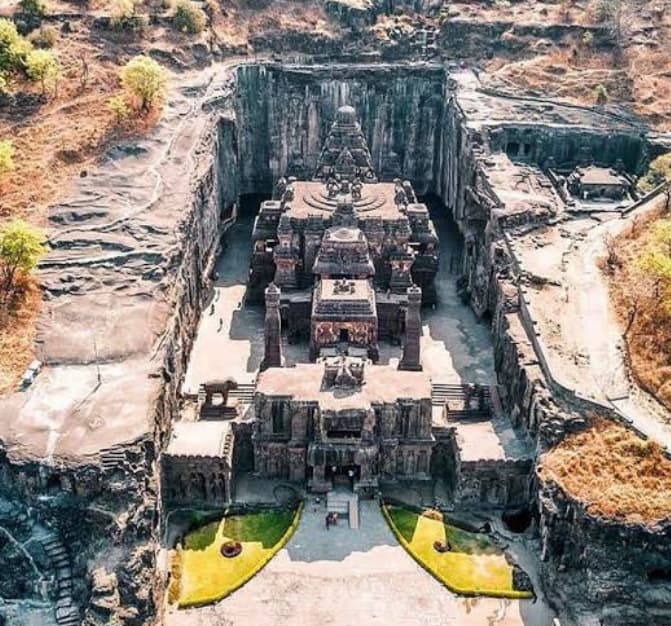
Kailasa Temple (Ellora)
The world's largest monolithic structure, carved from a single basalt cliff by the Rashtrakuta king Krishna I. Required the excavation of 200,000 tons of rock.
Carved from the top down — no scaffolding required. Three stories high, covering twice the area of the Parthenon.
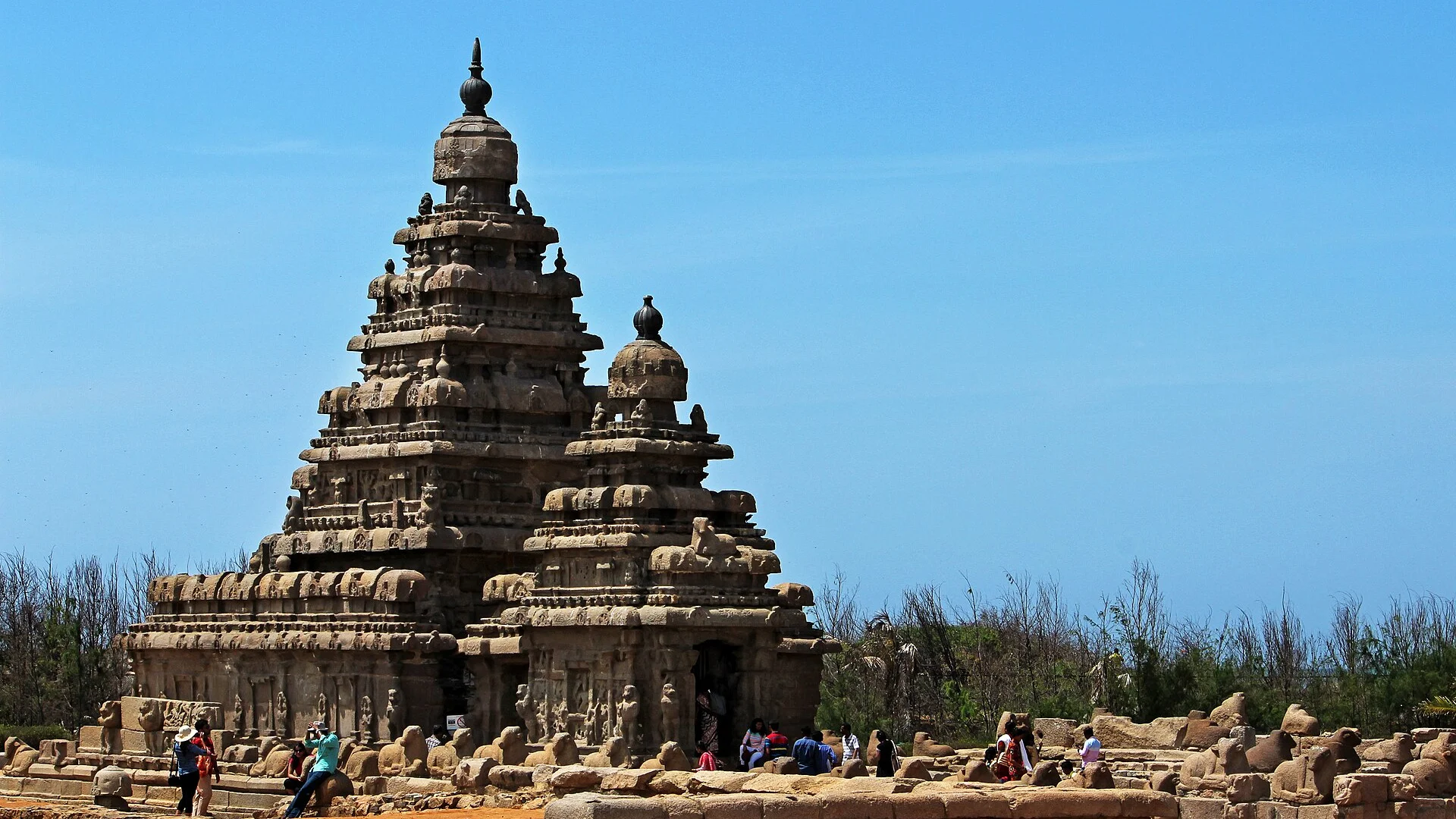
Shore Temple
One of the earliest structural stone temples in South India, built by the Pallava king Narasimhavarman II. It is among the first South Indian temples built predominantly from granite.
Has survived 1,300 years of Bay of Bengal sea spray — among the oldest granite temples on India's coast.
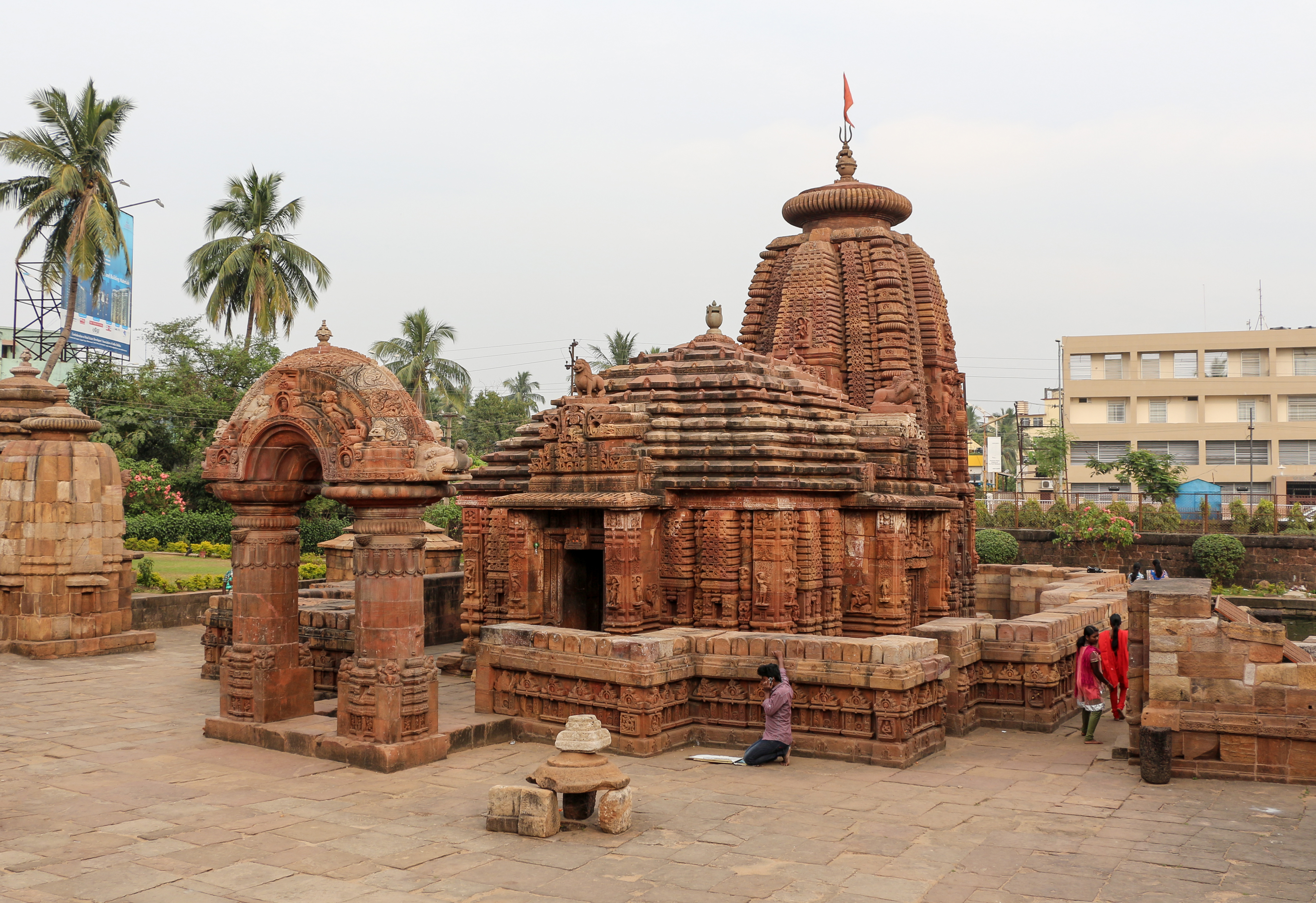
Mukteswara Temple
Known as the 'gem of Odisha architecture,' this 10th-century temple is the earliest complete example of the developed Kalinga style. Its stone torana (arched gateway) is unique.
Considered the transition point between early and mature Kalinga temple architecture. The torana is unparalleled.
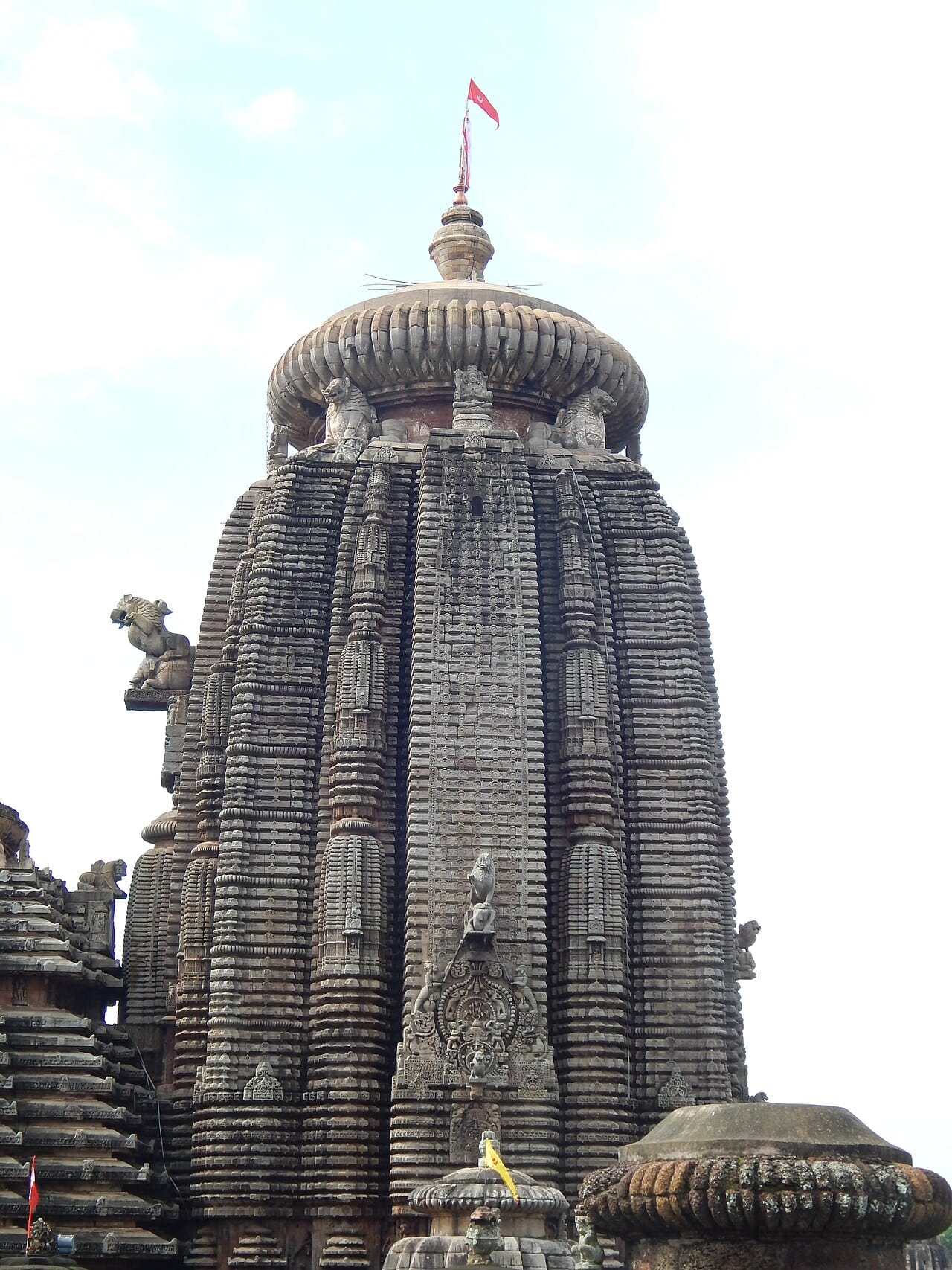
Lingaraj Temple
The largest and most important temple in Bhubaneswar, built in the 11th century (c. 1090–1104 CE). It represents the culmination of Kalinga architecture with its 55 m high deul (tower).
The 55 m tower dominates the Bhubaneswar skyline. A living temple with uninterrupted worship for over 1,000 years.
Where the oldest surviving fabric is
Survival is not even. The Deccan and the Gangetic plain keep the earliest material; the Tamil coast keeps the earliest free-standing stone temples. Reading the chronology region by region makes the gaps as informative as the dates.
Bihar & the Gangetic plain
3rd c. BCE – 6th c. CEThe oldest surviving material: Mauryan rock-cut chambers, Gupta brick and terracotta, and the disputed octagonal structure at Kaimur.
Madhya Pradesh
3rd c. BCE – 11th c. CESanchi records the move from stupa to structural shrine; Temple 17 is the earliest surviving flat-roofed Gupta sanctum.
Deccan & Maharashtra
5th c. BCE – 8th c. CERock-cut mastery at Ellora and Elephanta, and the Chalukyan laboratory at Badami and Pattadakal.
Tamil Nadu coast
7th – 8th c. CEPallava structural stone: the Shore Temple and Kailasanathar are the earliest surviving granite and sandstone vimanas of the south.
Dating the Oldest Temples in India
What is the oldest temple in India?
The Barabar Caves (3rd century BCE) are the oldest surviving rock-cut chambers, though they served the Ajivika ascetic sect rather than being Hindu temples. The Mundeshwari Devi Temple is often described as the oldest continuously functioning temple — its board dates the site to 108 CE, but the ASI plaque gives 635 CE and scholars place the surviving structure in the 6th–7th century.
The Dashavatara Temple at Deogarh (circa 500 CE) is among the earliest surviving structural stone temples with a shikhara.
Which is the oldest functional temple in India?
The Mundeshwari Devi Temple in Bihar is often described as the oldest continuously functioning temple. The Bihar State Religious Trust Board claims a 108 CE date, but the dating is debated: the ASI plaque at the site gives 635 CE, and historians of temple architecture date the surviving octagonal structure to the 6th–7th century.
What is the oldest stone temple in India?
The Dashavatara Temple at Deogarh (circa 500 CE) is generally considered among the earliest surviving structural stone temples with a shikhara. The Shore Temple at Mahabalipuram (8th century CE) is one of the oldest structural stone temples in South India, contemporary with the Kailasanathar Temple at Kanchipuram.
Which is the oldest temple architecture style in India?
The Nagara style, which developed during the Gupta period (4th-6th centuries CE), is the earliest indigenous temple architecture style of North India. The Dashavatara Temple at Deogarh and the Bhitargaon Temple are among the earliest examples.
How are ancient temples dated?
Archaeologists use multiple methods: carbon dating of organic materials found in foundations, epigraphic analysis of inscriptions, stylistic comparison of architectural motifs and sculptures, and textual references in contemporary literature. Many dates are debated among scholars.
What is the difference between a site's age and its building's age?
A pilgrimage site can be ancient while the standing structure is recent. Somnath is an ancient Jyotirlinga tirtha but its present temple was built between 1947 and 1951, and the Kashi Vishwanath temple in its current stone form dates to 1780. Any 'oldest temple' claim is meaningless unless it states which of the two it means.
Sources and References
This guide draws on information from the following authoritative sources:
— every record linked above was re-requested for this release, so the link still resolves and the publisher still serves the document. It is a link check, not a re-verification of every sentence on this page.
- • Archaeological Survey of India — Barabar Caves (Monument #N-BR-1), ASI site reports
- • Mundeshwari Temple — ASI Patna Circle site plaque (635 CE); Bihar State Religious Trust Board dating claim (108 CE)
- • UNESCO — Mahabodhi Temple Complex, Bodh Gaya World Heritage inscription, 2002
- • Indian Archaeology: A Review — Sanchi Stupa excavation reports, ASI publications
- • Pillai, K. S. — "Early Hindu Temples of India: A Study of Temple Evolution," University of Madras
- • Kramrisch, Stella — "The Hindu Temple," University of Calcutta, 1946 (reprint Motilal Banarsidass)
- • Meister, Michael W. — "Encyclopaedia of Indian Temple Architecture," American Institute of Indian Studies
- • Naveen singh negi — Compilation and verification, July 2026
How to Cite This Archaeological Chronology
For history departments, student papers, or heritage journalism citing this chronology:
Sacred Places India. (2026). “Chronology of India's Earliest Surviving Temples: From Rock-Cut Caves to Structural Masonry.” Sacred Places India Archaeological Archive. https://sacredplacesindia.com/oldest-temples-in-indiaPreserving Ancient Echoes
Many of these sites are managed by the Archaeological Survey of India (ASI) as Monuments of National Importance. Their preservation is vital for understanding the civilizational roots of the Indian subcontinent.