From ancient rock-cut marvels to towering imperial shrines, discover the architectural soul of Bharat through our verified digital archive.
Explore More Temples
Builder
Emperor Ashoka (original), Gupta Kings (current)
Dynasty
Mauryan — Gupta
Construction
3rd century BCE - 5th-6th century CE
Style
Buddhist / Nagara influence
Main Deity
Gautama Buddha
Location
Bodh Gaya, Bihar
UNESCO
Inscribed 2002
Material
Brick and stone
Central Tower
55 meters high
Sacred Tree
Bodhi Tree (direct descendant)
In 530 BCE, a 35-year-old prince named Siddhartha Gautama sat beneath a peepal tree on the banks of the Falgu River and made a single resolve: he would not move until he understood the nature of suffering. By dawn, he had become the Buddha — the Awakened One. The tree became the Bodhi Tree. The spot became the Vajrasana. And the place became Bodh Gaya — the most sacred site in Buddhism.
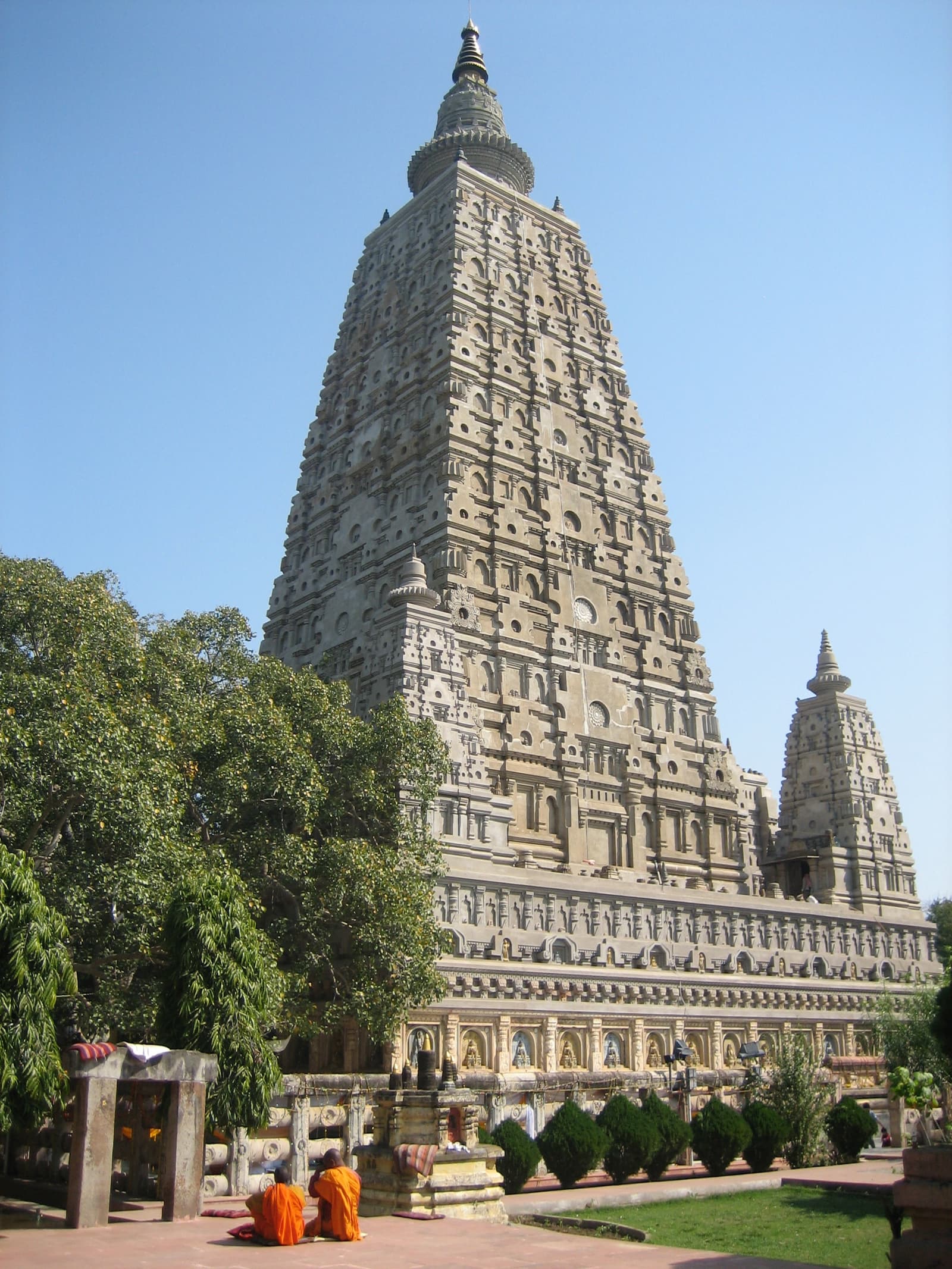
The Mahabodhi Temple Complex rises 55 meters above this ground in a pyramidal shikhara of fired brick, the oldest surviving brick structure in India. The first temple was built by Emperor Ashoka in the 3rd century BCE. The current structure dates from the 5th-6th century CE Gupta period. It is one of the four holy sites of Buddhism and the only one where the Buddha himself achieved what he set out to do.
Millions of pilgrims visit each year — Theravada monks from Sri Lanka and Myanmar, Tibetan lamas in maroon robes, Japanese Zen practitioners, and Western mindfulness seekers. They come to sit beneath the Bodhi Tree, touch the Vajrasana, and walk the seven sacred places where the Buddha spent the weeks after his enlightenment. The temple is not merely a monument. It is the birthplace of a spiritual tradition that now spans the globe.
UNESCO inscribed the Mahabodhi Temple Complex in 2002 under four criteria — an unusually high number that reflects the site's layered significance. Criterion (i) recognizes the temple as a masterpiece of Buddhist architecture, the direct prototype for pagodas across Asia. Criterion (ii) acknowledges the interchange of human values at Bodh Gaya — the site where the Buddha's teachings were realized and from which they spread across the continent. Criterion (iii) cites the temple as an exceptional testimony to the Buddhist tradition that shaped the spiritual life of Asia for over two millennia. Criterion (vi) recognizes its direct and tangible association with the life of the Buddha.
The site occupies a rare category: it is simultaneously a UNESCO World Heritage site, a monument protected by the Archaeological Survey of India, and an active pilgrimage destination where Buddhist monks and laypeople practise daily devotion. Balancing these three identities — archaeological, devotional, and international — is the central challenge of its conservation. No other UNESCO site in India carries quite this combination of architectural importance and living spiritual significance.
Emperor Ashoka's conversion to Buddhism after the Kalinga War (c. 261 BCE) changed the history of Bodh Gaya. Horrified by the suffering he had caused, Ashoka embraced the Dhamma and dedicated himself to non-violence and the propagation of the Buddha's teachings. He undertook a pilgrimage to every site associated with the Buddha's life, building monuments at each one. At Bodh Gaya, he built the Vajrasana — a sandstone slab marking the precise spot where the Buddha had sat — and erected a stone railing around the Bodhi Tree.
The temple that rises 55 meters above Bodh Gaya today dates from the 5th-6th century CE, during the Gupta period — the classical age of Indian civilization. The Guptas were patrons of both Buddhism and Brahmanical traditions. The design is a pyramidal spire built entirely in fired brick, rising in a series of 13 stepped tiers. The interior sanctum houses a large gilded Buddha image in bhumi-sparsha mudra — the same posture Siddhartha held when he touched the earth to witness his enlightenment.
After the decline of Buddhism in India following the 12th-century Muslim invasions, the site was largely abandoned. The brick structure was buried up to its first-story niches under silt and vegetation. British archaeologists rediscovered the site in the 1860s. Alexander Cunningham, the ASI's first director, identified the buried mound as the Mahabodhi Temple described by the Chinese pilgrim Xuanzang in the 7th century CE. The restoration that followed, completed in the 1880s with Burmese support, returned the temple to an active pilgrimage state. The Bodhi Tree was replanted in 1881 from a cutting brought from Anuradhapura, Sri Lanka — a direct descendant of the original.
Siddhartha Gautama attains enlightenment beneath the Bodhi Tree at Bodh Gaya, becoming the Buddha.
Emperor Ashoka visits Bodh Gaya, builds the Vajrasana and the first stone railing around the Bodhi Tree.
Ashoka's daughter Sanghamitta carries a cutting of the Bodhi Tree to Anuradhapura, Sri Lanka, where it still grows as the Sri Maha Bodhi.
The Shunga dynasty adds intricately carved stone railings with medallions and lotus motifs, among the earliest surviving Buddhist sculptures in India.
The current brick temple — a 55-meter pyramidal shikhara — is built during the Gupta period, the classical age of Indian civilization.
The Chinese pilgrim Xuanzang records a detailed description of the temple at its peak, surrounded by monasteries of monks from across Asia.
After Muslim invasions and the decline of Buddhism in India, the temple is abandoned and gradually buried under silt and vegetation.
Alexander Cunningham excavates the buried temple complex, uncovering the Ashokan railings, the Vajrasana, and the lower portions of the temple.
The current Bodhi Tree is planted from a cutting brought from the Sri Maha Bodhi in Anuradhapura, restoring the living link to the Buddha's enlightenment.
A Burmese Buddhist mission funds and executes the restoration of the temple, adding gilt and painted decorations and reinstalling the Buddha image.
The Mahabodhi Temple Complex is inscribed on the UNESCO World Heritage List under criteria (i), (ii), (iii), and (vi).
A comprehensive conservation management plan is developed with UNESCO and the World Monuments Fund to guide long-term preservation of the complex.
UNESCO World Heritage Site
Inscribed 2002
The Mahabodhi Temple Complex was inscribed on the UNESCO World Heritage List in 2002 under four criteria recognizing its outstanding universal value as the most sacred site in Buddhism, a masterpiece of brick architecture, and a direct link to the life of the Buddha.
Criterion (i)
The Mahabodhi Temple is a masterpiece of Buddhist architecture in brick, directly influencing the development of pagoda architecture across East and Southeast Asia.
Criterion (ii)
Bodh Gaya witnessed the interchange of human values — the Buddha's teachings spread from here across Asia, and the site continues to draw pilgrims from every Buddhist tradition worldwide.
Criterion (iii)
The temple complex provides exceptional testimony to the Buddhist tradition, with the Bodhi Tree, Vajrasana, and seven sacred places preserving the living memory of the enlightenment event.
Criterion (iv)
The temple is an outstanding example of the brick shikhara temple type that became the prototype for Buddhist stupa and pagoda designs throughout Asia.
Criterion (vi)
The site is directly and tangibly associated with the life of the Buddha — specifically his enlightenment — making it the most sacred site in Buddhism.
The Mahabodhi Temple is a pyramidal spire built entirely in fired brick, rising in 13 stepped tiers to a finial and pinnacle 55 meters above the ground. It is the oldest surviving brick structure in India. The tower is surrounded by four smaller replicas at the corners, creating a panchayatana layout — a five-shrine arrangement that became a standard convention in Indian sacred architecture.
The entire surface is articulated with recessed niches framed by decorative arches, each containing an image of the Buddha in meditation, teaching, or blessing postures. The interior sanctum houses a large gilded Buddha image in bhumi-sparsha mudra — the earth-touching gesture — the same posture Siddhartha held when he called the earth to witness his enlightenment. This mudra, unique to Buddhism, is the single most iconic representation of the enlightenment event.
The Gupta design had an influence that spread across the entire Buddhist world. The shikhara tower form was adapted into the pagodas of China, Japan, Korea, and Vietnam. The panchayatana layout appears in temples across Southeast Asia. The niche-with-Buddha motif became a defining feature of Buddhist architecture from Bagan in Myanmar to Borobudur in Indonesia. The Mahabodhi Temple is not merely the site of enlightenment — it is the architectural prototype from which generations of Buddhist builders drew their inspiration.
The Buddha himself identified four places that his followers should visit with reverence: Lumbini (birthplace), Bodh Gaya (enlightenment), Sarnath (first sermon), and Kushinagar (parinirvana). These four sites form the Chatur Mahasthana — the pilgrimage circuit that every Buddhist hopes to complete in a lifetime. Bodh Gaya holds the highest place because it marks the turning point: the moment when a human being broke through the cycle of birth and death and showed the way for all others.
The Bodhi Tree that stands today is a direct descendant of the original Ficus religiosa under which the Buddha sat. Emperor Ashoka built the Vajrasana — a sandstone slab marking the precise spot of meditation — which in Buddhist cosmology is the axis mundi, the navel of the earth, the point that remained unmoved when the rest of the world trembled. The complex also encompasses seven locations where the Buddha spent the weeks after his enlightenment, each with its own shrine and story.
Bodh Gaya is sacred to all Buddhist traditions — Theravada, Mahayana, and Vajrayana. Monasteries built by Tibetan, Thai, Myanmar, Bhutanese, Japanese, Chinese, and Sri Lankan communities surround the complex. The 14th Dalai Lama has visited many times. On Buddha Purnima — the full moon of April or May — more than 100,000 pilgrims gather for all-night chanting, meditation, and offerings around the Bodhi Tree.
The Mahabodhi Temple complex preserves some of the earliest surviving works of Indian Buddhist art. The Shunga period stone railings (2nd century BCE) that enclose the complex are masterpieces of early Indian sculpture. Each railing pillar is carved with medallions featuring lotus motifs, elephants, horses, and auspicious symbols that reflect the mature court style of the Shunga period. These railings predate the current temple structure by nearly seven centuries and provide the first visual evidence of Bodh Gaya as a formal pilgrimage centre.
The Ashokan railing fragments, now preserved in the site museum, display the distinctive Mauryan polish — a lustrous finish achieved through meticulous abrasion that gives the stone a mirror-like sheen. The medallion carvings — lotuses, elephants, and auspicious symbols — reflect the mature Mauryan court style and are among the earliest surviving works of Indian Buddhist art.
Inside the sanctum, the 1.5-meter gilded Buddha in bhumi-sparsha mudra is a striking example of Gupta period iconography. The earth-touching gesture — right hand reaching down to touch the ground, left hand resting in the lap — is the single most iconic representation of the enlightenment event. The gilded surface, added during the 1880s Burmese restoration, reflects the Southeast Asian tradition of covering sacred images in gold leaf. Around the complex, carved stone archways, lotus medallions, and sculpted guardian figures continue the artistic tradition that has embellished the site for over 2,000 years.
The Mahabodhi Temple Complex has been shaped by an extraordinary succession of patrons spanning 2,300 years and multiple civilizations. Emperor Ashoka of the Maurya dynasty (3rd century BCE) established the site as a pilgrimage destination by building the Vajrasana and the first stone railing. His daughter Sanghamitta carried the Bodhi Tree cutting to Sri Lanka, creating the lineage that would eventually restore the tree at Bodh Gaya two millennia later.
The Gupta dynasty (5th-6th century CE) built the towering brick temple that stands today, transforming Ashoka's modest monument into the 55-meter shikhara that defines the site. The Pala dynasty (8th-12th century CE) maintained the site and added monasteries. The Shunga dynasty (2nd century BCE) contributed the carved stone railings that remain among the finest early Buddhist sculptures in India.
During the 19th-century restoration, the Burmese Buddhist mission led by the king of Burma provided funds, materials, and craftsmen to excavate and rebuild the temple. The Sri Lankan sangha provided the Bodhi Tree cutting from Anuradhapura. Tibetan patrons, including successive Dalai Lamas, have supported the site's monastic community. Today, the Bodh Gaya Temple Management Committee includes Buddhist representatives from around the world, ensuring that every major tradition has a voice in the site's governance.
The Mahabodhi Temple is the oldest surviving brick structure in India, dating from the 5th-6th century CE with origins in the 3rd century BCE.
The Bodhi Tree standing today is a direct descendant of the original tree — planted in 1881 from a cutting brought from Anuradhapura, Sri Lanka.
The Vajrasana (Diamond Throne) is a sandstone slab built by Emperor Ashoka marking the exact spot where the Buddha sat in meditation.
The temple was buried under silt and debris for centuries after the 12th century and was excavated by Alexander Cunningham in the 1860s.
The main shikhara rises 55 meters (180 feet) in 13 stepped tiers, constructed entirely of fired brick.
The temple influenced the development of pagoda architecture across East and Southeast Asia, from Myanmar to Japan.
Xuanzang, the Chinese pilgrim who visited in 637 CE, left a detailed description that guided Cunningham's excavation.
The gilded Buddha image in the sanctum shows the earth-touching gesture (bhumi-sparsha mudra), the most iconic representation of the enlightenment event.
Bodh Gaya is one of the four holy sites of Buddhism identified by the Buddha himself in the Mahaparinibbana Sutta.
The complex contains seven sacred places marking locations where the Buddha spent the seven weeks after his enlightenment.
October to March (20-30°C) offers the most pleasant weather. Buddha Purnima (April/May) is the most significant time for pilgrims, with all-night chanting and meditation. The Nyingma Monlam Chenmo (World Peace Ceremony) in January/February draws thousands of monks from Himalayan traditions.
The temple complex opens daily from 5:00 AM to 9:00 PM. Extended hours during Buddha Purnima with all-night chanting and meditation. Entry is free. Photography is permitted in most areas. Modest dress and removal of shoes are required inside the sanctum and Bodhi Tree enclosure.
By Air
Nearest airport is Gaya International Airport (7 km), with direct flights from Bangkok, Colombo, and major Indian cities. Patna Airport (110 km) offers wider connectivity including international flights.
By Train
Gaya Junction railway station (15 km) is connected to Delhi, Kolkata, Varanasi, and Patna through express and superfast trains. Auto-rickshaws and taxis are available from the station to Bodh Gaya.
By Road
Bodh Gaya is well connected by road to Gaya (15 km), Patna (110 km), Varanasi (240 km), and Nalanda (80 km). Regular state transport and private buses operate from Gaya and Patna.
10 km from Bodh Gaya. Marks the spot where the village girl Sujata offered milk rice to Siddhartha before his enlightenment. Built by Emperor Ashoka, the stupa commemorates the meal that ended the Buddha's six years of extreme asceticism.
15 km northeast of Bodh Gaya. The cave where Siddhartha practised severe asceticism for six years before realizing that self-mortification was not the path to enlightenment. A Buddhist temple now occupies the site.
80 km from Bodh Gaya. The world's oldest residential university (5th-12th century CE), a UNESCO World Heritage site. Once housed 10,000 monks and students from across Asia studying Buddhist philosophy, medicine, and astronomy.
70 km from Bodh Gaya. Ancient capital of the Magadha kingdom and a key Buddhist pilgrimage site where the Buddha preached and meditated. Features the Griddhakuta Hill (Vulture's Peak) and the Venuvana Bamboo Grove.
Located within Bodh Gaya, this 25-meter (80-foot) Buddha statue in meditation posture was consecrated by the 14th Dalai Lama in 1989. One of the tallest Buddha statues in India.
A prominent monastery in Bodh Gaya built in classic Thai architectural style with a golden chedi. One of several international Buddhist monasteries surrounding the temple complex, reflecting Bodh Gaya's global significance.
Visit early morning (5:00-7:00 AM) to experience the temple grounds at their most peaceful, with monks chanting and the first light illuminating the shikhara.
Allow at least 3-4 hours to explore the main temple, the Bodhi Tree, the seven sacred places, and the surrounding shrines and monasteries.
Photography is permitted in most areas. The best shots are at sunrise when the golden light hits the shikhara and the Bodhi Tree.
Dress modestly — shoulders and knees covered. Remove shoes before entering the temple sanctum and the Bodhi Tree enclosure.
Take a guided tour for deeper understanding. The site museum displays Ashokan railings and Gupta period sculptures worth an hour of your time.
Buddha Purnima (April/May) offers a once-in-a-lifetime experience but expect crowds of over 100,000 pilgrims. Book accommodation months in advance.
Explore the international monasteries surrounding the temple — each reflects a different Buddhist tradition and architectural style.
Combine your visit with Nalanda (80 km) and Rajgir (70 km) for a comprehensive Buddhist heritage tour of Bihar.
UNESCO inscribed the Mahabodhi Temple Complex in 2002 under criteria (i), (ii), (iii), and (vi), recognizing it as a masterpiece of Buddhist architecture, an important interchange of human values at the site of the Buddha's enlightenment, an exceptional testimony to the Buddhist tradition, and its direct association with the life of the Buddha. The site occupies a rare category: it is simultaneously a UNESCO World Heritage site, a monument protected by the Archaeological Survey of India, and an active pilgrimage destination where Buddhist monks and laypeople practise daily devotion.
The ASI manages the physical fabric of the temple: structural consolidation, plaster repair, drainage, and environmental monitoring. The brick structure, exposed to Bihar's intense monsoon climate, faces weathering from rainwater infiltration, biological growth, and salt crystallisation. A conservation management plan developed in 2012 with UNESCO and the World Monuments Fund guides long-term interventions.
The Bodh Gaya Temple Management Committee, which includes Buddhist representatives from across the world, oversees the devotional life of the complex. They coordinate the daily ritual schedule — chanting, offerings, meditation — and manage the flow of pilgrims during major festivals. The committee ensures that the site remains a living sangha community, not merely a preserved ruin.
The tension between devotion and preservation is most visible around the Bodhi Tree. Pilgrims naturally want to touch its leaves, tie prayer flags to its branches, and scatter offerings at its roots. But the tree's health requires strict protection: a raised platform encloses the root zone, iron props support the main branches, and a horticultural team monitors soil compaction and pest infestation. The tree has survived for millennia because it has been protected.
This page draws on information from the following authoritative sources:
Mahabodhi Temple, Bodhgaya
Janice Leoshko (Academic Publication)
Four Report of the Archaeological Survey of India
Alexander Cunningham (1861-1865)
Buddhist Architecture
Huu Phuoc Le (Academic Publication)
A. UNESCO inscribed the Mahabodhi Temple Complex in 2002 under criteria (i), (ii), (iii), and (vi) — recognizing it as a masterpiece of Buddhist architecture, an important interchange of human values at the site of the Buddha's enlightenment, an exceptional testimony to the Buddhist tradition, and its direct association with the life of the Buddha.
A. The current Bodhi Tree is a direct descendant of the original tree. It was planted in 1881 from a cutting brought from the Sri Maha Bodhi in Anuradhapura, Sri Lanka — which itself was grown from a cutting of the original tree taken there by Ashoka's daughter Sanghamitta around 245 BCE.
A. The original tree died and was replaced multiple times over the centuries. It was damaged during Ashoka's reign, then restored. The current tree, planted in 1881, is the most recent in a lineage preserved through deliberate transplantation over two and a half millennia.
A. The Vajrasana is a sandstone slab built by Emperor Ashoka marking the exact spot where the Buddha sat in meditation and attained enlightenment. In Buddhist cosmology, it is the axis mundi — the centre of the Buddhist universe. The slab is approximately 2.3 meters by 1.4 meters, carved with lotus petals and geometric patterns.
A. Yes. Bodh Gaya is sacred to all Buddhist traditions — Theravada, Mahayana, and Vajrayana. Monasteries built by Tibetan, Thai, Myanmar, Bhutanese, Japanese, Chinese, and Sri Lankan communities surround the complex, each practising according to its own tradition.
A. The pyramidal shikhara tower developed during the Gupta period when Buddhist and Hindu architecture shared a common design vocabulary. This form later influenced Buddhist architecture across Asia. The similarity reflects shared origins in the same architectural tradition.
A. Seven locations where the Buddha spent the seven weeks after his enlightenment: under the Bodhi Tree, the Animisalocana Stupa (unblinking gaze), the Jewel Walk, the Jewel House, the Ajapala Nigrodha Tree, Muchalinda Lake (serpent shelter), and the Rajayatana Tree (first lay disciples).
A. After the 12th century, the temple was abandoned and gradually buried under silt, vegetation, and debris. By the 1860s it was buried up to its first-story niches. Alexander Cunningham excavated it using Xuanzang's 7th-century description as a guide.
A. The site is managed jointly by the Archaeological Survey of India, the Government of Bihar, and the Bodh Gaya Temple Management Committee, which includes Buddhist representatives from around the world.
A. Buddha Purnima (Vesak) marks the Buddha's birth, enlightenment, and parinirvana. Thousands gather for all-night chanting, meditation, processions, and offerings of butter lamps and flowers around the Bodhi Tree. The temple remains open throughout the night.
A. The main shikhara rises 55 meters (180 feet) above the ground. It is built entirely of fired brick in 13 stepped tiers, surrounded by four smaller corner towers in a panchayatana layout.
A. Emperor Ashoka built the first structures in the 3rd century BCE — the Vajrasana and the stone railing. The current temple was built during the Gupta period in the 5th-6th century CE.
A. The bhumi-sparsha mudra (earth-touching gesture) depicts the moment Siddhartha called the earth goddess to witness his merit when Mara challenged his right to enlightenment. It is the single most iconic representation of the enlightenment event.
A. The four sites identified by the Buddha himself are Lumbini (birthplace in Nepal), Bodh Gaya (enlightenment), Sarnath (first sermon in Uttar Pradesh), and Kushinagar (parinirvana in Uttar Pradesh). Together they form the Chatur Mahasthana pilgrimage circuit.
A. The World Peace Ceremony held annually in January or February at Bodh Gaya, drawing thousands of monks from the Himalayan Buddhist traditions for prayers, debate, and teachings. The 14th Dalai Lama has presided over several of these gatherings.
A. October to March offers pleasant weather with temperatures between 20-30°C. Buddha Purnima (April/May) is the most significant festival but draws large crowds. The Nyingma Monlam Chenmo in January/February is also an excellent time.
A. The temple complex opens daily from 5:00 AM to 9:00 PM. Extended hours during Buddha Purnima with all-night chanting and meditation. Entry is free, though certain areas may have restricted access during special ceremonies.
A. The nearest airport is Gaya International Airport (7 km) with flights from Bangkok, Colombo, and major Indian cities. Gaya Junction railway station (15 km) connects to Delhi, Kolkata, Varanasi, and Patna. Regular buses run from Gaya, Patna (110 km), and Varanasi (240 km).
A. Sujata Stupa (10 km) marks where the Buddha received milk rice before enlightenment. Dungeshwari Cave (15 km) is where he practised asceticism. Nalanda University ruins (80 km) and Rajgir (70 km) are UNESCO-listed Buddhist heritage sites.
A. A 25-meter (80-foot) Buddha statue in meditation posture located within Bodh Gaya, consecrated by the 14th Dalai Lama in 1989. It is one of the tallest Buddha statues in India and a popular meditation spot for pilgrims.
A. The temple is built entirely of fired brick, making it the oldest surviving brick structure in India. The Vajrasana is made of sandstone, and the railings are carved from stone. The gilded Buddha image in the sanctum has gold leaf overlay.
A. Yes. The Mahabodhi Temple's shikhara tower form was adapted into pagodas across China, Japan, Korea, and Vietnam. The panchayatana layout and niche-with-Buddha motif appear in Buddhist architecture from Bagan in Myanmar to Borobudur in Indonesia.
A. Monasteries built by Tibetan, Thai, Myanmar, Bhutanese, Japanese, Chinese, and Sri Lankan communities surround the temple complex, each reflecting its home country's architectural style and Buddhist tradition. They house monks, offer accommodation to pilgrims, and make Bodh Gaya a living museum of global Buddhist culture.
Barabar Caves
The oldest surviving rock-cut chambers in India, excavated by Emperor Ashoka in the 3rd century BCE. The seven caves feature a mirror-like polish on granite walls that has never been replicated.
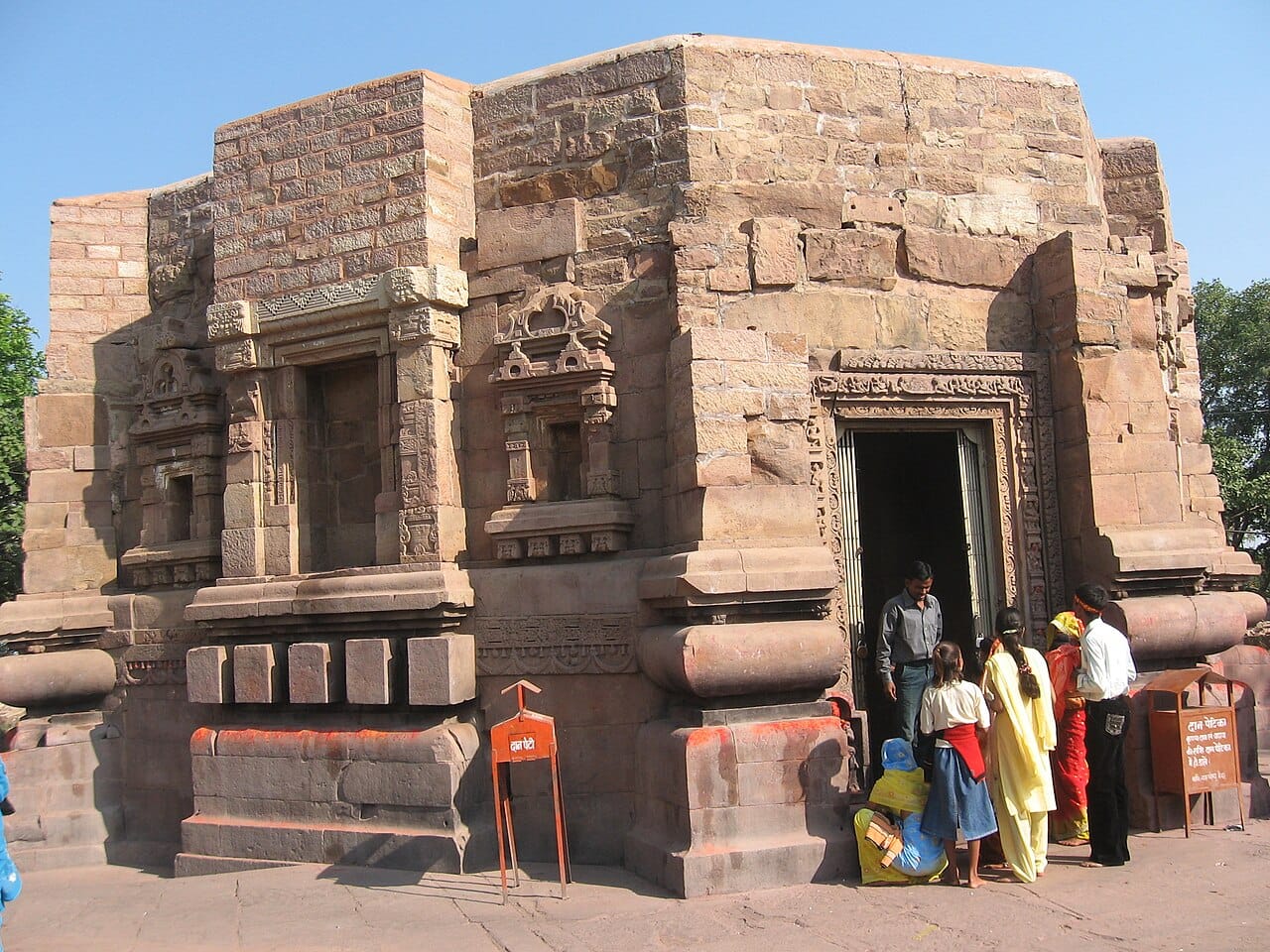
Mundeshwari Temple
Officially recognized as the oldest functional temple in India (108 AD), this architectural marvel on Pawra Hill features a unique octagonal plan and rare non-sacrificial 'Bali' rituals.
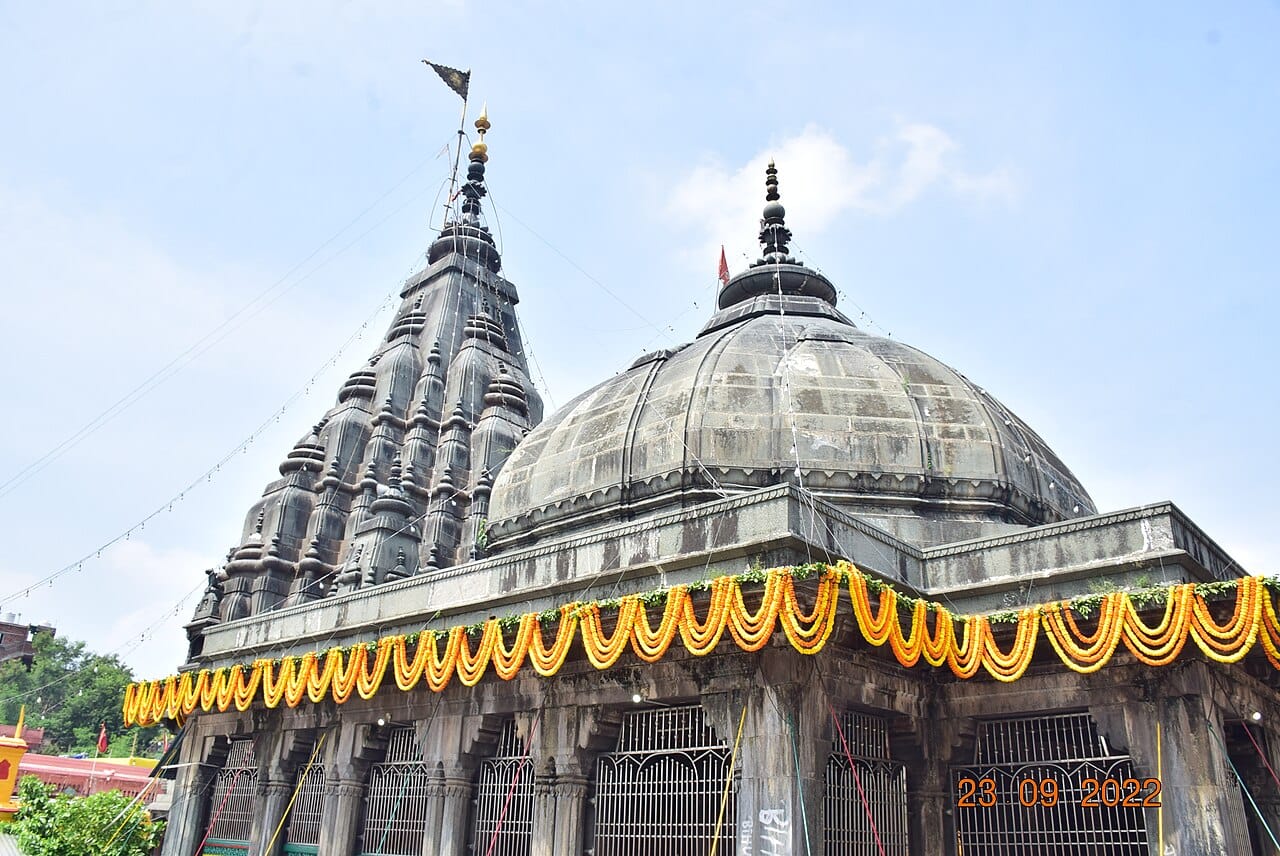
Vishnupad Temple
Famous for the 40cm footprint of Lord Vishnu imprinted on solid rock, a major center for Pinda Daan rituals.
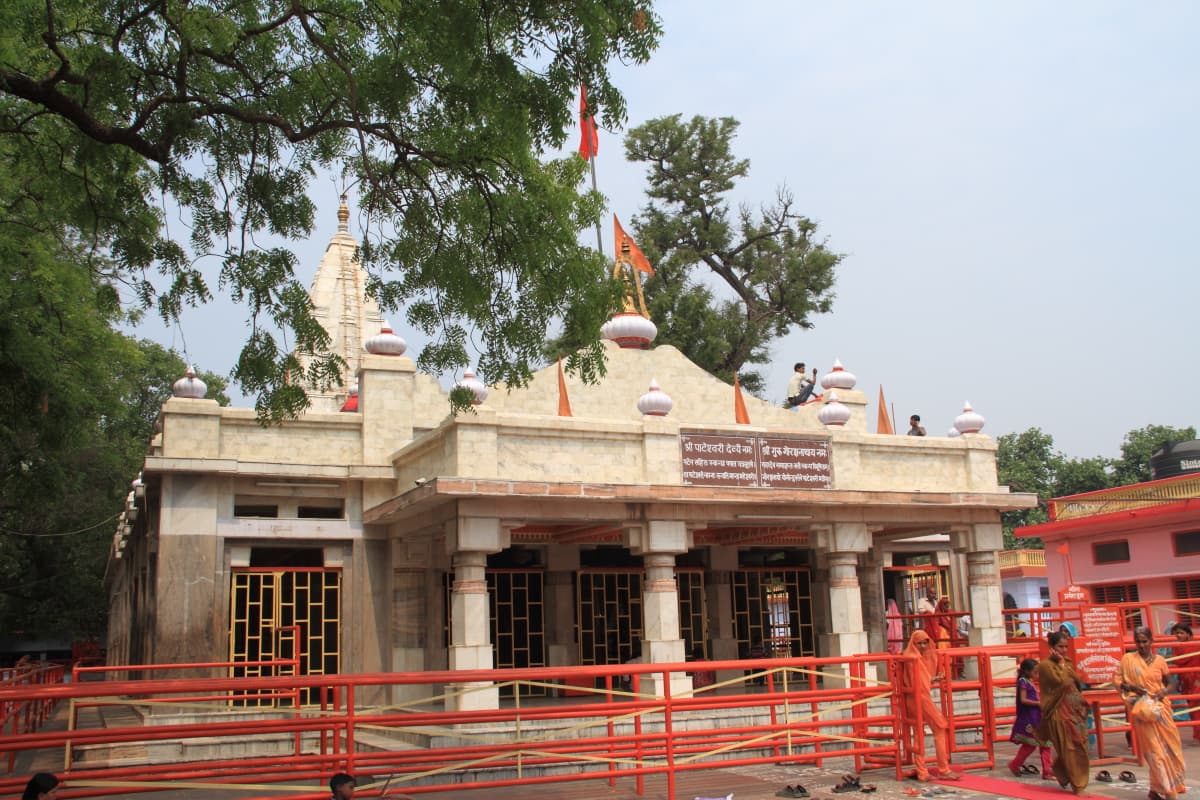
Patan Devi Temple
One of the 51 Shakti Peethas and the oldest surviving temple in Patna, believed to be where the right thigh of Goddess Sati fell.
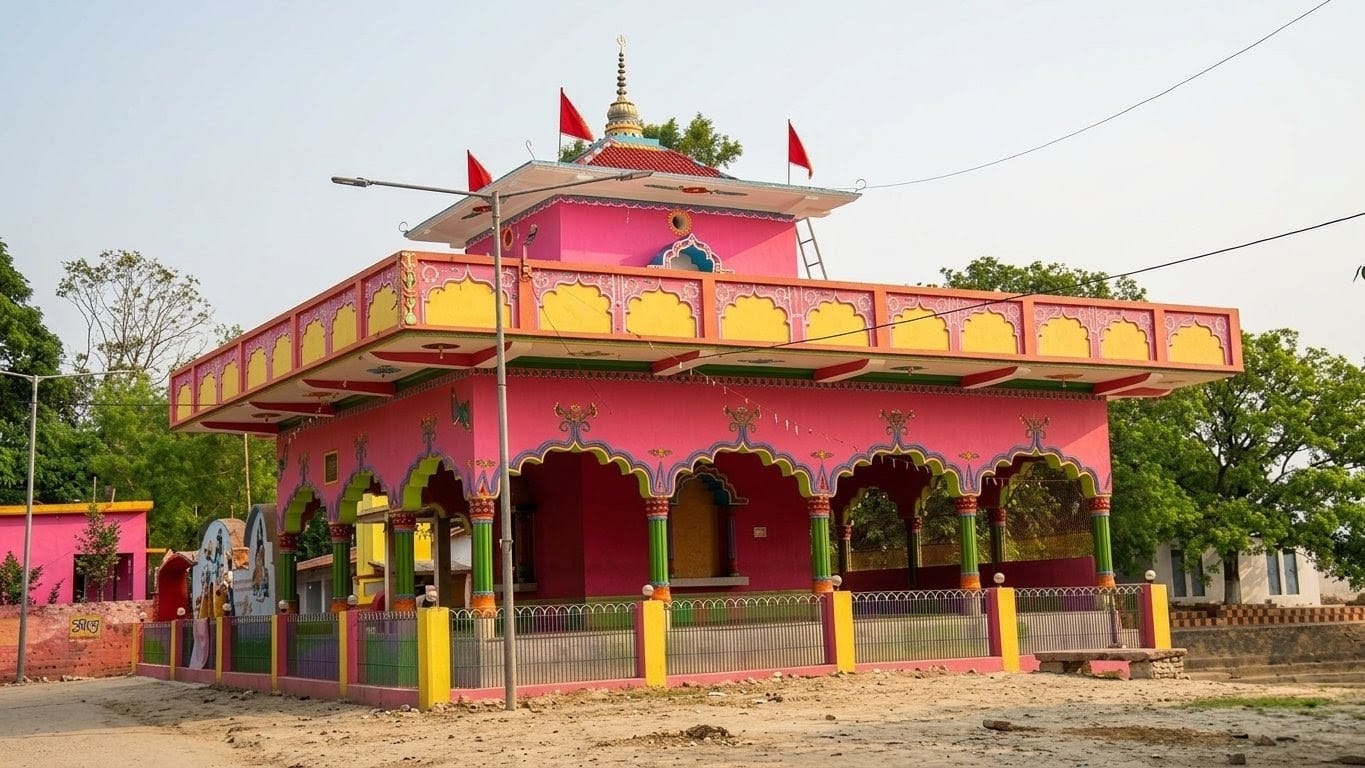
Ahilya Asthan Temple
An ancient temple in Bihar dedicated to Ahilya, wife of Sage Gautama, believed to be the site where she was liberated from a curse by Lord Rama.
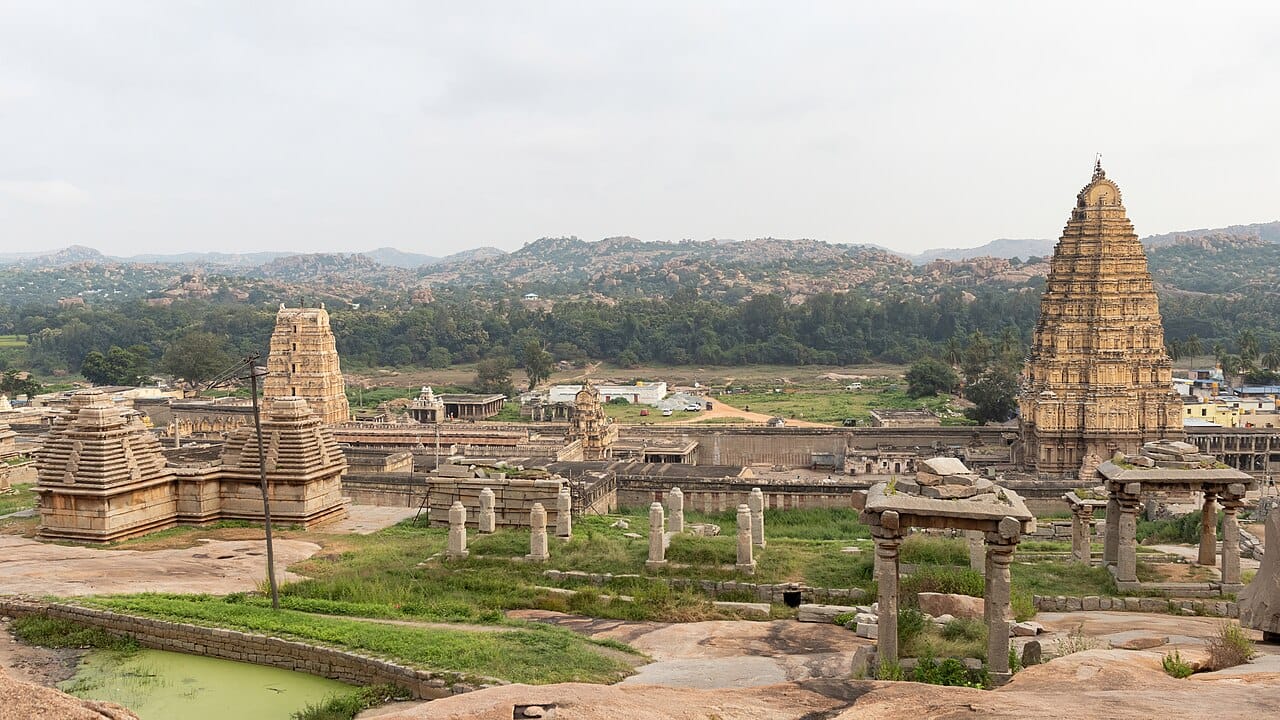
Virupaksha Temple
The Virupaksha Temple in Hampi, Karnataka, is a UNESCO World Heritage Site and the oldest functioning temple in India, dedicated to Lord Shiva as Virupaksha.
Airavatesvara Temple
The Airavatesvara Temple at Darasuram, built by Rajaraja Chola II between 1146 and 1172 CE, is one of the three UNESCO World Heritage 'Great Living Chola Temples.' It is renowned for its stone chariot, musical steps, and exquisite 12th-century Chola sculptures.
Gangaikonda Cholapuram Temple
The Gangaikonda Cholapuram Temple, built by Rajendra Chola I in 1035 CE, is a UNESCO World Heritage 'Great Living Chola Temple.' Its 53-metre vimana with recessed corners and six pairs of monolithic dvarapalas represents a refined evolution of Chola Dravidian architecture.
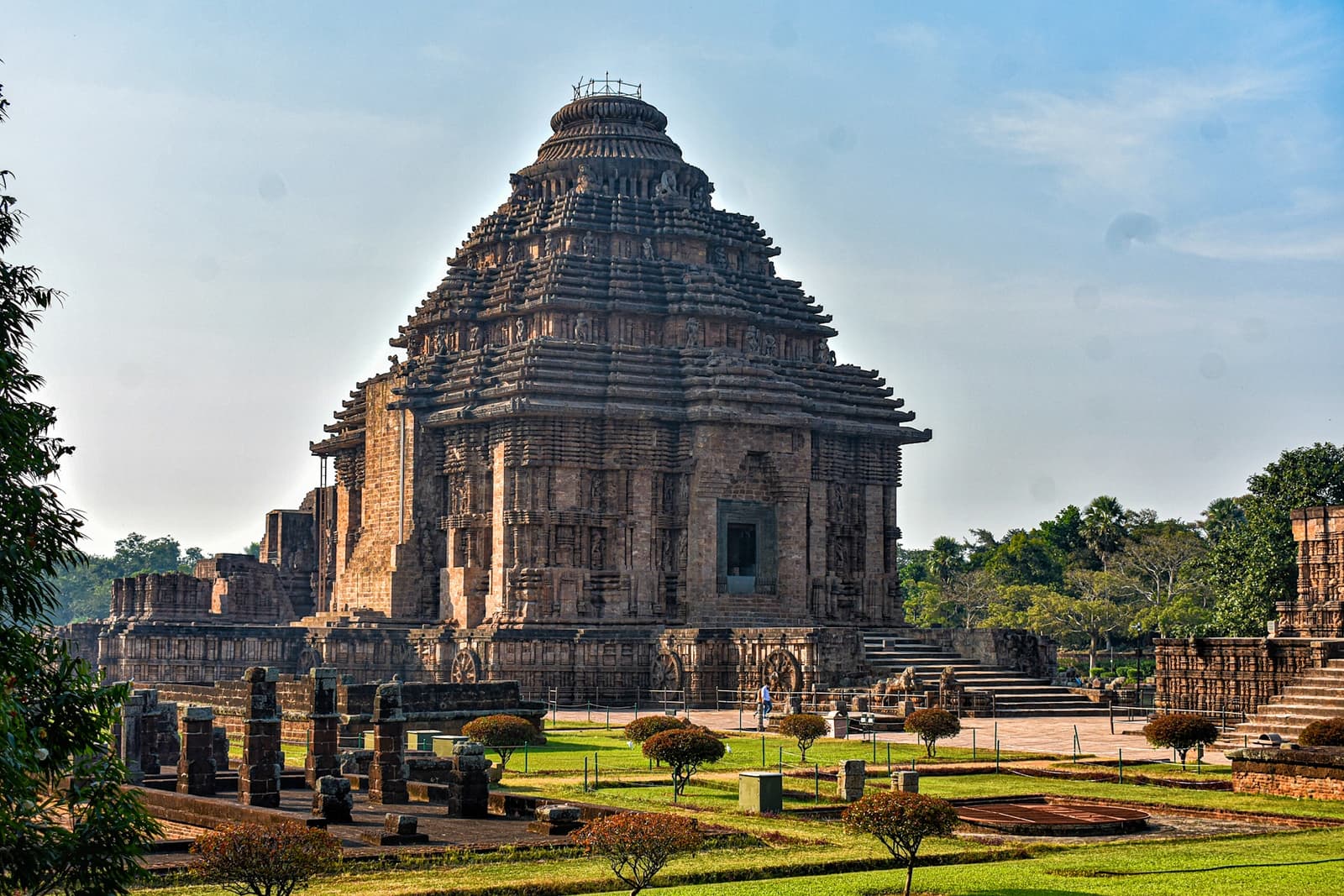
Konark Sun Temple
A 13th-century colossal stone chariot of the Sun God Surya, the Konark Sun Temple is a UNESCO World Heritage Site and the most architecturally ambitious solar temple in India, with 24 massive stone wheels and intricate carvings depicting life, dance, and divinity.
Brihadeeswarar Temple
The Brihadeeswarar Temple in Thanjavur, built by Raja Raja Chola I in the 11th century, is a UNESCO World Heritage Site and the tallest Shiva temple in India, crowned by a monolithic granite vimana that remains one of the greatest engineering achievements of the ancient world.
Kailasa Temple, Ellora
The world's largest monolithic rock-cut structure, carved top-down from a single basalt cliff.
India's temples are living traditions — not museums. Every temple has its own customs. This guide helps first-time visitors prepare with confidence and respect.
Foreign Visitors
AllowedAll visitors welcome. The Mahabodhi Temple is a UNESCO World Heritage site and a major international Buddhist pilgrimage destination open to all.
Visitor Information
Entry policies vary between temples. Most temples welcome visitors, while some may restrict access to specific areas, rituals, or the inner sanctum. Always verify the latest entry guidelines with the official temple authorities before your visit.
Modest clothing is expected at every Indian temple — a sign of respect, not a restriction. Think of it as dressing for a formal ceremony.
October to March (20-30°C) offers the most pleasant weather. Buddha Purnima (April/May) is the most significant time for pilgrims, with all-night chanting and meditation. The Nyingma Monlam Chenmo (World Peace Ceremony) in January/February draws thousands of monks from Himalayan traditions.
April — June
July — September
Common local languages: Hindi, English, Magahi
Cash (Indian Rupees) is the most reliable option, especially for temple offerings, small shops, and local transport.
UPI digital payments (Google Pay, PhonePe, Paytm) are widely accepted across India — even at roadside stalls. Download one before you arrive.
International credit/debit cards work at most ATMs, hotels, and larger establishments. Smaller vendors may only accept cash or UPI.
Carry small denominations (₹10, ₹20, ₹50, ₹100 notes) for offerings and temple donations. Large notes (₹500, ₹2000) can be hard to break at smaller counters.
Wheelchair: The main courtyard is flat and wheelchair accessible. The temple sanctum has steps.
Stay hydrated — carry a reusable water bottle, especially in hot climates.
Keep valuables secure — use hotel lockers for passports and excess cash.
Wear comfortable, sturdy footwear — temple floors can be hot, wet, or uneven.
Beware of unofficial guides or touts near temple entrances. Only use authorised services.
Carry a photocopy of your passport and visa. Leave originals in your hotel safe.
Download offline maps — mobile networks can be unreliable near remote temple sites.
These short explanations help make sense of what you see and experience.
Darshan means 'seeing' — but in a temple it means being seen by the deity. It is a sacred moment of connection, not just a viewing.
Removing footwear is a sign of humility. It also keeps the temple floor clean, since devotees sit and pray on the ground.
Food offered to the deity and then distributed to devotees. It is considered blessed. Accept it with both hands and do not discard it.
The bell creates a focused acoustic atmosphere, wards off distractions, and announces your presence before entering the inner sanctum.
Circumambulation (pradakshina) is done clockwise, keeping the sanctum on your right — an auspicious direction aligned with the sun's path.
Flowers symbolise devotion, coconuts represent the ego being broken, incense purifies the air, and lamps represent the victory of light over darkness.
Sacred viewing of the deity; the central act of temple worship.
Clockwise circumambulation of the sanctum.
Blessed food offered to the deity and distributed to devotees.
The innermost sanctum where the main deity resides.
The towering spire above the sanctum, a defining feature of temple architecture.
A pillared hall or pavilion within the temple complex.
The Indian Rupee (?, INR) is the local currency. ATMs are widely available in cities and towns. For temple offerings, keep small notes (₹10, ₹20, ₹50). Most temples accept donations in cash only — digital payments are uncommon at the offering counter itself.
Offerings (dakshina) are given with the right hand. Place cash in the donation box (hundi) or give it directly to the priest. There is no fixed amount — give what feels appropriate. Some temples have fixed fees for special entry or puja participation.
Shoes and sandals are removed before entering the temple building. Most temples have a designated shoe counter (free or a small fee of ₹5–₹20). Socks are generally allowed. In monsoon, carry a plastic bag for wet shoes.
Darshan queues can take 30 minutes to 3 hours at popular temples. Many offer paid VIP darshan (₹100–₹500) for faster entry. Special queues for women, elderly, and disabled visitors exist at some temples. No line jumping.
Major festivals draw enormous crowds — sometimes hundreds of thousands. Book accommodation months in advance. Expect road closures, restricted vehicle access, and limited phone network. Arrive early (before dawn) to avoid the worst congestion.
Always look for signage before taking photos. When in doubt, ask a priest. Never take photos of devotees in prayer without permission. Selfie sticks are banned at most temples. Silently switch your phone to silent mode.
Police / Ambulance / Fire: 112 (National Emergency Number)
Tourist Helpline: 1800-111-363 (Multi-lingual, Ministry of Tourism)
Women's Helpline: 1091
Official Temple WebsiteState Tourism WebsiteTemple-specific visitor information is continuously researched and updated from official sources. Where specific data is unavailable, general India travel guidance is provided. Always verify current policies with the temple authority before your visit.
Continue your journey through the spiritual and architectural wonders of India.

The oldest surviving rock-cut chambers in India, excavated by Emperor Ashoka in the 3rd century BCE. The seven caves feature a mirror-like polish on granite walls that has never been replicated.

Officially recognized as the oldest functional temple in India (108 AD), this architectural marvel on Pawra Hill features a unique octagonal plan and rare non-sacrificial 'Bali' rituals.

Famous for the 40cm footprint of Lord Vishnu imprinted on solid rock, a major center for Pinda Daan rituals.

One of the 51 Shakti Peethas and the oldest surviving temple in Patna, believed to be where the right thigh of Goddess Sati fell.
"The Mahabodhi Temple at Bodh Gaya marks the spot where Lord Buddha attained enlightenment."