51 Shakti Peethas
A spiritual map of the sacred sites where the body parts of Goddess Sati fell, embodying the cosmic energy of the Universe. Across India, Nepal, and Bangladesh, each temple holds a fragment of the Goddess herself.
Total Peethas
51
Deity
Goddess Sati (Shakti)
Consort
Lord Shiva (as Bhairava)
Spread Across
India, Nepal, Bangladesh, Pakistan, Sri Lanka & Tibet
Most Dense Region
Bengal Region (14 Peethas)
Oldest Reference
Kalika Purana (c. 10th Century)
Major Classification
4 Adi + 18 Maha + 29 Other
Pilgrimage Season
Navratri (Spring & Autumn)
Sacred Offering
Red flowers, vermilion, hibiscus
Scriptural Traditions
51, 52 & 108 variations
Sacred Abodes
Explore each sacred site with detailed guides and visitor information.
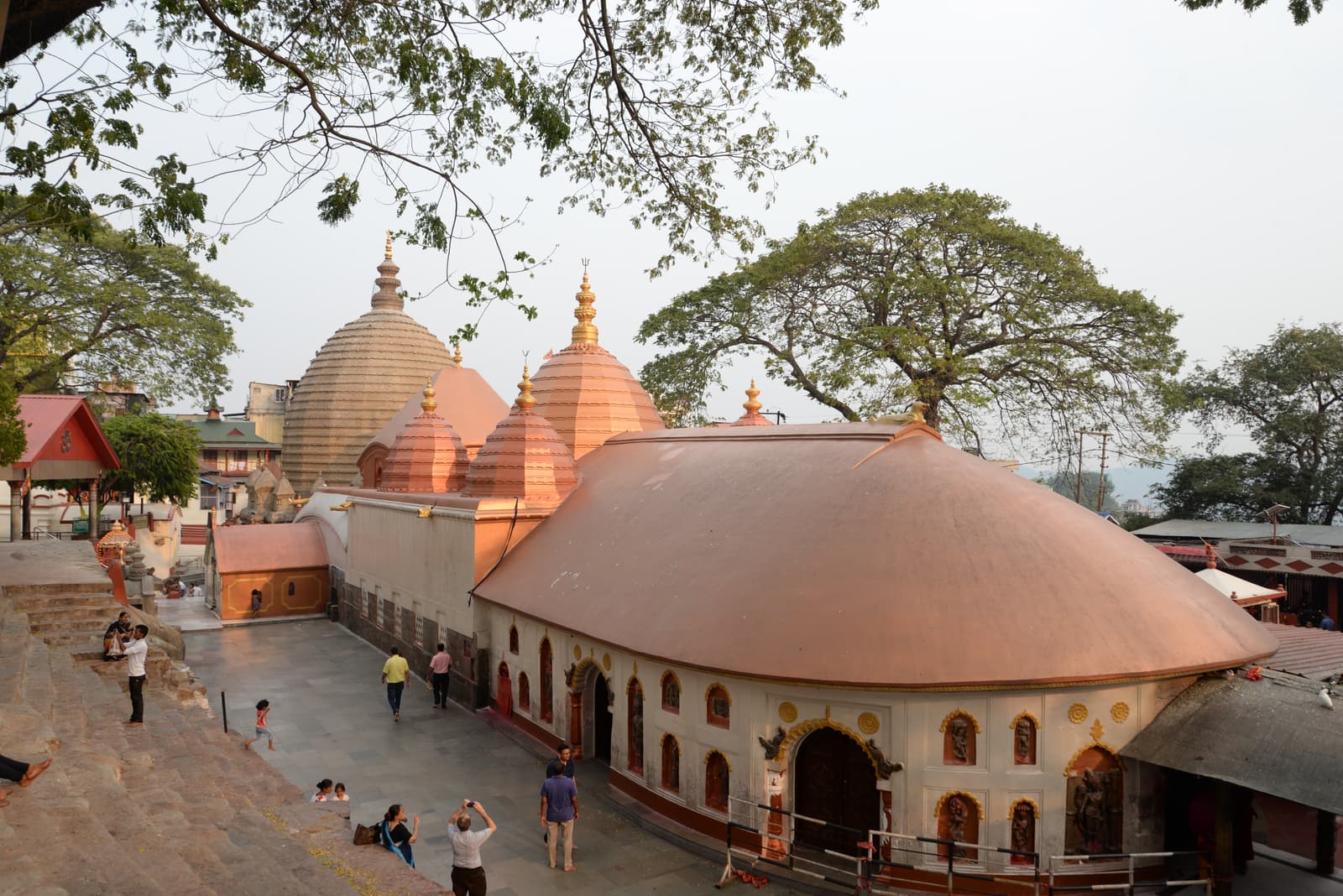
Kamakhya Temple
The Womb of the Goddess
Presiding Deity: Goddess Kamakhya (Shakti)
The most revered Shakti Peetha where Sati's yoni (womb) fell. A centre of Tantric worship and site of the annual Ambubachi Mela.
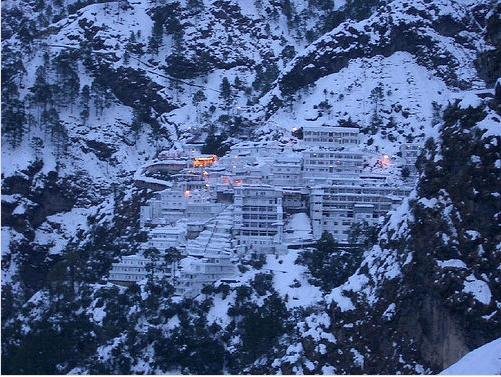
Vaishno Devi
The Cave Goddess
Presiding Deity: Goddess Vaishno Devi
One of India's most-visited pilgrimage shrines — the Shrine Board recorded 94.83 lakh pilgrims in 2024.
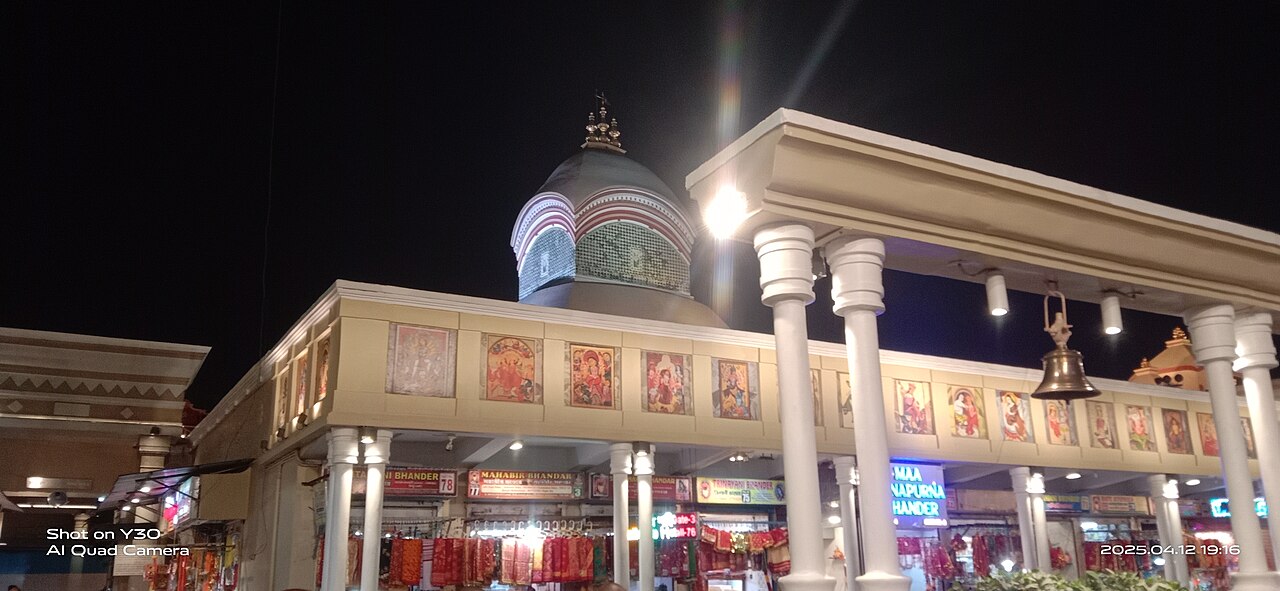
Kalighat Kali Temple
Kolkata's Guardian
Presiding Deity: Goddess Kali
One of the four Adi Shakti Peethas, where Sati's right toe fell. The temple gives Kolkata its name (from Kalighat). The Goddess is worshipped as Kali in her fierce form.
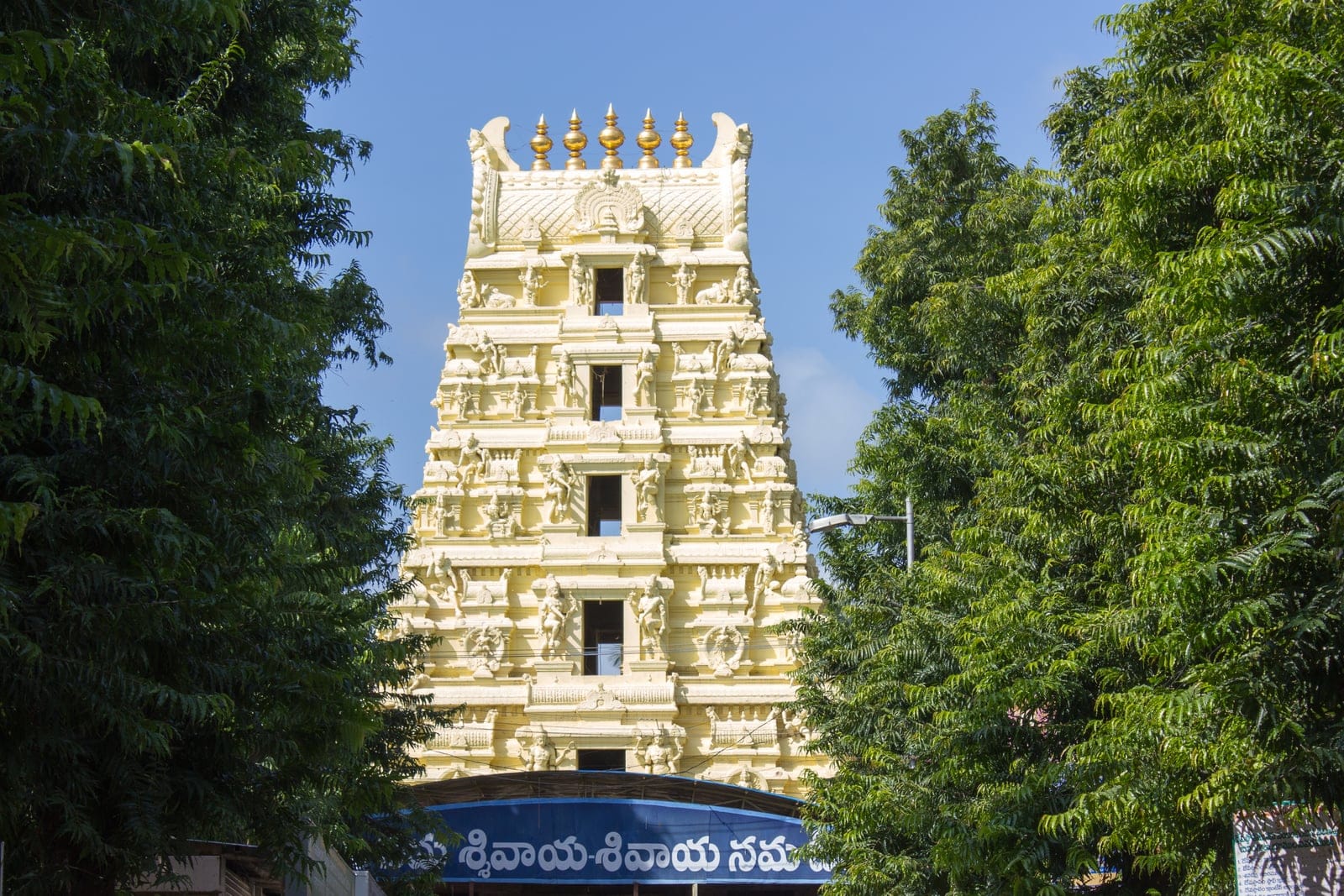
Srisailam Bhramaramba
Shiva–Shakti Convergence
Presiding Deity: Bhramaramba Devi (Shakti)
The only site that is simultaneously a Jyotirlinga and a Maha Shakti Peetha. Bhramaramba Devi is worshipped alongside Mallikarjuna Shiva in a single sacred complex.
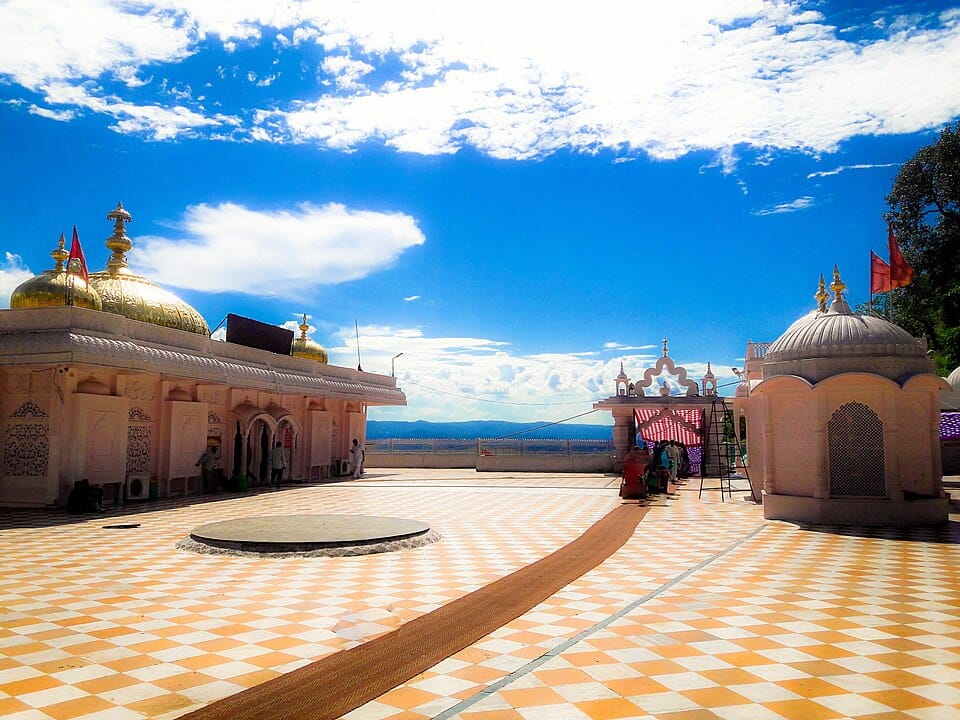
Jwala Ji Temple
The Eternal Flame
Presiding Deity: Goddess Jwala Ji
Where Sati's tongue fell, manifesting as seven eternal flames that burn naturally from rock vents. The flames predate recorded history and have never been extinguished.
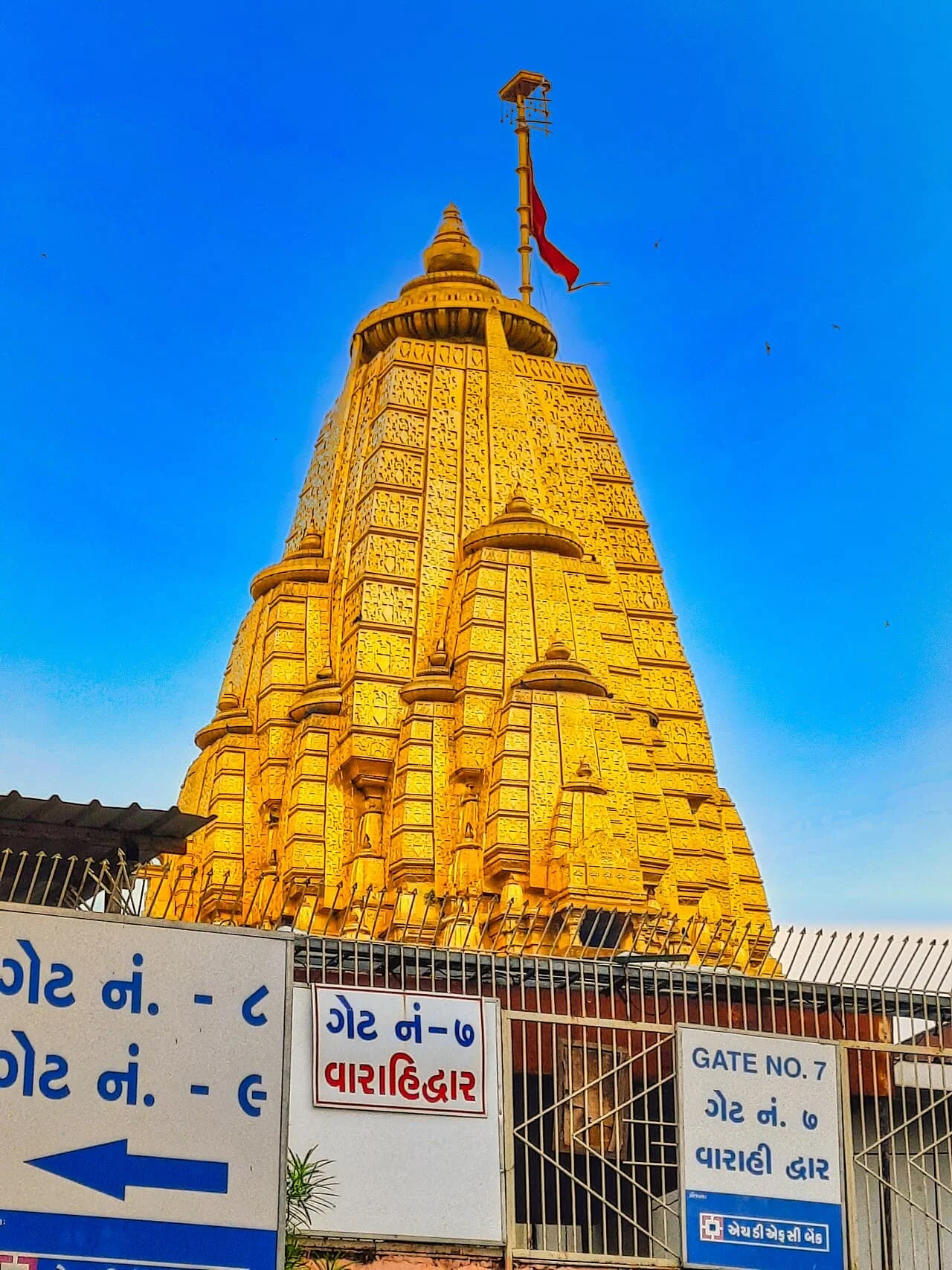
Ambaji Temple
The Formless Goddess
Presiding Deity: Goddess Ambaji (Shakti)
Where Sati's heart fell. Uniquely, no idol is worshipped — the central object of veneration is a Shree Yantra, representing the Goddess in her formless aspect.
The Story of Sati and Shiva
The legend begins with the Daksha Yajna — a grand fire sacrifice organised by King Daksha, father of Goddess Sati. Daksha deliberately excluded his son-in-law Shiva from the ritual. Humiliated by this public insult, Sati immolated herself in the sacrificial fire. When Shiva learned of her death, he performed the Tandava — the cosmic dance of destruction.
Terrified, the gods pleaded with Vishnu to intervene. Vishnu unleashed his Sudarshana Chakra, which severed Sati's body into pieces that fell across the Indian subcontinent. Each spot where a piece landed became a Shakti Peetha — a seat of divine feminine power where the Goddess is worshipped alongside Bhairava, a manifestation of Shiva.
Different Hindu scriptures and regional traditions enumerate these sacred sites differently. The Kalika Purana, Devi Bhagavata Purana, Kubjika Tantra, and Peetha Nirnaya Tantra each provide lists that vary in number — some mention 51, others 52, and certain Tantric texts list 108 Shakti Peethas. These differences arise from variations in scriptural interpretation, regional worship traditions, and historical transmission over centuries. This guide follows the widely accepted tradition of 51 Shakti Peethas for consistency and ease of reference, while acknowledging these respected variations.
Historical and Scriptural Roots
The earliest known textual enumeration of the Shakti Peethas appears in the Kalika Purana (c. 10th–11th century CE), which describes the Daksha Yajna legend and lists major Peethas. The Devi Bhagavata Purana, the Kubjika Tantra, and the Peetha Nirnaya Tantra each provide alternative lists with differing numbers and locations, reflecting diverse regional traditions within Shaktism.
Adi Shankaracharya's Ashtadasa Shakti Peetha Stotram (c. 8th century CE) is the earliest known poetic composition enumerating 18 major Peethas. This text helped establish the Peethas as a defined pilgrimage circuit. The concept of the Goddess's body parts falling on specific locations reflects an ancient understanding of sacred geography — the land itself becomes divine through contact with the Goddess's body. It is important to distinguish the scriptural tradition, which transmits these sacred narratives, from historical evidence — the Peetha lists are theological and liturgical documents rather than historical records of events.
Religious Significance
Within the Shaktism tradition, the Shakti Peethas are understood as locations where the Goddess is materially present — each site sanctified by a fragment of Sati's body. The 51 sites span across India, Nepal, Bangladesh and Pakistan, creating a sacred geography that unites diverse regions under a shared scriptural narrative.
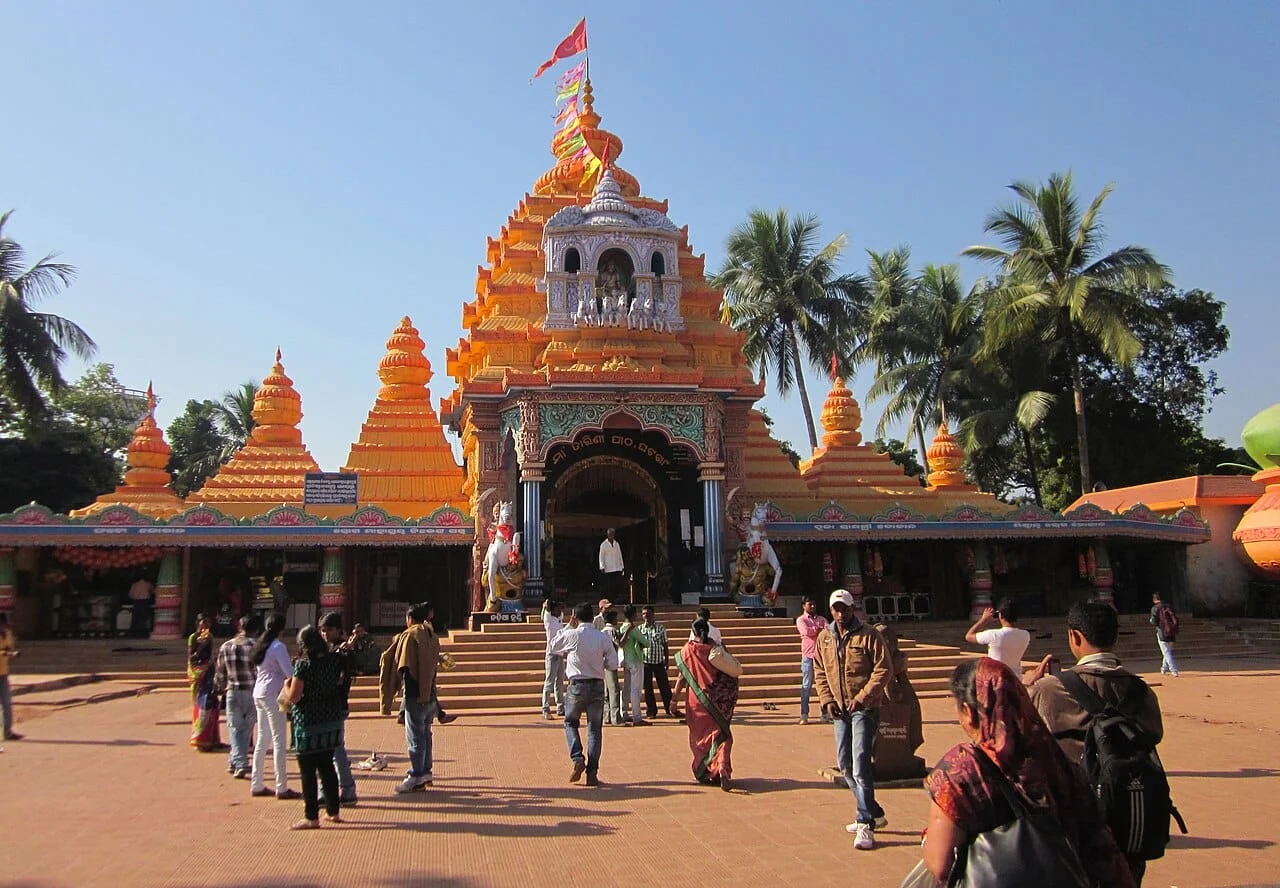
The 51 Shakti Peethas are classified into three tiers. The 4 Adi Shakti Peethas — Bimala (Puri), Tara Tarini (Ganjam), Kamakhya (Guwahati), and Dakshina Kalika (Kolkata) — are considered the most primordial seats. The 18 Maha Shakti Peethas, enumerated in Adi Shankara's Ashtadasa Shakti Peetha Stotram, are the major pilgrimage destinations. The remaining 29 complete the canonical list followed in this guide.
Theological Core
The Peethas contain actual body parts of Sati — the Goddess is materially present, not symbolically represented.
Geographic Unity
51 sites spanning India, Nepal, Bangladesh, and Pakistan under a single mythology.
Tantric Importance
Many Peethas are major Tantric centres where the raw energy of the Goddess is worshipped in primal, untamed forms.
| # | Temple / Peetha | State / Country | Body Part / Ornament |
|---|---|---|---|
| 01 | Kamakhya Temple Guwahati, Kamrup | Assam | Yoni (Womb / Genitalia) |
| 02 | Kalighat Kali Temple Kolkata | West Bengal | Right Toes |
| 03 | Bimala Temple (Jagannath Complex) Puri | Odisha | Feet (Pada) |
| 04 | Tara Tarini Temple Purushottampur, Ganjam | Odisha | Breasts (Stana Peetha) |
| 05 | Hinglaj Mata Mandir Lasbela, Hingol National Park | Balochistan (Pakistan) | Bramharandhra (Crown of Head) |
| 06 | Vaishno Devi Shrine Katra, Reasi | Jammu & Kashmir | Skull / Forehead |
| 07 | Ambaji Temple Banaskantha, Arasur Hills | Gujarat | Heart (Hriday) |
| 08 | Jwala Ji Temple Kangra Valley | Himachal Pradesh | Tongue (Jihva) |
| 09 | Srisailam Bhramaramba Srisailam, Kurnool | Andhra Pradesh | Upper Lip |
| 10 | Kanyakumari Temple Kanyakumari, Cape Comorin | Tamil Nadu | Backbone (Spine) |
| 11 | Naina Devi Temple Bilaspur | Himachal Pradesh | Eyes (Netra) |
| 12 | Dakshina Kalika Temple Kolkata | West Bengal | Right Foot Fingers |
| 13 | Chamundeshwari Temple Chamundi Hills, Mysuru | Karnataka | Hair / Left Ear |
| 14 | Mahalakshmi Temple Kolhapur | Maharashtra | Eyes / Left Arm |
| 15 | Sthaneshwar / Bhadrakali Kurukshetra | Haryana | Right Ankle |
| 16 | Chandi Devi Temple Neel Parvat, Haridwar | Uttarakhand | Heart / Palm |
| 17 | Jogulamba Temple Alampur, Gadwal | Telangana | Upper Teeth |
| 18 | Alopi Devi (Lalita) Prayagraj (Sangam) | Uttar Pradesh | Right Hand Fingers |
| 19 | Vishalakshi Temple Mir Ghat, Varanasi | Uttar Pradesh | Earrings (Kundala) |
| 20 | Harsiddhi / Avanti Ujjain, Shipra River | Madhya Pradesh | Upper Lip |
| 21 | Sharada Peeth Neelum Valley, PoK | PoK / Azad Kashmir | Right Hand |
| 22 | Saptashrungi Devi Vani, Nashik | Maharashtra | Right Arm |
| 23 | Muktinath (Gandaki Peetha) Muktinath, Mustang | Nepal | Forehead / Temple |
| 24 | Guhyeshwari Temple Bagmati River, Kathmandu | Nepal | Both Knees (Janu) |
| 25 | Pashupati Guhya Peetha Kathmandu | Nepal | Back |
| 26 | Jayanti Devi (Nartiang) Jaintia Hills | Meghalaya | Left Thigh |
| 27 | Sugandha Devi (Shikarpur) Barisal | Bangladesh | Nose (Nasika) |
| 28 | Yashoreshwari Kali Temple Ishwaripur, Shyamnagar | Bangladesh | Left Palm & Fingers |
| 29 | Chattal Chandranath Sitakunda, Chittagong | Bangladesh | Right Arm |
| 30 | Tarapith Temple Birbhum, Dwarka River | West Bengal | Third Eye / Eyeball |
| 31 | Bahula Temple Ketugram, Burdwan | West Bengal | Left Arm |
| 32 | Trishrota (Bhramari) Bodaganj, Jalpaiguri | West Bengal | Left Leg |
| 33 | Ujani / Mangal Chandi Ujani, Burdwan | West Bengal | Right Wrist |
| 34 | Kireet / Kireeteswari Murshidabad | West Bengal | Crown (Kireet / Headdress) |
| 35 | Chandika Sthan (Munger) Munger | Bihar | Left Eye |
| 36 | Nandipur (Nandikeshwari) Sainthia, Birbhum | West Bengal | Necklace (Haar) |
| 37 | Ratnavali / Ratnamala Khanakul, Hooghly | West Bengal | Right Shoulder |
| 38 | Attahas (Phullara) Labhpur, Birbhum | West Bengal | Lips (Oshtha) |
| 39 | Bargabhima (Vibhasha) Tamluk, Purba Medinipur | West Bengal | Left Ankle |
| 40 | Biraja Temple Jajpur, Vaitarani River | Odisha | Navel (Nabhi) |
| 41 | Kshiragram (Yogadya) Mangalkote, Burdwan | West Bengal | Right Great Toe |
| 42 | Tulja Bhavani Temple Tuljapur, Dharashiv | Maharashtra | Teeth / Face |
| 43 | Narmada Peetha Amarkantak, Anuppur | Madhya Pradesh | Right Buttock |
| 44 | Shondesh Peetha Amarkantak (Son River source) | Madhya Pradesh | Left Buttock |
| 45 | Maihar Sharda Devi Trikuta Hill, Maihar | Madhya Pradesh | Necklace (Haar) |
| 46 | Ramgiri (Chitrakoot) Chitrakoot | Uttar Pradesh / MP | Right Breast |
| 47 | Tripuramalini (Devi Talab) Jalandhar | Punjab | Left Breast |
| 48 | Katyayani Peeth Vrindavan, Mathura | Uttar Pradesh | Ringlet of Hair (Chuda) |
| 49 | Kollur Mookambika Kollur, Kodachadri Hills | Karnataka | Right Eye / Core |
| 50 | Attukal / Sarkara Devi Chirayinkeezhu, Thiruvananthapuram | Kerala | Lower Lip |
| 51 | Manasa / Mansarovar Peetha Lake Mansarovar, Kailash | Tibet (China) | Right Hand Palm |
51 Shakti Peethas State-by-State Reference
The canonical 51 Shakti Peetha tradition pairs each sacred site with a specific bodily relic of Sati, a localized Devi form, and an associated Bhairava manifestation of Shiva who acts as the guardian of that realm.
Below is the complete state-by-state reference list, documenting the geographical distribution across Indian states, union territories, and neighboring subcontinental regions (Nepal, Bangladesh, Balochistan, and Tibet).
| # | Temple / Peetha | State / Territory | Sacred Part | Presiding Devi | Associated Bhairava |
|---|---|---|---|---|---|
| 01 | Kamakhya Temple Guwahati, Kamrup | Assam | Yoni (Womb / Genitalia) | Kamakhya | Umananda |
| 02 | Kalighat Kali Temple Kolkata | West Bengal | Right Toes | Kalika / Kali | Nakuleshwar |
| 03 | Bimala Temple (Jagannath Complex) Puri | Odisha | Feet (Pada) | Bimala | Jagannath (Kapali) |
| 04 | Tara Tarini Temple Purushottampur, Ganjam | Odisha | Breasts (Stana Peetha) | Tara Tarini | Kapila |
| 05 | Hinglaj Mata Mandir Lasbela, Hingol National Park | Balochistan (Pakistan) | Bramharandhra (Crown of Head) | Kottari (Hinglaj) | Bhimaloja |
| 06 | Vaishno Devi Shrine Katra, Reasi | Jammu & Kashmir | Skull / Forehead | Vaishno Devi | Balbhadra / Bhairavnath |
| 07 | Ambaji Temple Banaskantha, Arasur Hills | Gujarat | Heart (Hriday) | Amba / Arasuri | Batuk Bhairava |
| 08 | Jwala Ji Temple Kangra Valley | Himachal Pradesh | Tongue (Jihva) | Ambika / Siddhida | Unmatta Bhairava |
| 09 | Srisailam Bhramaramba Srisailam, Kurnool | Andhra Pradesh | Upper Lip | Bhramarambika | Samvarta (Mallikarjuna) |
| 10 | Kanyakumari Temple Kanyakumari, Cape Comorin | Tamil Nadu | Backbone (Spine) | Sharvani / Kanya | Nimisha |
| 11 | Naina Devi Temple Bilaspur | Himachal Pradesh | Eyes (Netra) | Mahishamardini | Krodhish |
| 12 | Dakshina Kalika Temple Kolkata | West Bengal | Right Foot Fingers | Dakshina Kalika | Nakuleshwar |
| 13 | Chamundeshwari Temple Chamundi Hills, Mysuru | Karnataka | Hair / Left Ear | Jaya Durga / Chamundi | Ruru |
| 14 | Mahalakshmi Temple Kolhapur | Maharashtra | Eyes / Left Arm | Mahalakshmi / Ambabai | Krodhish |
| 15 | Sthaneshwar / Bhadrakali Kurukshetra | Haryana | Right Ankle | Savitri / Bhadrakali | Sthanu |
| 16 | Chandi Devi Temple Neel Parvat, Haridwar | Uttarakhand | Heart / Palm | Chandika | Pashupati |
| 17 | Jogulamba Temple Alampur, Gadwal | Telangana | Upper Teeth | Jogulamba | Balabrahmeshwara |
| 18 | Alopi Devi (Lalita) Prayagraj (Sangam) | Uttar Pradesh | Right Hand Fingers | Lalita / Alopi | Bhava |
| 19 | Vishalakshi Temple Mir Ghat, Varanasi | Uttar Pradesh | Earrings (Kundala) | Vishalakshi | Kala Bhairava |
| 20 | Harsiddhi / Avanti Ujjain, Shipra River | Madhya Pradesh | Upper Lip | Mangal Chandika | Lambakarna |
| 21 | Sharada Peeth Neelum Valley, PoK | PoK / Azad Kashmir | Right Hand | Sharada | Trishandheshwar |
| 22 | Saptashrungi Devi Vani, Nashik | Maharashtra | Right Arm | Saptashrungi Nivasini | Siddharth |
| 23 | Muktinath (Gandaki Peetha) Muktinath, Mustang | Nepal | Forehead / Temple | Gandaki Chandi | Chakrapani |
| 24 | Guhyeshwari Temple Bagmati River, Kathmandu | Nepal | Both Knees (Janu) | Mahamaya | Kapali |
| 25 | Pashupati Guhya Peetha Kathmandu | Nepal | Back | Jaya Devi | Pashupatinath |
| 26 | Jayanti Devi (Nartiang) Jaintia Hills | Meghalaya | Left Thigh | Jayanti | Kramadishwar |
| 27 | Sugandha Devi (Shikarpur) Barisal | Bangladesh | Nose (Nasika) | Sugandha / Sunanda | Tryambak |
| 28 | Yashoreshwari Kali Temple Ishwaripur, Shyamnagar | Bangladesh | Left Palm & Fingers | Yashoreshwari | Chanda |
| 29 | Chattal Chandranath Sitakunda, Chittagong | Bangladesh | Right Arm | Bhavani | Chandrashekhar |
| 30 | Tarapith Temple Birbhum, Dwarka River | West Bengal | Third Eye / Eyeball | Tara Devi | Chandrachur |
| 31 | Bahula Temple Ketugram, Burdwan | West Bengal | Left Arm | Bahula | Bhiruk |
| 32 | Trishrota (Bhramari) Bodaganj, Jalpaiguri | West Bengal | Left Leg | Bhramari | Ishwar |
| 33 | Ujani / Mangal Chandi Ujani, Burdwan | West Bengal | Right Wrist | Mangal Chandi | Kapilambar |
| 34 | Kireet / Kireeteswari Murshidabad | West Bengal | Crown (Kireet / Headdress) | Vimla / Kireeteswari | Sanbart |
| 35 | Chandika Sthan (Munger) Munger | Bihar | Left Eye | Chandika | Vaidyanath |
| 36 | Nandipur (Nandikeshwari) Sainthia, Birbhum | West Bengal | Necklace (Haar) | Nandini | Nandikeshwar |
| 37 | Ratnavali / Ratnamala Khanakul, Hooghly | West Bengal | Right Shoulder | Kumari | Shiva |
| 38 | Attahas (Phullara) Labhpur, Birbhum | West Bengal | Lips (Oshtha) | Phullara | Vishwesh |
| 39 | Bargabhima (Vibhasha) Tamluk, Purba Medinipur | West Bengal | Left Ankle | Bargabhima / Bhimakali | Sarvananda |
| 40 | Biraja Temple Jajpur, Vaitarani River | Odisha | Navel (Nabhi) | Biraja Devi | Shweta Varaha |
| 41 | Kshiragram (Yogadya) Mangalkote, Burdwan | West Bengal | Right Great Toe | Yogadya | Kheerakantha |
| 42 | Tulja Bhavani Temple Tuljapur, Dharashiv | Maharashtra | Teeth / Face | Bhavani | Matanga |
| 43 | Narmada Peetha Amarkantak, Anuppur | Madhya Pradesh | Right Buttock | Narmada | Bhavashad |
| 44 | Shondesh Peetha Amarkantak (Son River source) | Madhya Pradesh | Left Buttock | Shona Devi | Bhadrasen |
| 45 | Maihar Sharda Devi Trikuta Hill, Maihar | Madhya Pradesh | Necklace (Haar) | Sharda Devi | Bhairav |
| 46 | Ramgiri (Chitrakoot) Chitrakoot | Uttar Pradesh / MP | Right Breast | Shivani | Chanda |
| 47 | Tripuramalini (Devi Talab) Jalandhar | Punjab | Left Breast | Tripuramalini | Bhishan |
| 48 | Katyayani Peeth Vrindavan, Mathura | Uttar Pradesh | Ringlet of Hair (Chuda) | Uma / Katyayani | Bhutesh |
| 49 | Kollur Mookambika Kollur, Kodachadri Hills | Karnataka | Right Eye / Core | Mookambika | Veerabhadra |
| 50 | Attukal / Sarkara Devi Chirayinkeezhu, Thiruvananthapuram | Kerala | Lower Lip | Mahamaya / Bhadrakali | Ruru |
| 51 | Manasa / Mansarovar Peetha Lake Mansarovar, Kailash | Tibet (China) | Right Hand Palm | Dakshayani | Amar |
The Philosophy of Shaktism
Shaktism holds the Goddess (Devi) as the supreme reality — the source from which all creation emerges and the power that sustains the universe. Unlike other Hindu traditions that view the feminine as complementary to the masculine, Shaktism places Shakti as the primary principle. Shiva without Shakti is shava (corpse) — without power, inert.
The 51 body parts represent the complete form of the Goddess scattered across the subcontinent. Each Peetha is not a symbol but a literal fragment of the divine body. At every Shakti Peetha, the Goddess is paired with a specific Bhairava form of Shiva — representing the inseparable unity of consciousness and energy. Each Peetha thus stands as a complete theological statement, embodying the Shaktism principle that the Goddess is both immanent in the material world and transcendent as the supreme reality.
Diverse Temple Architecture
The Shakti Peethas span a remarkable range of architectural styles reflecting the regions they inhabit. Kamakhya Temple in Assam features the Nilachal style — a distinctive beehive-shaped shikhara blending Assamese and Ahom traditions. Kalighat in Kolkata follows the Bengali atchala style with its characteristic curved roof derived from bamboo and thatch prototypes.
Ambaji Temple in Gujarat exemplifies Maru-Gurjara architecture with intricate stone carving. Vaishno Devi is a natural cave shrine, an architecture of absence — the rock formations themselves are the deities. South Indian Peethas like Srisailam and Kanyakumari follow Dravidian traditions with towering gopurams. This architectural diversity mirrors the cultural breadth of the Shakti tradition.
Planning a Devi Yatra
Pilgrims rarely attempt all 51 sites in a single journey. The most practical approach is to visit them in regional clusters. The Bengal circuit (14 Peethas) can be completed in 10–14 days. The Himalayan circuit (Vaishno Devi, Jwala Ji, Naina Devi, Chandi) takes 5–7 days. South Indian Peethas require separate planning.
Navratri (Mar–Apr, Sep–Oct)
Peak season. All temples decorated with special rituals. Expect large crowds. The most spiritually charged time.
Winter (Nov–Feb)
Pleasant for South Indian and Bengal Peethas. Himalayan sites remain accessible but cold. Fewer crowds.
Monsoon (Jun–Sep)
Avoid Himalayan Peethas. Ambubachi Mela (June) at Kamakhya is the exception. Lower crowds.
Kalighat Kali Temple
Right Toes
Dakshina Kalika Temple
Right Foot Fingers
Tarapith Temple
Third Eye / Eyeball
Bahula Temple
Left Arm
Trishrota (Bhramari)
Left Leg
Ujani / Mangal Chandi
Right Wrist
Kireet / Kireeteswari
Crown (Kireet / Headdress)
Nandipur (Nandikeshwari)
Necklace (Haar)
Ratnavali / Ratnamala
Right Shoulder
Attahas (Phullara)
Lips (Oshtha)
Bargabhima (Vibhasha)
Left Ankle
Kshiragram (Yogadya)
Right Great Toe
Vaishno Devi Shrine
Skull / Forehead
Jwala Ji Temple
Tongue (Jihva)
Naina Devi Temple
Eyes (Netra)
Sthaneshwar / Bhadrakali
Right Ankle
Chandi Devi Temple
Heart / Palm
Alopi Devi (Lalita)
Right Hand Fingers
Vishalakshi Temple
Earrings (Kundala)
Ramgiri (Chitrakoot)
Right Breast
Tripuramalini (Devi Talab)
Left Breast
Katyayani Peeth
Ringlet of Hair (Chuda)
Srisailam Bhramaramba
Upper Lip
Kanyakumari Temple
Backbone (Spine)
Chamundeshwari Temple
Hair / Left Ear
Jogulamba Temple
Upper Teeth
Kollur Mookambika
Right Eye / Core
Attukal / Sarkara Devi
Lower Lip
Ambaji Temple
Heart (Hriday)
Mahalakshmi Temple
Eyes / Left Arm
Harsiddhi / Avanti
Upper Lip
Saptashrungi Devi
Right Arm
Tulja Bhavani Temple
Teeth / Face
Narmada Peetha
Right Buttock
Shondesh Peetha
Left Buttock
Maihar Sharda Devi
Necklace (Haar)
Bimala Temple (Jagannath Complex)
Feet (Pada)
Tara Tarini Temple
Breasts (Stana Peetha)
Chandika Sthan (Munger)
Left Eye
Biraja Temple
Navel (Nabhi)
Kamakhya Temple
Yoni (Womb / Genitalia)
Jayanti Devi (Nartiang)
Left Thigh
Hinglaj Mata Mandir
Bramharandhra (Crown of Head)
Sharada Peeth
Right Hand
Muktinath (Gandaki Peetha)
Forehead / Temple
Guhyeshwari Temple
Both Knees (Janu)
Pashupati Guhya Peetha
Back
Sugandha Devi (Shikarpur)
Nose (Nasika)
Yashoreshwari Kali Temple
Left Palm & Fingers
Chattal Chandranath
Right Arm
Manasa / Mansarovar Peetha
Right Hand Palm
Best Time to Visit
The ideal time to visit varies by region. Himalayan Peethas (Vaishno Devi, Jwala Ji) are best from March to October. Bengal Peethas are pleasant from October to March. South Indian Peethas can be visited year-round but are most comfortable from November to February.
Navratri (twice annually) brings peak crowds to all Peethas. The Ambubachi Mela at Kamakhya in June is the most significant Shakti Peetha festival for those able to tolerate the monsoon conditions. Winter offers the most comfortable conditions for a comprehensive pilgrimage.
Major Festivals
Each Shakti Peetha has distinct festival traditions. Ambubachi Mela at Kamakhya (June) is the most significant — the temple remains closed for three days during the Goddess's menstruation and reopens with grand celebrations. Navratri is celebrated at all Peethas with special pujas and night-long vigils.
Kali Puja at Tarapith and Kalighat coincides with Diwali. The Jwala Ji temple hosts an annual fair in July–August. Durga Puja at the Vaishno Devi complex attracts millions. Each festival reflects the unique character of the Peetha and its local traditions.
Travel Information
Major Peethas are accessible via nearby airports: Kolkata (Kalighat, Dakshina Kalika), Guwahati (Kamakhya), Jammu (Vaishno Devi), Bhubaneswar (Bimala, Tara Tarini), and Vijayawada (Srisailam). Indian Railways connects most Peetha regions. Bengal's 14 Peethas are linked by state highways and can be toured by car in 10–14 days.
Dress codes vary by region. Bengal's Tantric Peethas tend to be more relaxed, while Vaishno Devi and South Indian Peethas enforce stricter codes. Red is considered the most auspicious colour for Devi worship. Most Peethas do not charge entry fees, but donations are customary.
Dress Code
- Saree or salwar kameez (women), dhoti-kurta or formal trousers (men)
- Red, yellow, or green considered auspicious
- Head covering recommended in Bengal Peethas
- Leather items prohibited at some sites
Pilgrim Essentials
- Offerings: red flowers, vermilion (sindoor), red cloth
- Cash — smaller Peethas rarely accept digital payments
- Research Tantric protocols if visiting Kamakhya or Tarapith
- Photography restrictions — check before entering the sanctum
51, 52 or 108 Shakti Peethas
Different scriptures enumerate the sacred sites differently — the Kalika Purana lists 51, the Devi Bhagavata Purana mentions 52, and certain Tantric texts describe 108. Each tradition is respected within its own textual lineage.
Bhairava Is Always Present
At every Shakti Peetha, the Goddess is accompanied by a specific Bhairava form. This pairing represents the inseparable unity of Shiva and Shakti.
Srisailam's Dual Status
Srisailam is the only site that is both a Jyotirlinga (Mallikarjuna) and a Shakti Peetha (Bhramaramba Devi), making it uniquely sacred in both traditions.
Kamakhya's Menstruation Ritual
The Ambubachi Mela at Kamakhya is one of the few religious festivals in the world that celebrates female menstruation.
Vaishno Devi's Cave System
The shrine is inside a 30 m cave that narrows to 1 m at the sanctum. Three natural rock formations represent Mahakali, Mahalakshmi, and Mahasaraswati.
Jwala Ji's Perpetual Flame
Seven eternal flames burn naturally from rock vents. Scientific explanations suggest natural gas seepage, but the flames predate recorded history.
Common Questions
What are the 51 Shakti Peethas?
The 51 Shakti Peethas are sacred shrines where body parts of Goddess Sati fell after Lord Vishnu severed her body with his Sudarshana Chakra. They are the most important sites in Shaktism.
Why do some traditions mention 51, 52 or 108 Shakti Peethas?
Different Hindu scriptures, Tantric texts and regional traditions enumerate the Shakti Peethas differently. The Kalika Purana lists 51, the Devi Bhagavata Purana describes 52, and some Tantric texts mention 108. These differences reflect variations in textual transmission and local worship practices rather than error. This guide follows the widely accepted 51-Peetha tradition while respecting these variations.
What are the 4 Adi Shakti Peethas?
The four Adi Shakti Peethas are Bimala (Puri), Tara Tarini (Ganjam), Kamakhya (Guwahati), and Dakshina Kalika (Kolkata). These are the most primordial seats of the Goddess.
Can I visit all 51 Peethas in one trip?
It is extremely difficult as they are spread across India, Nepal, Bangladesh, and Pakistan. Most pilgrims visit them in regional clusters over multiple trips spanning years.
What is the significance of Bhairava at each Shakti Peetha?
Each Shakti Peetha pairs the Goddess (Devi) with a specific Bhairava form of Shiva. This pairing represents the inseparable unity of consciousness (Shiva) and energy (Shakti) — without Shakti, Shiva is shava (corpse). The Bhairava acts as the guardian (kshetrapala) of the Peetha.
What is the Ambubachi Mela?
The Ambubachi Mela at Kamakhya Temple celebrates the Goddess's annual menstruation. The temple closes for 3 days and reopens on the 4th with grand celebrations. It is a uniquely Tantric festival.
Which state has the most Shakti Peethas?
West Bengal has the highest number of Shakti Peethas in India, hosting 14 to 16 traditional shrines concentrated across Birbhum (including Tarapith, Bakreshwar, and Nalhati), Kolkata (Kalighat), Purba Bardhaman, and Jalpaiguri. Other states with significant numbers include Madhya Pradesh, Uttar Pradesh, Himachal Pradesh, Assam, and Odisha, alongside historical shrines across borders in Nepal, Bangladesh, and Pakistan.
Are there Shakti Peethas outside India?
Yes. Nepal has 3 Peethas (Muktinath, Guheshwari, Pashupati), Bangladesh has 4, and the Sharada Peeth is in Pakistan-administered Kashmir.
What is the difference between Adi and Maha Shakti Peethas?
The 4 Adi Peethas are the original seats. The 18 Maha Peethas are enumerated in Adi Shankara's stotram and are major pilgrimage destinations. The remaining 29 complete the canonical 51.
What is unique about Kamakhya Temple?
Kamakhya is the most important Shakti Peetha where Sati's yoni (womb) fell. The temple is the centre of Tantric worship and the site of the annual Ambubachi Mela.
Sources and References
This guide draws on classical texts, academic sources, and official documentation from temple authorities and the Archaeological Survey of India.
Kalika Purana
Traditional Hindu Scripture (c. 10th Century CE)
Devi Bhagavata Purana
Traditional Hindu Scripture (c. 9th–11th Century CE)
Ashtadasa Shakti Peetha Stotram
Composed by Adi Shankaracharya (8th Century CE)
Kubjika Tantra
Tantric Text (c. 11th Century CE)
Peetha Nirnaya Tantra
Tantric Text enumerating Shakti Peetha locations
Shakti Peetha: The Sacred Geography of the Goddess
Dr. B.N. Sharma, Indological Research Institute
The Cult of the Goddess: Shakti Peethas of India
D.C. Sircar, University of Calcutta Press
Tantric Shrines of India
S.C. Banerji, Munshiram Manoharlal Publishers
Pilgrimage Routes of the Shakti Peethas
ASI (Archaeological Survey of India) Reports
— every record linked above was re-requested for this release, so the link still resolves and the publisher still serves the document. It is a link check, not a re-verification of every sentence on this page.