From ancient rock-cut marvels to towering imperial shrines, discover the architectural soul of Bharat through our verified digital archive.
Explore More Temples
Location
Banaskantha
Presiding Deity
Goddess Amba
Architecture
MÄru-Gurjara (Modern Indian)
Dynasty
Solanki (Patan), Vaghela, Maratha (renovations)
Timings
6:00 AM to 8:00 PM daily. During Navaratri and Bhadarvi Purnima, the temple remains open until midnight. Aartis are at 6:00 AM (Mangla), 12:30 PM (Rajbhog), and 7:30 PM (Sandhya).
Entry Fee
Free
Best Time
October to March offers pleasant weather. Navaratri (September-October) and Bhadarvi Purnima (August-September) are the most spectacular but also the most crowded times. Avoid summer (April-June) when temperatures exceed 40°C. Early morning (6:00-8:00 AM) provides the most peaceful experience.
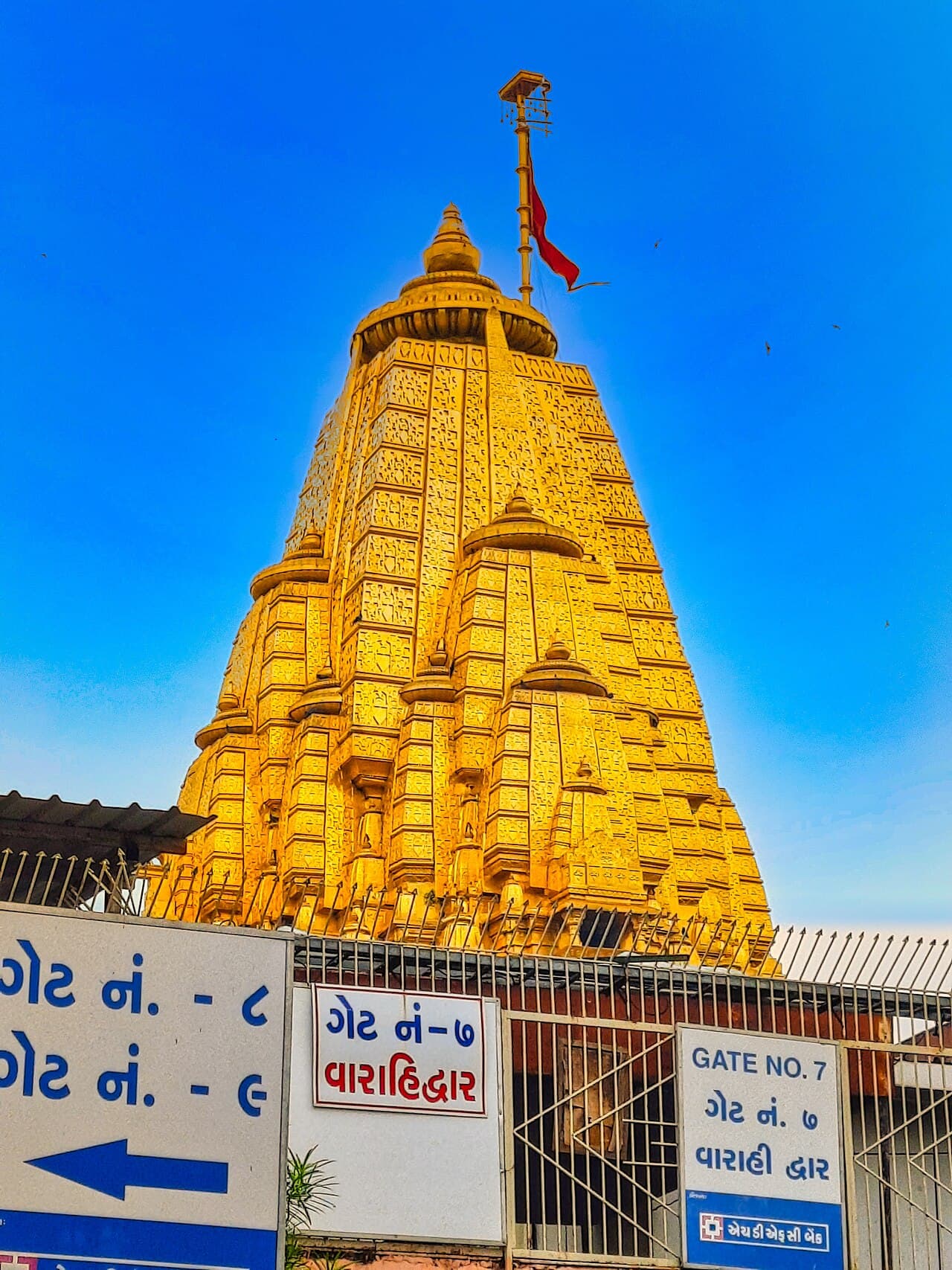
The Ambaji Temple on the Arasur Hills in Banaskantha district, Gujarat, is one of the 51 Shakti Peethas where the heart of Goddess Sati is believed to have fallen. It is among the four major Shakti Peethas of India and is unique among major Hindu temples for having no conventional idol — instead, it houses a sacred Vishayantra (a silver-plated yantra inscribed with the image of the goddess). The temple's 103-foot shikhara is topped with a gold-plated kalasha weighing over three tons.
The Ambaji Temple has ancient origins, with literary references in the Mahabharata (circa 4th century BCE-4th century CE), where the Pandavas are said to have visited the site during their vanavasa (forest exile). The temple was historically patronised by the Solanki rulers of Gujarat (Chaulkya dynasty of Patan, 10th-13th centuries CE) who were devotees of the goddess. Under the Vaghela dynasty (13th-14th centuries), the temple continued to receive royal patronage. During the Maratha period (18th century), the temple was renovated and expanded. The current white marble structure was constructed in the 19th-20th century, replacing earlier stone structures. The gold-plated kalasha on the shikhara was donated by a devotee in the early 20th century. The temple has survived several invasions and remained a continuous site of worship for over a millennium. The Archaeological Survey of India has documented inscriptions and structural elements dating to the Solanki period within the temple complex.
“According to the Shakti Peetha tradition from the Daksha Yagna legend, when Goddess Sati immolated herself in her father Daksha's sacrificial fire, Lord Shiva carried her body across the universe in grief. Vishnu dismembered the body with his sudarshana chakra, and Sati's heart (hridaya) fell at the site of Ambaji. The temple is also deeply associated with the Mahabharata. According to local tradition, the Pandavas worshipped Goddess Amba at this site during their exile in the forests of present-day Gujarat. Arjuna is said to have received blessings from the goddess before major battles. The name 'Ambaji' is derived from 'Amba' (mother) and 'ji' (honorific), reflecting the goddess's role as the divine mother. The Vishayantra itself is believed to have been revealed to a sage in meditation rather than being man-made.”
The temple is built in the MÄru-Gurjara style of architecture, common in medieval Gujarat and Rajasthan, constructed almost entirely of high-quality white marble. The temple faces east. The most prominent feature is the 103-foot shikhara (spire), a tapering pyramidal structure rising above the sanctum, capped with a gold-plated kalasha (finial) weighing over three tons. The shikhara is decorated with ribbed elements and amalaka (circular disc) motifs, topped with the kalasha. The temple plan comprises a garbhagriha (sanctum sanctorum), an antarala (vestibule), a mandapa (pillared hall), and a mukhamandapa (entrance porch). The pillars within the mandapa are carved in the Solanki style, with fluted shafts and bracket capitals. The walls feature carved panels depicting scenes from the Devi Mahatmya and floral motifs. The temple compound is paved in marble and includes subsidiary shrines dedicated to Ganesha, Shiva, and Hanuman. A sacred tank (Amba Bhavani Talav) is located nearby.
Ambaji is one of the 51 Shakti Peethas and one of the four major Shakti Peethas of India, representing the western quadrant of the traditional Peetha division. The temple's unique Vishayantra worship distinguishes it from all other major Hindu temples — the absence of an idol is based on the belief that the goddess is formless (nirguna) and cannot be confined to a physical form. The temple is the spiritual centre of the largest tribal gathering in India — the Bhadarvi Purnima fair, which draws over one million tribal devotees from Gujarat, Rajasthan, and Madhya Pradesh. The temple is also significant as a Shakta-Tantric centre, where the worship of the goddess through yantras (geometric diagrams) rather than idols reflects an esoteric tradition within Shaktism.
Navaratri (September-October) is the most important festival, celebrated with traditional Gujarati Garba and Dandiya Raas dances over nine nights. The temple is brilliantly lit, and special pujas are conducted. The Bhadarvi Purnima fair (August-September), held on the full moon of Bhadrapada, is the largest tribal fair in India, drawing over one million devotees from across Gujarat, Rajasthan, and Madhya Pradesh. The fair features traditional tribal markets, folk performances, and special offerings at the temple. Chaitra Navaratri (March-April) is also celebrated. Tuesdays and Fridays are considered especially auspicious for Shakta worship.
One of the 51 Shakti Peethas (heart of Sati fell here), unique Vishayantra worship (no conventional idol), one of the four major Shakti Peethas, Bhadarvi Purnima fair (India's largest tribal gathering), 103-foot white marble shikhara with gold-plated kalasha.
October to March offers pleasant weather. Navaratri (September-October) and Bhadarvi Purnima (August-September) are the most spectacular but also the most crowded times. Avoid summer (April-June) when temperatures exceed 40°C. Early morning (6:00-8:00 AM) provides the most peaceful experience.
6:00 AM to 8:00 PM daily. During Navaratri and Bhadarvi Purnima, the temple remains open until midnight. Aartis are at 6:00 AM (Mangla), 12:30 PM (Rajbhog), and 7:30 PM (Sandhya).
Ambaji is located in Banaskantha district, Gujarat, 185 km from Ahmedabad. The nearest railway station is Abu Road (20 km) on the Delhi-Ahmedabad main line. The nearest airport is Ahmedabad (Sardar Vallabhbhai Patel International Airport, 185 km). Regular Gujarat State Road Transport Corporation (GSRTC) buses connect Ambaji to Ahmedabad, Palanpur, and Mount Abu. Ropeway to Gabbar Hill is a popular addition to the visit, offering panoramic views of the Aravalli range. Bring sun protection and water, especially in summer. Accommodation ranges from temple guesthouses to private hotels in nearby Ambaji town. Photography is restricted inside the sanctum. Dress modestly.
Gabbar Hill (1 km) has additional temples of Amba and Durga, accessible by ropeway. The Kumbhariya Jain Temples (35 km) are 11th-12th century Solanki-period marble temples. Mount Abu (25 km) is the only hill station in Rajasthan with the Dilwara Jain Temples. Jessore Sloth Bear Sanctuary (50 km) is a wildlife sanctuary. Abu Road (20 km) has the nearest railway station and basic accommodations.
A. Ambaji is unique among major Hindu temples — it does not house a conventional anthropomorphic idol. Instead, the central object of worship is a Vishayantra, a sacred geometric diagram (yantra) inscribed on a silver plate with the image of Goddess Amba. This is based on the theological belief that the supreme goddess is formless (nirguna) and cannot be confined to a physical image.
A. The Vishayantra is a silver-plated yantra approximately 12 by 12 inches, inscribed with the image of Goddess Amba surrounded by sacred syllables (bijaksharas), lotus petals, and geometric patterns. It serves as a visual aid for meditation on the goddess's cosmic, formless nature.
A. The temple is open from 6:00 AM to 8:00 PM daily. During Navaratri and Bhadarvi Purnima, it remains open until late night. Aartis are at 6:00 AM (Mangla), 12:30 PM (Rajbhog), and 7:30 PM (Sandhya).
A. The nearest railway station is Abu Road (20 km) on the Delhi-Ahmedabad main line. The nearest airport is Ahmedabad (185 km). Regular GSRTC buses connect from Ahmedabad (4 hours), Palanpur, and Mount Abu.
A. It is India's largest tribal fair, held annually on the full moon of Bhadrapada (August-September), drawing over one million tribal devotees from Gujarat, Rajasthan, and Madhya Pradesh. The fair features traditional markets, folk performances, and special temple offerings.
A. Modest attire is expected. Shorts, short skirts, and sleeveless tops are not permitted. Traditional Indian attire is preferred.
A. Yes, Gabbar Hill (1 km from the temple) features additional shrines of Goddess Amba and is accessible by a ropeway offering panoramic views of the surrounding Aravalli range. The ropeway operates during temple hours.
Vaishno Devi Temple
The Vaishno Devi Temple, a sacred cave shrine nestled in the Trikuta Mountains of Jammu and Kashmir, is one of India's most visited pilgrimage sites, where millions trek 12 km each year to seek blessings of Mata Vaishno Devi at the holy cave complex.
Vishalakshi Temple
The Vishalakshi Temple, located in the narrow lanes of Mir Ghat near the Ganges in Varanasi, is one of the 51 Shakti Peethas where the earrings of Goddess Sati are believed to have fallen. Dedicated to the 'wide-eyed' goddess Vishalakshi, the temple is the first stop on the traditional Kashi Yatra pilgrimage circuit and is considered the consort shrine of the neighbouring Kashi Vishwanath Temple.
Tara Tarini Temple
The Tara Tarini Temple on Kumari Hills overlooking the Rushikulya River in Ganjam district, Odisha, is the Sthana Peetha — one of the four major ancient Shakti Peethas of India. Dedicated to the twin goddesses Tara and Tarini, the temple marks the site where the breasts of Goddess Sati are believed to have fallen. The hilltop shrine offers panoramic views of the river valley and the Bay of Bengal in the distance.
Bimala Temple
The Bimala Temple, located within the Jagannath Temple complex in Puri, Odisha, is one of the 51 Shakti Peethas where the feet of Goddess Sati are believed to have fallen. It is the only Shakti Peetha situated inside a Vaishnava temple complex. The temple's unique ritual position gives Goddess Bimala supremacy over the Jagannath Temple's food offerings — no Mahaprasad is considered consecrated until it has been first offered to her.
Mahakali Temple
Mahakali Temple in Ujjain is one of the 51 Shakti Peethas, where the upper lip (oshtha) of Goddess Sati is believed to have fallen. It is one of the three Shakti Peethas in the Ujjain region (alongside Mahakaleshwar and Chintaman Ganesh). The temple is part of the sacred geography of Ujjain, one of the seven Mokshapuris (liberation cities) of Hinduism.
Chamundeshwari Temple
Perched atop Chamundi Hills at 3,489 feet, the Chamundeshwari Temple is the tutelary shrine of the Wodeyar dynasty of Mysore. The goddess Chamundeshwari, an eight-armed form of Durga who defeated the demon Mahishasura, is the state deity (Naada Devi) of Karnataka. The temple is accessed by 1,000 stone steps built in 1664.
Kalighat Kali Temple
A major Shakti Peetha where the toes of Sati's right foot fell, serving as the spiritual heart of Kolkata.
Tarapith Temple Birbhum
A major center for Tantric worship dedicated to Goddess Tara, famous for the saint Bamakhyapa and its sacred cremation ground.
Bargabhima Temple Tamluk
An ancient 1,150-year-old temple where Sati's left ankle fell, blending Bengali 'at-chala' and Odia 'Kalinga' styles.
Vaishno Devi Temple
The Vaishno Devi Temple, a sacred cave shrine nestled in the Trikuta Mountains of Jammu and Kashmir, is one of India's most visited pilgrimage sites, where millions trek 12 km each year to seek blessings of Mata Vaishno Devi at the holy cave complex.
Dhari Devi Temple
A sacred Shakti temple on the banks of the Alaknanda River, considered the guardian deity of the Char Dham Yatra and famous for the idol that changes color three times daily.
Vishalakshi Temple
The Vishalakshi Temple, located in the narrow lanes of Mir Ghat near the Ganges in Varanasi, is one of the 51 Shakti Peethas where the earrings of Goddess Sati are believed to have fallen. Dedicated to the 'wide-eyed' goddess Vishalakshi, the temple is the first stop on the traditional Kashi Yatra pilgrimage circuit and is considered the consort shrine of the neighbouring Kashi Vishwanath Temple.
Somnath Temple
Somnath Temple, the first of the twelve Jyotirlingas, is an ancient Shiva temple in Gujarat known for its resilience through repeated destruction and reconstruction over a millennium.
Nageshwar Jyotirlinga Temple
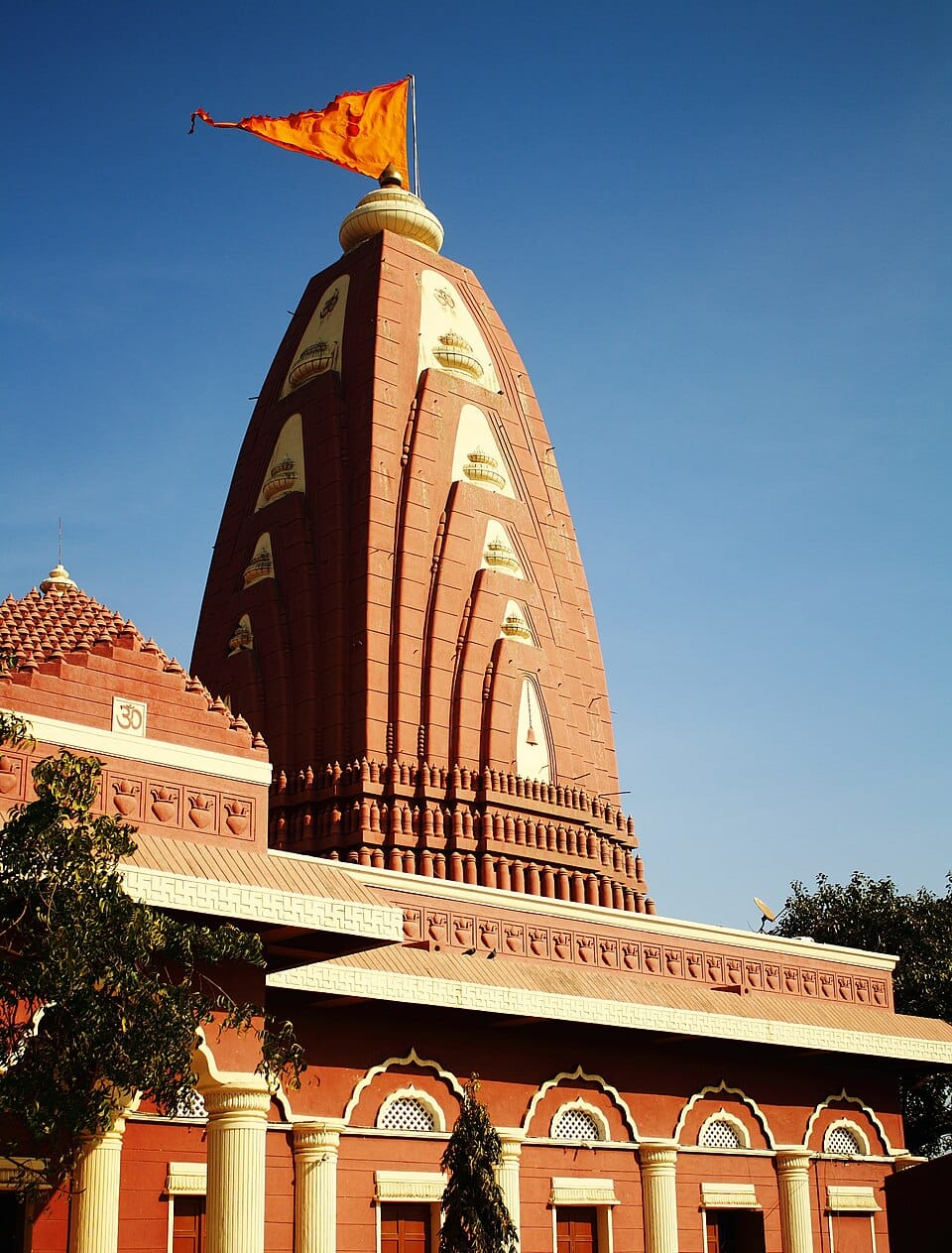
The coastal jyotirlinga hidden in the marshlands of Saurashtra. Shiva as Nageshwar — the Lord of Snakes. The legend of Daruka and a 25-meter outdoor Shiva statue visible from the Arabian Sea.
Modhera Sun Temple
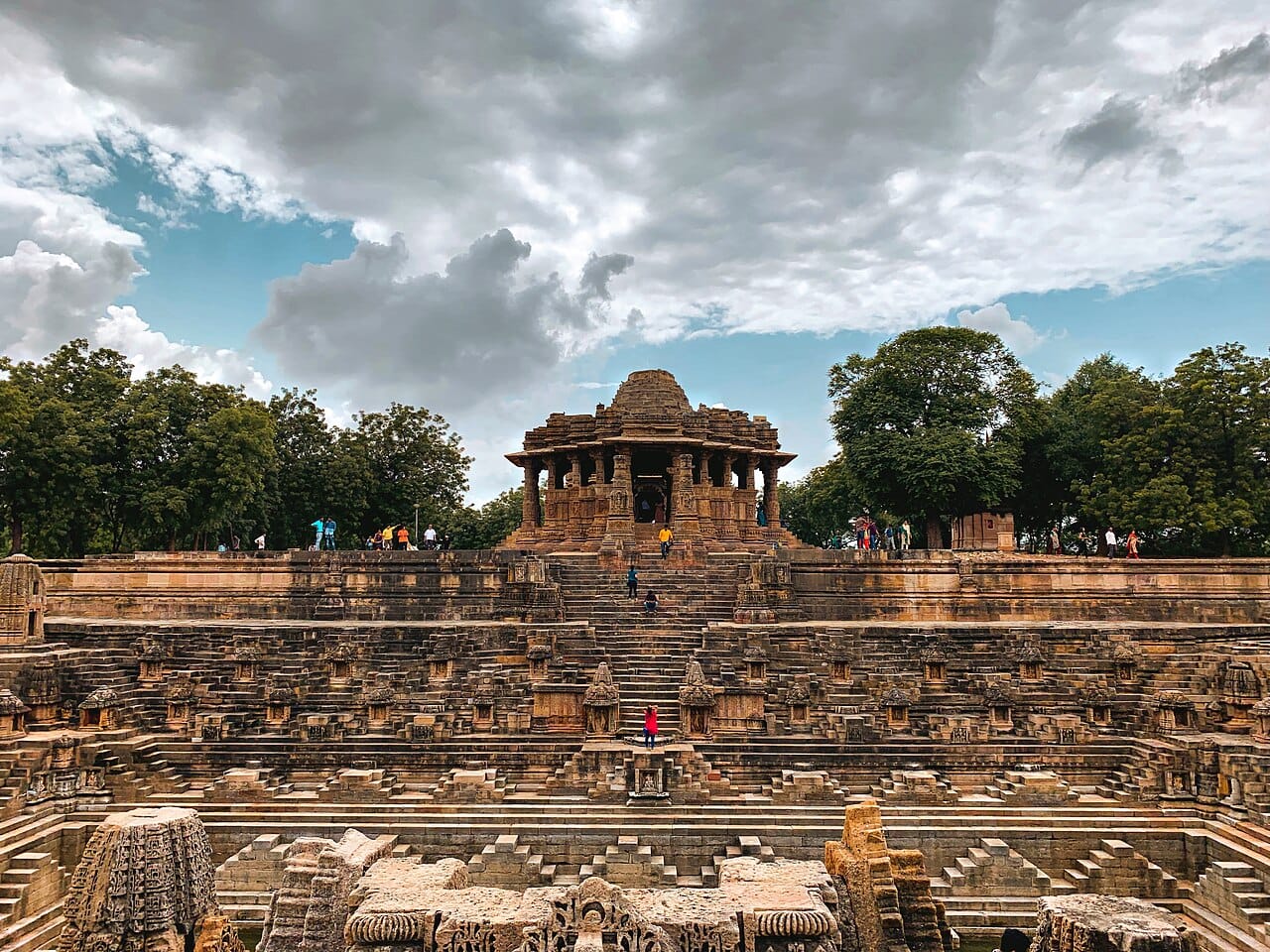
A masterpiece of Solanki architecture built in 1026-27 CE by King Bhima I, dedicated to Surya with precise equinox solar alignment.
Dwarkadhish Temple
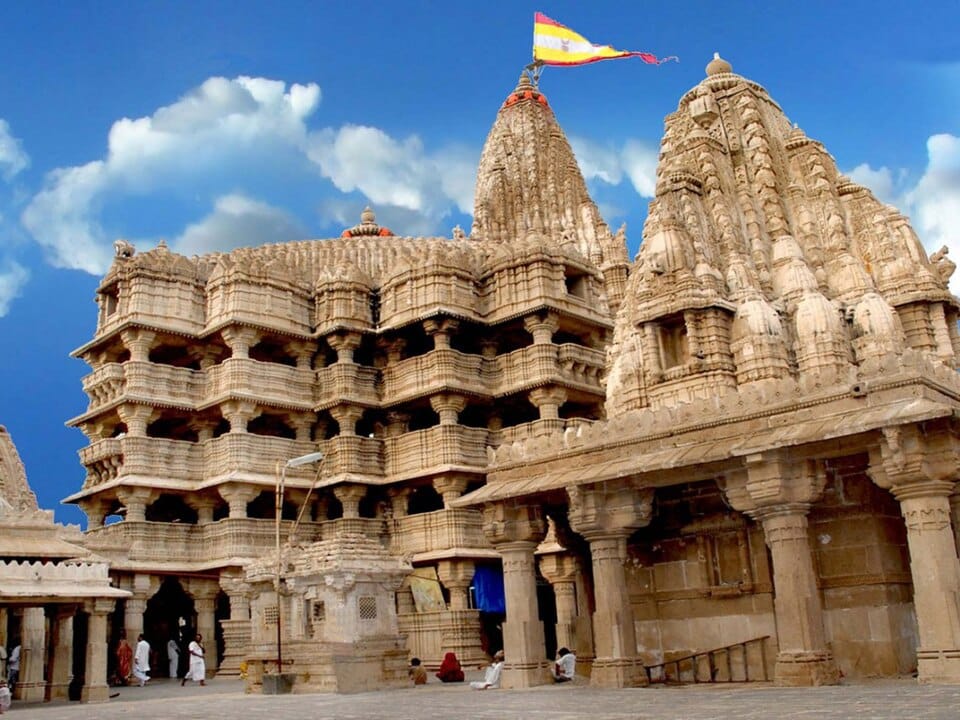
The westernmost of the four Char Dham pilgrimage sites, Dwarkadhish Temple marks the legendary kingdom of Lord Krishna in the ancient city of Dwarka. Built on the banks of the Gomti River where it meets the Arabian Sea, the temple is a five-story marvel of Solanki architecture revered by Vaishnavites worldwide.
Dakshineshwar Kali Temple
A world-famous 19th-century temple complex on the Hooghly River, immortalized by its association with the saint Sri Ramakrishna Paramahamsa.
Kalighat Kali Temple
A major Shakti Peetha where the toes of Sati's right foot fell, serving as the spiritual heart of Kolkata.
Hangseshwari Temple Bansberia
A unique temple with 13 lotus-bud towers, representing the human body's anatomy according to Yoga and Tantra.
Vaishno Devi Temple
The Vaishno Devi Temple, a sacred cave shrine nestled in the Trikuta Mountains of Jammu and Kashmir, is one of India's most visited pilgrimage sites, where millions trek 12 km each year to seek blessings of Mata Vaishno Devi at the holy cave complex.
Dhari Devi Temple
A sacred Shakti temple on the banks of the Alaknanda River, considered the guardian deity of the Char Dham Yatra and famous for the idol that changes color three times daily.
Kalkaji Temple
An ancient temple dedicated to Kalka Devi, believed to date back to the Satya Yuga, and highly crowded during Navratri.
India's temples are living traditions — not museums. Every temple has its own customs. This guide helps first-time visitors prepare with confidence and respect.
Foreign visitor information is being researched
Please verify with the official temple authority before planning your visit.
Foreign Visitors
Verify Before VisitingVisitor Information
Entry policies vary between temples. Most temples welcome visitors, while some may restrict access to specific areas, rituals, or the inner sanctum. Always verify the latest entry guidelines with the official temple authorities before your visit.
Modest clothing is expected at every Indian temple — a sign of respect, not a restriction. Think of it as dressing for a formal ceremony.
A scarf is always useful — it covers shoulders, works as a head covering, and can double as a makeshift face cover if needed.
Outdoor photography is generally permitted. Indoor photography is often restricted. Always look for signage or ask a priest before taking photos inside.
October to March offers pleasant weather. Navaratri (September-October) and Bhadarvi Purnima (August-September) are the most spectacular but also the most crowded times. Avoid summer (April-June) when temperatures exceed 40°C. Early morning (6:00-8:00 AM) provides the most peaceful experience.
April — June
July — September
English is widely understood at major tourist temples. In smaller local temples, Hindi and the regional language are more common. A smile and simple hand gestures go a long way. Learning a few words of the local language is always appreciated.
Cash (Indian Rupees) is the most reliable option, especially for temple offerings, small shops, and local transport.
UPI digital payments (Google Pay, PhonePe, Paytm) are widely accepted across India — even at roadside stalls. Download one before you arrive.
International credit/debit cards work at most ATMs, hotels, and larger establishments. Smaller vendors may only accept cash or UPI.
Carry small denominations (₹10, ₹20, ₹50, ₹100 notes) for offerings and temple donations. Large notes (₹500, ₹2000) can be hard to break at smaller counters.
Many historic temples have uneven stone floors, multiple steps, and narrow passages. Wheelchair access is limited at older sites — contact the temple in advance.
Basic restroom facilities and drinking water are available at most major temples. Some charge a small fee (₹5–₹10).
Stay hydrated — carry a reusable water bottle, especially in hot climates.
Keep valuables secure — use hotel lockers for passports and excess cash.
Wear comfortable, sturdy footwear — temple floors can be hot, wet, or uneven.
Beware of unofficial guides or touts near temple entrances. Only use authorised services.
Carry a photocopy of your passport and visa. Leave originals in your hotel safe.
Download offline maps — mobile networks can be unreliable near remote temple sites.
These short explanations help make sense of what you see and experience.
Darshan means 'seeing' — but in a temple it means being seen by the deity. It is a sacred moment of connection, not just a viewing.
Removing footwear is a sign of humility. It also keeps the temple floor clean, since devotees sit and pray on the ground.
Food offered to the deity and then distributed to devotees. It is considered blessed. Accept it with both hands and do not discard it.
The bell creates a focused acoustic atmosphere, wards off distractions, and announces your presence before entering the inner sanctum.
Circumambulation (pradakshina) is done clockwise, keeping the sanctum on your right — an auspicious direction aligned with the sun's path.
Flowers symbolise devotion, coconuts represent the ego being broken, incense purifies the air, and lamps represent the victory of light over darkness.
Sacred viewing of the deity; the central act of temple worship.
Clockwise circumambulation of the sanctum.
Blessed food offered to the deity and distributed to devotees.
The innermost sanctum where the main deity resides.
The towering spire above the sanctum, a defining feature of temple architecture.
A pillared hall or pavilion within the temple complex.
The Indian Rupee (?, INR) is the local currency. ATMs are widely available in cities and towns. For temple offerings, keep small notes (₹10, ₹20, ₹50). Most temples accept donations in cash only — digital payments are uncommon at the offering counter itself.
Offerings (dakshina) are given with the right hand. Place cash in the donation box (hundi) or give it directly to the priest. There is no fixed amount — give what feels appropriate. Some temples have fixed fees for special entry or puja participation.
Shoes and sandals are removed before entering the temple building. Most temples have a designated shoe counter (free or a small fee of ₹5–₹20). Socks are generally allowed. In monsoon, carry a plastic bag for wet shoes.
Darshan queues can take 30 minutes to 3 hours at popular temples. Many offer paid VIP darshan (₹100–₹500) for faster entry. Special queues for women, elderly, and disabled visitors exist at some temples. No line jumping.
Major festivals draw enormous crowds — sometimes hundreds of thousands. Book accommodation months in advance. Expect road closures, restricted vehicle access, and limited phone network. Arrive early (before dawn) to avoid the worst congestion.
Always look for signage before taking photos. When in doubt, ask a priest. Never take photos of devotees in prayer without permission. Selfie sticks are banned at most temples. Silently switch your phone to silent mode.
Police / Ambulance / Fire: 112 (National Emergency Number)
Tourist Helpline: 1800-111-363 (Multi-lingual, Ministry of Tourism)
Women's Helpline: 1091
Temple-specific visitor information is continuously researched and updated from official sources. Where specific data is unavailable, general India travel guidance is provided. Always verify current policies with the temple authority before your visit.
Information last verified July 2026. Temple-specific data coming soon.
Continue your journey through the spiritual and architectural wonders of India.

Somnath Temple, the first of the twelve Jyotirlingas, is an ancient Shiva temple in Gujarat known for its resilience through repeated destruction and reconstruction over a millennium.
The coastal jyotirlinga hidden in the marshlands of Saurashtra. Shiva as Nageshwar — the Lord of Snakes. The legend of Daruka and a 25-meter outdoor Shiva statue visible from the Arabian Sea.

A masterpiece of Solanki architecture built in 1026-27 CE by King Bhima I, dedicated to Surya with precise equinox solar alignment.

The westernmost of the four Char Dham pilgrimage sites, Dwarkadhish Temple marks the legendary kingdom of Lord Krishna in the ancient city of Dwarka. Built on the banks of the Gomti River where it meets the Arabian Sea, the temple is a five-story marvel of Solanki architecture revered by Vaishnavites worldwide.
"India has over 40 UNESCO World Heritage Sites, ranging from ancient temples to natural wonders."