Sacred Destinations
Gujarat
5Sacred Sites
6Major Temples
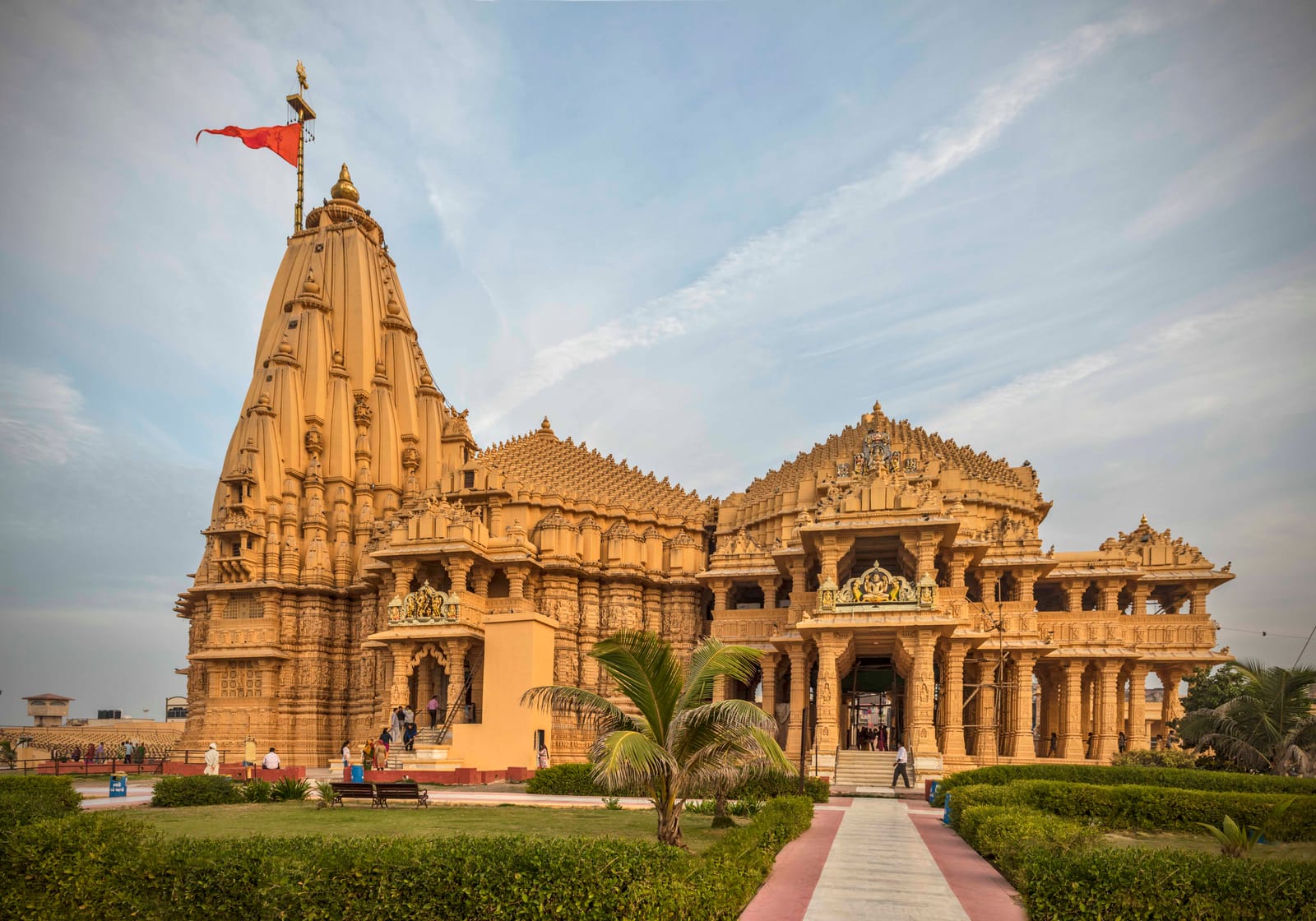
Gujarat, on India's western coast, preserves a continuous temple-building tradition spanning over 1,500 years, from the earliest surviving wooden shrine at Gop to the intricately carved marble temples of the Jain tradition. The state contains the Somnath Temple, one of the twelve Jyotirlingas and the most historically significant Shiva shrine in Western India, repeatedly destroyed and rebuilt across a millennium. Gujarat's temple architecture evolved through Solanki (Chalukya), Maratha, and Jain dynasties, creating the Maru-Gurjara style of intricate carving in sandstone and marble.
Quick Facts
Capital
Gandhinagar
Population
63.9 million
Area
196,024 km²
Languages
Gujarati, Hindi, Kutchhi
Best Time to Visit
November to February
Major Pilgrimage
Somnath, Dwarka, Palitana, Modhera
Temple Style
Maru-Gurjara (Solanki), Chalukya
UNESCO Count
1 (Champaner-Pavagadh)
Major River
Sabarmati, Narmada, Tapi
Highest Point
Girnar (1,145 m)
Why Visit Gujarat
Gujarat's sacred landscape encompasses Hindu, Jain, and Islamic heritage sites. The Somnath Temple at Veraval is the first among the twelve Jyotirlingas. The Sun Temple at Modhera, built in 1026-27 CE by Bhima I of the Solanki dynasty, features a stepped tank with 108 miniature shrines. The Jain temples of Palitana on Shatrunjaya hill are the largest Jain pilgrimage site in the world, with over 860 marble temples across nine peaks. The Dwarkadhish Temple at Dwarka is one of the Char Dham destinations and among the 108 Divya Desams.
Somnath is the first Jyotirlinga, mentioned in the Rigveda as the seat of Soma, the moon god. The temple was constructed and reconstructed seventeen times, with the current structure built in 1951 under Sardar Vallabhbhai Patel's direction. Palitana is the most sacred Jain pilgrimage site; 23 of the 24 Jain Tirthankaras are believed to have attained moksha on Shatrunjaya hill. Modhera's Sun Temple is aligned so the sun's rays illuminate the sanctum at the equinox. Dwarka is one of the seven most ancient cities (Sapta Puri) in Hinduism.
Temple Categories
Featured Sacred Places
Gujarat
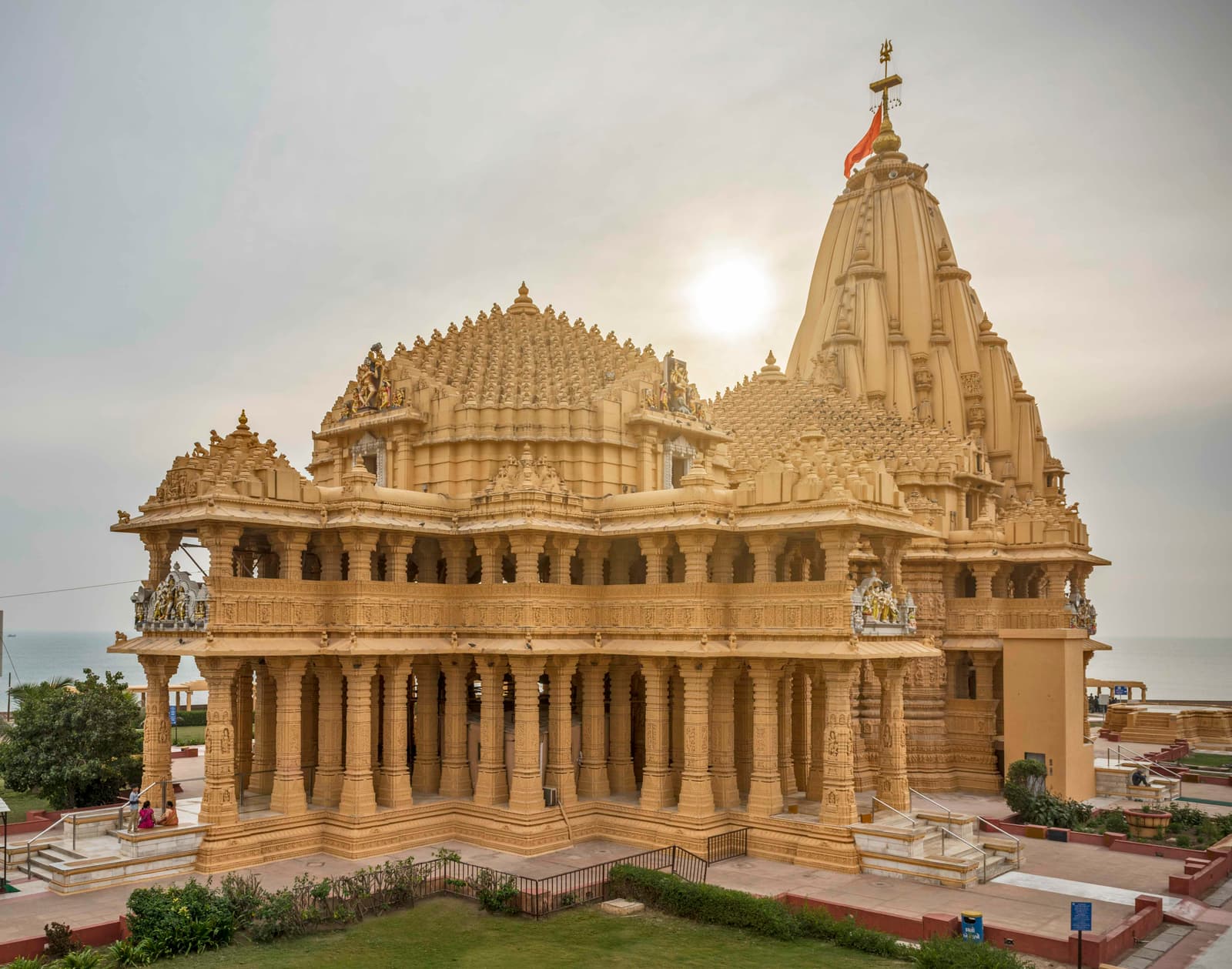
Somnath Temple
Somnath Temple, the first of the twelve Jyotirlingas, is an ancient Shiva temple in Gujarat known for its resilience through repeated destruction and reconstruction over a millennium.
Explore Temple
Gujarat
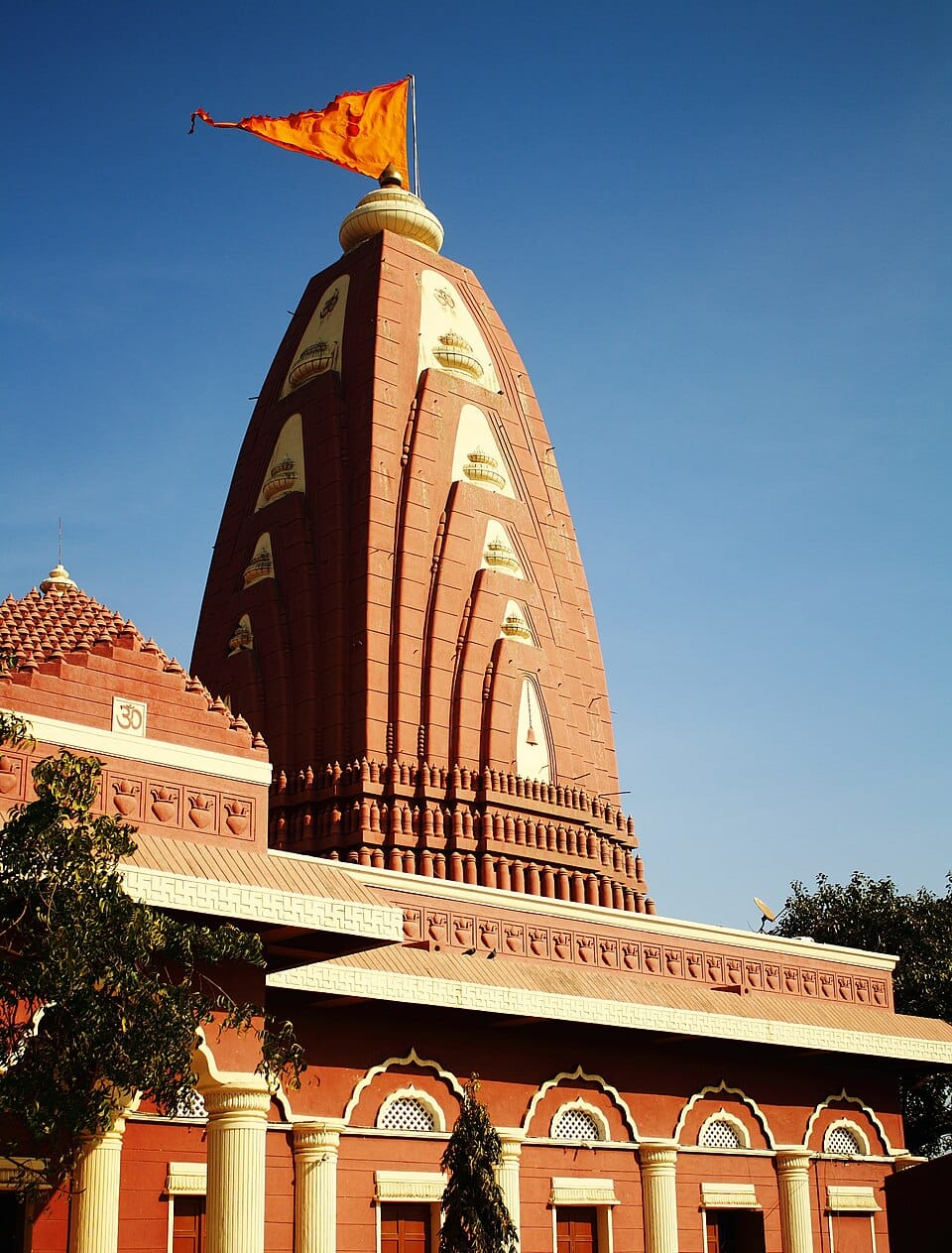
Nageshwar Jyotirlinga Temple
The coastal jyotirlinga hidden in the marshlands of Saurashtra. Shiva as Nageshwar — the Lord of Snakes.
Explore Temple
Gujarat
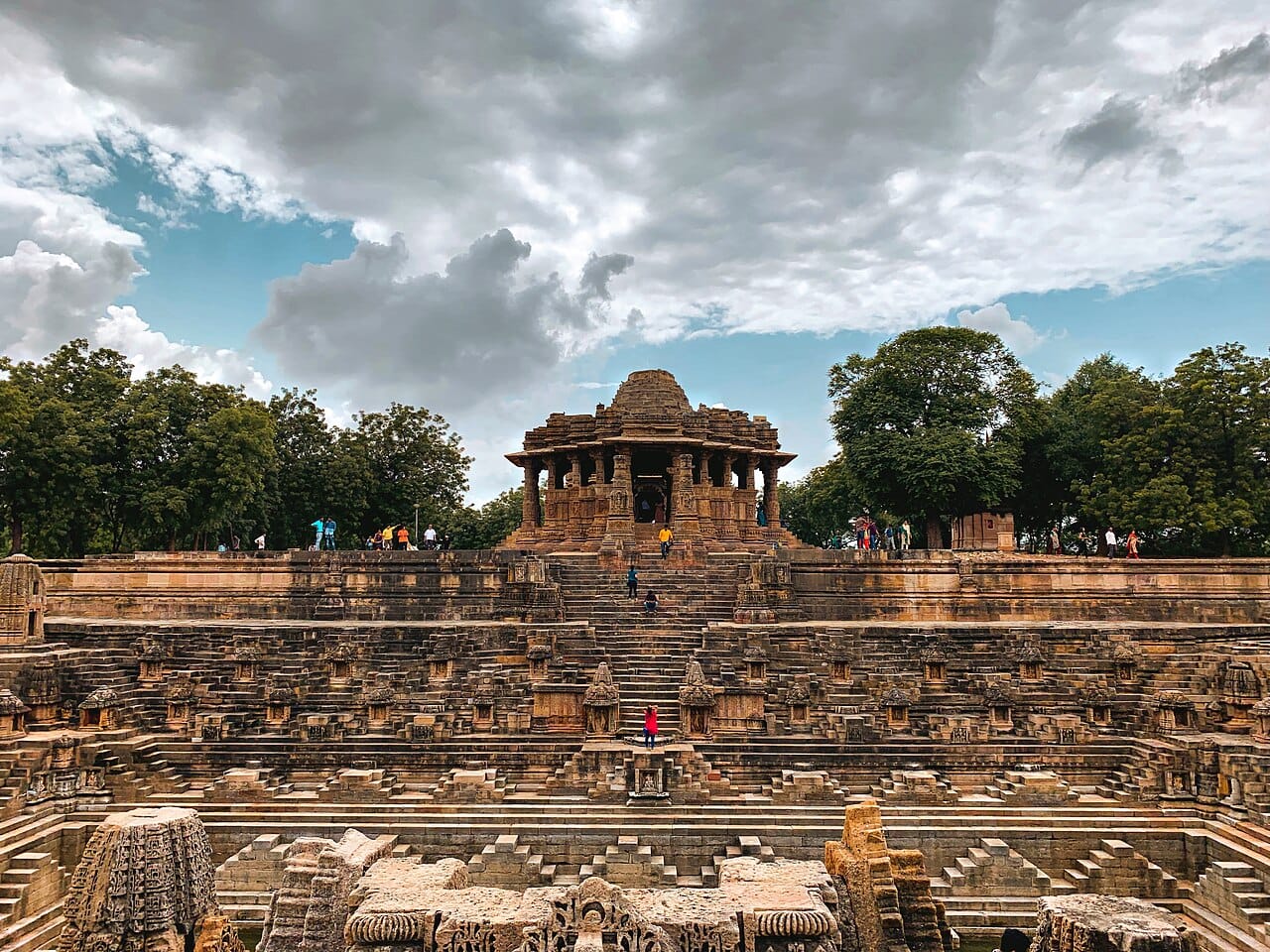
Modhera Sun Temple
The Modhera Sun Temple is an 11th-century Solanki-era temple in Gujarat dedicated to Surya.
Explore Temple
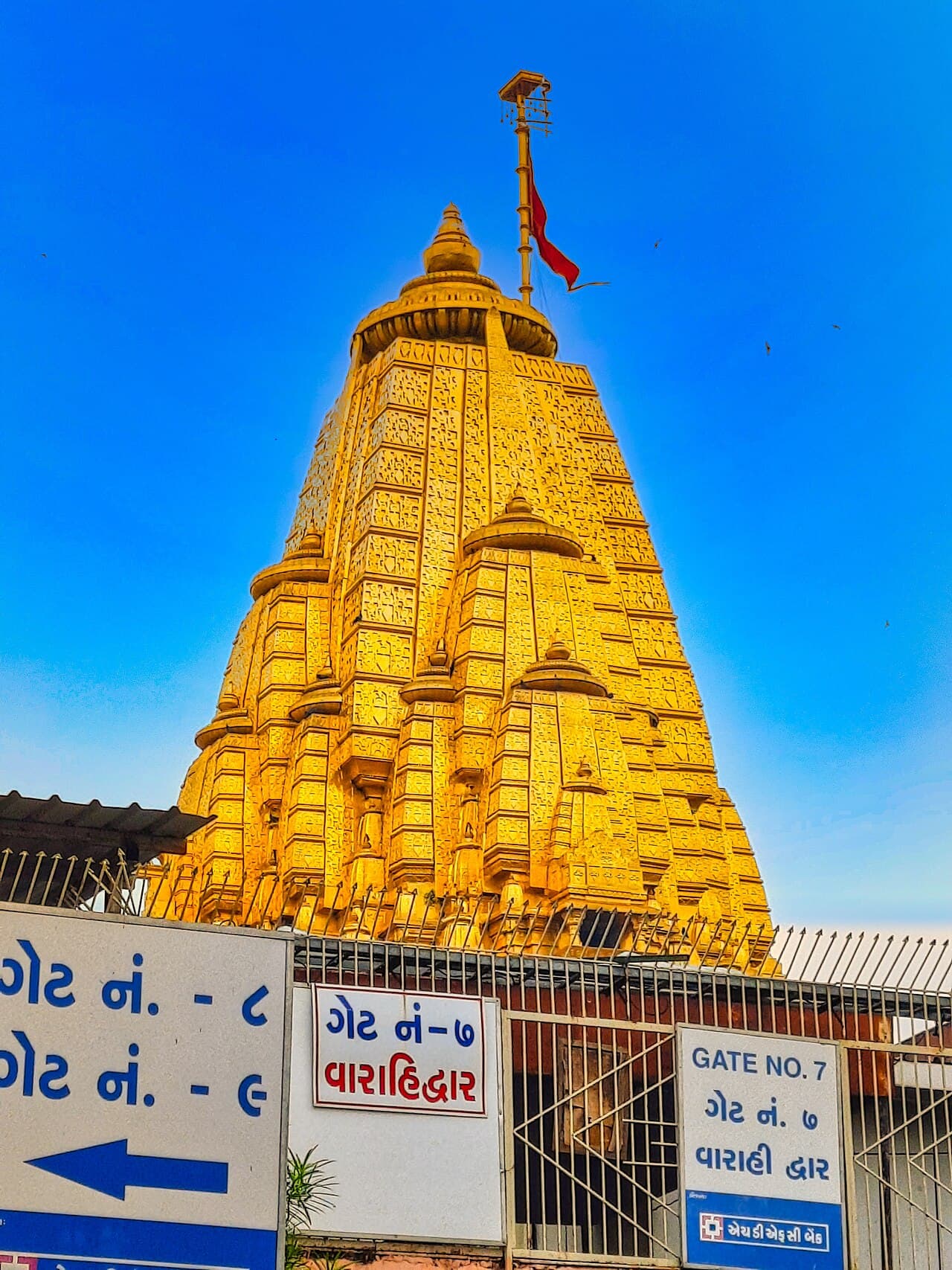
Gujarat
Ambaji Temple
The Ambaji Temple on the Arasur Hills in Banaskantha district, Gujarat, is one of the 51 Shakti Peethas where the heart of Goddess Sati is believed to have fallen.
Explore Temple
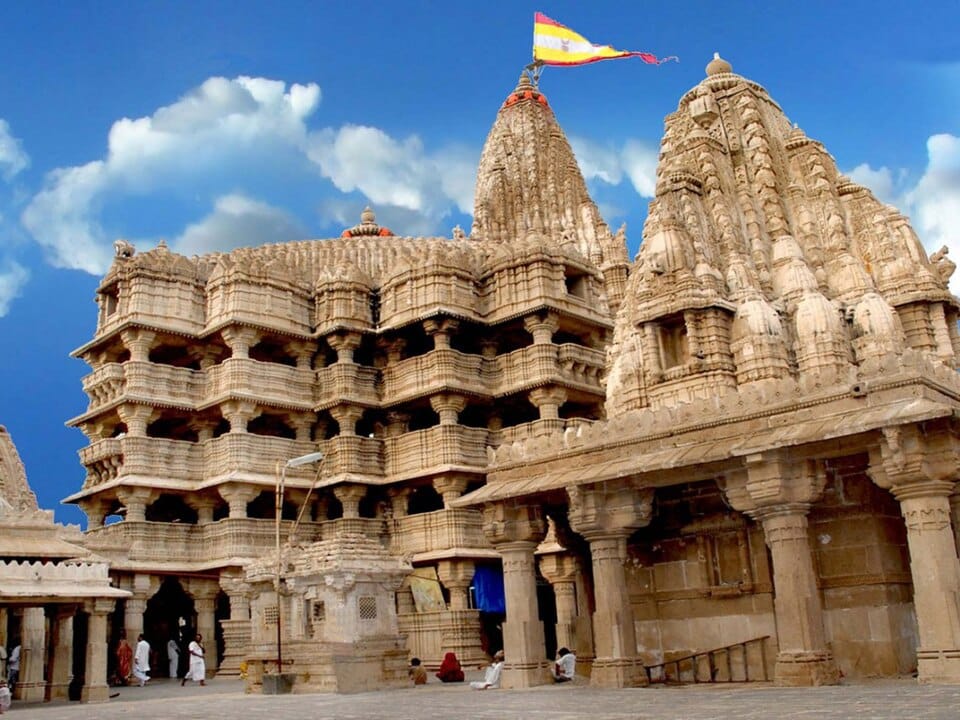
Gujarat
Dwarkadhish Temple
The westernmost of the four Char Dham pilgrimage sites, Dwarkadhish Temple marks the legendary kingdom of Lord Krishna in the ancient city of Dwarka.
Explore Temple
Pilgrimage Circuits
Saurashtra Jyotirlinga Circuit
3 templesSomnath-Nageshwar-Bhalka Tirth, covering all major Shiva shrines on the Saurashtra coast.
Jain Hill Pilgrimages
3 templesPalitana (Shatrunjaya), Girnar, and Taranga — the three sacred Jain hill sites in Gujarat.
Palitana TemplesGirnar Jain TemplesTaranga Jain Temples
Dwarka Char Dham
3 templesDwarkadhish Temple and surrounding Krishna-associated sites on the western Saurashtra coast.
Solanki Architecture Circuit
3 templesModhera Sun Temple, Rudra Mahalaya, and Patan — the golden age of Maru-Gurjara temple art.
The Saurashtra circuit covers Somnath, Dwarka, Porbandar, and Nageshwar Jyotirlinga. The Char Dham circuit includes Dwarka as the westernmost site. The Jain circuit covers Palitana, Taranga, and Girnar. The Shakti Peetha circuit includes Chamunda Temple on Pavagadh hill and Bahucharaji Temple.
Temple Architecture
The Maru-Gurjara style, perfected under the Solankis, features intricately carved marble or sandstone with elaborate geometric patterns, decorative toranas, and pillared mandapas. The Modhera Sun Temple has a rectangular stepped tank measuring 53 by 36 meters with 108 small shrines, followed by a pillared sabha mandapa supported by 52 pillars. The Somnath Temple, rebuilt in the Chalukya style, features a 50-meter shikhara and a 7-meter Shiva linga. The Palitana temples are built entirely of white marble, accessed by climbing 3,572 steps. The Dwarkadhish Temple is a five-story pyramidal structure rising 78 meters.
Architectural Styles
Historical Timeline
5th-8th c.Maitraka
Earliest temple remains in Gujarat during the Maitraka period.
1024Ghaznavid
Mahmud of Ghazni destroys Somnath Temple; one of the most documented temple destructions in Indian history.
1026-27Solanki
Modhera Sun Temple built by Bhima I of the Solanki dynasty.
1298Delhi Sultanate
Gujarat Sultanate begins; temple construction declines under Islamic rule.
18th-19th c.Gaekwad
Gaekwads of Baroda fund restoration of Somnath, Dwarka, and other major temples.
1951Independent India
Somnath Temple reconstructed under Sardar Vallabhbhai Patel; President Rajendra Prasad performs the installation.
Temple Statistics
2
Jyotirlingas
Somnath (first) and Nageshwar
860+
Jain Hill Temples
Palitana on Shatrunjaya hill
5th-8th c.
Oldest Temple
Maitraka period remains
78 m
Tallest Shikhara
Dwarkadhish Temple
Festivals
Somnath Mahadev
February-MarchSomnath Temple
1 day
Over 500,000 pilgrims on Maha Shivaratri; night-long chanting of Shiva mantras and abhishekam.
Modhera Dance Festival
JanuarySun Temple, Modhera
3 days
Classical dance performances set against the illuminated Sun Temple backdrop during the third week of January.
Navratri
September-OctoberThroughout Gujarat
9 nights
Largest Navratri celebration in India; garba and dandiya raas in temple courtyards across every village and city.
Paryushan
August-SeptemberPalitana and Jain temples
8 days
Jain monks deliver sermons; devotees observe eight-day fasts; Palitana sees peak pilgrimage crowds.
The Somnath Mahadev festival on Maha Shivaratri draws over 500,000 pilgrims. The Modhera Dance Festival (January) features classical dance performances against the illuminated Sun Temple. Janmashthami at Dwarkadhish Temple is the most important Krishna festival. Paryushan at Palitana (August-September) involves Jain monks' sermons and eight-day fasts. Navratri in Gujarat is the largest in India with garba and dandiya raas across the state.
Travel Guide
Best Time
November to February (15-30°C)
Climate
Summer up to 45°C; rainfall 500-1,000 mm
Nearest Airport
Ahmedabad (AMD), Rajkot (RAJ), Diu (DIU)
Railway
Ahmedabad, Vadodara, Rajkot
Road
NH-27, NH-48, NH-47
Local Transport
GSRTC buses, taxis, private cabs
Temple Etiquette
Remove footwear; dress modestly
Suggested Duration
7-10 days for full circuit
Nearby Attractions
Natural
Rann of Kutch
Seasonal salt desert hosting the Rann Utsav cultural festival from November to February.
National Park
Gir National Park
The only natural habitat of the Asiatic lion, located 50 km from Somnath.
UNESCO site
Champaner-Pavagadh
Archaeological park with Hindu and Jain temples alongside Islamic palaces on a volcanic hill.
Heritage
Sabarmati Ashram
Mahatma Gandhi's residence from 1917 to 1930 in Ahmedabad; museum on the freedom movement.
Interesting Facts
01
The Somnath Temple has been destroyed and rebuilt seventeen times over a millennium — more than any other temple in India.
02
The Modhera Sun Temple's sabha mandapa has exactly 52 pillars, one for each week of the year, designed as a solar calendar in stone.
03
Palitana's 860+ marble temples on Shatrunjaya hill must be climbed on foot — no vehicles are allowed. Pilgrims ascend 3,572 steps to reach the summit.
04
The Somnath Temple pillar erected at the temple gate shows the southernmost point of the Indian landmass, visible from the temple entrance.
Frequently Asked Questions
At least seventeen times. The first destruction was by Mahmud of Ghazni in 1024 CE. The current Chalukya-style structure was completed in 1951 with the foundation laid by Sardar Vallabhbhai Patel.
Palitana on Shatrunjaya hill is the most sacred Jain pilgrimage site with over 860 marble temples across nine peaks. Jain tradition holds that 23 of the 24 Tirthankaras attained moksha here. Pilgrims climb 3,572 steps to reach the hilltop.
The temple is precisely aligned so that during the equinoxes, the first rays of the sun fall directly on the central Shiva linga. The surya kund has 108 miniature shrines, and the hall has 52 pillars symbolizing the weeks of the year.
Dwarka is identified as the ancient city of Dvaraka, Krishna's capital after leaving Mathura. The Dwarkadhish Temple, believed built by Krishna's grandson Vajranabha, is one of the four Char Dham sites. Marine archaeology in the Gulf of Khambat has revealed submerged settlements dating to 1500-2000 BCE.
Sources & References
These records back the history, architecture, temple listings and visitor guidance published on this Gujarat page.
Archaeological Survey of India
Archaeological Survey of India — monument records and conservation reports
Protected-monument status, dating, architectural classification and conservation records for the temples and monuments named across this Gujarat guide.
Primary archaeological record
Open source (opens in a new tab)Ministry of Tourism, Government of India
Ministry of Tourism — official destination information
Official Government of India visitor information, access routes and pilgrimage circuits for Gujarat.
Government record
Open source (opens in a new tab)Gujarat Tourism
Gujarat Tourism — official destination portal
State visitor information — temple timings, access routes and pilgrimage circuit details cited on this page.
Government record
Open source (opens in a new tab)
— every record linked above was re-requested for this release, so the link still resolves and the publisher still serves the document. It is a link check, not a re-verification of every sentence on this page.
Missing something, or found an error? Send us a correction with the record that supports it, or read how we choose sources.