From ancient rock-cut marvels to towering imperial shrines, discover the architectural soul of Bharat through our verified digital archive.
Explore More Temples

A deep dive into the evolution of temple architecture in India, from monolithic rock-cut caves to soaring structural gopurams.
Explore our curated selection of temple architecture that define this architectural and spiritual category.

A world-famous 19th-century temple complex on the Hooghly River, immortalized by its association with the saint Sri Ramakrishna Paramahamsa.

A major Shakti Peetha where the toes of Sati's right foot fell, serving as the spiritual heart of Kolkata.

A major center for Tantric worship dedicated to Goddess Tara, famous for the saint Bamakhyapa and its sacred cremation ground.

An ancient 1,150-year-old temple where Sati's left ankle fell, blending Bengali 'at-chala' and Odia 'Kalinga' styles.

The global headquarters of ISKCON and birthplace of Chaitanya Mahaprabhu, one of the world's most visited Vaishnavite sites.
The oldest 17th-century brick structure in Bishnupur, unique for its massive pyramidal roof and arched galleries.

Known for its 'twin hut' design and incredibly detailed terracotta panels depicting the Ramayana and Mahabharata.

A five-towered terracotta temple famous for its circular friezes showing the Rasa-lila of Lord Krishna.

A massive 18th-century pilgrimage site dedicated to Lord Taraknath, especially vibrant during the Gajan festival.

A unique temple with 13 lotus-bud towers, representing the human body's anatomy according to Yoga and Tantra.

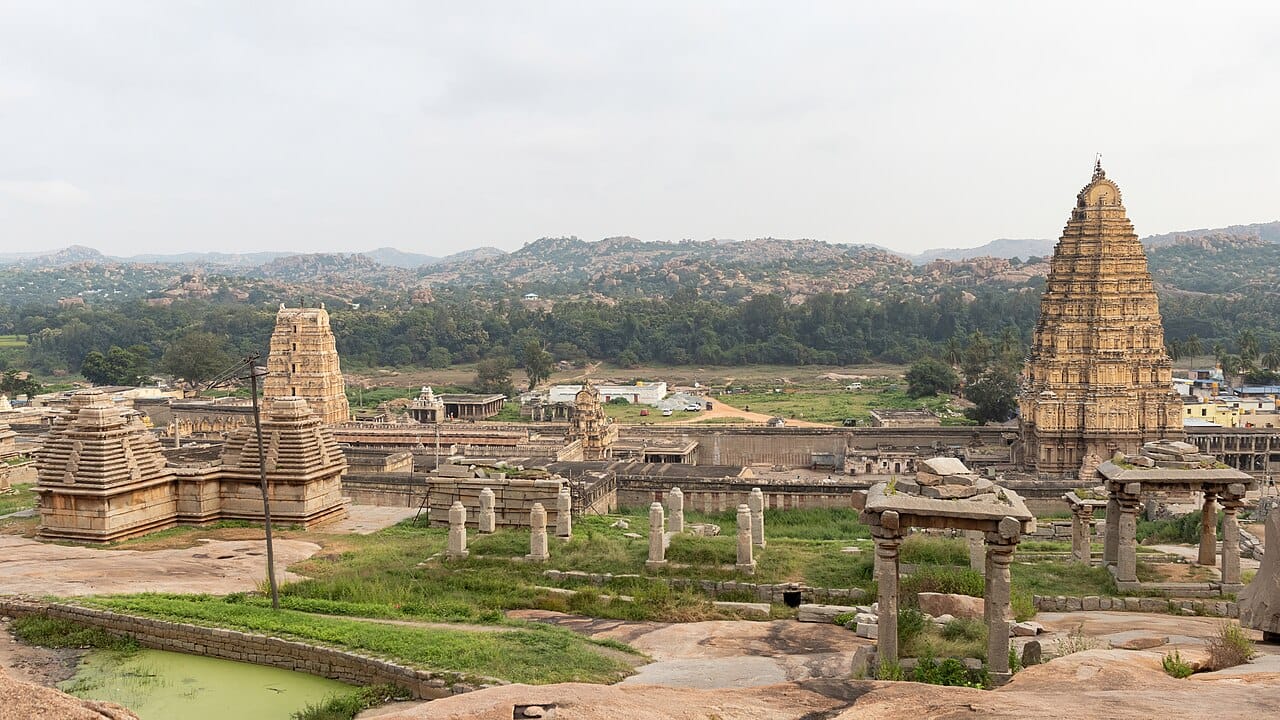
The Virupaksha Temple in Hampi, Karnataka, is a UNESCO World Heritage Site and the oldest functioning temple in India, dedicated to Lord Shiva as Virupaksha.

The Vaishno Devi Temple, a sacred cave shrine nestled in the Trikuta Mountains of Jammu and Kashmir, is one of India's most visited pilgrimage sites, where millions trek 12 km each year to seek blessings of Mata Vaishno Devi at the holy cave complex.

The first stop on the Char Dham Yatra at 3,291 meters, where the Yamuna River originates and pilgrims cook offerings in geothermal springs before darshan.

The highest temple dedicated to Goddess Ganga at 3,100 meters, marking where the sacred river descended to earth through Shiva's locks after King Bhagirath's penance.

A cluster of 124 ancient stone temples from the 7th-12th centuries, nestled in a dense deodar forest.
Situated at 1,330 meters, this is where Lord Shiva is believed to have consumed the poison (Halahala) during the Samudra Manthan.

The highest Shiva temple in the world, situated at 3,680 meters on the Chandranath Parbat; it is the 'Tritiya Kedar' in the sacred Panch Kedar pilgrimage circuit.

A complex of 16 ancient temples from the Gupta period; it is believed Vishnu resided here before moving to Badrinath.

A 9th-century architectural marvel and India's second most important Sun temple after Konark, featuring intricate carvings.

A 12th-century complex on the Gomti banks, famous for its life-sized black stone idol of Goddess Parvati.

An underground limestone cave temple where legend says the entire pantheon of Hindu gods reside in rock formations.

Dating to the 2nd century BCE, it sits on the high-energy Van Allen Belt and was a favorite of Swami Vivekananda.

The Himalayan ashram made famous worldwide by Steve Jobs, Mark Zuckerberg, and countless spiritual seekers, known for its powerful Hanuman temple and Neem Karoli Baba's teachings.

A sacred Shakti temple on the banks of the Alaknanda River, considered the guardian deity of the Char Dham Yatra and famous for the idol that changes color three times daily.

The most famous temple of Kumaon's beloved God of Justice, known for thousands of bells hung by devotees and the unique tradition of filing written petitions to the deity.

One of the Panch Kedar shrines, representing Lord Shiva's face, situated at an altitude of 2,286 meters amidst meadows and rhododendron forests.

The only Panch Kedar temple accessible year-round, housed in a natural cave and featuring a unique four-faced Shiva linga representing the god's hair.

One of the Panch Kedar shrines, representing Shiva's navel, set at 3,497 meters beneath the majestic Chaukhamba peak in the Garhwal Himalayas.

The Vishalakshi Temple, located in the narrow lanes of Mir Ghat near the Ganges in Varanasi, is one of the 51 Shakti Peethas where the earrings of Goddess Sati are believed to have fallen. Dedicated to the 'wide-eyed' goddess Vishalakshi, the temple is the first stop on the traditional Kashi Yatra pilgrimage circuit and is considered the consort shrine of the neighbouring Kashi Vishwanath Temple.
Dating to around 500 CE, this is the earliest known North Indian temple with a shikhara (curvilinear tower). The temple is famous for its carved panels depicting the ten incarnations (Dashavatara) of Vishnu on the sanctum walls.

A grand and historic temple marking the birthplace of Lord Rama, the seventh avatar of Vishnu, representing the pinnacle of Nagara architecture.

A hilltop temple dedicated to Lord Hanuman, the guardian deity of Ayodhya, reached by climbing 76 sacred steps.

A stunning modern white-marbled complex in Vrindavan dedicated to Divine Love, known for its life-like tableaus of Krishna's pastimes.

Among the most famous Krishna temples in India, where the deity is worshipped as a child and curtains are drawn frequently.

One of India's most visited Shakti Peethas, where Goddess Durga is believed to have resided after slaying Mahishasura.

Legend says the right shoulder of Sati fell here; it serves as the headquarters of the Nath sect in eastern Uttar Pradesh.

Located in the ancient forest of Naimisharanya, it is mentioned in Puranas as the spot where the universe's first Chakra fell.

The oldest remaining terracotta/brick temple in India, dating to the 6th-century Gupta era, a masterpiece of early architecture.

A complex of 101 Shiva temples built on the banks of Yamuna, representing a significant pilgrimage and architectural site.

The spiritual headquarters of the Nath monastic order and a grand center for Yoga, carrying a millennium of spiritual power and social service.

A massive Hindu temple complex displaying millennia of traditional Indian and Hindu culture, spirituality, and architecture.

A massive marble temple complex dedicated to Goddess Katyayani, featuring both North and South Indian architectural styles.

An ancient temple dedicated to Kalka Devi, believed to date back to the Satya Yuga, and highly crowded during Navratri.

One of the five ancient temples from the Mahabharata era in Delhi, famous for its continuous 24-hour chanting since 1964.

One of Delhi's few surviving ancient temples, believed to be built by the Pandavas and a symbol of communal harmony.

An 800-year-old temple in Chandni Chowk built by a Maratha soldier, housing a centuries-old brown Shiva Lingam.

The oldest Jain temple in Delhi, built in 1656 and famous for its vibrant red architecture and Charity Birds Hospital.

Inaugurated by Mahatma Gandhi in 1939, this masterpiece of Nagara style was one of India's first temples open to all castes.

One of Delhi's oldest and most revered Shakti shrines, named after the ritual flags (Jhandas) offered by its many devotees.

Perched on a hillock, this granite temple is a primary site for Delhi's South Indian community, dedicated to Lord Swaminatha.
One of the 51 Shakti Peethas, this ancient 16th-century temple is uniquely shaped like a tortoise (Kurma Pitha).

An ancient pilgrimage site featuring massive rock-cut sculptures of Shiva and other deities, known as the 'Angkor Wat of the North-East'.

An ancient 18th-century temple dedicated to the fourteen deities (Chaturdasha Devata) of the Tripura royal family.

A 17th-century temple immortalized in Rabindranath Tagore's literary works, located on the banks of the Gomti River.

A popular hilltop Shakti shrine overlooking the Kamalasagar lake, housing a 15th-century sandstone Durga idol.
A 19th-century masterpiece blending traditional Hindu design with Islamic domes and arches, built by the royal family.
An integral part of Tripura's royal heritage, dedicated to Lord Vishnu and known for its serene and peaceful atmosphere.
One of the oldest temples in Udaipur, the former capital, considered the abode of the consort of Tripura Sundari.

A cluster of three 17th-century brick temples which are excellent examples of the traditional Bengali Chala architecture.

The most important Buddhist pilgrimage site in Tripura, housing an ancient idol said to have been brought from Myanmar.

The Trimbakeshwar Temple in Maharashtra is one of the twelve Jyotirlingas, unique for its three-faced linga representing the Trimurti and the source of the Godavari River.

Known as the Ayodhya of the South, this temple on the Godavari river was built by the legendary devotee Bhakta Ramadasu.

A popular cave temple that recently underwent a massive stone architectural renovation following ancient traditions.

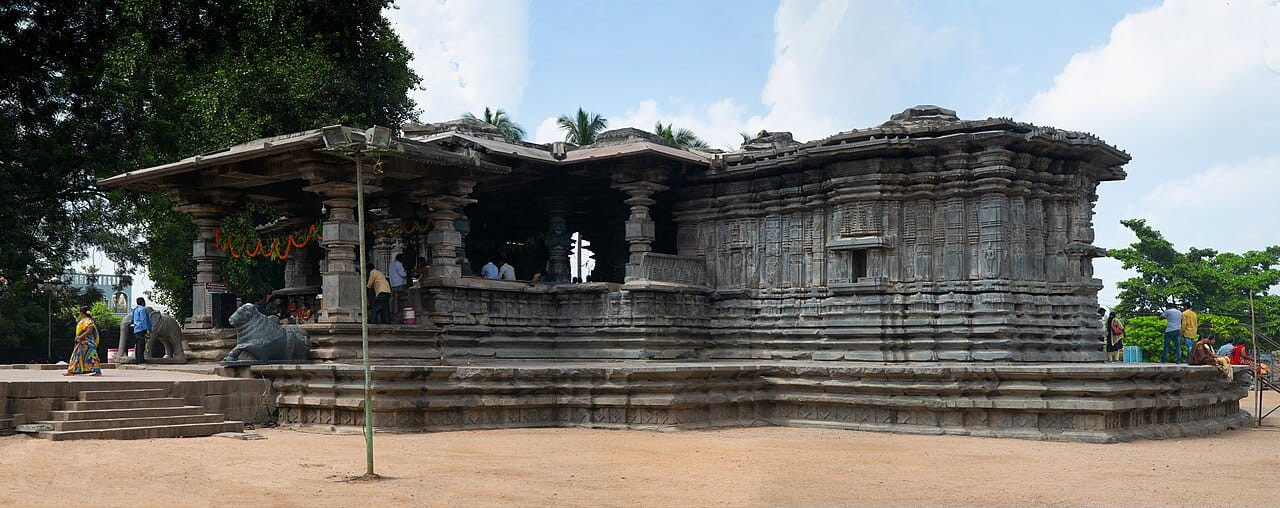
A 12th-century Kakatiya masterpiece dedicated to Shiva, Vishnu, and Surya, famous for its perforated stone screens.

One of the 18 Maha Shakti Peethas, located in a complex that also houses nine ancient 7th-century Chalukyan temples.

One of the only two prominent Saraswati temples in India, it is a primary center for Akshara Abhyasam for children.

Known as 'Dakshina Kasi', this Shiva temple is a symbol of communal harmony, housing a Dargah within its complex.

Famous for a permanent shadow that falls on the main Shiva Lingam all day, with no visible object casting it.

One of India's oldest Bhadrakali temples, built in 625 AD, featuring a 2.7-meter stone idol near a scenic lake.

Located at a river confluence, it uniquely houses two Shiva Lingams representing Lord Shiva and Lord Yama on one pedestal.

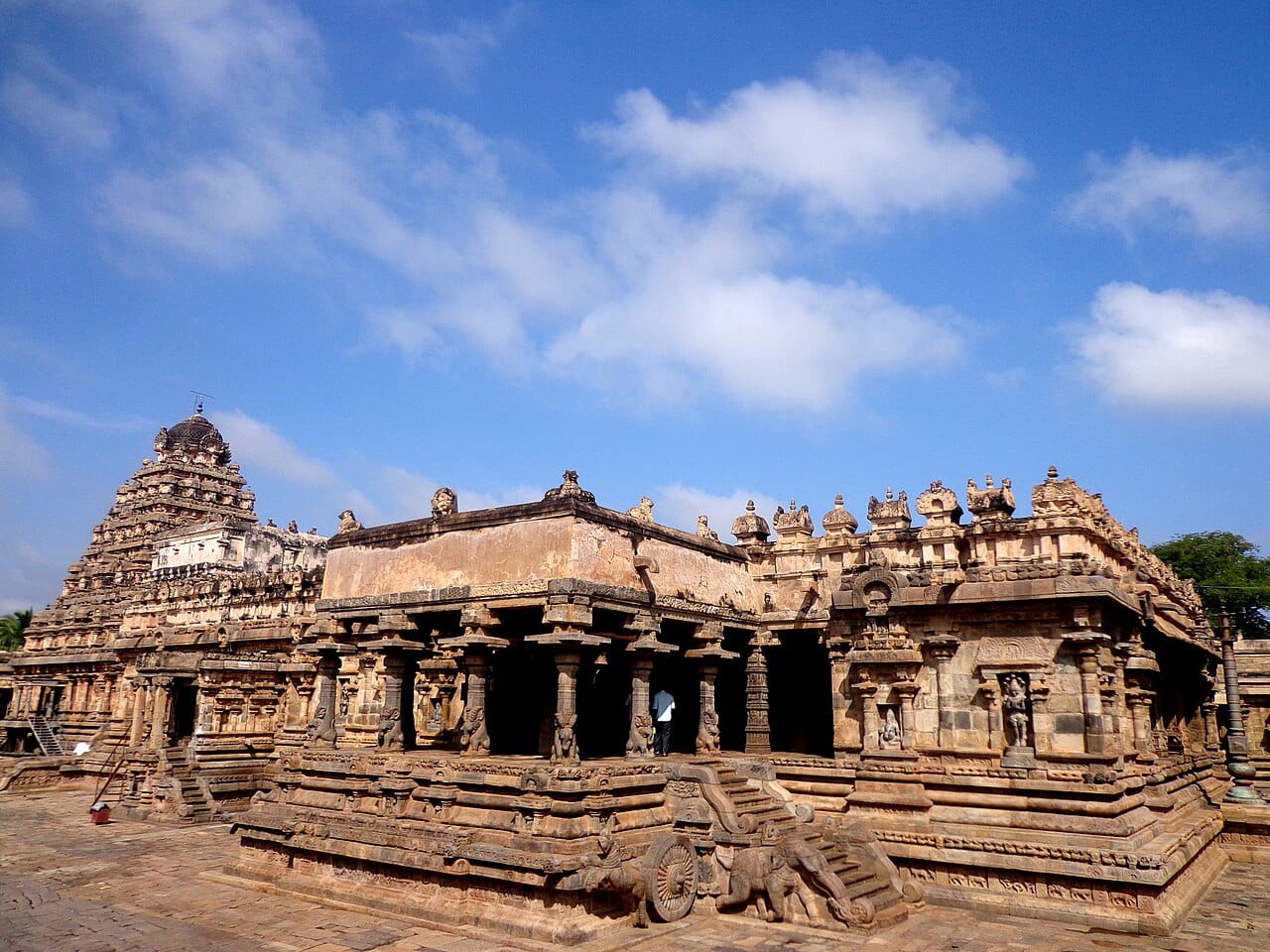
The Airavatesvara Temple at Darasuram, built by Rajaraja Chola II between 1146 and 1172 CE, is one of the three UNESCO World Heritage 'Great Living Chola Temples.' It is renowned for its stone chariot, musical steps, and exquisite 12th-century Chola sculptures.

The Gangaikonda Cholapuram Temple, built by Rajendra Chola I in 1035 CE, is a UNESCO World Heritage 'Great Living Chola Temple.' Its 53-metre vimana with recessed corners and six pairs of monolithic dvarapalas represents a refined evolution of Chola Dravidian architecture.
Kampaheswarar Temple in Tribhuvanam, built by Kulothunga Chola III in 1202 CE, is one of the later great Chola temples and completes the quartet of magnificent Chola stone temples alongside the Brihadeeswarar at Thanjavur, Gangaikonda Cholapuram, and Airavatesvara at Darasuram. The temple represents the mature phase of Chola architecture, featuring a 30-metre granite vimana, a separate Devi shrine, and a unique chariot-wheel carving in the mandapa. It is maintained by the Archaeological Survey of India as a protected monument of national importance.

Koranganatha Temple, built during the reign of the Chola king Parantaka I (907-955 CE) at Srinivasanallur near Tiruchirappalli, is a well-preserved example of early Chola architecture with exquisite stone carvings. The temple is maintained by the Archaeological Survey of India and is notable for its peaceful setting on the banks of the Kaveri River.

The Pancha Rathas (Five Chariots) are a set of five monolithic temple structures carved from single granite outcrops during the reign of Narasimhavarman I (Mamalla, 630-668 CE) in Mahabalipuram. Part of the UNESCO World Heritage Site 'Group of Monuments at Mahabalipuram,' these rathas represent the earliest and most ambitious examples of monolithic rock-cut architecture in Tamil Nadu.

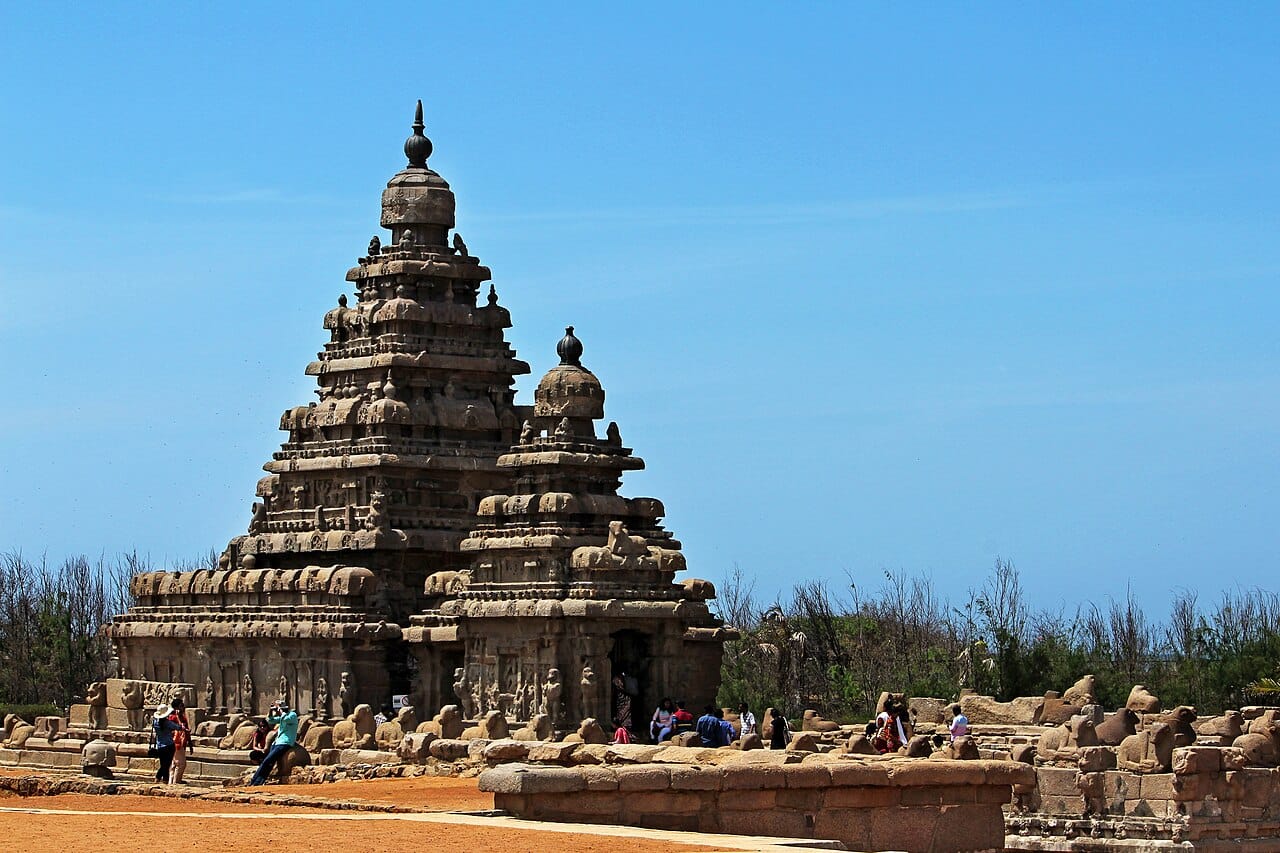
Olakkaneswara Temple, located on a rocky outcrop at the southern end of Mahabalipuram beach, was built by the Pallavas in the 7th century. The temple later served as a lighthouse for ships navigating the Bay of Bengal, with a beacon light placed on its tower in the late 19th century. The site offers panoramic views of the Mahabalipuram coastline.

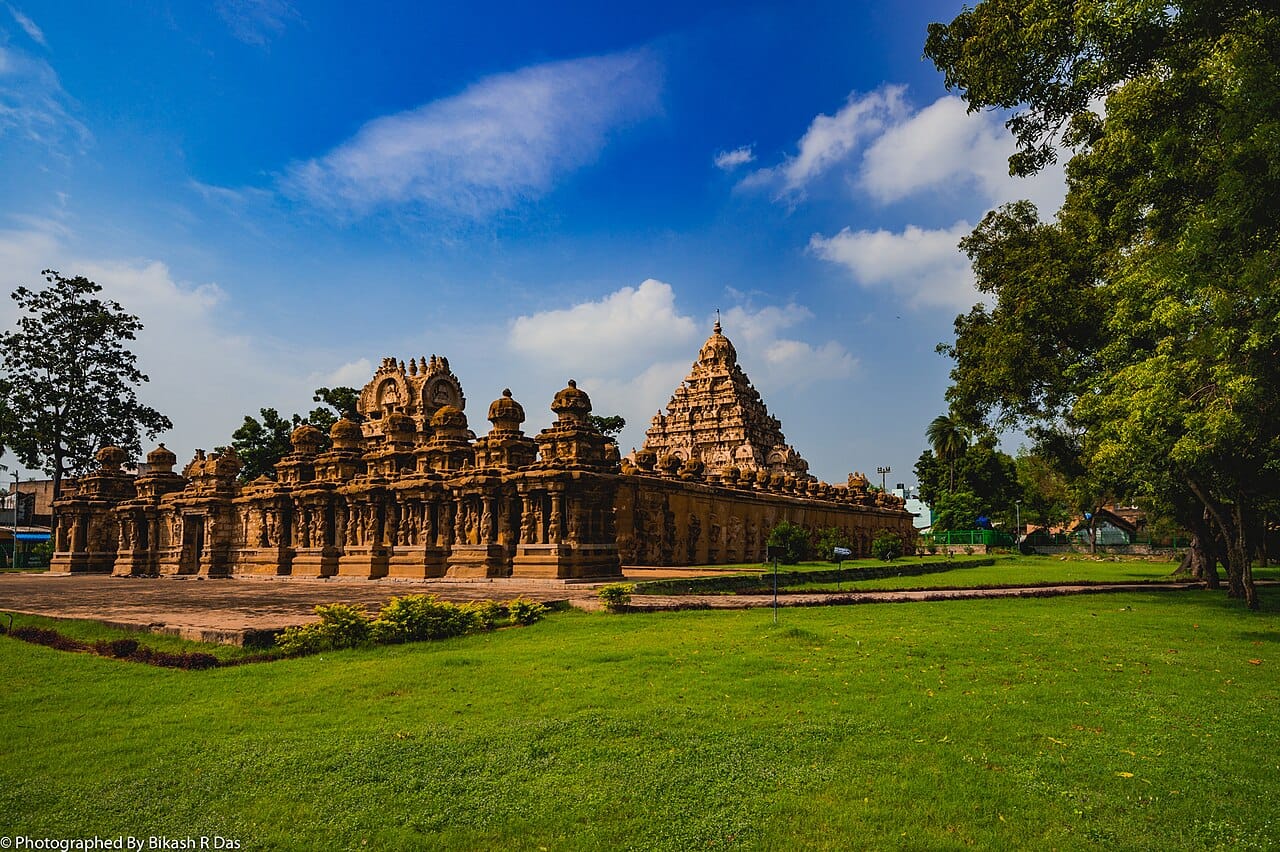
Built by the Pallava king Nandivarman II in the 8th century (circa 770 CE), the Vaikuntha Perumal Temple in Kanchipuram is a key monument of Pallava architecture featuring three tiers of sanctums one above the other, a unique architectural design representing the three aspects of Vishnu — seated (bhoga), standing (sthita), and reclining (sayana).

Arunachaleswarar Temple at the foot of Arunachala Hill in Tiruvannamalai is one of the largest Shiva temples in the world, covering 25 acres. It represents the fire element (Agni) of the Pancha Bhoota Sthalas and is a Paadal Petra Sthalam glorified by the 7th-century Tevaram hymns.

Ekambareswarar Temple in Kanchipuram represents the earth element (Prithvi) of the Pancha Bhoota Sthalas. Its sand-made Prithvi Lingam, 192-foot Raja Gopuram built by Krishnadevaraya (1509), and the 3,500-year-old sacred mango tree make it among the most significant Shiva temples in South India.

Jambukeswarar Temple in Thiruvanaikaval represents the water element (Apas) of the Pancha Bhoota Sthalas. Its unique underwater Appu Lingam sits in a spring-fed subterranean sanctum, with an underground stream that has flowed continuously for over 1,800 years.

Chidambaram Nataraja Temple represents the space element (Akasha) of the Pancha Bhoota Sthalas. It houses the Chidambara Rahasyam — an empty curtained space symbolising formless Shiva — and is the source of the iconic Nataraja cosmic dance imagery that became the universal symbol of Hinduism.

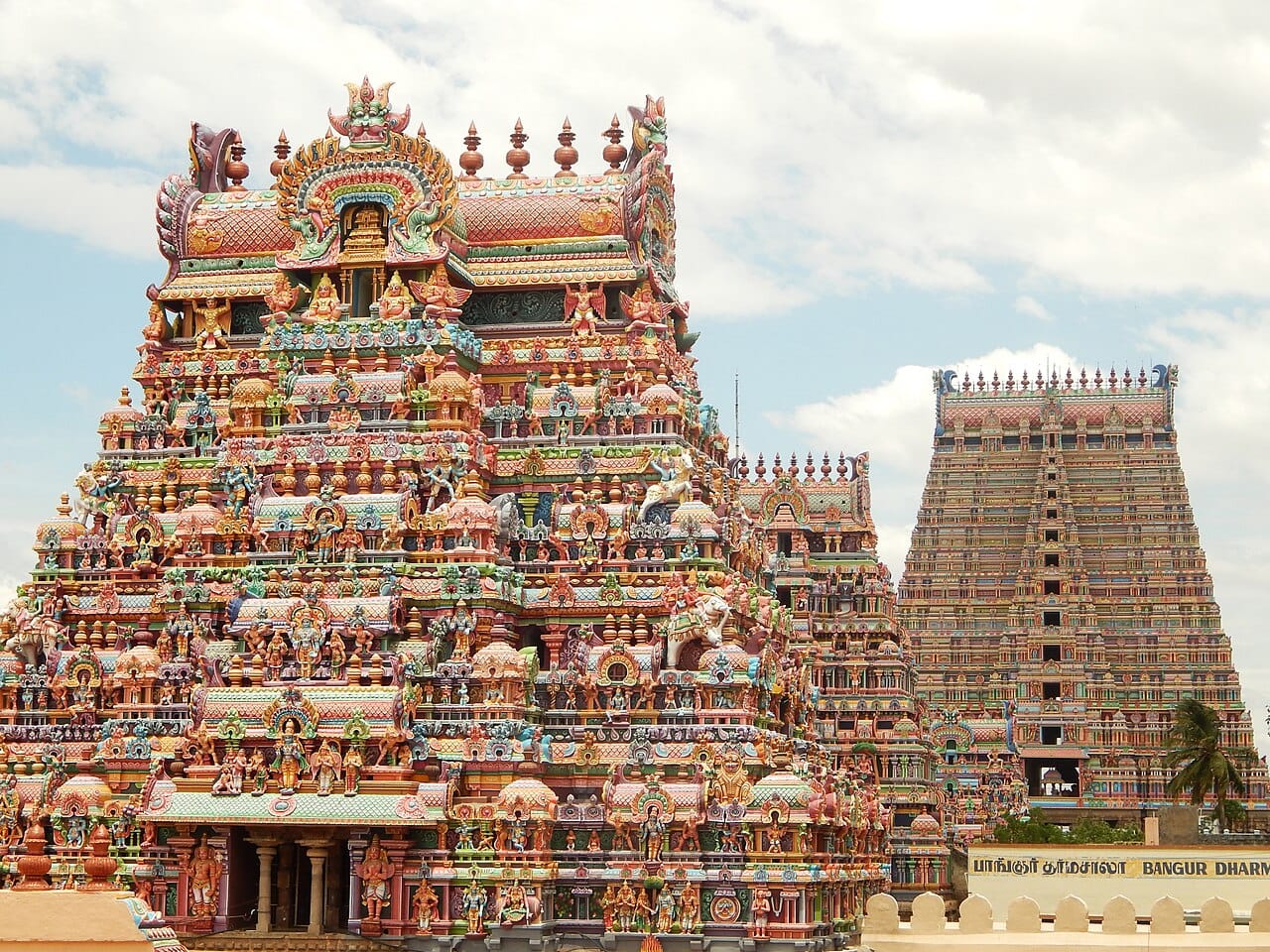
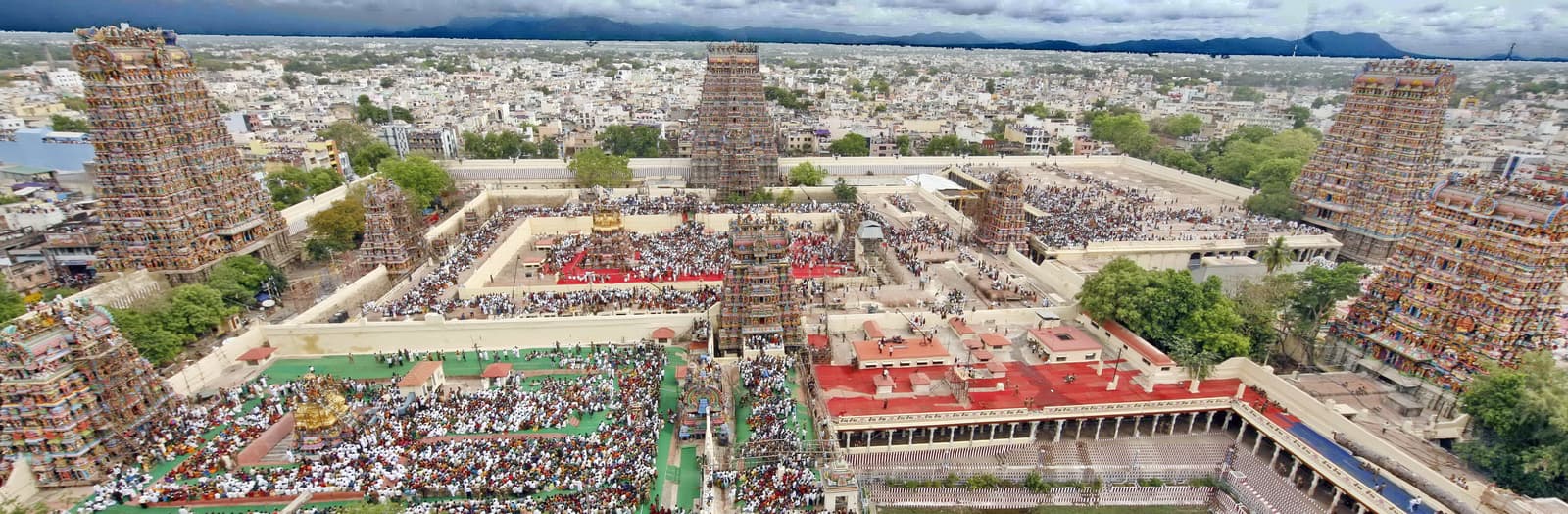
The largest functioning Hindu temple in the world, a temple-city spanning 156 acres with seven concentric walls, 21 gopurams, and the foremost of the 108 Divya Desams.

The oldest structure in Kanchipuram, built in the 8th century; it served as the inspiration for the Tanjavur Brihadeeswarar.

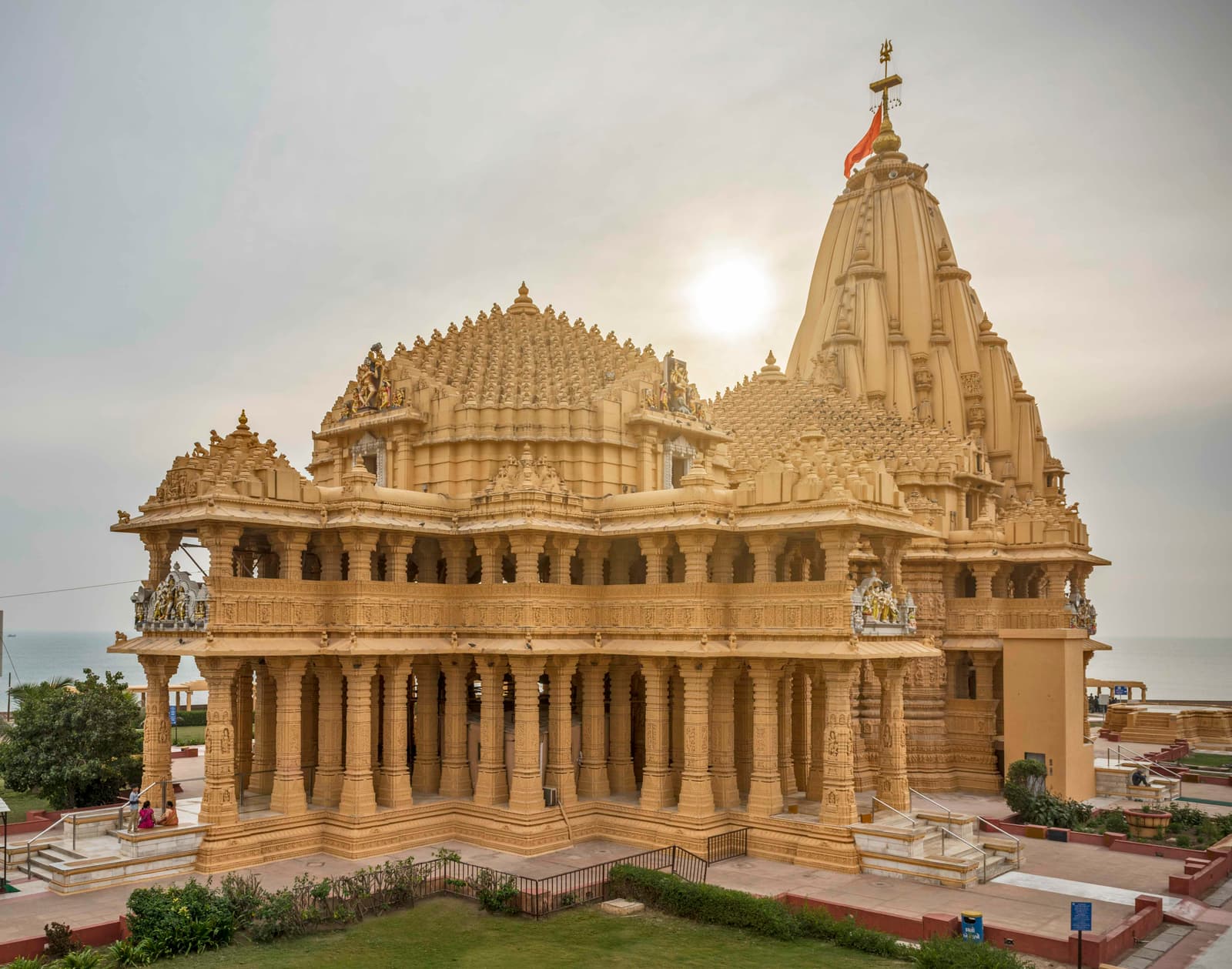
Somnath Temple, the first of the twelve Jyotirlingas, is an ancient Shiva temple in Gujarat known for its resilience through repeated destruction and reconstruction over a millennium.

A grand complex featuring a 108-foot Shiva statue and replicas of the 12 Jyotirlingas and the four Char Dham sites.

Located on the banks of the Rangeet River, this ancient temple is associated with the Kirat incarnation of Lord Shiva.

A highly revered Hanuman temple situated at 7,200 feet, maintained by the Indian Army and offering stunning views of Kanchenjunga.

A small but popular hilltop temple dedicated to Lord Ganesh, famous for its panoramic bird's-eye view of Gangtok city.

The Ramanathaswamy Temple in Rameswaram is one of the 12 Jyotirlingas and a Char Dham site, famous for its magnificent thousand-pillared corridors, the longest temple corridor in the world, and its sacred association with Lord Rama's worship of Shiva.

Mehandipur Balaji Temple in Rajasthan is a unique temple in India, known worldwide for its exorcism rituals and the unwavering belief that the deity of Hanuman drives away evil spirits from possessed devotees.

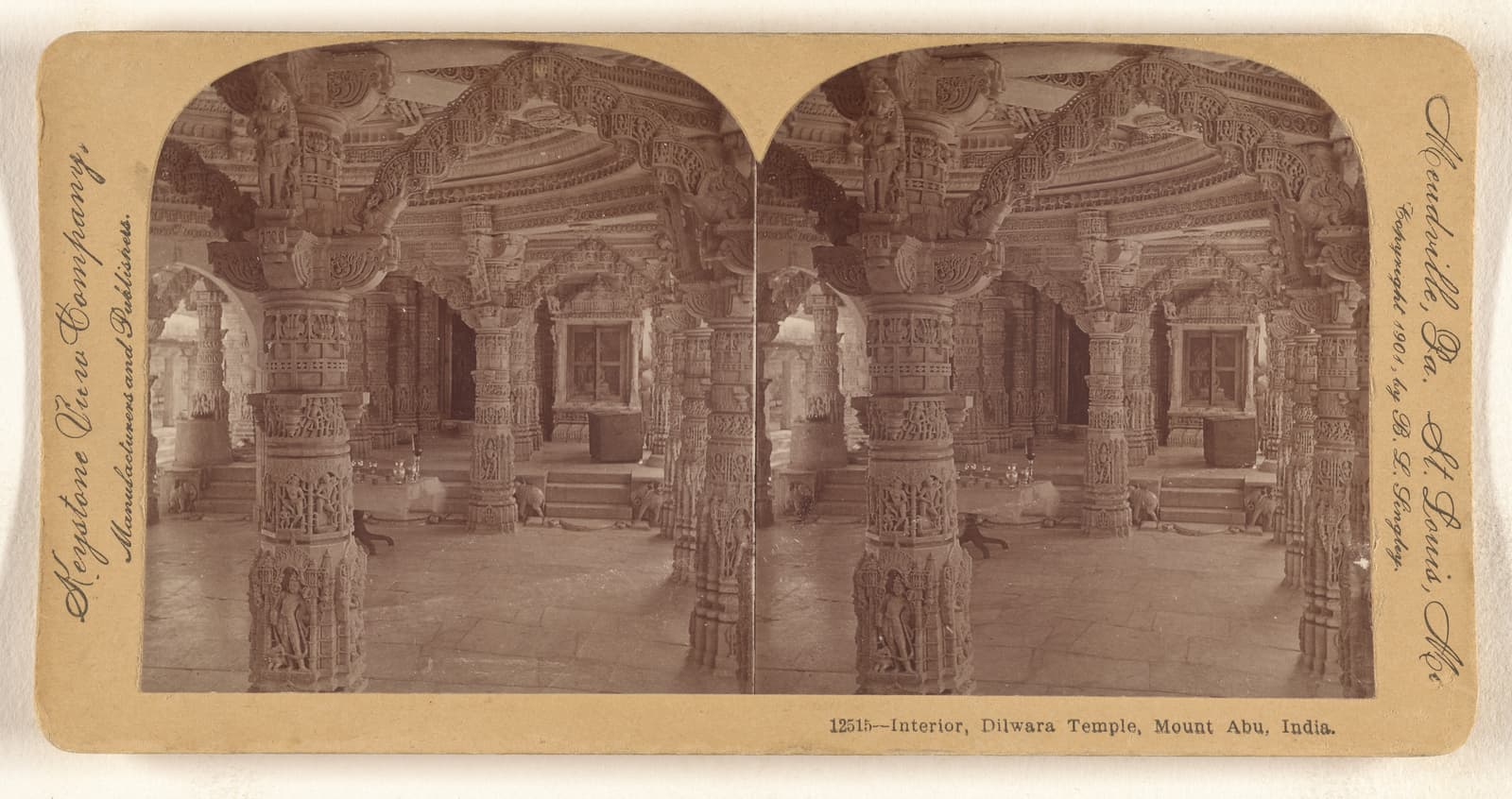
Exquisite marble temples known for their incredible craftsmanship and intricate stone carvings, considered the finest examples of Jain architecture.

One of the very few temples in the world dedicated to Lord Brahma, the creator god, located by the sacred Pushkar Lake.

A unique temple famous for its thousands of sacred rats (kabbas) that are worshipped and protected by devotees as reincarnations of Karni Mata's clan.

A magnificent 108-temple complex dedicated to the patron deity of the Mewar Maharanas, featuring a four-faced black marble Shiva idol.

A major Vaishnavite shrine housing a 12th-century idol of Krishna, central to the Pushtimarg tradition.

One of North India's most powerful wish-fulfilling temples, where Lord Krishna is worshipped as Barbarik, attracting millions of devotees annually with its famous 'Shyam Baba' darshan.

One of North India's most powerful Hanuman temples and a major Shakti Sthal pilgrimage center, famous for wish-fulfillment and the sacred 'dora' (sacred thread) tradition.

Also known as Sri Harmandir Sahib, the holiest Gurdwara and the most significant spiritual site of Sikhism, embodying the principles of universal brotherhood and equality.

Situated on a sacred island in the Narmada River, Omkareshwar is the only Jyotirlinga located on an island. The temple stands at the confluence of the Narmada and Kaveri rivers, with the lingam positioned where the river forms the shape of the sacred symbol Om.

The Tara Tarini Temple on Kumari Hills overlooking the Rushikulya River in Ganjam district, Odisha, is the Sthana Peetha — one of the four major ancient Shakti Peethas of India. Dedicated to the twin goddesses Tara and Tarini, the temple marks the site where the breasts of Goddess Sati are believed to have fallen. The hilltop shrine offers panoramic views of the river valley and the Bay of Bengal in the distance.

The Bimala Temple, located within the Jagannath Temple complex in Puri, Odisha, is one of the 51 Shakti Peethas where the feet of Goddess Sati are believed to have fallen. It is the only Shakti Peetha situated inside a Vaishnava temple complex. The temple's unique ritual position gives Goddess Bimala supremacy over the Jagannath Temple's food offerings — no Mahaprasad is considered consecrated until it has been first offered to her.

Known as the 'Gem of Odisha Architecture' for its exquisite carvings and its famous stone archway (Torana).
The coastal jyotirlinga hidden in the marshlands of Saurashtra. Shiva as Nageshwar — the Lord of Snakes. The legend of Daruka and a 25-meter outdoor Shiva statue visible from the Arabian Sea.

One of the oldest and most respected Kali temples in Nagaland, known for its significant religious role during Navratri.

A popular local shrine dedicated to Lord Shiva, serving as a peaceful sanctuary for residents and travelers in Dimapur.
A spiritual hub in Dimapur offering regular kirtans, discourses, and vegetarian prasadam to followers and visitors.

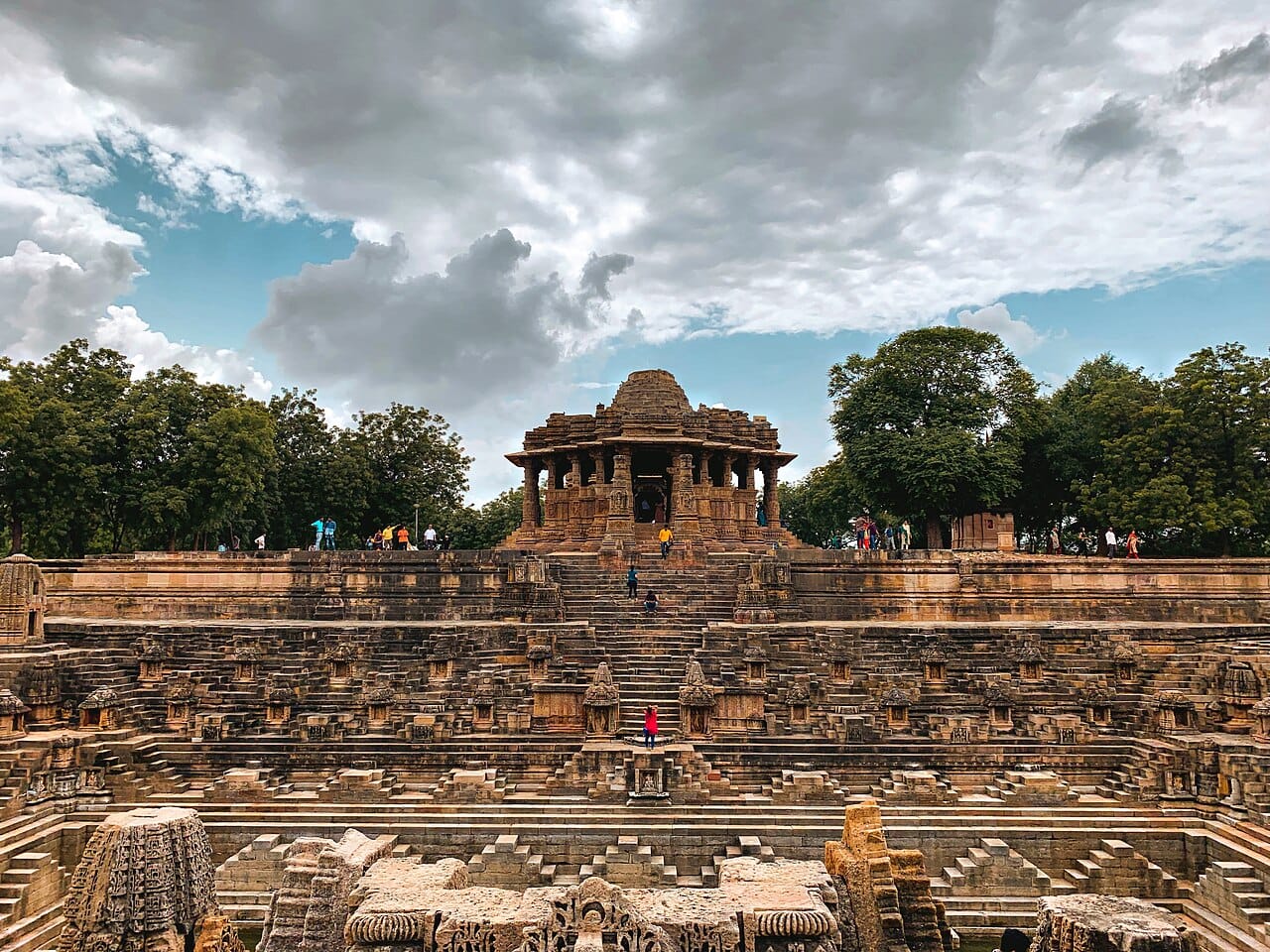
A masterpiece of Solanki architecture built in 1026-27 CE by King Bhima I, dedicated to Surya with precise equinox solar alignment.

A beautiful white-marbled temple in Aizawl dedicated to Goddess Lakshmi and Lord Narayan, known for its tranquil atmosphere.

A vibrant center for the Hare Krishna movement in Mizoram, promoting spiritual education and community service.

One of the 51 Shakti Peethas set in the scenic Jaintia Hills, representing a fascinating blend of Vedic and indigenous tribal traditions.

Famous for its massive natural stalagmite that resembles a Shiva Lingam, constantly bathed by water dripping from the cave roof.
A serene temple in the heart of Shillong, serving as a spiritual center for the local community with traditional rituals.

The Meenakshi Temple in Madurai is a masterpiece of Dravidian architecture with 14 towering gopurams, the legendary Hall of Thousand Pillars, and the living tradition of worship of Goddess Meenakshi and Lord Sundareswarar.

The spiritual heart of Manipur, this majestic twin-domed royal temple is the epicenter of Vaishnavism and classical Manipuri culture.

An 18th-century temple dedicated to Lord Hanuman, nestled in a sacred monkey grove along the Imphal River.

A 15th-century historical landmark built by King Kyamba, featuring a unique blend of Manipuri and Bengali brick architecture.

One of the twelve Jyotirlingas and the southernmost among them, Mallikarjuna Temple at Srisailam is uniquely also a Shakti Peetha where the goddess Bhramaramba is worshipped alongside Shiva. Located on a hilltop above the Krishna River, it is the only temple in India that houses both a Jyotirlinga and a Shakti Peetha.

Mahalakshmi Temple in Kolhapur, also known as Ambabai Temple, is one of the 18 Maha Shakti Peethas and one of six Shakti sites in India. The temple is famous for the Kirnotsav solar event where sunlight falls directly on the deity's face twice a year, and for its 3-foot gemstone idol of Goddess Mahalakshmi weighing 40 kilograms.

Mumbai's most famous temple and among the richest in India, dedicated to the wish-fulfilling form of Lord Ganesha, drawing over 100,000 devotees daily.

The holiest Sai Baba shrine where the saint lived and taught, with his Samadhi (tomb) drawing 25,000+ daily pilgrims from across religions.

One of the twelve Jyotirlingas, Mahakaleshwar in Ujjain is the only Shiva temple where the lingam faces south (Dakshinamurti). Famous for the pre-dawn Bhasma Aarti, it has been a living shrine for over a millennium, drawing millions of Shaivite pilgrims to the ancient city of Ujjain on the Shipra River.

Mahakali Temple in Ujjain is one of the 51 Shakti Peethas, where the upper lip (oshtha) of Goddess Sati is believed to have fallen. It is one of the three Shakti Peethas in the Ujjain region (alongside Mahakaleshwar and Chintaman Ganesh). The temple is part of the sacred geography of Ujjain, one of the seven Mokshapuris (liberation cities) of Hinduism.

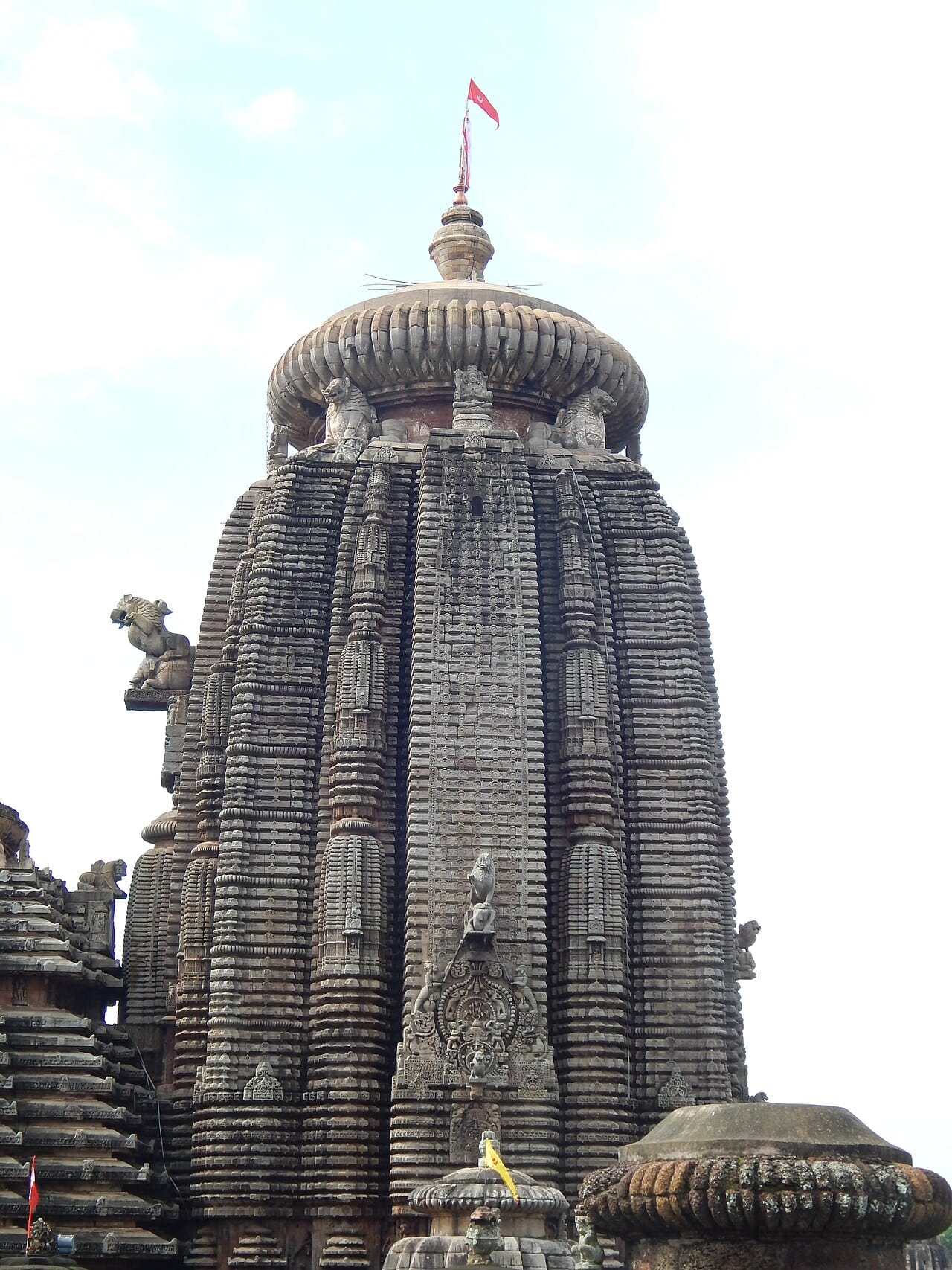
The Lingaraja Temple in Bhubaneswar, Odisha, is the largest and most magnificent temple of the Kalinga architectural tradition, dedicated to Lord Shiva as Tribhuvaneshwara.

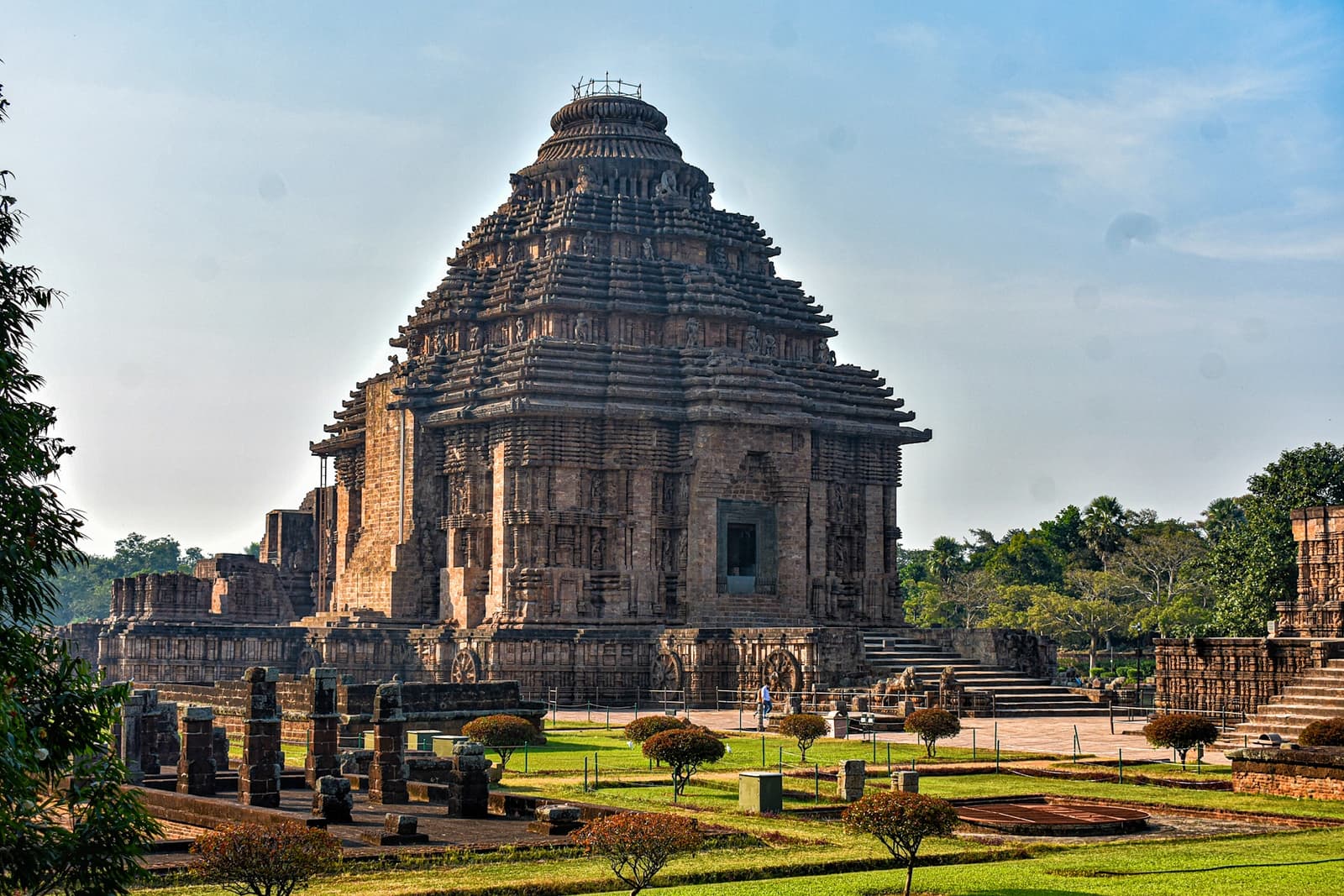
A 13th-century colossal stone chariot of the Sun God Surya, the Konark Sun Temple is a UNESCO World Heritage Site and the most architecturally ambitious solar temple in India, with 24 massive stone wheels and intricate carvings depicting life, dance, and divinity.

The wealthiest religious institution in the world, this ancient temple houses a massive 18-foot reclining Vishnu visible through three doors and a 7-tier gopuram with equinox sun alignment.

Known as 'Bhuloka Vaikuntha', this is a sacred Krishna temple in India, famous for its strict rituals and elephant sanctuary.

A UNESCO award-winning ancient Shiva temple, famous for its massive gopurams and the 1000-year-old ghee offerings that never melt.

Known as the 'Sabarimala of Women', it holds the Guinness World Record for the largest gathering of women for religious activity.

One of the world's largest annual pilgrimages (50+ million participants), dedicated to Lord Ayyappa, accessible only after a rigorous 41-day vratham (penance) involving celibacy, vegetarianism, and wearing black attire.

Kedarnath Temple — one of 12 Jyotirlingas, part of Char Dham and Panch Kedar. Verified visitor guide for pilgrims and international travellers at 3,583 m.

Kashi Vishwanath Temple in Varanasi, one of the twelve Jyotirlingas and the most sacred Shiva temple in Hinduism, stands on the western bank of the holy Ganga.

Perched atop Chamundi Hills at 3,489 feet, the Chamundeshwari Temple is the tutelary shrine of the Wodeyar dynasty of Mysore. The goddess Chamundeshwari, an eight-armed form of Durga who defeated the demon Mahishasura, is the state deity (Naada Devi) of Karnataka. The temple is accessed by 1,000 stone steps built in 1664.

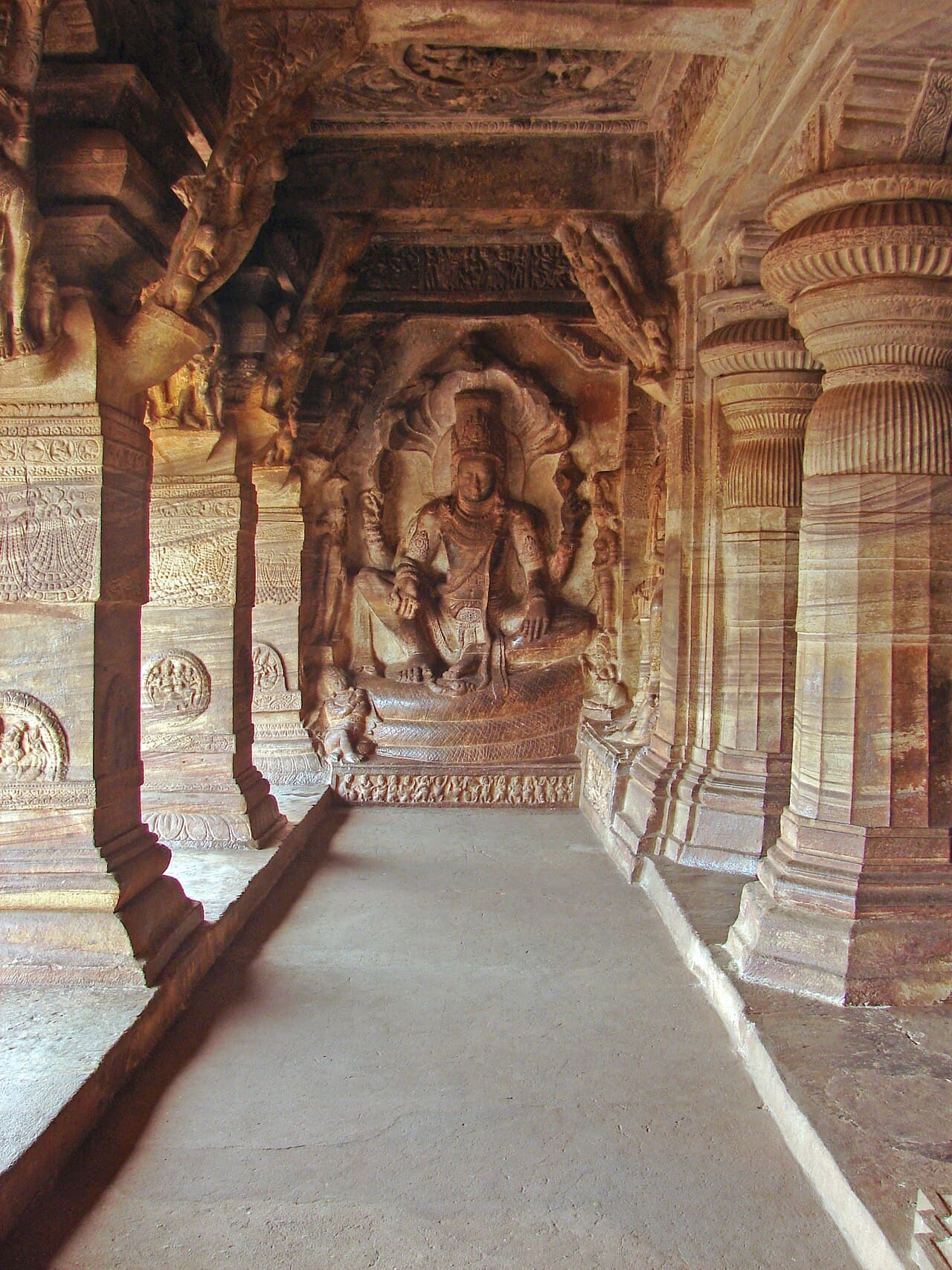
The Badami Cave Temples are a complex of four rock-cut cave temples carved into the soft sandstone cliffs of Badami, the capital of the Early Chalukya dynasty. Dating from the 6th-7th century CE, these caves represent the earliest known examples of South Indian temple architecture in rock-cut form and are considered the birthplace of Chalukya art. The site is on UNESCO's tentative list of World Heritage Sites.

The Durga Temple at Aihole, built in the 7th-8th century CE, is a distinctive architectural experiment of the Early Chalukya period. Featuring a unique apsidal (horseshoe-shaped) plan modelled after a Buddhist chaitya hall, a raised gallery with carved stone pillars, and a massive Dravidian-style shikhara, it represents the creative fusion of architectural traditions that Characterises Aihole as the 'cradle of Indian temple architecture.'

The Lad Khan Temple at Aihole is one of the oldest surviving stone temples in India, dating to the 5th century CE. Built by the Early Chalukya dynasty, the temple is a key monument in the evolution of Hindu temple architecture, representing an early experimental phase when temple builders were adapting earlier wooden and brick construction methods into permanent stone forms. The temple features a flat-roofed mandapa with 16 carved stone pillars and a small ground-level sanctum.

The Meguti Temple atop the Aihole hill is a Jain temple built in 634 CE by Ravikirti, the court poet of the Chalukya emperor Pulakeshin II. The temple is historically paramount for its inscription — the Aihole Prashasti — which provides the earliest known securely dated reference in Chalukya history and records the military campaigns of Pulakeshin II, including his victory over the Pallava king Mahendravarman I.

The Hoysaleswara Temple in Halebidu, built circa 1121-1160 CE, is the largest Shiva temple built by the Hoysalas. Inscribed as a UNESCO World Heritage Site in 2023 as part of the Sacred Ensembles of the Hoysalas, it is celebrated for its hyper-realistic soapstone sculptures covering every surface of the structure.

The Kedareshwara Temple at Halebidu, built in 1319 CE by the Hoysala king Veera Ballala III, is a Hoysala-era temple dedicated to Lord Shiva. It features the characteristic Hoysala star-shaped platform (jagati), intricately carved soapstone pillars, and elaborate sculptural friezes. The temple is a protected monument under the Archaeological Survey of India.

The Keshava Temple at Somanathapura, built in 1268 CE by Somanatha Dandanayaka, a general of the Hoysala king Narasimha III, is one of the finest surviving examples of Hoysala architecture. Inscribed as a UNESCO World Heritage Site in 2023 as part of the 'Sacred Ensembles of the Hoysalas,' the temple is renowned for its perfectly preserved star-shaped platform, three identical shrines (trikuta), and the most complete sculptural programme of any Hoysala temple.
The Lakshminarasimha Temple at Nuggehalli, built in 1246 CE by the Hoysala king Vira Someshwara, is a well-preserved example of Hoysala architecture dedicated to Lord Narasimha (the half-man half-lion avatar of Vishnu) with his consort Lakshmi. The temple features the characteristic Hoysala star-shaped platform, intricate soapstone carvings, and a sculptural programme depicting Vaishnava themes.

The Hazara Rama Temple (meaning 'Thousand Ramas') in Hampi served as the royal chapel of the Vijayanagara kings. Its basalt slab walls are covered with intricate bas-relief panels depicting the complete story of the Ramayana in sequential narrative friezes. As a core monument within the UNESCO World Heritage Site 'Group of Monuments at Hampi,' the temple is one of the best-preserved examples of Vijayanagara courtly architecture.

The Krishna Temple in Hampi was built in 1515 CE by the Vijayanagara emperor Krishnadevaraya to commemorate his successful military campaign against the Gajapati kingdom of Odisha. One of the largest temples in Hampi's sacred centre, it originally housed a magnificent image of Balakrishna (infant Krishna) brought from Odisha as a war trophy.

The Achyutaraya Temple, built in 1534 CE during the reign of the Vijayanagara emperor Achyutaraya (1530-1542 CE), is one of the largest and most impressive temple complexes in Hampi's sacred centre. Located at the foot of Matanga Hill between the Krishna Temple and the Vitthala Temple, the temple represents the mature phase of Vijayanagara temple architecture.
The Vittala Temple is the crowning architectural achievement of the Vijayanagara Empire. Located in Hampi's sacred centre, the temple is renowned for its iconic stone chariot carved from a single granite block and its musical pillars that produce different notes when struck. As a UNESCO World Heritage Site within the 'Group of Monuments at Hampi,' the Vittala Temple represents the pinnacle of Vijayanagara temple architecture.

Home to the world's second-tallest Shiva statue (123 feet) and a massive 20-story Raja Gopuram overlooking the Arabian Sea.

A world-famous 13th-century temple where the deity is worshipped through a silver-plated window with nine holes, known as Kanakana Kindi.

A world-renowned temple where Lord Subramanya is worshipped as the lord of all serpents, famous for Sarpa Dosha Nivaran rituals.

One of the most revered Shakti Peethas in India, Kamakhya Temple on Nilachal Hill in Guwahati is the center of Tantric worship in the Northeast. The temple uniquely houses no idol — instead, the goddess is worshipped as a yoni (vulva) in a natural rock fissure, representing the creative feminine principle.

The spiritual 'Criminal Court' of Lord Shiva, where the final verdict of a pilgrim's journey is believed to be delivered after visiting Baidyanath Dham.

A prominent 17th-century hilltop temple in Ranchi, echoing the spiritual grandeur and Rath Yatra traditions of Puri.

A highly revered Shiva temple situated atop Ranchi Hill, unique for its tradition of hoisting the National Flag alongside religious flags.

Perched on a hilltop at 1,000 feet, this ancient Shiva temple offers panoramic views of the Dal Lake and Srinagar city.

One of the largest temple complexes in North India, featuring seven gold-plated shikharas and thousands of Saligramas.

A magnificent 8th-century ruin of a solar temple, representing the peak of Kashmiri Hindu architecture.

The most important shrine for Kashmiri Pandits, famous for a sacred spring that is said to change color as a divine omen.

One of the holiest shrines at 3,888m altitude, famous for its naturally occurring ice stalagmite Shiva Lingam.

Stunning 9th-century ruins built by King Avantivarman, noted for Greek-influenced architecture and intricate stone carvings.

Built in 1883, it is North India's largest Shiva temple, housing a massive 8-foot central Lingam and twelve crystal lingams.

Believed to be over 2,800 years old, it houses a sacred broken iron trident that legend says belonged to Lord Shiva.

A cave temple on the Tawi banks where legend says Jamvant meditated; it is one of the oldest and most atmospheric in Jammu.

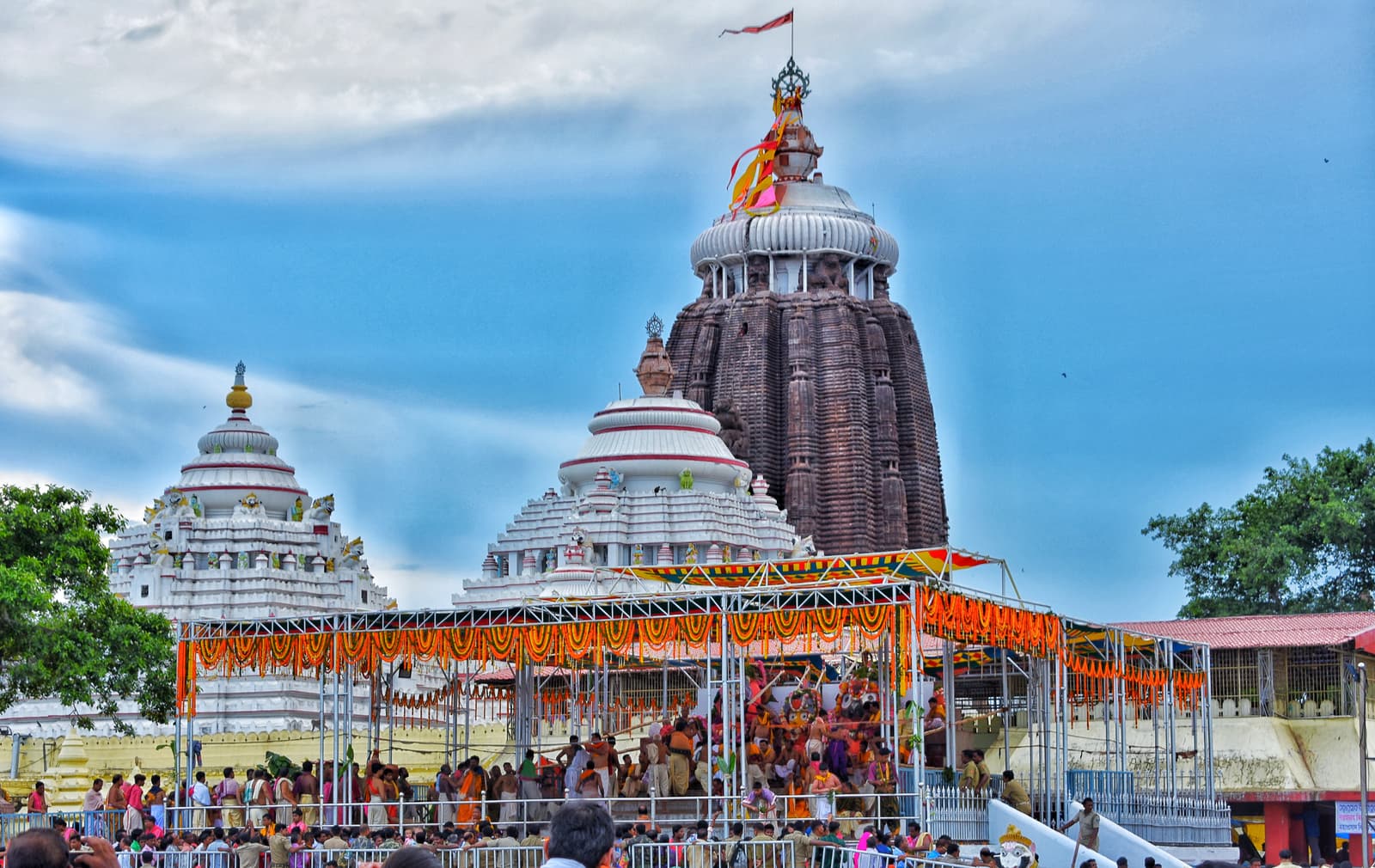
Jagannath Temple in Puri, Odisha, is one of the four Char Dham sites, famous for the annual Rath Yatra (Chariot Festival) and its unique deities made of neem wood.

A highly venerated Shakti Peetha where the Goddess manifests as nine eternal natural flames, famous for the legend of Emperor Akbar's failed attempt to extinguish them.

A major Shakti Peetha dedicated to Maa Chhinnamastika, the 'Headless Goddess', believed to remove all worries and fulfill the sincere prayers of devotees.

A highly revered Shakti Peetha situated on a triangular hilltop where the eyes of Sati are believed to have fallen, offering panoramic views of the Shivalik range and Gobind Sagar Lake.

One of the 51 Shakti Peethas, this ancient temple is famous for its legendary wealth and the unique 'Makhan ka Lep' ritual on Makar Sankranti.

A premier Shakti Peetha where the head of Sati is believed to have fallen, famous for its 19th-century wall paintings and the twin Navratri melas.

An ancient and highly revered shrine dedicated to Lord Shiva, intimately connected to the Mahabharata epic and the mighty Pushyabhuti dynasty of Emperor Harshavardhana.

Often hailed as the 'Khajuraho of North India', this 8th-to-11th-century architectural marvel features magnificent Gurjara-Pratihara ruins and an open-air museum.

A magnificent ancient water tank in Kurukshetra, deeply tied to the Mahabharata and the creation of the universe by Lord Brahma.

The Ambaji Temple on the Arasur Hills in Banaskantha district, Gujarat, is one of the 51 Shakti Peethas where the heart of Goddess Sati is believed to have fallen. It is among the four major Shakti Peethas of India and is unique among major Hindu temples for having no conventional idol — instead, it houses a sacred Vishayantra (a silver-plated yantra inscribed with the image of the goddess). The temple's 103-foot shikhara is topped with a gold-plated kalasha weighing over three tons.

The 12th and final Jyotirlinga, located just 1 km from the Ellora Caves. Also known as Kusumeshwar — the Lord of Flowers — built from distinctive red volcanic rock and rebuilt by Ahilyabai Holkar.

One of Goa's most prominent and wealthiest Hindu shrines, famous for its unique Indo-Portuguese architecture and the tallest Deepastambha in the state.

A premier Shakti shrine in Goa, dedicated to the peaceful manifestation of Durga who mediated between Shiva and Vishnu, featuring unique Indo-Portuguese architecture.

A unique and ancient shrine dedicated to the Mohini avatar of Lord Vishnu, famous for its 21-story brass Deepastambha and its history of survival during the Portuguese Inquisition.

One of the few Goan temples that remained in its original 15th-century location throughout the colonial era, famous for its 1413 AD stone inscription and exquisite wood carvings.

The westernmost of the four Char Dham pilgrimage sites, Dwarkadhish Temple marks the legendary kingdom of Lord Krishna in the ancient city of Dwarka. Built on the banks of the Gomti River where it meets the Arabian Sea, the temple is a five-story marvel of Solanki architecture revered by Vaishnavites worldwide.

Commonly known as the 'Khajuraho of Chhattisgarh,' this 11th-century architectural masterpiece is famous for its exquisite erotic and mythological sculptures.

A major Shakti Peetha located in the tribal heartland of Bastar, where the tooth of Sati is believed to have fallen.

A magnificent 7th-century Vishnu temple situated at the holy confluence of three rivers, known as the 'Prayag of Chhattisgarh' and famous for its Nala dynasty architecture.

An 11th-century Shakti Peetha where the right shoulder of Sati is believed to have fallen; unique for its dual idols representing both Mahalakshmi and Mahasaraswati.

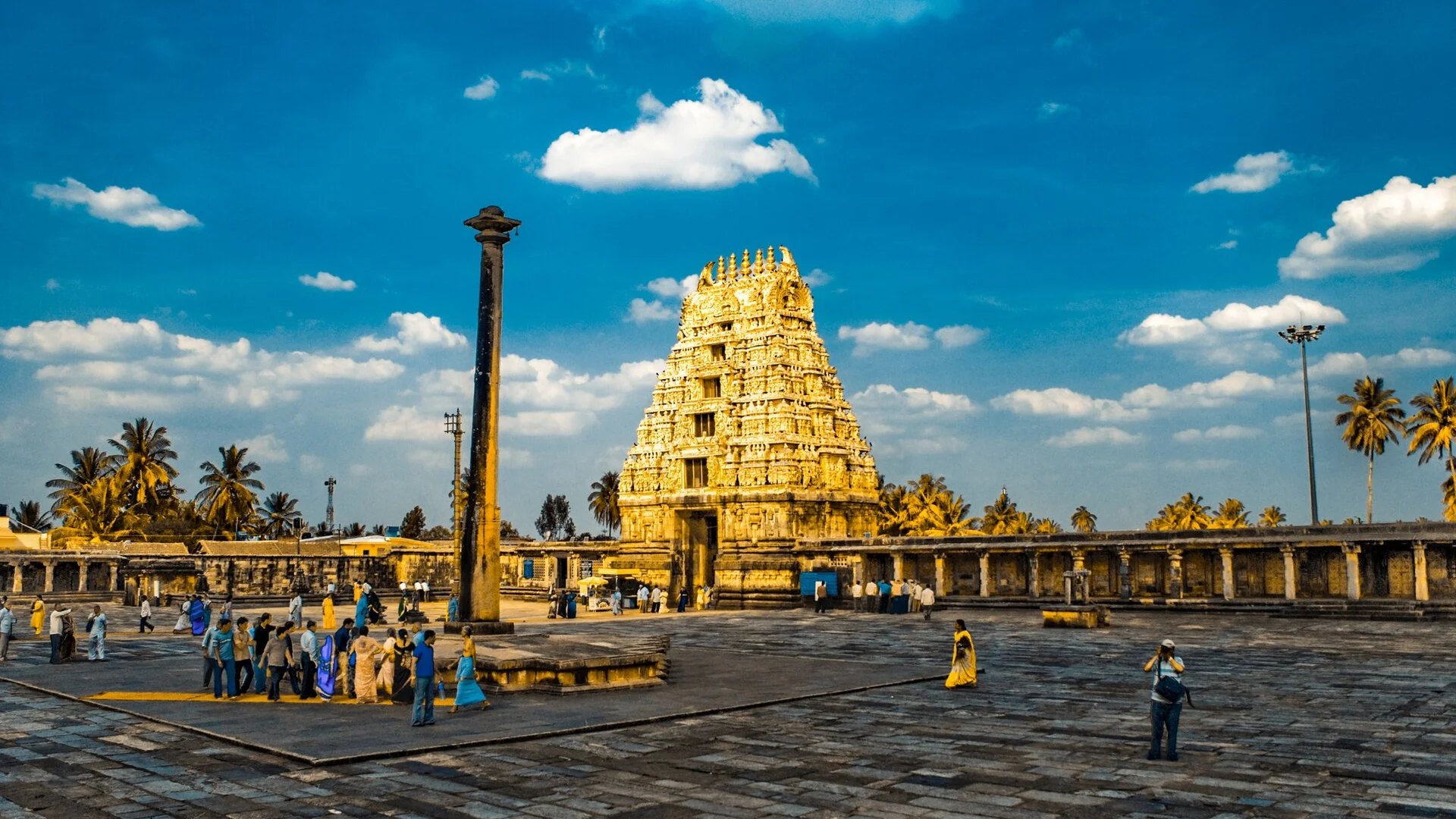
The Chennakesava Temple in Belur, Karnataka, is the finest example of Hoysala architecture, dedicated to Lord Vishnu as Chennakesava, built in the 12th century.

The Brihadeeswarar Temple in Thanjavur, built by Raja Raja Chola I in the 11th century, is a UNESCO World Heritage Site and the tallest Shiva temple in India, crowned by a monolithic granite vimana that remains one of the greatest engineering achievements of the ancient world.

The oldest surviving rock-cut chambers in India, excavated by Emperor Ashoka in the 3rd century BCE. The seven caves feature a mirror-like polish on granite walls that has never been replicated.

Officially recognized as the oldest functional temple in India (108 AD), this architectural marvel on Pawra Hill features a unique octagonal plan and rare non-sacrificial 'Bali' rituals.

Famous for the 40cm footprint of Lord Vishnu imprinted on solid rock, a major center for Pinda Daan rituals.

One of the 51 Shakti Peethas and the oldest surviving temple in Patna, believed to be where the right thigh of Goddess Sati fell.

An ancient temple in Bihar dedicated to Ahilya, wife of Sage Gautama, believed to be the site where she was liberated from a curse by Lord Rama.

The source of the Bhima River deep in the Sahyadri hills. A Jyotirlinga surrounded by a wildlife sanctuary, with the legend of Tripurasura.

Where Shiva is worshipped not as destroyer but as physician. Baidyanath — the Lord of Healing — draws millions who carry Ganga water 108 km barefoot in the Kaanwar Yatra. The heart of Sati rests beside the lingam that Ravana once carried.

Badrinath Temple, dedicated to Lord Vishnu, is a principal Char Dham site and one of the most sacred Vaishnava temples in India, located in the Garhwal Himalayas of Uttarakhand.

A 17th-century Shiva temple located on the Peacock Island in the middle of the Brahmaputra River, the smallest inhabited river island in the world.

An ancient center of astronomy and astrology, this temple on Chitrasal Hill houses nine Shiva Lingams representing the nine celestial bodies.

A unique 16th-century stone temple on Monikut Hill, sacred to both Hindus and Buddhists, known for its ancient carvings and sacred turtles.

A sacred Hindu pilgrimage site on the Lohit River, where Lord Parshurama is believed to have washed away his sins in the holy waters.

An ancient 14th-century archaeological site housing exquisite granite sculptures that bridge the cultures of the plains and the Himalayas.

A stunning golden masterpiece of Burmese architecture, serving as a beacon of Theravada Buddhism in the plains of Namsai.

The largest monastery in India and the second largest in the world, a stunning 17th-century fortress of Buddhist culture perched at 10,000 feet.

Simhachalam Temple, also known as Sri Varaha Lakshmi Narasimha Temple, is a historic Hindu temple dedicated to Lord Narasimha, the half-man half-lion avatar of Vishnu. Located on a hill about 300 metres above sea level on the outskirts of Visakhapatnam, it is a foremost Vaishnava pilgrimage site in Andhra Pradesh. The temple's distinguishing feature is that the main deity remains covered in sandalwood paste (chandanam) throughout the year and is revealed in its original form only once a year on Akshaya Tritiya.

Kanaka Durga Temple, situated on the Indrakeeladri Hill on the banks of the Krishna River in Vijayawada, is a popular Shakti temple in South India. The temple is believed to be a Shakti Peetha where the goddess is worshipped as Kanaka Durga (the bestower of gold and prosperity). The temple overlooks the Prakasam Barrage and the Krishna River, offering a panoramic view of Vijayawada city.

Veerabhadra Temple at Lepakshi is a 16th-century Vijayanagara masterpiece, renowned for its hanging pillar, monolithic Nandi, and exquisite ceiling murals. The temple is dedicated to Veerabhadra, a fierce form of Shiva.

Ahobilam, situated in the dense Nallamala forest of Kurnool district, is the sacred landscape where Lord Narasimha — the half-man, half-lion avatar of Vishnu — is believed to have manifested to slay the demon Hiranyakashipu and protect his devotee Prahlada. The site comprises nine Narasimha shrines (Nava Narasimha Kshetras) distributed across the forested hills, each representing a different aspect of the deity.

Amaralingeswara Temple, located in Amaravati on the southern bank of the Krishna River, is the foremost of the Pancharama Kshetras — the five ancient Shiva temples of coastal Andhra Pradesh. The temple shares its sacred landscape with the historic Amaravati Mahachaitya, a major Buddhist stupa from the Satavahana period.

Srikalahasti Temple, situated on the banks of the Swarnamukhi River at the foot of Srikalahasti hill in Tirupati district, is dedicated to Lord Shiva as Srikalahasteeswara. The temple represents the Vayu (wind) element among the southern Pancha Bhoota Sthalas (five element temples of Shiva). Its name is traditionally derived from three animal devotees — a spider (Sri), a serpent (Kala), and an elephant (Hasti) — who attained salvation here. The self-manifested (swayambhu) lingam remains untouched by human hands, and a lamp in the draft-free sanctum continuously flickers, physically symbolising the presence of the air element.

Tirumala Venkateswara Temple, situated in the hill town of Tirumala in Tirupati district, is dedicated to Lord Venkateswara, an incarnation of Vishnu. The shrine is positioned on Venkatadri, one of the seven hills representing the Seshachalam range. It is globally recognized for its massive volume of daily pilgrims, functioning as a primary center of Vaishnava worship under the management of the Tirumala Tirupati Devasthanams (TTD).

An ancient Ganesha temple in the French Quarter famous for its golden chariot.

A world-renowned spiritual community dedicated to Integral Yoga and human evolution.

An ancient Shiva temple rebuilt after French destruction, standing as a testament to religious resilience.

The oldest and most significant Vaishnavite temple in Puducherry, dating to the Chola period.
A massive 12th-century Chola temple known for its 15-meter tall temple chariot.
The most beautiful mosque in Lakshadweep with exquisitely carved wooden pillars and a healing well.

The most sacred site in Lakshadweep housing the revered tomb of Saint Ubaidullah.

A striking example of coral-stone architecture known for its towering presence and resilience.
One of the largest mosques in the capital, serving as the primary center for Friday prayers.

A highly revered Sikh shrine maintained by the Indian Army, housing a massive boulder bearing the miraculous imprint of Guru Nanak Dev Ji.

A magnificent white-domed Buddhist stupa offering panoramic views of Leh city and the surrounding snow-capped peaks, built to promote world peace.

An impressive 11th-century Gompa overlooking the Indus River, known for its giant statue of Kali and stunning views of the Leh airport.

The largest and wealthiest monastery in Ladakh, with a collection of ancient artifacts and the annual Hemis Festival.

The oldest and largest monastery in the Nubra Valley, featuring a towering 106-foot statue of Maitreya Buddha overlooking the Shyok River.
An important Shaivite shrine in Diu connected to the mythological heritage of the region.

A mystical coastal temple where five ancient lingams are naturally bathed by ocean waves at high tide.
A peaceful temple dedicated to Shirdi Sai Baba in Nani Daman.
A prominent local shrine near Devka beach blending spiritual solace with coastal surroundings.

An ancient Shiva temple in dense forest with a unique roofless sanctum allowing direct sunlight on the lingam.
A prominent center for the Bhakti movement in the region.

The ancient shrine from which Chandigarh derives its name.
A prominent Shakti temple in the Shivalik foothills fulfilling devotees' wishes.

A historic Sikh shrine on the Ghaggar-Hakra River commemorating Guru Gobind Singh Ji's halt.
An ancient Shiva temple in Saketri village known for its rare four-spire architecture.

A vibrant South Indian style temple with a towering gopuram adorned with painted deities.
A peaceful temple complex with separate shrines for Shiva and Durga in manicured gardens.
A grand temple dedicated to Radha and Krishna, known for intricate carvings and white marble elements.
A pristine white temple with elegant arches and a peaceful atmosphere in Brichgunj.

A North Indian style temple in Aberdeen Bazaar serving as a community gathering space.

A vibrant Kali temple following Bengali traditions, serving as a cultural center for the Bengali diaspora.

A modest hilltop shrine overlooking the Bay of Bengal, dedicated to Adi Shankaracharya.

A white marble Jain temple showcasing Rajasthani craftsmanship in the Andamans.

A traditional South Indian temple with a multi-tiered gopuram and rare Valampuri Ganesha.

A modest temple built with local stone and wood in a coconut grove on Neil Island.

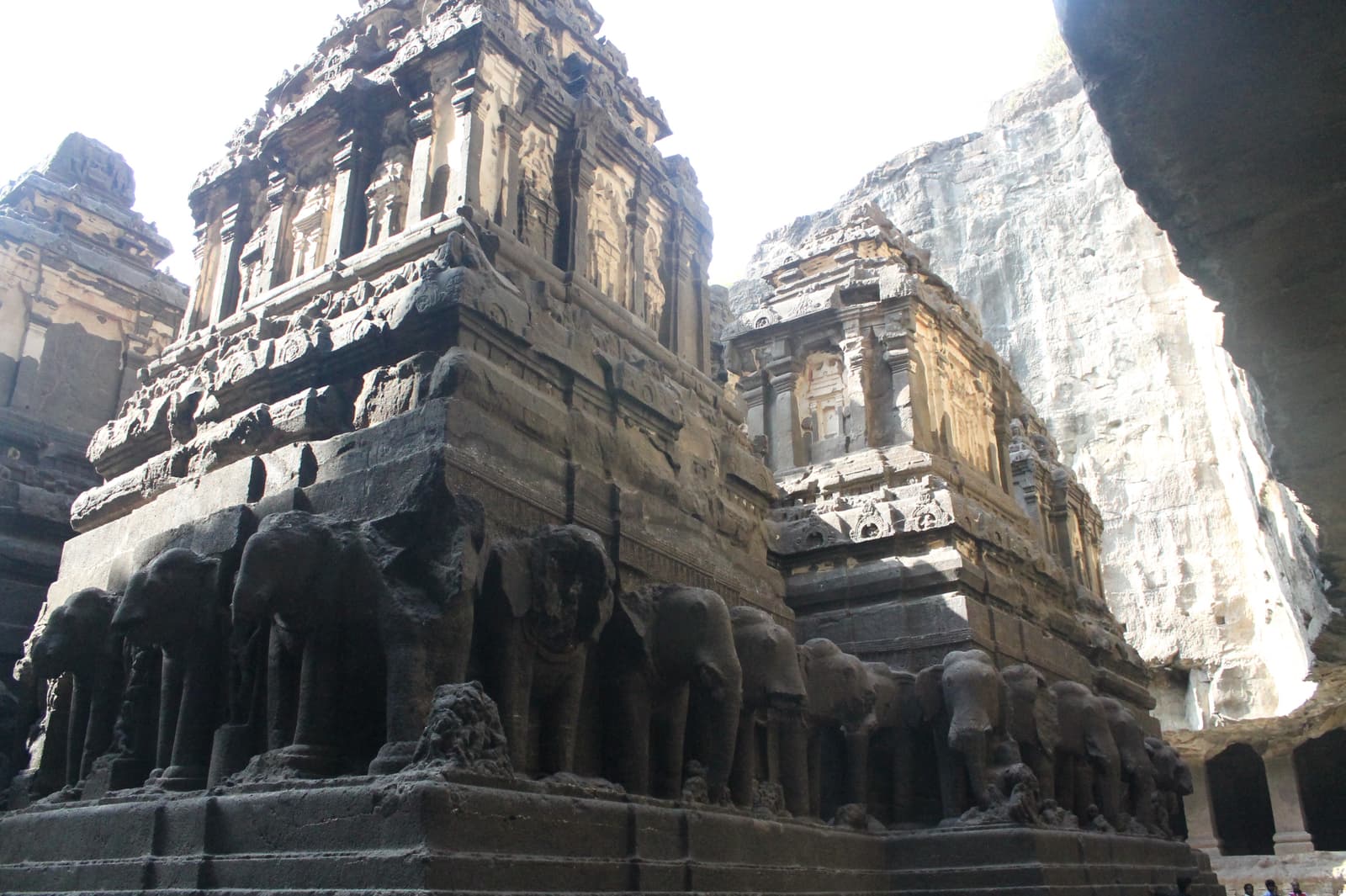
The world's largest monolithic rock-cut structure, carved top-down from a single basalt cliff.

A UNESCO World Heritage site with 30 rock-cut Buddhist caves famous for ancient mural paintings and Jataka tale depictions.

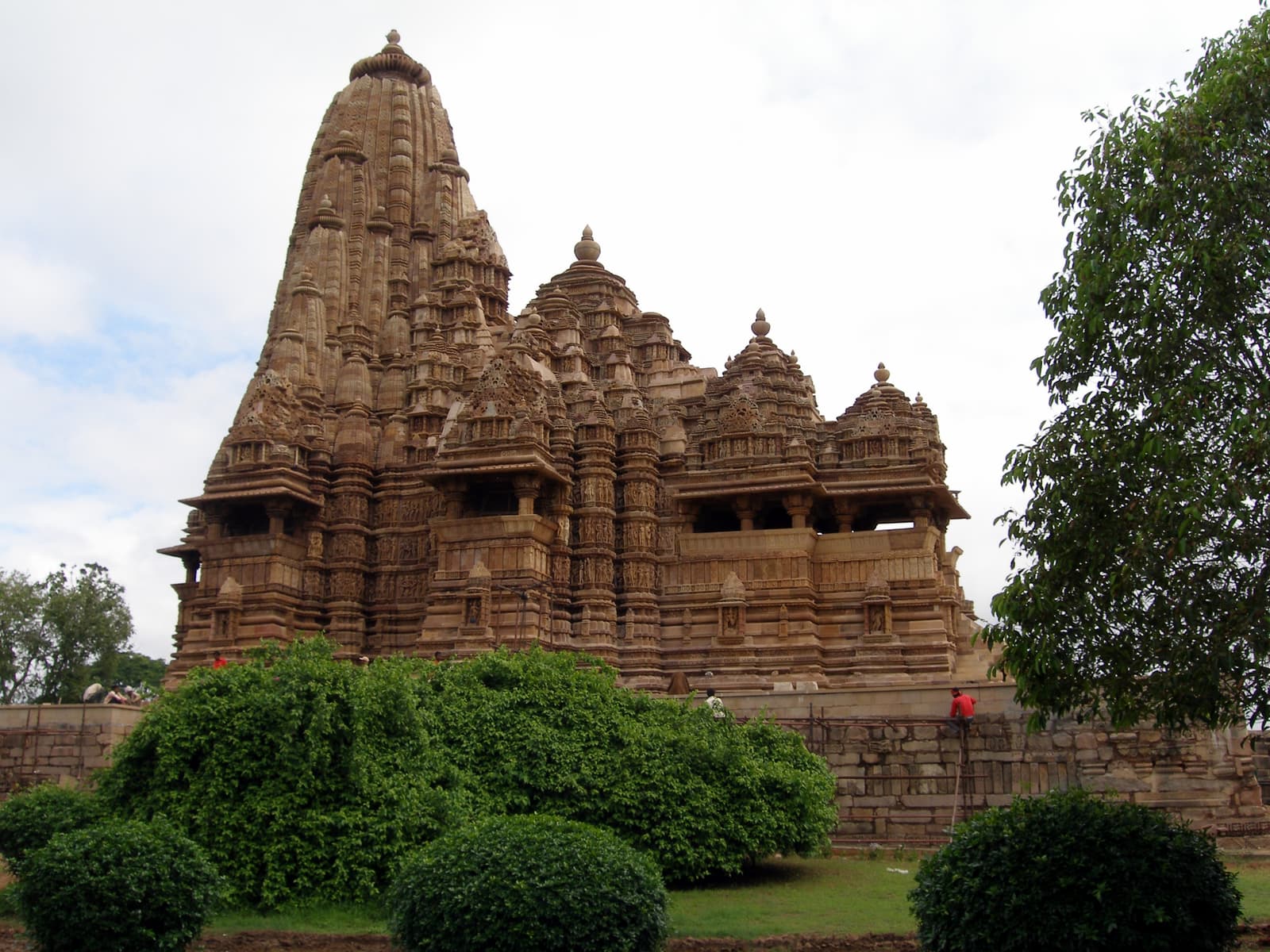
The largest and most ornate Hindu temple in the Khajuraho Group of Monuments.

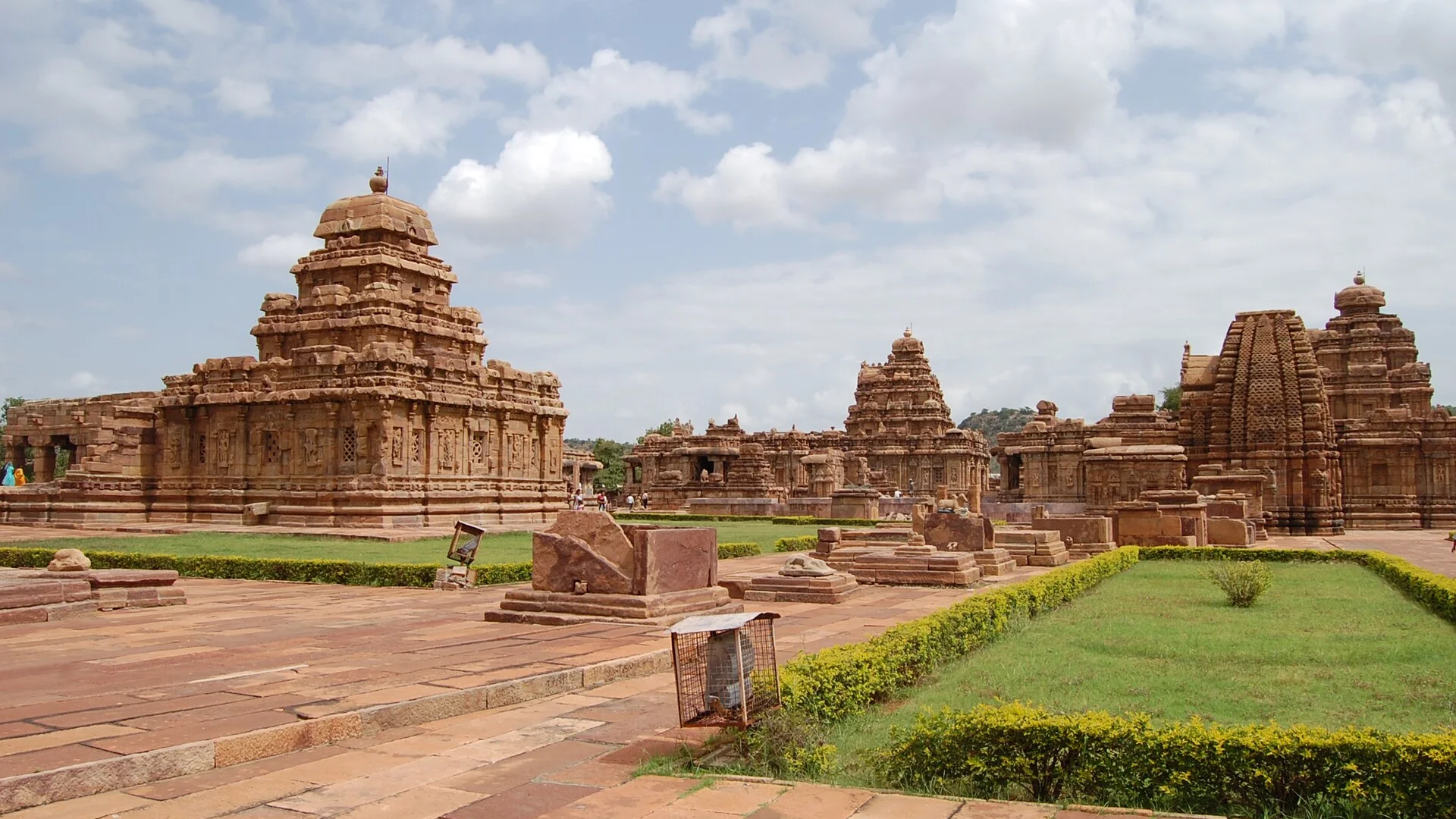
A UNESCO World Heritage site showcasing the unique blend of Nagara and Dravidian temple architecture from the Chalukya dynasty.

One of the oldest structural stone temples of South India, built by the Pallava dynasty on the Bay of Bengal coast.

A UNESCO World Heritage site marking the location where Siddhartha Gautama attained enlightenment and became the Buddha.

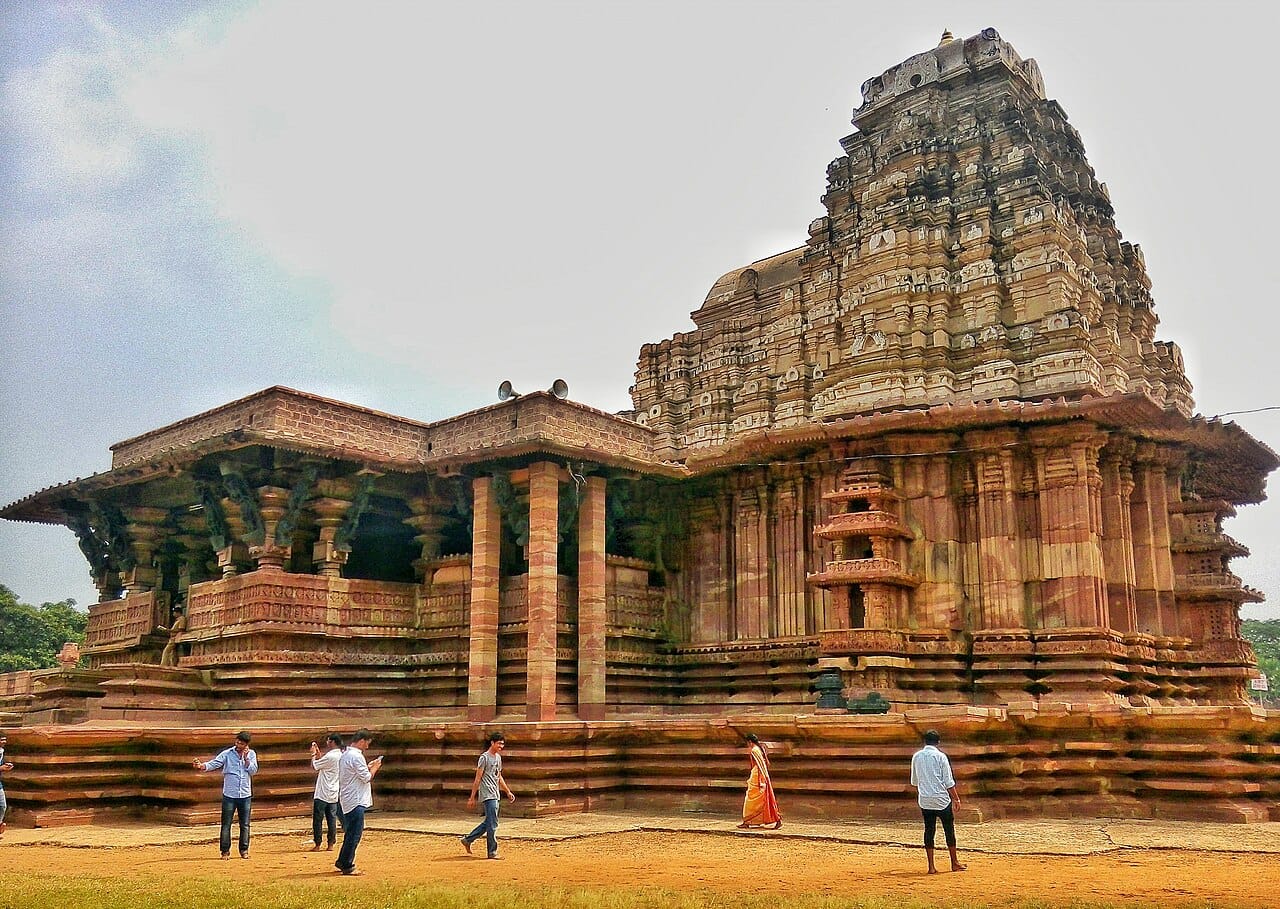
A 13th-century Kakatiya temple famous for its floating bricks and intricate carvings, the newest UNESCO temple site in India.

A UNESCO World Heritage ensemble of three Hoysala temples known for their star-shaped platforms and hyper-real soapstone carvings.

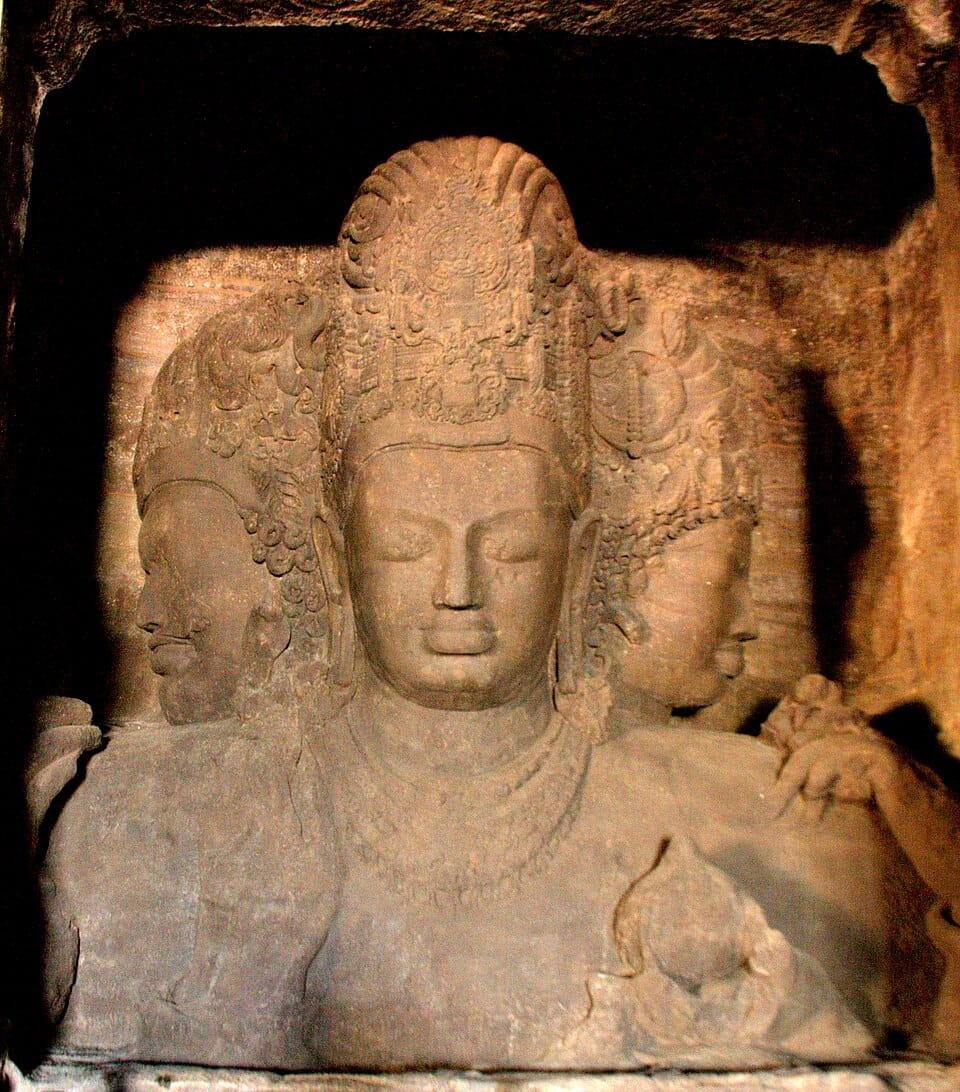
A UNESCO World Heritage site on Elephanta Island, famed for the colossal 20-foot Trimurti sculpture of Lord Shiva.
Indian temple architecture evolved over two millennia into three principal styles: Nagara (North Indian), Dravida (South Indian), and Vesara (Deccan hybrid). Each style developed distinctive features based on regional materials, climatic conditions, and ritual requirements. The earliest temples were rock-cut caves excavated from living rock, followed by structural stone temples that evolved from simple shrines to vast temple cities. The architectural texts known as Shilpa Shastras and Vastu Shastras codified the principles of temple construction, including site selection, orientation, proportion, and iconographic programs.
The Nagara style, dominant in northern India, is characterized by the shikhara, a curvilinear tower with an amalaka (ribbed stone disc) and kalasha (finial) at the top. The sanctum (garbhagriha) is square, with an ambulatory passage. Nagara temples are built on a plinth with an assembly hall (mandapa) in front. Sub-styles include the Latina (simple single curve), Sekhari (with attached sub-spires), and Bhumija (with miniature spire rows) types. Major examples include the Kandariya Mahadeva Temple at Khajuraho, the Sun Temple at Konark, and the Lingaraj Temple at Bhubaneswar.
The Dravida style of South India is distinguished by the vimana, a stepped pyramidal tower rising in receding stories above the sanctum. The gopuram, a multi-storied gateway tower, became increasingly prominent in later periods. Dravida temples feature pillared mandapas, large temple tanks (teppakulam), and multiple concentric enclosure walls (prakarams). The style evolved under the Pallavas (rock-cut rathas at Mahabalipuram), Cholas (Brihadeeswarar Temple's 66-meter vimana), Pandyas (gopuram-dominated complexes), and Vijayanagara-Nayak periods (vast pillared halls and ornate gopurams).
The Vesara style emerged in the Deccan as a fusion of Nagara and Dravida elements. Pioneered by the Chalukyas of Badami, it features a vimana that is stepped like the Dravida but with a round or star-shaped plan. The Hoysalas developed the most elaborate Vesara style, using soft soapstone (chloritic schist) for intricate carvings on star-shaped platforms. Key examples include the Virupaksha Temple at Pattadakal, the Chennakeshava Temple at Belur, and the Kailasa Temple at Ellora.
Indian temples are architecturally structured as a microcosm of the universe. The garbhagriha (sanctum) represents the cosmic womb from which creation emerges. The shikhara or vimana symbolizes Mount Meru, the cosmic mountain. The mandapa progresses the devotee from the material world toward the divine center. The wall niches (devakoshtas) house deity images in prescribed iconographic order. The temple plan follows the Vastupurusha mandala, a geometric diagram that aligns the structure with cardinal directions and cosmic energies.
| Temple | Location | State | Presiding Deity | Primary Significance |
|---|---|---|---|---|
| Dakshineshwar Kali Temple | Kolkata | West Bengal | Goddess Bhavatarini (Kali) | A world-famous 19th-century temple complex on the Hooghly River, immortalized by its association with the saint Sri Ramakrishna Paramahamsa. |
| Kalighat Kali Temple | Kolkata | West Bengal | Goddess Kali | A major Shakti Peetha where the toes of Sati's right foot fell, serving as the spiritual heart of Kolkata. |
| Tarapith Temple Birbhum | Tarapith | West Bengal | Goddess Tara | A major center for Tantric worship dedicated to Goddess Tara, famous for the saint Bamakhyapa and its sacred cremation ground. |
| Bargabhima Temple Tamluk | Tamluk | West Bengal | — | An ancient 1,150-year-old temple where Sati's left ankle fell, blending Bengali 'at-chala' and Odia 'Kalinga' styles. |
| ISKCON Mayapur Nadia | Mayapur | West Bengal | — | The global headquarters of ISKCON and birthplace of Chaitanya Mahaprabhu, one of the world's most visited Vaishnavite sites. |
| Rasmancha Bishnupur | Bishnupur | West Bengal | Lord Krishna (displayed here during Ras festival) | The oldest 17th-century brick structure in Bishnupur, unique for its massive pyramidal roof and arched galleries. |
| Jor-Bangla Temple Bishnupur | Bishnupur | West Bengal | Lord Krishna | Known for its 'twin hut' design and incredibly detailed terracotta panels depicting the Ramayana and Mahabharata. |
| Shyam Rai Temple Bishnupur | Bishnupur | West Bengal | Lord Krishna (Shyam Rai) | A five-towered terracotta temple famous for its circular friezes showing the Rasa-lila of Lord Krishna. |
| Tarakeshwar Temple Hooghly | Tarakeshwar | West Bengal | Lord Shiva (Taraknath) | A massive 18th-century pilgrimage site dedicated to Lord Taraknath, especially vibrant during the Gajan festival. |
| Hangseshwari Temple Bansberia | Bansberia | West Bengal | Goddess Hangseshwari (Kali) | A unique temple with 13 lotus-bud towers, representing the human body's anatomy according to Yoga and Tantra. |
The three main styles are Nagara (North Indian, with curvilinear shikharas), Dravida (South Indian, with stepped pyramidal vimanas), and Vesara (Deccan fusion, blending elements of both).
A shikhara is the curvilinear tower of a Nagara-style temple, while a vimana is the stepped pyramidal tower of a Dravida-style temple. Both surmount the sanctum and symbolize the cosmic mountain.
A gopuram is a multi-storied gateway tower in Dravida-style temples, adorned with stucco figures of deities, mythical beings, and animals. It evolved from modest gateways in the Pallava period to towering structures exceeding 50 meters in the Nayak period.
The Brihadeeswarar Temple at Thanjavur has the tallest vimana at 66 meters (216 feet), built in 1010 CE by Rajaraja Chola I. It remained the tallest temple structure in India until the 20th century.