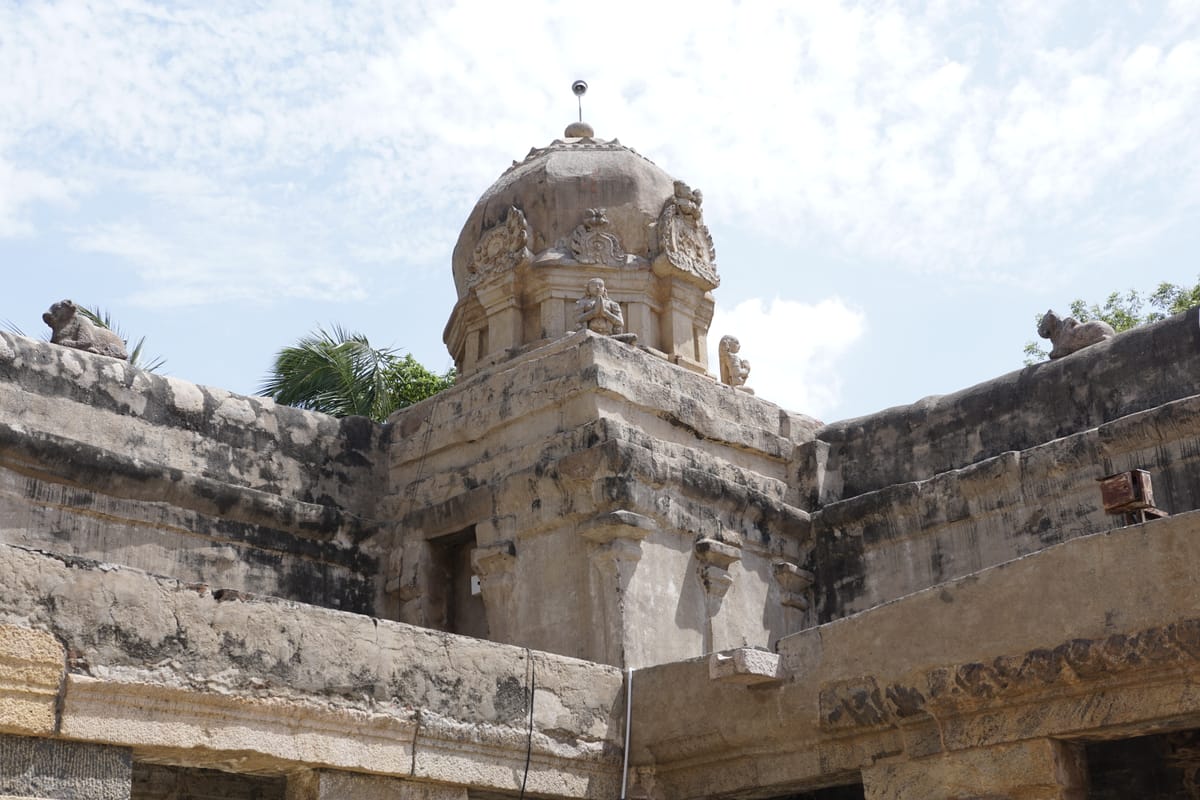
Sacred HeritageUNESCO World Heritage Site
Brihadeeswarar Temple
Thanjavur, Tamil Nadu
State:Tamil Nadu
District:Thanjavur
Why This Temple Matters
UNESCO World Heritage Site — recognized for outstanding universal value
Key Takeaways
- Dedicated to Lord Shiva (Brihadeeswarar)
- Dravidian architecture
- Built by the Imperial Chola dynasty
- UNESCO World Heritage Site since 1987
- Located in Thanjavur, Tamil Nadu
Quick Facts
- Builder
- Raja Raja Chola I
- Dynasty
- Imperial Chola
- Construction
- 1003 - 1010 CE
- Style
- Dravidian
- Main Deity
- Shiva (Brihadeeswarar)
- Location
- Thanjavur, Tamil Nadu
- UNESCO
- Inscribed 1987
- Material
- Granite (130,000 tons)
- Vimana Height
- 66 m (216 ft)
- Architect
- Kunjara Mallan Raja Raja Perunthachan
Overview
The Great Living Chola Temple
The Brihadeeswarar Temple, also called the Thanjavur Big Temple (Periya Kovil), is a Hindu temple dedicated to Shiva located in Thanjavur, Tamil Nadu. It is the flagship monument of the Great Living Chola Temples UNESCO World Heritage site.
Commissioned by Raja Raja Chola I and completed in 1010 CE after seven years of construction, the temple represents the highest achievement of Chola architecture. It was designed by the royal architect Kunjara Mallan Raja Raja Perunthachan and built at the height of the Chola Empire's territorial and economic power.
UNESCO inscribed the temple in 1987 under criteria (i), (ii), (iii), and (iv), recognizing it as a masterpiece of human creative genius, an important interchange of human values, an exceptional testimony to a cultural tradition, and an outstanding example of a type of architectural ensemble. The site was expanded in 2004 to include two additional Chola temples.
The temple is among the largest in India and features a 66-meter (216-foot) vimana, one of the tallest structures of its era. It was the first major temple in the world built entirely of granite, with an estimated 130,000 tons of stone transported from quarries over 60 kilometers away. The structure uses no mortar or binding material — the stones are held in place by their weight and precision-cut interlocking joints.
Why This UNESCO Site Matters
Why This UNESCO Site Matters
UNESCO World Heritage
The Brihadeeswarar Temple was inscribed on the UNESCO World Heritage List in 1987 as part of the "Great Living Chola Temples" site. The designation was expanded in 2004 to include the Brihadisvara Temple at Gangaikonda Cholapuram and the Airavatesvara Temple at Darasuram, forming a serial nomination of three Chola temples that together represent the evolution of Chola architecture over three centuries.
UNESCO recognizes the Great Living Chola Temples as "an exceptional testimony to the civilization of the Chola Empire" and "an outstanding example of the architectural conception of the pure form of the Dravidian type of temple."
The global significance lies in the temple's demonstration of human creative achievement at a specific historical moment: the ability of the Chola state to mobilize vast resources, the engineering knowledge to construct in granite at unprecedented scale, and the artistic sophistication to execute detailed sculptural programs across the entire structure.
History & Legacy
Construction and Development
Construction began around 1003 CE during the 25th year of Raja Raja Chola I's reign. The temple was consecrated in 1010 CE. The site was chosen in Thanjavur, the capital of the Chola Empire, on the banks of the Kaveri River delta, which provided fertile agricultural wealth to fund the project. The temple celebrated the emperor's military campaigns and served as a symbol of imperial power fused with religious devotion.
The scale of logistics was extraordinary. Granite was quarried from the Pallavaram and Tiruchirappalli regions, transported over 60 kilometers using ox-drawn carts and boats along the Kaveri River system. The temple's foundation was laid with a sand-and-stone base designed to distribute the immense weight of the granite superstructure. Over 130,000 tons of granite were moved, making it the largest granite structure of its time anywhere in the world.
After the Chola period, the temple received patronage from successive rulers. The Pandyas, Vijayanagara Empire, and Maratha rulers of Thanjavur each contributed additions and renovations. The Vijayanagara period saw the addition of the massive monolithic Nandi bull in the 16th century. The Marathas added the Subramanya shrine and the wall around the temple complex. Each dynasty left its mark while respecting the original Chola vision.
The temple survived political upheavals, including the decline of the Cholas in the 13th century, the Vijayanagara period, and colonial rule. Unlike many other ancient Indian monuments, it remained an active place of worship throughout these transitions, earning it the UNESCO designation of a "Living" temple.
Historical Timeline
Historical Timeline
985 CE
Raja Raja Chola I ascends the Chola throne, beginning a period of military expansion and administrative reform.
1003 CE
Construction of the Brihadeeswarar Temple begins in Thanjavur, the Chola capital.
1010 CE
Temple consecration after seven years of construction. The 66-meter vimana is completed — the tallest structure in India at the time.
1014 CE
Raja Raja Chola I dies. His son Rajendra Chola I succeeds him and continues the Chola architectural tradition.
1035 CE
Rajendra Chola I completes the Gangaikonda Cholapuram Temple, modeled on the Brihadeeswarar.
13th century
Chola Empire declines. The temple continues functioning under Pandya patronage.
16th century
Vijayanagara Empire adds the monolithic Nandi mandapa and other structures.
17th century
Maratha rulers of Thanjavur add the Subramanya shrine and outer wall. Nayak painters cover Chola frescoes with new murals.
1930s
Chola frescoes discovered beneath Nayak paintings by S. K. Govindaswami of Annamalai University.
1987
UNESCO inscribes the Brihadeeswarar Temple as a World Heritage site under the name 'Great Living Chola Temples.'
2004
UNESCO expands the inscription to include Gangaikonda Cholapuram and Airavatesvara temples.
UNESCO World Heritage
Outstanding Universal Value
UNESCO World Heritage
Outstanding Universal Value
The Brihadeeswarar Temple is the principal monument of the "Great Living Chola Temples" UNESCO World Heritage site, inscribed in 1987 and expanded in 2004. The serial nomination includes three temples built across three centuries: the Brihadeeswarar Temple at Thanjavur (1010 CE), the Brihadisvara Temple at Gangaikonda Cholapuram (1035 CE), and the Airavatesvara Temple at Darasuram (12th century CE). Together they trace the evolution of Chola architecture from its mature phase through its later developments.
UNESCO Criteria
Criterion (i)
Masterpiece of Creative Genius
The Brihadeeswarar Temple represents a masterpiece of human creative genius in its conception, engineering, and artistic execution.
Criterion (ii)
Interchange of Human Values
The temple exhibits an important interchange of human values, blending architectural traditions from across the Indian subcontinent and influencing temple construction for centuries.
Criterion (iii)
Cultural Tradition
As a 'living temple' with continuous worship for over 1,000 years, it bears exceptional testimony to the living Shaiva tradition.
Criterion (iv)
Architectural Ensemble
The temple is an outstanding example of the Dravidian type of temple architecture, illustrating the mature phase of Chola building practices.
Architecture
Engineering and Construction
The temple is built in the Dravidian style of architecture, characterized by its pyramidal tower (vimana), pillared halls (mandapas), and enclosure walls with gateways (gopurams). The Brihadeeswarar Temple departs from convention: its vimana rises higher than its gopuram, prioritizing the main shrine tower over the entrance gateway, a choice that reflects early Chola architectural preferences.
The temple complex measures approximately 240 meters by 120 meters, enclosed by massive granite walls. The inner courtyard contains the main shrine, the Nandi mandapa, and subsidiary shrines. The plinth (adhisthana) is 5 meters high, designed to elevate the temple above the floodplain of the Kaveri delta.
The Vimana
The 66-meter (216-foot) vimana rises in 13 progressively smaller stories, creating a pyramidal profile. At the time of its completion, it was the tallest structure in the Indian subcontinent. Each of the 13 stories (tala) is delineated by horizontal cornices with decorative motifs. The tower narrows as it rises, with each story set back from the one below, distributing weight toward the center.
The apex is crowned by a single-piece granite capstone (kumbam) weighing approximately 80 tons. The most widely accepted theory of its placement is that a temporary inclined earthen ramp extending over 6 kilometers was constructed, allowing the capstone to be dragged upward using wooden rollers and elephants. After placement, the ramp was dismantled.
Granite Construction
The most remarkable engineering feature is the exclusive use of granite — one of the hardest stones available. An estimated 130,000 tons of granite were quarried and transported to the site. The blocks were cut using iron tools, with measurements precise enough to create load-bearing joints without mortar. This dry masonry technique relies entirely on precision cutting and gravity for stability.
The absence of nearby granite sources required an organized logistics operation. Blocks were transported from quarries near Tiruchirappalli, using the Kaveri River for waterborne transport. Each block weighing several tons was moved on specially constructed wooden rollers and ox-drawn carts along temporary roads built for the purpose.
Materials Used
Granite (Gneiss)
Main structure, vimana, walls, pillars
Sourced from quarries 60 km away
Chlorite Schist
Sculptures and decorative panels
Softer stone allowing finer detail
Brick and Mortar
Subsidiary shrines and later additions
Used in post-Chola renovations
Religious Importance
Shaiva Tradition and Worship
The temple is dedicated to Shiva as Brihadeeswarar (the Great Lord), manifested as a Shiva lingam 3.7 meters (12 feet) in height. The lingam is made of granite and rests on a pedestal (avudaiyar) of matching diameter. Unlike many later temples where the lingam is smaller and anointed through a separate channel, the Brihadeeswarar lingam is directly accessible for ritual ablutions.
Worship follows the Makuta Agama tradition, one of the Shaiva Agamic texts that prescribe temple ritual procedures. Six daily rituals (kala pujas) are performed:
6:00 AM
Ushakkala Puja (Dawn worship)
8:00 AM
Kalasanthi Puja (Morning worship)
10:00 AM
Uchikkala Puja (Midday worship)
5:00 PM
Sayarakshai Puja (Evening worship)
7:00 PM
Irandam Kala Puja (Second evening worship)
9:00 PM
Ardhajama Puja (Night worship)
The tradition of Oduvars (temple singers) chanting Thevaram hymns during rituals has continued without interruption since the temple's consecration. This practice connects the present-day worship directly to the devotional movement of the Nayanars (Shaiva saints) whose hymns from the 6th to 8th centuries form the core of Tamil Shaiva liturgy. The temple has been an active site of continuous worship for over 1,000 years, a record that few religious structures worldwide can claim.
Art & Sculptures
Sculptures and Inscriptions
Chola Frescoes
The temple walls preserve a remarkable collection of Chola-period frescoes, discovered in the 1930s by S. K. Govindaswami of the Annamalai University. These murals, painted on the inner walls of the circumambulatory passage, depict scenes from the life of Raja Raja Chola I alongside Shaiva mythological narratives. The paintings were executed using natural pigments on a lime plaster base, with outlines drawn in red ochre and filled with colors including yellow ochre, lapis lazuli blue, and vermilion red.
The Chola frescoes are the earliest surviving examples of South Indian mural painting. They were partially covered by Nayak-period paintings in the 17th century, and ASI conservation efforts continue to reveal and preserve the original Chola layers beneath.
The 108 Karanas
On the walls of the upper circumambulatory passage (the second tala), the temple features a complete series of 108 karanas — the fundamental dance poses of Bharatanatyam. These carved panels depict the dance positions described in the Natya Shastra, the ancient Sanskrit treatise on performing arts. This sculptural program is the most complete visual record of classical Indian dance poses and has been used as a reference for Bharatanatyam reconstruction and study.
The Nandi
In the courtyard facing the sanctum stands a monolithic Nandi (the bull mount of Shiva), carved from a single block of granite. It measures 5.9 meters in length and 3.7 meters in height, weighing approximately 25 tons. The Nandi was added during the Vijayanagara period in the 16th century and is among the largest monolithic Nandi figures in India.
Inscriptions
The temple walls carry extensive inscriptions in Tamil script, recording the administrative structure of the Chola Empire. These inscriptions document land grants, tax assignments, staffing details, and financial accounts related to temple operations. They name the villages whose revenues supported specific rituals, list the jewelry and vessels donated to the temple, and record the names of every dancer, musician, accountant, and priest employed there. Historians consider these inscriptions among the most important primary sources for understanding medieval South Indian administration, economy, and society.
Dynasties & Patrons
The Chola Empire at Its Zenith
The Imperial Chola dynasty rose to prominence in the 9th century under Vijayalaya Chola, who captured Thanjavur from the Mutharaiyar chieftains. By the time Raja Raja Chola I ascended the throne in 985 CE, the Cholas had transformed from a regional kingdom into an empire spanning from the Kaveri delta in the south to the Godavari River in the north, with overseas territories in Sri Lanka and the Maldives.
Raja Raja Chola I (985-1014 CE) was among the most effective administrators and military commanders in Indian history. He conducted a systematic revenue survey of his kingdom, reorganized the administrative apparatus, and built a powerful navy that enabled the conquest of Sri Lanka and the expansion of trade with Southeast Asia. The temple was not merely a religious structure but a deliberate statement of imperial authority and divine mandate. The chief architect was Kunjara Mallan Raja Raja Perunthachan.
After Raja Raja Chola I, his son Rajendra Chola I (1014-1044 CE) continued the architectural tradition by building the Brihadisvara Temple at Gangaikonda Cholapuram, modeled closely on the Thanjavur temple. Rajendra's reign saw the expansion of Chola influence to the Ganges River in the north and to Srivijaya in Southeast Asia.
Later dynasties also contributed to the temple. The Pandyas added to the complex after the Chola decline. The Vijayanagara Empire (16th century) added the monolithic Nandi mandapa. The Maratha rulers of Thanjavur (17th-18th centuries) added the Subramanya shrine and the surrounding wall, and they continued the tradition of royal patronage to maintain temple rituals.
Interesting Facts
The temple was the tallest structure in the Indian subcontinent at the time of its completion and remained among the tallest for centuries.
The 80-ton granite capstone at the top of the vimana is a single piece of stone. Historians believe a 6-kilometer-long earthen ramp was built to drag it into place.
The temple was built without any mortar. All 130,000 tons of granite are held together by gravity and precision-cut interlocking joints.
The temple's shadow never falls on the ground directly below the vimana at midday — a result of the precise geometric proportion between height and base width.
The 108 karana panels on the second level are the world's most complete visual record of classical Indian dance positions, used by Bharatanatyam dancers today.
The temple was the first major stone structure in the world built entirely of granite, a material so hard that medieval builders rarely used it for entire buildings.
The Shiva lingam in the sanctum is 3.7 meters (12 feet) tall — one of the largest in India — and is made from a single piece of black granite.
The temple inscriptions run to over 100,000 words — equivalent to a book-length text — carved into stone walls, providing a complete census of Chola society.
The temple has been an active place of worship for over 1,000 years without interruption, making it one of the oldest continuously functioning religious sites in the world.
The Chola frescoes on the circumambulatory walls were hidden beneath Nayak-era paintings for 300 years before being rediscovered in the 1930s. ASI continues to reveal them layer by layer.
How to Reach
How to Reach Thanjavur
Thanjavur is well connected by road, rail, and air. The nearest major airport is Tiruchirappalli International Airport (TRZ), located approximately 60 kilometers from Thanjavur. It serves domestic flights from major Indian cities and limited international flights from Colombo, Kuala Lumpur, and Singapore. Chennai International Airport (MAA), located about 340 kilometers away, is an alternative for international travelers with wider connectivity.
Thanjavur Junction is a major railway station on the Tiruchirappalli-Chennai main line. Several daily express and superfast trains connect Thanjavur to Chennai (5-6 hours), Tiruchirappalli (1 hour), Coimbatore, Madurai, and Rameswaram. The station is approximately 4 kilometers from the temple.
Thanjavur is well connected by road to major cities in Tamil Nadu. State-run and private buses operate frequent services from Chennai (340 km, 6 hours), Tiruchirappalli (60 km, 1.5 hours), Madurai (200 km, 4 hours), and Pondicherry (170 km, 4 hours). The New Bus Stand is about 3 kilometers from the temple. Auto-rickshaws and taxis are available for local transport.
Nearby Sacred Places
Other sacred sites within reach
Gangaikonda Cholapuram Temple
Built by Rajendra Chola I in 1035 CE, this temple mirrors the Brihadeeswarar design. It is part of the UNESCO Great Living Chola Temples site, located about 40 km northeast of Thanjavur.
Airavatesvara Temple
Built by Rajaraja Chola II in the 12th century at Darasuram, about 45 km from Thanjavur. It is the third temple in the UNESCO Great Living Chola Temples serial nomination.
Thanjavur Palace
The former residence of the Maratha rulers of Thanjavur, located 2 km from the temple. It houses an art gallery, a library with rare manuscripts, and the Saraswati Mahal Library.
Travel Tips
Travel Tips for Visitors
Visit early morning (6:00-8:00 AM) to experience the temple in quiet conditions and witness the first ritual of the day. The morning light also provides the best conditions for photography of the vimana exterior. Afternoon visits between 12:30 PM and 4:00 PM should be avoided as the temple is closed during this period.
Dress modestly as a mark of respect in this active temple. Traditional Indian attire is ideal, but covered shoulders and knees are acceptable for all visitors. Footwear must be removed before entering the temple premises — shoe storage is available near the entrance for a small fee.
The temple complex can be explored in 2-3 hours at a relaxed pace. Hiring a local guide at the entrance (approximately INR 300-500) is recommended for understanding the inscriptions and sculptural details. Audio guides are also available. Photography is allowed in most areas but may be restricted inside the inner sanctum.
Combine your visit with the nearby UNESCO Chola temples at Gangaikonda Cholapuram and Darasuram as a day trip. Many local tour operators offer dedicated "Great Living Chola Temples" tours covering all three sites. October to March offers the most pleasant weather for this circuit.
Conservation
Protecting the Living Temple
Conservation
Protecting the Living Temple
The Archaeological Survey of India (ASI) is responsible for the conservation and maintenance of the Brihadeeswarar Temple as a protected monument of national importance. The temple faces several conservation challenges, including weathering of the granite surface, biological growth on the stone, and the structural stress from continuous ritual use.
One of the most significant conservation projects has been the ongoing work to reveal and preserve the Chola-period frescoes hidden beneath Nayak paintings. ASI conservators use a technique of carefully removing the later paint layers to expose the original 11th-century murals while stabilizing the plaster base. This painstaking work has been in progress for decades.
The temple's status as a "Living" monument creates a unique conservation challenge. Unlike museums or abandoned archaeological sites, the temple must accommodate thousands of daily visitors and daily ritual activities — fire, smoke, water, oil, and organic offerings — all of which contribute to the wear on stone surfaces, metal fixtures, and painted interiors. Conservation strategies must balance preservation needs with the temple's active religious function.
UNESCO monitors the site's conservation status through periodic reporting. The primary management objectives include controlling visitor impact, managing vegetation growth on the structure, monitoring structural stability of the vimana, and ensuring that any repairs or interventions use traditional materials and techniques consistent with the original construction.
Sources & References
Sources & References
UNESCO World Heritage Centre. "Great Living Chola Temples." whc.unesco.org/en/list/250
Archaeological Survey of India. "Brihadisvara Temple, Thanjavur." asi.nic.in
S. R. Balasubrahmanyam. "Middle Chola Temples." Thomson Press, 1975.
K. A. Nilakanta Sastri. "The Cholas." University of Madras, 1955.
George Michell. "The Hindu Temple: An Introduction to Its Meaning and Forms." University of Chicago Press, 1988.
Tamil Nadu Tourism. "Brihadeeswarar Temple." tamilnadutourism.tn.gov.in
Frequently Asked Questions
Who built the Brihadeeswarar Temple and when?
A.
The temple was commissioned by the Chola emperor Raja Raja Chola I (985-1014 CE). Construction ran from approximately 1003 CE to 1010 CE. The chief architect was Kunjara Mallan Raja Raja Perunthachan.
What is the architectural style of the temple?
A.
The temple is built in the Dravidian style of architecture, characterized by its pyramidal vimana (tower), pillared mandapas (halls), and enclosure walls. It represents the mature phase of Chola architecture.
Why is the Brihadeeswarar Temple a UNESCO World Heritage site?
A.
It was inscribed in 1987 under UNESCO criteria (i), (ii), (iii), and (iv) as part of the Great Living Chola Temples. UNESCO recognizes it as a masterpiece of human creative genius and an exceptional testimony to the Chola civilization.
How was the 80-ton capstone lifted to the top of the vimana?
A.
The most accepted theory is that an inclined earthen ramp extending over 6 kilometers was constructed, and the capstone was dragged upward using wooden rollers and elephants. After placement, the ramp was dismantled.
What makes this temple a 'Living' temple?
A.
The temple has maintained continuous daily worship rituals since its consecration in 1010 CE. The same Agamic traditions, Thevaram chanting by Oduvars, and six daily puja schedules have been followed for over a thousand years.
What is the significance of the 108 karana panels?
A.
The 108 karana panels on the upper circumambulatory passage depict the dance poses described in the Natya Shastra. They are the most complete sculptural record of classical Indian dance positions and serve as a reference for Bharatanatyam.
What do the temple inscriptions contain?
A.
The inscriptions, written in Tamil, record the administrative structure of the Chola Empire, including land grants, tax assignments, temple staffing, financial accounts, and the names of dancers and craftsmen employed at the temple.
Are there frescoes in the Brihadeeswarar Temple?
A.
Yes, Chola-period frescoes were discovered on the inner walls of the circumambulatory passage in the 1930s. They depict scenes from Raja Raja Chola I's life and Shaiva mythology, painted with natural pigments on lime plaster.
Showing 8 of 20 questions
Answers are based on verified information. Site rules may change — verify locally before visiting.
Did You Know?
- The Brihadeeswarar Temple vimana (tower) is 66 m (216 ft) tall — the tallest in the world when built in 1010 CE, and it remains the tallest Hindu temple tower in South India.
- The 81-ton granite cupola (shikhara) on top of the vimana was raised using a 6 km-long inclined ramp starting from a village still called Sarapalli (meaning 'stone ramp village').
- The temple was built entirely from granite — an estimated 130,000 tons — with no mortar. The stones are held together by gravity and precision-cut interlocking joints.
- Over 400 Chola bronze statues were discovered buried in the temple complex in the 19th century, now displayed in the Thanjavur Art Gallery and museums worldwide.
- The temple's giant Nandi bull is carved from a single block of granite, weighs about 25 tons, and measures 3.7 m in height and 6 m in length.
Related Temples
Same Deity
Virupaksha Temple
The Virupaksha Temple in Hampi, Karnataka, is a UNESCO World Heritage Site and the oldest…
Trimbakeshwar Temple
The Trimbakeshwar Temple in Maharashtra is one of the twelve Jyotirlingas, unique for its three-faced…
Airavatesvara Temple
The Airavatesvara Temple at Darasuram, built by Rajaraja Chola II between 1146 and 1172 CE…
Gangaikonda Cholapuram Temple
The Gangaikonda Cholapuram Temple, built by Rajendra Chola I in 1035 CE, is a UNESCO…
Kampaheswarar Temple
Kampaheswarar Temple in Tribhuvanam, built by Kulothunga Chola III in 1202 CE, is one of…
Koranganatha Temple
Koranganatha Temple, built during the reign of the Chola king Parantaka I (907-955 CE) at…
Same Architecture
Virupaksha Temple
The Virupaksha Temple in Hampi, Karnataka, is a UNESCO World Heritage Site and the oldest…
Vishalakshi Temple
The Vishalakshi Temple, located in the narrow lanes of Mir Ghat near the Ganges in…
Gnana Saraswati Temple Basar
One of the only two prominent Saraswati temples in India, it is a primary center…
Bhadrakali Temple Warangal
Historic lakeside Shakti shrine in Warangal featuring a massive 2.7-meter black stone Bhadrakali idol, traditionally…
Arunachaleswarar Temple
Arunachaleswarar Temple at the foot of Arunachala Hill in Tiruvannamalai is one of the largest…
Ekambareswarar Temple
Ekambareswarar Temple in Kanchipuram represents the earth element (Prithvi) of the Pancha Bhoota Sthalas.
Same State
Airavatesvara Temple
The Airavatesvara Temple at Darasuram, built by Rajaraja Chola II between 1146 and 1172 CE…
Gangaikonda Cholapuram Temple
The Gangaikonda Cholapuram Temple, built by Rajendra Chola I in 1035 CE, is a UNESCO…
Kampaheswarar Temple
Kampaheswarar Temple in Tribhuvanam, built by Kulothunga Chola III in 1202 CE, is one of…
Koranganatha Temple
Koranganatha Temple, built during the reign of the Chola king Parantaka I (907-955 CE) at…
Pancha Rathas
The Pancha Rathas (Five Chariots) are a set of five monolithic temple structures carved from…
Olakkaneswara Temple
Olakkaneswara Temple, located on a rocky outcrop at the southern end of Mahabalipuram beach, was…
UNESCO Sites
Virupaksha Temple
The Virupaksha Temple in Hampi, Karnataka, is a UNESCO World Heritage Site and the oldest…
Airavatesvara Temple
The Airavatesvara Temple at Darasuram, built by Rajaraja Chola II between 1146 and 1172 CE…
Gangaikonda Cholapuram Temple
The Gangaikonda Cholapuram Temple, built by Rajendra Chola I in 1035 CE, is a UNESCO…
Konark Sun Temple
A 13th-century colossal stone chariot of the Sun God Surya, the Konark Sun Temple is…
Kailasa Temple, Ellora
The world's largest monolithic rock-cut structure, carved top-down from a single basalt cliff.
Ajanta Cave Temples
A UNESCO World Heritage site with 30 rock-cut Buddhist caves famous for ancient mural paintings…
Same Tradition
Tarakeshwar Temple Hooghly
1729 CE Atchala-style Shiva sanctuary founded by Raja Bharamalla in Hooghly district, famous for its…
Virupaksha Temple
The Virupaksha Temple in Hampi, Karnataka, is a UNESCO World Heritage Site and the oldest…
Jageshwar Temple
A cluster of 124 ancient stone temples from the 7th-12th centuries, situated in a dense…
Neelkanth Mahadev Temple
Situated at 1,330 meters, this is where Lord Shiva is believed to have consumed the…
Tungnath Temple
The highest Shiva temple in the world, situated at 3,680 meters on the Chandranath Parbat…
Rudranath Temple
One of the Panch Kedar shrines, representing Lord Shiva's face, situated at an altitude of…
How to Reach
Tiruchirappalli International Airport (TRZ) — 60 km
Thanjavur Junction — 4 km
Thanjavur New Bus Stand — 3 km
Visiting as an International Traveller
Fact CheckedEditorial ReviewVerified 2026-07-03
Entry Status
Foreign Visitors
AllowedVisitors of all faiths are welcome. The temple is a functioning place of worship and a UNESCO World Heritage site.
Visitor Information
Entry policies are set by each site — confirm before travelling.
Entry rules for international visitorsWho can enter, permits, and what to expect at the gate.Dress Code
Modest clothing is expected — a sign of respect, not a restriction.
Shoulders covered
Knees covered
Shoes removed before entry
Head covering (women)
Rain gear available
Warm layers (winter)
Photography Guide
Outside
Inside
Flash
Drone
Tripod
Commercial
Best Time to Visit
Peak Season
October to March is the ideal period for visiting Thanjavur, with pleasant weather for exploring the temple complex.
Moderate to High — comfortable weather
Summer
April — June
Low — hot plains, pleasant hills
Monsoon
July — September
Low — lush landscape, travel delays possible
Language & Communication
Common local languages: Tamil, Hindi, English
English spokenGovernment-approved guides available at the temple entrance
Accessibility
Wheelchair: The main courtyard is flat and wheelchair accessible. Some areas have steps.
Understanding Temple Traditions
These short explanations help make sense of what you see and experience.
Tips for International Visitors
Temple vocabulary and ritualsDarshan, pradakshina, prasadam, aarti, hundi and mandapa.Currency, donations and queuesCash, UPI, donation etiquette and how long entry queues take.Photography etiquetteSignage, flash, selfie sticks and photographing other visitors.Festival crowds and safetyAdvance booking, road closures, belongings and offline maps.
Essential Contacts
Police / Ambulance / Fire: 112 (National Emergency Number)
Tourist Helpline: 1800-111-363 (Multi-lingual, Ministry of Tourism)
Women's Helpline: 1091
Official Temple WebsiteState Tourism WebsiteTravel Preparation Checklist
Packing Checklist for Brihadeeswarar Temple
Continue Reading
Verified 2026-07-03Sources: UNESCO World Heritage Centre, Archaeological Survey of India, Tamil Nadu Tourism Department, The Great Temple of Thanjavur by S.R. Balasubrahmanyam (1975), Chola Temple Architecture by K.A. Nilakanta Sastri
Rules change — confirm current policies with the site's authority before you travel.
By Naveen singh negi
Updated: June 2026
Last reviewed: 2026-07-03
Fact-checked
Editorial review
Sources: UNESCO World Heritage Centre, Archaeological Survey of India, Tamil Nadu Tourism Department, The Great Temple of Thanjavur by S.R. Balasubrahmanyam (1975), Chola Temple Architecture by K.A. Nilakanta Sastri
Related:Tamil Nadu TemplesLord Shiva (Brihadeeswarar)Dravidian StyleImperial CholaUNESCO HeritageMethodology
UNESCO Site 1987
Tamil Nadu
Imperial Chola
UNESCO Site
Explore More Sacred & Heritage Sites
Related heritage monuments, regional traditions, and pilgrimage connections.
UNESCO Temple Heritage Sites
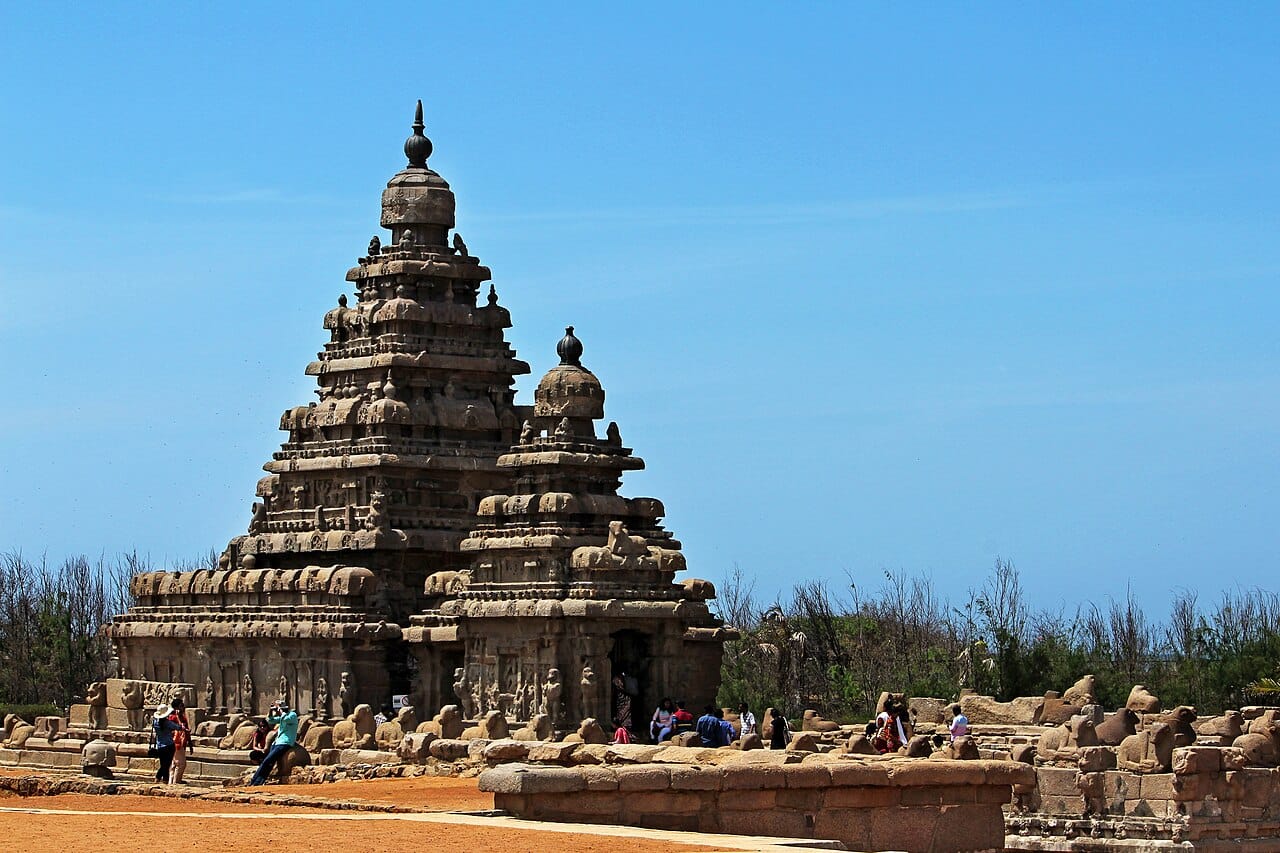
UNESCO 1984Cultural Heritage
Tamil Nadu
Shore Temple, Mahabalipuram
One of the oldest structural stone temples of South India, built by the Pallava dynasty…
Explore Temple
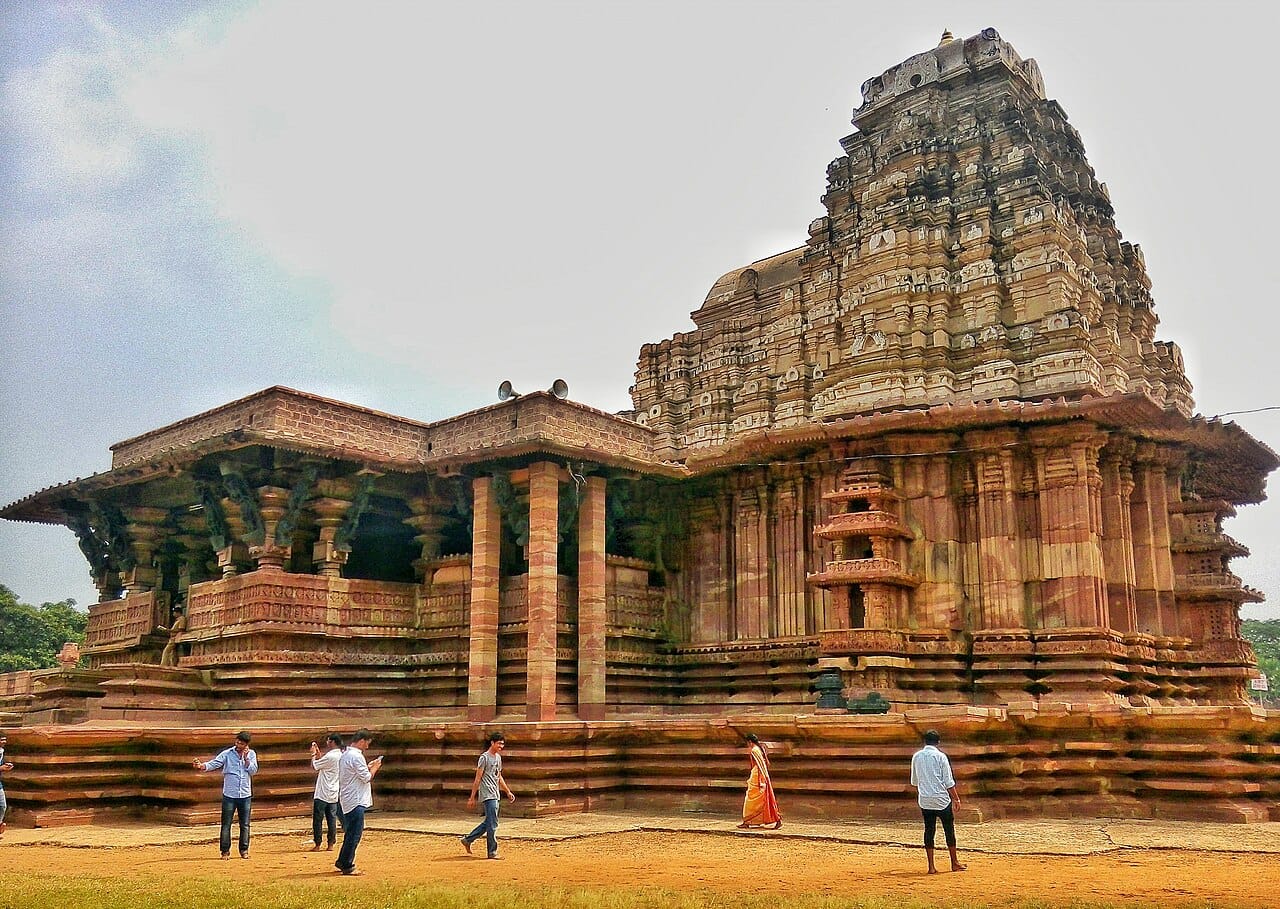
UNESCO 2021Cultural Heritage
Telangana
Ramappa Temple
A 13th-century Kakatiya temple famous for its floating bricks and intricate carvings, the newest UNESCO…
Explore Temple
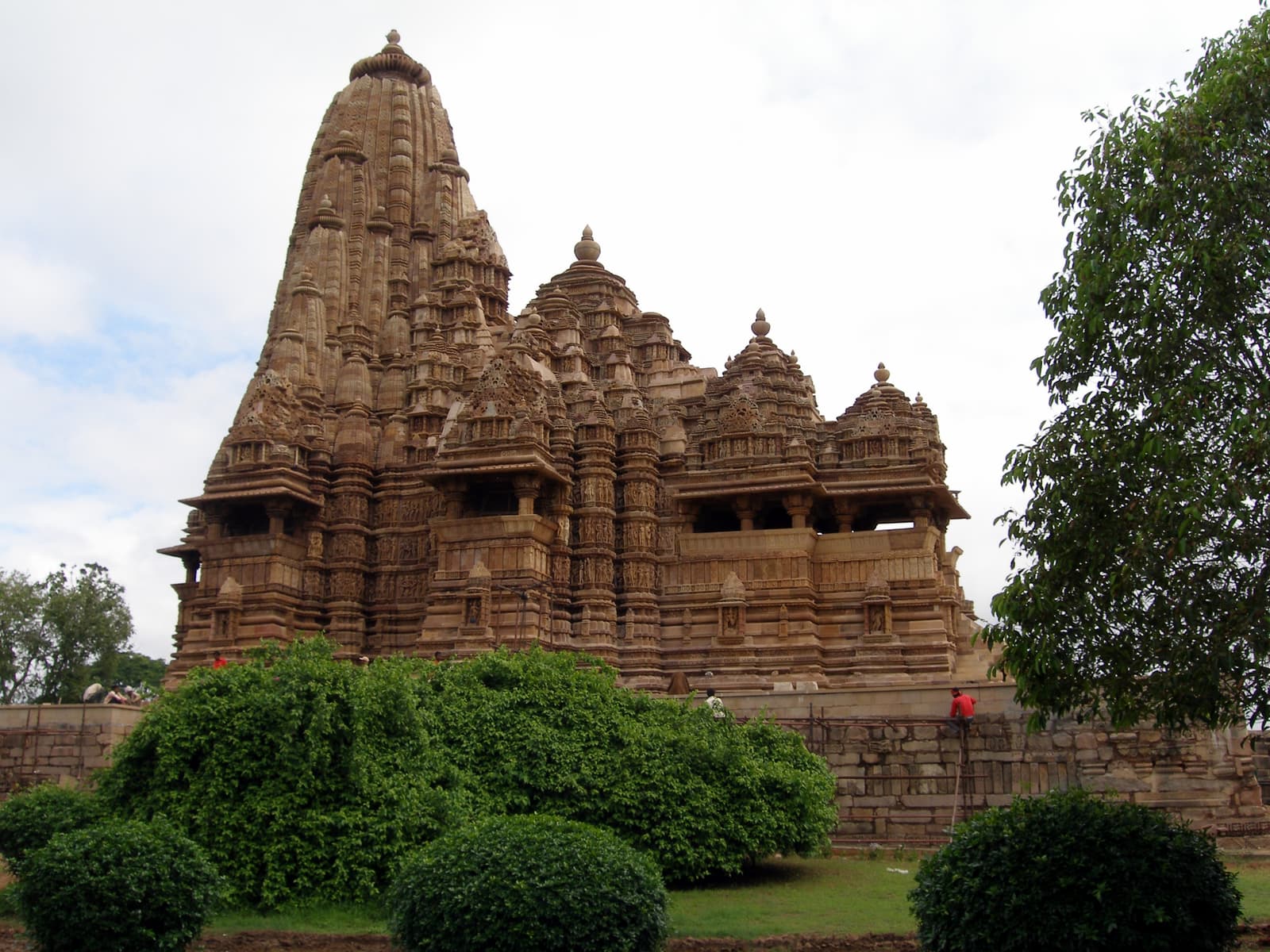
UNESCO 1986Cultural Heritage
Madhya Pradesh
Khajuraho Group of Monuments
The largest and most ornate Hindu temple in the Khajuraho Group of Monuments.
Explore Temple
UNESCO 1984Cultural Heritage
Odisha
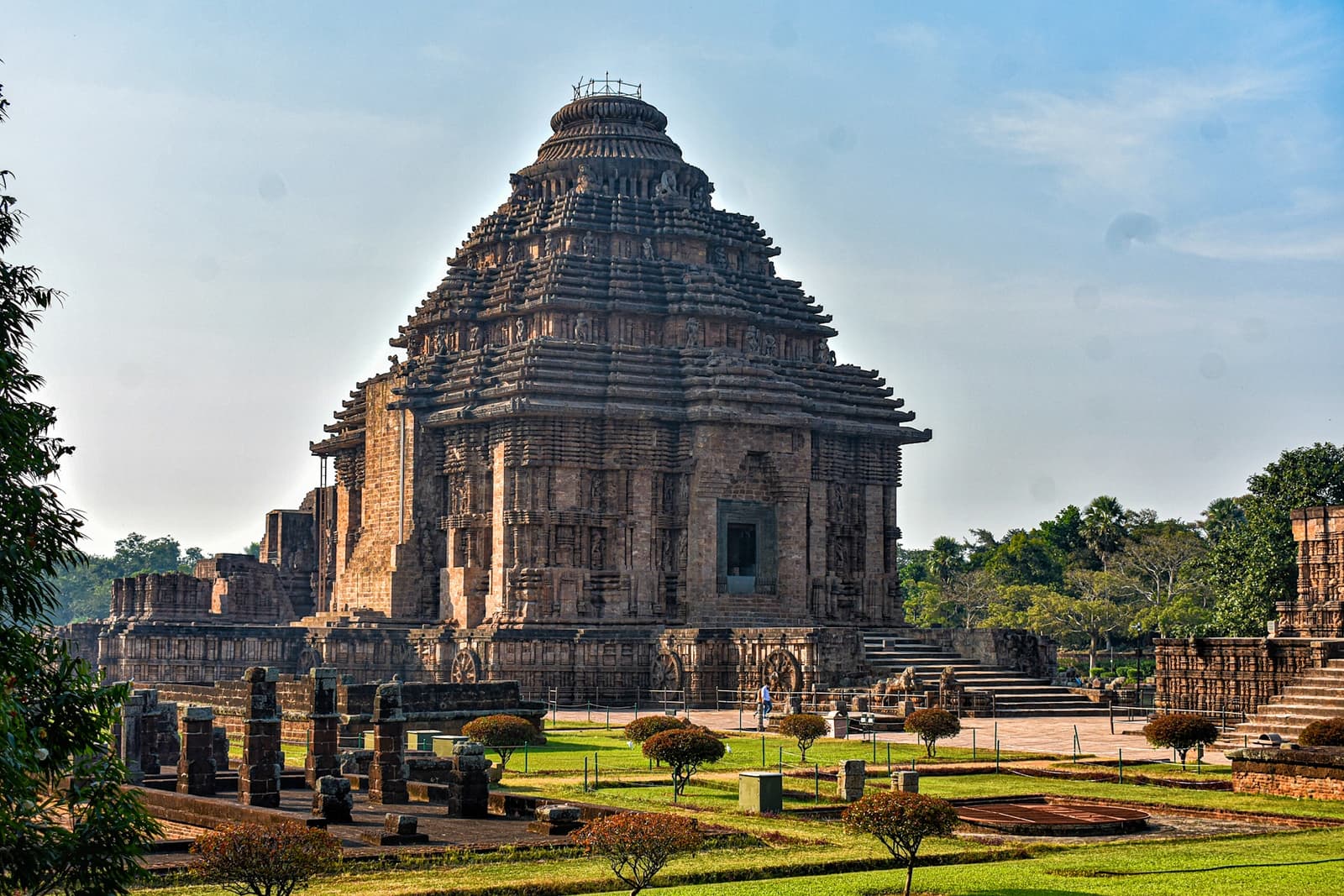
Sun Temple, Konark
A 13th-century Sun Temple built as a giant stone chariot with 24 wheels, drawn by…
Explore Temple
Famous Temples You May Like
Tamil Nadu
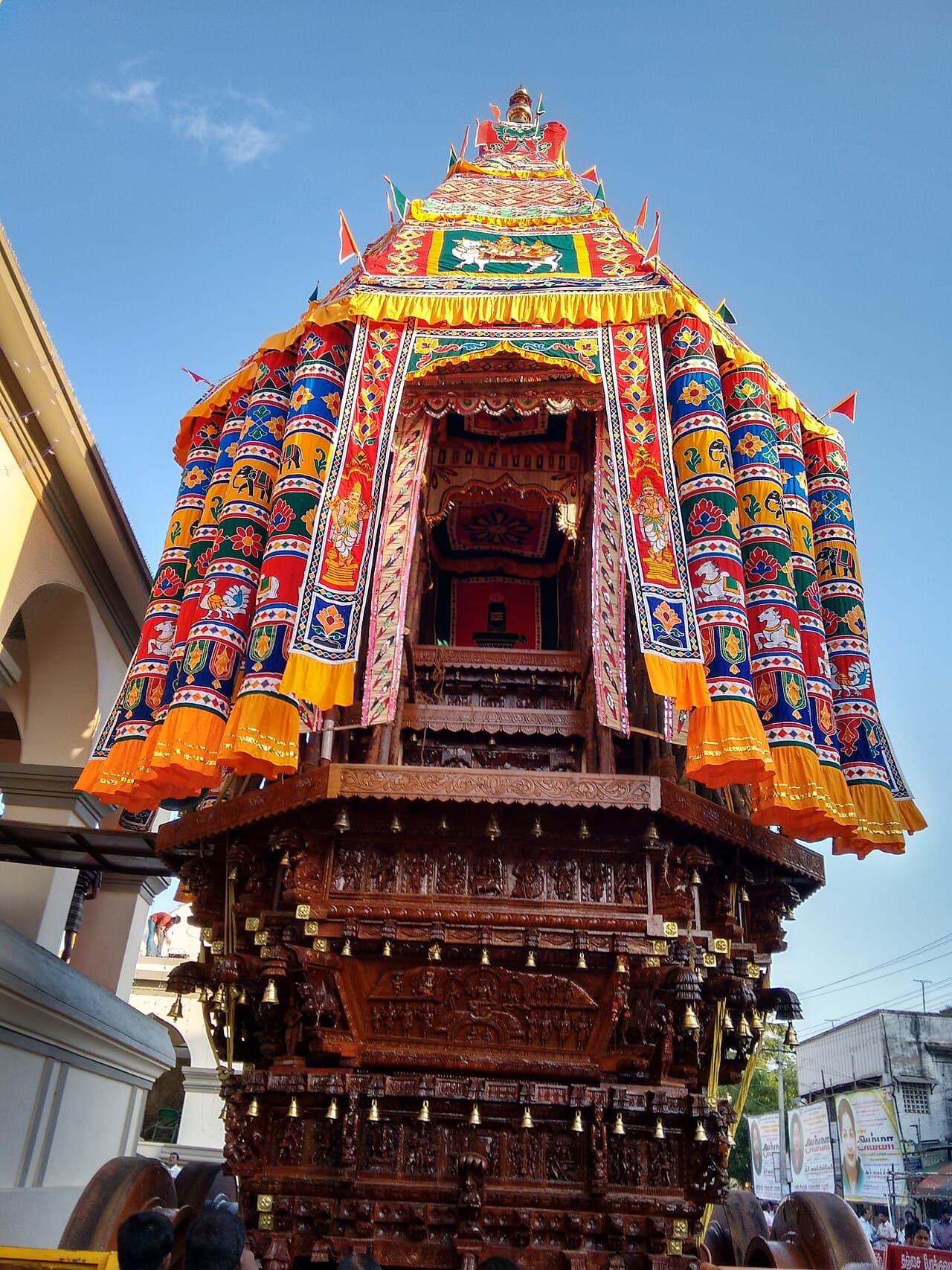
Arunachaleswarar Temple
Arunachaleswarar Temple at the foot of Arunachala Hill in Tiruvannamalai is one of the largest…
Explore Temple
Tamil Nadu
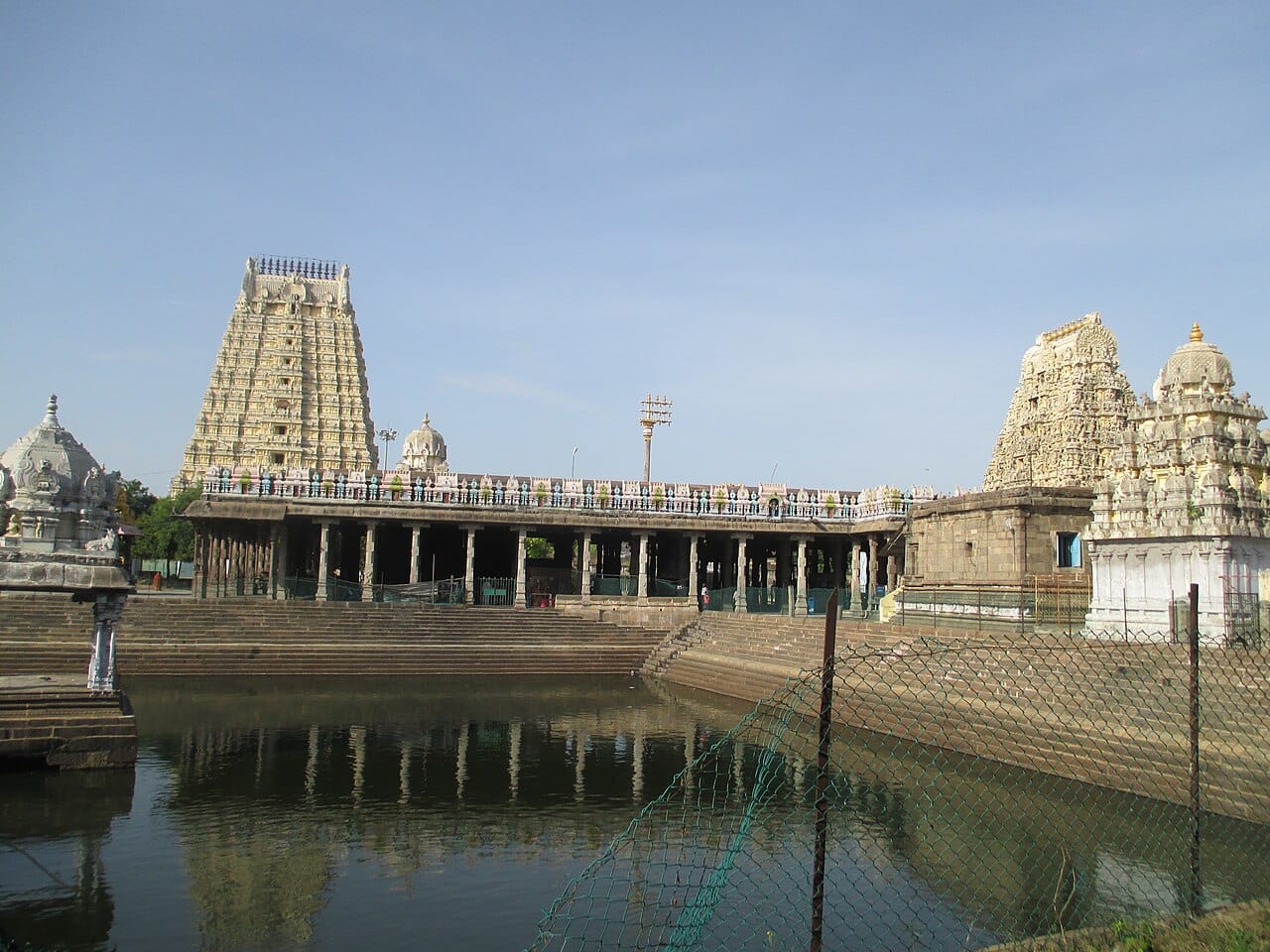
Ekambareswarar Temple
Ekambareswarar Temple in Kanchipuram represents the earth element (Prithvi) of the Pancha Bhoota Sthalas.
Explore Temple
Tamil Nadu
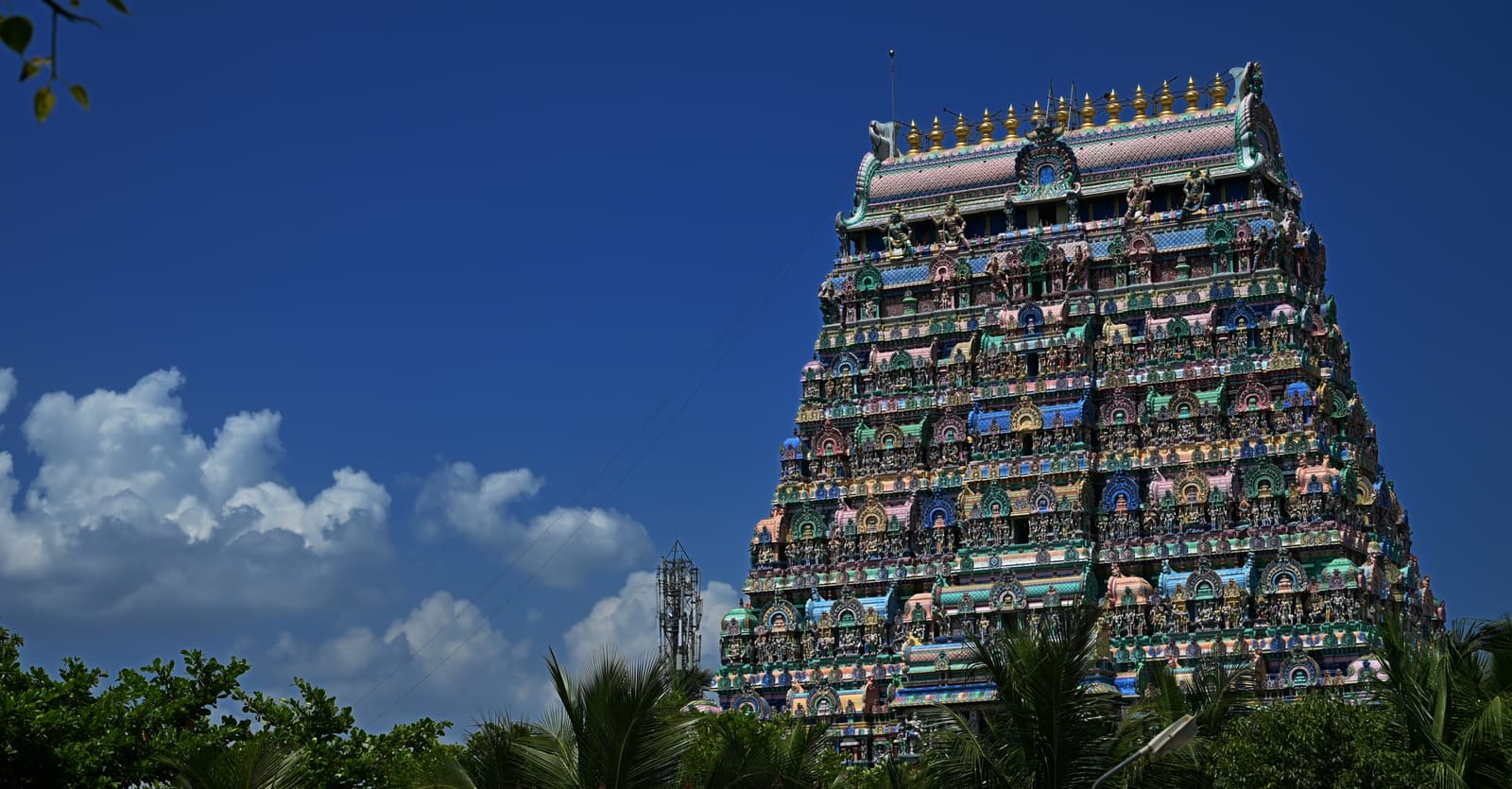
Jambukeswarar Temple
Jambukeswarar Temple in Thiruvanaikaval represents the water element (Apas) of the Pancha Bhoota Sthalas.
Explore Temple
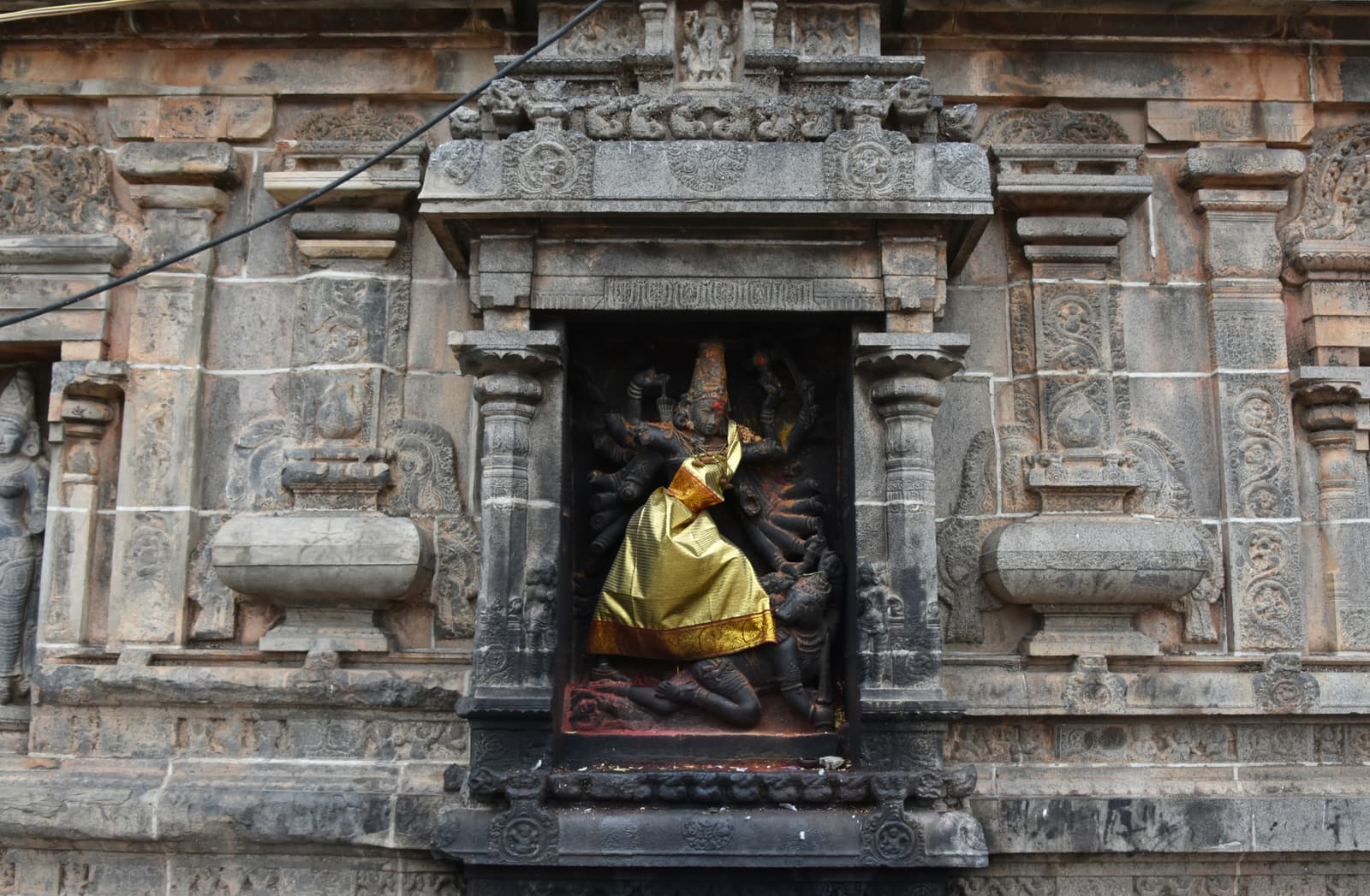
Tamil Nadu
Nataraja Temple
Chidambaram Nataraja Temple represents the space element (Akasha) of the Pancha Bhoota Sthalas.
Explore Temple
Explore More in Tamil Nadu
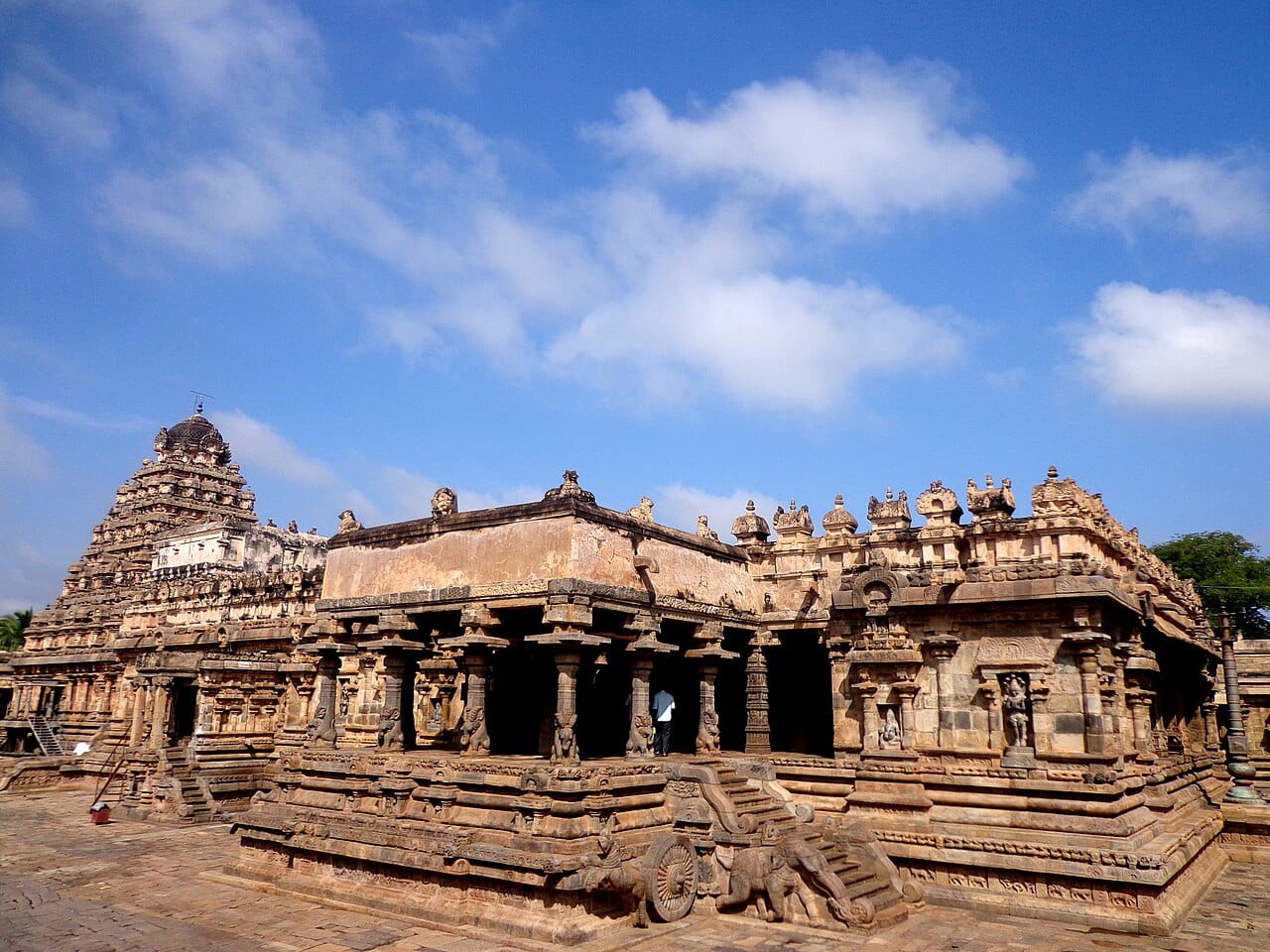
UNESCO 2004Cultural Heritage
Tamil Nadu
Airavatesvara Temple
The Airavatesvara Temple at Darasuram, built by Rajaraja Chola II between 1146 and 1172 CE…
Explore Temple

UNESCO 2004Cultural Heritage
Tamil Nadu
Gangaikonda Cholapuram Temple
The Gangaikonda Cholapuram Temple, built by Rajendra Chola I in 1035 CE, is a UNESCO…
Explore Temple

Tamil Nadu
Kampaheswarar Temple
Kampaheswarar Temple in Tribhuvanam, built by Kulothunga Chola III in 1202 CE, is one of…
Explore Temple

Tamil Nadu
Koranganatha Temple
Koranganatha Temple, built during the reign of the Chola king Parantaka I (907-955 CE) at…
Explore Temple
Heritage Fact
"The Shore Temple at Mahabalipuram is one of the oldest structural stone temples of South India."