Sacred Destinations
Tamil Nadu
17Sacred Sites
6UNESCO Heritage
10Major Temples
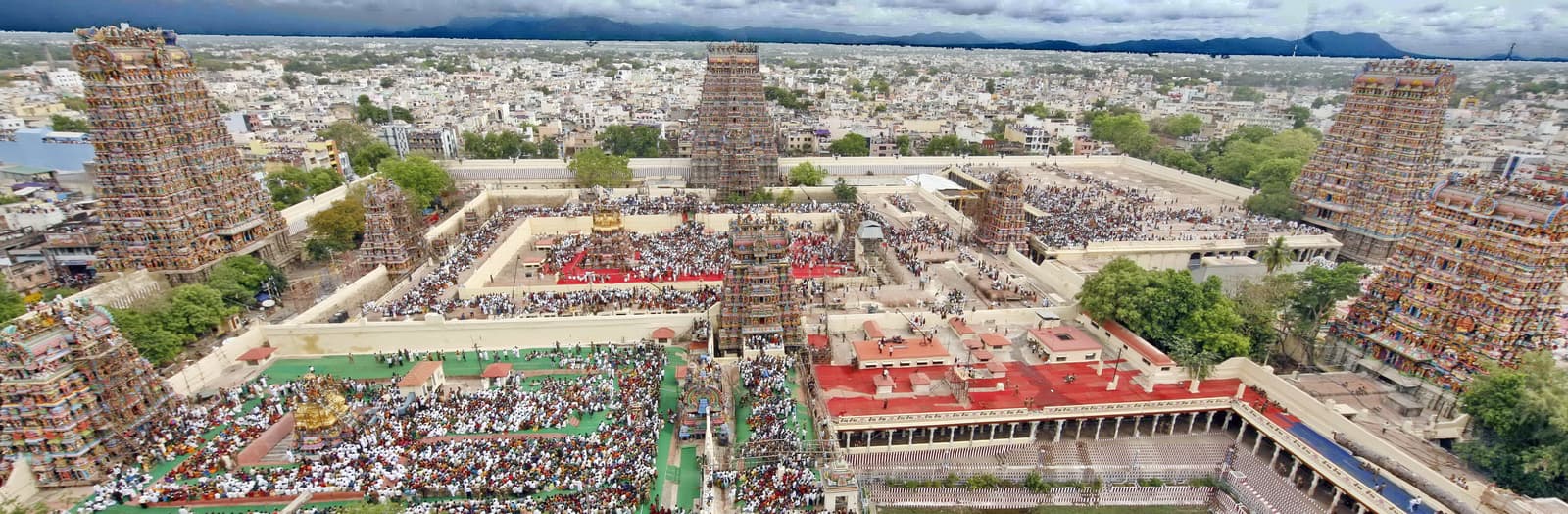
Tamil Nadu, the southernmost state of India, is the heartland of Dravidian temple architecture and the repository of a continuous temple-building tradition spanning over 1,500 years. The state contains the highest concentration of large temple complexes in India, including three UNESCO World Heritage sites: the Great Living Chola Temples at Thanjavur, Gangaikondacholapuram, and Darasuram; the Group of Monuments at Mahabalipuram; and the temples within the Nilgiri Mountain Railway and Western Ghats clusters.
Quick Facts
Capital
Chennai
Population
72.1 million
Area
130,058 km²
Languages
Tamil
Best Time to Visit
November to February
Major Pilgrimage
Char Dham, Pancha Bhoota Sthalas, 276 Paadal Petra Sthalams, 108 Divya Desams
Temple Style
Dravidian (Gopuram, Vimana)
UNESCO Count
3 temple clusters
Major River
Kaveri, Palar, Vaigai
Highest Peak
Doddabetta (2,637 m)
Why Visit Tamil Nadu
Tamil Nadu's temple tradition is among the oldest continuously practiced in the world, with documented structural temples from the 7th century Pallava period onward. The state's sacred geography is organized around multiple pilgrimage circuits, including the 276 Paadal Petra Sthalams (Shiva temples revered in Tamil Tevaram hymns), the 108 Divya Desams (Vishnu temples glorified by the Alvar saints), the Pancha Bhoota Sthalas (five elemental Shiva temples), the Arupadai Veedu (six abodes of Murugan), and the Navagraha temples (nine planetary shrines). Each circuit represents a distinct theological and poetic tradition, preserved through uninterrupted liturgical practice.
Tamil Nadu is the only region in India where an unbroken tradition of temple construction from the 7th century to the present day can be traced across every historical period: Pallava (600-900 CE), Chola (850-1250 CE), Pandya (1250-1350 CE), Vijayanagara (1350-1565 CE), and Nayak (1565-1750 CE). The state also preserves the earliest known inscriptions in the Tamil language, the most extensive collections of bronze sculptures (especially Chola Nataraja bronzes), and the complete corpus of Saiva and Vaishnava devotional literature that forms the foundation of the Bhakti movement.
Temple Categories
Shiva Temples
276Thousands of Shaivite shrines including the 276 Paadal Petra Sthalams and Pancha Bhoota Sthalas.
Vishnu Temples
84The 108 Divya Desams include temples across Tamil Nadu sung by the Alvar saints.
Shakti Temples
50Major Devi temples including the Meenakshi Temple and Kamakshi Temple at Kanchipuram.
Murugan Temples
12The Arupadai Veedu (six abodes) plus numerous hilltop Murugan shrines.
UNESCO Temples
3Great Living Chola Temples and Group of Monuments at Mahabalipuram.
Navagraha Temples
9Nine planetary shrines around Kumbakonam, each dedicated to a celestial body.
Featured Sacred Places
UNESCO 2004Cultural Heritage
Tamil Nadu
Airavatesvara Temple
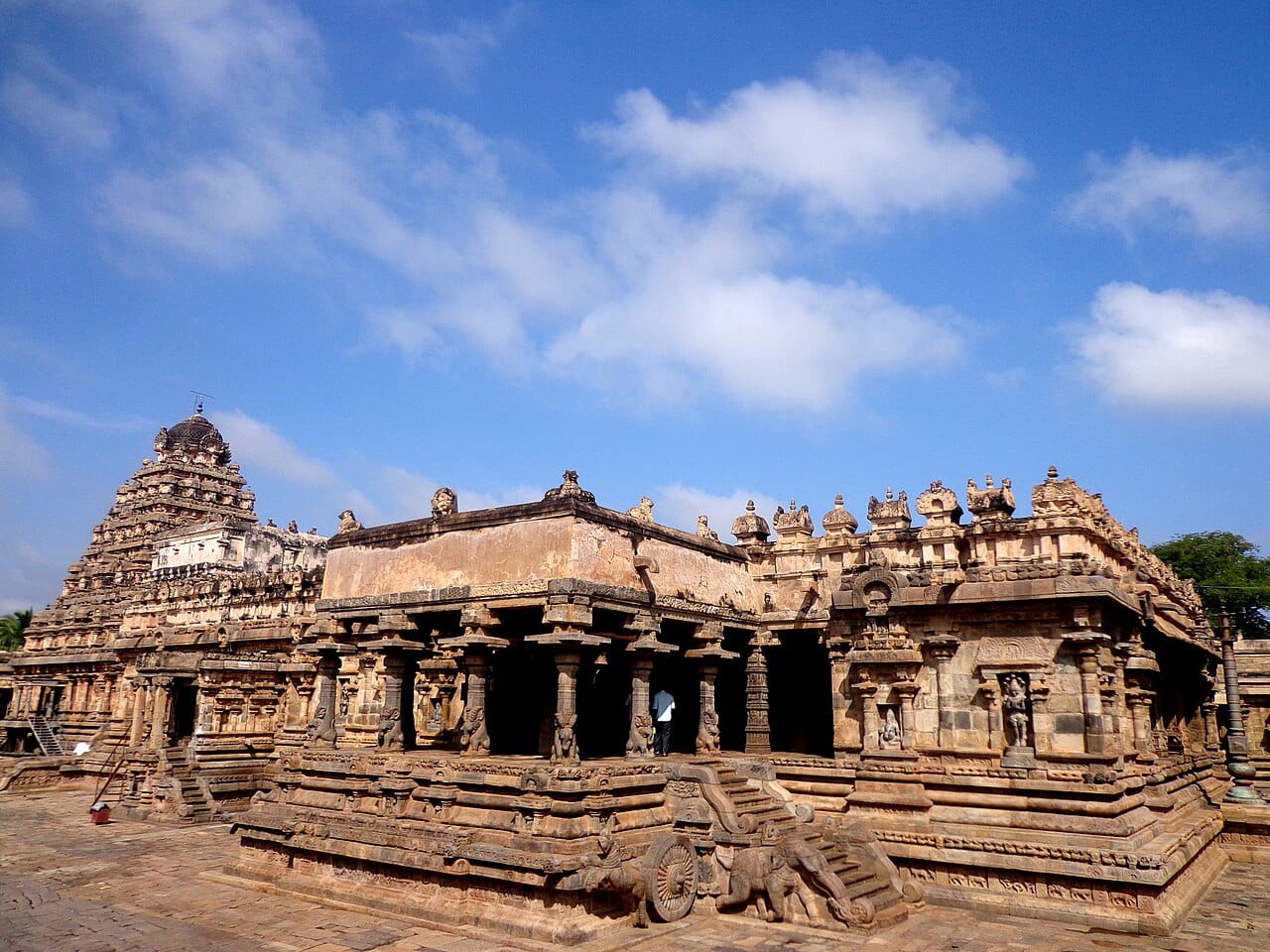
The Airavatesvara Temple at Darasuram, built by Rajaraja Chola II between 1146 and 1172 CE, is one of the three UNESCO World Heritage 'Great Living Chola Temples.' It is renowned…
Explore Temple

UNESCO 2004Cultural Heritage
Tamil Nadu
Gangaikonda Cholapuram Temple
The Gangaikonda Cholapuram Temple, built by Rajendra Chola I in 1035 CE, is a UNESCO World Heritage 'Great Living Chola Temple.' Its 53-metre vimana with recessed corners and six pairs…
Explore Temple

Tamil Nadu
Kampaheswarar Temple
Kampaheswarar Temple in Tribhuvanam, built by Kulothunga Chola III in 1202 CE, is one of the later great Chola temples and completes the quartet of magnificent Chola stone temples alongside…
Explore Temple

Tamil Nadu
Koranganatha Temple
Koranganatha Temple, built during the reign of the Chola king Parantaka I (907-955 CE) at Srinivasanallur near Tiruchirappalli, is a well-preserved example of early Chola architecture with exquisite stone carvings.
Explore Temple

Tamil Nadu
Pancha Rathas
The Pancha Rathas (Five Chariots) are a set of five monolithic temple structures carved from single granite outcrops during the reign of Narasimhavarman I (Mamalla, 630-668 CE) in Mahabalipuram.
Explore Temple

Tamil Nadu
Olakkaneswara Temple
Olakkaneswara Temple, located on a rocky outcrop at the southern end of Mahabalipuram beach, was built by the Pallavas in the 7th century.
Explore Temple
Pilgrimage Circuits
Pancha Bhoota Sthalas
5 templesFive temples representing the five classical elements: Earth (Kanchipuram), Water (Tiruvanaikaval), Fire (Tiruvannamalai), Air (Srikalahasti), Space (Chidambaram).
Arupadai Veedu
6 templesSix sacred abodes of Lord Murugan spread across Tamil Nadu, each with unique architectural and mythological significance.
ThiruparankundramThiruchendurPalaniSwamimalaiPazhamudircholaiThiruthinagari
Navagraha Temples
9 templesNine planetary temples around Kumbakonam where each shrine is dedicated to a specific celestial body.
Surya TempleChandra TempleAngaraka TempleBudha TempleBrihaspati TempleShukra TempleShani TempleRahu TempleKetu Temple
Divya Desams
84 temples108 Vishnu temples glorified in the Divya Prabandham by the 12 Alvar saints (6th-9th centuries CE).
Srirangam RanganathaswamyTirumala VenkateswaraKanchipuram VaradharajaTirunelveli Nellaiappar
Paadal Petra Sthalams
276 temples276 Shiva temples revered in the Tevaram hymns by Sambandar, Appar, and Sundarar (6th-8th centuries CE).
The state supports several pilgrimage circuits. The Char Dham Yatra in South India includes Srirangam, Rameswaram, Tirumala, and Kanchipuram. The Pancha Bhoota Sthalas circuit covers Ekambareswarar (Earth, Kanchipuram), Jambukeswarar (Water, Tiruvanaikaval), Arunachaleswarar (Fire, Tiruvannamalai), Nataraja (Space, Chidambaram), and Srikalahasti (Air, Andhra Pradesh). The Arupadai Veedu circuit visits the six Murugan temples at Thiruchendur, Palani, Swamimalai, Thiruparankundram, Pazhamudircholai, and Thiruthinagari. The Navagraha circuit covers nine temples dedicated to planetary deities around Kumbakonam. The 63 Nayanmar Shaiva saints' birthplaces form a hagiographic pilgrimage route across the Tamil region.
Temple Architecture
Tamil Nadu temple architecture follows the Dravidian style, characterized by five principal elements: the vimana (pyramidal tower over the sanctum), gopuram (multi-storied gateway tower), mandapa (pillared hall), prakara (enclosure wall), and teppakulam (temple tank). The Chola period perfected the vimana, as seen at Thanjavur's 13-tiered structure. The Pandya and Nayak periods shifted emphasis to gopurams, with increasingly elaborate sculptural programs. The Madurai Meenakshi Temple's west gopuram rises 52 meters and is covered with over 1,500 stucco figures. The Srirangam temple complex spans seven concentric enclosures covering 156 acres, with 21 gopurams and a thousand-pillar mandapa.
Architectural Styles
Historical Timeline
c. 630 CEPallava
Pallava king Mahendravarman I builds rock-cut cave temples at Mahabalipuram, the earliest Tamil sacred architecture.
c. 700 CEPallava
Kailasanathar Temple at Kanchipuram, the first structural stone temple in Tamil Nadu, built by Rajasimha Pallava.
c. 850 CEChola
Start of the Chola dynasty; Vijayalaya Chola builds the Vijayalaya Choleeswaram temple.
1010 CEChola
Brihadeeswarar Temple at Thanjavur completed by Rajaraja Chola I; tallest vimana in India at 66 meters.
c. 1250 CEPandya
Pandya expansion of gopurams at Madurai, Srirangam, and Rameswaram begins.
c. 1370 CEVijayanagara
Vijayanagara Empire takes control; expansion of existing temple complexes with pillared mandapas.
1565 CENayak
Battle of Talikota; Nayak governors become independent rulers of Madurai, Thanjavur, and Gingee.
17th c. CENayak
Meenakshi Temple completed in its present form under Nayak rulers Tirumalai Nayak and Rani Mangammal.
UNESCO Heritage Sites
Tamil Nadu has 4 UNESCO World Heritage temples.
Great Living Chola Temples — Brihadeeswarar Temple
Thanjavur · UNESCO 1987
The principal temple of the Great Living Chola Temples UNESCO site, a masterpiece of Dravidian architecture.
Explore
Shore Temple, Mahabalipuram
Mahabalipuram · UNESCO 1984
One of the oldest structural stone temples of South India, built by the Pallava dynasty on the Bay of Bengal coast.
Explore
Airavatesvara Temple
Kumbakonam (Darasuram) · UNESCO 2004
The Airavatesvara Temple at Darasuram, built by Rajaraja Chola II between 1146 and 1172 CE, is one of the three UNESCO World Heritage 'Great Living Chola Temples.' It is renowned…
Explore
Gangaikonda Cholapuram Temple
Gangaikonda Cholapuram · UNESCO 2004
The Gangaikonda Cholapuram Temple, built by Rajendra Chola I in 1035 CE, is a UNESCO World Heritage 'Great Living Chola Temple.' Its 53-metre vimana with recessed corners and six pairs…
Explore
Temple Statistics
36,000+
Total Temples
Largest concentration of temples in India
3
UNESCO Sites
Great Living Chola Temples, Mahabalipuram, Western Ghats
c. 630 CE
Oldest Temple
Rock-cut caves at Mahabalipuram
156 acres
Largest Temple
Srirangam Ranganathaswamy Temple
5+
Pilgrimage Routes
Pancha Bhoota, Arupadai, Navagraha, Divya Desam, Paadal Petra
1,200+
Protected Monuments
Under ASI and state archaeology
5
Major Dynasties
Pallava, Chola, Pandya, Vijayanagara, Nayak
Festivals
Meenakshi Tirukalyanam
April-MayMeenakshi Temple, Madurai
10 days
Divine wedding of Meenakshi, towering wooden chariot procession through city streets.
Natyanjali Dance Festival
February-MarchNataraja Temple, Chidambaram
5 days
Classical dancers perform in the golden hall, Shiva as cosmic dancer.
Mahamaham
Every 12 yearsMahamaham Tank, Kumbakonam
10 days
Millions bathe in sacred tank; next in 2032.
Margazhi Festival
December-JanuarySrirangam Ranganathaswamy
30 days
Daily chariot processions, classical music concerts at dawn.
Car Festival
AprilThyagaraja Temple, Tiruvaiyaru
3 days
Massive wooden chariot pulled by thousands along the Kaveri riverbed.
Tamil Nadu's temple festivals are among the most elaborate in India. The Meenakshi Tirukalyanam (divine wedding) in Madurai during April-May draws over a million participants across ten days, featuring the chariot festival (rath yatra) where the deities are taken through the city in ornately carved wooden chariots. The Natyanjali festival at Chidambaram's Nataraja Temple during February-March brings classical dancers from across India. The Mahamaham festival at Kumbakonam every 12 years attracts millions for a ritual bath in the Mahamaham tank. The Brahmotsavam at Srirangam and Tirumala feature daily processions on different vahanams (vehicles), from the silver peacock to the golden Garuda.
Travel Guide
Best Time
November to February (20-30°C)
Climate
Hot semi-arid; summer up to 42°C, winter 18-32°C
Nearest Airport
Chennai (MAA), Madurai (IXM), Tiruchirappalli (TRZ)
Railway
Extensive network; Chennai-Madurai- Kanniyakumari corridor
Road
NH-44 (N-S corridor), NH-45, NH-66 coastal route
Local Transport
State buses, private cabs, auto-rickshaws
Temple Etiquette
Remove footwear, cover shoulders/knees
Suggested Duration
7-14 days for key temple circuits
Nearby Attractions
Heritage town
Puducherry
French colonial quarter with Dravidian temples and Sri Aurobindo Ashram.
Hill station
Kodaikanal
Misty hill station with star-shaped lake and pine forests at 2,133 meters.
Wildlife
Mudumalai National Park
Tiger reserve at tri-junction of Tamil Nadu, Karnataka, Kerala.
Heritage town
Chettinad
Mansion district with distinct cuisine, unique architecture, and vibrant festivals.
Beach
Kanyakumari
Southernmost tip of mainland India; conflux of Arabian Sea, Bay of Bengal, Indian Ocean.
Interesting Facts
01
Tamil Nadu has the highest density of large temple complexes in India, with over 36,000 temples documented by the Tamil Nadu Hindu Religious and Charitable Endowments Department.
02
The Brihadeeswarar Temple's vimana (tower) was the tallest structure in India for nearly 1,000 years at 66 meters.
03
The Srirangam Ranganathaswamy Temple is the largest functioning Hindu temple complex in the world, covering 156 acres within seven concentric walls.
04
The Chola bronze castings, especially the Nataraja (dancing Shiva) sculptures, are considered among the finest metal artworks ever produced.
05
Tamil Nadu contains the earliest known inscriptions in the Tamil language, dating to the 2nd century BCE.
06
The Meenakshi Temple's west gopuram is covered with over 1,500 stucco figures of deities, demons, and mythological scenes.
07
The state's temple festivals follow the Tamil solar calendar, with major events aligned to specific nakshatras (lunar mansions).
Frequently Asked Questions
Tamil Nadu's concentration of large temples results from continuous dynastic patronage across 1,500 years, the wealth generated by the Kaveri delta's agricultural surplus, and the preservation of temple rituals through the Agama tradition. Unlike northern India, where many temples were destroyed during invasions, Tamil Nadu's temple complexes survived relatively intact.
The Ranganathaswamy Temple at Srirangam, covering 156 acres within seven concentric enclosures, is the largest functioning Hindu temple in the world. The Meenakshi Temple complex in Madurai is the second largest, covering 45 acres with 14 gopurams.
Tamil Nadu has three UNESCO temple sites as standalone designations: the Great Living Chola Temples (Thanjavur, Gangaikondacholapuram, and Darasuram), the Group of Monuments at Mahabalipuram, and the Nilgiri Mountain Railway (which passes near several temples). The Western Ghats UNESCO listing also includes temple sites.
The Paadal Petra Sthalams are 276 Shiva temples in Tamil Nadu and northern Sri Lanka that are sung in the Tevaram hymns by the three Nayanmar saints: Sambandar, Appar, and Sundarar, who lived between the 6th and 8th centuries CE.
The Kailasanathar Temple at Kanchipuram, built around 700 CE by the Pallava king Rajasimha, is the oldest standing structural stone temple in Tamil Nadu. The rock-cut cave temples at Mahabalipuram date to the 630s CE, making them the oldest Tamil sacred architecture.
The gopuram is a multi-storied gateway tower adorned with stucco figures of deities, mythical beings, and animals. It evolved from modest Pallava gateways to towering Nayak-era structures exceeding 50 meters. The gopuram serves both as an architectural landmark visible from great distances and as a hierarchical transition from the secular to the sacred.
The Meenakshi Temple's southern gopuram, at 51.9 meters (170 feet), is the tallest in the Meenakshi complex and among the tallest in Tamil Nadu. The Srirangam temple's Rajagopuram, if completed to original plans, would have been the tallest at 73 meters.
Sources & References
These records back the history, architecture, temple listings and visitor guidance published on this Tamil Nadu page.
Archaeological Survey of India
Archaeological Survey of India — monument records and conservation reports
Protected-monument status, dating, architectural classification and conservation records for the temples and monuments named across this Tamil Nadu guide.
Primary archaeological record
Open source (opens in a new tab)Ministry of Tourism, Government of India
Ministry of Tourism — official destination information
Official Government of India visitor information, access routes and pilgrimage circuits for Tamil Nadu.
Government record
Open source (opens in a new tab)Tamil Nadu Tourism
Tamil Nadu Tourism — official destination portal
State visitor information — temple timings, access routes and pilgrimage circuit details cited on this page.
Government record
Open source (opens in a new tab)UNESCO World Heritage Centre
UNESCO World Heritage List — World Heritage Sites in Tamil Nadu
Inscription criteria, listing year and Outstanding Universal Value statements for the 2 World Heritage Sites in Tamil Nadu covered on this page (Great Living Chola Temples — Brihadeeswarar Temple, Shore Temple, Mahabalipuram).
World Heritage documentation
Open source (opens in a new tab)
— every record linked above was re-requested for this release, so the link still resolves and the publisher still serves the document. It is a link check, not a re-verification of every sentence on this page.
Missing something, or found an error? Send us a correction with the record that supports it, or read how we choose sources.