Sacred Destinations
Karnataka
20Sacred Sites
6UNESCO Heritage
10Major Temples
Karnataka is the crucible of Indian temple architecture, where the Nagara, Dravida, and Vesara styles converged under the patronage of the Chalukyas, Rashtrakutas, Hoysalas, and Vijayanagara Empire. The state's sacred landscape includes the UNESCO World Heritage Site of Pattadakal, the Vijayanagara ruins at Hampi (also UNESCO), the Hoysala masterpieces at Belur and Halebidu, and the colossal Jain monolith at Shravanabelagola.
Quick Facts
Capital
Bengaluru
Population
67.6 million
Area
191,791 km²
Languages
Kannada, Tulu, Konkani
Best Time to Visit
November to February
Major Pilgrimage
Hampi, Pattadakal, Belur, Halebidu, Udupi, Shravanabelagola
Temple Style
Chalukya, Hoysala (Vesara), Vijayanagara
UNESCO Count
2 (Pattadakal, Hampi)
Major River
Krishna, Kaveri, Tungabhadra
Highest Peak
Mullayanagiri (1,930 m)
Why Visit Karnataka
Karnataka's temple heritage is defined by its role as the meeting ground of India's three principal architectural traditions. The Chalukyas of Badami (6th-8th century) produced the earliest Nagara-Dravida synthesis at Aihole, Badami, and Pattadakal. The Rashtrakutas (8th-10th century) contributed Jain temples at Kuknur. The Hoysalas (11th-14th century) developed the most intricate Vesara style at Belur, Halebidu, and Somanathapura with star-shaped plans and soapstone carvings. The Vijayanagara Empire (14th-16th century) built the vast temple complexes of Hampi.
Karnataka contains one UNESCO site dedicated to temple architecture (Pattadakal) plus temples within the Hampi UNESCO site. The Murudeshwar Temple houses the second-tallest Shiva statue in the world at 123 feet. Gokarna Mahabaleshwar Temple is known as the 'Kashi of the South.' The Udupi Sri Krishna Temple, established by Madhvacharya in the 13th century, is the headquarters of Dvaita Vedanta. Shravanabelagola's Gommateshwara statue is the tallest monolithic Jain statue in the world.
Temple Categories
Chalukya Temples
125Pattadakal, Aihole, Badami — early synthesis of Nagara and Dravida styles.
Hoysala Temples
3Belur, Halebidu, Somanathapura — star-shaped, intricate soapstone carvings.
Vijayanagara Temples
10Hampi complex — massive gopurams, yali pillars, large-scale temple cities.
Jain Monuments
5Shravanabelagola, Karkala, Moodabidri — monolithic statues and basadis.
Coastal Temples
5Gokarna, Murudeshwar, Udupi — Kadamba and Vijayanagara-era shrines.
Featured Sacred Places
UNESCO 1986Cultural Heritage
Karnataka
Virupaksha Temple
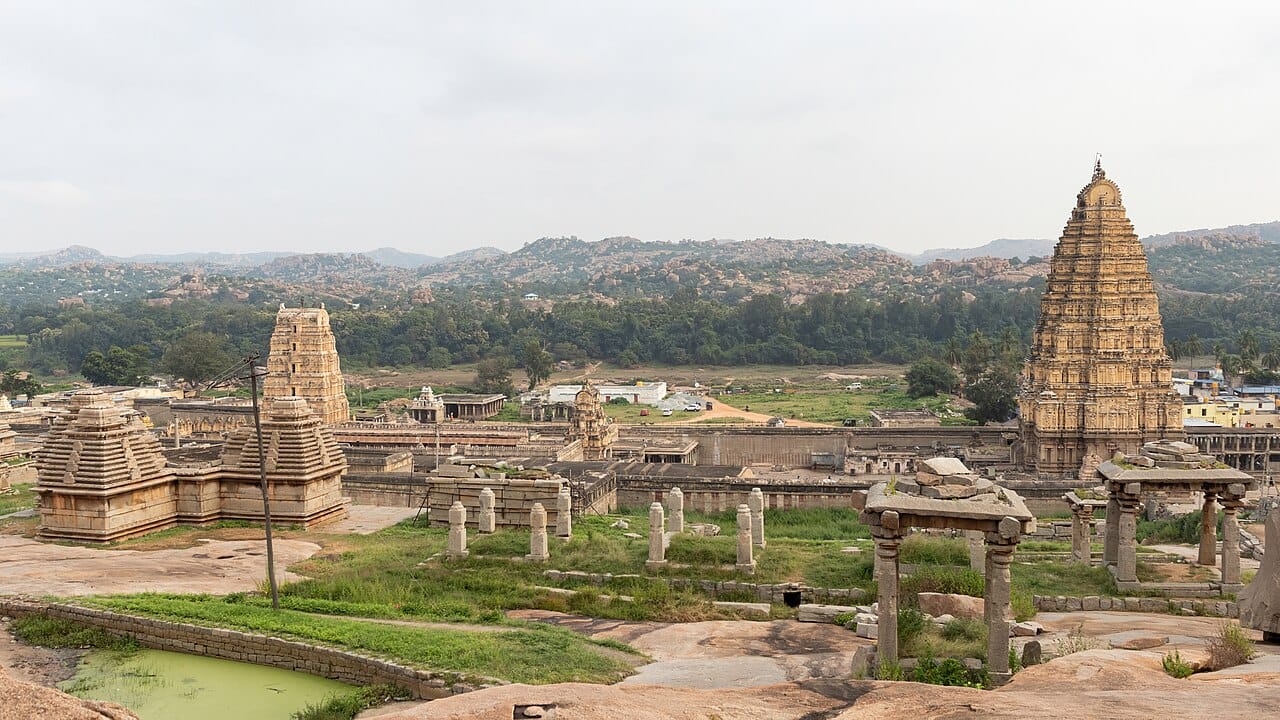
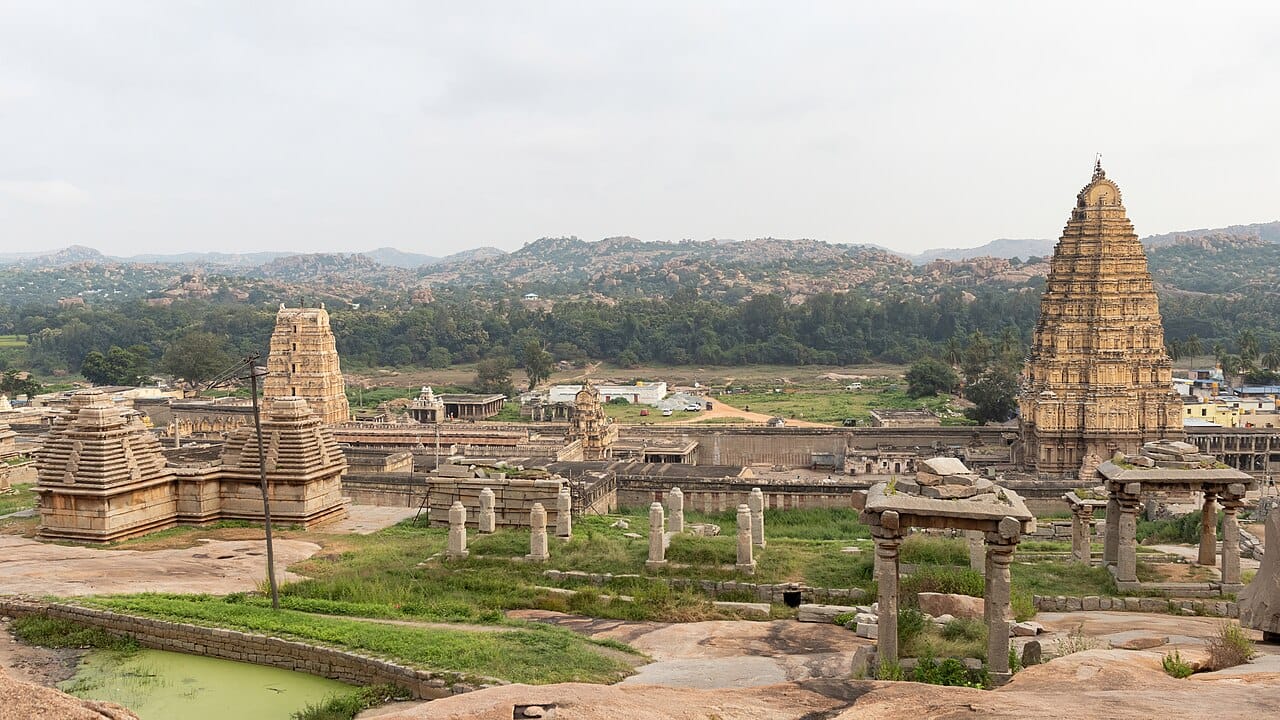
The Virupaksha Temple in Hampi, Karnataka, is a UNESCO World Heritage Site and the oldest functioning temple in India, dedicated to Lord Shiva as Virupaksha.
Explore Temple
Karnataka
Chamundeshwari Temple
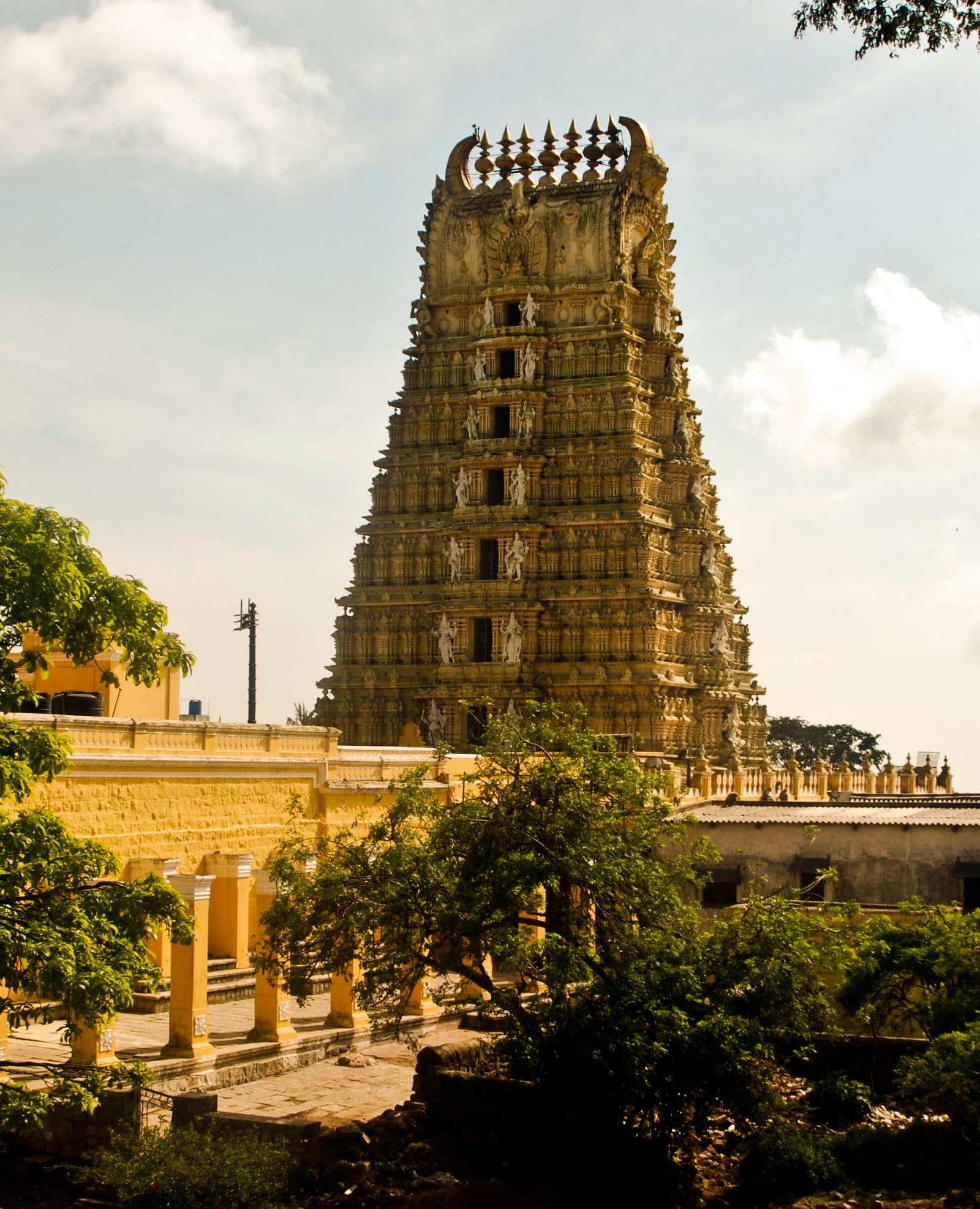
Perched atop Chamundi Hills at 3,489 feet, the Chamundeshwari Temple is the tutelary shrine of the Wodeyar dynasty of Mysore.
Explore Temple
Karnataka
Badami Cave Temples
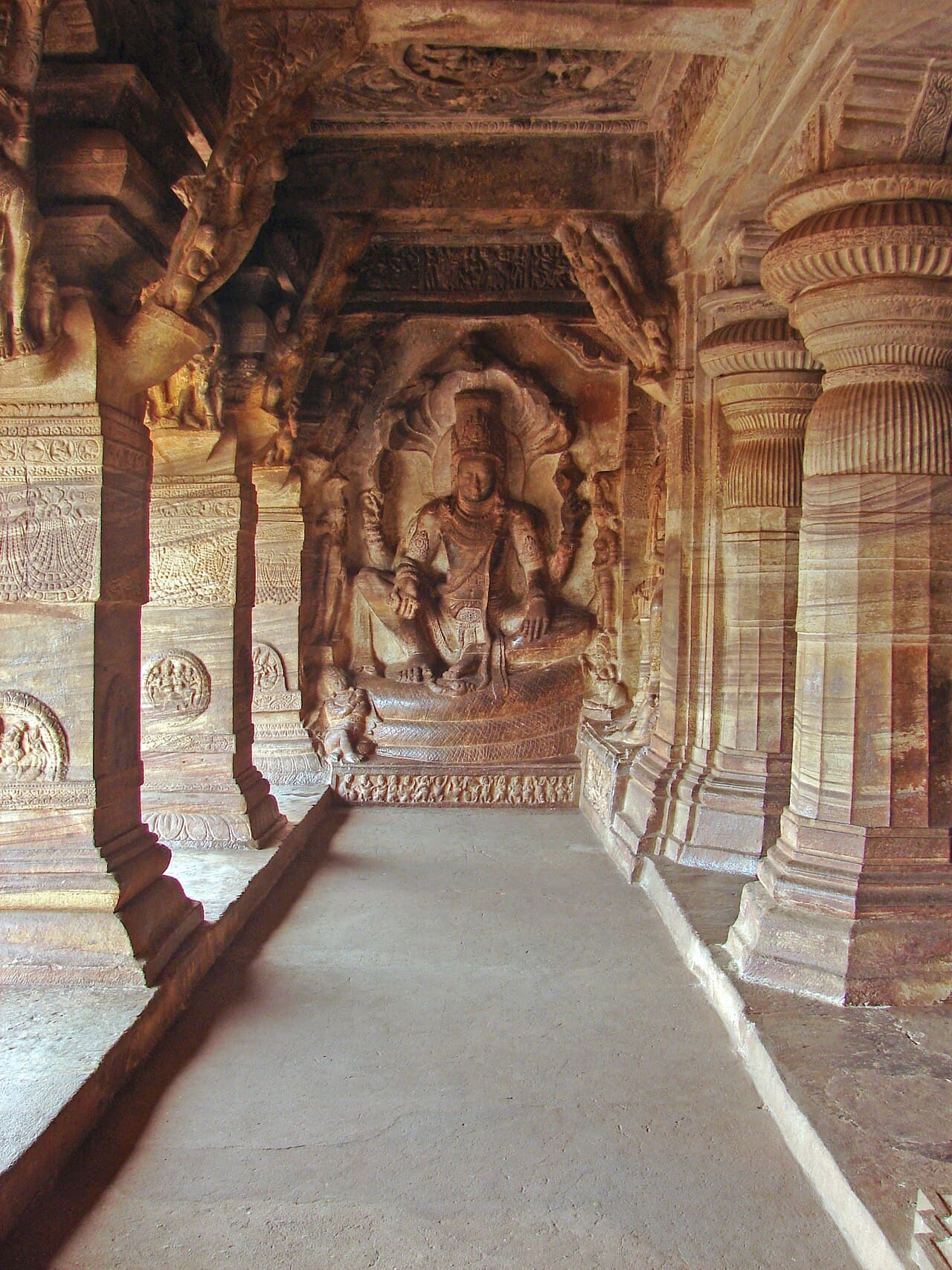
The Badami Cave Temples are a complex of four rock-cut cave temples carved into the soft sandstone cliffs of Badami, the capital of the Early Chalukya dynasty.
Explore Temple

Karnataka
Durga Temple
The Durga Temple at Aihole, built in the 7th-8th century CE, is a distinctive architectural experiment of the Early Chalukya period.
Explore Temple
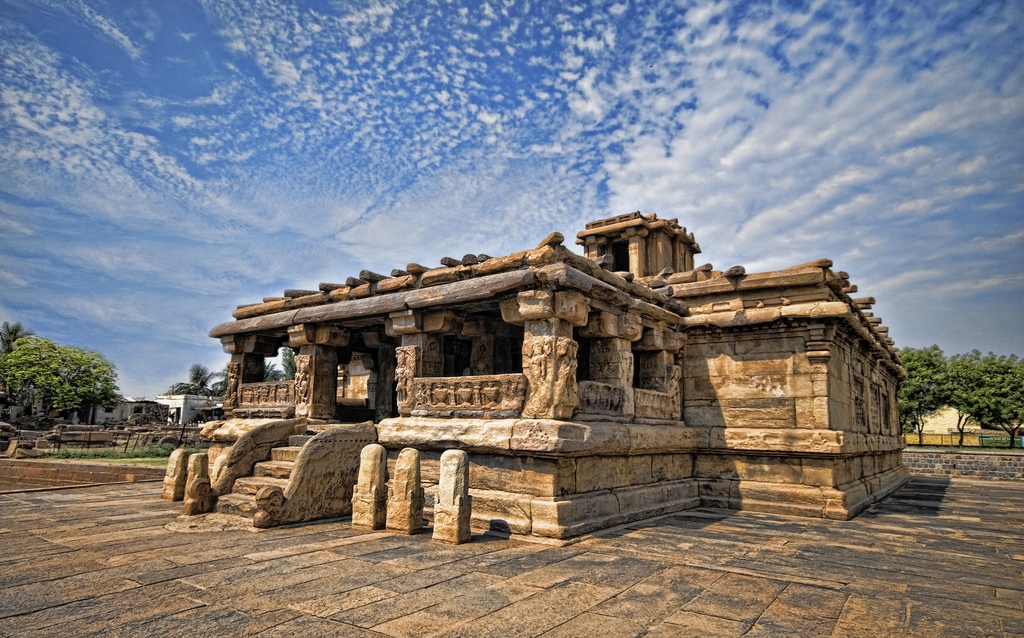
Karnataka
Lad Khan Temple
The Lad Khan Temple at Aihole is a pivotal monument in Early Chalukya architecture.
Explore Temple

Karnataka
Meguti Temple
The Meguti Temple atop the Aihole hill is a Jain temple built in 634 CE by Ravikirti, the court poet of the Chalukya emperor Pulakeshin II.
Explore Temple
Pilgrimage Circuits
Hoysala Heritage Circuit
4 templesBelur, Halebidu, Somanathapura, and Shravanabelagola in central Karnataka.
Chennakeshava Temple BelurHoysaleswara Temple HalebiduKeshava Temple SomanathapuraGommateshwara Shravanabelagola
Coastal Temple Circuit
4 templesGokarna, Murudeshwar, Udupi, and Mangalore along the Arabian Sea coast.
Vijayanagara Circuit
6 templesVirupaksha, Vittala, Krishna, and other major temples within the Hampi UNESCO site.
The Hoysala circuit connects Belur, Halebidu, Somanathapura, and Shravanabelagola. The coastal circuit covers Gokarna, Murudeshwar, Udupi, and Mangalore. The Hampi circuit includes Virupaksha, Vittala, and other Vijayanagara temples. The Jain circuit runs through Shravanabelagola, Karkala, Moodabidri, and Humcha.
Temple Architecture
Chalukya style at Pattadakal blends northern shikharas with southern vimanas; the Virupaksha Temple (740 CE) is the finest example. Hoysala style uses chloritic schist (soapstone) for intricate carving, with star-shaped platforms and lathe-turned pillars, best seen at the Chennakeshava Temple, Belur. Vijayanagara style features massive gopurams, elaborate pillared mandapas, and yali pillars, seen in the Vittala Temple at Hampi with its musical pillars.
Architectural Styles
Historical Timeline
543-753Chalukya
Early Chalukyas build over 125 temples at Aihole, pioneering the synthesis of northern and southern styles.
740Chalukya
Virupaksha Temple at Pattadakal, the finest Chalukya temple, built by Queen Lokamahadevi.
983Ganga
Gommateshwara monolith at Shravanabelagola commissioned by Chavundaraya.
1117Hoysala
Chennakeshava Temple at Belur completed under Hoysala king Vishnuvardhana.
1336-1646Vijayanagara
Vijayanagara Empire builds the temple city of Hampi along the Tungabhadra River.
UNESCO Heritage Sites
Karnataka has 3 UNESCO World Heritage temples.
Hampi Group (Virupaksha Temple)
Hampi · UNESCO 1986
The Virupaksha Temple is the most iconic monument of Hampi, a UNESCO World Heritage site representing the Vijayanagara Empire.
Explore
Monuments at Pattadakal
Pattadakal · UNESCO 1987
A UNESCO World Heritage site showcasing the unique blend of Nagara and Dravidian temple architecture from the Chalukya dynasty.
Explore
Sacred Ensembles of the Hoysalas — Chennakeshava Temple
Belur · UNESCO 2023
A UNESCO World Heritage ensemble of three Hoysala temples known for their star-shaped platforms and hyper-real soapstone carvings.
Explore
Temple Statistics
2
UNESCO Sites
Pattadakal, Hampi
6th c.
Oldest Temple
Aihole, Chalukya period
123 ft
Tallest Shiva Statue
Murudeshwar (second-tallest in world)
57 ft
Largest Monolith
Gommateshwara statue
Festivals
Hampi Utsav
NovemberVirupaksha Temple, Hampi
3 days
Cultural festival with music, dance, and processions against the illuminated Vijayanagara ruins.
Mahamastakabhisheka
Once per 12 yearsShravanabelagola
3 days
Anointment of the 57-foot Gommateshwara statue with milk, turmeric, saffron, and sandalwood paste.
Paryaya Festival
January (every 2 years)Sri Krishna Temple, Udupi
1 day
Transfer of temple management between eight matha heads; elaborate rituals and processions.
The Hampi Utsav (November) is a three-day cultural festival with music, dance, and processions against the Vijayanagara ruins. The Mahamastakabhisheka at Shravanabelagola (once every 12 years) is a spectacular Jain ceremony where the 57-foot Gommateshwara statue is anointed with milk, turmeric, and saffron. The Paryaya festival at Udupi (every two years) marks the transfer of temple management.
Travel Guide
Best Time
November to February (15-30°C)
Climate
Tropical; summer up to 40°C
Nearest Airport
Bengaluru (BLR), Hubli (HBX), Mangalore (IXE)
Railway
Hospet (Hampi), Hassan, Bengaluru
Road
NH-4, NH-48, NH-66
Local Transport
KSRTC buses, taxis, auto-rickshaws
Temple Etiquette
Remove footwear; modest dress
Suggested Duration
7-10 days for major circuits
Nearby Attractions
UNESCO site
Hampi Ruins
Vijayanagara Empire capital with 1,600+ structures including temples, palaces, and waterworks along the Tungabhadra.
Waterfall
Jog Falls
Second-highest plunge waterfall in India at 253 meters, formed by the Sharavathi River.
National Park
Bandipur National Park
Tiger reserve at the junction of the Western and Eastern Ghats, part of Nilgiri Biosphere Reserve.
Hill Station
Coorg
Coffee plantation region in the Western Ghats, known for Abbey Falls and Tibetan Buddhist monasteries.
Interesting Facts
01
Aihole once functioned as an experimental architectural school with over 125 temples testing variations of Nagara, Dravida, and Vesara styles within a 5-kilometer radius.
02
The Vittala Temple's musical pillars produce different notes when struck — each of the 56 pillars is carved from a single piece of stone with varying densities.
03
The Gommateshwara statue at Shravanabelagola was carved from a single granite boulder in 983 CE and stands 57 feet tall, visible from 20 kilometers away.
Frequently Asked Questions
The Early Chalukyas built over 125 temples at Aihole alone, making them the most prolific early dynasty. The Vijayanagara Empire built the largest temple complexes, while the Hoysalas achieved the highest artistic craftsmanship with fewer but more ornate temples.
Hoysala temples are smaller, built on star-shaped platforms with intricate soapstone carvings and detailed friezes. Vijayanagara temples are larger complexes with high gopurams, vast pillared mandapas, and distinctive yali (mythical lion-elephant) pillars.
The Virupaksha Temple at Hampi is the most historically significant as the center of the Vijayanagara Empire. The Udupi Krishna Temple is the most doctrinally important as the center of Dvaita Vedanta.
The most important Jain pilgrimage site in South India, housing the 57-foot Gommateshwara statue carved from a single granite block in 983 CE. The Mahamastakabhisheka ceremony every 12 years draws pilgrims from across the Jain world.
Sources & References
These records back the history, architecture, temple listings and visitor guidance published on this Karnataka page.
Archaeological Survey of India
Archaeological Survey of India — monument records and conservation reports
Protected-monument status, dating, architectural classification and conservation records for the temples and monuments named across this Karnataka guide.
Primary archaeological record
Open source (opens in a new tab)Ministry of Tourism, Government of India
Ministry of Tourism — official destination information
Official Government of India visitor information, access routes and pilgrimage circuits for Karnataka.
Government record
Open source (opens in a new tab)Karnataka Tourism
Karnataka Tourism — official destination portal
State visitor information — temple timings, access routes and pilgrimage circuit details cited on this page.
Government record
Open source (opens in a new tab)UNESCO World Heritage Centre
UNESCO World Heritage List — World Heritage Sites in Karnataka
Inscription criteria, listing year and Outstanding Universal Value statements for the 3 World Heritage Sites in Karnataka covered on this page (Hampi Group (Virupaksha Temple), Monuments at Pattadakal, Sacred Ensembles of the Hoysalas — Chennakeshava Temple).
World Heritage documentation
Open source (opens in a new tab)
— every record linked above was re-requested for this release, so the link still resolves and the publisher still serves the document. It is a link check, not a re-verification of every sentence on this page.
Missing something, or found an error? Send us a correction with the record that supports it, or read how we choose sources.