The Char Dham
Four sacred sites at the cardinal points of the subcontinent — Badrinath in the north, Dwarka in the west, Puri in the east, and Rameswaram in the south.
Total Dhams
4
Tradition
Vaishnava + Shaiva
Formalised By
Adi Shankaracharya (8th Century CE)
Total Circuit
~6,000 km
Cardinal Points
North, South, East, West
Oldest Site
Dwarka (1500 BCE habitation)
Highest Site
Badrinath (3,300 m)
Annual Pilgrims
~20 Million (combined)
Key Concept
Moksha (liberation)
Deities
Vishnu, Krishna, Jagannath, Shiva
Sacred Abodes
Explore each sacred site with detailed guides and visitor information.
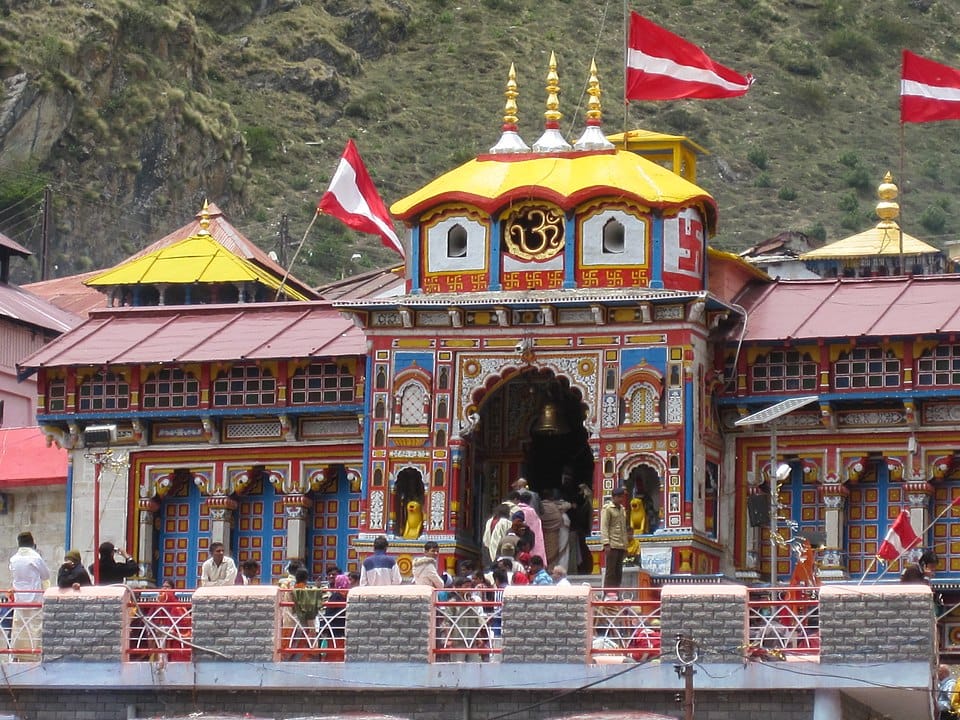
Badrinath
The Northern Dham
Presiding Deity: Lord Vishnu
Set at 3,300 m in the Garhwal Himalayas, Vishnu's meditative abode between the Nar and Narayana mountains.
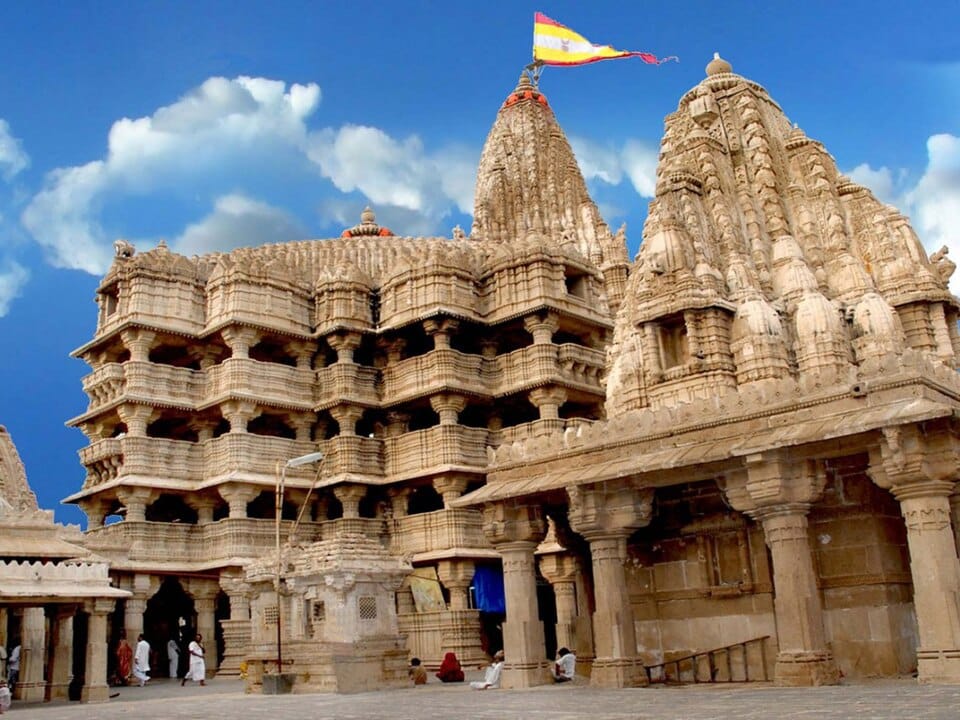
Dwarkadhish
The Western Dham
Presiding Deity: Lord Krishna
Built on the coast where Krishna ruled as king of the Yadava dynasty. The five-story spire rises above the Gomti River.
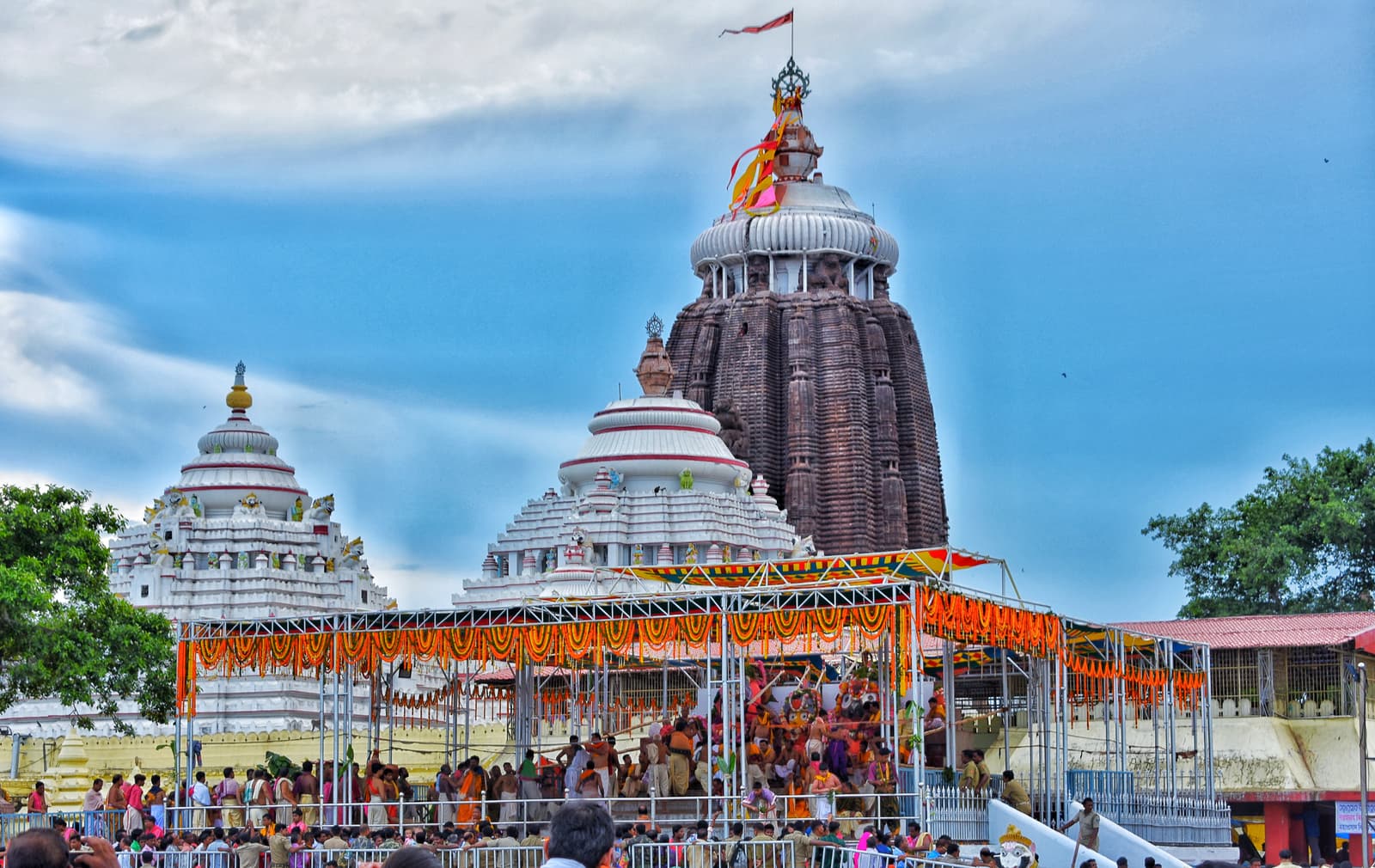
Jagannath Puri
The Eastern Dham
Presiding Deity: Lord Jagannath
Krishna worshipped as Jagannath — Lord of the Universe. The annual Rath Yatra dates to the 12th century.
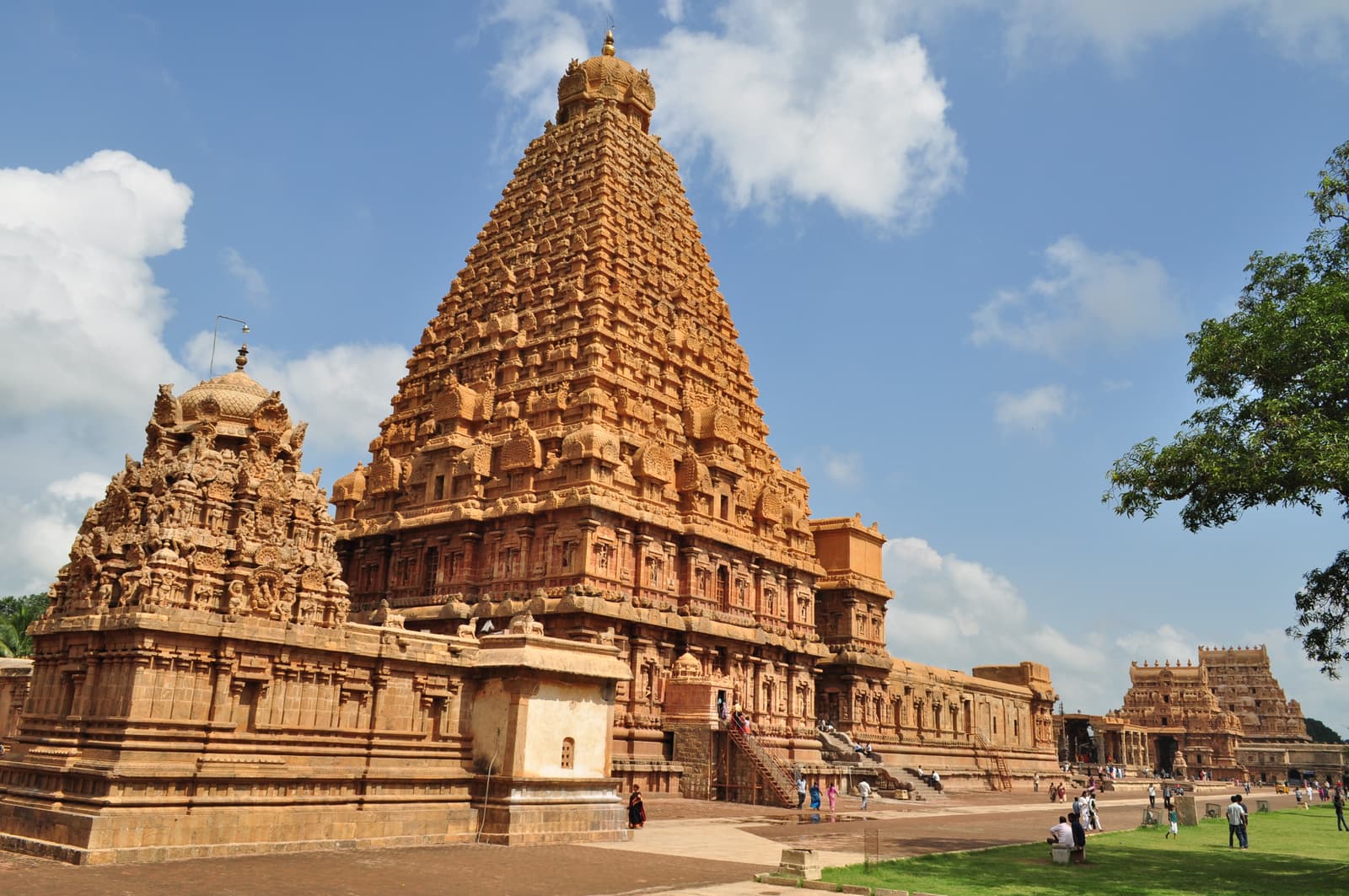
Ramanathaswamy
The Southern Dham
Presiding Deity: Lord Shiva
Rama worshipped Shiva here before crossing to Lanka. The temple has the longest corridor in the world at 1,220 m with 3,996 pillars.
The Four Dhams
The Char Dham (Sanskrit: चार धाम — 'four abodes') is a set of four sacred pilgrimage sites that represent the spiritual geography of India. Unlike the twelve Jyotirlingas, united by a single theological thread, the Char Dham brings together shrines of both Vishnu and Shiva, crossing sectarian lines to encompass the full landscape of Hindu devotion.
The four Dhams are Badrinath in the Himalayas, Dwarka on the western coast, Jagannath Puri on the eastern coast, and Rameswaram at the southern tip. Pilgrims who complete the circuit are believed to have circumnavigated the divine presence of India itself — not merely visiting temples, but tracing the outline of the sacred body of the land. The tradition is attributed to Adi Shankaracharya, the 8th-century philosopher-saint who unified Hindu theology.
Origin of the Char Dham
The four sites were sacred long before they were grouped. Badrinath is mentioned in the Mahabharata. Dwarka appears in the Mahabharata and Puranas as Krishna's city. Puri's Jagannath temple predates the 8th century. Rameswaram is described in the Ramayana. What changed in the 8th century was the formalisation of these four sites into a coherent pilgrimage circuit by Adi Shankaracharya.
Each Dham represents a distinct architectural tradition. Badrinath's temple, built in the Himalayan Nagara style, features a colourful facade and conical spire. Dwarkadhish is built in the Chalukya–Solanki style with a five-story spire rising to 78 m supported by 72 pillars. Jagannath Puri follows the Kalinga style with a 65 m deul tower. Ramanathaswamy is a classic Dravidian complex with colossal gopurams.
The Char Dham concept draws on older Vedic ideas about pilgrimage as a form of cosmic travel. The Vedas speak of deva-yana (the path of the gods) and pitri-yana (the path of the ancestors) — routes that connect the earthly realm to higher planes. The Char Dham translates this celestial geography into terrestrial coordinates.
Adi Shankaracharya's Role
Adi Shankaracharya (c. 788–820 CE) travelled the length of India on foot, debating philosophers and establishing four mathas (monastic centres) at the cardinal points: Jyotirmath in the north, Sharada Peetham in the west, Govardhan Math in the east, and Sringeri in the south. The association between the mathas and the Dhams gave the Char Dham a formal theological framework.
The phrase most commonly associated with the Char Dham is that pilgrimage to the four Dhams grants liberation from the cycle of birth and death. By entering the kshetra (sacred field), the pilgrim contacts divine presence. The cumulative effect of visiting all four is believed to be transformative enough to dissolve accumulated karma.
Char Dham and Moksha
Moksha in Hindu philosophy is not merely salvation — it is the cessation of samsara, the endless wheel of rebirth. The Char Dham offers this not through ascetic practices or yogic attainment, but through the simple act of pilgrimage — walking the circuit and offering devotion at each of the four shrines. The geography matters: the Char Dham circuit traces the outline of the Indian subcontinent.
The pilgrim's body maps the sacred body of Bharata Mata (Mother India). To complete the circuit is to become one with the land itself, and through the land, with the divine that pervades it. The Char Dham uniquely combines Vaishnavite and Shaivite traditions within a single pilgrimage framework, reflecting the inclusive vision of Adi Shankaracharya's Advaita philosophy.
Architectural Traditions
Each Dham represents a distinct architectural tradition. Badrinath's temple, built in the Himalayan Nagara style, features a colourful facade and a conical spire typical of northern hill temples. The black stone murti of Vishnu in padmasana is one of the most revered images in Hinduism.
Dwarkadhish Temple is built in the Chalukya–Solanki style with a five-story spire rising to 78 m, supported by 72 pillars. Jagannath Puri follows the Kalinga style of Odisha, its 65 m deul dominating the skyline across a 37-acre complex with 120 shrines. Ramanathaswamy is a classic Dravidian complex with colossal gopurams and the longest pillared corridor in the world at 1,220 m with 3,996 pillars.
Pilgrimage Routes
The Char Dham arranges India into a sacred diagram. Badrinath (3,300 m in the Himalayas) is the crown. Dwarka anchors the west. Puri holds the east. Rameswaram marks the southern limit. By modern road transport, the full circuit takes 15–20 days covering 6,000+ km. Pilgrims flying between cities can complete the circuit in 8–10 days.
Traditional Route
Rameswaram (South) → Puri (East) → Dwarka (West) → Badrinath (North)
Duration: 15–20 days by road
Modern Route
Any order via flights between major cities. Most time-efficient: fly to nearest airports and hire local transport.
Duration: 8–10 days by air
Best Time to Visit
The Char Dham spans diverse climate zones. Badrinath is open only from May to October due to heavy Himalayan snowfall. Dwarka and Puri are pleasant from October to March with moderate coastal temperatures. Rameswaram remains warm year-round but is most comfortable from November to February.
The ideal approach is to plan the circuit according to season: visit the Himalayan Dham in summer (May–October) and the coastal Dhams in winter (October–March). Autumn (September–November) offers the most balanced conditions across all four sites.
Major Festivals
Each Dham has its own festival calendar. Puri's Rath Yatra is the most spectacular — three massive wooden chariots carry Jagannath, Balabhadra, and Subhadra through the streets, drawing millions. Dating to the 12th century, it is one of the largest religious processions on earth.
Badrinath's Mata Murti Ka Mela celebrates the mother of the Badrinath image. Dwarka's Janmashtami marks Krishna's birth. Rameswaram's Maha Shivaratri draws thousands. The Char Dham uniquely combines Vaishnavite and Shaivite festivals, reflecting its cross-sectarian character.
Badrinath
Mata Murti Ka Mela (Sep), Badri Kedar Festival (Jun)
Dwarka
Janmashtami (Aug/Sep), Dwarka Purnima (Feb/Mar)
Puri
Rath Yatra (Jun/Jul), Chandan Yatra (Apr/May)
Rameswaram
Maha Shivaratri (Feb/Mar), Thai Amavasai (Jan)
Travel Information
Each Dham is accessible by road, rail, and air. Badrinath: nearest airport Dehradun (317 km), railway Rishikesh (297 km). Dwarka: airport Jamnagar (137 km), railway Dwarka. Puri: airport Bhubaneswar (60 km), railway Puri. Rameswaram: airport Madurai (163 km), railway Rameswaram. All-weather roads connect each site.
Traditional attire is expected at all Dhams. Jagannath Puri traditionally does not permit non-Hindus inside the inner sanctum. Badrinath, Dwarka, and Rameswaram allow all visitors. Photography restrictions vary — check individual temple guidelines.
Pilgrim Tips
- • Book Badrinath accommodation months in advance — limited options at 3,300 m
- • Acclimatise before attempting the high-altitude Dhams
- • Carry warm clothing even in summer for Himalayan sites
- • Verify Jagannath Puri entry rules for non-Hindus before planning
Essential Info
- • Distance: Badrinath to Rameswaram ~2,500 km; Dwarka to Puri ~2,000 km
- • Language: Hindi in the north, Gujarati in Dwarka, Odia in Puri, Tamil in Rameswaram
- • Currency: Cash preferred at smaller towns near Badrinath
- • Health: High altitude caution for Badrinath; coastal heat for Dwarka and Puri
Common Questions
What is the difference between Char Dham and Chota Char Dham?
The original Char Dham (Badrinath, Dwarka, Puri, Rameswaram) spans all four cardinal directions of India and was formalised by Adi Shankaracharya in the 8th century. The Chota Char Dham (Yamunotri, Gangotri, Kedarnath, Badrinath) is a later Himalayan circuit. Badrinath is the only site common to both.
Which deities are worshipped at the four Dhams?
Badrinath is dedicated to Vishnu, Dwarka to Krishna (an avatar of Vishnu), Puri to Jagannath (a form of Krishna), and Rameswaram to Shiva. The Char Dham uniquely combines Vaishnavite and Shaivite traditions.
Is it necessary to visit all four Dhams in one trip?
No. The Char Dham can be completed over multiple trips. Historically, pilgrims undertook the full circuit over several months or years. Modern pilgrims often visit them in separate journeys due to the vast distances.
What is the traditional order of visiting the Char Dham?
The traditional sequence begins at Rameswaram (south), then proceeds to Puri (east), Dwarka (west), and finally Badrinath (north). However, pilgrims may start at any Dham and proceed clockwise.
How long does the complete Char Dham circuit take?
By modern road transport, the circuit takes 15–20 days covering 6,000+ km. By train, it takes longer. Pilgrims flying between cities can complete it in 8–10 days.
Is the Char Dham mentioned in the Vedas?
The individual sites are mentioned in various Puranas and epics, but the grouping of all four as a single pilgrimage circuit originates with Adi Shankaracharya in the 8th century CE. The term 'Char Dham' appears in medieval texts.
Can non-Hindus visit the Char Dham temples?
Entry rules vary. The Jagannath Temple in Puri traditionally does not permit non-Hindus inside the inner sanctum, though the complex is accessible. Badrinath, Dwarka, and Rameswaram allow all visitors.
What is the significance of the Char Dham for diaspora Hindus?
The Char Dham functions as a geographical anchor for Hindu identity beyond India. Many diaspora Hindus undertake the yatra to reconnect with their cultural roots, and the four Dhams are frequently referenced as the spiritual boundaries of India.
Sources and References
This guide draws on classical texts, academic sources, and official documentation from temple authorities and the Archaeological Survey of India.
The Char Dham Pilgrimage: Mapping the Sacred Geography of India
Diana L. Eck, Harvard University Press
The Jagannath Temple at Puri: A Historical Study
Dr. K.C. Mishra (Academic Publication)
Hindu Pilgrimage: Shifting Patterns and Perspectives
L.P. Vidyarthi (Academic Publication)
Adi Shankaracharya: His Life and Times
Swami Tapasyananda, Sri Ramakrishna Math
— every record linked above was re-requested for this release, so the link still resolves and the publisher still serves the document. It is a link check, not a re-verification of every sentence on this page.