Sacred Destinations
Puducherry
5Sacred Sites
5Major Temples
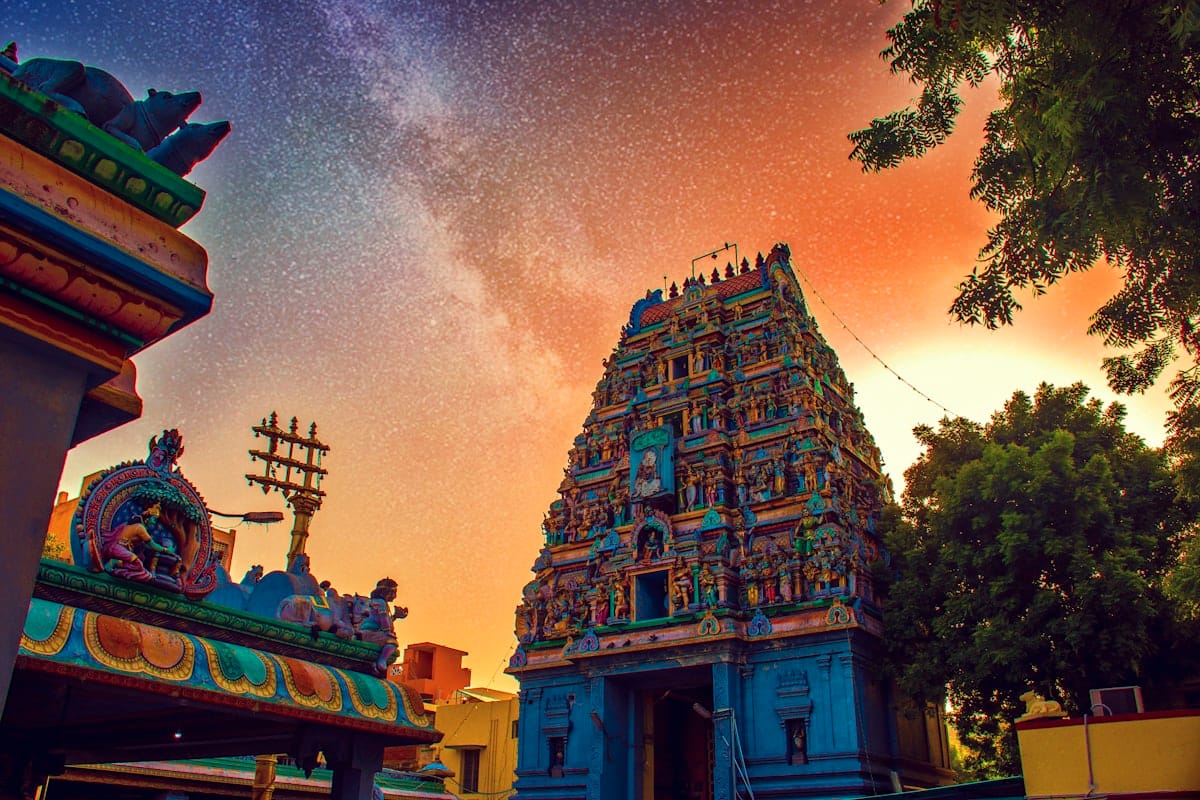
Puducherry blends ancient Dravidian temple architecture with French colonial elegance and the modern spiritual movement of Sri Aurobindo's Integral Yoga. The 7.5 kg golden chariot of Manakula Vinayagar Temple, the towering gopurams of Vedapureeswarar and Varadaraja Perumal (11th-century Chola), the 12th-century Villianur temple with its 15-meter chariot, and the silent Samadhi courtyard of Sri Aurobindo Ashram coexist within a former French colony where Tamil, French, and English cultures converge on the Coromandel Coast.
Quick Facts
Capital
Puducherry
Population
950,000
Area
492 km²
Languages
Tamil, French, English, Malayalam
Best Time to Visit
October to March
Major Pilgrimage
Manakula Vinayagar, Sri Aurobindo Ashram, Villianur
Temple Style
Dravidian, Indo-French, Chola
UNESCO Count
0
Major River
Gingee, Ponnaiyar, Thenpennai
Highest Point
~12 m (coastal plain)
Why Visit Puducherry
Puducherry offers a spiritual atmosphere of profound contrasts. Ancient vibrant Hindu temples with towering gopurams — Vedapureeswarar and Varadaraja Perumal — anchor the city's orthodox Hindu identity. The Sri Aurobindo Ashram is a global center for integral yoga drawing seekers worldwide. The Manakula Vinayagar Temple, with its golden chariot, sits amidst yellow colonial villas in the French Quarter. This blend makes Puducherry a place where traditional devotion and modern spiritual philosophy meet on the shores of the Bay of Bengal.
Traditionally, Puducherry is a respected center for Shaivite and Vaishnavite worship in the Tamil region. The Vedapureeswarar Temple suggests the area was historically a Vedic learning center. The presence of Sri Aurobindo and The Mother elevated Puducherry to an international spiritual destination. The nearby experimental township of Auroville emphasizes spiritual evolution and human unity, making the UT a hub for seekers beyond formal religion.
Temple Categories
Ganesha Temples
1Manakula Vinayagar — famous golden chariot Ganesha temple in French Quarter.
Shaivite Temples
2Vedapureeswarar, Villianur Thirukameswar — ancient Shiva temples with Chola inscriptions.
Vaishnavite Temples
1Varadaraja Perumal — 11th century Chola Vishnu temple, oldest in the city.
Modern Spiritual Centers
2Sri Aurobindo Ashram, Auroville — integral yoga and conscious living.
Featured Sacred Places
Puducherry
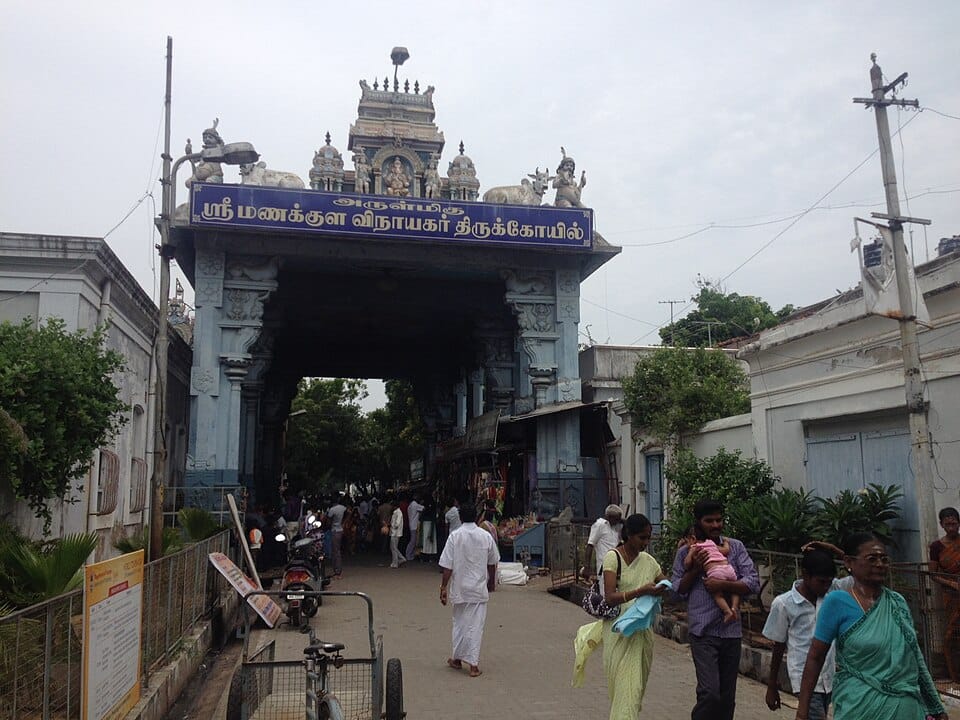
Manakula Vinayagar Temple
An ancient Ganesha sanctuary in Puducherry's French Quarter predating French colonial rule, renowned for its 7.5-kilogram golden chariot, ornate Dravidian gopuram, and intricate wall paintings depicting Vinayagar legends.
Explore Temple

Puducherry
Sri Aurobindo Ashram
World-renowned spiritual institution founded in 1926 by Sri Aurobindo and Mirra Alfassa (The Mother), centering on the serene marble Samadhi courtyard that serves as a global focal point for Integral…
Explore Temple
Puducherry
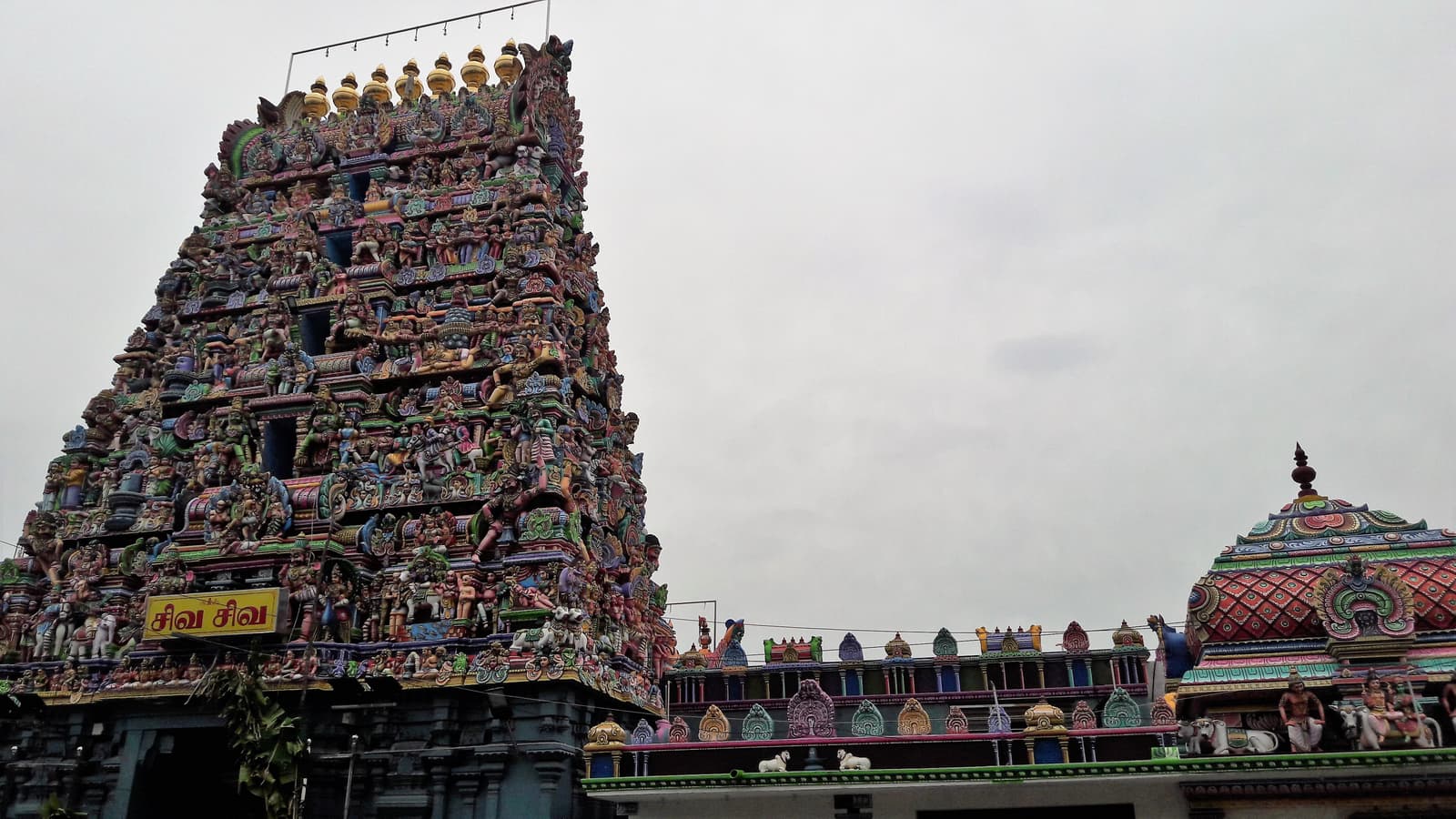
Vedapureeswarar Temple
Historic Shaivite temple in Puducherry's Heritage Town dedicated to Lord Shiva as Vedapureeswarar; rebuilt in 1788 following colonial destruction, showcasing a towering 75-foot rajagopuram and ancient Vedic traditions.
Explore Temple
Puducherry
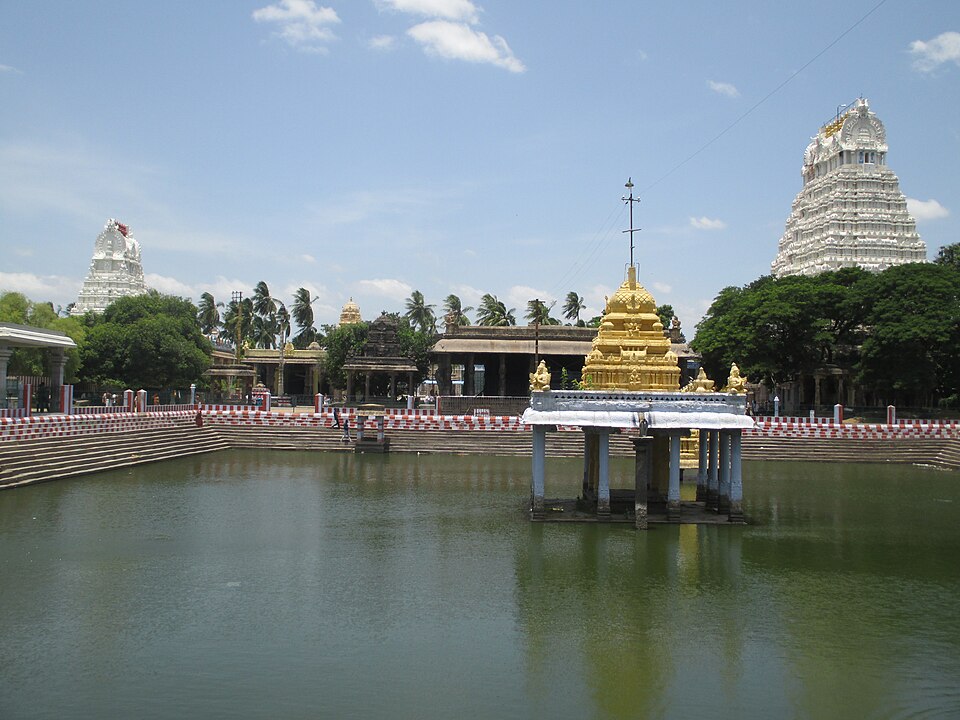
Varadaraja Perumal Temple
The premier 11th-century Chola-era Vaishnavite temple in Puducherry, housing Lord Varadaraja Perumal and Perundevi Thayar with a vivid multi-tiered gopuram, sculpted pillars, and traditional temple tank.
Explore Temple
Puducherry
Sri Gokilambal Thirukameswar Temple
Monumental 12th-century Chola dynasty Shiva shrine in Villianur with historic stone inscriptions, majestic gopurams, a sacred tank, and a towering 15-metre wooden chariot drawn during the annual Brahmotsavam.
Explore Temple
Pilgrimage Circuits
Puducherry Heritage Circuit
4 templesManakula Vinayagar-Vedapureeswarar-Varadaraja Perumal-Villianur, covering the major traditional temples.
Integral Yoga Circuit
2 templesSri Aurobindo Ashram-Auroville Matrimandir, tracing the modern spiritual movement.
Sri Aurobindo AshramAuroville Matrimandir
Traditional Hindu pilgrims follow a circuit: Manakula Vinayagar, Vedapureeswarar, Varadaraja Perumal, and Villianur. Spiritual tourists focus on the Sri Aurobindo Ashram, the Samadhi courtyard, and the Matrimandir in Auroville for silent concentration.
Temple Architecture
The Manakula Vinayagar Temple features a Dravidian gopuram with detailed friezes and a 7.5 kg golden chariot. Vedapureeswarar has a 75-foot rajagopuram rebuilt in 1788. Varadaraja Perumal (11th century Chola) has a colorful gopuram and carved pillars. The Sri Aurobindo Ashram is an Indo-French colonial complex centered on the Samadhi (tomb) with fresh flower arrangements. The Villianur temple (12th century Chola) has towering gopurams, a large temple tank, and a 15-meter wooden chariot.
Historical Timeline
11th c.Chola
Varadaraja Perumal Temple built by the Chola dynasty.
12th c.Chola
Sri Gokilambal Thirukameswar Temple built by King Kulothunga Chola.
1748French
Vedapureeswarar Temple demolished by French Governor Dupleix.
1788French
Vedapureeswarar Temple rebuilt by Tamil community led by Ananda Ranga Pillai.
1910French/British
Sri Aurobindo arrives in French Pondicherry; begins integral yoga.
1926French/British
Sri Aurobindo Ashram formally established.
Temple Statistics
4+
Ancient Temples
Chola-era and earlier shrines
15 m
Largest Chariot
Villianur temple chariot
7.5 kg
Golden Chariot
Manakula Vinayagar golden chariot
11th c.
Oldest Temple
Varadaraja Perumal (Chola)
Festivals
Brahmotsavam Villianur
May-JuneSri Gokilambal Thirukameswar
24 days
Pulling of 15-meter temple chariot by thousands; considered a public holiday in the region.
Masi Magam
February-MarchPuducherry seafront
1 day
Deities from various temples carried to seashore for ceremonial bath in the Bay of Bengal.
Darshan Days
February 21, August 15, November 24Sri Aurobindo Ashram
1 day each
Mass collective meditation commemorating Sri Aurobindo and The Mother's lives.
Golden Chariot Festival
August-SeptemberManakula Vinayagar
1 day
Procession of the 7.5 kg golden chariot through French Quarter streets.
The Brahmotsavam at Villianur features a colossal 15-meter chariot pulled by thousands. Masi Magam sees deities brought to the seashore for a ceremonial bath. Bastille Day is celebrated alongside Hindu festivals, showcasing cultural syncretism. At the Sri Aurobindo Ashram, Darshan Days (significant dates of Sri Aurobindo and The Mother) are observed with collective meditation.
Travel Guide
Best Time
October to March (20-30°C)
Climate
Coastal; monsoon October-December
Nearest Airport
Chennai (MAA), 150 km
Railway
Puducherry (PDY)
Road
East Coast Road (ECR) from Chennai
Local Transport
Auto-rickshaws, bicycles, taxis
Temple Etiquette
Remove footwear; modest dress; silence at Ashram
Suggested Duration
2-3 days for city + Villianur + Auroville
Nearby Attractions
Experimental township
Auroville
Founded in 1968 based on The Mother's vision of human unity; features Matrimandir, a golden-domed meditation center.
Beach
Promenade Beach
The 1.5-km scenic boulevard along the Bay of Bengal with colonial buildings, statues, and Gandhi statue.
Church
Basilica of Sacred Heart of Jesus
Stunning Gothic Revival church built in 1908 with stained glass windows depicting Christ's life.
Heritage area
French Quarter
White Town colonial architecture with yellow villas, bougainvillea-lined streets, and seaside cafes.
Interesting Facts
01
Puducherry is the only city in India where a Hindu Ganesha temple (Manakula Vinayagar) sits next to a former French governor's palace (Raj Nivas) within the same colonial-era block.
02
The Vedapureeswarar Temple was demolished by French Governor Dupleix in 1748 and rebuilt 40 years later by the Tamil community — a symbol of cultural resilience under colonial rule.
03
Sri Aurobindo Ashram's Samadhi (tomb of Sri Aurobindo and The Mother) is covered daily with an intricate arrangement of fresh flowers designed in geometric patterns, never repeating the same design.
04
Puducherry has four official languages (Tamil, French, English, Malayalam) and celebrates both Bastille Day and Diwali as public holidays.
Frequently Asked Questions
During French colonial rule, officials attempted to demolish the temple multiple times. According to legend, every time the Ganesha idol was thrown into the sea, it miraculously reappeared at its original spot.
The original was demolished by French Governor Dupleix in 1748. The Tamil community, led by diarist Ananda Ranga Pillai, rebuilt it in 1788 as a symbol of cultural resilience.
Viewing the Matrimandir from outside is open to all. Entering for meditation requires booking at the Auroville Visitors Centre.
Yes, visitors must dress modestly and maintain absolute silence. Photography is strictly prohibited inside the Ashram.
Sources & References
These records back the history, architecture, temple listings and visitor guidance published on this Puducherry page.
Archaeological Survey of India
Archaeological Survey of India — monument records and conservation reports
Protected-monument status, dating, architectural classification and conservation records for the temples and monuments named across this Puducherry guide.
Primary archaeological record
Open source (opens in a new tab)Ministry of Tourism, Government of India
Ministry of Tourism — official destination information
Official Government of India visitor information, access routes and pilgrimage circuits for Puducherry.
Government record
Open source (opens in a new tab)
— every record linked above was re-requested for this release, so the link still resolves and the publisher still serves the document. It is a link check, not a re-verification of every sentence on this page.
Missing something, or found an error? Send us a correction with the record that supports it, or read how we choose sources.