Sacred Destinations
Dadra & Nagar Haveli and Daman & Diu
5Sacred Sites
5Major Temples
A coastal confluence of ancient mythology, Portuguese heritage, and vibrant tribal traditions, offering serene ocean-washed Shiva temples and historic shrines across Diu, Daman, and the forested highlands of Dadra & Nagar Haveli.
Quick Facts
Capital
Silvassa (unified UT)
Population
586,000
Area
603 km²
Languages
Gujarati, Hindi, Marathi, Bhili
Best Time to Visit
October to March
Major Pilgrimage
Gangeshwar Mahadev, Somnath Diu, Tadkeshwar Silvassa
Temple Style
Coastal Gujarati, Nagara, natural cave formations
UNESCO Count
0
Major River
Daman Ganga, Sakartod
Highest Point
~200 m (Sahyadri foothills)
Why Visit Dadra & Nagar Haveli and Daman & Diu
The merged Union Territory of Dadra & Nagar Haveli and Daman & Diu blends Hindu mythology, Portuguese colonial influence, and indigenous tribal practices. Diu's Gangeshwar Mahadev Temple sits in a tidal cave where the sea performs abhishekam of five lingams at high tide. Daman preserves Hindu temples and colonial churches. Dadra & Nagar Haveli's forest-clad Tadkeshwar Shiva temple has a unique roofless sanctum.
Diu is believed to be the ancient Jalandhar Kshetra, where the Pandavas established the five lingams at Gangeshwar during their exile. Daman's temples symbolize cultural resilience through centuries of Portuguese rule. Dadra & Nagar Haveli represents harmony between formal Hinduism and the animistic beliefs of Warli, Kokna, and Dhodia tribes. The region serves as an important coastal Shaivite pilgrimage circuit with ocean-washed shrines.
Temple Categories
Featured Sacred Places
Dadra & Nagar Haveli and Daman & Diu
Somnath Mahadev Temple, Diu
Centuries-old Shaivite sanctuary in Diu island featuring a sanctified Shiva lingam, peaceful open courtyard, and deep maritime heritage connecting island devotees with coastal Saurashtra traditions.
Explore Temple
Dadra & Nagar Haveli and Daman & Diu
Gangeshwar Mahadev Temple
A mystical coastal temple where five ancient lingams are naturally bathed by ocean waves at high tide.
Explore Temple
Dadra & Nagar Haveli and Daman & Diu
Sai Baba Temple Daman
Popular devotional retreat in Nani Daman dedicated to Shirdi Sai Baba, featuring an all-white marble murti, community bhajan hall, and regular four-period aartis modeled on the Shirdi Sansthan tradition.
Explore Temple
Dadra & Nagar Haveli and Daman & Diu
Shree Devka Temple
Venerable coastal temple situated near Devka Beach promenade in Daman, serving as an important spiritual sanctuary for regional seafaring communities and visitors enjoying sunset walks along the Arabian Sea.
Explore Temple
Dadra & Nagar Haveli and Daman & Diu
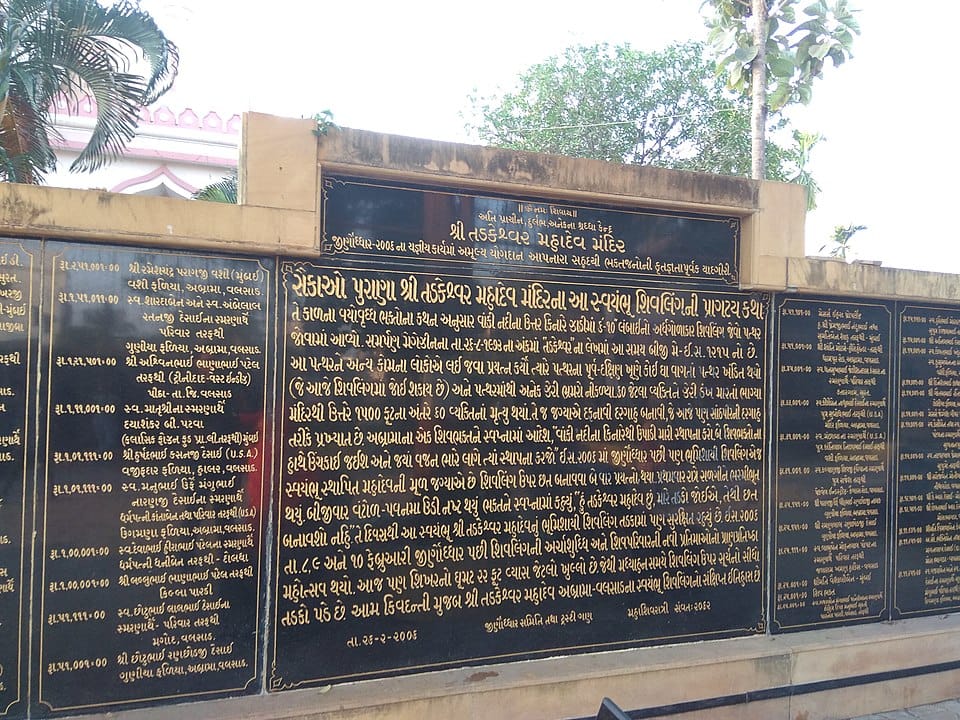
Shiva Temple Silvassa (Tadkeshwar Mahadev)
An ancient Shiva temple in dense forest with a unique roofless sanctum allowing direct sunlight on the lingam.
Explore Temple
Pilgrimage Circuits
Coastal Shaivite Circuit
3 templesSomnath Diu-Gangeshwar Mahadev-Tadkeshwar Silvassa, covering ocean and forest Shiva shrines.
A typical route begins in Silvassa with the Swaminarayan Temple and Tadkeshwar Mahadev, moves to Daman for the Sai Baba Temple and Devka Shrines, and culminates in Diu at the ancient Somnath and Gangeshwar Mahadev coastal temples. Diu's proximity to the Somnath Jyotirlinga (Veraval, Gujarat) makes it a frequent extension for pilgrims on the larger Saurashtra circuit.
Temple Architecture
Diu's temples feature traditional Gujarati-Saurashtra coastal architecture. The Gangeshwar Mahadev is a natural cave formation where five lingams sit in rocky tidal pools. The Somnath Mahadev Temple has a traditional courtyard and clean geometric lines. Tadkeshwar Mahadev in Silvassa is notable for its roofless sanctum, allowing direct sunlight to fall on the lingam, built in Nagara-influenced vernacular style blending with the surrounding forest. Daman's Sai Baba temple follows a modern North Indian style with a spacious congregation hall.
Historical Timeline
Mahabharata eraMythological
Five Pandava brothers establish lingams at Gangeshwar during exile.
16th c.Portuguese
Portuguese establish colonies in Daman and Diu; construction of cathedrals begins.
1780sPortuguese
Somnath Mahadev Diu rebuilt by local communities under Portuguese rule.
2020Republic of India
Dadra & Nagar Haveli merges with Daman & Diu as a single Union Territory.
Temple Statistics
5+
Major Temples
Across Diu, Daman, and Silvassa
1
Ocean-Washed Shrines
Gangeshwar Mahadev (high tide abhishekam)
1
Roofless Temples
Tadkeshwar Mahadev (direct sunlight on lingam)
5+
Portuguese Churches
Coexisting alongside Hindu temples
Festivals
Maha Shivaratri
February-MarchGangeshwar/Somnath Diu, Tadkeshwar Silvassa
1 day
Night-long vigil at all major Shiva temples; tribal communities join urban devotees at Tadkeshwar.
Nariyal Purnima
AugustCoastal temples, Daman & Diu beaches
1 day
Coconut offerings to Varuna (sea god) by fishing communities marking the start of fishing season.
Navratri
March-April, September-OctoberAll major temples
9 days
Gujarati Garba and Dandiya Raas across all three regions.
Maha Shivaratri is the most prominent festival at Gangeshwar and Somnath in Diu, and Tadkeshwar in Silvassa. Navratri and Diwali are celebrated with Gujarati Garba across all three regions. Nariyal Purnima (Coconut Festival) is unique to the coastal fishing communities of Daman and Diu, marking the fishing season with offerings to the sea god Varuna.
Travel Guide
Best Time
October to March (20-30°C)
Climate
Coastal; monsoon June-September
Nearest Airport
Diu (DIU), Mumbai (BOM)
Railway
Vapi (Daman), Delvada/Veraval (Diu)
Road
NH-48 (Mumbai to Vapi), NH-51
Local Transport
Taxis, auto-rickshaws, state buses
Temple Etiquette
Remove footwear; modest dress
Suggested Duration
2-3 days for all three regions
Nearby Attractions
Fort
Diu Fort
16th-century Portuguese fortress with sea-facing bastions, cannons, and a lighthouse.
Church
Bom Jesus Church Daman
Portuguese-era Basilica with Baroque architecture and ornate woodwork.
Museum
Tribal Cultural Museum
Silvassa museum showcasing Warli, Kokna, and Dhodia tribal artifacts and traditions.
Interesting Facts
01
The Gangeshwar Mahadev Temple at Diu has no roof — the five Shiva lingams sit in tidal pools that are naturally submerged during high tide as the ocean performs abhishekam.
02
Tadkeshwar Mahadev in Silvassa has no roof over its main sanctum, allowing direct sunlight ('Tadko' in Gujarati) to fall on the Shiva lingam — hence the name Tadkeshwar.
03
Daman and Diu have some of the oldest Portuguese churches in India, including the 16th-century Basilica of Bom Jesus (Daman), coexisting with ancient Hindu shrines for over 450 years.
Frequently Asked Questions
During high tide, the sea submerges the five lingams. Visit during low tide to clearly see them. Watching the waves perform the natural abhishekam from a safe distance during high tide is also a spectacular sight.
Tadkeshwar Mahadev has no roof over its main sanctum, allowing direct sunlight (tadko in Gujarati) to fall on the Shiva lingam. It is nestled in dense forest 18 km from Silvassa.
Yes, Daman and Diu have magnificent 16th-century Portuguese churches such as Basilica of Bom Jesus (Daman) and St. Paul's Church (Diu) alongside ancient Hindu shrines.
According to legend, the five lingams were established by the five Pandava brothers during their exile (Agyatavas). The varying sizes represent the brothers' physical statures, with the largest established by Bhima.
Sources & References
These records back the history, architecture, temple listings and visitor guidance published on this Dadra & Nagar Haveli and Daman & Diu page.
Archaeological Survey of India
Archaeological Survey of India — monument records and conservation reports
Protected-monument status, dating, architectural classification and conservation records for the temples and monuments named across this Dadra & Nagar Haveli and Daman & Diu guide.
Primary archaeological record
Open source (opens in a new tab)Ministry of Tourism, Government of India
Ministry of Tourism — official destination information
Official Government of India visitor information, access routes and pilgrimage circuits for Dadra & Nagar Haveli and Daman & Diu.
Government record
Open source (opens in a new tab)
— every record linked above was re-requested for this release, so the link still resolves and the publisher still serves the document. It is a link check, not a re-verification of every sentence on this page.
Missing something, or found an error? Send us a correction with the record that supports it, or read how we choose sources.