From ancient rock-cut marvels to towering imperial shrines, discover the architectural soul of Bharat through our verified digital archive.
Explore More TemplesBuilder
Unknown / Ancient origins
Dynasty
Various (Solanki period rebuilds)
Construction
Ancient (with medieval additions)
Style
Local Gujarati / Coastal
Main Deity
Nageshwar (Shiva as Lord of Snakes)
Location
Dwarka, Gujarat (coastal)
Significance
Coastal Jyotirlinga
Landmark
25-meter seated Shiva statue
Unique Feature
Lord of Snakes (Naga worship)
Associated Legend
Daruka & Supriya
Nearby Site
Dwarkadhish Temple (30 km)
Environment
Coastal marshlands
Nageshwar means "Lord of Snakes" ° Naga (serpent) and Ishwar (lord). Among the twelve jyotirlingas, this is the one that faces the primal fear: the fear of venom, of the hidden strike, of death that comes from the earth itself. At Nageshwar, Shiva does not transcend this fear — he masters it.
The name derives from a specific Puranic tradition. According to the Shiva Purana, a serpent devotee named Supriya — a devout worshipper of Shiva — was bitten by a venomous snake in the forests of Saurashtra. As she lay dying, she prayed to Shiva with such intensity that he appeared before her, stopped the venom from spreading, and restored her to life. The place where this miracle occurred became Nageshwar, and Shiva's role as the protector from snakebite — and from all forms of poison — became the temple's defining identity.
The serpent in Hindu philosophy is never merely a reptile. The naga represents the kundalini — the coiled primal energy that lies dormant at the base of the human spine. To awaken it is to achieve liberation. To be bitten by it is to die. Nageshwar, as the Lord of Snakes, stands at the intersection of these two meanings. He is both the master of kundalini (the spiritual serpent) and the protector against literal venom (the physical serpent). The temple's coastal location, surrounded by the marshy habitats where snakes thrive, makes this protection particularly relevant to the local population.
Physical Protection
Local communities pray to Nageshwar for protection from snakebite in the marshy coastal region.
Kundalini Energy
The serpent symbolizes the dormant spiritual energy that Shiva helps awaken through meditation.
Time and Mortality
The serpent sheds its skin to be reborn — a metaphor for death and reincarnation that Shiva governs.
Nag Panchami
The serpent festival is celebrated with unique intensity here, including live snake worship.
Nageshwar's serpentine identity extends to the iconography of the temple. Naga images are carved into pillars and walls. The lingam is often decorated with serpent motifs during festivals. The eco-system around the temple supports multiple snake species, and local lore considers them protectors of the shrine. Killing a snake near Nageshwar is considered a grave sin. The guardians of the temple are the serpents themselves.
The origin legend of Nageshwar is distinct among the jyotirlinga narratives. Unlike the Ravana story at Baidyanath or the Sati mythologies of other sites, the Nageshwar legend centers on a demon couple — a husband who terrorized the earth and a wife whose devotion to Shiva was so fierce that it forced the divine to intervene.
A demon named Daruka ruled the dense forest region that covered what is now the Saurashtra coast. He was powerful, oppressive, and immune to the attacks of lesser gods. His wife, Daruki, was a devoted worshipper of Shiva. She performed severe penance, and Shiva granted her the boon that she could not be killed by any male being. Empowered by Daruki's invulnerability, Daruka grew bolder, attacking sages, disrupting sacrifices, and challenging the devas.
When the sages and gods could no longer bear Daruka's tyranny, they approached Shiva. The crisis was delicate: Daruki was Shiva's devotee, and he could not abandon her. But Daruka was a demon whose destruction was necessary. Shiva resolved the contradiction by manifesting as the Nageshwar jyotirlinga at the heart of the Daruka forest. The lingam was a declaration of presence — a fixed point of divine energy that neither Daruka nor Daruki could ignore. Daruka's power began to wane in the lingam's proximity. The demon was eventually subdued, and the forest became sacred ground.
The Daruka forest itself (daruka vana) is central to the legend. The region around Nageshwar was historically thick with vegetation — a dense, marshy woodland where wild animals and snakes thrived. The clearing of this forest for agriculture and settlement is mirrored in the legend: the divine light of the jyotirlinga pushed back the darkness of the untamed forest. Nageshwar, in this reading, represents the transformation of wild nature into ordered sacred space — a spiritual act of domestication as much as a physical one.
Nageshwar sits in the coastal marshlands of the Saurashtra peninsula, near the Gulf of Kutch on the Arabian Sea. The setting is unlike any other jyotirlinga. While Somnath rises on a dramatic ocean cliff and Bhimashankar is hidden in dense Sahyadri forests, Nageshwar occupies low-lying coastal flats — a landscape of salt marshes, tidal creeks, and mangrove thickets. The soil is sandy, the wind carries salt spray, and the air vibrates with the sound of the sea.
The isolation of the location has shaped the temple's character. Nageshwar receives far fewer visitors than the other jyotirlingas. It has the atmosphere of a hidden shrine rather than a major pilgrimage destination. The approach road passes through small fishing villages and agricultural hamlets, and the last stretch crosses the marshland where egrets, flamingos, and migratory waterbirds feed in the shallows. The temple appears suddenly — a white structure rising from the flat coastal plain, the massive Shiva statue dominating the skyline.
The coastal environment presents unique challenges for the temple's maintenance. Salt corrosion affects the stonework. Monsoon flooding requires drainage management. The high humidity accelerates weathering. Despite these natural pressures, the temple has survived centuries, a testament to the durability of both the original construction and the ongoing maintenance by local communities. The marshes themselves are protected as a coastal ecosystem, and the temple has become part of the environmental identity of the region.
The proximity to the sea has also shaped the temple's spiritual identity. The ocean in Hindu cosmology represents the unconscious — vast, dark, and full of hidden creatures. Nageshwar as a coastal shrine stands at the boundary between the known (land) and the unknown (sea). The jyotirlinga is a point of light at this boundary, a marker that the divine holds its ground even where the wild ocean meets the cultivated earth.
Further down the same Saurashtra coastline, Somnath Temple — the first among the twelve Jyotirlingas — stands on the cliffs of Veraval. Both temples share the Arabian Sea as their horizon, and pilgrims often combine both in a single coastal yatra.
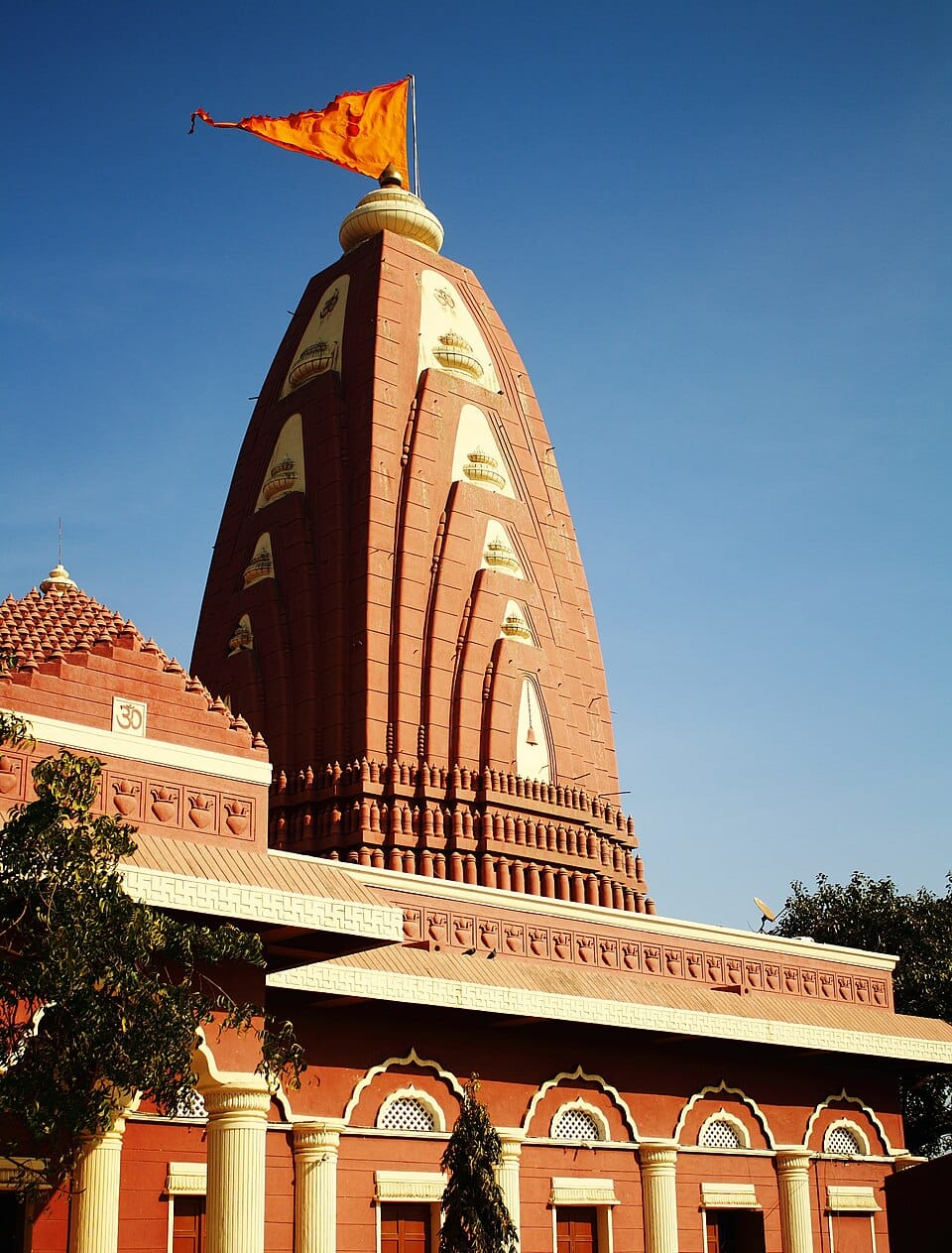
Nageshwar is located approximately 30 kilometers from the Dwarkadhish Temple — the legendary city of Lord Krishna. The proximity of a Shaiva jyotirlinga to the most important Vaishnava pilgrimage site in western India creates a unique religious geography. The two temples are not rivals. They are complementary, representing the harmonious coexistence of Shaivism and Vaishnavism on the Saurashtra coast.
The relationship between the two traditions in this region has deep historical roots. The Solanki period (10th-13th centuries), which saw major rebuilding at both sites, patronized Shaiva and Vaishnava institutions equally. The same merchant communities that funded Dwarkadhish also funded Nageshwar. The same pilgrimage route that brought devotees to Krishna's city also brought them to Shiva's coastal shrine. Most modern pilgrims visit both on a single trip — Dwarkadhish in the morning for darshan of Krishna, Nageshwar in the afternoon for the jyotirlinga abhishekam.
The theological connection is equally significant. In the Hari-Hara tradition, Vishnu (Hari) and Shiva (Hara) are understood as two aspects of the same ultimate reality. Krishna, in the Bhagavad Gita, declares that he is Shiva among the Rudras. The proximity of Dwarkadhish and Nageshwar gives geographical expression to this theological unity. The Saurashtra coast becomes a landscape where the two great streams of Hinduism meet, not in conflict but in shared sacred space.
Among the twelve jyotirlingas, Nageshwar carries a textual ambiguity that no other shrine shares. Different Puranas list the twelfth jyotirlinga at different locations. The Shiva Purana names it as Nageshwar in the Daruka forest, which aligns with the current Dwarka site. But other texts, including some recensions of the Kotirudra Samhita, place the jyotirlinga at Pralanka — a site now identified by many scholars with Aundha Nagnath in Maharashtra.
The Pralanka debate is not merely academic. It affects the official list of the twelve jyotirlingas and the pilgrimage itineraries of millions. Most modern lists include both Nageshwar (Dwarka) and Aundha Nagnath (Maharashtra), but some traditions treat them as alternatives — the same jyotirlinga at two different locations, the result of textual transmission errors or regional competition for the prestige of hosting a jyotirlinga.
The argument for the Dwarka site is based on the Daruka forest location described in the Puranas, which matches the Saurashtra geography. The argument for Aundha Nagnath is based on linguistic analysis — the name "Aundha" is derived from "Aundha Nagnath" which some associate with the Nageshwar epithet. The debate remains unresolved, and both temples operate as independent jyotirlingas with their own priesthoods and pilgrimage traditions.
The ambiguity, however, has not diminished Nageshwar's sanctity. If anything, it has added to the temple's mystique. Nageshwar carries a quiet, self-contained confidence — it does not need to prove its status. The pilgrims who come here are often those who have visited other jyotirlingas and want to complete the circuit at a less commercialized, more contemplative site. The debate itself becomes part of the temple's identity: a reminder that sacred geography is not always precise, and that the divine can manifest in more than one place.
The rituals at Nageshwar are a distinctive blend of standard Shaiva temple practices and coastal adaptations. The daily abhishekam follows the usual pattern — water, milk, curd, ghee, honey, and sandalwood paste poured over the lingam with Vedic chants. But the offerings that surround this core ritual reflect Nageshwar's unique location and identity.
Coconut is a major offering here — more significant than at inland jyotirlingas. The coconut, a coastal fruit, is broken before the lingam, its white interior representing the pure self that emerges when the hard outer shell of ego is shattered. Coral and seashells are offered alongside the traditional bel leaves and flowers. The priests incorporate coastal produce into the ritual calendar, and the sanctum often smells of coconut oil and sea salt mixed with camphor and sandalwood.
The serpent offering tradition is unique to Nageshwar. On Nag Panchami and throughout the month of Shravan, live snakes (non-venomous) are brought to the temple and placed before the lingam. Milk is offered to them in small brass bowls. The snakes are handled by trained snake charmers who maintain a relationship with the temple. The ritual is both a form of worship and a practical act of reconciliation — it acknowledges that the snakes are the temple's true guardians and seeks their blessings rather than driving them away.
The most visible landmark of Nageshwar is not the temple itself but the massive outdoor Shiva statue that rises behind it. Seated in meditation, facing the Arabian Sea, the statue stands 25 meters (82 feet) tall — among the tallest Shiva statues in India. It is strikingly visible from kilometers away, serving as a spiritual beacon for approaching pilgrims and a literal landmark for boats navigating the coast.
The statue was constructed in the modern period as part of the temple's expansion. It depicts Shiva in padmasana (lotus posture), eyes half-closed in meditation, hands in dhyana mudra. The face is serene, almost expressionless — the face of a being who has transcended fear, desire, and attachment. The statue is painted white or light cream, creating a stark contrast against the deep blue of the sea and sky. At sunrise and sunset, the light hits the statue at a low angle, and the effect is luminous.
The statue serves multiple functions. It is a declaration of presence ° Nageshwar may be less visited than the other jyotirlingas, but its scale is undeniable. It is a navigational aid — fishermen and small boat operators use it as a landmark. It is a photographic icon — the image of the seated Shiva against the ocean background has become the defining visual of the temple. And it is an invitation — visible from the approach road, the statue draws travelers toward the temple before they can even see the shrine itself.
The great night of Shiva is celebrated with special fervor at Nageshwar. Devotees gather from coastal villages and towns across Saurashtra. The lingam receives continuous abhishekam through the night. The temple is illuminated, and the sound of chanting mixes with the distant crash of the Arabian Sea.
The serpent festival is celebrated at Nageshwar with a level of intensity unmatched anywhere else in India. Live cobras and rat snakes are brought to the temple, fed with milk, and worshipped. Special pujas are conducted to honor Shiva as the Lord of Snakes. Snake charmers from across Gujarat gather here for the occasion.
Nageshwar addresses a fundamental human concern that the other jyotirlingas do not: the fear of the hidden threat. The serpent that strikes without warning, the poison that kills invisibly, the enemy that cannot be seen — these are the anxieties that Nageshwar resolves. The temple's spiritual message is that the divine protects not only from known dangers but from the unknown, the unseen, the unexpected.
This makes Nageshwar a deeply personal shrine. Pilgrims here are not seeking grand cosmic visions or philosophical enlightenment. They are seeking protection — for themselves, their families, their livestock, their homes. The farmer whose fields harbor snakes, the fisherman whose boat ventures into dangerous waters, the mother whose child plays near the marsh — these are the devotees of Nageshwar. Their worship is practical, urgent, and grounded in the realities of coastal life.
The temple's location at the edge of the sea adds another layer of meaning. The coast is a liminal space — neither fully land nor fully sea, a threshold between realms. Nageshwar as a coastal jyotirlinga represents the divine presence at the threshold, the point where the known world meets the vast unknown. This is the jyotirlinga for those who stand at the edge of change, who face the uncertainty of the future, who need a fixed point of reference in a world that is shifting beneath their feet. The 25-meter statue, facing the sea with unwavering stillness, embodies this role perfectly: it is a marker of stability in a landscape defined by tides.
A. Shiva is called Nageshwar (Naga = snake, Ishwar = lord) because he is believed to protect devotees from both literal snakes and the metaphorical serpent of time and karma. The legend of Supriya — a devotee bitten by a snake who was revived by Shiva — established this association. The temple's location in marshy snake-inhabited coastal land reinforces the identity.
A. A demon named Daruka terrorized the Saurashtra region. His wife Daruki was a powerful Shiva devotee. When gods sought to destroy Daruka, Daruki prayed to Shiva for protection. Shiva manifested as the Nageshwar jyotirlinga in the Daruka forest, subduing the demon and sanctifying the land. The temple marks the site where divine protection overcame demonic power.
A. The statue is 25 meters (approximately 82 feet) tall, making it one of the tallest Shiva statues in India. It depicts Shiva seated in meditation facing the Arabian Sea. The statue is a modern addition to the temple complex but has quickly become the defining visual icon of Nageshwar, visible from boats approaching the Gujarat coast.
A. This is debated. The Shiva Purana lists Nageshwar at the Daruka forest (current Dwarka site). Other texts place it at Pralanka (identified with Aundha Nagnath in Maharashtra). Both sites have strong claims. The Dwarka site is widely accepted as one of the twelve, but the debate reflects the geographic complexity of Puranic traditions.
A. Nageshwar is about 30 km from Dwarkadhish Temple in Dwarka. Yes, most pilgrims visit both in a single day — Dwarkadhish in the morning and Nageshwar in the afternoon. The proximity of Krishna's temple and Shiva's jyotirlinga illustrates the peaceful coexistence of Vaishnava and Shaiva traditions on the Saurashtra coast.
A. Nag Panchami is Nageshwar's most distinctive festival. Live snakes — including cobras and rat snakes — are brought to the temple and offered milk, flowers, and camphor. Snake charmers from across Gujarat participate. Special pujas honor Shiva as the Lord of Snakes. The celebration draws thousands of devotees seeking protection from snakebite and blessings for spiritual awakening.
A. Nageshwar's coastal location on the Arabian Sea has created a unique ritual culture. Coral, seashells, and coconut are offered alongside traditional items because these are the region's natural produce. The integration of coastal elements into Shaiva worship distinguishes Nageshwar from inland jyotirlingas where offerings are purely agricultural.
A. October to March offers the best weather with cool sea breezes. Maha Shivaratri (February-March) is ideal for spiritual immersion. Nag Panchami (July-August) offers the unique serpent worship experience. Avoid the monsoon season (June-September) when the marshlands flood and access roads can become difficult.
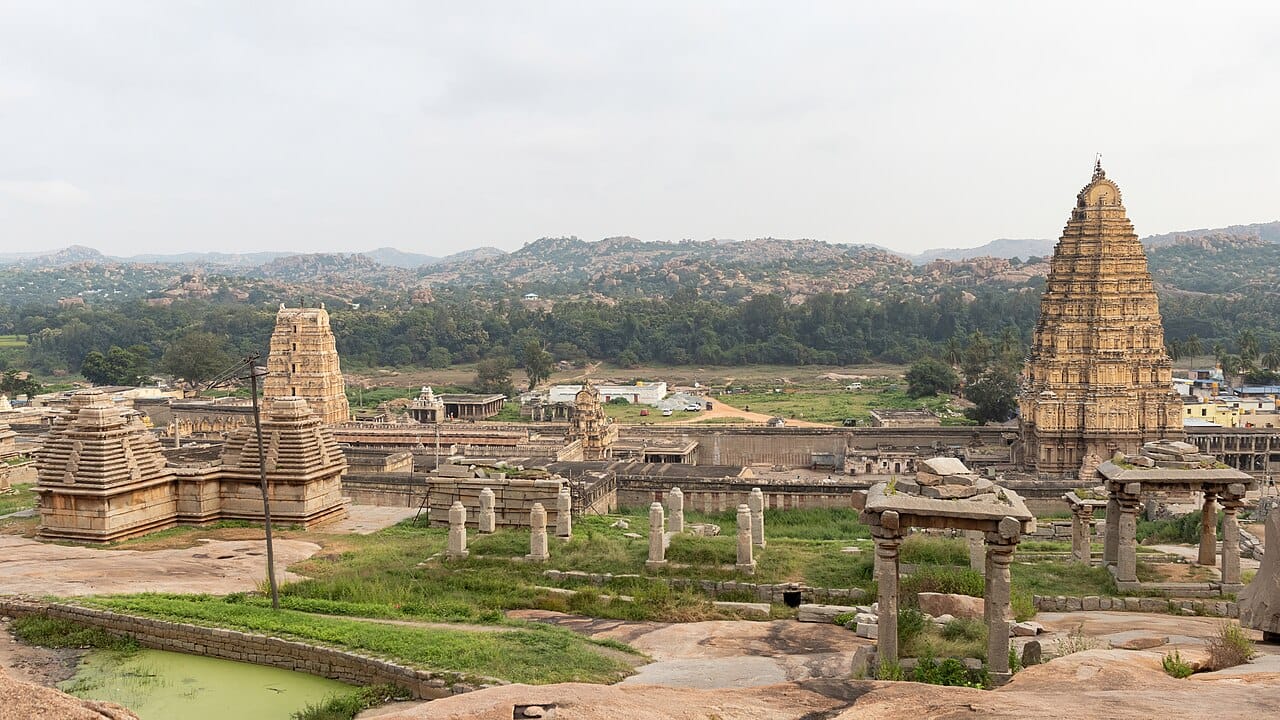
Virupaksha Temple
The Virupaksha Temple in Hampi, Karnataka, is a UNESCO World Heritage Site and the oldest functioning temple in India, dedicated to Lord Shiva as Virupaksha.
Trimbakeshwar Temple
The Trimbakeshwar Temple in Maharashtra is one of the twelve Jyotirlingas, unique for its three-faced linga representing the Trimurti and the source of the Godavari River.
Airavatesvara Temple
The Airavatesvara Temple at Darasuram, built by Rajaraja Chola II between 1146 and 1172 CE, is one of the three UNESCO World Heritage 'Great Living Chola Temples.' It is renowned for its stone chariot, musical steps, and exquisite 12th-century Chola sculptures.
Gangaikonda Cholapuram Temple
The Gangaikonda Cholapuram Temple, built by Rajendra Chola I in 1035 CE, is a UNESCO World Heritage 'Great Living Chola Temple.' Its 53-metre vimana with recessed corners and six pairs of monolithic dvarapalas represents a refined evolution of Chola Dravidian architecture.
Kampaheswarar Temple
Kampaheswarar Temple in Tribhuvanam, built by Kulothunga Chola III in 1202 CE, is one of the later great Chola temples and completes the quartet of magnificent Chola stone temples alongside the Brihadeeswarar at Thanjavur, Gangaikonda Cholapuram, and Airavatesvara at Darasuram. The temple represents the mature phase of Chola architecture, featuring a 30-metre granite vimana, a separate Devi shrine, and a unique chariot-wheel carving in the mandapa. It is maintained by the Archaeological Survey of India as a protected monument of national importance.
Koranganatha Temple
Koranganatha Temple, built during the reign of the Chola king Parantaka I (907-955 CE) at Srinivasanallur near Tiruchirappalli, is a well-preserved example of early Chola architecture with exquisite stone carvings. The temple is maintained by the Archaeological Survey of India and is notable for its peaceful setting on the banks of the Kaveri River.
Trimbakeshwar Temple
The Trimbakeshwar Temple in Maharashtra is one of the twelve Jyotirlingas, unique for its three-faced linga representing the Trimurti and the source of the Godavari River.
Alampur Jogulamba Temple
One of the 18 Maha Shakti Peethas, located in a complex that also houses nine ancient 7th-century Chalukyan temples.
Somnath Temple
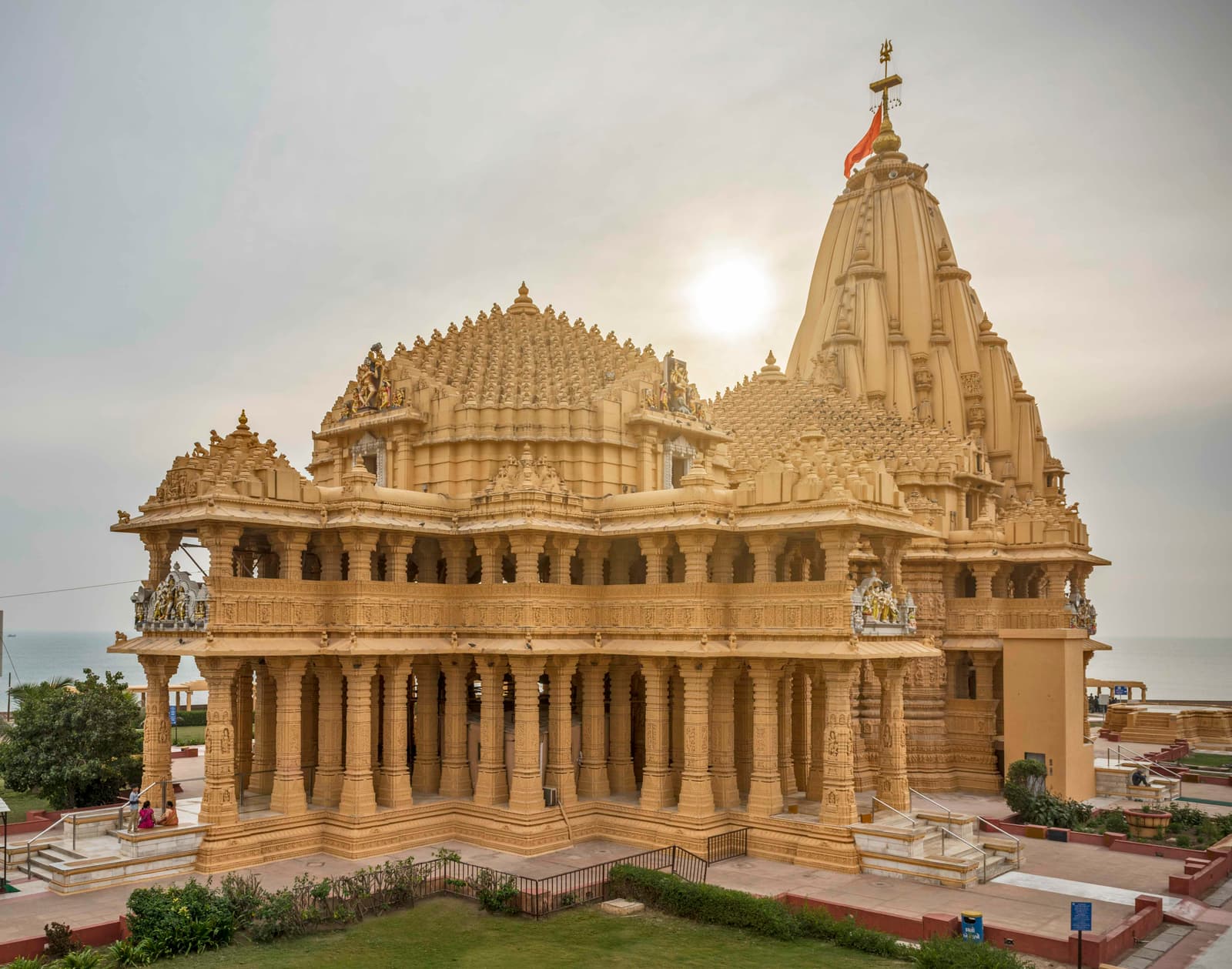
Somnath Temple, the first of the twelve Jyotirlingas, is an ancient Shiva temple in Gujarat known for its resilience through repeated destruction and reconstruction over a millennium.
Siddhesvara Dham (Char Dham)
A grand complex featuring a 108-foot Shiva statue and replicas of the 12 Jyotirlingas and the four Char Dham sites.
Ramanathaswamy Temple
The Ramanathaswamy Temple in Rameswaram is one of the 12 Jyotirlingas and a Char Dham site, famous for its magnificent thousand-pillared corridors, the longest temple corridor in the world, and its sacred association with Lord Rama's worship of Shiva.
Omkareshwar Temple
Situated on a sacred island in the Narmada River, Omkareshwar is the only Jyotirlinga located on an island. The temple stands at the confluence of the Narmada and Kaveri rivers, with the lingam positioned where the river forms the shape of the sacred symbol Om.
Somnath Temple
Somnath Temple, the first of the twelve Jyotirlingas, is an ancient Shiva temple in Gujarat known for its resilience through repeated destruction and reconstruction over a millennium.
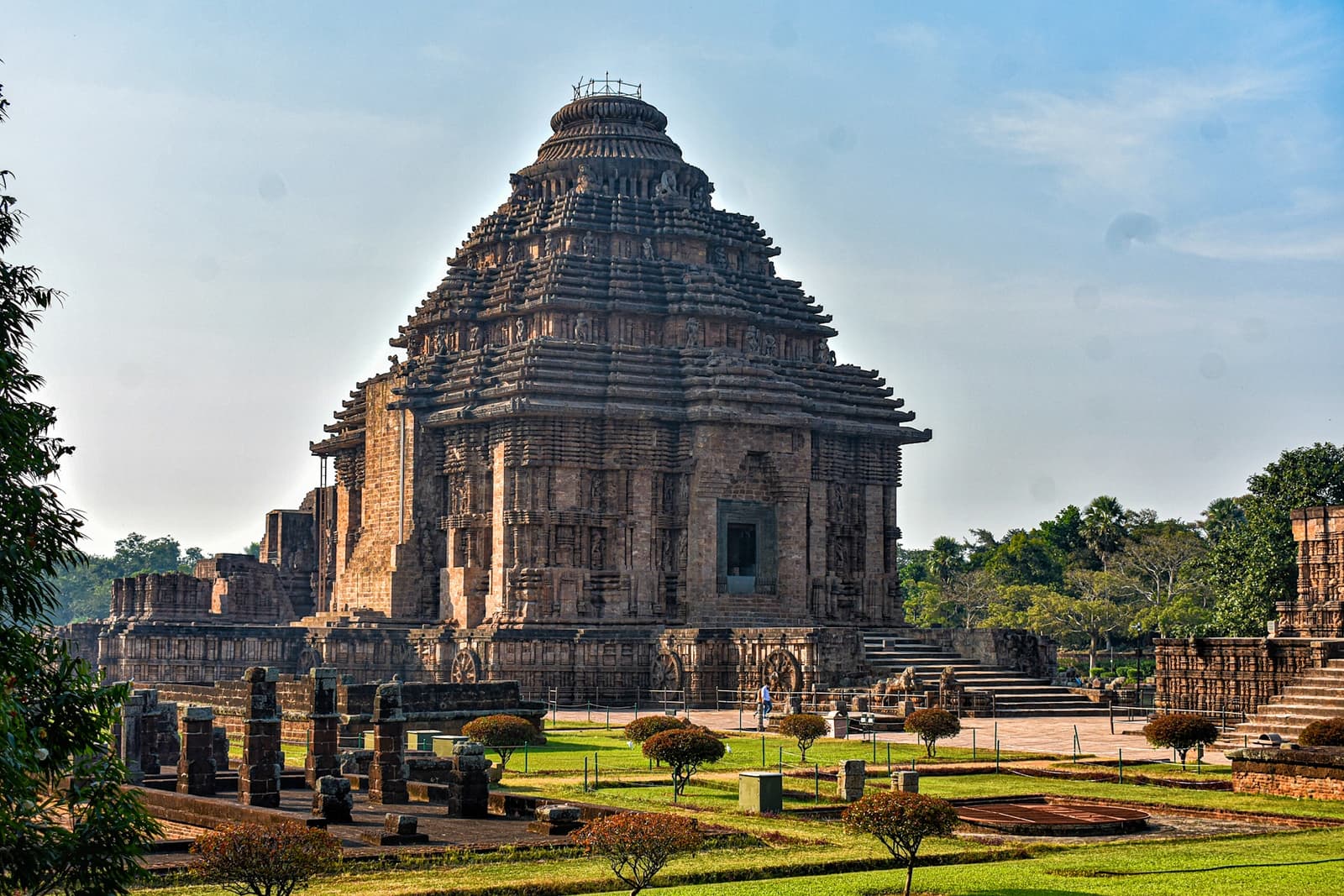
Modhera Sun Temple
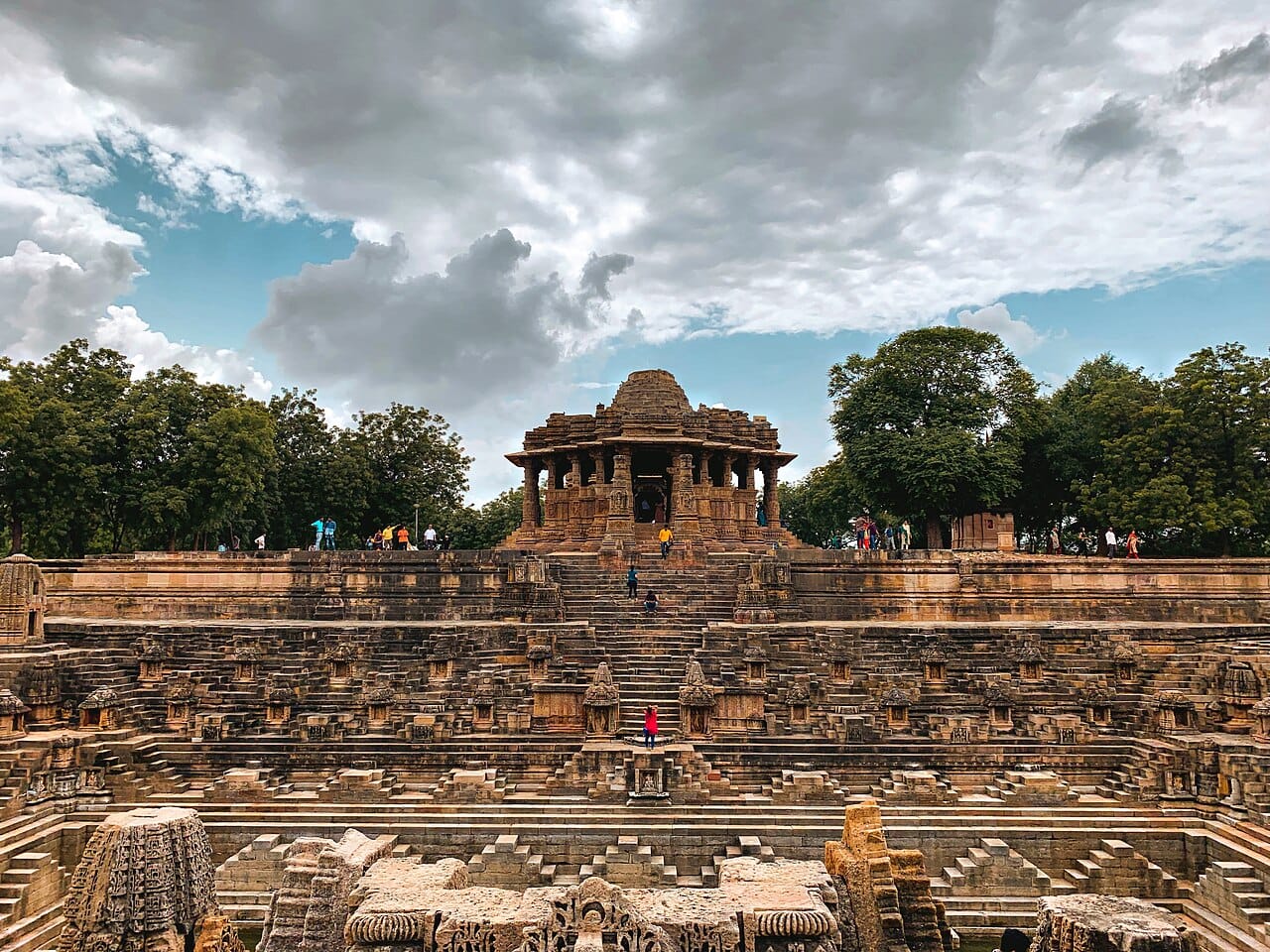
A masterpiece of Solanki architecture built in 1026-27 CE by King Bhima I, dedicated to Surya with precise equinox solar alignment.
Ambaji Temple
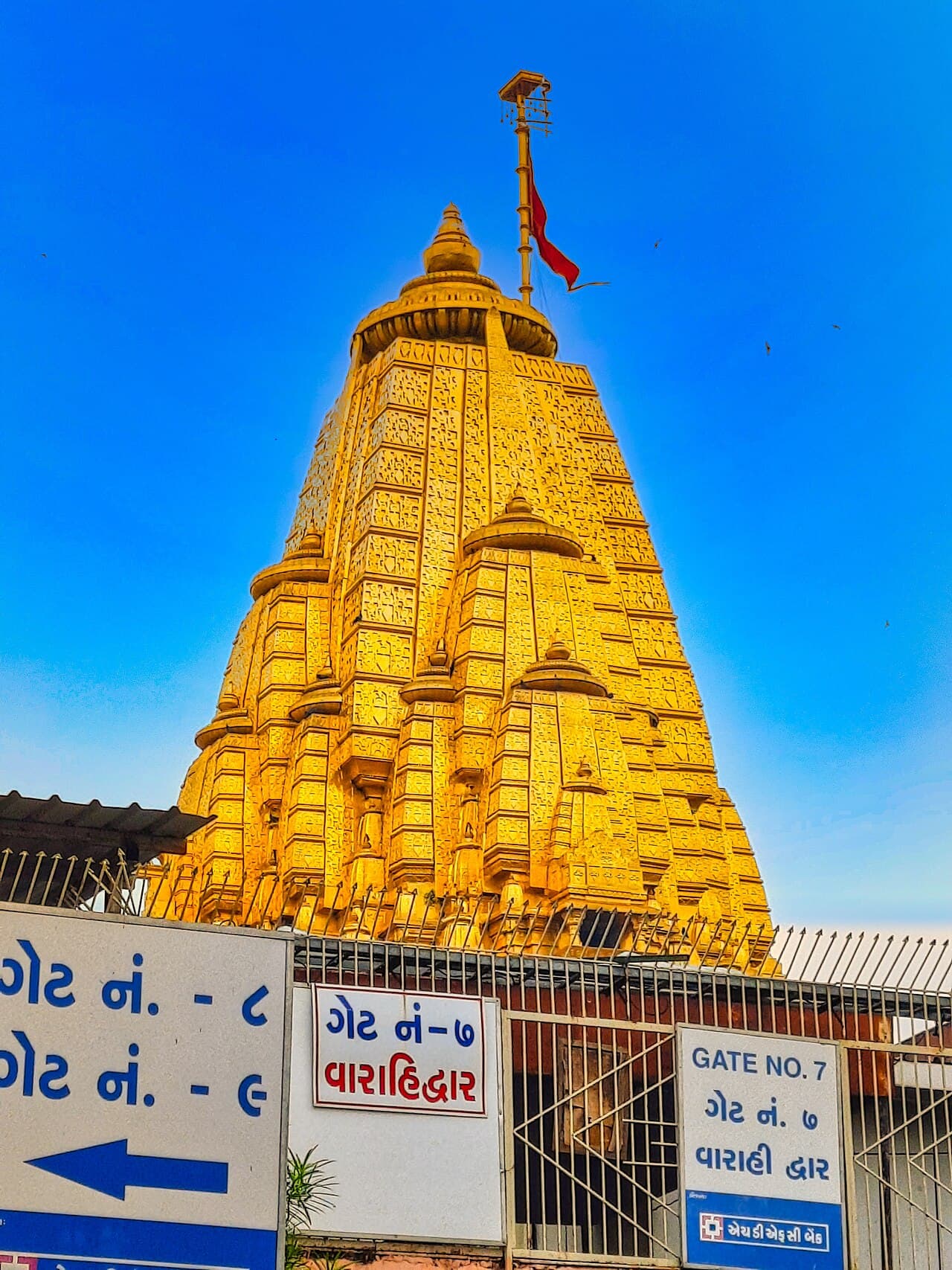
The Ambaji Temple on the Arasur Hills in Banaskantha district, Gujarat, is one of the 51 Shakti Peethas where the heart of Goddess Sati is believed to have fallen. It is among the four major Shakti Peethas of India and is unique among major Hindu temples for having no conventional idol — instead, it houses a sacred Vishayantra (a silver-plated yantra inscribed with the image of the goddess). The temple's 103-foot shikhara is topped with a gold-plated kalasha weighing over three tons.
Dwarkadhish Temple
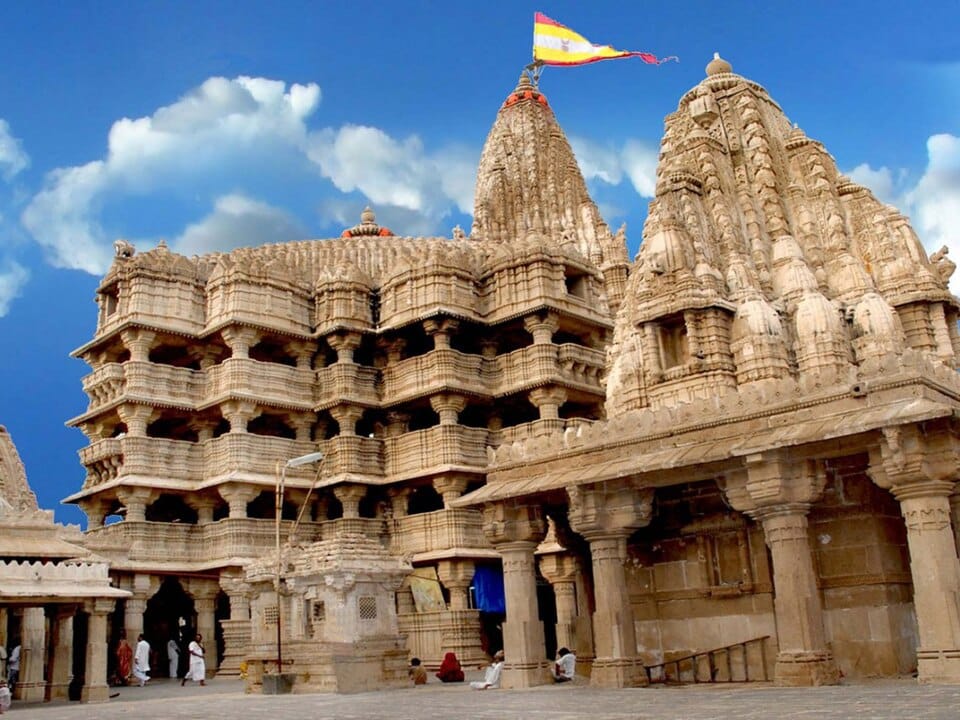
The westernmost of the four Char Dham pilgrimage sites, Dwarkadhish Temple marks the legendary kingdom of Lord Krishna in the ancient city of Dwarka. Built on the banks of the Gomti River where it meets the Arabian Sea, the temple is a five-story marvel of Solanki architecture revered by Vaishnavites worldwide.
Tarakeshwar Temple Hooghly
A massive 18th-century pilgrimage site dedicated to Lord Taraknath, especially vibrant during the Gajan festival.
Virupaksha Temple
The Virupaksha Temple in Hampi, Karnataka, is a UNESCO World Heritage Site and the oldest functioning temple in India, dedicated to Lord Shiva as Virupaksha.
Jageshwar Temple
A cluster of 124 ancient stone temples from the 7th-12th centuries, nestled in a dense deodar forest.
Neelkanth Mahadev Temple
Situated at 1,330 meters, this is where Lord Shiva is believed to have consumed the poison (Halahala) during the Samudra Manthan.
Tungnath Temple
The highest Shiva temple in the world, situated at 3,680 meters on the Chandranath Parbat; it is the 'Tritiya Kedar' in the sacred Panch Kedar pilgrimage circuit.
Rudranath Temple
One of the Panch Kedar shrines, representing Lord Shiva's face, situated at an altitude of 2,286 meters amidst meadows and rhododendron forests.
India's temples are living traditions — not museums. Every temple has its own customs. This guide helps first-time visitors prepare with confidence and respect.
Foreign Visitors
AllowedAll visitors welcome. Non-Hindus can enter the temple and see the lingam.
Visitor Information
Entry policies vary between temples. Most temples welcome visitors, while some may restrict access to specific areas, rituals, or the inner sanctum. Always verify the latest entry guidelines with the official temple authorities before your visit.
Modest clothing is expected at every Indian temple — a sign of respect, not a restriction. Think of it as dressing for a formal ceremony.
October to March offers the best weather with cool sea breezes. Maha Shivaratri (February-March) is ideal for spiritual immersion.
April — June
July — September
Common local languages: Gujarati, Hindi, English
Cash (Indian Rupees) is the most reliable option, especially for temple offerings, small shops, and local transport.
UPI digital payments (Google Pay, PhonePe, Paytm) are widely accepted across India — even at roadside stalls. Download one before you arrive.
International credit/debit cards work at most ATMs, hotels, and larger establishments. Smaller vendors may only accept cash or UPI.
Carry small denominations (₹10, ₹20, ₹50, ₹100 notes) for offerings and temple donations. Large notes (₹500, ₹2000) can be hard to break at smaller counters.
Wheelchair: Limited. The temple area has steps and uneven flooring.
Stay hydrated — carry a reusable water bottle, especially in hot climates.
Keep valuables secure — use hotel lockers for passports and excess cash.
Wear comfortable, sturdy footwear — temple floors can be hot, wet, or uneven.
Beware of unofficial guides or touts near temple entrances. Only use authorised services.
Carry a photocopy of your passport and visa. Leave originals in your hotel safe.
Download offline maps — mobile networks can be unreliable near remote temple sites.
These short explanations help make sense of what you see and experience.
Darshan means 'seeing' — but in a temple it means being seen by the deity. It is a sacred moment of connection, not just a viewing.
Removing footwear is a sign of humility. It also keeps the temple floor clean, since devotees sit and pray on the ground.
Food offered to the deity and then distributed to devotees. It is considered blessed. Accept it with both hands and do not discard it.
The bell creates a focused acoustic atmosphere, wards off distractions, and announces your presence before entering the inner sanctum.
Circumambulation (pradakshina) is done clockwise, keeping the sanctum on your right — an auspicious direction aligned with the sun's path.
Flowers symbolise devotion, coconuts represent the ego being broken, incense purifies the air, and lamps represent the victory of light over darkness.
Sacred viewing of the deity; the central act of temple worship.
Clockwise circumambulation of the sanctum.
Blessed food offered to the deity and distributed to devotees.
The innermost sanctum where the main deity resides.
The towering spire above the sanctum, a defining feature of temple architecture.
A pillared hall or pavilion within the temple complex.
The Indian Rupee (?, INR) is the local currency. ATMs are widely available in cities and towns. For temple offerings, keep small notes (₹10, ₹20, ₹50). Most temples accept donations in cash only — digital payments are uncommon at the offering counter itself.
Offerings (dakshina) are given with the right hand. Place cash in the donation box (hundi) or give it directly to the priest. There is no fixed amount — give what feels appropriate. Some temples have fixed fees for special entry or puja participation.
Shoes and sandals are removed before entering the temple building. Most temples have a designated shoe counter (free or a small fee of ₹5–₹20). Socks are generally allowed. In monsoon, carry a plastic bag for wet shoes.
Darshan queues can take 30 minutes to 3 hours at popular temples. Many offer paid VIP darshan (₹100–₹500) for faster entry. Special queues for women, elderly, and disabled visitors exist at some temples. No line jumping.
Major festivals draw enormous crowds — sometimes hundreds of thousands. Book accommodation months in advance. Expect road closures, restricted vehicle access, and limited phone network. Arrive early (before dawn) to avoid the worst congestion.
Always look for signage before taking photos. When in doubt, ask a priest. Never take photos of devotees in prayer without permission. Selfie sticks are banned at most temples. Silently switch your phone to silent mode.
Police / Ambulance / Fire: 112 (National Emergency Number)
Tourist Helpline: 1800-111-363 (Multi-lingual, Ministry of Tourism)
Women's Helpline: 1091
Official Temple WebsiteState Tourism WebsiteTemple-specific visitor information is continuously researched and updated from official sources. Where specific data is unavailable, general India travel guidance is provided. Always verify current policies with the temple authority before your visit.
Continue your journey through the spiritual and architectural wonders of India.

Somnath Temple, the first of the twelve Jyotirlingas, is an ancient Shiva temple in Gujarat known for its resilience through repeated destruction and reconstruction over a millennium.

A masterpiece of Solanki architecture built in 1026-27 CE by King Bhima I, dedicated to Surya with precise equinox solar alignment.

The Ambaji Temple on the Arasur Hills in Banaskantha district, Gujarat, is one of the 51 Shakti Peethas where the heart of Goddess Sati is believed to have fallen. It is among the four major Shakti Peethas of India and is unique among major Hindu temples for having no conventional idol — instead, it houses a sacred Vishayantra (a silver-plated yantra inscribed with the image of the goddess). The temple's 103-foot shikhara is topped with a gold-plated kalasha weighing over three tons.

The westernmost of the four Char Dham pilgrimage sites, Dwarkadhish Temple marks the legendary kingdom of Lord Krishna in the ancient city of Dwarka. Built on the banks of the Gomti River where it meets the Arabian Sea, the temple is a five-story marvel of Solanki architecture revered by Vaishnavites worldwide.
"UNESCO was founded in 1945 to promote world peace and security through international cooperation."