Sacred Destinations
Madhya Pradesh
4Sacred Sites
2UNESCO Heritage
5Major Temples
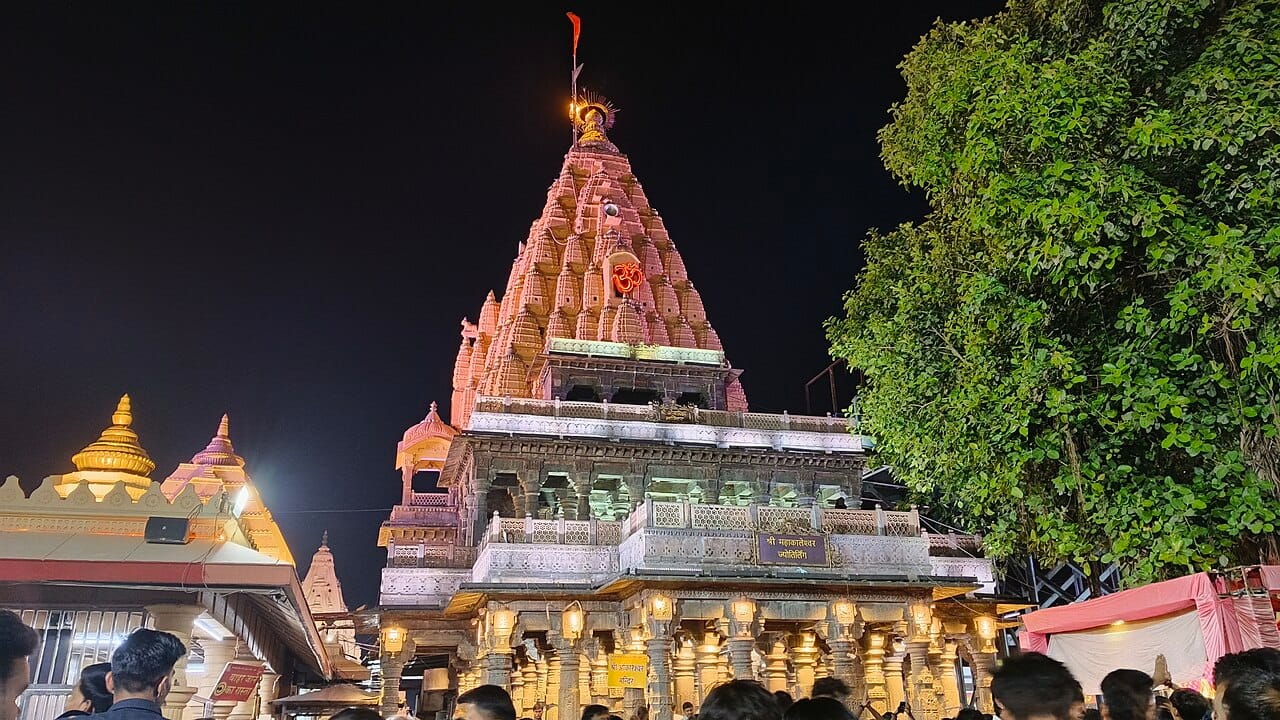
Madhya Pradesh, at the geographic center of India, contains an unbroken temple tradition spanning from the Gupta period through the Chandela and Paramara dynasties to the present day. The state's sacred geography includes the Mahakaleshwar Jyotirlinga in Ujjain, the UNESCO World Heritage site of Khajuraho, the Omkareshwar Jyotirlinga on the Narmada River, the temple city of Orchha, and the Bhojeshwar temple with its 40-ton linga.
Quick Facts
Capital
Bhopal
Population
82.3 million
Area
308,252 km²
Languages
Hindi, Bundeli, Malvi, Nimadi
Best Time to Visit
October to March
Major Pilgrimage
Ujjain, Khajuraho, Omkareshwar, Orchha
Temple Style
Nagara (Chandela), Maratha, Bhumija (Paramara)
UNESCO Count
1 (Khajuraho)
Major River
Narmada, Chambal, Betwa, Kshipra
Highest Peak
Dhupgarh (1,350 m)
Why Visit Madhya Pradesh
Madhya Pradesh's religious landscape is organized along three axes: the Narmada River axis (Omkareshwar, Maheshwar), the central highlands axis (Khajuraho, Sonagiri Jain hill), and the Malwa plateau axis (Ujjain's Mahakaleshwar and Sandipani Ashram). Each axis represents distinct dynastic patronage: Paramara (9th-13th centuries) along the Narmada, Chandela (10th-13th centuries) at Khajuraho, and Scindia (18th-20th centuries) at Ujjain.
Mahakaleshwar is one of the twelve Jyotirlingas and the only one facing south (Dakshinamurti), representing Shiva as the guru of all knowledge. The Khajuraho Group of Monuments (25 surviving temples out of an original 85), built between 950-1050 CE, was designated a UNESCO World Heritage Site in 1986. Omkareshwar is the only Jyotirlinga on an island in the Narmada River. The Bhojeshwar linga, at 5.5 meters in diameter, is the largest monolithic Shiva linga in India.
Temple Categories
Jyotirlingas
2Mahakaleshwar (Ujjain) and Omkareshwar (Narmada island) — two of the twelve.
Chandela Temples
25Khajuraho group — 25 surviving temples with exquisite sandstone carvings.
Paramara Temples
3Bhojeshwar Temple and other Bhumija-style structures.
Orchha Temples
3Chaturbhuj Temple, Ram Raja Temple — 16th-17th century Bundela architecture.
Featured Sacred Places
Madhya Pradesh
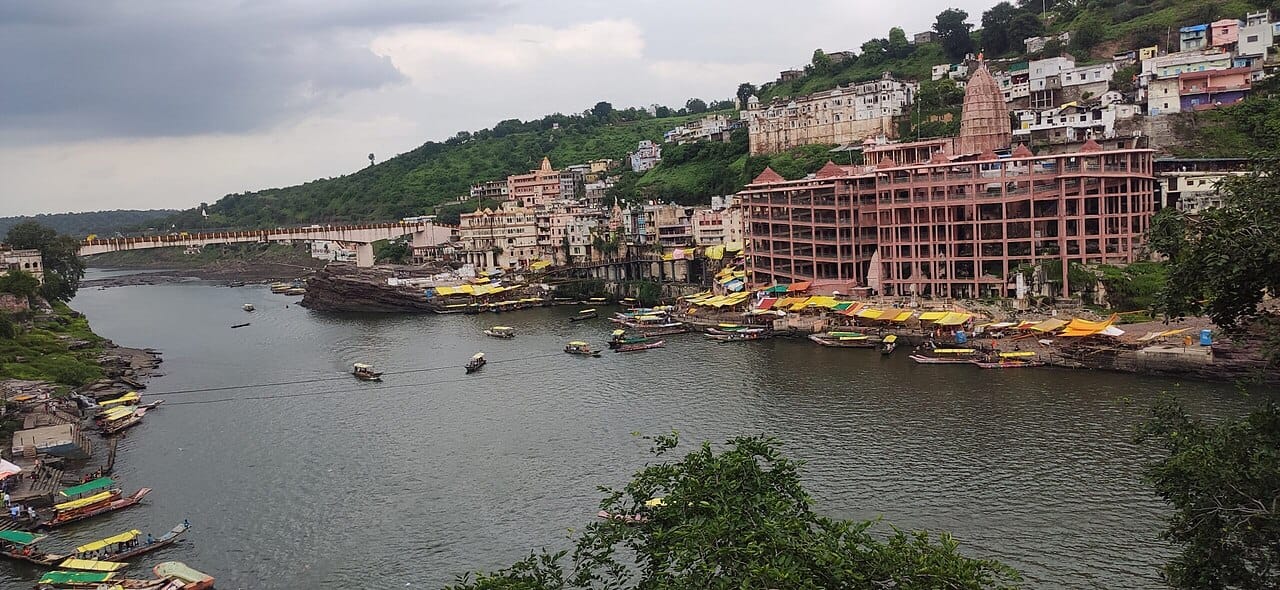
Omkareshwar Temple
Situated on a sacred island in the Narmada River, Omkareshwar is the only Jyotirlinga located on an island.
Explore Temple
Madhya Pradesh
Mahakaleshwar Temple
One of the twelve Jyotirlingas, Mahakaleshwar in Ujjain is the only Shiva temple where the lingam faces south (Dakshinamurti).
Explore Temple

Madhya Pradesh
Mahakali Temple
Mahakali Temple in Ujjain is one of the 51 Shakti Peethas, where the upper lip (oshtha) of Goddess Sati is believed to have fallen.
Explore Temple
UNESCO 1986Cultural Heritage
Madhya Pradesh
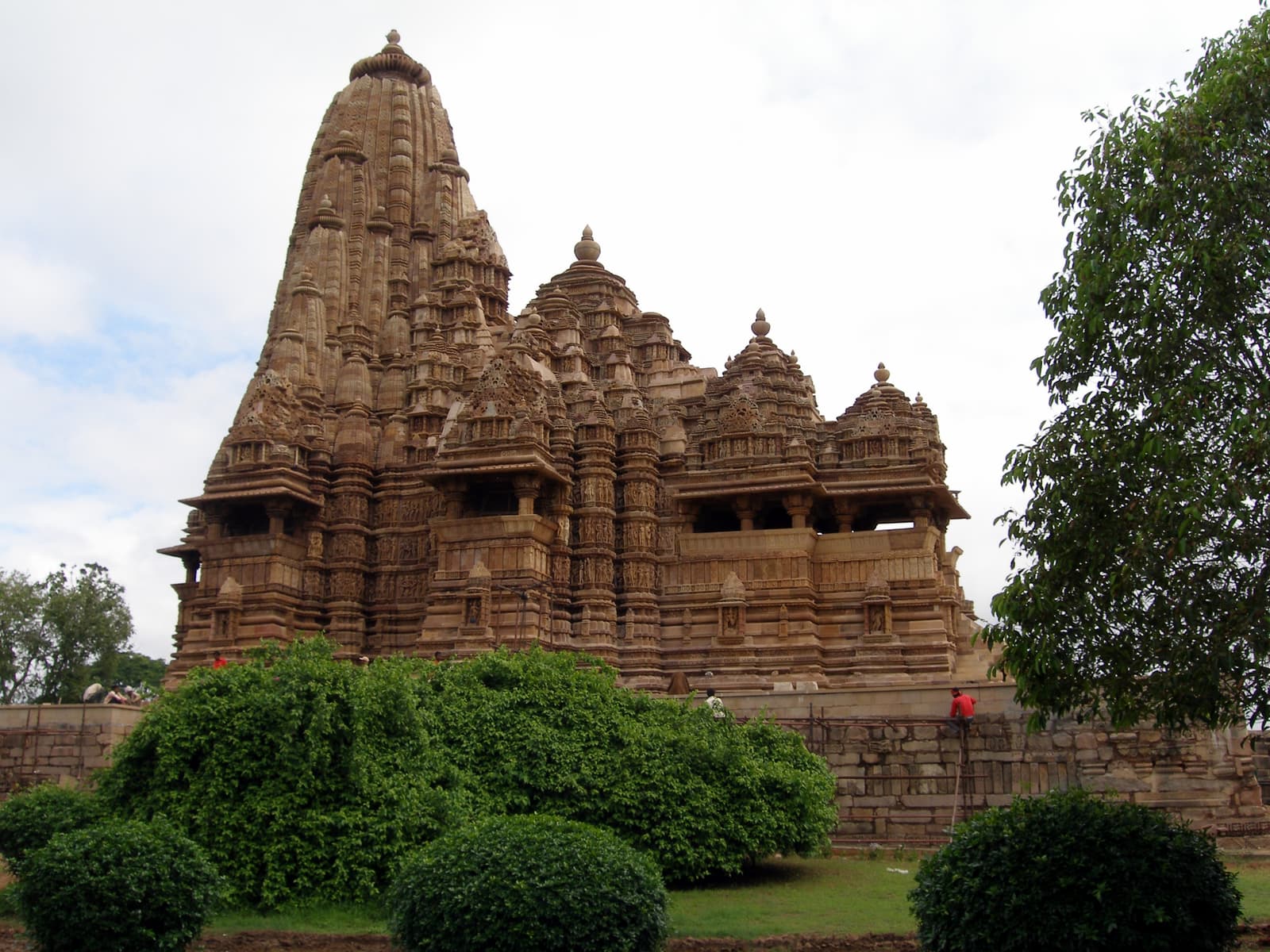
Khajuraho Group of Monuments
The largest and most ornate Hindu temple in the Khajuraho Group of Monuments.
Explore Temple
Pilgrimage Circuits
Jyotirlinga Circuit
2 templesMahakaleshwar (Ujjain) to Omkareshwar (Narmada island), the two Jyotirlingas of Madhya Pradesh.
Bundelkhand Circuit
4 templesKhajuraho, Orchha, and the Sonagiri Jain hill temples.
Khajuraho TemplesChaturbhuj Temple OrchhaRam Raja Temple OrchhaSonagiri Jain Temples
The Jyotirlinga circuit connects Mahakaleshwar and Omkareshwar, 140 km apart. The Narmada Parikrama is a 2,600-km circumambulation taking 120 days on foot. The Jain circuit in Bundelkhand connects the 25 marble temples of Sonagiri hill, which contains 130 Jain temples within a 1.5-km radius.
Temple Architecture
Khajuraho temples exemplify the Nagara style with shikharas in latina and shekhari modes. Kandariya Mahadeva contains 872 surviving stone sculptures out of an estimated 1,200. Mahakaleshwar combines Maratha-era architecture with a five-story shikhara, an underground sanctum (garbhagriha) reached by descending 22 steps. The Bhojeshwar temple features a 60-foot-square platform and stone beams weighing 40 tons each, transported 75 km.
Architectural Styles
Historical Timeline
5th c.Gupta
Mahakaleshwar temple originally built during the Gupta period.
950-1050Chandela
Khajuraho temples built under Chandela rulers Yashovarman, Dhanga, and Vidyadhara.
11th c.Paramara
Bhojeshwar Temple commissioned by Paramara king Bhoja but left incomplete at his death.
1235Delhi Sultanate
Mahakaleshwar temple destroyed by Iltutmish's forces.
1752Maratha
Mahakaleshwar rebuilt in current form by Maratha commander Ranoji Scindia.
UNESCO Heritage Sites
Madhya Pradesh has 1 UNESCO World Heritage temple.
View All UNESCO TemplesTemple Statistics
2
Jyotirlingas
Mahakaleshwar, Omkareshwar
1
UNESCO Sites
Khajuraho Group of Monuments
5th c.
Oldest Temple
Mahakaleshwar (Gupta period)
5.5 m diameter
Largest Linga
Bhojeshwar Temple
Festivals
Bhasma Aarti
Shravan (July-August)Mahakaleshwar Temple, Ujjain
Daily at 4 AM
Cremation ash mixed with sandalwood applied to the linga following an 11-step protocol from the Skanda Purana.
Ujjain Kumbh Mela
Once per 12 yearsMahakaleshwar Temple
1 month
50 million pilgrims; 120 temporary bathing ghats on the Kshipra River; next in 2028.
Khajuraho Dance Festival
February-MarchKhajuraho Temples
1 week
Classical Indian dance performances staged in the illuminated Chitragupta and Vishwanath temple complexes.
The Bhasma Aarti at Mahakaleshwar, performed daily at 4:00 AM during Shravan, uses cremation ash mixed with sandalwood to anoint the linga. The Ujjain Kumbh Mela (every 12 years, when Jupiter enters Leo) attracted 50 million pilgrims in 2016. The Khajuraho Dance Festival (February-March) features classical Indian dance performances staged in the illuminated temple complexes.
Travel Guide
Best Time
October to March (15-28°C)
Climate
Summer up to 44°C; monsoon 90 cm
Nearest Airport
Bhopal (BHO), Khajuraho (HJR), Indore (IDR)
Railway
Ujjain Junction, Khajuraho, Mahoba
Road
NH-44, NH-45, NH-146
Local Transport
MP RTC buses, taxis, auto-rickshaws
Temple Etiquette
Remove footwear; modest dress
Suggested Duration
7-10 days for major circuits
Nearby Attractions
UNESCO site
Sanchi Stupa
3rd-century BCE Buddhist complex built by Ashoka; four intricately carved torana gateways.
UNESCO site
Bhimbetka Rock Shelters
700+ rock shelters with paintings from the Mesolithic period through the historical era.
National Park
Kanha National Park
940 km² tiger reserve; primary habitat of the hard-ground barasingha (swamp deer).
Interesting Facts
01
The Bhasma Aarti at Mahakaleshwar uses cremation ash from the Ujjain ghats on the Kshipra River — one of the few temples in India to use human cremation remains in daily worship.
02
The Chausath Yogini Temple at Khajuraho is one of only four fully intact 64-yogini temples in India, with 65 stone shrines arranged in a circular pattern.
03
The Bhojeshwar Temple's 40-ton sandstone beams were transported 75 km from the Satpura quarries using wooden rollers and elephant teams; the quarry at Chandpura still contains partially cut blocks.
Frequently Asked Questions
It is the only Dakshinamurti Jyotirlinga facing south, representing Shiva as the supreme teacher. The linga is partially submerged in a natural spring in the underground sanctum, reached by descending 22 steps.
The erotic panels, comprising about 5% of the sculptural program, are interpreted as representing the tantric practice of transcending worldly desires. They are positioned on the outer walls, serving as a visual narrative one passes beyond before entering the sanctum.
Using cremation ash from the Ujjain ghats mixed with sandalwood paste, ghee, camphor, and aromatic powders, the ritual follows an 11-step protocol from the Skanda Purana. Only priests from the specific Gurukul Parampara lineage are authorized to perform it.
The 40-ton sandstone beams were quarried 75 km south and transported using wooden rollers, elephant teams, and water-buffalo-driven sledges on earthen ramps. Construction was abandoned when King Bhoja died in 1055 CE before the ceiling and shikhara could be erected.
Sources & References
These records back the history, architecture, temple listings and visitor guidance published on this Madhya Pradesh page.
Archaeological Survey of India
Archaeological Survey of India — monument records and conservation reports
Protected-monument status, dating, architectural classification and conservation records for the temples and monuments named across this Madhya Pradesh guide.
Primary archaeological record
Open source (opens in a new tab)Ministry of Tourism, Government of India
Ministry of Tourism — official destination information
Official Government of India visitor information, access routes and pilgrimage circuits for Madhya Pradesh.
Government record
Open source (opens in a new tab)Madhya Pradesh Tourism
Madhya Pradesh Tourism — official destination portal
State visitor information — temple timings, access routes and pilgrimage circuit details cited on this page.
Government record
Open source (opens in a new tab)UNESCO World Heritage Centre
UNESCO World Heritage List — World Heritage Sites in Madhya Pradesh
Inscription criteria, listing year and Outstanding Universal Value statements for the 1 World Heritage Site in Madhya Pradesh covered on this page (Khajuraho Group of Monuments).
World Heritage documentation
Open source (opens in a new tab)
— every record linked above was re-requested for this release, so the link still resolves and the publisher still serves the document. It is a link check, not a re-verification of every sentence on this page.
Missing something, or found an error? Send us a correction with the record that supports it, or read how we choose sources.