From ancient rock-cut marvels to towering imperial shrines, discover the architectural soul of Bharat through our verified digital archive.
Explore More Temples
Location
Kolkata
Presiding Deity
Goddess Bhavatarini (Kali)
Architecture
Nava-ratna (Nine-Spired) Bengali Style
Dynasty
Rani Rashmoni
Timings
Summers: 6:00 AM to 12:30 PM and 3:30 PM to 9:00 PM. Winters: 6:00 AM to 1:00 PM and 3:00 PM to 8:30 PM.
Entry Fee
Free
Best Time
The months from October to March are the most comfortable for visiting Kolkata and the temple. Early mornings are recommended for a peaceful experience.
A world-famous 19th-century temple complex on the Hooghly River, immortalized by its association with the saint Sri Ramakrishna Paramahamsa.
The temple was founded by Rani Rashmoni in the mid-19th century. According to legend, the Rani was planning a pilgrimage to Kashi to worship the Divine Mother. However, the night before her departure, she had a vision of the Goddess Kali who told her, 'There is no need to go to Banaras. Install my statue in a beautiful temple on the banks of the Ganges river and arrange for my worship there.' Following this divine command, Rani Rashmoni purchased a 20-acre plot of land in Dakshineshwar. The temple was consecrated on May 31, 1855. Sri Ramakrishna was appointed as the head priest, and it was here that he spent most of his life in spiritual ecstasy and realized the unity of all religions.
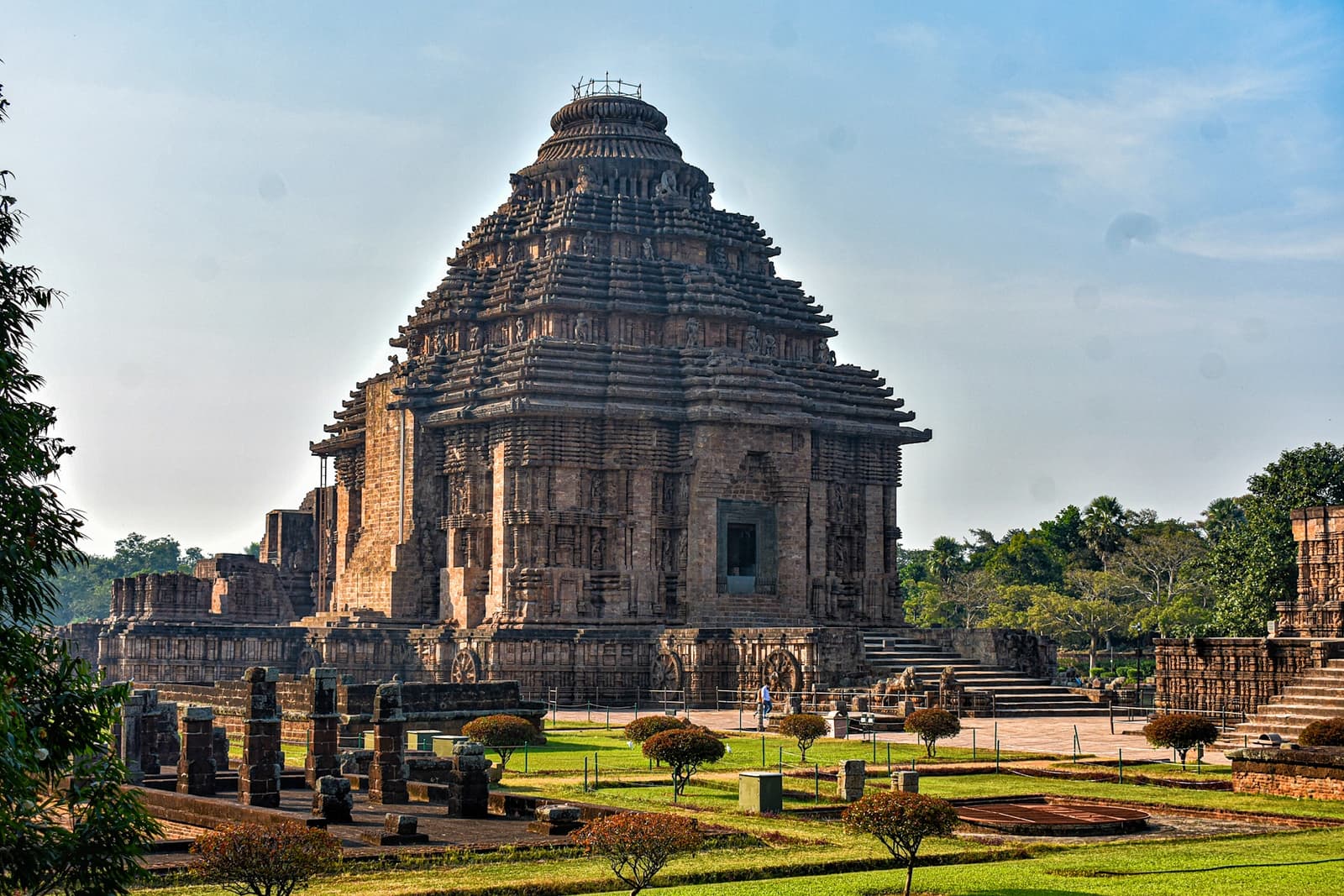
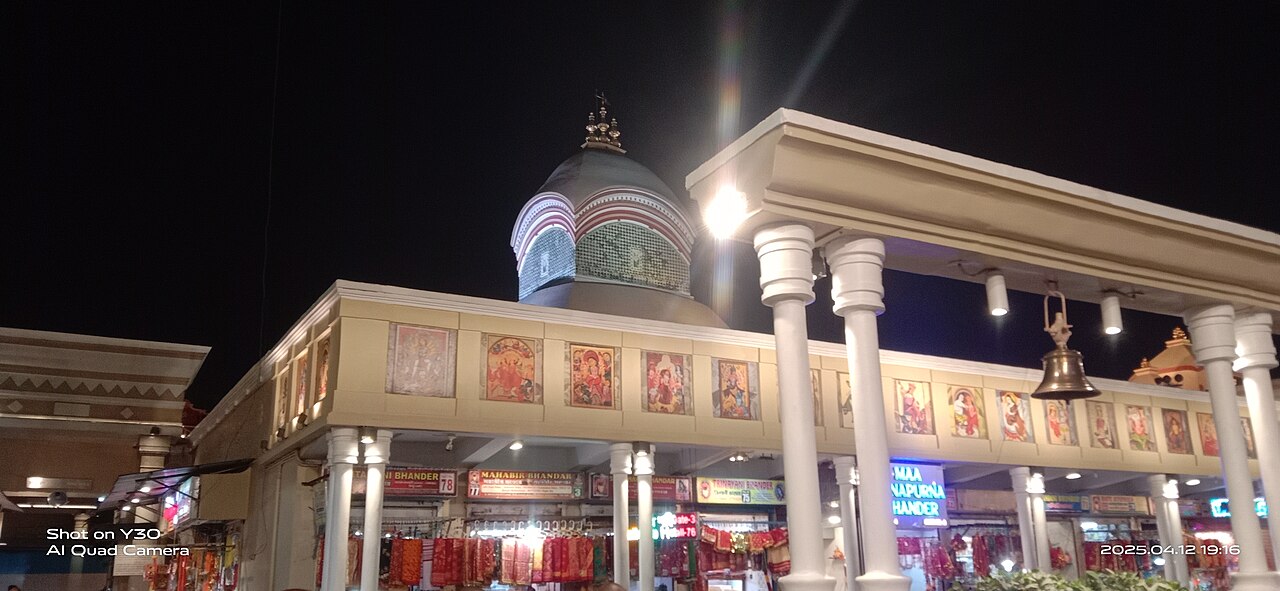
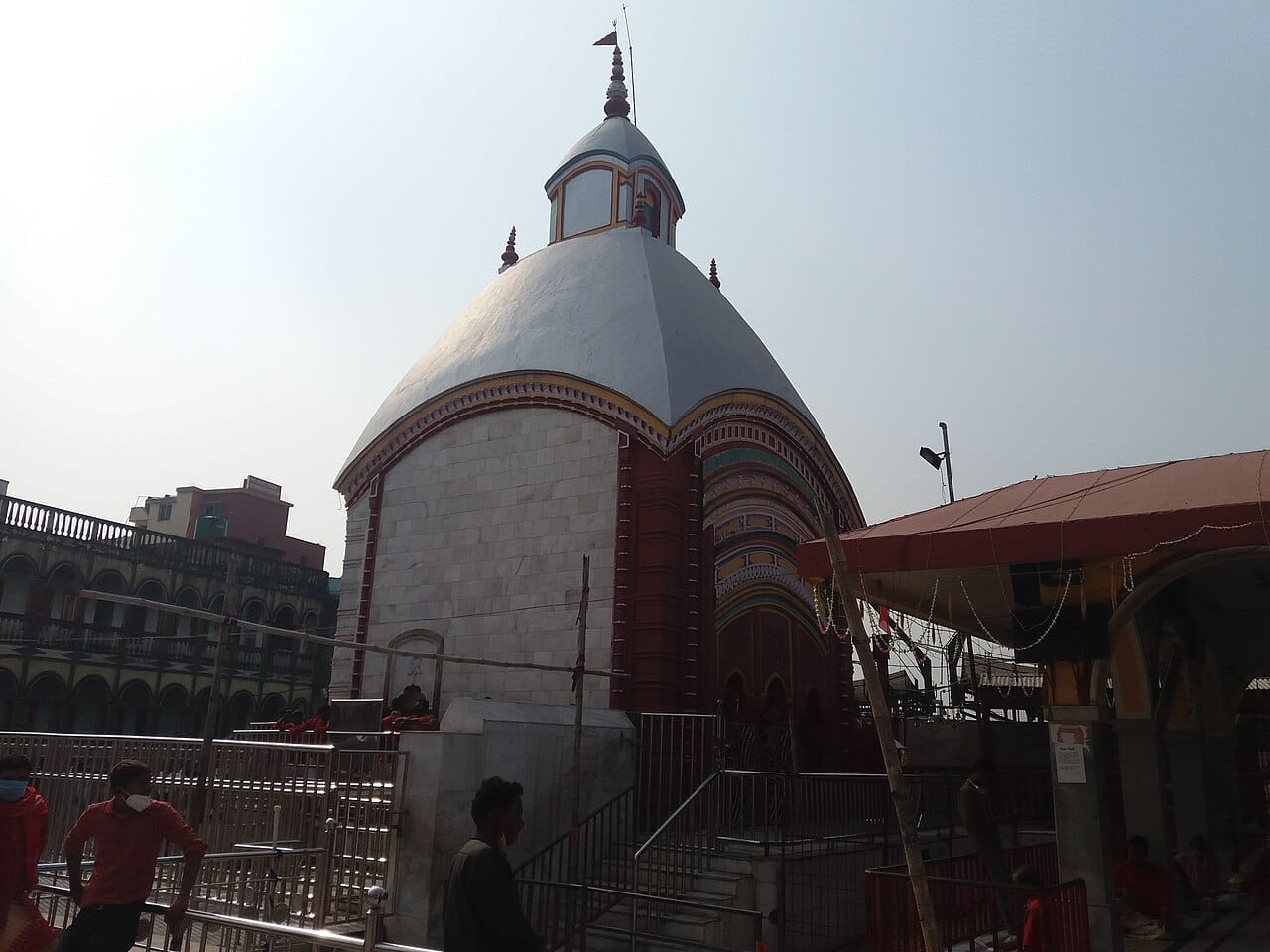
The main temple is built in the traditional Nava-ratna style of Bengal, which features nine spires. The structure is three-storied, and the nine spires are distributed across the upper two levels. The temple stands on a high platform with a flight of stairs. The inner sanctum (garbhagriha) houses the idol of Bhavatarini standing on the chest of a supine Lord Shiva, both placed on a silver lotus with a thousand petals. The courtyard is massive, surrounded by 12 smaller temples dedicated to Lord Shiva (built in the 'Atchala' style) and a temple for Radha-Krishna. The 'Nahabat' (music room) where Sri Ramakrishna's wife, Sarada Devi, lived is also a significant part of the complex.
Signature Feature: Nava-ratna Architecture and the 12 Shiva Shrines. Nava-ratna is a distinct sub-style of Bengal temple architecture.
The temple follows traditional Tantric and Pauranic rituals for Kali worship. The day begins with the 'Mangala Aarti' before sunrise. The deity is worshipped with various offerings including flowers (especially hibiscus), sweets, and cooked rice (bhog). The 'Sandhya Aarti' in the evening is a grand affair, accompanied by the ringing of bells and the sound of conch shells. Devotees often take a holy dip in the Hooghly River (Ganga) before entering the temple. The temple maintains a strict code of conduct to preserve its spiritual atmosphere.
Kali Puja, which coincides with Diwali, is the most significant festival celebrated here. The temple is beautifully illuminated, and thousands of devotees gather for the midnight puja. 'Snana Yatra', the anniversary of the temple's consecration, is another major event. Other important days include 'Janmashtami', 'Durga Puja', and the birth anniversaries of Sri Ramakrishna and Sarada Devi.
Sri Ramakrishna Paramahamsa, Nava-ratna Architecture, 12 Shiva Temples, Hooghly Riverside location
The months from October to March are the most comfortable for visiting Kolkata and the temple. Early mornings are recommended for a peaceful experience.
Summers: 6:00 AM to 12:30 PM and 3:30 PM to 9:00 PM. Winters: 6:00 AM to 1:00 PM and 3:00 PM to 8:30 PM.
A. Photography is strictly prohibited inside the main sanctum and of the deity, though taking photos of the complex and courtyard is permitted.
A. The temple is well-connected by local trains (Dakshineshwar station), buses, and a popular ferry service from Belur Math and other ghats.
A. While there is no strict formal dress code, visitors are expected to wear modest and respectful attire suitable for a place of worship.
Kalighat Kali Temple
A major Shakti Peetha where the toes of Sati's right foot fell, serving as the spiritual heart of Kolkata.
Tarapith Temple Birbhum
A major center for Tantric worship dedicated to Goddess Tara, famous for the saint Bamakhyapa and its sacred cremation ground.
Bargabhima Temple Tamluk
An ancient 1,150-year-old temple where Sati's left ankle fell, blending Bengali 'at-chala' and Odia 'Kalinga' styles.
ISKCON Mayapur Nadia
The global headquarters of ISKCON and birthplace of Chaitanya Mahaprabhu, one of the world's most visited Vaishnavite sites.
Rasmancha Bishnupur
The oldest 17th-century brick structure in Bishnupur, unique for its massive pyramidal roof and arched galleries.
Jor-Bangla Temple Bishnupur
Known for its 'twin hut' design and incredibly detailed terracotta panels depicting the Ramayana and Mahabharata.
Kalighat Kali Temple
A major Shakti Peetha where the toes of Sati's right foot fell, serving as the spiritual heart of Kolkata.
Hangseshwari Temple Bansberia
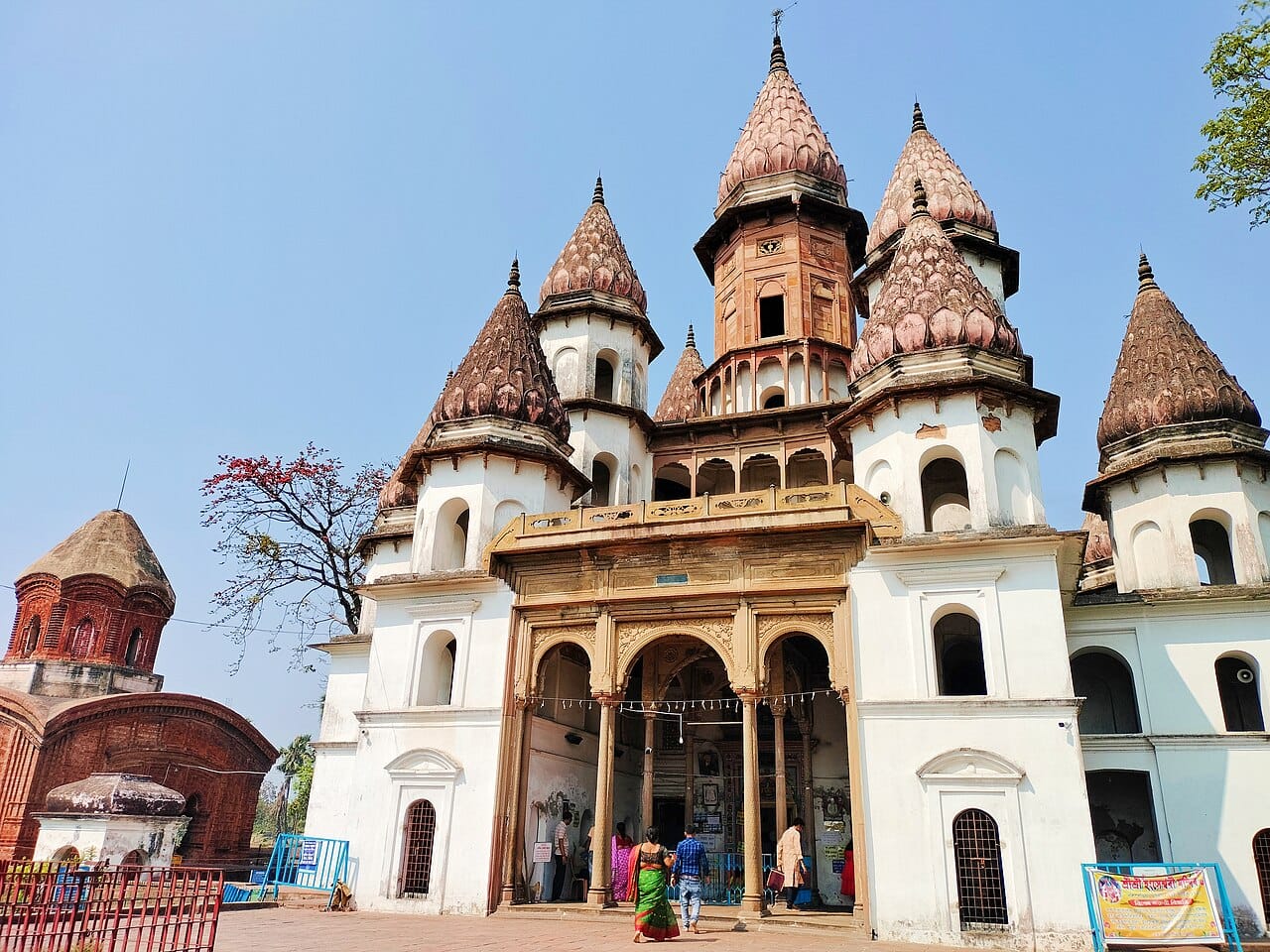
A unique temple with 13 lotus-bud towers, representing the human body's anatomy according to Yoga and Tantra.
Vaishno Devi Temple
The Vaishno Devi Temple, a sacred cave shrine nestled in the Trikuta Mountains of Jammu and Kashmir, is one of India's most visited pilgrimage sites, where millions trek 12 km each year to seek blessings of Mata Vaishno Devi at the holy cave complex.
Dhari Devi Temple
A sacred Shakti temple on the banks of the Alaknanda River, considered the guardian deity of the Char Dham Yatra and famous for the idol that changes color three times daily.
Kalkaji Temple
An ancient temple dedicated to Kalka Devi, believed to date back to the Satya Yuga, and highly crowded during Navratri.
Jhandewalan Devi Mandir
One of Delhi's oldest and most revered Shakti shrines, named after the ritual flags (Jhandas) offered by its many devotees.
India's temples are living traditions — not museums. Every temple has its own customs. This guide helps first-time visitors prepare with confidence and respect.
Foreign visitor information is being researched
Please verify with the official temple authority before planning your visit.
Foreign Visitors
Verify Before VisitingVisitor Information
Entry policies vary between temples. Most temples welcome visitors, while some may restrict access to specific areas, rituals, or the inner sanctum. Always verify the latest entry guidelines with the official temple authorities before your visit.
Modest clothing is expected at every Indian temple — a sign of respect, not a restriction. Think of it as dressing for a formal ceremony.
A scarf is always useful — it covers shoulders, works as a head covering, and can double as a makeshift face cover if needed.
Outdoor photography is generally permitted. Indoor photography is often restricted. Always look for signage or ask a priest before taking photos inside.
The months from October to March are the most comfortable for visiting Kolkata and the temple. Early mornings are recommended for a peaceful experience.
April — June
July — September
English is widely understood at major tourist temples. In smaller local temples, Hindi and the regional language are more common. A smile and simple hand gestures go a long way. Learning a few words of the local language is always appreciated.
Cash (Indian Rupees) is the most reliable option, especially for temple offerings, small shops, and local transport.
UPI digital payments (Google Pay, PhonePe, Paytm) are widely accepted across India — even at roadside stalls. Download one before you arrive.
International credit/debit cards work at most ATMs, hotels, and larger establishments. Smaller vendors may only accept cash or UPI.
Carry small denominations (₹10, ₹20, ₹50, ₹100 notes) for offerings and temple donations. Large notes (₹500, ₹2000) can be hard to break at smaller counters.
Many historic temples have uneven stone floors, multiple steps, and narrow passages. Wheelchair access is limited at older sites — contact the temple in advance.
Basic restroom facilities and drinking water are available at most major temples. Some charge a small fee (₹5–₹10).
Stay hydrated — carry a reusable water bottle, especially in hot climates.
Keep valuables secure — use hotel lockers for passports and excess cash.
Wear comfortable, sturdy footwear — temple floors can be hot, wet, or uneven.
Beware of unofficial guides or touts near temple entrances. Only use authorised services.
Carry a photocopy of your passport and visa. Leave originals in your hotel safe.
Download offline maps — mobile networks can be unreliable near remote temple sites.
These short explanations help make sense of what you see and experience.
Darshan means 'seeing' — but in a temple it means being seen by the deity. It is a sacred moment of connection, not just a viewing.
Removing footwear is a sign of humility. It also keeps the temple floor clean, since devotees sit and pray on the ground.
Food offered to the deity and then distributed to devotees. It is considered blessed. Accept it with both hands and do not discard it.
The bell creates a focused acoustic atmosphere, wards off distractions, and announces your presence before entering the inner sanctum.
Circumambulation (pradakshina) is done clockwise, keeping the sanctum on your right — an auspicious direction aligned with the sun's path.
Flowers symbolise devotion, coconuts represent the ego being broken, incense purifies the air, and lamps represent the victory of light over darkness.
Sacred viewing of the deity; the central act of temple worship.
Clockwise circumambulation of the sanctum.
Blessed food offered to the deity and distributed to devotees.
The innermost sanctum where the main deity resides.
The towering spire above the sanctum, a defining feature of temple architecture.
A pillared hall or pavilion within the temple complex.
The Indian Rupee (?, INR) is the local currency. ATMs are widely available in cities and towns. For temple offerings, keep small notes (₹10, ₹20, ₹50). Most temples accept donations in cash only — digital payments are uncommon at the offering counter itself.
Offerings (dakshina) are given with the right hand. Place cash in the donation box (hundi) or give it directly to the priest. There is no fixed amount — give what feels appropriate. Some temples have fixed fees for special entry or puja participation.
Shoes and sandals are removed before entering the temple building. Most temples have a designated shoe counter (free or a small fee of ₹5–₹20). Socks are generally allowed. In monsoon, carry a plastic bag for wet shoes.
Darshan queues can take 30 minutes to 3 hours at popular temples. Many offer paid VIP darshan (₹100–₹500) for faster entry. Special queues for women, elderly, and disabled visitors exist at some temples. No line jumping.
Major festivals draw enormous crowds — sometimes hundreds of thousands. Book accommodation months in advance. Expect road closures, restricted vehicle access, and limited phone network. Arrive early (before dawn) to avoid the worst congestion.
Always look for signage before taking photos. When in doubt, ask a priest. Never take photos of devotees in prayer without permission. Selfie sticks are banned at most temples. Silently switch your phone to silent mode.
Police / Ambulance / Fire: 112 (National Emergency Number)
Tourist Helpline: 1800-111-363 (Multi-lingual, Ministry of Tourism)
Women's Helpline: 1091
Temple-specific visitor information is continuously researched and updated from official sources. Where specific data is unavailable, general India travel guidance is provided. Always verify current policies with the temple authority before your visit.
Information last verified July 2026. Temple-specific data coming soon.
Continue your journey through the spiritual and architectural wonders of India.

A unique temple with 13 lotus-bud towers, representing the human body's anatomy according to Yoga and Tantra.

A major Shakti Peetha where the toes of Sati's right foot fell, serving as the spiritual heart of Kolkata.

A major center for Tantric worship dedicated to Goddess Tara, famous for the saint Bamakhyapa and its sacred cremation ground.

An ancient 1,150-year-old temple where Sati's left ankle fell, blending Bengali 'at-chala' and Odia 'Kalinga' styles.

The global headquarters of ISKCON and birthplace of Chaitanya Mahaprabhu, one of the world's most visited Vaishnavite sites.
The oldest 17th-century brick structure in Bishnupur, unique for its massive pyramidal roof and arched galleries.

Known for its 'twin hut' design and incredibly detailed terracotta panels depicting the Ramayana and Mahabharata.

A five-towered terracotta temple famous for its circular friezes showing the Rasa-lila of Lord Krishna.
"India has over 40 UNESCO World Heritage Sites, ranging from ancient temples to natural wonders."