From ancient rock-cut marvels to towering imperial shrines, discover the architectural soul of Bharat through our verified digital archive.
Explore More Temples
Builder
Natural cave shrine (no single builder)
Dynasty
Dogra (royal patronage from Maharaja Gulab Singh)
Construction
Natural cave shrine, venerated for centuries
Style
Natural Cave Shrine
Main Deity
Mata Vaishno Devi (three Pindis — Mahakali, Mahalakshmi, Mahasaraswati)
Location
Katra, Reasi District, Trikuta Mountains
State
Jammu & Kashmir
Elevation
~1,585 m (5,200 ft)
Trek Distance
~12–13 km from Katra
Significance
One of 51 Shakti Peethas (traditionally) / Maha Shakti Peetha
Season
Throughout the year; best March–June & September–November
Pilgrimage Circuit
Shri Mata Vaishno Devi Shrine Board (SMVDSB)
The Vaishno Devi Temple, also known as Shri Mata Vaishno Devi Shrine, is one of the most revered and visited pilgrimage destinations in India. Located in the Trikuta Mountains of the Reasi district in Jammu and Kashmir, approximately 12 kilometres from the town of Katra, it is not a constructed temple but a natural cave shrine formed over millennia by geological processes in limestone. Inside, three natural rock formations — the pindis — represent the goddess in her three forms as Mahakali, Mahalakshmi and Mahasaraswati. The shrine receives an average of 8–10 million visitors annually, making it one of the most visited religious sites in the world, and the yatra is undertaken on foot, by pony, by palanquin, or by helicopter to nearby Sanjichhat.
Step into the dim cave and you will search in vain for a sculpted idol. There is no bronze murti, no painted image, no gold-veiled icon of the goddess. What devotees wait all day to glimpse are three rough, naturally formed rock surfaces — the pindis — worn smooth by centuries of reverent touch. Mata Vaishno Devi is among the few goddess shrines whose form was never carved by human hands.
The three pindis together embody the Tridevi. The right represents the wrathful Mahakali, who destroys evil; the middle represents Mahalakshmi, the bestower of wealth; the left represents Mahasaraswati, the giver of knowledge. They are not installed images but part of the cave wall itself, natural rock projections venerated for centuries. Like the svayambhu lingam at Kedarnath, the goddess here is worshipped in a form nature produced, not a form humans shaped.
The mythology explains why the shrine holds no conventional icon. According to the most popular account, Vaishnavi renounced the world and went to the Trikuta Mountains to meditate. The demon Bhairon Nath discovered her and pursued her relentlessly, despite her repeated refusals. For nine months and nine days she fled through the mountains. Cornered at last, she assumed the fierce form of Goddess Kali and severed his head. Before dying, Bhairon Nath realised she was not an ordinary woman but the Divine Mother herself and begged her forgiveness. Pleased with his repentance, the goddess granted him moksha and a boon: that her devotees would also attain liberation at the end of their life's journey, and that no yatra would be complete until her pilgrims also offered prayers at his shrine.
Vaishno Devi is traditionally regarded as one of the 51 Shakti Peethas, the sacred sites where body parts of Goddess Sati are believed to have fallen; here the skull (kapala) of Sati is associated with the site. It is also a Siddha Peetha, where spiritual seekers are said to attain siddhis. As with several Shakti Peethas, the classification is not universal across all texts. See the complete guide to the 51 Shakti Peethas for how this shrine sits within the wider tradition.
There is no road to the cave. The yatra begins at Katra, at an elevation of about 350 metres, and climbs a roughly 12-kilometre track to the shrine at about 1,585 metres — an elevation gain of about 1,000 metres along a path that is paved with stone steps at the steeper sections. The journey is the pilgrimage itself, a stripping away of comfort over some 2,500 steps that divide base camp from the cave.
The trek takes most pilgrims six to eight hours and is usually broken at Ardh Kuwari (about 6 km), where the goddess is believed to have meditated for nine months, and at Sanjichhat (about 10 km), the helicopter landing point. Rest shelters, medical facilities, tea stalls, and food counters recur every few hundred metres, and the entire track is lit at night. The last stretch up to the cave is the steepest.
Not everyone walks. Ponies, palanquins (palki), and porters carry those unable to climb, and a helicopter service from Katra to Sanjichhat reduces the walk to a final stretch of about 1.5 kilometres. Most pilgrims, however, choose to walk — the physical ordeal is understood as part of the spiritual preparation, a quality it shares with trek-based Himalayan shrines such as Kedarnath.
The Vaishno Devi pilgrimage is also unusual among great Indian shrines in being open throughout the year and free of any caste, creed, class, or gender barriers. That openness is its most striking contrast with the Char Dham shrines of Uttarakhand, which close before winter — for those, see the Char Dham yatra guide.
The darshan at the cave is not, in itself, the end of the yatra. After passing the three pindis and receiving prasad, pilgrims make their way a further 2 kilometres beyond the cave to the Bhairon Nath Temple, set higher in the mountain with panoramic views over the Pir Panjal range. It is here, and only here, that the yatra is considered complete.
The explanation lies in the legend already told. The demon Bhairon Nath pursued the fleeing goddess across the mountains, but in defeat he understood that his pursuer was the Divine Mother herself. Moved by his repentance, the goddess granted him moksha and a boon — that her devotees would, at the end of their life's journey, attain liberation, and that no pilgrimage would be considered finished until they had offered prayers at his shrine.
The Bhairon Nath Temple is thus neither an afternoon extension nor an optional detour. It is the resolution of the shrine's central myth: the fearsome opponent who becomes the guardian, and the divine mercy that turns an adversary into the final stop of every devotee's journey.
The return walk from Bhairon Nath is itself considered auspicious. Many pilgrims visit Bhairon Nath after the cave darshan and then walk or ride back down the mountain to Katra, closing the loop between the cave and the guardian shrine that the goddess's boon made inseparable.
The Vaishno Devi cave shrine has been a site of worship since ancient times, though its documented history begins in the medieval period. The shrine is mentioned in the Mahabharata, where the Pandavas are said to have visited during their exile. The cave as a hermitage was known to Tantric practitioners for centuries before major pilgrimage infrastructure was developed. The name Vaishno derives from Vaishnavi, emphasizing the goddess's connection to Lord Vishnu. Historically, the cave was known only to local shepherds and forest dwellers until the 19th century.
The first documented royal pilgrimage was by Maharaja Gulab Singh, the founder of the Dogra dynasty and the Maharaja of Jammu and Kashmir, in the mid-19th century. He constructed the first proper path to the cave. In the early 20th century, the shrine gained wider recognition when the Maharaja of Kashmir established a small trust for its management.
The modern pilgrimage system began with the formation of the Shri Mata Vaishno Devi Shrine Board in 1986, established under the Jammu and Kashmir Shri Mata Vaishno Devi Shrine Act. Under the board's management, the track was upgraded, the base camp at Katra was developed with hotels, the Yatra registration system (Yatri Niwas) was built, and the helipad at Sanjichhat was added. The Vaishno Devi Bhawan — the building housing the cave entrance — was completely redesigned and expanded in the 1990s to manage huge crowds.
In 2008, the Shri Mata Vaishno Devi University was established at Kakryal, Katra. The shrine has grown exponentially, from 1.4 million pilgrims in 1986 to over 8 million in 2019. The COVID-19 pandemic temporarily reduced footfall to near zero in 2020, but numbers have rebounded strongly since 2022, with the shrine now receiving over 10 million visitors annually and continuing that growth into 2026.
The Vaishno Devi Temple is not a temple in the conventional sense — it is a natural cave formation within the Trikuta Mountains. The cave is formed in Triassic-Jurassic limestone, dissolved over millions of years by groundwater percolation. The main cave is approximately 30 metres (100 feet) long, beginning with a wide entrance that gradually narrows to just about 1 metre at the sanctum end, with the height varying from 1.5 to 3 metres. The cave interior has been modified with stone flooring, electric lighting, and handrails for safety.
The three pindis that represent the goddess are part of the natural cave wall — they are not installed idols but naturally formed stalagmite-like projections that have been venerated for centuries. The cave walls show signs of water seepage and mineral deposits, and the smooth surfaces of the pindis reflect that process, giving the shrine its wholly natural, unworked character.
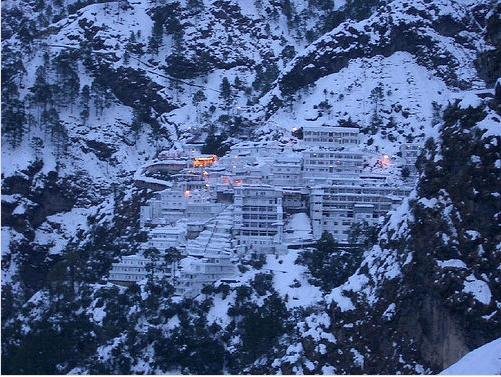
The cave's entrance is covered by the Vaishno Devi Bhawan, a modern multilevel building providing queuing areas, waiting rooms, aarti spaces, and administrative offices. Significantly renovated in the 1990s, the complex manages massive crowd flow using reinforced concrete faced with local stone to blend with the mountain. It includes multiple floors for queue management, an emergency medical centre, a langar hall (free kitchen), and shops for offerings, set directly against the sheer rock face of the Trikuta mountain.
The 12-kilometre track from Katra to the cave is a paved path about 1.5 metres wide, with stone steps at the steeper sections. It incorporates over 2,500 steps and an elevation gain of about 1,000 metres from Katra (350 m) to the cave (1,585 m). The track includes rest shelters, public toilets, and water stations, and the whole path is lit at night. At Sanjichhat (10 km, around 2,600 m elevation) the track provides the final approach to the holy cave.
The Vaishno Devi Temple holds enormous religious significance as one of the 51 Shakti Peethas — the sacred sites where body parts of Goddess Sati are believed to have fallen. The site is also a Siddha Peetha, a place of meditation where spiritual seekers are said to attain siddhis. The classification is not universal in all texts; some traditions identify the nearby Jwala Ji temple as the Shakti Peetha. Nevertheless, Vaishno Devi is widely regarded as one of the most powerful goddess shrines in northern India. The yatra has also become a powerful social leveler — on the 12-kilometre uphill trek, people from all walks of life walk side by side as equals. The shrine is the largest driver of tourism to the Jammu region, and the board operates extensive social welfare programs funded by devotee offerings.
The Navaratri festivals (both Chaitra Navaratri in March–April and Sharad Navaratri in September–October) are the most important festival periods at Vaishno Devi, when the shrine sees its highest footfall, often exceeding 100,000 pilgrims per day. The entire Trikuta mountain is illuminated, special aartis are performed, and the Sharad Navaratri climax on Dussehra (Vijayadashami) is particularly grand. Diwali is celebrated with the lighting of thousands of lamps in the cave area and at Katra, and the New Year (January 1) is also a major day for the yatra. The Jyeshtha Purnima (June full moon) is considered auspicious as it marks the day the goddess is believed to have granted Bhairon Nath moksha. The monthly Purnima and Amavasya are observed with special rituals, and the Foundation Day of the Shrine Board on August 1 includes blood donation camps, community kitchens, and cultural events.
A natural cave shrine rather than a built temple, formed in the limestone of the Trikuta Mountains by millennia of groundwater dissolution.
Mata Vaishno Devi is among the most visited religious sites in India and the world, receiving over 10 million pilgrims a year — up from 1.4 million in 1986.
The three pindis are natural rock formations, not idols, representing the Tridevi: Mahakali, Mahalakshmi, and Mahasaraswati.
The shrine is open for darshan 24 hours a day, all year round, and has no restrictions on who may enter.
The yatra is considered incomplete without visiting the Bhairon Nath Temple, 2 kilometres beyond the cave.
The 12-kilometre trek from Katra gains about 1,000 metres over some 2,500 steps to a cave at roughly 1,585 metres.
The Vaishno Devi Yatra can be undertaken throughout the year, but the best times are March-June and September-November. The spring season (March-April) offers pleasant weather with the mountain slopes in bloom. The summer months (May-June) are warm but comfortable at higher altitudes, with daytime temperatures reaching 25-30 degrees Celsius at the base but cooler at the cave. The monsoon (July-August) brings heavy rainfall, landslides can occasionally block the track, and leeches are common on the path. The post-monsoon autumn (September-November) offers crystal clear skies and spectacular mountain views — this is the most popular season. The winter months (December-February) are very cold — the cave area can experience sub-zero temperatures, snow on the track, and occasional trail closures. However, the winter landscape is magical, and the shrine sees fewer crowds. The Navaratri periods (March-April and September-October) have the largest crowds (100,000+ per day) and require booking well in advance. For a less crowded experience, visit on weekdays during the off-peak months of January-February or July-August (avoiding monsoon heavy rain days). The yatra is best started early morning (between 4:00-6:00 AM) to avoid peak daytime crowds.
Open for darshan 24 hours a day. The cave entrance may close briefly during the five daily aartis (4:30 AM, 8:00 AM, 12:00 PM, 7:00 PM, and the night aarti). Helicopter service to Sanjichhat: 7:00 AM - 4:00 PM (weather permitting). Bhairon Nath Temple: 6:00 AM - 8:00 PM. Compulsory Yatra registration (Yatra Parchi) is free; there is no entry fee.
A small cave about 6 km from Katra on the yatra track. According to legend, the goddess meditated here for nine months in the form of an Ardh Kuwari (adolescent girl) before moving to the main cave. A popular rest stop with a small shrine, food stalls, and a natural pool.
At the base in Katra. A temple dedicated to the river goddess where pilgrims traditionally take a purificatory bath before starting the yatra.
About 6 km from Katra on the track. The spot where the goddess's footprints are preserved on a rock, marking the point where she halted during her flight from Bhairon Nath.
The helicopter landing point at high elevation, roughly 10 km from Katra, offering panoramic views. From Sanjichhat a walk of about 1.5 km (about 30 minutes) leads to the cave.
Located 2 km beyond the main cave at a higher altitude. An essential end point of the yatra — pilgrims offer prayers here so that their journey is complete. Offers spectacular views of the Pir Panjal range.
The three-peaked Trikuta mountain in which the cave shrine is set. The emblematic landmark of the Vaishno Devi region and the site of the cave's millennia-old tapo bhoomi (place of meditation).
The thriving base town built entirely around pilgrimage services. The starting point of the 12-km yatra, with the Yatri Niwas registration facility, markets, temples, and the Shri Mata Vaishno Devi University campus.
About 50 km from Katra, the winter capital of Jammu and Kashmir. Historic temples include Raghunath Temple, Ranbireshwar Temple, and Bahu Fort. The nearest airport (Jammu IXJ) connects Katra to Indian cities.
August
1 festival
Vaishno Devi
Celebrated on August 1, the anniversary of the Shri Mata Vaishno Devi Shrine Board, with special events including blood donation camps, community kitchens, and cultural programs.
/vaish-no day-vee/
Goddess; from 'Vaishnavi', the goddess connected to Vishnu
/kat-ra/
Base town of the yatra
/tree-koo-ta/
Three-peaked mountain
/pin-dee/
Naturally formed rock formation representing the goddess
/bha-van/
Building housing the cave entrance
/ar-dh koo-wa-ree/
Adolescent maiden form of the goddess
/bhai-ron naath/
Demon/devotee granted moksha; guardian shrine of the yatra
/yat-ra/
Pilgrimage
/san-jee-chhat/
Helicopter landing point at high elevation
/ka-pa-la/
Skull — the body part of Sati traditionally associated with Vaishno Devi
Click the speaker icon to hear pronunciation. Browser text-to-speech may vary.
Among India's Most-Visited Shrines
Mata Vaishno Devi is one of the most visited religious sites in India and the world, receiving over 10 million pilgrims annually — up from 1.4 million in 1986. Comparable in annual footfall to the Vatican and Mecca.
A Natural, Not Built, Shrine
Unlike most temples, Vaishno Devi is a natural cave shrine roughly 30 metres long, narrowing to about 1 metre at the sanctum. The three pindis are naturally formed rock projections, not installed idols.
The Three Pindis (Tridevi)
The right pindi represents Mahakali, the middle Mahalakshmi, and the left Mahasaraswati — together the Tridevi, the complete divine feminine. There is no anthropomorphic idol in the cave.
Shakti Peetha Status
Vaishno Devi is traditionally linked to the skull (kapala) of Sati, but this classification is not universal — some lists of the 51 Shakti Peethas identify the nearby Jwala Ji temple instead. It is nonetheless universally revered as a Maha Shakti Peetha and also as a Siddha Peetha.
The Bhairon Nath Mandate
The yatra is considered incomplete without visiting the Bhairon Nath Temple, 2 km beyond the cave. According to legend, the demon Bhairon Nath was granted moksha by the goddess and received a boon that no yatra is complete without him.
A. The Vaishno Devi yatra involves a 12-kilometre uphill trek from the base town of Katra (elevation 350 m) to the cave shrine (elevation 1,585 m), a total elevation gain of approximately 1,000 metres. It takes 6–8 hours for an average person. The distance is often broken into Katra to Ardh Kuwari (6 km), Ardh Kuwari to Sanjichhat (4 km), and Sanjichhat to the Bhawan (1.5 km). The last 0.5 km to the cave entrance is the steepest section.
A. Registration is mandatory. Book through the Shri Mata Vaishno Devi Shrine Board website (www.maavaishnodevi.org) or the mobile app, providing your name, age, gender, address, and a valid photo ID (Aadhaar, Voter ID, Passport, or Driving Licence). You receive a Yatra Parchi (registration slip) by email or SMS. You can also register on arrival at the Yatri Niwas in Katra. Online registration is encouraged during peak seasons to avoid long queues.
A. Katra to the cave is about 12 km of walking. The return is a similar 12 km, mostly downhill, making a total of about 24 km. The Bhairon Nath Temple is a further 2 km uphill from the cave, so a full journey including Bhairon Nath and the return to Katra covers roughly 28 km.
A. Helicopter tickets from Katra to Sanjichhat (about 10 km, an 8-minute flight) are booked online through the Shrine Board website or authorised travel agents. Tickets cost approximately Rs 2,100 per person and for same-day slots are released 3–4 days in advance. A valid Yatra Parchi and photo ID are required, and baggage weight is limited to about 5 kg.
A. There is no strict dress code, but modest clothing is recommended. Most pilgrims wear comfortable trekking clothes; shorts and sleeveless tops are generally avoided out of respect. Warm clothing is advisable even in summer, as the cave is cool and mountain evenings are cold. Comfortable walking or trekking shoes are essential. Unlike many large Indian temples there is no requirement to wear specific traditional attire.
A. Ardh Kuwari Cave is a small cave about 6 km from Katra on the track. It is where the goddess is believed to have meditated for nine months as an ardh kuwari (adolescent girl) before moving to the main cave. It is a popular rest stop with a small shrine, seating, food stalls, and a natural pool, and many pilgrims spend the night here to break their journey.
A. Bhairon Nath Temple is located 2 km beyond the main cave at about 2,000 m elevation. According to legend, the goddess granted Bhairon Nath moksha and a boon that no yatra would be complete without visiting him. Pilgrims must therefore visit, offer prayers, and then return. The path offers spectacular panoramic views of the Pir Panjal range.
A. Vaishno Devi is widely considered a Shakti Peetha, associated with the skull (kapala) of Sati. The classification is not universal; some lists identify the nearby Jwala Ji temple as the site of Sati's tongue. Nevertheless, Vaishno Devi is universally revered as a great seat of the goddess and one of the most visited Devi temples in India, and is included in most modern Shakti Peetha pilgrimage circuits.
A. The three natural rock formations (pindis) represent the goddess in three forms: the right is Mahakali (destruction of evil), the middle Mahalakshmi (wealth and prosperity), and the left Mahasaraswati (knowledge and wisdom). Together they constitute the Tridevi. They are naturally formed rock projections, not carved idols.
A. At Katra there are budget lodges, mid-range hotels, and premium hotels and resorts. The Shrine Board runs the Yatri Niwas at Katra with dormitory and room options. At the Bhawan, free basic dormitory accommodation is offered on a first-come, first-served basis, with paid suites also available. During peak season, all accommodation should be booked well in advance.
A. The best times are March–June and September–November. September–November offers clear skies and spectacular mountain views and is the most popular season. Winter (December–February) is very cold with snowfall on the track but has fewer crowds — the shrine remains open throughout the year. The Navaratri periods see the largest crowds (100,000+ per day), and weekdays are generally less crowded than weekends.
A. Yes. Unusually among major Indian temples, the cave is open for darshan 24 hours a day throughout the year, though the cave entrance may close briefly during the five daily aarti times. Footfall is highest during Navaratri and festival periods, and crowd management on the route is handled through RFID-based tracking of registered pilgrims.
A. Yes. Pony and palki (palanquin) services carry those who cannot complete the 12 km, and the helicopter service to Sanjichhat reduces the walking to about 1.5 km. Medical facilities are available on the track and at the Bhawan. However, pilgrims with heart conditions, respiratory issues, or mobility problems should consult a doctor before undertaking the yatra, as the high altitude (1,585 m at the cave, 2,000 m at Bhairon Nath) can cause breathlessness.
A. The site has been a place of worship since ancient times, with tradition linking it to the Pandavas of the Mahabharata. The first documented royal pilgrimage was by Maharaja Gulab Singh in the 19th century, who built the first path to the cave. The modern pilgrimage system began with the Shri Mata Vaishno Devi Shrine Board, formed in 1986, which built the track, the registration system, and the wider infrastructure. Pilgrim numbers rose from 1.4 million in 1986 to over 10 million today.
Shri Mata Vaishno Devi Shrine Board (SMVDSB)
Official shrine management, yatra registration, darshan and travel information
View sourceJammu & Kashmir Tourism Department
Official travel and pilgrimage information for the Jammu region
View sourceWarikoo, K.
Vaishno Devi: The Legend and the Pilgrimage
2009
Singh, J.
Mata Vaishno Devi: A Spiritual Journey
2015
Sharma, S.
Pilgrimage Tourism in Jammu & Kashmir
2018
Vishalakshi Temple
The Vishalakshi Temple, located in the narrow lanes of Mir Ghat near the Ganges in Varanasi, is one of the 51 Shakti Peethas where the earrings of Goddess Sati are believed to have fallen. Dedicated to the 'wide-eyed' goddess Vishalakshi, the temple is the first stop on the traditional Kashi Yatra pilgrimage circuit and is considered the consort shrine of the neighbouring Kashi Vishwanath Temple.
Tara Tarini Temple
The Tara Tarini Temple on Kumari Hills overlooking the Rushikulya River in Ganjam district, Odisha, is the Sthana Peetha — one of the four major ancient Shakti Peethas of India. Dedicated to the twin goddesses Tara and Tarini, the temple marks the site where the breasts of Goddess Sati are believed to have fallen. The hilltop shrine offers panoramic views of the river valley and the Bay of Bengal in the distance.
Bimala Temple
The Bimala Temple, located within the Jagannath Temple complex in Puri, Odisha, is one of the 51 Shakti Peethas where the feet of Goddess Sati are believed to have fallen. It is the only Shakti Peetha situated inside a Vaishnava temple complex. The temple's unique ritual position gives Goddess Bimala supremacy over the Jagannath Temple's food offerings — no Mahaprasad is considered consecrated until it has been first offered to her.
Mahakali Temple
Mahakali Temple in Ujjain is one of the 51 Shakti Peethas, where the upper lip (oshtha) of Goddess Sati is believed to have fallen. It is one of the three Shakti Peethas in the Ujjain region (alongside Mahakaleshwar and Chintaman Ganesh). The temple is part of the sacred geography of Ujjain, one of the seven Mokshapuris (liberation cities) of Hinduism.
Chamundeshwari Temple
Perched atop Chamundi Hills at 3,489 feet, the Chamundeshwari Temple is the tutelary shrine of the Wodeyar dynasty of Mysore. The goddess Chamundeshwari, an eight-armed form of Durga who defeated the demon Mahishasura, is the state deity (Naada Devi) of Karnataka. The temple is accessed by 1,000 stone steps built in 1664.
Kamakhya Temple
One of the most revered Shakti Peethas in India, Kamakhya Temple on Nilachal Hill in Guwahati is the center of Tantric worship in the Northeast. The temple uniquely houses no idol — instead, the goddess is worshipped as a yoni (vulva) in a natural rock fissure, representing the creative feminine principle.
Kalighat Kali Temple
A major Shakti Peetha where the toes of Sati's right foot fell, serving as the spiritual heart of Kolkata.
Tarapith Temple Birbhum
A major center for Tantric worship dedicated to Goddess Tara, famous for the saint Bamakhyapa and its sacred cremation ground.
Bargabhima Temple Tamluk
An ancient 1,150-year-old temple where Sati's left ankle fell, blending Bengali 'at-chala' and Odia 'Kalinga' styles.
Dhari Devi Temple
A sacred Shakti temple on the banks of the Alaknanda River, considered the guardian deity of the Char Dham Yatra and famous for the idol that changes color three times daily.
Vishalakshi Temple
The Vishalakshi Temple, located in the narrow lanes of Mir Ghat near the Ganges in Varanasi, is one of the 51 Shakti Peethas where the earrings of Goddess Sati are believed to have fallen. Dedicated to the 'wide-eyed' goddess Vishalakshi, the temple is the first stop on the traditional Kashi Yatra pilgrimage circuit and is considered the consort shrine of the neighbouring Kashi Vishwanath Temple.
Vindhyavasini Devi Temple
One of India's most visited Shakti Peethas, where Goddess Durga is believed to have resided after slaying Mahishasura.
Shankaracharya Temple
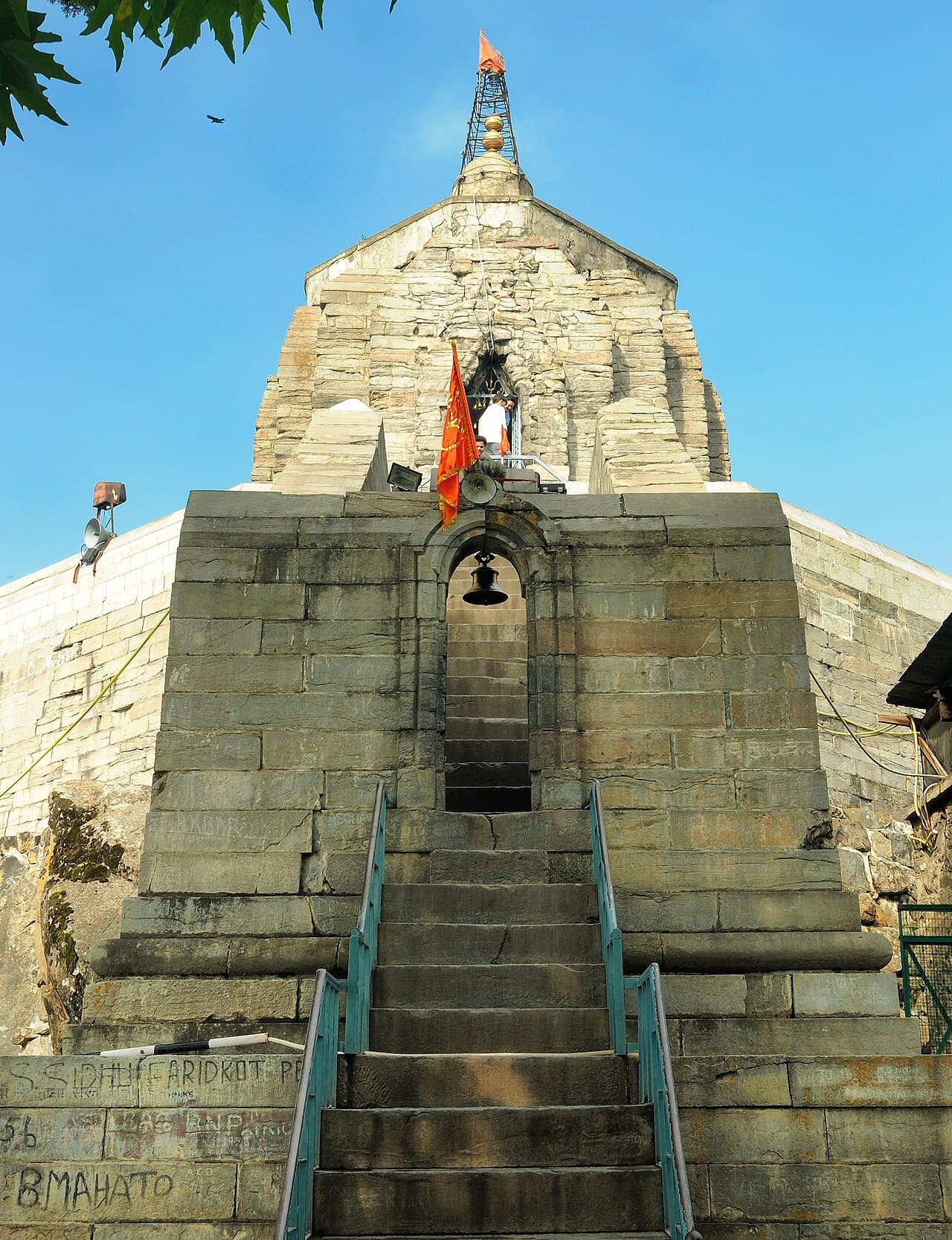
Perched on a hilltop at 1,000 feet, this ancient Shiva temple offers panoramic views of the Dal Lake and Srinagar city.
Raghunath Temple
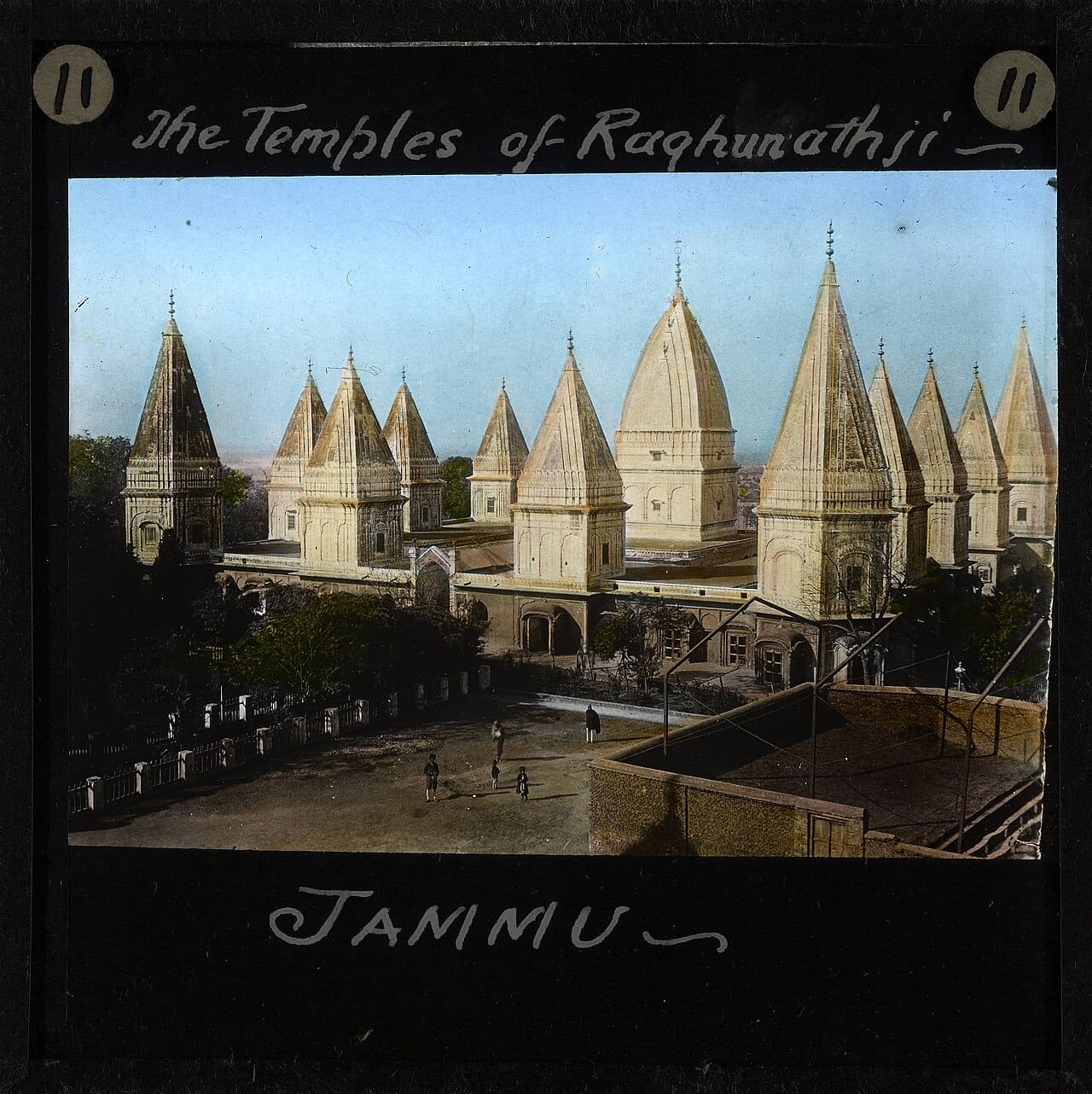
One of the largest temple complexes in North India, featuring seven gold-plated shikharas and thousands of Saligramas.
Martand Sun Temple
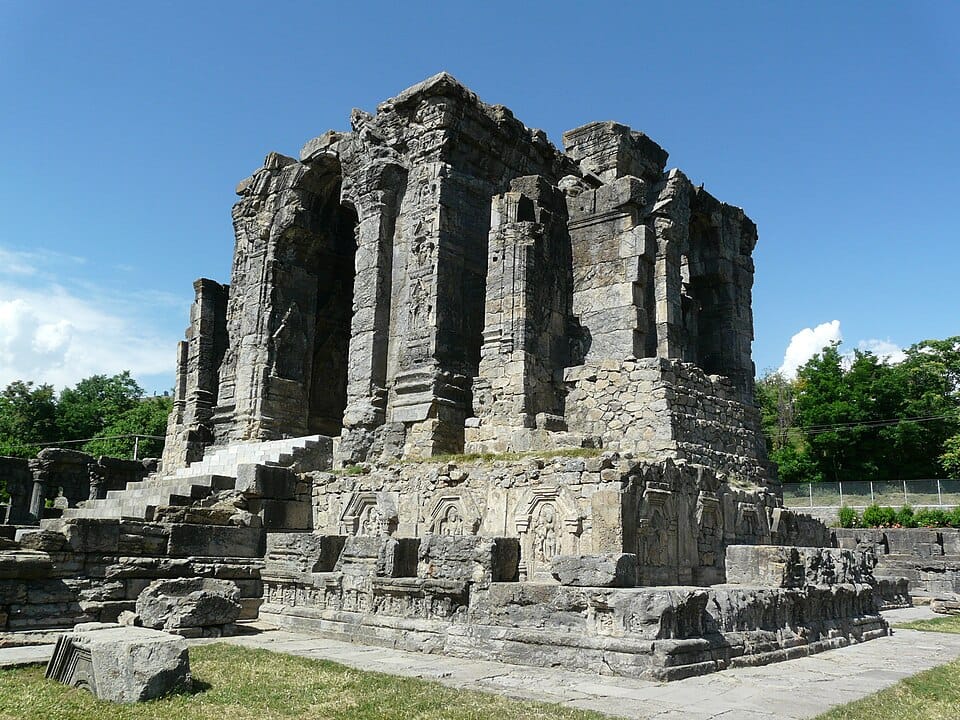
A magnificent 8th-century ruin of a solar temple, representing the peak of Kashmiri Hindu architecture.
Kheer Bhawani Temple
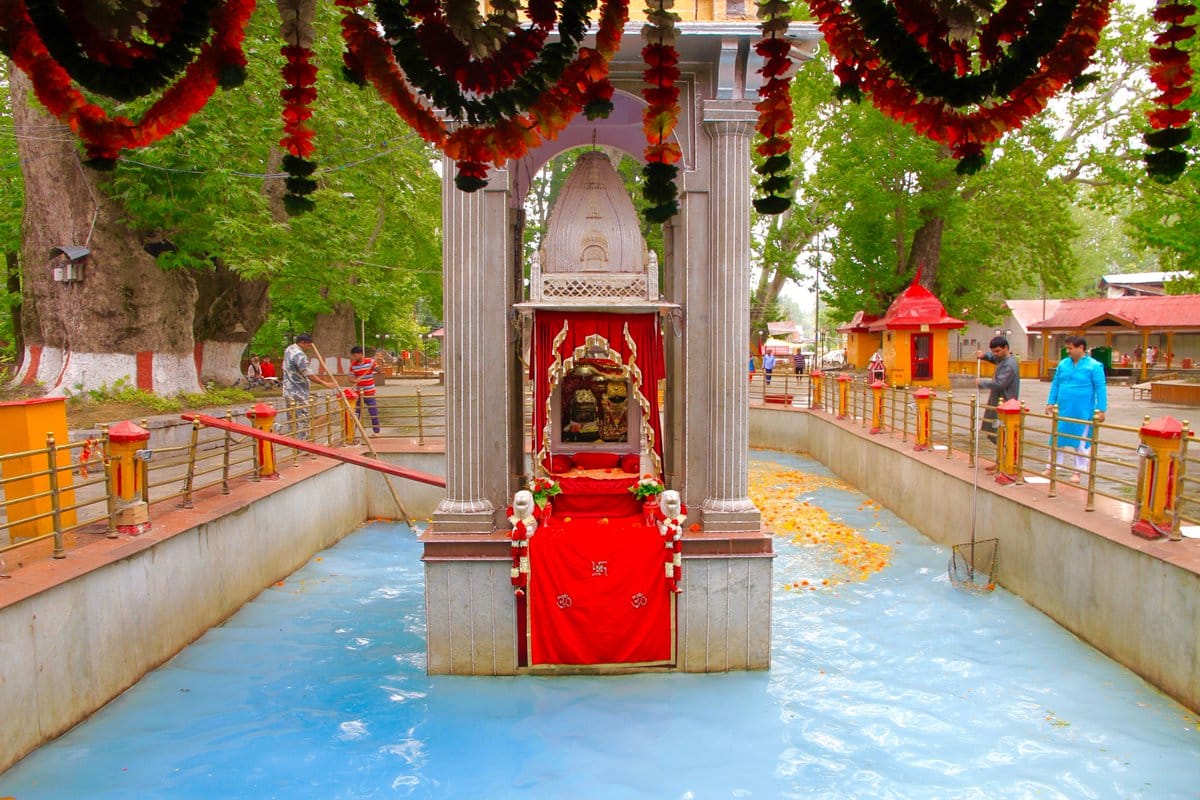
The most important shrine for Kashmiri Pandits, famous for a sacred spring that is said to change color as a divine omen.
Amarnath Cave Temple
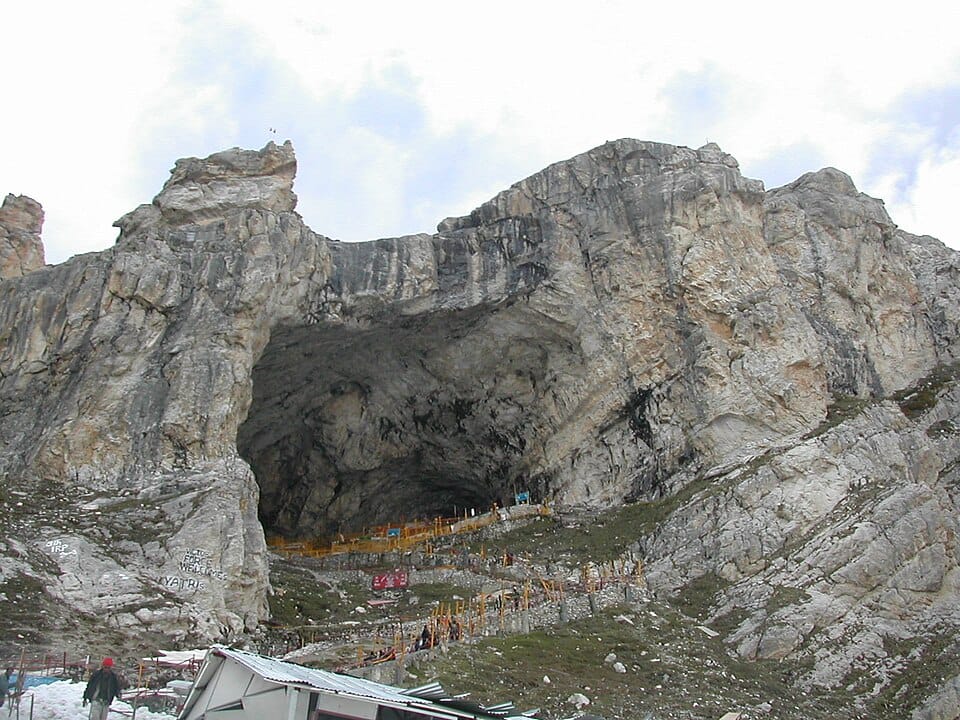
One of the holiest shrines at 3,888m altitude, famous for its naturally occurring ice stalagmite Shiva Lingam.
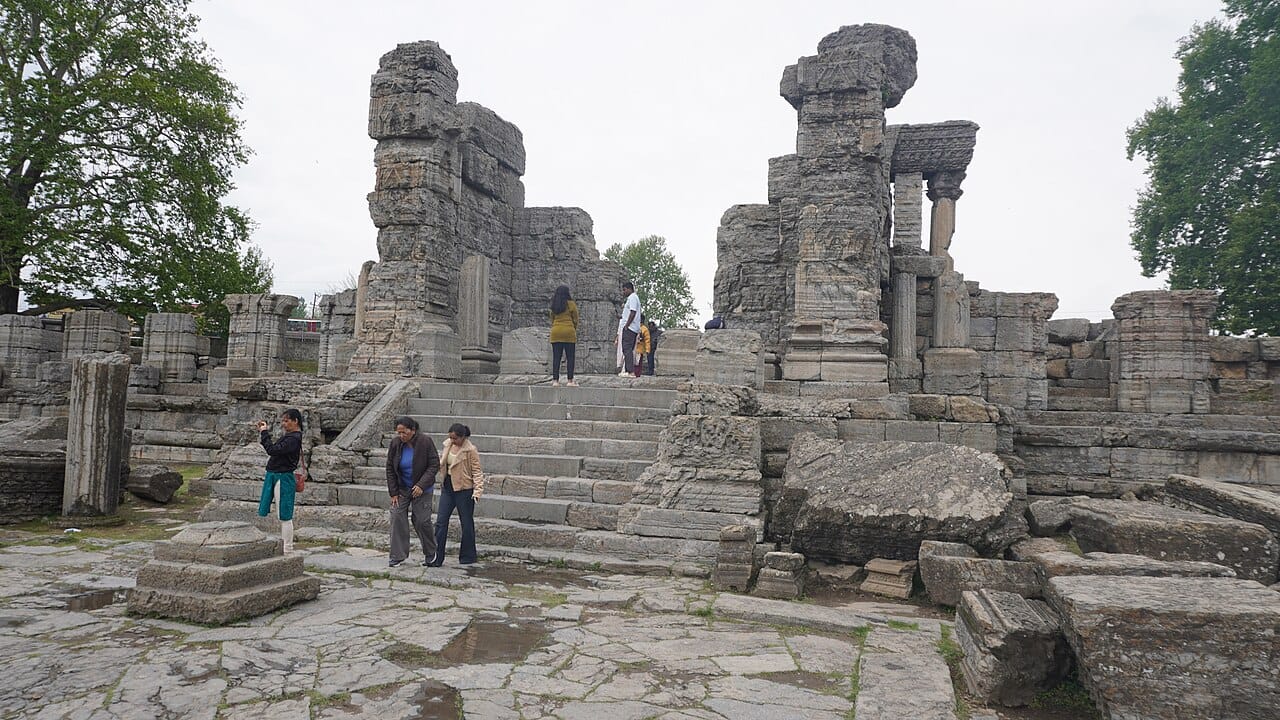
Avantiswami Temple Ruins
Stunning 9th-century ruins built by King Avantivarman, noted for Greek-influenced architecture and intricate stone carvings.
Dakshineshwar Kali Temple
A world-famous 19th-century temple complex on the Hooghly River, immortalized by its association with the saint Sri Ramakrishna Paramahamsa.
Kalighat Kali Temple
A major Shakti Peetha where the toes of Sati's right foot fell, serving as the spiritual heart of Kolkata.
Hangseshwari Temple Bansberia
A unique temple with 13 lotus-bud towers, representing the human body's anatomy according to Yoga and Tantra.
Dhari Devi Temple
A sacred Shakti temple on the banks of the Alaknanda River, considered the guardian deity of the Char Dham Yatra and famous for the idol that changes color three times daily.
Kalkaji Temple
An ancient temple dedicated to Kalka Devi, believed to date back to the Satya Yuga, and highly crowded during Navratri.
Jhandewalan Devi Mandir
One of Delhi's oldest and most revered Shakti shrines, named after the ritual flags (Jhandas) offered by its many devotees.
India's temples are living traditions — not museums. Every temple has its own customs. This guide helps first-time visitors prepare with confidence and respect.
Foreign Visitors
AllowedAll visitors welcome regardless of religion, caste, or nationality. The shrine has no restrictions on who may enter.
Visitor Information
Entry policies vary between temples. Most temples welcome visitors, while some may restrict access to specific areas, rituals, or the inner sanctum. Always verify the latest entry guidelines with the official temple authorities before your visit.
Modest clothing is expected at every Indian temple — a sign of respect, not a restriction. Think of it as dressing for a formal ceremony.
The Vaishno Devi Yatra can be undertaken throughout the year, but the best times are March-June and September-November. The spring season (March-April) offers pleasant weather with the mountain slopes in bloom. The summer months (May-June) are warm but comfortable at higher altitudes, with daytime temperatures reaching 25-30 degrees Celsius at the base but cooler at the cave. The monsoon (July-August) brings heavy rainfall, landslides can occasionally block the track, and leeches are common on the path. The post-monsoon autumn (September-November) offers crystal clear skies and spectacular mountain views — this is the most popular season. The winter months (December-February) are very cold — the cave area can experience sub-zero temperatures, snow on the track, and occasional trail closures. However, the winter landscape is magical, and the shrine sees fewer crowds. The Navaratri periods (March-April and September-October) have the largest crowds (100,000+ per day) and require booking well in advance. For a less crowded experience, visit on weekdays during the off-peak months of January-February or July-August (avoiding monsoon heavy rain days). The yatra is best started early morning (between 4:00-6:00 AM) to avoid peak daytime crowds.
April — June
July — September
Common local languages: Hindi, English, Dogri
Cash (Indian Rupees) is the most reliable option, especially for temple offerings, small shops, and local transport.
UPI digital payments (Google Pay, PhonePe, Paytm) are widely accepted across India — even at roadside stalls. Download one before you arrive.
International credit/debit cards work at most ATMs, hotels, and larger establishments. Smaller vendors may only accept cash or UPI.
Carry small denominations (₹10, ₹20, ₹50, ₹100 notes) for offerings and temple donations. Large notes (₹500, ₹2000) can be hard to break at smaller counters.
Wheelchair: Not applicable. The 13-km uphill trek involves uneven mountain terrain. Ponies, palanquins, and helicopter options available.
Stay hydrated — carry a reusable water bottle, especially in hot climates.
Keep valuables secure — use hotel lockers for passports and excess cash.
Wear comfortable, sturdy footwear — temple floors can be hot, wet, or uneven.
Beware of unofficial guides or touts near temple entrances. Only use authorised services.
Carry a photocopy of your passport and visa. Leave originals in your hotel safe.
Download offline maps — mobile networks can be unreliable near remote temple sites.
These short explanations help make sense of what you see and experience.
Darshan means 'seeing' — but in a temple it means being seen by the deity. It is a sacred moment of connection, not just a viewing.
Removing footwear is a sign of humility. It also keeps the temple floor clean, since devotees sit and pray on the ground.
Food offered to the deity and then distributed to devotees. It is considered blessed. Accept it with both hands and do not discard it.
The bell creates a focused acoustic atmosphere, wards off distractions, and announces your presence before entering the inner sanctum.
Circumambulation (pradakshina) is done clockwise, keeping the sanctum on your right — an auspicious direction aligned with the sun's path.
Flowers symbolise devotion, coconuts represent the ego being broken, incense purifies the air, and lamps represent the victory of light over darkness.
Sacred viewing of the deity; the central act of temple worship.
Clockwise circumambulation of the sanctum.
Blessed food offered to the deity and distributed to devotees.
The innermost sanctum where the main deity resides.
The towering spire above the sanctum, a defining feature of temple architecture.
A pillared hall or pavilion within the temple complex.
The Indian Rupee (?, INR) is the local currency. ATMs are widely available in cities and towns. For temple offerings, keep small notes (₹10, ₹20, ₹50). Most temples accept donations in cash only — digital payments are uncommon at the offering counter itself.
Offerings (dakshina) are given with the right hand. Place cash in the donation box (hundi) or give it directly to the priest. There is no fixed amount — give what feels appropriate. Some temples have fixed fees for special entry or puja participation.
Shoes and sandals are removed before entering the temple building. Most temples have a designated shoe counter (free or a small fee of ₹5–₹20). Socks are generally allowed. In monsoon, carry a plastic bag for wet shoes.
Darshan queues can take 30 minutes to 3 hours at popular temples. Many offer paid VIP darshan (₹100–₹500) for faster entry. Special queues for women, elderly, and disabled visitors exist at some temples. No line jumping.
Major festivals draw enormous crowds — sometimes hundreds of thousands. Book accommodation months in advance. Expect road closures, restricted vehicle access, and limited phone network. Arrive early (before dawn) to avoid the worst congestion.
Always look for signage before taking photos. When in doubt, ask a priest. Never take photos of devotees in prayer without permission. Selfie sticks are banned at most temples. Silently switch your phone to silent mode.
Police / Ambulance / Fire: 112 (National Emergency Number)
Tourist Helpline: 1800-111-363 (Multi-lingual, Ministry of Tourism)
Women's Helpline: 1091
Official Temple WebsiteState Tourism WebsiteTemple-specific visitor information is continuously researched and updated from official sources. Where specific data is unavailable, general India travel guidance is provided. Always verify current policies with the temple authority before your visit.
Continue your journey through the spiritual and architectural wonders of India.

The most important shrine for Kashmiri Pandits, famous for a sacred spring that is said to change color as a divine omen.

Perched on a hilltop at 1,000 feet, this ancient Shiva temple offers panoramic views of the Dal Lake and Srinagar city.

One of the largest temple complexes in North India, featuring seven gold-plated shikharas and thousands of Saligramas.

A magnificent 8th-century ruin of a solar temple, representing the peak of Kashmiri Hindu architecture.

One of the holiest shrines at 3,888m altitude, famous for its naturally occurring ice stalagmite Shiva Lingam.

Stunning 9th-century ruins built by King Avantivarman, noted for Greek-influenced architecture and intricate stone carvings.

Built in 1883, it is North India's largest Shiva temple, housing a massive 8-foot central Lingam and twelve crystal lingams.

Believed to be over 2,800 years old, it houses a sacred broken iron trident that legend says belonged to Lord Shiva.
"India has over 40 UNESCO World Heritage Sites, ranging from ancient temples to natural wonders."