From ancient rock-cut marvels to towering imperial shrines, discover the architectural soul of Bharat through our verified digital archive.
Explore More Temples
Location
Kolhapur
Presiding Deity
Goddess Mahalakshmi (Ambabai)
Architecture
Hemadpanti (Chalukya)
Dynasty
Chalukya, Shilahara, Yadava, Maratha
Timings
5:00 AM to 10:00 PM daily, without a break. The Kakad Aarti is at 5:00 AM. The Palakhi procession departs every Friday at 7:00 PM. Photography is not permitted inside the inner sanctum.
Entry Fee
Free
Best Time
October to March offers the most pleasant weather. Kirnotsav periods (January and June) are special for witnessing the solar event. Navaratri (September-October) is the grandest festival period. The temple is open year-round. Early morning (5-7 AM) is best for a peaceful darshan during the Kakad Aarti.
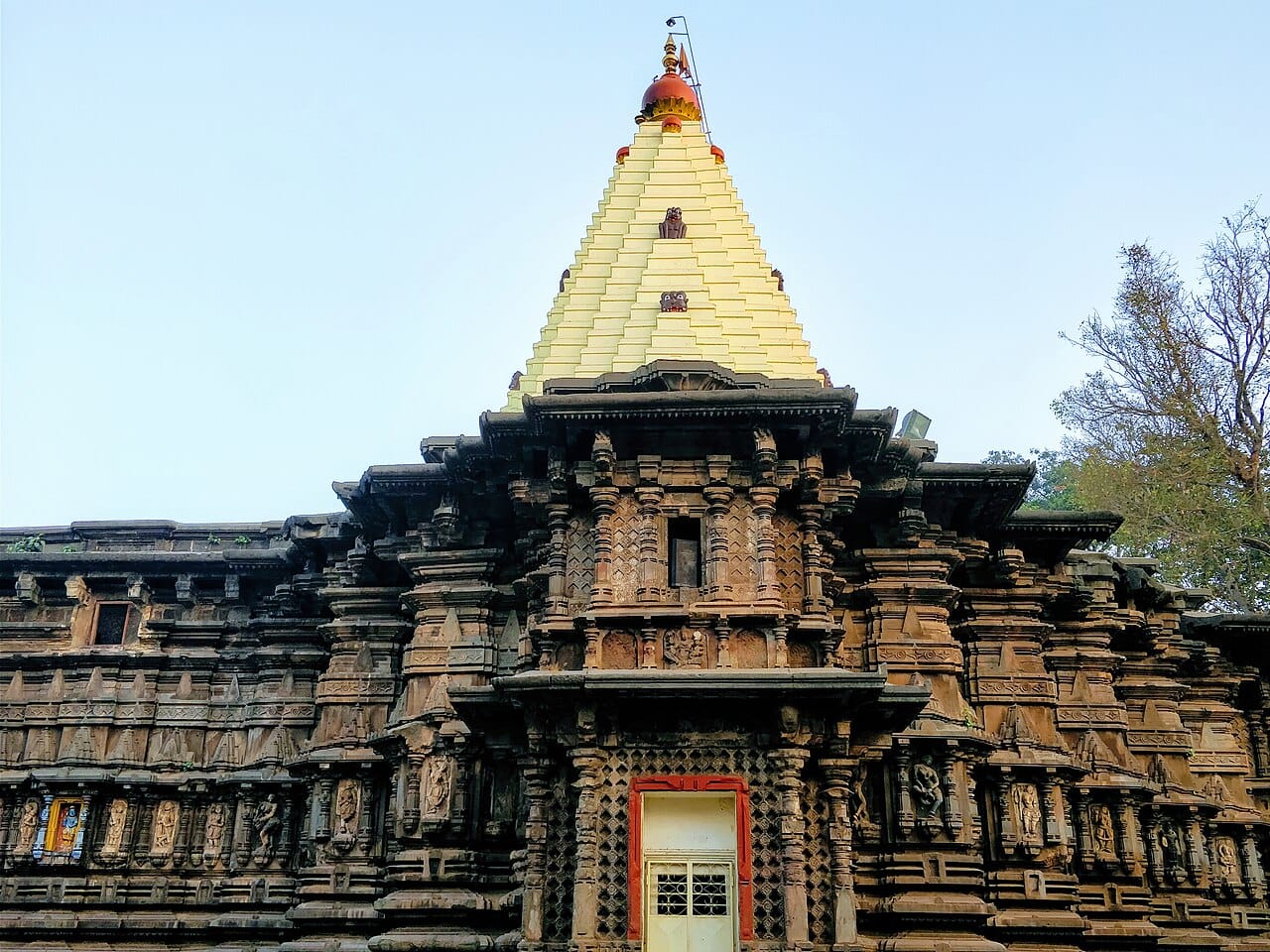
Mahalakshmi Temple in Kolhapur, also known as Ambabai Temple, is one of the 18 Maha Shakti Peethas and one of six Shakti sites in India. The temple is famous for the Kirnotsav solar event where sunlight falls directly on the deity's face twice a year, and for its 3-foot gemstone idol of Goddess Mahalakshmi weighing 40 kilograms.
The temple is believed to have been first built around 700 CE under the Chalukya dynasty. The Chalukya king Karandev is traditionally credited with its construction in 634 CE. Over subsequent centuries, the temple received patronage from the Shilahara dynasty (who built the Mahasaraswati shrine), the Yadava dynasty of Devagiri (who built the Mahadwar and offered jewels), and the Maratha Empire. Chhatrapati Shivaji Maharaj and his son Sambhaji Maharaj regularly visited the temple. The Yadava king Tolum constructed the main gateway (Mahadwar) in 1218 CE. For a period in the medieval era, the temple fell out of worship and the image of the goddess was housed elsewhere. Worship was restored in 1715 under Maratha rule. The Garuda Mandap, with its characteristic Maratha wooden architecture featuring square pillars and foliated arches, dates to the 18th century. The temple's three shikharas (spires) of brick and mortar date from the 19th century. The image of Mahalakshmi has undergone periodic repairs — after centuries of abhishekams caused wear, the Shankaracharya of Sankeshwar had it repaired using the ancient Vajralepa technique. It was reinstalled by Shahajiraje of Kolhapur in 1954. The temple was also associated with Jain traditions at certain points — the Sheshashayee Vishnu shrine near the eastern gate has a panel of 60 Jain Tirthankara carvings, indicating the temple's long multi-faith history.
“According to the Shakti Peetha tradition, after Goddess Sati immolated herself at Daksha's Yagna, Lord Shiva carried her body across the cosmos in grief. Lord Vishnu used his Sudarshana Chakra to dismember Sati's body, and parts fell at 51 locations across the Indian subcontinent. At Kolhapur, the goddess's eyes (or in some traditions, the right arm) are believed to have fallen, sanctifying the site as a Mahashakti Peetha of vision, protection, and prosperity. According to the Karavira Mahatmya, the demon Kolhasura terrorised the gods and sages. Mahalakshmi manifested as Ambabai and annihilated the demon, giving the city of Kolhapur (Kola + pur = city of the demon Kola) its name. The goddess promised to remain at this site forever to protect her devotees. The temple is also associated with the legend of Vishnu residing here in the form of Mahalakshmi.”
The temple is built in the Hemadpanti architectural style, named after Hemadri (Hemadpant), a 13th-century Yadava minister. This style is characterised by mortarless construction using interlocking black basalt stone blocks, creating a rich interplay of light and shadow through horizontal mouldings and vertical offsets. The main entrance (Mahadwar) is on the western side, unusual among Hindu temples where the main entrance faces east. The Mahadwar opens onto the Garuda Mandap, an 18th-century structure with square granite pillars and wooden foliated arches characteristic of Maratha architecture. An image of Garuda (the eagle mount of Vishnu) faces the sanctum. A stone mandap on a raised platform enshrining Ganesha also faces the sanctum. The main mandap contains three west-facing shrines: central Mahalakshmi (the tallest), flanked by Mahakali (left) and Mahasaraswati (right). The three sancta have brick-and-mortar shikharas dating from the 19th century. The compound has 35 smaller shrines, 7 deepamalas (lamp towers), and five Hemad-style shikharas. The Sheshashayee Vishnu shrine is an octagonal structure near the eastern gate with carvings of 60 Jain Tirthankaras. The Manikarnika Kund (temple tank) has a shrine to Visweshwar Mahadev on its bank. The devakoshtas (niches) house images of Venkatesha, Katyayani, and Gowri Shankar. The walls feature carvings of 64 yoginis, deities in dancing poses, musicians, and celestial beings. The temple's sculptural programme shows influences from Jain art, Chalukya architecture, and Maratha building traditions.
Mahalakshmi Temple is one of the 18 Maha Shakti Peethas listed in Adi Shankaracharya's Ashta Dasha Shakti Peetha Stotram. It is one of only six Shakti Peethas where both bhoga (worldly prosperity) and moksha (liberation) are believed attainable. The temple is one of the four Shakti Peethas of Maharashtra, alongside Tuljapur (Bhavani), Mahur (Mahamaya Renuka), and Saptashringi (Jagadamba). The temple is unique for the Kirnotsav phenomenon — a solar alignment event where the setting sun's rays fall directly on the face of the Mahalakshmi idol for a period of three days during the months of Pisces and Leo. This architectural precision, achieved over 1,000 years ago, demonstrates the advanced astronomical knowledge of the temple builders. The Sri Yantra carved on one of the temple walls reinforces the temple's tantric significance. The temple is revered by multiple traditions — Shaktism (as a Shakti Peetha), Vaishnavism (as Lakshmi, consort of Vishnu), and Shaivism (as the supreme goddess).
Navaratri (September-October) is the grandest festival, celebrated with nine nights of special pujas, cultural programmes, and the lighting of thousands of lamps. The Kirnotsav occurs twice a year — around Makar Sankranti (January) and the summer solstice — when the setting sun's rays fall directly on the goddess's face for three days. Diwali (October-November) is marked by special illuminations and firecracker displays. The Rathotsava (chariot festival) in February-March features the goddess's procession on a decorated chariot. Fridays are especially significant, with the Palakhi procession at 7:00 PM. The annual Dussehra celebration is marked by a grand procession. Every full moon night sees special rituals.
One of the 18 Maha Shakti Peethas, Kirnotsav solar alignment (sunlight on deity's face), 3-foot gemstone idol weighing 40 kg, four-armed standing Mahalakshmi with serpent crown, west-facing sanctum, Sri Yantra carving, Palakhi Friday procession.
October to March offers the most pleasant weather. Kirnotsav periods (January and June) are special for witnessing the solar event. Navaratri (September-October) is the grandest festival period. The temple is open year-round. Early morning (5-7 AM) is best for a peaceful darshan during the Kakad Aarti.
5:00 AM to 10:00 PM daily, without a break. The Kakad Aarti is at 5:00 AM. The Palakhi procession departs every Friday at 7:00 PM. Photography is not permitted inside the inner sanctum.
Kolhapur is well-connected by rail, road, and air. Kolhapur Railway Station is 2 km from the temple. Kolhapur Airport (Chhatrapati Rajaram Maharaj Airport, 10 km) has flights to Mumbai and Hyderabad. Regular MSRTC buses connect Kolhapur to Mumbai (6-7 hours), Pune (4-5 hours), and Bengaluru (8-9 hours). The temple is in the heart of the city and easily accessible. Men must remove shirts before entering the inner sanctum; traditional attire is required. Photography is not allowed inside the garbhagriha. The Kolhapuri Misal (a spicy local curry) is a recommended culinary experience. Friday evenings are very crowded due to the Palakhi procession. The temple provides free drinking water. Accommodation options include temple trust guesthouses and nearby hotels.
Rankala Lake (2 km) is a scenic lake built by the Shilahara dynasty. The New Palace Museum (3 km) houses the Wodeyar collection of royal artefacts. Jyotiba Temple (20 km) is an important deity worshipped by the Maratha community. Panhala Fort (20 km) is the largest fort in the Deccan, associated with Chhatrapati Shivaji. Bhavani Mandap (1 km) is a historic building in the Maratha architectural style. The Mahalaxmi Temple is located within walking distance of Kolhapur's main market area.
A. Kirnotsav is a solar alignment phenomenon where the setting sun's rays pass through a specific window in the temple and fall directly on the face of the Mahalakshmi idol. This occurs twice a year for three days each — around Makar Sankranti (January) and during the summer solstice (June). The temple's architects designed this alignment over 1,000 years ago, demonstrating advanced astronomical knowledge.
A. Mahalakshmi Temple, Kolhapur is one of only six Shakti Peethas where both bhoga (worldly prosperity) and moksha (liberation) are believed to be attainable. It is also one of the four Shakti Peethas in Maharashtra. The temple uniquely venerates the goddess in a standing posture holding a mace, shield, fruit, and bowl — unlike typical seated Lakshmi images holding lotuses.
A. The presiding deity is a 3-foot-tall idol carved from a single block of precious black gemstone, weighing approximately 40 kilograms. The goddess wears a gemstone-studded crown with a five-headed serpent motif.
A. Epigraphic references place the deity in the 7th century CE and the earliest temple in the 10th century CE. The Chalukya king Karandev traditionally built the first structure around 634 CE. The temple was expanded by the Shilaharas (11th-12th centuries), Yadavas (13th century), and Marathas (18th century).
A. Traditional Indian attire is required. Men must remove shirts before entering the inner sanctum. Dhotis or pyjamas are recommended for men; sarees or salwar kameez for women. Modest Western attire is permitted in the outer precincts but not in the inner sanctum.
A. The west-facing orientation of the main sanctum is unusual among Hindu temples, which face east. This orientation is linked to the Kirnotsav phenomenon — the setting sun's rays enter through a west-facing window to illuminate the deity's face during the solar event.
A. Kolhapur is well-connected by air (Chhatrapati Rajaram Maharaj Airport, 10 km), rail (Kolhapur Railway Station, 2 km), and road (NH-48 connects Mumbai to Kolhapur, 380 km). The temple is in the city centre, a short auto-rickshaw ride from the railway station.
Kalighat Kali Temple
A major Shakti Peetha where the toes of Sati's right foot fell, serving as the spiritual heart of Kolkata.
Tarapith Temple Birbhum
A major center for Tantric worship dedicated to Goddess Tara, famous for the saint Bamakhyapa and its sacred cremation ground.
Bargabhima Temple Tamluk
An ancient 1,150-year-old temple where Sati's left ankle fell, blending Bengali 'at-chala' and Odia 'Kalinga' styles.
Vaishno Devi Temple
The Vaishno Devi Temple, a sacred cave shrine nestled in the Trikuta Mountains of Jammu and Kashmir, is one of India's most visited pilgrimage sites, where millions trek 12 km each year to seek blessings of Mata Vaishno Devi at the holy cave complex.
Dhari Devi Temple
A sacred Shakti temple on the banks of the Alaknanda River, considered the guardian deity of the Char Dham Yatra and famous for the idol that changes color three times daily.
Vishalakshi Temple
The Vishalakshi Temple, located in the narrow lanes of Mir Ghat near the Ganges in Varanasi, is one of the 51 Shakti Peethas where the earrings of Goddess Sati are believed to have fallen. Dedicated to the 'wide-eyed' goddess Vishalakshi, the temple is the first stop on the traditional Kashi Yatra pilgrimage circuit and is considered the consort shrine of the neighbouring Kashi Vishwanath Temple.
Trimbakeshwar Temple
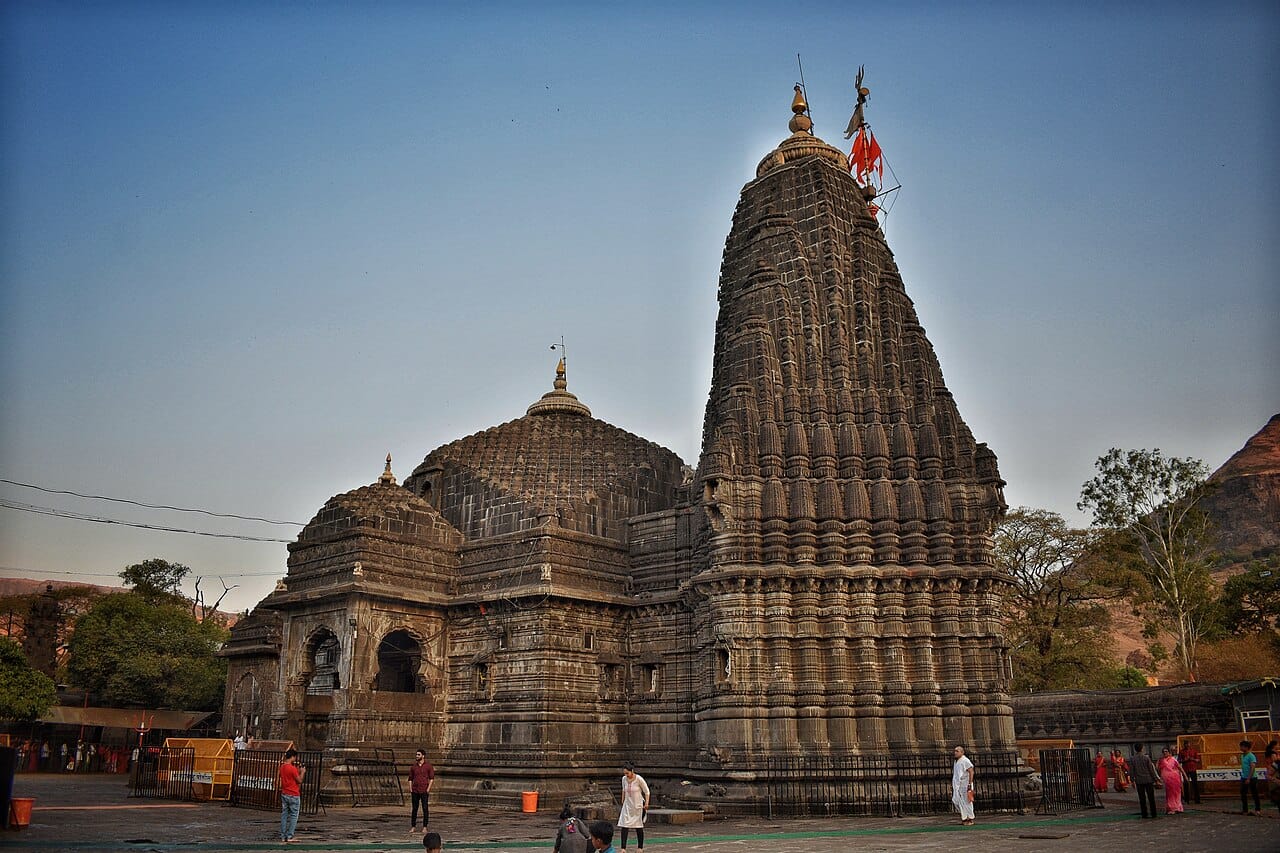
The Trimbakeshwar Temple in Maharashtra is one of the twelve Jyotirlingas, unique for its three-faced linga representing the Trimurti and the source of the Godavari River.
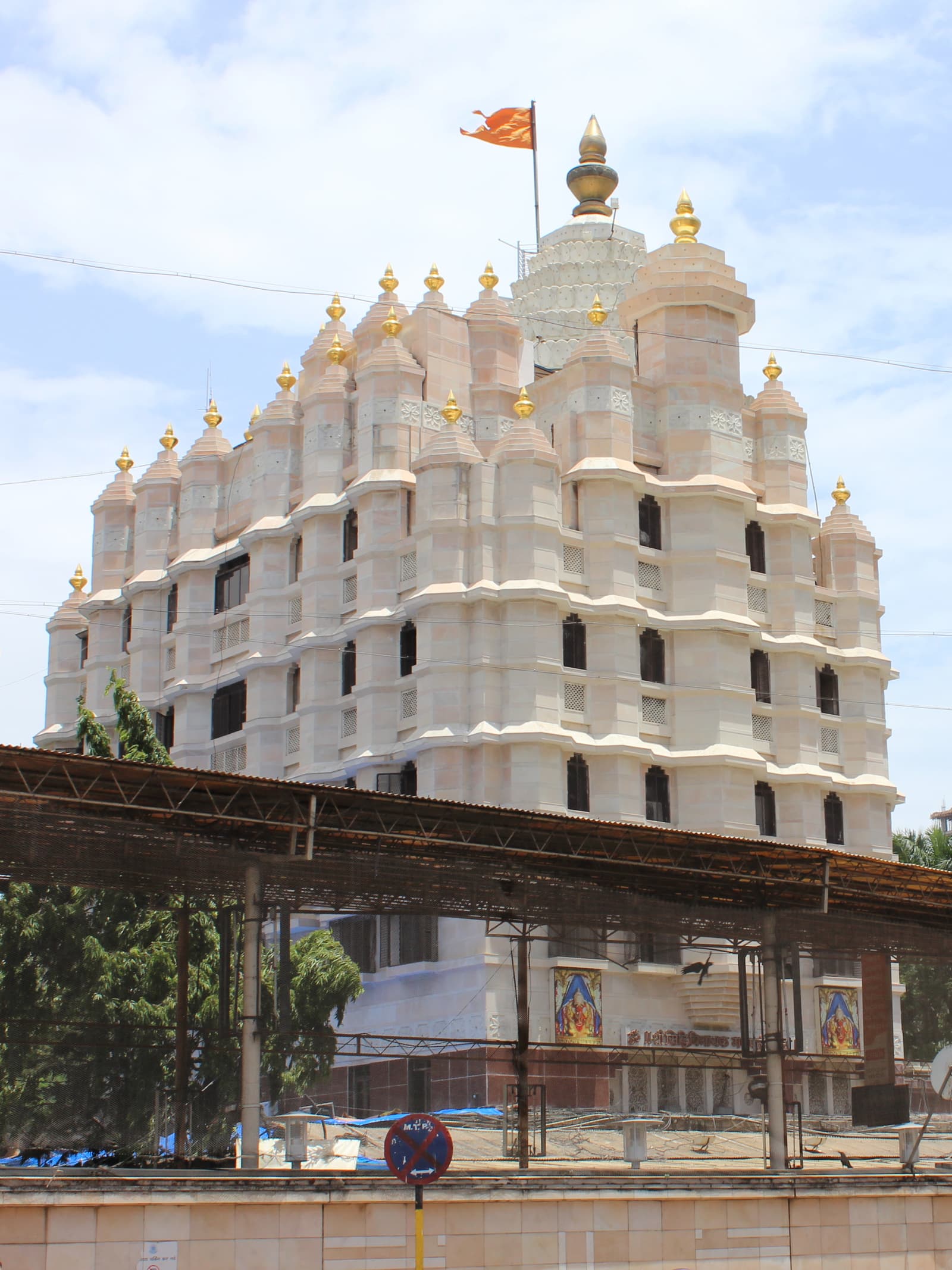
Shree Siddhivinayak Ganapati Temple, Mumbai
Mumbai's most famous temple and among the richest in India, dedicated to the wish-fulfilling form of Lord Ganesha, drawing over 100,000 devotees daily.
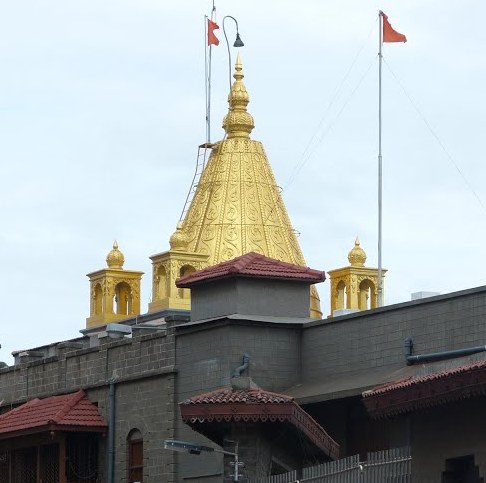
Shirdi Sai Baba Temple (Samadhi Mandir)
The holiest Sai Baba shrine where the saint lived and taught, with his Samadhi (tomb) drawing 25,000+ daily pilgrims from across religions.
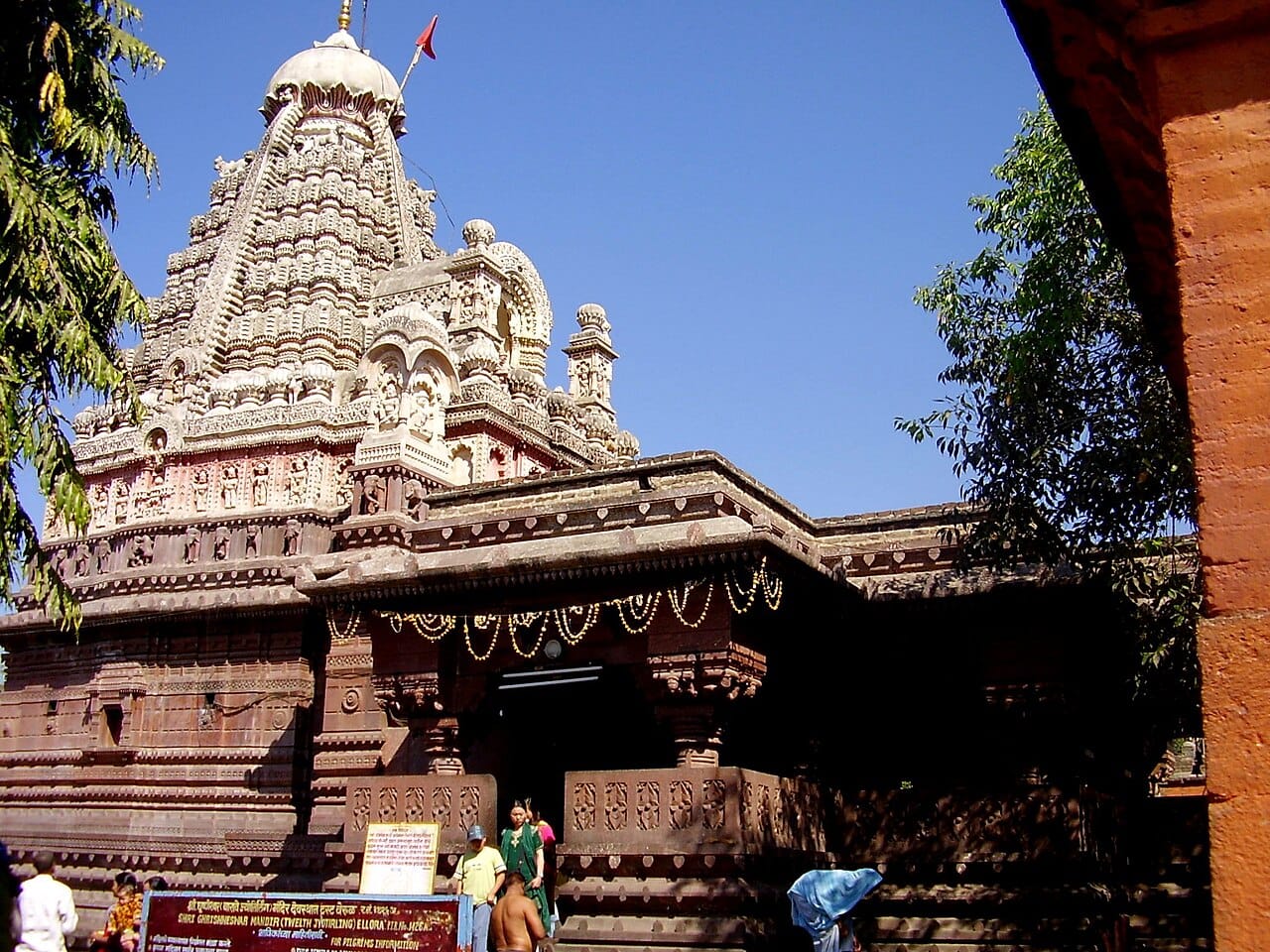
Grishneshwar Temple
The 12th and final Jyotirlinga, located just 1 km from the Ellora Caves. Also known as Kusumeshwar — the Lord of Flowers — built from distinctive red volcanic rock and rebuilt by Ahilyabai Holkar.
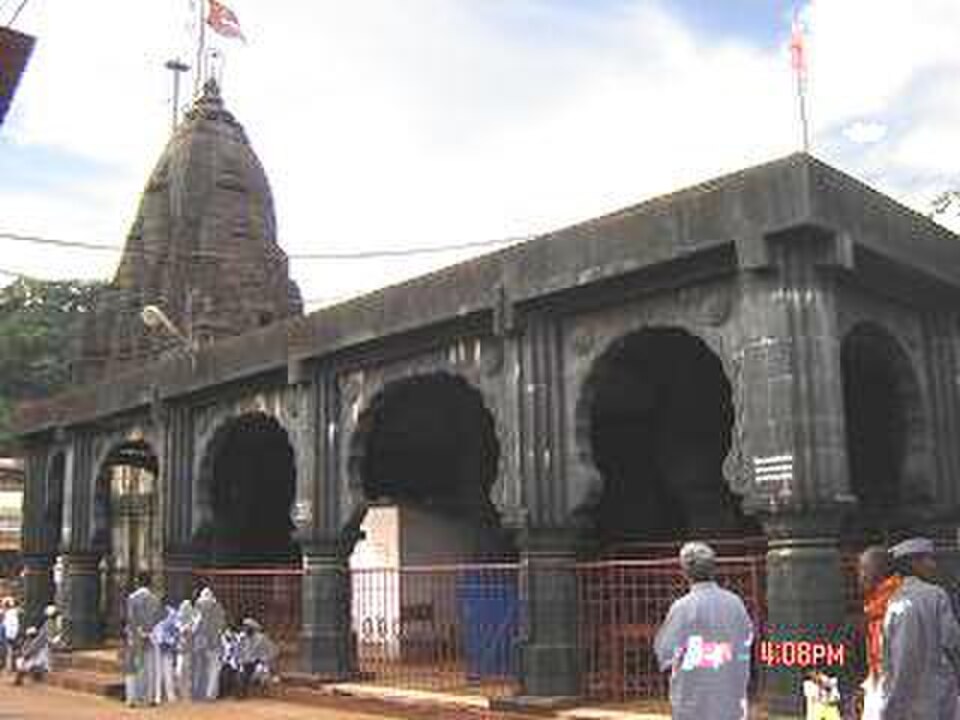
Bhimashankar Jyotirlinga
The source of the Bhima River deep in the Sahyadri hills. A Jyotirlinga surrounded by a wildlife sanctuary, with the legend of Tripurasura.
Kailasa Temple, Ellora
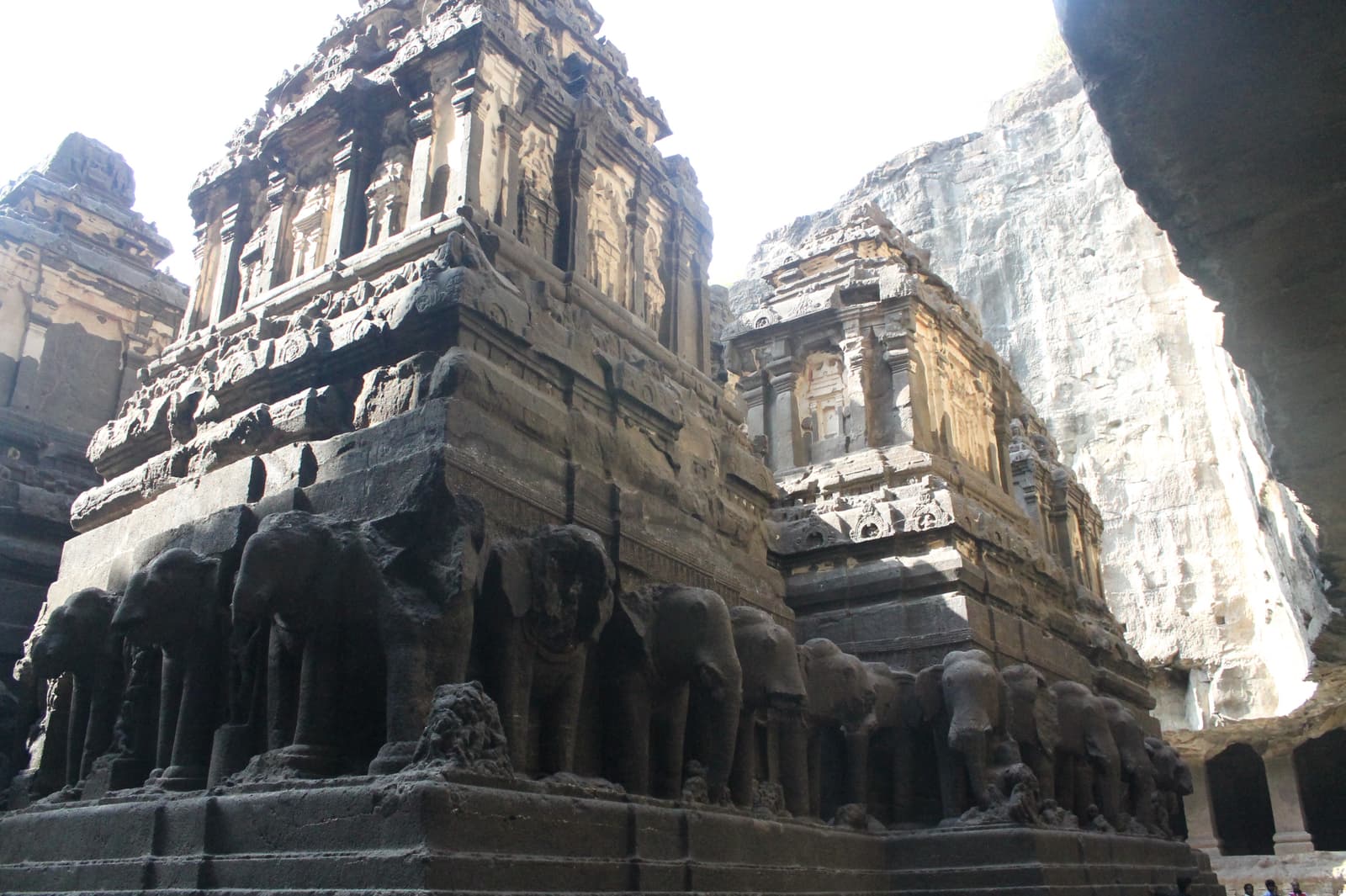
The world's largest monolithic rock-cut structure, carved top-down from a single basalt cliff.
Dakshineshwar Kali Temple
A world-famous 19th-century temple complex on the Hooghly River, immortalized by its association with the saint Sri Ramakrishna Paramahamsa.
Kalighat Kali Temple
A major Shakti Peetha where the toes of Sati's right foot fell, serving as the spiritual heart of Kolkata.
Hangseshwari Temple Bansberia
A unique temple with 13 lotus-bud towers, representing the human body's anatomy according to Yoga and Tantra.
Vaishno Devi Temple
The Vaishno Devi Temple, a sacred cave shrine nestled in the Trikuta Mountains of Jammu and Kashmir, is one of India's most visited pilgrimage sites, where millions trek 12 km each year to seek blessings of Mata Vaishno Devi at the holy cave complex.
Dhari Devi Temple
A sacred Shakti temple on the banks of the Alaknanda River, considered the guardian deity of the Char Dham Yatra and famous for the idol that changes color three times daily.
Kalkaji Temple
An ancient temple dedicated to Kalka Devi, believed to date back to the Satya Yuga, and highly crowded during Navratri.
India's temples are living traditions — not museums. Every temple has its own customs. This guide helps first-time visitors prepare with confidence and respect.
Foreign visitor information is being researched
Please verify with the official temple authority before planning your visit.
Foreign Visitors
Verify Before VisitingVisitor Information
Entry policies vary between temples. Most temples welcome visitors, while some may restrict access to specific areas, rituals, or the inner sanctum. Always verify the latest entry guidelines with the official temple authorities before your visit.
Modest clothing is expected at every Indian temple — a sign of respect, not a restriction. Think of it as dressing for a formal ceremony.
A scarf is always useful — it covers shoulders, works as a head covering, and can double as a makeshift face cover if needed.
Outdoor photography is generally permitted. Indoor photography is often restricted. Always look for signage or ask a priest before taking photos inside.
October to March offers the most pleasant weather. Kirnotsav periods (January and June) are special for witnessing the solar event. Navaratri (September-October) is the grandest festival period. The temple is open year-round. Early morning (5-7 AM) is best for a peaceful darshan during the Kakad Aarti.
April — June
July — September
English is widely understood at major tourist temples. In smaller local temples, Hindi and the regional language are more common. A smile and simple hand gestures go a long way. Learning a few words of the local language is always appreciated.
Cash (Indian Rupees) is the most reliable option, especially for temple offerings, small shops, and local transport.
UPI digital payments (Google Pay, PhonePe, Paytm) are widely accepted across India — even at roadside stalls. Download one before you arrive.
International credit/debit cards work at most ATMs, hotels, and larger establishments. Smaller vendors may only accept cash or UPI.
Carry small denominations (₹10, ₹20, ₹50, ₹100 notes) for offerings and temple donations. Large notes (₹500, ₹2000) can be hard to break at smaller counters.
Many historic temples have uneven stone floors, multiple steps, and narrow passages. Wheelchair access is limited at older sites — contact the temple in advance.
Basic restroom facilities and drinking water are available at most major temples. Some charge a small fee (₹5–₹10).
Stay hydrated — carry a reusable water bottle, especially in hot climates.
Keep valuables secure — use hotel lockers for passports and excess cash.
Wear comfortable, sturdy footwear — temple floors can be hot, wet, or uneven.
Beware of unofficial guides or touts near temple entrances. Only use authorised services.
Carry a photocopy of your passport and visa. Leave originals in your hotel safe.
Download offline maps — mobile networks can be unreliable near remote temple sites.
These short explanations help make sense of what you see and experience.
Darshan means 'seeing' — but in a temple it means being seen by the deity. It is a sacred moment of connection, not just a viewing.
Removing footwear is a sign of humility. It also keeps the temple floor clean, since devotees sit and pray on the ground.
Food offered to the deity and then distributed to devotees. It is considered blessed. Accept it with both hands and do not discard it.
The bell creates a focused acoustic atmosphere, wards off distractions, and announces your presence before entering the inner sanctum.
Circumambulation (pradakshina) is done clockwise, keeping the sanctum on your right — an auspicious direction aligned with the sun's path.
Flowers symbolise devotion, coconuts represent the ego being broken, incense purifies the air, and lamps represent the victory of light over darkness.
Sacred viewing of the deity; the central act of temple worship.
Clockwise circumambulation of the sanctum.
Blessed food offered to the deity and distributed to devotees.
The innermost sanctum where the main deity resides.
The towering spire above the sanctum, a defining feature of temple architecture.
A pillared hall or pavilion within the temple complex.
The Indian Rupee (?, INR) is the local currency. ATMs are widely available in cities and towns. For temple offerings, keep small notes (₹10, ₹20, ₹50). Most temples accept donations in cash only — digital payments are uncommon at the offering counter itself.
Offerings (dakshina) are given with the right hand. Place cash in the donation box (hundi) or give it directly to the priest. There is no fixed amount — give what feels appropriate. Some temples have fixed fees for special entry or puja participation.
Shoes and sandals are removed before entering the temple building. Most temples have a designated shoe counter (free or a small fee of ₹5–₹20). Socks are generally allowed. In monsoon, carry a plastic bag for wet shoes.
Darshan queues can take 30 minutes to 3 hours at popular temples. Many offer paid VIP darshan (₹100–₹500) for faster entry. Special queues for women, elderly, and disabled visitors exist at some temples. No line jumping.
Major festivals draw enormous crowds — sometimes hundreds of thousands. Book accommodation months in advance. Expect road closures, restricted vehicle access, and limited phone network. Arrive early (before dawn) to avoid the worst congestion.
Always look for signage before taking photos. When in doubt, ask a priest. Never take photos of devotees in prayer without permission. Selfie sticks are banned at most temples. Silently switch your phone to silent mode.
Police / Ambulance / Fire: 112 (National Emergency Number)
Tourist Helpline: 1800-111-363 (Multi-lingual, Ministry of Tourism)
Women's Helpline: 1091
Temple-specific visitor information is continuously researched and updated from official sources. Where specific data is unavailable, general India travel guidance is provided. Always verify current policies with the temple authority before your visit.
Information last verified July 2026. Temple-specific data coming soon.
Continue your journey through the spiritual and architectural wonders of India.

The Trimbakeshwar Temple in Maharashtra is one of the twelve Jyotirlingas, unique for its three-faced linga representing the Trimurti and the source of the Godavari River.

Mumbai's most famous temple and among the richest in India, dedicated to the wish-fulfilling form of Lord Ganesha, drawing over 100,000 devotees daily.

The holiest Sai Baba shrine where the saint lived and taught, with his Samadhi (tomb) drawing 25,000+ daily pilgrims from across religions.

The 12th and final Jyotirlinga, located just 1 km from the Ellora Caves. Also known as Kusumeshwar — the Lord of Flowers — built from distinctive red volcanic rock and rebuilt by Ahilyabai Holkar.
"The Ellora Caves feature 34 monasteries and temples, including the massive monolithic Kailasa Temple."