From ancient rock-cut marvels to towering imperial shrines, discover the architectural soul of Bharat through our verified digital archive.
Explore More Temples
Builder
Emperor Ashoka
Dynasty
Mauryan Empire
Period
3rd Century BC - 12th Century AD
Style
Buddhist Architecture
Main Feature
The Great Stupa
Location
Raisen, Madhya Pradesh
UNESCO Status
Added in 1989
Unique Fact
Oldest stone structure in India
The Sanchi Stupa is a Buddhist complex, famous for its Great Stupa, on a hilltop at Sanchi Town in Raisen District of the State of Madhya Pradesh, India. It is one of the oldest stone structures in India and was originally commissioned by the emperor Ashoka the Great in the 3rd century BCE.
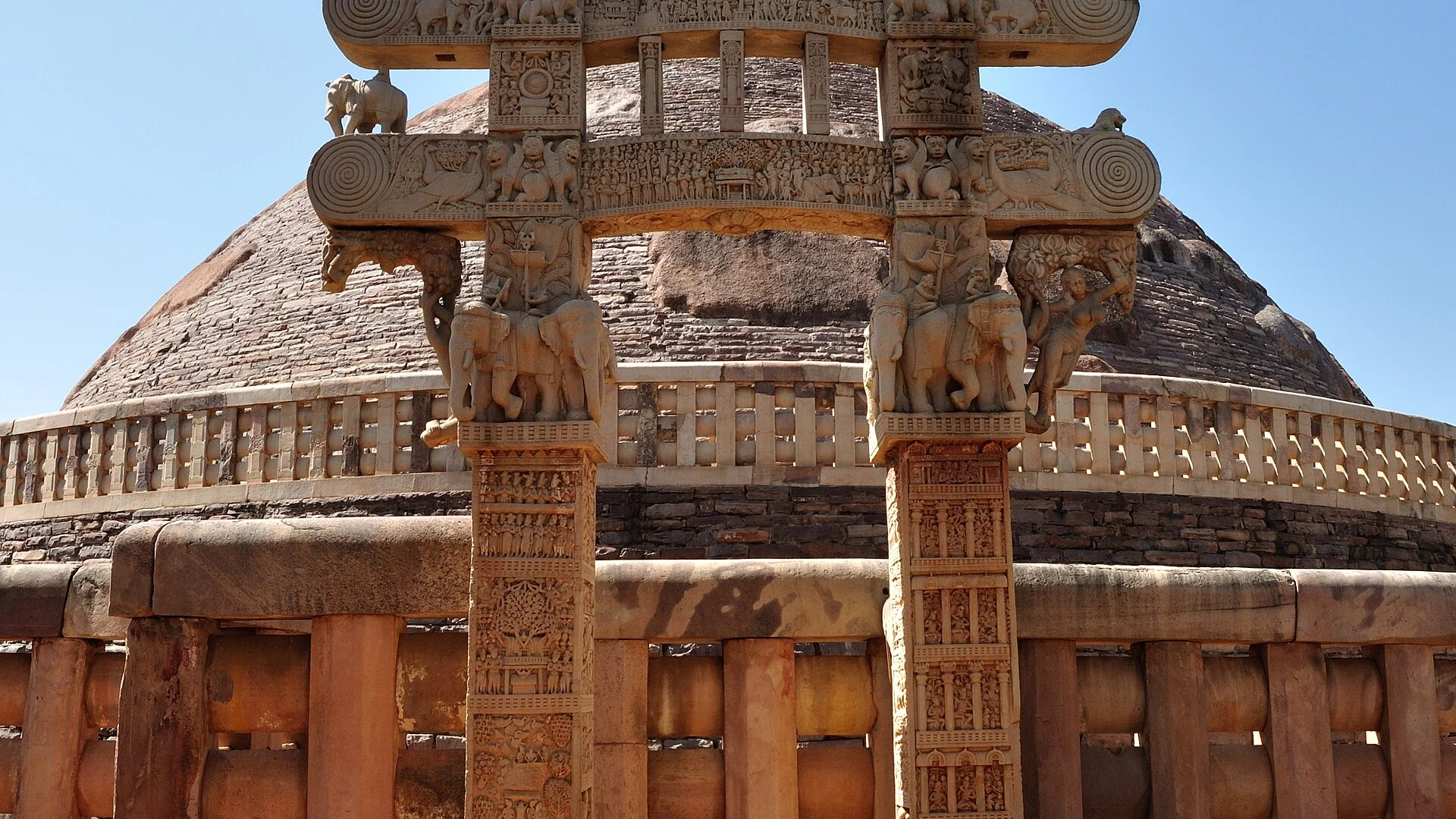
The most striking architectural features of Sanchi are the four ceremonial gateways (Toranas) that surround the Great Stupa. These gateways are covered in exquisite carvings depicting the Jataka tales (stories of Buddha's previous lives), scenes from the life of the Buddha, and various auspicious symbols. The Stupa itself represents the cosmic mountain and the enlightenment of the Buddha.
The history of Sanchi spans over 1,500 years, documenting the rise and fall of Buddhism in India. Emperor Ashoka chose this site for its serenity and commissioned the Great Stupa to house the relics of the Buddha. Over the centuries, subsequent dynasties like the Sungas and Satavahanas expanded the complex, adding the famous stone railings and the intricately carved gateways (Toranas).
Sanchi is a unique archaeological site that provides a continuous record of Buddhist art and architecture in India. It was not directly related to any event in the life of the Buddha but became a major pilgrimage and educational center. The relics of Buddha's closest disciples, Sariputra and Mahamoggallana, were also found here, further enhancing its spiritual importance.
Inscribed in 1989, the Buddhist Monuments at Sanchi are a UNESCO World Heritage site recognized for their exceptional artistic and architectural value. UNESCO highlights Sanchi as the oldest Buddhist sanctuary in existence and a major center of Buddhism in India until the 12th century AD. The site is celebrated for its well-preserved stupas, temples, monasteries, and the famous Ashokan pillar.
Chethiyagiri Vihara Festival, held in November, is the most significant annual event at Sanchi. It marks the day when the relics of Sariputra and Mahamoggallana were brought back to Sanchi. Pilgrims from all over the world, especially from Sri Lanka and Southeast Asia, visit during this time.
Commissioned by Emperor Ashoka the Great.
Features four intricately carved gateways (Toranas).
Oldest stone structure in India.
Contains relics of Buddha's disciples Sariputra and Mahamoggallana.
The Great Stupa was originally a simple brick structure before being encased in stone.
The Ashokan Pillar at Sanchi originally stood 42 feet tall and featured a lion capital.
October to March is the best time to visit Sanchi, as the weather is cool and pleasant for exploring the hilltop complex. Sunset at the Stupa is a particularly peaceful and visually stunning experience.
Open from 6:30 AM to 6:30 PM daily.
Famous 5th-century rock-cut caves with impressive Vaishnava sculptures.
The most sacred Buddhist site marking Buddha's enlightenment.
Magnificent rock-cut Buddhist caves with ancient mural paintings.
World's oldest residential university and Buddhist learning center.
A. The Great Stupa was originally commissioned by Emperor Ashoka the Great in the 3rd century BCE.
A. The monuments are open daily from 6:30 AM to 6:30 PM.
A. Toranas are the four intricately carved ceremonial gateways that surround the Great Stupa, famous for their detailed narrative reliefs depicting Jataka tales and Buddhist symbolism.
A. Yes, the Buddhist Monuments at Sanchi were inscribed on the UNESCO World Heritage list in 1989 as the oldest Buddhist sanctuary in existence.
A. The Great Stupa was built to house the sacred relics of the Lord Buddha. The relics of Buddha's chief disciples, Sariputra and Mahamoggallana, were also discovered here.
A. The ideal time to visit is from October to March when the weather is pleasant. Sunset at the Stupa offers a particularly peaceful experience.
A. The original stupa was built by the Mauryan emperor Ashoka. The Sungas added the stone railings and platform, while the Satavahanas built the four ornate gateways (Toranas).
A. The Sanchi complex contains three main stupas. Stupa 1 (the Great Stupa) is the largest and most famous, while Stupas 2 and 3 are smaller but also contain important relics and carvings.
India's temples are living traditions — not museums. Every temple has its own customs. This guide helps first-time visitors prepare with confidence and respect.
Foreign Visitors
AllowedSanchi is a UNESCO World Heritage site open to visitors of all faiths and nationalities.
Visitor Information
Entry policies vary between temples. Most temples welcome visitors, while some may restrict access to specific areas, rituals, or the inner sanctum. Always verify the latest entry guidelines with the official temple authorities before your visit.
Modest clothing is expected at every Indian temple — a sign of respect, not a restriction. Think of it as dressing for a formal ceremony.
October to March is the best time to visit Sanchi, as the weather is cool and pleasant for exploring the hilltop complex. Sunset at the Stupa is a particularly peaceful and visually stunning experience.
April — June
July — September
Common local languages: Hindi, English
Indian Rupees (INR). Entry tickets can also be purchased online via the ASI website.
Wheelchair: The main pathway is wheelchair accessible. Stupa can be viewed from ground level.
Stay hydrated — carry a reusable water bottle, especially in hot climates.
Keep valuables secure — use hotel lockers for passports and excess cash.
Wear comfortable, sturdy footwear — temple floors can be hot, wet, or uneven.
Beware of unofficial guides or touts near temple entrances. Only use authorised services.
Carry a photocopy of your passport and visa. Leave originals in your hotel safe.
Download offline maps — mobile networks can be unreliable near remote temple sites.
These short explanations help make sense of what you see and experience.
Darshan means 'seeing' — but in a temple it means being seen by the deity. It is a sacred moment of connection, not just a viewing.
Removing footwear is a sign of humility. It also keeps the temple floor clean, since devotees sit and pray on the ground.
Food offered to the deity and then distributed to devotees. It is considered blessed. Accept it with both hands and do not discard it.
The bell creates a focused acoustic atmosphere, wards off distractions, and announces your presence before entering the inner sanctum.
Circumambulation (pradakshina) is done clockwise, keeping the sanctum on your right — an auspicious direction aligned with the sun's path.
Flowers symbolise devotion, coconuts represent the ego being broken, incense purifies the air, and lamps represent the victory of light over darkness.
Sacred viewing of the deity; the central act of temple worship.
Clockwise circumambulation of the sanctum.
Blessed food offered to the deity and distributed to devotees.
The innermost sanctum where the main deity resides.
The towering spire above the sanctum, a defining feature of temple architecture.
A pillared hall or pavilion within the temple complex.
The Indian Rupee (?, INR) is the local currency. ATMs are widely available in cities and towns. For temple offerings, keep small notes (₹10, ₹20, ₹50). Most temples accept donations in cash only — digital payments are uncommon at the offering counter itself.
Offerings (dakshina) are given with the right hand. Place cash in the donation box (hundi) or give it directly to the priest. There is no fixed amount — give what feels appropriate. Some temples have fixed fees for special entry or puja participation.
Shoes and sandals are removed before entering the temple building. Most temples have a designated shoe counter (free or a small fee of ₹5–₹20). Socks are generally allowed. In monsoon, carry a plastic bag for wet shoes.
Darshan queues can take 30 minutes to 3 hours at popular temples. Many offer paid VIP darshan (₹100–₹500) for faster entry. Special queues for women, elderly, and disabled visitors exist at some temples. No line jumping.
Major festivals draw enormous crowds — sometimes hundreds of thousands. Book accommodation months in advance. Expect road closures, restricted vehicle access, and limited phone network. Arrive early (before dawn) to avoid the worst congestion.
Always look for signage before taking photos. When in doubt, ask a priest. Never take photos of devotees in prayer without permission. Selfie sticks are banned at most temples. Silently switch your phone to silent mode.
Police / Ambulance / Fire: 112 (National Emergency Number)
Tourist Helpline: 1800-111-363 (Multi-lingual, Ministry of Tourism)
Women's Helpline: 1091
Official Temple WebsiteState Tourism WebsiteTemple-specific visitor information is continuously researched and updated from official sources. Where specific data is unavailable, general India travel guidance is provided. Always verify current policies with the temple authority before your visit.
Continue your journey through the spiritual and architectural wonders of India.

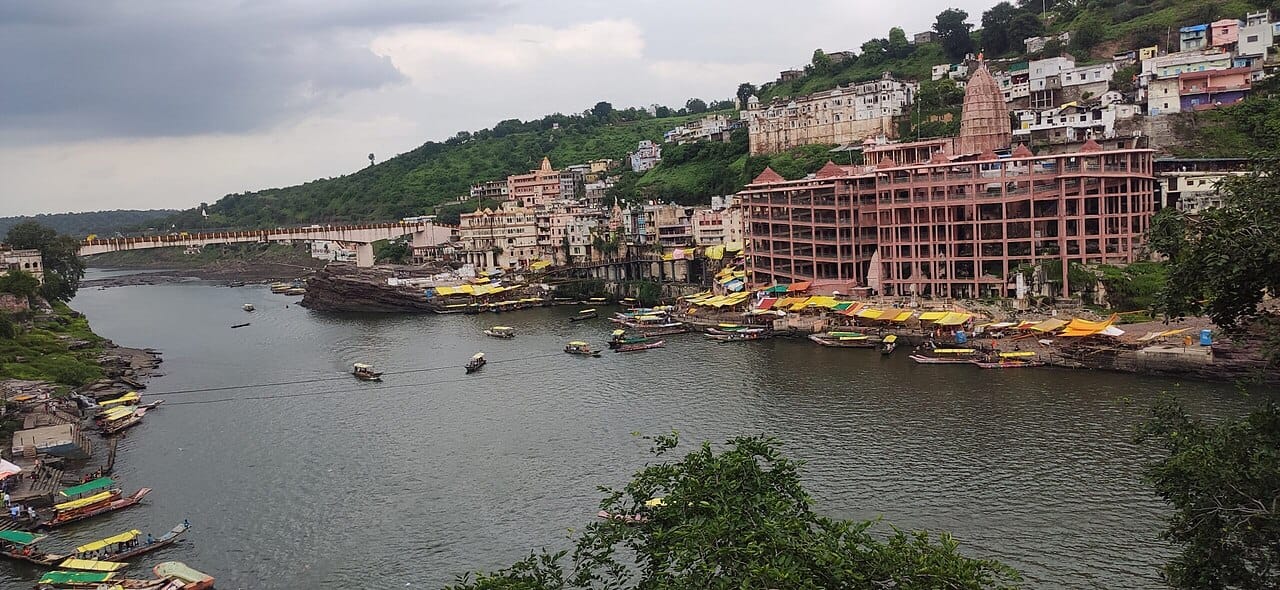
Situated on a sacred island in the Narmada River, Omkareshwar is the only Jyotirlinga located on an island. The temple stands at the confluence of the Narmada and Kaveri rivers, with the lingam positioned where the river forms the shape of the sacred symbol Om.

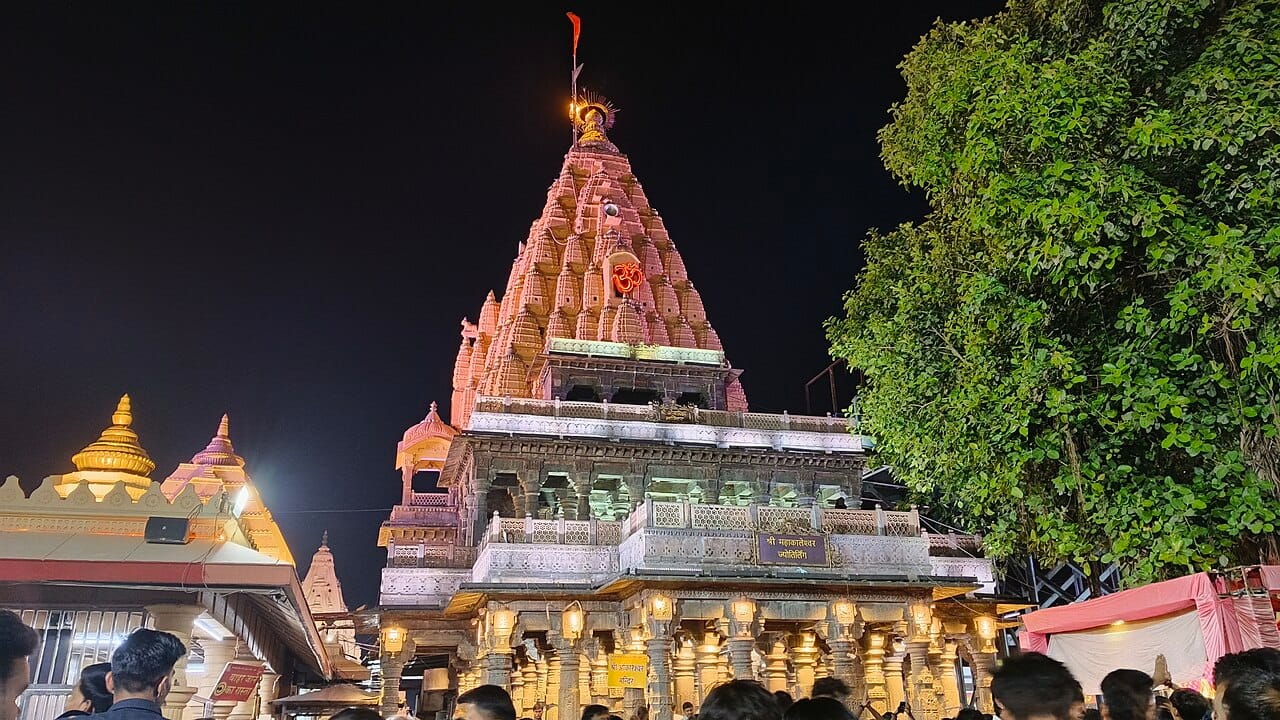
One of the twelve Jyotirlingas, Mahakaleshwar in Ujjain is the only Shiva temple where the lingam faces south (Dakshinamurti). Famous for the pre-dawn Bhasma Aarti, it has been a living shrine for over a millennium, drawing millions of Shaivite pilgrims to the ancient city of Ujjain on the Shipra River.

Mahakali Temple in Ujjain is one of the 51 Shakti Peethas, where the upper lip (oshtha) of Goddess Sati is believed to have fallen. It is one of the three Shakti Peethas in the Ujjain region (alongside Mahakaleshwar and Chintaman Ganesh). The temple is part of the sacred geography of Ujjain, one of the seven Mokshapuris (liberation cities) of Hinduism.

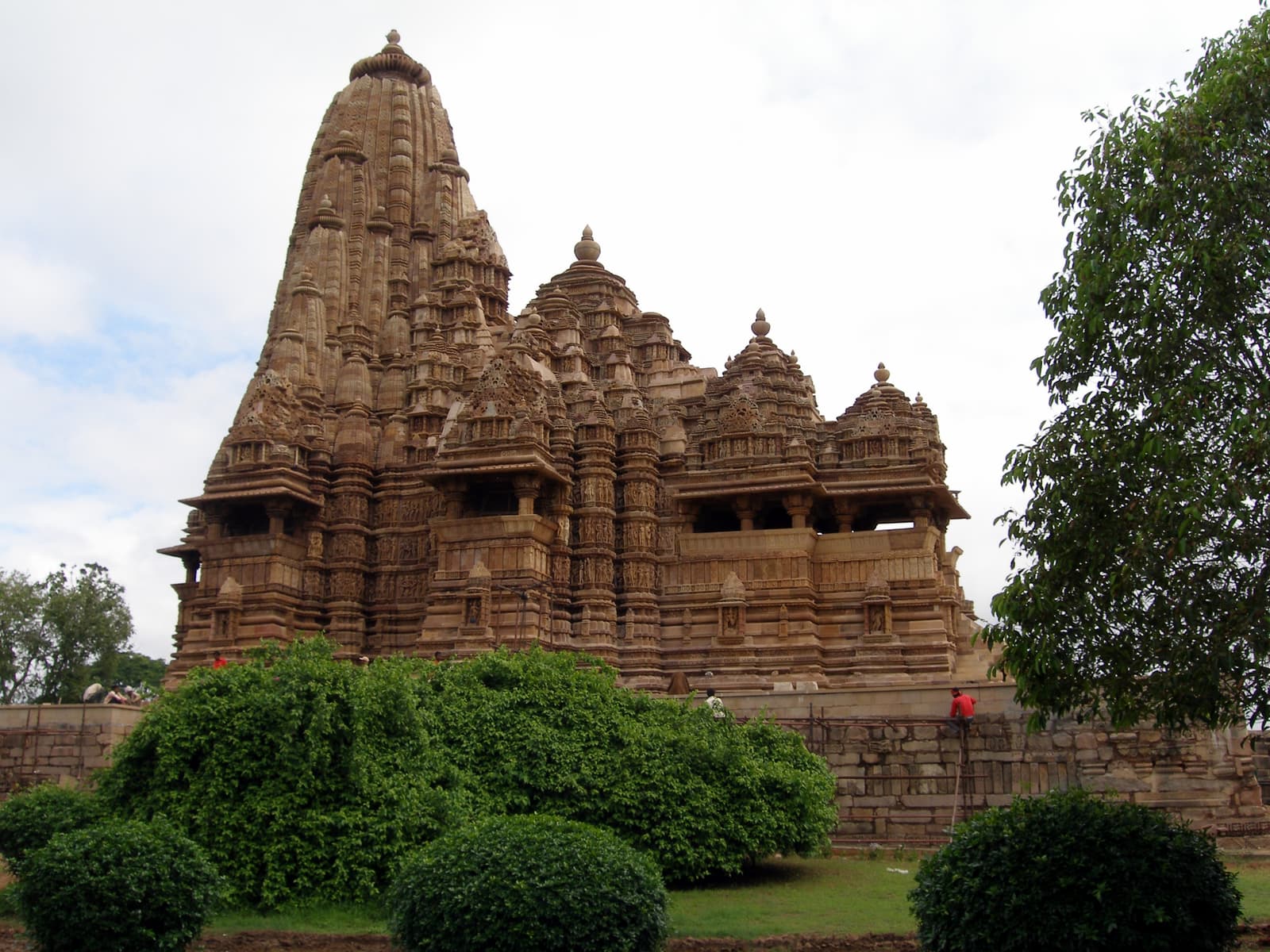
The largest and most ornate Hindu temple in the Khajuraho Group of Monuments.
"The Khajuraho Group of Monuments is famous for its Nagara-style architectural symbolism and intricate sculptures."