Imperial Dynasty
Hoysala Dynasty
The Hoysala Dynasty (circa 1006–1346 CE) governed southern Karnataka from the hill country of the Western Ghats to the fertile Kaveri plains, creating one of India's most celebrated temple architectural traditions. Emerging as feudatories of the Western Chalukyas, the Hoysalas rose under Vishnuvardhana (c. 1110–1141 CE) following his 1116–17 victory at Talakadu and conversion to Srivaishnavism under Ramanuja. The dynasty reached its imperial zenith under Ballala II (1173–1220 CE), ruling from Dorasamudra (modern Halebidu).
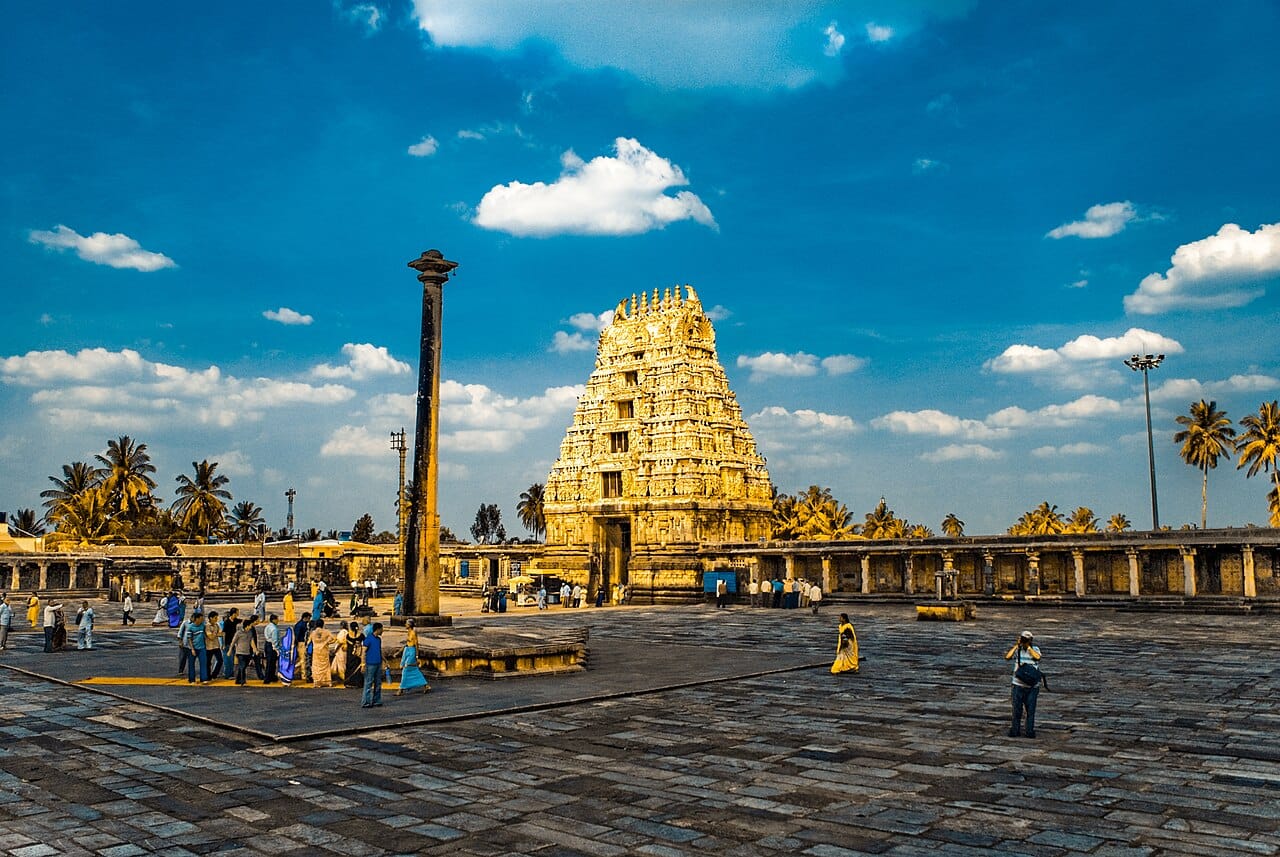
Renowned for star-shaped (stellate) temples carved in chloritic schist with signed artisan reliefs and multi-tiered friezes, their masterpieces—Belur, Halebidu, and Somanathapura—were inscribed as a UNESCO World Heritage Site in 2023 under criteria (i), (ii), and (iv).
Halebidu (Dorasamudra), Belur
circa 1006–1346 CE
10 Temples
Contents: Hoysala Dynasty Guide
Quick Reference & Verified Facts
Imperial CapitalsSosavur (early origin); Belur / Velapura; Dorasamudra / Halebidu (c. 1060 onward)
Chronological Spancirca 1006 to 1346 CE (secure kings from Nripa Kama c. 1022–27 to Ballala III c. 1342–43)
Dynastic CrestSala striking a tiger with an iron rod ('Poy, Sala' origin myth, epigraphically recorded 1218 CE)
UNESCO InscriptionSacred Ensembles of the Hoysalas (inscribed 2023; criteria i, ii, iv; three components)
Three EnsemblesChannakeshava (Belur, 1117), Hoysalesvara (Halebidu, 1121), Keshava (Somanathapura, 1268)
Sculptural MediumChloritic schist (talc-carbonate soapstone; soft when freshly quarried, hardening upon weathering)
Artistic HallmarkStellate plans, circumambulatory platform (jagati), over 200 signed artisan names
Agrarian BaseRiver valleys of Tungabhadra, Krishna, and Kaveri; tank irrigation; normal 1/6 land produce tax
Military CavalryWar horses imported from Arabia and Central Asia via Arab merchants and kudirai chettis
Classical LiteratureKannada court poetry: Nagachandra, Harihara, Raghavanka (shatpadi metre), Janna, Kesiraja
Origins, Feudatory Rise & the Capital Sequence
The Hoysala dynasty originated among the highland communities of the Western Ghats foothills (the Malenadu region of southwestern Karnataka). In their earliest phase, they functioned as hill chieftains and feudatory generals serving the imperial Western Chalukyas of Kalyani (973–1189 CE), acquiring military skill in conflicts against the Cholas and neighboring Deccan powers.
The earliest epigraphic trace of the family name appears around 950 CE in a memorial stone at Hosahalli (near Marale), mentioning 'Poysala Maruga'. In 1006 CE, a Chola inscription at Kalgiyur records that a Hoysala chieftain was defeated by Chola general Aprameya, though the king's name is not preserved. Epigraphist L.A. Coelho established that the first securely identified historical sovereign of the dynasty was Nripa Kama (c. 1022–1027 CE).
The political center of the dynasty evolved across three successive locations: 1. Sosavur (Sasakapura): The traditional ancestral seat in the Western Ghats foothills (~30 km from Belur), where dynastic origins were rooted. 2. Belur (Velapura): Established as an early capital and sacred center under King Vinayaditya (c. 1047–1098 CE), situated along the Yagachi River. 3. Dorasamudra (modern Halebidu): Developed into the fortified primary imperial metropolis around 1060 CE, where King Vinayaditya constructed a major reservoir sluice in 1062 CE.
A distinctive emblem of Hoysala identity is the legendary dynastic crest depicting a youthful hero, Sala, striking down a lunging tiger with an iron rod. According to dynastic tradition, while Sala was worshiping at the shrine of the goddess Vasantika at Sosavur, a tiger approached his Jain ascetic preceptor Sudatta, who called out 'Poy, Sala!' ('Strike, Sala!'). This motif, rendered on temple entryways, was formally recorded in a Kannada epigraph of 1218 CE (Epigraphia Carnatica V, Hn 61).
Chronological Milestones of the Dynasty
Dates follow UNESCO nomination documentation, Corpus epigraphy, and critical histories; variances are explicitly noted.
| Date | Event |
|---|---|
| c. 950 CE | Earliest epigraphic record of 'Poysala' name at Hosahalli (Records Poysala Maruga, grandson of Samanta Arakilla, in regional conflict) |
| 1006 CE | Kalgiyur inscription records Hoysala confrontation with Chola general Aprameya (Earliest dated state epigraph; the specific Hoysala monarch is unnamed) |
| c. 1022–1027 CE | Reign of Nripa Kama Hoysala (First securely identified historical ruler of the dynasty) |
| c. 1047–1098 CE | Reign of Vinayaditya; capital shifted toward Belur and Dorasamudra (Rules as feudatory of Kalyani Chalukyas; builds Dorasamudra reservoir sluice in 1062) |
| 1067 CE | Kolar stone inscription establishes regional land assessment (Records dry-land produce tax rate at one-fifth (1/5) in eastern districts) |
| c. 1100 CE | Philosopher Ramanuja arrives in Hoysala territory from Tamil country (Fled Chola persecution; sheltered at Melukote; converts Prince Bittideva to Srivaishnavism) |
| c. 1110–1141 CE | Reign of Vishnuvardhana (born Bittideva) (Nomination dossier gives c. 1106 accession; Britannica dates c. 1110–1141; Rice gives 1104–1141) |
| 1116–1117 CE | Conquest of Talakadu from Chola viceroys by Vishnuvardhana (Celebrated in inscriptions; sovereign assumes the title 'Talakadugonda') |
| 1117 CE | Consecration of the Channakeshava Temple at Belur (Commissioned by Vishnuvardhana to commemorate Talakadu; active worship continuous since) |
| 1121 CE | Consecration of the Hoysalesvara Temple at Halebidu (Sponsored by commander Ketamalla Dandanayaka and city merchants honoring the royal couple) |
| 1173–1220 CE | Reign of Ballala II; Hoysalas achieve imperial paramountcy (Defeats Yadavas of Devagiri; assumes sovereign imperial titles; rules from Dorasamudra) |
| 1186 CE | Excavation of four major civic reservoirs near Dorasamudra (Minister Virayyadanayaka builds Dorasamudra, Gangasamudra, Achyutasamudra, and Virasamudra tanks) |
| 1209 CE | Court poet and general Janna completes Yashodhara Charite (Celebrated classic of medieval Kannada literature composed under Ballala II) |
| 1218 CE | Sala tiger-slaying origin myth recorded in stone epigraph (Inscribed in Epigraphia Carnatica V (Hn 61); explains origin of dynastic name 'Poysala') |
| 1268 CE | Consecration of the Keshava Temple at Somanathapura (Commissioned by general Somanatha Dandanayaka using funds of Narasimha III; last major temple) |
| c. 1310–1311 CE | Delhi Sultanate expedition reaches Dorasamudra (UNESCO tentative filing notes Halebid pillaged in 1310; Malik Kafur campaigns in southern Deccan) |
| c. 1342–1343 CE | Death of Ballala III; transition to Vijayanagara authority (Last sovereign killed in battle; Harihara I and brothers defeat Ballala and succeed Hoysala domain) |
| September 2023 | Sacred Ensembles of the Hoysalas inscribed on UNESCO World Heritage List (Serial property comprises Belur, Halebidu, and Somanathapura under criteria (i), (ii), and (iv)) |
Sovereigns of the Hoysala Dynasty
Regnal spans reflect critical editions and Britannica ranges; epigraphic basis cited for each reign.
| Ruler | Reign | Why this ruler matters | How we know |
|---|---|---|---|
| Nripa Kama | c. 1022–1027 CE | First securely identified historical sovereign; consolidated hill chieftaincy in Malenadu against regional adversaries. | Inscriptions from Hassan district edited by Coelho; earliest confirmed regnal epigraphs. |
| Vinayaditya | c. 1047–1098 CE | Expanded realm as loyal feudatory of Kalyani Chalukyas; developed Belur and constructed the Dorasamudra reservoir sluice in 1062 CE. | Epigraphs at Dorasamudra; administrative charters cited in Epigraphia Carnatica. |
| Vishnuvardhana (Bittideva) | c. 1110–1141 CE (accession c. 1106) | Captured Talakadu (1116–17); embraced Srivaishnavism under Ramanuja; commissioned the Channakeshava Temple at Belur (1117 CE). | Talakadu victory inscriptions; Belur dedicatory epigraphs; UNESCO nomination dossier. |
| Narasimha I | 1141–1173 CE | Maintained core territories; patronized poets Harihara and Raghavanka; faced regional challenges from Kalachuris. | Early dated records in South Indian Inscriptions Vol. IX (No. 317); literary chronicles. |
| Ballala II (Vira Ballala) | 1173–1220 CE | Achieved full imperial independence; crushed Yadavas of Devagiri; ruled as dominant peninsular power from Dorasamudra. | Balguli and Bagali copper charters; Yashodhara Charite of court poet Janna (1209 CE). |
| Someshvara | c. 1235–1254 CE | Intervened actively in Tamil politics; established southern capital at Kannanur Kuppam in the Kaveri basin. | Tamil and Kannada epigraphs in Kaveri valley; dynastic charters. |
| Narasimha III | 1254–1291 CE | Funded construction of the Keshava Temple at Somanathapura (1268 CE); governed northern half of partitioned realm. | Somanathapura foundation inscription; Turuvekere agrahara records (1263 CE). |
| Ballala III | c. 1292–1342/43 CE | Last paramount sovereign; defended southern Karnataka against northern sultanate armies; killed in battle c. 1343 CE. | Contemporary Sanskrit and Persian chronicles; foundation records of early Vijayanagara rulers. |
Temple Architecture & The Sacred Ensembles
In September 2023, the 45th World Heritage Committee session inscribed the 'Sacred Ensembles of the Hoysalas' on the UNESCO World Heritage List under criteria (i), (ii), and (iv). The serial property comprises three 12th- and 13th-century masterpieces: the Channakeshava Temple at Belur, the Hoysalesvara Temple at Halebidu (both in Hassan district), and the Keshava Temple at Somanathapura (in Mysuru district).
A frequent exam trap arises from the history of India's UNESCO submission. In the 2014 Tentative List filing, India proposed only two temples (Belur and Halebidu) under criteria (ii), (iii), and (vi). The final 2023 inscription expanded the property to three components and replaced criteria (iii) and (vi) with criteria (i) and (iv), following detailed advisory recommendations by ICOMOS.
Hoysala architecture represents a distinctive synthesis of northern Nagara and southern Dravidian elements, creating what scholars categorize as a regional culmination of the Vesara style. Its architectural language was made possible by the exclusive use of chloritic schist (talc-carbonate soapstone). This stone is remarkably soft and workable when freshly quarried, allowing sculptors to execute intricate, lacelike undercut reliefs, before hardening upon exposure to atmospheric elements.
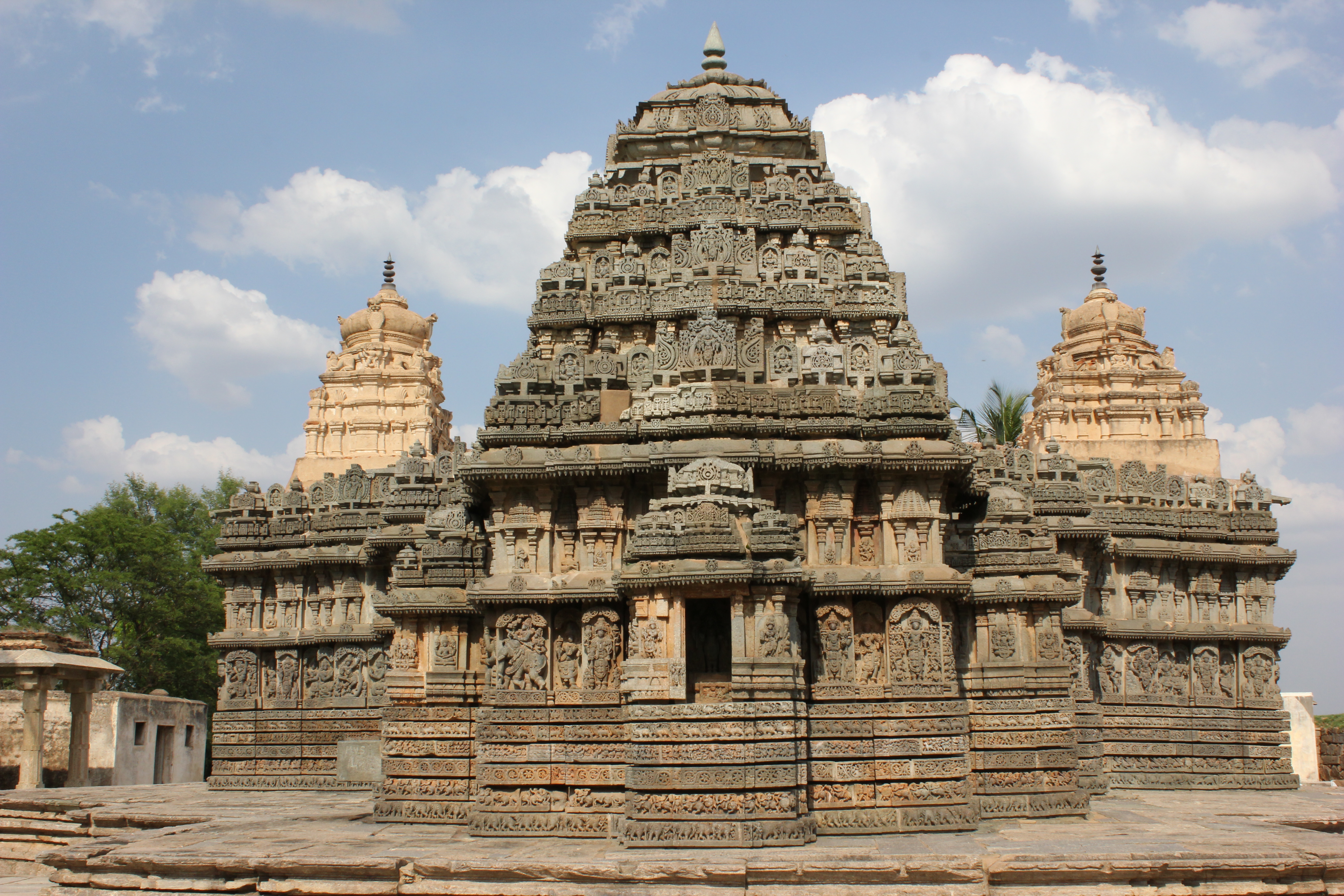
The defining architectural features of the Hoysala style include: - Stellate Ground Plan: Sanctums are laid out on a multi-pointed star plan (often 16-pointed, as at Belur), maximizing external wall surface area for narrative friezes. - *Raised Platform (Jagati):* Temples rest on a wide, elevated terrace that closely mirrors the star contours of the sanctum, serving as an open circumambulatory walkway.
- *Horizontal Multi-Tiered Friezes (Adhishthana): The lower basement is structured into continuous horizontal bands carved with a cosmic hierarchy: marching elephants (strength) at the base, followed by lions (courage), galloping horses (speed), scrolling foliage, narrative scenes from the epics, and mythical makaras. - Signed Sculptor Inscriptions:* Uniquely in Indian art history, over 200 artisan signatures are preserved on temple plinths and bracket figures, detailing names (such as Mallitamma, Dasoja, and Chavana), parentage, native villages, and guild affiliations.
The three UNESCO components represent distinct chronological phases: 1. Channakeshava Temple, Belur (consecrated 1117 CE): Commissioned by Vishnuvardhana to celebrate his victory over Chola forces at Talakadu. Features 38 exquisite bracket figures (madanikas or salabhanjikas) beneath overhanging eaves, and preserves unbroken ritual worship since its consecration. 2.
Hoysalesvara Temple, Halebidu (consecrated 1121 CE): A monumental twin-celled (dvikuta) shrine sponsored by royal commander Ketamalla Dandanayaka and civic merchants in honor of Vishnuvardhana and Queen Shantaladevi. It features an eight-tiered frieze and over 240 monumental wall reliefs. 3. Keshava Temple, Somanathapura (consecrated 1268 CE): A complete triple-celled (trikuta) temple built by general Somanatha Dandanayaka with state funds provided by King Narasimha III.
It represents the mature, symmetrical culmination of the style.
Scholars estimate that the Hoysalas constructed more than 1,500 temples across Karnataka, of which approximately 140 survive today under the protective custody of the Archaeological Survey of India (ASI) and the Karnataka State Department of Archaeology.
Administration, Agrarian Irrigation & Cavalry Trade
Hoysala governance integrated regional military commanders with corporate local councils and agrarian assemblies. The kingdom was organized into broad provinces styled after traditional territorial numbers—such as Gangavadi 96,000, Nonambavadi 32,000, and Banavasi 12,000—which were subdivided into administrative nadus (districts) and village clusters.
The central administration was directed by ministers (Mahapradhana), generals (Dandanayaka), and royal treasurers (Bhandari). An itinerant royal court operated from mobile encampments (nelevidu) like Balguli and Hallavura-Vijayasamudra, issuing charters directly across the realm. Primary epigraphy (South Indian Inscriptions Vol. IX) reveals that royal women held executive provincial roles: Chief Queen Padumaladevi ruled the territory of Hosahadangile as her independent domain in 1212 CE.
Urban and rural administration relied on corporate self-governing bodies called Mahajanas—learned assemblies whose ritual sanction validated royal donations. In a 1193 CE record from Bagali, King Ballala II made a royal land grant only 'after washing the feet of the five hundred Mahajanas'. Village communities were guided by headmen (Gavundas) and civic notables (Prabhus), who jointly managed tanks, pastures, and marketplace cesses.
The agrarian economy categorized cultivable land into three classes: - Gadde: Irrigated wetland, taxed according to irrigation source and crop yield. - Beddalu / Hola: Dry land, assessed at a fixed share. - Thota: Garden land cultivated with betel, arecanut, and fruit-bearing trees.
The customary royal land tax was one-sixth (1/6) of produce, though dry-land rates rose to one-fifth (1/5) in eastern provinces like Kolar (attested in a 1067 CE inscription). Taxes were collected both in grain and in cash currency—specifically gold gadyana and pana coins. Additional dues included cesses on looms, oil-mills, and artisans (multigadere).
Irrigation engineering was paramount in the dry interior plateau. Kings, ministers, and assemblies systematically excavated reservoirs (samudras). In 1062 CE, King Vinayaditya built an engineered sluice at the Dorasamudra tank. In 1186 CE, minister Virayyadanayaka constructed four interconnected reservoirs near the capital (Dorasamudra, Gangasamudra, Achyutasamudra, and Virasamudra). In 1300 CE, royal engineers excavated an irrigation canal directly from the Yagachi River.
A critical military pillar emphasized in NCERT textbooks was the empire's reliance on elite cavalry. Because high-grade war horses could not be bred successfully in southern India, the Hoysala military apparatus depended entirely on cavalry imported from Arabia and Central Asia. This lucrative oceanic trade was initially controlled by Arab merchants and specialized indigenous horse traders known as kudirai chettis.
Religious Pluralism, Kannada Literature & Succession
Religious life under the Hoysalas was characterized by dynastic transformation and broad pluralistic patronage. Early Hoysala chieftains were adherents of Jainism. Around 1100 CE, the celebrated Srivaishnava theologian Ramanuja fled persecution under the Chola monarch Kulottunga I and sought refuge in Hoysala territory, establishing a major center at Melukote.
Prince Bittideva came under Ramanuja's philosophical guidance, converted from Jainism to Srivaishnavism, and assumed the royal name Vishnuvardhana ('He who increases the glory of Vishnu'). Despite the sovereign's conversion, the royal family maintained multi-denominational patronage. Vishnuvardhana's chief queen, Shantaladevi, remained a devoted patron of Jainism, dedicating the Gandhavarana Basadi at Shravanabelagola. Shaiva, Vaishnava, and Jain shrines flourished side by side throughout Dorasamudra.
The Hoysala era was a golden age of classical Kannada literature, characterized by the emergence of new poetic forms and metres: - Nagachandra (Abhinava Pampa, c. 1100 CE): Authored the Ramachandra Charitra Purana (Pampa Ramayana), the earliest surviving Jain adaptation of the Rama narrative in Kannada. - Harihara (c. 1160 CE): Revenue official at Dorasamudra who pioneered the native ragale lyrical blank verse metre in his Siva-ganada ragale.
- Raghavanka (late 12th century): Disciple and nephew of Harihara, who composed the masterpiece Harischandra Kavya, establishing the six-line shatpadi metre in Kannada poetry. - Janna (c. 1209 CE): High-ranking general and court poet under Ballala II, who authored the celebrated classic Yashodhara Charite and was conferred the title Kavichakravarti. - **Kesiraja (c.
1260 CE):* Author of Sabdamanidarpana* ('Mirror of Word Meanings'), the definitive standard grammar of the classical Kannada language.
The decline of the dynasty began in the early 14th century with the southern expeditions of the Delhi Sultanate under General Malik Kafur (c. 1310–1311 CE). India's official 2014 UNESCO filing documents that Dorasamudra was pillaged in 1310 CE by northern invading armies. King Ballala III (c. 1292–1342/43 CE) spent his final decades campaigning relentlessly across southern Karnataka and the Tamil country to maintain dynastic authority against regional sultanates.
Ballala III was killed in battle around 1343 CE. Historical reference works explicitly clarify an enduring misconception: the Hoysala realm was not voluntarily 'merged' or 'absorbed' into the emerging Vijayanagara Empire. Rather, Harihara I and his brothers defeated Ballala's remaining forces to secure their northern Karnataka home base, successfully succeeding the Hoysalas as the pre-eminent imperial power of the southern Deccan.
Comparative Matrix: Hoysala vs Western Chalukya vs Imperial Chola
Sourced from UNESCO documentation, South Indian Inscriptions, and standard histories comparing southern medieval temple dynasties.
| Feature | ||||
|---|---|---|---|---|
| Imperial Heartland | Southern Karnataka interior (Western Ghats foothills, Dorasamudra, Kaveri valley). | Northern Karnataka and western Deccan plateau (Kalyani / Basavakalyan). | Kaveri delta of Tamil country (Thanjavur and Gangaikondacholapuram). | |
| Primary Stone Material | Chloritic schist (talc-carbonate soapstone), enabling filigree undercut carving. | Greenish-blue chloritic schist transitioning from earlier red sandstone. | Hard crystalline granite blocks interlocked without binding mortar. | |
| Sanctum & Platform Plan | Multi-pointed star (stellate) plans set on a matching raised terrace (jagati). | Square sanctums with stepped-diamond projections; modest platforms. | Monolithic square sanctums with monumental towering pyramidal vimanas. | |
| Artisanal Signatures | Over 200 signed inscriptions recording artist names, lineages, and guilds. | Occasional sculptor epigraphs at sites like Itagi and Lakkundi. | Artisans rarely signed works; royal and donor epigraphs predominate. | |
| Religious Orientation | Pluralistic: Srivaishnava, Shaiva, and Jain shrines side by side; court shifted from Jainism. | Primarily Shaiva and Jain patronage with experimental temple complexes. | Predominantly Shaiva with monumental Shiva vimanas and bronze icons. | |
| Succession / Aftermath | Territories succeeded by Vijayanagara Empire following the death of Ballala III (c. 1343 CE). | Fragmented and supplanted by the Hoysalas, Seunas (Yadavas), and Kakatiyas. | Declined in late 13th century and absorbed into the Pandya kingdom of Madurai. |
Historiographical Debates & Evidential Status
Every claim below is evaluated against UNESCO nomination dossiers, ICOMOS evaluation reports, South Indian Inscriptions Vol. IX, and Britannica reference records.
- Disputed
The 2023 UNESCO World Heritage site includes two temples in Hassan district.
This reflects the outdated 2014 Tentative List filing (which included only Belur and Halebidu). The final 2023 World Heritage inscription comprises three temples: Channakeshava at Belur, Hoysalesvara at Halebidu (both in Hassan district), and the Keshava Temple at Somanathapura (located in Mysuru district).
- Disputed
Queen Shantaladevi commissioned the Hoysalesvara Temple at Halebidu.
UNESCO nomination dossier and ICOMOS records confirm that the temple was sponsored by royal commander Ketamalla Dandanayaka and the merchant community of Dorasamudra in honor of King Vishnuvardhana and Queen Shantaladevi. The queen was honored in the dedication but was not the commissioning patron.
- Disputed
The Hoysala kingdom was peacefully absorbed or merged into the Vijayanagara Empire.
Britannica's historical analysis of Ballala III explicitly notes that Harihara I and his brothers defeated Ballala's remaining forces to secure their territorial home base. The relationship was military succession and displacement, not an amicable constitutional merger.
- Modern interpretation
Vishnuvardhana's reign is securely dated to 1108–1152 CE.
Regnal dates vary substantially across authoritative sources: India's UNESCO nomination dossier gives c. 1106 as his accession; Britannica dates his reign c. 1110–1141; E.P. Rice gives 1104–1141. The range 1108–1152 found in popular guides is unsupported by opened academic sources and should be qualified with 'circa'.
- Disputed
General Malik Kafur sacked Halebidu in precisely 1311 CE.
Authoritative sources do not link that specific date and actor together: India's 2014 UNESCO filing documents that Halebid was pillaged in 1310 CE by northern invaders (leaving the commander unnamed); Britannica dates Malik Kafur's southern campaign to 1308 and Pandya expedition to 1310–11 without a specific 1311 Halebid sack date.
- Disputed
Bharatanatyam dance and the Bhakti movement originated under Hoysala royal patronage.
These assertions were promotional claims included in India's preliminary 2014 Tentative List filing. They were contested by architectural historians and completely dropped from the final 2023 UNESCO nomination dossier and Statement of Outstanding Universal Value.
Associated Architecture Styles
Regional Presence
Temple Legacy
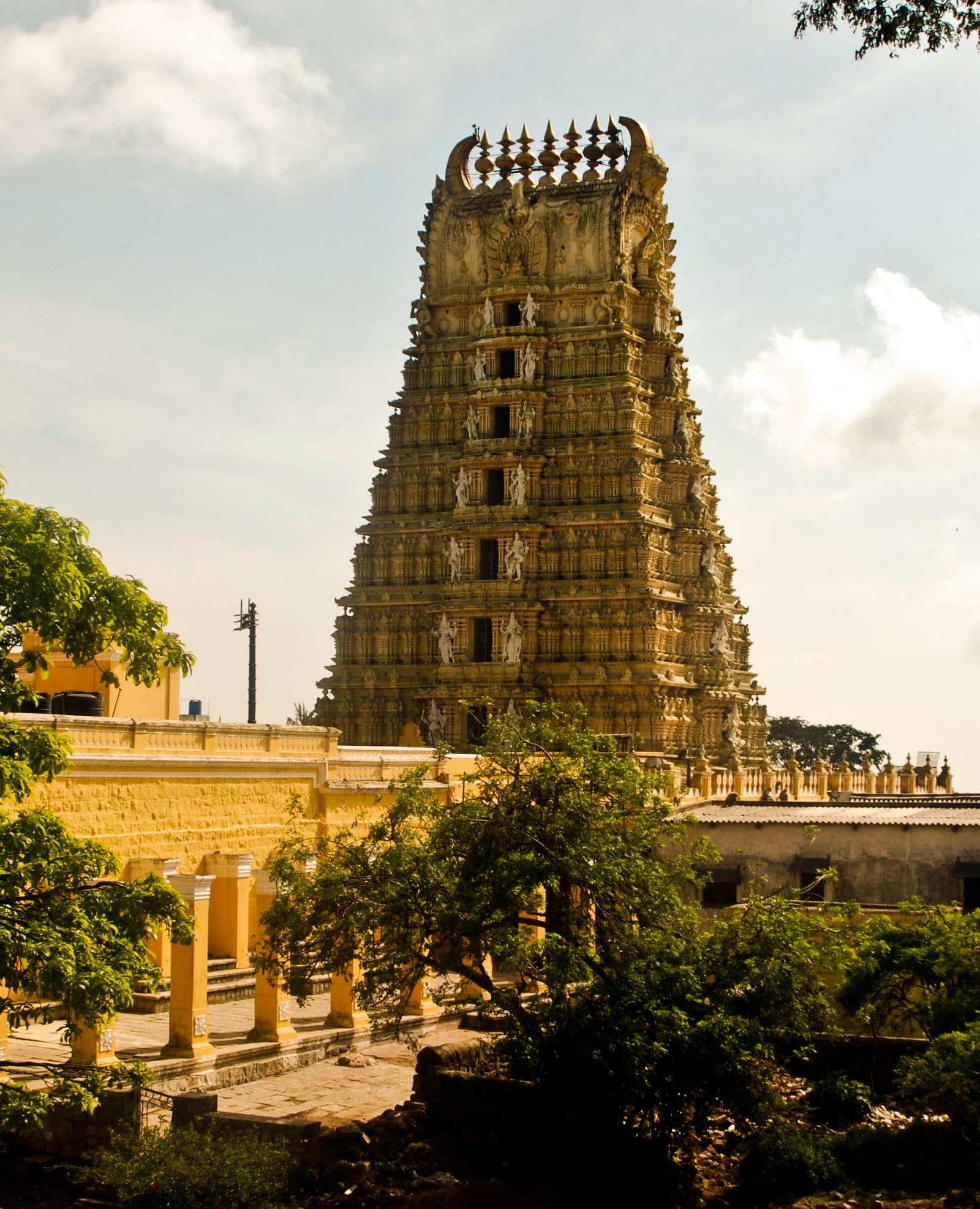
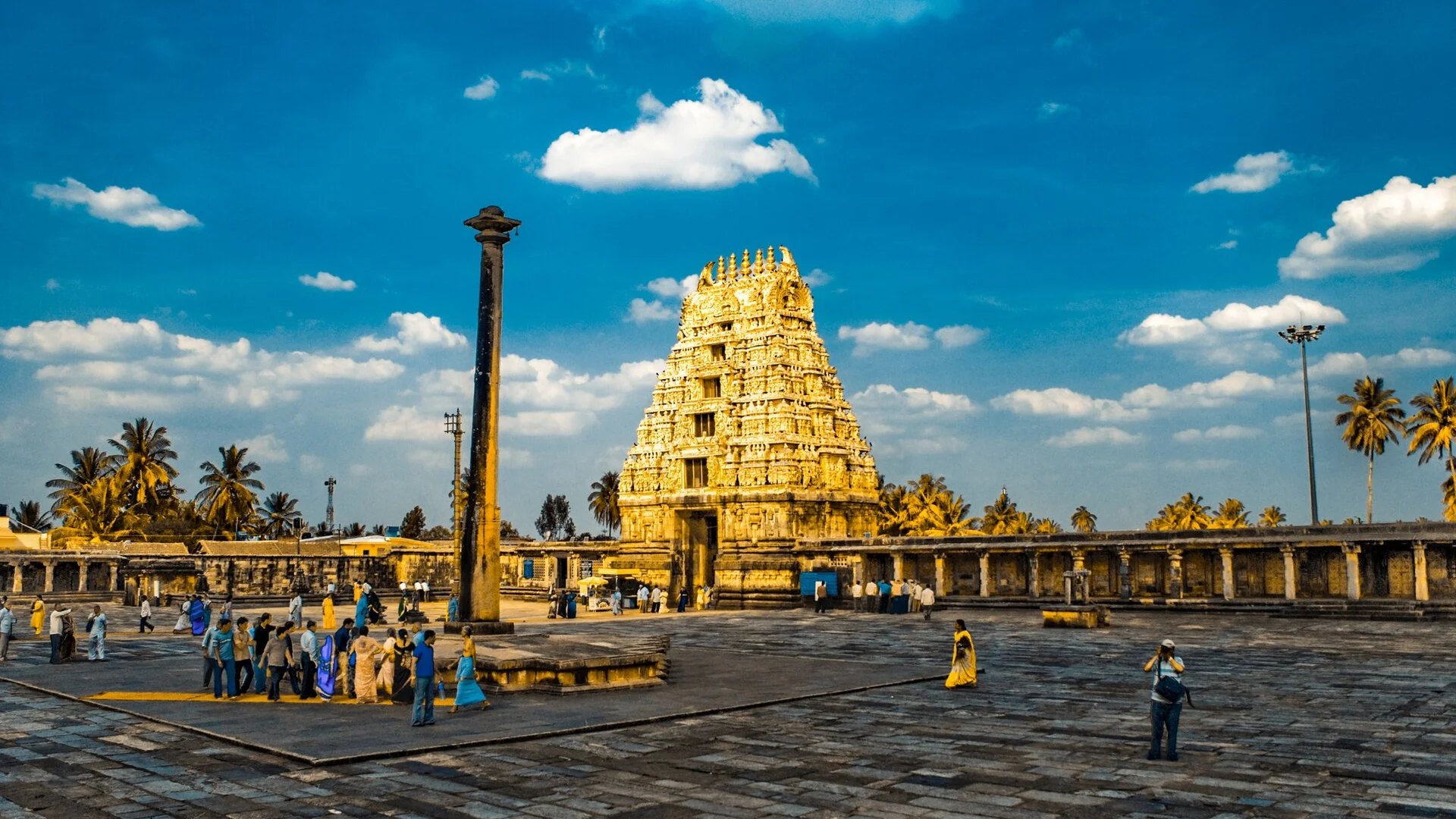
Temples of the Hoysala Dynasty
Sacred architecture patronized by the Hoysala rulers.


Exam Revision & Practice Questions
Structured high-yield study material and original verified practice questions.
Relevant for:UPSC Civil Services Examination (Prelims & Mains GS-I Art & Culture)Karnataka PSC (KPSC KAS - Karnataka History & Heritage)SSC CGL / CHSL (General Awareness - Medieval History)UGC NET History (Paper II)State PSCs (APPSC, TNPSC, TSPSC General Studies)
Key Facts at a Glance
2023 UNESCO Inscription
Inscribed under criteria (i), (ii), and (iv) as 'Sacred Ensembles of the Hoysalas', comprising Channakeshava (Belur), Hoysalesvara (Halebidu), and Keshava (Somanathapura in Mysuru district).
Chloritic Schist & Stellate Plans
Temples built from chloritic schist (soapstone) featuring star-shaped (stellate) sanctums resting on wide matching platforms (jagati) that function as circumambulatory paths.
Over 200 Signed Sculptors
Unprecedented in Indian architectural history, more than 200 artisan signatures (e.g., Mallitamma, Dasoja, Chavana) are inscribed on temple friezes detailing genealogies and native villages.
Consecration Milestones
Belur Channakeshava (1117 CE, commemorates Talakadu victory); Halebidu Hoysalesvara (1121 CE, sponsored by Ketamalla); Somanathapura Keshava (1268 CE, funded under Narasimha III).
Agrarian Taxation & Irrigation
Customary land tax was one-sixth (1/6) of produce (one-fifth on dry land per 1067 Kolar record); systematic reservoir construction (Vinayaditya 1062 sluice; 1186 minister's 4 tanks).
Literature & Shatpadi Metre
Raghavanka established the six-line shatpadi metre in Harischandra Kavya; Janna composed Yashodhara Charite (1209 CE); Kesiraja authored Kannada grammar Sabdamanidarpana (c. 1260 CE).
Memory Tips & Common Traps
Three UNESCO Components & Districts
Remember: **Belur** and **Halebidu** are in **Hassan district**; **Somanathapura** is in **Mysuru district**. A standard exam trap places all three in Hassan.
2023 Criteria: '(i), (ii), (iv)'
The 2014 Tentative List used (ii), (iii), (vi). The **final 2023 inscription uses (i), (ii), and (iv)**. Do not mark the 2014 criteria on current exams.
Hoysalesvara Patronage: Ketamalla, Not Shantala
Queen Shantaladevi was *honored* in the dedication, but the actual sponsor was royal commander **Ketamalla Dandanayaka** with the merchants of Dorasamudra.
Dynastic End: Defeat & Succession, Not Merger
Vijayanagara founder Harihara I and his brothers **defeated** Ballala III's forces to secure their base. Vijayanagara succeeded Hoysala territory—there was no voluntary merger.
High-Yield Fast Revision Sheet
Capital Progression:Sosavur (ancestral hill origin) → Belur (Velapura) → Dorasamudra (modern Halebidu, established c. 1060 CE).
Dynastic Crest & Motto:'Poy, Sala' (Strike, Sala!) myth where youth Sala slays a tiger, immortalized on temple entryways and formalized in a 1218 CE epigraph.
Ramanuja & Vaishnava Transition:C. 1100 CE, Ramanuja sheltered at Melukote; converted Jain prince Bittideva, who took the name Vishnuvardhana ('Increaser of Vishnu's glory').
Imperial Zenith under Ballala II:Reigned 1173–1220 CE; defeated Yadavas of Devagiri; assumed paramount sovereign titles across Gangavadi 96,000 and Nonambavadi 32,000.
Imported Cavalry Trade:Military cavalry depended entirely on imported Arabian and Central Asian horses supplied by Arab merchants and kudirai chettis.
Surviving Monuments:ICOMOS documents that the Hoysalas built over 1,500 temples across Karnataka, of which approximately 140 survive today.
Interactive Practice MCQs (10)
Select your answers below to verify your understanding. Detailed rationale is provided for each option.
Practice Questions
Original practice questions written to test verified historical, epigraphic, and architectural records.
The 2023 UNESCO World Heritage property 'Sacred Ensembles of the Hoysalas' comprises how many temples, and where is the third monument located?
Under which official criteria was the 'Sacred Ensembles of the Hoysalas' inscribed on the World Heritage List in 2023?
The twin-shrined Hoysalesvara Temple at Halebidu was consecrated in 1121 CE under the patronage of:
The Channakeshava Temple at Belur (consecrated 1117 CE) was commissioned by Vishnuvardhana primarily to commemorate:
The last major Hoysala temple, the Keshava Temple at Somanathapura (consecrated 1268 CE), was constructed under whose reign and state funding?
What is the modern name of Dorasamudra (Dwarasamudra), the fortified imperial capital of the Hoysalas from circa 1060 CE onward?
According to historical and epigraphic analysis by L.A. Coelho, who is the first securely identified sovereign of the Hoysala dynasty?
What was the customary royal land produce tax rate under the Hoysalas, and what rate applied to dry land in eastern districts like Kolar?
Which celebrated medieval Kannada poet introduced the six-line 'shatpadi' metre into classical poetry with his masterpiece Harischandra Kavya?
How did the Hoysala dynasty ultimately conclude in the 14th century, according to contemporary histories?
Frequently Asked Questions: Hoysala Dynasty
Where was the Hoysala kingdom located and what were its capitals?
A.
The Hoysala kingdom flourished in the southwestern Deccan in modern Karnataka, spanning the Malnad (Western Ghats foothills) and southern plateau. The dynasty's ancestral hill center was Sosavur (modern Angadi). Under Vinayaditya, the capital shifted to Belur (Velapura), before Dorasamudra (modern Halebidu in Hassan district) was established as the primary imperial seat c. 1060 CE, with Belur retained as the sacred royal precinct.
Who founded the Hoysala dynasty?
A.
'), giving the dynasty its name and royal crest. Historically, early rulers like Nripa Kama (c. 1022–1027 CE) were feudatories of the Western Chalukyas of Kalyani. Sovereign imperial status was achieved by King Vishnuvardhana (Bittideva, c.
1106–1141 CE) after defeating the Cholas at Talakadu in 1116 CE and converting to Srivaishnavism under Ramanuja.
Which temples make up the UNESCO World Heritage 'Sacred Ensembles of the Hoysalas'?
A.
Inscribed in September 2023 under UNESCO criteria (i), (ii), and (iv), the serial property includes three masterworks: (1) Channakeshava Temple at Belur (commenced 1117 CE by Vishnuvardhana); (2) Hoysaleswara Temple at Halebidu (consecrated 1121 CE, sponsored by high officer Ketamalla and guild merchants); and (3) Keshava Temple at Somanathapura (consecrated 1268 CE under Narasimha III by general Somanatha Dandanayaka).
What are the key architectural features of Hoysala temples?
A.
Hallmarks of the Hoysala style include: (1) Chloritic schist (soapstone) allowing intricate micro-carving; (2) Stellate (star-shaped) stepped sanctum plans; (3) Jagati (elevated circumambulation platform); (4) Adhishthana horizontal narrative friezes with marching elephants, lions, horses, makaras, and epics; (5) Lathe-turned, mirror-polished mandapa pillars; and (6) Signed sculptor epigraphs by masters like Ruvari Mallitamma, Dasoja, and Chavana.
How did the Hoysala kingdom decline and merge into Vijayanagara?
A.
The kingdom was weakened by Delhi Sultanate invasions led by Malik Kafur (1311 CE) and Muhammad bin Tughluq, which looted Dorasamudra. King Veera Ballala III continued resisting from multiple centers but was captured and killed in 1342/1343 CE fighting the Madurai Sultanate at Kannanur Koppam. With no mature heir surviving, former Hoysala commanders and regional territories were absorbed into the nascent Vijayanagara Empire founded by Harihara I and Bukka Raya.
Answers are based on verified information. Site rules may change — verify locally before visiting.
Continue Exploring
Sources & References
All citations above link directly to opened, verifiable official repositories (UNESCO World Heritage dossiers, ICOMOS evaluation reports, ASI publications, Corpus Inscriptionum series, NCERT textbooks, and academic research papers). No claim relies on unverified tourist marketing blogs or unverified local traditions.
UNESCO World Heritage Centre
Sacred Ensembles of the Hoysalas (Inscribed 2023, Dossier 1670)
Official 2023 inscription under criteria (i), (ii), and (iv); three serial components (Belur, Halebidu, Somanathapura); property area 10.47 ha and buffer 195.87 ha; chloritic schist; unbroken worship at Belur since 1117 CE; management under AMASR Act.
World Heritage documentation
Open source (opens in a new tab)Government of India / Archaeological Survey of India
Nomination Dossier: Sacred Ensembles of the Hoysalas (276 pp)
Dynastic origins at Sosavur; succession Vinayaditya to Bittideva; Talakadu conquest 1116–17; Ramanuja encounter and renaming to Vishnuvardhana; Sala tiger-slaying myth (1218 epigraph); over 200 artisan signatures; Ketamalla Dandanayaka as Hoysalesvara sponsor.
Government record
Open source (opens in a new tab)ICOMOS (International Council on Monuments and Sites)
ICOMOS Evaluation Report — Sacred Ensembles of the Hoysalas (Doc 205738)
Consecration dates 1117 (Belur), 1121 (Halebidu), and 1268 (Somanathapura); 16-pointed stellate plan and first raised platform at Belur; 8-tier frieze; 21 sculptor inscriptions at Belur; estimate of over 1,500 temples built with ~140 surviving; addition of criterion (iv).
World Heritage documentation
Open source (opens in a new tab)UNESCO World Heritage Centre / Wayback Archive
2014 Tentative List Submission (Ref 5898, Snapshot 2015-02-27)
Preliminary 2014 nomination documenting two components only under criteria (ii), (iii), and (vi); records 1310 pillaging of Halebid by northern invaders with actor unnamed; Hoysalesvara 1121 merchant funding; nagara-dravidian hybrid vocabulary.
World Heritage documentation
Open source (opens in a new tab)Encyclopaedia Britannica / Wayback Archive
Hoysala Dynasty — Historical Overview & Political Zenith
Dynastic chronological span c. 1006 to c. 1346; Dorasamudra established as capital c. 1060; Vinayaditya c. 1047–98; Vishnuvardhana c. 1110–41; Ballala II 1173–1220; Vijayanagar succession; Kannada and Sanskrit patronage.
Reference source
Open source (opens in a new tab)Encyclopaedia Britannica / Wayback Archive
Ballala III — Reign, Downfall & Peninsular Warfare
Reign c. 1292–1342; peninsular alliances and sultanate campaigns; documentation that Harihara I and Vijayanagara brothers defeated Ballala's forces to secure their territorial base.
Reference source
Open source (opens in a new tab)Encyclopaedia Britannica
Malik Kafur — Campaigns & Southern Expeditions
1308 southern expedition reaching south of the Krishna; 1310–11 Pandya campaigns; Devagiri and Warangal expeditions; absence of specific paired date for Halebidu sack.
Reference source
Open source (opens in a new tab)National Council of Educational Research and Training (NCERT)
Themes in Indian History Part II — Theme 7: An Imperial Capital: Vijayanagara (Reprint 2026-27)
Pre-Vijayanagara powerful Karnataka states; elite temple patronage (Channakeshava Belur); military cavalry dependent on war horses imported from Arabia and Central Asia via Arab traders and kudirai chettis.
Government record
Open source (opens in a new tab)Indian Institute of Culture, Bangalore / Internet Archive
The Hoysala Vamsa (by L.A. Coelho)
1006 Kalgiyur inscription mentions Hoysala but monarch is unidentified; earliest Poysala mention c. 950 at Hosahalli; Nripa Kama (c. 1022–27) identified as earliest confirmed historical sovereign.
Published work
Open source (opens in a new tab)Association Press / Oxford University Press / Internet Archive
A History of Kanarese Literature (by E.P. Rice)
Hoysala Ballala rulers 11th–14th c.; capital Dorasamudra; Srivaishnava turn via Ramanuja c. 1100; Kannada poets: Nagachandra, Harihara, Raghavanka (shatpadi metre), Janna, Kesiraja (Sabdamanidarpana).
Published work
Open source (opens in a new tab)Archaeological Survey of India (ARC) / WhatIsIndia
South Indian Inscriptions, Vol. IX — Miscellaneous Inscriptions in Kannada: The Hoysalas
Ballala II epigraphs at Dorasamudra (1178–79); 500 Mahajanas at Bagali (1193); taxes on artisans and looms; Gavundas and Prabhus; territorial designations (Gangavadi 96,000); Queen Padumaladevi governing Hosahadangile (1212).
Primary source
Open source (opens in a new tab)Shanlax International Journal of Arts, Science and Humanities
Agrarian System of the Hoysalas (by S. Shivaramu)
Land classifications gadde, beddalu, and thota; produce tax 1/6 normal, 1/5 dry land (Kolar 1067); cash taxes in gadyana and pana; Vinayaditya 1062 sluice; minister's four tanks in 1186; Turuvekere 1263 agrahara share system.
Scholarly source
Open source (opens in a new tab)Heritage: Journal of Multidisciplinary Studies in Archaeology (Univ. of Kerala)
Sacred Ensembles of the Hoysalas (by N. Kumaran & P. Saranya, ASI)
Belur adhishthana frieze bands (elephants, lions, horses, kirtimukha); 38 bracket madanika figures at Belur; Hoysalesvara 11 adhishthana tiers; conservation history from Mysore State to ASI post-1951.
Scholarly source
Open source (opens in a new tab)District Administration Hassan, Government of Karnataka
Chennakeshava Temple Belur — Heritage Overview
1116–17 conquest context; sculptural traditions of Dasoja and Chavana; madanika sculptures; Queen Shantaladevi traditions.
Government record
Open source (opens in a new tab)
— every record linked above was re-requested for this release, so the link still resolves and the publisher still serves the document. It is a link check, not a re-verification of every sentence on this page.
Missing something, or found an error? Send us a correction with the record that supports it, or read how we choose sources.
— every record linked above was re-requested for this release, so the link still resolves and the publisher still serves the document. It is a link check, not a re-verification of every sentence on this page.