From ancient rock-cut marvels to towering imperial shrines, discover the architectural soul of Bharat through our verified digital archive.
Explore More Temples
Location
Ayodhya
Presiding Deity
Lord Rama (Ram Lalla Virajman)
Architecture
Nagara Style (Māru-Gurjara influence)
Dynasty
Modern — Suryavanshi Heritage
Timings
The temple is open for darshan from 6:30 AM to 12:00 PM and from 2:00 PM to 10:00 PM. Specific timings for the various Aartis (Mangala, Shringar, Sandhya) require prior booking through the trust's official website.
Entry Fee
Free
Best Time
The ideal time to visit is from October to March, when the weather in Uttar Pradesh is cool and pleasant. The month of January, especially around the anniversary of the Pran Pratishtha, is spiritually highly charged. Visiting during Ram Navami (March/April) offers the most vibrant cultural experience, though it involves dealing with massive crowds.
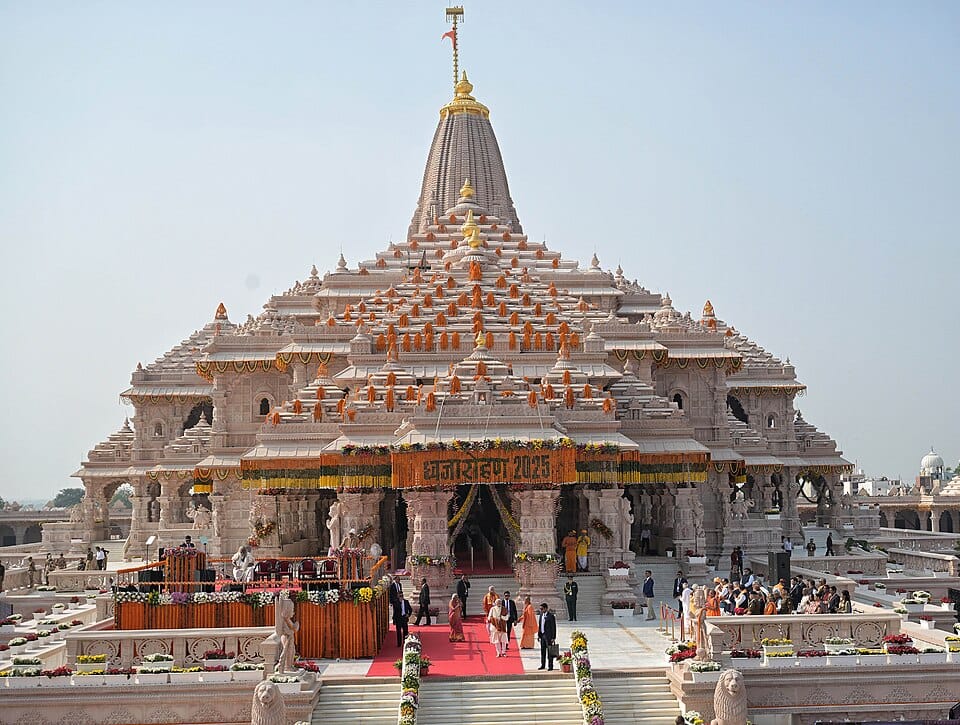
A grand and historic temple marking the birthplace of Lord Rama, the seventh avatar of Vishnu, representing the pinnacle of Nagara architecture.
The history of the Ram Janmabhoomi site is among the most documented and discussed in Indian history. According to the Ramayana, Ayodhya was the capital of the Ikshvaku dynasty, where Rama was born. Archaeological evidence, including findings by the Archaeological Survey of India (ASI), indicates the presence of a massive temple structure dating back to the 12th century beneath the site. This original temple is believed to have been destroyed in 1528 by Mir Baqi, a general of the first Mughal emperor Babur, who built the Babri Masjid in its place. For nearly 500 years, the site was a focus of intense spiritual longing and legal disputes. The modern movement for the temple's reconstruction gained momentum in the 1980s, culminating in the 2019 Supreme Court verdict that awarded the land for the temple. The construction, managed by the Shri Ram Janmabhoomi Teerth Kshetra Trust, involved thousands of artisans and was built entirely through public donations, representing a historic collective effort of the Hindu community worldwide.
The temple is a masterpiece of the Nagara style of North Indian temple architecture, specifically the Māru-Gurjara sub-style. Designed by the famous Sompura family of architects (who also designed the [Somnath Temple](/temple/somnath-temple)), the main structure is 380 feet long, 250 feet wide, and 161 feet high. It is a three-story structure built entirely of pink sandstone from Bansi Paharpur in Rajasthan, without the use of any iron or steel—a choice made to ensure a lifespan of over 1,000 years. The temple features five domes (Mandaps): Nritya Mandap, Rang Mandap, Sabha Mandap, Prarthana Mandap, and Kirtan Mandap. It is supported by 392 pillars, each intricately carved with figures of deities, celestial beings, and motifs from the Ramayana. The base of the temple features a massive 'Jagati' (platform) and is surrounded by a 'Parkota' (rectangular wall) spanning 732 meters. The architecture follows the principles of 'Vastu Shastra' and 'Shilpa Shastra', ensuring that the temple acts as a cosmic receiver of spiritual energy.
The Ram Janmabhoomi Mandir is of unparalleled spiritual significance as it marks the exact birthplace of Lord Rama, who is considered 'Maryada Purushottam'—the supreme man of character and virtue. For Hindus, the site is the most sacred spot on earth, equivalent to the importance of the Vatican or Mecca in other faiths. The temple represents the triumph of 'Dharma' and the preservation of India's ancient identity. Ayodhya itself is the first of the seven most sacred cities (Saptapuri) in Hinduism. The temple's significance extends beyond religion; it is a center for the promotion of the ideals of Rama—truth, sacrifice, and duty. A pilgrimage here is believed to grant 'Moksha' and instill a sense of divine purpose in the devotee. The site is also closely linked with other major Rama temples like [Bhadrachalam Ram Temple](/temple/bhadrachalam-ram-temple) in Telangana and Ramanathaswamy Temple in Rameswaram, forming a sacred geography of the Ramayana across the Indian subcontinent.
The rituals at the Ram Mandir are performed by priests trained in the Ramanandi Sampradaya, the largest Vaishnava sect. The daily schedule begins with the 'Mangala Aarti' at 4:30 AM to awaken the Lord, followed by 'Shringar Aarti' where the deity is adorned with exquisite clothes and jewelry. Throughout the day, various 'Bhogs' (food offerings) are made, including Satvik meals prepared in the temple's massive kitchen. The 'Sandhya Aarti' in the evening is a grand affair, attended by thousands of devotees and accompanied by the chanting of the 'Ram Raksha Stotra'. Special rituals involve the continuous chanting of 'Akhand Ramayana' in the temple precincts. A unique ritual is the 'Jalaabhisheka' using water from thousands of sacred rivers and oceans from around the world, symbolizing the universal nature of Lord Rama's reign.
Ram Navami, the birth anniversary of Lord Rama, is the grandest festival celebrated here, attracting millions of pilgrims. During this time, the temple is decorated with tons of flowers, and the 'Surya Tilak' ritual—where a system of lenses and mirrors directs sunlight to form a 'tilak' on the idol's forehead—is performed. Diwali, which marks Rama's return to Ayodhya, is another spectacular celebration, with the entire city and the Sarayu ghats being lit with millions of oil lamps (Deepotsav). Other major festivals include Dussehra (victory over Ravana), Vivah Panchami (celebrating the wedding of Rama and Sita), and Bharat Milap. During these festivals, the entire city of Ayodhya transforms into a vibrant stage for the reenactment of the Ramayana through 'Ramleela' performances.
Birthplace of Lord Rama, Pink Sandstone Architecture, Black Stone Ram Lalla Idol, Surya Tilak Ritual, World's Largest Cultural Resurgence Site
The ideal time to visit is from October to March, when the weather in Uttar Pradesh is cool and pleasant. The month of January, especially around the anniversary of the Pran Pratishtha, is spiritually highly charged. Visiting during Ram Navami (March/April) offers the most vibrant cultural experience, though it involves dealing with massive crowds.
The temple is open for darshan from 6:30 AM to 12:00 PM and from 2:00 PM to 10:00 PM. Specific timings for the various Aartis (Mangala, Shringar, Sandhya) require prior booking through the trust's official website.
A. Aarti tickets (Mangala, Shringar, and Shanti) can be booked online through the official website of the Shri Ram Janmabhoomi Teerth Kshetra Trust. Both online and on-the-spot (subject to availability) booking options are available, and a valid ID proof is mandatory.
A. The Surya Tilak is an engineering marvel where a system of high-quality mirrors and lenses is used to direct natural sunlight onto the forehead of the Ram Lalla idol every year on the day of Ram Navami at exactly 12:00 PM.
A. No, for security reasons, mobile phones, electronic items, and large bags are strictly prohibited inside the main temple premises. A free, safe locker facility (Mandap) is provided by the trust near the entrance.
Vishalakshi Temple
The Vishalakshi Temple, located in the narrow lanes of Mir Ghat near the Ganges in Varanasi, is one of the 51 Shakti Peethas where the earrings of Goddess Sati are believed to have fallen. Dedicated to the 'wide-eyed' goddess Vishalakshi, the temple is the first stop on the traditional Kashi Yatra pilgrimage circuit and is considered the consort shrine of the neighbouring Kashi Vishwanath Temple.
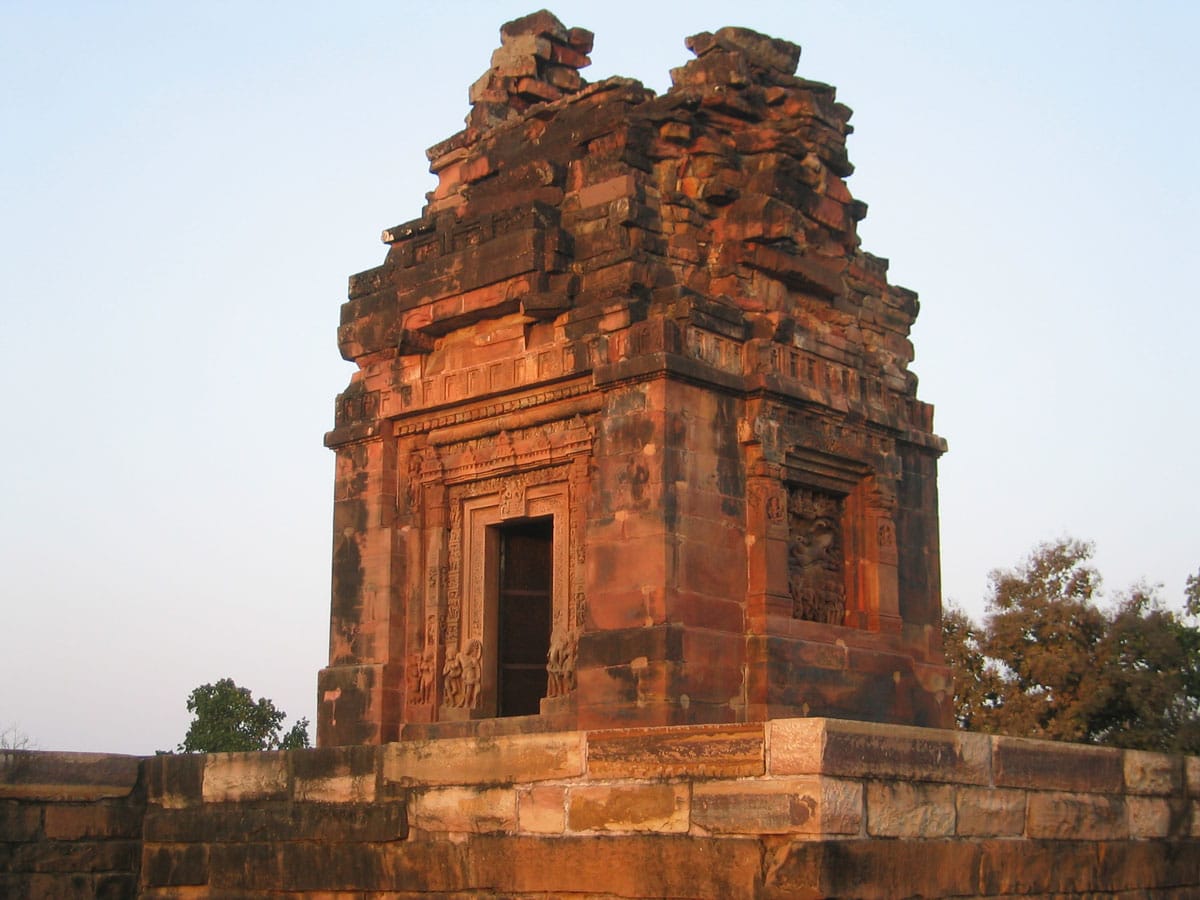
Dashavatara Temple
Dating to around 500 CE, this is the earliest known North Indian temple with a shikhara (curvilinear tower). The temple is famous for its carved panels depicting the ten incarnations (Dashavatara) of Vishnu on the sanctum walls.
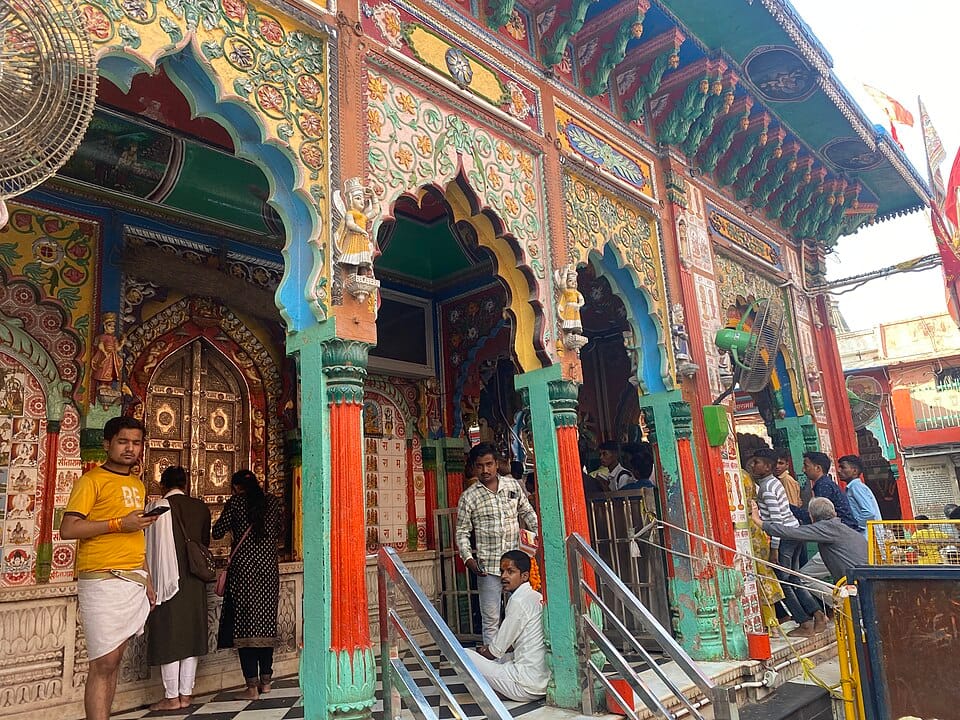
Hanuman Garhi
A hilltop temple dedicated to Lord Hanuman, the guardian deity of Ayodhya, reached by climbing 76 sacred steps.
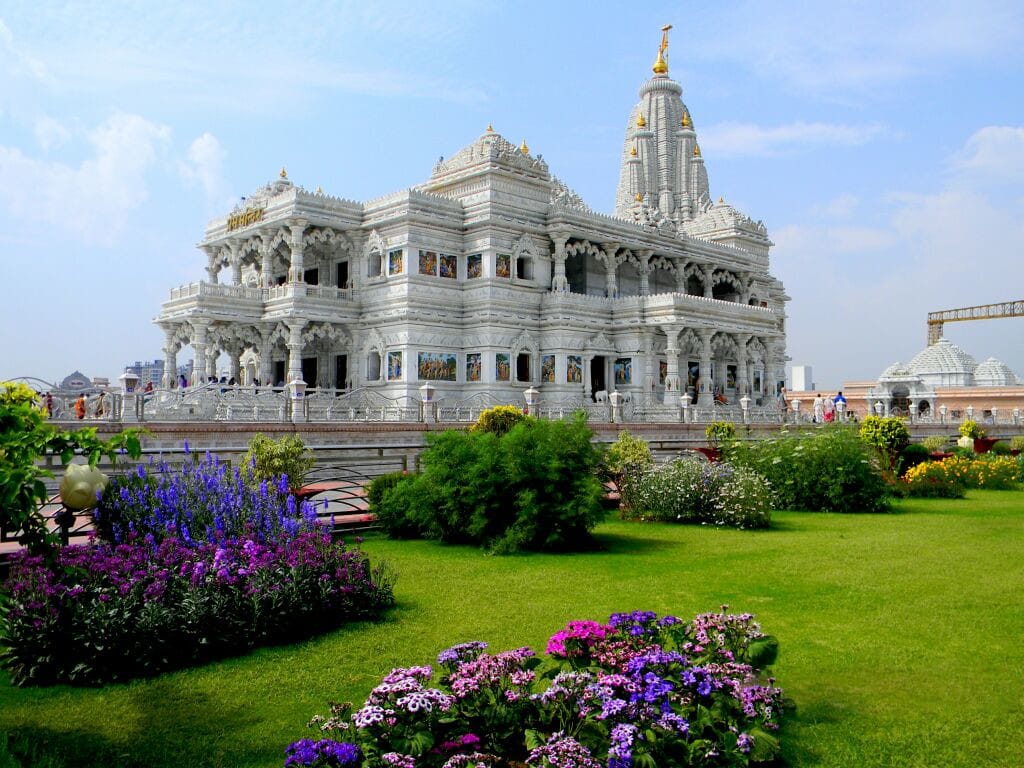
Prem Mandir
A stunning modern white-marbled complex in Vrindavan dedicated to Divine Love, known for its life-like tableaus of Krishna's pastimes.
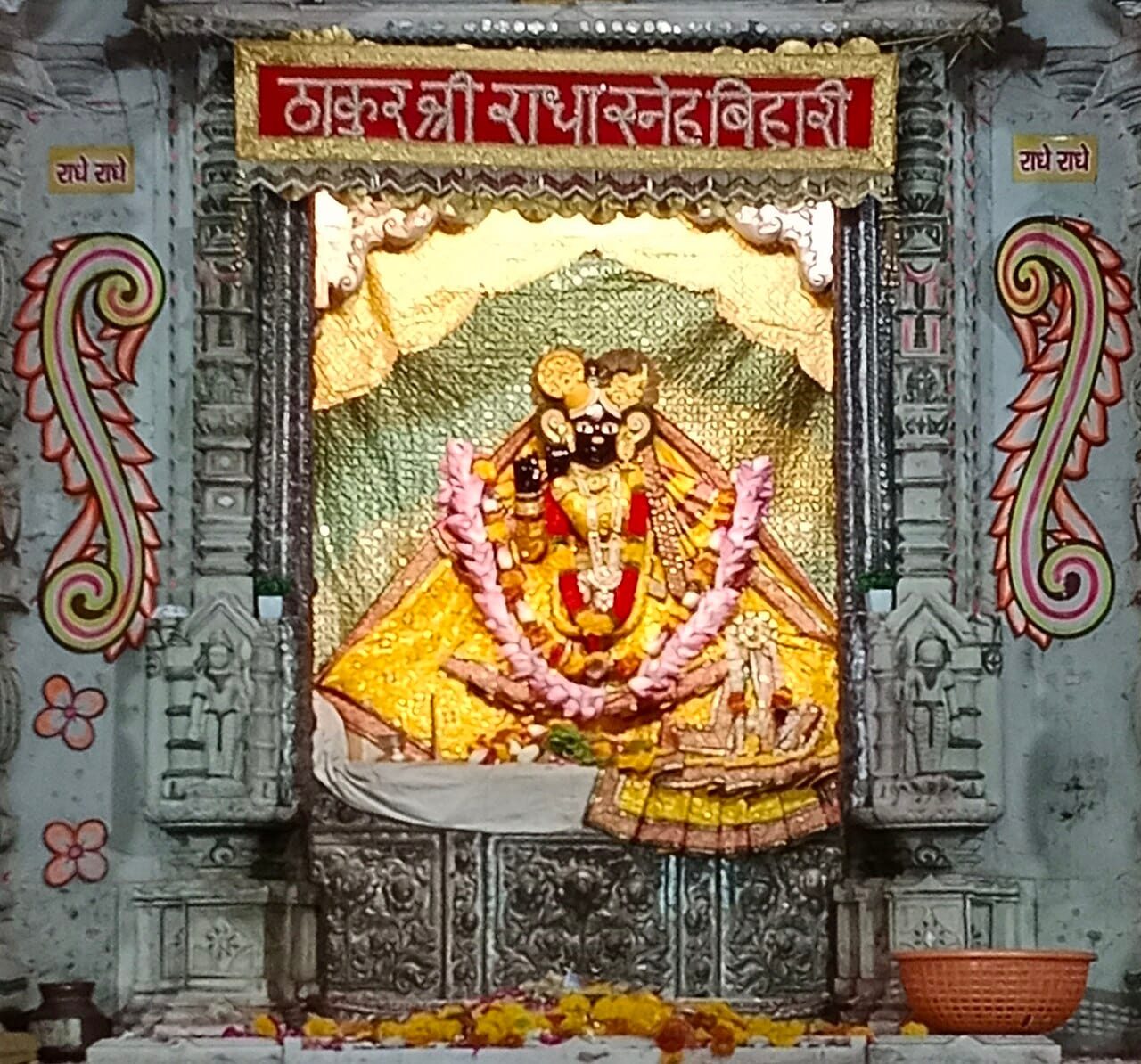
Banke Bihari Temple
Among the most famous Krishna temples in India, where the deity is worshipped as a child and curtains are drawn frequently.
Vindhyavasini Devi Temple
One of India's most visited Shakti Peethas, where Goddess Durga is believed to have resided after slaying Mahishasura.
Rasmancha Bishnupur
The oldest 17th-century brick structure in Bishnupur, unique for its massive pyramidal roof and arched galleries.
Jor-Bangla Temple Bishnupur
Known for its 'twin hut' design and incredibly detailed terracotta panels depicting the Ramayana and Mahabharata.
Shyam Rai Temple Bishnupur
A five-towered terracotta temple famous for its circular friezes showing the Rasa-lila of Lord Krishna.
Dashavatara Temple
Dating to around 500 CE, this is the earliest known North Indian temple with a shikhara (curvilinear tower). The temple is famous for its carved panels depicting the ten incarnations (Dashavatara) of Vishnu on the sanctum walls.
Prem Mandir
A stunning modern white-marbled complex in Vrindavan dedicated to Divine Love, known for its life-like tableaus of Krishna's pastimes.
Banke Bihari Temple
Among the most famous Krishna temples in India, where the deity is worshipped as a child and curtains are drawn frequently.
India's temples are living traditions — not museums. Every temple has its own customs. This guide helps first-time visitors prepare with confidence and respect.
Foreign visitor information is being researched
Please verify with the official temple authority before planning your visit.
Foreign Visitors
Verify Before VisitingVisitor Information
Entry policies vary between temples. Most temples welcome visitors, while some may restrict access to specific areas, rituals, or the inner sanctum. Always verify the latest entry guidelines with the official temple authorities before your visit.
Modest clothing is expected at every Indian temple — a sign of respect, not a restriction. Think of it as dressing for a formal ceremony.
A scarf is always useful — it covers shoulders, works as a head covering, and can double as a makeshift face cover if needed.
Outdoor photography is generally permitted. Indoor photography is often restricted. Always look for signage or ask a priest before taking photos inside.
The ideal time to visit is from October to March, when the weather in Uttar Pradesh is cool and pleasant. The month of January, especially around the anniversary of the Pran Pratishtha, is spiritually highly charged. Visiting during Ram Navami (March/April) offers the most vibrant cultural experience, though it involves dealing with massive crowds.
April — June
July — September
English is widely understood at major tourist temples. In smaller local temples, Hindi and the regional language are more common. A smile and simple hand gestures go a long way. Learning a few words of the local language is always appreciated.
Cash (Indian Rupees) is the most reliable option, especially for temple offerings, small shops, and local transport.
UPI digital payments (Google Pay, PhonePe, Paytm) are widely accepted across India — even at roadside stalls. Download one before you arrive.
International credit/debit cards work at most ATMs, hotels, and larger establishments. Smaller vendors may only accept cash or UPI.
Carry small denominations (₹10, ₹20, ₹50, ₹100 notes) for offerings and temple donations. Large notes (₹500, ₹2000) can be hard to break at smaller counters.
Many historic temples have uneven stone floors, multiple steps, and narrow passages. Wheelchair access is limited at older sites — contact the temple in advance.
Basic restroom facilities and drinking water are available at most major temples. Some charge a small fee (₹5–₹10).
Stay hydrated — carry a reusable water bottle, especially in hot climates.
Keep valuables secure — use hotel lockers for passports and excess cash.
Wear comfortable, sturdy footwear — temple floors can be hot, wet, or uneven.
Beware of unofficial guides or touts near temple entrances. Only use authorised services.
Carry a photocopy of your passport and visa. Leave originals in your hotel safe.
Download offline maps — mobile networks can be unreliable near remote temple sites.
These short explanations help make sense of what you see and experience.
Darshan means 'seeing' — but in a temple it means being seen by the deity. It is a sacred moment of connection, not just a viewing.
Removing footwear is a sign of humility. It also keeps the temple floor clean, since devotees sit and pray on the ground.
Food offered to the deity and then distributed to devotees. It is considered blessed. Accept it with both hands and do not discard it.
The bell creates a focused acoustic atmosphere, wards off distractions, and announces your presence before entering the inner sanctum.
Circumambulation (pradakshina) is done clockwise, keeping the sanctum on your right — an auspicious direction aligned with the sun's path.
Flowers symbolise devotion, coconuts represent the ego being broken, incense purifies the air, and lamps represent the victory of light over darkness.
Sacred viewing of the deity; the central act of temple worship.
Clockwise circumambulation of the sanctum.
Blessed food offered to the deity and distributed to devotees.
The innermost sanctum where the main deity resides.
The towering spire above the sanctum, a defining feature of temple architecture.
A pillared hall or pavilion within the temple complex.
The Indian Rupee (?, INR) is the local currency. ATMs are widely available in cities and towns. For temple offerings, keep small notes (₹10, ₹20, ₹50). Most temples accept donations in cash only — digital payments are uncommon at the offering counter itself.
Offerings (dakshina) are given with the right hand. Place cash in the donation box (hundi) or give it directly to the priest. There is no fixed amount — give what feels appropriate. Some temples have fixed fees for special entry or puja participation.
Shoes and sandals are removed before entering the temple building. Most temples have a designated shoe counter (free or a small fee of ₹5–₹20). Socks are generally allowed. In monsoon, carry a plastic bag for wet shoes.
Darshan queues can take 30 minutes to 3 hours at popular temples. Many offer paid VIP darshan (₹100–₹500) for faster entry. Special queues for women, elderly, and disabled visitors exist at some temples. No line jumping.
Major festivals draw enormous crowds — sometimes hundreds of thousands. Book accommodation months in advance. Expect road closures, restricted vehicle access, and limited phone network. Arrive early (before dawn) to avoid the worst congestion.
Always look for signage before taking photos. When in doubt, ask a priest. Never take photos of devotees in prayer without permission. Selfie sticks are banned at most temples. Silently switch your phone to silent mode.
Police / Ambulance / Fire: 112 (National Emergency Number)
Tourist Helpline: 1800-111-363 (Multi-lingual, Ministry of Tourism)
Women's Helpline: 1091
Temple-specific visitor information is continuously researched and updated from official sources. Where specific data is unavailable, general India travel guidance is provided. Always verify current policies with the temple authority before your visit.
Information last verified July 2026. Temple-specific data coming soon.
Continue your journey through the spiritual and architectural wonders of India.
Dating to around 500 CE, this is the earliest known North Indian temple with a shikhara (curvilinear tower). The temple is famous for its carved panels depicting the ten incarnations (Dashavatara) of Vishnu on the sanctum walls.

A hilltop temple dedicated to Lord Hanuman, the guardian deity of Ayodhya, reached by climbing 76 sacred steps.

A stunning modern white-marbled complex in Vrindavan dedicated to Divine Love, known for its life-like tableaus of Krishna's pastimes.

Among the most famous Krishna temples in India, where the deity is worshipped as a child and curtains are drawn frequently.

The Vishalakshi Temple, located in the narrow lanes of Mir Ghat near the Ganges in Varanasi, is one of the 51 Shakti Peethas where the earrings of Goddess Sati are believed to have fallen. Dedicated to the 'wide-eyed' goddess Vishalakshi, the temple is the first stop on the traditional Kashi Yatra pilgrimage circuit and is considered the consort shrine of the neighbouring Kashi Vishwanath Temple.

One of India's most visited Shakti Peethas, where Goddess Durga is believed to have resided after slaying Mahishasura.

Legend says the right shoulder of Sati fell here; it serves as the headquarters of the Nath sect in eastern Uttar Pradesh.

Located in the ancient forest of Naimisharanya, it is mentioned in Puranas as the spot where the universe's first Chakra fell.
"India has over 40 UNESCO World Heritage Sites, ranging from ancient temples to natural wonders."