From ancient rock-cut marvels to towering imperial shrines, discover the architectural soul of Bharat through our verified digital archive.
Explore More Temples
Builder
Traditional / Ancient origins
Dynasty
Various (Palas, Senas, Marathas)
Construction
Medieval (with later rebuilds)
Style
Traditional Bengali / North Indian
Main Deity
Baidyanath (Shiva as healer)
Location
Deoghar, Jharkhand
Significance
Jyotirlinga + Shakti Peetha
Pilgrimage
Shravani Kaanwar Yatra (millions)
Shakti Peetha
Hridaya Peetha (Sati's heart)
Unique Feature
Devotees touch the lingam directly
Other Name
Baba Dham / Baidyanath Dham
Baidyanath means “Lord of Physicians.” Every other Jyotirlinga worships Shiva in his transcendent, ascetic, or destructive aspects. Here alone, he is approached as a healer — a divine doctor who listens to suffering and restores health. The temple’s identity is built around this single idea: Shiva can cure what no human doctor can touch.
The legend that establishes Baidyanath as a healing site predates the temple’s recorded history. According to local tradition, the demon-king Ravana — after receiving the lingam from Shiva — was afflicted with a debilitating condition. Shiva instructed him to establish the lingam at a place where healing energies naturally gathered. That place became Deoghar. The water and bel leaves (bilva patra) offered at this temple are believed to carry Shiva’s healing power, and pilgrims have reported cures for chronic diseases for centuries.
The healing concept at Baidyanath is not merely metaphorical. The bel tree (Aegle marmelos) has known medicinal properties in Ayurveda — its leaves, fruit, and roots treat digestive disorders, respiratory conditions, and skin diseases. The water used in abhishekam is collected from the temple’s ancient well and local springs, which tradition holds are charged with healing energy by the proximity of the lingam. Pilgrims drink this water, apply it to afflicted body parts, and carry it home for family members who could not make the journey.
Chronic Ailments
Devotees with incurable diseases make the pilgrimage believing Shiva will heal them.
Bel Leaf Offerings
Bel leaves, known for Ayurvedic properties, are the primary offering here.
Healing Wells
The temple’s ancient well water is collected and distributed for its healing properties.
Mental Healing
The temple also draws those seeking relief from mental distress, anxiety, and grief.
The healing tradition also extends to mental and spiritual ailments. Baidyanath is the jyotirlinga that people visit when they have exhausted other options — when doctors have given up, when the mind is broken, when grief is unbearable. The temple’s atmosphere reflects this. Unlike the celebratory energy of some pilgrimages, Baidyanath carries a quieter, more intimate mood. People sit in the courtyard for hours. They touch the lingam with both hands. They whisper prayers for themselves and for others. The healing here is not always physical, but it is always sought with a sincerity that sets Baidyanath apart.
The story of how the Baidyanath lingam came to Deoghar is the most dramatic of all the jyotirlinga origin legends. It involves the ten-headed demon king Ravana of the Ramayana — not as the villain who abducted Sita, but as a fierce devotee of Shiva who performed the most extreme penance ever recorded.
Ravana retreated to Mount Kailash and began his penance. He offered his ten heads one by one to Shiva, cutting each off with his sword and casting it into the sacrificial fire. After the tenth head, Shiva appeared before him, deeply impressed by the devotion that had led Ravana to sacrifice his own body. Shiva granted Ravana a boon. Ravana, knowing that possession of a physical form of Shiva would make him invincible, asked for the Atmalinga — the very essence of Shiva encased in stone.
Shiva agreed but imposed a condition: the lingam must never touch the ground. If it did, it would root itself permanently to that spot. Ravana accepted and began his journey back to Lanka with the lingam held above his head. The devas, led by Vishnu, grew concerned. If Ravana established the lingam in Lanka, his power would become absolute. They devised a plan.
Vishnu approached Varuna, the god of waters, and asked him to enter Ravana’s belly, creating an urgent need to relieve himself. As Ravana reached what is now Deoghar, the pressure became unbearable. He saw a Brahmin boy (Vishnu in disguise) tending cattle and asked him to hold the lingam briefly. The boy agreed but called out to Ravana three times. When Ravana did not return fast enough, the boy placed the lingam on the ground and vanished. The lingam fixed itself to the earth.
Ravana returned and realized he had been tricked. He tried to lift the lingam with all his twenty arms — pulling, twisting, straining — but it would not budge. In his fury, he crushed the lingam with his fists, leaving impressions that devotees still point to today. The spring that emerged from the ground where he struggled is called Sita Kund. Defeated, Ravana returned to Kailash to begin his penance again. The lingam stayed at Deoghar, forever rooted where Vishnu’s plan had placed it.
Baidyanath is not merely a jyotirlinga. It is simultaneously one of the 51 Shakti Peethas — the Hridaya Peetha, where the heart (hridaya) of the goddess Sati fell to earth. This dual identity makes Baidyanath unique among the twelve jyotirlingas. No other Shiva shrine in that sacred circle shares its space with a Shakti Peetha. The goddess and the god are present in the same complex, their shrines facing each other, their energies intertwined.
The Shakti Peetha mythology is among the most poignant in the Hindu tradition. After Sati immolated herself in her father Daksha’s sacrificial fire, unable to bear his insult to Shiva, the grief-stricken Shiva picked up her charred body and began the tandava — the cosmic dance of destruction. Vishnu, fearing the universe would be unmade, released his Sudarshana Chakra and dismembered Sati’s body into 51 pieces. Where each piece fell became a Shakti Peetha. The heart — the seat of life, love, and consciousness — fell at Deoghar.
The Shakti shrine at Baidyanath is known by several names — Jaya Durga, Parvati Devi, or simply the Mother. The shrine is smaller than the main lingam sanctum but is thronged with devotees. The order of worship is significant: a devotee first seeks the goddess’s permission at the Shakti Peetha before entering the main sanctum. The two deities are understood as a married couple — the goddess and the god dwelling together — and the rituals treat them with the protocol of a royal household. Offerings made to one must be shared with the other.
This coexistence changes the experience of the pilgrimage. A devotee at Baidyanath receives two blessings for one journey. The Shiva lingam represents the transcendent, formless, cosmic principle — the yin of pure consciousness. The Shakti shrine represents the immanent, creative, emotional principle — the yang of material existence. Together, they form a whole. This is why Baidyanath is often called a “complete” temple, a purna dham where nothing is missing from the cosmic pairing.
The Shravani Kaanwar Yatra is the largest pilgrimage of its type in the world. During the holy month of Shravan (July-August), an estimated 8 to 10 million pilgrims walk barefoot from Sultanganj on the Ganges to Deoghar — a distance of 108 kilometers — carrying Ganga water in decorated pots suspended from bamboo poles. The scale is staggering. At peak flow, the road between Sultanganj and Deoghar is a continuous unbroken stream of saffron-clad humanity, moving day and night.
The tradition is ancient but has undergone explosive growth in recent decades. What was once a regional pilgrimage drawing thousands from the villages of Bihar and Jharkhand has become a mass phenomenon attracting devotees from across India and the diaspora. The numbers have grown so rapidly that the pilgrimage now requires state-level coordination — temporary camps, medical stations, water distribution points, traffic management, and emergency services along the entire 108-kilometer route.
The kanwar itself — the bamboo pole with pots of Ganga water suspended at both ends — is richly symbolic. The pole represents the devotee’s spine, the pots represent the duality of existence (life and death, joy and sorrow), and the water represents the grace that flows from Shiva’s matted locks as the Ganges. Pilgrims dress in saffron or orange — the color of renunciation, of the fire that both consumes and purifies. Many walk barefoot as an act of humility and penance.
108 km Journey
From Sultanganj on the Ganges to Baidyanath Temple in Deoghar.
3-5 Days on Foot
Pilgrims walk continuously, resting briefly at volunteer-run camps along the route.
Saffron Brotherhood
All kanwariyas wear saffron, erasing caste and class distinctions during the yatra.
Bol Bam!
The chant of “Bol Bam!” (Say the Name of Shiva) echoes across the entire route day and night.
The atmosphere on the Kaanwar route is electric. Volunteers line the road offering free food (langar), water, buttermilk, and medical aid. Poetry and bhajans fill the air. The pilgrims walk in groups, supporting each other, their faces a mixture of exhaustion and ecstasy. When they finally reach Deoghar and pour the Ganga water over the lingam, the moment is intensely personal — a transaction between the devotee and the divine physician. The water they brought from the Ganges, carried for 108 kilometers on bare feet, becomes the offering that completes their healing.
Deoghar literally means “Abode of Gods” — derived from the Sanskrit “deva” (god) and “ghara” (home). The name is not metaphorical. The temple complex alone contains 22 shrines besides the main Baidyanath sanctum, each dedicated to a different deity or aspect of the divine. Nandi, Ganesh, Parvati, Hanuman, Shani, Surya, the Navagrahas (nine planets) — all have their own shrines within the complex. The entire city of Deoghar is organized around pilgrimage.
The main temple structure follows a traditional Bengali-North Indian architectural style, with a towering shikhara (spire) that rises above the city skyline. The sanctum is relatively small — a dark chamber where the lingam sits on a silver-altar platform. The lingam itself is unusual: it is slightly flattened on one side, a feature attributed to Ravana’s attempt to crush it. Above the sanctum, multiple kalashas (finials) gleam in the sun, replaced regularly with gold donations from wealthy devotees.
The approach to the sanctum passes through a series of mandapas — pillared halls that swell with pilgrims during the Shravan season. The inner hall (the garbhagriha) is intimate compared to the massive scale of the courtyard. The walls are dark, polished by centuries of touch and oil. The floors dip slightly in the center from the weight of millions of feet. Devotees queue for hours, pressing forward in a slow stream, until they finally reach the lingam — the stone that Ravana carried, that Sati’s heart sanctified, that millions have come to touch in search of healing.
Beyond the temple, the town of Deoghar has grown into a pilgrimage city with hotels, ashrams, dharamshalas (charitable rest houses), and markets selling puja materials, sweets, and souvenirs. The Basukinath Temple, about 40 km away, is often visited as part of the same pilgrimage circuit. The region’s hills, waterfalls, and forests provide a natural backdrop that has earned Deoghar the nickname “the spiritual capital of Jharkhand.”
At most jyotirlingas, the sanctum is guarded by strict protocols. At Somnath, priests perform the abhishekam behind a barrier. At Mahakaleshwar, the lingam is accessible only through a narrow passage with priests controlling every step. At Trimbakeshwar, devotees can only view the lingam from a distance. The pattern is consistent across almost all twelve shrines: the lingam is sacred, separate, and accessible only through the mediation of priests. Baidyanath breaks this pattern entirely.
Here, any devotee — regardless of caste, gender, or religious background — can walk up to the lingam, place their hands on it, and pour water or milk directly over the stone. This is the “direct touch” tradition, and it has been the custom at Baidyanath for as long as anyone remembers. The priests (known as Pandas) guide the ritual, chant the mantras, and ensure the procedures are followed, but the devotee performs the abhishekam personally. The act of touching the lingam — of making direct physical contact with the deity — is considered the highest form of grace.
The tradition has practical consequences. The flat silver platform that surrounds the lingam is worn smooth by millions of hands. The stone itself has a polished, almost glassy surface from the touch of countless fingers. The priests pour Ganga water and milk continuously throughout the day, and devotees add their own offerings — water, milk, honey, curd, ghee, bel leaves, flowers, and sometimes sandalwood paste. The combined scent of these offerings fills the sanctum with an intoxicating fragrance.
Why Baidyanath maintains this tradition while other jyotirlingas do not is a matter of debate. Some trace it to the temple’s identity as a Shakti Peetha — the goddess is said to prefer direct access. Others connect it to the healing focus of the temple: a physician does not stand behind barriers but touches the patient directly. Whatever the reason, the direct touch tradition is the single most distinctive feature of the Baidyanath experience. It is physically intimate, emotionally overwhelming, and spiritually unlike any other jyotirlinga in India.
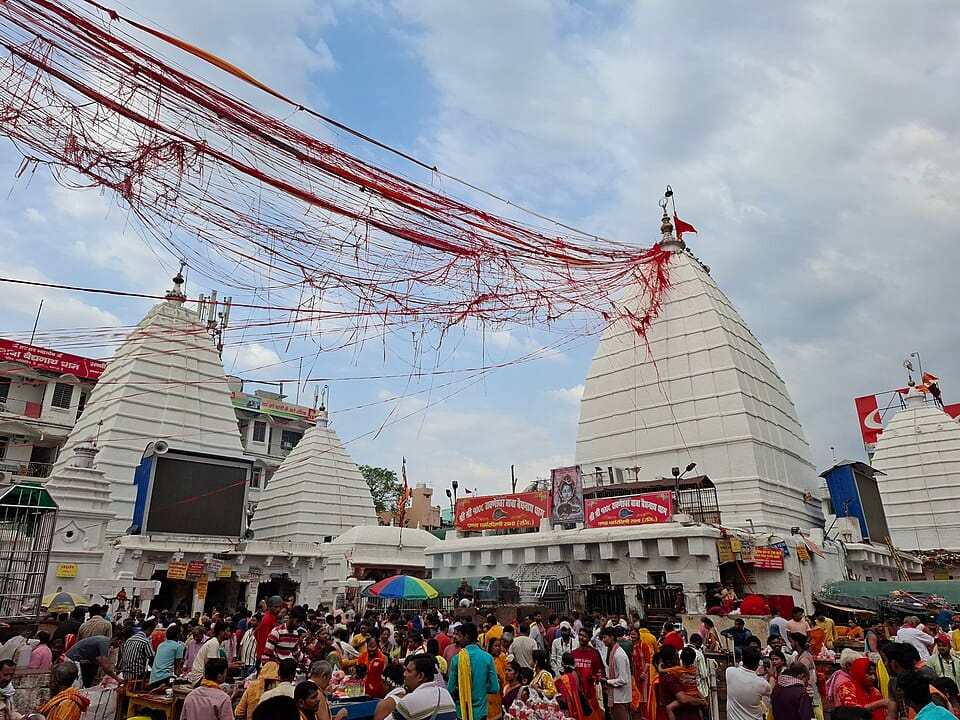
The month-long festival of Shravan (July-August) that includes the Kaanwar Yatra. The entire city transforms into a pilgrimage camp. Millions of kanwariyas arrive daily. The lingam receives continuous abhishekam with Ganga water. Special queues and arrangements are made for the unprecedented crowds.
The great night of Shiva is celebrated with intense devotion. Devotees observe a day-long fast and stay awake through the night performing abhishekam every three hours. The temple is illuminated with thousands of lamps. The atmosphere is charged with chanting and meditation.
Baidyanath is often described as the most “complete” pilgrimage site in the Hindu tradition. The explanation for this claim lies in the temple’s triple identity: it is a Jyotirlinga (Shiva’s radiant form), a Shakti Peetha (the goddess’s heart), and the altar of a healer (Vaidyanath). These three aspects correspond to three fundamental human needs — transcendence, connection, and restoration — and a devotee who completes a pilgrimage here addresses all three at once.
The journey to Baidyanath is itself a microcosm of the spiritual path. Most pilgrims undergo physical hardship — the 108-kilometer walk for the kanwariyas, the hours-long queues for the general visitors, the sensory intensity of the sanctum. This hardship is not incidental; it is essential. The effort required to reach the lingam mirrors the effort required to reach the divine. By the time a devotee touches the stone, they have already demonstrated the sincerity that the tradition demands.
The healing aspect of Baidyanath adds a dimension that no other jyotirlinga can match. Here, the divine is not distant, not judgmental, not absorbed in cosmic meditation. The divine is a physician — accessible, compassionate, and responsive to human suffering. The act of touching the lingam becomes the act of accepting treatment. The offering of water becomes the payment of gratitude. The journey home becomes the beginning of recovery. This is why Baidyanath attracts not just the healthy seeking blessings, but the sick seeking cures, the broken seeking repair, and the desperate seeking hope.
A. Ravana received a divine lingam (Atmalinga) from Shiva with the condition it must never touch the ground. Vishnu, disguised as a Brahmin boy, tricked Ravana into setting it down at Deoghar. The lingam rooted itself permanently, and Ravana could not lift it despite his immense strength. The Sita Kund spring nearby marks where Ravana struggled.
A. Yes. This is the only Jyotirlinga where devotees can personally touch the lingam and perform their own abhishekam. The 'direct touch' tradition has been followed for centuries and makes Baidyanath uniquely accessible. Devotees place their hands directly on the stone, pour water or milk, and offer bel leaves while the Pandas guide the ritual.
A. The yatra covers 108 km from Sultanganj (on the Ganges) to Deoghar. Walking barefoot, most pilgrims complete it in 3 to 5 days. During Shravan (July-August), over 8 million pilgrims make this journey. The route is lined with volunteer-run camps offering free food, water, and medical aid.
A. Baidyanath literally means 'Lord of Physicians.' Countless devotees report healing from chronic and terminal conditions after pilgrimage here. While there is no scientific study confirming the water's properties, the faith in Baidyanath's healing power is the temple's defining identity. The bel leaves (bilva patra) used in worship have documented Ayurvedic medicinal properties.
A. Pandas are hereditary temple priests whose families have served Baidyanath for generations. They maintain records of pilgrim families — sometimes spanning centuries — and welcome them when they visit. They guide the ritual procedures and perform the chants while the devotee performs the abhishekam. The system is deeply traditional and central to the Baidyanath experience.
A. Deva means 'god' and ghara means 'home' in Sanskrit. The temple complex houses 22 shrines besides the main Baidyanath lingam — including temples to Parvati, Ganesh, Hanuman, Nandi, Shani, Surya, and the Navagrahas. The entire city is built around pilgrimage, with ashrams, dharamshalas, and puja markets lining every street.
A. Baidyanath means 'Lord of Physicians.' The water used in abhishekam is collected from the temple's ancient well, which tradition holds is charged with healing energy by the lingam's proximity. Bel leaves (bilva patra) offered to the deity have documented Ayurvedic medicinal properties. Millions of pilgrims over centuries have reported cures for chronic ailments after their pilgrimage. Whether through faith or the mineral content of the local water, the tradition of healing at Baidyanath persists across generations.
A. Maha Shivaratri (February-March) offers a deeply spiritual atmosphere with night-long vigils. Shravan (July-August) has the Kaanwar Yatra but the crowds are extreme — expect 8+ hour queues. For a quieter visit, October to March provides pleasant weather and manageable crowds. The temple opens daily from 4:00 AM to 9:00 PM.
Virupaksha Temple
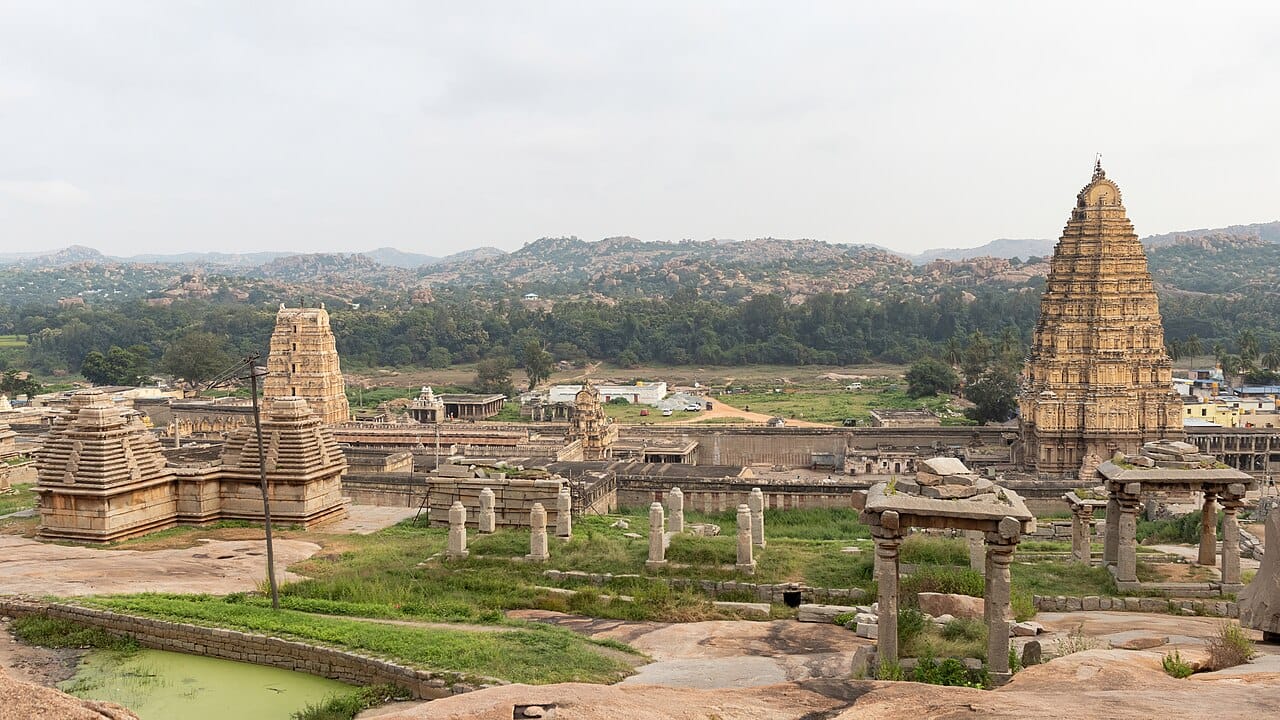
The Virupaksha Temple in Hampi, Karnataka, is a UNESCO World Heritage Site and the oldest functioning temple in India, dedicated to Lord Shiva as Virupaksha.
Trimbakeshwar Temple
The Trimbakeshwar Temple in Maharashtra is one of the twelve Jyotirlingas, unique for its three-faced linga representing the Trimurti and the source of the Godavari River.
Airavatesvara Temple
The Airavatesvara Temple at Darasuram, built by Rajaraja Chola II between 1146 and 1172 CE, is one of the three UNESCO World Heritage 'Great Living Chola Temples.' It is renowned for its stone chariot, musical steps, and exquisite 12th-century Chola sculptures.
Gangaikonda Cholapuram Temple
The Gangaikonda Cholapuram Temple, built by Rajendra Chola I in 1035 CE, is a UNESCO World Heritage 'Great Living Chola Temple.' Its 53-metre vimana with recessed corners and six pairs of monolithic dvarapalas represents a refined evolution of Chola Dravidian architecture.
Kampaheswarar Temple
Kampaheswarar Temple in Tribhuvanam, built by Kulothunga Chola III in 1202 CE, is one of the later great Chola temples and completes the quartet of magnificent Chola stone temples alongside the Brihadeeswarar at Thanjavur, Gangaikonda Cholapuram, and Airavatesvara at Darasuram. The temple represents the mature phase of Chola architecture, featuring a 30-metre granite vimana, a separate Devi shrine, and a unique chariot-wheel carving in the mandapa. It is maintained by the Archaeological Survey of India as a protected monument of national importance.
Koranganatha Temple
Koranganatha Temple, built during the reign of the Chola king Parantaka I (907-955 CE) at Srinivasanallur near Tiruchirappalli, is a well-preserved example of early Chola architecture with exquisite stone carvings. The temple is maintained by the Archaeological Survey of India and is notable for its peaceful setting on the banks of the Kaveri River.
Trimbakeshwar Temple
The Trimbakeshwar Temple in Maharashtra is one of the twelve Jyotirlingas, unique for its three-faced linga representing the Trimurti and the source of the Godavari River.
Alampur Jogulamba Temple
One of the 18 Maha Shakti Peethas, located in a complex that also houses nine ancient 7th-century Chalukyan temples.
Somnath Temple
Somnath Temple, the first of the twelve Jyotirlingas, is an ancient Shiva temple in Gujarat known for its resilience through repeated destruction and reconstruction over a millennium.
Siddhesvara Dham (Char Dham)
A grand complex featuring a 108-foot Shiva statue and replicas of the 12 Jyotirlingas and the four Char Dham sites.
Ramanathaswamy Temple
The Ramanathaswamy Temple in Rameswaram is one of the 12 Jyotirlingas and a Char Dham site, famous for its magnificent thousand-pillared corridors, the longest temple corridor in the world, and its sacred association with Lord Rama's worship of Shiva.
Omkareshwar Temple
Situated on a sacred island in the Narmada River, Omkareshwar is the only Jyotirlinga located on an island. The temple stands at the confluence of the Narmada and Kaveri rivers, with the lingam positioned where the river forms the shape of the sacred symbol Om.
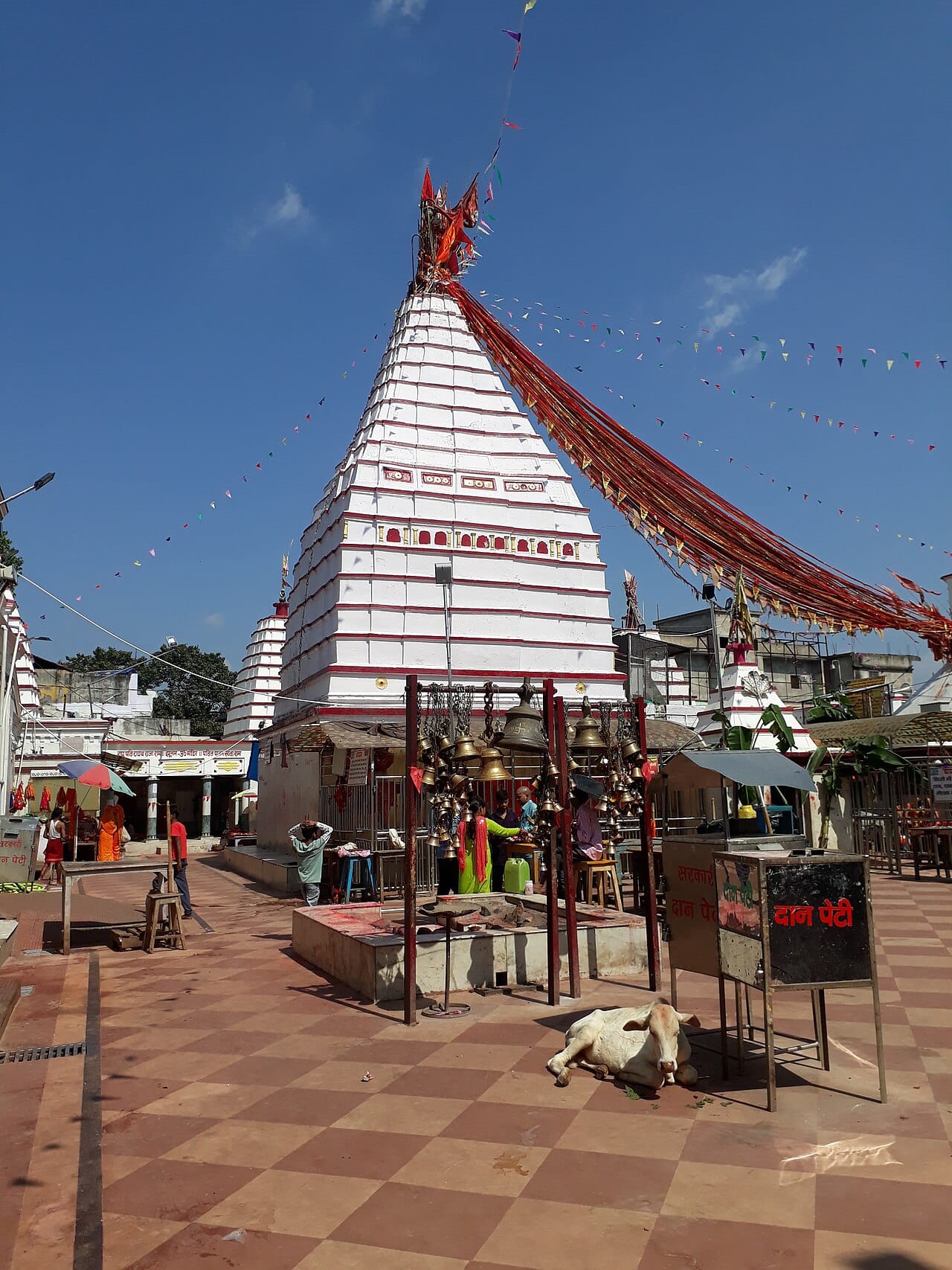
Basukinath Temple
The spiritual 'Criminal Court' of Lord Shiva, where the final verdict of a pilgrim's journey is believed to be delivered after visiting Baidyanath Dham.
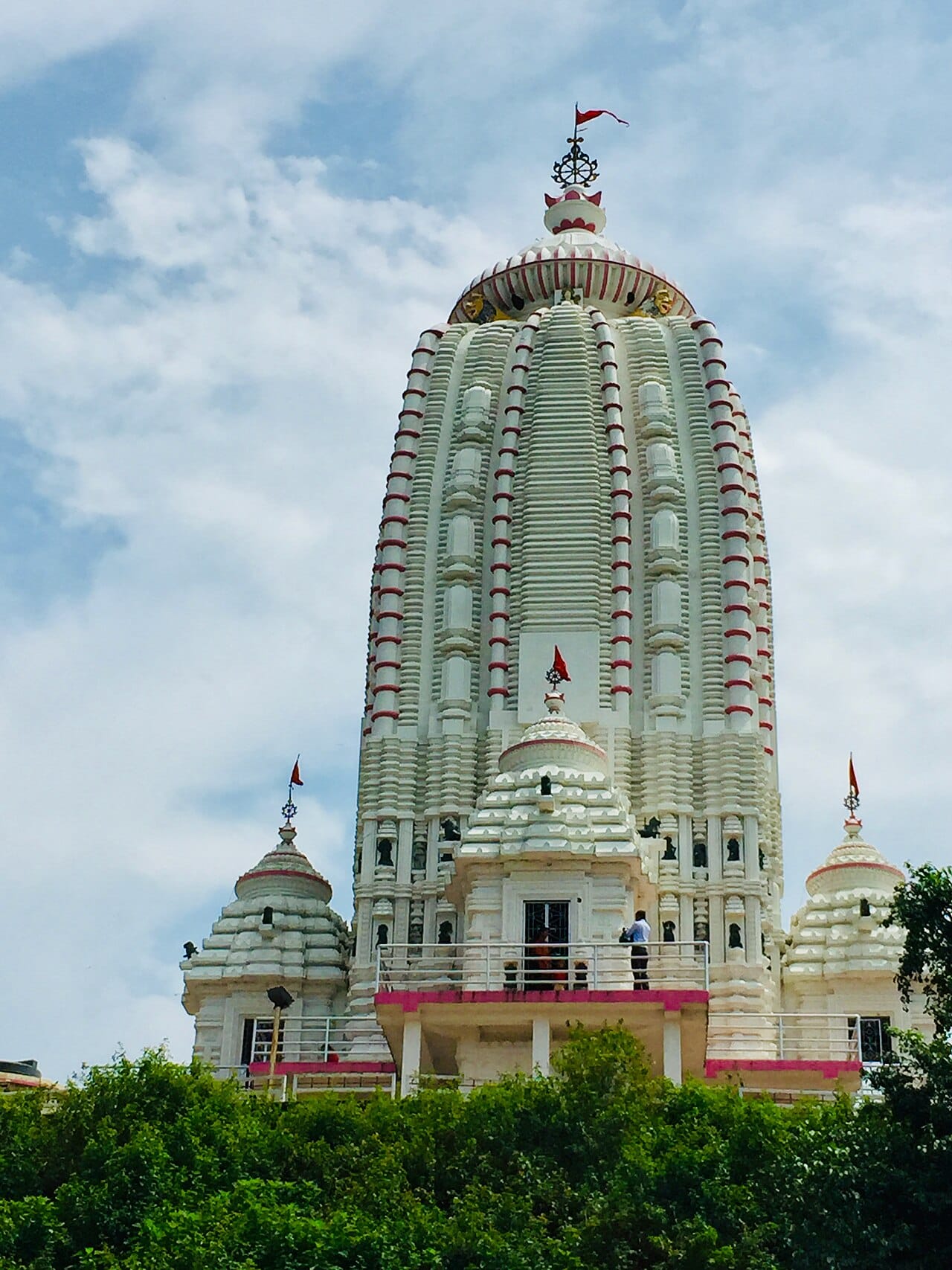
Jagannath Temple
A prominent 17th-century hilltop temple in Ranchi, echoing the spiritual grandeur and Rath Yatra traditions of Puri.
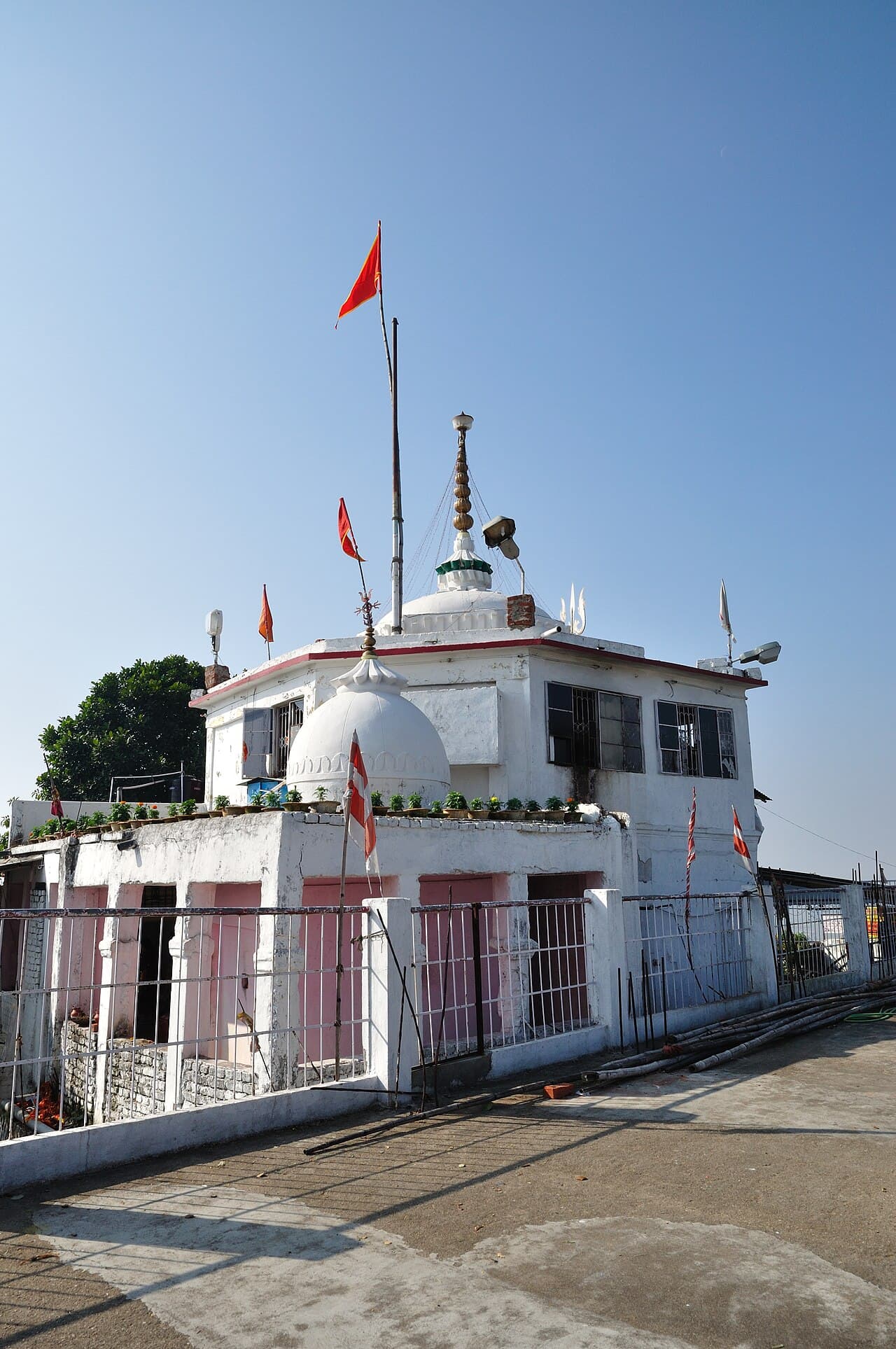
Pahari Mandir
A highly revered Shiva temple situated atop Ranchi Hill, unique for its tradition of hoisting the National Flag alongside religious flags.
Tarakeshwar Temple Hooghly
A massive 18th-century pilgrimage site dedicated to Lord Taraknath, especially vibrant during the Gajan festival.
Virupaksha Temple
The Virupaksha Temple in Hampi, Karnataka, is a UNESCO World Heritage Site and the oldest functioning temple in India, dedicated to Lord Shiva as Virupaksha.
Jageshwar Temple
A cluster of 124 ancient stone temples from the 7th-12th centuries, nestled in a dense deodar forest.
Neelkanth Mahadev Temple
Situated at 1,330 meters, this is where Lord Shiva is believed to have consumed the poison (Halahala) during the Samudra Manthan.
Tungnath Temple
The highest Shiva temple in the world, situated at 3,680 meters on the Chandranath Parbat; it is the 'Tritiya Kedar' in the sacred Panch Kedar pilgrimage circuit.
Rudranath Temple
One of the Panch Kedar shrines, representing Lord Shiva's face, situated at an altitude of 2,286 meters amidst meadows and rhododendron forests.
India's temples are living traditions — not museums. Every temple has its own customs. This guide helps first-time visitors prepare with confidence and respect.
Foreign Visitors
AllowedAll visitors welcome. Non-Hindus can enter the temple complex and observe the main shrine.
Visitor Information
Entry policies vary between temples. Most temples welcome visitors, while some may restrict access to specific areas, rituals, or the inner sanctum. Always verify the latest entry guidelines with the official temple authorities before your visit.
Modest clothing is expected at every Indian temple — a sign of respect, not a restriction. Think of it as dressing for a formal ceremony.
Maha Shivaratri (February-March) offers a deeply spiritual atmosphere with night-long vigils. Shravan (July-August) has the Kaanwar Yatra but the crowds are extreme — expect 8+ hour queues. For a quieter visit, October to March provides pleasant weather and manageable crowds.
April — June
July — September
Common local languages: Hindi, English, Santhali
Cash (Indian Rupees) is the most reliable option, especially for temple offerings, small shops, and local transport.
UPI digital payments (Google Pay, PhonePe, Paytm) are widely accepted across India — even at roadside stalls. Download one before you arrive.
International credit/debit cards work at most ATMs, hotels, and larger establishments. Smaller vendors may only accept cash or UPI.
Carry small denominations (₹10, ₹20, ₹50, ₹100 notes) for offerings and temple donations. Large notes (₹500, ₹2000) can be hard to break at smaller counters.
Wheelchair: Limited. The temple area has uneven stone flooring.
Stay hydrated — carry a reusable water bottle, especially in hot climates.
Keep valuables secure — use hotel lockers for passports and excess cash.
Wear comfortable, sturdy footwear — temple floors can be hot, wet, or uneven.
Beware of unofficial guides or touts near temple entrances. Only use authorised services.
Carry a photocopy of your passport and visa. Leave originals in your hotel safe.
Download offline maps — mobile networks can be unreliable near remote temple sites.
These short explanations help make sense of what you see and experience.
Darshan means 'seeing' — but in a temple it means being seen by the deity. It is a sacred moment of connection, not just a viewing.
Removing footwear is a sign of humility. It also keeps the temple floor clean, since devotees sit and pray on the ground.
Food offered to the deity and then distributed to devotees. It is considered blessed. Accept it with both hands and do not discard it.
The bell creates a focused acoustic atmosphere, wards off distractions, and announces your presence before entering the inner sanctum.
Circumambulation (pradakshina) is done clockwise, keeping the sanctum on your right — an auspicious direction aligned with the sun's path.
Flowers symbolise devotion, coconuts represent the ego being broken, incense purifies the air, and lamps represent the victory of light over darkness.
Sacred viewing of the deity; the central act of temple worship.
Clockwise circumambulation of the sanctum.
Blessed food offered to the deity and distributed to devotees.
The innermost sanctum where the main deity resides.
The towering spire above the sanctum, a defining feature of temple architecture.
A pillared hall or pavilion within the temple complex.
The Indian Rupee (?, INR) is the local currency. ATMs are widely available in cities and towns. For temple offerings, keep small notes (₹10, ₹20, ₹50). Most temples accept donations in cash only — digital payments are uncommon at the offering counter itself.
Offerings (dakshina) are given with the right hand. Place cash in the donation box (hundi) or give it directly to the priest. There is no fixed amount — give what feels appropriate. Some temples have fixed fees for special entry or puja participation.
Shoes and sandals are removed before entering the temple building. Most temples have a designated shoe counter (free or a small fee of ₹5–₹20). Socks are generally allowed. In monsoon, carry a plastic bag for wet shoes.
Darshan queues can take 30 minutes to 3 hours at popular temples. Many offer paid VIP darshan (₹100–₹500) for faster entry. Special queues for women, elderly, and disabled visitors exist at some temples. No line jumping.
Major festivals draw enormous crowds — sometimes hundreds of thousands. Book accommodation months in advance. Expect road closures, restricted vehicle access, and limited phone network. Arrive early (before dawn) to avoid the worst congestion.
Always look for signage before taking photos. When in doubt, ask a priest. Never take photos of devotees in prayer without permission. Selfie sticks are banned at most temples. Silently switch your phone to silent mode.
Police / Ambulance / Fire: 112 (National Emergency Number)
Tourist Helpline: 1800-111-363 (Multi-lingual, Ministry of Tourism)
Women's Helpline: 1091
Official Temple WebsiteState Tourism WebsiteTemple-specific visitor information is continuously researched and updated from official sources. Where specific data is unavailable, general India travel guidance is provided. Always verify current policies with the temple authority before your visit.
Continue your journey through the spiritual and architectural wonders of India.

The spiritual 'Criminal Court' of Lord Shiva, where the final verdict of a pilgrim's journey is believed to be delivered after visiting Baidyanath Dham.

A prominent 17th-century hilltop temple in Ranchi, echoing the spiritual grandeur and Rath Yatra traditions of Puri.

A highly revered Shiva temple situated atop Ranchi Hill, unique for its tradition of hoisting the National Flag alongside religious flags.

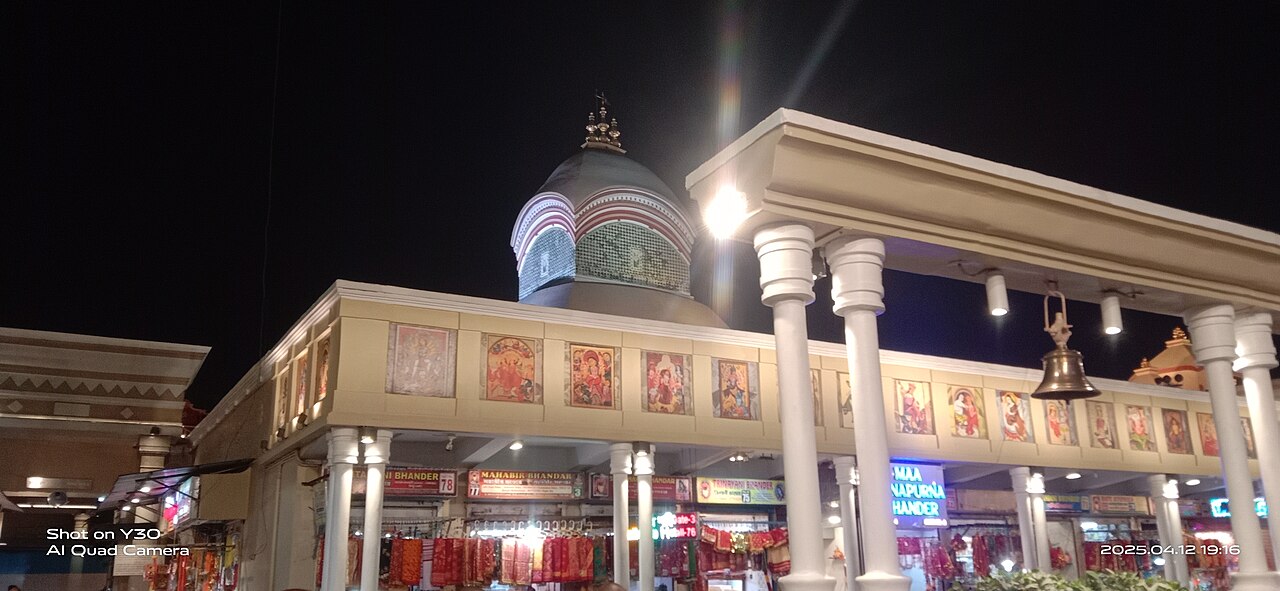
A major Shakti Peetha where the toes of Sati's right foot fell, serving as the spiritual heart of Kolkata.
"India has over 40 UNESCO World Heritage Sites, ranging from ancient temples to natural wonders."