
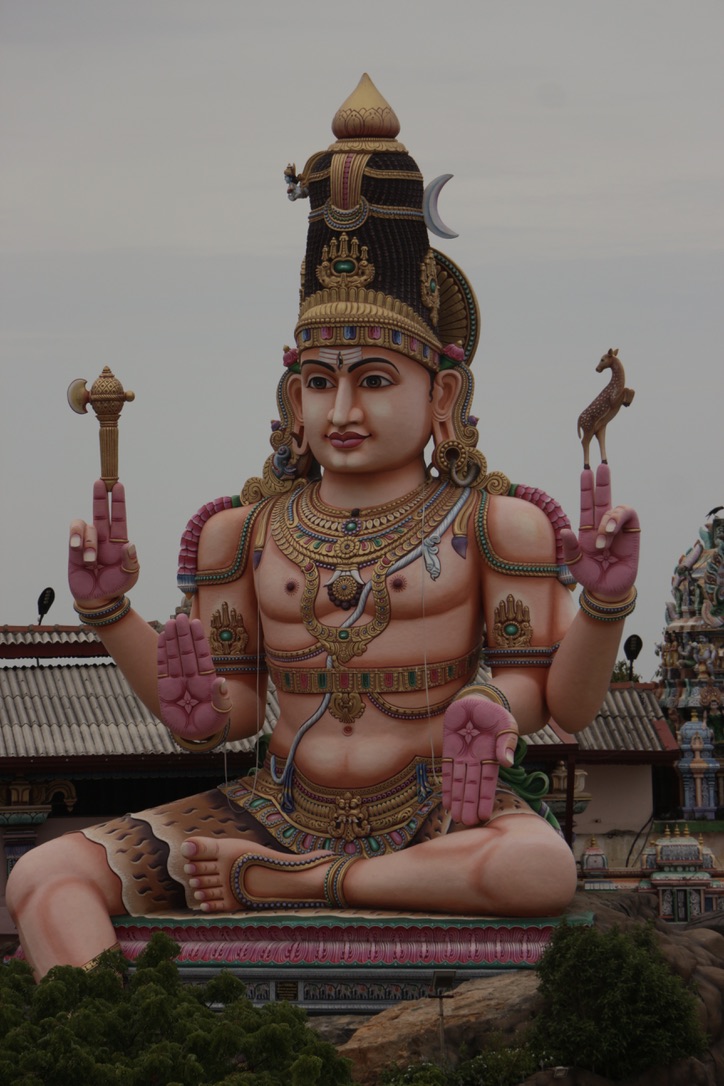
Sri LankaShiva (Ketheeswarar)
Ketheeswaram Temple
Ketheeswaram Temple is an ancient Pancha Ishwaram temple dedicated to Shiva in Mannar, dating back over 2,000 years, with a dramatic coastal location on Mannar Island.
Mannar, Sri Lanka Shiva (Ketheeswarar) Built: Before 6th century BCE (traditional), 1903–1928 (reconstruction)
Share
Overview
Ketheeswaram Temple, also known as Thiruketheeswaram, is one of the five Pancha Ishwarams of Sri Lanka and one of the oldest continuously worshiped Hindu sites in the world. The temple is located in the town of Mannar on Mannar Island, connected to the mainland by a causeway at the northwestern edge of the island.
The temple's coastal setting on the Gulf of Mannar places it at the intersection of historical maritime trade routes that connected South Asia with the Middle East and Africa. The temple is dedicated to Shiva in his aspect as Ketheeswarar (Lord of Kethu), referencing the serpent deity Kethu—one of the nine celestial bodies (Navagraha) in Hindu astrology.
This unique association with Kethu distinguishes Ketheeswaram from the other Pancha Ishwarams and makes it a particularly important pilgrimage destination for devotees seeking relief from the malefic effects of Kethu in their astrological charts. The temple complex, rebuilt in the early 20th century after centuries of colonial destruction, occupies approximately two hectares of coastal land and features architectural elements that reflect the Tamil, Sinhala, and Muslim cultural influences that have historically converged in the Mannar region.
Quick Facts
Deity
Shiva (Ketheeswarar)
Location
Mannar, Sri Lanka
Built
Before 6th century BCE (traditional), 1903–1928 (reconstruction)
Built By
Ancient Tamil rulers (original), Mannar Hindu community (reconstruction)
Coordinates
8.98, 79.92
Timings
5:30 AM – 12:00 PM, 4:00 PM – 8:00 PM daily
Entry Fee
Free entry; donations accepted for special pujas
History
Ketheeswaram Temple's history extends back to at least the 6th century BCE according to traditional accounts, with the temple referenced in the ancient Tamil Sangam literature (c. 3rd century BCE–3rd century CE). The temple is mentioned in the Mahavamsa (5th century CE), which records that a king of the Anuradhapura period paid homage at the shrine.
The site was a major node in the ancient maritime trade network, with the temple serving as a landmark and shrine for seafarers traveling between South Asia and the Middle East. The Chola period (10th–13th centuries) was a golden age for Ketheeswaram, with royal inscriptions recording substantial endowments and the construction of significant architectural additions.
The temple survived the initial Portuguese conquest of the coastal regions in the 16th century but was eventually destroyed by the Portuguese in 1590, who dismantled the structure and used the stone to build the Mannar Fort. The temple site remained in ruins for over 300 years, with local devotees maintaining worship at the location through simple temporary structures.
The 20th-century reconstruction began in 1903 under the leadership of the Mannar Hindu community and the financial support of the Tamil diaspora in Southeast Asia. The main sanctum and gopuram were completed by 1925, and the temple was reconsecrated (Maha Kumbhabhishekam) in 1928. The temple suffered damage during the Sri Lankan Civil War, as Mannar was a contested region, but post-war reconstruction since 2010 has fully restored the temple's structures and revived its festival traditions.
Architecture
Ketheeswaram Temple's architecture represents a late Dravidian style with distinctive Mannar-region variations, notably the use of coral limestone as a building material alongside the more common granite. The temple's entrance is marked by a five-tiered gopuram rising to approximately 22 meters, constructed of granite salvaged from the original temple ruins and adorned with stucco figures of Shiva, Parvati, Ganesha, Murugan, and the Navagraha deities.
The main sanctum (garbhagriha) houses a granite Shiva lingam mounted on a circular avudaiyar (base), installed during the 1928 consecration. The sanctum is surrounded by a circumambulatory path (pradakshina patha) enclosed by a cloister of carved granite pillars. The Kethu shrine, located in the northeastern corner of the compound, is the temple's most distinctive feature: it houses a five-headed cobra image (pancha-mukha naga) representing Kethu, sculpted from black granite and adorned with a silver crown.
The temple's open-air section includes a large banyan tree (vada maram) that is considered sacred and is used for certain ritual observances. The temple tank (theppakkulam) is fed by natural springs and is surrounded by a paved walkway and stone steps leading into the water. The tank is particularly notable for its population of fish—including the locally revered 'mannar fish'—that are fed by devotees as an act of merit.
Main Deity
Shiva (Ketheeswarar)
Religious Significance
Ketheeswaram Temple's primary significance within the Pancha Ishwaram tradition lies in its unique association with Kethu, the descending lunar node in Hindu astrology. Devotees undertake pilgrimage to Ketheeswaram specifically to perform rituals (parihara pujas) to mitigate the malefic influences of Kethu in their horoscopes, and the temple maintains a dedicated shrine and ritual specialists for this purpose.
The temple's location on Mannar Island, at the western edge of Sri Lanka's Tamil cultural region, makes it a boundary site that has historically mediated between Tamil, Sinhala, and Muslim communities. The Mannar region is home to significant populations of all three communities, and the temple has played a role in inter-community relations that is both complex and often positive.
The temple's coastal location on the Gulf of Mannar also connects it to the region's rich ecological significance: the Gulf of Mannar is one of the world's most biodiverse marine environments, and the temple management has participated in conservation initiatives for the endangered dugong, sea turtles, and coral reefs that inhabit the adjacent waters.
In the post-war period, Ketheeswaram has become a symbol of the return of normalcy to northern Sri Lanka, with the resumption of its annual festival drawing visitors from across the island and the diaspora.
Temple Legends
Ketheeswaram Temple's foundational legend connects it to the churning of the cosmic ocean (Samudra Manthan), one of the central creation myths of Hinduism. According to this tradition, the temple marks the spot where the demon Rahu (Kethu's counterpart) was beheaded by Vishnu's Sudarshana Chakra. Kethu, the headless serpent body of Rahu, fell to earth at this location and is said to have coiled around a natural lingam that emerged from the ground at the point of impact.
The union of Kethu's body with the lingam is believed to confer the site with the power to neutralize the malefic effects of Kethu's planetary influence. Another legend associates the temple with King Ravana. According to the local tradition based on the Ramayana, Rama visited this location after his victory over Ravana and installed the Shiva lingam at the site in thanksgiving for Shiva's blessings during the war.
The nearby village of Ravana Kulam (Ravana's Tank) preserves the memory of this connection. The temple is also connected to the legend of the sage Agastya, who is said to have established the Pancha Ishwarams. At Ketheeswaram, Agastya is believed to have installed the Kethu image as a secondary deity specifically to address the astrological needs of humanity, recognizing that the influence of Kethu would become increasingly important in the Kali Yuga (the current age of darkness).
Festivals & Celebrations
The primary festival at Ketheeswaram is the annual Maha Shivaratri celebration, which draws approximately 30,000 devotees to the temple for an all-night vigil that includes four distinct abhishekams (ritual baths) of the lingam corresponding to the four watches of the night (Yamams). The temple also celebrates a 10-day annual festival (Ketheeswaram Thiruvizha) during the Tamil month of Aani (June–July), which includes daily processions, cultural performances, and a chariot festival on the final day.
The temple holds special Kethu-related rituals on the day of the Kethu transit (when the planet Kethu enters a new zodiac sign according to the sidereal calendar), and these ceremonies draw devotees specifically seeking remedies for Kethu dosha (planetary affliction). The temple also celebrates Navaratri (September–October) with nightly devotional music concerts and a unique 'goddess procession' that carries the image of Parvati along the beachfront.
During the Tamil month of Purattasi (September–October), the temple conducts a special Saturday puja dedicated to the banyan tree, during which devotees tie threads around the tree as symbolic prayers for the relief of Kethu-related afflictions.
Visitor Information
Timings
5:30 AM – 12:00 PM, 4:00 PM – 8:00 PM daily
Entry Fee
Free entry; donations accepted for special pujas
Dress Code
Modest attire required; shorts and sleeveless tops not permitted; sarongs are available at the entrance; footwear must be removed before entering the inner sanctum
Photography
Photography permitted in the outer courtyard and gopuram area; photography of the main lingam and Kethu shrine is not permitted; videography requires prior permission from the temple administration
Best Time to Visit
Maha Shivaratri (February–March) for the most significant festival; early morning (6:00–7:00 AM) for a peaceful visit combined with sunrise over the Gulf of Mannar; December–March for the most pleasant weather in the Mannar region
How to Reach
Ketheeswaram Temple is located in the town of Mannar on Mannar Island, approximately 200 kilometers northwest of Colombo. Accessible by road via the A14 highway from Puttalam (3–4 hours from Colombo), by bus (regular services from Colombo's Pettah bus stand to Mannar, approximately 5–6 hours), or by train (night train from Colombo to Mannar, approximately 7 hours, with recent post-war service restoration). The temple is a 10-minute walk from the Mannar bus stand.
Nearby Attractions
Mannar Fort (Portuguese-Dutch fort, 3 km), Mannar Baobab Tree (one of the oldest baobab trees in Asia, believed to be over 700 years old, 2 km), Gulf of Mannar Marine National Park (boat trips available), Giant's Tank (ancient irrigation reservoir, 10 km east), Adam's Bridge (chain of limestone shoals connecting to India, visible from the coast)
Interesting Facts
- Ketheeswaram is the only Pancha Ishwaram temple whose presiding deity is specifically associated with a Navagraha (planetary) influence—Kethu, the descending lunar node.
- The temple was destroyed by the Portuguese in 1590, and its granite stones were used to build the Mannar Fort, which still stands today.
- The temple's banyan tree is believed to be over 500 years old and is considered the earthly abode of Kethu; devotees tie threads around its aerial roots as part of astrological propitiation rituals.
- Mannar Island's Gulf of Mannar waters contain some of the oldest known pearl banks in the world, referenced in the Sangam literature (3rd century BCE) and historically harvested for the region's famous Mannar pearls.
- The temple's tank is fed by a natural spring that is connected to the same underground water system that feeds the nearby Giant's Tank, an ancient reservoir built by Sinhala kings in the 1st century BCE.
- During the civil war, the temple's bronze festival deity was secretly transported to Colombo in 1990 for safekeeping and was only returned to Mannar in 2011 after the end of hostilities.
Frequently Asked Questions
What is the significance of Kethu at this temple?
Ketheeswaram is the only temple dedicated to the astrological deity Kethu (the descending lunar node) in Sri Lanka. Devotees visit specifically to perform pujas that mitigate the negative effects of Kethu in their horoscopes. Special Kethu parihara (remedy) rituals are conducted by the temple priests on designated days.
Is Mannar safe for tourists?
Yes, Mannar has been completely safe for tourists since the end of the civil war in 2009. The town is increasingly visited by both domestic and international tourists. Some surrounding areas may have remaining landmines, so stay on established roads and paths, particularly outside the town center.
What is the Mannar baobab tree and how is it connected to the temple?
The Mannar baobab tree, located approximately 2 kilometers from the temple, is believed to be over 700 years old and is one of the oldest and largest baobab trees in Asia. It is not directly connected to the temple's religious traditions but has become a significant pilgrimage stop for visitors to the area. The tree was likely planted by Arab traders who settled in the region.
Sources & References
- [1]Thiruketheeswaram Temple Restoration Trusttemple
- [2]Department of Hindu Religious and Cultural Affairs Sri Lanka government
- [3]Archaeological Department of Sri Lanka — Mannar Region Heritage government
— every record linked above was re-requested for this release, so the link still resolves and the publisher still serves the document. It is a link check, not a re-verification of every sentence on this page.
More Temples in Sri Lanka
Explore other Hindu temples in Sri Lanka.
Sri Lanka
Koneswaram Temple
Koneswaram Temple is a classical-medieval Hindu temple dedicated to Shiva on Swami Rock in Trincomalee, one of the Pancha Ishwarams of Sri Lanka.
Explore Temple

Sri Lanka
Munneswaram Temple
Munneswaram Temple is one of the Pancha Ishwarams of Sri Lanka, a historic five-temple complex dedicated to Shiva near Chilaw, renowned for its multi-religious significance.
Explore Temple

Sri Lanka
Nallur Kandaswamy Temple
Complete guide to Nallur Kovil (Nallur Kandaswamy Temple) in Jaffna, Sri Lanka. Explore Murugan shrine history, 25-day Ther festival, timings, and architecture.
Explore Temple