
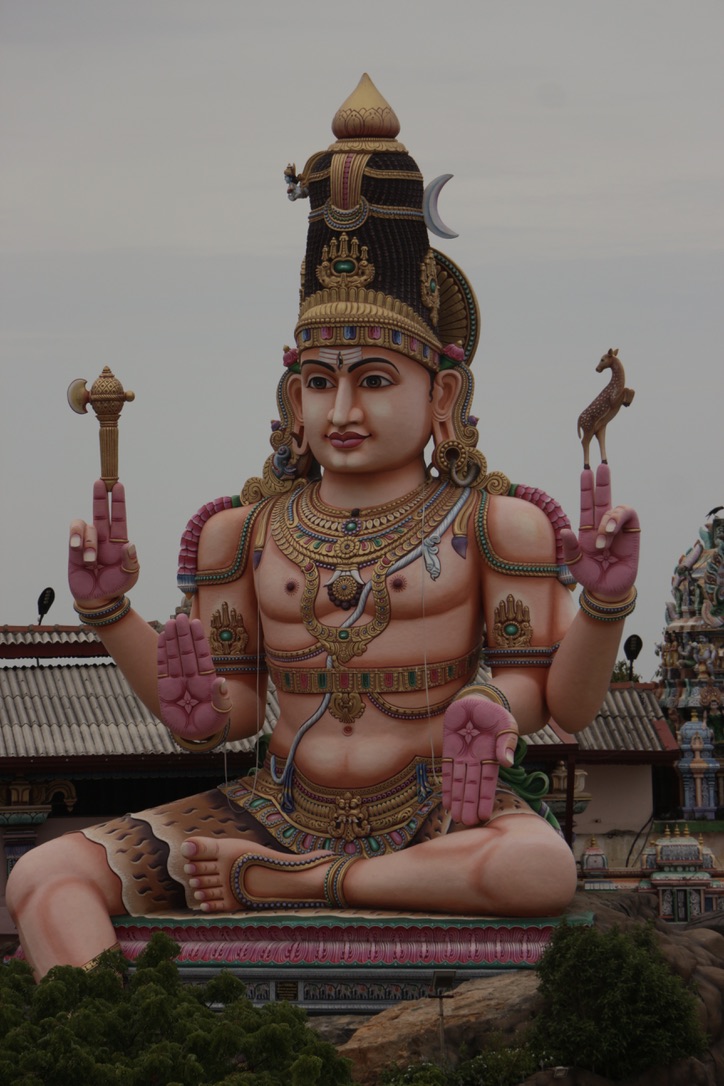
Sri LankaShiva (as Munneswarar)
Munneswaram Temple
Munneswaram Temple is one of the Pancha Ishwarams of Sri Lanka, a historic five-temple complex dedicated to Shiva near Chilaw, renowned for its multi-religious significance.
Chilaw, Sri Lanka Shiva Built: Before 1st century CE (original), 18th century (reconstruction)
Share
Overview
Munneswaram Temple is a historic Hindu temple complex located in the town of Demanagoda, approximately 5 kilometers southeast of Chilaw in Sri Lanka's North Western Province. As one of the five Pancha Ishwarams—the ancient Saiva shrines believed to have been established by the sage Agastya—Munneswaram holds profound religious significance within Sri Lankan Hinduism.
The temple complex is unique in that it encompasses five distinct temples within a single walled compound: the main Shiva temple (Munneswaram), a temple dedicated to Ambal (Parvati), a Ganapathi (Ganesha) temple, a Murugan temple, and a Kali temple. This arrangement creates a complete pilgrimage circuit within a single site, representing the full spectrum of Hindu divinity.
The temple is particularly notable for its multi-religious character: it is venerated not only by Hindus but also by Sinhala Buddhists and Catholics, who visit the site to seek blessings, make offerings, and participate in the annual festival, making Munneswaram a powerful example of shared religious practice in Sri Lanka.
Quick Facts
Deity
Shiva (as Munneswarar)
Location
Chilaw, Sri Lanka
Built
Before 1st century CE (original), 18th century (reconstruction)
Built By
Ancient Tamil and Sinhala kings (original), post-Portuguese restoration (reconstruction)
Coordinates
7.52, 79.83
Timings
5:00 AM – 12:30 PM, 4:00 PM – 8:30 PM daily
Entry Fee
Free entry; donations accepted for special pujas
History
Munneswaram Temple's history extends back to at least the 1st century CE, with some sources suggesting the site was already established as a place of worship several centuries earlier. The temple is mentioned in the 6th-century Sinhala chronicle Mahavamsa, which records that the temple was decorated by a king of the Anuradhapura period.
The Chola dynasty, which exercised control over Sri Lanka's western coast between the 10th and 13th centuries, made significant contributions to the temple's expansion, and an inscription from the reign of Rajaraja Chola I records a grant of land for the temple's maintenance. During the Portuguese colonial period (16th–17th centuries), the temple, like other Hindu shrines, faced destruction and was partially demolished.
Local tradition holds that the main Shiva lingam was saved by devotees who buried it in the surrounding paddy fields, and the temple was subsequently rebuilt in the 18th century during the Dutch period, when religious tolerance was greater. The temple's current major structures date primarily from the 19th and early 20th centuries, representing a reconstruction period funded by the prosperous Tamil and Sinhala communities of the Chilaw region.
The temple was the subject of significant archaeological interest in the 1970s, when excavations in the temple compound unearthed a hoard of Chola-period bronze icons, including a particularly fine Nataraja statue now displayed at the Colombo National Museum.
Architecture
Munneswaram Temple's architectural layout follows the classic Dravidian temple plan adapted for its tropical coastal setting. The complex is enclosed by a high compound wall (prakaram) with a single entrance marked by a five-tiered gopuram constructed in the early 20th century, rising to approximately 25 meters and covered with painted stucco figures of deities, celestial beings, and floral motifs.
The main sanctum (garbhagriha) houses a granite Shiva lingam mounted on a circular avudaiyar (base) is considered a swayambhu (self-manifested) lingam originally recovered from the paddy fields after the Portuguese destruction. The Ambal temple to the south features a distinct architectural style with a smaller gopuram and a seated image of Parvati in her benign form.
The Murugan temple to the east contains a standing image of the deity with his consorts, while the Ganesha temple to the north houses a large stone image of the elephant-headed god. The Kali temple in the northwestern corner of the compound is the smallest structure but receives intense devotional attention. A large rectangular temple tank (theppakkulam) occupies the eastern portion of the compound, fed by an underground spring and used for ritual bathing and the annual float festival.
The temple's wooden pillars in the main mandapam feature elaborate carvings of horses, lions, and floral patterns executed in the Kandyan and South Indian traditions.
Main Deity
Shiva (as Munneswarar)
Shiva
Religious Significance
Munneswaram Temple holds exceptional significance as a site of multi-religious co-worship that challenges conventional narratives of religious boundaries in Sri Lanka. The annual Munneswaram festival draws devotees from Hindu, Buddhist, and Catholic traditions who participate in overlapping but distinct ritual practices: Hindus perform kavadi offerings, Buddhists make vows and offerings to the shrine, and Catholics visit the temple before proceeding to the nearby St. Anne's Church in Chilaw. This syncretic tradition, which has been documented by anthropologists including R.
L. Stirrat and Bruce Kapferer, reflects the deep historical entanglement of religious communities in Sri Lanka's coastal regions and the persistence of pre-colonial patterns of shared sacred geography. The temple's location in the predominantly Sinhala-Buddhist North Western Province, far from the Tamil-majority Northern areas, gives it a distinctive character as a temple that has always negotiated multiple linguistic, ethnic, and religious identities.
As a Pancha Ishwaram, Munneswaram is also central to the Saiva pilgrimage network, and it is traditionally held that a pilgrimage to all five Ishwarams in a single year confers special spiritual merit. The temple's administrative structure, managed jointly by Tamil and Sinhala trustees, provides a working model of inter-ethnic cooperation that has been particularly significant during and after the civil war period.
Temple Legends
The founding legend of Munneswaram centers on the sage Agastya, who according to the Skanda Purana was instructed by Shiva to establish the five Ishwarams at locations where the god's presence was manifest. At Munneswaram, the story recounts that Shiva appeared as a column of light piercing through a dense forest of munnu (a local thorny tree), from which the temple derives its name (Munneswaram = 'the Iswaram of the munnu forest').
Another major legend connects the temple to the Ramayana. According to this tradition, Rama, Sita, and Lakshmana visited the site during their exile in the forest, and Rama installed the original Shiva lingam at the spot to worship Shiva in gratitude for his victory over Ravana. The place-name Munneswaram is also etymologically connected to the term 'munnu' (three), referring to Rama, Sita, and Lakshmana as the three divine visitors.
The most vivid local legend concerns the preservation of the lingam during the Portuguese destruction. Villagers recount that the temple's chief priest, warned in a dream of the impending attack, removed the lingam from the sanctum and buried it in a nearby paddy field. For over a century after the temple's destruction, the location of the buried lingam was passed down through only one family, whose descendants finally revealed its location when reconstruction began in the 18th century.
Festivals & Celebrations
The annual Munneswaram Ther Thiruvizha (Chariot Festival) is the temple's most important celebration, held for 18 consecutive days during the Tamil month of Aadi (July–August). The festival is one of the largest religious gatherings in Sri Lanka's North Western Province, drawing an estimated 200,000 participants over its duration.
The central ritual involves the procession of the temple's bronze processional image (Uthsavar) through the surrounding roads in a massive wooden chariot (ther) approximately 15 meters tall, pulled by hundreds of devotees using long ropes. The chariot procession occurs on the final day of the festival and is preceded by 17 days of increasingly elaborate rituals, cultural performances, and devotional activities.
The festival is distinctive for its multi-religious character: Buddhist devotees tie small flags to the chariot ropes as vows, Catholics set up temporary shrines along the procession route, and Tamil Hindu kavadi bearers perform their penance alongside Sinhala devotees carrying similar burden structures but dedicated to Catholic saints at St. Anne's Church.
The temple also celebrates Maha Shivaratri (February–March) with all-night vigils, Navaratri (September–October) with nine nights of devotional music and dance, and the annual Theppam (Float Festival) in the temple tank during the full moon of Thai (January–February).
Visitor Information
Timings
5:00 AM – 12:30 PM, 4:00 PM – 8:30 PM daily
Entry Fee
Free entry; donations accepted for special pujas
Dress Code
Modest dress required; shorts and sleeveless tops are not permitted; sarongs are available at the entrance
Photography
Photography permitted in the outer compound; photography inside the main shrines is restricted; permission required for commercial photography
Best Time to Visit
During the Aadi Chariot Festival (July–August) for the most spectacular cultural experience; Maha Shivaratri (February–March) for a deeply devotional atmosphere; early weekday mornings offer the most peaceful visit
How to Reach
Munneswaram Temple is located 5 kilometers southeast of Chilaw town on the Chilaw–Anamaduwa road. Accessible by bus from Chilaw (route 862 to Demanagoda, frequent services), by tuk-tuk from Chilaw (approximately 10 minutes), or by private vehicle with parking available at the temple compound. Chilaw is 80 kilometers north of Colombo on the A3 coastal highway (approximately 1.5 hours by car).
Nearby Attractions
St. Anne's Church, Chilaw (3 km southwest, pilgrimage destination for Catholics), Chilaw Beach (5 km west), Wilpattu National Park (40 km north), Kalpitiya Lagoon (60 km north), Anawilundawa Bird Sanctuary (20 km southeast)
Interesting Facts
- Munneswaram is the only Pancha Ishwaram temple where the annual chariot festival draws approximately equal numbers of Hindu and Buddhist participants, making it a unique example of shared religious practice in Sri Lanka.
- The temple complex contains five separate temples within a single compound—Shiva, Ambal, Murugan, Ganesha, and Kali—allowing pilgrims to complete worship of the five principal deity forms at one site.
- The temple's main lingam is believed to have been buried in a paddy field for over a century to protect it from Portuguese destruction, and was rediscovered through oral tradition passed down through a single family.
- The Chola-period bronze Nataraja discovered during 1970s excavations at Munneswaram is now one of the premier exhibits at the Colombo National Museum.
- The temple's multi-ethnic trust board has maintained joint Tamil-Sinhala representation continuously since the temple's reconstruction in the 18th century.
Frequently Asked Questions
What makes Munneswaram different from other Pancha Ishwarams?
Munneswaram is unique among the five Ishwarams for its multi-religious character, drawing worshipers from Hindu, Buddhist, and Catholic traditions. It is also the only Ishwaram located outside the Tamil-majority Northern region, situated in a mixed Sinhala-Tamil area with a long history of inter-community worship.
Is there a dress code for non-Hindu visitors?
Yes, all visitors are expected to dress modestly regardless of faith. Shoulders and knees must be covered. Sarongs are available free of charge at the temple entrance for those who need them. Shoes must be removed before entering the inner shrine areas.
Can I participate in the chariot festival?
Yes, visitors are welcome to participate in pulling the chariot ropes during the procession—this is considered an act of merit in all three religious traditions that venerate the temple. The festival atmosphere is festive and open, with food stalls, music, and cultural performances throughout the 18-day period.
Sources & References
- [1]Department of Hindu Religious and Cultural Affairs Sri Lanka government
- [2]Sri Lanka Tourism Development Authority — Munneswaram Kovil government
- [3]Munneswaram Temple Trusttemple
— every record linked above was re-requested for this release, so the link still resolves and the publisher still serves the document. It is a link check, not a re-verification of every sentence on this page.
More Temples in Sri Lanka
Explore other Hindu temples in Sri Lanka.
Sri Lanka
Koneswaram Temple
Koneswaram Temple is a classical-medieval Hindu temple dedicated to Shiva on Swami Rock in Trincomalee, one of the Pancha Ishwarams of Sri Lanka.
Explore Temple

Sri Lanka
Nallur Kandaswamy Temple
Complete guide to Nallur Kovil (Nallur Kandaswamy Temple) in Jaffna, Sri Lanka. Explore Murugan shrine history, 25-day Ther festival, timings, and architecture.
Explore Temple

Sri Lanka
Naguleswaram Temple
Naguleswaram Temple is an ancient Pancha Ishwaram temple dedicated to Shiva at Keerimalai near Jaffna, famous for its setting on a cliff overlooking the ocean and adjacent natural hot springs.
Explore Temple