
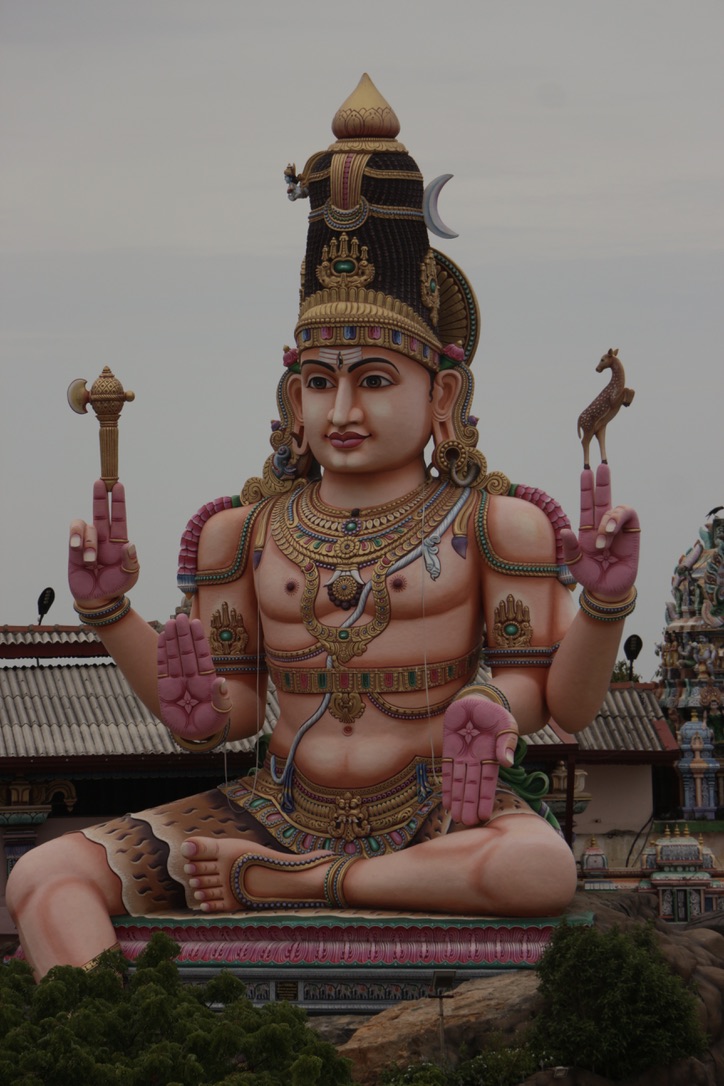
Sri LankaShiva (Naguleswarar)
Naguleswaram Temple
Naguleswaram Temple is an ancient Pancha Ishwaram temple dedicated to Shiva at Keerimalai near Jaffna, famous for its setting on a cliff overlooking the ocean and adjacent natural hot springs.
Keerimalai, Jaffna, Sri Lanka Shiva (Naguleswarar) Built: Before 6th century BCE (traditional), 1895–1915 (reconstruction)
Share
Overview
Naguleswaram Temple, also known as Naguleswaram Keerimalai or Thirunaguleswaram, is one of the five ancient Pancha Ishwarams of Sri Lanka, situated on a rocky promontory on the northern coast of the Jaffna Peninsula overlooking the Palk Strait. The temple is located in Keerimalai, approximately 15 kilometers north of Jaffna city, in an area renowned for its natural hot springs that emerge from the limestone bedrock just meters from the ocean.
The temple's name derives from the Tamil word 'nagu' meaning cobra or serpent—a reference to the Naga worship that predates and coexists with the Saiva tradition at this site. The temple's coastal cliff setting, with the shrine complex built on multiple levels descending toward the sea, creates among the most visually striking temple landscapes in Sri Lanka.
Naguleswaram is traditionally considered the northernmost of the Pancha Ishwarams and holds a special place in the pilgrimage circuit as the first shrine visited by devotees undertaking an island-wide circumambulation from the north.
Quick Facts
Deity
Shiva (Naguleswarar)
Location
Keerimalai, Jaffna, Sri Lanka
Built
Before 6th century BCE (traditional), 1895–1915 (reconstruction)
Built By
Ancient Tamil rulers (original); Reconstruction Committee (current)
Coordinates
9.70, 79.98
Timings
5:00 AM – 12:00 PM, 3:00 PM – 8:00 PM daily
Entry Fee
Free entry; donations accepted
History
Naguleswaram Temple's origins trace back to at least the 6th century BCE according to traditional accounts, making it potentially the oldest continuously worshiped site among the Pancha Ishwarams. The temple is mentioned in the 5th-century Mahavamsa as a prominent Saiva shrine, and the site has yielded pottery fragments and structural remains dating to the early Anuradhapura period (3rd–2nd centuries BCE).
The temple was significantly expanded during the Chola period (10th–13th centuries), and inscriptions from the reign of Rajendra Chola I record grants of land and revenue for the temple's maintenance. The Jaffna Kingdom (13th–17th centuries) maintained Naguleswaram as one of its most important religious foundations, and the temple benefited from royal patronage throughout this period.
The Portuguese destroyed the temple during their conquest of the Jaffna Kingdom in the early 17th century, and the site was abandoned for over two centuries. The temple was reconstructed beginning in 1895 under the leadership of the Naguleswaram Reconstruction Committee, with the main sanctum and gopuram completed by 1915. The reconstruction used granite salvaged from the original ruins, preserving the connection to the ancient structure.
The temple sustained damage during the Sri Lankan Civil War, as it was located within the zone of active conflict between the LTTE and government forces, but it has been fully restored since 2009.
Architecture
Naguleswaram Temple's architecture is characterized by its adaptation to the steep coastal cliff site, with the temple complex organized on multiple descending terraces linked by granite stairways. The main entrance is marked by a five-tiered gopuram rising to approximately 20 meters, constructed in 1915 and adorned with painted stucco figures of Shiva-related imagery and Naga (serpent) motifs.
Beyond the gopuram, a paved courtyard opens onto the main shrine complex, with the principal sanctum (garbhagriha) housing a swayambhu (self-manifested) Shiva lingam carved from the natural bedrock of the cliff face. This lingam is the temple's most distinctive feature—it is not a separate installed stone but a raised section of the original rock that has been shaped and polished, creating a permanent connection between the divine presence and the island's geological foundation.
The sanctum is covered by a rectangular vimana (tower over the main shrine) finished in a distinctive blue-gray stone. Subsidiary shrines within the complex include a Naga shrine, a shrine to Parvati (as Gnambikai Ambal), a Ganesha shrine, and a Murugan shrine. The temple compound also includes a covered bathing pavilion at the spring source, where the hot mineral water emerges at a constant temperature of 32°C (90°F).
The surrounding gardens feature a collection of medicinal plants used in traditional Saiva Siddha medicine, maintained by the temple.
Main Deity
Shiva (Naguleswarar)
Religious Significance
Naguleswaram Temple occupies a unique position in the sacred geography of Sri Lankan Saivism as the northern sentinel of the Pancha Ishwarams. The traditional pilgrimage route begins at Naguleswaram and proceeds clockwise around the island, making this temple the starting point of a journey of enormous spiritual significance.
The temple's location at Keerimalai, with its natural hot springs, gives it therapeutic as well as religious significance: the springs are believed to possess medicinal properties due to their high mineral content, and devotees traditionally bathe in the springs before entering the temple for worship. The temple's association with Naga worship—the indigenous serpent cult that predates Vedic religion in South Asia—represents the incorporation of pre-Hindu traditions into the Saiva framework and reflects the layered religious history of northern Sri Lanka.
The site is also significant for its natural environment: the Keerimalai area is home to several endemic plant species and serves as a nesting ground for sea turtles. The temple's management has been actively involved in environmental conservation efforts, integrating ecological awareness with religious practice.
Temple Legends
The central legend of Naguleswaram connects the temple to the Ramayana and to the serpent king Adisesha. According to the tradition, when the sage Agastya was traveling south at the command of Shiva to establish the five Ishwarams, he was accompanied by the serpent king Adisesha (also known as Anantha). At the northernmost point of the island, Adisesha stopped to rest and coiled himself on the rock that forms the present temple site.
The impression of his coiled body is said to remain in the bedrock, and the natural Shiva lingam that forms the temple's primary object of worship is identified as the place where Adisesha's hood touched the rock. The name 'Naguleswaram' (nagu = cobra/ul = reside/eswaram = Shiva) means 'Shiva's abode where the cobra resides,' directly referencing this serpent foundation. Another legend explains the origin of the Keerimalai hot springs.
According to this tradition, the sage Bhogar, a prominent Tamil siddhar, was traveling across the island and stopped at Naguleswaram. Finding the northern waters cold and the local people suffering from rheumatism, Bhogar drove his staff into the ground, and warm mineral water gushed forth. The springs have flowed continuously ever since, and the water is said to contain the medicinal properties of the Siddha herbs that Bhogar placed in the ground.
The springs maintain a constant temperature of 32°C throughout the year, and devotees regularly collect the water for therapeutic use.
Festivals & Celebrations
The most important festival at Naguleswaram is the annual Aadi Thiruvizha, celebrated during the Tamil month of Aadi (July–August). The festival extends over 14 days and includes daily processions of the temple's processional deity around the compound and through the streets of Keerimalai village. The festival's highlight is the Maha Ratham (Great Chariot) procession, during which the deity is carried on a wooden chariot drawn by devotees along the coastal road.
The Theerthavari (water-cutting ceremony) on the final day is conducted at the Keerimalai hot springs rather than at a temple tank, making Naguleswaram's concluding ritual unique among the Pancha Ishwarams. The temple also celebrates Maha Shivaratri (February–March) with particular fervor: the all-night vigil is conducted in an open-air pavilion facing the ocean, and the combination of the sound of the waves, the warm waters of the springs, and the chanting of the Vedas creates a distinctive devotional atmosphere.
The temple's Naga deity is honored during the annual Naga Chaturthi, a festival dedicated to serpent worship that involves the preparation of milk offerings and the lighting of lamps at the Naga shrine.
Visitor Information
Timings
5:00 AM – 12:00 PM, 3:00 PM – 8:00 PM daily
Entry Fee
Free entry; donations accepted
Dress Code
Modest dress required; sarongs provided at the entrance; footwear must be removed before entering the inner shrine area
Photography
Photography permitted in the outer compound and spring area; photography inside the main sanctum is prohibited; drone use requires permission from the temple administration
Best Time to Visit
Early morning (6:00–7:00 AM) to experience the sunrise over the Palk Strait and combine temple visit with bathing in the hot springs; Aadi festival (July–August) for festival atmosphere; Maha Shivaratri (February–March) for the most devotional experience
How to Reach
Naguleswaram Temple is located in Keerimalai, 15 kilometers north of Jaffna city on the Karainagar road. Accessible by local bus (route 711 from Jaffna, approximately 30 minutes), by tuk-tuk (20 minutes from Jaffna), or by private vehicle. The road passes through several villages and offers views of the Jaffna lagoon along the way.
Nearby Attractions
Keerimalai Hot Springs (adjacent to the temple, free access), Keerimalai Beach (swimming, 200 meters west), Nagadipa Vihara Buddhist temple (ancient site on nearby island accessible by ferry), Kankesanthurai Harbour (8 km west), Point Pedro (20 km east), Casuarina Beach (5 km south)
Interesting Facts
- The temple's main Shiva lingam is naturally formed from the bedrock of the cliff face—it is a swayambhu (self-manifested) lingam that has been polished but not quarried or relocated, making it one of the few such geological lingams in Sri Lanka.
- The Keerimalai hot springs emit a constant 32°C (90°F) water rich in sulfur, calcium, and magnesium minerals, and the flow rate is approximately 10,000 liters per hour.
- Naguleswaram is believed to be the site where the serpent king Adisesha rested during his journey with Sage Agastya, and the coiled rock formation in the sanctum is identified as his body imprint.
- The temple was completely rebuilt between 1895 and 1915 using granite salvaged from the original Chola-period ruins.
- The hot springs at Keerimalai are one of only three natural hot spring locations in Sri Lanka, and the only one adjacent to a Hindu temple.
Frequently Asked Questions
Can I bathe in the hot springs at Naguleswaram?
Yes, the Keerimalai hot springs have a designated bathing area adjacent to the temple that is open to the public free of charge. There are separate enclosures for men and women. The water is a constant 32°C and is believed to have therapeutic properties, particularly for skin conditions and rheumatism.
Is Naguleswaram affected by the civil war history?
The temple was in a conflict zone during the civil war and sustained minor damage, but it has been fully restored since 2009. The area is now safe and increasingly visited by tourists. Some surrounding areas still show signs of conflict — stay on main roads.
What is the relationship between Naga worship and Shiva worship at this temple?
Naguleswaram represents a synthesis of the indigenous Naga (serpent) cult with orthodox Saiva traditions. The temple's primary deity is Shiva, but a dedicated Naga shrine within the complex receives active worship, and the temple's name itself references the serpent. This dual tradition is common in Sri Lankan temples where pre-Hindu beliefs were incorporated into the Hindu framework.
Sources & References
- [1]Department of Hindu Religious and Cultural Affairs Sri Lanka government
- [2]Archaeological Survey of Sri Lanka — Keerimalai & Jaffna Heritage Sites government
- [3]Naguleswaram Temple Trusttemple
— every record linked above was re-requested for this release, so the link still resolves and the publisher still serves the document. It is a link check, not a re-verification of every sentence on this page.
More Temples in Sri Lanka
Explore other Hindu temples in Sri Lanka.
Sri Lanka
Koneswaram Temple
Koneswaram Temple is a classical-medieval Hindu temple dedicated to Shiva on Swami Rock in Trincomalee, one of the Pancha Ishwarams of Sri Lanka.
Explore Temple

Sri Lanka
Munneswaram Temple
Munneswaram Temple is one of the Pancha Ishwarams of Sri Lanka, a historic five-temple complex dedicated to Shiva near Chilaw, renowned for its multi-religious significance.
Explore Temple

Sri Lanka
Nallur Kandaswamy Temple
Complete guide to Nallur Kovil (Nallur Kandaswamy Temple) in Jaffna, Sri Lanka. Explore Murugan shrine history, 25-day Ther festival, timings, and architecture.
Explore Temple