🇬🇧
Hindu Temples in the UK
The United Kingdom is home to over 180 registered Hindu temples and mandirs, from the monumental stone BAPS Shri Swaminarayan Mandir in Neasden, London, to major community shrines in Leicester, Birmingham, and Wimbledon.
3 Temples Profiled Europe London
Direct Answer
How Many Hindu Temples Are in the UK?
Approximately 180 to 200 dedicated Hindu temples and mandirs operate across the United Kingdom (England, Scotland, and Wales), based on charitable trust registrations with the Charity Commission for England and Wales and directories from the National Council of Hindu Temples (NCHT UK). The largest concentration is in Greater London and the East Midlands (Leicester).
Registered Charities Operating Worship Spaces
~180–200 Trusts
Charities registered with the Charity Commission for England and Wales (and Scottish equivalents) that operate dedicated mandirs or worship halls.
Regional Distribution
>50% in London
Over half are concentrated in Greater London (Brent, Harrow, Ealing, Redbridge), followed by Leicester (East Midlands), Birmingham, and Manchester.
Flagship Stone Monument
1 (Neasden)
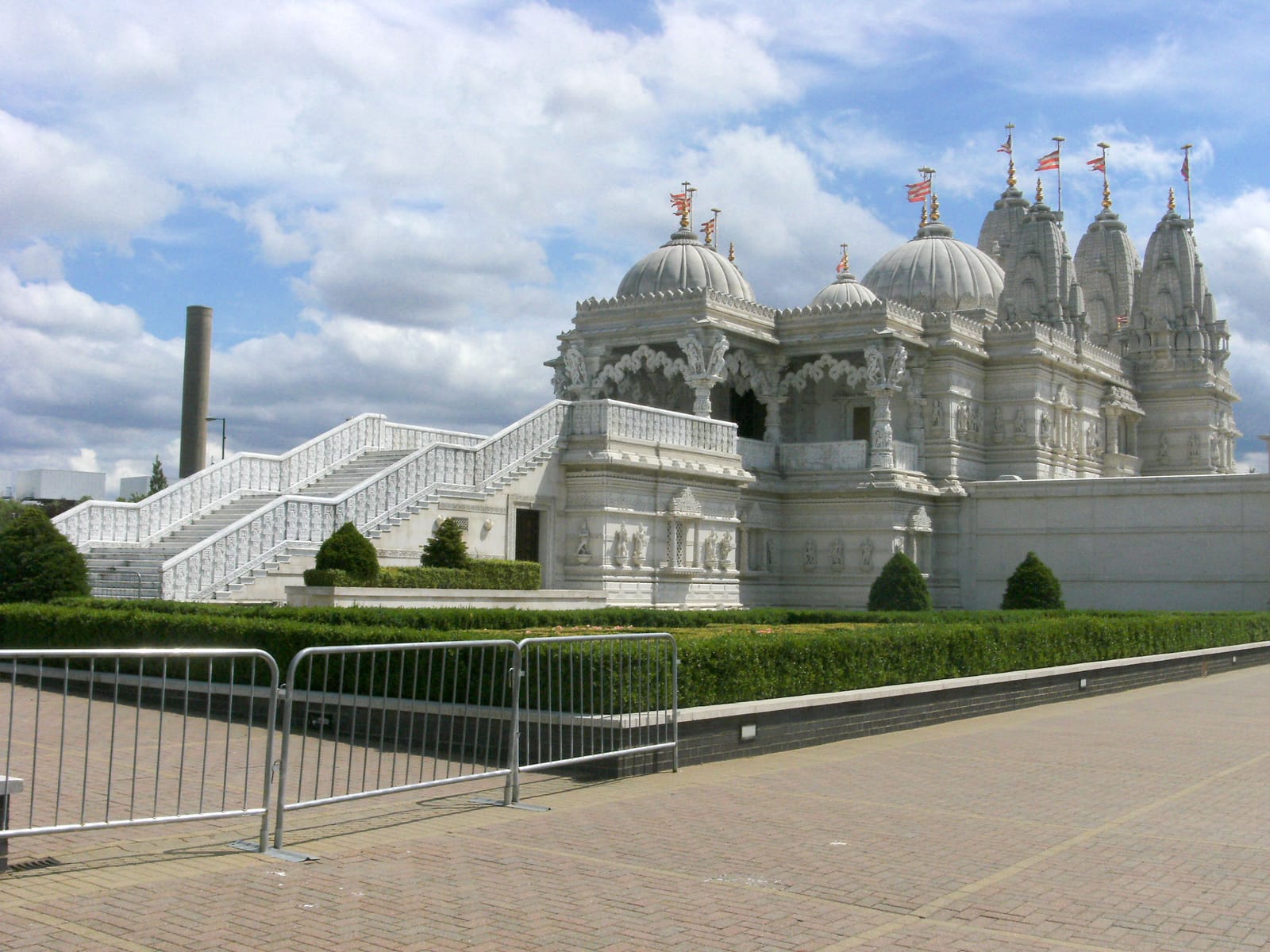
BAPS Shri Swaminarayan Mandir in Neasden, London: the first traditional Hindu stone temple in Europe (opened 1995).
Sacred Places India Database
3 Flagship Mandirs
Curated in-depth guides to premier architectural and community exemplars in London and Leicester.
How Temple Numbers Are Counted
The United Kingdom does not maintain a central national registry specifically for places of worship by religion. Religious institutions register as charitable trusts with the Charity Commission for England and Wales (or OSCR in Scotland). Published estimates derive from registered charity classifications, local authority planning approvals for D1/F1 public worship buildings, and surveys by Hindu umbrella organizations.
Sacred Places India Database Scope
Sacred Places India profiles 3 flagship temples in the UK (Neasden, Leicester Shree Sanatan, and Wimbledon Ghanapathy) to illustrate major architectural and diaspora traditions. This curated reference does not represent the UK's total nationwide count of registered mandirs.
Introduction
The United Kingdom is home to one of the most established Hindu diasporas outside South Asia, numbering over 1 million people according to the 2021 Census. With over 180 registered Hindu temples, community mandirs, and cultural societies across England, Scotland, and Wales, the UK maintains a dense network of sacred architecture. The consecration of BAPS Shri Swaminarayan Mandir in Neasden, northwest London, in August 1995 marked a watershed in European religious architecture as the first traditional Hindu stone mandir built in Europe, followed by monumental community temples in Leicester, Birmingham, and Greater London.
3
Profiled Temples
Europe
Region
London
Capital
English
Language
Major Hindu Communities
The community is predominantly Gujarati (including East African Asian families) and Punjabi, with substantial Tamil (both Indian and Sri Lankan), Bengali, Malayali, and Telugu populations concentrated in urban centres.
Regional Temple Distribution
Over half of the UK Hindu population resides in Greater London (notably Brent, Harrow, Ealing, and Redbridge). The East Midlands—centred on Leicester—forms the densest regional Hindu community outside London, followed by the West Midlands (Birmingham, Coventry) and Greater Manchester.
History of Hinduism in the UK
Early Hindu connections to Britain began with Indian seamen (lascars), students, and legal scholars in the 18th and 19th centuries. Substantial diaspora settlement occurred after World War II and accelerated in the late 1960s and early 1970s, following the expulsion of East African Asians from Uganda and Kenya, many of whom were Gujarati Hindus. Initial worship took place in converted community halls, schools, and former residential premises. By the 1980s and 1990s, established trusts acquired permanent land for canonical stone construction.
Pilgrimage & Cultural Significance
BAPS Shri Swaminarayan Mandir in Neasden is the primary Hindu landmark in the United Kingdom, receiving hundreds of thousands of visitors annually and serving as a focal point for European Hindu delegations. The Shree Sanatan Hindu Mandir in Leicester and the Shree Ghanapathy Temple in Wimbledon hold substantial regional importance for Gujarati and Sri Lankan Tamil devotees respectively.
Architecture Overview
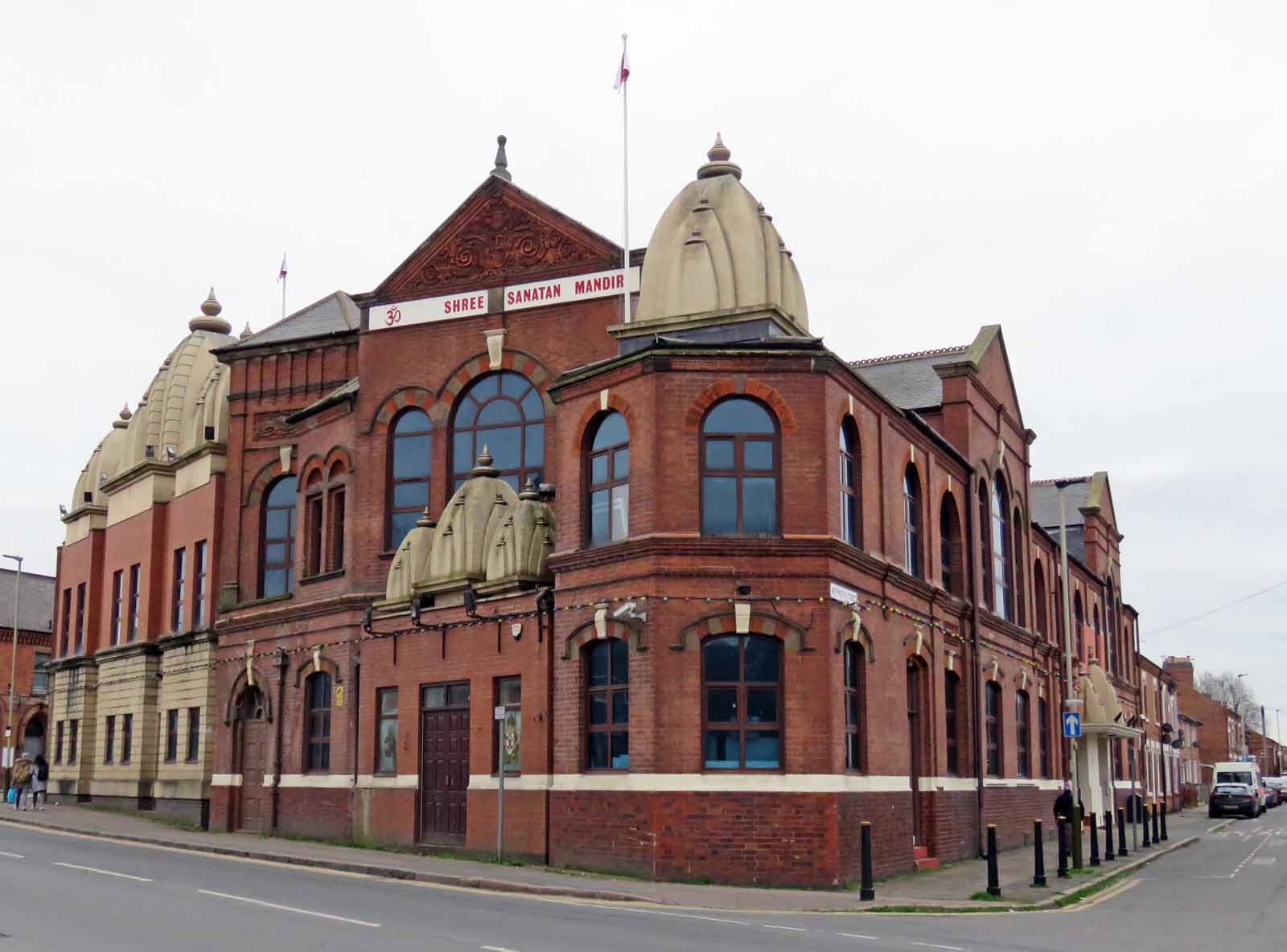
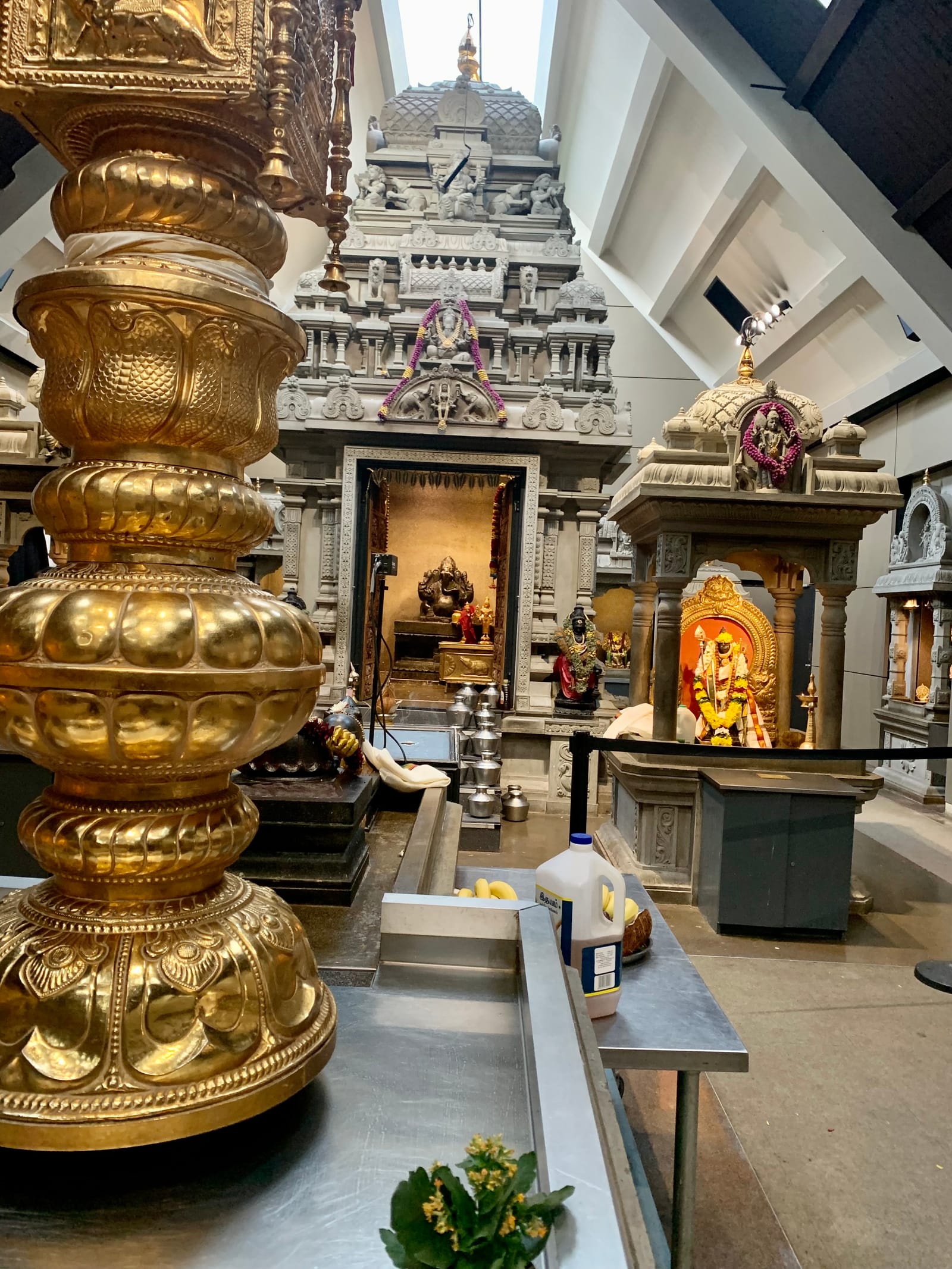
British Hindu temples demonstrate diverse architectural typologies. The Neasden Mandir represents classical Shikarbaddha Nagara architecture: 26,000 stone pieces of Bulgarian limestone and Italian Carrara marble were hand-carved by 1,500 craftsmen in Gujarat, shipped to London, and assembled without steel framing. Leicester's Shree Sanatan Mandir is carved from yellow Jaisalmer sandstone. In Wimbledon, the Shree Ghanapathy Temple presents a South Indian Dravidian gopuram, while numerous regional mandirs adapt historic British civic buildings.
Temple Directory
Explore documented Hindu temples in the UK.
UK
BAPS Shri Swaminarayan Mandir
Europe's first traditional Hindu stone temple, hand-carved from 5,000 tonnes of Indian marble and Bulgarian limestone, standing in the London suburb of Neasden since 1995.
Explore Temple
UK
Shree Sanatan Hindu Mandir
The largest Hindu temple in Leicester, serving the city's vibrant Hindu community with a multi-deity shrine, daily worship, and a full calendar of festivals.
Explore Temple
UK
Shree Ghanapathy Temple
London's oldest functioning South Indian-style temple, dedicated to Ganesha and serving the Tamil Hindu community from its Wimbledon location since 1981.
Explore Temple
Documentation Methodology & Scope
Research & Selection Criteria
The UK catalogue includes permanent, purpose-built or formally registered temple trusts with canonical worship spaces and active community programs. Heritage listings and architectural documentation are verified via local planning records.
Scope Boundaries & Limitations
Several hundred community halls and neighborhood mandirs serve local areas. This guide profiles prominent regional and architectural flagship institutions.
Travel Information
London mandirs are integrated into the public transport network. Neasden Temple is accessible via Neasden or Dollis Hill Underground stations (Jubilee Line) followed by local bus services (112, 206). Leicester temples are located near Leicester railway station, approximately one hour by train from London St Pancras International. Dedicated parking is available at major purpose-built sites.
Best Time to Visit
Temples operate daily year-round. Major festivals provide heightened cultural and liturgical observances: Diwali and Annakut (October–November), Janmashtami, and Navaratri. Advance ticketing is often implemented during Diwali at Neasden to manage queue flows safely.
Verified Sources & References
Documentation for the UK draws on official census statistics, heritage authorities, and registered temple trust archives.
- Office for National Statistics (ONS) — 2021 UK Census: Religion Datagovernment
- BAPS Swaminarayan Sanstha — Neasden Mandir 30-Year Heritage Reviewtemple
- Historic England — Places of Worship and Diaspora Architecture Studiesgovernment
- National Council of Hindu Temples (UK) — Directory & Annual Documentationacademic
Historic England
Historic England — National Heritage List for England
Official heritage designation, site management and visitor information for the monuments described on this page.
Open source (opens in a new tab)UNESCO World Heritage Centre
UNESCO World Heritage List — India
World Heritage inscription records for the internationally listed monuments named on this page.
Open source (opens in a new tab)INTACH
Indian National Trust for Art and Cultural Heritage
Architectural classification and conservation context for the temple traditions described on this page.
Open source (opens in a new tab)— every record linked above was re-requested for this release, so the link still resolves and the publisher still serves the document. It is a link check, not a re-verification of every sentence on this page.
Frequently Asked Questions
How many Hindu temples are there in the UK?
There is no single unified government census of Hindu temples in the United Kingdom. However, regulatory filings with the Charity Commission for England and Wales and directories from umbrella groups like the National Council of Hindu Temples (NCHT UK) record roughly 180 to 200 registered charities operating dedicated Hindu places of worship across England, Scotland, and Wales.
What is the largest Hindu temple in the UK?
BAPS Shri Swaminarayan Mandir in Neasden, London, completed in 1995 from Bulgarian limestone and Carrara marble, is the largest traditional stone Hindu temple in the United Kingdom.
Is the Neasden Temple free to visit?
Yes, entry to the main mandir and sanctum for prayer and viewing is free of charge. Modest attire covering shoulders and knees is required, and footwear must be removed at the reception cloakroom.
How many Hindus live in the UK?
According to the 2021 Census of England and Wales, approximately 1,032,536 people identified as Hindu, representing about 1.7% of the total population.