UKGanesha
Shree Ghanapathy Temple
London's oldest functioning South Indian-style temple, dedicated to Ganesha and serving the Tamil Hindu community from its Wimbledon location since 1981.
London (Wimbledon), UK Ganesha Built: 1981
Share
Overview
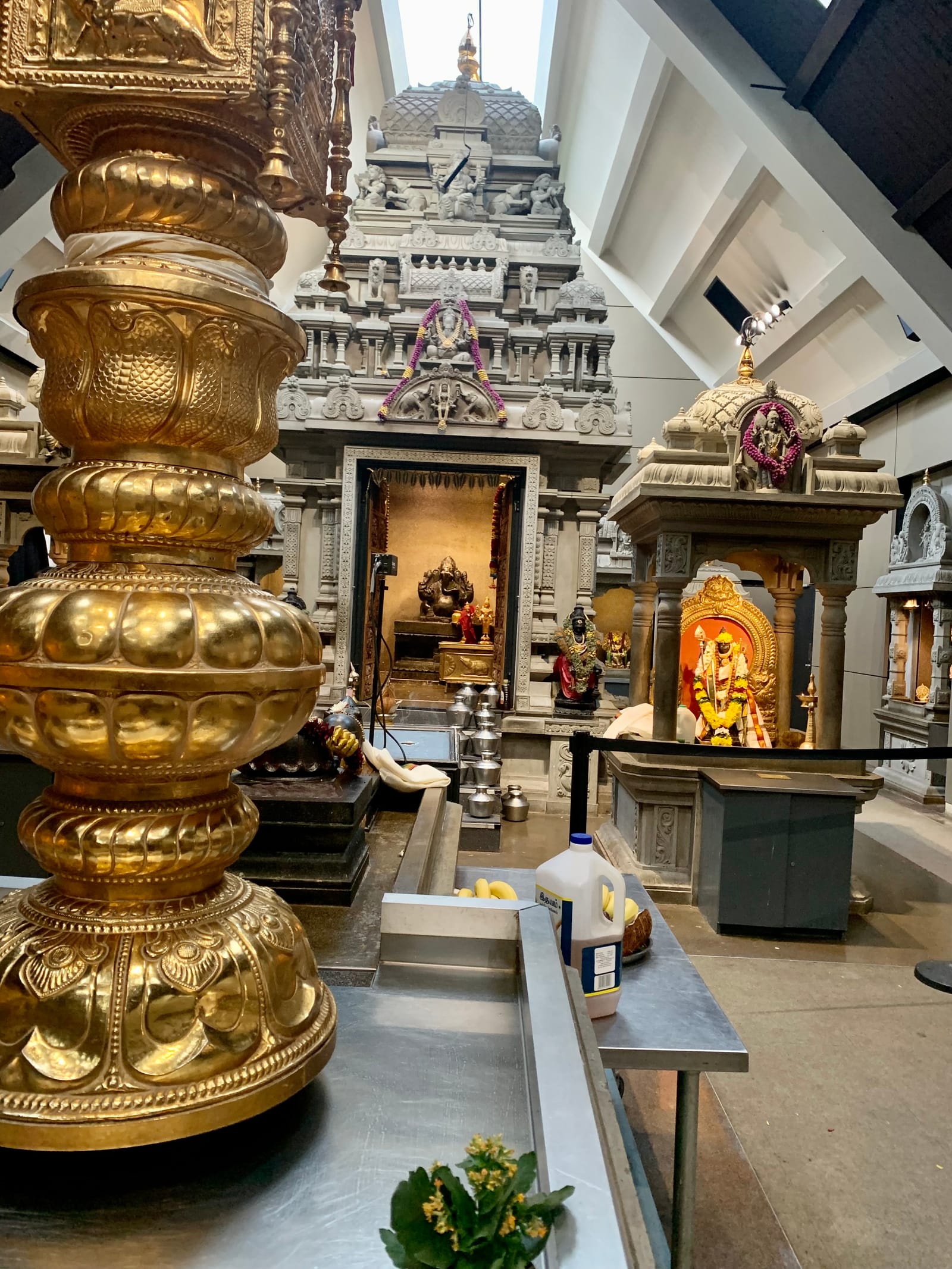
Shree Ghanapathy Temple in Wimbledon, South London, is the oldest functioning South Indian-style Hindu temple in the United Kingdom and among the most cherished spiritual institutions of the British Tamil community. Located in a converted Victorian building on Wimbledon Broadway, the temple's distinctive South Indian gopuram (gateway tower), painted in vibrant colors and adorned with stucco deities, stands out against the suburban London streetscape, announcing the presence of an ancient spiritual tradition in a modern British setting.
The temple is dedicated to Lord Ganesha (Ganapathy), the elephant-headed god of wisdom, prosperity, and obstacle removal. The main shrine houses a large, beautifully decorated murti of Ganesha flanked by his two consorts, Siddhi (spiritual power) and Buddhi (intellect). The temple also has subsidiary shrines dedicated to Shiva, Murugan, Durga, and the Navagraha (nine planetary deities), reflecting the full spectrum of Tamil Hindu worship.
The temple was established in 1981 by Sri Lankan Tamil refugees and immigrants who had settled in South London. For these early migrants, many of whom had fled the civil war in Sri Lanka, the temple provided not only a place of worship but a vital community anchor — a space where language, culture, and traditions could be preserved and transmitted to the next generation.
Today, the temple serves a thriving Tamil community spread across London and the Southeast, drawing devotees from as far as Kent, Surrey, and Sussex.
Quick Facts
Deity
Ganesha
Location
London (Wimbledon), UK
Built
1981
Built By
Shree Ghanapathy Temple Society (Tamil Hindu community, Wimbledon)
Coordinates
51.42, -0.21
Timings
7:00 AM – 12:00 PM, 4:30 PM – 8:30 PM daily
Entry Fee
Free entry
History
The Shree Ghanapathy Temple was founded in 1977 when a small group of Tamil Hindu families in South London began meeting for prayer in each other's homes. As the community grew — particularly with the influx of Sri Lankan Tamil refugees fleeing the escalating civil war — the need for a dedicated temple became urgent. In 1979, the community acquired a former police station and library building on Wimbledon Broadway, and conversion work began.
The temple was consecrated with full Vedic ceremonies on August 15, 1981, making it the first South Indian-style temple established in the UK. The consecration (kumbhabhishekam) was performed by priests brought from Tamil Nadu and Sri Lanka, and the event drew Tamil families from across the country. The murtis were carved in India and brought to London with great ceremony.
Over the following decades, the temple expanded and renovated its facilities multiple times. The most significant transformation came in 1999-2000, when the traditional South Indian gopuram was added to the front of the Victorian building, completely transforming the temple's external appearance. The gopuram was designed and constructed by traditional sthapatis from Tamil Nadu, using stucco techniques that had been passed down through generations. The temple celebrated its silver jubilee in 2006 and completed a major interior renovation in 2015.
Architecture
The Shree Ghanapathy Temple is a unique architectural hybrid — a traditional South Indian gopuram grafted onto a Victorian London building. The gopuram, added in 2000, rises 55 feet above street level and is covered with stucco sculptures of deities, celestial beings, and mythological figures arranged in tiers. The sculptures were hand-modeled by Tamil artisans who came to London for the work, using traditional lime plaster techniques.
The interior of the temple has been converted into a traditional South Indian temple layout. The main prayer hall houses the central Ganesha shrine, with the murti installed on a raised platform (peetham) under a carved wooden canopy. The walls are lined with subsidiary shrines, each with its own decorative frame and oil lamps. The ceiling is painted with traditional kolam (rangoli) patterns and lotus motifs.
The temple's location on a busy commercial street creates an interesting juxtaposition — the ancient forms of Tamil temple architecture rising above a modern British high street with its shops, cafes, and restaurants. This architectural hybridity perfectly captures the dual identity of the British Tamil community: rooted in ancient traditions yet fully engaged in contemporary British life.
Main Deity
Ganesha
Religious Significance
Shree Ghanapathy Temple occupies a unique place in the history of Hinduism in the United Kingdom. As the first South Indian-style temple in the country, it paved the way for the construction of many more Tamil temples across Britain. The temple demonstrated that traditional South Indian temple architecture could be adapted to and thrive in the British urban environment, inspiring communities in East London, Tooting, Harrow, and other areas to establish their own temples.
For the British Tamil community, the temple is the most significant spiritual and cultural institution in South London. The Tamil community in the UK numbers over 300,000, with a substantial concentration in London. The temple serves as a center for the preservation of Tamil language, classical music, dance, and ritual traditions. The temple's Tamil language classes are attended by hundreds of British-born Tamil children, ensuring that the language and culture survive in the diaspora.
The temple has also played a vital role in the mental health and social integration of Tamil refugees who arrived in the UK traumatized by the Sri Lankan civil war. The temple's counseling services, community support groups, and annual commemoration events for those lost in the war have made it a center of healing and resilience for the community.
Temple Legends
The Ganesha murti in the Shree Ghanapathy Temple has its own origin story within the community. According to temple tradition, the murti was carved in Tamil Nadu from a block of granite that was discovered when a section of a temple pond in a village near Madurai was drained for cleaning. The stone was considered sacred because it had been submerged in temple water for centuries, and the sculptors treated it with special reverence.
A well-known local tradition involves the temple's location. The Victorian building that now houses the temple was originally a police station and library. According to community lore, when the Tamil families first viewed the building in 1979, they noticed that the foundation was oriented precisely east-west — the correct orientation for a Hindu temple sanctum. This alignment, unplanned in the original Victorian construction, was seen as a divine indication that the building was destined to become a temple.
Another narrative tells of the gopuram's consecration in 2000. During the consecration ceremony, a rainbow appeared over Wimbledon, arching directly above the temple. For the Tamil community, the rainbow was interpreted as a sign of divine blessing — in Tamil tradition, the rainbow is associated with Indra, the king of gods, and its appearance was seen as celestial approval of the temple's new gateway.
Festivals & Celebrations
The most important festival at Shree Ghanapathy Temple is Ganesh Chaturthi (Vinayaka Chaturthi), the annual birthday celebration of Lord Ganesha. The festival is celebrated with great devotion over 10 days, featuring daily pujas, abhishekam of the main Ganesha murti, cultural programs, and a grand procession on the final day. The temple's Ganesh Chaturthi celebration is one of the largest in the UK, drawing thousands of devotees.
Thai Pongal, the Tamil harvest festival celebrated in January, is another major event. The temple organizes special pujas and the preparation of traditional pongal (sweet rice dish) offered to the deities. The festival is a celebration of Tamil cultural identity and attracts the Tamil community from across London.
Other significant celebrations include Navaratri (nine nights of the goddess, with special Devi pujas), Deepavali (the Tamil version of Diwali), Maha Shivaratri (all-night Shiva worship), Vaikunta Ekadasi, and the annual temple anniversary in August. The temple also conducts weekly abhishekam on Fridays and Saturdays, which are the most popular days for devotees to visit.
Visitor Information
Timings
7:00 AM – 12:00 PM, 4:30 PM – 8:30 PM daily
Entry Fee
Free entry
Dress Code
Modest dress required; removal of footwear before entering the temple
Photography
Photography is not permitted inside the temple out of respect for the sanctity of the space
Best Time to Visit
The best time to visit Shree Ghanapathy Temple is during Ganesh Chaturthi (August-September) when the temple is at its most vibrant with decorations, special ceremonies, and community festivities. The 10-day festival culminates in a grand procession of the Ganesha murti through the streets of Wimbledon, a colorful spectacle that draws spectators from all backgrounds.
For regular visits, weekday mornings offer the most peaceful experience. Saturdays are the busiest, with the weekly abhishekam and many families visiting. The temple is located on a busy shopping street, so combining a temple visit with shopping or dining in Wimbledon is easy.
The temple can be visited year-round. Wimbledon is pleasant from spring through autumn (March-October), and the temple's location on the high street means it is accessible regardless of weather. The morning aarti (approximately 7:30 AM) and evening aarti (approximately 7:00 PM) are the best times to experience the full ritual atmosphere.
How to Reach
Shree Ghanapathy Temple is located at 118-120 The Broadway, Wimbledon, London SW19 1RH. The temple is a 5-minute walk from Wimbledon Station, one of London's major transport hubs. Wimbledon Station is served by the London Underground (District Line), National Rail (South Western Railway — direct trains from London Waterloo in 17 minutes), and Tramlink services.
There are ample bus connections to Wimbledon, including routes 57, 93, 131, 156, 163, 164, 200, and 493. The temple is located directly on the Broadway, Wimbledon's main shopping street. Parking is limited in the immediate area; the nearest public car parks are at the Centre Court Shopping Centre and the Piazza car park.
For drivers, Wimbledon is accessible via the A3 and the South Circular Road (A205). From central London, the journey takes approximately 30-45 minutes. The temple's central location means it is easily reached from any part of London by public transport.
Nearby Attractions
Wimbledon Common, a 1,140-acre expanse of heathland, woodland, and ponds, is a 15-minute walk from the temple and offers excellent walking, cycling, and horse-riding. The All England Lawn Tennis Club, home of the Wimbledon Championships, is a 10-minute walk away and offer guided tours of the grounds and museum when the tournament is not in session.
Wimbledon Village, with its historic pubs, boutique shops, and restaurants, is a 15-minute walk uphill from the temple. Cannizaro Park, a beautiful 34-acre park with ornamental gardens and a tea room, is adjacent to Wimbledon Common. The New Wimbledon Theatre offers a year-round program of musicals, plays, and comedy shows.
Central London attractions, including Buckingham Palace, the British Museum, and the West End, are 25 minutes by train from Wimbledon Station. Richmond Park, London's largest royal park with deer herds and panoramic views, is 5 miles southwest.
Interesting Facts
- Shree Ghanapathy Temple was the first South Indian-style Hindu temple established in the United Kingdom, setting the template for dozens that followed.
- The temple is housed in a converted Victorian police station and library — a building that was originally a municipal structure before being transformed into a sacred space.
- The temple's gopuram was added in 2000 as a major renovation, completely transforming the Victorian building's appearance with traditional Tamil temple architecture.
- The temple serves a predominantly Sri Lankan Tamil community, many of whom arrived as refugees during the civil war, and the temple has been a vital center for community support and cultural preservation.
- Ganesh Chaturthi at the temple is one of the largest Ganesha festivals in Europe, with a procession through the streets of Wimbledon on the final day.
- The temple's priests conduct rituals in Sanskrit and Tamil, maintaining the traditional Agamic worship practices of Tamil Nadu and Sri Lanka.
Frequently Asked Questions
Is the Shree Ghanapathy Temple open to non-Hindus?
Yes, the temple welcomes visitors of all faiths. Visitors are asked to respect the sanctity of the space, dress modestly, and remove footwear before entering.
Why is photography not allowed inside?
The temple considers photography inside the sanctum and prayer hall to be distracting to devotees and disrespectful to the sacred atmosphere. Photography of the exterior gopuram is welcome.
Can I participate in the Ganesh Chaturthi celebrations?
Yes, the 10-day Ganesh Chaturthi festival is open to all. The final day procession through Wimbledon is a public event that welcomes everyone to participate or observe.
Does the temple offer Tamil language classes?
Yes, the temple runs Tamil language classes for children and adults, helping to preserve the language among the British Tamil community. Classes are held on weekends.
What is the nearest Tube station to the temple?
Wimbledon Station (District Line and National Rail) is the nearest station, a 5-minute walk from the temple. The station is in Zone 3 of the London Underground network.
Sources & References
— every record linked above was re-requested for this release, so the link still resolves and the publisher still serves the document. It is a link check, not a re-verification of every sentence on this page.
More Temples in UK
Explore other Hindu temples in UK.
UK
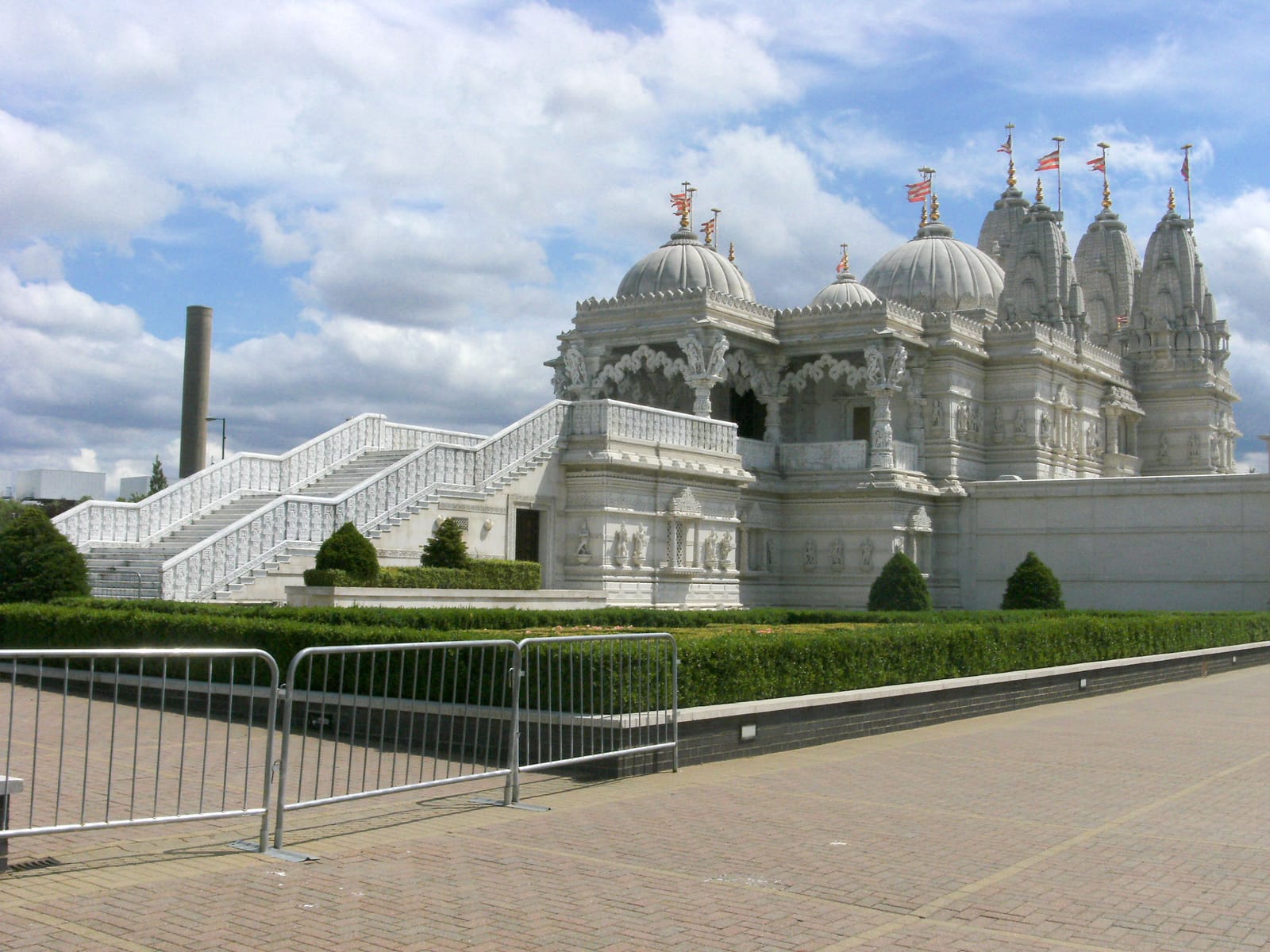
BAPS Shri Swaminarayan Mandir
Europe's first traditional Hindu stone temple, hand-carved from 5,000 tonnes of Indian marble and Bulgarian limestone, standing in the London suburb of Neasden since 1995.
Explore Temple
UK
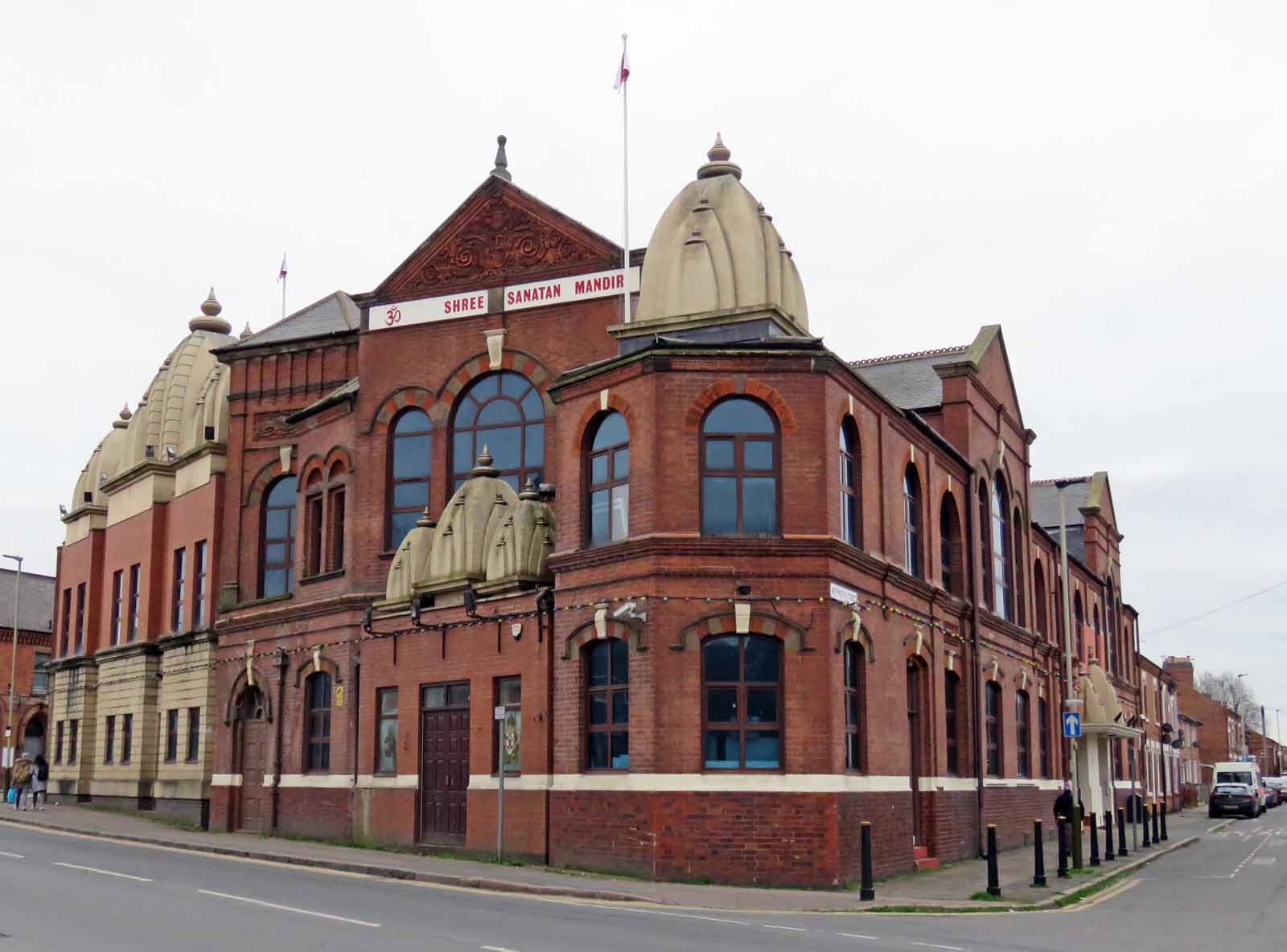
Shree Sanatan Hindu Mandir
The largest Hindu temple in Leicester, serving the city's vibrant Hindu community with a multi-deity shrine, daily worship, and a full calendar of festivals.
Explore Temple