UKSwaminarayan
BAPS Shri Swaminarayan Mandir
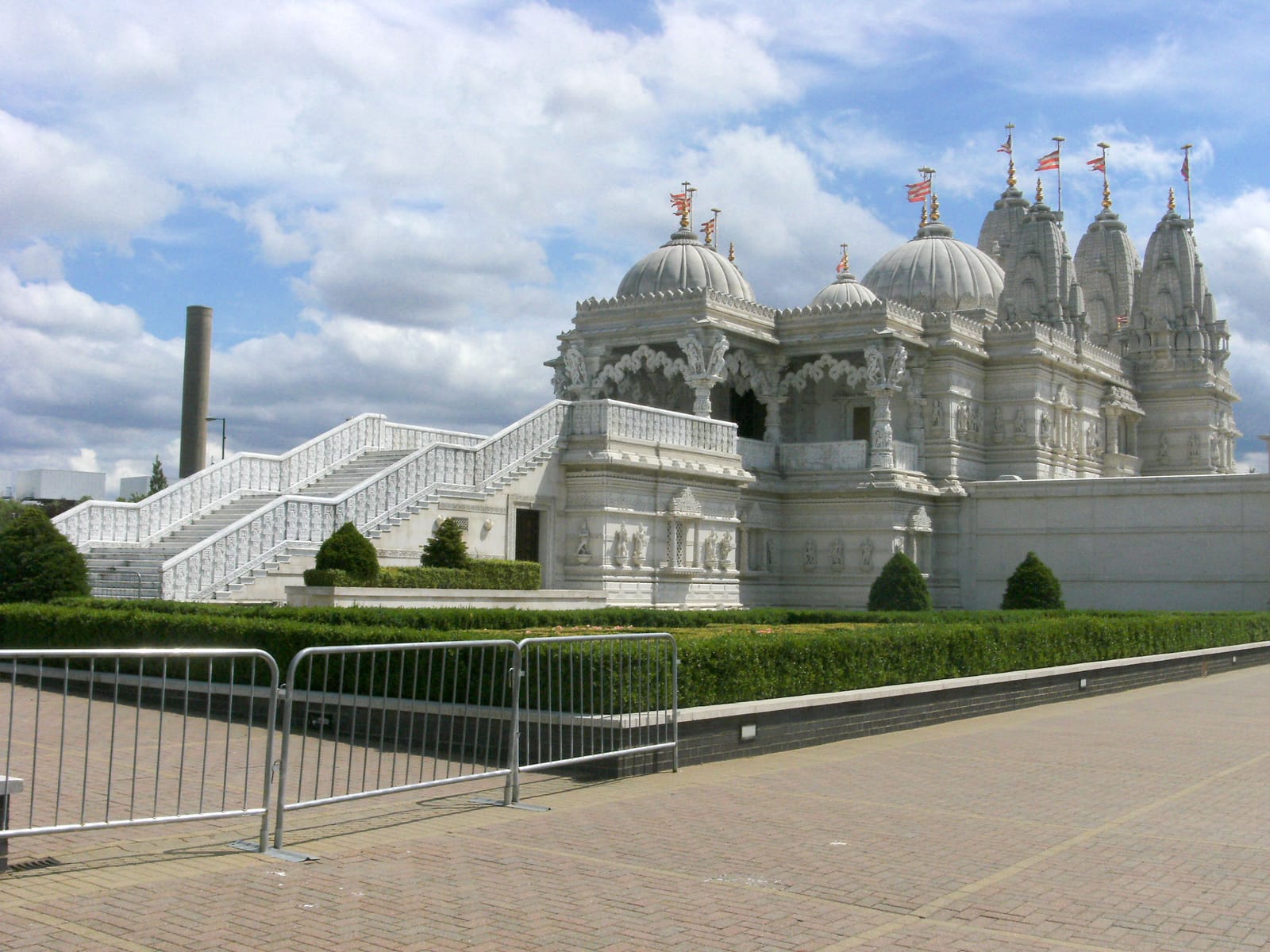
Europe's first traditional Hindu stone temple, hand-carved from 5,000 tonnes of Indian marble and Bulgarian limestone, standing in the London suburb of Neasden since 1995.
London (Neasden), UK Swaminarayan Built: 1995
Share
Overview
The BAPS Shri Swaminarayan Mandir in Neasden, London, is Europe's first traditional Hindu stone temple and remains among its most remarkable religious buildings. Inaugurated in August 1995, the mandir transformed the skyline of this northwest London suburb with its five white marble shikharas (spires) and intricately carved facade.
The temple was built from 5,000 tonnes of stone — 3,000 tonnes of Bulgarian limestone and 2,000 tonnes of Italian Carrara marble — all hand-carved by 1,500 artisans in India before being shipped to London for assembly.
The mandir occupies a 4.5-acre site that was previously a car rental depot and before that a municipal depot. The transformation of this industrial plot into a sublime marble temple is among the most dramatic urban renewals in London's recent history. The temple complex also includes a haveli (cultural center) with a traditional Gujarati-style wooden facade, a large assembly hall, a gym, a bookshop, and a permanent exhibition on Hindu culture.
Neasden Temple has become one of London's most beloved landmarks and a must-see destination for visitors to the city. It has been visited by Queen Elizabeth II, Prince Charles, Prime Ministers of the UK and India, and countless international dignitaries. The temple receives over 600,000 visitors annually, making it among the most visited religious sites in London outside of the established cathedrals and abbeys.
Quick Facts
Deity
Swaminarayan
Location
London (Neasden), UK
Built
1995
Built By
BAPS Swaminarayan Sanstha
Coordinates
51.56, -0.25
Timings
9:00 AM – 6:00 PM daily (closed Mondays)
Entry Fee
Free entry
History
The story of the Neasden Temple begins in the 1960s and 1970s, when Gujarati immigrants from East Africa and India settled in northwest London. The BAPS Swaminarayan community initially worshipped in a small hall in Willesden. As the community grew, a larger space was needed, and a former church hall in Harrow was converted into a mandir in 1984. By the late 1980s, even this space was insufficient, and the community decided to build a traditional stone mandir in London.
A plot of land in Neasden was acquired in 1989. The project was announced in 1990, and the foundation stone was laid in 1992. The stone carving was undertaken in India by 1,500 artisans over two years, working in dedicated workshops in Rajasthan and Gujarat. The carved pieces were shipped to London in 28 shipping containers and assembled on-site by a combination of Indian craftsmen and British construction workers.
The mandir was completed and consecrated in just five years — a remarkable achievement given the complexity of the project. The consecration ceremonies in August 1995 drew over 100,000 people and were led by Pramukh Swami Maharaj. The temple opened to the public on September 1, 1995, and was immediately acclaimed as an architectural and spiritual landmark. In 1996, it was voted the 'Best Building of the Year' by the London Borough of Brent.
Architecture
The Neasden Temple is built in the Shikarbaddha style of traditional North Indian temple architecture, constructed entirely from hand-carved stone without structural steel. The mandir measures 78 feet in length, 78 feet in width, and 70 feet in height, with five main shikharas rising above the roofline. The central shikhara is the tallest at 70 feet, flanked by four smaller spires at the corners.
The exterior is covered with over 3,000 carved stone figures depicting deities, saints, sages, and celestial beings (apsaras). The carvings also include representations of British cultural symbols — including the Crown Jewels, the Houses of Parliament, and the London Underground logo — integrated into the traditional Indian design. This fusion of Indian and British motifs symbolizes the temple's dual identity as both a traditional Hindu mandir and a British civic building.
The interior features 30 intricately carved pillars supporting the domed ceiling. The central dome, 30 feet in diameter, is carved with a lotus motif surrounded by figures of dancers and musicians. The main shrine houses the murti of Swaminarayan, with subsidiary shrines dedicated to Shiva-Parvati, Sita-Ram, Radha-Krishna, and Hanuman. The adjacent haveli (cultural center) features a beautifully carved wooden facade in the traditional Gujarati style, constructed from Burmese teak.
Main Deity
Swaminarayan
Religious Significance
The Neasden Temple holds landmark significance as the first traditional Hindu stone temple in Europe. Its construction marked a turning point in the acceptance and visibility of Hindu culture in the United Kingdom. Before Neasden, Hindu places of worship in Britain were mostly converted churches, warehouses, and community centers. The mandir demonstrated that Hindu architecture deserved a permanent, monumental presence in the British landscape, changing public perception of Hinduism from an immigrant religion to an established British faith tradition.
The temple has been a powerful force for interfaith understanding in the UK. Its open-door policy, educational exhibitions, and community service programs have introduced Hinduism to millions of visitors, including school groups, university students, and tourists. The temple's management has built close relationships with representatives of other faiths, and the mandir regularly hosts interfaith gatherings, including the annual Interfaith Walk for Peace.
For the British Hindu community, the Neasden Temple is a source of immense pride and a symbol of their contribution to British society. The temple's visibility on the London skyline — its white shikharas visible from the nearby North Circular Road — is a daily reminder that Hinduism is now an integral part of the multicultural fabric of the United Kingdom.
The mandir has inspired the construction of other traditional Hindu temples across Europe, including the BAPS mandirs in Birmingham (2002), Leicester (2003), and elsewhere.
Temple Legends
The Swaminarayan tradition's foundational narratives animate the Neasden Temple. According to the tradition's teachings, Sahajanand Swami (1781-1830) was the supreme manifestation of God who walked the earth to establish the path of dharma. His life story includes a famous pilgrimage across India on foot, covering thousands of miles over seven years, during which he debated scholars, performed miracles, and gathered disciples — establishing the moral and theological foundations that would later inspire temples like Neasden.
A specific story associated with the Neasden Mandir involves the selection of the site. According to temple tradition, when Pramukh Swami Maharaj first visited the Neasden plot in 1990, he walked the land and stopped at a particular spot. He instructed that the main shrine should be built exactly there.
The site was an old car depot, but the swami reportedly said he could feel the spiritual vibrations of the location, predicting that it would become a center of peace for generations.
Another narrative involves the construction itself. During the carving of the marble in India, artisans reportedly discovered that certain blocks of marble produced a resonant, bell-like tone when struck, while others remained silent. The musical stones were set aside and incorporated into the temple's pillars, where they now produce a subtle harmonic resonance when the temple bells ring during aarti — an effect that was not engineered but discovered naturally during the carving process.
Festivals & Celebrations
The Neasden Temple celebrates all major Hindu festivals with great splendor, drawing thousands of devotees from across the UK. Diwali, the festival of lights, is the grandest celebration, with the temple illuminated by thousands of lamps and lights, special pujas, and a community feast. The temple's Diwali celebration ranks among the most spectacular in Europe, attracting visitors from all faiths.
Janmashtami (Krishna's birthday) features a midnight aarti, the decoration of a traditional cradle (jhula), and a reenactment of Krishna's childhood. Maha Shivaratri is observed with all-night abhishekam and mantra chanting. The Swaminarayan-specific festivals include the birth celebration of Bhagwan Swaminarayan (Chaitra Sud 9) and the anniversaries of the gurus in the lineage.
The temple also hosts weekly Sunday satsangs with discourses and devotional singing, a children's bal sanskar program teaching Hindu values and Gujarati language, and regular cultural events including classical Indian music concerts and dance performances. The temple's annual celebration of the mandir's consecration (August) features special ceremonies and cultural programs that attract visitors from across Europe and beyond.
Visitor Information
Timings
9:00 AM – 6:00 PM daily (closed Mondays)
Entry Fee
Free entry
Dress Code
Modest clothing covering shoulders and knees required; removal of footwear before entering the temple
Photography
Photography permitted in exterior areas and exhibition; restricted inside the main prayer hall
Best Time to Visit
The best time to visit the Neasden Temple is during the late spring and summer months (May-September) when London's weather is most pleasant and the temple's surroundings are at their best. Diwali season (October-November) offers the most spectacular visual experience with the temple illuminated at night.
Weekdays, especially Tuesday through Thursday, offer a more peaceful experience with smaller crowds. The temple is busiest on Sundays (satsang day) and during major festivals. The exhibition on the ground floor, 'Understanding Hinduism,' is an excellent introduction to the faith and is suitable for visitors of all backgrounds.
The temple opens at 9:00 AM, and early morning visits provide the most serene atmosphere. The aarti ceremony at 11:45 AM and 5:30 PM are highlights of the daily worship schedule. The temple is closed on Mondays, so plan your visit accordingly.
How to Reach
The BAPS Shri Swaminarayan Mandir is located at 105-119 Brentfield Road in Neasden, London NW10 8JP. The temple is easily accessible by London Underground: Neasden Station on the Jubilee Line is a 15-minute walk, and Wembley Park Station on the Jubilee and Metropolitan Lines is a 20-minute walk. The 112, 182, and 297 bus routes stop near the temple.
The temple is accessible by car via the North Circular Road (A406), taking the Neasden/Staples Corner exit. Parking is available on-site but is limited; visitors are encouraged to use public transport where possible. The temple is approximately 8 miles from central London, about 30 minutes by Underground.
For visitors arriving by air, the temple is approximately 30 minutes from Heathrow Airport and 40 minutes from Luton Airport. Gatwick and Stansted airports are further but accessible via the National Rail and Underground network. The temple is well-connected to central London's hotel district and major tourist attractions.
Nearby Attractions
Wembley Stadium, the national football stadium of England and among the most famous sports venues in the world, is 1.5 miles from the temple. The SSE Arena (Wembley), a major concert and entertainment venue, is adjacent to the stadium. The London Designer Outlet shopping centre at Wembley Park offers retail and dining options.
Central London's major attractions are 30 minutes away by Underground, including the British Museum, the Tower of London, Buckingham Palace, the Houses of Parliament, and the West End theatre district. The nearby London Borough of Brent offers the Brent Cross Shopping Centre and the historic Welsh Harp reservoir and nature reserve.
For the South Asian community, the nearby areas of Wembley and Harrow have extensive Indian restaurants, grocery stores, and cultural establishments. The famous 'Indian Broadway' of Southall is 5 miles west, offering the most concentrated South Asian cultural experience in London.
Interesting Facts
- Neasden Temple was the first traditional Hindu stone mandir built in Europe, setting a precedent for all subsequent Hindu temple construction on the continent.
- The temple was built without any structural steel — the stones are held together by gravity and precision carving, using techniques that date back over 1,000 years in India.
- Over 1,500 artisans in India hand-carved the 5,000 tonnes of stone over a period of two years before the pieces were shipped to London.
- The temple's carvings include British motifs such as the Crown Jewels, Big Ben, the Houses of Parliament, and even the logo of the London Underground, integrated into the traditional Indian decorative scheme.
- The mandir was visited by Queen Elizabeth II and Prince Philip in 1997, and the Queen donated a silver ceremonial umbrella (chatri) that is used in temple processions.
- The temple's haveli (cultural center) features the largest traditional Gujarati carved wooden facade in Europe, constructed from Burmese teak with no nails or screws.
Frequently Asked Questions
Is the Neasden Temple open to non-Hindus?
Yes, the temple warmly welcomes people of all faiths and backgrounds. The ground floor exhibition provides an excellent introduction to Hinduism for first-time visitors.
How long does a visit to the temple take?
A typical visit including darshan (viewing of the deities), the exhibition, and time in the haveli takes approximately 1.5-2 hours. Guided tours are available and last about 1 hour.
Is the Neasden Temple accessible by wheelchair?
Yes, the temple is fully accessible with ramps and elevators. Wheelchair access is available to all areas including the main prayer hall and exhibition.
Does the temple serve food?
The temple does not have a public restaurant, but prasad (blessed food) is distributed after morning and evening aarti. A free community meal is served on festival days.
Can I attend aarti at the temple?
Yes, visitors are welcome to attend the daily aarti ceremonies at 11:45 AM and 5:30 PM. The evening aarti with the temple illuminated is particularly atmospheric.
Sources & References
— every record linked above was re-requested for this release, so the link still resolves and the publisher still serves the document. It is a link check, not a re-verification of every sentence on this page.
More Temples in UK
Explore other Hindu temples in UK.
UK
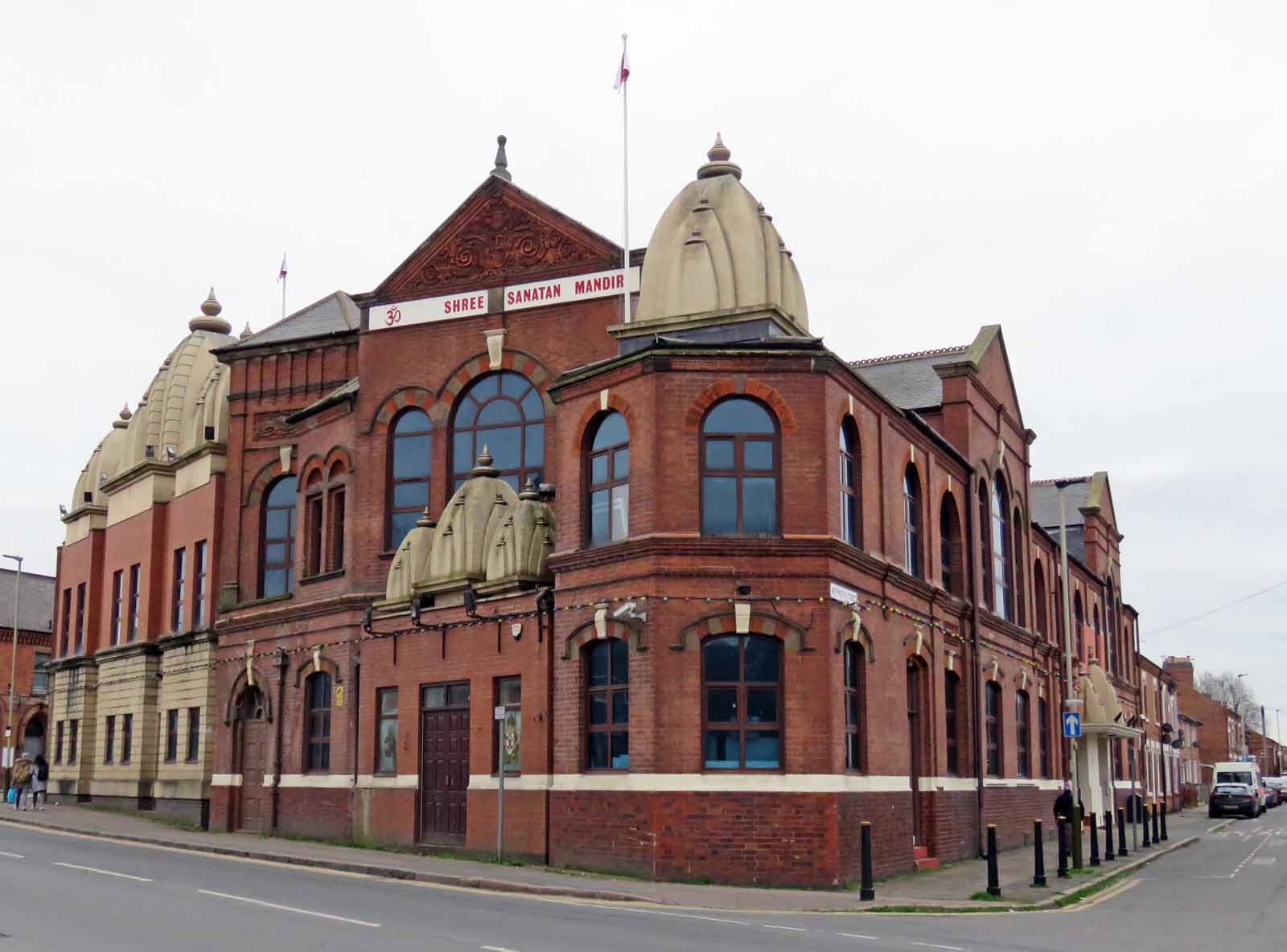
Shree Sanatan Hindu Mandir
The largest Hindu temple in Leicester, serving the city's vibrant Hindu community with a multi-deity shrine, daily worship, and a full calendar of festivals.
Explore Temple
UK
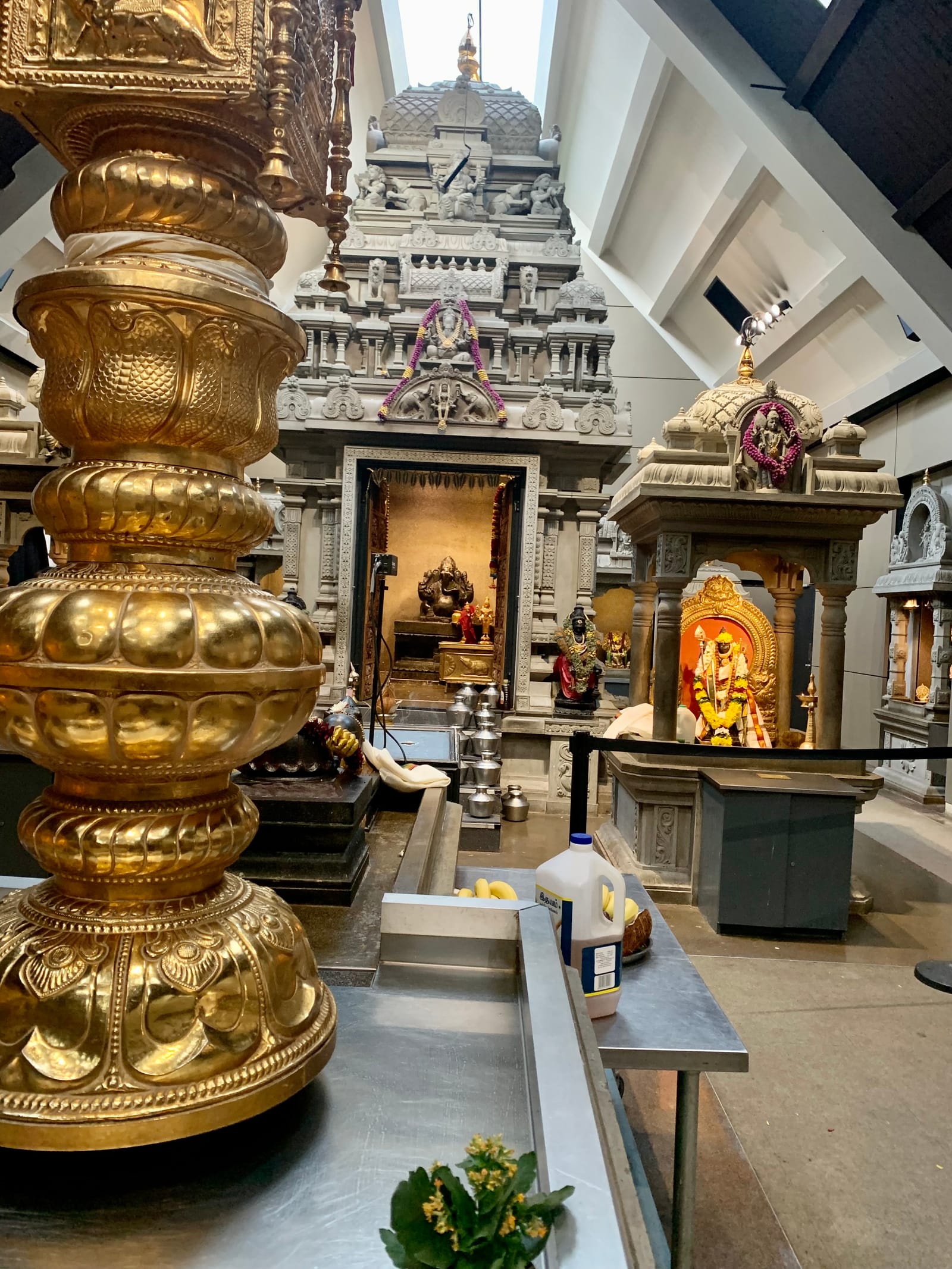
Shree Ghanapathy Temple
London's oldest functioning South Indian-style temple, dedicated to Ganesha and serving the Tamil Hindu community from its Wimbledon location since 1981.
Explore Temple