Sanchi Stupa
The Oldest Stone Structure in India
01 Overview
The Sanchi Stupa is a Buddhist complex, famous for its Great Stupa, on a hilltop at Sanchi Town in Raisen District of Madhya Pradesh, India. It is one of the oldest stone structures in India and was originally commissioned by Emperor Ashoka the Great in the 3rd century BCE. Its nucleus was a hemispherical brick structure built over the relics of the Buddha, with a harmika and chhatra crowning it.
The site boasts a continuous record of Buddhist art and architecture spanning over 1,500 years — from the Mauryan period through the Sunga, Satavahana, and Gupta dynasties. In 1818, the site was rediscovered by General Henry Taylor of the Bengal Cavalry, and today it stands as one of the best-preserved Buddhist monuments in the world.
02 Historical Background
The history of Sanchi spans from the 3rd century BCE to the 12th century CE, documenting the rise, peak, and decline of Buddhism in the Indian subcontinent. The site was strategically located on a trade route connecting the ancient cities of Vidisha and Ujjain, which contributed to its prosperity and religious importance.
After the decline of Buddhism in India in the 12th century CE, Sanchi was abandoned and fell into disrepair. It was rediscovered in 1818 by General Henry Taylor, and subsequent archaeological work by Sir John Marshall, Alexander Cunningham, and others restored the site to its current state.
03 Emperor Ashoka and Sanchi
Emperor Ashoka (circa 268-232 BCE) is the central figure in the history of Sanchi. After the devastating Kalinga War, Ashoka embraced Buddhism and became a tireless patron of the faith. He is credited with building 84,000 stupas across his empire to enshrine the relics of the Buddha.
Sanchi was chosen by Ashoka for its serene hilltop location, and the Great Stupa was constructed to house the Buddha's relics. The Ashokan pillar at Sanchi, originally 42 feet tall, featured a lion capital and bore inscriptions of Ashoka's edicts promoting Buddhist principles of non-violence, religious tolerance, and social welfare.
04 Buddhist Significance
Sanchi holds profound significance in Buddhism as a major pilgrimage and educational center for over a millennium. While not directly associated with any specific event in the Buddha's life, Sanchi became one of the most important Buddhist monastic complexes in India.
The discovery of the relics of Sariputra and Mahamoggallana, two of the Buddha's foremost disciples, within Stupa No. 3 at Sanchi further elevated the site's spiritual importance. These relics were relocated to the newly built Chethiyagiri Vihara in 1952 and are venerated by Buddhists from around the world.
05 Architecture
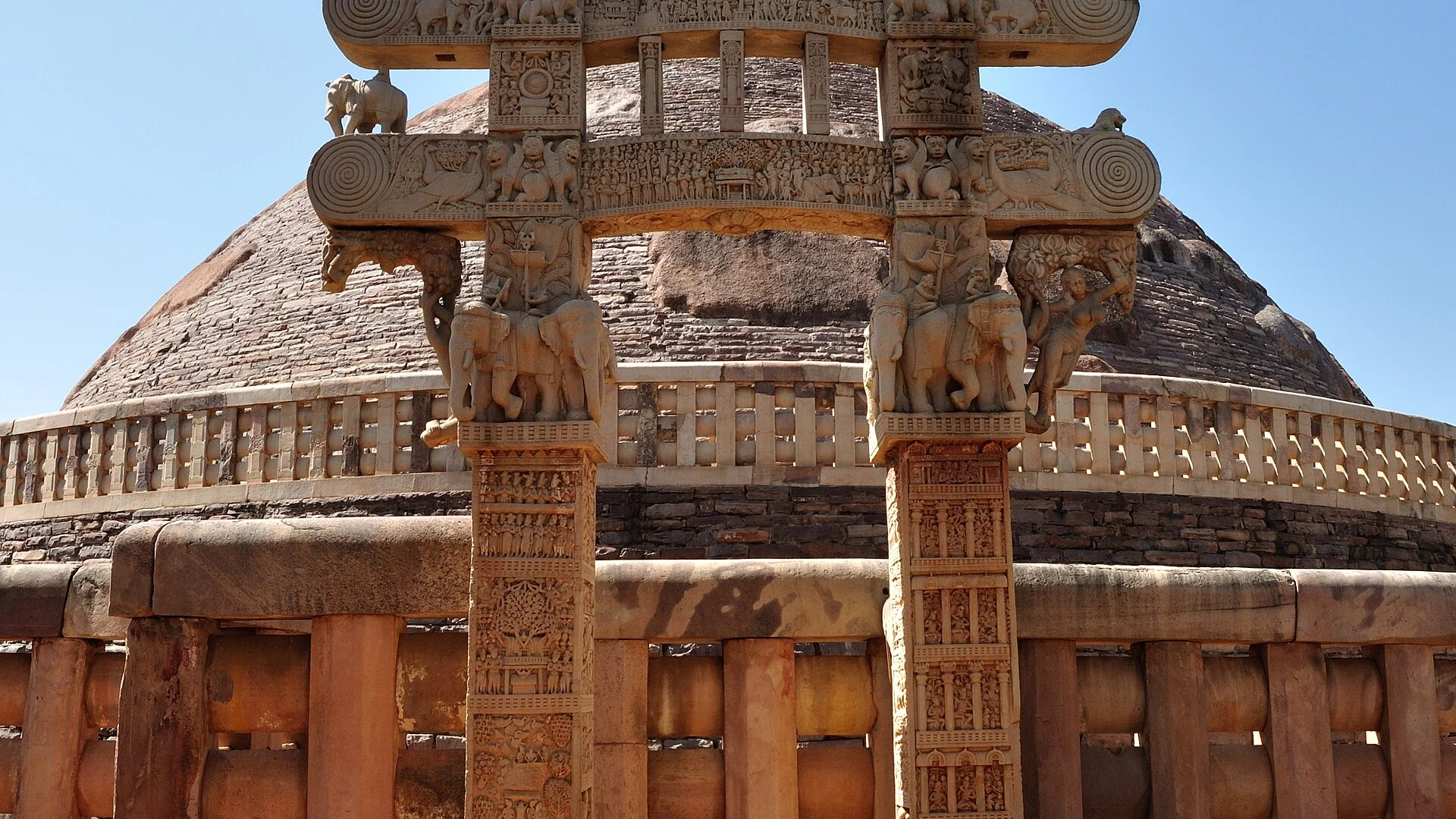
The Great Stupa (Stupa No. 1) is the centerpiece of the Sanchi complex. Originally a simple hemispherical brick structure built by Ashoka, it was later encased in stone and enlarged under the Sunga dynasty (circa 2nd century BCE). The stupa measures 36.6 meters in diameter and 16.4 meters in height.
The most striking architectural features of Sanchi are the four ceremonial gateways (Toranas) that surround the Great Stupa. These gateways, built between the 1st century BCE and 1st century CE under the Satavahana dynasty, are covered in exquisite narrative reliefs depicting the Jataka tales, scenes from the life of the Buddha, and various auspicious symbols.
The toranas feature figures of yakshis (nature spirits), elephants, lions, and intricate floral patterns. The Buddha is represented symbolically through footprints, the Bodhi Tree, the throne, and the wheel of law, as per the aniconic tradition of early Buddhist art.
06 Important Facts
07 UNESCO World Heritage Status
The Buddhist Monuments at Sanchi were inscribed as a UNESCO World Heritage Site in 1989 under criteria (i), (ii), (iii), (iv), and (vi). UNESCO recognizes Sanchi as the oldest Buddhist sanctuary in existence and a major center of Buddhism in India until the 12th century CE.
The site is celebrated for its well-preserved stupas, temples, monasteries, and the famous Ashokan pillar. The inscription highlights Sanchi's exceptional testimony to the development of Buddhist art and architecture, as well as its influence on subsequent religious architecture across Asia.
The site is protected and maintained by the Archaeological Survey of India (ASI) and attracts visitors and pilgrims from around the globe.
08 How to Reach
The nearest airport is Raja Bhoj Airport in Bhopal, approximately 55 km from Sanchi. Taxis and buses are available from the airport to Sanchi.
Sanchi has its own railway station on the Bhopal-Jabalpur route. The station is about 1 km from the stupa complex. Direct trains from major cities are available.
Sanchi is well-connected by road. Bhopal is 46 km, Vidisha is 10 km, and Indore is 230 km. Regular buses and taxis operate from Bhopal to Sanchi.
09 Frequently Asked Questions
Who commissioned the Great Stupa at Sanchi?
What are the Toranas at Sanchi?
Is Sanchi Stupa a UNESCO World Heritage site?
What is inside the Great Stupa?
When was Sanchi rediscovered?
What is the best time to visit Sanchi?
What is the height of the Great Stupa?
10 Related Buddhist Heritage Sites
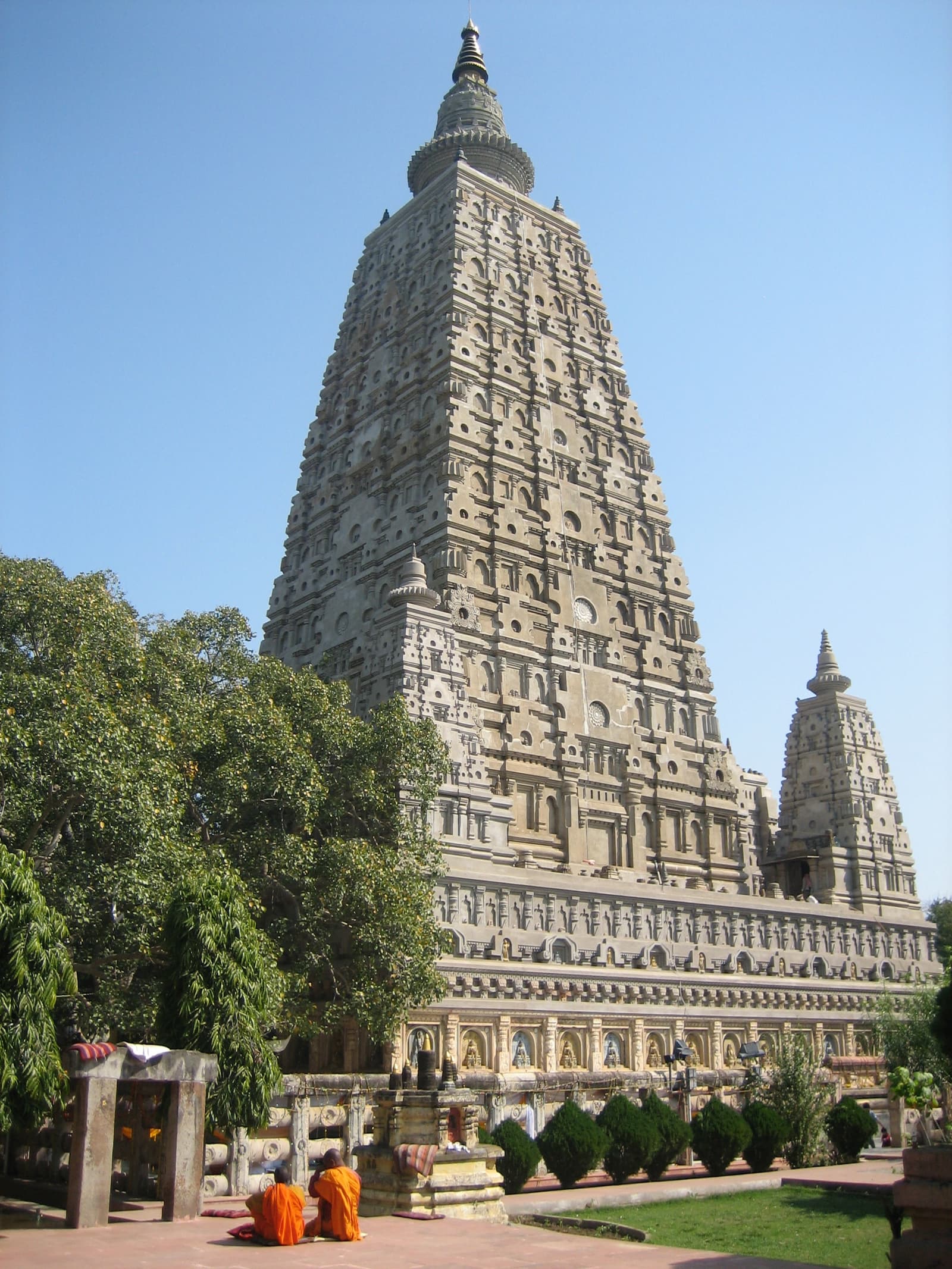
Mahabodhi Temple Complex
The most sacred site in Buddhism, marking the location where Siddhartha Gautama attained enlightenment under the Bodhi Tree.
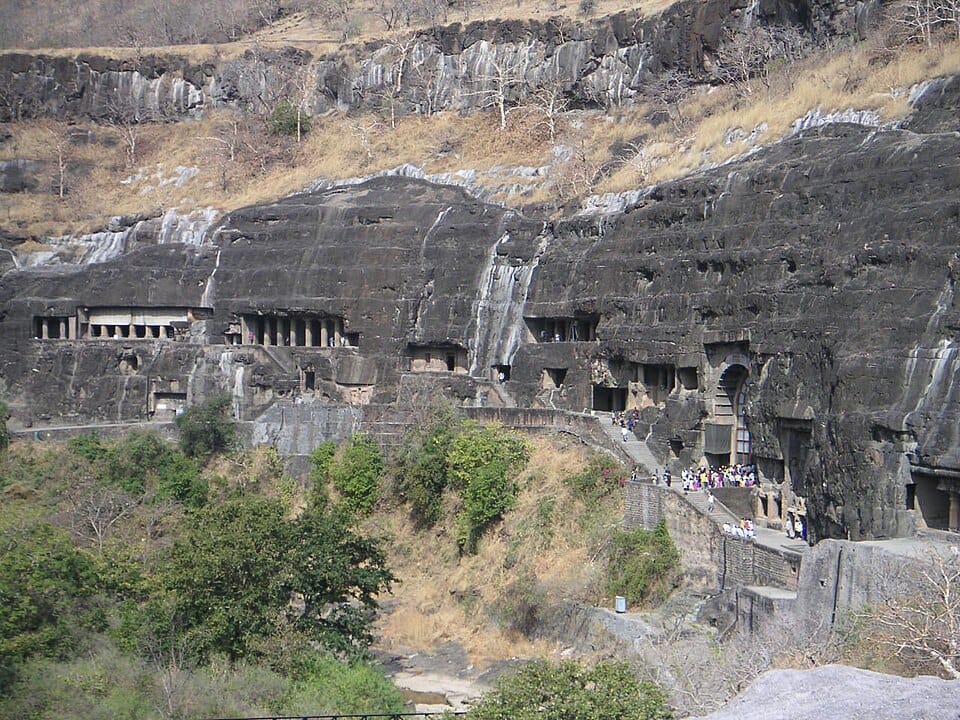
Ajanta Buddhist Caves
A magnificent complex of 30 rock-cut Buddhist cave monuments containing some of the finest surviving examples of ancient Indian painting and sculpture.

Ellora Buddhist Caves
The Buddhist group of 12 caves at Ellora represents the finest expression of rock-cut Buddhist architecture in the Deccan.
.jpg)
Nalanda Mahavihara
The world's most ancient university and a monumental Buddhist monastic institution that attracted scholars from across Asia for over 800 years.
Sources & References
The overview, chronology and visitor information above are checked against the records listed here. Where a claim is still debated, the page says so rather than picking a single date.
— every record linked above was re-requested for this release, so the link still resolves and the publisher still serves the document. It is a link check, not a re-verification of every sentence on this page.
- UNESCO World Heritage Centre — Buddhist Monuments at Sanchi: https://whc.unesco.org/en/list/524
- Archaeological Survey of India — Sanchi Stupa: https://asi.nic.in/sanchi-stupa/
- Encyclopaedia Britannica — Sanchi: https://www.britannica.com/place/Sanchi
- Sir John Marshall — A Guide to Sanchi (1918)
- Dr. Vidya Dehejia — Indian Art (Phaidon, 1997)