CambodiaShiva
Bakong
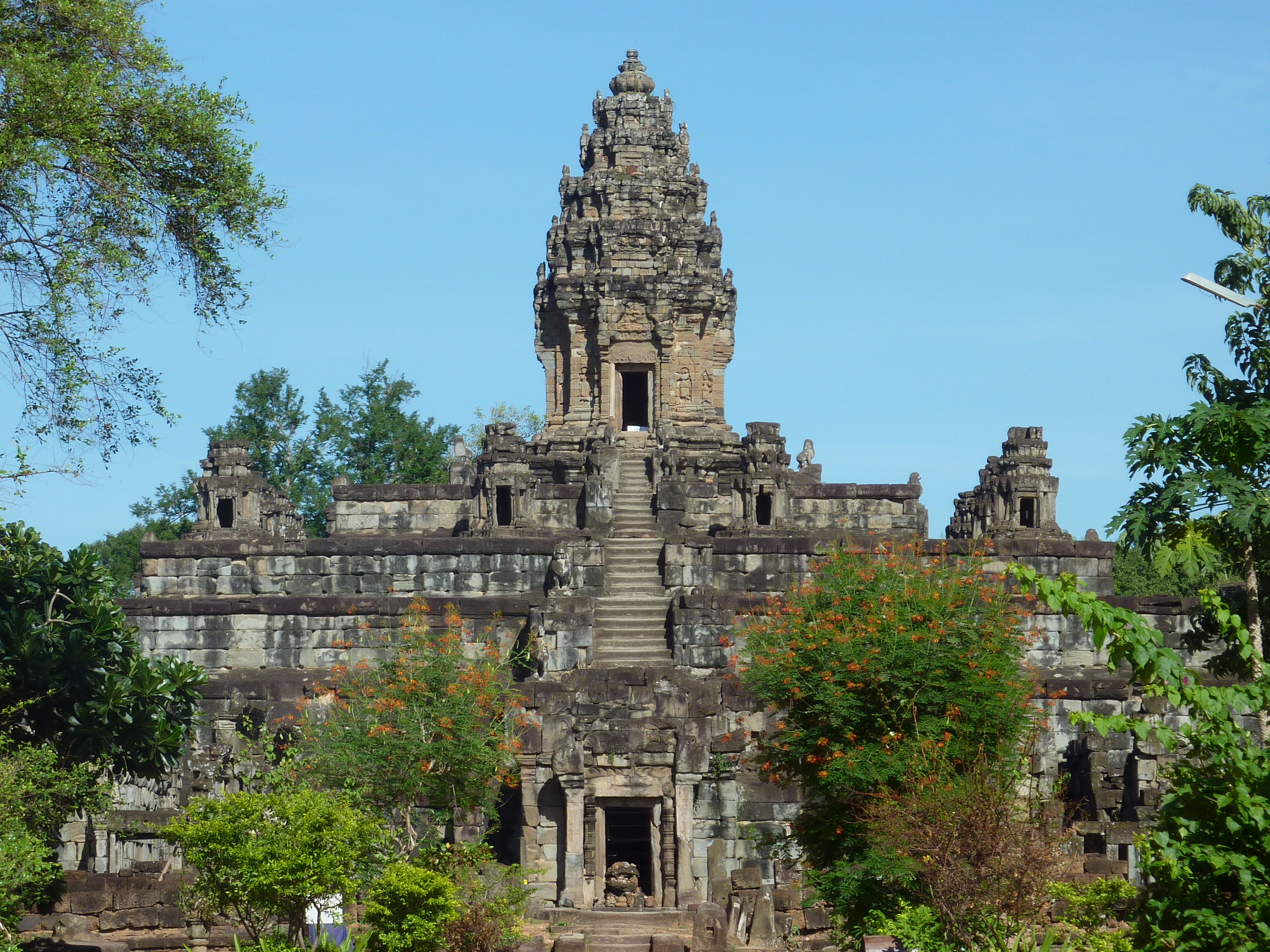
The first temple-mountain of the Khmer Empire, built in 881 CE by King Indravarman I, representing the prototype for all later Khmer pyramid temples including Angkor Wat.
Siem Reap (Roluos), Cambodia Shiva Built: 881 CE
Share
Overview
Bakong is the first temple-mountain of the Khmer Empire, a five-tiered sandstone and laterite pyramid built in 881 CE by King Indravarman I. Located in the Roluos group of temples — the remnants of the early Khmer capital of Hariharalaya — Bakong served as the prototype for all later Khmer pyramid temples, including the magnificent Angkor Wat.
The temple's stepped pyramid design represents Mount Meru, the center of the Hindu universe, and established an architectural tradition that would define Khmer temple construction for the next 400 years.
Bakong is the largest and most significant temple in the Roluos group, which also includes Preah Ko (879 CE) and Lolei (893 CE). The temple complex originally served as the state temple of Indravarman I, the center of his new capital at Hariharalaya.
Today, Bakong stands as a testament to the early phase of Khmer temple architecture, before the full flowering of the classical Angkorian style but already displaying the sophisticated engineering and symbolic design that would reach its peak at Angkor Wat.
The temple's pyramid structure rises in five tiers, representing the five peaks of Mount Meru. The base measures approximately 60 meters on each side, and the total height reaches 14 meters. An active Buddhist monastery operates within the temple grounds today, and the temple remains a place of worship for the local community, making Bakong both an archaeological treasure and a living religious site.
Quick Facts
Deity
Shiva
Location
Siem Reap (Roluos), Cambodia
Built
881 CE
Built By
King Indravarman I
Coordinates
13.34, 103.97
Timings
7:30 AM – 5:30 PM daily
Entry Fee
Included in Angkor pass (1-day: USD 37, 3-day: USD 62, 7-day: USD 72)
History
Bakong was built in 881 CE during the reign of King Indravarman I (reigned 877-889 CE), who established his capital at Hariharalaya, near the modern village of Roluos. Indravarman I is considered one of the great early Khmer kings who consolidated the empire and began the tradition of monumental temple construction. Bakong served as his state temple, dedicated to the Hindu god Shiva, and housed the royal linga that symbolized the king's divine authority (devaraja).
The temple's construction marked a turning point in Khmer architecture. Earlier Khmer temples were single-level structures on the ground. Bakong introduced the stepped pyramid design that would become the defining feature of Khmer state temples for centuries. The temple was built using a combination of laterite (for the core structure), sandstone (for decorative elements and the upper tiers), and brick (for subsidiary shrines).
After the Khmer capital moved from Hariharalaya to Yasodharapura (the Angkor region) under King Yasovarman I in the late 9th century, Bakong lost its status as a state temple but continued as an active religious site. The central tower was modified in the 12th century, during the reign of King Suryavarman II (the builder of Angkor Wat), adding a stone sanctuary to replace the original wooden structure.
Bakong was one of the first Angkorian temples to be restored by the EFEO in the 1930s, with the central tower being largely reconstructed.
Historical Timeline
877–889 CE
Reign of Indravarman I
King Indravarman I establishes his capital at Hariharalaya and commissions Bakong as his state temple, dedicated to Shiva.
881 CE
Temple Completion
Bakong is completed as the first temple-mountain of the Khmer Empire, introducing the stepped pyramid design that would define Khmer sacred architecture.
12th Century
Central Tower Rebuilt
King Suryavarman II, builder of Angkor Wat, replaces the original wooden sanctuary on Bakong's summit with the current sandstone tower.
1930s
EFEO Restoration
The EFEO conducts restoration of Bakong using anastylosis methods, making it one of the earliest Khmer temples to undergo systematic conservation.
Architecture
Bakong's architecture represents the first fully developed Khmer temple-mountain. The central pyramid rises in five tiers, each progressively smaller, creating a stepped profile that symbolizes the five peaks of Mount Meru. The base level measures 60 meters by 60 meters, with each tier set back from the one below. The total height from the ground to the summit is 14 meters.
The pyramid is constructed mainly of laterite, a porous iron-rich stone that hardens on exposure to air, with sandstone used for the upper tiers, steps, and decorative elements.
The central sanctuary on the summit was originally a wooden structure, replaced in the 12th century by the current sandstone tower. The tower, built in the Angkor Wat style, rises from a square base and features the typical corbelled dome construction of Khmer architecture. Eight brick towers surround the base of the pyramid, representing the eight directions of Hindu cosmology, and originally housed lingas dedicated to Shiva.
The temple complex is surrounded by three concentric enclosures, a layout that would become standard for Khmer temples. The outer enclosure, measuring about 900 meters by 700 meters, was originally defined by an outer wall and a moat, traces of which remain today. The second enclosure contains the main pyramid and subsidiary buildings. The inner enclosure surrounds the base of the pyramid. A processional causeway aligned east-west connects the temple to the outer gopura, passing through a large cruciform terrace.
Main Deity
Shiva
Religious Significance
Bakong is historically significant as the first temple-mountain of the Khmer Empire, establishing the architectural and symbolic template that all subsequent Khmer state temples would follow. Before Bakong, Khmer temples were ground-level structures. The stepped pyramid design, representing Mount Meru, became the defining concept of Khmer sacred architecture, culminating in the pyramids of Angkor Wat, Preah Khan, and the Bayon.
For scholars of Southeast Asian art and architecture, Bakong is essential for understanding the evolution of Khmer temple design. The temple shows the transition from the pre-Angkorian Chenla period styles to the classic Angkorian style. Key elements that would be refined at later temples — the tiered pyramid, surrounding concentric enclosures, axial causeways, and the central sanctuary on the summit — all appear here for the first time.
For Hindus, Bakong remains a Shiva temple of enduring significance. The temple's central sanctuary houses a linga that continues to receive offerings from local devotees. The active Buddhist monastery within the complex ensures that Bakong remains a living spiritual site, bridging the ancient Khmer Hindu tradition with contemporary Cambodian Buddhist practice.
The temple's role in the devaraja cult — the worship of the king as a divine incarnation — connects it to the political theology that sustained the Khmer Empire for over 600 years.
Temple Legends
The primary legend of Bakong involves its founding by King Indravarman I. According to tradition, the king was visited in a dream by the god Shiva, who instructed him to build a temple that would touch the sky. The king, unsure how to accomplish this, consulted his Brahmin advisors. They proposed the stepped pyramid design, with each tier bringing the temple closer to heaven while remaining firmly rooted to the earth.
The five tiers represented the five elements of Hindu cosmology: earth, water, fire, air, and ether.
Another legend tells of the temple's eight brick towers, which are said to represent eight of Vishnu's avatars. According to the story, the demon king Ravana once tried to disrupt a sacrifice at Bakong by uprooting the temple. The eight avatars held the temple in place, and the towers were built to commemorate their protection. The legend connects the Shaivite temple to the Vaishnavite mythology that dominated later Khmer religion.
A third narrative involves the monks of the active Buddhist monastery at Bakong. Local tradition holds that a revered Buddhist monk once mediated for three days and nights at the summit of Bakong without food or water. On the third night, the Buddha appeared to him and revealed the location of a hidden chamber within the pyramid containing ancient palm-leaf manuscripts.
The manuscripts, said to contain knowledge of medicine and astronomy, were retrieved and are still preserved at the nearby pagoda.
Festivals & Celebrations
Bakong is part of the Roluos group of temples and participates in the broader festival calendar of the Angkor region. The most important festival at Bakong is the Bonn Pchum Ben (Ancestors' Day) in September-October, when the local community gathers at the temple to make offerings to their ancestors. The temple's active monastery means that Buddhist monks lead ceremonies throughout the year.
The Khmer New Year (April) sees local families visiting the temple to make merit and offer food to the monks. The temple courtyard hosts traditional Khmer games and cultural performances during this period. The annual Bonn Om Touk (Water Festival) in November is celebrated at Bakong as it is throughout Cambodia, with special prayers for the receding waters and the bounty of the harvest.
Bakong also celebrates Buddhist holy days (preah neam) on the full moon, new moon, and quarter moons of each month. On these days, local devotees bring offerings to the temple and the monks chant protective sutras. The temple's location in the countryside means that its festivals have a more traditional, village character than the tourist-oriented events at Angkor Wat.
Daily Rituals
Bakong functions as an active religious site with a Buddhist monastery operating within the temple grounds. Daily prayers begin at dawn when the resident monks gather at the temple's central sanctuary for morning chanting. Local villagers arrive throughout the morning to offer food, flowers, and incense at the shrine, making merit for their families.
The midday hours are observed with private meditation by the monks, and the temple remains open for visitors and devotees alike. The active monastery means that the sound of chanting and the scent of incense are almost always present, giving Bakong a living spiritual atmosphere that distinguishes it from purely archaeological sites.
Evening ceremonies include the lighting of oil lamps and the chanting of protective sutras by the monks. On full moon and new moon days, larger gatherings of devotees participate in candlelight circumambulation of the central pyramid. Visitors are welcome to observe the ceremonies from a respectful distance and may receive blessings from the monks upon request.
Visitor Information
Timings
7:30 AM – 5:30 PM daily
Entry Fee
Included in Angkor pass (1-day: USD 37, 3-day: USD 62, 7-day: USD 72)
Dress Code
Modest clothing required
Photography
Photography allowed
Accessibility
Bakong is situated on relatively flat terrain and the ground level of the temple complex is accessible to wheelchair users with assistance. The climb to the top of the five-tiered pyramid involves steep steps and is not wheelchair accessible. The temple is 13 kilometers east of Siem Reap with paved road access suitable for all vehicle types.
Best Time to Visit
The best time to visit Bakong is in the early morning or late afternoon, when the low light emphasizes the temple's stepped pyramid form and the details of the sandstone carvings. Bakong is part of the Roluos group, which is typically visited as a half-day tour from Siem Reap. Most visitors combine Bakong with Preah Ko and Lolei, spending 1-2 hours at each temple.
The dry season (November-March) offers the best conditions for visiting, with clear skies and moderate temperatures. The temple's laterite construction absorbs moisture, and during the rainy season (June-October), the dark, wet stone creates dramatic contrasts but also makes the pyramid steps slippery.
The temple is significantly less crowded than the main Angkor temples. Many tour groups visit the Roluos group in the late afternoon on their way back to Siem Reap, so early morning visits offer the most peaceful experience. The temple is also beautifully lit after sunset, and visitors who stay until closing time are often rewarded with a nearly empty site.
How to Reach
Bakong is located in the Roluos group of temples, approximately 13 kilometers east of Siem Reap city center along National Highway 6. The temple is easily accessible by car, tuk-tuk, or bicycle from Siem Reap. A taxi or tuk-tuk from Siem Reap takes 20-30 minutes. Most visitors include Bakong as part of a half-day trip to the Roluos group, which also includes Preah Ko and Lolei.
The Roluos temples are conveniently located near Siem Reap International Airport (about 10 kilometers from the airport), making Bakong a good first stop for visitors arriving on morning flights or a last stop before departure. The highway leading to the temples is well-paved and in good condition.
Bicycling to Bakong from Siem Reap is a pleasant ride along a flat road passing through Cambodian villages and rice fields. The 13-kilometer journey takes approximately 45 minutes to one hour, making it a popular choice for active travelers who want to experience rural Cambodia.
Nearby Attractions
Preah Ko Temple, built in 879 CE by King Indravarman I as a funerary temple for his ancestors, is located just 500 meters north of Bakong and should be visited together. Lolei Temple (893 CE), an island temple built on an artificial island in the middle of a reservoir (baray), is 1.5 kilometers northeast of Bakong. Both were built in the pre-Angkorian style, making them architecturally distinct from the later Angkor temples.
The Roluos village offers a glimpse of traditional Cambodian rural life, with wooden stilt houses, rice paddies, and local markets. The Preak Moulosant pagoda, a modern Buddhist temple, is adjacent to the Bakong complex and houses a school for novice monks. The Roluos silk-weaving village, where traditional Khmer silk scarves and fabrics are produced using ancient techniques, is a short drive away.
Back in Siem Reap, the Angkor Silk Farm and the Khmer Ceramics Center offer insights into traditional crafts. The Tonle Sap Lake, with its floating villages, is about 20 kilometers south of Siem Reap and is often combined with a Roluos visit for a full-day tour of the Siem Reap area.
Nearby Hotels
Roluos Guesthouse
1 km from BakongA simple guesthouse near the Roluos temples offering basic rooms and a friendly atmosphere for budget travelers.
Siem Reap Boutique Hotel
13 km from BakongA mid-range hotel in Siem Reap city with a pool, restaurant, and easy access to the Roluos group temples.
The Aviary Hotel
12 km from BakongA stylish boutique hotel near the Siem Reap River with modern amenities and bicycle rentals for exploring the countryside.
Nearby Vegetarian Restaurants
Roluos Village Restaurant
500 m from BakongA local eatery serving traditional Khmer dishes including vegetarian-friendly options, located near the temple complex.
Siem Reap Market Grill
13 km from BakongA popular restaurant in Siem Reap offering grilled vegetables, rice dishes, and fresh fruit smoothies.
Veggie House
13 km from BakongA fully vegetarian restaurant in Siem Reap serving creative Khmer and Western fusion dishes.
Nearby Temples
Preah Ko
500 m northA 9th-century temple featuring six brick towers dedicated to the ancestors of King Indravarman I.
Lolei
1.5 km northeastAn island temple built on an artificial island within a reservoir, dating from 893 CE.
Angkor Wat
13 km westThe largest religious monument in the world, located 13 km west of Bakong in the main Angkor complex.
Interesting Facts
- Bakong is the very first temple-mountain ever built by the Khmer Empire, establishing the architectural template for all subsequent Khmer state temples including Angkor Wat.
- The temple's original name has been lost to history. 'Bakong' is a modern name meaning 'small mountain' in Khmer, a reference to its pyramid form.
- The central tower of Bakong was rebuilt in the 12th century (300 years after the original construction) by King Suryavarman II, the same king who built Angkor Wat.
- Bakong's pyramid contains over 1 million cubic meters of laterite and sandstone, requiring a labor force of thousands working over several years.
- The temple was one of the first to undergo anastylosis restoration by the French EFEO team, and its reconstruction was used as a training ground for the later restoration of Banteay Srei.
- Bakong's eight brick towers are among the oldest surviving brick structures in Cambodia, using a vegetable-based mortar whose composition is still not fully understood by modern archaeologists.
Image Gallery
1 / 4
Bakong's stepped pyramid
Frequently Asked Questions
Is Bakong part of the Angkor Archaeological Park?
Yes, Bakong is part of the Angkor Archaeological Park and requires the standard Angkor pass for entry. The Roluos group is considered the 'Start of the Civilization' zone and is included in all Angkor passes.
Which is older — Bakong or Angkor Wat?
Bakong is significantly older. Bakong was built in 881 CE, while Angkor Wat was built in 1113-1150 CE — a difference of over 230 years.
Can I climb Bakong temple?
Yes, visitors can climb the five-tiered pyramid to the top. The steps are steep and wide but manageable with care. The top offers panoramic views of the surrounding countryside.
What is the Roluos group of temples?
The Roluos group consists of three main temples — Bakong, Preah Ko, and Lolei — that mark the site of Hariharalaya, the first capital of the Khmer Empire before it moved to Angkor.
How long should I spend at Bakong?
A visit to Bakong typically takes 45 minutes to 1 hour. Combined with Preah Ko and Lolei, a half-day (3-4 hours) is sufficient to explore the entire Roluos group.
Sources & References
- [1]APSARA Authority – Roluos Group Guide government
- [2]Angkor and the Khmer Civilization by Michael D. Coebook
- [3]Sacred Places of the Worldwebsite
— every record linked above was re-requested for this release, so the link still resolves and the publisher still serves the document. It is a link check, not a re-verification of every sentence on this page.
More Temples in Cambodia
Explore other Hindu temples in Cambodia.
UNESCO 1992
Cambodia
Angkor Wat
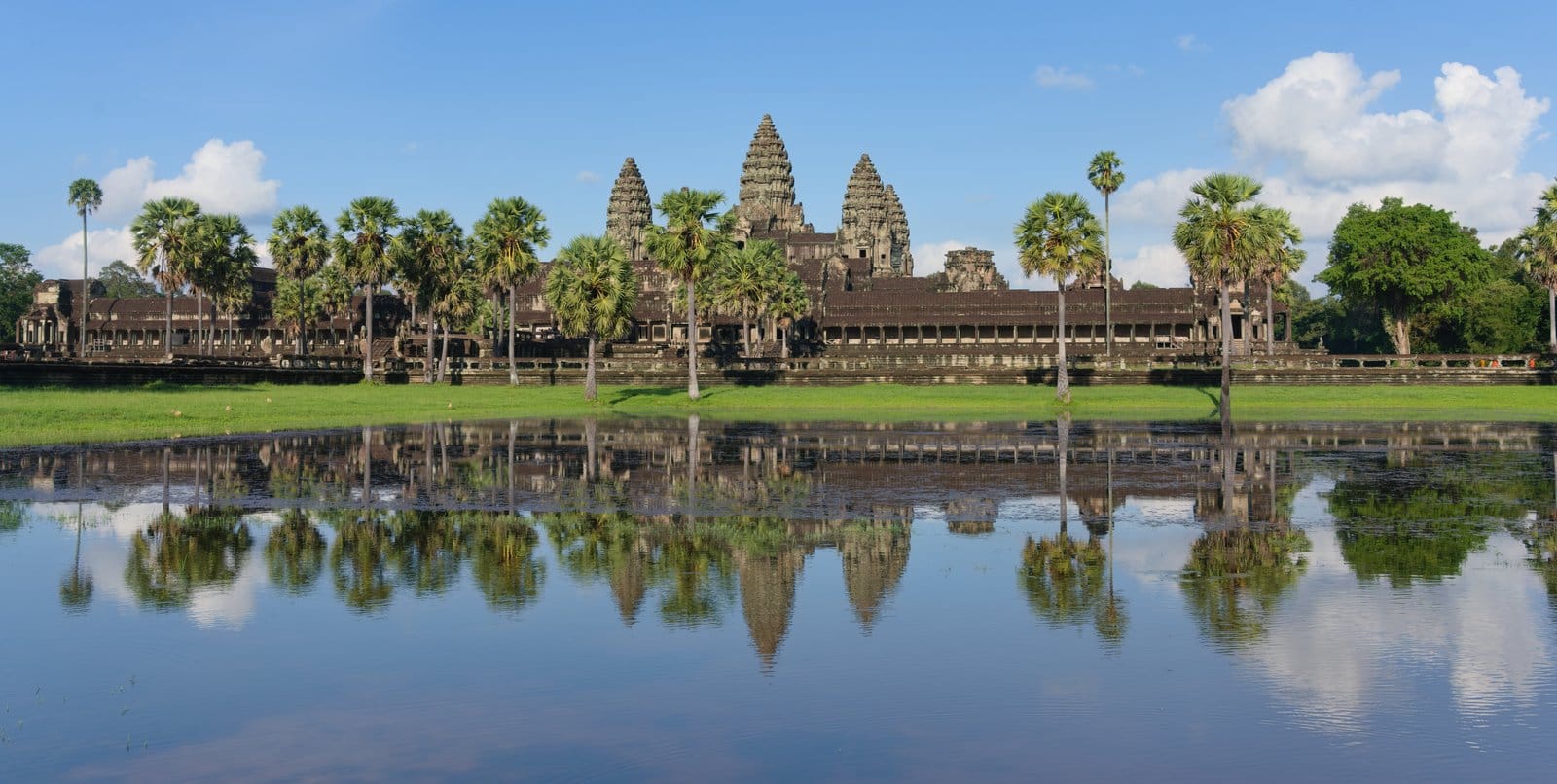
The largest religious monument in the world, Angkor Wat is a 12th-century Khmer temple complex in Cambodia originally dedicated to Vishnu and now a UNESCO World Heritage Site.
Explore Temple

Cambodia
Banteay Srei
A 10th-century Khmer temple renowned for its exquisite pink sandstone carvings, considered the finest and most refined of all Angkorian art.
Explore Temple

UNESCO 2008
Cambodia
Preah Vihear Temple
A spectacular Khmer temple perched on a 525-meter cliff in the Dangrek Mountains, a UNESCO World Heritage Site with a dramatic history and panoramic views.
Explore Temple