
🇰🇭
Hindu Temples in Cambodia
Cambodia preserves the monumental stone temple-mountains of the Khmer Empire, including Angkor Wat, Preah Vihear, and Banteay Srei.
5 Temples Profiled Southeast Asia Phnom Penh
Direct Answer
How Many Hindu Temples Are in Cambodia?
Cambodia preserves over 4,000 documented archaeological sites from the Khmer Empire, of which several hundred are substantial stone and brick Hindu temple complexes and towers consecrated between the 7th and 14th centuries CE (including Angkor Wat, Preah Vihear, and Banteay Srei).
Major Classical Stone Temple Complexes
100+
Monumental sandstone and laterite temple-mountains (Angkor Wat, Bakong, Preah Vihear, Banteay Srei, Koh Ker, Sambor Prei Kuk).
Documented Archaeological Sites & Prasat Mounds
4,000+
Classified prasat ruins, shrines, reservoir shrines (mebons), and structural mounds surveyed by APSARA and EFEO.
Active Hindu Practice
Syncretic / Cultural
While direct Hindu ritual continues through small diaspora shrines, ancient monuments are cared for under national archaeological protection and Buddhist devotion.
Sacred Places India Database
5 Flagship Sites
Rigorous architectural analyses and traveler guides for the foremost Hindu-origin monuments of the Khmer civilization.
How Temple Numbers Are Counted
Counting ancient temples in Cambodia relies on archaeological cartography rather than modern religious registrations, as contemporary Cambodia is over 95% Theravada Buddhist. The APSARA National Authority (governing Angkor Park) and the École française d'Extrême-Orient (EFEO) maintain scientific inventories of classified monuments (prasats). The National Heritage Inventory catalogues over 4,000 archaeological points, ranging from major multi-tiered temple-mountains to isolated brick tower ruins across 25 provinces.
Sacred Places India Database Scope
Sacred Places India focuses on the premier surviving stone monuments of Cambodia with established UNESCO World Heritage status, architectural integrity, and historical Hindu cosmology.
Introduction
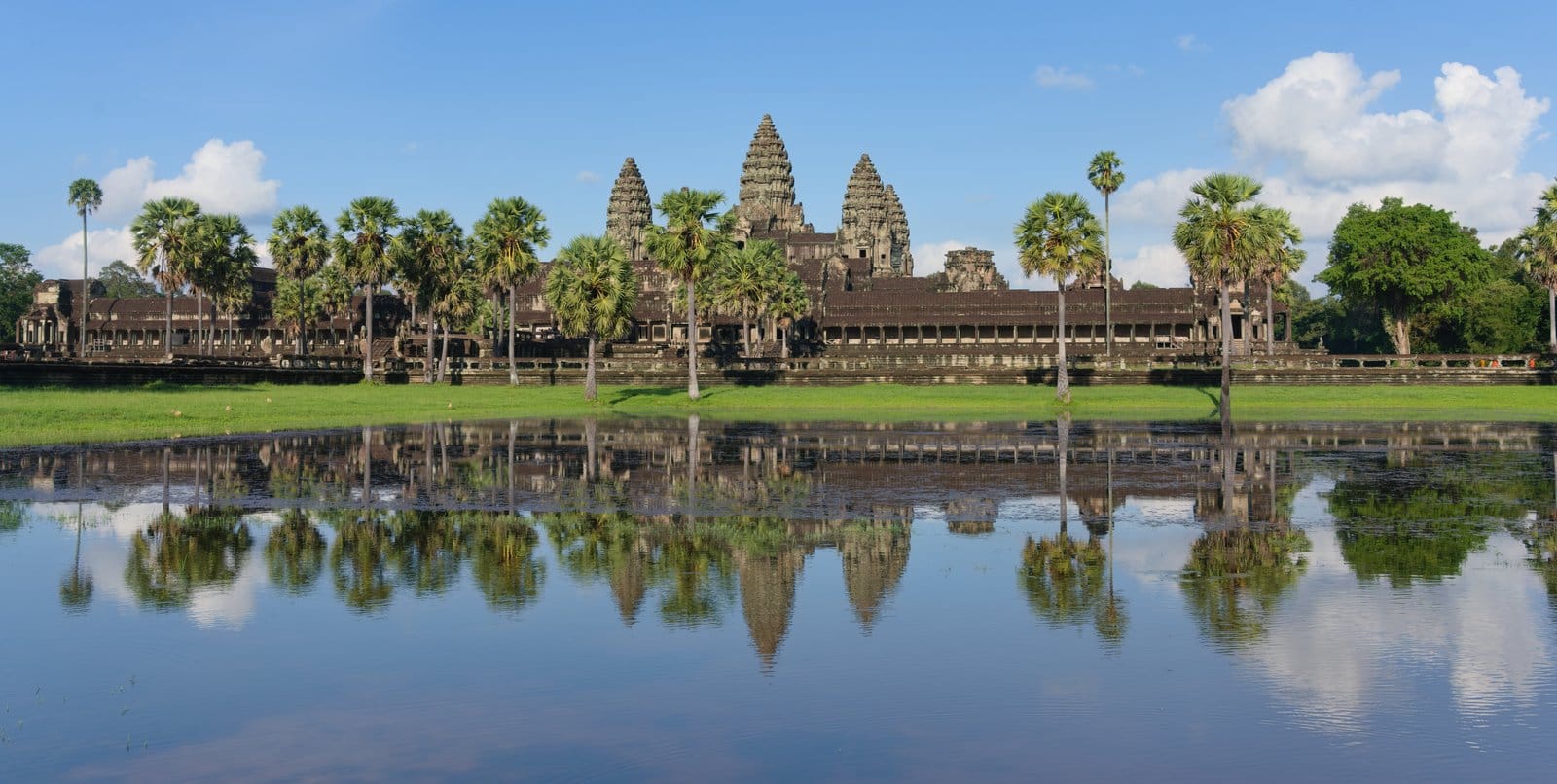
Cambodia preserves the architectural remnants of the Khmer Empire, one of the principal Hindu civilizations in Southeast Asia between the 9th and 15th centuries CE. Centred on the Angkor plain in Siem Reap province, Khmer rulers established temple-mountains representing Mount Meru, the cosmic centre of Hindu cosmology. Angkor Wat, commissioned under King Suryavarman II in the early 12th century as a Vaishnavite state temple, covers over 160 hectares and remains the largest religious monument complex documented in archaeological literature.
5
Profiled Temples
Southeast Asia
Region
Phnom Penh
Capital
Khmer
Language
Major Hindu Communities
While medieval Cambodia was ruled by Hindu dynasties with Brahmin court advisers, modern Cambodia is predominantly Theravada Buddhist (over 95%). A small expatriate Indian community and indigenous Cham residents maintain Hindu practices in urban centres, though active ritual practice at ancient monuments is now predominantly Buddhist syncretism.
Regional Temple Distribution
The primary concentration of Hindu monument architecture is situated within the Siem Reap archaeological zone (Angkor plain). Significant provincial complexes include Preah Vihear on the northern Dângrêk escarpment and Banteay Srei in the northeastern hinterlands.
History of Hinduism in Cambodia
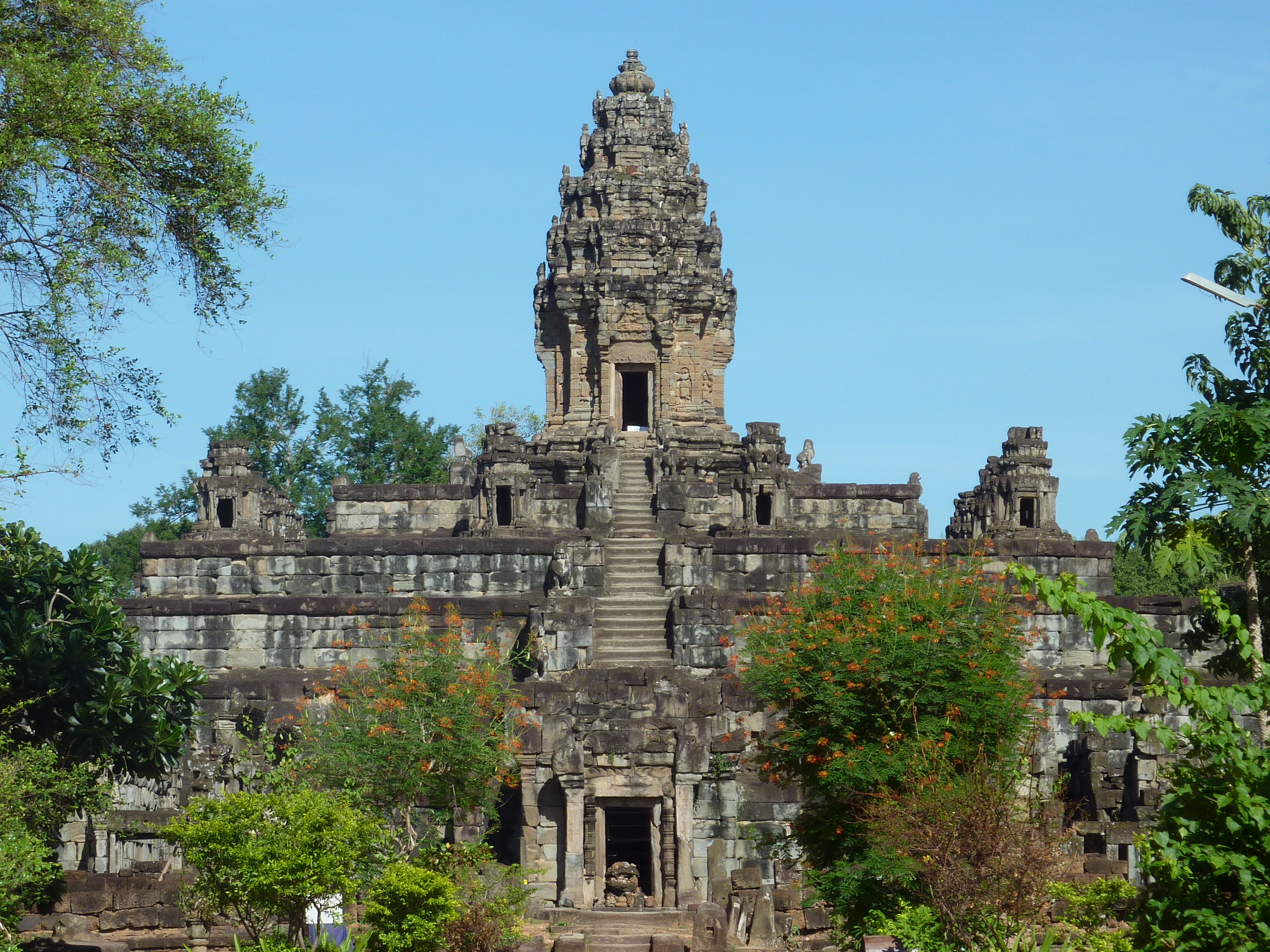
Indian maritime commerce along the Gulf of Thailand introduced Sanskrit epigraphy, Vedic cosmology, and Brahmanical court rituals to early Cambodian polities (Funan and Chenla) from the 1st millennium CE. Following the consolidation of the Khmer state under Jayavarman II in 802 CE, rulers adopted the Devaraja (god-king) institution, identifying royal authority with Shiva or Vishnu. Massive stone architecture transitioned from early brick prasats (such as Bakong at Roluos, consecrated in 881 CE) to elaborate sandstone complexes. While Cambodia transitioned to Theravada Buddhism from the 13th to 14th centuries, the original stone iconography, Shaiva lingas, and narrative reliefs depicting the Ramayana and Mahabharata remain intact.
Pilgrimage & Cultural Significance
Angkor Wat serves as an architectural reference and cultural pilgrimage destination for historians and devotees worldwide. Dedicated originally to Vishnu, its central sanctum aligns precisely with astronomical equinoxes. Other notable complexes include the mountain temple of Preah Vihear on the northern Dângrêk escarpment (dedicated to Shiva as Bhadresvara) and the pink-sandstone jewel of Banteay Srei (dedicated to Shiva). While modern worship in the temples is primarily Theravada Buddhist, the Hindu sculptural corpus continues to receive ritual respect.
Architecture Overview
Khmer temple architecture is characterised by the temple-mountain concept: concentric enclosures, moat systems, stepped laterite terraces, and elevated stone prasats (towers) representing Mount Meru surrounded by cosmic oceans. Angkor Wat features 800 metres of narrative bas-reliefs depicting scenes such as the Samudra Manthana (Churning of the Ocean of Milk) and the Battle of Kurukshetra. Banteay Srei, dating to 967 CE, demonstrates intricate shallow-relief carving in hard pink sandstone with multi-lobed pediments.
Temple Directory
Explore documented Hindu temples in Cambodia.
UNESCO 1992
Cambodia
Angkor Wat
The largest religious monument in the world, Angkor Wat is a 12th-century Khmer temple complex in Cambodia originally dedicated to Vishnu and now a UNESCO World Heritage Site.
Explore Temple

Cambodia
Banteay Srei
A 10th-century Khmer temple renowned for its exquisite pink sandstone carvings, considered the finest and most refined of all Angkorian art.
Explore Temple

UNESCO 2008
Cambodia
Preah Vihear Temple
A spectacular Khmer temple perched on a 525-meter cliff in the Dangrek Mountains, a UNESCO World Heritage Site with a dramatic history and panoramic views.
Explore Temple
Cambodia
Bakong
The first temple-mountain of the Khmer Empire, built in 881 CE by King Indravarman I, representing the prototype for all later Khmer pyramid temples including Angkor Wat.
Explore Temple

Cambodia
Phnom Bakheng
The first temple-mountain built in the Angkor region (889-910 CE), serving as the state temple of the original Khmer capital at Yasodharapura and the most famous sunset viewpoint.
Explore Temple
Documentation Methodology & Scope
Research & Selection Criteria
Catalogues premier archaeological monuments of the Angkor World Heritage Site and regional Khmer complexes constructed under Hindu royal patronage (principally Shaiva and Vaishnava). Monument footprints and chronology are verified via École française d'Extrême-Orient (EFEO) and APSARA National Authority surveys.
Scope Boundaries & Limitations
Hundreds of outlying prasat mounds and unexcavated ruins across Siem Reap, Battambang, and Preah Vihear provinces are outside this primary monument selection.
Travel Information
Siem Reap serves as the principal staging base, served by Siem Reap-Angkor International Airport (SAI). Access to monuments within the UNESCO zone requires an Angkor Archaeological Park pass (1-day, 3-day, or 7-day). Preah Vihear sits approximately 3 hours north of Siem Reap near the Thai border, requiring a dedicated vehicle and local four-wheel-drive transfer up the escarpment.
Best Time to Visit
November to February offers dry conditions and moderate temperatures suitable for extensive outdoor stone exploration. March to May experiences intense heat exceeding 38°C (100°F). The monsoon season (June to October) produces afternoon rain and fills moat systems, restoring historic reflection vistas around monuments.
Verified Sources & References
Documentation for Cambodia draws on official census statistics, heritage authorities, and registered temple trust archives.
- APSARA National Authority — Angkor Archaeological Park Conservation Reportsgovernment
- École française d'Extrême-Orient (EFEO) — Historical Inscription and Architecture Archivesacademic
- UNESCO World Heritage Centre — Angkor (Site No. 668) Documentationgovernment
- George Cœdès — The Indianized States of Southeast Asia (Honolulu, 1968)academic
Authority for the Protection and Management of Angkor and the Regions of Siem Reap
APSARA National Authority — Angkor site management records
Official heritage designation, site management and visitor information for the monuments described on this page.
Open source (opens in a new tab)UNESCO World Heritage Centre
UNESCO World Heritage List — India
World Heritage inscription records for the internationally listed monuments named on this page.
Open source (opens in a new tab)INTACH
Indian National Trust for Art and Cultural Heritage
Architectural classification and conservation context for the temple traditions described on this page.
Open source (opens in a new tab)— every record linked above was re-requested for this release, so the link still resolves and the publisher still serves the document. It is a link check, not a re-verification of every sentence on this page.
Frequently Asked Questions
Is Angkor Wat a Hindu temple?
Angkor Wat was designed and consecrated as a Hindu temple dedicated to Vishnu by King Suryavarman II in the early 12th century. It gradually transitioned into Theravada Buddhist use by the late 13th and 14th centuries, but its architecture and bas-reliefs remain definitively Hindu in design.
What is the oldest Hindu temple in Cambodia?
Bakong Temple in the Roluos group, consecrated in 881 CE under King Indravarman I, is recognized as the earliest monumental stepped-pyramid sandstone temple-mountain surviving from the Angkorian period.
Do people still worship at Cambodian Hindu temples?
Angkor Wat and surrounding shrines remain active centres of worship, though ceremonies are conducted by Theravada Buddhist monks and local lay devotees. Direct Hindu ritual worship is limited compared to the classical medieval period.