
UNESCO 2008CambodiaShiva
Preah Vihear Temple
A spectacular Khmer temple perched on a 525-meter cliff in the Dangrek Mountains, a UNESCO World Heritage Site with a dramatic history and panoramic views.
Preah Vihear Province, Cambodia Shiva Built: 9th-12th centuries CE
Share
Overview
Preah Vihear Temple ranks among the most dramatically situated Hindu temples in the world, perched atop a 525-meter (1,722-foot) cliff in the Dangrek Mountains of northern Cambodia. The temple, dedicated to Shiva as Sikharesvara (Lord of the Peak), commands breathtaking views over the Cambodian lowlands to the south and the plains of Thailand to the north. Its location on a natural promontory gives it an appearance of floating between earth and sky.
Unlike the flat-land temples of the Angkor region, Preah Vihear is laid out as a linear axis running 800 meters north to south along the mountain ridge. The temple complex consists of five successive gopuras (gateway pavilions) and sanctuaries, each rising to higher ground, culminating in the main sanctuary at the northern cliff edge. The approach is designed as a journey of spiritual ascent, with each level bringing the pilgrim closer to the divine presence at the summit.
The temple's remote location and dramatic setting contributed to its relatively late rediscovery and its slow transition into a tourist destination. Even today, reaching Preah Vihear requires considerable effort, but visitors are rewarded with among the most spectacular temple experiences in all of Southeast Asia — a sanctuary where human architecture and natural grandeur combine in breathtaking harmony.
Quick Facts
Deity
Shiva
Location
Preah Vihear Province, Cambodia
Built
9th-12th centuries CE
Built By
Kings Yasovarman I, Suryavarman I, and Suryavarman II
UNESCO
2008
Coordinates
14.39, 104.68
Timings
8:00 AM – 4:30 PM daily (may vary by season)
Entry Fee
USD 10 for foreign visitors, free for Cambodian citizens
History
The construction of Preah Vihear Temple spanned over 200 years, beginning under King Yasovarman I in the late 9th century and continuing through the reigns of Suryavarman I (1002-1050 CE) and Suryavarman II (1113-1150 CE). The temple's long construction period meant that it incorporates architectural elements from multiple Khmer periods, from the early Koh Ker style to the classical Angkor Wat style.
After the decline of the Khmer Empire, Preah Vihear remained an active pilgrimage site, but its remote location on a disputed border between Cambodia and Thailand shaped its modern history. In 1904, a Franco-Siamese treaty placed the temple on the Siamese (Thai) side of the border. However, in 1907, following a boundary delimitation that used the watershed line as the border, the temple fell within Cambodian territory. The dispute over ownership continued for decades.
The most dramatic chapter in the temple's modern history came in 1962, when the International Court of Justice (ICJ) at The Hague ruled in favor of Cambodia, awarding the temple to Cambodia by a vote of 9 to 3. Thailand accepted the ruling but disputes over the surrounding 4.6 square kilometers of land continued, leading to occasional armed clashes as recently as 2008-2011. In 2013, the ICJ clarified that the entire promontory of Preah Vihear belongs to Cambodia. The temple was declared a UNESCO World Heritage Site in 2008.
Historical Timeline
9th–12th Centuries
Construction Period
Preah Vihear is built over 200 years by five successive Khmer kings, beginning with King Yasovarman I and continuing through Suryavarman I and Suryavarman II.
1962
ICJ Ruling
The International Court of Justice at The Hague rules in favor of Cambodia, awarding the temple to Cambodia by a 9-3 vote, settling a long-standing border dispute with Thailand.
2008
UNESCO World Heritage Site
Preah Vihear is declared a UNESCO World Heritage Site for its exceptional Khmer architecture and dramatic natural setting.
2008–2011
Border Conflict
Armed clashes occur between Cambodian and Thai forces over the 4.6 square kilometers of land surrounding the temple, resulting in casualties on both sides.
Architecture
Preah Vihear Temple's architecture is distinguished by its linear, axial layout stretching 800 meters along the mountain ridge. The complex is divided into five levels, each marked by a monumental gopura (gateway pavilion). The gopuras decrease in height as the ground rises, creating an optical illusion that makes the temple appear even more dramatic when viewed from below. Each gopura is decorated with elaborate carvings, including depictions of deities, nagas (serpent deities), and scenes from Hindu mythology.
The first and lowest gopura, at the southern entrance, marks the beginning of the pilgrimage. From here, a stone causeway with steps ascends through the second and third gopuras, passing through areas that once housed libraries, shrines, and support buildings. The fourth gopura is the most impressive, featuring a triple passageway and a large cruciform courtyard.
The fifth and highest level is the main sanctuary, located at the very edge of the cliff. This sanctuary originally housed the principal linga of Shiva Sikharesvara. The front of the sanctuary opens onto a large platform that seems to extend into the sky, offering unobstructed views of the Cambodian plains 525 meters below. The edge of the cliff is marked by a row of stone markers and meditation spots used by ancient ascetics.
The temple's walls and foundations are built of sandstone blocks, with laterite used for less visible structural elements.
Main Deity
Shiva
Religious Significance
Preah Vihear Temple ranks among the most significant Hindu temples in Southeast Asia for several reasons. Architecturally, it is considered a masterpiece of Khmer design adapted to a challenging natural site. The temple's linear layout along a mountain ridge is unique among major Khmer monuments, and the way the builders integrated the natural topography with the axial temple plan demonstrates exceptional architectural sophistication.
The temple's position on the border between Cambodia and Thailand has given it geopolitical significance far beyond its religious importance. The temple became a symbol of Cambodian national identity and sovereignty, with the ICJ case representing a landmark in international law regarding cultural heritage and territorial boundaries. For Cambodians, Preah Vihear is a source of profound national pride.
As a Hindu temple, Preah Vihear is dedicated to Shiva in his manifestation as Sikharesvara, the Lord of the Peak. The temple was an important pilgrimage site for Hindu devotees during the Khmer period, and the dramatic journey to the clifftop sanctuary was itself a metaphor for the spiritual journey toward liberation. The temple's location on the sacred mountain, representing Mount Meru, made it among the holiest sites in the Khmer Empire.
Temple Legends
The most famous legend of Preah Vihear tells of a divine competition between the gods to create the most beautiful temple. According to the story, the god Vishvakarma, the divine architect, created Preah Vihear as a gift for Shiva. When the other gods saw the temple's beauty, they begged Vishvakarma to create similar temples for them, but he refused, saying the temple was so perfect it could never be duplicated.
Enraged, the god Indra struck the temple with lightning, damaging it. The damaged sections visible today are attributed to this divine jealousy.
Another legend relates to the temple's founding. According to local tradition, a hermit named Disampada lived in a cave on the mountain and performed such intense penance that Shiva appeared before him. Pleased with the hermit's devotion, Shiva promised to reside at the site eternally. The hermit then carved the first rudimentary linga from the rock, which later became the foundation of the great temple.
A third narrative concerns the temple's power of protection. During the various border conflicts between Cambodia and Thailand, local villagers would flee to the temple for safety, believing that its sacred nature protected them from harm. Several stories recount instances where shells or bullets allegedly failed to strike the temple or the people sheltering within it, reinforcing the belief in the temple's divine protection.
Festivals & Celebrations
Preah Vihear Temple does not host large festivals like the temples of Angkor, but it is an active pilgrimage site, particularly during major Hindu and Buddhist festivals. The most important celebration is Visakha Bochea (Vesak) in May, which commemorates the Buddha's birth, enlightenment, and death. Cambodian Buddhists make the arduous journey to the temple to offer prayers, light incense, and circumambulate the sanctuary.
The temple is also visited during Pchum Ben (Ancestors' Day) in September-October, when Cambodians make offerings to their departed relatives. The Phka Sampoo (Spider Lily) season in December-January sees the mountain slopes covered in wildflowers, attracting pilgrims who combine worship with nature appreciation.
The temple's management has been developing cultural festivals to promote peace and tourism in the border region. These include traditional dance performances and food fairs that celebrate the cultural heritage of the Preah Vihear province. The anniversary of the ICJ ruling (June 15) is marked by ceremonies at the temple attended by government officials and local communities, celebrating the temple's return to Cambodian sovereignty.
Daily Rituals
Preah Vihear Temple functions primarily as a pilgrimage site rather than a daily worship temple, but religious activities occur regularly. Monks from nearby monasteries visit the temple on important Buddhist holy days to conduct prayers and blessings at the main sanctuary. The resident caretaker monk performs daily morning offerings of incense and water at the central shrine.
Pilgrims who make the journey to Preah Vihear typically offer incense sticks, flower garlands, and small donations at the sanctuary. Many bring offerings of fruit and rice to share with the monks who maintain the temple. The pilgrimage itself is considered a spiritual practice, with the ascent through the five gopura levels representing a journey of purification.
During major Buddhist festivals such as Visakha Bochea and Pchum Ben, the temple hosts special ceremonies led by monks from the Preah Vihear province. These events include chanting, meditation sessions on the cliff-top platform, and communal meals prepared by local villagers. Visitors are welcome to observe or participate respectfully.
Visitor Information
Timings
8:00 AM – 4:30 PM daily (may vary by season)
Entry Fee
USD 10 for foreign visitors, free for Cambodian citizens
Dress Code
Modest clothing required; shoulders and knees should be covered
Photography
Photography allowed; drone photography requires special permission from the Cambodian Ministry of Culture
Accessibility
Preah Vihear Temple presents significant accessibility challenges due to its cliff-top location and long staircase ascent through five gopura levels. Wheelchair access is extremely limited, and the site is not recommended for visitors with severe mobility impairments. The 4x4 truck ride from the mountain base to the temple provides some relief, but visitors must be able to climb stairs and walk on uneven stone surfaces.
Best Time to Visit
The best time to visit Preah Vihear Temple is during the dry season from November to March, when the access roads are in good condition and the views from the cliff are clear. The cool season (November-January) offers the most pleasant temperatures for climbing the temple's lengthy stairways. The temple is particularly stunning in the early morning, when the sun rises over the Cambodian plains and illuminates the sanctuary in golden light.
The rainy season (June-October) presents challenges: the access road from the base of the mountain becomes slippery and can be impassable after heavy rain. However, the surrounding forests are lush and the waterfalls in the area are at their most spectacular. April and May are the hottest months, with temperatures exceeding 38°C (100°F), making the climb physically demanding.
Weekdays see far fewer visitors than weekends and public holidays. The temple's remote location means it never experiences the crowds of Angkor Wat, and visitors often have the site nearly to themselves, especially outside of Cambodian public holidays.
How to Reach
Preah Vihear Temple is located approximately 300 kilometers north of Siem Reap and 400 kilometers north of Phnom Penh, requiring a significant journey to reach. The most common approach is from Siem Reap, a 4-5 hour drive through Kampong Thom and Preah Vihear provinces. From Phnom Penh, the journey takes 6-7 hours by car or bus. The road network has improved significantly since the temple's UNESCO listing, with paved roads reaching the base of the mountain.
From the base of the Dangrek escarpment, visitors can hire 4x4 trucks operated by local villagers to ascend the steep, winding road to the temple (approximately 8 kilometers). These trucks are necessary because the road is unpaved and extremely steep in sections. The ride takes 20-30 minutes and is itself an adventurous experience. For the fit, walking up the mountain road takes 2-3 hours.
The temple can also be approached from the Thai side, although this access has been restricted since 2008. Thai nationals and international visitors in Thailand can visit through the Pha Mor E Daeng border crossing, but must respect border regulations. Check the latest border status before planning a visit from the Thai side.
Nearby Attractions
The Koh Ker temple complex, the capital of the Khmer Empire under King Jayavarman IV (928-942 CE), is approximately 90 kilometers southwest of Preah Vihear. Koh Ker's massive seven-tiered pyramid (Prasat Thom) is among the most impressive structures in Cambodia. The Beng Mealea temple, a massive jungle-enveloped Angkor Wat-style temple, is about 130 kilometers south. The remote Chaom Sbeng temple, another Jayavarman IV-era complex, is closer to Preah Vihear.
The Preah Vihear Wildlife Sanctuary protects the forests of the Dangrek Mountains and is home to endangered species including Asian elephants, gibbons, and hornbills. The Kulen Promtep Wildlife Sanctuary, one of the largest protected areas in Cambodia, lies to the south. The scenic Stung Treng province, with its Mekong River rapids and freshwater dolphins, is about 200 kilometers to the northeast.
The city of Preah Vihear (Phnom Tbeng Meanchey) has basic tourist infrastructure including hotels, restaurants, and markets. The Sra Em town, at the base of the mountain leading to the temple, offers guesthouses and food stalls for pilgrims. The Anlong Veng district, about 60 kilometers west, is historically significant as the last stronghold of the Khmer Rouge.
Nearby Hotels
Preah Vihear Boutique Hotel
2 km from Preah Vihear town centerA comfortable mid-range hotel in Phnom Tbeng Meanchey offering clean rooms, a restaurant, and tour arrangements for the temple.
Mondulkiri Hotel Preah Vihear
3 km from Preah Vihear town centerA budget-friendly hotel with basic amenities, located near the market and bus station in the provincial capital.
Sra Em Guesthouse
8 km from the temple baseA simple guesthouse at the base of the Dangrek escarpment, ideal for pilgrims arriving late and departing early to the temple.
Nearby Vegetarian Restaurants
Preah Vihear Restaurant
2 km from Preah Vihear town centerA local restaurant serving traditional Khmer dishes including vegetarian options, located near the provincial market.
Sovann Phoum Restaurant
3 km from Preah Vihear town centerA family-run eatery offering rice and noodle dishes with fresh vegetables, popular with local families.
Food Stalls at Sra Em
8 km from the temple baseA collection of food stalls at the mountain base serving Khmer soups, fried noodles, and fresh fruit.
Nearby Temples
Koh Ker Temple Complex
90 km southwestA remote temple group featuring the massive seven-tiered Prasat Thom pyramid, capital of the Khmer Empire under Jayavarman IV.
Beng Mealea
130 km southA massive jungle-enveloped Angkor Wat-style temple left in its natural state, offering an adventurous exploration experience.
Prasat Preah Ko
15 km southA small but well-preserved temple near Preah Vihear city, featuring intricate carvings from the Jayavarman IV period.
Interesting Facts
- Preah Vihear Temple is the only Khmer temple with an 800-meter linear axis aligned north-south along a mountain ridge, rather than the typical east-west orientation.
- The temple stands at 525 meters (1,722 feet) above sea level, with a sheer 500-meter drop on the northern side — among the most dramatic settings of any temple in the world.
- The 1962 ICJ ruling awarding Preah Vihear to Cambodia was the first international court case to use aerial photography and topographical surveys as primary evidence.
- The temple was used as a strategic military position during the Cambodian Civil War (1970-1975) and was the site of some of the heaviest fighting in the conflict.
- Preah Vihear was the first Khmer temple to be built on a natural mountain rather than a constructed temple-mountain, setting it apart from all other major Angkorian monuments.
- The temple was built over more than 200 years (9th-12th centuries) by five successive Khmer kings, each adding their own architectural contributions.
Image Gallery
1 / 4
Clifftop sanctuary of Preah Vihear
Frequently Asked Questions
Is Preah Vihear Temple accessible from Thailand?
Access from Thailand has been restricted since the border conflict in 2008-2011. Currently, the temple is most safely and reliably accessed from the Cambodian side. Check the latest border status before planning a visit from Thailand.
How long does it take to visit Preah Vihear Temple?
A thorough visit takes 2-3 hours, including the climb through the five gopura levels and time at the cliff-top sanctuary. Add 1 hour for the round-trip 4x4 ride from the base of the mountain.
What should I bring when visiting Preah Vihear?
Bring water, sun protection, comfortable walking shoes, and a light jacket (the mountain top can be windy and cool). Cash for the entry fee and 4x4 transport is essential as there are no ATMs near the temple.
Is Preah Vihear worth visiting compared to Angkor Wat?
Preah Vihear offers a completely different experience from Angkor Wat. While Angkor impresses through scale and artistic density, Preah Vihear is defined by its dramatic mountain setting, panoramic views, and sense of remote adventure. Both are essential for understanding Khmer civilization.
Why is Preah Vihear a UNESCO World Heritage Site?
UNESCO inscribed Preah Vihear in 2008 for its exceptional Khmer architecture adapted to a dramatic natural site, its cultural significance as a sacred mountain temple, and its outstanding universal value as a masterpiece of human creative genius.
Sources & References
- [1]UNESCO – Preah Vihear Temple website
- [2]International Court of Justice – Temple of Preah Vihear Case government
- [3]Preah Vihear: A Guide to the Temple and Its Historybook
— every record linked above was re-requested for this release, so the link still resolves and the publisher still serves the document. It is a link check, not a re-verification of every sentence on this page.
More Temples in Cambodia
Explore other Hindu temples in Cambodia.
UNESCO 1992
Cambodia
Angkor Wat
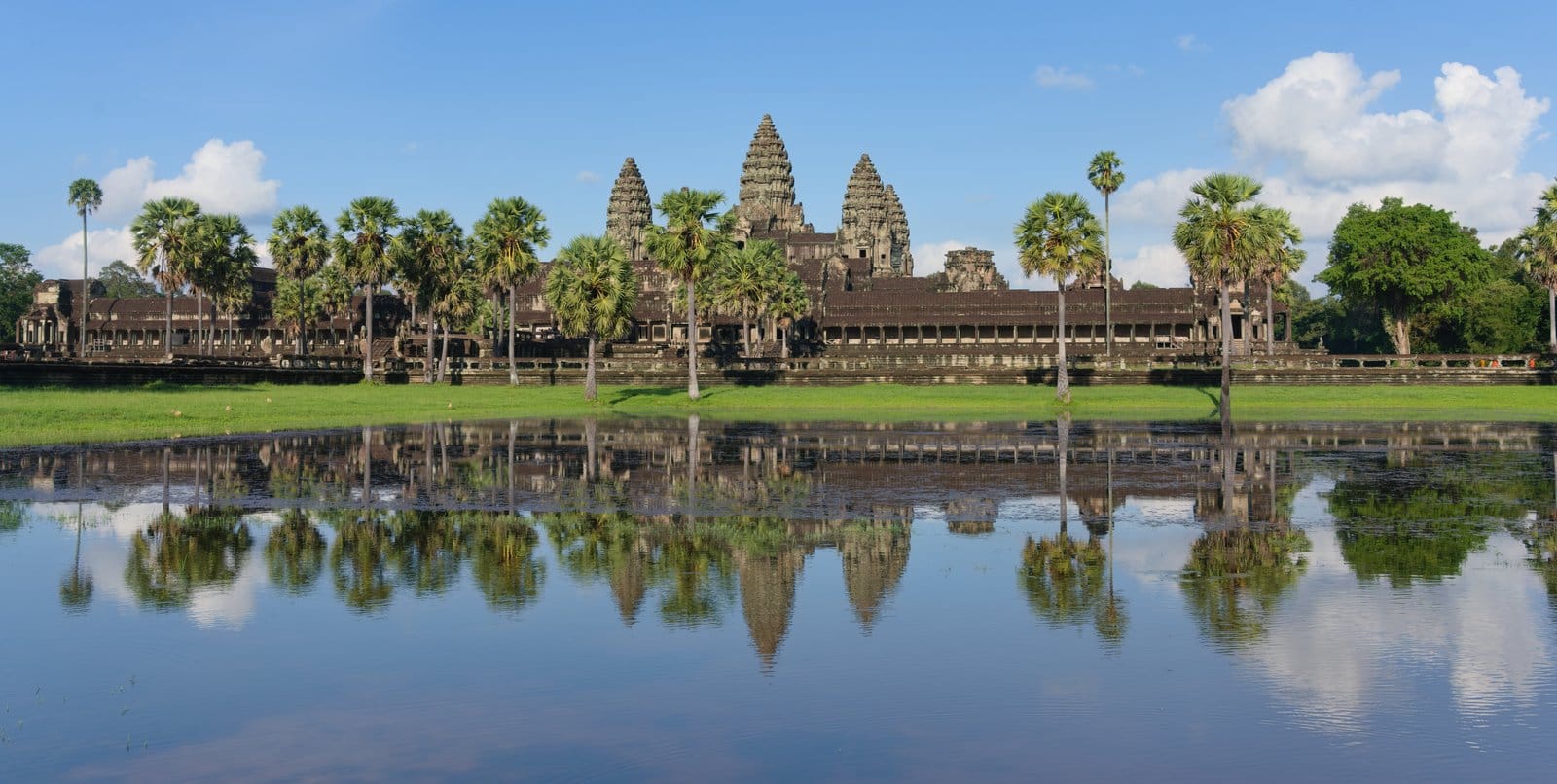
The largest religious monument in the world, Angkor Wat is a 12th-century Khmer temple complex in Cambodia originally dedicated to Vishnu and now a UNESCO World Heritage Site.
Explore Temple

Cambodia
Banteay Srei
A 10th-century Khmer temple renowned for its exquisite pink sandstone carvings, considered the finest and most refined of all Angkorian art.
Explore Temple
Cambodia
Bakong
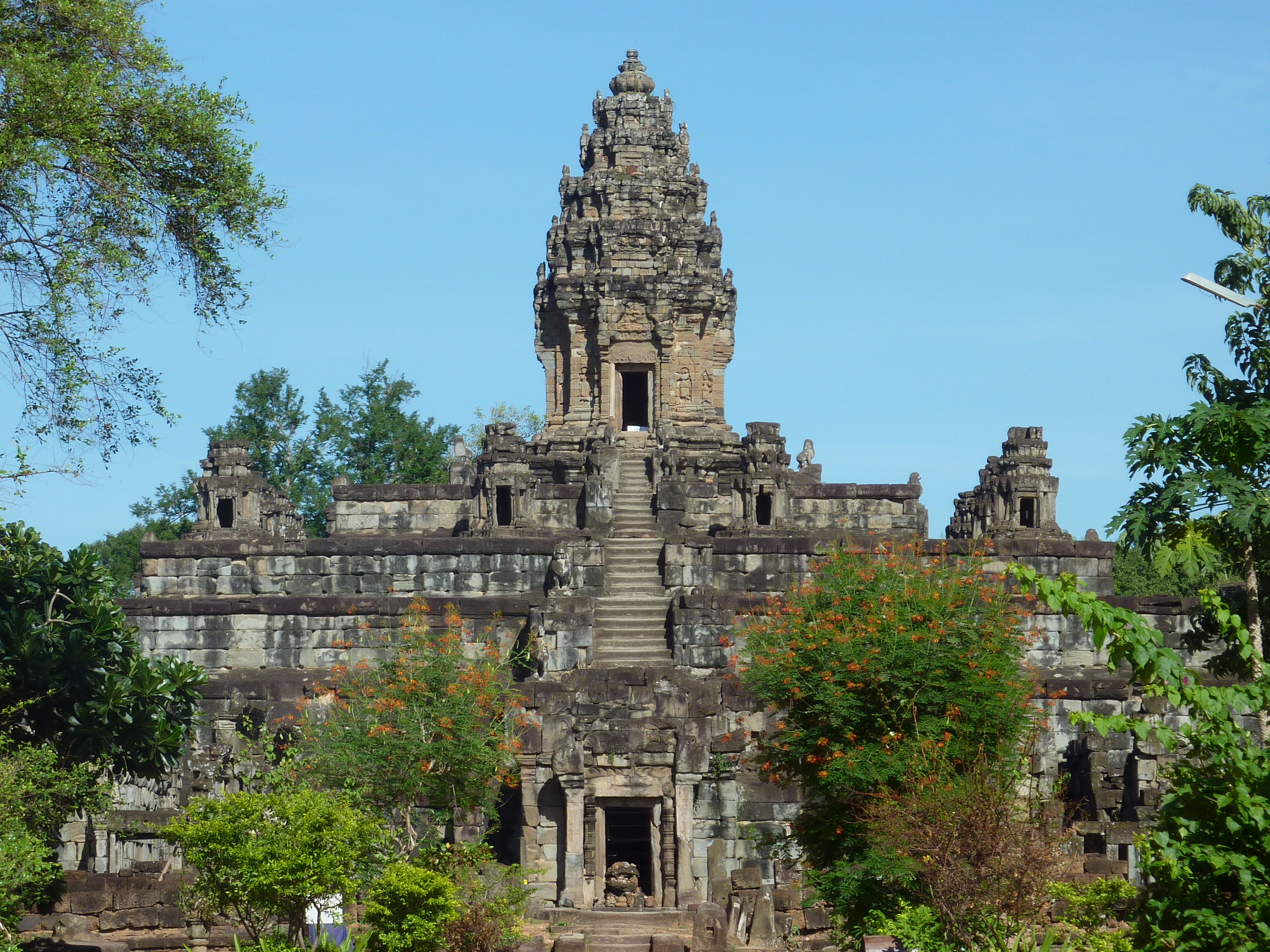
The first temple-mountain of the Khmer Empire, built in 881 CE by King Indravarman I, representing the prototype for all later Khmer pyramid temples including Angkor Wat.
Explore Temple