
🇮🇩
Hindu Temples in Indonesia
Indonesia features the 9th-century Prambanan complex in Central Java and living Balinese Hindu temple architecture across Bali.
4 Temples Profiled Southeast Asia Jakarta
Direct Answer
How Many Hindu Temples Are in Indonesia?
Indonesia is home to over 20,000 active Balinese Hindu temples (puras) across Bali and neighboring islands, alongside dozens of 8th-to-15th-century monumental stone candis preserved across Java.
Active Balinese Puras (Bali & Regional)
20,000+
Comprehensive system of village Kahyangan Tiga, subak irrigation temples, clan dadia shrines, and supreme directional sanctuaries (Sad Kahyangan).
Ancient Javanese Candis
Dozens of Sites
8th–15th century volcanic andesite stone compounds across Central and East Java (including Hindu landmarks Prambanan, Candi Sukuh, Candi Cetho, and Dieng), part of over 100 candi sites inventoried by Balai Pelestarian Kebudayaan.
Estimated Hindu Population
~4.7 Million
According to the Ministry of Home Affairs (Dukcapil), concentrated in Bali, with significant communities in Java, Lombok, and Kalimantan.
Sacred Places India Database
4 Flagship Sanctuaries
Detailed dossiers covering Prambanan, Pura Besakih, Pura Tanah Lot, and Pura Uluwatu.
How Temple Numbers Are Counted
Indonesia maintains two distinct temple categorizations. In Bali, where Agama Hindu Dharma is practiced by over 86% of the island's population, every village (desa adat) is mandatorily organized around at least three communal temples (Kahyangan Tiga), alongside thousands of family clan (dadia), irrigation (subak), and territorial (Kahyangan Jagat) puras registered with Parisada Hindu Dharma Indonesia (PHDI) and the Ministry of Religious Affairs (Kemenag). In Java, ancient temples (candis) are catalogued by the Ministry of Culture / Balai Pelestarian Kebudayaan as protected archaeological heritage.
Sacred Places India Database Scope
Because Balinese customary law requires communal puras in every banjar and subak cooperative, total temples reach tens of thousands; our database spotlights the supreme directional temples (Kahyangan Jagat) and landmark UNESCO World Heritage candis.
Introduction
Indonesia preserves two distinct streams of Hindu architectural heritage: ancient andesite stone candis in Java dating from the 8th to 15th centuries, and living temple compounds (puras) across Bali. With over 4.6 million recognized adherents, Indonesian Hinduism (Agama Hindu Dharma) integrates classical Sanskrit Vedic theology with indigenous Austronesian ritual traditions, maintaining thousands of active sanctuaries.
4
Profiled Temples
Southeast Asia
Region
Jakarta
Capital
Indonesian
Language
Major Hindu Communities
Over 85% of Indonesia's approximately 4.7 million Hindus reside in the province of Bali, practicing Agama Hindu Dharma. Notable minority Hindu communities exist in Central and East Java (Tenggerese), Central Kalimantan (Kaharingan Hindu), and urban diaspora centres in Jakarta, Medan, and Surabaya.
Regional Temple Distribution
Architectural styles diverge sharply by island: Java preserves 8th–10th century andesite stone candis (Prambanan, Candi Cetho), while Bali features walled open-air pura courtyards, split gates (candi bentar), and multi-tiered meru shrines adapted to volcanic geography.
History of Hinduism in Indonesia
Indian trade connections brought Shaivite and Vaishnavite traditions to Java and Sumatra by the 4th century CE, as evidenced by the Kutai and Tarumanagara inscriptions. In Central Java, the Hindu Sanjaya dynasty patronized monumental architecture, culminating in the consecration of the Prambanan (Loro Jonggrang) complex around 856 CE under Rakai Pikatan. Following the shift of political power to East Java (Majapahit Empire) and subsequent Islamization from the 15th century, the Javanese Hindu court culture, sacred texts, and temple traditions migrated to Bali, where they have been preserved continuously.
Pilgrimage & Cultural Significance
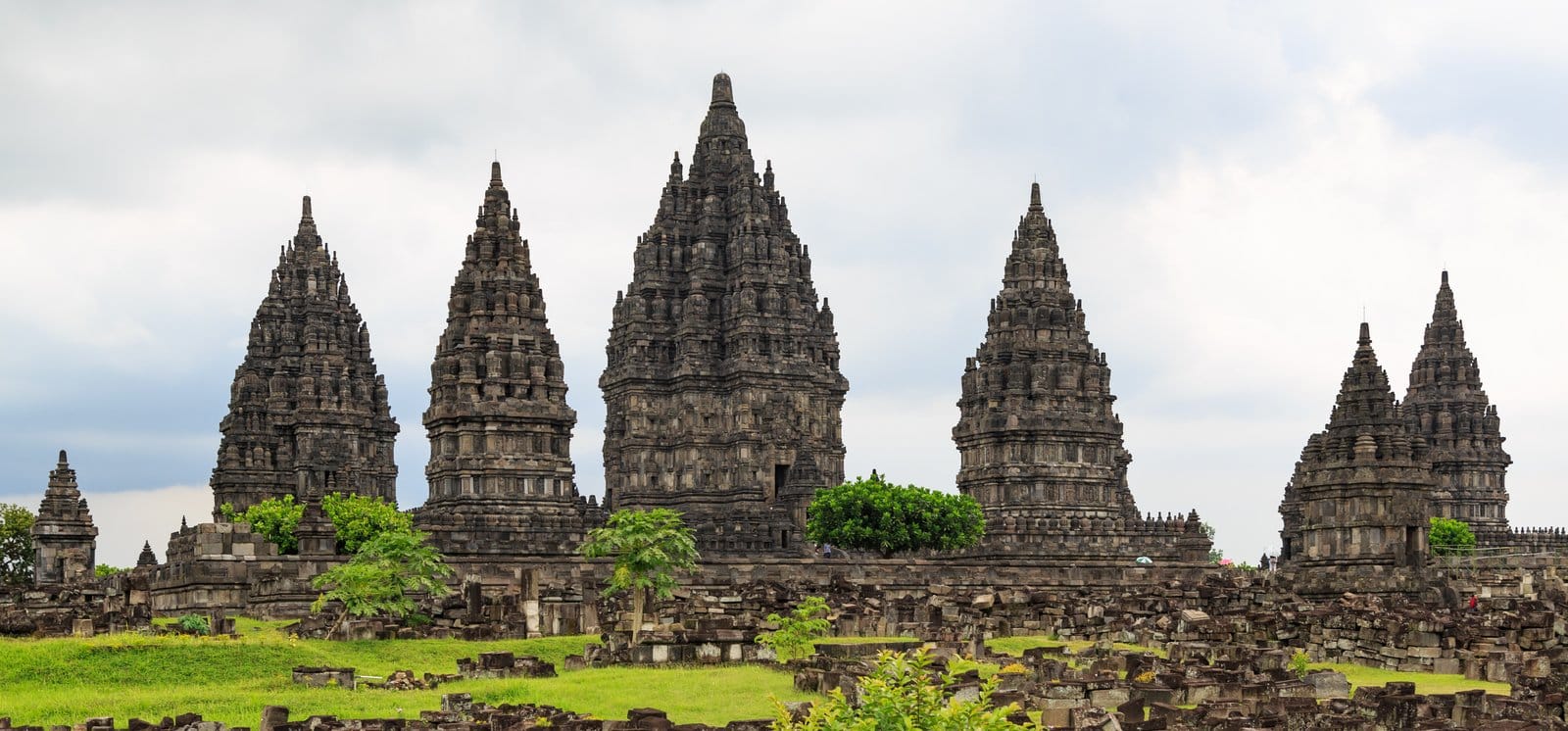
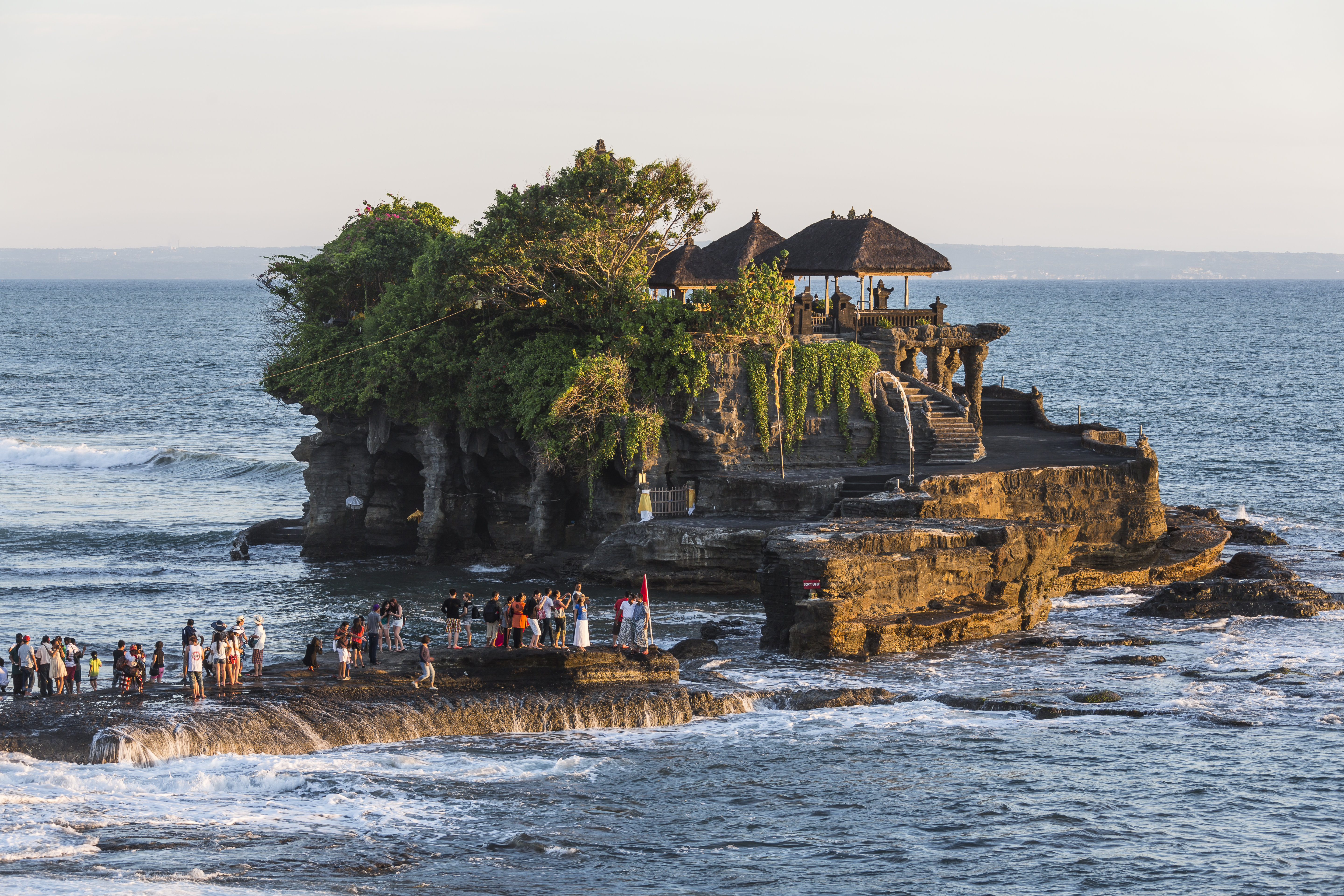
Prambanan, a UNESCO World Heritage Site near Yogyakarta, represents the monumental peak of Javanese Hindu architecture, dedicated to the Trimurti (Brahma, Vishnu, Shiva). In Bali, Pura Besakih—the 'Mother Temple' situated on the southwestern slopes of Mount Agung—serves as the paramount sanctuary for all Balinese Hindus. The directional sea temples, including Pura Tanah Lot and Pura Uluwatu, protect the island's coastal perimeter according to cosmological balance.
Architecture Overview
Indonesian Hindu architecture reflects regional geographic and ritual divergence. Javanese candis are closed, monolithic stone towers constructed of volcanic andesite, featuring stepped vertical spires and relief panels illustrating the Ramayana. Balinese puras are open-air walled courtyards organized into three tiered zones (Nista Mandala, Madya Mandala, and Utama Mandala), entered via split candi bentar gates and roofed paduraksa gateways, housing multi-roofed wooden meru shrines.
Temple Directory
Explore documented Hindu temples in Indonesia.
UNESCO 1991
Indonesia
Prambanan Temple
Prambanan is the largest Hindu temple complex in Indonesia, a 9th-century UNESCO World Heritage Site dedicated to the Trimurti and located near Yogyakarta.
Explore Temple

Indonesia
Pura Besakih
Pura Besakih is the Mother Temple of Bali, a sprawling complex of 23 temples on the slopes of Mount Agung and the holiest site in Balinese Hinduism.
Explore Temple
Indonesia
Tanah Lot
Tanah Lot is a spectacular Balinese sea temple perched on a rocky offshore outcrop, famous for its sunset views and sacred sea snakes.
Explore Temple

Indonesia
Uluwatu Temple
Uluwatu Temple is a spectacular Balinese sea temple perched on a 70-meter cliff edge at the southwestern tip of Bali, known for its Kecak fire dance performances and sunset views.
Explore Temple
Documentation Methodology & Scope
Research & Selection Criteria
Distinguishes between ancient monumental ruins in Java (candis managed by the Ministry of Culture / Balai Pelestarian Kebudayaan) and actively functioning living temples (puras) across Bali and regional transmigrant settlements registered under the Parisada Hindu Dharma Indonesia (PHDI).
Scope Boundaries & Limitations
Village-level dadia, subak, and banjar temples across Bali number in the tens of thousands; this guide focuses on Sad Kahyangan (six supreme sanctuaries), directional temples (Kahyangan Jagat), and key archaeological candi complexes.
Travel Information
Yogyakarta is the gateway for Prambanan, reachable by rail and commercial flights from Jakarta and Surabaya. Bali is accessed via Ngurah Rai International Airport (DPS) in Denpasar. Pura Besakih requires private vehicle or guided transport up Mount Agung's foothills. Modest dress with a traditional temple sash (selendang) and sarong is strictly required at all active Balinese temples.
Best Time to Visit
The dry season from April to October provides ideal travel weather across Java and Bali. Prambanan is best photographed during early morning light or late afternoon sunset. In Bali, major festival cycles—notably Galungan and Kuningan (occurring every 210 days in the Pawukon calendar) and Nyepi (Balinese New Year in March)—provide extensive ritual observation.
Verified Sources & References
Documentation for Indonesia draws on official census statistics, heritage authorities, and registered temple trust archives.
- Ministry of Education, Culture, Research, and Technology (Indonesia) — Prambanan Conservation Documentationgovernment
- Parisada Hindu Dharma Indonesia (PHDI) — National Temple Registry and Ritual Archivesacademic
- UNESCO World Heritage Centre — Prambanan Temple Compounds (Site No. 642)government
- Badan Pusat Statistik (BPS) — Population and Religion Census Datagovernment
Ministry of Tourism, Indonesia
Indonesia Travel — official heritage destination information
Official heritage designation, site management and visitor information for the monuments described on this page.
Open source (opens in a new tab)UNESCO World Heritage Centre
UNESCO World Heritage List — India
World Heritage inscription records for the internationally listed monuments named on this page.
Open source (opens in a new tab)INTACH
Indian National Trust for Art and Cultural Heritage
Architectural classification and conservation context for the temple traditions described on this page.
Open source (opens in a new tab)— every record linked above was re-requested for this release, so the link still resolves and the publisher still serves the document. It is a link check, not a re-verification of every sentence on this page.
Frequently Asked Questions
How is Balinese Hinduism different from Indian Hinduism?
Balinese Hinduism (Agama Hindu Dharma) incorporates classical Vedic and Puranic concepts of Brahman, the Trimurti, and Dharma, but integrates them with ancestral veneration, local nature spirits, and indigenous Balinese customary law (adat). Worship focuses on open-air meru altars rather than enclosed idol garbhagrihas.
Is Prambanan still an active temple?
Prambanan functions primarily as an archaeological monument under national protection, but since 2022 it has been formally authorized for regular religious ceremonies by Hindu religious bodies, including Tawur Kesanga observances on the eve of Nyepi.
What is the largest Hindu temple in Indonesia?
Prambanan is the largest ancient Hindu temple complex in Indonesia, with its central Shiva shrine rising 47 metres high. Pura Besakih on Mount Agung in Bali is the largest active functioning temple complex, comprising over 80 individual shrines.