
IndonesiaShiva (Hyang Widhi Wasa)
Pura Besakih
Pura Besakih is the Mother Temple of Bali, a sprawling complex of 23 temples on the slopes of Mount Agung and the holiest site in Balinese Hinduism.
Bali, Indonesia Shiva (manifested as Hyang Widhi Wasa) Built: c. 8th century CE
Share
Overview
Pura Besakih, reverently known as the Mother Temple of Bali, is the largest, holiest, and most important temple complex in Balinese Hinduism. Perched approximately 1,000 meters above sea level on the southwestern slopes of Mount Agung—the island's tallest and most sacred volcano—the complex comprises twenty-three distinct but interconnected temples spread across a series of parallel ridges.
The temple complex dates back to at least the 8th century and has served as the central sanctuary of Balinese spiritual life for over a millennium. The layout follows a tripartite division reflecting the Balinese cosmological concept of Tri Hita Karana, with Pura Penataran Agung occupying the central and highest position as the primary temple dedicated to Shiva in his manifestation as Hyang Widhi Wasa, the supreme god of Balinese Hinduism.
Each of the twenty-three temples within the complex is oriented toward a specific deity or aspect of divine power, creating an integrated sacred landscape that mirrors the cosmic order.
Quick Facts
Deity
Shiva (Hyang Widhi Wasa)
Location
Bali, Indonesia
Built
c. 8th century CE
Built By
Unknown (developed across multiple dynasties)
Coordinates
-8.37, 115.45
Timings
8:00 AM – 5:00 PM daily
Entry Fee
IDR 60,000 (adults); additional parking fees apply
History
The earliest structures at Pura Besakih date from the 8th century, with the first recorded stone inscriptions referring to the site discovered from 1279 CE during the reign of the Warmadewa dynasty. The complex gained prominence under the Majapahit Empire, which conquered Bali in 1343 and established a Hindu-Buddhist civilization that profoundly shaped Balinese culture.
The legendary Hindu priest Dang Hyang Nirartha, who arrived in Bali from Java in the 16th century, is credited with spiritually revitalizing Besakih and establishing many of its ritual traditions. During the period of Dutch colonial rule (1846–1949), the Dutch recognized Besakih's political and religious significance and respected its sanctity, viewing it as a central institution through which colonial authority could be mediated.
The most dramatic event in modern Besakih history occurred during the catastrophic eruption of Mount Agung in 1963. Lava flows came within meters of the main temple complex but stopped just short of the structures, a phenomenon widely regarded by Balinese Hindus as a divine miracle affirming the temple's sanctity. Despite significant ash damage requiring extensive restoration, the temple survived largely intact, cementing its status as a site of extraordinary spiritual power.
Historical Timeline
c. 8th century CE
Earliest Structures
The first shrines and stone structures are established on the slopes of Mount Agung, marking the beginning of Pura Besakih as a sacred site.
1343
Majapahit Influence
The Majapahit Empire conquers Bali and establishes a Hindu-Buddhist civilization that greatly expands and enriches the Besakih temple complex.
16th century
Dang Hyang Nirartha
The revered Hindu priest Dang Hyang Nirartha spiritually revitalizes Besakih, establishing many of its ritual traditions and cementing its role as Bali's Mother Temple.
1963
Mount Agung Eruption
A catastrophic volcanic eruption sends lava flows within meters of the main temple complex, but the structures survive largely intact in an event widely regarded as miraculous.
Architecture
Pura Besakih's architectural ensemble represents the pinnacle of Balinese temple design, with Pura Penataran Agung serving as the architectural and spiritual centerpiece. This main temple comprises a series of seven progressively elevated courtyards connected by elaborately carved stone gateways known as candi bentar (split gates) and paduraksa (covered gates).
The entrance approach begins with a massive candi bentar gate at the lowest level and ascends through a sequence of courtyards, each marked by increasingly ornate gateways, culminating in the innermost sanctum where the meru—the multi-tiered shrines characteristic of Balinese architecture—are arranged. The most prominent meru, dedicated to Shiva, rises through eleven tiers, the maximum number reserved for the most sacred temples, representing Mount Meru, the cosmic mountain of Hindu mythology.
All structures are constructed from volcanic stone, richly adorned with carved demonic guardians (bhoma and kala heads), floral scrollwork, and narrative panels. The temple complex is oriented toward the summit of Mount Agung, aligning the built sacred space with the natural sacred landscape in accordance with the Balinese directional system, which considers the volcano the holiest and most auspicious direction.
Main Deity
Shiva (Hyang Widhi Wasa)
Shiva (manifested as Hyang Widhi Wasa)
Religious Significance
Pura Besakih embodies the spiritual heart of Balinese Hinduism and functions as the axis mundi of the island's religious geography. The complex serves as the central coordinating temple for the entire Balinese temple hierarchy, which includes thousands of village temples, clan temples, and household shrines across the island. The Besakih complex is conceptually organized around the principle of Tri Hita Karana—harmony between humans, nature, and the divine—with the temple layout, architectural elements, and ritual calendar all reflecting this foundational philosophy.
The site's location on Mount Agung, which Balinese Hindus regard as the most sacred point on the island and the abode of the gods, reinforces its unparalleled religious significance. The temple complex plays a central role in the Odalan festival cycle, with each of the twenty-three constituent temples celebrating its anniversary on separate dates throughout the year, effectively making Besakih a continuously active ceremonial center.
The complex is also the primary venue for the island-wide ceremonies of Galungan, Kuningan, and the centennial Eka Dasa Rudra ritual.
Temple Legends
According to Balinese tradition, Pura Besakih was believed to have been created when the gods divided Mount Meru, the cosmic mountain of Hindu mythology, and created the islands of the Indonesian archipelago. One fragment of the divine mountain became Mount Agung in Bali, and Besakih was established at its base as the earthly counterpart to the celestial realm.
The temple is intimately connected with the legend of Rsi Markandeya, a Javanese Hindu sage who journeyed to Bali in the 8th century. The sage is said to have meditated at the site and received a divine revelation instructing him to establish a temple at the foot of Mount Agung to serve as a unifying spiritual center for the island's inhabitants.
Another important legend recounts the 1963 eruption of Mount Agung, during which the lava flows miraculously parted around the temple compound despite destroying surrounding villages. This event is interpreted by devotees as tangible evidence of the temple's divine protection and is commemorated in temple iconography and ritual.
The site is also associated with the myth of the dragon Naga Besukih, a serpent deity believed to dwell within the mountain and to guard the temple complex, whose benevolent presence ensures the fertility of the surrounding land.
Festivals & Celebrations
The most significant ceremonial event at Pura Besakih is the Eka Dasa Rudra, a massive purification ritual held once every one hundred years according to the Balinese calendar. The ceremony, considered the most important in Balinese Hinduism, involves the entire island's population in a collective effort to restore cosmic balance and purify the world from negative forces.
The most recent Eka Dasa Rudra was held in 2013, having been postponed from its scheduled 1979 date due to lingering concerns following the 1963 eruption—which itself was interpreted by some as divine displeasure related to the timing of the previous ceremony. The temple's primary annual festival (odalan) of Pura Penataran Agung falls on the 60th day of the Balinese pawukon calendar cycle and lasts for seven days.
During this period, tens of thousands of devotees from across Bali converge on Besakih in elaborate processions, carrying offerings, temple banners, and sacred objects. Other significant observances include Galungan and Kuningan, the Balinese New Year of Nyepi, and the full moon festival of Purnama, which draws large numbers of pilgrims to the complex.
Daily Rituals
Daily worship at Pura Besakih follows the intricate schedule of Balinese Hinduism, beginning before dawn when temple priests (pemangku) prepare offerings of flowers, fruits, and food for the deities across the 23 constituent temples. The morning prayers, known as puja tri sandhya, are conducted three times daily at sunrise, noon, and sunset, with devotees gathering at Pura Penataran Agung for synchronized chanting and offerings.
Each of the temple's 23 constituent shrines follows its own ritual calendar, but daily offerings are placed at every altar without exception, making Besakih among the most continuously active ritual sites in the world.
Visitor Information
Timings
8:00 AM – 5:00 PM daily
Entry Fee
IDR 60,000 (adults); additional parking fees apply
Dress Code
Sarong and sash must be worn; rental sarongs are available at the entrance
Photography
Photography is permitted in most areas; some inner sanctums prohibit photography; flash is discouraged during active ceremonies
Accessibility
The main courtyard of Pura Penataran Agung is accessible via a paved pathway, but reaching the inner sanctums requires ascending numerous stone steps. The temple does not provide wheelchair rental, and the steep terrain of Mount Agung's slopes poses challenges for visitors with limited mobility. Assistance from companions is recommended.
Best Time to Visit
April to October (dry season); early morning before 10:00 AM to avoid crowds; visiting during a temple festival provides the richest cultural experience
How to Reach
Pura Besakih is located about 50 kilometers northeast of Denpasar and 35 kilometers from Ubud. Access is by car or organized tour; public minibuses (bemo) run irregularly from Denpasar's Batubulan terminal. The drive takes approximately 90 minutes from Denpasar and one hour from Ubud.
Nearby Attractions
Mount Agung trekking routes, Tirta Gangga Water Palace (25 km east), Taman Ujung (35 km east), Pura Lempuyang (30 km east), traditional villages of Sidemen and Tenganan
Nearby Hotels
Sidemen Hilltop Retreat
15 kmA serene eco-lodge in the Sidemen Valley with panoramic views of Mount Agung, offering traditional bamboo cottages and organic Balinese cuisine.
Hotel Bukit Segara
1 kmA comfortable mid-range hotel in the village of Besakih, located within walking distance of the temple complex with simple rooms and a restaurant.
Pertiwi Resort & Spa
8 kmA resort in the Rendang area offering spacious rooms, a swimming pool, and spa services, situated amid rice terraces with views of Mount Agung.
Nearby Vegetarian Restaurants
Besakih Garden Cafe
500 metersA casual cafe near the temple entrance serving Indonesian vegetarian dishes including nasi campur, fresh fruit juices, and traditional Balinese snacks.
Rumah Makan Sari Boga
2 kmA family-run warung offering authentic Balinese vegetarian cuisine with tofu, tempeh, and fresh vegetables sourced from local farms.
Boga Group Restaurant
5 kmAn established restaurant on the road to Besakih serving Indonesian and Western dishes with dedicated vegetarian sections on the menu.
Nearby Temples
Pura Lempuyang
30 km eastOne of Bali's six holiest directional temples, famous for the Gates of Heaven at the summit offering breathtaking views of Mount Agung.
Tirta Gangga Water Palace
25 km eastA former royal water palace featuring ornate fountains, pools, and Balinese garden architecture surrounded by lush tropical vegetation.
Pura Kehen
20 km southA historic temple in Bangli regency with an impressive eleven-tiered meru shrine and a steep staircase flanked by carved dragon guardians.
Interesting Facts
- The 1963 Mount Agung eruption sent lava flows to within three meters of the main temple structure; Balinese Hindus interpret this as divine protection.
- Pura Besakih comprises 23 separate temples, not just one—each with its own distinct deity, priest, and ceremonial calendar.
- The main meru shrine has 11 tiers, the maximum permitted in Balinese temple architecture, reserved exclusively for the most sacred temples.
- The temple complex predates the arrival of Hinduism in Bali, suggesting it was originally an indigenous mountain sanctuary.
- More than 70 discrete ceremonies are held at Besakih each year, making it among the most ritually active temple complexes in the world.
- The temple's primary priest, the Pedanda Gde, is selected based on hereditary lineage and must undergo years of specialized ritual training.
Image Gallery
1 / 4
The sprawling complex of 23 temples spread across the slopes of Mount Agung
Frequently Asked Questions
Is Pura Besakih worth visiting if I am not Hindu?
Absolutely. Besakih is remarkable for its stunning mountain setting, architectural beauty, and cultural significance. Visitors of all faiths are welcome, though respectful behavior and appropriate dress are expected during active ceremonies.
Can I climb Mount Agung from the Besakih trail?
Yes, the Besakih trail is one of the standard routes for climbing Mount Agung, though it is the steeper and more challenging approach. Treks must be arranged with licensed guides, and permits are required. The trailhead is located within the temple complex.
Are there unofficial guides at the temple entrance?
Unlicensed touts and self-proclaimed guides often approach arriving tourists. Decline unsolicited services and arrange a guide through official channels in advance.
What is the dress code for entering Pura Besakih?
All visitors must wear a sarong and sash when entering any of the temple courtyards. Sarongs can be rented at the entrance for approximately IDR 10,000–15,000. Shorts, short skirts, and bare shoulders are not permitted.
Sources & References
- [1]Pura Besakih Official Website temple
- [2]Bali Cultural Agencygovernment
- [3]UNESCO Tentative List — Cultural Landscape of Besakih government
— every record linked above was re-requested for this release, so the link still resolves and the publisher still serves the document. It is a link check, not a re-verification of every sentence on this page.
More Temples in Indonesia
Explore other Hindu temples in Indonesia.
UNESCO 1991
Indonesia
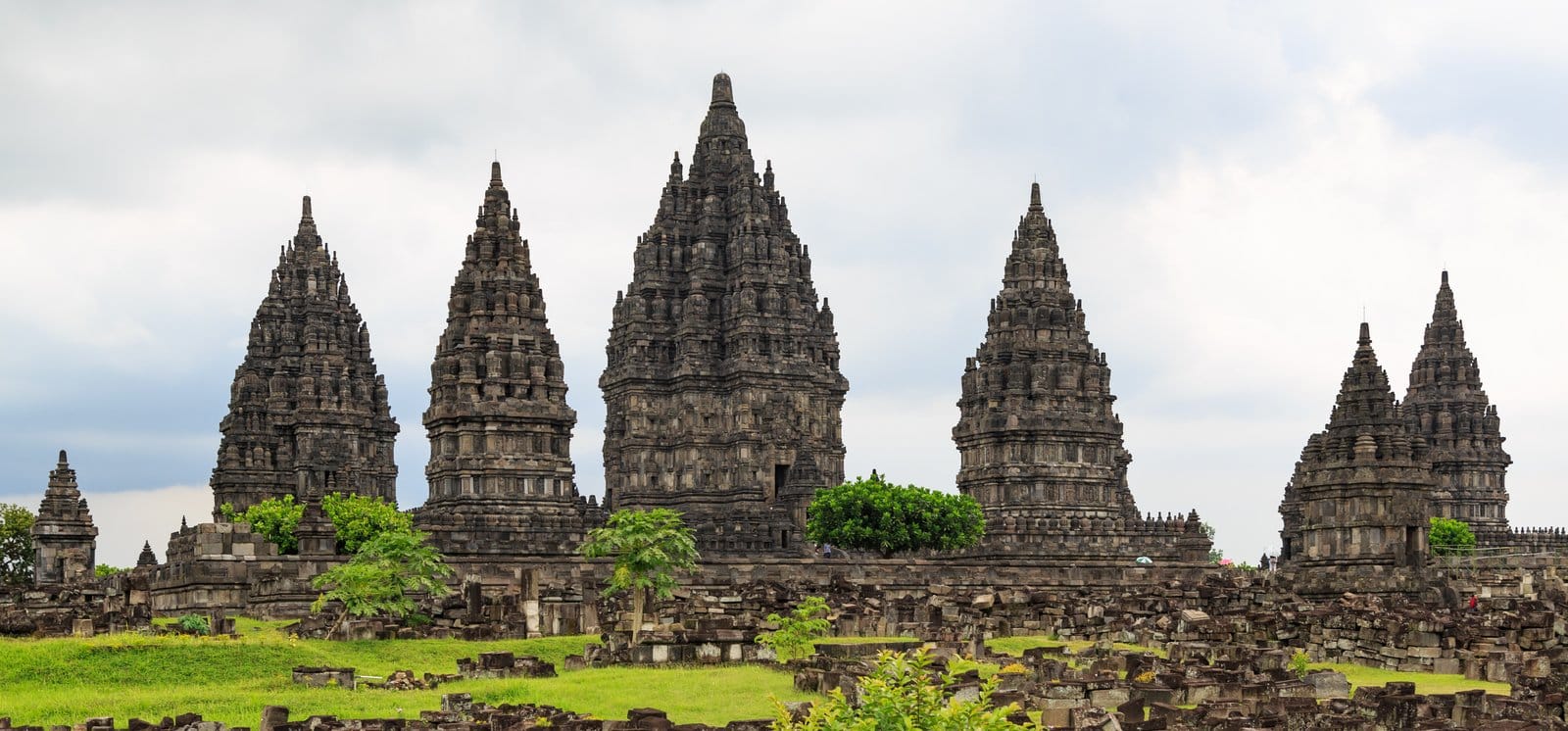
Prambanan Temple
Prambanan is the largest Hindu temple complex in Indonesia, a 9th-century UNESCO World Heritage Site dedicated to the Trimurti and located near Yogyakarta.
Explore Temple
Indonesia
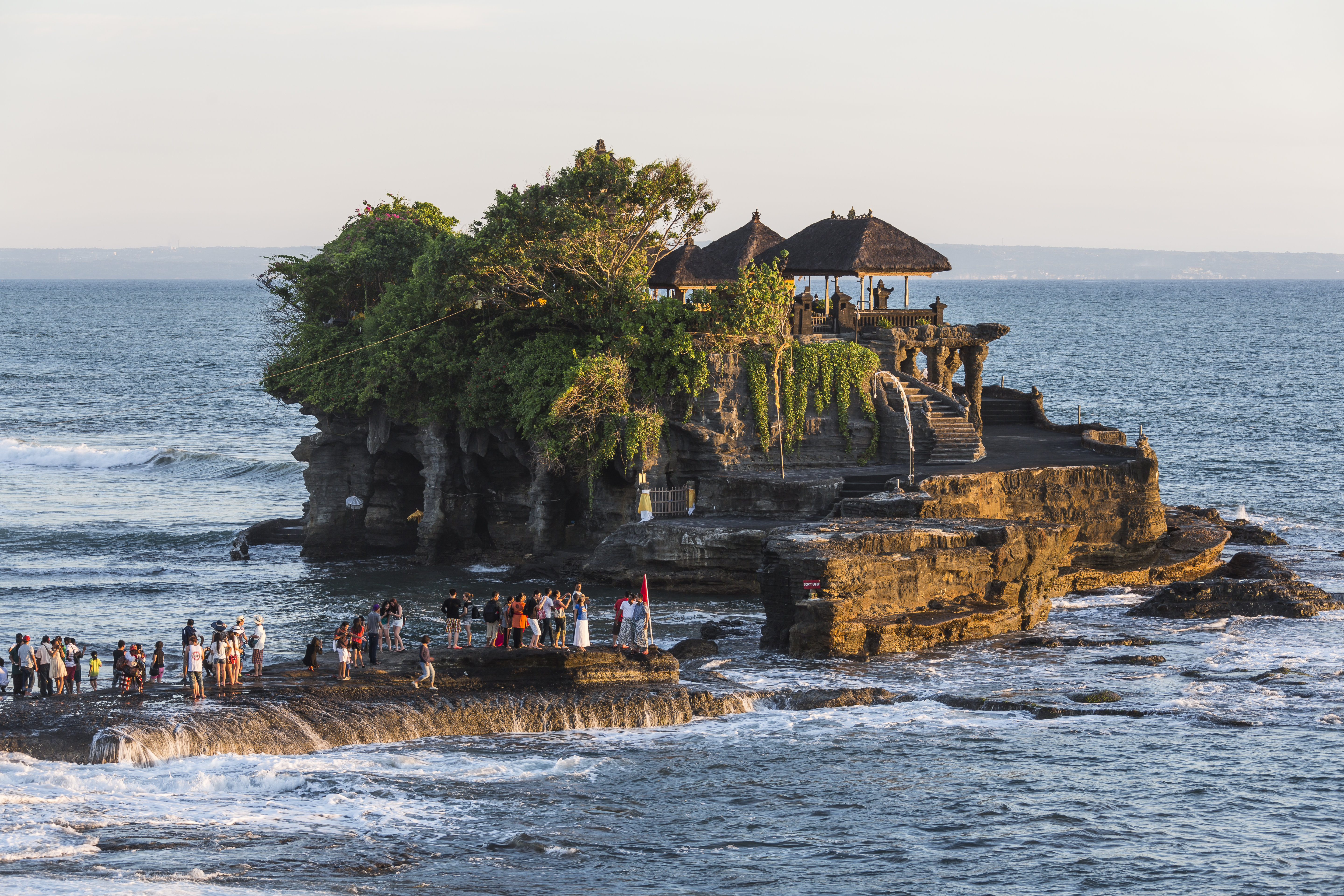
Tanah Lot
Tanah Lot is a spectacular Balinese sea temple perched on a rocky offshore outcrop, famous for its sunset views and sacred sea snakes.
Explore Temple

Indonesia
Uluwatu Temple
Uluwatu Temple is a spectacular Balinese sea temple perched on a 70-meter cliff edge at the southwestern tip of Bali, known for its Kecak fire dance performances and sunset views.
Explore Temple