
Nepal
Doleshwar Mahadev Temple
A modern temple complex in Bhaktapur featuring Nepal's tallest Shiva statue at 143 feet, drawing devotees with its impressive scale and serene atmosphere.
Bhaktapur, Nepal Shiva Built: 1998–2011
Share
Overview
Doleshwar Mahadev Temple is a relatively modern Hindu temple complex located in the Suryabinayak area of Bhaktapur district, Nepal. The temple has rapidly gained prominence since the completion of its centerpiece: a 143-foot (43.5-meter) statue of Lord Shiva in a seated, meditative posture, which stands as the tallest Shiva statue in Nepal and one of the tallest in South Asia. The statue, often called the 'Shiva of Doleshwar,' has become a defining landmark visible from miles away.
The temple complex was developed primarily between 1998 and 2011, representing among the most ambitious Hindu temple construction projects in modern Nepal. The initiative was driven by local religious leaders and devotees who envisioned a grand shrine that would honor Shiva in a form visible across the Kathmandu Valley. The result is a harmonious blend of traditional temple architecture and monumental sculpture.
Unlike the ancient, history-laden temples of the Kathmandu Valley, Doleshwar Mahadev offers a clean, spacious, and well-organized environment for worship. The complex includes the main temple building, the colossal Shiva statue, subsidiary shrines, gardens, and pilgrimage amenities, all set against the backdrop of the surrounding hills.
Quick Facts
Deity
Shiva
Location
Bhaktapur, Nepal
Built
1998–2011
Coordinates
27.68, 85.38
Timings
5:00 AM – 8:00 PM daily
Entry Fee
Free entry (donations welcome)
History
The Doleshwar area has been associated with Shiva worship for centuries, with a small ancient shrine predating the modern construction. However, the idea for the grand temple complex emerged in the late 1990s when local community leaders and religious figures envisioned a monumental Shiva statue that would serve as a pilgrimage destination and a symbol of Nepal's Hindu heritage.
Construction began in 1998 under the guidance of the Doleshwar Mahadev Temple Development Committee. The project was funded entirely through public donations, with contributions flowing from Nepali communities both at home and abroad. The construction process took over a decade, with the main temple completed in phases.
The colossal Shiva statue was unveiled in a grand ceremony in June 2011. The event was attended by thousands of devotees, religious leaders, and government officials. The statue's installation marked the completion of the temple's primary vision and established Doleshwar as a major pilgrimage destination in the Kathmandu Valley. Since then, the complex has continued to expand with additional facilities, gardens, and subsidiary shrines.
Architecture
The Doleshwar Mahadev complex features a blend of traditional Nepalese pagoda architecture and modern monumental sculpture. The main temple building is a two-tiered pagoda structure built in the classic Newari style, with carved wooden struts, sloped roofs with golden finials, and intricate lattice windows. The temple is constructed primarily of brick and timber, following traditional Nepalese techniques.
The dominant architectural feature is the colossal Shiva statue, which dwarfs the temple itself. The statue depicts Lord Shiva seated in padmasana (lotus posture), with his eyes closed in deep meditation. The figure holds a trishul (trident) in one hand and a damaru (drum) in another, with a third hand raised in abhaya mudra (gesture of blessing). The statue is constructed from reinforced concrete with a white marble and plaster finish, giving it a serene, pristine appearance.
The complex is organized around a central courtyard with the statue as the focal point. Subsidiary shrines are dedicated to Parvati, Ganesh, and Nandi, Shiva's bull mount. A large bell, typical of Nepalese temples, hangs at the entrance. The grounds include manicured gardens, shaded walkways, and a parikrama (circumambulation) path around the main structures.
Main Deity
Shiva
Religious Significance
Doleshwar Mahadev Temple holds significance primarily as a modern symbol of Nepal's living Hindu tradition. While the ancient temples of the Kathmandu Valley preserve Nepal's historical Hindu heritage, Doleshwar demonstrates that the tradition is not merely historical but continues to inspire major religious architecture in the contemporary era. The temple represents the faith and generosity of the Nepali Hindu community in the 21st century.
The temple is particularly significant for devotees seeking a family-friendly pilgrimage experience. The spacious grounds, clean facilities, and organized approach make it accessible to elderly pilgrims, families with children, and those who might find the crowds and chaos of older temples challenging. The temple has become a popular destination for school field trips and family outings.
The Shiva statue itself has become a landmark of the Kathmandu Valley, visible from the ring road and many vantage points. It serves as a visual reminder of the valley's Hindu heritage and has been featured in numerous photographs, documentaries, and travel guides, contributing to Nepal's religious tourism.
Temple Legends
While Doleshwar Mahadev is a modern temple, local traditions associate the area with ancient Shiva legends. According to local belief, the site was once a meditation spot for the sage Doleshwar, from whom the area derives its name. The sage performed intense tapasya (austerities) at this location, and Shiva appeared before him, promising to reside here eternally. The new temple is seen as fulfilling this ancient promise.
Another tradition connects Doleshwar to the story of the churning of the ocean (Samudra Manthan). Some local lore suggests that a drop of the amrita (nectar of immortality) fell at this spot during the churning, sanctifying the ground and making it especially favorable for Shiva worship. This legend explains the temple's perceived spiritual potency despite its recent construction.
A third narrative involves the statue itself. Devotees believe that the statue was miraculously placed in its current spot rather than constructed, emerging from the earth fully formed. While this is clearly symbolic, it reflects the deep faith of local devotees who see the temple's creation as divinely ordained rather than merely a human construction project.
Festivals & Celebrations
Doleshwar Mahadev Temple celebrates all major Shiva festivals with particular grandeur. Maha Shivaratri is the most important, drawing thousands of pilgrims to the temple complex. The large open grounds accommodate the crowds comfortably, with special stages for bhajan performances, free food distribution (bhandara), and overnight vigil facilities for devotees who stay awake throughout the night.
The temple also celebrates the monthly Shivaratri (the 14th day of the dark fortnight) with special pujas. The month of Shravan (July-August) is especially significant, with many devotees visiting on Mondays to offer water and bilva leaves to Shiva. The temple decorates the statue and main shrine with flowers during these periods.
Other major festivals include Ganesh Chaturthi, Teej, and Dashain. During Teej, the temple sees thousands of women in red saris visiting to pray for their husbands' long lives. The temple has also started organizing cultural programs including classical dance and music performances, making it a center for both religious and cultural activities in the Bhaktapur area.
Visitor Information
Timings
5:00 AM – 8:00 PM daily
Entry Fee
Free entry (donations welcome)
Dress Code
Modest clothing covering shoulders and knees
Photography
Photography allowed throughout the complex
Best Time to Visit
The best time to visit Doleshwar Mahadev Temple is from October to March, when Kathmandu Valley enjoys clear skies and pleasant temperatures. The winter months offer excellent visibility, and the white marble of the Shiva statue gleams brilliantly under the winter sun. Early mornings (6:00 AM – 9:00 AM) provide the most peaceful experience, with morning rituals in progress and the complex relatively uncrowded.
Maha Shivaratri in February-March is the most spectacular time to visit, with the temple illuminated and crowded with devotees. Expect large crowds and limited parking. The temple management organizes special facilities during this period.
Evening visits during the summer months (April-September) are recommended to avoid the midday heat. The temple is illuminated after sunset, and the softly lit statue against the night sky creates a beautiful sight. The monsoon season (June-September) sees fewer visitors but the surrounding hills are lush and green.
How to Reach
Doleshwar Mahadev Temple is located in the Suryabinayak area of Bhaktapur district, approximately 12 kilometers east of Kathmandu's city center. The temple is accessible by road from Kathmandu, Bhaktapur, and surrounding areas. From Kathmandu's ring road, take the route toward Bhaktapur, passing through Suryabinayak. The temple is well-signposted and known to local transportation services.
Public buses from Kathmandu's Bagbazar area and Bhaktapur's city center serve the Suryabinayak route, stopping within a 10-minute walk of the temple. Taxis and ride-sharing services from anywhere in the Kathmandu Valley can reach the temple in 30-60 minutes depending on traffic. The temple provides ample parking for private vehicles and tourist buses.
For pedestrians, a walking path from Suryabinayak climbs gradually through residential neighborhoods and fields to the temple. The approach offers views of the temple complex and the surrounding valley, building anticipation for the first sight of the colossal Shiva statue.
Nearby Attractions
Bhaktapur Durbar Square, a UNESCO World Heritage Site renowned for its medieval art and architecture, is just 4 kilometers west of the temple. The Nyatapola Temple, the 55 Window Palace, and the Pottery Square are must-visit attractions. The Suryabinayak Temple, dedicated to Ganesh, is located nearby and predates the Doleshwar complex.
The Changu Narayan Temple, the oldest temple in Nepal dating back to the 4th century CE, is located 6 kilometers north of Doleshwar. This UNESCO World Heritage Site houses some of the finest examples of Licchavi-era stone and wood carvings. The Nagarkot hill station, offering panoramic Himalayan views, is about 15 kilometers further east.
For those interested in traditional crafts, the town of Thimi, famous for its clay pottery and mask-making, lies between Bhaktapur and Doleshwar. The Bhaktapur Community Hospital and its eye camp programs are also noted attractions for medical tourists visiting Nepal.
Interesting Facts
- The Shiva statue at Doleshwar Mahadev stands 143 feet tall, making it the tallest Shiva statue in Nepal and among the top ten tallest Shiva statues in the world.
- The statue was constructed without any government funding, entirely through donations from Nepali Hindus worldwide, collected over 13 years.
- The statue's pedestal contains a small museum displaying artifacts related to Nepali Hindu culture and the history of the temple's construction.
- Doleshwar Mahadev Temple has one of the largest open courtyards of any temple in the Kathmandu Valley, capable of accommodating over 10,000 devotees during festivals.
- The temple complex includes a goshala (cow shelter) that houses rescued and elderly cows, reflecting the Hindu reverence for cows.
- Despite being a modern construction, the temple follows traditional Vastu principles in its layout and orientation, with the statue precisely aligned to face the east.
Frequently Asked Questions
How tall is the Shiva statue at Doleshwar Mahadev?
The seated Shiva statue stands 143 feet (43.5 meters) tall, making it the tallest Shiva statue in Nepal and one of the tallest in South Asia.
Is Doleshwar Mahadev Temple free to visit?
Yes, entry to the temple complex is free. Donations are welcome and help maintain the facilities and support the temple's charitable activities.
Can I climb or touch the Shiva statue?
No, visitors are not permitted to climb or directly touch the statue. A designated viewing area allows for darshan and photography from an appropriate distance.
Is the temple wheelchair accessible?
Partially. The main courtyard and viewing areas are accessible via ramps, but some subsidiary shrines and the upper levels of the complex may have stairs.
How does Doleshwar compare to Pashupatinath?
Pashupatinath is an ancient, UNESCO-listed temple with immense historical and religious significance. Doleshwar is a modern complex known for its monumental statue. Both are important for different reasons, and many pilgrims visit both.
Sources & References
— every record linked above was re-requested for this release, so the link still resolves and the publisher still serves the document. It is a link check, not a re-verification of every sentence on this page.
More Temples in Nepal
Explore other Hindu temples in Nepal.
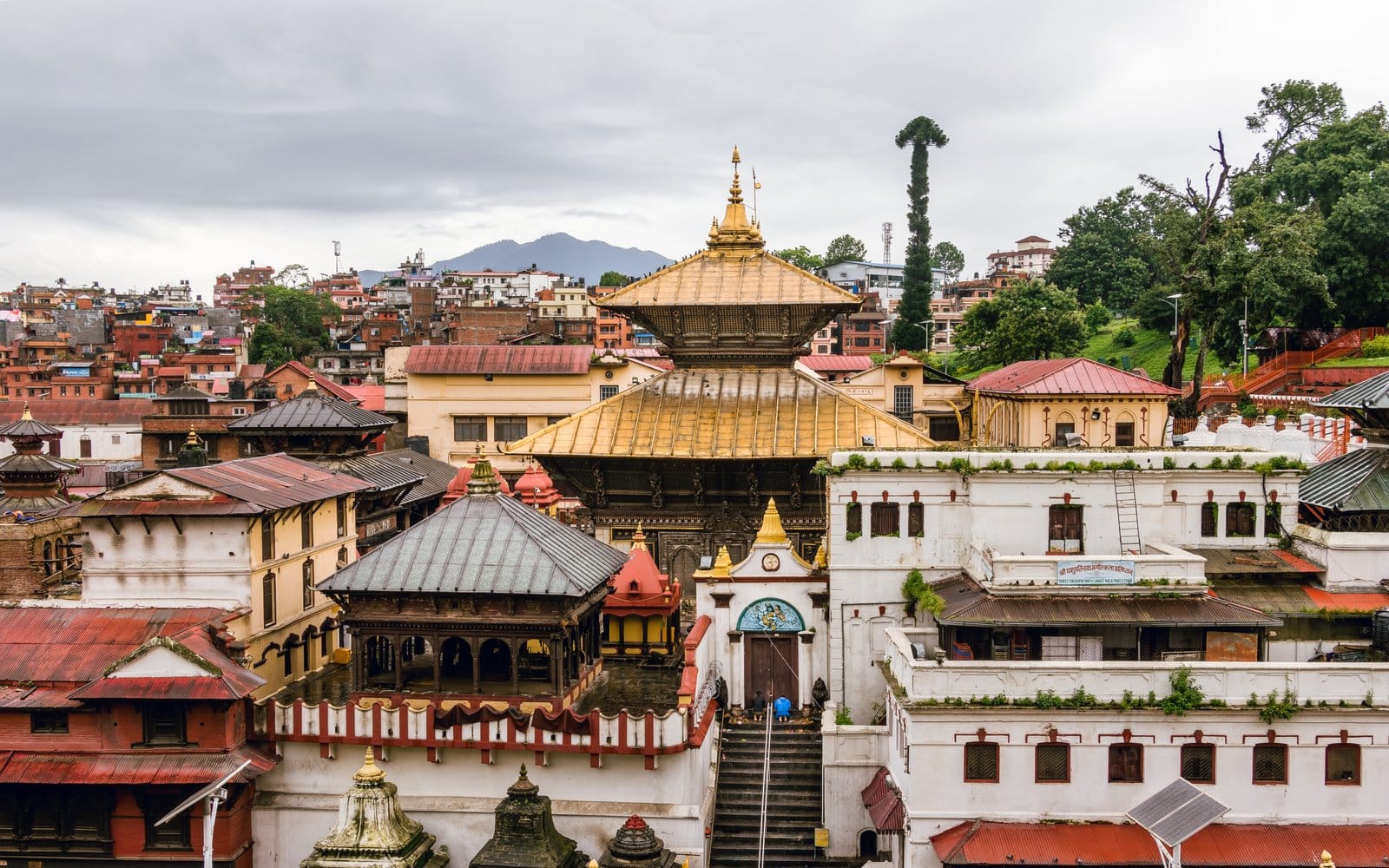
UNESCO 1979
Nepal
Pashupatinath Temple
Explore Pashupatinath Temple in Kathmandu, Nepal. Complete guide to the UNESCO World Heritage Shiva shrine, four-faced linga, Bagmati ghats, and timings.
Explore Temple
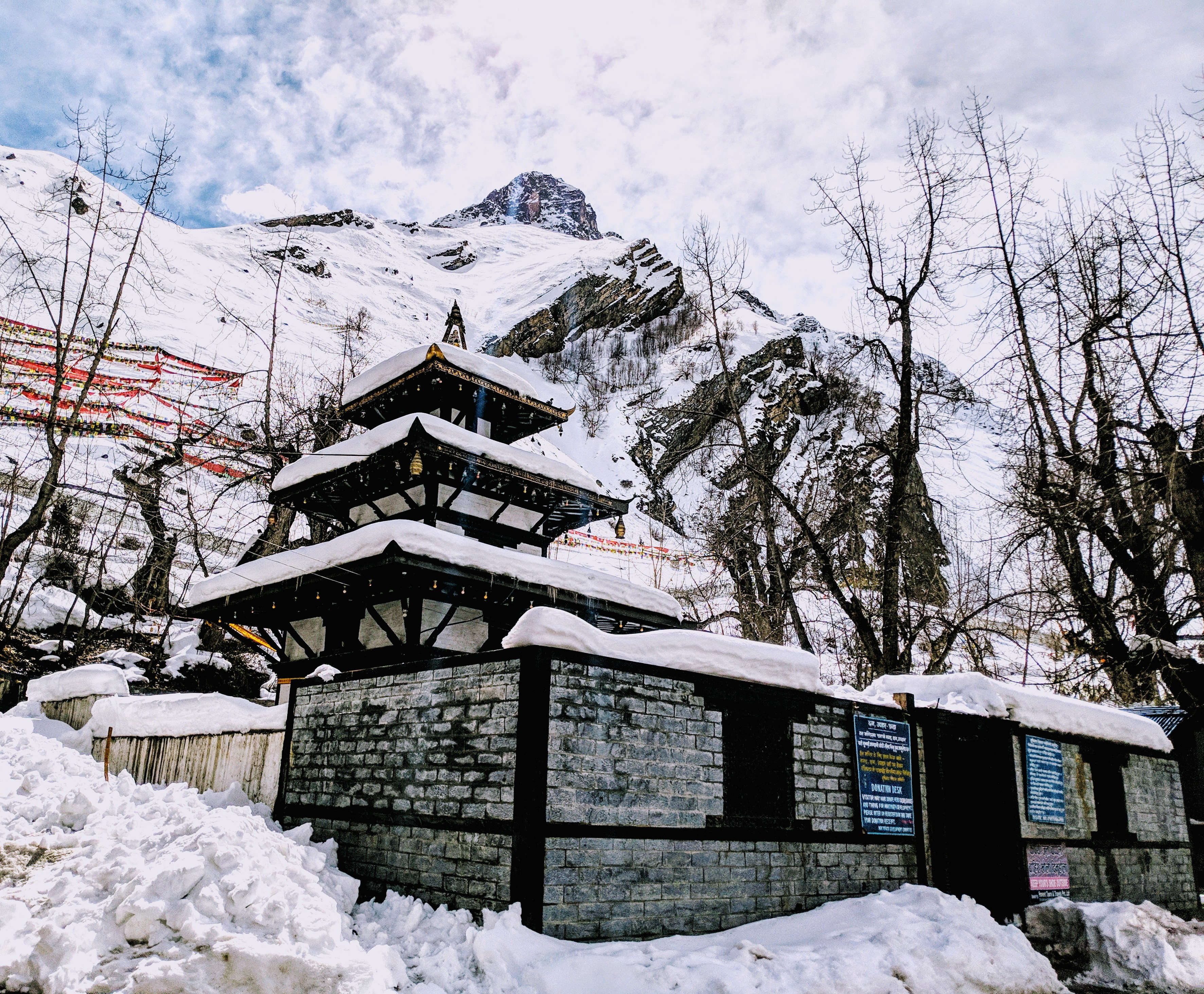
Nepal
Muktinath Temple
Situated at 3,710 meters in the Mustang district, Muktinath Temple is sacred to both Hindus and Buddhists, known for its 108 water spouts and eternal flame.
Explore Temple

Nepal
Manakamana Temple
Perched at 1,300 meters in the Gorkha district, Manakamana Temple is dedicated to the goddess Bhagwati and is renowned as a wish-fulfilling shrine accessible by cable car.
Explore Temple