
🇳🇵
Hindu Temples in Nepal
Nepal is home to some of the most sacred Hindu temples outside India, with Pashupatinath being one of the holiest Shiva temples in the world.
5 Temples Profiled South Asia Kathmandu
Direct Answer
How Many Hindu Temples Are in Nepal?
Nepal is home to tens of thousands of Hindu temples and sacred tirthas, ranging from ancient UNESCO World Heritage complexes in the Kathmandu Valley to remote Himalayan sanctuaries.
Guthi Sansthan Administered Temples
717 Temples (2,300 Guthis)
State-managed trust properties documented by Guthi Sansthan, alongside 647 rest houses (pati-pauwas) across 69 districts.
DoA Protected Ancient Monuments
~4,850 Sites
Historic heritage structures and archaeological sites inventoried and protected under the Department of Archaeology (DoA).
Himalayan & Regional Tirthas
National Scale
High-altitude pilgrimage shrines (Muktinath at 3,710 m, Gosainkunda, Damodar Kunda) and Terai centres (Janakpur Janaki Mandir).
Sacred Places India Database
5 Flagship Sanctuaries
In-depth dossiers for Pashupatinath, Muktinath, Manakamana, Janaki Mandir, and Budhanilkantha.
How Temple Numbers Are Counted
Nepal does not maintain a single unified national register of every neighborhood or village shrine. Historic and heritage temples are surveyed and protected by the Department of Archaeology (DoA), Ministry of Culture, Tourism and Civil Aviation. Major pilgrimage complexes are administered by autonomous statutory trusts (such as the Pashupati Area Development Trust) and the Guthi Sansthan, a government-supervised body that manages thousands of sacred religious trusts, endowments, and historic monuments nationwide.
Sacred Places India Database Scope
Because Nepal's sacred landscape spans thousands of local devisthans and village guthi shrines, our catalog curates the foremost nationally protected tirthas with verified pilgrimage significance.
Introduction
Nepal, the land of the Himalayas, holds a unique place in the Hindu world. As the only remaining Hindu kingdom until 2008 and now a secular state with a Hindu majority, Nepal preserves some of the most ancient and revered Hindu temples in the world. The temples of Nepal blend Vedic traditions with local Newar and Malla architectural influences, creating a distinct sacred landscape that has attracted pilgrims for millennia.
5
Profiled Temples
South Asia
Region
Kathmandu
Capital
Nepali
Language
Major Hindu Communities
Hinduism in Nepal encompasses Newar religious traditions in the Kathmandu Valley, Khas-Arya communities across the hill regions, and Maithili and Tharu traditions in the southern Terai plains.
Regional Temple Distribution
Temples are clustered in the Kathmandu Valley (Pashupatinath, Changu Narayan), the Mustang Himalaya (Muktinath at 3,710 m), Gorkha (Manakamana), and Janakpur in the Terai (Janaki Mandir).
History of Hinduism in Nepal
Hinduism has been the dominant religion in Nepal since the Licchavi period (c. 400–750 CE). The Kathmandu Valley became a melting pot of Hindu and Buddhist traditions, with the Malla kings (1200–1769) being great patrons of temple construction. The Shah dynasty, which unified Nepal in 1768, declared Nepal a Hindu kingdom. Despite the transition to a federal republic in 2008, Hinduism remains deeply woven into Nepal's cultural fabric, with over 80% of the population identifying as Hindu.
Pilgrimage & Cultural Significance
Nepal occupies a special place in Hindu pilgrimage. Pashupatinath Temple, a UNESCO World Heritage Site, is one of the holiest Shiva temples globally and a major destination for Shaivite pilgrims. The Muktinath Temple at 3,710 meters is sacred to both Hindus and Buddhists, believed to grant liberation. The overall significance of Nepal's temples is amplified by their setting in the Himalayan foothills, which Hindus consider the abode of Shiva.
Architecture Overview
Nepalese Hindu temple architecture is distinctive, featuring multi-tiered pagoda-style roofs, intricately carved wooden struts, and bronze toranas (doorways). The Newar craftsmen of the Kathmandu Valley developed a unique style characterized by brick masonry, carved wooden windows, and stepped platforms. The pagoda style, which later influenced Tibetan and Chinese architecture, is believed to have originated in Nepal.
Temple Directory
Explore documented Hindu temples in Nepal.
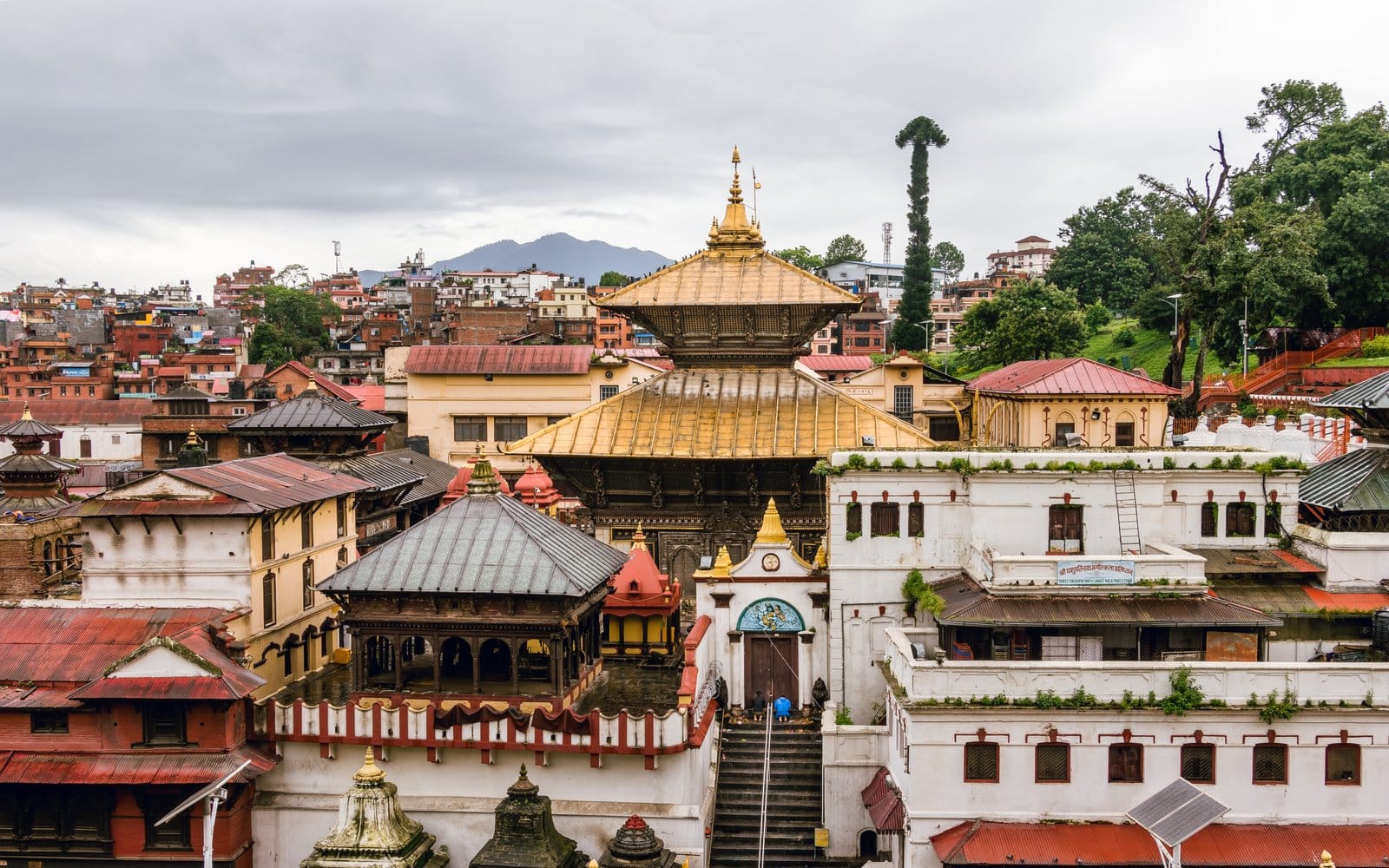
UNESCO 1979
Nepal
Pashupatinath Temple
Explore Pashupatinath Temple in Kathmandu, Nepal. Complete guide to the UNESCO World Heritage Shiva shrine, four-faced linga, Bagmati ghats, and timings.
Explore Temple
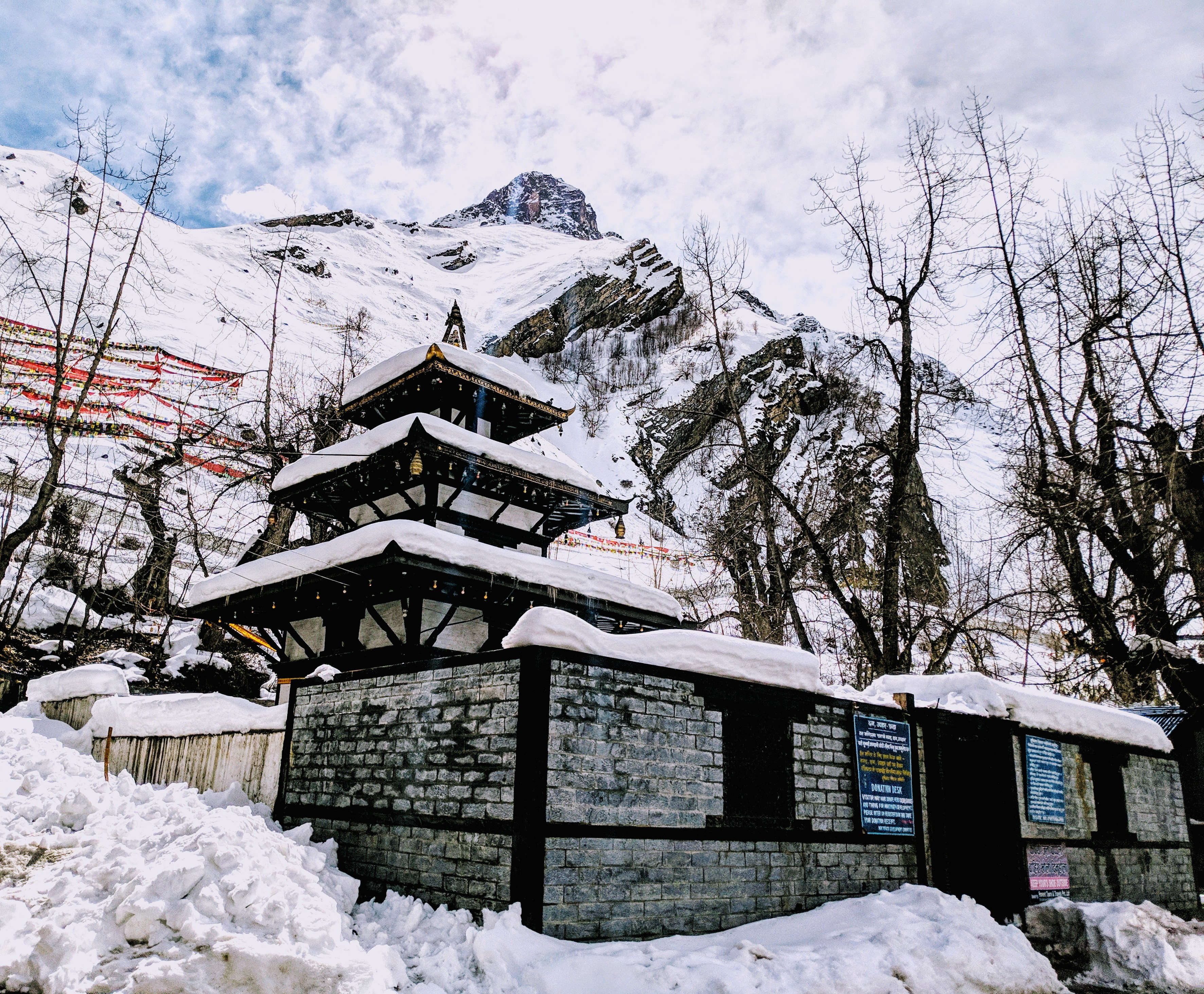
Nepal
Muktinath Temple
Situated at 3,710 meters in the Mustang district, Muktinath Temple is sacred to both Hindus and Buddhists, known for its 108 water spouts and eternal flame.
Explore Temple

Nepal
Manakamana Temple
Perched at 1,300 meters in the Gorkha district, Manakamana Temple is dedicated to the goddess Bhagwati and is renowned as a wish-fulfilling shrine accessible by cable car.
Explore Temple

Nepal
Guhyeshwari Temple
Located near Pashupatinath in Kathmandu, Guhyeshwari Temple is one of the 51 Shakti Peethas, representing the most secret and powerful manifestation of the goddess.
Explore Temple

Nepal
Doleshwar Mahadev Temple
A modern temple complex in Bhaktapur featuring Nepal's tallest Shiva statue at 143 feet, drawing devotees with its impressive scale and serene atmosphere.
Explore Temple
Documentation Methodology & Scope
Research & Selection Criteria
Profiles major heritage sanctuaries protected by the Department of Archaeology, Government of Nepal, and UNESCO Kathmandu Valley listings, focusing on active pilgrimage centres and historical stone-and-timber monuments.
Scope Boundaries & Limitations
Nepal has thousands of local village devisthan shrines. This index focuses on nationally protected monuments and recognized pilgrimage sites.
Travel Information
Nepal is accessible via Tribhuvan International Airport in Kathmandu. Major temple sites are connected by road networks. Domestic flights and helicopters serve remote areas like Muktinath. The best way to explore temples is through guided tours in Kathmandu Valley and organized pilgrimages to outer sites.
Best Time to Visit
October to March is the ideal time to visit Nepal's temples. The weather is dry and pleasant with clear mountain views. The autumn months also coincide with major festivals like Dashain and Tihar. April to June can be warm but is still suitable. Monsoon (July–September) brings heavy rainfall and occasional landslides.
Verified Sources & References
Documentation for Nepal draws on official census statistics, heritage authorities, and registered temple trust archives.
- Department of Archaeology, Government of Nepal — Ancient Monument Gazettegovernment
- UNESCO World Heritage Centre — Kathmandu Valley Documentationacademic
- Pashupati Area Development Trust (PADT) — Official Pilgrimage Archivestemple
Department of Archaeology, Government of Nepal
Department of Archaeology — protected monument records
Official heritage designation, site management and visitor information for the monuments described on this page.
Open source (opens in a new tab)UNESCO World Heritage Centre
UNESCO World Heritage List — India
World Heritage inscription records for the internationally listed monuments named on this page.
Open source (opens in a new tab)INTACH
Indian National Trust for Art and Cultural Heritage
Architectural classification and conservation context for the temple traditions described on this page.
Open source (opens in a new tab)— every record linked above was re-requested for this release, so the link still resolves and the publisher still serves the document. It is a link check, not a re-verification of every sentence on this page.
Frequently Asked Questions
What is the oldest Hindu temple in Nepal?
Pashupatinath Temple is believed to date back to at least the 5th century CE, with the current structure built by the Licchavi king Prachanda Dev. However, the temple's origins are steeped in legend, with some traditions claiming it existed from the beginning of the Kali Yuga.
Are non-Hindus allowed in Nepal's temples?
Pashupatinath Temple allows non-Hindus only in the outer courtyard, not inside the main sanctum. Muktinath is open to all. Manakamana Temple restricts entry to Hindus only. Always check specific temple rules before visiting.
Which is the most visited temple in Nepal?
Pashupatinath Temple in Kathmandu is the most visited Hindu temple in Nepal, receiving millions of pilgrims annually, especially during Maha Shivaratri.